Guest Post by Derek Taylor Kent: My Ravenous Latino Fans

Derek's audienceBy Derek Taylor Kent

In the process of promoting my series for middle-grade kids, Scary School, I’ve discovered that at least half of my readership has turned out to be Latino kids and parents. I think Latino youth are the most voracious readers out there and yet remain under-represented in the works themselves.

I’ll start off by confessing I am not of any Latino heritage, but growing up in Los Angeles, it has always felt like a part of my culture. My mother was an art teacher at the mostly Latino San Fernando High School for over ten years, where she founded LA Mural Project and helped get hundreds of students into college on art scholarships. I studied Spanish in school and later dated a lovely Nicaraguan girl, who ended up becoming the translator for my picture book El Perro Con Sombrero.

Scary School 2The beginning of my journey takes place when the first Scary School book was released in 2011. I was eager to spread the word about it. I formed a fantastic partnership with a Barnes and Noble in Redlands, California, who hosted book fairs at almost every school in the San Bernardino region. Most of these schools were predominantly Latino or dual immersion.

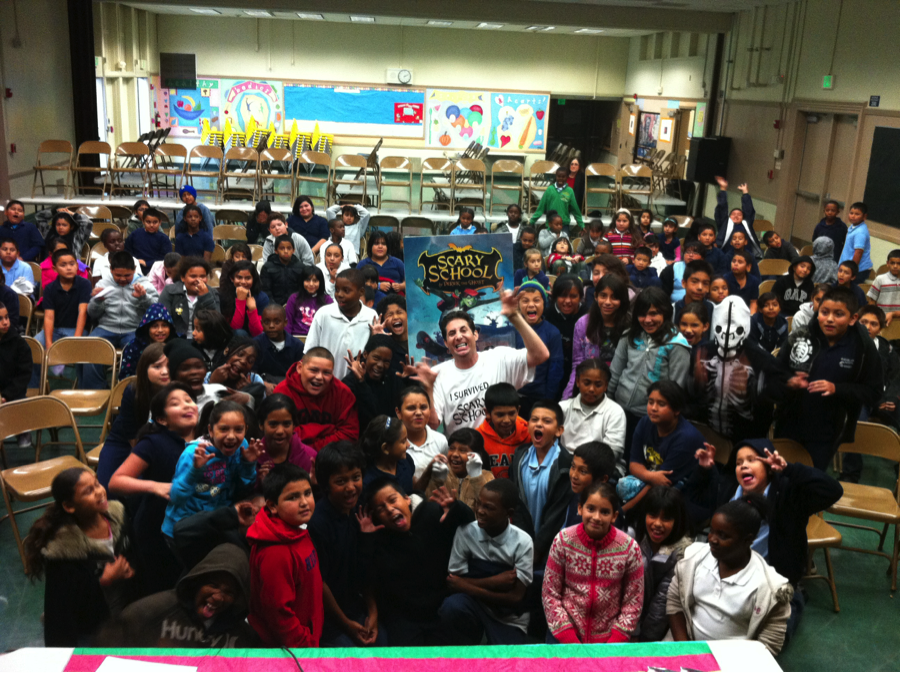
I also worked with After-School All-Stars and performed my Scary School show for dozens of schools all over Southern California in low-income areas, where book sales were never part of the agenda. It was purely about inspiring the kids to love reading and writing and give them a chance to meet a real author.

I cannot begin to describe the enthusiasm and joy from the kids when I made these visits. Perhaps a big part of the reason they were so enthralled was because I was a children’s horror author and they were already fans of books like Goosebumps. During my shows, kids got to scream and make monster noises, as well as ask me questions.

The response of the kids in the Latino-populated schools was always the most enthusiastic and joyful. They LOVED scary stories and monsters! At other schools, just the mention of werewolves, ghosts, and vampires might send nine-year-olds scurrying out of the room in fear, but my Latino audiences challenged me to scare them every time and I had a great time doing it.

One of my most memorable experiences was when a class of students started peppering me with questions about what monsters they would find in the books. One kid named Pedro asked if there was a Cyclops in the book. When I told him there wasn’t, he put on the saddest expression I’d ever seen. He really loved Cyclopes! I assured him that I would write a Cyclops into Scary School #3 if he promised to read the series. He became so happy he screamed “YES!” and we both fulfilled our ends of the bargain.
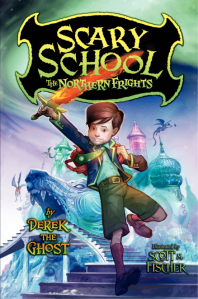
Scary SchoolOver the last five years, I estimate that at least 50% of my readership is from the Latino audience. One of the main characters of the Scary School series is named Ramon the zombie kid. I don’t make a big deal about his background in the books or even during the shows, but I always notice smiles from the kids when, just because of the name, they know there’s a character they can relate to. (He’s the zombie on the cover of Book 1.)

In Scary School #4, which will release this fall, Ramon plays his biggest part yet, which fits with the title Scary School #4: Zillions of Zombies.

Despite the enthusiastic Latino audiences that I’ve witnessed, there are still relatively few U.S. published books that focus on the Latino experience or have Latino main characters, especially in the middle-grade and YA categories.

I want to encourage Latino writers to consider writing stories designed for 7-12 year olds and teens. While it’s easy for young kids to become excited about books, grabbing the attention of older kids is more challenging. Books centered on their experiences would go a long way toward increasing readership.
PerroParents can encourage their kids’ reading by making regular and fun-filled trips to the bookstore or library. Allowing kids to find books that excite them means they’ll be more likely to read them. For reluctant readers, setting up a reward system at home can be very beneficial, especially if this includes not only the books they read on their own, but also those that parents read with them. Reading is like exercise for the brain, and just like with sports, the more practice the brain gets, the more success kids will have in school and throughout their lives.
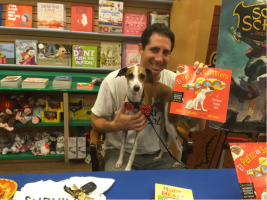


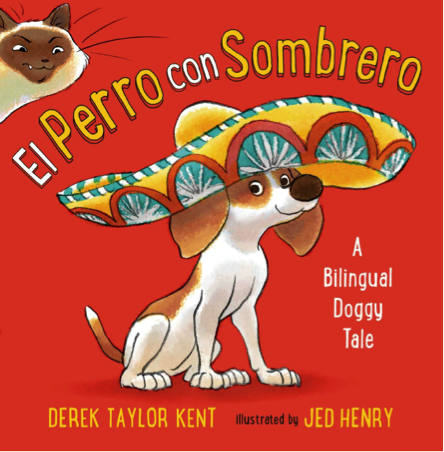
Derek and dogDerek Taylor Kent is also known as Derek the Ghost. He is the author of the middle-grade book series Scary School. His bilingual picture book El Perro Con Sombrero is new this year. It’s about a street dog named Pepe who happens upon a lucky sombrero that turns his life around. For more information about Derek’s books and projects, please visit DerekTaylorKent.com. At a special site for kids, ScarySchool.com, visitors can tour Scary School, read a secret chapter, and play video games.

Yes, Audiobooks & Graphic Novels Count: Accepting Students’ Diverse Reading Choices


By Cindy L. Rodriguez

A reader’s experience, even with a shared text, is dependent on so many things, including background knowledge, interest in the subject, interest in reading in general, and engagement in the moment. I’m sure we’ve all experienced this subjectivity of reading, how one person can have a completely different reaction to a book than another. As a teacher, I’ve gained a whole new level of understanding about the reader’s experience.

When I taught middle school language arts with regular-sized classes, I experienced a typical range of responses from students. When I became a reading specialist, however, the response to reading was more consistent. My students are what’s called reluctant readers. Many of them hate to read, and they all score well below their peers on reading assessments. Of the 27 students who receive reading intervention with me this year, 85 percent are of color and almost half are Latin@. In 2010, the Association for Supervision and Curriculum Development’s article, “The Latino Education Crisis,” stated Latin@s are the least educated ethnic group. More recent statistics indicate both good and not-so-good news. The Latin@ dropout rate has dropped significantly, but remains higher than other groups. Meanwhile, the number of Latin@s in college has tripled in ten years, but Latin@s lag behind other groups in obtaining a four-year degree.

Each school year is an opportunity to change these statistics by helping students become better readers.

When I ask my students why they don’t like to read, their most common answers are these: It’s too hard. It’s confusing. It’s boring. It’s too long. I just don’t like it. I can’t connect to it. I have better things to do with my time.

My job, then, is to help them become better readers and hopefully love a book or two or more. In other words, I have to find ways to alter their previous reading experiences. I have to help them find books that aren’t too hard or boring or too long. Books that they can connect with and think are worth their time.

In some ways, this should be easy because libraries have thousands of books to choose from, but this is what happens when I take my students to the library: Some wander around aimlessly with a “get me out of here” look on their face. Some are enthusiastic, which is great, but have no idea what to do. I ask about their favorite author or genre, but they don’t have one. If I keep asking questions, I’ll usually get enough information to guide them to the right area. But, then they are faced with a wall of books and don’t know where to start.

Once, I gave a girl a specific title to find and told her to check the spine for the author’s last name. After a while, she called me over and said the book wasn’t there, that all of these books were written by FIC.

I share this not to make fun of her–because it really isn’t funny–but to shed light on the reality that some middle schoolers don’t know how to navigate a library or the world of books in general. They haven’t read enough in their lives and/or their reading experiences have probably to this point been mandated by school curricula. As a result, their identity as readers doesn’t exist at all or has been completely shaped by others. This is partly due to what they’ve been told “counts” when it comes to reading.

Lowriders in Space_FC_HiResOne boy told me he liked cars, but the library had no books on cars. Hmm, really? When I showed him the nonfiction area filled with books about cars, he said, “But these aren’t stories.” And then, I got it. He didn’t think nonfiction counted. Maybe he has been told this, or maybe he’s been encouraged to read fiction more often. I don’t know, but his desire to read nonfiction about cars was derailed somewhere along the way. Happy ending: he checked out two nonfiction books that day and the librarian ordered Lowriders in Space. So cool (the book and our librarian). And yes, I assured him, graphic novels count, too.

Here are things my students have said:

I like audio books, but that’s cheating.

But, it’s a graphic novel.

But it’s nonfiction.

It’s too short. My teacher said it has to be at least 200 pages.

I don’t like this book, but my teacher said I have to finish it.

These comments pain me.

Because if we say audio books don’t count, then aren’t we negating the tradition of oral storytelling?

If we say graphic novels don’t count, then aren’t we negating the entire field of the visual arts?

If we say something is too short, aren’t we invalidating the short story, the novella, poetry, books in verse, non-fiction articles, or picture books?

If we tell someone to finish an independent reading book he dislikes, then isn’t it no longer independent reading? We’ve taken away his ability to choose what he wants to read and drop what he doesn’t like.

So, we’re sometimes telling readers that their choices don’t count, they aren’t good enough, and this, then, is coupled with the reader’s feelings that reading is boring, hard, and not worthy of his or her time.

So what does that leave us? Classes like mine with students who have had limited, difficult reading experiences.

But, don’t worry, this story has a happy ending.

After 15 years of teaching, but especially after the last five as a reading specialist, I have learned that the reader’s experience is diverse, and therefore, we must learn to accept diverse reading experiences.

What I mean is that I think we’re willing to accept that a reader’s experience is diverse based on personal history, background knowledge, interest, and skill, but we don’t often accept diverse reading experiences, especially with younger people.

Two young children lying on the grass outdoors wearing headphones reading togetherFor example, I’m never told by anyone not to listen to audiobooks, so why should I tell a student it’s cheating?

Ninth graders often read Of Mice and Men, which is 103 pages, but we tell a middle school student she can’t read a book less than 200 pages. Why?

And believe me, I am well versed on the Common Core State Standards and well aware of how competitive schools and the workplace have become. I know the statistics that tell us if a child is not reading on grade level by the third grade, he may never read on grade level without the proper intervention. I understand the push for rigor and the expectation that all people read certain books in high school and college.

At the same time, though, what most studies tell us is that the number one thing that affects a person’s lifelong reading skills is independent reading–self-selected reading that supplements, complements, or challenges in-class reading.

And when people read independently, they should be protected by the Reader’s Bill of Rights.

So, if we want all children to develop an independent reading habit, we have to allow them to truly self-select reading material and we have to be okay with their choices. If they want to read a graphic novel or comic book, fine. If they want to listen to an audio book, awesome. If they want to read an 85 page book, go for it.

Chances are if they do these things, and feel successful, they just might do it again and again and again. And then maybe they’ll start reading longer and more complex things, and they won’t see reading as hard or boring or not worth their time. Maybe then they will be able to navigate the library and decide on a favorite genre or author. Maybe as they get older, they will graduate from high school, reducing the dropout rate even more. Maybe more will earn four-year degrees. And maybe they will then read to their children, who will become avid readers, too. And a simple thing adults can do now to help this along is not to say, “That’s too short, too easy, or doesn’t count.” Instead, support young readers’ diverse choices and allow them to develop their own reading experiences.


cindyrodriguez2Cindy L. Rodriguez is a former journalist turned public school teacher and fiction writer. She worked as a reporter at The Hartford Courant and researcher at The Boston Globe before becoming an educator. She and her daughter live in Connecticut, where she teaches middle school reading and college-level composition. Her debut contemporary YA novel, When Reason Breaks, released with Bloomsbury Children’s Books on 2/10/2015. She can also be found on FacebookTwitter, and Goodreads.

On Acting and Writing: a Q&A with Sonia Manzano


Becoming MariaBy Cecilia Cackley

Sonia Manzano’s new memoir Becoming Maria: Love and Chaos in the South Bronx was released in August. In it, Manzano tells the story of her childhood in the Bronx, high school at the LaGuardia School of the Performing Arts, her college years at Carnegie Mellon, and breakthrough performance in the Broadway musical Godspell. The book ends with Manzano’s successful audition for a new children’s television show called Sesame Street. I was able to interview Manzano during the 2015 National Book Festival in Washington, D.C.

Cecilia Cackley: Was there a library near your house growing up? What kinds of books did you read as a kid?

Sonia Manzano: There was no library close by my house. We had a library at my school, but we were not allowed to take the books home. Every week we would have a 40 minute ‘library period’ when we would read silently to ourselves. So each week I would mark my place with a scrap of paper and try to find it again the next time so I could finish the book. The book I remember most clearly was Fifteen by Beverly Cleary. I left the school before I could finish it, and although I kept looking for it, I didn’t find it again until I was 35, in a rural library in Pennsylvania!

CC: You’ve written both picture books and a YA novel. What do you think about the state of Latinxs in children’s literature right now?

SM: We have a lot of books with Latino-based stories…I don’t know why more people don’t know about them. I actually asked Pam Muñoz Ryan that recently and she said that while there are wonderful titles, such as El Bronx by Nicholasa Mohr, there aren’t a lot of long lasting titles that have become classics. Also, some elements of traditional Latino stories, like the Juan Bobo stories, play into stereotypes that publishers don’t like. Our culture is always in flux, and publishing houses can’t pin us down.

CC: Are there any recent Latinx books that you’ve read that you would recommend?

SM: I recently read Shadowshaper by Daniel José Older, which was wonderful and relates to the urban experience. I also read I Lived on Butterfly Hill, which was excellent.

CC: Part of Becoming Maria is about your experience as a student at Carnegie Mellon. What advice would you give to today’s students who are the first in their families to attend college?

SM: I would say that if at all possible, visit the college first. I wasn’t able to do that. It is a mind-expanding experience. Visiting will help it seem less strange when you get there.

CC: You’ve worked in theater, television, and now writing. Is there a connection for you between performing and writing?

SM: I think all art forms are connected in some way. I approach acting and writing very differently, though. The best acting is spontaneous, but when you write it is very examined.

CC: Now that you’re leaving Sesame Street, do you think you would do a theater show again?

SM: I would do it in a minute. But I hate auditioning. I would need a group to work with, someone with a vision. It’s hard as an actor because you need to be a vessel of someone else’s dream. But for me, for so long, I have been the character. I don’t know that I’d want to be someone else on stage.

CC: What if you were asked to do a one-woman show about your life?

SM: Yes, absolutely I’d do that.


Books for young readers by Sonia Manzano:

Becoming-Maria  Miracle-on-133rd-Street    no-dogs-allowed  


Cackley_headshotCecilia Cackley is a performing artist and children’s bookseller based in Washington DC where she creates puppet theater for adults and teaches playwriting and creative drama to children. Her bilingual children’s plays have been produced by GALA Hispanic Theatre and her interests in bilingual education, literacy, and immigrant advocacy all tend to find their way into her theatrical work. You can find more of her work at www.witsendpuppets.com.

Juan Felipe Herrera Plans Epic Poem to Reflect “Voices from People’s Hearts”


By Cecilia Cackley

Juan Felipe HerreraJuan Felipe Herrera says that “It’s been a long walk from the fields of Central California…from my mother’s songs…from my father’s stories of crossing the border.” Herrera is the nation’s first Chicano Poet Laureate, and he has big plans. He makes it clear that this is a long way from where he started as a child. “You don’t have plans when you’re a migrant” he points out. “You’re moving, you’re trying to get to the next place.”

Herrera grew up in various small California towns, moving from place to place with his parents, who were migrant farmers. He attended UCLA, where he was involved in the Chicano Civil Rights Movement and later earned master’s degrees from Stanford and University of Iowa’s Writer’s Workshop. He currently holds the Tomás Rivera Endowed Chair in the Creative Writing department at UC Riverside.

Herrera’s first project as Poet Laureate was announced at the National Book Festival in DC last month. It is a participatory website called “La Casa de Colores” and has several different sections. The “Familia’”section is a space for people to contribute lines, rhymes or poems, including video of signed poems in ASL. Each month will be devoted to a different theme and style, until the poem grows into an epic that Herrera says will reflect “voices from people’s hearts.”

The second section is called “Jardín” and will be a space for Herrera to share inspiration that he finds in the Library of Congress collections. It might be a print or photograph, a piece of music or film or artwork, hiding on a shelf or in a file. Herrera will write poems responding to the images and sounds, and he will invite participants to do the same.

It’s pretty clear from this project that Herrera is passionate about making poetry an art form for everyone, not just for the classroom, not just for English majors and especially not just for adults. The author of several books for young readers, Herrera has won an Ezra Jack Keats Award and several Pura Belpré Honors for his work. He recommends that young readers check out works by Gary Soto, Jorge Argueta, Fransisco X Alarcón and Alma Flor Ada, but even more strongly encourages teachers to tell their own stories to their students to encourage writing and storytelling. Herrera’s favorite story-starter is a family album shared between teacher and student—“The album” he says, “becomes the story-machine.”

When asked about the importance of poetry to children, Herrera is eloquent and poetic. Poetry “is at the heart of being a child” he says, “something that reflects exactly who they are.” While creative writing is often asked to take a back seat in the classroom due to our current testing culture, Herrera is adamant that “If we start playing with words at a young age, we’ll learn how to use language very well. People will enjoy thinking—the kind of thinking that you can’t find a formula for.” He also makes the point that poetry can be a refuge for a child going through tough times or teenagers trying to figure out their identity. Poetry, he says “gives children a place to rest, a place where it’s just me. It’s a personal surfboard where you can just go along with the waves, you’re free…you have to put your thoughts and feelings somewhere. [Poetry] balances you…you learn how to walk a tightrope.”

Books by Juan Felipe Herrera for young readers:

                   170391


Cackley_headshotCecilia Cackley is a performing artist and children’s bookseller based in Washington DC where she creates puppet theater for adults and teaches playwriting and creative drama to children. Her bilingual children’s plays have been produced by GALA Hispanic Theatre and her interests in bilingual education, literacy, and immigrant advocacy all tend to find their way into her theatrical work. You can find more of her work at www.witsendpuppets.com.

Guest Post by Elena Foulis: Latin@ Stories Across Ohio


By Elena Foulis

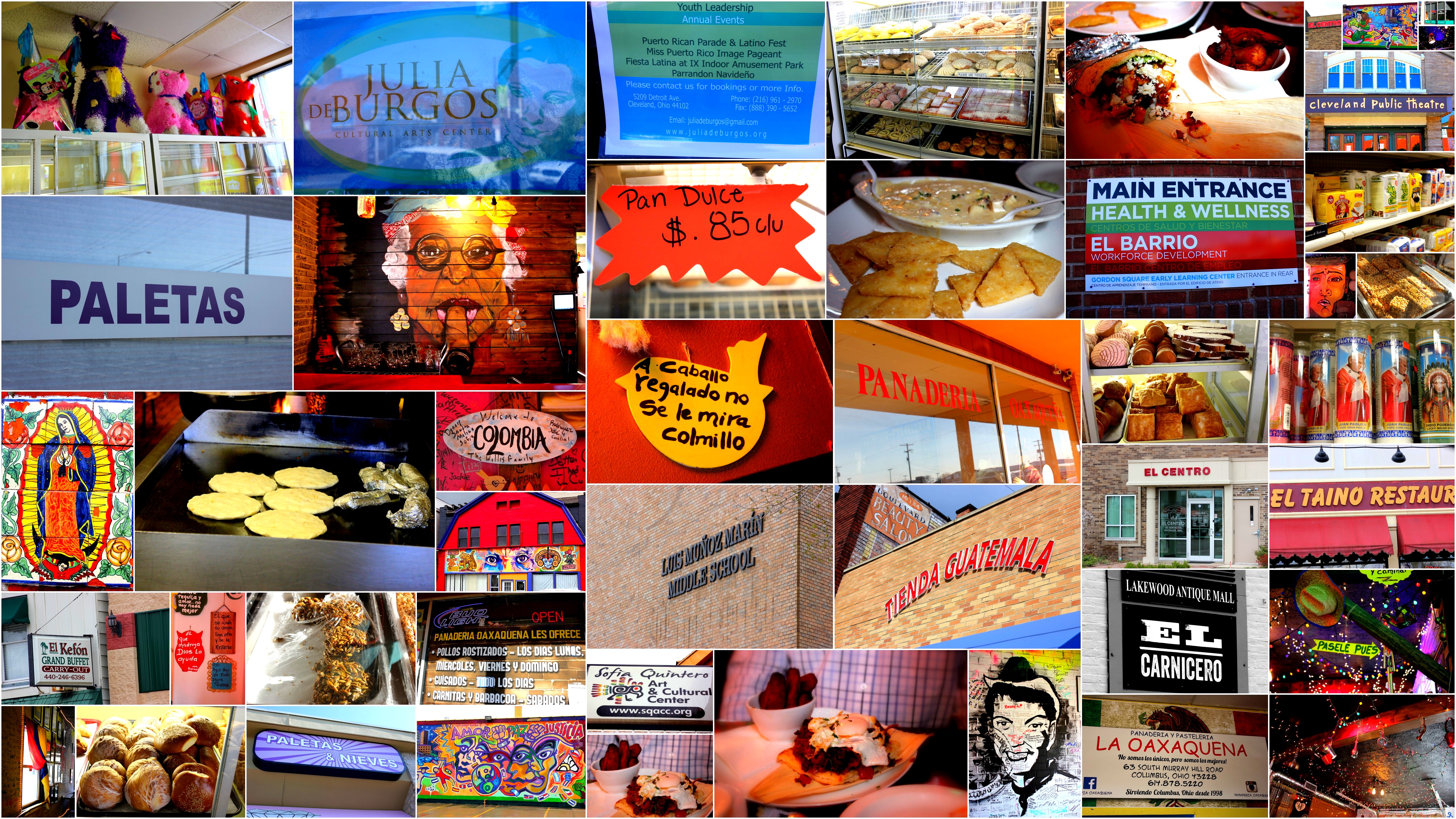
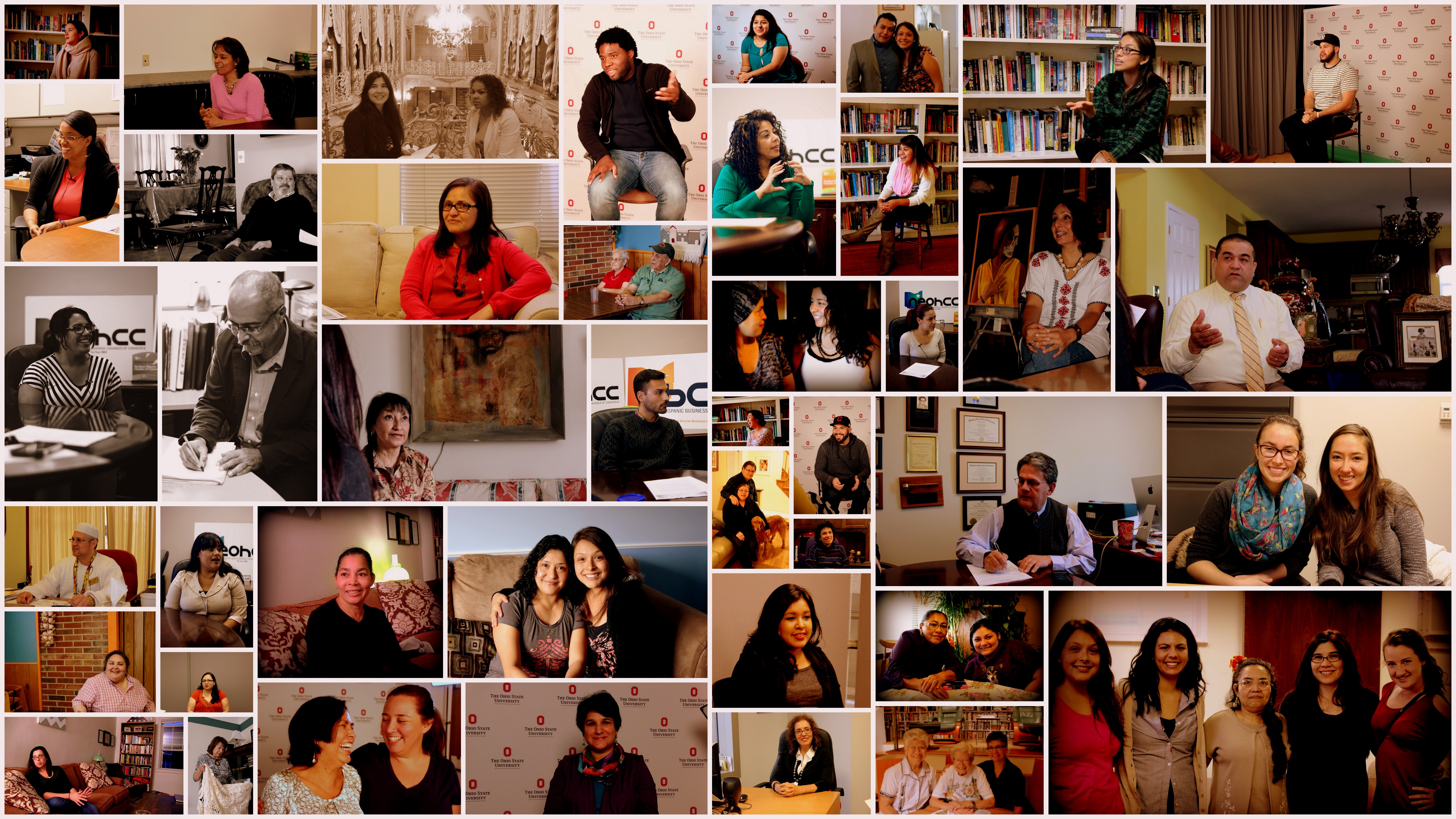
Over the past year, I have collected 65 video-narratives of Latinos/as in Ohio. Working in English and Spanish, I traveled around the state to interview women and men, older and younger people, artists, students, activists, and educators. While some oral historians have stored their field work in libraries across universities or created an internet collection, Latin@ Stories Across Ohio enters the digital world with historias that highlight the experiences of Latinos and invite the reader to engage further by “clicking” on the different interactive cultural components, which include maps, videos, links, and glossaries for every chapter.

Latin@ Stories Across Ohio highlights the presence of Latinos in the Midwest and opens up a window for conversation and understanding of a culture that has shaped this part of the country for generations. The book combines language and cultural studies perspectives. Latin@ Stories draws on the traditional elements of oral history methodology but enters the digital era by delivering these narratives in conjunction with exciting features that provide fuller context to students and make connections to literature and collective histories.

Thanks to generous support from the Department of Spanish and Portuguese and the Ohio Hispanic Heritage Project at The Ohio State University, this bilingual oral history book is free on iBooks. I hope this will make it easier for teachers and students across the Midwest and the U.S. to use it.

OHIO PICS

Use in the Classroom and Beyond

I currently use Latin@ Stories in my “Spanish in Ohio” class, a senior-level undergraduate service-learning course. This class teaches students about Latino life in the U.S. and, more specifically, in Ohio. Students are able to see, hear, and read first-person narratives of people they might meet or work with in our greater Columbus community. The usefulness of the text isn’t limited to this course, though; I often draw on the material in other classes. For example, in my writing course for the Spanish Department, my students conduct a mini-ethnographical interview that they can then turn into an essay. I show students some of these interviews as examples for the type of interviews they will be doing themselves. I also plan to use some of the content of this book for another course that deals with Latino language and literacy within the context of the U.S. experience.

Since this is a bilingual book with embedded video, it gives students substantial Spanish-language input from speakers with different backgrounds and accents. (In addition, all of the video-narratives collected for the project will be archived at the Center for Folklore studies at OSU.) Whether the focus of the class is language, history, Latino studies, or beyond, instructors who use this book have an opportunity to discuss not only the immigrant experience, but also the stories of abuelitas, the role of memory, argument, joking, advice-giving, and the storytelling practices of younger and older generations.

ONLO collageEach chapter groups historias with a similar theme: chapter one includes stories that deal with adapting to a new environment; chapter two has stories of people who have become advocates for Latino and immigrant rights; chapter three focuses on the various professions Latinos have, including being business owners; chapter four, titled “Generaciones,” has stories that include a group of Latinas from three different generations, an older couple, and two mother-daughter interviews; chapter five, “Las Fuertes,” has the stories of women that have overcome difficult situations and are thriving and using their stories to inspire others; and finally, I reserved chapter six for “Los jovenes,” a group of college students with a unique perspective on identity, language and place.

Although the book is localized in its focus on Ohio, it also gives students a rich and multi-faceted vision of Latino life, history and presence in the United States. I have seen the positive impact the value of an individual story has on students.


IMG_4045Elena Foulis has a Ph.D. in Comparative Literature and Cultural Studies from the University of Arkansas and currently teaches at the Ohio State University. Her research and teaching interests include U.S. Latina/o literature, Digital Oral History, and Digital Storytelling, particularly in service-learning courses. Her digital oral history collection about Latinos/as in Ohio has been published as an eBook titled, Latin@ Stories Across Ohio. Elena also loves photography and contributed many of the photographs in Latin@ Stories.

Book Review: Francisco’s Kites by Alicia Z. Klepeis

25673458

Reviewed by Marianne Snow

DESCRIPTION OF THE BOOK (from Arte Público Press): Francisco looks out his bedroom window and thinks about his home back in El Salvador. He misses his friends and playing in the village’s park. He wants to fly a kite near his new home in the U.S., but his mother can’t afford one.

“If Mamá can’t buy me a kite, maybe I can make one,” he thinks. Picking up a bag, Francisco leaves the apartment in search of treasures that he can use for his project. He finds purple cellophane, a pile of string and a broken model airplane. In his apartment building’s recycling area, Francisco discovers other useful items that people have thrown away. He can’t wait to spread out all the goodies and start building his very own cometa!

Soon Francisco is testing his creation in Sunnydale Park. He makes it fly up and down, spin in the air, even make loops! The colorful toy catches the attention of a man who runs a recycled goods store. He wants to sell Francisco’s kites in his shop! But can Francisco really find enough material to make them? And will he be able to deliver them in time?

MY TWO CENTS: I love how Alicia Klepeis so deftly and unassumingly weaves together a variety of topics in this dual language book. With themes like homesickness, immigration, recycling, ingenuity, and family, Francisco’s Kites might easily become cluttered or scattered, but it’s not. Instead, it’s a simple story about a boy who creatively channels his past experiences – flying kites in his former home in El Salvador – to establish himself in windy Chicago, spend quality time with his mom, meet new people, and work on saving the earth. Readers will enjoy following the inventive Francisco, learning about kites, and maybe even picking up some information about Salvadoran food (pupusas – yum!). Meanwhile, Gary Undercuffler’s charmingly retro – but still fresh, clean, and colorful – illustrations add to the airy, buoyant tone of the book.

Another perk of this book is its message about recycling, which is delivered clearly without being heavy-handed. As they observe Francisco resourcefully collecting trash and other used objects to make kites, readers will learn about repurposing, a recycling strategy that anyone can try. These days, we know about the benefits of recycling, and no doubt children constantly hear about it at school. But many neighborhoods, towns, and even larger cities don’t have accessible, user-friendly services and resources like curbside pickup or community recycling bins. If kids don’t have access to these services at home, it’s important for them to learn about other options – like repurposing, which can provide them with fun, easy ways to help the earth and feel like they’re making a difference. When young readers pick up a book like Francisco’s Kites, who knows how they’ll be inspired?

TEACHING TIPS: Teachers who want to foster their students’ interests in recycling can use Francisco’s Kites as a platform for a hands-on, interdisciplinary learning unit. In addition to this book, teachers can share other texts about recycling of various genres and formats (non-fiction, poetry, news articles, videos), and students can discuss how repurposing used materials can not only prevent waste from piling up in landfills, but also help people save money as they reuse instead of buying new. Next comes collecting used materials – either at home or at school – and turning them into some kind of magnificent art project.

ABOUT THE AUTHOR (from her website): I arrived on this planet on a fall day in 1971. My mom delivered me at a big hospital in Boston, Massachusetts. She stayed home with me until I went to school. My dad was a 5th and 6th grade teacher. I spent my entire childhood in Woburn, Massachusetts on a quiet dead-end road. An only child, I was somewhat of a bookworm. I was always a bit nervous about school and spent a lot of my time doing homework until I graduated from college.

Right after I finished college, I got an internship at the National Geographic Society in Washington, D.C. I loved that job for many reasons. The work was interesting, I got to go to great films and concerts nearly every week and… I met my husband (a fellow intern) there. We’ve been married nearly 20 years now. When my internship ended, I started graduate school to become a teacher. I taught middle school geography for several years in Massachusetts. Then I moved to upstate New York and stayed home with my three children for about ten years before becoming a writer. I now write almost full-time for kids and plan to do that for as long as possible. I love this job!

FOR MORE INFORMATION about Francisco’s Kites, check your local public library, your local bookstore or IndieBound. Also, check out GoodreadsAmazon, and Barnes & Noble.


MarianneMarianne Snow is a doctoral student at the University of Georgia, where she researches Latin@ picture books, representations of Latin@ people in nonfiction children’s texts, and library services for Spanish-speaking children and families. Before moving to Georgia, she taught Pre-K and Kindergarten in her home state of Texas and got her master’s degree in Teaching English to Speakers of Other Languages (TESOL) at Texas A&M University. In her spare time, she enjoys obnoxiously pining for Texas, exploring Georgia, re-learning Spanish, and blogging at Critical Children’s Lit.