Spotlight on Middle Grade Authors Part 2: Celia C. Pérez


By Cindy L. Rodriguez

This is the second in an occasional series about middle grade Latinx authors. We decided to shine a spotlight on middle grade writers and their novels because, often, they are “stuck in the middle”–sandwiched between and overlooked for picture books and young adult novels. The middle grades are a crucial time in child development socially, emotionally, and academically. The books that speak to these young readers tend to have lots of heart and great voices that capture all that is awkward and brilliant about that time.

Today, we highlight Celia C. Pérez.

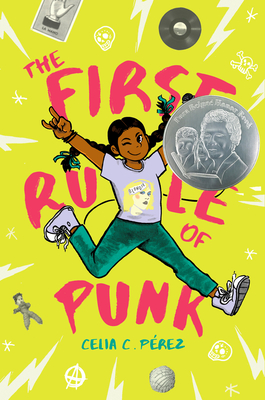
Inspired by punk and her love of writing, Celia C. Pérez has been making zines for longer than some of you have been alive. Her favorite zine supplies are her long-arm stapler, glue sticks, animal clip art (to which she likes adding speech bubbles), and watercolor pencils. She still listens to punk music, and she’ll never stop picking cilantro out of her food at restaurants. Her zines and writing have been featured in The Horn Book MagazineLatinaEl AndarVenus Zine, and NPR’s Talk of the Nation and Along for the Ride. Celia is the daughter of a Mexican mother and a Cuban father. Originally from Miami, Florida, she now lives in Chicago with her family and works as a community college librarian. She owns two sets of worry dolls because you can never have too many. The First Rule of Punk is her first book for young readers.

Celia C. Pérez

Q. Who or what inspired you to become a writer?

A. I’ve loved writing for as long as I can remember. I think for me it just went hand in hand with being a reader. The earliest memory I have of writing something and realizing writing might be something I was good at was when I was in the third grade. All the third graders had to write an essay about what our school meant to us. One essay would be picked and that student would get to read it at our graduation. Mine was chosen. I don’t have the essay anymore and it’s been so long that I can’t remember what Comstock meant to me, but I do remember that it was the first time I felt like perhaps my writing held some power. And as someone who grew up a quiet, shy child of immigrant parents, it really was that sense of power it gave me that kept me writing throughout my life.

Q. Why do you choose to write middle grade novels?

A. I love middle grade books above all others! My fondest memories of my life as a reader start in the later years of elementary school so I have a soft spot for middle grade. I think that age range that middle grade covers (eight or nine to twelve) is such a vibrant and varied period of life. It’s this time of life when kids are teetering between childhood and adolescence and all the contrasts and clashing emotions that are part of those stages. They’re often still full of wonder and curiosity and innocence but also full of difficult questions and realizations about the world around them that aren’t always pleasant. There’s just so much to discover and explore there.

Q. What are some of your favorite middle grade novels?

A. I love the Pacy Lin books by Grace Lin (Year of the RatYear of the Dog, and Dumpling Days); When You Reach Me by Rebecca Stead; Enchanted Air by Margarita Engle; Ninth Ward by Jewell Parker Rhodes. Oldies that are dear to my heart are Jennifer, Hecate, Macbeth, William McKinley, and Me, Elizabeth by E.L. Konigsburg. I love Harriet the Spy by Louise Fitzhugh (and will always associate dumbwaiters and egg creams with her), but I remember especially enjoying Nobody’s Family Is Going to Change. Although, to be honest, I feel like that’s a book I would probably have to reread because she’s a white woman writing an African American family. I also have a soft spot for my earliest favorites like Witch’s Sister by Phyllis Reynolds Naylor, The Witch of Blackbird Pond by Elizabeth George Speare, and the Anastasia Krupnik books by Lois Lowry. I’m always afraid I’m leaving something out, and I likely am.

Q. If you could give your middle-grade self some advice, what would it be?

A. Oh, boy. I have a lot of advice for my middle grade self but let’s start with these:

Keep everything you write even if you think it’s terrible. You’ll be happy you did.

Your voice is worth listening to. Don’t be afraid to express yourself.

You’re a good athlete. Stop reading during P.E. and play!

Q. Please finish this sentence: “Middle grade novels are important because…”

A. Middle grade novels are important because more than any other type of book I believe they give young readers the keys to discovering their place in the world.


Come back on Thursday to see our review of THE FIRST RULE OF PUNK!


photo by Saryna A. JonesCindy L. Rodriguez was a newspaper reporter for The Hartford Courant and researcher at The Boston Globe before becoming a public school teacher. She is now a reading specialist at a Connecticut middle school. Cindy is a U.S.-born Latina of Puerto Rican and Brazilian descent. She has degrees from UConn and CCSU. Her debut contemporary YA novel, When Reason Breaks, released with Bloomsbury Children’s Books (2015). She will have an essay in Life Inside My Mind, which releases 4/10/2018 with Simon Pulse. She can also be found on FacebookTwitter, and Goodreads.

A Letter from Young Adult Readers to Latinx Writers About Race, Gender, and Other Issues


By Marilisa Jiménez García with Lehigh Students: Kristen Mejia, Felicia Galvez, Sarah White, Caroline Raney

This Spring 2017, I taught a course at Lehigh University called “Latinx Youth Culture.” The course centered on studying youth literature and culture from the perspective of how past and contemporary Latinx authors depict, and to an extent recover, history and youth protagonists. We also looked at ways in which many popular and award-winning books for Latinx youth, and those depicting Latinx young people and/or youth movements portrayed issues of race, gender, nationalism, and Latin American revolutions. Our reading list included:

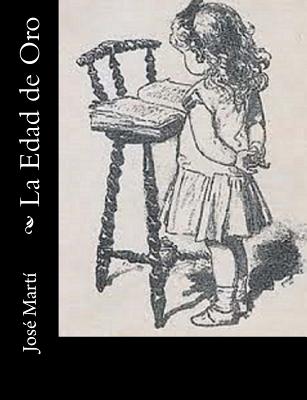
Jose Marti, La Edad de Oro (1899)

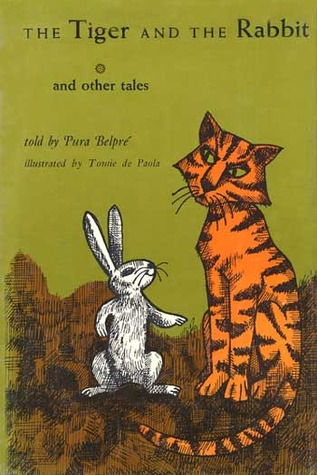
Pura Belpré, The Tiger and the Rabbit (1943)

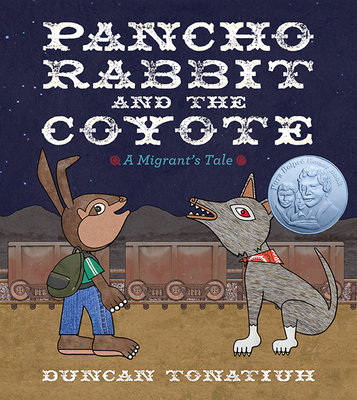
Duncan Tonatiuh, Pancho Rabbit and the Coyote: A Migrant’s Tale (2013)

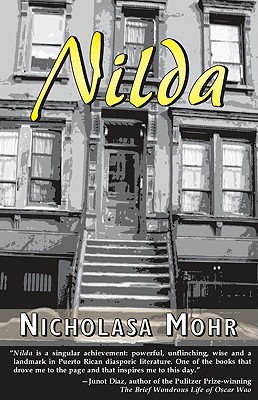
Nicholasa Mohr, Nilda (1973)

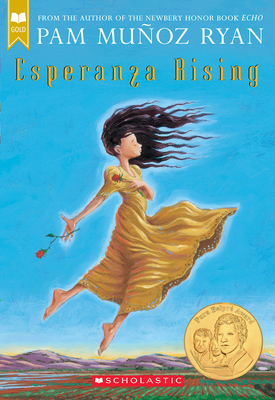
Pam Muñoz Ryan, Esperanza Rising (2000)

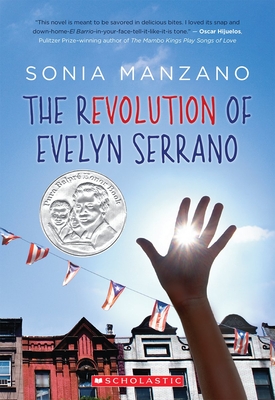
Sonia Manzano, The Revolution of Evelyn Serrano (2013)

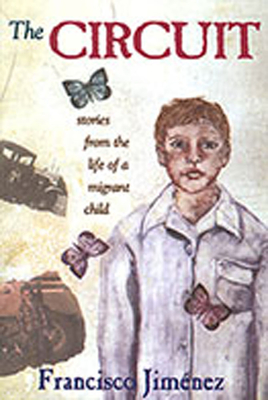
Francisco Jimenez, The Circuit (1997)

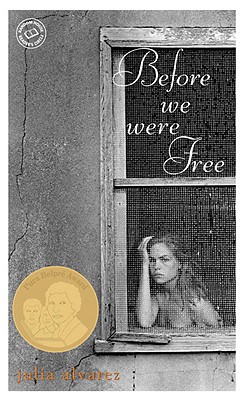
Julia Alvarez, Before We Were Free (2004)

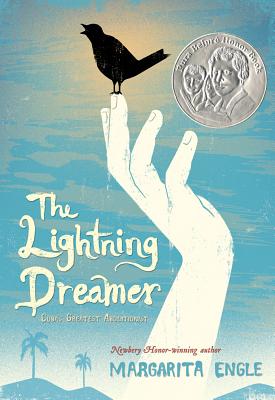
Margarita Engle, The Lightning Dreamer: Cuba’s Greatest Abolitionist (2013)

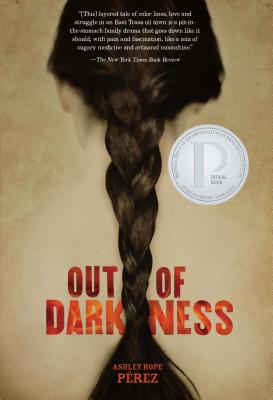
Ashley Hope Perez, Out of Darkness (2015)

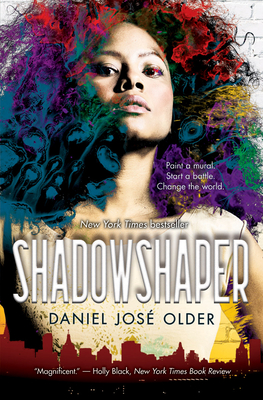
Daniel José Older, Shadowshaper (2015)
    7376995                                    

As a class, we considered how these texts represent the Latinx community, and the history of Latin America and the Caribbean, to young readers, and in some cases, because of the lack of Latinx representation and authors in youth literature, these books may be the only portrayals a young reader may encounter in a book about Latinx people. At the end of the course, I asked students to create suggestions of what they hoped to see in Latinx literature for youth. What follows is a list of suggestions gathered from our collective conversation and survey of Latinx literature for youth, including comments composed by my students for those who are currently writing and those who hope to write for young readers. Students also kept in mind those in publishing and award committees.

Writers and award committees should pay more attention to their own racial and class biases in the Latinx community and internal struggles with anti-blackness. Students noted that many of the protagonists in award-winning and popular books are light-skinned Latinos, while Afro and Indigenous Latinxs characters tend to be marginalized as the supporting characters, in problematic tropes such as the servants and slave characters, and even the bullies. At that point, Daniel José Older’s Shadowshaper was the only prominent young adult novel we could survey with a strong Afro-Latinx protagonist. In terms of race and class privilege, students noted that often protagonists migrating to the U.S. from Latin America were of the upper class in terms of escaping dire circumstances, such as dictatorships. Particularly when it came to representing the Latinx past, and historical moments such as abolitionism in Latin America and the Caribbean and the Mexican Revolution, students noted that light-skinned Latinxs tended to model some of the “white savior tropes” familiar in European culture. As Felicia Galvez, a Lehigh sophomore noted:

“I think culture and race are important. It’s an issue that most Latinx youth are experiencing. To ignore that part and to deny it is wrong. Black characters that writers decide to put in books should not be stereotypical. It’s wrong. Latinxs can be racist. It is not just a U.S. thing. Most of these writers being nominated are privileged and are whiter. It needs to be said because there’s a pattern here. Latinxs are a diverse culture. They come in many different colors. It’s said that we only see the whiter side in the media and in literature. Don’t be afraid to criticize other Latinxs. We want to get our books out, but it shouldn’t come at the cost of someone feeling excluded from the picture or seeing themselves as a stereotypical black person. Or ignoring the suffering that they feel and that their ancestors felt. Writers should try harder to incorporate different perspectives in various ways. Having the main character react to people around them does not make me sympathize with the character. Having the side characters, of African descent, only reacting to the main character who is white is not okay. It’s annoying and sad because it promotes the idea that they need a white savior to help them…”

On researching the American Library Association’s Pura Belpré Medal, junior Caroline Raney, noted, “I was surprised to learn that in a literary genre founded with the goal of being inclusive and celebratory of the Latinx experience, there are still perspectives and backgrounds that are not being recognized. I am not of Latin American descent, so this was my first chance to critically read and analyze a lot of books classified as Latinx literature.” Raney took time to study the trends of the Medal since its founding in 1996, pointing out that a Belpré win may also mean a book is ordered more through libraries and schools, and perhaps more likely to be suggested in curriculum. Raney notes that in the event a Belpré Medal winner contained potentially anti-black and elitist view, then the “normalization of racism and privilege throughout the story may have widespread effects since this book may be the only piece of Latinx children’s literature many young Americans will ever read.”

Raney writes, “I think in the future, it is important to publish more children’s novels about more diverse Latinx backgrounds and perspectives as well as have more critical discussions about race in classrooms so that children can be able to recognize how some books can be problematic. As long as prize-winning Latinx children’s literature features predominantly privileged, white, and Spanish protagonists, the authentic stories of mixed, Afro-Latinx, and indigenous Latinx people living in Latin America and the United States today will be marginalized or even invisible. Including more diverse stories would not only help children see themselves in the novels they read, it could effect change by reducing bias and potentially racism in the future.”

Writers and publishers should make sure they research various perspectives during critical moments of Latin American and Caribbean history, such as the Mexican Revolution, the Cuban Revolution, El Grito de Lares, the Trujillo era in the Dominican Republic. Students also noted a relative silence about how and why those revolutions in Latin America happened, yet much more detail was present about political figures and movements in the U.S. Consider who gets to tell the story. Consider also whether, as Latinx writers, we are relying more on our families’ experiences and not going into research practices which enable us to see multiple perspectives in our home countries. Kristen Mejia, an outgoing senior reflects,

“Unfortunately, the books and authors I had read growing up hadn’t written about my experience about being a second-generation Latina and not being able to speak fluently…Writers should avoid story lines that are not validated within history. When writing a story line that utilizes history in some way, writers MUST DO THEIR HOMEWORK. DO NOT make up stories and events UNLESS there is a note after the novel explaining why this was done. Children grow up reading certain stories [and might believe those] stor[ies] [are] the only experience a [Mexican, a Cuban, etc.] could have at the time. [Many authors seem to rely on their own family’s experiences when recounting history] While many authors do this, and authors should do this, we also need to hold ourselves responsible for what image we are presenting to younger audiences. When utilizing history as a backdrop of a story, it is our duty as underrepresented Latinxs within literature, to use this opportunity to educate our youth. We can help them become more knowledge about their history and the history that our people have faced.”

Writers should consider whether they are truly presenting the consequences of historical events, such as slavery, revolution, and civil rights activism for young readers. Students appreciated when we read experiences that didn’t sugarcoat border-crossing and racial, gender, and sexual violence. Sarah White, a graduate student in American Studies, writes, “Writers should take care to avoid over-generalizations, stereotyping, and romantic/simplistic notions of their subjects. I would like to see stories that speak to current, relevant issues that youth today are dealing with, such as bullying, navigating multi-racial or transnational identities, and how to keep their heritage and culture alive in an era of increasing censorship and violence.”

Mejia notes, “Publishers need to avoid stories that paint difficult life events in a positive manner when in reality, they may always be hard and full of struggle. We need to be more real with our youth. Many young people grow up with an image of difficult times ending up being fine. Unfortunately, this is not everyone’s reality. Not every immigrant makes it across the border alive. Not everyone gets a rags-to-riches story. Our youth deserve more than just a fairy tale.  They deserve to know what they may be faced with in our society and what they can do to prepare themselves for this struggle.”
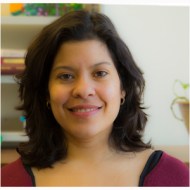
 

marilisa_jimenez-garcia1Marilisa Jiménez García is an interdisciplinary scholar specializing in Latino/a literature and culture. She is particularly interested in the intersections of race, gender, nationalism, and youth culture in Puerto Rican literature of the diaspora. Jiménez García also specializes in literature for youth and how marginalized communities have used children’s and young adult texts as a platform for artistic expression, collective memory, and community advocacy. She is working on a book manuscript on the formation of Latino/a literature and media for youth. She has published in venues such as CENTRO Journal, Journal for the History of Childhood and Youth, Latino Studies, and Journal for Adolescent and Adult Literacy. Before joining Lehigh University, Jiménez García held a postdoctoral research appointment as a research associate at the Center for Puerto Rican Studies (CENTRO) at Hunter College, City University of New York (CUNY). She was also an adjunct assistant professor in the Africana/Puerto Rican/Latino Studies department at Hunter College. She is the recipient of a Cultivating New Voices Among Scholars of Color Fellowship from the National Council of Teachers of English (NCTE) and a Best Dissertation Award from the Puerto Rican Studies Association (PRSA). Jiménez García has also completed service projects in New York City public schools and with the Children’s Defense Fund Freedom Schools. She has forthcoming book chapters on the Pura Belpré Medal and intersectionality in ethnic literature for Routledge and Teachers College Press, respectively. Jiménez García completed her Ph.D. in 2012 from the University of Florida.

Spotlight on Middle Grade Authors Part 1: Margarita Engle


By Cindy L. Rodriguez

This is the first in an occasional series about middle grade Latinx authors. We decided to shine a spotlight on middle grade writers and their novels because, often, they are “stuck in the middle”–sandwiched between and overlooked for picture books and young adult novels. The middle grades are a crucial time in child development socially, emotionally, and academically. The books that speak to these young readers tend to have lots of heart and great voices that capture all that is awkward and brilliant about that time.

Today, we highlight Margarita Engle, a Cuban-American author who is one of the most prolific and decorated writers in Kid Lit.

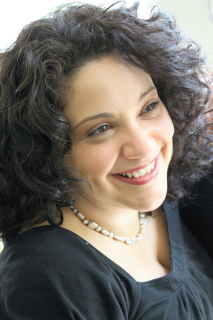
Margarita Engle

Margarita Headshot

Margarita Engle is the 2017-2019 national Young People’s Poet Laureate, and the first Latino to receive that honor. She is the Cuban-American author of many verse novels, including The Surrender Tree, a Newbery Honor winner, and The Lightning Dreamer, a PEN USA Award recipient. Her verse memoir, Enchanted Air, received the Pura Belpré Award, Golden Kite Award, Walter Dean Myers Honor, Lee Bennett Hopkins Poetry Award, and Arnold Adoff Poetry Award, among others. Drum Dream Girl received the Charlotte Zolotow Award for best picture book text.

Margarita was born in Los Angeles, but developed a deep attachment to her mother’s homeland during childhood summers with relatives. She was trained as an agronomist and botanist. She lives in central California with her husband.

Q. Who or what inspired you to become a writer?

A. I have been writing poetry since I was a small child, so I think my passion for composing verses grew naturally from loving to read. It was not something I consciously decided to try, just something I did the way I ate, slept, and breathed. As a teenager, I did make a conscious decision to try writing fiction, and I began to dream of someday writing a book about the history of Cuba. That finally happened, but not until I was in my 50s. The Poet Slave of Cuba was published in 2006, and The Surrender Tree in 2008, launching a long series of verse novels about Cuban history. By then, I had already published a great deal of poetry, technical botanical and agricultural articles, and a couple of adult novels about modern Cuba, but I have never been happier than when I write for children.

Q. Why do you choose to write middle grade novels?

A. Most of my middle grade novels tend toward the tween end of the age range, perhaps because I was eleven in 1962, at the time of the Missile Crisis. Losing the right to travel to Cuba was a traumatic, surrealistic experience. I believe that a part of myself was frozen at that age, and did not thaw until 1991, when I was finally able to start visiting again. Now, I love to write for children who crave adventure, and still believe in the wonder of nature, children who are not yet embarrassed to love their families, even though they dream of independence.

Q. What are some of your favorite middle grade novels?

A. There are so many! How can I choose? I’ll try, with apologies to all the fantastic authors I’m leaving out. Some of my favorite middle grade books are actually memoirs, rather than fiction. I love Alma Flor Ada’s Island Treasures, Jacqueline Woodson’s Brown Girl Dreaming, and Marilyn Nelson’s How I Discovered Poetry. For fiction, most of my favorite middle grade novels are written in verse: Inside Out and Back Again, by Thanhha Lai, Under the Mesquite, by Guadalupe García McCall, and Words With Wings by Nikki Grimes. I love books that travel to other countries, so I’ll sneak in Solo by Kwame Alexander and A Time to Dance by Padma Venkatraman, even though they lean toward YA. If I had to choose one middle grade prose novel, it would be the very poetic Echo, by Pam Muñoz Ryan.

Q. If you could give your middle-grade self some advice, what would it be?

A. Don’t be so self-critical. It’s okay to be a bookworm. Stop trying to please everyone else. Just be yourself.

Q. Please finish this sentence: “Middle grade novels are important because…”

A. Middle grade novels are important because that is the age when children are imaginative, wonder-filled, curious, and open to learning about the whole world.


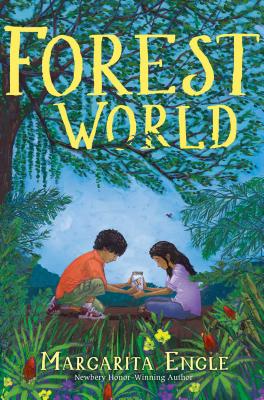
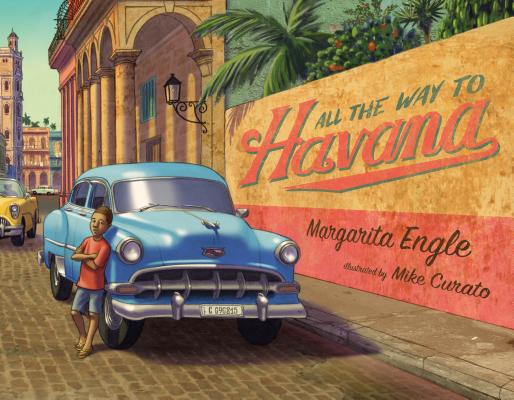
Margarita’s newest verse novel about Cuba is Forest World, and her newest picture books are All the Way to Havana, and Miguel’s Brave Knight, Young Cervantes and His Dream of Don Quixote.

Books forthcoming in 2018 include The Flying Girl, How Aída de Acosta learned to Soar, and Jazz Owls, a Novel of the Zoot Suit Riots.


photo by Saryna A. Jones

photo by
Saryna A. Jones

Cindy L. Rodriguez was a newspaper reporter for The Hartford Courant and researcher at The Boston Globe before becoming a public school teacher. She is now a reading specialist at a Connecticut middle school. Cindy is a U.S.-born Latina of Puerto Rican and Brazilian descent. She has degrees from UConn and CCSU. Her debut contemporary YA novel, When Reason Breaks, released with Bloomsbury Children’s Books (2015). She will have an essay in Life Inside My Mind, which releases 4/10/2018 with Simon Pulse. She can also be found on FacebookTwitter, and Goodreads.

We’re Back and Starting with Book Deals!


Compiled by Cecilia Cackley

This is a series keeping track of the book deals announced by Latinx writers and illustrators. The purpose of this series is to celebrate book deals by authors and illustrators in our community and to advocate for more of them. If you are an agent and you have a Latinx client who just announced a deal, you can let me know on Twitter, @citymousedc. If you are a Latinx author or illustrator writing for children or young adults, and you just got a book deal, send me a message and we will celebrate with you! Here’s to many more wonderful books in the years to come. This post will include deals from both July and August, when the blog was on summer vacation. After that are my observations about the deals since I’ve started compiling them in January.

August 31

Sara Sargent at HarperCollins has bought world rights to How to Deal: Tarot for Everyday Life by Sami Main, a how-to guide to tarot readings for beginners. Marisa de la Peña will illustrate; publication is scheduled for summer 2018. Agent: Allison Hunter at Janklow & Nesbit.

August 24

Taylor Norman at Chronicle has bought Elise Primavera’s new picture book, I’m a Baked Potato!, about a dog with a bit of an identity crisis. 2017 Pura Belpré Award winner and Juana and Lucas series creator Juana Medina will illustrate; publication is scheduled for spring 2019. Illustrator agent: Gillian MacKenzie at the Gillian MacKenzie Agency.

August 17

Nikki Garcia at Little, Brown has bought world rights to Someone Like Me: How One Undocumented Girl Fought for Her American Dream, an adaptation of the 2016 adult memoir My (Underground) American Dream by immigration rights activist Julissa Arce. This YA adaptation chronicles Arce’s childhood in Mexico separated from her parents and her struggle to belong in America while growing up as an undocumented student in Texas. Publication is planned for fall 2018. Author Agent:  Lisa Leshne at the Leshne Agency.

Yolanda Scott at Charlesbridge has acquired world rights to Not a Bean, the debut picture book by Claudia Guadalupe Martinez. The nonfiction picture book integrates English, Spanish, and a counting concept as it looks at the life cycle of the Mexican jumping bean—which is not a bean at all. Publication is scheduled for fall 2018. Author Agent: Adriana Dominguez at Full Circle Literary.

August 10

None.

August 3

None.

August 1

None.

July 27

Cassandra Pelham at Graphix and Scholastic Press has acquired world rights to two debut graphic novels, both winners of the Get Published by Graphix contest. The first, Manu, is a middle-grade graphic novel by author-illustrator Kelly Fernandez. The story follows Manu and her best friend Josefina, who live in a magical school for girls. Publication is scheduled for fall 2020.

July 25

Kendra Levin and Leila Sales at Viking have acquired, in a two-book deal, Josh Funk’s picture book, How to Code a Sandcastle, as part of Penguin’s partnership with Girls Who Code. The book stars a girl and her trusty robot who use fundamental coding concepts to construct the perfect beach day. Sara Palacios will illustrate; publication is set for summer 2018. Illustrator agent: Kendra Marcus at BookStop Literary Agency

Carter Hasegawa at Candlewick has acquired world rights to Freedom Soup author Tami Charles’s picture book, A Day with the Panye, about a girl carrying the panye to market for the first time in Port-au-Prince, Haiti, in a story of family legacy, cultural roots, and hope. Sara Palacios will illustrate; publication is set for spring 2020. Illustrator agent: Kendra Marcus and Minju Chang at BookStop Literary Agency.

Callie Metler-Smith at Clear Fork has bought a debut picture book from author Amber Hendricks and illustrator Raissa Figueroa, titled Sophie and Little Star. When Little Star falls from the heavens, she meets human Sophie, and together they work to get Little Star back home. Publication is planned for winter 2018. Illustrator agent: Natascha Morris at BookEnds Literary.

July 20

None.

July 18

Marissa Grossman at Razorbill has bought Not Now, Not Ever author Lily Anderson’s Undead Girl Gang. Pitched as Veronica Mars meets The Craft, the novel follows teenager Mila Flores as she investigates the suspicious deaths of three classmates and accidentally brings the girls back to life, forming an unlikely vigilante girl gang. Publication is scheduled for summer 2018. Author agent: Laura Zats at Red Sofa Literary.

July 13

None.

July 6

Sonali Fry at Sizzle Press has acquired YouTube star Karina Garcia’s untitled DIY tutorial; Rebecca Webster will edit. The book provides step-by-step instructions for 15 of Garcia’s favorite projects, including homemade fidget spinners. Garcia will also reveal the ways she keeps her creative and positive outlook through behind-the-scenes peeks and personal stories. Publication is planned for fall 2017. Author agent: United Talent Agency and Adam Krasner at Fullscreen.

Alexis Orgera and Chad Reynolds at Penny Candy have bought world rights to Mariana Llanos’s Luca’s Bridge/El Puente de Luca, to be illustrated by Cozbi A. Cabrera. The bilingual picture book stars a boy struggling to come to terms with his family’s deportation from America to Mexico. Publication is planned for May 2018.


I’ve been keeping track of kid lit book deals for Latinx authors since January, so I feel it’s time to write down a few observations.

First, a caveat: I am writing the rights posts using Publisher’s Weekly as my guide. I go through the articles and the rights report listed in the “Children’s Bookshelf” email that comes out once or twice a week. The numbers aren’t always consistent (most weeks have around 12 deals listed, but sometimes as many as 16 or as few as 9) and of course there may be deals that don’t ever get listed. From there, I try to determine who identifies as Latinx, looking at last names, author websites and any interviews or clues on social media. As a result, there may be people I have inadvertently left out, or else counted by accident.

With that out of the way, here are a few points I have noticed, now that we are more than half way through the year.

  1. We started the year with the lowest number of Latinx book deals (5 total in January) and since then have stayed steady at 6 or 7 each month. That’s less than ten percent of the total children’s book deals announced so far this year—a disappointing number, considering that Latinx children make up more than a quarter of the some 50 million children enrolled in public schools, according to the National Center of Education Statistics.
  2. The fewest book deals went to middle grade novels, which is disappointing because it’s a segment of publishing that is growing fast, especially graphic novels. There was a single middle grade graphic novel bought, by Kelly Hernandez as part of a contest held by the Graphix imprint of Scholastic.
  3. I was pleasantly surprised to see that the book deals for picture books were fairly evenly split between books that were both written and illustrated by Latinx creators and those that have a Latinx illustrator and a white writer. That said, it would be nice to have more picture books by new authors starring Latinx characters, history, and culture. It’s not that we don’t love Duncan Tonatiuh, Monica Brown, and Yuyi Morales, but more is always better, especially from Central American creators.

If you are following book deals and book trends, did you notice anything else so far this year? Let us know in the comments!


Cecilia Cackley is a performing artist and children’s bookseller based in Washington, DC, where she creates puppet theater for adults and teaches playwriting and creative drama to children. Her bilingual children’s plays have been produced by GALA Hispanic Theatre and her interests in bilingual education, literacy, and immigrant advocacy all tend to find their way into her theatrical work. You can find more of her work at www.witsendpuppets.com.

Enjoy the rest of the summer! We’ll be back in September!

We’ve been quiet here because we are officially on summer vacation. We will be back in September with more posts and book reviews. In the meantime, check out our posts from this year and read, read, read. See you all soon!

Image result for picture of person reading on the beach

Book Review: The Radius of Us by Marie Marquardt


Reviewed by Elena Foulis

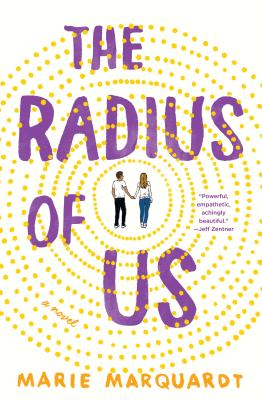
The Radius of Us CoverDESCRIPTION OF THE BOOK: Ninety seconds can change a life ― not just daily routine, but who you are as a person. Gretchen Asher knows this, because that’s how long a stranger held her body to the ground. When a car sped toward them and Gretchen’s attacker told her to run, she recognized a surprising terror in his eyes. And now she doesn’t even recognize herself.

Ninety seconds can change a life ― not just the place you live, but the person others think you are. Phoenix Flores Flores knows this, because months after setting off toward the U.S. / Mexico border in search of safety for his brother, he finally walked out of detention. But Phoenix didn’t just trade a perilous barrio in El Salvador for a leafy suburb in Atlanta. He became that person ― the one his new neighbors crossed the street to avoid.

Ninety seconds can change a life ― so how will the ninety seconds of Gretchen and Phoenix’s first encounter change theirs?

Told in alternating first person points of view, The Radius of Us is a story of love, sacrifice, and the journey from victim to survivor. It offers an intimate glimpse into the causes and devastating impact of Latino gang violence, both in the U.S. and in Central America, and explores the risks that victims take when they try to start over. Most importantly, Marie Marquardt’s The Radius of Us shows how people struggling to overcome trauma can find healing in love.

MY TWO CENTS: To write about unaccompanied minors fleeing to the United States from El Salvador, is to talk about violence, family separation, corruption and trauma.  The Radius of Us, written by Marie Marquardt, explores the trauma of assault, gang harassment, abandonment and diaspora in the lives of Phoenix, Ari and Gretchen. Phoenix and his young brother, Ari, flee El Salvador due to gang violence. On their journey to the States, they are kidnapped in Mexico and forced into slavery. When they finally arrived to the U.S., they are arrested and separated. Although the novel begins with Gretchen’s and Phoenix’s first person narratives, we quickly learn how their lives intersect. They both live in the same Atlanta suburb and, although they don’t know it immediately, they’ve experienced traumatic events in their lives that connect them. Indeed, they face their fear of crowds, heights, and learn that trauma cannot completely leave them, and that they cannot be who they once were, yet there is the promise of recovery.

The reader can guess that Phoenix and Gretchen will eventually end up together, but the story is not about their romance. The story centers on the impact of trauma and how each of these characters is able to help the other face their fears. The author slowly takes us through the lives of the main characters and each of the people that play a small or big part in their recovery. Phoenix lives with Sally and Amanda, a couple who takes care of Phoenix while his asylum status is determined.  Phoenix volunteers as a gardener in the “place without a soul”—as Gretchen and her friend Bree call it—a community garden for the residents of the subdivision. We learn quickly that Gretchen suffers from panic attacks. She is homeschooled as a result of this, and is finishing her high school senior year studying from home.  As Phoenix and Gretchen get closer, they both learn—as does the reader—about each other’s pasts: Phoenix’s attempt for a better life in the U.S. for himself and his little brother, his fear of heights and his current immigration status; Gretchen’s assault, which causes her to have panic attacks, and her now estranged college boyfriend. The author explores the issue of trauma slowly and carefully. We see how the characters, at different points, deal with the past by being each other’s support system. Sometimes they listen, they let the other vent, or they hold each other as they re-live or are triggered by a situation that takes them right to the place of trauma. We even see how trauma is expressed differently in different characters; for example, Ari is unable (or unwilling, the jury still out!) to speak, but can draw pictures to deal with his past. We see these drawings in the book, too. The drawings, and Phoenix interpretation of them, allow the reader to see the value of different types of expression, especially as it relates to trauma therapy.

Marquardt does not shy away from issues of xenophobia, and the misunderstanding that exists when someone is in limbo about their immigration status. However, she also shows us the kindness of people willing to lend a hand, and support and advocate for those who have been wrongly persecuted. We see this in the characters of Amanda and Sally, Sister Mary Margaret, and the couple that owns a tattoo shop. Similarly, we see how Phoenix is the person that helps Gretchen heal, while at the same time sacrifices his education and life for his brother Ari.

TEACHING TIPS: In my opinion, it is impossible to teach this novel without providing the reader with the historical context of unaccompanied minors. Whether this is novel used in high school or college classrooms, it is important to understand the devastating effects of poverty and gang violence in places like Guatemala, El Salvador, and Honduras and the difficult decision parents (if they are still alive) must make to send their children to a safer place. Another important topic to explore is the Bestia, the train that transport thousands of Central Americans to the U.S. and about the Mexican women known as Las Patronas who feed the migrants traveling on it.

Another unique element in this novel is the intersection of drawings and tattoos to tell a story. We see Ari’s drawings as memories of his past, the traumatic events that he remembers and his nostalgia for his home country. Although we do not see the tattoos, we know they are used as markers. Gangs use them to identify each other and to mark members as cattle. This, at times, helps Phoenix and Ari survive, but it also brings shame. In the end, the reader can see how these artistic expressions prove to be transformative.

Headshot-OfficialMarie Marquardt is a Scholar-in-Residence at Emory University’s Candler School of Theology and author of contemporary YA fiction. She has written several articles and co-authored two non-fiction books about Latin American immigration to the U.S. South. She also has written three novels for young adults, based in part on her experience working with immigrants in the South: DREAM THINGS TRUE (St. Martin’s Griffin/ September 2015), THE RADIUS OF US (St. Martin’s Griffin/ January 2017) and FLIGHT SEASON (St. Martin’s Griffin/ forthcoming February 2018). She lives in a very busy household in Decatur, Georgia, with her spouse, four children, a dog, and a bearded dragon. When not writing, teaching, or chauffeuring her children, she can be found working with El Refugio, a non-profit that serves detained immigrants and their families.


headshot2016ABOUT THE REVIEWER: Elena Foulis has a Ph.D. in Comparative Literature and Cultural Studies from the University of Arkansas. Her research and teaching interests include U.S. Latina/o literature, and Digital Oral History. She is currently working on a digital oral history collection about Latin@s in Ohio, which has been published as an eBook titled, Latin@ Stories Across Ohio. She currently lives in Cleveland, Ohio.