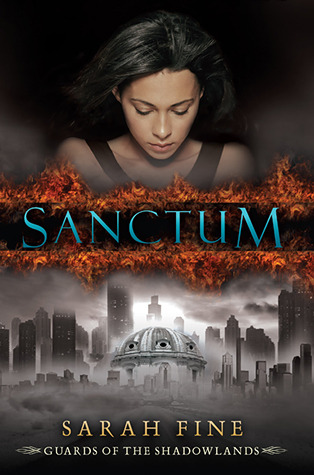
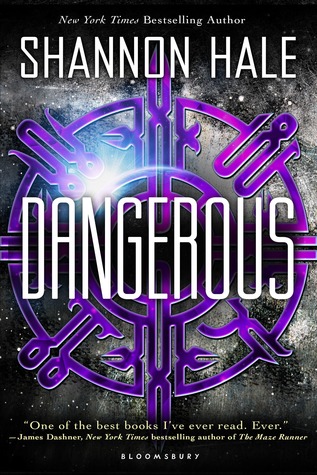
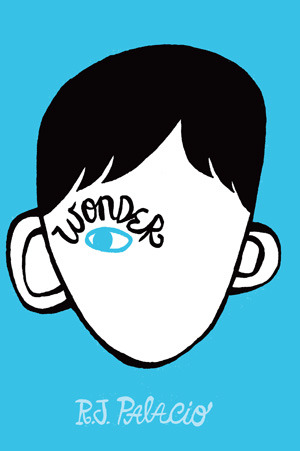
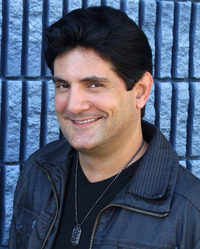
Participants in our 2014 Latin@s in Kid Lit Reading Challenge are out of control in the best possible way! Take a look at the variety of books that were read in June, which happens to be the half-way point of the challenge. Now would be a great time to join us or renew your commitment to the challenge, which is to read one book a month that is written by a Latin@ author (any subject) or a book written by anyone that has Latin@ characters, themes, settings, etc. You’re not required to review–only read and enjoy and let us know what you have read! If you do post a review somewhere, we will link it to the book covers below. If you choose not to review, we will link the covers to Goodreads. For July, you may want to consider some of the new winners of the International Latino Book Awards.
Tag Archives: young adult
YA Author Steven dos Santos Talks Sci-Fi, Diversity, and Overcoming Obstacles
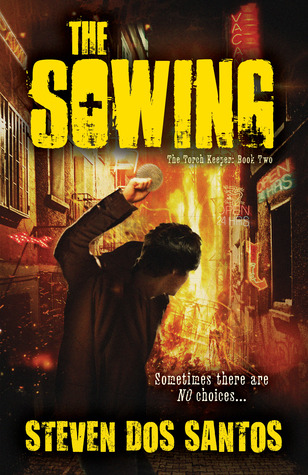
This month, we are taking a look at Latin@s in science fiction and fantasy. Today, we have a Q&A with Steven dos Santos, author of The Culling and The Sowing.
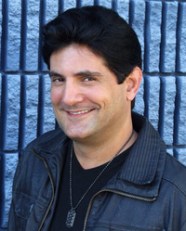
Born in New York City and raised in South Florida, Steven dos Santos began writing at age 7. It was only after a couple different career paths as an adult that he decided to become a professional writer. His trilogy, entitled The Torch Keeper, is his first effort. Book One, The Culling, was published last year, and the second book, The Sowing, was published in 2014.
In addition to the mind-boggling twists and shocks and the intense descriptions of violence and the horror in which his characters live in their dystopian world, what makes this series special is its main character, Lucian “Lucky” Spark, who is gay. Also striking is that the world in which dos Santos’ characters inhabit have equal rights, such as marriage equality. It’s also a bit of a novelty to have the main character in this type of genre not be a straight female. (Looking at you, Katniss Everdeen.)
Steven was kind enough to answer a few questions for Latin@s in Kid Lit – among other things, about the rewards and struggles of his writing career and what’s in store for the future.
Eileen: Could you tell us a bit about what prompted you to write this series? What is it about this genre that is appealing to you?
Steven: I’ve always been a fan of sci-fi movies and books, particularly stories that deal with moral dilemmas. Ever since I was a kid I was always terrified by the idea of what would happen if I was in a situation where I could only save one person that I loved. Who would I choose? How would I choose in such an impossible situation? Writing The Culling gave me a chance to explore that no-win scenario and grapple with my own nightmares.
Eileen: What kind of research do you do to create your books’ themes/characters/setting?
Steven: For The Torch Keeper series, I found myself researching a lot of different things that probably raised a few eyebrows at the NSA! LOL. Everything from disarming explosive devices, the effects of hypothermia on the body, symptoms of terminal illnesses, the history and stats of the Statue of Liberty, humankind’s negative effects on the environment and potential harm it can create in the future, etc. Even though both The Culling and The Sowing have futuristic elements, I felt it was very important to ground them in reality in order to heighten the emotional effects. All the tech and post-apocalyptic devastation are based on things that could actually happen, which, in my opinion, not only raises the stakes, but definitely increases the tension.
Eileen: Do you base your characters on people you know in real life? Would you say that Lucky is a reflection of yourself?
Steven: I try not to base my characters on specific people that I know. I may borrow traits from people I’ve encountered and then blend those together to create someone totally different. That being said, my protagonist, Lucian “Lucky” Spark is very sensitive, a dreamer, and a bit of a romantic. He also likes to read and he’s a gay male of Latin descent. You do the math! 😉
Eileen: What are your thoughts on diversity in YA scifi/fantasy works? Is this an important issue for you personally? If so, how?
Steven: This is an issue I’m very passionate about! While I think it’s great that there is definitely an increased awareness on the parts of readers and publishers alike regarding diversity in YA scifi/fantasy, I think we are only beginning to scratch the surface of this extremely important issue. Everyone deserves to see him or herself portrayed as the hero of a novel, the one to save the world. It’s also extremely important for young people to read about all types of people and realize just how much they have in common. Growing up, I wish there had been more books that included characters like me on their pages. This was definitely a big motivator in writing The Torch Keeper series.
Eileen: Who or what has influenced you in your writing career? Do you feel that being a gay Latino influences your work?
Steven: My mom was a definite inspiration in pursuing my writing dreams. I was brought up not only embracing my Hispanic heritage, but also to be proud of the country of my birth, America. I also definitely feel being part of a minority (or more than one in my case) has challenged me to strive for greater representation of diversity. But on those days when I’m feeling particularly frustrated, I read these messages I’ve received.
This one from a high school student:
Thanks for writing a great book and I hope it receives all of the attention it deserves. I know some people won’t pick up the book because it has gay characters. I try to plead with them because it is a great book. Love is love to me and everyone should be accepted for what they are and that’s the great thing about your book. Right now I’m struggling with my own sexuality, not really struggling because I know I am gay but my mother doesn’t accept them. You have inspired me though to try to come out. You have relieved some of the pressure. Thank you.
And this other one from another reader:
I just really want to say thank you for your books because it’s really really awesome to see a novel with an openly queer protagonist on the shelf at Barnes and Noble and then read it and find that the book isn’t about the “struggles of being a queer teen” and instead created actual conflicts rather than people just being appalled by two boys being together and after I read The Culling I sat down and just cried because it’s so nice to feel validated and accepted especially if you live in a place where being accepted as anything other than heterosexual is unheard of so yeah thank you so so much for your books they’re incredible and I really really hope they affect other people like they affected me.
And that is a magical reminder of why I do what I do. If I can reach just one person in such a powerful manner, I’ve accomplished something wonderful. That’s also why it meant so much to me when The Culling was recently named an American Library Association Rainbow List Top Ten Selection.
Eileen: Have you experienced any roadblocks getting published? Or has it been fairly smooth sailing?
Steven: I’ve definitely experienced obstacles on my road to publication. I actually had an agent put in writing that while she loved my book, she was going to have to pass because the market for YA books is heterosexual females and no one would want to read a book about a male protagonist, especially a gay male protagonist. To say I was crushed would be a grave understatement. This wasn’t a rejection of the quality of my writing, which I could improve if need be. This was far more insidious. It was a rejection of my being. Basically, the message was, no matter how good my writing was, no one was ever going to be interested if I wrote about a particular type of teen.
If I wrote about people like me.
Eileen: What are you working on now?
Steven: I’m actually working on finishing the concluding novel in The Torch Keeper series! My goal is to finish it by the end of summer. I’ve already written the ending, which I pretty much envisioned while writing The Culling. I can’t say too much about it, but rest assured like The Culling and The Sowing, the title of Book 3 will also end in ING. (Hint: It’s NOT “The Reaping!”) I’ve also started work on an entirely new novel that is more in the horror genre and will once again feature a diverse cast.
If readers would like to contact me, they can do so at:
www.facebook.com/stevendossantosauthor
www.facebook.com/TheTorchKeeper
http://www.tumblr.com/blog/stevendossantos
www.twitter.com/stevendossantos
www.twitter.com/TheTorchKeeper
Join The Torch Keeper Fan Forums at:
http://chaosreads.com/forum/69-the-torch-keeper-series-steven-dos-santos/
And they can find my books at:
Diversity Needed Under the Sea: Not All Mermaids Have Blond Hair and Blue Eyes
By Cindy L. Rodriguez
This month, we’re taking a look at Latin@s in science fiction and fantasy. On Monday, Zoraida Córdova explained how instead of writing about her immigration experience, which seemed expected of her, she decided to write about what interested her most: merfolk.
While there have been hundreds of children’s books published about mermaids, very very very few have featured mermaids or mermen who did not have blond or red hair and blue or green eyes. We asked via Twitter if anyone knew of a Latin@ YA author, other than Zoraida, who wrote about merpeople, or books, other than Zoraida’s The Vicious Deep series, that featured diverse characters. We didn’t get any responses. So, the world under the sea seems to be another area of kid lit that could use some diversifying.
If you have a mermaid story in you, waiting to be told, please consider this: every culture has its own mythology packed with gods and goddesses similar to those in Greek and Roman tales. I’m not saying you should ignore Poseidon or not create white merfolk with blond hair and blue eyes. But, think about it this way: Wouldn’t the sea god mingle with mermaids of color if he is responsible for all of the seas in the world? Knowing that merfolk exist in Mexican, Brazilian, Caribbean, and African mythology, to name a few, gives you the opportunity to diversify your mermaid community. And I know we’re talking about fantasy fiction here, so really you can do whatever you want, including making your mermaids purple, green, or any other color. But, if your writing is rooted in known mythological stories, then keep in mind that mythological stories exist beyond Greece and Rome, so your merfolk don’t all have to look the same.
Check these out:
A cool Tumblr dedicated to mermaids of color.
The City Gallery at Waterfront Park in Charleston, South Carolina, had an exhibit called Mermaids and Merwomen in Black Folklore.
The Smithsonian National Museum of African Art had an exhibit on Mami Wata (Mother Water), the water spirit of Africa.

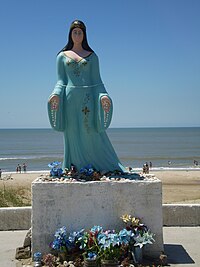
L to R: The first two images are of Iemanjá, Brazil’s goddess of the sea, who is sometimes portrayed as a mermaid. The image on the right is a bronze statue of Iara, a water queen. The statue is outisde the Alvorada Palace, the official presidential residence in Brasília.

On the left is a Loteria card, part of a Mexican game of chance, featuring La Sirena (the siren). On the right is a work of art by Jose Garcia Antonio of San Antonino Castillo Velasco, Oaxaca, Mexico seen at the Museo de Culturas Populares in Coyoacan, Mexico City.
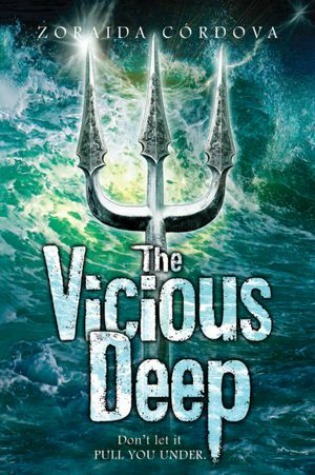
And now, we’d like to celebrate our own Zoraida Córdova, mermaid expert and writer extraordinaire. Why? Because she’s a Latina writer with a diverse cast of characters in the deep blue sea. And her final novel of The Vicious Deep trilogy, published by Sourcebooks Fire, released on July 1!
Here’s a run down of her series:
For Tristan Hart, everything changes with one crashing wave. He was gone for three days. Sucked out to sea in a tidal wave and spit back ashore at Coney Island with no memory of what happened. Now his dreams are haunted by a terrifying silver mermaid with razor-sharp teeth. His best friend Layla is convinced something is wrong. But how can he explain he can sense emotion like never before? How can he explain he’s heir to a kingdom he never knew existed? That he’s suddenly a pawn in a battle as ancient as the gods. Something happened to him in those three days. He was claimed by the sea…and now it wants him back.
A storm is coming…The ocean is a vicious place. Deeper and darker than Tristan could have imagined. Beneath its calm blue surface, an ancient battle is churning —and no one is safe. In the quest for the Sea Throne, Tristan has already watched one good friend die. Now he must lead the rest on a dangerous voyage in search of the trident that will make him king. But while Tristan chases his destiny, the dark forces racing against him are getting stronger, and the sea witch of his nightmares is getting closer. Battling sea dragons and savage creatures of the deep, Tristan needs his friends’ support. But they each have their secrets, and a betrayal will force Tristan to choose between his crown and his best friend Layla — the only girl he’s ever loved.
This epic clash of sand and sea will pit brother against brother–and there can only be one winner. In two days, the race for the Sea Court throne will be over-but all the rules have changed. The sea witch, Nieve, has kidnapped Layla and is raising an army of mutant sea creatures to overthrow the crown. Kurt, the one person Tristan could depend on in the battle for the Sea King’s throne, has betrayed him. Now Kurt wants the throne for himself. Tristan has the Scepter of the Earth, but it’s not enough. He’ll have to travel to the mysterious, lost Isle of Tears and unleash the magic that first created the king’s powerful scepter. It’s a brutal race to the finish, and there can only be one winner.
The 2014 International Latino Book Awards Winners!!
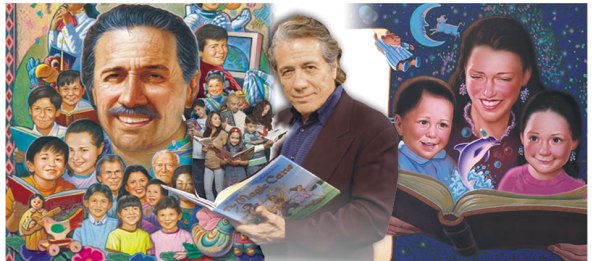
Below are the first place winners of the 16th Annual International Latino Book Awards in the children’s, youth, and young adult categories. If you click on the images, you will be taken to Goodreads, Barnes and Noble, or Amazon for more information. The Awards are produced by Latino Literacy Now, an organization co-founded by Edward James Olmos and Kirk Whisler, and co-presented by Las Comadres para las Americas and Reforma, the National Association to Promote Library and Information Services to Latinos. The Awards were announced this past weekend, on June 28, in Las Vegas as part of the ALA Conference. For the complete list, which includes adult fiction, nonfiction, and second place and honorable mention winners, click here. CONGRATULATIONS TO ALL OF THE WINNERS!!
Best Latino Focused Children’s Picture Book: English
Best Latino Focused Children’s Book: Spanish or Bilingual
Best Children’s Fiction Book: English
Best Children’s Fiction Picture Book: Bilingual
Best Children’s Fiction Picture Book: Spanish
Best Children’s Nonfiction Picture Book
Best Educational Children’s Picture Book: English
Best Educational Children’s Picture Book: Spanish or Bilingual
Most Inspirational Children’s Picture Book: English
Most Inspirational Children’s Picture Book: Spanish or Bilingual
Best Youth Latino Focused Chapter Book
Best Youth Chapter Fiction Book: English
Best Youth Chapter Fiction Book: Spanish or Bilingual
Best Youth Chapter Nonfiction Book
Most Inspirational Chapter Book
Best Young Adult Latino Focused Book: English
Best Young Adult Latino Focused Book: Spanish or Bilingual
Los Pájaros No Tienen Fronteras by Edna Iturralde
Best Young Adult Fiction Book: English
Best Young Adult Fiction Book: Spanish or Bilingual
La Guarida de las Lechuzas by Antonio Ramos Revillas
Best Young Adult Nonfiction Book
Best Educational Young Adult Book
Most Inspirational Young Adult Book
Best Book Written by a Youth: English
Best Book Written by a Youth: Spanish or Bilingual
Best Children’s Picture Book Translation: Spanish to English
Best Children’s Picture Book Translation: English to Spanish
Best Chapter/Young Adult Book Translation: English to Spanish
Best First Book: Children’s and Youth
Book Review: The Lightning Dreamer by Margarita Engle
DESCRIPTION FROM THE BOOK JACKET: Tula is a girl who yearns for words, who falls in love with stories, but in Cuba, girls are not allowed an education. No, Tula is expected to marry well—even though she’s filled with guilt at the thought of the slaves Mamá will buy with the money gained by marrying Tula to the highest bidder.
Then one day, hidden in the dusty corner of a convent library, Tula discovers the banned books of a rebel poet. The poems speak to the deepest part of her soul, giving her a language with which to write of the injustice around her. In a country that isn’t free, the most daring abolitionists are poets who can veil their work with metaphors, and Tula becomes just that.
In powerful, haunting verses of her own, Margarita Engle evokes the voice of Gertrudis Gómez de Avellaneda, known as Tula, a young woman who was brave enough to speak up for those who could not.
MY TWO CENTS: The novel begins in 1827. Tula’s mother, who twice made the mistake of marrying for love, is desperate to prevent her thirteen-year-old daughter from taking a similar path. Mamá’s motivations are clear-cut. A wealthy connection through Tula is the family’s only hope for propping up their shaky economic status. In 19th-century colonial Cuba, arranged marriages are the social norm, but Tula’s mother worries that a girl who buries her nose in books will not attract the right kind of husband–a rich one.
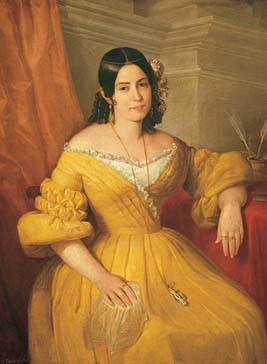
Who is Tula? Margarita Engle is acclaimed for novels in verse that bring to life history’s outliers, young men and women from previous centuries who thought and acted in surprisingly modern ways, and Tula stands tall among them. She’s based on Gertrudis Gómez de Avellaneda, a Cuban poet who championed liberty for all humans and wrote Sab, an abolitionist novel, the first of its kind in Spanish. Sab predated Uncle Tom’s Cabin, the Harriet Beecher Stowe classic, by eleven years. Avellaneda’s importance as an abolitionist and feminist writer is not widely known in English-speaking America. The Lightning Dreamer corrects this oversight and imagines Avellaneda’s formative years, just as she began to discover the life-changing force of poetry.
Marriageability is not the only issue that arises from Tula’s penchant for reading. She happens upon the forbidden poetry of José María Heredia, whose sharp observations awaken Tula’s passion for justice. In colonial Cuba, injustice is everywhere. Her eyes take in the plight of African slaves, biracial babies abandoned to the convent, lovers kept apart by miscegenation taboos, and girls like herself, doomed to business arrangements thinly masquerading as marriages. Tula expresses her ardor for justice through poetry, which she burns to keep her mother from discovering.
When Tula refuses the marriage that her grandfather arranges, she must rise to meet a string of new challenges. The inheritance is lost and her family is condemned to relative poverty. For a while, Tula finds refuge in a storyteller’s community, where she becomes entangled in an unrequited love. She moves away from the countryside to Havana, where she supports herself through tutoring. In 1836, her brother, Manuel, warns her that their mother is cooking up another arranged match. Tula flees for Spain, expecting to find greater social and creative freedom there.
The Lightning Dreamer is written in free verse and is voiced through multiple characters. Tula is the most frequent speaker. Short segments provide other characters’ point of view. A partial list includes Tula’s mother; Manuel; Caridad, the freed slave who works for the family; the nuns who offer Tula space to read and write in peace; and Sab. Each character speaks in first person. I imagine them as a series of stage players delivering brief and sometimes prejudicial monologues reflecting on Tula’s choices. This approach perfectly suits the fictionalized treatment of a young poet. The language is spare and often stunning, capturing vivid images and profound interiority, as in this excerpt:
When we visit my grandfather
on his sugar plantation,
I see how luxurious
my mother’s childhood
must have been,
surrounded by beautiful
emerald green sugar fields
harvested
by row after row
of sweating slaves.
How can one place
be so lovely
and so sorrowful
all at the same time?
READING LEVEL: 12 and up
TEACHING TIPS: The Lightning Dreamer is an ideal jumping off point for exploring a wide array of subjects suggested in the novel. These range from colonialism, to New World slavery and racism, to patriarchal societies and the history of women’s political movements. At the back of the book, extensive notes provide comparisons between the historical Avellaneda and Tula, her fictionalized counterpart. This section also includes Spanish and translated excerpts of Avellaneda’s poetry and a bibliography of related sources.
Margarita contributed a guest post to Latin@s in Kid Lit that illuminates her love of biographical writing.
Henry Louis Gates’ PBS series, Black in Latin America, may be of interest for classroom use, in conjunction with the reading of The Lightning Dreamer. The episode “Cuba: The Next Revolution” focuses on the ongoing struggle by Afro Cubans to overcome centuries of racism. There’s no mention of Avellaneda in this one-hour documentary film; nevertheless, interviews and scenery enriched my reading. The film is particularly effective in its treatment of Cuba’s history of slavery and the role of freed slaves in the protracted battle for independence from Spain. The ruins of sugar plantations dating back to the book’s era starkly reminded me of Tula’s world.
RECOGNITION FOR THE LIGHTNING DREAMER: Awards and honors continue to flood in. They include:
2014 Pura Belpré Honor Book
School Library Journal’s Top Ten Latino-themed Books for 2013
YALSA 2014 Best Fiction for Young Adults
For a full list of awards and more information, please visit Margarita’s author website. I also recommend following her on Facebook, where she frequently posts updates on appearances, interviews and release dates for new books.
THE AUTHOR: Margarita Engle is a native of California and the author of many children’s and young adult books. She is the daughter of an American father and a Cuban mother. Childhood visits to her extended family in Cuba influenced her interest in tropical nature, leading to her formal study of agronomy and botany. She is the winner of the first Newbery Honor ever awarded to a Latino/a. Her award winning young adult novels in verse include The Surrender Tree, The Poet Slave of Cuba, Tropical Secrets, and The Firefly Letters.
FOR MORE INFORMATION ABOUT The Lightning Dreamer, visit your local library or bookstore. Also check out worldcat.org, indiebound.org, goodreads.com, amazon.com, barnesandnoble.com, and Houghton Mifflin/Harcourt.
2014 Reading Challenge: May Update
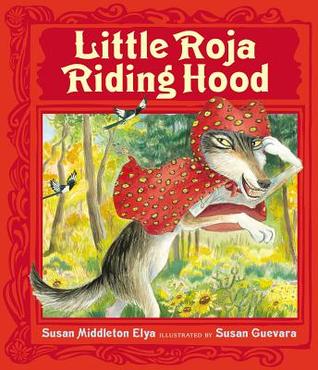
Students are counting down the days to the end of the school year, but teachers and librarians are making sure they don’t leave the building without summer reading lists. Although educators offer suggestions, be sure to review the lists of titles with an eye out for diversity. If the lists lack a wide range of topics and diverse characters, then seek out those books. Below are some suggestions from readers participating in our 2014 Latin@ in Kid Lit Reading Challenge. Thank you to everyone for participating in the challenge and purposely selecting books by/about/for Latin@s. Remember, you can join the challenge any time during the year, and you’re not required to review–only read and enjoy! If you do post a review somewhere, we will link it to the book covers below. If you choose not to review, we will link the covers to Goodreads.
Also, keep in mind that June is National Caribbean-American Heritage Month! Here are a few suggestions of authors known to write about people from the Caribbean: Julia Alvarez (Dominican Republic), Margarita Engle (Cuba), Eric Velazquez (Puerto Rico), Christina Diaz Gonzalez (Cuba), Lynn Joseph (Dominican Republic, Trinidad), Judith Ortiz Cofer (Puerto Rico), and Nancy Osa (Cuba). Happy reading!
A note to participants: As you complete books, please send us the information, so we can share what you’re reading each month.