Pitch Fiesta Update: 15 Writers Matched with Mentors to Prepare for the Event

We’re excited to provide an update on Latin@s in Kid Lit’s first Pitch Fiesta. The deadline for submissions was October 3. We received 21 entries and reduced that number to 15 viable contenders representing middle grade and young adult–realistic, science fiction, fantasy, magical realism, LGBTQ, and Southern Gothic.

So, here’s the thing. We had no idea how many entries to expect. I (Cindy) thought we’d get maybe a half-dozen, which the LiKL crew could easily manage to review and prepare for pitching. So, when we ended up with 15!! viable entries, we flashed the bat signal at our kid lit writer friends. For those of you who don’t know, the kid lit community is awesome, and in no time, we had enough people ready to mentor our writers.

Here’s the process: Each mentor has been matched with a writer. The mentor will review the writer’s query and first pages with a critical eye. The mentor will email comments, thoughts, questions, concerns, suggestions, etc. to the writer. The two will work to make the query and first pages as clean and agent-ready as possible. Polished queries will be posted on our site on November 12-13 for the agents’ review. We hope “I’ve got to have it” type sparks will fly and matches will be made between writers and agents! These sparks of love over a manuscript will eventually lead to more books by and about Latin@s!

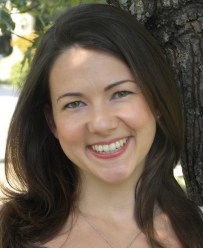
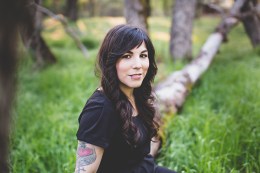
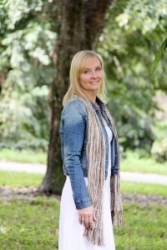
For now, though, there’s work to be done. Still, we wanted to publicly say, THANK YOU!!! to the authors who stepped up to help! Many are members of the Fearless Fifteeners, the Diversity League, and/or the We Need Diverse Books Team. They all support diversity in children’s literature and want to “pay forward” the help they received on the path to publishing. Below are all of the mentors. Names and titles match with photos going lef to right. If you click on the photos, you will be taken to the authors’ websites for more information.

Cindy L. Rodriguez: WHEN REASON BREAKS (Bloomsbury)

Ashley Hope Pérez: WHAT CAN’T WAIT and THE KNIFE AND THE BUTTERFLY (Carolrhoda Books)

Zoraida Córdova: THE VICIOUS DEEP trilogy (Sourcebooks Fire) and LUCK ON THE LINE (Diversion Books)

Heather Marie: THE GATEWAY THROUGH WHICH THEY CAME (Curiosity Quills Press)

Kelly Jones: UNUSUAL CHICKENS FOR THE EXCEPTIONAL POULTRY FARMER (Knopf Books for Young Readers)

Erin Entrada Kelly: BLACKBIRD FLY (Greenwillow Books)

A.L. Sonnichsen: RED BUTTERFLY (Simon and Schuster Books for Young Readers)

Anna-Marie McLemore: THE WEIGHT OF FEATHERS (Thomas Dunne)

Ronald L. Smith: HOODOO (Clarion)

Kerry O’Malley Cerra: JUST A DROP OF WATER (Sky Pony Press)

Dhonielle Clayton: TINY PRETTY THINGS (HarperTeen) and THE BELLES (Disney-Hyperion)

Holly Bodger: 5 TO 1 (Knopf Books for Young Readers)

Kristy Shen and Bryce Leung: LITTLE MISS EVIL (Spencer Hill Middle Grade)

Carrie Firestone: The title of Carrie’s debut novel hasn’t been finalized, but she will be published in 2016 by Little Brown & Co.

  2012AuthorPhoto500pixels  317988_632439229822_92623787_n

Heather-AuthorPhotos-3-WEBSIZE  Kelly Jones  Erin Entrada Kelly A.L. Sonnichsen Anna-Marie McLemoreRonald L. SmithKerry CerraDhonielle Clayton Holly Bodger Kristy and Bryce  profile photo


2014 Reading Challenge: July & August Update

If you want to diversify your TBR pile, this is the perfect month to do it since it is National Hispanic Heritage Month. Our challenge is heading into its final months, but it’s never too late to join us. Here are the guidelines: read one book a month that is written by a Latin@ author (any subject) or a book written by anyone that has Latin@ characters, themes, settings, etc. You’re not required to review–only read and enjoy and let us know what you have read! If you do post a review somewhere, we will link it to the book covers below. If you choose not to review, we will link the covers to Goodreads. Explore our book lists or past book talks (Libros Latin@s) for suggestions.

Also, since this is National Banned Books Week, you can choose from the Latin@ titles that have been challenged, according to this list kept by the National Council of Teachers of English. Here they are:

Always Running Before We Were Free  Bless Me, Ultima  95127  9328  7133770  94064

And here are some of the titles read by our Reading Challenge participants:

106281  17928557  18405521  18651917  18166935  17643  1369609  17870787  288563  15893258  18654377  1274318  20702546  12000020  13436375  1258175  Moony Luna/Luna, lunita lunera  16670129  15791044  6098251  378653  2376261


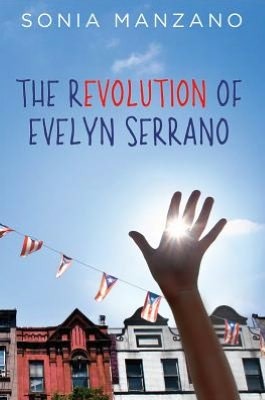
Book Review: The Revolution of Evelyn Serrano by Sonia Manzano

Evelyn overBy Sonia Alejandra Rodriguez

DESCRIPTION FROM THE BOOK JACKET: There are two secrets Evelyn Serrano is keeping from her Mami and Papo: her true feelings about growing up in her Spanish Harlem neighborhood, and her attitude about Abuela, her sassy grandmother who’s come from Puerto Rico to live with them. Then, like an urgent ticking clock, events erupt that change everything. The Young Lords, a Puerto Rican activist group, dump garbage in the street and set it on fire, igniting a powerful protest. When Abuela steps in to take charge, Evelyn is thrust into the action. Tempers flare, loyalties are tested. Through it all, Evelyn learns important truths about her Latino heritage and the history makers who shaped a nation. Infused with actual news accounts from the time period, Sonia Manzano has crafted a gripping work of fiction based on her own life growing up during a fiery, unforgettable time in America, when young Latinos took control of their destinies.

MY TWO CENTS: The Revolution of Evelyn Serrano (a Pura Belpré Author Honor Book) by Sonia Manzano  opens with a frustrated fourteen year old Evelyn getting ready for her summer job at the Five-and-Dime. Her desire to fit in to American society and distance herself from her Puerto Rican heritage is disrupted when her Abuela comes to stay with them. Abuela’s orange hair and bright clothes make her anything but the traditional grandmother Evelyn expected. Abuela taking over Evelyn’s bedroom with makeup, hair rollers, and flashy clothes is only the first of many changes that serves to transform Evelyn’s understanding of her own identity.

While Abuela’s presence creates tension in the Serrano household, a new youth group arrives to challenge discriminations against their neighborhood. The Sanitation Department eventually stops picking up the garbage, and as it continues to accumulate, so does the tension around the Young Lords’ intent to politicize El Barrio. The rise of the Young Lord’s movement gives Abuela and Evelyn an opportunity to discuss the relationship between what is presently happening in their community and the Ponce Massacre (1937) of which Abuela has kept newspaper clippings. The Young Lords organize El Barrio in a way that Evelyn has never experienced, and their demonstrations and marches provide El Barrio with a visibility they later utilize to demand social change. As the political situation intensifies in El Barrio, Evelyn and Abuela become more involved with the Young Lords. Their involvement creates a rift between them and Evelyn’s mother, but it is through all of this process that Evelyn recognizes the importance of her Puerto Rican heritage.

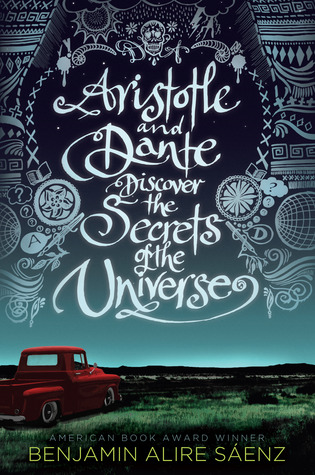
Among many things, Manzano’s The Revolution of Evelyn Serrano is a historical young adult novel. (Re)tellings and (re)imaginings of history are currently a popular strategy in Latina/o Children’s and Young Adult Literature. Like Juan Felipe Herrera’s Downtown Boy (2005) and Bejamin Alire Saenz’s Aristotle and Dante Discover the Secrets of the Universe (2012), Manzano asks that today’s young adult reader travel back to a time when their grandparents and/or parents were children and adolescents.

This literary move to focus on a historical event is brilliant for many reasons. First, it asks Latina/o readers to examine their own background as a way to understand their present identity. In The Revolution of Evelyn Serrano, it is extremely significant that there are moments of reflection that help Evelyn understand that her presence in El Barrio is not coincidence. In other words, Evelyn needed to learn her parents’ and grandparents’ journeys to understand her own identity and her relationship to El Barrio.

Secondly, novels like Manzano’s center stories that have remained marginalized in mainstream history books. Evelyn is such a wonderful character precisely because she sounds and behaves like a typical teenager. At the beginning of the novel, Evelyn wants nothing to do with her parents and their stories. She is embarrassed of them and her community—and this right here is a very honest and common feeling (that too often remains silent) among Latino children and teenagers of (im)migrant parents. Throughout the novel, Evelyn learns to center her Puerto Rican culture as a way to find empowerment rather than to feel embarrassed by it.

Lastly, Manzano’s novels, and others like hers, create intergenerational discussions around issues of discrimination and gender (to name a few themes present in Evelyn Serrano). In other words, novels like these emphasize that significant social change requires a community talking to one another. While the Young Lords were central in the mobilization of El Barrio, it was also with the support of their elders and younger members that they were able to stand strong against the discrimination the community faced.

The Revolution of Evelyn Serrano presents a genuine story of identity formation for a young Latina coming of age at a moment in U.S. history when Latinos are violently forced to assimilate into mainstream society or risk their lives by speaking up and challenging the discrimination they experience.

TEACHING TIPS: When teaching The Revolution of Evelyn Serrano, it will be helpful to provide a historical context for the novel from which to guide student discussion. Manzano provides a bit of this discussion in her afterward where she explains that the events in the novel are based on true events. The Young Lords: A Reader (2010) edited by Darrel Enck-Wanzer and Palante: Voices and Photographs of the Young Lords, 1969-1971 (2011) are excellent resources for educators to learn more about the group’s history, motivations, and outcomes. Pairing the novel with some of the essays in these sources for more advanced or older students can also provide a basis for discussing race, class, and gender both within the party and in the context of the US.

A thematic approach to teaching Manzano’s novel can be one way to broadly discuss the Civil Rights Movement and relating topics. Novels like Rita Williams-Garcia’s One Crazy Summer (2011) about three young African American sisters and their adventures with the Black Panthers and children’s books like Monica Brown’s Side by Side: The Story of Dolores Huerta and Cesar Chavez (2010) about the leaders of the farm workers’ movement can provide rich conversations about the array of issues impacting people of color at this time. Discussing children’s and YA books on the Civil Rights movement not only allows students to learn more about specific racial discrimination and community empowerment but also creates opportunities for students to discuss how those issues impact them now.

Another approach to teaching the novel is to discuss characters and character development. Evelyn’s relationship with her abuela is a complicated one because they have different personalities and because Abuela represents a cultural heritage Evelyn wishes to avoid. Their relationship, however, is central in the novel. Other YA novels like Claudia Guadalupe Martinez’s The Smell of Old Lady Perfume (2008) and Sandra Cisneros’s Caramelo (2003) present similar granddaughter/grandmother relationships wherein both characters engage and learn from one another. Asking students to interview their grandparents or a family elder could be a possible assignment for students of any age to participate in an exercise similar to the character development of the protagonists they read.

AUTHOR (from her website)Sonia Manzano has been a presence on Public Television since the 1970’s. Raised in the South Bronx, she attended the High School of Performing Arts. A scholarship took her to Carnegie Mellon University in Pittsburgh, and in her junior year, she came to New York to star in the original production of the off-Broadway show, Godspell. Within a year Sonia was cast as “Maria” on Sesame Street. After ten years as an actress, Sonia began writing scripts for the series and has fifteen Emmy Awards as part of the Sesame Street writing staff. Sonia also wrote for the Peabody Award winning children’s series, Little Bill, for Nickelodeon and for a short time wrote a parenting column for the Sesame Workshop web site called Talking Outloud. In addition to The Revolution of Evelyn Serrano, Manzano has written two picture books: No Dogs Allowed! and A Box Full of Kittens.

FOR MORE INFORMATION ABOUT The Revolution of Evelyn Serrano visit your local library or bookstore. Also check out worldcat.orgindiebound.orggoodreads.comamazon.com, and barnesandnoble.com.

headshotSonia Alejandra Rodríguez has been an avid reader since childhood. Her literary world was first transformed when she read Rudolfo Anaya’s Bless me, Última as a high school student and then again as a college freshman when she was given a copy of Sandra Cisneros’s The House on Mango Street. Sonia’s academic life and activism are committed to making diverse literature available to children and youth of color. Sonia received her B.A. in English from the University of Illinois at Urbana-Champaign. She is currently a PhD candidate at the University of California, Riverside, where she focuses her dissertation on healing processes in Latina/o Children’s and Young Adult Literature.

Author Sarah Fine Talks About Hell, Trauma, and Creating Diverse Characters

13482750By Cindy L. Rodriguez

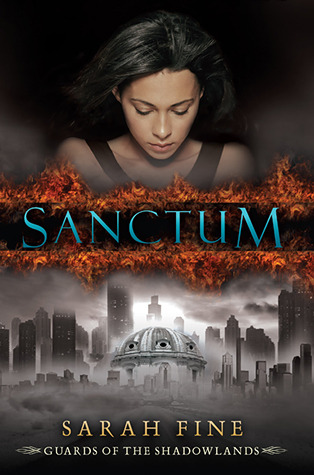
This month, we are taking a look at Latin@s in science fiction and fantasy. Today, we have a Q&A with Sarah Fine, author of Sanctum and Fracture. (Book three is in the works.) Here is a partial description of Sanctum, which features Lela Santos, a Latina main character, a foster child from Rhode Island who has experienced abandonment, neglect, and sexual abuse:

A week ago, seventeen-year-old Lela Santos’s best friend, Nadia, killed herself. Today, thanks to a farewell ritual gone awry, Lela is standing in paradise, looking upon a vast gated city in the distance—hell. No one willingly walks through the Suicide Gates, into a place smothered in darkness and infested with depraved creatures. But Lela isn’t just anyone—she’s determined to save her best friend’s soul, even if it means sacrificing her eternal afterlife.

Cindy: First, let me say that I loved Sanctum. The only part that frustrated me was how long it took for Lela and Malachi to kiss :.)

Sarah: I’m so glad you enjoyed it, and I hope the kiss was worth the wait!

Cindy: The premise of Lela going into hell to retrieve Nadia is similar to the Greek myth Orpheus and Eurydice, but obviously this is not a retelling. How influenced were you by that myth or mythology in general?

Sarah: I actually didn’t think about that particular myth at all as I was generating the idea for this book. When I read that comparison in a review, I was like … you know, that’s actually quite apt! I was a little more influenced by Jewish and Mesopotamian mythology. The Mazikin are mentioned in the Talmud as evil spirits or demons, and the inhuman Guards are very loosely based off protective deities called the lamassu in Mesopotamian myths, where they’re described as half-man, half-bull.

Cindy: Your setting is an interesting kind of hell, with the buildings being alive and able to feed off its inhabitants. How did you create and develop this idea? What kind of research do you do for fantasy world creation?

Sarah: This idea was inspired by the way C.S. Lewis wrote about his version of hell/purgatory in The Great Divorce. The “grey town” is this massive, depressing city where it’s always raining, always twilight—and here’s the part that really got me: people could have whatever they wanted, but it was of low quality. That Grey Town at the very beginning of that book completely inspired the dark city in Sanctum. Obviously, I changed it a lot, including the idea that the city is really one living, breathing entity that grows off the depression of the people residing within, but I give Lewis the credit for the basic idea (and he was clearly influenced by Dante in that work, so he deserves credit as well.)

17667916Cindy: Do you continue to work as a child psychologist? Did your work experiences help you to portray the emotional recovery Lela and the others have to go through in order to heal from trauma?

Sarah: I do, but in a different capacity than I have in the past, when I did a lot of home-based evaluations and therapy. Now I direct programs and supervise clinicians who provide those services to children and adolescents who are at risk for out-of-home placement in psychiatric hospitals or residential treatment facilities. Our goal is to work with families to keep these kids at home and in their communities, where research clearly shows they do best.

My work definitely influences how I see the complexity of trauma and what it takes to heal. A huge percentage of our clients have experienced some type of trauma, and usually not what we think of as single event, “simple” trauma. Though that can be devastating, it’s actually easier to treat than the complex developmental trauma we often see, where the trauma is more chronic and ongoing. This is actually the type of trauma Lela’s experienced—multiple disruptions in attachments, several instances of abuse or neglect. As I show her fragile but growing relationship with Diane, her foster mom, that’s always on my mind. I definitely explore more of that in book three.

Cindy: In addition to the great action scenes, this story focused on the characters’ battles with their personal demons. Thinking about author choices here…because of the issues the characters face, this story could have been developed as a YA contemporary. What led you to decide to develop the story as fantasy instead?

Sarah: I guess it’s a preference thing. There are some brilliant, brilliant authors who have explored these issues with contemporary YA (Nina LaCour, for example), but I wanted to place these characters in an environment where the depression was a tangible, living thing. This fantasy world gave me the chance to explore a lot of philosophical issues, like what is heaven, really, and how could it possibly be the same for everyone? What if you’re not emotionally ready to be there and accept what it offers? To me, that’s not a religious question, but a more concrete way of exploring something very emotional–Can you have some version of that goodness in your life, no matter where you are? What would you have to understand and embrace to receive that?

Cindy: Again with author choices….Obviously you could have created characters of any race, ethnicity, etc. What made you decide to create a Latina MC?

Sarah Fine

Sarah Fine

Sarah: Lela Santos really just materialized to me in that form. However, I will tell you that the majority of the school children in the urban core of Rhode Island, where Lela’s from, are Latino/a. Also, in general, children of color are overrepresented in terms of involvement in the juvenile justice system in this country (with harsher sentences as well—we’ve had court workers outright say that they’re harder on these kids because of the racism they face within society, which is a totally twisted logic that over-penalizes those children and in my opinion perpetuates that racism). Once I considered those facts, it seemed wrong to consider making her anything other than what she was from the beginning.

Cindy: Your secondary characters have interesting back stories as well, which suggests to me that including diversity in your writing is important to you. Some authors shy away from including diverse characters for fear of “getting it wrong.” Did you have any concerns about creating diverse characters? What advice, if any, would you give to fantasy writers about diversity in the genre?

Sarah: This story takes place in the afterlife, and the idea that the only people residing there would be Anglo-American, or any kind of American, is pretty laughable. The world is a BIG place—and the afterlife would be the same, minus the country divisions. Everyone would be there together, right? The dark city where most of Sanctum takes place is where everyone in the world who committed suicide has gone (with some exceptions, I think, but that’s a different interview!). I felt very strongly that having Lela coincidentally meet up with people who were American would just be false and icky.

I did have concerns, of course, because I really wanted these characters to have an impact, and to feel like real people. I did quite a bit of research. I also focused on writing from the inside out, trying to focus on each of those characters as human beings who loved and hoped and despaired in their own ways. I don’t think I’m some kind of expert on this. I’m certain I’ve made mistakes. But I’m curious and always wanting to learn about people who are different from me. And I started from the premise that all those diverse characters—Lela, Malachi, Ana, Takeshi—were on their own profoundly personal journeys, armed only with their intelligence, resilience, perseverance, and the capacity to risk their lives and hearts for a chance at peace. The rest flowed from that.

Check out these other works by Sarah Fine:

17733363  13451410  17303139

Guest Post: Stephanie Diaz, YA Author of EXTRACTION , talks about diversity and her debut novel

This month, we are taking a look at Latin@s in science fiction and fantasy. Today, we have a guest post from Stephanie Diaz, debut author of Extraction, which releases July 22.

By Stephanie Diaz

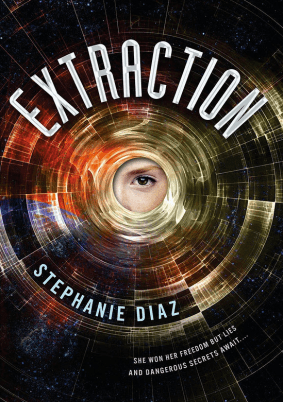
Extraction coverThanks so much to Latin@s in Kid Lit for having me here on the blog today! I wanted to share a few of my thoughts on diversity in science fiction, stemming from my experiences as a half-Latina writer of YA.

My father’s side of my family is Latino, primarily of Mexican and Spanish descent. My mother’s ancestors were white Europeans, mostly French and German. I grew up in an English-speaking household, in a Southern California town a state away from my dad’s side of the family. As such, I’ve never been hugely in touch with the Latina side of my roots, except during Christmas vacation, and for a long time it had no great influence on my writing.

My first book, which I wrote in middle school, was a story about a family in the Civil War era. My second book was a fantasy with demons and magical swords. The book I wrote in college and sold to a publisher, Extraction, was my first try at writing science fiction. It wasn’t until I was well into revising the novel that conversations about diversity in fiction grew more widespread and caught my attention. For the first time, I took a long, hard look at my characters and realized I’d made some of the supporting characters different races, but the main characters of the cast were pretty much all white. And my book was supposed to be set on a planet in a completely different galaxy! Here I’d had so much potential to diversify my made-up world, and I’d wasted it.

I plan on doing a better job in the future. I’m still working on the second and third books in the Extraction trilogy, making sure I pay attention and don’t automatically whitewash every new character I introduce to the cast. I’m also working on an unrelated YA sci-fi with a multi-racial/multi-species cast. The beauty of stories set in the future or in distant worlds is that there are so many ways for a writer to imagine how cultures will grow and influence one another over time. Science fiction allows me to imagine all sorts of possibilities that don’t exist in real life, but real life has to be an influence to make the story believable.

My goal is to tell stories that show life the way it is and the way it could evolve—and life is diverse. In physical characteristics, but also in a wealth of traditions. I’m learning that understanding the differences in all the world’s cultures is key to creating new ones, whether they be human or a made-up species.

My hope is that my own books and other books in this genre will grow more and more diverse in the coming years, drawing on little-known cultures to expand the worldview of all readers. I hope to be able to pay homage to my Latina heritage, as well as the other cultures in my blood, in future novels I write. But more than that, I hope to tell many stories about different kinds of people, not just the people I know best. After all, how can I grow as a writer—or a person—if I never venture out of my comfort zone?


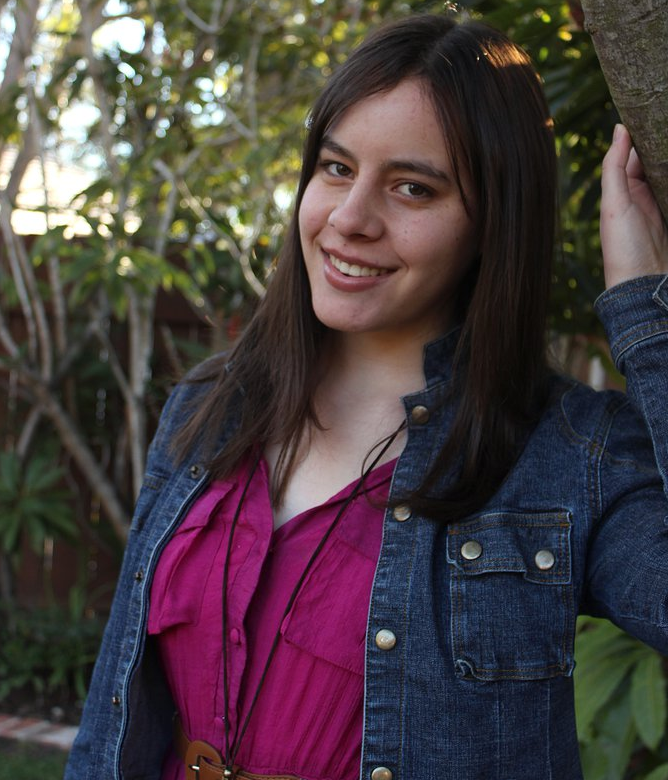
Stephanie Diaz author photoTwenty-one-year-old Stephanie Diaz wrote her debut novel, Extraction, when she should’ve been making short films and listening to class lectures at San Diego State University. When she isn’t lost in books, she can be found singing, marveling at the night sky, or fan-girling over TV shows. Visit her online at www.stephaniediazbooks.com.

Twitter​   *  Blogger  *  Facebook  *  Tumblr  *  Pinterest  * 

You can email her at: stephaniediazbooks@gmail.com

Extraction, published by St. Martin’s Press, releases July 22. Here is a description of Stephanie’s debut novel:

Clementine has spent her whole life preparing for her 16th birthday when she’ll be tested for Extraction, in the hopes of being sent from Kiel’s toxic Surface to the much safer Core, where people live without fear or starvation. When she proves promising enough to be “extracted,” she must leave without Logan, the boy she loves. Torn apart from her only sense of family, Clem promises to come back and save him from brutal Surface life. What she finds initially at the Core is a utopia compared to the Surface—it’s free of hard labor, gun-wielding officials, and the moon’s lethal acid—but life is anything but safe, and Clementine learns that the planet’s leaders are planning to exterminate Surface dwellers—and that means Logan, too. Trapped by the steel walls of the underground and the lies that keep her safe, Clementine must find a way to escape and rescue Logan and the rest of the planet. But the planet’s leaders don’t want her running—they want her subdued.

Cover Reveal for When Reason Breaks, a 2015 Young Adult Debut

.

By Cindy L. Rodriguez

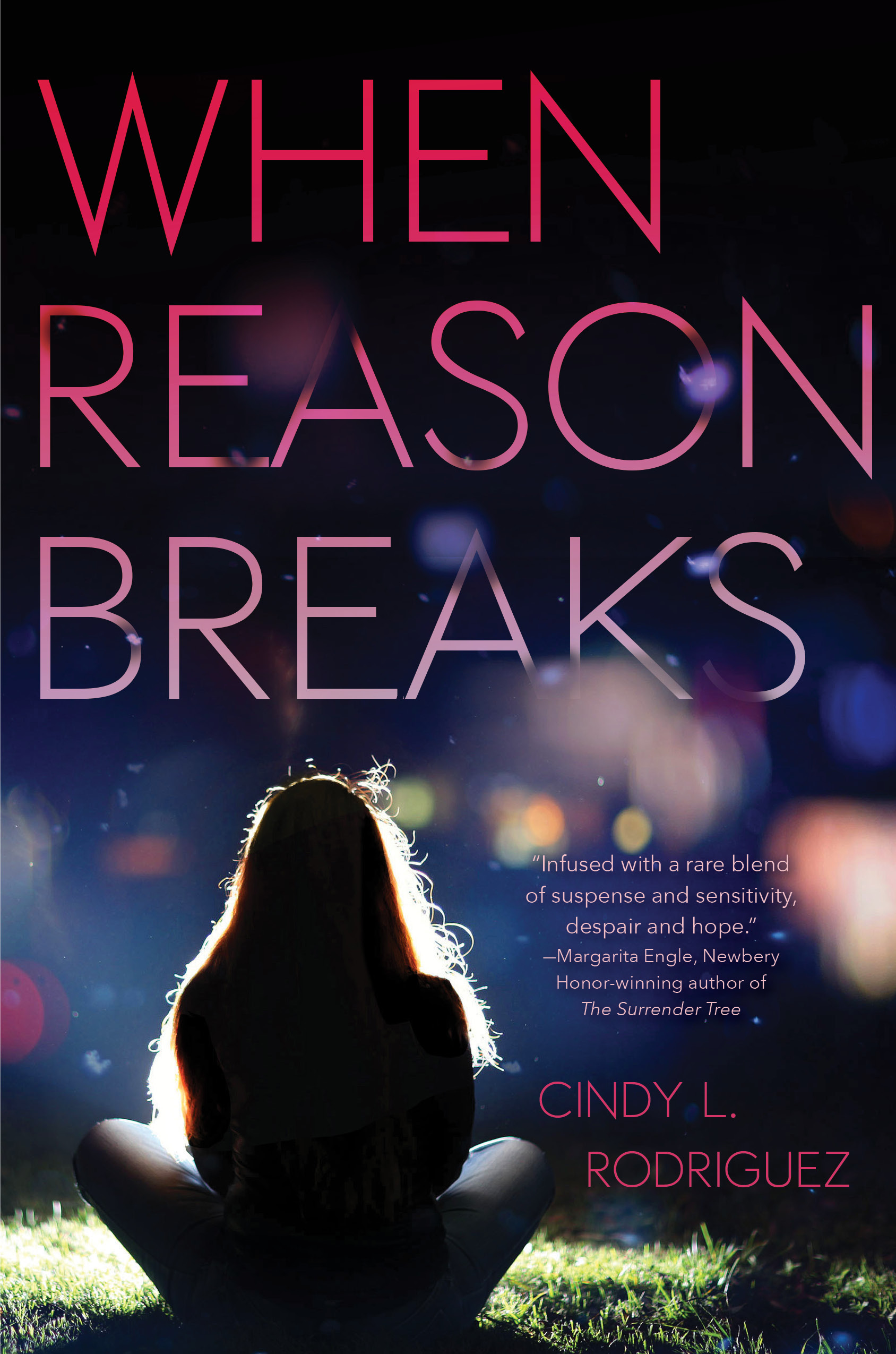
I’m really excited to reveal the cover for my debut novel, When Reason Breaks, which will be published 2/10/2015 by Bloomsbury USA Children’s Books. I’m equally thrilled to share it here because one of the main characters is Latina and the first blurb the novel received is from the wonderful, generous, super-talented Margarita Engle.

Before you scroll down to see the cover, here’s a description of the novel:

A Goth girl with an attitude problem, Elizabeth Davis must learn to control her anger before it destroys her. Emily Delgado appears to be a smart, sweet girl, with a normal life, but as depression clutches at her, she struggles to feel normal. Both girls are in Ms. Diaz’s English class, where they connect to the words of Emily Dickinson. Both are hovering on the edge of an emotional precipice. One of them will attempt suicide. And with Dickinson’s poetry as their guide, both girls must conquer their personal demons to ever be happy.

In an emotionally taut novel with a richly diverse cast of characters, readers will relish in the poetry of Emily Dickinson and be completely swept up in the turmoil of two girls grappling with demons beyond their control.

An extra tidbit for any big-time Emily Dickinson fans: Almost all of the characters represent a real person from ED’s life. Emily and Elizabeth represent Dickinson herself, sharing personal traits and experiences. Tomás Bowles represents Thomas Wentworth Higginson and Samuel Bowles, two important men in ED’s life, etc. You’ll have to read more in the author’s note!

So, now for the cover……………

*

*

*

*

Keep scrolling…(I was told to build suspense. Isn’t this suspenseful?)

*

*

*

*

TA-DA!!!!

*

*

*

*

WhenReasonBreaks_Comp

I love it for lots of reasons! The dark and light, focused and unfocused elements symbolize what the characters experience with their emotional and mental health issues. Same with how the letters start out solidly colored and then fade. Not seeing the girl’s face is also perfect since it’s a mystery as to which of the two girls attempts suicide. And here is the full quote from Margarita Engle, which will be included in its entirety on the back cover:

When Reason Breaks is infused with a rare blend of suspense and sensitivity, despair and hope. The poetic spirit of Emily Dickinson shines through the gloom of daily struggles faced by modern teens, as they discover the possibilities where they dwell.”

I’m so excited to share my debut novel with the world–starting now with a giveaway! One winner will receive a signed ARC of When Reason Breaks. Click on the Rafflecopter link below to enter. I’ll choose a winner in a week!

a Rafflecopter giveaway

CindyRodriguez150For more information about me and/or my debut novel, check out my website. You can also find me here on the About Us page and on Facebook, Twitter, and Goodreads.

When Reason Breaks is available for pre-order here:

Indiebound Barnes and Noble | Amazon Powell’s Book Depository | Books-A-Million