Book Review: Joyride by Anna Banks


22718685By Cindy L. Rodriguez

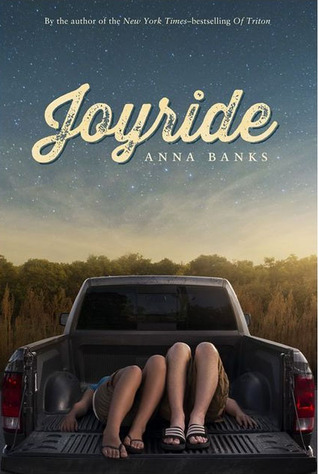
PUBLISHER’S DESCRIPTIONA popular guy and a shy girl with a secret become unlikely accomplices for midnight pranking, and are soon in over their heads—with the law and with each other—in this sparkling standalone from NYT-bestselling author Anna Banks.

It’s been years since Carly Vega’s parents were deported. She lives with her brother, studies hard, and works at a convenience store to contribute to getting her parents back from Mexico.

Arden Moss used to be the star quarterback at school. He dated popular blondes and had fun with his older sister, Amber. But now Amber’s dead, and Arden blames his father, the town sheriff who wouldn’t acknowledge Amber’s mental illness. Arden refuses to fulfill whatever his conservative father expects.

All Carly wants is to stay under the radar and do what her family expects. All Arden wants is to NOT do what his family expects. When their paths cross, they each realize they’ve been living according to others. Carly and Arden’s journey toward their true hearts—and one another—is funny, romantic, and sometimes harsh.

MY TWO CENTS: In Joyride, Anna Banks creates two easily likable, sympathetic characters who are struggling between wanting to have normal, fun teenage lives and dealing with serious family issues.

Carly Vega is a smart, hard working Mexican-American teen who juggles going to school and working, sometimes until the early morning hours at a convenient store, to help raise enough money to bring her deported, undocumented parents back to the U.S.

Arden is a popular former football star who battles with his violent father in the wake of his sister’s suicide, which has left his mother heavily medicated and despondent.

In the opening scene, Arden pretends to hold up his uncle, Mr. Shackelford, outside the convenient store in an attempt to get him to stop driving drunk. Carly, who is working when this happens, responds by pulling out the store owner’s shotgun and chasing the masked bandit (Arden) off. Arden knows then that Carly is the perfect candidate to be his pranking buddy, a position once held by his sister. Love blossoms as the two spend more time together doing funny, gross things around town that are risky because Arden’s father is the racist local sheriff responsible for deporting Carly’s parents.

Throughout the novel, Carly struggles with competing desires. She wants her family to be intact again and wants to do all she can to help raise the thousands of dollars needed to help them cross the border again. She also wants, however, to do what normal teen girls do, like hang out with her boyfriend and use her money to buy things like new clothes and a laptop computer.

Without giving too much away, I’ll say that this YA contemporary, which tackles serious issues and has heavy doses of romance and humor, also has a plot twist that adds a whole new exciting vibe to the story. Carly and Arden’s relationship is threatened and they end up in a dangerous situation involving law enforcement and the illegal smuggling operation that promises to bring her parents home.

Told in alternating points of view–Carly’s is first person and Arden’s is third–Anna Banks’s Joyride is a page-turner filled with interesting, complex characters who fall in love and find common ground despite economic, racial, and cultural differences.

TEACHING TIPS: Joyride could be an option when teaching about immigration. I’m sure students would have lots of questions about the issues brought up with this book around Carly’s family’s situation. Do people really pay someone to escort loved ones across the border? What are the risks? Is it really that expensive? What happens if they get caught again? How often are American born teens separated from parents who are deported? Reading this novel as a companion to non-fiction research on these issues could offer multiple perspectives and make Carly Vega seem even more “real,” in that her situation is a common one.

ABOUT THE AUTHOR (from her website): NYT Bestselling YA author of The Syrena Legacy series: OF POSEIDON (2012) OF TRITON (2013) OF NEPTUNE (2014). Repped by rockstar Lucy Carson of the Friedrich Agency. I live with my husband and daughter in the Florida Panhandle. I have a southern accent compared to New Yorkers, and I enjoy food cooked with real fat. I can’t walk in high heels, but I’m very good at holding still in them. If you put chocolate in front of me, you must not have wanted it in the first place.


FOR MORE INFORMATION ABOUT Joyride visit your local library or bookstore. Also, check out WorldCat.orgIndieBound.orgGoodreadsAmazon, and Barnes & Noble.

Also, check out the Q&A we did with Anna Banks earlier this week.


Q&A with NYTimes Bestselling Author Anna Banks About JOYRIDE


22718685By Cindy L. Rodriguez

The latest novel by Anna Banks, the New York Times Bestselling Author of the The Syrena Legacy series: OF POSEIDON (2012) OF TRITON (2013) OF NEPTUNE (2014), releases today. JOYRIDE, a contemporary with a Mexican-American main character, is a change for Banks, but you’ll see that she was ready to cleanse her fantasy palette and that the seeds for this particular story were planted years ago.

First, here is a description of the book:

A popular guy and a shy girl with a secret become unlikely accomplices for midnight pranking, and are soon in over their heads—with the law and with each other—in this sparkling standalone from NYT-bestselling author Anna Banks.

It’s been years since Carly Vega’s parents were deported. She lives with her brother, studies hard, and works at a convenience store to contribute to getting her parents back from Mexico.

Arden Moss used to be the star quarterback at school. He dated popular blondes and had fun with his older sister, Amber. But now Amber’s dead, and Arden blames his father, the town sheriff who wouldn’t acknowledge Amber’s mental illness. Arden refuses to fulfill whatever his conservative father expects.

All Carly wants is to stay under the radar and do what her family expects. All Arden wants is to NOT do what his family expects. When their paths cross, they each realize they’ve been living according to others. Carly and Arden’s journey toward their true hearts—and one another—is funny, romantic, and sometimes harsh.

CINDY: This is a genre shift for you after the very successful Syrena Legacy Trilogy. What sparked you to shift gears and write contemporary fiction?

ANNA: Before we begin, I just want to say it is my pleasure and an honor to be here today. Thank you so much for thinking of me. I enjoy your website and am very supportive of its goals and focuses.

JOYRIDE was sort of a palette cleanser between fantasy worlds. I was ready to write a standalone for once, and Carly’s story kept haunting me at night. To be honest, writing something in the real world was more of a challenge because I had stricter boundaries to abide by, and my characters had only their natural abilities to use to get them out of situations. But it was also a pleasure to have those boundaries, because writing characters who had to use their natural resources, to me, made them stronger and more realistic.

CINDY: And while we’re talking genre, JOYRIDE really is a mix of realistic, romance, and thriller. Was this intentional while you were plotting? Did you want to have some twists that are not always typical with a straight contemporary, or is that just where the story went as you were planning?

ANNA: While I was writing JOYRIDE, I didn’t realize I was writing so many twists in it. To me, it seemed like the natural way things would have to go. Of course, I’ve never written contemporary before (and if I’m being honest I don’t read much of it either), so I wasn’t aware there were sort of “rules” to writing a straight contemporary. Now I realize I’ve written this steroidal hybrid, and I hope contemporary readers can move past that and embrace it. Pretty please? :.)

CINDY: Let’s talk about craft for a bit next. You have a dual narrative, but you use a first-person point of view for Carly and a close third-person for Arden. As both a reader and writer, I’m always curious about these kinds of decisions. Why did you decide on this format instead of a dual first-person?

ANNA: This is me recognizing a weakness I have in writing. I can write a strong female heroine in first person, but for the hero, I need to take a step back and put some distance between myself and him, to distinguish my voice from his voice. I don’t want readers as familiar with my hero and his most inner feelings and thoughts in the way writing in first person would give them access to. In fact, I considered writing JOYRIDE from only Carly’s perspective, but Arden was just too funny to put behind stage.

CINDY: The topic of immigration and deportation are complex, often contentious, social and political issues. What made you want to write about the life of a Mexican-American girl whose parents were deported? What kind of research did you have to do? Was it difficult to write outside of your cultural experience?

ANNA: Living in the Florida panhandle, I live and work and play among many Mexican immigrants—both documented and undocumented. When I was a teenager in particular, I worked at a restaurant where there were some undocumented immigrants, and as we became friends, they told me their stories. They told me their anxiety about being deported, about missing their family, about the fear of being separated from the family they’ve established in the United States. It really left an impression on me. As a teen, I wondered what I would do if my parents were deported, if I was here all alone. I guess Carly was planted in my head all those years ago and I didn’t even know it.

I didn’t have much research to do, because I learned it first hand from my friends and coworkers. That you didn’t want to get pulled over because instead of a speeding ticket, you’d get deported. That you didn’t want to attract attention to yourself. That you sent money home as often as you could. That there were people they called coyotes who helped them cross the border and desert, who demanded large sums of money to help them get set up in the United States. That when you cross the border, you cross with what you can carry, and that’s it.

I’m white, and so writing outside my own cultural experience was terrifying. I wanted to do it respectfully and realistically, because I deeply respect the work ethic and the family values of immigrants, and I wanted to share their plight with the world. But sometimes in writing it, I did wonder if it was my place to do so. But I had a story to tell, and I felt it was an important one, so I kept going.

CINDY: Do you plan to write more contemporary YA? Any projects in the works that you can tell us about?

ANNA: Right now I’m working on an Egyptian based fantasy called NEMESIS and its sequel, ALLY. It’s about a princess who possesses the power to create energy who escapes her father, who wishes to weaponzie it, only to be captured by an enemy kingdom where she discovers her powers could be used to fight a terrible plague.

I write when I have a story to tell, and usually my muse takes me across a lot of different genres. As for writing contemporary again—sure, why not? But I have to have a story to tell. If I find myself wanting to add time travel or wormholes in the contemporary, I’d better just set it aside. :.)

Book Review: Marcelo in the Real World by Francisco X. Stork

Reviewed by Lila Quintero Weaver

marcelo_coverFROM THE PUBLISHER:

The term “cognitive disorder” implies there is something wrong with the way I think or the way I perceive reality. I perceive reality just fine. Sometimes I perceive more of reality than others.

Marcelo Sandoval hears music that nobody else can hear — part of an autism-like condition that no doctor has been able to identify. But his father has never fully believed in the music or Marcelo’s differences, and he challenges Marcelo to work in the mailroom of his law firm for the summer . . . to join “the real world.”

There Marcelo meets Jasmine, his beautiful and surprising coworker, and Wendell, the son of another partner in the firm. He learns about competition and jealousy, anger and desire. But it’s a picture he finds in a file — a picture of a girl with half a face — that truly connects him with the real world: its suffering, its injustice, and what he can do to fight.

Reminiscent of The Curious Incident of the Dog in the Night-Time in the intensity and purity of its voice, this extraordinary novel is a love story, a legal drama, and a celebration of the music each of us hears inside.

MY TWO CENTS: Certain quirks cause 17-year-old Marcelo Sandoval to stand out from the crowd. He fastens his shirt all the way to the top button, even when he’s not wearing a necktie. His speech can be overly formal, and he often refers to himself in the third person. Don’t ask him to catch the meaning of an eye roll or a smirk because his brain isn’t wired to interpret subtler forms of nonverbal language. Plus, he hears music that no one else can hear. Marcelo was born with a cognitive disorder resembling Asperger syndrome, a category of autism spectrum disorder often considered “high-functioning.” The syndrome’s most recognizable traits are difficulty with social interactions and the tendency to become preoccupied with special areas of interest. In Marcelo’s case, this is the study of religion.

Marcelo attends Paterson, a school for kids with disabilities. The summer before his senior year, he’s supposed to work at the school’s stables, helping with the therapeutic ponies, but his father, a lawyer, has a different plan. Arturo Sandoval thinks it’s time for his son to experience “the real world,” in the form of a summer job at the law firm. If Marcelo manages the job satisfactorily, he’ll be allowed to choose which school to attend in the fall—the safe and friendly Paterson he knows well, or Oak Ridge High, a regular school not structured around the needs of students with disabilities.

What Marcelo encounters on the job is far more complex and morally ambiguous than the simple mailroom duties he’s hired to carry out. The law firm’s other partner has a college-age son, Wendell, who is also working at the office over the summer. Arturo considers Wendell a good role model for Marcelo. Little does he know that Wendell is much more interested in checking out the female employees than in getting any work done, and Jasmine, Marcelo’s supervisor, is the main object of his lust. At first, Marcelo tries to ingratiate himself to Wendell, who holds considerable power in assessing Marcelo’s performance, but it becomes apparent that Wendell is a jerk who mocks Marcelo, objectifies women, and disregards Arturo as a “minority hire.”

Other workplace quandaries pop up. Marcelo discovers a photograph of a girl badly injured in a car crash, due to the failure of a windshield manufactured by one of the law firm’s most important clients. He begins to wonder about his father’s decision to protect wealthy corporations, instead of those who’ve been harmed by the corporation’s negligence and can’t afford legal help.

But this YA novel isn’t a legal thriller per se. It’s a variation on the coming of age story, one that visits romantic love and sexual intimacy, and repeatedly explores the idea of what is real. There’s the real music that everyone can hear and the internal music heard only by Marcelo. There’s the real world of the law firm and Oak Ridge High School, and the protected world of Paterson. And how about the distinction between a happy smile and a sarcastic smile, or the literal words that people use and the actual meanings behind them? Plus, who is the real Arturo: the father that Marcelo knows, or the lawyer who may have wandered into less than noble choices? Reality is tough to decode.

I am not qualified to comment in depth on Stork’s depiction of Marcelo’s cognitive disorder. As I read, I kept myself alert for any signals that the author had romanticized the character’s condition or imbued him with magical or savant abilities, as is often the case in cultural portrayals of people with autism spectrum disorders. I saw nothing approaching those errors. Luckily, Disability in Kidlit, a blog devoted to reviewing books about characters with disabilities, has also published a review of Marcelo in the Real World. Read S.E. Smith’s fine analysis here.

Stork presents the Sandovals as a cohesive, but realistic Latino family, with flaws intact. They stand apart from the most prevalent depictions of Latino families in fiction and film, where poverty, domestic violence, and trouble with immigration issues crop up frequently. Marcelo’s mother, Aurora, is a registered nurse. She and Arturo are educated, upper-middle class professionals of Mexican heritage who can afford to send their son to a specialized private school. Their other child, Yolanda, is enrolled at an Ivy League university. Judging by their achievements, the Sandovals are living the American Dream, but crass remarks by Wendell convincingly show the darker side of reaching the Dream, that even successful Latinos are subject to derisive questions about their legitimacy.

Francisco Stork is a brilliant writer. His characters breathe, his dialogue sings, and his depiction of Marcelo’s interior life sparkles with beautiful insights and revelations. In writing his main character as a Latino with a developmental disorder, he gives readers the rare opportunity to experience two seldom combined, yet richly portrayed worlds. In Stork’s hands, this intersection of culture and cognitive challenge becomes suffused with poetic tenderness, and the result is an unforgettable novel.

francisco_storkFrancisco X. Stork was born in Monterrey, Mexico, and moved to the United States at age nine. He studied at Spring Hill College, Harvard University and Columbia University, where he completed a law degree. Stork’s five published novels have received awards, honors and high praise from reviewers. Keep up with publishing news and events at his official author site.


TEACHING RESOURCES:

Autistic Self-Advocacy Network

Autism Society of America

The official site of the autistic professor, speaker and author Temple Grandin

Equine Therapy Programs

Navigating Love and Autism,” a profile in The New York Times

In this video clip, comedian DL Hughley shares a touching story about his adult son with Asperger syndrome.

Book Review: Max Loves Muñecas! by Zetta Elliott

Reviewed by Ashley Hope Pérez MaxLovesMunecasCOVER

PUBLISHER’S DESCRIPTION: Max wants to visit a beautiful boutique that sells handmade dolls, but he worries that other children will tease him. When he finally finds the courage to enter the store, Max meets Señor Pepe who has been making dolls since he was a boy in Honduras. Señor Pepe shares his story with Max and reminds him that, “There is no shame in making something beautiful with your hands. Sewing is a skill—just like hitting a baseball or fixing a car.” 

MY TWO CENTS: Max Loves Muñecas interweaves a number of topics: resisting the constraints of traditional gender roles, child homelessness, resourcefulness and resilience, and the value of cooperation and generosity. In the hands of a lesser writer, these many focal points might overpower a slim chapter book of 72 pages, but Zetta Elliott creates a richly textured narrative world and situations that give readers opportunities to pause, consider their own lives, and reflect on the power of individual choices.

The first and last chapters of the book focus on Max, a young American boy intrigued by the intricacy and beauty of the dolls in a neighborhood shop run by Señor Pepe. Despite his interest, Max fears teasing by his classmates; in fact, the book’s title comes from the teasing he endures. By the end of this book, however, Zetta Elliott turns “Max loves muñecas!” from a taunt into an affirmation as Señor Pepe invites Max to work as his apprentice. Although “Max loves muñecas!” powerfully captures a key shift in the book, it is somewhat misleading as a title because Max’s story serves primarily as a frame for Señor Pepe’s telling of his own experiences as a young boy in Honduras, which are the focus of the eight central chapters of the book.

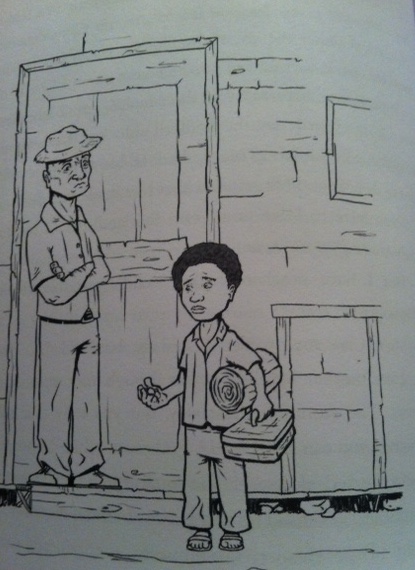
MaxLovesMunecasImage1We first learn of Pepe’s life as a poor but happy boy living with a loving grandmother who earns money by cleaning a wealthy family’s home and selling rag dolls to tourists. When Pepe’s grandmother passes away, neighbors make arrangements and send a telegram, but no one comes to get him. After three days, the landlord sends him away. With nothing but a blanket, his grandmother’s sewing basket, and a handful of coins, Pepe strikes out on his own.

He briefly joins a band of street boys living under an overpass where each has a special skill he contributes to the group, but he remembers his grandmother’s admonitions: “You are not a street boy. You do not drift from place to place like a weed in the sea” (15). After a night on the streets, Pepe stops to help an elderly woman struggling to open the shutters to her doll shop. So begins his relationship with Señora Beatriz, who cautiously invites him into her shop, intrigued by his delight at the beauty of her dolls and impressed with his good manners and facility with simple sewing tasks. Pepe finds a place in her heart—and her home—and continues to develop his love for making beautiful things.

But of course there are bumps along the way, a number of which center on the difficulty of balaMaxLovesMunecasImage2ncing good intentions and generosity to others with responsibility and a concern for appearances. When Señora Beatriz sends Pepe out for lunch on their first day together, Melky, one of the street boys, recognizes him and runs over to join him. Pepe becomes preoccupied with Melky’s disheveled appearance, worrying that the señora might think he is a street boy, too, if she sees him with Melky. Pepe understands the boy’s hungry glances at the lunch bag, but his fear over damaging his opportunity with Señora Beatriz is what drives him to share his food: “If I give you some of my lunch, you have to promise to go away. You can’t let the señora see you—ever!” (33).
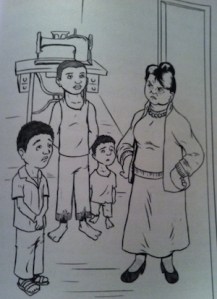
Later, when the señora goes out of town for the night, Pepe’s desire to surprise her leads him to attempt to finish a wedding dress using her cantankerous sewing machine. When it jams, his efforts to fix it result in a broken piece. Fearing a return to the streets if the señora discovers his disobedience and damage of the machine, he searches out Primo, the leader of the street boys, who is also an expert tinkerer. Primo can’t repair the broken piece without seeing the whole machine, and a new round of dilemmas opens up for Pepe as Melky and Primo follow him back to the señora’s house. He knows the señora would not want strangers in her house and worries that the street boys might get up to mischief, but he can’t see any way out of his problem without help. Far from wanting to steal from the señora, Primo and Melky fall in lMaxLovesMunecasImage3ove with the beautiful fabrics and deck themselves out in tiaras and veils. Primo succeeds at fixing the sewing machine, but the boys are so tired from their efforts they fall asleep at the kitchen table.


Once Señora Beatriz’s initial displeasure wears off, she is impressed by Primo’s technical abilities, charmed by young Melky, and pleased with the initiative and cooperation of all three boys. Ultimately, although only little Melky goes to school, all three boys gain the chance for a better life through their work for Señora Beatriz.

TEACHING TIPS: Max Loves Muñecas! is a good choice for upper elementary readers to explore on their own, and it would make an excellent read-aloud text (one chapter per session) for students across the elementary grades. The story highlights the boys’ spontaneous interest in dolls and fine fabrics, and it shows how following one’s passions can open doors. Max Loves Muñecas! also creates openings for students to discuss differences regarding schooling and child poverty in different communities and at different times. Finally, the book offers a number of scenarios where the “right” choice is relatively ambiguous, and these scenarios are ripe for exploration in conversation, journaling, drawing, or reenactment.

Although the handful of simple illustrations scattered through the book help provide a visual reference point for Pepe and Max’s adventures, there is still plenty of room for imagining and recreating scenes from the story. Students may especially benefit from guided exercises to help them imagine perspectives and experiences different from their own. Start with questions like, “What do you think Melky feels when Pepe makes him promise to never come to the señora’s shop?” or “Why is the señora disappointed when she first returns from her trip?” but take time exploring the other perspectives involved in a given moment in the narrative. When supported, even young children can stretch their capacity for empathy and perspective-taking beyond identifying with the protagonist.

MaxLovesMunecas_Zetta Zetta Elliott is the award-winning author of stories for children, YA novels, and poetry, plays, and essays for adults. Born and raised in Canada, she has lived in the US for 20 years and earned a PhD in American Studies from NYU in 2003. Her picture book, Bird, won the Honor Award in Lee & Low Books’ New Voices Contest and the Paterson Prize for Books for Young Readers. Her latest YA novel, The Deep, was published in November 2013. She is an advocate for greater diversity and equity in publishing, and to this end she has published several illustrated books for younger readers—including Max Loves Muñecas—under her own imprint, Rosetta Press. She currently lives in Brooklyn. Visit her online at www.zettaelliott.com

MaxLovesMunecas_MauricioPhotoMauricio J. Flores was born in 1988 in Tegucigalpa, Honduras, where he currently resides. Trained as an architect, he has worked extensively as a freelance illustrator and web designer. When he’s not drawing, he enjoys listening to a vast spectrum of music genres, studying languages, and reading epic fantasy novels and comics. Visit him at http://mjflores.visioncomicshn.com/.

The 2015 International Latino Book Awards Finalists!

Below are the 2015 finalists for the 17th Annual International Latino Book Awards in the children’s, youth, and young adult categories. If you click on the images, you will be taken to Indiebound, Barnes and Noble, or Amazon for more information. The Awards are produced by Latino Literacy Now, an organization co-founded by Edward James Olmos and Kirk Whisler, and co-presented by Las Comadres para las Americas and Reforma, the National Association to Promote Library and Information Services to Latinos. The Awards themselves will be June 27 in San Francisco as part of the ALA Conference. Click here for the complete list, which includes adult fiction and nonfiction. Congratulations and good luck to all of the finalists!

Best Latino Focused Children’s Picture Book: English

cover-maria  18465502

Best Latino Focused Children’s Picture Book: Spanish or Bilingual

23242348  20640741  23058499

Best Children’s Fiction Picture Book: English

20759593    20262585  18106361  20763795  18209399

Best Children’s Fiction Picture Book: Bilingual

The Dance Recital by Jill Barletti

18654384  20837127  23218636  20763960

Best Children’s Fiction Picture Book: Spanish

22929028  25246378  22750429

Best Children’s Nonfiction Picture Book: English

boy Zorro for New Books  18405521  18465502

Best Children’s Nonfiction Picture Book: Spanish or Bilingual


Best Educational Children’s Picture Book: English

    18465502

Best Educational Children’s Picture Book

23218636  23173378  18009252

Best Educational Children’s Picture Book: Spanish or Bilingual

Esto es mio!    

Most Inspirational Children’s Picture Book: English

18465502

Most inspirational Children’s Picture Book: Spanish or Bilingual

23058499  20837127  

Best Youth Latino Focused Chapter Book

21928995  

Best Youth Chapter Fiction Book

17571252  18166935  

Best Educational Youth Chapter Book


Most Inspirational Youth Chapter Book


Best Young Adult Latino Focused Book: English

IslandCover.png  22620580

Best Young Adult Latino Focused Book: Spanish or Bilingual

 Micaela, Adalucía, Cholita Prints and Publishing Company

Best Young Adult Fiction Book: English

18048909  22715444  18222731  22097606  13515320  18079898

Best Young Adult Fiction Book: Spanish or Bilingual

 Micaela, Adalucía, Cholita Prints and Publishing Company

Best Young Adult Nonfiction Book

Best Educational Young Adult Book

 Barrio Writers: Empowering Teens Through Creative Writing

 Micaela, Adalucía, Cholita Prints and Publishing Company

Most Inspirational Young Adult Book

Dream to Achieve: 15 Key Skills That Empower You to Succeed in Today's Challenging World  The Sparrow and The Frog

Best Book Written by a Youth

Best Children’s Picture Book Translation: Spanish to English

Best Children’s Picture Book Translation: English to Spanish


Best First Book: Children’s and Youth: English

  19505581  22174131  23756784

Best First Book: Children’s and Youth: Spanish or Bilingual

18832549  

Teacher-Author Diana Lee Santamaria On Promoting Literacy & Self-Publishing

Childrens book, school, teach, kids, learning, DLee's World, DLee, Diana Santamaria Childrens book, buy now, learn colors, teach, DLee's World, DLee, by Diana Santamaria Childrens book, teach counting, lesson plans, DLee's World, DLee, by Diana Santamaria Childrens book, teach counting, lesson plans, DLee's World, DLee, by Diana Santamaria

By Diana Lee Santamaria

Hi, everyone! I am so honored to be a guest writer on Latin@s in Kid Lit. My name is Diana Lee Santamaria and I am a newly self-published children’s author of DLee’s World Books. DLee’s World is a series of learning books that I created for children ages three to five. Since I struggled with issues of illiteracy growing up, I designed my books with bright colors, playful rhyme schemes, and diverse characters to promote literacy, diversity, and most importantly, fun.

Literacy is extremely important to me considering that more and more children
seem to display a lack of interest in literacy education. As a result, according to the most recent statistics
on literacy provided by the National Center of Educational Statistics, about 50% of adults in the United States read at or below basic proficiency level. Therefore, issues of literacy are still a huge factor in our society today. Who knows where I would have been, had my father not taught me? If he never realized my problem and wasn’t so determined for me not to follow in his educational struggles, I may not have graduated from college, become a teacher, or even a children’s writer.  Therefore, I created my books with the intent to help increase children’s interest in literacy at an early age. Literacy is all around us, from reading a sign while driving to ordering take-out. We are constantly put in positions where we have to read and show that we comprehend what we read. It is vital, therefore, that we promote reading and learning in children while they are young to aid in chances of future success.

The first four DLee’s World books are entitled DLee’s Color Hunt, DLee’s Outdoor Countdown, DLee’s First Day of School, and DLee’s Nighttime Scare. These books touch upon learning objectives, such as primary and secondary colors, counting and numeral recognition, dealing with new experiences, and fears of the dark. As an educator for seven years with a Master’s Degree in Early Childhood Education, I used my professional experiences, educational background, along with my own childhood experiences to bring each and every story to life. Currently I have written eleven other DLee stories, which I will hopefully be publishing within the next few years. In my mind the story possibilities with DLee’s World are endless. Since I have taught preschool for many years now, I know first-hand what objectives and relevant topics are typical and important to learn for that age group. As a result, I have a journal dedicated to those ideas, which I am consistently referring back to.

I officially self-published and began marketing in August of 2014. I chose to self-publish after doing lots of research and speaking to fellow educators and professionals who had also published literary works of art. The articles that I was finding shared a lot of negative aspects on attempting to publish through a large publishing company. I kept reading about the difficulty in getting a company to publish children’s literature even if your book is worthwhile. But that was not the only downside. From what I read and found to be true through my own research, most publishing houses do not accept unsolicited manuscripts; therefore I would have had to find an agent. Now although I found a list of agents through the Society of Children’s Book Writers (SCWBI), which I became a member of, everything takes time and everything costs money. I wasn’t sure if I wanted to wait for a response considering that I may never get one or be waiting months on months. Additionally, I read about publishing through a larger company and the issue of not having full rights to your work. So I definitely considered the option of publishing the traditional route. But after all things considered, I decided to self-publish. My thoughts were that I would self-publish and market myself enough to build a following of parents and children that would eventually lead me to traditional publishing routes. My thinking was and still is that if I build enough of a fan base maybe a publishing company will come find me. Who knows how far fetched that is, but I figure I have nothing to lose. Hence, why I decided to give self-publishing a shot. Even still, I did send my work out to some publishing companies in hopes of a response. I have yet to receive one, but I remain positive!

latina, author, teacher, latina, authorIt’s ironic because if you would have asked me what I would be doing when I got out of college, I would have never imagined I would be a teacher, let alone a children’s writer. As an undergrad, I studied Speech Communications and always had a passion for all areas of the arts. I loved writing poetry, drawing, painting, singing, and acting. My dream, however, was to become a famous singer and later an actress! But I thought it would be more realistic to get a career in public relations relating to entertainment. Then, while I was doing an internship at a small entertainment company, I came across a woman who mentioned teaching and that idea sewed a seed that led me to pursue a pre-kindergarten to third grade teaching certification. From there, I began teaching and decided to earn a master’s degree in children's book series, latina, authorearly childhood education. While teaching, I was always reading to my students and at times was lacking the literary resources that not only hit the topic I wanted to teach but also relevancy to increase connection and overall understanding for my students. So one day, I decided to write a silly story about shapes. I wrote the story and then just left it there until one day, I read it to a friend. She really enjoyed the story and encouraged me to keep writing. I never really considered myself a writer, but that night I went home and the words began to pour out of me! I started analyzing the children in my classroom, the books they enjoyed along with the standards required for preschoolers to learn. And that is how DLee’s World came to be.

teacher, latina, author, From the use of my childhood nickname (given to me by my mother), to the use of my childhood image along with images of those who have impacted in my life, DLee’s World is very much a part of me. I have dedicated much time and effort to perfect DLee’s World books so that they are not only educational and fun for children but also useful for parents and educators. Subsequently, I have devised lesson plans that coincide with each learning book, available for free download on my website.

Recently, I have been doing free readings at libraries, schools, and bookstores throughout the New York, New Jersey, and Pennsylvania areas. It’s been such a fun experience, and I’ve been receiving many positive reviews from both parents and kids! I absolutely love what I am doing and hope to continue to share my efforts with children, parents, and teachers worldwide. My books can be found on www.dleesworld.com and Amazon.