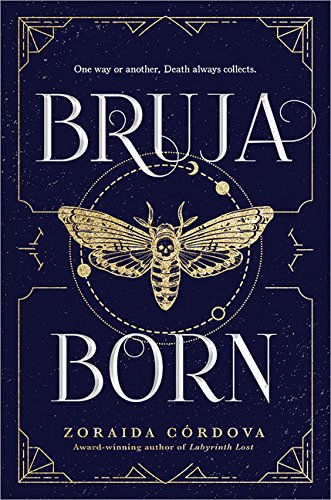
Happy Book Birthday to Bruja Born by Zoraida Córdova!

We are especially proud to celebrate the release of the second volume in Zoraida Córdova’s Brooklyn Brujas series, Bruja Born!

Zoraida made a huge splash with Labyrinth Lost, the first book in the series, and we couldn’t be prouder to see her success continue! Just check out what Kirkus and School Library Journal wrote and you’ll see that we’re not the only ones excited about Bruja Born. Plus, don’t miss Zoraida’s cover reveal in Bustle, which includes a tantalizing excerpt of the new novel.

Here’s how the publisher describes BRUJA BORN: 

Three sisters. One spell. Countless dead.

Lula Mortiz feels like an outsider. Her sister’s newfound Encantrix powers have wounded her in ways that Lula’s bruja healing powers can’t fix, and she longs for the comfort her family once brought her. Thank the Deos for Maks, her sweet, steady boyfriend who sees the beauty within her and brings light to her life.

Then a bus crash turns Lula’s world upside down. Her classmates are all dead, including Maks. But Lula was born to heal, to fix. She can bring Maks back, even if it means seeking help from her sisters and defying Death herself. But magic that defies the laws of the deos is dangerous. Unpredictable. And when the dust settles, Maks isn’t the only one who’s been brought back…

***********

Ready to order? Click on this link for buying options!

¡Felicidades, Zoraida!

Zoraida Córdova was born in Ecuador and grew up in Queens, New York. Her previous books include the Vicious Deep trilogy and the On the Verge series. For more information about Brooklyn Brujas and the rest of Zoraida’s books, be sure to visit her author website. She is also on numerous social-media platforms, including Facebook and Twitter.


March and April 2018 Latinx Book Deals


Compiled by Cecilia Cackley

This is a monthly series keeping track of the book deals announced by Latinx writers and illustrators. The purpose of this series is to celebrate book deals by authors and illustrators in our community and to advocate for more of them. If you are an agent and you have a Latinx client who just announced a deal, you can let me know on Twitter, @citymousedc. If you are a Latinx author or illustrator writing for children or young adults, and you just got a book deal, send me a message and we will celebrate with you! Here’s to many more wonderful books in the years to come.

April 26

None.

April 24

Author of Lola Levine chapter book series Monica Brown and 12-year-old star of the music video “Soy Yo” by Bomba Estereo Sarai Gonzalez’s, third book SARAI SAVES THE MUSIC plus a 4th book in the fictional series based on Sarai’s life, again to Marisa Polansky at Scholastic, in a two-book deal, for publication in spring 2019, by Stefanie Von Borstel of Full Circle Literary for Brown and Monica Villarreal and Rick Doorman of Authentic Media for Gonzalez. All four books in the new series will also be available in Spanish editions.


Alvina Ling at Little, Brown has acquired Roseanne Montillo‘s The Atomic Women. The YA nonfiction book tells the stories of the little-known female scientists who were critical to the invention of the atomic bomb and an examination of the moral implications of their work. Publication is planned for fall 2019. Author agent: Rob Weisbach at Rob Weisbach Creative Management.


Zachary Clark at Scholastic has bought Rated, by Girl at Midnight author Melissa Grey, in which teens navigate a hierarchical ranking system in a Black Mirror-esque future. Publication is slated for 2019. Author agent: Catherine Drayton at InkWell Management.

April 19

Hilary Van Dusen at Candlewick Press has bought world rights to Dean Robbins‘s (l.) picture book, ¡Mambo Mucho Mambo!, which tells the story of how Latin jazz music and mambo dancing at New York City’s integrated Palladium Ballroom broke down barriers in the 1950s and set the stage for the civil rights movement. Artist Eric Velasquez will illustrate. Publication is scheduled for fall 2020. Illustrator agent: Rubin Pfeffer at Rubin Pfeffer Content.

April 17

None.

April 12

Kait Feldmann at Scholastic/Levine has acquired world rights to Aida Salazar‘s (l.) debut picture book, Jovita Wore Pants, the story of Jovita Valdovinos, who dressed as a man and commanded a battalion of revolutionaries in a fight for religious freedom in the Mexican sierras. The biographical picture book is based in part on personal accounts told to Salazar, who is related to Valdovinos. Debut picture book artist Molly Mendoza will illustrate. Publication is scheduled for 2020.Author agent: Marietta B. Zacker at the Gallt and Zacker Literary Agency. Illustrator agent: none.


Margaret Raymo at HMH has bought, in a two-book deal, Lowriders in Space illustrator Raúl the Third‘s bilingual picture book, Vamos! Let’s Go to the Market. Inspired in part by Richard Scarry’s Busytown, the book offers a guide to the food, marketplace, games, animals, plants, and more of a U.S./Mexico border town. Publication is set for spring 2019. Agent: Jennifer Laughran at Andrea Brown Literary Agency.

April 10

Jessica Garrison at Dial has acquired Red House, Tree House, Little Bitty Brown Mouse by Jane Godwin (l.), illustrated by Blanca Gomez. The picture book is an exploration of colors and patterns and counting and more, with a tiny mouse hidden on every page. Publication is planned for fall 2019. Illustrator agent: Rebecca Sherman at Writers House sold world rights.


Andrea Welch at S&S/Beach Lane has bought world rights to Here Comes Ocean, a picture book by Meg Fleming (l.) (Ready, Set, Sail), illustrated by Paola Zakimi (Secrets I Know). The book follows a child who discovers that along with every rolling wave comes a new possibility for adventure. Publication is slated for spring 2020. Agent: Emily van Beek at Folio Jr./Folio Literary Management.

April 5

None.

April 3

John Morgan at Macmillan/Imprint has acquired two picture books by Karen Kilpatrick and Luis O. Ramos Jr. (center), illustrated by Germán Blanco. When Pencil Met Eraser depicts the creative journey that brings Pencil and Eraser together. Publication is planned for summer 2019, followed by a second, untitled book. Agent: Deborah Warren at East West Literary.

March 28

Nick Thomas at Scholastic/Levine has acquired, at auction, the first three books in Daniel José Older’s Dactyl Hill Squad, a middle grade historical fantasy series that reimagines the Civil War in a world where dinosaurs roamed alongside humans. In the center of this extraordinary moment is a squad of young people from the Colored Orphan Asylum in New York City, and at their head, a brave and brilliant girl named Magdalys Roca, who wants nothing more than to flee south and rescue her injured brother. Publication of the first book is set for fall 2018, with book two to follow in summer 2019. Author agent: Eddie Schneider at JABberwocky Literary.

March 22

Alexis Orgera and Chad Reynolds at Penny Candy have acquired world rights to Thank You, Crow by Michael Minkovitz (l.), illustrated by Jose Medina. Their debut picture book stars a boy whose act of kindness toward an injured crow leads to friendship and adventure. Publication is slated for fall 2017.

March 20

Kate O’Sullivan at Houghton Mifflin Harcourt has bought world rights to journalist Beth Ferry‘s (l.) picture book, Marsha’s Magnetic, illustrated by Lorena Alvarez. In the book, Marsha uses the scientific method to try and discover just what makes her classmates popular, until she realizes the best way to attract friends is to be yourself. Publication is scheduled for spring 2020. Illustrator agent: Alli Brydon at the Bright Group.

March 15

None.

March 13

Liza Kaplan at Philomel has acquired Jenny Torres Sanchez‘s new novel, By the Water. The book follows sisters Lola and Rosie in the wake of a car accident that landed them at the bottom of a lake, as they struggle to find a new relationship amid brain damage and the lingering fear that the accident wasn’t an accident at all. The book is set for publication in summer 2020. Author agent: Kerry Sparks at Levine Greenberg Rostan.

March 8

None.

March 6

None.

March 1

Erin Clarke at Knopf has bought world rights to Salsa Lullaby, a bilingual picture book by Jen Arena (l.), illustrated by Erika Meza, in which mami, papi, and bebé dance/bailan, sing/cantan, jump/saltan, and more until bebé falls asleep. The book is set for fall 2019. Author agent:   Jill Corcoran at Jill Corcoran Literary Agency. Illustrator agent: Claire Cartey at Holroyde Cartey.


Sylvan Creekmore at Wednesday Books has acquired, in a preempt, S. Gonzales‘s Only Mostly Devastated. Pitched as Simon vs. the Homo Sapiens Agenda meets Clueless, inspired by Grease, the book follows a boy trying to navigate a family crisis and a move to a new school who is quickly adopted by a new group of friends and comes face-to-face with his summer fling—only to discover that the perfect boy he remembers now won’t even look at him. Publication is planned for spring/summer 2019. Author agent: Moe Ferrara at BookEnds Literary.


Reported by Cecilia Cackley, a performing artist and children’s bookseller based in Washington, DC, where she creates puppet theater for adults and teaches playwriting and creative drama to children. Her bilingual children’s plays have been produced by GALA Hispanic Theatre and her interests in bilingual education, literacy, and immigrant advocacy all tend to find their way into her theatrical work. You can find more of her work at www.witsendpuppets.com.

Book Review: Me, Frida, and the Secret of the Peacock Ring by Angela Cervantes


Review by Jessica Agudelo
DECRIPTION OF THE BOOK: A room locked for fifty years. A valuable peacock ring. A mysterious brother-sister duo. Paloma Marquez is traveling to Mexico City, birthplace of her deceased father, for the very first time. She’s hoping that spending time in Mexico will help her unlock memories of the too-brief time they spent together. While in Mexico, Paloma meets Lizzie and Gael, who present her with an irresistible challenge: The siblings want her to help them find a valuable ring that once belonged to beloved Mexican artist Frida Kahlo. Finding the ring means a big reward — and the thanks of all Mexico. What better way to honor her father than returning a priceless piece of jewelry that once belonged to his favorite artist! But the brother and sister have a secret. Do they really want to return the ring, or are they after something else entirely?

MY TWO CENTS: Paloma Marquez does not want to travel to Mexico City. But thanks to a literature fellowship awarded to her mother, Emma, at a Mexican university, she is left with little choice. She will miss out, she laments, on her familiar Kansas City summer: fireworks, reading by the pool, shopping at the mall with friends (all things she can do in Mexico, too, of course). Upon their arrival, she remains pouty and pessimistic, exasperating even her mother, who tells her, “Seriously Paloma…you’re the only one who complains about a free trip to Mexico.”

Her attitude slowly begins to change on their first night in Coyoacán, when Paloma and her mother attend a party at Casa Azul, Frida Kahlo’s former home turned museum. Paloma cannot help being absorbed by the vivid colors, mariachi music, delicious guanábana drinks, and the intriguing artist whose images permeate the museum. It certainly doesn’t hurt that very cute boys are in attendance, like Tavo, the son of Mr. and Mrs. Farill, the wealthy benefactors of her mother’s fellowship, or Gael Castillo, an aspiring artist, who along with his sister, Lizzie, a talented trumpet player in a mariachi band, recruit Paloma to seek out Frida’s peacock ring. Her encounter with these characters at Casa Azul is no accident. The location is at the heart of the unfolding mystery, not only because it is the scene of the crime, but because all the characters have a connection to it. And, just like Casa Azul houses secrets beneath a vibrant exterior, Paloma soon finds that the outward charm of her new acquaintances belies their true intentions.

Before Paloma decides to join the Castillos in their investigation, she dreams about Frida, who tells her, “It’s true I am missing something…But you’re missing something, too.” Although Paloma is half Mexican (by way of her father, who died in a car accident when she was a toddler), she is disconnected from her heritage, and experiences a bit of culture shock when she first alights in Mexico. She worries about “all these kidnappings going on” and the “drug trafficking kingpin dude.” Her mother, who is white, dismisses Paloma’s concerns as “nonsense,” but admits, “I haven’t done a good job of exposing her to her Mexican heritage.” Cervantes parallels Paloma’s cultural development with the mystery plot, fittingly, since her own identity requires piecing together memories her mother shares of her father, and jotting them down on notecards. It is through Frida, though, that Paloma begins to explore her Mexican side independently. She connects with the icon’s life and art, including her mixed heritage and penchant for self-portraits (likened to selfies in the text). Her exposure to Mexico also serves as exposure for some readers, who may have little to no familiarity with the nation. Although the focus remains on Frida and not Mexico at large, it is a positive step toward creating more positive associations of Mexico for a wider readership.

Although Paloma is initially apprehensive about her possible role in solving a mystery, she cannot help but be intrigued. After all, she is a big fan of mysteries herself, and cannot pass up an opportunity to flex her sleuthing skills. She constantly emulates her favorite literary crime solver, Lulu Pennywhistle, who is both an acknowledgment of the middle grade mystery canon (think Nancy Drew or Trixie Belden), and a subtle commentary on it. Me, Frida and the Secret of the Peacock Ring, is one of very few titles to feature a young protagonist of color, take place in a Latin American city (if any), and focus on the legacy of a female Latinx artist (none; please correct me if I’m wrong). But here now is Paloma Marquez, with keen eyes and note cards in hand, to inspire a new generation of mystery buffs. Art history itself is a favorite subject of the mystery genre for children. Many titles, like the classic From the Mixed-Up Files of Mrs. Basil E. Frankweiler by E.L. Konigsburg, and more recent fare like Chasing Vermeer by Blue Balliett and Under the Egg by Laura Fitzgerald depict novice investigators exploring the history of an artist or artwork to ultimately save the integrity of the art itself, the adults too naive or cynical to do the job themselves, and sometimes even their own fates.

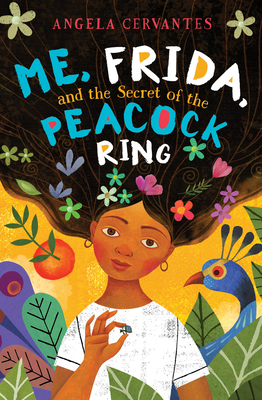
More sophisticated readers of the genre may foresee the revelation of the story’s villain, but the lack of suspense is offset by the fantasy of slipping into the role of crime solver, just as Paloma experienced. And indeed, her discoveries about herself are as integral to the narrative as the whereabouts of the ring. When readers catch a glimpse of Rafael Lopez’s stunning cover art for Me, Frida and the Secret of the Peacock Ring, they may not think they are holding a mystery at all. No dark doorways or creepy staircases. No pointed flashlights or magnifying glasses. Instead, there is Paloma gazing directly at the viewer, evoking Frida’s signature portraits, framed by lush, floral elements, and of course, a peacock (although there is no real peacock ring, Frida was famously an animal lover). She is inviting readers to take a look at all she has uncovered.

 

ABOUT THE AUTHOR: Angela Cervantes is the author of the critically acclaimed novels Gaby, Lost and Found and Allie, First at Last. Angela is the daughter of a retired middle-school teacher who instilled in her a love for reading and storytelling. Angela writes from her home in Kansas City, Kansas. When she is not writing, Angela enjoys reading, running, gazing up at clouds, and taking advantage of Taco Tuesdays everywhere she goes.

Click here for a recent Q&A with Angela Cervantes.

 

J_AgudeloABOUT THE REVIEWER: Jessica Agudelo is a Children’s Librarian at the New York Public Library. She has served on NYPL’s selection committee for its annual Best Books for Kids list, and is currently a co-chair for the 2018 list. She contributes reviews of English and Spanish language books for School Library Journal and is a proud member of the Association of Library Services to Children and REFORMA (the National Association to Promote Library and Information Services to Latinos and Spanish Speakers). Jessica is Colombian-American and born and raised in Queens, NY.

Book Review: Sci-Fu: Kick It Off by Yehudi Mercado


Review by Marcela Peres

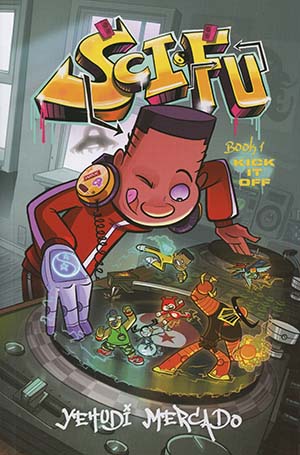
Sci-Fu Vol 1 Kick It Off GNDESCRIPTION OF THE BOOK: Thirteen-year-old Wax’s life may not be perfect. But that doesn’t stop him from spinning some of the sickest beats on their Brooklyn block… but he’s a better DJ than he thinks.

One night, while making a mixtape for his crush, Wax scratches the perfect beat and responds to an interstellar challenge that transports him and the entire block to the robot-filled planet of Discopia. Mistaken by the locals for a master of the futuristic, sound-bending martial art known as SCI-FU, Wax finds himself on the wrong side of a showdown against the Five Deadly Dangers and their leader, Choo Choo.

With help from the sci-fu master Kabuki Snowman and Wax’s crew—including his best friend Cooky P, his sister The D, and even his crush, Pirate Polly—Wax has to become a sci-fu master or risk losing Earth forever!

MY TWO CENTS: Sci-Fu is a love letter mixtape to all things 80s hip hop that can be appreciated by middle grade readers and adults alike. It’s a book that demonstrates the power of graphic novels to speak to the senses: the colors and lettering, heavily influenced by graffiti art and 8-bit video game graphics, are so vibrant and kinetic that you can almost hear the music popping off the page. At the end, writer-illustrator Yehudi Mercado includes a link to a Spotify playlist of iconic old school hip hop that will make you want to re-read the book while listening—and actually, I’d recommend it.

Main character Wax moves through his hero’s journey against a psychedelic sci-fi background, first in a diverse, multilingual 1980s Brooklyn alive with cool characters, fashion, and of course, sick beats, and then on to Discopia, the alien robot planet Wax has to save. He dreams of becoming the best DJ in the universe, but also struggles with normal kid problems, like fending off bullies and finding the courage to talk to his crush. Under the tutelage of his alien Sci-Fu sensei, Kabuki Snowman, and support from his friends and family, Wax faces off against a team of fantastical villains that, in classic hip hop fashion, are clearly sampled from some of the best of 80s pop culture. He’ll learn the skills he needs to save the universe and come into his own as a DJ and a person in the process, learning valuable lessons about hard work, friendship, and standing up for oneself.

There is a lot to love about Sci-Fu, especially its cast of interesting supporting characters. Pirate Polly escapes the typical love interest trope with an exciting side plot and destiny, and smart, take-charge little sister The D deserves a spin-off series of her own. Sidekick Cooky P is a loyal friend who pushes Wax to keep improving, and ice cream-truck driving guardian Uncle Rasheed provides some comic relief in the form of dessert-flavored expletives. The villains rap, in a fun twist on typical superhero-fight banter, and bring their own surprise swerves to the storyline and its eventual resolution.

Many elements, from the plot to the characters to the visual style, are clear homages to music, films, and even other comics. Perhaps strongest here is the “boys adventure” plot type, like the classic Stand by Me or modern throwback show Stranger Things. However, refreshingly, here we get a kids adventure with a mix of genders and backgrounds, and a plot firmly rooted in African-American and Afro-Latinx culture. This is not the 1980s of frizzy perms and synthesizer pop. This is tracksuits and sweatbands, Pan-African pendants, chunky hoop earrings and roller skates, and De La Soul. And the best part is, it’s only Book One.

TEACHING TIPS:

  • Writing: Students could be encouraged to write raps (and rhymes) about their own lives in alternating pairs, just like many of the tracks we hear from Wax and Cooky P.
  • Using onomatopoeia to tell stories: Many of the sound effects in Sci-Fu are examples of onomatopoeia (click, BOOM, whing) or in the Sci-Fu martial art, slang words (wiggedy wack) can be used as attacks. Ask students to illustrate scenes using onomatopoeia sound effects to bring their stories to life.
  • Kung-Fu: One aspect of Sci-Fu that could be better explored is the major influence of kung-fu and martial arts. Research the history of kung-fu and martial arts in American culture, especially in film and its impact on Black culture (for example, on breakdancing).
  • History of hip-hop: Learn about the history of hip hop, especially around when Sci-Fu takes place. Visit online collections such as The Cornell Hip Hop Collection and the Hiphop Archive & Research Institute to see examples of early intersections between hip hop and visual culture (graffiti, DJ flyers, zines). Create zines or flyers inspired by these works.


YehudiABOUT THE AUTHOR/ILLUSTRATOR: Yehudi Mercado is a self-proclaimed Pizza Laureate, cartoonist, writer and animator living in Los Angeles by way of Austin, Texas. Yehudi spent many an afternoon in detention during his formative years and credits that “thinking about what you’ve done time” for his unstoppable imagination. As a latchkey kid, Yehudi would choreograph elaborate kung-fu fight scenes set to his Run-D.M.C. and Beastie Boys records, thus providing the foundation for Sci-Fu. His projects as writer-illustrator include Rocket Salvage, Hero Hotel and Pantalones, TX.


MarcelaABOUT THE REVIEWER: Marcela was born in Brazil and moved to the U.S. at the age of three, growing up in South Florida. She is now the Library Director at Lewiston Public Library in Maine. Marcela holds a Master of Library and Information Science degree from the University of Illinois at Urbana-Champaign, where she concentrated on community informatics and library services to teens. She is a copy editor for NoFlyingNoTights.com, has served on the Will Eisner Graphic Novel Grants for Libraries jury, and speaks about comics in libraries at library conferences and comic conventions. She can be found on Twitter @marcelaphane and Goodreads.


Book Review: Anger is a Gift by Mark Oshiro


Review by Araceli Méndez Hintermeister

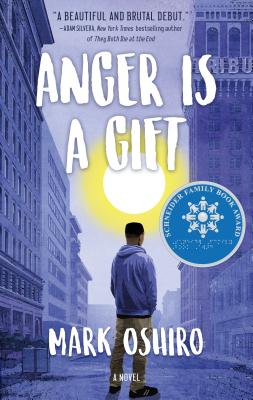
DESCRIPTION OF THE BOOK: Moss Jeffries is many things—considerate student, devoted son, loyal friend and affectionate boyfriend, enthusiastic nerd.

But sometimes Moss still wishes he could be someone else—someone without panic attacks, someone whose father was still alive, someone who hadn’t become a rallying point for a community because of one horrible night.

Six years ago, Moss Jefferies’ father was murdered by an Oakland police officer. Along with losing a parent, the media’s vilification of his father and lack of accountability has left Moss with near crippling panic attacks.

Now, in his sophomore year of high school, Moss and his fellow classmates find themselves increasingly treated like criminals by their own school. New rules. Random locker searches. Constant intimidation and Oakland Police Department stationed in their halls. Despite their youth, the students decide to organize and push back against the administration.

When tensions hit a fever pitch and tragedy strikes, Moss must face a difficult choice: give in to fear and hate or realize that anger can actually be a gift.

MY TWO CENTS: As a teenager, all you do is dream of being someone else, but for Moss, it is less about escaping his world and more about escaping himself. Since the loss of his father six years ago due to police negligence, Moss’s life is thrust into a state of disarray that is constantly afflicted by anxiety and self-doubt. Injustice is rampant in his community, and the death of his father is a marker of a world meant to dismantle communities that are different, whether it be in race, gender, sexuality, or other. Moss knows he should fight, but the pain is still real and it immobilizes him. While others want him to fight, rally, and march, Moss first wants to find peace so that freedom from his anger can finally bring about progress.

Through Moss, we learn that all the feelings he experiences are in fact his tools for survival. His mother teaches him that where he sees anger due to injustice, he can also find power, freedom, and strength that can lead to progress. Oshiro brilliantly gives us a challenging and truthful world that will foster profound discussion on a topic we shouldn’t be shying away from. I also admire that Anger is a Gift highlights how oppression targets so many due to their identities and shows us that we cannot ourselves rise while leaving others behind.

TEACHING TIPS: Police violence is a difficult topic to make sense of, let alone explain to others. With honesty, Anger is a Gift allows us to realize that the confusion and array of feelings that come with experiencing sensless violence in our communities are justified. Through Moss, we are allowed to experience how one individual utilizes those feelings to bring action rather than inmobilize him. Anger is a Gift can be used in conjunction to other books that explore police violence, but I encourage you to supplement your readings with news clips and articles that report on police violence. Encourage your students to identify the differences and potential biases in these reports.

RECOMMENDED READING: 

  • The Hate U Give by Angie Thomas
  • Tyler Johnson Was Here by Jay Coles
  • All American Boys by  Jason Reynolds & Brendan Kiely


Oshiro_Mark.jpgABOUT THE AUTHORMark Oshiro is the Hugo-nominated writer of the online Mark Does Stuff universe (Mark Reads and Mark Watches), where he analyzes book and TV series. He was the nonfiction editor of Queers Destroy Science Fiction! and the co-editor of Speculative Fiction 2015, and is the President of the Con or Bust Board of Directors. When not writing/recording reviews or editing, Oshiro engages in social activism online and offline. Anger is a Gift is his debut YA contemporary fiction novel.

.

.

.

.

ABOUT THE REVIEWER: Araceli Méndez Hintermeister is a librarian and archivist with a background in public, academic, and culinary libraries. She has an M.A. in history and MLIS from Simmons College, where she focused her studies on the role of libraries and archives in the cultural preservation of the U.S.-Mexican border. Additionally, she holds a BA in ethnic studies from Brown University. Her research is greatly influenced by her hometown of Laredo, TX, which has led her to work in serving immigrants and underrepresented communities. Her current work is bringing new and diverse literature to the T in Boston through Books on the T. You can find Araceli on Instagram.


Book Review: Love, Sugar, Magic: A Dash of Trouble by Anna Meriano


Review by Cecilia Cackley

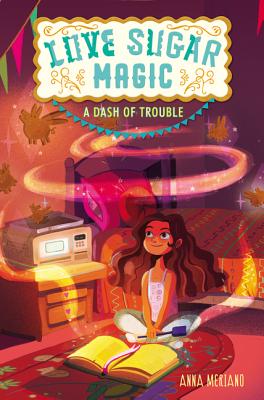
DESCRIPTION OF THE BOOK: Leonora Logroño’s family owns the most beloved bakery in Rose Hill, Texas, spending their days conjuring delicious cookies and cakes for any occasion. And no occasion is more important than the annual Dia de los Muertos festival.

Leo hopes that this might be the year that she gets to help prepare for the big celebration—but, once again, she is told she’s too young. Sneaking out of school and down to the bakery, she discovers that her mother, aunt, and four older sisters have in fact been keeping a big secret: they’re brujas—witches of Mexican ancestry—who pour a little bit of sweet magic into everything that they bake.

Leo knows that she has magical ability as well and is more determined than ever to join the family business—even if she can’t let her mama and hermanas know about it yet.

And when her best friend, Caroline, has a problem that needs solving, Leo has the perfect opportunity to try out her craft. It’s just one little spell, after all…what could possibly go wrong?

MY TWO CENTS: While we’ve had a strong list of Latinx YA fantasy and magical realism books building for some time, most middle grade books by Latinx authors tend to fall into the genres of realistic fiction or historical fiction. So I was absolutely delighted to read this series opener by Anna Meriano which gives a traditional literary fantasy arc a Latinx, and specifically Mexican-American, voice. Meriano riffs on so many tropes here, including the family with a secret, the youngest child who is desperate to be included, and the sorcerer’s (here, bruja’s) apprentice whose attempts at magic go awry.

One of my favorite things about this book is how the author creates a protagonist who doesn’t speak Spanish (her abuela, who looked after her older sisters and taught them Spanish, died when she was little) and uses it as an obstacle that drives the plot. Magic spells are written in Spanish, so it makes sense that Leo struggles with following them—but also that she perseveres and sees them as her birthright. Not all Latinx kids in the US speak Spanish, for a variety of reasons, and I loved seeing that incorporated into the narrative.

The family relationships in this book are just outstanding. Each sister is individual, and the conflicts between them feel real and lived. I would read an entire book about Marisol and her journey. Meriano doesn’t take the easy way out by having the parents absent or conveniently clueless for most of the narrative, instead making Leo sneak around, constantly worried that her magical efforts will be found out. Of course she is wrong, and the consequences are my favorite part of the book. Leo has to work to fix her mistakes. There is no waving a wand or finding the right words or having a mentor pick up the pieces. She has help, (some of it from an…interesting…source) but she has to do the heavy lifting and figure out the steps to reverse the effects of her spells. Magic systems are tricky to write, and I appreciate that Meriano has created a world with clear rules and expectations, even if they can be bent or broken occasionally.

I would go so far as to say this book is a textbook example of a story that includes specific cultural details, holidays, and language without having them be the focus of the book. So much pop culture centered around Latinx characters uses the Day of the Dead celebrations as an entry and there’s nothing wrong with that, but it gets old after awhile. I loved how Meriano uses the Day of the Dead festival as a set piece, (it’s nice to see how the Logroño family aren’t outsiders in their town), but the book itself isn’t about Day of the Dead. Being a bruja has nothing to do with Day of the Dead. Being Mexican-American is about more than Day of the Dead, a fact that some in the media have yet to grasp.

My favorite line in this book is what Mamá tells Leo when she asks what it means to be a witch.

“A witch can be anyone. A bruja is us. And what does it mean to be a bruja? That’s like asking what it means to be a Texan, or a girl, or curly haired. It doesn’t mean anything by itself. It’s part of you. Then you decide what it means.”

I’m so thrilled that young kids, just hitting middle school, struggling with their identity, will have Leo and her family to make them laugh and guide them to a better understanding of who they are who they want to be in the world.

TEACHING TIPS: There is so much to unpack here for a literature circle or book group at a school. Leo makes lots of choices, which have consequences for many different people, so students can have a field day debating what she should or shouldn’t have done at many different points in the story. Spanish classes, start translating some of those spells! Students could test some of the recipes in the back of the book and bring in their efforts to share with classmates (there is even a gluten-free option). The fantasy elements of the book provide a means for students to write personal narratives imagining themselves into that world: what magical power would you like to have? What are the pros and cons of Isabel’s power versus Alma and Belén’s?

Image result for anna merianoABOUT THE AUTHOR: Anna Meriano grew up in Houston with an older brother and a younger brother, but (tragically) no sisters. She graduated from Rice University with a degree in English and earned her MFA in creative writing with an emphasis on writing for children from the New School in New York. She has taught creative writing and high school English and works as a writing tutor. Anna likes reading, knitting, playing full-contact quidditch, and singing along to songs in English, Spanish, and ASL. Anna still lives in Houston with her dog, Cisco. Her favorite baked goods are the kind that don’t fly away before you eat them.

RESOURCES: 

Interview with us about being a middle grade author: https://latinosinkidlit.wordpress.com/2018/01/05/spotlight-on-middle-grade-authors-part-3-anna-meriano/

Interview on BNKids blog: https://www.barnesandnoble.com/blog/kids/baking-brujas-interview-anna-meriano-love-sugar-magic-dash-trouble/

Excerpt on EW: http://ew.com/books/2017/06/29/love-sugar-magic-dash-of-trouble-excerpt/

Pitch America interview: https://pitchamerica.wordpress.com/2017/07/10/interview-with-anna-meriano-author-of-love-sugar-magic/


ABOUT THE REVIEWER: Cecilia Cackley is a performing artist and children’s bookseller based in Washington DC where she creates puppet theater for adults and teaches playwriting and creative drama to children. Her bilingual children’s plays have been produced by GALA Hispanic Theatre and her interests in bilingual education, literacy, and immigrant advocacy all tend to find their way into her theatrical work. You can find more of her work at www.witsendpuppets.com.