Agent Chat with Adrienne Rosado of Nancy Yost Literary

By Zoraida Córdova

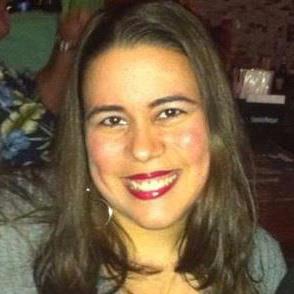
I’d like to welcome Adrienne Rosado of Nancy Yost Literary. Eight years ago, I was one of Adrienne’s minions slush pile interns. Three books later, I’m proud to call her my agent and BFF.

Tell us a little about yourself.

Adrienne: I’m a second generation native New Yorker and have worked in publishing for just over 8 years. I represent a very eclectic group of authors and somehow was lucky enough to have stumbled into the “when I grow up” perfect job.

Me: What were some of your favorite books growing up?
29380_10152263632420414_1819881365_nAdrienne: I always read older than my age group because there wasn’t the wide range of YA and MG books in the way that we know now. When I was a kid (because apparently I’m about 500 yrs old now), you were either an R.L. Stein/Christopher Pike, or Babysitter’s Club/Sweet Valley High reader. I was all about Fear Street. There was a really clear divide in what types of books were offered to children based on gender. I remember being made to read the Lurlene McDaniel books because they were “girl books.” I remember one really bitter summer when the assigned book for girls was The Secret Garden while the boys read Indian in the Cupboard.

So, I ended up reading a lot of Stephen King and Michael Crichton instead.

Me: So when you were in school, were Latin@ books ever highlighted/incorporated into the curriculum? I did grades 1-12 in NYC public schools, and the only Latin@ book I read in high school was House on Mango Street by Sandra Cisneros.

Adrienne: I would completely agree with you. We didn’t cover very many books with multicultural characters. I definitely read HoMS and Dreaming in Cuban by Cristina Garcia. Basically, we did classics by lots of dead authors, unless we were celebrating some kind of heritage month, which in hindsight is really sad.

Me: I agree. We shouldn’t wait for Latino or Black history months to enjoy these stories. Now, for some businessy questions: as an agent, what do you look for in submissions?

Adrienne: It boils down to quality writing. I want a well-defined protagonist, multilayered secondary characters, and a really fantastic voice. I want this regardless of the character’s race or magical species, I’m looking at you, Z.

Me: *Holds out hand for a gold star* What is the biggest mistake new authors have made when contacting you (other than addressing you as MR. Rosado)?

Adrienne: Sending me submissions before they’re ready. I see so many subs that still need another round or two of revisions and you always want to put your best foot forward.

Me: How can an author show their professionalism?

Adrienne: The most successful authors that I know have always acted as professionals before they were published. They did their research in their genres. They avoided trend chasing. They strove to make their manuscripts as pristine as possible before sending them out.

Sometimes, it’s even as simple as having a dedicated professional email address with your name as opposed to babygirl23XOXO@aol.com
It’s demonstrating a familiarity with what being a modern author entails, having a Twitter account, a blog, etc.

Deadlines are also huge. One of my biggest pet peeves is when I request a manuscript and then am told that the author needs another couple of months to polish it. That’s unprofessional.

Me: How many clients do you represent? Are you still looking?

Adrienne: I try to keep a smaller and diverse list, so I can give my authors personal attention. I’m always on the look out for fresh voices and new talent.

Me: How do you decide where to pitch a manuscript?

Adrienne: It’s not dissimilar from how an author looks for an agent. The sign of a good agent is someone who maintains a good network of editorial contacts. They know who is looking for what kind of material. You wouldn’t go to an imprint that does non-fiction with supernatural YA. Everyone’s taste is different, even within houses and imprints. Your agent should stay up-to-date with what editors are looking for.

Me: How do you work with your authors? How deep are your edits?

Adrienne: It’s different with every author and the level they’re at with their careers. Some agents don’t do any editorial work at all. I happen to do some editorial work with my clients.

With debut authors I tend to do more polishing edits, and even some developmental, before going out on submission in order to put our best foot forward in the publishing marketplace.

There has to be a level of trust in the editorial process and open communication.  I would never want to make suggestions that an author felt were inauthentic to their material.

Me: What are you looking to represent now?

Adrienne: This is going to sound like a cop out, but I’m looking for strong writing, an exciting voice, something that’s going to put me in the character’s life and make me feel like part of that story that has the potential to make me miss my stop on the subway.

I accept anything from MG to Adult. I do have a soft spot for thrillers, anything dark and edgy, Southern Gothics, and things that make me laugh or cry really hard.

Me: What do you think we can do as a writing community to promote or have more books with diverse characters?

Adrienne: I think that diversity should be a facet of a character and not a defining characteristic of the story. Your work for example. You happen to be an Ecuadorian immigrant who wrote a book, which includes a diverse cast of characters, but that’s not why I represent you. I represent and read your books because I love the stories and world that you’ve created.

Me: It also represents my upbringing. My friends have always been first or second generation immigrants from all over the place. But it’s still hard to see ourselves in a lot of media without stereotypes.

Adrienne: I feel that the issues in multicultural literature are different now than they were 15-20 years ago. The stories we’re reading now are going to a generation that is used to having diversity in their daily lives. It’s less about assimilating into a new culture/community and more about individual identity. For instance, when I was a teen, if someone asked me where I was from, I would say I’m a New Yorker. That wouldn’t have been the case for my parent’s generation. Now, it’s assumed that people have a diverse background. It’s not uncommon in this city.

Me: It might be different for kids who live in less diverse communities and states.

Adrienne: Agreed. But that doesn’t mean that children and teens from a less diverse community are not going to be able to relate to another teen’s story just because it comes from a protagonist of a different race, religion, etc. People read to learn about something different, a new world, a new character, whether it’s a coming of age story or an epic fantasy. A good story is a good story. It should be how a story is told that defines the book.

Me: Totally. Though I think authors shouldn’t be afraid to write more diverse characters and make it a non-issue. In writing classes people like to throw around the phrase “write what you know,” but I think we should “write what you don’t know.”

Adrienne: I agree. Added to that, though, is that growing up happens to the best of us, so we all happen to face really similar challenges as we “come of age.” For example, isn’t it Jane Austen that said, “It is a truth universally acknowledged, that a single teen in possession of a good prom dress, must be in want of a date.”  Or something like that anyway?

Me: LOL. Something like that. Maybe the problem is that people keep making it a problem.

Adrienne: I completely agree with that. There should be more diversity in books. I think the issue is that many authors fear that they will get pigeonholed as “multicultural” when that is only a sliver of the story.

Me: Agreed. Sometimes our politically correctness gets in the way.

Adrienne: At the end of the day, write a good story. Don’t be afraid to let your characters be who they are…

Me: Well thanks for taking the time to chat with me. Now, I’m going to go write a quasi-biographical YA based on my early years.

Adrienne: *groans*

Me: Kidding. Thanks for being with us. If you’d like submit to Adrienne Rosado, please read the NYLA guidelines.

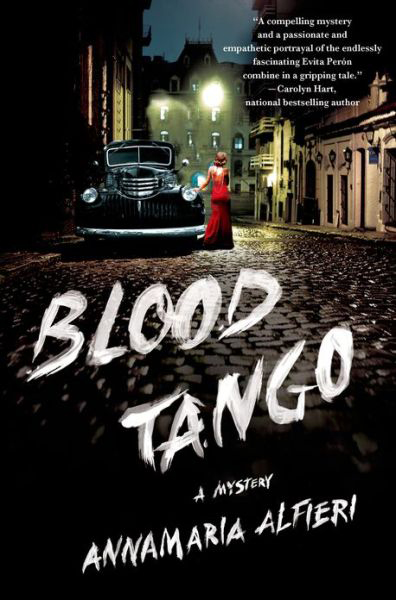
Here are some of Adrienne’s clients:

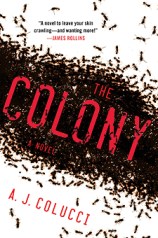
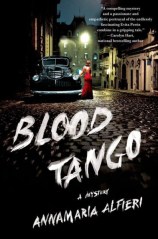
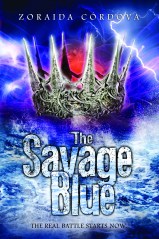
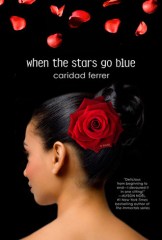
PLAY ME BACKWARDS FRONT copy   colony-225-1   Blood_Tango   9781402265136-300   7990393-1


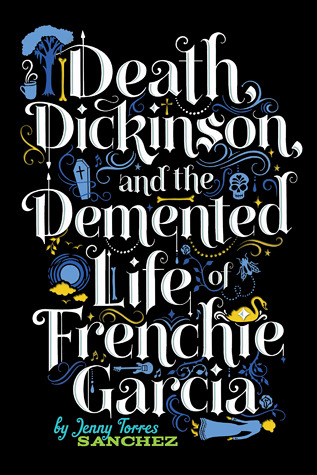
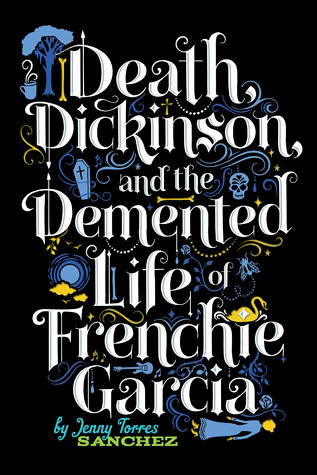
Book Review: Death, Dickinson, and the Demented Life of Frenchie Garcia by Jenny Torres Sanchez

Death, Dickinson, and the Demented Life of Frenchie GarciaBy Cindy L. Rodriguez

DESCRIPTION FROM THE BOOK JACKET: How do you know someone after they’re gone? Frenchie Garcia didn’t know she would be the last person to see Andy Cooper alive. She barely knew him. So why did he choose to be with he before he committed suicide? Her imaginary pal Em (a.k.a Emily Dickinson), who Frenchie visits regularly at her favorite place–the cemetery–is the only one who knows about her last hours with Andy. With guilt and confusion mounting, can Frenchie pull off the one thing that could give her closure?

MY TWO CENTS: Frenchie goes on a road trip with a super-cute new “friend” Colin to make sense of what happened the one and only night she hung out with Andy Cooper, the boy she loved from afar through high school. Frenchie is haunted by the usual questions when grieving: Why? Why him? What could I have done to help him? Could I have stopped him? The last two questions are most painful because she was the last person to see Andy before he died, and, therefore, feels responsible. Sanchez easily blends heart-wrenching grief with regular teen angst, serious moments of conversation with quips like, “Get up, Loser!”from Robyn, Frenchie’s friend who knows something is wrong, but isn’t sure what. Also, Frenchie Garcia is a Latina protagonist in a book that isn’t about being Latina. Frenchie is an artist who likes punk rock and Emily Dickinson; she’s a young Latina who doesn’t speak a single word of Spanish in the novel. Some readers/writers/bloggers have asked for more books with diverse characters who are not dealing with issues of ethnicity, culture, race, etc. This is a good example.

TEACHING TIPS: What student wouldn’t fill an entire notebook about a day they’d like to do-over? This is a perfect before-reading activity that could be revisited and added to as the novel continues. As Frenchie leads Colin through her last night with Andy, students could write about their chosen “do-over” night, what they’d do differently, and what they’d discover. By the end, students have read a cool book and written a personal narrative!

Emily Dickinson’s poetry is made for close reading, which is all the rage with the new Common Core State Standards. Students could read and re-read any of Dickinson’s poems featured in the novel. Close, multiple readings allow students to analyze work down to the word level to gain deeper meaning. In this case, students would gain a deeper understanding of Dickinson and Sanchez’s novel, as they could discuss how the poems fit with the novel.

LEXILE: N/A

AUTHOR: Jenny Torres Sanchez lives in Orlando, Florida with her husband and children. Before writing her debut novel, The Downside of Being Charlie, she taught high school for several years. She credits her eclectic students for inspiring her to write young adult novels.

Her other YA novel is:

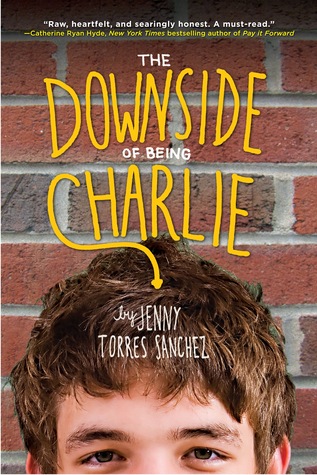
The Downside of Being Charlie

FOR MORE INFORMATION about Death, Dickinson, and the Demented Life of Frenchie Garcia, visit your local library or book store. Also, check out Running Press BooksIndieBound.org,  GoodreadsAmazon.com, and Barnes and Noble.com.

Author Jenny Torres Sanchez & Her Characters Are Inspired by the Arts

By Jenny Torres Sanchez

When I was in school and I’d read a story in my English textbook, many times there was a photo or an art piece that went along with it. And there’d always be a question at the end of the story that would ask how the art piece and story go together. Some people hated that question.

I loved it.

I’ve always loved the idea of art going together. It makes sense to me, the way they connect. The way one piece of art can inspire another piece of art, or how you can see a story in a painting, or how a story can paint images in your head. I LOVE that. I guess that’s why I find a lot of inspiration in other forms of art. Not only do I enjoy them for what they are (a striking painting, a haunting photo, a song that you can’t get out of your head), but I also enjoy them because of the stories I see in them.

CharlieMusic? Listen to the lyrics; there’s a story there. Paintings? Full of story, either of the subject or the artist. Photography? Setting. People. Captured moments. It’s kind of like an artist is setting me up for a story, igniting that spark that helps me write. For me, all art is striving to make a connection, with the reader, with the listener, with the viewer. It’s striving to ask you to look inside yourself, or outside yourself, and really wonder and think and feel. And I think you really need to feel to write, so for me the two go hand in hand.

But I also think art can be more than inspiration.

In my books, my characters often turn to art in some way while they’re going through a difficult time. In The Downside of Being Charlie, Charlie finds he can make better sense of the world through the lens of a camera. He is incredibly vulnerable and scared and unable to express himself or deal with his family issues. But in photography, he finds a way to do that. Actually, with Charlie, photography becomes this way of seeing things, exposing things no one else around him wants to see. So, photography also becomes this very powerful and empowering thing for him.

FrenchieIn Death, Dickinson, and the Demented Life of Frenchie Garcia, Frenchie is fascinated by Emily Dickinson’s poems, specifically those about death because she’s is in a dark place in her life. Her high school crush has just committed suicide after an amazing night of adventure with her. Dickinson’s poetry reflects Frenchie’s own feelings, and helps her to come to terms with something that just doesn’t make sense.

I don’t set out to make my characters artsy but they usually end up that way. I think it’s because I also see the arts as something that can save us (I hesitate to use the word save, I really do, because I think ultimately, we choose to save ourselves). But I truly believe music, art, writing, stories can offer us a safe haven and inspiration. A place to hang out for awhile, sometimes as an escape, sometimes as a place to make better sense of whatever it is we are going through. Sometimes it is conscious, and sometimes, not so much. Either way, the arts really can be a sort of salve for anyone who has gone through tough times. I like salve better than save. Add the L.

Overall though, art is pretty amazing in any medium. It asks us to feel. It offers us comfort and understanding. And that can’t be bad.

Jenny TorresFrom the Running Press site: Jenny Torres Sanchez lives in Florida with her husband and children where she currently writes full time. Before her debut novel The Downside of Being Charlie she taught high school for several years, where she credits her eclectic students for inspiring her to write young adult novels.

On Thursday, her second novel, Death, Dickinson, and the Demented Life of Frenchie Garcia will be featured on our Libros Latin@s post.

Book Review: Tito Puente: Mambo King / Rey del Mambo by Monica Brown

Tito Puente, Mambo King/Tito Puente, Rey del MamboBy Sujei Lugo

DESCRIPTION FROM THE BOOK JACKET: Meet Tito Puente, the King of Mambo. Tum Tica! From musical prodigy on the streets of Harlem to five-time Grammy Award winner, Tito’s life was full of rhythm. Drums and claves, saxophones and tambourines were all part of the fun. Tac Tic! Monica Brown and Rafael López, the award-winning creators of the Pura Belpré Honor Book My Name is Celia/Me Llamo Celia, team up once again for another spectacular collaboration in this upbeat tribute to a musical legend.

MY TWO CENTS: Brown was presented with the challenge of summarizing Tito Puente’s life and music career in a picture book, and with the collaboration of Rafael López and his lovely illustrations, she succeeded wonderfully. What makes this picture book stand out is how beautifully words (English and Spanish) and images resonate with Tito’s sounds. The illustrations here are so vivid that you can almost see movements and listen to the sounds that are evoked. Brown and López effectively capture the beat and feeling of Tito Puente’s music throughout every page.

The book starts with an image of a boy and girl peeking through a curtain, as if we are about to start a show. This is where we are welcomed to Tito’s story from his childhood in El Barrio to his Grammy award-winning years. López’s colorful and vibrant images, along with Brown’s words and onomatopoeia, show us how music was constantly present in Tito’s life. These same images and words also construct a fond view of Latino life and music in NYC during Tito’s life.

Brown and López give us a very entertaining book that also manages to educate us about Tito’s life and the importance of music education. It is important to remember that Tito Puente was a product of music education and a supporter of music programs in schools. He even successfully worked toward the creation of the Tito Puente Educational Foundation that offers scholarships to children interested in learning music. This is an issue that is relevant when arts and music programs are constantly facing budget cuts. Being in tune with Puente’s life (and other great musicians and singers) helps to inspire us to support arts and music education, thus this picture book also serves as a great tool to familiarize with the power of music and arts as an important aspect of the learning process.

Tito Puente: Mambo King/Rey del Mambo is the second collaboration between Monica Brown and Rafael López. Published in March 2013, the book was selected by various Best of 2013 lists such as: Latinas for Latino Lit’s Remarkable Latino Children’s Literature of 2013, School Library Journal’s Top 10 Latino-themed Books of 2013, and Center for the Study Multicultural Children’s Literature Best Multicultural Books of 2013. Here is the wonderful bilingual trailer for this picture book:

TEACHING TIPS: This is a bilingual picture book (ages 4-7) that works well for early readers, but is a perfect one to read aloud. Parents, grandparents, family members, friends, or guardians can read in English, Spanish, or both, while teaching words and sounds to their young ones. School and public librarians can also use this book during storytime, and they can incorporate Tito’s songs and beats as the closing songs.

Going along with Tito Puente’s sense of collaboration with music, teachers (pre-school-2 grade) can also collaborate in school with this book. Language Arts, English, and Spanish teachers can read this book to their students, while teaching new words (in English and Spanish), onomatopoeia, and Tito’s life (the book includes a short biography). Art teachers can encourage and help students to create different musical instruments that are mentioned in the book. Music teachers can use the basic musical notation of a rumba for timbales, bongo, and congas that is available at the end of the book to teach some beats to the students.

LEXILE: AD740L

AUTHOR & ILLUSTRATOR: (information comes from HarperCollins Publishers, Monica Brown’s website, Rafael López Books’ website, and Rafael López’ website.

Monica Brown is the author of many award-winning children’s books and an English Professor at Northern Arizona University, specializing in U.S. Latino Literature and Multicultural Literature. She has a BA in English from University of California, Santa Barbara, an MA in English from Boston College and a PhD in English from The Ohio State University. In addition to children’s books, Monica Brown also writes and publishes scholarly work with a Latin@ focus. She is a recipient of the prestigious Rockefeller Fellowship on Chicano Cultural Literacies from the Center for Chicano Studies at the University of California.

Brown has stated that her Peruvian-American heritage and her desire to share Latin@ stories are the inspiration for her books. Her first book of the Marisol McDonald series, Marisol McDonald Doesn’t Match/Marisol McDonald No Combina is the winner of the Tejas Star Book Award (2012-13), the International Latino Book Award (2012) and a Pura Belpré Honor for Illustration (2012). Other of her numerous awards are: the Américas Award for Children’s and Young Adult Literature (2005) for her picture book My Name is Celia: The Life of Celia Cruz/Me Llamo Celia: La Vida de Celia Cruz; the Pura Belpré Award (2008) for My Name is Gabito: The Life of Gabriel Garcia Márquez/Me Llamo Gabito: The Life of Gabriel Garcia Márquez; and the International Latino Book Award (2006) for My Name is Gabriela: The Life of Gabriel Mistral/Me Llamo Gabriela: La Vida de Gabriela Mistral

Rafael López is a Mexican award-winning illustrator and artist, whose work is influenced by his cultural heritage, colors of Mexican street life, and Mexican surrealism. In addition to children’s books, López has illustrated posters, United States Postal Service stamps such as the Latin Music Legends series, and he has launched street art projects to revitalize urban neighborhoods, such as the Urban Art Trail Project.

He is the recipient of various Pura Belpré Honor for Illustration awards for books such as: My Name is Celia: The Life of Celia Cruz/Me Llamo Celia: La Vida de Celia Cruz (2006), Book Fiesta!: Celebrate Children’s Day/Book Day/ Celebremos El Día de los Niños/El Día de Los Libros (2010) and The Cazuela That the Farm Maiden Stirred (2012). He also received two Américas Awards for Children’s and Young Adult Literature for My Name is Celia (2006) and ¡Yum! ¡Mmmm! ¡Qué Rico! Americas’ Sproutings (2007).

For More Information about Tito Puente: Mambo King / Rey del Mambo (2013), visit your local library or bookstore. Also, check out worldcat.org, indiebound.org , goodreads.com, amazon.com, barnesandnoble.com  & harpercollins.com

To Be Accurate in Writing, Recognize Truth While Reading

By Cindy L. Rodriguez

As a reading teacher, I often tell my students that the best way to become a better reader is to…wait for it…read. Seems obvious, right? And, of course, the best way to become a better writer is to write. After all, the more you write, the more you produce, the more you learn about writing and about yourself as a writer, and the more you improve.

During our “Road to Publishing” series, we focused on the writing process because, let’s face it, if the writing doesn’t get done, you’re not going to finish your book and become a published author. But, today we want to stress that to become a better writer, you also need to read. A lot.

This may seem obvious to many of us, since most writers I know buy more books than they could ever possibly read in a lifetime, but I’m thinking of my students and other young people who may become future novelists. I often hear students separate reading and writing, as in,”I like to read, but I hate to write” or “I love to write, but I hate to read.”

In response, I offer this quote from a text I use with my college composition students: “Reading and writing function much like breathing in & breathing out. They are inextricably linked” (McQuade/Atwan).

To be a better writer, you must read. Obviously, you read to do the necessary research, and you read within your genre to know what’s been done and what’s popular. But at some point, you’ll also start to read as a writer.

I was always an avid reader, but once I started to write a novel, I read books differently. Of course, at times, I just want to relax and escape and enjoy a good book. Oftentimes, though, I now read as a writer. I notice the structure of the work, vivid descriptions, great dialogue, and chapter endings that keep me reading. I underline beautifully crafted phrases and catch when someone is telling instead of showing. I also wonder if telling is fine in that moment or if my editor would have marked it with a note.

Reading and writing are linked, no question. And, since this is a place where we celebrate and highlight Latin@s in kid lit, I’ll further suggest that if you plan to write Latin@, then you should read Latin@, too. Every conference session I’ve attended or blog post I’ve read about diversity in children’s literature has emphasized the importance of being accurate and respectful when writers venture into territory outside their personal experiences. To be accurate and respectful in your writing, you have to recognize truth and respect while you read.

Part of our site’s mission is to promote literacy and the love of books within the Latin@ community and to encourage interest in Latin@ children’s, MG, and YA literature among non-Latin@ readers. In other words, we want everyone to read and write more Latin@ Lit. To support this, we are adding to our book lists, hosting a year-long reading challenge, and highlighting certain titles in our new weekly feature called “Libros Latin@s.”

Whether you’re reading for research, pleasure, or to become a better writer, we encourage you to add some Latin@ titles to your TBR list this year.

Here are some of the books we’re reading:

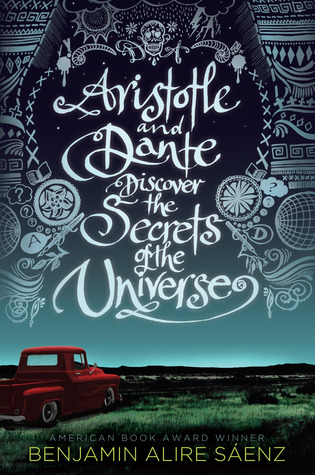
Mexican WhiteBoy     La Linea     Aristotle and Dante Discover the Secrets of the Universe

Secret Saturdays     Confetti Girl     Under the Mesquite

What are you reading?

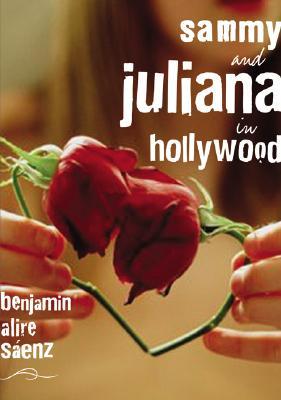
Book Review: Sammy and Juliana in Hollywood by Benjamin Alire Sáenz

SammyBy Cindy L. Rodriguez

DESCRIPTION FROM THE BOOK JACKET: A young adult novel Latino-style–the year is 1969. America is at war, Hollywood is a dirt-poor Chicano barrio in small town America, and Sammy and Juliana, about to head into their senior year, are in love.

MY TWO CENTS: Sáenz creates strong main and supporting characters long remembered after finishing the novel. Sammy’s voice was spot-on as a teen boy who grapples with the personal issues all teens do–friends, love, fears and hopes for the future–while also dealing with poverty, racism, and the Vietnam War era. Sáenz brilliantly mixes Spanish and English, local “neighborhood” issues with larger social issues like drug addiction and homophobia. While Sammy and Juliana are in love, as the book blurb states, this is not a traditional love story. Something tragic happens shortly into the novel that ends the love affair. I won’t spoil it, but the relationship was short-lived, and Sammy spends the rest of the novel dealing with this loss and many others. If you’re looking for something light-hearted with a happy ending, this one’s not for you. Sáenz left me feeling what it’s like to get pounded by life, as Sammy was and as many people are.

TEACHING TIPS: This book has many issues worth pursuing in the classroom: immigration, poverty, grief, drug-use, discrimination based on race and sexual preference. Parts of this novel could easily be used by teachers in different ways. I say parts because I don’t believe every novel used in class needs to be read cover-to-cover. A history teacher, for example, may want to zero in on certain aspects of a novel, but may not want to handle elements typically taught by an English teacher, like character development or symbolism.

The thread about the Vietnam War could be pulled from the novel and used to complement nonfiction pieces in high school history classes. The character Pifas is drafted and students protest the war by wearing black arm bands and staging a sit-in in the school cafeteria. These were among the most memorable moments in the novel. The conversation between Sammy and Pifas about being drafted is emotionally gut-wrenching, and my heart sank when Gigi gets out of the car and falls to her knees in reaction to news about Pifas.

English teachers could use nonfiction pieces about any of the novel’s issues to attack author’s craft, investigating the differences between an objective, factual version of events versus a fictionalized one. Students could then choose an issue from the novel that is still relevant today (hint: all of them) and write two short versions of an event, one as a nonfiction writer would and the other as a fiction writer would.

LEXILE: 390

AUTHOR: (information comes directly from Cinco Puntos Press and University of Texas at El Paso)

Benjamin Alire Sáenz was born in 1954 in Old Picacho, a small farming village outside of Las Cruces, New Mexico. After graduating from high school in 1972, he entered the seminary. He was later ordained a Catholic priest, but left the priesthood three and a half years later. At the age of 30, he entered the University of Texas at El Paso. He later received a fellowship at the University of Iowa. In 1988, he received a Wallace E. Stegner Fellowship in poetry from Stanford University. In 1993, he returned to the border to teach in the bilingual MFA program at UTEP.

Sáenz is an award-winning poet and author of books for children and young adults. His first YA novel, Sammy & Juliana in Hollywood was a finalist for the Los Angeles Times Book Prize and won the Americas Book Award, The Paterson Prize, and the JHunt Award. It was named one of the top ten Young Adult novels by the American Library Association and one of the top books of the year by the Center for Children’s Books, The New York Public Library, and the Miami Herald.

His other YA novels are:

He Forgot to Say Goodbye   Last Night I Sang to the Monster   Aristotle and Dante Discover the Secrets of the Universe

FOR MORE INFORMATION about Sammy & Juliana in Hollywoodvisit your local library or book store. Also, check out Cinco Puntos Press, IndieBound.org,  GoodreadsAmazon.com, and Barnes and Noble.com.