Book Review: Yaqui Delgado Wants to Kick Your Ass by Meg Medina

By Edith Campbell

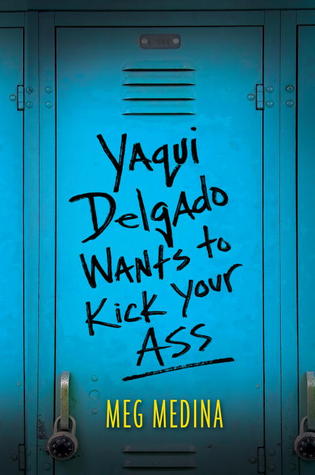
YaquiMeg Medina is an accomplished author who has won awards for Tia Isa Wants a Car and The Girl Who Could Silence the Wind. Her latest book, Yaqui Dalgado Wants to Kick Your Ass is acquiring a growing list of recognition, including the Pura Belpré (a complete list of awards is at the bottom of this post). By the title, you might think that Yaqui is the main character in this realistic YA novel, but she’s not. This is Piadad “Piddy” Sanchez’s story. Just like with any bully, Yaqui seems to have taken things over.

When the novel begins, Piddy has just moved, leaving behind the school and neighborhood where she’s always felt at home. Medina quickly paints the picture of the new territory this young Latina must navigate, one where skin tone, country of origin, accent and ability to speak Spanish define where you sit as well as your place in the pecking order. Piddy shakes her hips in ways that unintentionally get too much attention and it’s on: Yaqui Delgado wants to kick her ass. Piddy’s mom can just look at Yaqui and know she’s up to no good. While Piddy’s mom may have no use for tough girls like Yaqui, Piddy cannot avoid them in her new school.

Piddy’s at that awkward age where she’s no longer a child, but not quite grown, either. She still cherishes the elephant necklace she got a few birthdays ago, but now even though she likes the idea, she knows she’s too old to celebrate her birthday like she did that time at the zoo. If she were still a little girl she could take her problems to her mom and could probably still do so if she were just a bit more mature. But Piddy doesn’t fully trust herself, and she’s also got this bully frightening her so much that—before long—she doesn’t even recognize herself.

When Piddy begins to have problems at school, she reaches out to her mother’s friend, Lila. Lila is like an aunt to Piddy. She’s the fun one who taught Piddy to dance and how to wear makeup, and she’s the one Piddy turns to when she wants to find out what really happened to her father.

Lila is part of the community in which Piddy’s story is grounded. Lila, her boyfriend Raul, the women at the beauty shop, and even the Ortegas provide spaces of comfort and familiarity for Piddy, and they nurture her as she struggles to find out who she is becoming. Piddy has two problems: she wants to know about her dad, and she can’t get Yaqui out of her head. For solutions, Piddy turns first to Lila and then to her old friend, Mitzi Ortega, who has recently moved to another area. These women are her touchstones as she moves from girl to woman. She wants to face Yaqui, but not even the support of Lila, Mitzi, and the others is enough to make that happen. We know that no one can give you this kind of strength; it comes from inside.

In her coming of age, Piddy finds Joey, a neighborhood boy who has had a very tough life. Medina writes their relationship as one that gives Piddy room to explore. While his character is not thoroughly developed, it is complete enough for the story, and their relationship helps us see a special tenderness in Piddy. Medina captures Piddy’s feelings and emotions in ways that will be immediately recognizable to anyone who has been the new kid or the kid who has been picked on. Piddy becomes a victim, losing any idea of who she is or for what she stands. Readers become part of the community that supports Piddy and wants her to stand up to Yaqui.

I’ve heard many shy away from this book, afraid of how rough it may be or turned off by the title. This is not a rough story! Despite the “ass” in the title, there’s no profanity, no drugs or alcohol, and only one scene of adolescent petting that is quite effective and touching. Piddy is a good student who wants to be a scientist and she comes from a thriving community. The novel illustrates that bullying can (and does) happen in any community, and in this book, the victim happens to be Piddy. Being a victim is rough, but Piddy is not a rough girl.

So, put the tape of the cover if you must, but put the book in your library. There are reasons for all the awards and recognition!

LEXILE: HL670

Edith Campbell

Edith Campbell is a mother, librarian, educator and quilter. She received her B.A. in Economics from the University of Cincinnati and MLS from Indiana University.  Her passion is promoting literacy in all its many forms to teens and she does this through her blog, CrazyQuiltEdi and in her work as an Education  Librarian at Indiana State University in Terre Haute, Indiana. Edith currently serves as the IN State Ambassador for the United States Board on Books for Young People and is a past member of YALSA’s Best Fiction for Young Adults selection committee.
Book Review: Grandma’s Records by Eric Velasquez

Grandma'sRecordsCoverBy Sujei Lugo

DESCRIPTION FROM THE BOOK JACKET: Every summer, Eric goes to live with his grandmother in El Barrio (Spanish Harlem) while his parents work. Through the long hot days, Grandma fills her apartment with the blaring horns and conga drums of bomba y plena, salsa, and merengue–the music she grew up with in Puerto Rico–sharing her memories and passions with Eric. But Eric sees Grandma in a new light when she gets them tickets to hear their favorite band in concert. The music sounds so different than it does at home on their scratchy records. And then the lead singer serenades Grandma right in front of the whole audience! Join Eric Velasquez on a magical journey through time and across cultures, as a young boy’s passion for music and art is forged by a powerful bond between generations.

MY TWO CENTS: Eric Velasquez gives us an autobiographical narrative of emotional connections to music, family, and the homeland.

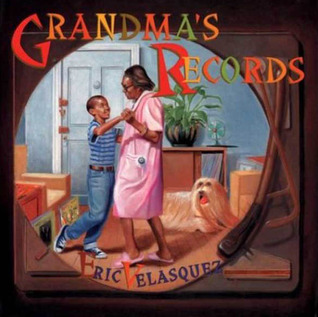
The book introduces us to Eric by his retelling of how every summer he went to his grandma’s apartment in El Barrio while his parents worked. From the first day, she wrapped him around her music, her dances, her special song, and her stories about growing up in Puerto Rico. Eric, due to the insistence of his grandmother, carefully selected records to play for both of them. Selecting and playing records became a ritual during which he became fascinated with the album covers and his grandma’s love for Puerto Rican music.

These music-filled summers are delightfully represented through each carefully crafted illustration and each story. We can see how their joy for music is portrayed through images that are playful but veer into photo-realism, while their emotions are carefully captured through the text. Velasquez was able to pay tribute to his grandma’s connection to and love for music and Puerto Rico, the same love that cemented a strong connection for Eric to his grandmother.

This book has a wonderful moment I must highlight as an example of bringing historical context to a memoir to convey the power of music in our daily lives: One day Grandma’s nephew, Sammy Ayala, paid them a visit. Sammy was a musician and came from Puerto Rico because his musical group was going to perform for the first time in New York. Sammy gave his loving grandmother a copy of their brand-new record and two tickets to see his band: the now legendary Cortijo y su Combo with lead singer Ismael Rivera. This concert became for Eric and his grandmother a very personal and magical moment that captured their ongoing love for music and their 1950s summers in El Barrio. This melding of the historical with the personal is executed in a very endearing way, and it becomes a very powerful moment with the detailed illustrations.

What I loved about Grandma’s Records is how Velasquez depicted the power of music and how it can be a strong vehicle to guide you toward memories, people, and places. How Grandma felt connected to her home country, to her family, and to her Afro-Puerto Rican roots is portrayed perfectly. At the same time, we can see how music becomes an ideal bridge that helps erase multi-generational gaps and serves as a medium to share stories and create new memories. Through his grandma’s music collection, Velasquez illustrated the presence of Afrolatin@ musicians and singers. Through his words, images, and stories he placed Afrolatinidad in children’s literature and contributed to its much-needed visibility and representation in literature and media.

TEACHING TIPS: Due to its rich vocabulary and length, this picture book works well for 7-9 year-olds and third graders. At home and at the library, adults can read the story aloud or provide support with words that might not be familiar while kids are reading independently. Storytime with grandparents and their grandchildren will provide the opportunity to share the story and will also build multi-generational memories as with the beloved characters of Grandma’s Records.

English Language Arts teachers can develop reading comprehension activities, as well as word searches and word scrambles with the music-themed vocabulary. As Eric liked to look through his grandma’s records and make sketches of the album covers, Art and Music teachers can collaborate in activities that intersect music history and album covers in which students can recreate their favorite covers or design their own. The book provides brief biographies of Rafael Cortijo, Ismael Rivera and Sammy Ayala, information that can be useful to discuss Afrolatino music in the classroom.

Lexile: 780L

AUTHOREric Velasquez is an Afro-Puerto Rican illustrator born in Spanish Harlem, New York. He attended the High School of Art and Design, the School of Visual Arts, and The Art Students League in New York City.

As a children’s book illustrator, Velasquez has collaborated with several writers in titles such as: Journey to Jo’burg: A South African Story by Beverley Naidoo, The Skirt by Gary Soto, The Sound That Jazz Makes by Carole Boston Weatherford (Nominated for 1999 NAACP Image Award in Children’s Literature), Champion: The Story of Muhammad Ali by James Haskins, Liberty Street by Candice F. Ransom, Houdini: World’s Greatest Mystery Man and Escape King by Kathleen Krull, A Sweet Smell of Roses by Angela Johnson (2006 Notable Social Studies Trade Book for Young People), My Friend Maya Loves to Dance by Cheryl Willis Hudson and As Fast as Words Could Fly by Pamela M. Tuck (2007 Lee & Low’s New Voices Award Winner).

Eric Velasquez is the recipient of the 2011 Pura Belpré Illustrator Award for Grandma’s Gift and the 1999 Coretta Scott King/John Steptoe Award for New Talent for The Piano Man.  He currently lives and works in Hartsdale, New York.

For more information about Grandma’s Records visit your local library or bookstore. Also check out Goodreads, IndieBound.org, WorldCat.org, Amazon, Barnes and Noble. In 2002 it was translated to Spanish, Los Discos de Mi Abuela.

2014 Reading Challenge: January

We are one month into our Latin@s in Kid Lit Reading Challenge, and our participants have completed an awesome array of books! Below are the covers, which link to any reviews written. Some people have chosen to read and not review (which is fine). In these cases, when you click on the cover, you will go to the book’s general Goodreads page. Have fun browsing the books below. Maybe you’ll even add a few to your own TBR list!

A note to participants: As you complete books, please send us the information, so we can share what you’re reading each month.

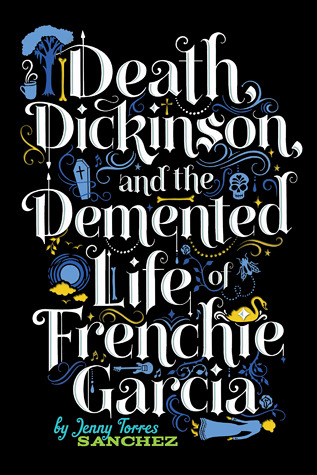
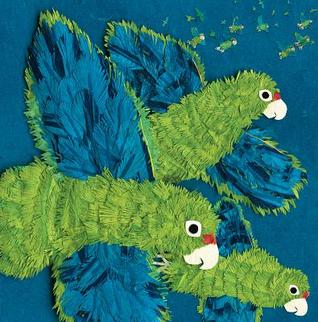
The Girl of Fire and Thorns (Fire and Thorns, #1)   Maximilian & the Mystery of the Guardian Angel: A Bilingual Lucha Libre Thriller  Death, Dickinson, and the Demented Life of Frenchie Garcia  The Knife and the Butterfly  The Wild Book  The Vicious Deep (The Vicious Deep #1)  Fat Angie   Marcelo in the Real World  The Girl Who Could Silence the Wind   Colibri   Yes! We Are Latinos!   Marisol McDonald Doesn't Match / Marisol McDonald no combina   My Abuelita   Dear Primo: A Letter to My Cousin   Moony Luna/Luna, lunita lunera   What Can You Do with a Rebozo?   Everybody Cooks Rice (Picture Books)   Parrots Over Puerto Rico   A Leaf Can Be . . . (Millbrook Picture Books)

Also, since February is Black History Month, we propose a challenge within a challenge. This month, try to read a book by/for/about Afro-Latin@s. Here are some suggestions:

Pele, King of Soccer/Pele, El rey del futbol     Celia Cruz, Queen of Salsa     Grandma's Gift     Grandma's Records     Me Llamo Celia/My Name Is Celia: La Vida de Celia Cruz/The Life Of Celia Cruz     The Poet Slave of Cuba: A Biography of Juan Francisco Manzano     Secret Saturdays     Marisol and Magdalena   Efrain's Secret

The Road to Publishing: Giving Good Feedback to Fellow Writers

By Stephanie Guerra

Last month, I began a two-post series addressing the most productive ways to work with beta readers and critique groups. The first installment focused on receiving feedback; in this post, I’ll focus on how to offer good feedback.

Beta readers and critique groups are critical to the writing process, and many successful authors find a long-term writing partner with whom they work productively for years. How can you nurture critique relationships—notoriously sensitive—so that they grow and flourish?

Here’s a quick and dirty list of strategies:

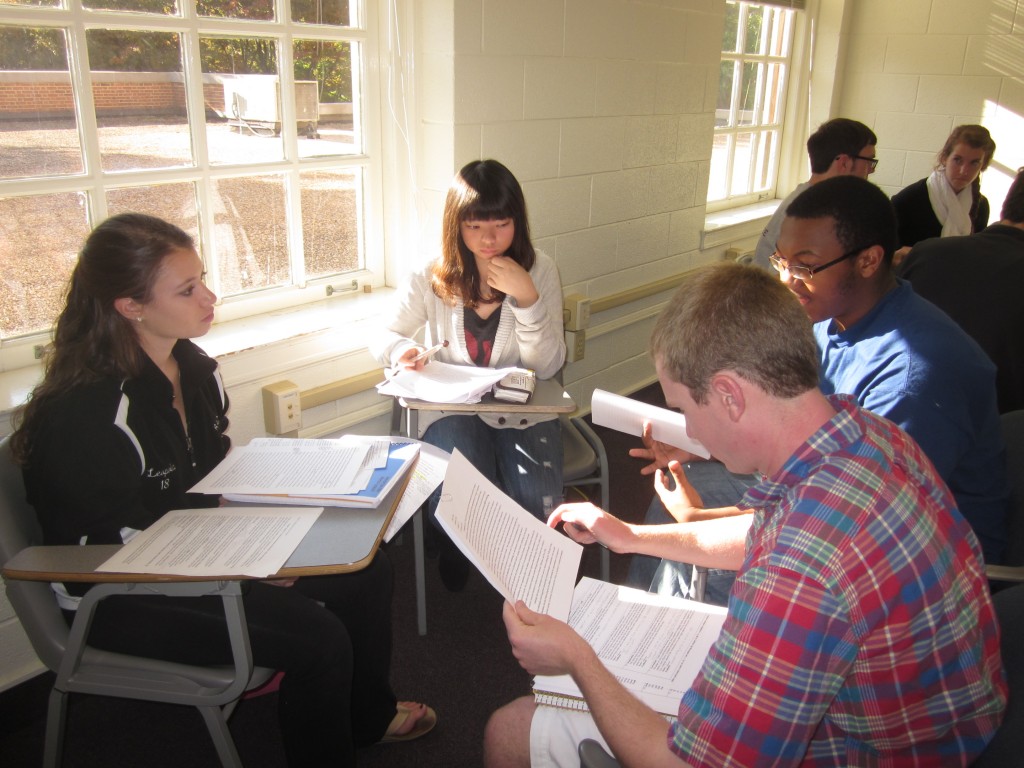
peer review1. Ask the type and level of feedback your partner is seeking. Type addresses the range of feedback your partner desires. Global? Character-focused? Plot-focused? Language-focused? Line-editing? Level addresses the thoroughness of your feedback. For a first draft, many writers want general, light feedback, including global impressions of plot and characters. If you pick apart the draft line by line, your partner may be overwhelmed. Be sure to clarify what he or she is looking for before diving in.

2. Offer an even trade. If someone has given you careful, in-depth feedback on one of your manuscripts, be sure to reciprocate in full. Do not read through his or her work quickly and toss off your thoughts as you hurry to get back to your own project. Your writing partner is relying on you and may make significant changes to their manuscript based on your advice. So give his or her work the time and respect it deserves.

3. Link up with writers who are roughly in your skill/professional range. Great disparities in talent can cause awkwardness, and trades may not be productive for the more advanced partner. That said, if you’re willing to consider a mentor relationship (no matter which end you’re on), go for it! Just don’t expect that trades will be “even”.

4. Find the positives. This seems obvious, but having been through an MFA, I know it needs to be said. Critique partners should be honest—but not brutally honest. Remember that no matter how elementary or flawed your partner’s work appears to you, it represents their effort and passion. Find at least three things to praise before you point out what’s not working.

5. Watch for cues. In the case of verbal feedback, watch and listen to the writer’s facial expressions, body language, and words as they receive feedback. If you sense distress, stop. Bring up the positives. Inspiration is a fragile thing and people have varying degrees of sensitivity about their work. You don’t want to be the Dream Crusher.

Editing16. Know when to back out. Sometimes (especially on first trades, but
occasionally with tried-and-true partners) you’ll run into a piece you simply can’t stomach. Maybe the writing is terrible. Maybe the message goes against everything you believe. Maybe the manuscript feels too commercial. Whatever the reason, if you can’t stand it, you won’t be able to offer a good or fair critique. Be diplomatic: “I’m having a hard time with this piece. I’m not experienced with this genre/topic/style. I’m afraid my political views are getting in the way of my ability to hear your story.” Whatever. Let the writer know you’re biased, and wiggle out gently.

7. Have boundaries. This is a good life rule, no? It definitely applies to writing. Critiques are so personal, and for many, so emotional, that they can unleash a storm of follow-up emails and phone calls. If you feel that someone is demanding more of your time and hand-holding than makes you comfortable, repeat (in as many different ways as you need to): “I really don’t have anything to add to what I’ve already said. But good luck.”

8. Don’t argue. Some writers can’t help themselves; they’re compelled to defend their work in the face of a critique. If you’re the partner giving feedback in this situation, don’t engage. Offer your counsel, and let the writer argue and justify if they need to. It’s all part of the process. Some people work things out verbally.

9. Don’t be the alpha critic. I borrowed this one from William Zinsser. Nobody likes the snide, superior critic who has scathing reviews of everything! ‘Nuf said.

10. Be open-minded. You’ll run into all kinds of manuscripts on the trade routes, not all of them your cup of tea. Remember, you’re not buying the book. Unless you have a visceral hatred of the work (see number 6), give it a fair shot. Try to separate your personal taste from your professional knowledge of character development, plot trajectory, etc. If personal taste is causing your review to slant negative or positive, rethink your approach.

Book Review: Niño Wrestles the World by Yuyi Morales

By Sujei Lugo

DESCRIPTION FROM THE BOOK JACKET: Señoras y señores, put your hands together for the fantastic, spectacular, one of a kind…Niño! In a single move, he takes down his  competition! No opponent is a challenge for the cunning skills of Niño, world champion lucha libre competitor!

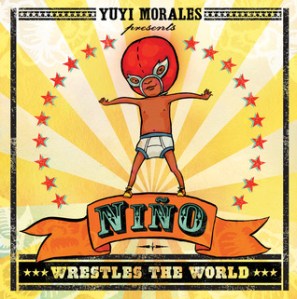
MY TWO CENTS: As soon as you take a glimpse of the book cover, you know that Yuyi Morales is presenting you with a treat of pint-sized lucha. The colorful and mixed-media artwork and its wrestling match layout, capture the energy and enthusiasm of the characters and lucha libre itself. Written in English with a dash of Spanish words and onomatopoeias, readers are exposed to an action-packed picture book filled with elements of Mexican and other Spanish-speaking cultures.

NiñoWrestlestheWorldCover“¡Niño! ¡Niño! ¡Niño!” It is through this chant that we are introduced to Niño, a paleta eater, toy-loving, and acrobatic boy. Once Niño puts on his luchador mask, contenders such as La Momia de Guanajuato, La Llorona and Cabeza Olmeca, line up to challenge him. With his playful lucha style, Niño challenges his opponents with puzzles, dolls, marbles, popsicles and tickles, showing how Morales playfully incorporates childhood glee into this wonderful homage to lucha libre. At the end of the story we also meet Niño’s toddler sisters, who are mischievous and loud and drive Niño crazy! This is where Yuyi Morales uses the opportunity to capture and address siblings’ relationships, while showcasing the “best move” to defeat sibling rivalry.

I could not deny that it crossed my mind that Niño Wrestles the World, plays as a homage and retelling of the legacy of Mexican lucha icon, El Santo. Like El Santo, once Niño puts on his luchador mask, he never takes it off. Like El Santo, in his movies, Niño challenges the mummy of Guanajuato, the llorona, and aliens. And you could say that when later in the book Niño joins his sisters and challenges new opponents, we are seeing a retelling of adventures where El Santo joins fellow luchadores Blue Demon and Mil Máscaras. Setting the wonderful El Santo references aside, in this picture book we have a fun and energetic story and lovable characters that will release the inner luchador or luchadora in kids and adults of all ages.

Niño Wrestles the World is the 2014 Pura Belpré Illustrator Winner and was named a highly commended title by the 2014 Charlotte Zolotow Award. It was also included in a series of list such as A Fuse #8 Production 100 Magnificent Children’s Books 2013, School Library Journal Top 10 Latino-themed Books of 2013, Fanfare (Horn Book’s list of the best books for young people published in 2013), Center for the Study Multicultural Children’s Literature Best Multicultural Books of 2013 and Latinas for Latino Lit Remarkable Latino Children’s Literature of 2013.

TEACHING TIPS: While early readers and kids between the ages of 4-8 might enjoy reading this picture book, it is through the activity of reading aloud that its energy and humor really stands out. Adults and childrens’ librarians can read the book, while teaching new vocabulary and words in Spanish to kids.

Language Arts, Visual Arts, and Social Studies teachers (pre-school- 2nd grade) could also use Niño Wrestles the World with their students. The book is filled with fun onomatopoeias, adjectives and words in Spanish, which will attract students to the language learning process. Art teachers can collaborate with Language Arts teachers with the masks of the different characters of the story. Templates of different lucha masks are available on Yuyi Morales’ website, or you can be creative with your own mask!

The elements of Mexican culture exposed through Niño’s opponents, the trading-card-style information of each opponent (includes pronunciation), and Yuyi Morales’ illustrations provide the opportunity to incorporate them into Social Studies curricula. Educators should be provided with resources and materials that will serve as tools to bring multiethnic/multicultural exposure and discussion into the classroom. This is especially relevant now since Mexican American and Latin@ Studies curricula and books are constantly challenged in the U.S. public education system.

LEXILE: N/A

AUTHOR: Yuyi Morales is a Mexican author, illustrator, artist, and puppet maker. She has a bachelor’s degree in Psychology and Physical Education from the University of Xalapa, México and used to host her own Spanish-language radio program for children in San Francisco, California.

She has won numerous awards for her children’s books such as the Tomás Rivera Mexican American Children’s Book Award for Just a Minute: A Trickster Tale and Counting Book (2004) and Los Gatos Black on Halloween (2008), the Pura Belpré Author Honor for Just in Case: A Trickster Tale and Spanish Alphabet Book (2009), the Pura Belpré Illustrator Award for Just a Minute: A Trickster Tale and Counting Book (2004), Just in Case: A Trickster Tale and Spanish Alphabet Book (2009) and Los Gatos Black on Halloween (2008), and Pura Belpré Illustrator Honor for My Abuelita (2010) and Harvesting Hope: The Story of Cesar Chavez (2004).

Morales divides her time between the San Francisco area and Veracruz, Mexico. Her lastest picture book Viva Frida! will be released in September 2014.

For more information about Niño Wrestles the World visit your local library or bookstore. Also check out Macmillan Publishers, Goodreads, Indiebound.org, WorldCat.org, Amazon, and Barnes and Noble.  

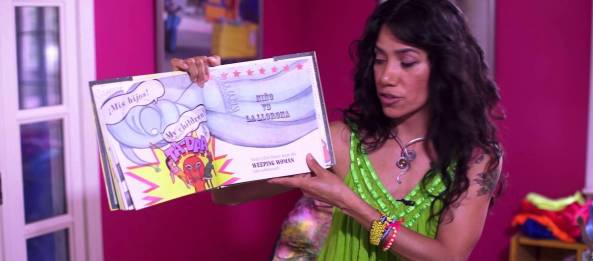
Enjoy this video of Yuyi Morales reading Niño Wrestles the World!

Congratulations to ALA Youth Media Award Winners and Honor Books

The annual award announcements from the American Library Association at its midwinter meeting is like the Golden Globes-Oscars-Grammys for the kid lit world. This year, we were especially thrilled to see the number of books by and/or for Latin@s on the lists.

Congratulations to all the winners! You can find the full list here. We’re sending out an extra abrazo to the following authors and illustrators:

Pura Belpré (Illustrator) Award honoring a Latino illustrator whose children’s books best portray, affirm and celebrate the Latino cultural experience: “Niño Wrestles the World,” written and illustrated by Yuyi Morales.

Three Belpré Illustrator Honor Books were selected: “Maria Had a Little Llama / María Tenía una Llamita,” illustrated and written by Angela Dominguez; “Pancho Rabbit and the Coyote: A Migrant’s Tale,” illustrated and written by Duncan Tonatiuh; and “Tito Puente: Mambo King / Rey del Mambo,” illustrated by Rafael López, written by Monica Brown.


Pura Belpré (Author) Award honoring a Latino writer whose children’s books best portray, affirm and celebrate the Latino cultural experience: “Yaqui Delgado Wants to Kick Your Ass,” written by Meg Medina.

Three Belpré Author Honor Books were named: “The Lightning Dreamer: Cuba’s Greatest Abolitionist,” written by Margarita Engle; “The Living,” written by Matt de la Peña; and “Pancho Rabbit and the Coyote: A Migrant’s Tale,” written and illustrated by Duncan Tonatiuh.


Robert F. Sibert Informational Book Award for most distinguished informational book for children: “Parrots over Puerto Rico,” written by Susan L. Roth and Cindy Trumbore, and illustrated by Susan L. Roth.

Stonewall Book Award – Mike Morgan & Larry Romans Children’s & Young Adult Literature Award given annually to English-language works of exceptional merit for children or teens relating to the gay, lesbian, bisexual and transgender experience: “Fat Angie,” written by e. E. Charlton-Trujillo.

William C. Morris Award for a debut book published by a first-time author writing for teens: “Charm & Strange,” written by Stephanie Kuehn.