2014 Reading Challenge: February

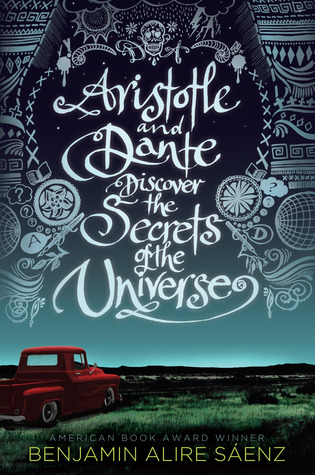
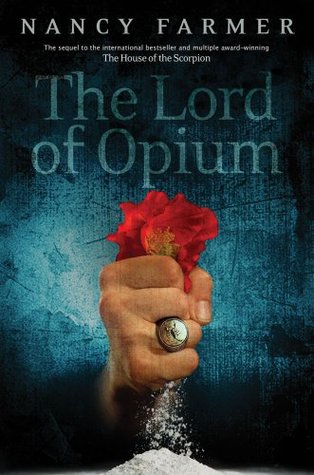
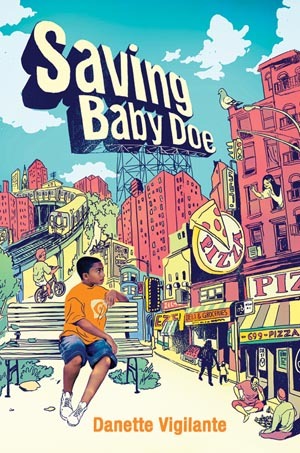
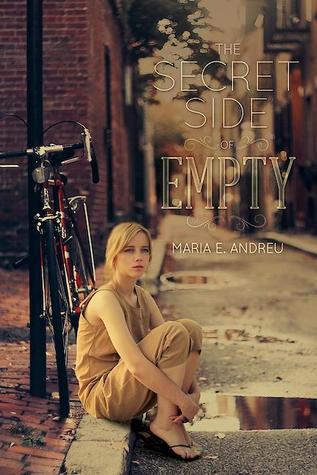
February was a great month for our 2014 Reading Challenge. What a great mix of titles from award winners to debut novels, such as Bird by Crystal Chan and The Secret Side of Empty by Maria E. Andreu. Thank you to everyone for participating in the challenge and purposely selecting books by/about/for Latin@s. We even had a few newcomers this month, which is awesome! It’s never to late to join this fiesta! Also, remember that you’re not required to review the books you read. If you do post a review somewhere, we will link it to the book covers below. If you choose not to review, we will link the covers to Goodreads. This month, we have to give a special shout-out to Crystal Brunelle, who is a co-blogger at Rich in Color. She has already read 15 titles! WOW! We can’t wait to see what everyone reads next!

A note to participants: As you complete books, please send us the information, so we can share what you’re reading each month.

Aristotle and Dante Discover the Secrets of the Universe  13260749  13515320  13740845  17063696  18079822  18079898  1370646  754858  13418252  2880444  1660305  15937128  6098251  15842628  15953630  8220585  8553037  13591731  1372657  1292086  marisol mcdonald  17398961  9697245  16290039  1161994  2697445  3058372

Diana López on Migas, Confetti, and Martha Stewart

By Diana López

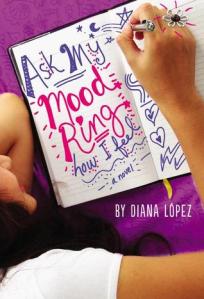
Ask My mood RingRecently, I was asked an excellent question. This came from a writing teacher who shared Ask My Mood Ring How I Feel with his class and wanted me to comment on the narrative techniques I used. His students noticed that I’d added a description of migas, a dish that Tejanos are very familiar with. So they were curious about how I handled cultural details in my fiction. In other words, when writing for readers who do not have the same cultural background as my characters, how do I decide what to explain and what to leave for the reader to figure out?

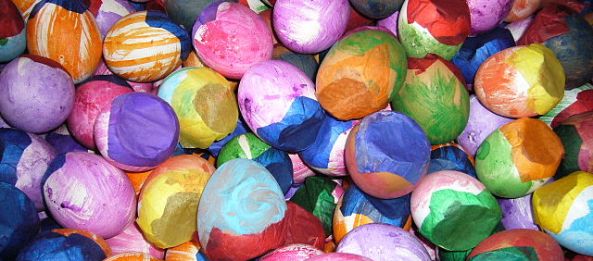
I love sharing the unique foods, words, and customs of my Tex-Mex world. That said, I don’t intentionally add cultural details. I don’t have to because they’re here, in my home and neighborhood. I don’t even recognize them as unique sometimes. For example, in the second chapter of Confetti Girl, we visit a home filled with cascarones and everything that is used to make them—eggshells, tissue paper, vinegar dyes, and confetti. I grew up with cascarones. Starting in January, my mother would save eggshells, and by the end of Lent, we’d have piles of egg cartons stacked on top of the fridge. She’d save old magazines and newspapers too, so we could make confetti with a hole-puncher. Then a few days before Easter, the family would gather around the table to dye the eggshells and fill them with confetti. This was my favorite part of cascarones—not cracking them on each other’s heads but making them.

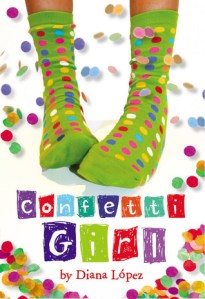
Confetti GirlCascarones are an important tradition during San Antonio’s Fiesta, and people often sell them from empty parking lots or their front yards. After seeing so many confetti eggs around my neighborhood, I thought, what a great detail for my book. I had no idea they’d be so important in the final version.

When I first submitted the manuscript to New York publishers, they wrote back with questions about these mysterious cascarones. They wanted pictures and instructions. They were so fascinated by something I’d taken for granted. So now when you open a copy of Confetti Girl, you’ll see the confetti egg instructions on its opening pages. It’s wonderful to hear from readers who are making them for the first time. A young girl from Australia wrote to say that she and her mum made them, and when I visit schools, students often share some very creative cascarones, much too pretty to crack on anyone’s head.

Something similar happened with a cultural detail in my mood ring book. Making a promesa when someone gets ill is a common practice in South Texas, so naturally, when my character Erica learns her mother has breast cancer, she makes a promise to get five hundred people to sponsor her for a fundraiser. Like the cascarones, the promesa gained importance as I worked through the novel. Not only did it provide a goal for Erica, but it also worked thematically by giving her a chance to ask a lot of questions about faith and hope. I love when details come to life this way.

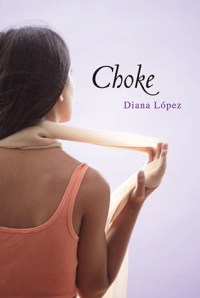
ChokeThere are smaller cultural details in my books, too. Erica sings “pio pio pio” to her mom. In Choke, my character eats barbacoa and drinks Big Red for breakfast. My books are full of “mijas” and “viejitos.” These details may not take on any symbolic significance, but they are just as important because they’re integral to the setting.

At a book festival last month, a participant asked me to name a pet peeve related to writing. I said, “I hate when people tell me I should add more cultural interest to my books.” In other words, I don’t like these details to be forced. They have to feel natural, and as long as I’m not consciously adding them, they will be. Sure, my characters eat migas, but they eat pizza, too.

So how do I decide which details to explain and which to leave alone? This is where a good editor comes in. We’ll get to this point in the revision process where she’ll highlight places with unfamiliar images and words. I remember the first time this happened. I wrote a book set in Corpus Christi, and I mentioned the T-heads, not realizing how unique that term was. The editor had no idea what I was talking about, so I added an appositive phrase for clarification. Ultimately, that’s what I have to determine. Are there enough context clues or should I be a little more explicit? The last thing I want is for a reader to stop because she’s confused. In that sense, I am very grateful to have an editor who is not from my world and who can point out these places—and the best editors are good about letting me decide what to do.

Now here’s something very interesting. Did you know that Martha Stewart featured cascarones on her show? Soon they’ll be as mainstream as piñatas and guacamole, so don’t be surprised when I take all the credit!

Photo credit: Todd Yates

Photo credit: Todd Yates

Diana López is the author of the middle grade novels Confetti Girl, Choke, and Ask My Mood Ring How I Feel. An adaptation of Choke will be featured on the Lifetime Movie Network this summer. Ms. Lopez teaches at the University of Houston-Victoria and works with CentroVictoria, an organization devoted to promoting Mexican American literature. She is also one of the editors of the literary magazine, Huizache.

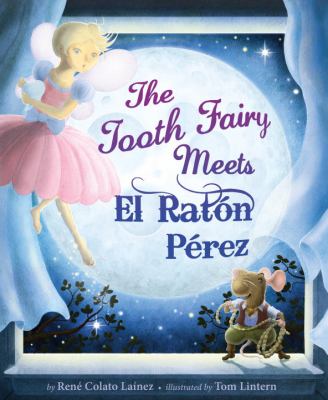
Book Review: The Tooth Fairy Meets El Ratón Pérez by René Colato Laínez

By Lila Quintero Weaver  the tooth fairy meets el raton perez
DESCRIPTION FROM RANDOM HOUSEThe Tooth Fairy has some competition. Meet El Ratón Pérez, the charming and adventurous mouse who collects children’s teeth in Spain and Latin America.

When both the Tooth Fairy and El Ratón Pérez arrive to claim Miguelito’s tooth, sparks fly under the Mexican-American boy’s pillow. Who will rightfully claim his tooth?
This magical tale introduces a legendary Latino character to a new audience and provides a fresh take on the familiar childhood experience of losing one’s tooth.

MY TWO CENTSWhat happens when beloved cultural traditions clash? Rene Colato Lainez’s flair for bilingual storytelling and Tom Lintern’s eye-popping illustrations combine in a winning picture book that addresses this question. Children will rejoice over the conclusion: there is no need to choose between the two!

The story revolves around double claims on Miguelito’s lost tooth.  Now that he lives in the United States, he’s inside the Tooth Fairy’s jurisdiction. But her Hispanic counterpart, El Ratón Pérez, is not ready to relinquish his duty to Latino children, even when they move across the border. One night in Miguelito’s bedroom, there’s a showdown between the rivals. Never fear—the tussle is well spiced with humor. Still, things get out of hand and Miguelito’s tooth lands on a high shelf, out of reach. It takes cooperation between the fairy and the ratón to retrieve the tooth, and this convinces them that future conflict is not necessary. From now on, Miguelito and other children can enjoy the toothy traditions of both cultures.

Like all picture books, the fun of this story is in repeated readings. Children will enjoy comparing the working methods and backdrops of these tiny tooth warriors. The rich color illustrations reinforce such observations. The Tooth Fairy lives in a castle. El Ratón Pérez makes his home in a cave. She searches the skies for a twinkling star that signals when a tooth is ready for retrieval. The signal he looks for is a moonbeam. Each has his or her tool of the trade; hers is a wand, his is a rope.

This is a wonderful text for children in transition between two cultures. It emphasizes the value of preserving old traditions and the joy of adding new ones.  The same lesson can be applied to other customs across nationalities, such as how birthdays and holidays are celebrated.

Spanish words and phrases are sprinkled throughout the book, always paired with the English translation. The publisher has provided a glossary.

TEACHING TIPSWe can do no better than the website dedicated to The Tooth Fairy Meets El Ratón Pérez that the author, a kindergarten teacher, has already put together! It includes a curriculum guide, creator interviews and other helpful features.

Here are a few additional resources.

The Centro Virtual Cervantes published a gallery of 79 illustrations featuring El Ratón Pérez.

Here are some craft ideas related to the Tooth Fairy.

An adorable tooth fairy pillow from MmmCrafts. And here’s another from the always reliable Martha Stewart.

Plus, how about a cute box for the tooth?

If you know where to find craft instructions for high quality El Ratón Pérez projects, please let us know!

AUTHOR: René Colato Laínez is a native of El Salvador who has written many books for young children. He teaches kindergarten in California. Want to learn more about him? Check out his interview on this blog!  

ILLUSTRATORTom Lintern is a storyboard artist, commercial illustrator and occasional illustrator of children’s books. View his impressive portfolio and more on his official site

A Conversation with René Colato Laínez

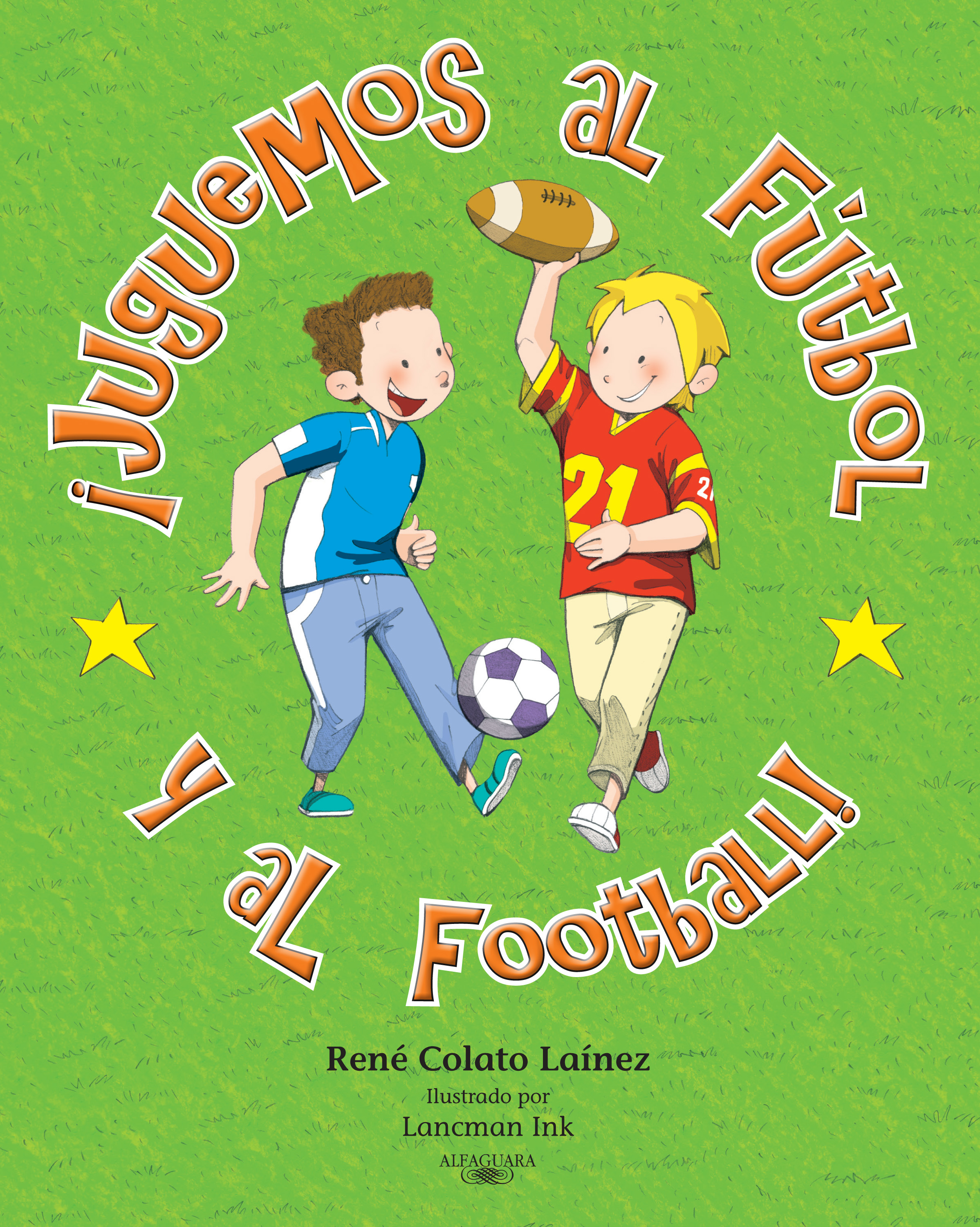
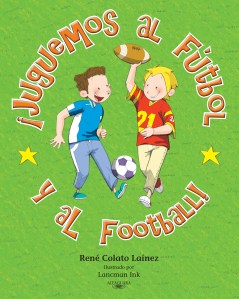
By Lila Quintero Weaver  portada-juguemos-futbol-football

If you are not acquainted with the picture books of René Colato Laínez, get thee to a bookstore right away! A Salvadoran transplant who teaches kindergarten in California, René writes joyful, bilingual picture books that children everywhere adore. I am delighted to share a one-on-one conversation with René about his life and work.

Lila: René, on your website, you express that the goal of your writing is “to produce good multicultural children’s literature; stories where minority children are portrayed in a positive way, where they can see themselves as heroes, and where they can dream and have hopes for the future. I want to write authentic stories of Latin American children living in the United States.”

As a collaborator on Latin@s in Kid Lit, a blog that exists to promote those very goals, I say BRAVO! Now for a question: What led you to adopt these goals?

René: I came to the United States when I was 14 years old. In my country, I was a smart student. I had good grades and many dreams to accomplish. In the United States, I did not know the new language. I felt lost and many times I thought that I would never be able to accomplish my goals. The inspiration to write books with a positive message to minority children came from my own life experience. I worked hard and never gave up. Yes! I accomplished my dreams. I am a teacher and an author. I want to tell minority children that they can accomplish anything they want. With “ganas” you can conquer the highest mountain.
Senor Pancho

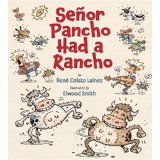
Lila: Let me brag on your latest book. Señor Pancho Had a Rancho has received glowing reviews. It was named a top picture book by Chicago Public Library and was included in the Cuatrogatos Foundation anthology, De Raices y Sueños. I could keep going, but let me pause to ask: What inspired you to create what’s essentially a Spanish version of “Old McDonald Had a Farm”?

René: One day my ESL (English as a Second Language) teacher told us that we could learn English through music. She played the song of a man named McDonald and he had many farm animals. When I listened to the song, I was confused when the dog barked woof woof instead of gua gua. My teacher told me that in English farm animals made English sounds. I said to myself, “If I bring my perro from El Salvador, he has to learn English too!” Later on, when I became a teacher, I played the song with my kindergarteners, but I always added the Spanish sounds. After having so much fun with my students, I decided to write a book about both English and Spanish farm animals, where they could have a great time speaking two languages.

Lila: Please share a bit about your childhood experiences of immigration from El Salvador.

René: I left the country with my father, due the civil war. Along with thousands of Salvadorans, my family was looking for a better place where we could be safe from the war. But I had a happy life as a child. I loved to go to school and read all the comics books from Mexico and Argentina, like El Chapulín Colorado and Mafalda. Since first grade, I wanted to become a teacher. My favorite books were Don Quijote and Las Telerañas de Carlota. I was so surprised to find my favorite book in English, here in the United States—Charlotte’s Web.

Lila: You teach kindergarten in a California school full of Latino children. How has this influenced your writing? Is teaching what led you to write picture books in the first place?

René: In high school and college, I wrote many drafts of novels. But when I came to the classroom, I discovered picture books and soon fell in love with them. I started to write my own books for my students and they called me “El Maestro lleno de Cuentos” (“The Teacher Full of Stories”). Later on, after receiving advice from many teachers and talented authors such us Alma Flor Ada, Isabel Campoy and Amada Irma Pérez, I decided to submit my work for publication.

Lila: Your books consistently offer bilingual texts. Why is this important to you?

René: I love bilingual books because you can share them with families who speak Spanish, English or both. They can also be great tools to speak and learn to read a second language. When I started to submit my manuscripts, I always envisioned them as bilingual books—books that I could share with my students, their parents, my family here in the United States, and all my relatives and friends in El Salvador.

Lila: Your writings frequently celebrate the happy coexistence of Latino and non-Latino cultures. This occurs in The Tooth Fairy Meets El Ratón Pérez and in Juguemos al Fútbol/ Let’s Play Football (coming out this month in the bilingual hardcover edition), to name just two examples. What inspires your multicultural bent?

René: Latino children usually live in two worlds in the United States. They speak English and Spanish and celebrate holidays from the two cultures. Many times people fight to see which language or culture is most important. I love them both and in my books I want to tell children that instead of deciding which culture is better, we can celebrate both and have double the fun.

Lila: Writing a picture book looks easy only to those who have never tried it. What’s it like for you? Do you wait for inspiration to strike or do you have a disciplined routine?

René: Writing picture books is so much fun for me. It was not easy at first but I read tons of them until I was ready to write my own stories for publication. I usually start with the problem or idea for a story. Then I think it over, again and again, and begin to create the story in my mind. When I have something solid, I begin to write it. Many incidents in the classroom help me with ideas for new stories.

Lila: You graduated from the prestigious Vermont College of Writing for Children & Young Adults and have published at least nine books. That’s a lot of experience! Can you share some hints for aspiring writers?

René: Never give up, believe in yourself, and work hard for your dreams. Take creative writing classes and join critique groups. If you are writing children’s books, it is always a great idea to join SCBWI, Society of Children’s Book Writers and Illustrators. Submit your work and learn from rejection letters. Believe in your stories, because you are the only one who can tell and write them. 

renecolatolainezRené Colato Laínez is a native of El Salvador. He is the award-winning author of many picture books and the recipient of honors that include the Latino Book Award, the Paterson Prize for Books for Young People, the California Collection for Elementary Readers, the Tejas Star Book Award Selection, and the New Mexico Book Award. He is listed among “Top Ten New Latino Authors to Watch (and Read)” by the site Latinostories.com*. He received a degree from the Vermont College MFA program in Writing for Children and Young Adults. René’s full-time profession is teaching kindergarten in California. For more information, please visit his official author site

The Kid Lit World Needs Gary Soto and Others Like Him

By Cindy L. Rodriguez

When Gary Soto’s book, the one attached to the Marisol Luna American Girl doll, was released in 2005, I was in my fourth year of teaching middle school and attending graduate courses. In other words, I was buried in essays–correcting them and writing them–and was clueless that Soto’s book about a 10-year-old Chicago girl had sparked negative national media attention, protests, and harassing phone calls to the author’s home. For more information on the original story, click here.
The 2005 book-and-doll release is old news, but only a few months ago, eight years later, Soto wrote this piece in the Huffington Post, explaining why he has has stopped writing children’s literature.

I’m not going to rehash the Pilsen vs. Des Plaines debate, and I’m not going to say it was right or wrong for Soto’s fictional family to decide they wanted to move because the neighborhood was too dangerous. Those debates were had in 2005.

This post is about Gary Soto, an award-winning, prolific Mexican-American writer, leaving a business that needs him and many others like him. Gary Soto has written picture books, chapter books, poetry, and novels for middle school, high school, and adults. In the often-referenced New York Times article about the lack of Latin@ books in classrooms, Gary Soto is listed as one of the exceptions.

“While there are exceptions, including books by Julia Alvarez, Pam Muñoz Ryan, Alma Flor Ada and Gary Soto, what is available is ‘not finding its way into classrooms,’” said Patricia Enciso, an associate professor at Ohio State University.

Do we need more Latin@ books, written by a variety of authors, in classrooms? Yes. But, Soto and the others are already there, on the shelves, in students’ hands. I’ve read his short stories with my students, and a colleague recently read Buried Onions with her eighth graders based on my recommendation. He is in anthologies and on school book lists. Soto, along with a handful of other Latin@ authors have paved the way, and now he has vowed not to write any more children’s literature.

This comes at a time when 53 million Hispanics live in the U.S., according to the 2012 census. Hispanics are the second largest race or ethnic group (behind non-Hispanic whites), representing about 17 percent of the total population. Meanwhile, a study by the Cooperative Children’s Book Center reported the number of children’s books with multicultural content has not increased in 18 years.

Soto’s retirement from the kid lit world saddens me, as a reader, writer, and supporter of Latin@s in kid lit. We have lost a giant in the business, and I worry that what happened to Soto could discourage writers from including Latin@ characters in their manuscripts. Writers have legitimate fears about “getting it right” and not offending readers, especially if they are crossing into territory–gender, race, religion, ethnicity, culture, sexuality–that they do not understand first-hand. Think about it, Soto, a member of the Latin@ community, was at odds with members of the Latin@ community, over a Latina doll and her story. What does this mean for other writers, especially non-Latin@s who want to write Latin@ characters? Should they not bother? Should they use made-up locations to avoid referencing a specific community? Are the subjects of poverty and crime off limits?

I hope writers aren’t scared away from including Latin@ characters, and I hope Gary Soto reconsiders his retirement from kid lit. Also, wherever we each stand on the Pilsen-Mattel issue, I hope we all can at least tip our hat to Soto for his contribution to Latin@ literature.

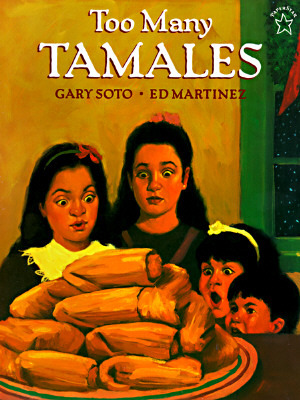
Too Many Tamales   Chato Goes Cruisin'   Baseball in April and Other Stories   Buried Onions   The Afterlife

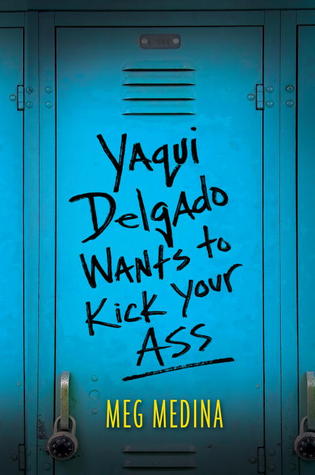
Book Review: Yaqui Delgado Wants to Kick Your Ass by Meg Medina

By Edith Campbell

YaquiMeg Medina is an accomplished author who has won awards for Tia Isa Wants a Car and The Girl Who Could Silence the Wind. Her latest book, Yaqui Dalgado Wants to Kick Your Ass is acquiring a growing list of recognition, including the Pura Belpré (a complete list of awards is at the bottom of this post). By the title, you might think that Yaqui is the main character in this realistic YA novel, but she’s not. This is Piadad “Piddy” Sanchez’s story. Just like with any bully, Yaqui seems to have taken things over.

When the novel begins, Piddy has just moved, leaving behind the school and neighborhood where she’s always felt at home. Medina quickly paints the picture of the new territory this young Latina must navigate, one where skin tone, country of origin, accent and ability to speak Spanish define where you sit as well as your place in the pecking order. Piddy shakes her hips in ways that unintentionally get too much attention and it’s on: Yaqui Delgado wants to kick her ass. Piddy’s mom can just look at Yaqui and know she’s up to no good. While Piddy’s mom may have no use for tough girls like Yaqui, Piddy cannot avoid them in her new school.

Piddy’s at that awkward age where she’s no longer a child, but not quite grown, either. She still cherishes the elephant necklace she got a few birthdays ago, but now even though she likes the idea, she knows she’s too old to celebrate her birthday like she did that time at the zoo. If she were still a little girl she could take her problems to her mom and could probably still do so if she were just a bit more mature. But Piddy doesn’t fully trust herself, and she’s also got this bully frightening her so much that—before long—she doesn’t even recognize herself.

When Piddy begins to have problems at school, she reaches out to her mother’s friend, Lila. Lila is like an aunt to Piddy. She’s the fun one who taught Piddy to dance and how to wear makeup, and she’s the one Piddy turns to when she wants to find out what really happened to her father.

Lila is part of the community in which Piddy’s story is grounded. Lila, her boyfriend Raul, the women at the beauty shop, and even the Ortegas provide spaces of comfort and familiarity for Piddy, and they nurture her as she struggles to find out who she is becoming. Piddy has two problems: she wants to know about her dad, and she can’t get Yaqui out of her head. For solutions, Piddy turns first to Lila and then to her old friend, Mitzi Ortega, who has recently moved to another area. These women are her touchstones as she moves from girl to woman. She wants to face Yaqui, but not even the support of Lila, Mitzi, and the others is enough to make that happen. We know that no one can give you this kind of strength; it comes from inside.

In her coming of age, Piddy finds Joey, a neighborhood boy who has had a very tough life. Medina writes their relationship as one that gives Piddy room to explore. While his character is not thoroughly developed, it is complete enough for the story, and their relationship helps us see a special tenderness in Piddy. Medina captures Piddy’s feelings and emotions in ways that will be immediately recognizable to anyone who has been the new kid or the kid who has been picked on. Piddy becomes a victim, losing any idea of who she is or for what she stands. Readers become part of the community that supports Piddy and wants her to stand up to Yaqui.

I’ve heard many shy away from this book, afraid of how rough it may be or turned off by the title. This is not a rough story! Despite the “ass” in the title, there’s no profanity, no drugs or alcohol, and only one scene of adolescent petting that is quite effective and touching. Piddy is a good student who wants to be a scientist and she comes from a thriving community. The novel illustrates that bullying can (and does) happen in any community, and in this book, the victim happens to be Piddy. Being a victim is rough, but Piddy is not a rough girl.

So, put the tape of the cover if you must, but put the book in your library. There are reasons for all the awards and recognition!

LEXILE: HL670

Edith Campbell

Edith Campbell is a mother, librarian, educator and quilter. She received her B.A. in Economics from the University of Cincinnati and MLS from Indiana University.  Her passion is promoting literacy in all its many forms to teens and she does this through her blog, CrazyQuiltEdi and in her work as an Education  Librarian at Indiana State University in Terre Haute, Indiana. Edith currently serves as the IN State Ambassador for the United States Board on Books for Young People and is a past member of YALSA’s Best Fiction for Young Adults selection committee.