Q&A and Cover Reveal with Author-Illustrator Tony Piedra


By Cecilia Cackley

Today, we’re thrilled to introduce you to Tony Piedra, a former film animator who worked on several awesome Pixar movies, including the Oscar-winning Coco! Tony will have his debut picture book released by Arthur A. Levine Books later this year. Before we get to the Q&A, here’s some background information on the author-illustrator:

tony piedraFrom his website: In a previous chapter of my life, I was a Sets Technical Director at Pixar Animation Studios. For nine years, I collaborated with some of the most talented artists and storytellers in the world to help realize the environments in films, such as, UpCars 2The Good DinosaurInside Out, and Coco, as well as several of Pixar’s short films, including The Blue Umbrella. Now, I am taking the skills and experiences from my time working in the film industry and putting them to use as an author and illustrator of children’s books. My debut picture book, The Greatest Adventure, will be released Fall 2018 through Arthur A. Levine Books an Imprint of Scholastic Inc.

Now, here’s a brief description of The Greatest Adventure:  Eliot imagines sailing wild rivers and discovering giant beasts, right there on his block. But he wishes his adventures were real. Eliot’s grandpa, El Capitán, once steered his own ship through dangerous seas, to far-off lands. But he can’t do that anymore. Can Eliot and El Capitán discover a real adventure… together? Come find out All aboard The Greatest Adventure.

Now….here is the beautiful cover of the book, which releases September 11, 2018.
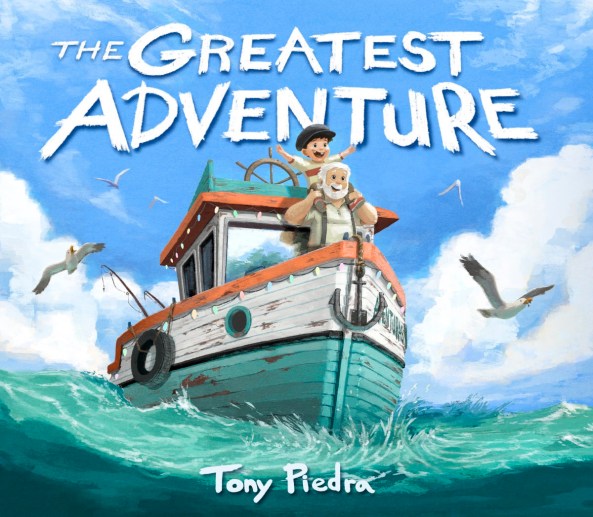


GREATEST ADVENTURE Cover

ALSO, CLICK ON THE LINK TO GET A GLIMPSE OF THE INSIDE ART: Greatest Adventure


Q. What picture books do you remember from when you were growing up? Are there any stories or artists that were especially meaningful or inspirational for you?

A. In a bright red building I affectionately remember as the “Red Library,” I discovered a book called Album of Sharks, illustrated by Rod Ruth and written by Tom McGowen. This book left such a vivid impression on my mind due to Ruth’s striking full page illustrations, that over 20 years later, when I tried to locate a copy of the book with absolutely no information other than my childhood memories, I was able to do so because I remembered each and every one of Ruth’s illustrations so clearly. I find it funny how at such young age we are intrinsically drawn to certain subjects, and for whatever reason I was then, and still am, drawn to sharks. I love the danger, mystery, and wonder they conjure in my mind, and Ruth’s illustrations captured this in a way that no photo has ever been able to do.  Later I learned that Rod Ruth and Tom McGowen paired up on over a half dozen “Album of” books, each beautifully illustrated, and I imagine, entertainingly written—I wasn’t such a good reader back in those early days.  As an homage to Album of Sharks and more specifically as a small, but deeply felt thank you to Rod Ruth, I inserted a token of admiration for one of Ruth’s most memorable paintings in my debut picture book, The Greatest Adventure.


Q. What are your favorite art materials to work with? How much (if any) of your process is digital?

A. Just give me a pencil and some white computer paper, and I will be distracted working for hours. These have been my default materials since the beginning. I dabble with gouache, acrylics, and oils, but they are not my natural mediums. If I need to do some thinking or planning there’s nothing better than pencil and paper. I followed that same practice on The Greatest Adventure. Throughout the planning and dummy stage of this book I solved compositions and decided on scene staging with these simple materials and time. All the heavy lifting happens at this humble stage. When I’m finally satisfied with a composition and ready to do a final illustration, I scan in the sketches and begin the meticulous process of painting them digitally in Photoshop.  My final paintings are 95% digital with subtle touches of texture scanned in from traditional media.

Q. You’ve come to picture books from animation (congratulations on Coco’s many wins!). How is the artistic process for the two kinds of storytelling similar or different? Are there any secrets about Coco (or Pixar in general) you can share with us?

A. Thank you for the congratulations. Coco represents the final year and a half of my career at Pixar, and I’m very proud of the film, and the work I helped bring to the screen, namely the cemetery in Miguel’s hometown of Santa Cecilia.

Fundamentally, the process of creating a picture book and an animated film are very similar in that both mediums require a team of individuals to bring to life a story and world that had never existed before. Where they differ most strikingly is in the number of individuals per team and their level of specialization. Picture book-making, though clearly a team effort, does not require an army of individuals at the creative stage. Much of the work is realized by the author and illustrator in collaboration with the editor, designer and production team. And so, in general terms, the publishing team is smaller and the skillset of each individual on that team fairly broad when compared to the specialization required in producing a computer-generated film. A typical Pixar film employs 250-300 highly-specialized people to collaborate on a singular vision. Just to give you an idea of how specialized the work on these films is, there are specialists known as “groomers,” whose sole responsibility is to create hair, and trust me this is a full-time job, especially, when you’re trying something as innovative as the wild, red locks of Merida in Pixar’s Brave, or you’re styling the hair for an entire town as was required in Coco. Imagine the equivalent in the picture book world, an illustrator who only draws hair!

My area of expertise is called Set Dressing. It is not too different from interior decoration. Think of how interior decorators bring rooms and homes to life with their choices of color and arrangement of decor. There is, however, one key difference: the set dresser’s goal in arranging objects on a film is to reveal aspects of the characters through their environment, which requires a great deal of story specificity. Think of a college dorm room versus the bedroom of someone who is obsessively organized. How would these rooms be arranged differently? What would each room say about its owner’s character? The answers to these questions are provided by set dressing. My work on Coco required the careful arrangement of flowers, candles, and foods on the graves which made up the cemetery in the film. These ofrendas were arranged to show the love and respect family members paid to their deceased relatives on Día de los Muertos. It took me nearly a year and a half to set dress the entire cemetery, and this is but one part of the process required to bring to screen one scene in the film.

Q. What are some books you’re looking forward to from Latinx creators? These can be picture books or chapter books.

I have admired the work of Julia Sardá for many years. Her work is primarily known in Europe, but I think that she is one of the most talented children’s book illustrators out there today. Somebody please bring her to the American children’s book market! I’m also excited to see what comes next from Lorena Alvarez, a Colombian children’s book author and illustrator, whose exciting work I came across last year with the release of Night Lights published by Flying Eye Books.  I also just discovered JOAN PROCTOR, DRAGON DOCTOR: The Woman Who Loved Reptiles written by Patricia Valdez and illustrated by Felicita Sala. The book was recently released and it speaks to me both through Felicita’s beautiful illustrations and the subject’s love of lizards, which I can completely relate to. I can’t wait to get my hands on it!

Q. What do you want your next great adventure to be? Is there anywhere you want to travel to or wonders you’d like to see?

At the beginning of last year, I wondered the same thing: what would be my next adventure? I had just left Pixar to pursue a full-time career in children’s books, and one of my goals outside of finishing up my first book was to find ways to travel the world as an independent artist. For the longest time, I had admired how my best friend’s sister had managed to see so much of Europe and South America with the help of playwright grants. So naturally, I figured somebody for some reason must need an author/illustrator to go to the rainforest! I then stumbled upon an artist-in-residence program called Voices of the Wilderness.  This residency sponsored by the U.S. Forest Service brings artists of all sorts to remote areas of Alaskan wilderness to witness their beauty and share the importance of conserving these wild corners with the American public. I applied for the residency and a few months later found myself standing in the rain on Admiralty Island, a 1,500 square mile rock covered in a swath of temperate rainforest and home to the greatest concentration of coastal brown bears in the world. This was not the adventure I had envisioned; it was grander. And this island and one bear in particular on it have become the centerpiece of my next story for children. Where next?  Who knows!



Cecilia Cackley is a performing artist and children’s bookseller based in Washington, DC, where she creates puppet theater for adults and teaches playwriting and creative drama to children. Her bilingual children’s plays have been produced by GALA Hispanic Theatre and her interests in bilingual education, literacy, and immigrant advocacy all tend to find their way into her theatrical work. You can find more of her work at www.witsendpuppets.com.
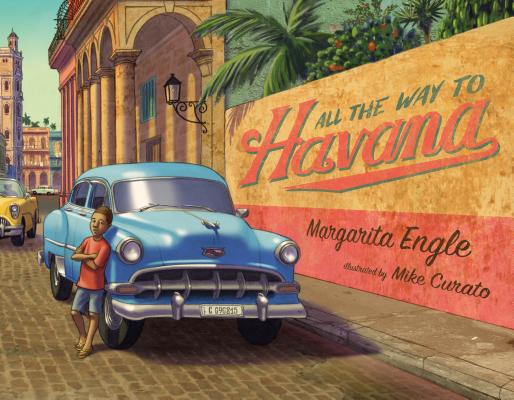
Book Review: All the Way to Havana written by Margarita Engle, illus. by Mike Curato


Reviewed by Cecilia Cackley

DESCRIPTION OF THE BOOK: Together, a boy and his parents drive to the city of Havana, Cuba, in their old family car. Along the way, they experience the sights and sounds of the streets–neighbors talking, musicians performing, and beautiful, colorful cars putt-putting and bumpety-bumping along. In the end, though, it’s their old car, Cara Cara, that the boy loves best.

MY TWO CENTS: I really enjoyed the trip this picture book takes through the Cuban countryside and into the city of Havana. It is easy to identify with the narrator, as he gets squashed in the backseat by all the passengers! Engle makes the question of whether or not the narrator and his father can get the car to work a suspenseful one, but as the journey gets underway, we don’t feel pity for the family for having an old car, but rather excitement for everything they see along the road to Havana. The bright colors of the cars alongside the blue of the sky and ocean make the pictures very attractive and illustrator Mike Curato adds plenty of detail to the vehicles and the scenery in Havana. The figures in the pictures can sometimes look a little flat, but it was nice to see an Afro-Latinx family featured—an unfortunate rarity in a lot of picture books. Both the author and illustrator include notes at the end talking a little about the background of the story and the process of researching the illustrations.

TEACHING TIPS: As might be expected, this is a perfect story time book, especially for kids around ages 2-4 who are usually VERY into cars, trucks, and trains (so much that many bookstores have a separate section just for those books). The sounds the car makes invite call and response with story time or classroom listeners. The way the narrator talks about how Cara-Cara looks compared to all of the other cars might be a good lead in to having students draw their own imaginary car, including what it would look like and what sounds it would make. The context of traveling to a family celebration is also a good discussion point, where children can talk about their own trips to visit relatives and various family celebrations.

WHERE TO GET IT: To find All the Way to Havana, check your local public library, your local bookstore, or IndieBound. Also, check out GoodreadsAmazon, and Barnes & Noble.


Margarita Headshot

ABOUT THE AUTHORMargarita Engle is the national Young People’s Poet Laureate, and the first Latino to receive that honor. She is the Cuban-American author of many verse novels, including The Surrender Tree, a Newbery Honor winner, and The Lightning Dreamer, a PEN USA Award winner. Her verse memoir, Enchanted Air, received the Pura Belpré Award, Golden Kite Award, Walter Dean Myers Honor, and Lee Bennett Hopkins Poetry Award, among others. Drum Dream Girl received the Charlotte Zolotow Award for best picture book text. Her newest verse novel about the island is Forest World, and her newest picture books are All the Way to Havana, and Miguel’s Brave Knight, Young Cervantes and His Dream of Don Quixote.

Books forthcoming in 2018 include The Flying Girl, How Aída de Acosta learned to Soar, and Jazz Owls, a Novel of the Zoot Suit Riots. Margarita was born in Los Angeles, but developed a deep attachment to her mother’s homeland during childhood summers with relatives. She was trained as an agronomist and botanist as well as a poet and novelist. She lives in central California with her husband.


ABOUT THE ILLUSTRATOR: Mike Curato loves drawing and writing almost as much as he loves cupcakes and ice cream (and that’s a LOT!). He is the author and illustrator of everyone’s favorite polka-dotted elephant, Little Elliot. His debut title, Little Elliot, Big City (Henry Holt Books for Young Readers, Macmillan), released in 2014 to critical acclaim, has won several awards, and is being translated into over ten languages. There are now four books in the Little Elliot series: Little Elliot, Big City; Little Elliot, Big FamilyLittle Elliot, Big Fun; and the latest addition, Little Elliot, Fall Friends. Meanwhile, Mike had the pleasure of illustrating Worm Loves Worm by J.J. Austrian, All the Way to Havana by Margarita Engle, and contributed to What’s Your Favorite Color? by Eric Carle and Friends. He is working on several other projects, including What If… by Samantha Berger and his first graphic novel. Publishers Weekly named Mike a “Fall 2014 Flying Start.” In the same year he won the Society of Illustrators Original Art Show Founder’s Award.


ABOUT THE REVIEWER: Cecilia Cackley is a performing artist and children’s bookseller based in Washington, DC, where she creates puppet theater for adults and teaches playwriting and creative drama to children. Her bilingual children’s plays have been produced by GALA Hispanic Theatre and her interests in bilingual education, literacy, and immigrant advocacy all tend to find their way into her theatrical work. You can find more of her work at www.witsendpuppets.com.

Artist Jose Pimienta Gives Advice and Talks About Tools & Techniques


By Cecilia Cackley

Joe Pi’s almost full name is Jose Pimienta. He was born in the Imperial Valley and raised as a Cachanilla in Mexicali, BC. During his upbringing, he was heavily influenced by animation, music and short stories. He’s been drawing as long as he can remember and loved analyzing everything on the TV screen.

After high school, he left his garage band and ventured toward Savannah, Georgia, where he studied Sequential Art and discovered the wonders of Storyboarding. He also discovered a wider variety of music, traveled more and made friends. By the age of 24, he ran into a good suggestion, which was to move to SoCal and pursue a career in storyboarding. In 2009, he packed his belonging and drove to Los Angeles, with a friend. Nowadays, he resides in Tujunga where he takes walks every morning along with a big cup of coffee. He draws comics, storyboards, and sketches for visual development.

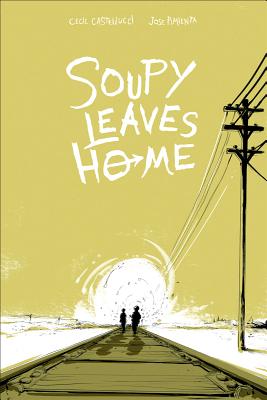
Joe’s latest book is the YA graphic novel Soupy Leaves Home, a historical fiction story by Cecil Castellucci set during the Great Depression. He was kind enough to talk to us about his background and work as an artist.

Did you read comics as a kid? What were your inspirations for becoming an artist? 

Unfortunately, I didn’t read many comics as a kid. I tried getting into superheroes several times, but they never really hit a chord with me. It wasn’t until my teens that I discovered other graphic novels, manga, and slice-of-life stories in comics that rocked my world. I did, however, read a lot of newspaper strips, but I also felt that wasn’t my fit for the type of stories I wanted to tell.

As a kid, my inspirations tended to come from animated movies, books with illustrations and music videos. As long as I can remember, I’ve always liked all those “making of-” featurettes and interviews with film makers and artists. They tended to reveal parts of the process and how a piece of art (whether it was a cartoon, a movie, or a song) was made. So, I guess I was inspired to be an artist by learning more about the arts I liked. The thought seemed logical: I like this Art and this is how they’ve done it and I want to do that because when I try it, I love it. Conclusion: learn more how to do it and keep going.

Please tell us a little bit about the tools you used to draw Soupy Leaves Home.

For Soupy Leaves Home, I drew it the way I prefer to draw comics, which is:

On regular type paper, 8.5 by 11 and a mechanical pencil (0.5, to be precise). I draw 1″ by 1.5″ rectangles and that is the thumbnail for a comic page. I draw my thumbnails small while reading the script, so it helps me to plan out the pace and what the beats of the story are. That way I know if I want to build up to a big scene or if I want to keep a steady pace for a few pages.

After that, I draw on 9×12 2-ply bristol board. Personally, I like the Smooth surface better than the Vellum, but sometimes, Vellum is all the store has, so… ANYWAYS, I draw the page with a blue-lead 0.5 mechanical pencil. I keep my pencils a bit loose, but knowing that I can tighten up later with the inks.

Once the pages are approved, I ink on top of the original pencils with micron pit pens, brush pens, India ink and brush, liquid paper white-out, and sometimes a few fountain pens. After that, I scan the pages and color them digitally with Photoshop. In this stage, I also do some more specific edits, such as deleting certain pencil marks that I couldn’t erase, or making sure the white out looks cohesive on the page. If the blacks look a bit too strokey, or if I just want a solid black instead of having visible brush marks, this is the stage to fix that. After that, my editor takes my files and has a letterer do that which I cannot: letter the book. Those are all my tools: papers, 0.5 mechanical pencils, brush pens, India ink and brush pens, AND Photoshop.

Soupy Leaves Home joins a growing field of comics of all genres, aimed at a teen audience. Are there other titles you recommend to people looking to read more YA comics?

Oh, absolutely:

Boxers and Saints by Gene Luen Yang

This One Summer by Mariko Tamaki and Jillian Tamaki

Surfside Girls by Kim Dwinell

Chiggers by Hope Larson

Nameless City by Faith Erin Hicks

Year of the Beasts by Cecil Castelucci

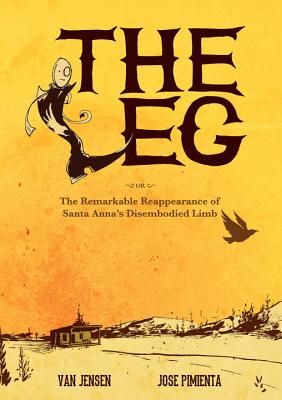
The Leg by Van Jensen and… me, hehe.

.                                                  

While comics for kids and young adults has been exploding as a publishing field, there have been comparatively few Latinx authors and artists getting attention, with the exception of the Giants Beware and Lowriders series. What advice do you have for young Latinx artists looking to break into comics? 

Dear Latinx who want to break into comics: Be bold, fearless, humble, and optimistic. Bold, because it reflects confidence and strength. Fearless, not just because of the current atmosphere, but also because that’s how we fight fear mongering, which is used to keep us quiet and divided. Humble, because, it reminds us that there is a bigger picture in our society, and that which benefits our community, automatically helps us grow to be better individuals living together. And optimistic, because as artists, our spirit is essential, so it’s important to keep it bright.

About breaking into comics? We can post and share. Ask everyone for support, launch Kickstarters, look at companies that you’re interested in, and see their submission guidelines and follow directions, while showing why your stories matter and why they’d be a great fit for their company. Go to conventions near you, small or big (of course they can be expensive, but plan for that. See how many you can make it to), make minis to hand out to show what you’re interested in doing. Go to conventions of what you like (for example, if you like baking, wrestling, cars or music; go to those conventions) get a small vendor table and sell your comic (about baking, wrestling, cars or music.) Starting a Patreon account, I hear, is a popular avenue these days. Most importantly: KEEP GOING. Do not stop making art and telling others about it. I’ve heard several quotes, and the one that still fits best is: It’s a marathon, not a sprint. Do not give up sharing your stories.

On a last note, see if I can end well here: When I first became interested in comics, I wished I had known more Latinx cartoonists (which there were, but I didn’t know about that many). To those who see my work, I hope I can make a positive impression, but furthermore, I hope that they go on to make art that inspires even more people.


Cecilia Cackley is a performing artist and children’s bookseller based in Washington, DC, where she creates puppet theater for adults and teaches playwriting and creative drama to children. Her bilingual children’s plays have been produced by GALA Hispanic Theatre and her interests in bilingual education, literacy, and immigrant advocacy all tend to find their way into her theatrical work. You can find more of her work at www.witsendpuppets.com.

Spotlight on Middle Grade Authors Part 5: Angela Cervantes


By Cindy L. Rodriguez

This is the fifth in an occasional series about middle grade Latinx authors. We decided to shine a spotlight on middle grade writers and their novels because, often, they are “stuck in the middle”–sandwiched between and overlooked for picture books and young adult novels. The middle grades are a crucial time in child development socially, emotionally, and academically. The books that speak to these young readers tend to have lots of heart and great voices that capture all that is awkward and brilliant about that time.

Today, we highlight Angela Cervantes.

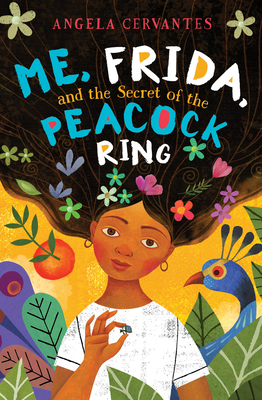
Her latest middle grade novel, Me, Frida, and the Secret of the Peacock Ring releases tomorrow!! Go get this book with the beautiful cover and awesome premise. Here’s a little more about it:

A room locked for fifty years.
A valuable peacock ring.
A mysterious brother-sister duo.
Paloma Marquez is traveling to Mexico City, birthplace of her deceased father, for the very first time. She’s hoping that spending time in Mexico will help her unlock memories of the too-brief time they spent together.
While in Mexico, Paloma meets Lizzie and Gael, who present her with an irresistible challenge: The siblings want her to help them find a valuable ring that once belonged to beloved Mexican artist Frida Kahlo. Finding the ring means a big reward — and the thanks of all Mexico. What better way to honor her father than returning a priceless piece of jewelry that once belonged to his favorite artist. But the brother and sister have a secret. Do they really want to return the ring, or are they after something else entirely?

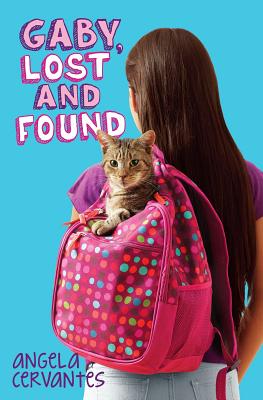
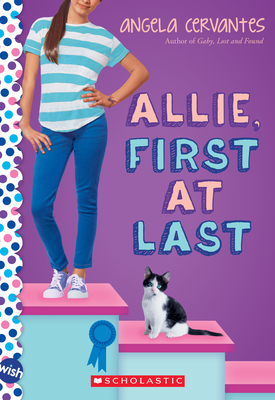
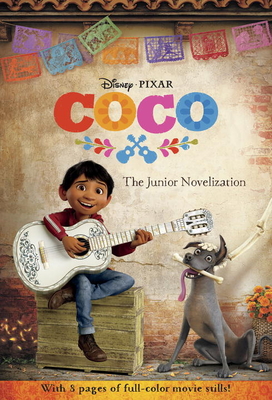
And now more about Angela: She is the beloved and award-winning author of several middle grade fiction novels. Her first novel, Gaby, Lost and Found, was named Best Youth Chapter book by the International Latino Book Awards and a Bank Street College of Education’s Best Books of 2014. Angela’s second middle grade novel, Allie, First At Last, received a starred-review from Kirkus and was a finalist for Florida’s Sunshine State Young Readers Award. Angela’s next middle-grade novel is the junior novelization of Disney Pixar’s animated film, Coco, was released in October 2017. Angela’s fourth novel, Me, Frida and the Secret of the Peacock Ring, will be released by Scholastic on March 27, 2018.

Angela Cervantes

Q. Who or what inspired you to become a writer?

A. My love for books inspired me to be a writer. Books were my first friends, and I relied on them to get me through some tough times, like my parents’ divorce, the loss of my abuelos, and issues around poverty. At an early age, I decided that I wanted to tell stories about girls like me. There’s nothing else I’ve ever wanted to be in my life.

Q. Why do you choose to write middle grade novels?

A. It was my agent, Adriana Domínguez at Full Circle Literary who diagnosed me with a promising voice for middle grade fiction. Once I let that soak in, I knew she was right. I dived head-first, and I’m so happy I did, because I love middle grade novels and writing for middle grade students.

Q. What are some of your favorite middle grade novels?

A. How much time do you have? There are so many! Growing up, I was obsessed with the Narnia Chronicles by C.S. Lewis. They are still my all-time favorite books. More recently, I’m a big fan of Rita Williams-Garcia. Her books, One Crazy Summer and P.S. Be Eleven are amazing. Other faves that I’ve read recently include Amina’s Voice by Hena Khan; The Smoking Mirror (Book One) by David Bowles; Out of My Mind by Sharon M. Draper; Inside Out and Back Again by Thanhha Lai; Brown Girl Dreaming by Jaqueline Woodson and The First Rule of Punk by Celia Pérez. I also love, love, love Under the Mesquite by Guadalupe García McCall.

Q. If you could give your middle-grade self some advice, what would it be?

A. Don’t throw away your stories. They’re not stupid. Someday, you’ll wish you could read them again. 🙂

Q. Please finish this sentence: Middle grade novels are important because…

A. Middle grade novels are important because young people need a safe place to let their dreams, curiosities and imagination play.


photo by Saryna A. Jones

Cindy L. Rodriguez was a newspaper reporter for The Hartford Courant and researcher at The Boston Globe before becoming a public school teacher. She is now a reading specialist at a Connecticut middle school. Cindy is a U.S.-born Latina of Puerto Rican and Brazilian descent. She has degrees from UConn and CCSU. Her debut contemporary YA novel, When Reason Breaks, released with Bloomsbury Children’s Books (2015). She will have an essay in Life Inside My Mind, which releases 4/10/2018 with Simon Pulse. She can also be found on FacebookTwitter, and Goodreads.

January & February 2018 Latinx Book Deals


Compiled by Cecilia Cackley

This is a monthly series keeping track of the book deals announced by Latinx writers and illustrators. The purpose of this series is to celebrate book deals by authors and illustrators in our community and to advocate for more of them. If you are an agent and you have a Latinx client who just announced a deal, you can let me know on Twitter, @citymousedc. If you are a Latinx author or illustrator writing for children or young adults, and you just got a book deal, send me a message and we will celebrate with you! Here’s to many more wonderful books in the years to come.

February 27

Joanna Cárdenas at Penguin’s new Kokila imprint has acquired world rights to Doodles from the Boogie Down, a middle grade graphic novel by debut author-illustrator Stephanie Rodriguez. The book, which is autobiographically inspired, follows a young Latina in the Bronx, who navigates friendships and a strict mother as she carves out a place for herself in the world as a budding artist. Publication is slated for spring 2020. Author agent: Linda Camacho at Gallt & Zacker Literary Agency.

February 22

Lynne Polvino at Clarion has signed John Parra to illustrate Miranda Paul‘s Little Libraries, Big Heroes, which tells the story of the Little Free Library organization from founder Todd Bol’s first installation to the creation of more than 50,000 mini-libraries around the world. Publication is scheduled for fall 2019; Karen Grencik at Red Fox Literary represented the author, and Adriana Domínguez and Stefanie Von Borstel at Full Circle Literary represented the illustrator in the deal for world rights.

February 15

Jordan Nielsen and Craig Cohen at Pow! Kids Books have bought world English rights to Cynthia Leonor Garza‘s (l.) Lucía the Luchadora and the Million Masks, the story of Lucía’s little sister Gemma, who wants to be a luchadora like her big sister, but seems to find trouble wherever she goes. Alyssa Bermudez will illustrate; publication is scheduled for fall 2018. Author agent: Marietta B. Zacker at Gallt and Zacker Literary Agency.

February 13

None.

February 6

None.

February 1

Mary Lee Donovan at Candlewick Press has bought world rights to Hayley Barrett‘s (l.) picture book Babymoon, illustrated by Juana Martinez-Neal. The book is a celebration of the special bonding time when a newborn first comes home. Publication is set for spring 2019. Illustrator agent: Stefanie Von Borstel of Full Circle Literary.

January 30

None.

January 25

None.

January 18

Ruta Rimas at S&S/McElderry has acquired world rights to Kristen Fulton‘s picture book, When Sparks Fly, an illustrated biography of rocket scientist Robert Goddard. Diego Funck will illustrate; publication is slated for spring 2018. Illustrator agent: Anne Moore Armstrong of Bright Agency.


Marisa Polansky at Scholastic has bought world rights to a chapter book series co-written by Monica Brown (l.) and Sarai Gonzalez, the 12-year-old star of the viral music video “Soy Yo,” who became the face behind the #SoyYo movement celebrating independent girls around the world. The first book in the fictional series based on the star’s life, Sarai and the Meaning of Awesome, features Sarai using her creativity and entrepreneurial skills to help her community and family. The first two books in the series are due in fall 2018. Author Agents: Stefanie Von Borstel of Full Circle Literary and Monica Villarreal and Rick Dorfman of Authentic Management.

January 11

Phoebe Yeh at Crown and Nicole de las Heras at Penguin Random House have acquired Jan Carr‘s (l.) Star of the Party, illustrated by Pura Belpré Award-winner Juana Medina. The picture book celebrates the Sun’s 4.6 billionth birthday with planetary quirks and nonfiction content. Publication is slated for fall 2019. Illustrator agent:  Gillian MacKenzie of the Gillian MacKenzie Agency.

January 9

None.

January 4

Hannah Allaman at Disney has bought Nina Moreno‘s debut YA contemporary novel, Saint Rosa of the Sea, pitched as Gilmore Girls meets Practical Magic, in a preempt. The women in Rosa’s family are cursed: her abuela is exiled from Cuba, her mother is reckless, and Rosa is forbidden to go to the sea. Rosa dreams of finally seeing their island, but her study abroad plans crumble amid political changes just as she crashes into a quiet boy from the docks. Publication is planned for summer 2019. Author Agent: Laura Crockett at Triada US Literary Agency.


Guest Post by Author NoNieqa Ramos: I Don’t Eat Mangoes or Oye Mi Canto!–Gloria Estefan


By NoNieqa Ramos

“What are you?” I can’t express how many times I’ve been asked this exact question by white girls. No joke. What preempted this comment, you ask? Perhaps I was wearing some sort of costume? Perhaps it was dark? Try again. It was because I was speaking in grammatically correct sentences and making allusions to books. Me. The same person who wore baggy pants, hoodies, bright red lipstick, had giant Dep-gelled hair, and dropped the F bomb.

I mean “word to your moms, I came to drop bombs. I got more lyrics than the bible got psalms.”- House of Pain

Just sayin. But really who was I? Who am I as a person of color?

To Puerto Ricans on the island, I’m gringa city. And they are right. How can I understand what it is like for the President of the United States to throw me paper-freakin-towels when I’m dealing with the spill of a hurricane?

That being said, my great-grandmother came from the mountains of Puerto Rico and brought my great-aunts to the Bronx. To every POC I ever knew, I was 100 percent Boricua from my knock-off Timberlands to my hoopie earrings. To the principal at my high school who called me Ms. Ramirez, and responded to my correction with “same thing,” I was everyone and nobody.  To the white girls at my high school, I was definitely not a virgin. For every book that I read as a kid, I didn’t exist.

Image result for like water for chocolate bookEven with the books I finally did find in GRAD SCHOOL, like “Like Water for Chocolate” or ANYTHING by Gabriel Garcia Marquez, I still didn’t see myself. I grew up on rice and Goya oh Boya!–beans from a can–seasoned with jarred Sofrito, Recaito, sprinkled with Sazon.
My single-dad didn’t have time to do all these romantic things to food that books like Isabel Allende described– like soaking the beans overnight–not getting them from a can–slicing up fresh avocado–in my childhood only white people getting their buzz on with Margaritas ate guacamole. You know how expensive avocadoes are?

Yet, there was never a time when the radio wasn’t blaring with meringue, salsa, free-style music by TKA (Maria! The most beautiful sound I ever heard…), Jodeci, Gloria Estefan and the like. There was never a time when my dad wasn’t telling me if I didn’t get 99s, I was gonna end up cleaning floors for a living–like every brown person represented in all of the movies I had ever seen.

When I looked in the mirror, everybody else’s image of what a Puerto Rican is supposed to be crowded in with my image of self. When I was sixteen, we moved out of the Bronx and into a white suburb of NJ. One day our white neighbors called my stepmother Rosie in alarm. She should call the police. “A black man” was on our property.

My stepmother had white skin and blonde hair, but she spent half her life in PR. In fact, she was the reason I grew up hearing Spanish. She was 100 percent Puerto Rican and 100 percent sure the “black man” on our lawn was my dad trimming the hedges. My dad.

100 percent used to this type of shit. 100 percent used to being called gringo by other Puerto Ricans for not speaking the Spanish he was forced to unlearn as a child. 100 percent representing the black and brown in our gene pool with his gorgeous face and fabulous mustache.

Who am I as a POC? On those surveys, I answer, race human. Ethnicity, Taino. Yes, Taino. Not white. I don’t identify with the oppressors who slaughtered my people. I’m not the image that people want to project into my mirror, but that person in the mirror combing her bushy hair, dancing to old-school Eddie Palmieri. Getting ready to sit myself and my daughter down to learn Spanish from our tutors who come every Sunday to help us reclaim the language that should have been our own in the first damn place. So, quien soy yo?

Soy un maestra. Soy un autor. Soy un madre y un esposo. So un activista. Soy una Boricua. Lo entiendes, holmes?

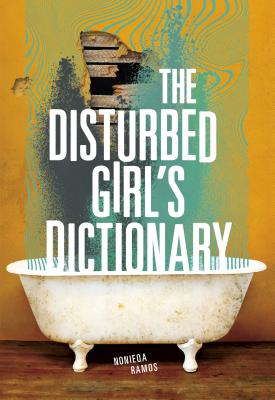
The Disturbed Girl's Dictionary Cover

CLICK HERE  for our review of The Disturbed Girl’s Dictionary.

CLICK HERE  for another guest post from NoNieqa.


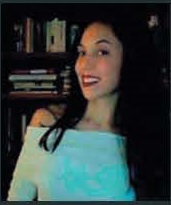
NoNieqa Ramos spent her childhood in the Bronx, where she started her own publishing company and sold books for twenty-five cents until the nuns shut her down. With the support of her single father and her tias, she earned dual master’s degrees in creative writing and education at the University of Notre Dame. As a teacher, she has dedicated herself to bringing gifted-and-talented education to minority students and expanding access to literature, music, and theater for all children. A frequent foster parent, NoNieqa lives in Ashburn, Virginia, with her family. She can be found on Twitter at @NoNiLRamos.