For Children’s Day/Book Day, Let’s Meet Angela Dominguez, Illustrator of Maria Had a Little Llama

By Concetta Gleason
editorial assistant/admin coordinator for Scholastic’s Club Leo en Español

The original post can be found here on Scholastic’s site.

Today is Children’s Day/Book Day/El día de los niños/El día de los libros, which is a mouthful, so let’s call it by its common name: Día¡Gracias!

Founded in 1996 by Pat Mora, author of Book Fiesta!Día is a celebration of children reading in their home language and exploring new languages. One of the most amazing things Día strives to do is provide grants for communities and libraries to support literacy for children of all languages and cultural backgrounds. We love this holiday. Bilingualism + books + kids = Club Leo.

To celebrate, we wanted to do something special: interview Angela Dominguez, author and illustrator of the beloved Maria Had a Little Llama/María Tenía una Llamita, which won the 2014 Pura Belpré Illustration Honor.

Angela was born in Mexico City, raised in Texas, and now lives in San Francisco. She is totally awesome. Let’s chat!

Club Leo: Why do you like llamas? 

Angela Dominguez: Llamas have so much personality! They have such expressive faces and such interesting bodies. I love their long necks, short legs, and their luscious fur.

CL: Where did you grow up? What do you like about that place? 

AD: I was born in Mexico City, but I grew up in Texas. My brother and his family still live there, and I visit often. Texas is very welcoming with friendly people. The summers are wonderful, and I miss the food—especially the corn bread.

CL: Why did you become an illustrator and author of children’s books?

AD: I’m having so much fun writing stories now and feel very privileged to be doing what I do. Children’s books have such an impact on children growing up, and great picture books resonate with people of all ages. I also adore the simplicity. It’s about editing it down to what’s absolutely necessary to tell a good story with pictures and words.

CL: Do you remember Scholastic Book Clubs from when you went to school?

AD: I remember Scholastic Book Clubs fondly. I would take home the catalog and would always want so many books. My mother, who supported me and my brother by herself, never would deny me any books and supported my reading habit. For that and many reasons, I’m very grateful.

CL: What do you like to do when you have free time?

AD: I love walking, swimming, and being outdoors. I also enjoy traveling and hope to do more in the future. In addition, spending time with my family and friends.

Angela has one of the best jobs in the world—she is an author and illustrator! What that means is she writes stories and draws pictures all day long.

Angela does all her cool artwork in a studio—in fact, the studio in the pictures shown above! A studio is a room full of paper, paint, and creative ideas. (When you think about it, a studio is a lot like a personal classroom for one person!) Angela uses digital brushes and a computer screen to add colors to book pages. We love the beautiful illustrations and bright colors in Maria Had a Little Llama/Maria Tenía una Llamita! Especially the little llama!

Author’s Note: Club Leo en Español supports your classroom with fun and affordable books that connect children’s home language and learning. Our books include amazing series, original titles, and winners of the Pura Belpré Award, which celebrates the remarkable contributions of artists who give voice to the Latino community through children’s literature.

Club Leo en Español apoya tu salón de clases con libros divertidos y asequibles que conectan la lengua materna y el aprendizaje de los niños. Nuestra colección incluye increíbles series, títulos originales y ganadores del Premio Pura Belpré, que celebra los extraordinarios aportes de artistas que dan voz a la comunidad latina a través de la literatura infantil.

Guest Post: Alidis Vicente Writes So Children Can Temporarily Escape Harsh Realities

By Alidis Vicente

Bruises. That’s what I saw on the face and body of a 15-year-old girl a few years ago as the school nurse examined her in front of me. She was also covered in scars, both physical and emotional. Her body stood frozen with eyes fixed on the floor as she was observed for signs of abuse. Her face was drenched in fear and shame. Fear of what the repercussions of my visit would be and shame of having not covered her bruises well enough so as not be seen. At that moment she was not Latina, African American, Italian American, or a member of any other ethnic group. She was a child. An abused, broken, petrified child.

Later that day, my coworker and I stood, unwelcome, in a living room. We confronted the older brother who physically assaulted that young lady along with the family who defended him. She had served her brother (“the man of the house” in his father’s absence) cold milk instead of hot milk and was irritated at being asked to warm it. The punches and smacks followed, as did the bottom of the stairs when she tumbled down.

Ultimately, the police ordered the monster of an older brother out of the home. I felt everything but relief as I watched him smile and glare at the young lady he abused while he was escorted away. I knew I couldn’t protect her forever, even though I so desperately wanted to. When all was said and done, I had to go home. Unfortunately, so did she. The next day I would have to be at my desk, bright and early, to write a report of my investigative findings. I couldn’t say what I wanted to. I couldn’t write what I saw in the eyes of the people I had met or the emotions felt in the air and chaos of the room. My report would be in black and white–what my trained eyes saw, what my recording ears heard, and what my supervisor told me had to be done.

That was my job. Clocking into work every day at 9 a.m. and sometimes driving home 16 hours later in a car owned by the state government. My job was to protect children and ensure their well-being. My challenge was to detach myself from every investigation. I didn’t make kids happy. I walked into their lives, for a short time, and turned them upside down no matter how terrible they already were. I was rarely ever a source of happiness in their eyes even though, in my heart, I knew I was doing the right thing.

I decided to stop working when my first son was born. Yes, I still wanted to go back to work. It was a part of my identity and one of the most indirectly rewarding experiences of my life. But I wanted to become something different. I wanted to bring joy to children who needed it most. I longed for young faces to smile, and not shudder, when they saw me.

So, I’m sure to the dismay of many, when people ask why I write for Latino kids, my answer is simple. I don’t. My cultural agenda is slim. If young readers learn Spanish vocabulary while reading my books, Great! If they pick up on some cultural nuances embedded within my text, Amazing! But that’s not, and never will be, why I type on my laptop or jot on small pieces of random paper. I concoct stories to set my imagination free. I create books to prompt smiles and silent chuckles. I write so young minds, albeit temporarily, can forget about where they are and dream about where they want to be.


me2

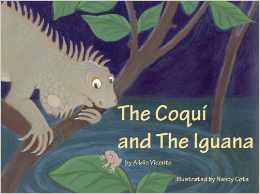
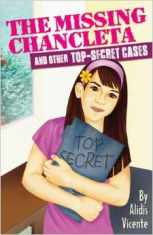
Alidis Vicente is a stay at home mother from New Jersey. After graduating from Rutgers University with a Bachelor’s Degree in 2005, she worked with children and families for New Jersey’s Division of Youth and Family Services. She is currently a client of Writers House Literary Agency and is also the author of The Coquí & the Iguana, her first picture book. Alidis, the original Detective Flaca, continues to write stories from her New Jersey home, only now she uses a laptop instead of a notepad… at least most of the time. The Missing Chancleta and Other Top-Secret Cases is a finalist for the 2014 International Latino Book Awards in the category “Best Youth Chapter Fiction Book: Spanish or Bilingual.”


April is National Child Abuse Prevention Month.
Books by Alidis Vicente:

Chancleta  Coqui

The Américas Book Award Winners, Honors, and Commendable Titles

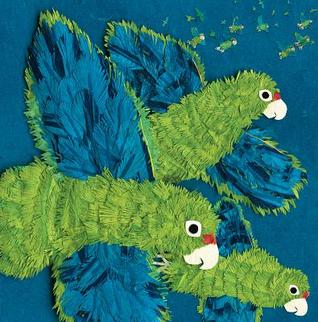
Congratulations to the 2014 Américas Book Award Winner, Parrots Over Puerto Rico by Susan L. Roth and Cindy Trumbore, published by Lee & Low Books. Below are also the Honor Books and Commendable Titles. Congratulations to all!!

17398961


Honorable mentions:

 14952858  15842628


Commended titles:

16280082  15814459  15937128  15791044  17270515  15818046  15798660


Book Review: Yum! ¡MmMm! ¡Qué Rico!: Americas’ Sproutings by Pat Mora

largeBy Sujei Lugo

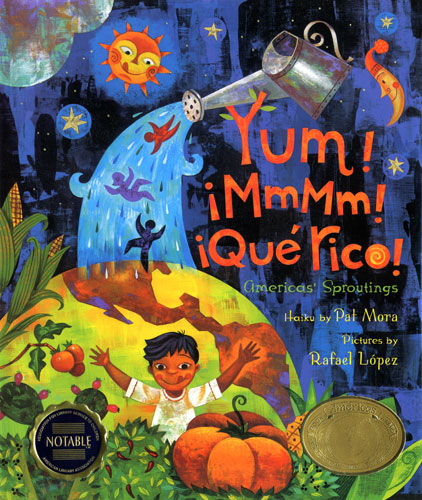
DESCRIPTION FROM THE BOOK JACKET: Peanuts, blueberries, corn, potatoes, tomatoes, and more—here is a luscious collection of haiku celebrating foods native to the Americas. Brimming with imagination and fun, these poems capture the tasty essence of foods that have delighted, united, and enriched our lives for centuries. Exuberant illustrations bring to life the delicious spirit of the haiku, making Yum! ¡MmMm! ¡Qué Rico! an eye-popping, mouth-watering treat.

MY TWO CENTS: Beware: This book will make you feel hungry!

Through Pat Mora’s wonderful haikus (a traditional and very popular form of Japanese poetry) and Rafael López’s vivid illustrations, we are introduced to a wide variety of foods from the Americas. From blueberries and papaya, to pumpkin and vanilla, readers will have the opportunity to discover and learn about crops that have been growing in our lands for centuries.

Mora uses this opportunity to present us with 14 different types of foods accompanied by a haiku, an illustration, and an informational paragraph for each. This combination effectively makes this book a fun, poetic, and informational read. Mora’s short poems strive to capture the various feelings and sensory experiences we encounter when we eat and enjoy these foods. The informational paragraph provides us with the etymology, origin and uses for each food, and some of them even include national holidays across the region that celebrate them.

Even though food is the main character of the book, children and nature are presented throughout each page, as they interact with the food that is being discussed. Through cheerful and colorful illustrations, López supports Mora’s words with lively anthropomorphic foods, suns and moons, friendly animals, and picturesque landscapes. The book also embraces the real diversity of the Americas, giving us multiethnic and multiracial children and their families enjoying and being part of this magic realism journey of foods and words.

Among the food, colors, and haikus there is an important aspect that is constant throughout Yum! ¡Mmmm! ¡Qué rico!, although featured discreetly: a strong sense of how vital sharing is–sharing the land with nature, humans, and animals, as well as sharing the products of our land with others. It stresses the need to understand the importance of a non-exploitative relationship with nature and our role in taking care of our land. We can see this aspect clearly with López’s constant use of images of children and families, seen either eating or preparing food together, planting seeds, and picking crops, as well as images of nature watering our soil. There’s no doubt that this book will encourage children to eat fruit, vegetables, and other natural foods. At the same time, it will help them to recognize the work that needs to happen to enjoy those foods.

Yum! ¡Mmm! ¡Qué Rico! America’s Sproutings was the first collaboration between Pat Mora and Rafael López. Published in 2007, the book won several awards such as Bank Street Children’s Books of the Year (2008), Américas Award (2007) and American Library Association (ALA) Notable Books (2008). It was also included in the Texas Bluebonnet Award Master List (2008-2009), Great Lakes Great Books Award Master List (2008-2009) and ALA’s Top Ten Quick Picks for Reluctant Young Adult Readers. 

TEACHING TIPS: The book works well for children in grades K-6. At home, kids can read it with adults and learn about haikus and how to incorporate some of the foods into their diet. They can do fun cooking activities, such as making fruit faces or fruit kabobs, and even make ice cream, like in this activity shared by the book’s publisher Lee and Low Books.

The content of the book provides librarians, teachers and educators the opportunity to create cross-curricular activities in subjects such as language arts, social studies, art, and health. Students may even become inspired by Pat Mora’s haikus and write their own pieces about the foods they’ve just learned about, and how they feel by eating them or sharing them. The book incorporates a few words in Spanish, such as luna and dulces, teaching children new words as well as showing them they can incorporate words in other languages in their writing. For activities related to social students, art, and health, Lee and Low Books provides a great classroom guide.

LEXILE: AD970L

AUTHOR & ILLUSTRATOR: Pat Mora (author) is a writer, speaker, multicultural literacy advocate, and founder of Día de los Niños/Día de los Libros (Children’s Day/Book Day). A former teacher, university administrator and consultant, Mora has dedicated her life to spread her “bookjoy” to children and adults. She is the recipient of various awards and honors such as Honorary Doctorates from North Carolina State University and SUNY Buffalo, Kellogg National Leadership Fellowship, National Endowment of the Arts Poetry Fellowship, Civitella Ranieri Fellowship, Honorary Membership in the American Library Association, Lifetime Membership in the United States Board on Books for Young People and several Southwest Book Awards.

She was written books of poetry, fiction and nonfiction for children and adults. Some of her children’s books are: Listen to the Desert/Oye al Desierto (1994); Tomás and the Library Lady (1997), winner of the 1998 Tomás Rivera Mexican American Children’s Book Award; The Bakery Lady (2001); Doña Flor: A Tall Tale about a Giant Woman with a Great Big Heart (2005), winner of the Pura Belpré Author Honor and Illustrator Awards (2006) and Golden Kite Award from the Society of Children’s Book Writers and Illustrators; Book Fiesta!: Celebrate Children’s Day/Book Day/Celebremos El Día de los Niños/El Día de Los Libros (2009), a Junior Library Guild selection and Pura Belpré Illustrator Award (2010) winner; Gracias/Thanks (2009), recipient of the Pura Belpré Illustrator Honor (2010); A Piñata in a Pine Tree: A Latino Twelve Days of Christmas (2009), Dizzy in Your Eyes: Poems about Love (2010) and The Beautiful Lady: Our Lady of Guadalupe (2012).

Rafael López (illustrator): Rafael López is a Mexican award-winning illustrator and artist, whose work is influenced by his cultural heritage, colors of Mexican street life, and Mexican surrealism. In addition to children’s books, Rafael López has created illustrated posters and United States Postal Service stamps such as the Latin Music Legends series. He also launched street art projects to revitalize urban neighborhoods such as the Urban Art Trail Project.

He is the recipient of various Pura Belpré Honor for Illustration awards, for books such as: My Name is Celia: The Life of Celia Cruz/Me Llamo Celia: La Vida de Celia Cruz (2006), Book Fiesta!: Celebrate Children’s Day/Book Day/ Celebremos El Día de los Niños/El Día de Los Libros (2010), The Cazuela That the Farm Maiden Stirred (2012) and Tito Puente: Mambo King/Rey del Mambo (2013). He also received two Américas Awards for Children’s and Young Adult Literature for My Name is Celia (2006) and Yum! ¡Mmmm! ¡Qué Rico! Americas’ Sproutings (2007).

FOR MORE INFORMATION about Yum! ¡MmMm! ¡Qué Rico!: Americas’ Sproutings (2007) visit your local library or bookstore. Also, check out worldcat.orgindiebound.orggoodreads.comamazon.comleeandlow.com.

Guest Post: CAKE Literary on Writing Diversity, Finding Your Flavor

By Sona Charaipotra

Have you ever cried in class? I have. And no, I’m not talking about kindergarten. I’m in my 30s, and yes, I shed actual tears during a workshop during my writing for children creative writing MFA program at the New School two years ago.

No, it wasn’t a particularly harsh critique. I have to say, I have an incredibly thick skin. Most of the time.

But this particular workshop was a safe space. Taught by the stunningly smart and super-nurturing Andrea Davis Pinkney, this one focused on a topic too frequently neglected by both the academy and publishing: diversity. Specifically, we were talking about diversity in kidlit and YA, and addressing why it is important.

And though it’s been a long time since I was a kid or even a teenager, the wound was still fresh. Because we still haven’t gotten there.

Growing up as a little brown girl – one of the few, back then – in small-town, suburban central New Jersey, books were my escape. I caused a ruckus alongside little Anne in Avonlea; I mourned Beth along with her sisters in the harsh winter of Maine; I honed my grand ambitions like Kristy and her babysitters’ club; I even swooned alongside Elena over the brothers Salvatore when the Vampire Diaries was originally released. (Yes, I am that old.)

CAKE logo+2.7.12But if you’ll note: in all those books and the hundreds of others I devoured, I never really saw myself, or anyone remotely like me. The majority of characters in books for kids and teens in the ’80s and ’90s were white. And according to Christopher Myers in his recent New York Times piece, “The Apartheid of Children’s Literature,” the majority still are today, by quite a landslide.

Why is this worth discussing? Because it hurts. A lot. It’s a hit to a kid’s self-esteem to be told – silently, but oh so clearly – that their story is not worth telling, that their voice is not important.

As Myers notes in his piece, it leaves you with “a gap in the much-written-about sense of self-love that comes from recognizing oneself in a text, from the understanding that your life and lives of people like you are worthy of being told, thought about, discussed and even celebrated.”

Honestly, it’s a punch to the gut. It kills me that, 30 years later, kids are still feeling this way. That my daughter, all of four now and already shaping up to be a voracious reader, will still feel that pinch.

That’s why I cried that day in class. And that’s why, with my writing partner Dhonielle Clayton, whom I met on the first day of my MFA program, I co-founded CAKE Literary, a literary development company that focuses on high concept fiction with a strong commitment to diversity.

I know what you’re thinking: silly thing to bank a personal fortune (however small) on, right? We all know diversity doesn’t sell.

Well, Dhonielle and I would like to call bullshit on that. Done the right way, diversity can bring a richness and flavor to any manuscript. After all, so much about a great read is in the details – the scent and sizzle of freshly-fried samosas wafting up from her mama’s kitchen, the ferocious whip of the wind on an icy February morning, the ashy knees she keeps hidden under too-long skirts, the blush that climbs up her throat and to her cheeks when she flirts with her crush for the first time. The details give texture and color, a sense of time and place and, most importantly, character. The details define worldview and fill out voice.

But the main thing is the big picture – and what our company will do is focus on BIG pictures. Smart, sophisticated storytelling that’s full of flavor – books where the diversity is a major part of the character, but not the central focus of the character.

Case in point: our debut novel, Tiny Pretty Things, which is due next summer. Set in a cutthroat New York City ballet academy, the book centers on three characters, one white, one black, and one half-Korean. And while their backgrounds definitely inform the characters’ worldviews and experiences, the book is not about skin color. It has a plot – a juicy, riveting and ultimately relatable story that we’re hoping will leave readers wanting more.

That’s what we’ll do with each of our projects: tell a fun, delicious story that readers want to read, but incorporate real-life flavor – meaningful diversity – in a natural, relevant way. We’re all about keeping it real, so part of our mission will be to connect vibrant, authentic voices with the stories we’re crafting.

What exactly does CAKE do? We’re not an agency or publisher, but rather a book packager – a YA and middle grade think tank of sorts. We come up with sharp multimedia concepts that we then develop into a detailed outline. Once the idea is fleshed out, we hire a writer to work with us on several chapters or a complete manuscript, which we then package to take to publishers. Once the project sells, the writer stays on board to complete the project. Some book packagers get a bad rap for being notoriously stingy. But CAKE’s aim is to be very writer friendly, because, after all, we’re writers, too. So when we work with a writer on a project, they get paid a flat fee on signing, on delivery, and then, when the project sells, they get a cut of those proceeds as well. The other thing that sets CAKE apart is our commitment to diversity, which is an integral part of every CAKE project.

Dhonielle Clayton

Dhonielle Clayton

Sona Charaipotra

Sona Charaipotra

Interested in learning more? We’ll be looking to hire writers beginning this spring, so connect with us on CAKELiterary.com or via CakeLiterarySubmissions@gmail.com. You can also follow us on Twitter @CAKELiterary.


Book Review: Saving Baby Doe by Danette Vigilante

Saving Baby DoeBy Cindy L. Rodriguez

On Monday, author Danette Vigilante wrote about dream seeds and how she turned a teacher’s comment into a challgenge to become a better reader. Today, we celebrate her latest novel Saving Baby Doe.

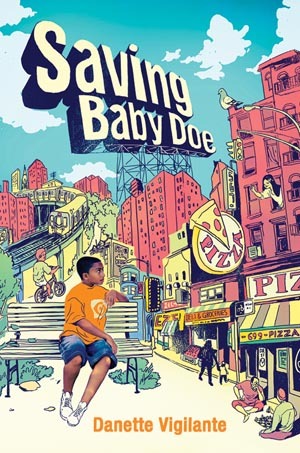
DESCRIPTION FROM THE BOOK JACKET: Lionel and Anisa are the best of friends and have seen each other through some pretty tough times–Anisa’s dad died and Lionel’s dad left, which is like a death for Lionel. They stick together no matter what. So when Lionel suggests a detour through a local construction site on their way home one day, Anisa doesn’t say no. And that’s where Lionel and Anisa make a startling discovery–a baby abandoned in a Porta-Potti. Anisa and Lionel spring into action. And in Saving Baby Doe, they end up saving so much more.

MY TWO CENTS: Danette Vigilante pulls the reader right into this novel from the opening scene of a scared young woman is giving birth to her child in a Porta-Potti on a construction site. Soon after, Lionel and Anisa discover the baby, after playing in the closed-off site, and they decide to save “Baby Doe.” This is a middle grade novel that addresses some tough issues. In addition to the abandoned baby, the author explores the effects on children of absentee fathers and drug dealing. At the heart of it all is Lionel, who tries to do the right thing in the worst of situations.

While the issues are serious, Lionel responds to them as only a middle-schooler would. The real possibility of severe consequences doesn’t prevent him from launching into an ill-conceived plan to retrieve the baby from the hospital so that she doesn’t end up in foster care. While reading, I caught myself thinking, “Lionel, what are you doing? This is a bad idea!” Of course, he knows this, too, but he goes ahead anyway. In this way, Vigilante perfectly captures the middle school mind and creates tension through the narrative.

Then, there’s the end of Chapter 10, which I totally did not see coming. I probably should have, but I was wrapped up in Lionel’s plan to steal the baby and sell drugs to support her and then…chapter 10! Whoa! Well played! I’m not going to spoil it, but the story takes an important turn. That’s all I’ll say about that.

One of the many things I loved about this novel was the diversity within Lionel’s community. They all struggle financially, but they’re all individually-drawn people. Some work hard at “regular” jobs, while others choose quick money. Some are ultra-religious, while others are not. Some of the kids go to public school, while others go to the “genius” private school. Characters vary in terms of age, race, ethnicity, and experience, all of which creates a rich, real setting for Lionel and Anisa story to unfold.

TEACHING TIPS: In addition to all of the expected language arts lessons, this novel would work well in a health class since it deals with sex education (a lecture given by Lionel’s mom), child birth, the possible results of not seeking medical care, and the Safe Haven laws. Fiction is often reserved for language arts classes, but this type of realistic novel is ideal for blending fiction and nonfiction in health, where teachers and students tackle these serious issues.

LEXILE: N/A

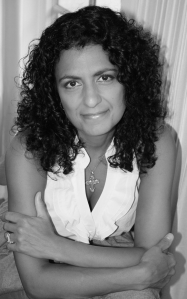
Danette_Vigilante_head_shot_high_resAUTHORDanette Vigilante grew up in the Red Hook Houses in Brooklyn, New York. She now resides in Staten Island with her husband, two daughters, two puppies and a cat with a bad attitude. Danette is the author of THE TROUBLE WITH HALF A MOON, a 2012-2013 Sunshine State Young Readers award nominee, and SAVING BABY DOE.

FOR MORE INFORMATION about Saving Baby Doevisit your local library or book store. Also, check out IndieBound.org,  GoodreadsAmazon.com, and Barnes and Noble.com.