Book Review: Undead Girl Gang by Lily Anderson


Review by Mark Oshiro
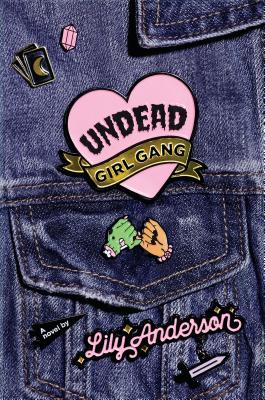
DESCRIPTION OF THE BOOK: Meet teenage Wiccan Mila Flores, who truly could not care less what you think about her Doc Martens, her attitude, or her weight because she knows that, no matter what, her BFF Riley is right by her side. So when Riley and Fairmont Academy mean girls June Phelan-Park and Dayton Nesseth die under suspicious circumstances, Mila refuses to believe everyone’s explanation that her BFF was involved in a suicide pact. Instead, armed with a tube of lip gloss and an ancient grimoire, Mila does the unthinkable to uncover the truth: she brings the girls back to life.

Unfortunately, Riley, June, and Dayton have no recollection of their murders. But they do have unfinished business to attend to. Now, with only seven days until the spell wears off and the girls return to their graves, Mila must wrangle the distracted group of undead teens and work fast to discover their murderer…before the killer strikes again.

MY TWO CENTS: The opening scene of Undead Girl Gang is a funeral—the funeral of teenage bruja Mila Flores’s best and ONLY friend, Riley. It’s a bold start to a story, and Anderson gives Mila a voice that is so funny, so angry, and so captivating that by the end of the first chapter, I was ready to go on any ride as long as Mila was there.

And what a ride that was! Undead Girl Gang isn’t just about grief and losing your best friend; it’s about justice. Mila refuses to accept the official story, that Riley was the third person at school to kill themselves. Mila is convinced that her BFF was murdered. In a brilliant twist, Mila casts a spell to bring her friend back to life to solve her own murder, but accidentally revives all three girls who died. What transpires after this is shocking, illuminating, and utterly enthralling. Mila must care for the recently revived, all of whom revert to near-zombie-status the further away Mila is from them. But that’s easier said than done when the other two resurrected girls are… well, really, really mean.

Anderson does a fantastic job addressing the ramifications of bullying throughout the text, and as otherworldly as this premise may seem, there’s a stark realism to what unfolds. If teenagers were brought back to life, how would they actually behave? How would someone who was bullied react to being revived alongside one of their bullies? How would three teens deal with the restrictions that this situation would require of them? All these issues and so very many more are addressed throughout the novel, and Anderson’s style is a perfect match for such a strange story.

Twisty, heartbreaking, and wildly entertaining, this is one of the best YA novels of the year.

TEACHING TIPS: Undead Girl Gang is rich with detail and nuance, and there are many moments that can provide teaching opportunities within the book. Note how Mila refers to herself and her body, and how she talks about fatness; this book has absolutely stellar representation for different body types that are not white, and Anderson’s body positivity adds a necessary layer to the story. Since the novel deals with bullying head-on (all the way to the end!), there are fruitful conversations to be had about difference (and how people are punished for being different) and the power dynamics that are present in character interactions. Additionally, Mila’s brujeria is intricately woven into the story, and you can tell how well-researched it is; conversations about faith and mortality would be apt in dissecting this book.
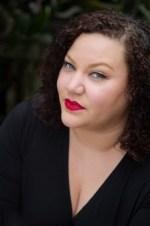
 Photo by Chris Duffey ABOUT THE AUTHOR: Lily Anderson is a school librarian and Melvil Dewey fangirl with an ever-growing collection of musical theater tattoos and Harry Potter ephemera. She lives in Northern California. She is also the author of THE ONLY THING WORSE THAN ME IS YOU and NOT NOW, NOT EVER. She tweets @mslilyanderson.


Oshiro_Mark.jpgABOUT THE REVIEWER: Mark Oshiro is the Hugo-nominated writer of the online Mark Does Stuff universe (Mark Reads and Mark Watches), where he analyzes book and TV series. He was the nonfiction editor of Queers Destroy Science Fiction! and the co-editor of Speculative Fiction 2015, and is the President of the Con or Bust Board of Directors. When not writing/recording reviews or editing, Oshiro engages in social activism online and offline. Anger is a Gift is his acclaimed debut YA contemporary fiction novel, and his follow-up, planned for 2019, is a magical realism/fantasy novel about self-discovery.
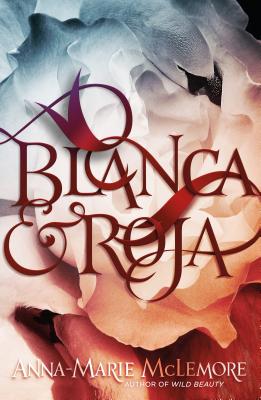
Book Review: Blanca & Roja by Anna-Marie McLemore


Review by Mark Oshiro

DESCRIPTION OF THE BOOK: The del Cisne girls have never just been sisters; they’re also rivals, Blanca as obedient and graceful as Roja is vicious and manipulative. They know that, because of a generations-old spell, their family is bound to a bevy of swans deep in the woods. They know that, one day, the swans will pull them into a dangerous game that will leave one of them a girl, and trap the other in the body of a swan.
But when two local boys become drawn into the game, the swans’ spell intertwines with the strange and unpredictable magic lacing the woods, and all four of their fates depend on facing truths that could either save or destroy them. Blanca & Roja is the captivating story of sisters, friendship, love, hatred, and the price we pay to protect our hearts.

MY TWO CENTS: There are few authors writing at the level of poetic brilliance and crushing emotional complexity as Anna-Marie McLemore does with each novel. I’m a huge fan of Wild Beauty and When The Moon Was Ours, so I was eager to fall into another lush, layered world. McLemore writes in the tradition of magical realism, but manages to make each of her stories feel so vastly different from one another. Weaving together four distinct points of view, she captures the challenge the del Cisne sisters face: at some point in their life, one of them will be claimed by the swans and become them. Blanca, who has fairer skin and yellow hair, is expected to survive the curse, and Roja, who is darker-skinned with red hair, believes that she’s bound for an inevitable fate. But this thrilling element provides a chance for McLemore to delve deep into themes teenagers will find compelling: Love. Acceptance. Colorism. The terror of changing bodies, the fear of isolation. The del Cisne sisters love one another so much that they vow to save the other, no matter the cost to themselves.

Yet each new chapter builds the complexity of this novel, which borrows from a number of traditional fairy tales and myths, such as Snow White and Swan Lake. Two mysterious boys—Paige and Barclay—become wrapped up in the del Cisne’s attempts to outwit and manipulate the swans, and they are both fully-realized, unique characters. I love a book where I am eager to read every character’s POV, and McLemore accomplishes this with ease. It helps that this book is so effortlessly diverse, in skin color and culture, in gender identity and fluidity, in showing us just how many different ways you can love another person. It is one of the most outwardly queer books I’ve ever read.

And the writing is just stunning. This novel manages to balance realistic, modern dialogue with a hypnotic and lyrical prose that is overflowing with sentences and scenes that broke my heart. Made me laugh. Made me yearn for more words, more chapters, more of every bit of this gorgeous book. I thought I knew what I was in for because it was a retelling of stories I’m familiar with, but Blanca & Roja establishes an entirely different kind of tale, one that is distinctly from the mind of McLemore. I expect this book will appear on a lot of lists by the end of the year, and it deserves to be. The young adult world needs more books that are challenging, odd, and imaginative, and you can tell from reading this one that the author deeply respects her readers.

Embark on this journey. It’s worth it.

TEACHING TIPS: Blanca & Roja is the perfect novel to analyze for a lesson on metaphors, as there are so many fantastic ones utilized by McLemore to explore issues surrounding sexuality, gender, colorism, and familial ties. It would also serve as a fantastic chance to talk about retellings and how an author goes about making a story feel like their own, even if some of the pieces are taken from something else. But more than anything else, I was drawn to the story of Page, who alternates between using he and she pronouns throughout the book based on what they feel most comfortable with at the time. It’s a fantastic example of gender fluidity, and I highly recommend reading the Author’s Note upon finishing.

Anna-Marie McLemoreABOUT THE AUTHOR: Anna-Marie McLemore was born in the foothills of the San Gabriel Mountains and taught by her family to hear la llorona in the Santa Ana winds. She is the author of THE WEIGHT OF FEATHERS, a finalist for the 2016 William C. Morris Debut Award, 2017 Stonewall Honor Book WHEN THE MOON WAS OURS, which was longlisted for the National Book Award in Young People’s Literature and was the winner of the James Tiptree Jr. Award, WILD BEAUTY, a Fall 2017 Junior Library Guild selection, and BLANCA & ROJA, which released October 9, 2018.


Oshiro_Mark.jpgABOUT THE REVIEWER: Mark Oshiro is the Hugo-nominated writer of the online Mark Does Stuff universe (Mark Reads and Mark Watches), where he analyzes book and TV series. He was the nonfiction editor of Queers Destroy Science Fiction! and the co-editor of Speculative Fiction 2015, and is the President of the Con or Bust Board of Directors. When not writing/recording reviews or editing, Oshiro engages in social activism online and offline. Anger is a Gift is his acclaimed debut YA contemporary fiction novel, and his follow-up, planned for 2019, is a magical realism/fantasy novel about self-discovery.

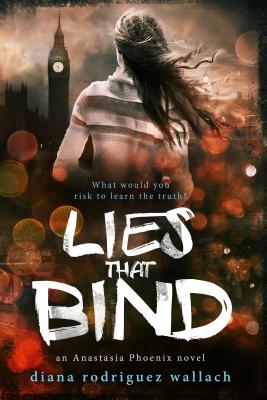
Book Review: Lies that Bind by Diana Rodriguez Wallach


Review by Elena Foulis

DESCRIPTION OF THE BOOK: Reeling from the truths uncovered while searching for her sister in Italy, Anastasia Phoenix is ready to call it quits with spies. The only way to stop being a pawn in their game is to remove herself from the board. But before she can leave her parents’ crimes behind her, tragedy strikes. No one is safe, not while Department D still exists.

Now, with help from her friends, Anastasia embarks on a dangerous plan to bring down an entire criminal empire. From a fire-filled festival in England to a lavish wedding in Rio de Janeiro, Anastasia is determined to confront the enemies who want to destroy her family. But even Marcus, the handsome bad boy who’s been there for her at every step, is connected to the deadly spy network. And the more she learns about Department D, the more she realizes the true danger might be coming from someone closer than she expects.

MY TWO CENTS: A year after Proof of Lies, author Diana Rodriguez Wallach gives us a sequel that is just as a fast-paced, Lies that Bind. We follow Anastasia Phoenix’s quest to discover the truth about the Dresden Corporation, her parents’ death and, like the protagonist, the reader does not know who to trust. The novel skillfully reintroduces us to the main characters and the story line; Anastasia reflects on the events Keira, Marcus, and Charlotte have just experienced and reminds the reader of the key information to put us right back into another action-packed adventure. Wallach continues to develop her female protagonists. Although Keira continues to act a bit irresponsible and Charlotte has developed a love interest, we see Anastasia take charge and make decisions about next steps in their quest for safety and justice. According to my teen daughters, one of the things that they most liked was the suspense-filled chapters, which kept them turning page after page to try to figure out which one of the characters was good, bad, or in-between. They also liked the romance that continues to develop between Marcus and Anastasia.

The novel moves locations and remarks on cultural differences in each of the places the characters visit. For example, they find themselves in the middle of festival in England that is full of satire about American immigration politics and borderline racist overtones. Another occasion worth noting, although not central to the plot, is a long speech given by one of her friends at the funeral of her dead boyfriend. The speech remarks on the experiences of young black men who the educational system fails to help. If nothing else, this adds to Anastasia’s growth in understanding the intersection of race and immigration as experienced by marginalized communities.

Wallach includes information about real events at the end of the book, such as the fake Turkish coup of 2003, Hilda Murrell’s murder, and the 1998 World Cup Final, which adds to the detective-like narrative and espionage plot. She titled this section as “truths,” but this is ironic because although these events happened, they are full of mystery! This is, perhaps, one of my favorite parts of the book, realizing how the author uses this in the novel and, at the same time, reminding us that life is full of secrets. The last book in this trilogy, titled The End of The Lie, comes out in 2019 and we can’t wait to read it!

CLICK HERE for our review of PROOF OF LIES.

CLICK HERE for a guest post by Diana Rodriguez Wallach about pushing genre boundaries.

Also, check out the video below. Author Diana Rodriguez Wallach talks about how her personal travels match Anastasia’s journey in Lies that Bind. The video was posted on Jean Book Nerd’s YouTube Channel.


AuthorHeadshot_2015ABOUT THE AUTHOR: Diana Rodriguez Wallach is the author of the Anastasia Phoenix Series, three young adult spy thrillers (Entangled Publishing, 2017, ’18, ‘19). The first book in the trilogy, Proof of Lies, was named by Paste Magazine as one of the “Top 10 Best Young Adult Books for March 2017.” Bustle also listed her as one of the “Top Nine Latinx Authors to Read for Women’s History Month 2017.” Additionally, she is the author of three award-winning young adult novels: Amor and Summer Secrets, Amigas and School Scandals, and Adios to All The Drama (Kensington Books); as well as a YA short-story collection entitled Mirror, Mirror (Buzz Books, 2013).
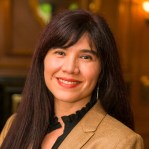
In 2010 Diana was named one of the Top Ten New Latino Authors to Watch by LatinoStories.com, and she placed second in the International Latino Book Awards. Diana is featured in the anthology, Latina Authors and Their Muses (Twilight Times Books, 2015), and she currently blogs for Quirk Books.


headshot2016ABOUT THE REVIEWER: Elena Foulis has a Ph.D. in Comparative Literature and Cultural Studies from the University of Arkansas. Her research and teaching interests include U.S. Latina/o literature, and Digital Oral History. Dr. Foulis is currently working on a digital oral history project about Latin@s in Ohio, which is being archived at the Center for Folklore Studies’ internet collection. Some of these narratives can be found in her iBook titled, Latin@ Stories Across Ohio.
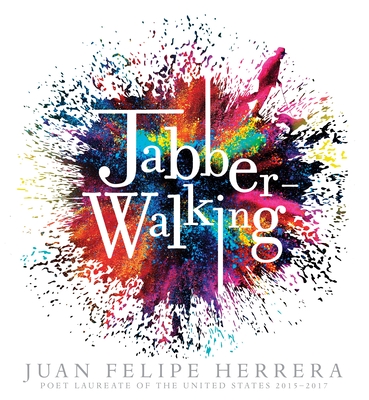
Book Review: JabberWalking by Juan Felipe Herrera


Review by Carolina Hinojosa-Cisneros

DESCRIPTION OF THE BOOK: Can you walk and talk at the same time? How about Jabberwalk? Can you write and draw and walk and journal all at the same time? If not, you’re in luck: exuberant, blue-cheesy cilantro man Juan Felipe Herrera, Poet Laureate of the United States, is here to teach you everything he knows about being a real-life, bonified, Jabberwalking poet! Jabberwalkers write and speak for themselves and others no matter where their feet may take them — to Jabberwalk is to be a poet on the move. And there’s no stopping once you’re a Jabberwalker, writing fast, fast, fast, scribble-poem-burbles-on-the-run. Scribble what you see! Scribble what you hear! It’s all out there — vámonos!

Juan Felipe Herrera, the first Mexican-American Poet Laureate in the USA, is sharing secrets: how to turn your wonder at the world around you into weird, wild, incandescent poetry.

MY TWO CENTS: JabberWalking is about a poet who walks and talks, and moves and jives, and does all things at once, and sometimes not at all. Juan Felipe Herrera is the son of migrant farmworkers, MFA graduate of the University of Iowa, and was the 2015 Poet Laureate of the United States. His own story of JabbberWalking through life as a poet, is vivid within the pages of this poetry book. The book describes a Jabber Walker as a person who moves to their own beat and speaks and writes for themselves. It is a book of the colorful life of a poet who does not color inside the lines.

It’s important to note that this book must be read aloud. Herrera brings us back to a place where reading poems on paper is too comfortable and does nothing for the flourishing mind. When the reader speaks JabberWalking into existence, it changes the entire meaning of the book. Suddenly, we’re running down streets, picking up guitars, running to grab our diploma, and wondering why our dog is so distracted by a squirrel! Did you SEE it? Squirrel! Only the dog did. Come BACK here, LoTus!

My favorite parts are when the Jabber Walker slows down in the Jabber Notebook. It’s a journal entry of sorts and a reflection that sums up the unconventional chapters throughout the book. The font changes often, creating the movement of both the poem and the poet. In the Jabber Notebook the font is steady. The words come alive in an entirely different way. This section, in each chapter, can be read aloud or to oneself. The reader will find a calming joy in these snippets before it’s time to get up out of our chair and transcend time again.

The doodles take me back to those of John Lennon and Shel Silverstein’s sidewalk series. The playful manner of the words reminds me of Dr. Seuss. JabberWalking is where Latinxs can find themselves in the pages between the universe and Laurette status. Although JabberWalking is an entirely different poetic animal, I feel that those readers who grow up with parents who are keenly aware of the literary canon, will find a desire to be more poetically adventurous when they read Juan Felipe Herrera’s JabberWalking.

JabberWalking presses up against boundaries, takes risks, and lends permission to its reader to become an active participant in creating poetry. Herrera’s cool and jovial approach to poetry allows readers at all ages to imagine a less constricted view of poetry. Herrera allows us, with him, to imagine another world. Herrera pens, “On my eyes the diamond stuff of my soul is pouring out as if my life was made of all that — instead of being a poor brown boy, a lonesome boy, a boy who grew up in the darkness of tiny trailers and raw, raw sawdust flying up from the blue-cheesy roads up, up to a cold slick moon seeking the blue-candy light over the strange jagged mountains.”

Imagine a world where you Jabber Talk, Jabber Think, Jabber Write, and Jabber Walk. Great Jabber, in the pages of JabberWalking,you will find a new way to walk, bounce, speak, throw down a beat, and doodle to the beat of your own drum. Herrera’s narrative is timeless and one the entire family can and will enjoy.

CLICK HERE FOR A TEACHER’S GUIDE


Juan Felipe Herrera

Photo credit: Randy Vaughn-Dotta

ABOUT THE AUTHOR: Juan Felipe Herrera is a poet, performance artist, and activist. The son of migrant farm workers, he was the U.S. Poet Laureate from 2015–2017. Herrera has published more than a dozen collections of poetry, in addition to short stories, young adult novels, and children’s literature. Juan Felipe Herrera lives in California.


ABOUT THE REVIEWER: Carolina Hinojosa-Cisneros is a Tejana poet, freelance writer, and speaker. Her work focuses on faith and Latinidad. Both her poetry and essays can be found in On Being, The Rumpus, The Acentos Review, Christianity Today, Rock & Sling, and many others. Hinojosa-Cisneros is a regular contributor at The Mudroom and is a first-year grad student at Our Lady of the Lake University in San Antonio, TX. Additionally, she holds a BA in English from the University of Texas at San Antonio. When she is not writing, she can be found growing nopalitos at her home in San Antonio, Texas.
Artist Jose Pimienta Gives Advice and Talks About Tools & Techniques


By Cecilia Cackley

Joe Pi’s almost full name is Jose Pimienta. He was born in the Imperial Valley and raised as a Cachanilla in Mexicali, BC. During his upbringing, he was heavily influenced by animation, music and short stories. He’s been drawing as long as he can remember and loved analyzing everything on the TV screen.

After high school, he left his garage band and ventured toward Savannah, Georgia, where he studied Sequential Art and discovered the wonders of Storyboarding. He also discovered a wider variety of music, traveled more and made friends. By the age of 24, he ran into a good suggestion, which was to move to SoCal and pursue a career in storyboarding. In 2009, he packed his belonging and drove to Los Angeles, with a friend. Nowadays, he resides in Tujunga where he takes walks every morning along with a big cup of coffee. He draws comics, storyboards, and sketches for visual development.

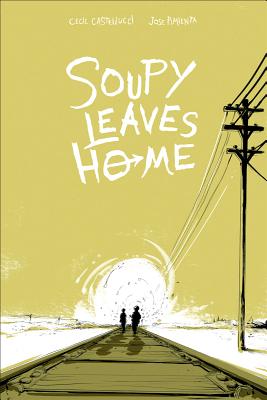
Joe’s latest book is the YA graphic novel Soupy Leaves Home, a historical fiction story by Cecil Castellucci set during the Great Depression. He was kind enough to talk to us about his background and work as an artist.
Did you read comics as a kid? What were your inspirations for becoming an artist? 

Unfortunately, I didn’t read many comics as a kid. I tried getting into superheroes several times, but they never really hit a chord with me. It wasn’t until my teens that I discovered other graphic novels, manga, and slice-of-life stories in comics that rocked my world. I did, however, read a lot of newspaper strips, but I also felt that wasn’t my fit for the type of stories I wanted to tell.

As a kid, my inspirations tended to come from animated movies, books with illustrations and music videos. As long as I can remember, I’ve always liked all those “making of-” featurettes and interviews with film makers and artists. They tended to reveal parts of the process and how a piece of art (whether it was a cartoon, a movie, or a song) was made. So, I guess I was inspired to be an artist by learning more about the arts I liked. The thought seemed logical: I like this Art and this is how they’ve done it and I want to do that because when I try it, I love it. Conclusion: learn more how to do it and keep going.

Please tell us a little bit about the tools you used to draw Soupy Leaves Home.

For Soupy Leaves Home, I drew it the way I prefer to draw comics, which is:

On regular type paper, 8.5 by 11 and a mechanical pencil (0.5, to be precise). I draw 1″ by 1.5″ rectangles and that is the thumbnail for a comic page. I draw my thumbnails small while reading the script, so it helps me to plan out the pace and what the beats of the story are. That way I know if I want to build up to a big scene or if I want to keep a steady pace for a few pages.

After that, I draw on 9×12 2-ply bristol board. Personally, I like the Smooth surface better than the Vellum, but sometimes, Vellum is all the store has, so… ANYWAYS, I draw the page with a blue-lead 0.5 mechanical pencil. I keep my pencils a bit loose, but knowing that I can tighten up later with the inks.

Once the pages are approved, I ink on top of the original pencils with micron pit pens, brush pens, India ink and brush, liquid paper white-out, and sometimes a few fountain pens. After that, I scan the pages and color them digitally with Photoshop. In this stage, I also do some more specific edits, such as deleting certain pencil marks that I couldn’t erase, or making sure the white out looks cohesive on the page. If the blacks look a bit too strokey, or if I just want a solid black instead of having visible brush marks, this is the stage to fix that. After that, my editor takes my files and has a letterer do that which I cannot: letter the book. Those are all my tools: papers, 0.5 mechanical pencils, brush pens, India ink and brush pens, AND Photoshop.

Soupy Leaves Home joins a growing field of comics of all genres, aimed at a teen audience. Are there other titles you recommend to people looking to read more YA comics?

Oh, absolutely:

Boxers and Saints by Gene Luen Yang

This One Summer by Mariko Tamaki and Jillian Tamaki

Surfside Girls by Kim Dwinell

Chiggers by Hope Larson

Nameless City by Faith Erin Hicks

Year of the Beasts by Cecil Castelucci

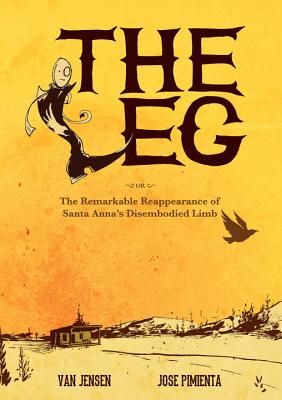
The Leg by Van Jensen and… me, hehe.

.                                                  

While comics for kids and young adults has been exploding as a publishing field, there have been comparatively few Latinx authors and artists getting attention, with the exception of the Giants Beware and Lowriders series. What advice do you have for young Latinx artists looking to break into comics? 

Dear Latinx who want to break into comics: Be bold, fearless, humble, and optimistic. Bold, because it reflects confidence and strength. Fearless, not just because of the current atmosphere, but also because that’s how we fight fear mongering, which is used to keep us quiet and divided. Humble, because, it reminds us that there is a bigger picture in our society, and that which benefits our community, automatically helps us grow to be better individuals living together. And optimistic, because as artists, our spirit is essential, so it’s important to keep it bright.

About breaking into comics? We can post and share. Ask everyone for support, launch Kickstarters, look at companies that you’re interested in, and see their submission guidelines and follow directions, while showing why your stories matter and why they’d be a great fit for their company. Go to conventions near you, small or big (of course they can be expensive, but plan for that. See how many you can make it to), make minis to hand out to show what you’re interested in doing. Go to conventions of what you like (for example, if you like baking, wrestling, cars or music; go to those conventions) get a small vendor table and sell your comic (about baking, wrestling, cars or music.) Starting a Patreon account, I hear, is a popular avenue these days. Most importantly: KEEP GOING. Do not stop making art and telling others about it. I’ve heard several quotes, and the one that still fits best is: It’s a marathon, not a sprint. Do not give up sharing your stories.

On a last note, see if I can end well here: When I first became interested in comics, I wished I had known more Latinx cartoonists (which there were, but I didn’t know about that many). To those who see my work, I hope I can make a positive impression, but furthermore, I hope that they go on to make art that inspires even more people.


Cecilia Cackley is a performing artist and children’s bookseller based in Washington, DC, where she creates puppet theater for adults and teaches playwriting and creative drama to children. Her bilingual children’s plays have been produced by GALA Hispanic Theatre and her interests in bilingual education, literacy, and immigrant advocacy all tend to find their way into her theatrical work. You can find more of her work at www.witsendpuppets.com.

Book Review: The Closest I’ve Come by Fred Aceves


Reviewed by Cris Rhodes

DESCRIPTION OF THE BOOK: Marcos Rivas yearns for love, a working cell phone, and maybe a pair of sneakers that aren’t falling apart. But more than anything, Marcos wants to get out of Maesta, his hood, away from his indifferent mom and her abusive boyfriend—which seems impossible.

When Marcos is placed in a new after-school program, he meets Zach and Amy, whose friendship inspires Marcos to open up to his Maesta crew, too, and to think more about his future and what he has to fight for. Marcos ultimately learns that bravery isn’t about acting tough and being macho; it’s about being true to yourself. The Closest I’ve Come is a story about traversing real and imagined boundaries, about discovering new things in the world, and about discovering yourself, too.

MY TWO CENTS: As a seasoned reader of Latinx young adult literature, I expect books that centralize male protagonists to fit within a particular, if unfortunate, macho framework; but I hoped that The Closest I’ve Come would buck tradition. While some parts of the book surprised me (like protagonist Marcos Rivas and his pals having a heart-to-heart at the end of the book), others conformed to the stereotypes I’ve grown used to—absent or abusive fathers, drug trafficking, and gratuitous violence.

Based on the book’s description, I anticipated The Closest I’ve Come would deliver a stereotype-busting journey of self-acceptance; but it’s not until the final fifty pages or so of this book that I was able to see this narrative coalesce. In the condensed space of this young adult novel, Aceves juggles quite a bit, sometimes to the detriment of his overarching goal of revealing how Marcos overcomes his circumstances and comes to accept himself. The plot is sprawling. It follows Marcos as he navigates the complex racial hierarchies of his poor, urban neighborhood, Maesta; through the hallways of his high school; into Future Success, the special program he finds himself enrolled in; and inside the four walls of his home, where he battles a tense relationship with his mother and abuse at the hands of her racist boyfriend. Though I had some difficulty keeping track of the plot, as well as the multiple characters corresponding to each subplot, each reveals a new facet of Marcos’s identity—his tenderness, his concern, and his desire to please.

Yet, whereas Marcos—via Aceves’s first-person narration—is fairly open about his feelings of inadequacy and his hopes for the future, he only shares these thoughts with the reader. Marcos longs for the love of his distant mother. He also vies for the attention of his non-traditional crush– Amy, a punk white girl. But he cannot share his feelings with either of the women in his life, nor can he truly connect with his other friends. It is clear from Aceves’s honest and lyrical prose that Marcos is bright and caring, but he is stunted by the cultural milieu of Maesta.

Though I found the book engaging and Marcos to be a sympathetic narrator, I was a little disappointed that The Closest I’ve Come proliferates the narrative that Latinxs (and other minoritized peoples, as the other residents of Maesta are African-American) are poor, destitute, and violence-prone. Eventually, Aceves undercuts this dominant paradigm by having Marcos reveal his true feelings to his mother, Amy, and his friends, but I worry that it comes too late to dispel the single story of tragedy that the rest of the book is situated within.

Nevertheless, in the end, Marcos realizes that to be truly happy, he must be honest, not just with himself, but with his friends and relatives. This message is so important, particularly within the scope of the emotion-suppressing machismo that pervades representations of Latinos in media and culture. The closeness Marcos and his friends share when they reveal their secrets to each other fosters a sense of community and family that had been missing from Marcos’s life. Aceves succinctly explains, “How lucky that I been tight with these guys all my life. With friends like these, who needs family?” (304). In emphasizing the family that Marcos chooses, rather than the terrible one he is born into, Aceves finally delivers on promise implied in the book’s description: to reveal how Marcos remakes himself.

While I am still unsure if this ending sufficiently subverts the other, more stereotypical traits of The Closest I’ve Come, I do think this book could serve as an important mirror for readers whose circumstances are similar to Marcos’s. In other words, though this book does perpetuate some stereotypes and questionable tropes relating to Latinxs, it may reach readers who, like Marcos and his time with Future Success, simply need the right experiences to turn their lives around.

TEACHING TIPS: Because of my reservations about the book, I might be hesitant to teach it as the central focus of a literature class, but for a language arts unit focused on linguistics, The Closest I’ve Come offers several possibilities. It could provide some examples of vernacular English, as Marcos often drops auxiliary verbs or uses double negatives. Students might also discuss Marcos’s disuse of Spanish (he barely speaks it at home and has trouble understanding it when it is spoken to him), which is particularly important within the context of official language debates.


ABOUT THE AUTHOR: Fred Aceves was born in New York but spent most of his youth in Southern California and Tampa, Florida, where he lived in a poor, working class neighborhood like the one described in The Closest I’ve Come. At the age of 21, he started traveling around the world, living in Chicago, New York, the Czech Republic, France, Argentina, Bolivia, and Mexico, his father’s native land. Among other jobs, he has worked as a delivery driver, server, cook, car salesman, freelance editor, and teacher of English as a second language. The Closest I’ve Come is his first novel.


ABOUT THE REVIEWER: Cris Rhodes is a doctoral student at Texas A&M University – Commerce. She received a M.A. in English with an emphasis in borderlands literature and culture from Texas A&M – Corpus Christi, and a B.A. in English with a minor in children’s literature from Longwood University in her home state of Virginia. Cris recently completed a Master’s thesis project on the construction of identity in Chicana young adult literature.