Book Review: Five Midnights by Ann Dávila Cardinal


Review by Mimi Rankin
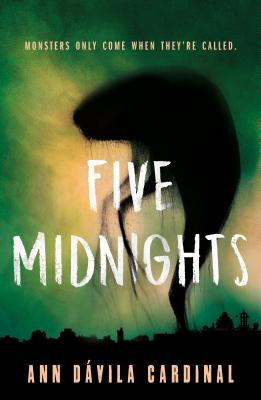
DESCRIPTION OF THE BOOK: Five friends cursed. Five deadly fates. Five nights of retribución.

If Lupe Dávila and Javier Utierre can survive each other’s company, together they can solve a series of grisly murders sweeping though Puerto Rico. But the clues lead them out of the real world and into the realm of myths and legends. And if they want to catch the killer, they’ll have to step into the shadows to see what’s lurking there—murderer, or monster?

MY TWO CENTS: As soon as I read about Five Midnights by Ann Dávila Cardinal (Tor Teen), I was determined to get my hands on a copy. YA horror-crime set in Puerto Rico? Everything about this called my name.

Lupe Dávila is a “Gringa Rican” spending her summer in Puerto Rico, leaving her alcoholic dad in Vermont to explore his homeland on her own for the first time. The niece of the police chief, Lupe finds herself attempting to solve a mysterious murder case when it seems like her missing cousin, Izzy, might be the next victim. One of Izzy’s oldest friends, Javier, is trying to make peace with himself and his sobriety, but when his old pals, Los Congregitos, keep being murdered in gruesome and inexpiable ways, all on their 18th birthdays, he fears as his own draws near. Can Javier and Lupe track down a vicious murderer before it’s too late?

First things first: I could not put this book down. I seriously considered taking a personal day from work to finish it (I tweeted this and both Cardinal and Tor Teen told me I was allowed to). The book combines mythology, crime, and a stark look at addiction, all set in the greater San Juan, Puerto Rico area. Each page sparked a new question in the best way possible. Is El Cuco real? What’s the deal with the ominous abuelita? I was pulled into the stories and backgrounds of the various characters and could not inhale the book quickly enough. The last few chapters felt slightly rushed, but there is so much action and detail packed into the climax, the racing could have just been from my own heartbeat.

One of Cardinal’s greatest strengths came through her characters. In particular, Marisol was one of the most fascinating and complex characters I’ve encountered in YA literature. She is bold and electric and passionate about her country and community. There is a sincere depth to her, and I would love nothing more than to see her succeed. Another character who I truly felt like I was getting to know as a human being was Javier. His struggle and battle with his addiction, his relationship with Padre Sebastian, and even his relationship with his family, all felt whole. The text even went as far to explain the socioeconomic misunderstanding of addiction; a favorite line is “My dad is a g—d—n lawyer.”

The world that Cardinal has created in San Juan was so tangible, painting both the stunning aspects of the city like the Spanish blue bricks of Old San Juan and the harsh realities of an island struggling to come back from a devastating hurricane and a corrupt government. Five Midnights invites readers to the captivating supernatural realm of an island just as mystifying with the resilience and heart of its people. I fully plan to champion Tor Teen to pick up a sequel—there is more havoc for El Cuco to cause and more stories to be told from Puerto Rico.

Photo by Carlos Cardinal - 2018ABOUT THE AUTHOR: Ann Dávila Cardinal is a novelist and Director of Recruitment for Vermont College of Fine Arts (VCFA). She has a B.A. in Latino Studies from Norwich University, an M.A. in sociology from UI&U and an MFA in Writing from VCFA. She also helped create VCFA’s winter Writing residency in Puerto Rico.

Ann’s first novel, Sister Chicas was released from New American Library in 2006. Her next novel, a horror YA work titled Five Midnights, was released by Tor Teen on June 4, 2019.

Her stories have appeared in several anthologies, including A Cup of Comfort for Mothers and Sons (2005) and Women Writing the Weird (2012) and she contributed to the Encyclopedia Latina: History, Culture, And Society in the United States edited by Ilan Stavans. Her essays have appeared in American ScholarVermont WomanAARP, and Latina Magazines. Ann lives in Vermont, needle-felts tiny reading creatures, and cycles four seasons a year.


file-2ABOUT THE REVIEWER: Mimi Rankin received her Master’s Degree with distinction in Children’s Literature from the University of Reading. Her thesis, on which she received a rating of First, centered around claims to cultural authenticity and representation in Hispanic Children’s Literature. She currently works in the publishing industry as a marketing manager. Her reviews do not reflect the opinions of her employer.

Spotlight on Middle Grade Authors Part 12: Tami Charles


By Cindy L. Rodriguez

This is the twelfth in an occasional series about middle grade Latinx authors. We decided to shine a spotlight on middle grade writers and their novels because, often, they are “stuck in the middle”–sandwiched between and overlooked for picture books and young adult novels. The middle grades are a crucial time in child development socially, emotionally, and academically. The books that speak to these young readers tend to have lots of heart and great voices that capture all that is awkward and brilliant about that time.

Today, we highlight Tami Charles.

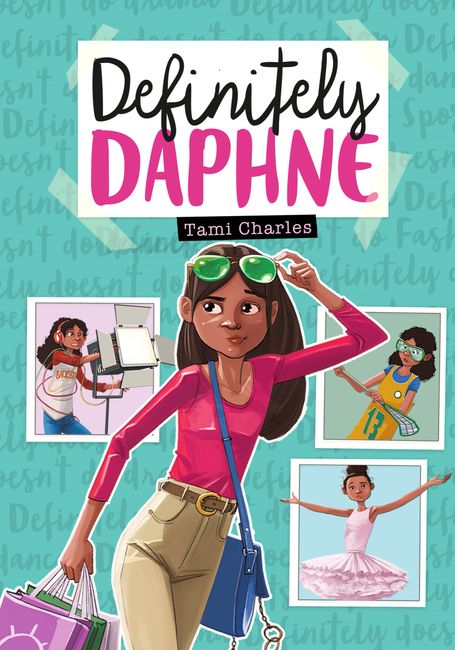
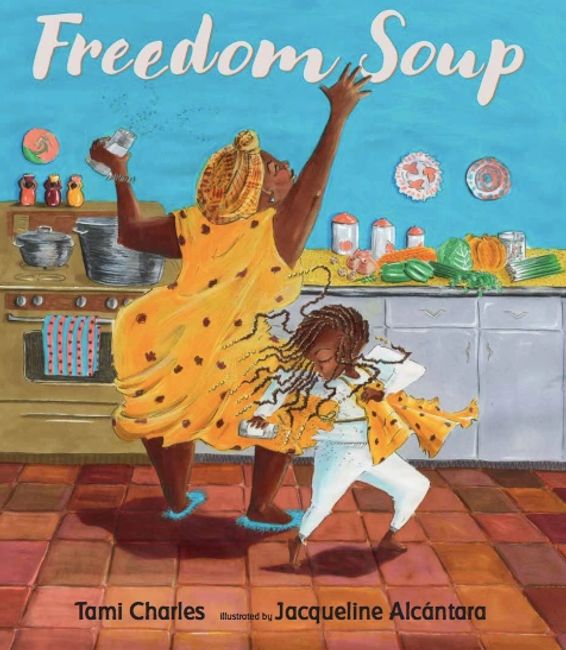
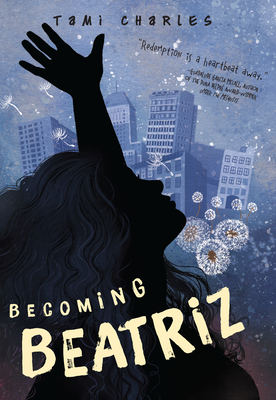
Former teacher. Wannabe chef. Tami Charles writes books for children and young adults. Her middle grade novel, Like Vanessa, earned Top 10 spots on the Indies Introduce and Spring Kids’ Next lists, three starred reviews, and a Junior Library Guild selection. Her recent titles include a humorous middle grade, Definitely Daphne, picture book, Freedom Soup, and YA novel, Becoming BeatrizWhen Tami isn’t writing, she can be found presenting at schools both stateside and abroad. (Or sneaking in a nap…because sleep is LIFE!)

Becoming Beatriz released September 17, 2019.


Here is the publisher’s description:

Beatriz dreams of a life spent dancing–until tragedy on the day of her quinceañera changes everything.

Up until her fifteenth birthday, the most important thing in the world to Beatriz Mendez was her dream of becoming a professional dancer and getting herself and her family far from the gang life that defined their days–that and meeting her dance idol Debbie Allen on the set of her favorite TV show, Fame. But after the latest battle in a constant turf war leaves her brother, Junito, dead and her mother grieving, Beatriz has a new set of priorities. How is she supposed to feel the rhythm when her brother’s gang needs running, when her mami can’t brush her own teeth, and when the last thing she can remember of her old self is dancing with her brother, followed by running and gunshots? When the class brainiac reminds Beatriz of her love of the dance floor, her banished dreams sneak back in. Now the only question is: will the gang let her go?

Set in New Jersey in 1984, Beatriz’s story is a timeless one of a teenager’s navigation of romance, her brother’s choices, and her own family’s difficult past. A companion novel to the much-lauded Like Vanessa.

Tami Charles

PictureQ. Who or what inspired you to become a writer?
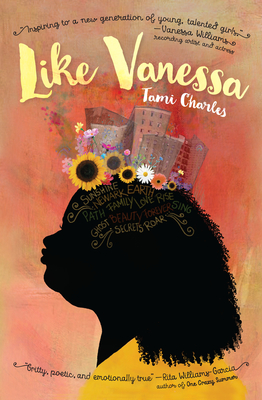
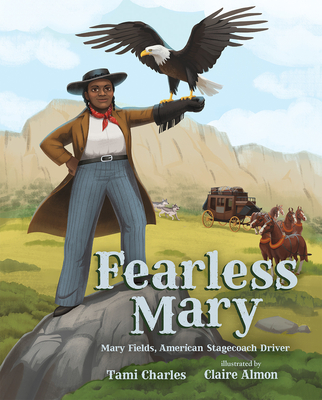
First and foremost, my mother played a huge role in my love of reading. She was a teacher (and eventual principal) at my elementary school, so I didn’t really have a choice, ha! She introduced me to many of my favorite authors: Toni Morrison, Maya Angelou, Lois Lowry, Beverly Cleary, etc…When I became a teacher, I experienced the joy of reading more diverse books that I wasn’t exposed to as much while growing up. This really reignited my passion to become an author.

Q. Why did you decide to write a middle grade novel?

I clearly remember this period of my life when I was trying to figure out who I am and who I wanted to be. It only seemed right to get those feelings on the page. My debut, Like Vanessa, was born out of similar personal experiences I went through as a 13-year-old.

Q. What are some of your favorite middle grade novels?

For sure, the One Crazy Summer series by Rita Williams-Garcia. I also love Crossover by Kwame Alexander and Because of Winn Dixie by Kate DiCamillo.

Q. If you could give your middle-grade self some advice, what would it be?

Put your blinders on! Don’t worry about what other people are doing, how smart they are, how athletic they are, etc…Just follow your own path.

Q. Please finish this sentence: Middle grade novels are important because…..

they provide real connections for readers that will stay with them for years to come.

Books by Tami Charles:

    image2  image5


photo by Saryna A. JonesCindy L. Rodriguez was a newspaper reporter for The Hartford Courant and researcher at The Boston Globe before becoming a public school teacher. She is now a reading specialist at a Connecticut middle school. Cindy is a U.S.-born Latina of Puerto Rican and Brazilian descent. She has degrees from UConn and CCSU. Her debut contemporary YA novel, When Reason Breaks (Bloomsbury 2015). She also has an essay in Life Inside My Mind (Simon Pulse 2018). She can be found on FacebookTwitter, and Goodreads.


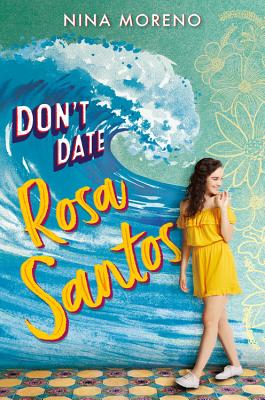
Book Review: Don’t Date Rosa Santos by Nina Moreno


Reviewed by Mimi Rankin

DESCRIPTION OF THE BOOK: Rosa Santos is cursed by the sea—at least, that’s what they say. Dating her is bad news, especially if you’re a boy with a boat.

But Rosa feels more caught than cursed. Caught between cultures and choices. Between her abuela, a beloved healer and pillar of their community, and her mother, an artist who crashes in and out of her life like a hurricane. Between Port Coral, the quirky South Florida town they call home, and Cuba, the island her abuela refuses to talk about.

As her college decision looms, Rosa collides—literally—with Alex Aquino, the mysterious boy with tattoos of the ocean whose family owns the marina. With her heart, her family, and her future on the line, can Rosa break a curse and find her place beyond the horizon?

Don’t Date Rosa Santos releases Tuesday, May 14, 2019.

MY TWO CENTS: I had seen this book circulating the Latinx KidLit Twittersphere (Thanks Las Musas! @lasmusasbooks) and couldn’t wait to get my hands on it at ALA Midwinter (Thanks Dina at Disney!). I had an inkling I would like this seemingly sweet YA romance with a Latinx heroine, but the weight this story carries is far greater than a springtime young love. Rosa is a fierce, brilliant, Type A goal chaser, and I am completely here for her. She is unapologetic in figuring out not just what she wants, but is realistic in how to get there. As a former college admissions counselor, I was very proud of Rosa for dually enrolling in a community college and looking into Study Abroad programs while still in high school. So, yes, Rosa is an awesome lead. I laughed out loud at Moreno’s far-too-relatable scenes of awkward first dates and embarrassing parents. If you want an impeccably written YA novel that reads much older and more “real,” this is the perfect spring break read.

Still, Don’t Date Rosa Santos is just the first story in a new narrative for young Cuban-Americans. With the embargo lifted in the last few years, young people of Cuban descent are finally able to see where they come from, where their own narrative began. I myself am of Puerto Rican descent, so while our islands are not super far from each other, our stories are worlds apart. Since all of my relatives are American citizens, they have never had a problem popping back and forth between San Juan and Texas, Louisiana, or Florida. For Cubans, they had to make a decision so much bigger than just “moving”; it was fleeing, knowing that returning was not an option. Now, young Cuban-Americans have the option to visit the island of their people, but it is not without the weighted guilt of knowing the fear of their ancestors. Moreno beautifully illustrates this feeling of being torn that I’m sure many young Cuban-Americans feel: the desire to visit Cuba while battling abuelos y abuelas who still remember the horrors they escaped. This new reality is sure to bring up hard conversations within families—can you be Cuban without taking the chance to experience Cuba? To those who faced exile, is the Cuba they remember the Cuba of today?

Sometimes characters were introduced in a way that felt abrupt and confusing, but the confusion was usually alleviated quickly. Parts of the last few chapters felt slightly rushed in the plot, but Moreno tied up the story in a very lovely manner that was not at all cliché. I am so excited to watch how this story contributes to a very specific Latinx Children’s Literature conversation.


ninamorenophotoABOUT THE AUTHOR: Nina Moreno is a YA writer whose prose is somewhere between Southern fiction and a telenovela. She graduated from the University of Florida with a B.A. in English Don’t Date Rosa Santos is her first novel.


file-2ABOUT THE REVIEWERMimi Rankin received her Master’s Degree with distinction in Children’s Literature from the University of Reading. Her thesis, on which she received a rating of First, centered around claims to cultural authenticity and representation in Hispanic Children’s Literature. She currently works in the publishing industry as a marketing manager for over 20 international children’s publishers. Her reviews do not reflect the opinions of her employer or clients. She currently lives in Nashville, Tennessee.


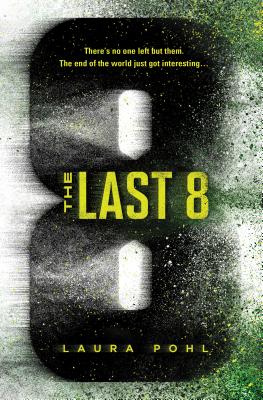
Book Review: The Last 8 by Laura Pohl


Reviewed by Katrina Ortega

DESCRIPTION OF THE BOOKClover Martinez has always been a survivor, which is the only reason she isn’t among the dead when aliens invade and destroy Earth as she knows it. When Clover hears an inexplicable radio message, she’s shocked to learn there are other survivors—and that they’re all at the former Area 51. When she arrives, she’s greeted by a band of misfits who call themselves The Last Teenagers on Earth. Only they aren’t the ragtag group of heroes Clover was expecting. The group seems more interested in hiding than fighting back, and Clover starts to wonder if she was better off alone. But then she finds a hidden spaceship, and she doesn’t know what to believe…or who to trust.

MY TWO CENTS: The Last 8 is a solid science fiction read. For those who are passionate about sci-fi, the book presents a really enticing plot that keeps the reader on the edge of their seats. Readers are taken on a journey with Clover and forced to contend with the mysterious beings that have taken over the planet and decimated all forms of life (with the exception of a tiny population of which Clover is a member). Clover can find no way of killing them, and is completely clueless as to why they do not seem to notice her, even though they’ve obliterated every other living thing around her.

Her arrival at Area 51, six months after the initial contact with these otherworldly beings, introduces her to a seemingly random group of other teens who, like her, pass unnoticed by these violent beings. This group of teens, as it turns out, may not be as random as the reader thinks (but I won’t give any spoilers!). The plot is a pretty solid suspense ride, with thrills heightening as these teens try to figure out a way to overcome these new alien overlords.

The best thing about this book is Clover. Clover is a complicated and well-formed character.

She highlights a number of really interesting qualities that are not often explored in YA (or any) literature. First, though it’s never delved deeply into, she seems to be a character who is not immediately looking for romance or any sort of sexual relationship (i.e. Clover is aromantic/asexual – it’s never blatantly stated, but heavily implied). The reader comes to understand her complicated relationship with her ex-boyfriend, as one that Clover was appreciative of because she is able to appreciate people in her life without it needing to be about romance or sex.

Additionally, throughout her journey to Area 51, Clover goes through periods of serious helplessness and severe depression to the point that she realistically contemplates suicide. I find it refreshing that Pohl is up-front about Clover’s feelings as she travels through the country for the six months between the initial alien contact and her arrival at Area 51.

Another great thing about this book is that it involves a large and diverse cast. The readers see young people who come from all areas of this country, and even from abroad. There is a great variety of ethnicities and sexual identities. I appreciate that this is becoming more common in YA literature, but an example like this one, where the characters are intersectionally diverse (ethnically and sexually diverse at the same time) is particularly admirable.

While an overall good start to this series, there are a couple of weaker points. First, though it’s made clear that Clover has been flying planes for a large part of her life and that she is genetically designed to be better at this than any other living being on Earth, it was still hard to wrap my head around the idea that she’s not only adept at flying very high-level military grade aircrafts, but that she’s so adept she can fly several different ones with no training whatsoever. Now, I completely understand that this can be explained by the idea that she’s not entirely human and therefore has superhuman capabilities, but it was still a stretch for me.

Lastly, the ending was not only confusing, but it seemed very rushed and slapped together. This is particularly unfortunate because Pohl spends a good amount of time really building up the middle portion of the book. It would have been worthwhile to focus on continuing that trend through the rest of the novel.

Overall, though, this was a great read, and I’m excited to see what happens in the second book of this duology!

TEACHING TIPS: The Last 8 was a thoroughly entertaining read, and any lover of sci-fi or adventure novels would find it a fast and fun read.

This book’s greatest teaching points come from the conversations about relationships and mental health that the book encourages. I love that many YA writers make it a point to destigmatize the diversity of these two things and challenge the ways readers might think about these topics. Honestly, if you think about the situation that Clover finds herself in, it is plain that anyone would be overcome with a sense of hopelessness and loss. Pohl’s description of Clover’s thought processes is legitimate and accurate and can be a great way to begin having conversations about what loneliness and depression are and how both can affect our mental health.

The book also brings to light relationships and individuals that are healthy and diverse. Clover’s relationships with her grandparents, her ex-boyfriend, and her newfound group of friends illustrate how vastly different relationships can look. Additionally, Clover’s character is one that is in charge of the interactions that she wants to have with people. She’s open and honest about how she feels, romantically or friendship-wise, and that is absolutely something that should be explored more in conversations with youth and adults.


ABOUT THE AUTHOR (from Author’s Website): Laura Pohl is a YA writer and the author of THE LAST 8 (Sourcebooks, 2019). She likes writing messages in caps lock, quoting Hamilton and obsessing about Star Wars. When not taking pictures of her dog, she can be found curled up with a fantasy or science-fiction book. A Brazilian at heart and soul, she makes her home in São Paulo.



FullSizeRenderABOUT THE REVIEWER: Katrina Ortega (M.L.I.S.) is the Young Adult Librarian at the Hamilton Grange Branch of the New York Public Library. Originally from El Paso, Texas, she has lived in New York City for six years. She is a strong advocate of continuing education (in all of its forms) and is very interested in learning new ways that public libraries can provide higher education to all. She is also very interested in working with non-traditional communities in the library, particularly incarcerated and homeless populations. While pursuing her own higher education, she received two Bachelors of Arts degrees (in English and in History), a Masters of Arts in English, and a Masters of Library and Information Sciences. Katrina loves reading most anything, but particularly loves literary fiction, YA novels, and any type of graphic novel or comic. She’s also an Anglophile when it comes to film and TV, and is a sucker for British period pieces. In her free time, if she’s not reading, Katrina loves to walk around New York, looking for good places to eat.

January and February 2019 Latinx Book Deals


Compiled by Cecila Cackley

This is a bi-monthly series keeping track of the book deals announced by Latinx writers and illustrators. The purpose of this series is to celebrate book deals by authors and illustrators in our community and to advocate for more of them. If you are an agent and you have a Latinx client who just announced a deal, you can let me know on Twitter, @citymousedc. If you are a Latinx author or illustrator writing for children or young adults, and you just got a book deal, send me a message and we will celebrate with you! And if I left anyone out here, please let me know! Here’s to many more wonderful books in the years to come.


February 28

None.

February 26

Melanie Cordova at Candlewick has bought world rights to Laurenne Sala‘s (l.) picture book, Mi Casa Is My Home, a bilingual celebration of home and family starring Lucía who lives en su casa with her big, loud, beautiful familia. Zara Gonzalez Hoang will illustrate; publication is set for fall 2021. Kelly Sonnack at the Andrea Brown Literary Agency represented the author, and Andrea Morrison at Writers House represented the illustrator.


Karen Boss at Charlesbridge has acquired world rights to We Laugh Alike/Nos reímos igual, written by three-time Pura Belpré Honor author Carmen T. Bernier-Grand (l.), illustrated by Alyssa Bermudez. Written in English and Spanish and based on the author’s experiences as an immigrant, the picture book is about the sense of wonderment when children make connections across language barriers. Publication is planned for spring 2021; Stefanie Sanchez Von Borstel at Full Circle Literary represented the author, and Claire Easton at Painted Words represented the illustrator.

February 21

Cheryl Klein at Lee & Low Books has acquired Miosotis Flores Never Forgets by Hilda Eunice Burgos (Ana María Reyes Does Not Live in a Castle). In this middle grade novel, Miosotis struggles with her growing distance from her college-aged sister, until her work with an abandoned dog at a local animal rescue leads her to realize her sister may be experiencing similar abuse. Publication is set for 2020; the author was unagented.


Lee Wade at Random House/Schwartz & Wade has acquired world rights to Areli’s Story by DACA recipient Areli Morales Romero (l.), illustrated by Luisa Uribe, an autobiographical picture book about the author’s immigration to America from Mexico at age six. Publication is scheduled for spring 2021; Brenda Bowen at Sanford J. Greenburger Associates represented the author, and Anne Armstrong at the Bright Agency represented the artist.


Mary Kate Castellani at Bloomsbury has acquired world rights to Book Magic by Kate Messner (l.), a picture book that celebrates the magic of books for readers at any age. Ana Ramírez González will illustrate; publication is scheduled for fall 2020. Jennifer Laughran at Andrea Brown Literary Agency represented the author, and Andrea Morrison at Writers House represented the illustrator.

February 14

Kate Fletcher at Candlewick has acquired world rights to Goodnight, Goodnight, Construction Site author Sherri Duskey Rinker‘s (l.) picture book Joy Ride, illustrated by Ana Ramírez González, in which a girl realizes that creativity can take courage when she’s teased about the fancy bike she built with her grandfather. Publication is slated for spring 2021; Lori Kilkelly at LK Literary Agency represented the author, and Andrea Morrison at Writers House represented the illustrator.


Reka Simonsen at Atheneum has acquired world rights to a new picture book by the team behind the Pura Belpré Award-winning Drum Dream Girl: Margarita Engle and Rafael López. Dancing Hands is the story of Teresa Carreño, a child prodigy refugee from Venezuela who played piano for President Abraham Lincoln. Publication is set for August 2019; Michelle Humphrey at the Martha Kaplan Agency represented the author, and Adriana Domínguez and Stefanie Sanchez Von Borstel at Full Circle Literary represented the artist.

February 12

Reka Simonsen at Atheneum has bought world rights to Young People’s Poet Laureate and Newbery Honor author Margarita Engle‘s (l.) A Song of Frutas, illustrated by Sara Palacios, about the poignant relationship between a girl and her grandfather who is a pregonero—a singing vendor who walks the streets of Cuba. Publication is planned for summer 2020; Michelle Humphrey at the Martha Kaplan Agency represented the author, and Kendra Marcus at BookStop Literary represented the illustrator.


Louise May at Lee & Low has acquired world rights to Sandra Nickel‘s Nacho’s Nachos, the true story of Ignacio Anaya and the invention of nachos, illustrated by Oliver Dominguez. Publication is planned for spring 2020 to coincide with the 80th anniversary of the invention of this popular snack; Victoria Wells Arms at Wells Arms Literary/Hannigan Salky Getzler represented the author, and Abigail Samoun at Red Fox Literary represented the illustrator.

February 7

Rosemary Brosnan at HarperCollins has acquired two new YA novels by Elizabeth Acevedo, author of the NBA and Printz Award winner The Poet X. The first, Clap When You Land, is a dual narrative novel in verse about two girls who learn of each other, and discover that they are half-sisters, after their father’s death in a plane crash. The first book will publish in spring 2020; Ammi-Joan Paquette at Erin Murphy Literary Agency brokered the deal for North American rights.


Kendra Levin at Viking has bought, at auction, Patrice Caldwell‘s YA speculative fiction anthology A Phoenix First Must Burn. The collection features stories centering Black girls and gender nonconforming teens by Elizabeth Acevedo, Amerie, Dhonielle Clayton, Jalissa Corrie, Somaiya Daud, Charlotte Davis, Alaya Dawn Johnson, Justina Ireland, Danny Lore, L.L. McKinney, Danielle Paige, Rebecca Roanhorse, Karen Strong, Ashley Woodfolk, and Ibi Zoboi. Publication is slated for spring 2020; Pete Knapp at Park Literary negotiated the deal for world English rights.


Whitney Leopard at Random House Graphic has acquired world rights to Jose Pimienta‘s YA graphic novel Suncatcher. The story, which began as a Kickstarter, follows Beatriz, a young musician growing up in Mexicali who learns that her grandfather’s soul is trapped in his guitar; she goes on a journey to discover the truth about her grandfather’s life while at the same time learning a few truths about herself. Publication is planned for 2021; Pimienta was unagented.


Andrea Tompa at Candlewick has won at auction world rights to I’ll Go and Come Back by Rajani LaRocca (l.), illustrated by Sara Palacios. A tribute to long-distance family relationships and cross-cultural connections, the story follows a girl on a trip to India. When she finds herself homesick, her grandmother knows the cure, and the girl knows just how to welcome her grandmother when she visits the U.S. Publication is slated for spring 2022; Brent Taylor at Triada US represented the author, and Kendra Marcus and Minju Chang at Bookstop Literary represented the illustrator.

February 5

None.

January 31

None.

January 24

Nancy Paulsen at Penguin/Paulsen has acquired world rights to Talia Aikens-Nuñez‘s (l.) bilingual picture book, Sueñito/Little Nap, illustrated by Argentinian artist Natalia Colombo. The book is about the simple activities that tire baby out and lead to a small, sweet nap. Publication is set for spring 2021. Author agent: Susan Graham at Einstein Literary Management. Illustrator agent: Mela Bolinao at MB Artists.

January 17

Elise Howard at Algonquin preempted world English and Spanish-language rights to Yamile Saied Méndez‘s Furia, pitched in the vein of Bend It Like Beckham. Set in Argentina, the story centers on Camila “Furia” Hassan, who longs to play professional soccer in the United States and not only has to contend with deeply disapproving parents, but with a blossoming love interest that threatens to tempt her away from her dream. Publication is planned for 2020. Author agent: Linda Camacho at Gallt & Zacker Literary.

January 15

Olivia Valcarce at Scholastic has bought Yamile Saied Méndez‘s Random Acts of Kittens, in which a girl tries to spread happiness by pairing a litter of kittens with the perfect owners, but realizes that her good intentions don’t always yield the results she expects. Publication is slated for 2020. Author agent: Linda Camacho at Gallt and Zacker Literary Agency.

January 10

Tamar Mays at HarperCollins has acquired world rights to Erin Dealey‘s (l.) picture book, Dear Earth… From Your Friends in Room 5, illustrated by Luisa Uribe, recipient of the 2018 Society of Illustrators Dilys Evans Founder’s Award. What begins as a monthly exchange of ideas between Earth and Room 5 grows into a lasting friendship, a school club with a surprising president, and—hopefully—lifelong earth-smart habits. Publication is slated for winter 2021. Illustrator agent:  James Burns at the Bright Agency.

January 8

Cassandra Pelham Fulton and David Saylor at Scholastic/Graphix have acquired, in a 10-house auction, Miss Quinces and an untitled middle grade graphic novel by Kat Fajardo. Miss Quinces features Sue, a Honduran-American girl who, instead of going to sleepaway camp with her friends, gets stuck visiting family in Honduras and having a surprise quinceañera, which is the last thing Sue wants—until she grows to appreciate both her family and their traditions. Simultaneous publication in both English and Spanish is planned for 2020. Author agent: Linda Camacho at Gallt & Zacker Literary Agency.

January 2

Asia Citro at Innovation Press has acquired world rights to Your Name Is a Song, a picture book by Mommy’s Khimar author Jamilah Thompkins-Bigelow (l.). Saddened by her classmates’ and teacher’s mispronunciations of her name, a girl is empowered by her discovery that names are like songs when she and her mom celebrate the musicality of African, Asian, Black-American, Latinx, and Middle Eastern names. Luisa Uribe will illustrate; publication is set for summer 2020. Illustrator agent: Alex Gehringer at the Bright Agency.


cecilia-02-originalCecilia Cackley is a Mexican-American playwright and puppeteer based in Washington, DC. A longtime bookseller, she is currently the Children’s/YA buyer and event coordinator for East City Bookshop on Capitol Hill. Find out more about her art at www.ceciliacackley.com or follow her on Twitter @citymousedc

Book Review: The Art of White Roses by Viviana Prado-Nuñez


Review by Elena Foulis

DESCRIPTION OF THE BOOK: It is 1957 in Marianao, a suburb on the outskirts of Havana. Adela Santiago is thirteen years old and lives in a small blue house with her mother, father, brother, and grandfather. And yet something is amiss. Her neighbors are disappearing. Not only that, but her parents’ marriage seems to be disintegrating and her cousin is involved with a bombing at the Hotel Nacional. Welcome to a world where the sight of police officers shooting citizens in broad daylight is a normalcy, where every day there is a higher body count than the day before, where in the cramped pews of churches, in the creaking wood of backwards Havana alleys, a revolution is brewing. Welcome to Cuba.

MY TWO CENTS: Viviana Prado-Nuñez’s first novel, The Art of White Roses, is a beautifully told story of a young girl growing up in Batista’s Cuba. Adela, the protagonist, tells the story of her neighborhood, family, and friends as she tries to make sense of how disappearances, violence, and affairs affect her and the people she loves. The story looks deeply into family life, such as sibling interactions, her parents’ sweet but complicated relationship, and Adela’s abuelo. Despite the political conditions of the time—including repression, police brutality, and desaparecidos—Adela is most impacted by her family dynamics. As she tries to make sense of cruelty, mysteries, and her own disappointments, Adela is both observant and conversant about the possible deaths of universitarios whom they all knew and who were possible revolucionarios. She witnesses the death of Luis, a neighbor and troubled-young man who also might have been part of an uprising against the police, and her own family drama of her father’s affair. One of my favorite chapters is, “The night they met,” because Prado-Nuñez’s weaves happy memories of when Adela’s parents met and the present reality of their strained marriage. The author’s narrative choice, at once nostalgic, funny, and tragic, centers around Adela’s perspective with the backdrop of the revolution.

The novel is not always told chronologically, rather, each of the chapters tells the story of an event, family member, or place. The stories help the reader see the protagonist’s development, but it is not a typical coming-of-age story, meaning, there is no event that suddenly helps her find her voice. Instead, Adela’s understanding of herself is directly tied to her place and community, including the oppressive political circumstances that, in the end, force her family to move. Her future is uncertain—including her educational future—because of circumstances that have to do with her father’s affair first, and her Batista’s regime second. Prado-Nuñez’s detailed descriptions of places and people add to Adela’s understanding of the world around her, and the reader enjoys the author’s carefully crafted narrative. This is best exemplified by her discussion of the book’s title, connected to José Martí’s poem and personal story of choosing to love and forgive, in the face of pain, as Adela’s father explains, “white roses are hard times,” and later says, “white roses are hard for me, too.”

TEACHING TIPS: Taking advantage of today’s digital tools, a google earth exploration of Marianao, its surrounding neighborhoods, and its proximity to Havana, can help understand the setting and how that might determine the experiences of Adela and her family. Research on Hotel Nacional, a historical site, will add to discussion of time and place of the novel. There is a lot to explore visually via photography about Cuba, especially since it seems suspended in time. These already available resources, can lead to digital projects such as storymaps, digital storytelling and digital archival projects about neighborhoods and historical sites.  While the historical background of Bastista and Castro is important, it would be also helpful to study American influence in the country and how this might have affected Cubans during this time and how this has informed U.S.-Cuba relations today.


Viviana Prado-NúñezABOUT THE AUTHOR: Viviana Prado-Núñez was born in San Juan, Puerto Rico in a hospital with a 4.0 Google review rating and a view of the ocean. Previous publications include The Best Teen Writing of 2014, 4×4 Magazine, Columbia Spectator, and Quarto Magazine. She is also the 2017 winner of the Burt Award for Caribbean Young Adult Literature for her novel, The Art of White Roses.


headshot2016ABOUT THE REVIEWER: Elena Foulis has a Ph.D. in Comparative Literature and Cultural Studies from the University of Arkansas. Her research and teaching interests include U.S. Latina/o literature, and Digital Oral History. Dr. Foulis is currently working on a digital oral history project about Latin@s in Ohio, which is being archived at the Center for Folklore Studies’ internet collection. Some of these narratives can be found in her iBook titled, Latin@ Stories Across Ohio.