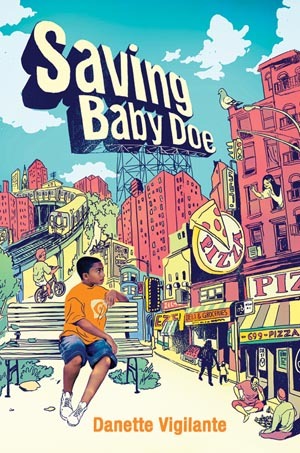
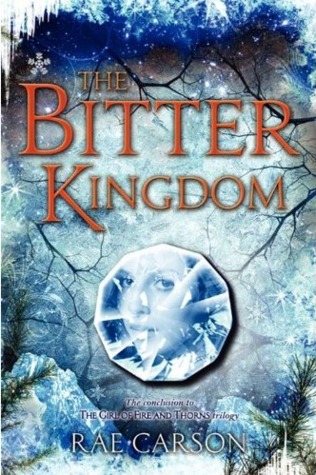
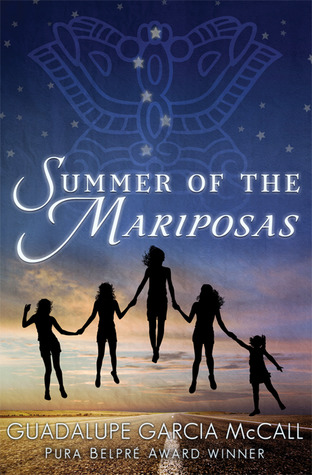
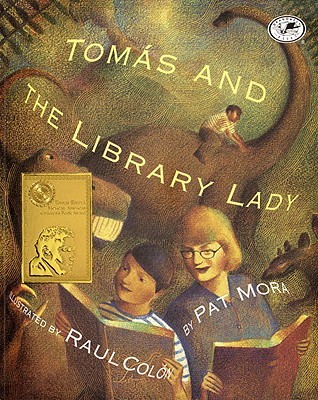
We continue to be blown away by the number of books being read each month by participants of our 2014 Latin@s in Kid Lit Challenge. Thank you to everyone for participating in the challenge and purposely selecting books by/about/for Latin@s. Remember, you can join the challenge any time during the year, and you’re not required to review–only read and enjoy! If you do post a review somewhere, we will link it to the book covers below. If you choose not to review, we will link the covers to Goodreads. This month, we’d like to stand up and applaud Elisabeth Ellison and Cecelia Cackley for their vigorous reading (13 books total!) And since April is National Poetry Month, we suggest you try some novels in verse this month!
A note to participants: As you complete books, please send us the information, so we can share what you’re reading each month.
Writing in a new genre after successfully publishing a book (or books) can be intimidating; why change what works? Some agents and publishers actively discourage genre-hopping, while others are interested in quality rather than consistency or brand-building.
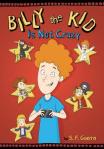
I debuted in 2012 as a YA author of realistic fiction (Torn) and followed up in 2013 with a 90-degree turn to humorous, heavily-illustrated middle grade: Billy the Kid is Not Crazy. I have two more YA coming out next year and I’m finishing a picture book.
If you’re a writer drawn to similar genre shifts, I encourage you to follow your gut. The process can be both freeing and useful in developing range. You may have to rebuild your audience from scratch, which is intimidating. But you’ll end up with a broader audience, a reward in itself.
You’ll also need to adjust your voice and mentality for your new audience. Transitioning from YA to MG, I had to get in touch with my booger-fart-joke side (it wasn’t that hard) and cut all edge out of my writing (a touch harder). Again, the work builds its own reward: increased range.
But I want to focus a spotlight on the positives, which I believe are the real essence of shifting genres. It’s a form of creative stretching, a way to access a different age or voice inside you, and a way to reengage with the “play” of writing. A YA author may discover a new sense of fun in MG or picture books. An MG author may find freedom in exploring the romance or more mature content possible in YA. A picture book author used to practicing economy with words may relish stretching out into a luxurious novel.
Consider one of the most beloved Latin@ authors of our times, Gary Soto. He’s produced excellent picture books, poetry, middle grade and YA novels, short stories, and adult works. Pam Muñoz Ryan, another Latin@ star, has ranged from picture books to award-winning YA. Jack Gantos, my personal hero, has created picture books, delightful middle-grade (Joey Pigza!), adult novels, and urban memoir.
Some other marvelous children’s authors who’ve changed genres: Madeleine L’Engle, Mark Twain, Roald Dahl, and Laurie Halse Anderson. Literary superheroes like E. B. White jumped from Charlotte’s Web to One Man’s Meat. Roald Dahl dabbled in memoir, adult short stories, suspense, erotica, and of course, children’s fiction. And C. S. Lewis wrote everything short of picture books. What better models could we have?
I like to view jumping genres, too, as an act of defiance to The Market. Conventional wisdom has it that it’s savvy to develop a brand and stick with it, to build an audience and churn out book-clones at the rate of one per year. Many authors do this very successfully, and there’s nothing wrong with it, if it’s fulfilling to the artist in question. But I’m unsettled by branding as a lens for the arts and as a concept imposed on authors by publishers. Branding seems to compete with the essence of what art is or should be. So I advocate stretching the brand. Or better yet, losing the term altogether.
I’d like to share a short (30 second) video of a really articulate 11-year-old reviewing my MG. Thank you, Garrison. Your review gives me confidence that jumping genres was the right choice.
We believe both statements and would like to see moreall around, meaning: more Latin@ children’s literature on bookshelves and in libraries and classrooms, more titles by and for Latin@s on year-end “Best of” lists and best-seller lists, more people buying, reading, and writing about Latin@ children’s literature.
We cannot control publishing and marketing, but we can read and write about Latin@s in children’s literature. So, as the new year approaches, we invite you to participate in our 2014 Reading Challenge. This would be a great way to diversify your reading lists and support already established and emerging writers who include Latin@s in their books. One of the best ways to express that diversity in kid lit is important is to buy, read, and write about these titles.
Here are the Guidelines:
This challenge will run from January 1, 2014-December 31, 2014.
Anyone can join! You don’t have to be a book blogger. WordPress doesn’t accept anything that uses JavaScript, so we can’t use a linky list. If you want to participate: post somewhere that you are joining the 2014 Latin@s in Kid Lit Reading Challenge, sign up in the comments, and include a direct link to your announcement. Copy and paste our reading challenge logo onto your site. If you don’t have a site, you can spread the word on Facebook, Twitter, or any other way.
The goal is one book per month. You may post reviews on GoodReads (use a shelf dedicated to 2014 Latin@s in Kid Lit Reading Challenge), Amazon, Barnes and Noble, Facebook, or wherever else you post your reviews. Again, link back to the challenge. Each month, we will check up on participants, but you can also send a direct link to our email at: latinosinkidlit@gmail.com whenever you read and review a book. We will have a monthly round-up post that lists all reviews available online.
Re-reads and crossovers from other challenges are fine.
You may select books as you go.
You can join at anytime during the year. Any books you have read in 2014 can be added.
Prizes will be given to those who stick with it through the year!
Any format, level (children’s, MG, or YA), or genre is welcome. The book, however, must be written by a Latin@ author and/or include Latin@ characters, settings, themes, etc.
If you’re like us, then you will be reading anyway because you’re a person who loves books and children’s literature, in particular. Why not challenge yourself to add some Latin@ literature to your TBR pile? We hope you join us!