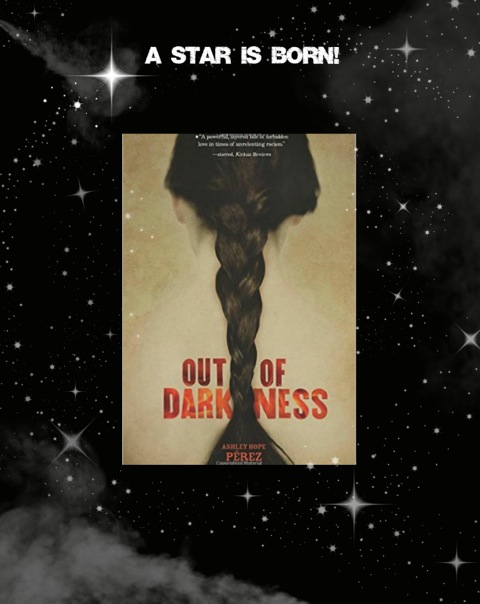
Book Review: Out of Darkness by Ashley Hope Pérez

25256386

DESCRIPTION OF THE BOOK: “This is East Texas, and there’s lines. Lines you cross, lines you don’t cross. That clear?”

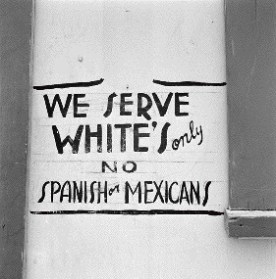
New London, Texas. 1937. Naomi Smith and Wash Fullerton know about the lines in East Texas as well as anyone. They know the signs that mark them. They know the people who enforce them. But there are some forces even the most determined color lines cannot resist. And sometimes all it takes is an explosion.

Ashley Hope Pérez takes the facts of the 1937 New London school explosion—the worst school disaster in American history—as a backdrop for a riveting novel about segregation, love, family, and the forces that destroy people.

OUR TWO CENTS: 

Cindy L. Rodriguez: As soon as I finished Ashley’s novel, I wanted to reread it as a writer. I want to pull it apart and study it because it’s that good. One of the things I appreciate most was the slow burn of the narrative. The novel opens with the explosion, and then flashes back to show how the characters’ live intersect before the event. The fuse lit in that opening scene coils through the narrative, gaining in intensity as the story leads back to the explosion and then its aftermath. The tension in Naomi’s home, school, and community is palpable throughout the story and increases slowly as we’re led into the heartbreaking climax.

Ashley masterfully balances the big picture and the smallest details. Her writing made me think of a photographer who could both go wide and capture a panoramic view and then zoom in for a close up and not lose anything in this process. She also beautifully balances the swoony magic of falling deeply in love for the first time and the absolutely brutal realities faced by African-Americans and Mexicans at this time in history. BRAVA!!

Lila Quintero Weaver: Ashley’s command of narrative is impressive! In Out of Darkness, she tells a story set in the American past and makes it feel of the moment. It holds all the markers of a historical novel, starting with the cataclysmic explosion of 1937 that looms with ominous eventuality over the characters we come to care about. Threaded with lively detail, the historical richness comes through in social customs, daily activities, and the speech patterns and cultural attitudes typical of 1930s east Texas. No easy feat. I detect a massive amount of research behind it all.

This devotion to authenticity translates into contemporary meaning through the story’s characters and the complicated problems they face. Naomi’s most serious problem is a predatory stepfather whose capacity for evil keeps her in a constant state of vigilance. There is no escape. She has no money or resources and she feels deep loyalty toward her two tender stepsiblings. Because Naomi is Mexican-American and lives in a part of Texas where Mexicans aren’t numerous, she has no community to fall back on and is looked upon by some white classmates as dirty and worthless. When she falls hard for Wash, a young black man who offers her a chance at true happiness, Naomi steps into the arena of forbidden love—one she must keep hidden from society and the stepfather who follows her every move with lecherous eyes. What a story!

Others agree with us, too! Out of Darkness received starred reviews from School Library Journal and Kirkus Reviews. Here are some quotes and links with more information about and praise for the novel:

“The beauty of Perez’s prose and her surefooted navigation through the dangerous landscape of the East Texas oil field in the late 1930s redeem the fact that anyone who dares read this agonizing star-crossed love story will end up in about six billion numb and tiny pieces. Absolutely stunning.” —Elizabeth Wein, author of Code Name Verity and Michael L. Printz Award Honoree

Teen Library Toolbox (an SLJ blog): http://www.teenlibrariantoolbox.com/2015/09/book-review-out-of-darkness-by-ashley-hope-perez/

Detailed review from The Midnight Garden (YA for adults): http://www.themidnightgarden.net/2015/08/outofdarkness.html

Q&A on NBChttp://www.nbcnews.com/news/latino/out-darkness-latina-author-n419026

Diversity in YA post: http://www.diversityinya.com/2015/08/words-that-wake-us/

Q&A on our site earlier this weekhttps://latinosinkidlit.wordpress.com/2015/09/09/qa-with-ashley-hope-perez-about-out-of-darkness/

And this post by Forever Young Adult nails the “casting call” for novel if it were made into a movie. Their picks of Christian Serratos as Naomi and Titus Makin Jr. as Wash were spot on! Nicely done, Forever Young Adult!


TEACHING TIPS: Although the New London, Texas, school explosion was the worst school disaster in our nation’s history, it’s one many (most) students have probably never learned about but should, as it has interesting implications concerning race and class worth exploring. Out of Darkness asks readers to think beyond the black and white dynamics of U.S. race issues by adding Latin@ children to the segregated schools system and portraying the daily concerns and realities of Mexicans who could or could not “pass” as white. Also, the violent consequences of marginalized romantic relationships isn’t often explored in curricula, but might be/should be considering the U.S. Supreme Court’s decision on gay marriage. A book like Out of Darkness could help teen readers appreciate the long history of struggle and violence experienced by people who have wanted to live and love freely.
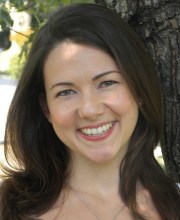
2012AuthorPhoto500pixelsABOUT THE AUTHORAshley Hope Pérez is a writer and teacher passionate about literature for readers of all ages—especially stories that speak to diverse Latino experiences. She is the author of three novels, What Can’t Wait (2011) and The Knife and the Butterfly (2012), and Out of Darkness (2015). A native of Texas, Ashley has since followed wherever writing and teaching lead her. She completed a PhD in comparative literature from Indiana University and enjoys teaching everything from Spanish language and Latin American literature to the occasional course on vampires in literature. She can also be found on Twitter and Facebook.

FOR MORE INFORMATION about Out of Darkness, check your local public library, your local bookstore or IndieBound. Also, check out GoodreadsAmazon, and Barnes & Noble.


Q&A with Ashley Hope Pérez about OUT OF DARKNESS

A Star is Born

We’re so thrilled to begin our third year online with a celebration of Out of Darkness by our amiga and co-blogger, Ashley Hope Pérez! Her third novel, which released September 1, is historical fiction, with a deadly school explosion in East Texas in 1937 as its central event. Using multiple points of view, Ashley develops a cast of complex characters who confront brutal racism and violence in addition to the beauty of first love. Amanda MacGregor of Teen Librarian Toolbox said, “Pérez’s story is nothing short of brilliant”, and we wholeheartedly agree! In fact, we think it’s one of the best 2015 releases! If it’s not on your to be read list, it should be. Click here to read Ashley’s post about her work on this novel, and for more insight, see our Q&A with her below.

Ashley, in the last two years, you finished your doctoral dissertation, changed jobs and geographical locations, and gave birth to a second child. How did you manage to write such an ambitious novel with so much else going on in your life?

When you put it like that, it does sound pretty outrageous! The short answer is that, when our first son was one, we moved to Paris for a year. I taught a ton of university English classes, ate yards and yards of bread, and worked on the first draft of the novel. I gave myself that year off from academic research. When we got back, I used the novel as a daily carrot to motivate my academic writing: if I got my words on the dissertation done, I got to take some time for the fiction.

You don’t shy away from controversial territory! This story contains sexual abuse, incest, brutal racism and frank sexuality. Talk about shaping these elements within the boundaries of young-adult fiction.

Wait–there are boundaries to young adult fiction? No one told me!! Really, though, I shouldn’t be glib. It’s just that Andrew Karre (my editor for Out of Darkness as well as for The Knife and the Butterfly and What Can’t Wait) has always seemed more interested in pushing or crossing boundaries than in upholding them. He’s probably one of very few YA editors who sends emails that say things like, “could the sexual details in this scene be a little more explicit, not so coy?” Speaking more broadly, I’ve found it useful to give myself permission to cross even my own boundaries if I felt like doing so would help me get a scene closer to where I wanted it to be. As Andrew puts it, it’s easier to go too far and then scale things back than to strike the right note by trying to tiptoe forward.

You can tell that the frank depictions of consensual sexual activity is where I feel myself most challenged, but the racism and abuse that are part of the story in Out of Darkness are probably what’s harder for readers to contend with. The reality of racism in the world of 1937 East Texas didn’t seem like something I could—or should—varnish in any way. And sexual predation, now as in the past, flourishes in response to the social and economic vulnerability of potential victims. My main character, Naomi, is extremely vulnerable in both of these areas because of her ethnicity and precarious situation in the household where she lives. Being beautiful only puts her at greater risk.

WHITESonlyWhat went into your decision to use multiple points of view?
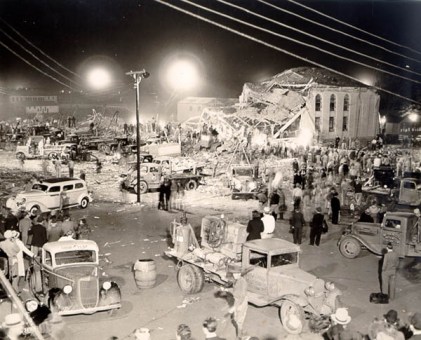
I was thinking about angles on the story and contrasts from the time I began feeling my way into the historical material for Out of Darkness. Part of what attracted me to the story was my curiosity—almost entirely unsatisfied by historical sources—about how the African American community experienced the explosion of the (white) New London school. The tensions and interplay between characters’ visions of the world seemed integral to the telling of this particular story. This was especially true since I wanted to recenter the narrative on experiences and perspectives that have been, at best, marginal in mainstream history.

I think readers needed to see the world through a range of characters’ eyes in Out of Darkness to grasp how dramatically different our experiences can be even when we are living in the same community. This understanding is not just a source of interest vis-à-vis the past; it can help contemporary readers reckon with the reality of inequity now. For example, it makes possible reflection on dramatic contrasts in schooling experiences or interactions with police for people of different backgrounds.

The racial complexity in this story is fascinating. As a brown-skinned person, Naomi falls between racial identities and finds doors closing in both the white and black communities. Was New London a mostly white settlement in that era? Did your research turn up instances of Mexicans caught between, as Naomi was?

 Prior to the East Texas oil boom, New London was a small agrarian community with  deeply segregated black and white communities. The discovery of oil meant the influx of many outsiders, both those who were working in oil and those who were simply attracted to the possibilities of a more prosperous community. Even though African Americans were mostly excluded from oilfield work (digging ditches was an exception), newcomers also arrived in search of jobs as chauffeurs, maids, busboys, line cooks, and craftsmen. I could not confirm the presence of a Mexican American like Naomi. Although I strongly suspect that a little girl named Juanita Herron was Hispanic, it’s impossible to know for sure. Still, I was satisfied that it was at least plausible for light-skinned children like the twins to slip into the school in much the way that families in Texas with American Indian backgrounds did. For example, the Drinkwater family in New London probably had Cherokee heritage, and their children attended the white school.

newlondonexplosionNIGHT

What was it about this particular event in history that made you want to dive in and create this narrative?

The New London explosion happened close to home (about 20 minutes from where I grew up), but I knew almost nothing about it and only rarely heard it mentioned. When I started, I didn’t know where the explosion would be in the timeline of the novel, but I knew that I wanted to incorporate it. The more I explored, the clearer it seemed to me that my way “into” the story would be different from the approach taken by historians, although historical detail is of course very important to the world of Out of Darkness. I wanted to think about what the explosion meant for the victims and their families, but I was even more interested in following its repercussions outward.

What becomes possible in a community that has been shattered in this way? What forms of brokenness in the community beforehand might have been overshadowed by the deaths of almost 300 children? For example, I wanted to explore the quieter, but no less terrible, effects of segregation. After all, black children were spared from the explosion precisely because they had been excluded from the opportunities at the white New London school, which was billed in newspapers as “the richest rural school in the country.”

And, as is usually the case, I began imagining particular characters. In the case of Out of Darkness, Wash and Naomi came first, then the twins, then their stepfather Henry. Once I had Wash and Naomi, I had to find a space for them to be together (a special tree in the woods), and that’s how the Sabine River and the East Texas landscape became important to the story. I loved writing about the natural spaces of my childhood. Sometimes describing that physical beauty was a bit of a reprieve from the harshness of my characters’ circumstances. And I think I even managed to fall a bit in love with Wash myself.


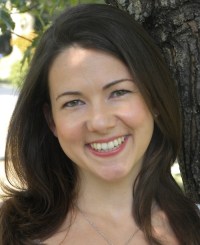
2012AuthorPhoto500pixelsAshley Hope Pérez is a writer and teacher passionate about literature for readers of all ages—especially stories that speak to diverse Latino experiences. She is the author of three novels, What Can’t Wait (2011) and The Knife and the Butterfly (2012), and Out of Darkness (2015). A native of Texas, Ashley has since followed wherever writing and teaching lead her. She completed a PhD in comparative literature from Indiana University and enjoys teaching everything from Spanish language and Latin American literature to the occasional course on vampires in literature. She can also be found on Twitter and Facebook.


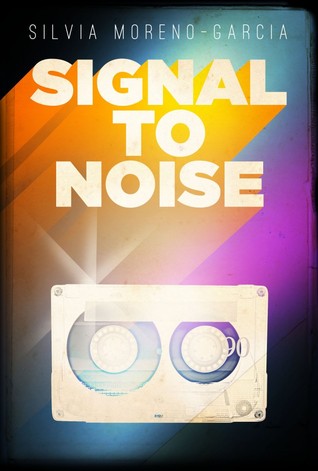
Book Review: Signal to Noise by Sylvia Moreno-Garcia


22609306By Eileen Fontenot

DESCRIPTION FROM THE PUBLISHER A literary fantasy about love, music and sorcery, set against the background of Mexico City.

Mexico City, 1988: Long before iTunes or MP3s, you said “I love you” with a mixtape. Meche, awkward and fifteen, has two equally unhip friends — Sebastian and Daniela — and a whole lot of vinyl records to keep her company. When she discovers how to cast spells using music, the future looks brighter for the trio. With help from this newfound magic, the three friends will piece together their broken families, change their status as non-entities, and maybe even find love…

Mexico City, 2009: Two decades after abandoning the metropolis, Meche returns for her estranged father’s funeral. It’s hard enough to cope with her family, but then she runs into Sebastian, and it revives memories from her childhood she thought she buried a long time ago. What really happened back then? What precipitated the bitter falling out with her father? And, is there any magic left?

MY TWO CENTS: This is an intimate tale that, while telling us both the story of teenage Meche and how she has grown up – and not – in the intervening 20 years, has its foundations in a pure coming-of-age romance.

Teens today should be able to relate to 15-year-old Meche, who is equal parts charismatic and surly. Growing up in Mexico City in the 1980s with an alcoholic father and an overbearing mother, she protects herself from the indignities of teenagehood in the earphones of her Walkman. (For those born after the 1980s, Walkmans are the precursors to our wonderful digital devices that can sync up with iTunes.) One day, she discovers that the power of her records can make magic–literal magic, just like her grandma, Mama Dolores says exists.

She convinces her best pals, Sebastian, a literature-loving pseudo-punk, and Daniela, who dresses all in pink and still has a soft spot for her Barbie collection, to help her use magic to meddle in romantic matters and take revenge on those who wrong her and her friends. Classic rock beloved by her father and artists like Miguel Bose and Duncan Dhu spur on her magic, which becomes dangerous as she gets deeper and deeper. Until the bonds between her and those closest to her are stretched to the utmost limit.

We hop back and forth in time from the ‘80s to 2009, when Meche, a successful professional living abroad, returns to Mexico City for her father’s funeral. We find out that they’ve been estranged, which is a surprise, since we know how much Meche’s father (through passages in his book in his point of view) adored her. Much as she did as a teen, adult Meche feels out of place in her old neighborhood. Will she find a place for her in her old neighborhood or is the magic gone forever? Sebastian may have something to say about that.

TEACHING TIPS: Much like the books that have won Alex Awards, Signal to Noise has appeal for both teens and adults. The universal themes of alienation and parental discord are emotions that anyone of any age can relate to. Modern teens may find themselves fascinated by the description of life in Mexico City nearly 30 years ago and discover it’s not so different from their lives today. Teens in local book clubs could compare and contrast how they think teens in the ‘80s would have communicated with their friends (with no fancy technology, horror!) or completed homework assignments (studying honest-to-God paper books at the library, anyone?). A fun craft that librarians could work into a book club discussion is decorating T-shirts with neon puffy paint or stylishly shredding an old pair of jeans. I know of several people who still have records (and one public library as well), so perhaps an old-fashioned listening party is in order?

Book club facilitators could also prompt teens to imagine what their lives will be like in 20+ years. What sort of technology may we see in 2035? What sort of social progress may we have made, if you’d like a deeper discussion? What sort of things have their parents seen happen in the past few decades that seems like no-brainers to youth of today. (Gay marriage and women’s rights come to mind. However, groups may want to explore how much advancement we’ve made regarding racial equality in light of the recent Charleston shooting and the events of Baltimore and Ferguson.)

S_Moreno_20150516_0492_print-1020x1530AUTHOR (DESCRIPTION FROM HER WEBSITE): Mexican by birth, Canadian by inclination. Silvia Moreno-Garcia‘s debut novel, Signal to Noise, about music, magic and Mexico City, was released in 2015 by Solaris. Silvia’s first collection, This Strange Way of Dying, was released in 2013 and was a finalist for The Sunburst Award for Excellence in Canadian Literature of the Fantastic. Her stories have also been collected in Love & Other Poisons. She has co-edited the anthologies Sword & Mythos, Historical Lovecraft, Future Lovecraft, Candle in the Attic Window and Fungi. Dead North and Fractured are her solo anthologies. Silvia is the publisher of Innsmouth Free Press, a Canadian micro-publishing venture specializing in horror and dark speculative fiction.


FOR MORE INFORMATION ABOUT Signal to Noise visit your local public library, your local bookstore or IndieBound. Also, check out GoodreadsAmazon, and Barnes & Noble.


Eileenfontenot headshot Fontenot is a recent graduate of Simmons College Graduate School of Library and Information Science in Boston. She works at a public library and is interested in community service and working toward social justice. A sci-fi/fantasy fan, Eileen was formerly a newspaper writer and editor.


Book Review: Shadowshaper by Daniel José Older

22295304By Cecilia Cackley

DESCRIPTION: (from Goodreads): Sierra Santiago was looking forward to a fun summer of making art, hanging out with her friends, and skating around Brooklyn. But then a weird zombie guy crashes the first party of the season. Sierra’s near-comatose abuelo begins to say “No importa” over and over. And when the graffiti murals in Bed-Stuy start to weep…. Well, something stranger than the usual New York mayhem is going on.

Sierra soon discovers a supernatural order called the Shadowshapers, who connect with spirits via paintings, music, and stories. Her grandfather once shared the order’s secrets with an anthropologist, Dr. Jonathan Wick, who turned the Caribbean magic to his own foul ends. Now Wick wants to become the ultimate Shadowshaper by killing all the others, one by one. With the help of her friends and the hot graffiti artist Robbie, Sierra must dodge Wick’s supernatural creations, harness her own Shadowshaping abilities, and save her family’s past, present, and future. Shadowshaper releases June 30, 2015.

MY TWO CENTS: Sierra Santiago is one of my new favorite heroines. She makes plans and follows through, is clear-eyed about the shortcomings of people she loves and takes charge with attitude. As Sierra follows her grandfather’s direction to find Robbie and fix the murals in her neighborhood, more and more secrets keep coming to light and she discovers an entire spirit world that has been hidden to her, but to which she is strongly connected. Older weaves in many great discussion points among the action and supernatural fighting, including colorism, gender expectations, ethics (or lack thereof) in anthropology and handling difficult family members. The Brooklyn setting and Sierra’s group of friends add realism and humor to the story, making this fresh, exciting adventure a must read for YA fans.

TEACHING TIPS: There are many different ways this title could fit into the classroom. The themes of appropriation and anthropology would fit nicely into a history or sociology classroom. Librarians will want to recommend this to teens who love fantasy or adventure stories with urban settings. Art teachers could also add this title to a list of books involving murals and large scale public art projects, as well as discuss the tradition of honoring the dead in art or have students design their own murals.

ABOUT THE AUTHOR: Daniel José Older is the author of the Bone Street Rumba urban fantasy series, which began in January 2015 with Half-Resurrection Blues from Penguin’s Roc imprint. Publishers Weekly hailed him as a “rising star of the genre” after the publication of his debut ghost noir collection, Salsa Nocturna. He co-edited the anthology Long Hidden: Speculative Fiction from the Margins of History and guest edited the music issue of Crossed Genres. His short stories and essays have appeared in Tor.com, Salon, BuzzFeed, the New Haven Review, PANK, Apex and Strange Horizons and the anthologies Subversion and Mothership: Tales Of Afrofuturism And Beyond. Daniel’s band Ghost Star gigs regularly around New York and he facilitates workshops on storytelling from an anti-oppressive power analysis. You can find his thoughts on writing, read dispatches from his decade-long career as a NYC paramedic and hear his music at ghoststar.net/ and @djolder on twitter.

RESOURCES:

Interview from Source Latino: http://thesource.com/2015/06/08/source-latino-interview-with-shadowshaper-author-daniel-jose-older/

Review from Debbie Reese about overlap with Indigenous history: http://americanindiansinchildrensliterature.blogspot.com/2015/04/daniel-jose-olders-shadowshaper.html

Interview from School Library Journal: http://www.slj.com/2015/06/interviews/qa-urban-fantasy-counter-narrative-daniel-jose-older-on-shadowshaper/#_

Interview from The Rumpus: http://therumpus.net/2015/05/the-rumpus-interview-with-daniel-jose-older/

FOR MORE INFORMATION ABOUT Shadowshaper, visit your local library or bookstore. Also, check out WorldCat.orgIndieBound.orgGoodreadsAmazon, and Barnes & Noble.

Cackley_headshotCecilia Cackley is a performing artist and children’s bookseller based in Washington DC where she creates puppet theater for adults and teaches playwriting and creative drama to children. Her bilingual children’s plays have been produced by GALA Hispanic Theatre and her interests in bilingual education, literacy, and immigrant advocacy all tend to find their way into her theatrical work. You can find more of her work at www.witsendpuppets.com.

Book Review: Show and Prove by Sofia Quintero


23395349By Cecilia Cackley

DESCRIPTION: (from Goodreads):

The summer of 1983 was the summer hip-hop proved its staying power. The South Bronx is steeped in Reaganomics, war in the Middle East, and the twin epidemics of crack and AIDS, but Raymond “Smiles” King and Guillermo “Nike” Vega have more immediate concerns.

Smiles was supposed to be the assistant crew chief at his summer camp, but the director chose Cookie Camacho instead, kicking off a summer-long rivalry. Meanwhile, the aspiring b-boy Nike has set his wandering eye on Sara, the sweet yet sassy new camp counselor, as well as top prize at a breakdancing competition downtown. The two friends have been drifting apart ever since Smiles got a scholarship to a fancy private school, and this summer the air is heavy with postponed decisions that will finally be made.

Raw and poignant, this is a story of music, urban plight, and racial tension that’s as relevant today as it was in 1983.

MY TWO CENTS: You know when you read a book and the elements are familiar but still feel entirely new and fresh? That’s this book. There are so many different ways you can read it! It’s a summer book about camp trips and hanging out with friends and neighbors. It’s a relationship book about negotiating feelings and mistakes and tragedy. It’s a political book, examining identity and racism and bias in a way that never feels forced. It’s a slice of history, transporting the reader to a specific moment in the history of hip-hop and showing the importance of that music to teenagers of the time. This book will make you head straight for You Tube to listen to the songs that are mentioned and watch videos of breakdancing, I promise. Quintero doesn’t shy away from presenting her two narrators as stubborn and sometimes self-centered. But however much they screw up, you never stop rooting for them to fix their mistakes and follow their dreams. Show and Prove releases July 14, 2015.

TEACHING TIPS: There have been quite a few YA books set in the 80’s lately, so it would be fun to compare and see what world events and pop culture references show up in each one. Show and Prove also provides a great starting point for class discussions about racism, poverty and marginalized communities. This would be a fun literature complement to a music or arts class studying hip-hop as well.

Related image

ABOUT THE AUTHOR (from Amazon): After graduating from Columbia University with a BA in history-sociology and an MPA from its School of International and Public Affairs, Sofia Quintero began her first career as a policy analyst and advocate. She worked for various nonprofit organizations and government agencies including the Vera Institute of Justice, Hispanic AIDS Forum, and the New York City Independent Budget Office. After years of working on diverse policy issues, however, Sofia heeded her muse to pursue an entertainment career.

Determined to write edgy yet intelligent novels for women who love hip hop even when hip-hop fails to love them in return, Sofia wrote her debut novel Explicit Content under the pen name Black Artemis. Booklist said of her debut, “Fans of Sister Souljah’s The Coldest Winter Ever will find this debut novel just as tantalizing. . .” Since then Sofia has authored four more novels and almost twice as many short stories and novellas including her award-winning young adult debut Efrain’s Secret (Knopf 2010.)

She recently earned an MFA in writing and producing TV at the TV Writers Studio of Long Island University and contributed the children’s anthology What You Wish For, the proceeds of which go to build libraries for Darfuri children in Chad. Her journalistic writings have been published in Urban Latino, New York Post, Ms., Cosmopolitan for Latinas and El Diario/La Prensa.

As an educator, she is a writing mentor at Urban Word NYC, a teaching artist at the National Book Foundation’s reading program BookUpNYC and the co-publisher of the hip-hop feminist curriculum Conscious Women Rock the Page. Sofia was nominated for the Women’s Media Center Social Media Award in 2010.

RESOURCES: Pinterest page by the author: https://www.pinterest.com/blackartemis/show-and-prove-a-young-adult-novel-by-sofia-quinte/

I couldn’t find any other interviews or resources out right now. However, Sofia Quintero told me on Twitter that she’s working on a cultural dictionary app and a You Tube playlist of all the songs mentioned.

FOR MORE INFORMATION ABOUT Show and Prove visit your local library or bookstore. Also, check out WorldCat.orgIndieBound.orgGoodreadsAmazon, and Barnes & Noble.


Cackley_headshotCecilia Cackley is a performing artist and children’s bookseller based in Washington DC where she creates puppet theater for adults and teaches playwriting and creative drama to children. Her bilingual children’s plays have been produced by GALA Hispanic Theatre and her interests in bilingual education, literacy, and immigrant advocacy all tend to find their way into her theatrical work. You can find more of her work at www.witsendpuppets.com.

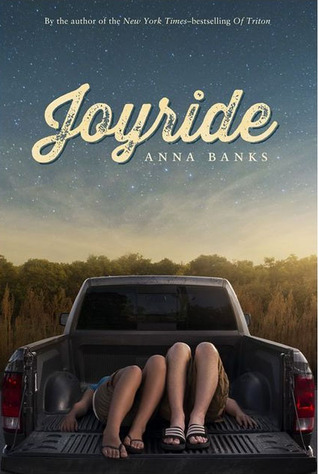
Book Review: Joyride by Anna Banks


22718685By Cindy L. Rodriguez

PUBLISHER’S DESCRIPTIONA popular guy and a shy girl with a secret become unlikely accomplices for midnight pranking, and are soon in over their heads—with the law and with each other—in this sparkling standalone from NYT-bestselling author Anna Banks.

It’s been years since Carly Vega’s parents were deported. She lives with her brother, studies hard, and works at a convenience store to contribute to getting her parents back from Mexico.

Arden Moss used to be the star quarterback at school. He dated popular blondes and had fun with his older sister, Amber. But now Amber’s dead, and Arden blames his father, the town sheriff who wouldn’t acknowledge Amber’s mental illness. Arden refuses to fulfill whatever his conservative father expects.

All Carly wants is to stay under the radar and do what her family expects. All Arden wants is to NOT do what his family expects. When their paths cross, they each realize they’ve been living according to others. Carly and Arden’s journey toward their true hearts—and one another—is funny, romantic, and sometimes harsh.

MY TWO CENTS: In Joyride, Anna Banks creates two easily likable, sympathetic characters who are struggling between wanting to have normal, fun teenage lives and dealing with serious family issues.

Carly Vega is a smart, hard working Mexican-American teen who juggles going to school and working, sometimes until the early morning hours at a convenient store, to help raise enough money to bring her deported, undocumented parents back to the U.S.

Arden is a popular former football star who battles with his violent father in the wake of his sister’s suicide, which has left his mother heavily medicated and despondent.

In the opening scene, Arden pretends to hold up his uncle, Mr. Shackelford, outside the convenient store in an attempt to get him to stop driving drunk. Carly, who is working when this happens, responds by pulling out the store owner’s shotgun and chasing the masked bandit (Arden) off. Arden knows then that Carly is the perfect candidate to be his pranking buddy, a position once held by his sister. Love blossoms as the two spend more time together doing funny, gross things around town that are risky because Arden’s father is the racist local sheriff responsible for deporting Carly’s parents.

Throughout the novel, Carly struggles with competing desires. She wants her family to be intact again and wants to do all she can to help raise the thousands of dollars needed to help them cross the border again. She also wants, however, to do what normal teen girls do, like hang out with her boyfriend and use her money to buy things like new clothes and a laptop computer.

Without giving too much away, I’ll say that this YA contemporary, which tackles serious issues and has heavy doses of romance and humor, also has a plot twist that adds a whole new exciting vibe to the story. Carly and Arden’s relationship is threatened and they end up in a dangerous situation involving law enforcement and the illegal smuggling operation that promises to bring her parents home.

Told in alternating points of view–Carly’s is first person and Arden’s is third–Anna Banks’s Joyride is a page-turner filled with interesting, complex characters who fall in love and find common ground despite economic, racial, and cultural differences.

TEACHING TIPS: Joyride could be an option when teaching about immigration. I’m sure students would have lots of questions about the issues brought up with this book around Carly’s family’s situation. Do people really pay someone to escort loved ones across the border? What are the risks? Is it really that expensive? What happens if they get caught again? How often are American born teens separated from parents who are deported? Reading this novel as a companion to non-fiction research on these issues could offer multiple perspectives and make Carly Vega seem even more “real,” in that her situation is a common one.

ABOUT THE AUTHOR (from her website): NYT Bestselling YA author of The Syrena Legacy series: OF POSEIDON (2012) OF TRITON (2013) OF NEPTUNE (2014). Repped by rockstar Lucy Carson of the Friedrich Agency. I live with my husband and daughter in the Florida Panhandle. I have a southern accent compared to New Yorkers, and I enjoy food cooked with real fat. I can’t walk in high heels, but I’m very good at holding still in them. If you put chocolate in front of me, you must not have wanted it in the first place.


FOR MORE INFORMATION ABOUT Joyride visit your local library or bookstore. Also, check out WorldCat.orgIndieBound.orgGoodreadsAmazon, and Barnes & Noble.

Also, check out the Q&A we did with Anna Banks earlier this week.