Listening Latinx: An author’s audiobook experience

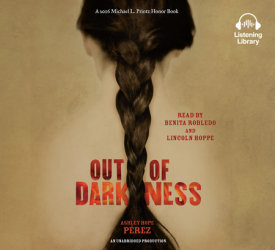
OutOfDarknessAudioCoverI have been listening to audiobooks for nearly three decades, so it was something of a dream come true to see Out of Darkness go into production shortly after it received a Printz Honor. Before production began, though, I found myself wondering if my strong opinions about narration, pronunciation, and the like would get in the way—or set me up for disappointment. What if the narrator’s voice didn’t match the texture or tone I’d imagined in writing?

I needn’t have worried. I loved how involved I got to be in the process with Listening Library. Executive producer Aaron Blank proved scrupulous in his attention to detail, from the pronunciation of my last name (yes, that accent mark means something, as I explain here) to the particulars of how to say “Cari” and “Beto,” the names of the twins in the novel. Yes, I might have sent him audio recordings of me pronouncing their names…

A few people have asked me if I wanted to narrate my own book. In general, I find that author-narrated audiobooks are rarely as effective as those narrated by actors. In particular, I have an aversion to the sound of my own voice on recordings, so that option wasn’t even on the table. (Although I would like brownie points for recording this brief introduction to Out of Darkness.)
WashAsJackie

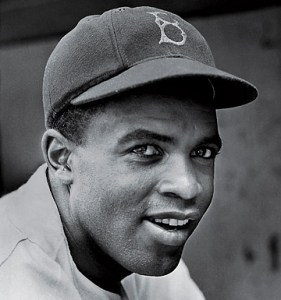
Robinson: my image of Wash

Aaron shared my sense that it was important to cast a Latinx narrator or a narrator with exceptional Spanish and cultural competency. We also agreed that it would be important to find talent capable of handling the wide range of voices, including Henry’s oil field diction and Wash’s African American Vernacular. It’s possible that I sent Aaron YouTube videos to illustrate the flattening of vowels common among East Texans as well as examples of intonation for Southern accents and African American Vernacular that captured the particularity of speech without any whiff of caricature. And (*secret revealed*) since I always pictured Wash as a young Jackie Robinson, I had to send some footage of a film about Robinson, too.

I listened to many wonderful auditions, but Benita Robledo’s beautifully modulated voice stood out immediately. She settled quickly into the world of the novel, managing not only to capture the texture of Naomi’s experience but also the nuances of other point-of-view characters as well.

BenitaRobledo_ItsAWrap

Benita’s voice is as beautiful as she is. Sometimes you can feel that smile in the narration.

It’s a tremendous boon that, as director Tony Hudz noted, Benita gets “all the pronunciations, pitch- and letter-perfect.” But what Benita brings is more than that. Also a Texan, she grew up near Brownsville and (again quoting Tony) “knows this turf” emotionally and psychologically. In my listening, I hear the spark of connection, sincere animation of my words that comes in part from recognizing the silences that they seek to counter. Benita shared this about the experience of bringing Out of Darkness to sound:

In the still hush of the recording studio, with only my voice and my director to guide me, I would lose myself in Ashley Hope Pérez’s words. Sometimes I’d get so involved in the story, I wouldn’t realize a whole morning had passed and it was time for a break. She has an incredible talent for creating beauty even in the ugliest of times. For me, getting to live and breathe Out of Darkness, was nothing short of magic.

The admiration is mutual. Ditto regarding my feelings for Lincoln Hoppe, who masterfully renders the passages in the voice of “The Gang,” which captures the collective voice of the senior class. The Gang is a kind of ugly distillation of the thoughts circulating and is often thick with unexamined racism. Because of the character of these sections, and because it is the only first-person narration in the novel, we felt it should have a different narrator. (Benita does all the other chapters.) Here’s what Tony had to say about Lincoln’s role:

Lincoln_Hoppe_NotEvil

Lincoln Hoppe

The first thing you have to know about Lincoln Hoppe is that he’s a 6’4″ puppy dog. With glasses. One of the sweetest, gentlest people I’ve ever met. It is thus a tribute and a testament to his professionalism and skill as a reader when I say that he captured full well the ugliness and evil of The Gang. God, he did a good, awful job. And I think the slightly husky/sometimes almost raw texture of his voice will play off beautifully against Benita’s relative sweetness and lightness.

And it does, friends, it does.

Benita and Lincoln’s voices animate the narrative world of my book. Benita captures the beauty and audacity of hope in the face of prejudice, and Lincoln distills the surprising lyricism of some of the darkest threads of human consciousness that I’ve ever tried to write.

A caveat: it’s hard to listen to the prologue of Out of Darkness. This is through no fault of Benita’s. The prologue is difficult to read on the page, too; I wanted it to be that way. As one reviewer noted, the prologue acts as “a litmus test to see if you can emotionally handle this haunting novel.” The prologue figures the tremendous loss of the New London school explosion, which left one in four children dead, and the terrible possibilities it unleashes in the imagined world of my novel. Hearing this part read aloud ups the ante as Benita’s voice evokes the human stakes of tragedy.
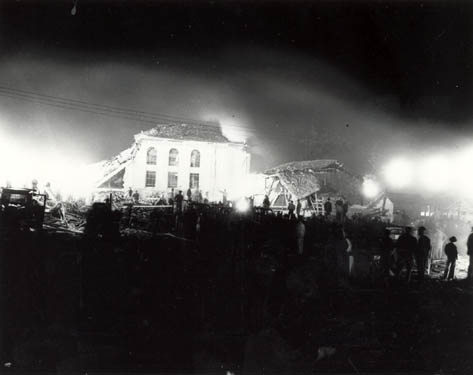
NLSchoolExplosionatNight

Some of the lights that inspired the opening of the prologue.

It’s a difficult beginning for a difficult book. But it is a kind of difficulty that, I believe, we need to reckon with. It’s the kind of difficulty that helps us face, honestly, all that we are capable of in moments of great loss, the beauty and the horror of our humanity.

Want to listen to Out of Darkness on audio? It releases April 26. Pre-order it from Listening Library or Audible. You can also request it on CD at your local library or get a digital check-out through Overdrive.com.

And, PS, here’s the scoop on Out of Darkness, copy courtesy of the brilliant folks at Carolrhoda Lab:

“This is East Texas, and there’s lines. Lines you cross, lines you don’t cross. That clear?”

New London, Texas. 1937. Naomi Vargas and Wash Fuller know about the lines in East Texas as well as anyone. They know the signs that mark them. They know the people who enforce them. But sometimes the attraction between two people is so powerful it breaks through even the most entrenched color lines. And the consequences can be explosive.

Ashley Hope Pérez takes the facts of the 1937 New London school explosion the worst school disaster in American history as a backdrop for a riveting novel about segregation, love, family, and the forces that destroy people.


Author Samantha Mabry on her Debut Novel, a Student’s Shrug, and Straddling Two Cultures


By Samantha Mabry

I teach English at a community college in downtown Dallas. Currently, some of my students are reading a book entitled Midnight in Mexico: A Reporter’s Journey Through a Country’s Descent Into Darkness by Alfredo Corchado. In his book, Corchado, who was born in the Mexican state of Durango and raised in California and El Paso, Texas, writes mostly about his own reporting on the drug trade and corruption in Mexico, but there’s also an interesting, underlying theme he explores regarding identity: what it means to straddle two worlds, to have a foot on each side of the border, but to never feel fully rooted, truly at home in either place. As he puts it, he can sometimes feel too American when he’s in Mexico and too Mexican when he’s in America.

Among my students, discussions have taken place regarding what it means to be a part of two cultures. When I ask if they’re able to relate to Corchado, many nod their heads, and one girl said, “Absolutely.” She then elaborated: “At home, I’m Mexican. At school, I’m American.” Then she shrugged. Like, obviously. She made it seem like it was pretty easy to understand what the different expectations are in different spheres of her life and that it took little effort and not a whole lot of thought to navigate those spheres.

I keep thinking about this student –in particular, that shrug. Like, what’s in that shrug? What does that shrug mean? I want there to be something deep in that shrug because I am critical by nature and like for things like shrugs to mean something, to be symbolic, to say something about what it means to be a Mexican-American young woman living in Texas right this minute. I keep thinking about all the comments I could have followed up with: Okay, so you’re Mexican in one place and American in another. Is there an identity that feels more true to you? Are you more Mexican than American? Would you say you are Mexican-American? Would you call yourself Chicana? Latina? Hispanic? Do these words, these markers of identity, matter to you, or am I just really wanting them to matter??

My mother is Mexican-American, though I think she would say she’s just American. Or Hispanic. My dad’s mother was from Puerto Rico, and his dad was white. I’m light olive-skinned with brown hair and brown eyes, but my last name, Mabry, is European. I first heard Spanish at my grandmother’s house but learned it properly in a classroom. I call myself mestiza because that’s what really rings true for me. I think that identity matters, and I think that –particularly for those from mixed backgrounds or with migrations or diaspora in their histories –identity can be fluid. I think that many Latinx people, like Alfredo Corchado, are standing with one foot here and one foot there. Some of them may be standing with an imbalance: one foot rooted in one place more heavily than the other. Some may feel as if they have many limbs, all which are reaching across geography and back into time. Some may feel, however, like they’re not straddling at all. It is not my place, of course, to tell another Latinx person how to be or how to feel.

In my book, A Fierce and Subtle Poison, both of the main characters are of mixed backgrounds, racially and culturally. They are a mix of white and non-white. Lucas, the narrator looks white, has a white kid’s name, but there’s something else there, tugging in his blood. Isabel is the product of an English father and native Puerto Rican mother, and sides with her mother when it comes to her identity. I specifically tried to make their histories and their identities complex. They are influenced –haunted and inspired, inspired or haunted –by their past. They are trying to fix centuries-old errors and clear new paths.

So…after all that, we’re back to the shrug. Is it simple, or is it complex? Is it a small gesture that signifies nothing, or something brimming with meaning? Maybe it’s simple: with these people, I am this one thing; with those people, I am this other thing. It’s easy to figure out. Simple, simple. Or maybe it’s complex: a gesture so full that words pale. It’s obvious that I want it to be the latter, but who cares what I want? I wrote a book about complex identities, one that I hoped explored nuance, but of course that’s not the only way to write about identity.  Someone –maybe me, maybe not –needs to write the story about the Mexican-American girl who is Mexican at home and American everywhere else. And maybe she is wildly complicated but not because of that, but because of all the other things that go on in a young woman’s life.

FOR MORE INFORMATION about A Fierce and Subtle Poison, which releases April 12, 2016 with Algonquin Young Readers, check your local public library, your local bookstore or IndieBound. Also, check out GoodreadsAmazon, and Barnes & Noble.


Samanth Mabry author photo

Samantha Mabry grew up in Texas playing bass guitar along to vinyl records, writing fan letters to rock stars, and reading big, big books, and credits her tendency toward magical thinking to her Grandmother Garcia, who would wash money in the kitchen sink to rinse off any bad spirits. She teaches writing and Latino literature at a community college in Dallas, Texas, where she lives with her husband, a historian, and her pets, including a cat named Mouse. A Fierce and Subtle Poison is her first novel.

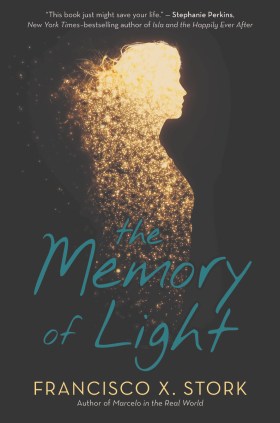
Book Review: The Memory of Light by Francisco X. Stork

image

Reviewed by Lila Quintero Weaver

This book talk is based on an uncorrected advance copy.

FROM THE PUBLISHER: School: failure. Romance: failure. Family: failure. Suicide: failure. There’s only one thing left to try: living.

When Vicky Cruz wakes up in the Lakeview Hospital psychiatric ward, she knows one thing: She can’t even commit suicide right. But there she meets Mona, the live wire; Gabriel, the saint; E.M., always angry; and Dr. Desai, a quiet force. With stories and honesty, kindness and hard work, they push her to reconsider her life before Lakeview, and offer her acceptance she’s never had.

Yet Vicky’s newfound peace is as fragile as the roses that grow around the hospital. And when a crisis forces the group to split up—sending her back to the life that drove her to suicide—Vicky must find her own courage and strength. She may not have any. She doesn’t know.

Inspired in part by the author’s own experiences with depression, The Memory of Light is the rare young adult novel that focuses not on the events leading up to a suicide attempt, but the recovery from one—about living when life doesn’t seem worth it, and how we go on anyway.

MY TWO CENTS: Another fifteen minutes and the pills would’ve done their work, extinguishing all the bright, unrealized promise of 16-year-old Vicky Cruz’s life. Luckily, someone finds her in time. When she wakes up in the psychiatric unit of Lakeview Hospital, in Austin, Texas, her stomach has been pumped, and the first voice she hears belongs to Dr. Desai, a therapist whose guidance and fierce advocacy serve to pull Vicky away from the brink.

At Lakeview, Dr. Desai oversees the treatment of teens hospitalized with serious mental-health issues. Vicky becomes intimately acquainted with three fellow patients, who play integral roles in her healing journey and offer compelling stories of their own:

E.M. came to Lakeview after one of his violent outbursts resulted in court-mandated treatment.

Mona wrestles with bipolar disorder, which was recently compounded by trauma at home. Child Protective Services removed her little sister from the custody of their mom and stepdad.

Gabriel is a young mystic who initially withholds the exact nature of his mental illness from the others in the group. In Vicky’s eyes, he’s a tender soul who moves in and out of functionality.

Lakeview is the primary setting for much of the novel, but some scenes unfold during off-site excursions, including a stay at Dr. Desai’s working ranch, where the patients perform minor farm chores, and go on a wild-river adventure that nearly leads to tragedy but ultimately opens new avenues for transformation. And there are more wild rides as two of the characters plunge into distressing setbacks. Despite her own shaky condition, Vicky responds to others with empathy, leading her to find greater definition in her own life’s purpose.

Vicky’s road to recovery is far from smooth. Shortly after surviving “the deed,” as she calls her suicide attempt, she’s hard pressed to pinpoint what’s so unbearable about her life. But she’s certain she’ll try to escape it again. Strong clues lie in the hollowness of her family relationships. Her mother died of cancer six years before, and less than one year later, her father remarried. Throughout her mother’s illness and even after her passing, Vicky’s father and her older sister, Becca, detached themselves from the trauma. By contrast, Vicky was the sensitive and attentive child who felt her mother’s absence keenly. Afterwards, it was Juanita, the family housekeeper, who served as Vicky’s truest human connection. Unfortunately, Juanita’s arthritis is too disabling for her to continue working and she plans to return to her native Mexico.

Once Vicky leaves the chilly environment of home and enters the warmer climate of the treatment unit, she begins to entertain the idea that life may be worth living. After consulting with an outside therapist, Vicky’s father and stepmother try to convince her to return home and resume normal activities, including school—the general idea being to jump back on the horse after a fall. Vicky’s instinct tells her this won’t work. For one thing, “our house is not a good place to figure things out,” she realizes. Bit by bit, through flashbacks and in conversations in Dr. Desai’s office and with her new friends, we see that Vicky’s family may be well off, but it isn’t well. For example, whether born obtuse or blinded by unresolved grief, Mr. Cruz uses words as bludgeons, and for Vicky, these words and the attitudes behind them strip her of the sense that she is lovable.

Francisco Stork brilliantly depicts the intangibles of interior life, an ability that he ably demonstrated in his 2009 YA novel, Marcelo in the Real World. In The Memory of Light, Stork summons these powers to communicate the nature of depression. Here’s how Vicky tries to explain its mysterious operations to herself: “I imagine a whole bunch of little minerlike elves who live and work inside the dark tunnels of my brain. They wear flashlight hats of different colors and push clanging carts full of words on steel rails from one corner of my mind to another.”

Vicky experiences small, but important epiphanies during her hospital stay. In a particularly shining scene, Dr. Desai shares approaches to unlocking the vicious circle of obsessive thoughts. One of the nuggets from this conversation is a fable from Dr. Desai’s native India that illuminates the self-defeating nature of holding on to such thoughts.

All of the teen characters and many of the adults in this novel are Latin@s, representing a full range of personalities, social and economic classes, and occupations. The Cruz family belongs to the wealthy sector of Austin. Vicky, who attends an exclusive private school, is markedly aware of her privileged status—and of the fact that it doesn’t shield her from mental illness. Her exposure to the less-privileged lives of her new friends alerts her to her father’s snobbish attitude toward working-class Latin@s. She sees the hypocrisy, too. His own grandfather arrived in the United States from Mexico without a penny.

The Memory of Light is a compelling view of teens in crisis. It points the way toward life beyond depression, yet steers clear of romanticizing serious mental illness. Although it’s primarily Vicky Cruz’s story of dealing with suicidal depression and the agony of living in a family broken by loss and dysfunction, the intertwining narratives of the other young characters charge the novel with extra vitality and shed light on the many faces of mental illness.

TEACHING RESOURCES: Don’t miss Cindy L. Rodriguez’s timely reflections on how depression is viewed in the Latino community. Her article includes a list of YA novels featuring Latin@ characters wrestling with mental illness.

On his website, Francisco Stork features two blog posts related to the topic of depression and the writing of The Memory of Light. See them here and here.

In this article, a school psychologist offers tips for teachers on classroom strategies to help depressed students.

francisco_storkABOUT THE AUTHOR: Francisco X. Stork is a Mexican-born author of six novels for young people. Among these is the multiple award-winner Marcelo in the Real World. A graduate of Harvard University and Columbia Law School, he spent much of his law career working in the field of affordable housing. Learn more about Francisco and his books at his official author site.


IMG_1291Lila Quintero Weaver is the author-illustrator of Darkroom: A Memoir in Black & White. She was born in Buenos Aires, Argentina. Darkroom recounts her family’s immigrant experience in small-town Alabama during the tumultuous 1960s. It is her first major publication. Lila is a graduate of the University of Alabama. She and her husband, Paul, are the parents of three grown children. She can also be found on her own websiteFacebookTwitter and Goodreads.
Talking Diversity & Book Awards

Last week I had the privilege of hosting a conversation on the intersections between diversity and the selection of books for awards and best-of lists. I got to pick the brains of Jason Low, Debbie Reese, Marilisa Jiménez García, Pat Enciso, and Daniel Kraus. Now you can enjoy their insights, which have just been published in this post for the Booklist Reader.

Our conversation brings to the fore a number of issues that impact both what books get considered for special recognition and how discussions of those books proceed. As the participants show, we’re finally deconstructing the notion that “diversity” and “quality” are in competition. Instead, how diversity shapes our understanding of what “quality” is.

Nowhere is this work more important than in the meeting room where book awards and other distinctions are deliberated. And, as we discuss, how books are reviewed also shapes which books get noticed. In our conversation, Jason Low points out the importance of “diverse reviewers… who can serve as a cultural sounding board when issues like nuance, perspective, and authenticity issues are in question.”  School Library Journal has been actively educating its reviewers and recruiting reviewers from diverse backgrounds. Booklist is working on this, too. In fact, just as we were wrapping up our conversation last week, Booklist issued this call:

Booklist is actively seeking book reviewers of diverse background, whether that background is cultural, racial, gender, or another. We are also looking for reviewers fluent in Spanish. Candidates with critical acumen and knowledge of a public-library audience should email writing samples (preferably published work) and reviewing preferences (fiction, nonfiction, adult, YA, picture books, graphic novels, audio, etc.) to one of the following:

Daniel Kraus, Books for Youth (dkraus@ala.org)

Donna Seaman, Adult Books (dseaman@ala.org)

Sarah Hunter, Graphic Novels (shunter@ala.org)

Joyce Saricks, Audio Books (jsaricks@ala.org)

If you fit the Booklist criteria, we encourage you to get your review on! At Latin@s in Kid Lit, we put excellent books on readers’ radars and highlight issues that relate to writing, publishing, promoting, and recognizing kid lit by, for, and about Latinas and Latinos. We’re eager to have more allies!

Reviewing not your thing? You can still draw others into the conversation around diversity in publishing and literature. Do you have a colleague who may not be plugged into these issues? Invite them to check out the resources we offer here at LKL. The Booklist Reader conversation includes a list of excellent websites that offer vetted book recommendations.

I hope the Booklist Reader piece prompts you to reconsider what diversity has to do with excellence as well as how you can advance diversity in your own reading and work. As Marilisa Jiménez García puts it in our conversation, “We need more than books. We need to cultivate a system of children’s and YA literature— reviewers, librarians, educators, professors, publishers—that holistically integrates people of color. We need bridges.”

So, how about it? What bridges can we build today?

#LargeFears Chat: Where are the Afro-Latinxs in American History?


On Tuesday, Edith Campbell, Sujei Lugo, and Guinevere and Libertad Thomas, the sisters behind the Twinja Book Reviews, hosted the most recent #LargeFears Twitter chat. This month’s theme was: “Where are the Afro-Latinxs in American History?” Special guests included Torrey Maldonado, author of Secret Saturdays, Sofia Quintero, author of Show and Prove and Efrain’s Secret, and Robert Liu-Trujillo, a visual artist. The #LargeFears chats started as a continuation of support of diverse books after the publication of Large Fears, a self-published title by Myles E. Johnson and Kendrick Daye, funded through Kickstarter, about a queer black boy facing his greatest fears.

Below is the link to the Storify for the chat and covers of books by/about Afro-Latinxs in honor of Black History Month. Although, these titles should be supported every month of the year, and we vow to do our part by reading and reviewing more of them here.

https://storify.com/Dos_Twinjas/where-are-the-afro-latinx-in-american-history


         AfroLatinx1 AfroLatinx4 AfroLatinx8 AfroLatinx11 AfroLatinx23AfroLatinx13 AfroLatinx14 AfroLatinx15 AfroLatinx16 AfroLatinx17 AfroLatinx18 AfroLatinx19 AfroLatinx20 AfroLatinx21 AfroLatinx22

Book Review: This Is Where It Ends by Marieke Nijkamp

24529123

Reviewed by Cindy L. Rodriguez

DESCRIPTION OF THE BOOK:

10:00 a.m.
The principal of Opportunity, Alabama’s high school finishes her speech, welcoming the entire student body to a new semester and encouraging them to excel and achieve.

10:02 a.m.
The students get up to leave the auditorium for their next class.

10:03
The auditorium doors won’t open.

10:05
Someone starts shooting.

Told over the span of 54 harrowing minutes from four different perspectives, terror reigns as one student’s calculated revenge turns into the ultimate game of survival.

MY TWO CENTS: As a parent and teacher, both at a middle school and community college, the possibility of an on-campus tragedy is my worst nightmare that proves to be a school’s horrific reality on a too-regular basis. Author Marieke Nijkamp’s debut novel chronicles a heart-wrenching 54 minutes of terror by dropout Tyler Browne, who returns to Opportunity High School the first day of a new semester to take revenge on the classmates he blames for his feelings of loss and abandonment. The story is told from four first-person perspectives: Claire, Tomás, Sylvia, and Autumn.

Claire, Tyler’s ex-girlfriend, is outside the school when the shooting begins. She’s a track star and JROTC member who runs for help with her best friend, Chris. Claire’s brother, Matt, is inside the auditorium. Claire agonizes over what she could have done to stop Tyler. Did she see any signs? Did she know this would happen? She also feels helpless being on the outside and wants to do something, anything, to help.

Tomás and Sylvia are fraternal twins and unspecified Latin@s. Tomás and his friend, Fareed, who is Afghan, is inside the school but not among those trapped in the auditorium. Before today, they were most known for pranks and picking on Tyler, but now they call for help and plan a way to free those inside the auditorium, all the while worried about loved ones inside and whether their efforts will help or cause more harm.

Autumn is a ballerina, Tyler’s sister, and Sylvia’s girlfriend. Autumn and Sylvia are locked inside the auditorium and targeted by Tyler. Autumn’s complex relationship with her brother and their abusive father in the wake of their mother’s death is revealed trough flashbacks. Tyler blames his loneliness on Autumn’s ambitious dance goals and her relationship with Sylvia.

The reader will get a fragmented picture of Tyler’s good and bad sides: protective brother, comforting boyfriend, rapist, killer. When something like this happens, we often ask why and hope to get answers, but the reasons are never enough. Nijkamp explains in our Q&A that she made the decision to have this story not be about the shooter, but about the victims, which is why we never get his first-person point of view.

For me, not really knowing Tyler added to the story’s intensity, leaving me feeling the kind of hurt, confusion, and uncertainty experienced by the fictional victims.

And since we’re a site dedicated to Latin@ Literature, let’s focus on Sylvia and Tomás for a moment. The two are loyal to friends, family, and each other, while having a typical sibling relationship that is sometimes loving, sometimes contentious. Sylvia is a Latin@ lesbian and a main character, which makes her one of the very few in the YA world. She is also accepted by her family when she comes out, as told in a flashback, which is refreshing because this counters the Latin@ families who reject a LGBTQIA+ member because of conservative religious or cultural beliefs. Coming out continues to be devastating for many LGBTQIA+ youth, unfortunately, but I appreciate that Nijkamp portrayed an accepting Latin@ family to show another possibility/reality.

This is Where it Ends, a gripping, heartbreaking thriller, released with Sourcebooks Fire on January 5, 2016. Click here for a discussion guide.

FOR MORE INFORMATION, check your local public library, your local bookstore or IndieBound. Also, check out GoodreadsAmazon, and Barnes & Noble.

Marieke landscapeABOUT THE AUTHORMarieke Nijkamp was born and raised in the Netherlands. A lifelong student of stories, language, and ideas, she is more or less proficient in about a dozen languages and holds degrees in philosophy, history, and medieval studies. She is a storyteller, dreamer, globe-trotter, geek. Her debut young adult novel This Is Where It Ends, a contemporary story that follows four teens over the course of the fifty-four minutes of a school shooting, will be published by Sourcebooks Fire in January 2016. She is the founder of DiversifYA and a senior VP of We Need Diverse Books. Find her on Twitter.


photo by Saryna A. Jones

Cindy L. Rodriguez is a former journalist turned public school teacher and fiction writer. She was born in Chicago; her father is from Puerto Rico and her mother is from Brazil. She has degrees from UConn and CCSU and has worked as a reporter at The Hartford Courant and researcher at The Boston Globe. She and her daughter live in Connecticut, where she teaches middle school reading and college-level composition. Her debut contemporary YA novel, When Reason Breaks, released with Bloomsbury Children’s Books on 2/10/2015. She can also be found on FacebookTwitter, and Goodreads.