Book Review: Proof of Lies by Diana Rodriguez Wallach


Review by Elena Foulis
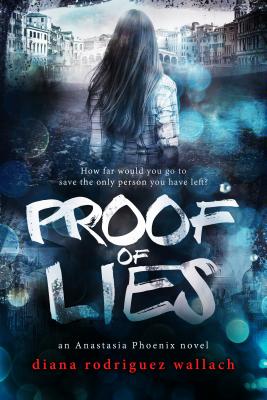
DESCRIPTION OF THE BOOK: Anastasia Phoenix has always been the odd girl out, whether moving from city to international city with her scientist parents or being the black belt who speaks four languages. And most definitely as the orphan whose sister is missing, presumed dead. She’s the only one who believes Keira is still alive, and when new evidence surfaces, Anastasia sets out to follow the trail—and lands in the middle of a massive conspiracy. Now she isn’t sure who she can trust. At her side is Marcus, the bad boy with a sexy accent who’s as secretive as she is. He may have followed her to Rome to help, but something about him seems too good to be true.

Nothing is as it appears, and when everything she’s ever known is revealed to be a lie, Anastasia has to believe in one impossibility. She will find her sister.

MY TWO CENTS: It is not often that we find books written by Latina women that are outside of the traditional coming of age stories, biculturalism, bilingualism, or exploring patriarchal dominance within their culture and religion. In Proof of Lies, author Diana Rodriguez Wallach gives us a fast-paced, mystery and detective-style novel that has us turning page after page to discover how Anastasia Phoenix will make sense of her parents’ death, her sister’s disappearance, the untangled webs of half-truths and the untrustworthy adults in her life. Proof of Lies is a fast novel, full of twists, and with three strong female characters. Keira is Anastasia’s older sister; she is her guardian after her parents die in a car accident. She works, studies to be a nurse, and is the not-always responsible adult presence in Anastasia’s life. Charlotte is a friend who lives with them, she is tech-savvy and a hacker; she helps Anastasia find information when Keira goes missing, leaving only a bathtub full of her blood the morning after their home party. Anastasia, our protagonist, constantly criticizes her sister for having too many loser boyfriends, yet their sister bond is so strong that she spear-heads the quest to find her across the world. Anastasia is about to enter her last year of high school, when she finds herself looking for answers regarding her sister’s disappearance and her parents’ true identity. She enlists the help of Charlotte, Marcus—a Spaniard boy who just moved into her neighborhood— and the financial resources of her parents’ old boss Mr. Urban, the CEO of Dresden corporation.

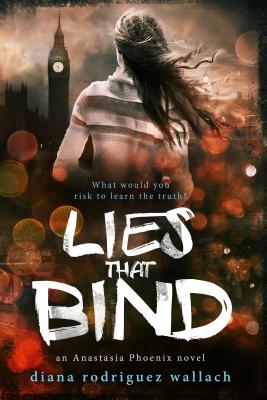
When the local police refuse to give her information regarding her sister’s whereabouts, Anastasia takes matters into her own hands and travels all the way to Italy. She follows tips and clues from people who knew her and her family, fights and chases thugs, and isn’t afraid to confront whoever can help her find Keira. Rodriguez Wallach’s female characters are strong, and the novel offers the hint of romance, too. But what keeps you turning the page is the fact that everyone seems suspect, everyone seems to be hiding something, and Anastasia, like the reader, begins to question who might be withholding information that might lead her to her sister, or knows the truth about who their parents really were. Rodriguez Wallach offers additional information regarding some of the historical references and characters she uses in this novel. For example, the last pages of the book include information about the real Department D, an entity who has had considerable impact on world affairs and was involved with the KGB and Czech STB during the Cold War. There is also information about Lawrence Martin-Bittman, who the author met when she was a student at Boston University and who is a character in the novel, under a different name. Such attention to detail gives the author mastery of the narrative line and provides the reader with additional “clues” about the authenticity of events. To know that there was an agency in the business of disinformation makes us question our own reality, and it certainly keeps us wanting the second and third book on the Anastasia Phoenix series. As a teaser, the author includes the first chapter of the second book series titled, Lies that Bind.

TEACHING TIPS: This novel can be taught in comparison with male-centered characters like in the movie series Bourne Identity or Taken, but also in conjunction with the Hunger Games trilogy. Although the novel is much less bloody, these movies can provide an interesting point of comparison of male vs. female leading roles or male vs. female centered voices. Given that the author is Latina, this novel can also provide a needed conversation about authorship and the freedom to write what one wants—not confined by gender, ethnicity or age. Although Rodriguez Wallach has written novels with distinctly Latina characters, she is not bound by them.

WHERE TO GET IT: To find Proof of Lies, check your local public library, your local bookstore, or IndieBound. Also, check out GoodreadsAmazon, and Barnes & Noble.

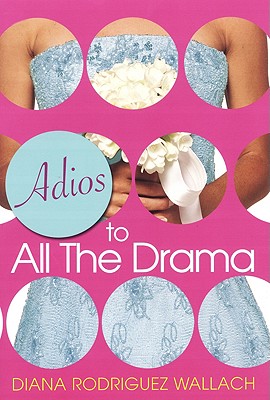
AuthorHeadshot_2015ABOUT THE AUTHOR (from her website): Diana Rodriguez Wallach is the author of the Anastasia Phoenix Series, three young adult spy thrillers (Entangled Publishing, 2017, ’18, ‘19). The first book in the trilogy, Proof of Lies, was named by Paste Magazine as one of the “Top 10 Best Young Adult Books for March 2017.” Bustle also listed her as one of the “Top Nine Latinx Authors to Read for Women’s History Month 2017.” Additionally, she is the author of three award-winning young adult novels: Amor and Summer Secrets, Amigas and School Scandals, and Adios to All The Drama (Kensington Books); as well as a YA short-story collection entitled Mirror, Mirror (Buzz Books, 2013).

In 2010, Diana was named one of the Top Ten New Latino Authors to Watch by LatinoStories.com, and she placed second in the International Latino Book Awards. Diana is featured in the anthology, Latina Authors and Their Muses (Twilight Times Books, 2015), and she currently blogs for Quirk Books.

CLICK HERE to read Diana’s recent guest post: How I Broke Out of My Latina YA Box
 

headshot2016ABOUT THE REVIEWER: Elena Foulis has a Ph.D. in Comparative Literature and Cultural Studies from the University of Arkansas. Her research and teaching interests include U.S. Latina/o literature, and Digital Oral History. Dr. Foulis is currently working on a digital oral history project about Latin@s in Ohio, which is being archived at the Center for Folklore Studies’ internet collection. Some of these narratives can be found in her iBook titled, Latin@ Stories Across Ohio.


Guest Post by Author Diana Rodriguez Wallach: How I Broke Out of My Latina YA Box


By Diana Rodriguez Wallach

The main character of my new young adult spy thriller series, Anastasia Phoenix, is not Latina. Given how few books feature Latinx characters, you might not find this very surprising. But when your maiden name is Rodriguez and you’ve previously written a YA Latina trilogy, this fact is a little shocking to the publishing world.

.                                  

The first book in the series, Proof of Lies, went through a lot of rejections before it made it into print. At first, I stumbled into the wrong market—I was pitching a spy thriller when YA imprints were buying vampires, then werewolves, then dystopian. Eventually the publishing pendulum swung back toward contemporary, but I encountered a different issue. “I’m surprised the main character isn’t Latina,” was a common comment from editors who passed on the manuscript.

At one point, a prior agent who represented the novel suggested I consider the switch. Just make Anastasia Puerto Rican, Dominican, Mexican, anything. But that wasn’t the story I wanted to tell. While this book went through many, many significant edits during the years it took to find the right publishing house, Anastasia’s ethnicity remained the same. Frankly put, I couldn’t see her parents as Puerto Rican spies. Proof of Lies is set in Italy; the second book, Lies that Bind (March 2018), is set in England, France, and Brazil. The entire concept was to set each book in a different country, primarily European. I was aiming for a James Bond or Jason Bourne feel, only with a female in the lead.

I didn’t realize I was breaking a cardinal rule of marketing.

In 2008, I published my first YA trilogy, Amor and Summer Secrets. It’s a YA Latina romance, and it was the third novel my agent tried to sell on my behalf. My first two manuscripts, which are still unpublished, featured white teenagers in coming-of-age tales. After those failed attempts, my agent suggested I write a multicultural story, so I did. Mariana Ruiz is a non-Spanish-speaking half-Puerto Rican teen growing up in the Philly suburbs who feels disconnected to her Latina heritage, until she’s forced to spend the summer on the island. The book sold in two days.

Unbeknownst to me, that book put me in a box. Like any other author, my publisher’s sales and marketing team had to determine where to place my book and exactly which reader I should reach. For me, I wasn’t simply put in the YA Box, but the YA Latina Box. So when I followed up that series, which placed in the International Latino Book Awards, with a novel featuring a white girl with a double-black belt in karate and no mention of ethnic identity other than “American teenager,” I unwittingly broke their marketing rules.
I’m not the first author to face this; it’s why many writers choose pen names when switching genres (whether it be a YA author writing adult romance, or a thriller writer penning a literary tome). Like them, my prior agent asked if I’d consider a pseudonym, but I refused. It wasn’t for any political statement, but for the most honest reason of all—I worked really hard on this book for years, and I was going to see my name on it when it published. Even if that name was Rodriguez. Even if that name gave readers the wrong impression of what was inside.

Because ultimately, my last name doesn’t comprise the entirety of who I am. Yes, my father was born and raised in Puerto Rico, but my mother is Polish and she grew up in a Polish-speaking household, and went to a Polish-speaking church and Catholic school. I attended Christmas mass in Polish every year growing up, and my mom cooked pierogi and kielbasa right alongside Spanish rice and plantains on Christmas Eve. I’m positive a lot of teens have similar experiences, whether they be Latinx and Irish, Indian and African American, or Filipino and Jewish.

So Anastasia Phoenix is not my big fat Latina book. While there is some Spanish dialog in it—because her love interest, Marcus, is from Madrid—I stuck to my vision and kept the mystery at the center of the plot rather than her ethnicity. That’s not to say I won’t write another Latina novel. In fact, I’m working on a contemporary YA right now that will feature a multicultural character. But I hope to follow it up with another YA thriller about a female ghost hunter whose ethnic background may never be mentioned. If I’m lucky, I will publish them all under my real name, and I hope my readers will follow along. Whatever ethnicity they may be.

AuthorHeadshot_2015ABOUT THE AUTHOR (from her website): Diana Rodriguez Wallach is the author of the Anastasia Phoenix Series, three young adult spy thrillers (Entangled Publishing). The first book in the trilogy, Proof of Lies, was named by Paste Magazine as one of the “Top 10 Best Young Adult Books for March 2017.” Bustle also listed her as one of the “Top Nine Latinx Authors to Read for Women’s History Month 2017.” Additionally, she is the author of three award-winning young adult novels: Amor and Summer Secrets, Amigas and School Scandals, and Adios to All The Drama (Kensington Books); as well as a YA short-story collection based on the Narcissus myth, entitled Mirror, Mirror (Buzz Books, 2013).

In 2011, she published a highly regarded essay in Dear Bully: 70 Authors Tell Their Stories (HarperCollins). It was the only essay chosen from the anthology by Scholastic to be used in its classroom materials. Diana is featured in the anthology, Latina Authors and Their Muses (Twilight Times Books, 2015), and she is currently on staff as a featured blogger for Quirk Books.

In 2010, Diana was named one of the Top Ten New Latino Authors to Watch by LatinoStories.com, and she placed second in the International Latino Book Awards. She is an advisory board member for the Philly Spells Writing Center, and is a Creative Writing instructor for Johns Hopkins University’s Center for Talented Youth. She holds a B.S. in Journalism from Boston University, and currently lives in Philadelphia. For more about Diana, check out The Whole Story.

Book Review: North of Happy by Adi Alsaid


Reviewed by Cecilia Cackley

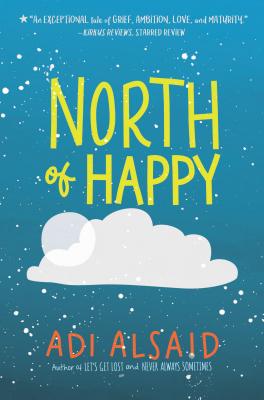
North of Happy CoverDESCRIPTION OF THE BOOK: Carlos Portillo has always led a privileged and sheltered life. A dual citizen of Mexico and the US, he lives in Mexico City with his wealthy family, where he attends an elite international school. Always a rule follower and a parent pleaser, Carlos is more than happy to tread the well-worn path in front of him. He has always loved food and cooking, but his parents see it as just a hobby.

When his older brother, Felix—who has dropped out of college to live a life of travel—is tragically killed, Carlos begins hearing his brother’s voice, giving him advice and pushing him to rebel against his father’s plan for him. Worrying about his mental health, but knowing the voice is right, Carlos runs away to the United States and manages to secure a job with his favorite celebrity chef. As he works to improve his skills in the kitchen and pursue his dream, he begins to fall for his boss’s daughter—a fact that could end his career before it begins. Finally living for himself, Carlos must decide what’s most important to him and where his true path really lies.

MY TWO CENTS: I thought this was a very balanced book—the romance is sweet, while Carlos’ grief and struggle to assert himself adds depth, and the setting of the restaurant is fresh and engaging. It was also refreshing to read a book about a Mexican character that isn’t about immigration, drug wars, or poverty. My favorite parts of the book were the descriptions of Carlos cooking and his thought process as he selects ingredients or puts together a dish. Some readers may find this too detailed or dense, but (perhaps because I don’t spend a lot of time cooking in my life) I was fascinated. Emma’s character occasionally slid toward Manic Pixie Dream Girl territory, but I thought the decision she makes toward the end of the book was good and believable. The side characters were entertaining, and I liked the fact that there was no manufactured drama among the kitchen staff. Envy and hazing happened, but it wasn’t over the top.

The element of the book most likely to divide opinions is probably the character of Felix and what, exactly, he is doing there. Is he a hallucination, and should the book be talking more candidly about mental illness? Is he a ghost or a spirit, guiding Carlos toward a better life? I lean toward the spirit answer, perhaps because it brings the book a little closer to the genre of magical realism, which I enjoy. Although there are a few moments when Carlos considers the idea that the things he hears Felix say “…might just be grief doing strange things to my head,” he accepts the idea that his brother is sticking with him in ghost form pretty easily. Their relationship provides a lot of comedy, as Felix makes smart remarks, and pushes Carlos out of his comfort zone. For me, this points to the character being a supernatural or spiritual element, rather than a hallucination.

I enjoyed the way Spanish was incorporated into the book, not just spoken by Carlos but also various people he meets, and that it was left unitalicized. Altogether, this was a fun read, and it’s guaranteed to make you hungry so have a snack ready.

TEACHING TIPS: I think this would be a good book to read as part of a survey course, because it’s a good example of the variety found in the YA category. It’s a good choice for a teen book club, with lots to discuss and debate. This would be a great book to read for a potluck book club or as an addition to a middle or high school cooking club.

WHERE TO GET IT: To find North of Happy, check your local public library, your local bookstore, or IndieBound. Also, check out GoodreadsAmazon, and Barnes & Noble.

Image resultABOUT THE AUTHOR: Adi Alsaid was born and raised in Mexico City. He attended college at the University of Nevada, Las Vegas. After graduating, he packed up his car and escaped to the California coastline to become a writer. He’s now back in his hometown, where he writes, coaches high school and elementary basketball, and makes every dish he eats as spicy as possible. In addition to Mexico, he’s lived in Tel Aviv, Las Vegas and Monterey, California. He is the author of Let’s Get Lost, Never Always Sometimes, and North of Happy.



ABOUT THE REVIEWER: Cecilia Cackley is a performing artist and children’s bookseller based in Washington, DC, where she creates puppet theater for adults and teaches playwriting and creative drama to children. Her bilingual children’s plays have been produced by GALA Hispanic Theatre and her interests in bilingual education, literacy, and immigrant advocacy all tend to find their way into her theatrical work. You can find more of her work at www.witsendpuppets.com.
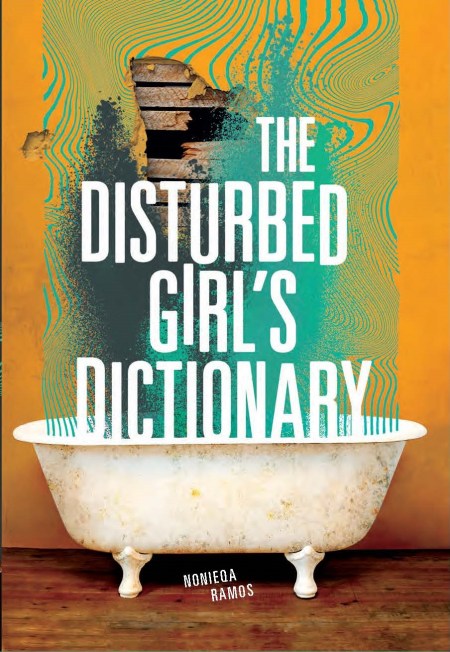
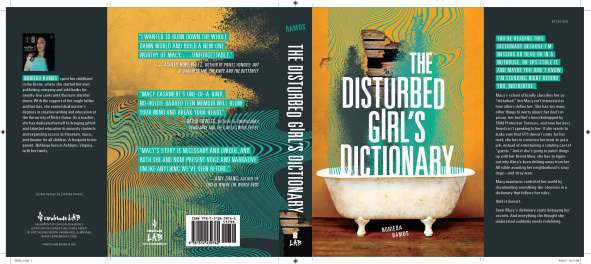
COVER REVEAL! The Disturbed Girl’s Dictionary by NoNieqa Ramos


Today, we’re excited to host the cover reveal for The Disturbed Girl’s Dictionary, a debut young adult novel by NoNieqa Ramos that has already gotten a starred review from Booklist and a glowing response from Kirkus.

What’s it about? Here’s the official description:

Macy’s school officially classifies her as “disturbed,” but Macy isn’t interested in how others define her. She’s got more pressing problems: her mom can’t move off the couch, her dad’s in prison, her brother’s been kidnapped by Child Protective Services, and now her best friend isn’t speaking to her. Writing in a dictionary format, Macy explains the world in her own terms complete with gritty characters and outrageous endeavors. With an honesty that’s both hilarious and fearsome, slowly Macy reveals why she acts out, why she can’t tell her incarcerated father that her mom’s cheating on him, and why her best friend needs protection . . . the kind of protection that involves Macy’s machete.

How could anyone resist a description that involves both dictionaries and machetes? What?!

Before we get to the cover, the author tells us how she responded to getting her Advance Reader Copies and viewing the cover for the first time.

I have to admit I didn’t open up my ARCs for two weeks. I hugged them. I #bookstagrammed them. I clutched them while flashbacking to all the work that led up to this moment. But what did opening the book mean? I had nightmares that opening my ARC would be like opening Pandora’s box. Because writing a book is like standing outside naked and not expecting anyone to comment on the fact that you have no space between your thighs. But then my soul mate made a comment. Apparently on the inside of the book, lay the real cover, the cover my protagonista Macy Cashmere made for her dictionary, and I thought, that sounds amazing. SOUNDS amazing. Time to crack it open. I peered inside the cover like you’d stare through a keyhole. I could almost feel Macy’s reaction as I did the unthinkable. Read the dictionary “By Macy Cashmere… FOR Macy Cashmere” without her permission.

The cover design by Lindsay Owens and Danielle Carnito is PSYCHEdelic; disturbing and hypnotic just like my Macy. A conduit for Macy’s rage, the imagery surges from page to page until the harrowing end. Thank you Carolrhoda Lab. Thank you, Lindsay and Danielle. Macy would approve.

Now for the cover reveal!


Scroll down!

*

*

*

*

*

*

*

*

Keep scrolling!

*

*

*

*

*

*

*

*

Almost there!

*

*

*

*

*

*

*

*

TA-DA!


The Disturbed Girl’s Dictionary releases February 1, 2018 (Carolrhoda Lab). You can pre-order it at Indiebound, Amazon, and Barnes & Noble, among other places. You also have a chance to win a copy by entering this GoodReads Giveaway!


ABOUT THE AUTHOR: NoNieqa Ramos spent her childhood in the Bronx, where she started her own publishing company and sold books for twenty-five cents until the nuns shut her down. With the support of her single father and her tias, she earned dual master’s degrees in creative writing and education at the University of Notre Dame. As a teacher, she has dedicated herself to bringing gifted-and-talented education to minority students and expanding access to literature, music, and theater for all children. A frequent foster parent, NoNieqa lives in Ashburn, Virginia, with her family. She can be found on Twitter at @NoNiLRamos.
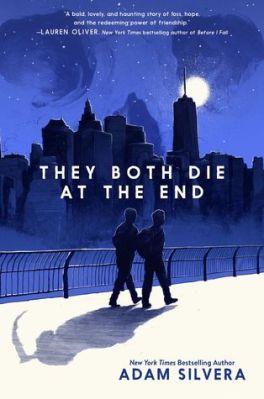
Book Review: They Both Die at the End by Adam Silvera


Reviewed by Lila Quintero Weaver

This review is based on an advance reader’s edition.

FROM THE BOOK JACKET: In the tradition of Before I Fall and If I Stay, this tour de force from acclaimed author Adam Silvera, whose debut the New York Times called “profound,” reminds us that there’s no life without death, no love without loss—and that it’s possible to change your whole world in a day.

Mateo Torrez and Rufus Emeterio are going to die today. The two boys are total strangers, but, for different reasons, they’re both looking to make a new friend on their End Day. There is some good news: There’s an app for that. It’s called Last Friend, and through it, Rufus and Mateo are about to meet up for one last great adventure—to live a lifetime in a single day.

MY TWO CENTS: The release date for They Both Die at the End was September 5, 2017. It’s no coincidence that the novel also takes place on that date, with chapters time-stamped to reflect the passing hours. This is no ordinary day for Mateo Torrez, 18, and Rufus Emeterio, 17, both of New York City. An unfailingly accurate notification service known as Death-Cast delivers the news that it is their last day on earth. Sadly, both boys have lost loved ones whose deaths were predicted in the same, bone-chilling fashion.

They Both Die at the End sends readers on a spellbinding adventure, following the two main characters as they squeeze in one more day of living. The story hits the ground running at 12:22 a.m., when Mateo’s phone sounds the eerie Death-Cast alert. Rufus receives his alert not long after that. Yet for all the tension of the ticking countdown, this novel narrates a surprisingly tender friendship that springs up between the two strangers. They connect through the app Last Friend, one of numerous social, cultural, and commercial spin-off products resulting from the launch of Death-Cast, which has been in existence for six years.

By the time Rufus and Mateo’s last day arrives, society has accepted the reliability of the Death-Cast predictions, and has developed norms in response to the ubiquitous presence of so-called Deckers, people who’ve received the last-day warning. This is made evident in a scene where subway passengers realize that a Decker and her Last Friend are among them. A stranger offers sympathy. “Sorry to lose you,” she says to the Decker, and commends them both for spending the final hours together. The Death-Cast phenomenon has changed the landscape of everyday life in other ways. Restaurants offer discounts to Deckers, and at a special amusement park called Make a Memory, Deckers and their companions indulge in simulated extreme sports. Social media has summoned a flurry of responses, too, including CountDowners, a blog devoted to the postings and live-feeds of Deckers, who share real-time accounts of their final hours on earth. Silvera weaves these fictitious cultural creations seamlessly into an otherwise recognizable version of contemporary city life.

How Death-Cast knows when a person will expire is anyone’s guess, but because his mom died in childbirth, Mateo has been death-haunted all his life. Paranoia about dying has kept him from making friends and participating in childhood activities, such as going on sleepovers and roller-skating in the park. Now, with the bitter reality of death squarely before him, Mateo is engulfed in the pain of wasted opportunities. When the End Day news comes, he is home alone. His father, who is hospitalized in intensive care, has been in a coma for weeks, and Mateo’s only other significant connections are with a close friend, Lidia, and her one-year-old daughter.

While Mateo is a loner, who from the safe confines of his apartment has engaged primarily with the digital universe of blogs, games, and apps— Rufus is more of a here-and-now guy: confident, socially connected, and comfortable jumping into new experiences in a way that Mateo never has been. When readers meet Rufus, he’s giving his ex-girlfriend’s new guy a beat-down. Then the Death-Cast ringtone goes off and everybody freezes. Although foster brothers Malcolm and Tagoe are on hand to provide Rufus with backup during the fight, for reasons that aren’t immediately revealed, they can’t help him once the police get involved. So Rufus takes flight alone, into the darkened streets of the city. He needs a friend.

The novel follows Mateo and Rufus from their separate, but equally jarring Death-Cast notices until they connect through the Last Friend app. During the course of their hours together, they bridge the initial awkwardness, and in cementing a friendship, defy the opposing pull of their personalities and lifestyles. Rufus gently goads Mateo to push aside long-held fears, and Mateo responds by embracing new experiences, from small to significant. By the time they land at Clint’s Graveyard—a dance and karaoke club that exists to give Deckers an unforgettable send-off—Mateo is more alive, more himself than ever, and the boys’ friendship turns romantic.

In his debut, More Happy Than Not, Adam Silvera demonstrated a fluid command of speculative fiction. In They Both Die at the End, he repeats that impressive feat, crafting a futuristic world that lands credibly in all its disquieting aspects, yet never forgets that telling a specific story is the most important order of business. Silvera’s ability to weave the strange and disturbing world of Death-Cast into a powerful character-driven narrative keeps readers on the edge to the last page, and drives a keen level of anticipation for the next offering from this gifted writer.

WHERE TO GET IT: To find They Both Die at the End, check your local public library, your local bookstore, or IndieBound. Also, check out GoodreadsAmazon, and Barnes & Noble.

ABOUT THE AUTHOR: Adam Silvera was born and raised in the Bronx. He has worked in the publishing industry as a children’s bookseller, marketing assistant at a literary development company, and book reviewer of children’s and young adult novels. His debut novel, More Happy Than Not, received multiple starred reviews and is a New York Times bestseller. Visit his author site for more information.



ABOUT THE REVIEWER: Lila Quintero Weaver is the author-illustrator of Darkroom: A Memoir in Black & White. She was born in Buenos Aires, Argentina. Darkroom recounts her family’s immigrant experience in small-town Alabama during the tumultuous 1960s. It is her first major publication and will be available in Spanish in January 2018. Her next book is a middle-grade novel scheduled for release in July 2018 (Candlewick). Lila is a graduate of the University of Alabama. She and her husband, Paul, are the parents of three grown children. She can also be found on her own websiteFacebookTwitter and Goodreads.
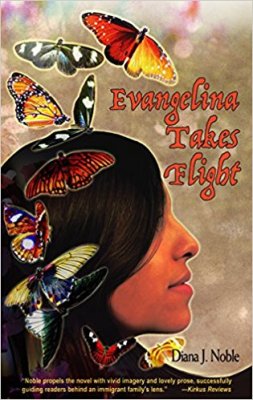
 

Book Review: Evangelina Takes Flight


Review by Cris Rhodes

DESCRIPTION FROM THE BOOK JACKET: It’s the summer of 1911 in northern Mexico, and thirteen-year-old Evangelina and her family have learned that the rumors of soldiers in the region are true. Her father decides they must leave their home to avoid the violence of the revolution. The trip north to a small town on the U.S. side of the border is filled with fear and anxiety for the family as they worry about loved ones left behind and the uncertain future ahead.
Life in Texas is confusing, though the signs in shop windows that say “No Mexicans” and some people’s reactions to them are all-too clear. At school, she encounters the same puzzling resentment. The teacher wants to give the Mexican children lessons on basic hygiene! And one girl in particular delights in taunting the foreign-born students. Why can’t people understand that—even though she’s only starting to learn English—she’s just like them?

With the help and encouragement of the town’s doctor and the attentions of a handsome boy, Evangelina begins to imagine a new future for herself. But will the locals who resent her and the other new immigrants allow her to reach for and follow her dreams?

MY TWO CENTS: Diana J. Noble’s Evangelina Takes Flight is timely to a startling degree. As a work of historical fiction, Noble’s portrayal of upheaval in Mexico caused by the Mexican Revolution and Pancho Villa’s raids on farming villages remains relevant to this day. In confronting the racism and xenophobia rampant at the border, where shops display signs declaring “’No Dogs! No Negroes! No Mexicans! No Perros! No Negros! No Mexicanos!’,” Evangelina’s story parallels contemporary struggles for racial equality (92). As racial tensions build both in the text and in real life, Evangelina’s stand to keep her school desegregated feels remarkably current, and in its demonstration of child activism, Evangelina Takes Flight holds up a powerful example.

Though Noble doesn’t spend much time explaining the political situation of Mexico during the early twentieth century, the book doesn’t suffer from this lack of context. Indeed, told from the first-person point of view of Evangelina, the text should not offer details outside of her awareness. The book begins mere days after Porfirio Díaz was ousted as president of Mexico, an event that certainly would not have reached the secluded rancho where Evangelina lives, let alone Evangelina herself. Yet, as we journey along with the tenacious and imaginative Evangelina from her fictional Mexican town of Mariposa to the United States to escape the violence wrought by Villa, Noble invites the reader to watch Evangelina grow and mature. She might not be able to foment resistance in her native Mexico, but she certainly can in the United States, and eventually does when called upon to stand up for her right to an education.

Though Evangelina is still a child, at least by modern conceptions of childhood (she turns fourteen during the course of the book), she is entrusted with great responsibility, much of it in the field of medicine—leading her to dream of one day becoming a nurse or even a doctor. While this dream defies the limitations put upon her by her race and her gender, Evangelina does cling to some, perhaps stereotypical, tenets of Mexican femininity. She’s excited for her upcoming quinceañera, and she longs for the attention of boys—one boy, in particular: Selim. Evangelina’s blossoming relationship with Selim is doubly interesting because he is Lebanese—a fact that would likely cause some waves among her traditional Mexican family. Though Noble keeps their relationship chaste, the potential of an interracial relationship adds intrigue, and I wish there was more to it. Understandably, however, Evangelina and Selim’s feelings for each other are overshadowed by an upcoming town hall meeting, which will decide if foreign-born students will be allowed to attend school with their white peers.

Though Evangelina Takes Flight confronts historical (and contemporary) racism with aplomb, it still contains some troubling tropes about marginalized peoples, namely the White Savior figure. Evangelina has multiple encounters with the local doctor, Russell Taylor, whose compassion transcends race. Unlike his neighbors, Dr. Taylor is more than willing to help the Mexicans and goes out of his way to treat Evangelina’s Aunt Cristina when she gives birth to twin sons, one of whom is stillborn. Because of his position as the town doctor, Dr. Taylor holds sway with those who seek to segregate the school. He attempts to act as a mediator between the Mexican families and white townspeople, who are led by the mean-spirited Frank Silver. But Dr. Taylor’s intercession strays into White Savior territory when he is the one who discovers a secret that discredits Silver. After revealing Silver’s secret, Dr. Taylor parades Evangelina in front of the crowd at the town hall meeting, ostensibly to demonstrate her intelligence and humanity; but in a moment such as this, she actually becomes less of a humanized figure and more of a token. Additionally, it is not her own words that sway the townspeople to keep the school unified, but her ability to quote from the Bible, in English, that persuades them. While it is possible to read Evangelina as a key activist figure in spite of Dr. Taylor’s intervention, his role in this scene is a little disappointing, coming as it does in a text that otherwise offers so much in regards to racial equality.

Regardless, this book resonated with me on multiple levels. Evangelina’s struggle for independence, respect, and acquiring her own voice is something that many young Latinas, myself included, face today. Noble’s poetic yet accessible prose allows the reader to slip into Evangelina’s world and understand that problems can be overcome with perseverance and bravery. Though the book is at times slow moving and the plot is occasionally sparse, I would argue that such components allow the industrious reader to dive deep and think critically about Evangelina’s circumstances. However, these characteristics may also make this book difficult for reluctant readers. As a result, though this book is marketed as a middle grade novel, it may be more appropriate for experienced or older readers. Even if some parts were troublesome, I still found Evangelina an intriguing and captivating read,. Ultimately, for those looking for a book that faces contemporary issues through the lens of historical fiction, Evangelina Takes Flight certainly fits the bill.

TEACHING TIPS: Evangelina Takes Flight would pair well with other books about school de/segregation or child activists, such as Duncan Tonatiuh’s Separate is Never Equal: Sylvia Méndez & Her Family’s Fight for Desegregation   or Innosanto Nagara’s A is for Activist. In addition, because of its historical setting, Evangelina would also be useful in teaching about the Mexican Revolution, the history of Texas, or historical race relations in the United States.

Evangelina Takes Flight offers lessons on metaphor and imagery, especially in its use of the butterfly as a symbol of resilience. When Evangelina’s grandfather tells her the story of the migratory butterflies for which her hometown of Mariposa is named, she starts to see the butterfly as an image of strength. Students could be guided to find passages where butterflies are mentioned to see how Noble constructs this extended metaphor. Students may also be encouraged to deconstruct the representations of butterflies on the cover of the book in a discussion about visual rhetoric.

ABOUT THE AUTHOR: Diana J. Noble was born in Laredo, Texas, and grew up immersed in both Mexican and American cultures. Her young adult novel, Evangelina Takes Flight, is based loosely on her paternal grandmother’s life, but has stories of other relatives and memories from her own childhood woven into every page. It’s received high praise from Kirkus Reviews, Forward Reviews (5 stars), Booklist Online and was recently named a Junior Library Guild selection. [Condensed bio is from the author’s website.]



ABOUT THE REVIEWER: Cris Rhodes is a doctoral student at Texas A&M University – Commerce. She received a M.A. in English with an emphasis in borderlands literature and culture from Texas A&M – Corpus Christi, and a B.A. in English with a minor in children’s literature from Longwood University in her home state of Virginia. Cris recently completed a Master’s thesis project on the construction of identity in Chicana young adult literature.