Diana López on Migas, Confetti, and Martha Stewart

By Diana López

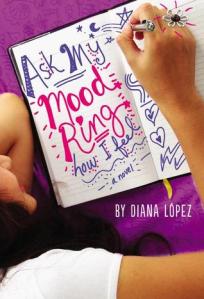
Ask My mood RingRecently, I was asked an excellent question. This came from a writing teacher who shared Ask My Mood Ring How I Feel with his class and wanted me to comment on the narrative techniques I used. His students noticed that I’d added a description of migas, a dish that Tejanos are very familiar with. So they were curious about how I handled cultural details in my fiction. In other words, when writing for readers who do not have the same cultural background as my characters, how do I decide what to explain and what to leave for the reader to figure out?

I love sharing the unique foods, words, and customs of my Tex-Mex world. That said, I don’t intentionally add cultural details. I don’t have to because they’re here, in my home and neighborhood. I don’t even recognize them as unique sometimes. For example, in the second chapter of Confetti Girl, we visit a home filled with cascarones and everything that is used to make them—eggshells, tissue paper, vinegar dyes, and confetti. I grew up with cascarones. Starting in January, my mother would save eggshells, and by the end of Lent, we’d have piles of egg cartons stacked on top of the fridge. She’d save old magazines and newspapers too, so we could make confetti with a hole-puncher. Then a few days before Easter, the family would gather around the table to dye the eggshells and fill them with confetti. This was my favorite part of cascarones—not cracking them on each other’s heads but making them.
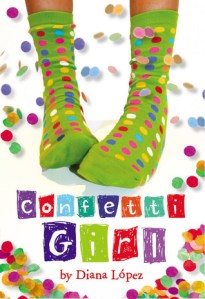
Confetti GirlCascarones are an important tradition during San Antonio’s Fiesta, and people often sell them from empty parking lots or their front yards. After seeing so many confetti eggs around my neighborhood, I thought, what a great detail for my book. I had no idea they’d be so important in the final version.

When I first submitted the manuscript to New York publishers, they wrote back with questions about these mysterious cascarones. They wanted pictures and instructions. They were so fascinated by something I’d taken for granted. So now when you open a copy of Confetti Girl, you’ll see the confetti egg instructions on its opening pages. It’s wonderful to hear from readers who are making them for the first time. A young girl from Australia wrote to say that she and her mum made them, and when I visit schools, students often share some very creative cascarones, much too pretty to crack on anyone’s head.

Something similar happened with a cultural detail in my mood ring book. Making a promesa when someone gets ill is a common practice in South Texas, so naturally, when my character Erica learns her mother has breast cancer, she makes a promise to get five hundred people to sponsor her for a fundraiser. Like the cascarones, the promesa gained importance as I worked through the novel. Not only did it provide a goal for Erica, but it also worked thematically by giving her a chance to ask a lot of questions about faith and hope. I love when details come to life this way.
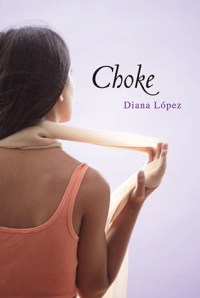
ChokeThere are smaller cultural details in my books, too. Erica sings “pio pio pio” to her mom. In Choke, my character eats barbacoa and drinks Big Red for breakfast. My books are full of “mijas” and “viejitos.” These details may not take on any symbolic significance, but they are just as important because they’re integral to the setting.

At a book festival last month, a participant asked me to name a pet peeve related to writing. I said, “I hate when people tell me I should add more cultural interest to my books.” In other words, I don’t like these details to be forced. They have to feel natural, and as long as I’m not consciously adding them, they will be. Sure, my characters eat migas, but they eat pizza, too.

So how do I decide which details to explain and which to leave alone? This is where a good editor comes in. We’ll get to this point in the revision process where she’ll highlight places with unfamiliar images and words. I remember the first time this happened. I wrote a book set in Corpus Christi, and I mentioned the T-heads, not realizing how unique that term was. The editor had no idea what I was talking about, so I added an appositive phrase for clarification. Ultimately, that’s what I have to determine. Are there enough context clues or should I be a little more explicit? The last thing I want is for a reader to stop because she’s confused. In that sense, I am very grateful to have an editor who is not from my world and who can point out these places—and the best editors are good about letting me decide what to do.

Now here’s something very interesting. Did you know that Martha Stewart featured cascarones on her show? Soon they’ll be as mainstream as piñatas and guacamole, so don’t be surprised when I take all the credit!
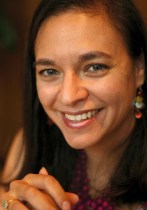
Photo credit: Todd Yates

Photo credit: Todd Yates

Diana López is the author of the middle grade novels Confetti Girl, Choke, and Ask My Mood Ring How I Feel. An adaptation of Choke will be featured on the Lifetime Movie Network this summer. Ms. Lopez teaches at the University of Houston-Victoria and works with CentroVictoria, an organization devoted to promoting Mexican American literature. She is also one of the editors of the literary magazine, Huizache.
A Conversation with René Colato Laínez

By Lila Quintero Weaver  portada-juguemos-futbol-football

If you are not acquainted with the picture books of René Colato Laínez, get thee to a bookstore right away! A Salvadoran transplant who teaches kindergarten in California, René writes joyful, bilingual picture books that children everywhere adore. I am delighted to share a one-on-one conversation with René about his life and work.

Lila: René, on your website, you express that the goal of your writing is “to produce good multicultural children’s literature; stories where minority children are portrayed in a positive way, where they can see themselves as heroes, and where they can dream and have hopes for the future. I want to write authentic stories of Latin American children living in the United States.”

As a collaborator on Latin@s in Kid Lit, a blog that exists to promote those very goals, I say BRAVO! Now for a question: What led you to adopt these goals?

René: I came to the United States when I was 14 years old. In my country, I was a smart student. I had good grades and many dreams to accomplish. In the United States, I did not know the new language. I felt lost and many times I thought that I would never be able to accomplish my goals. The inspiration to write books with a positive message to minority children came from my own life experience. I worked hard and never gave up. Yes! I accomplished my dreams. I am a teacher and an author. I want to tell minority children that they can accomplish anything they want. With “ganas” you can conquer the highest mountain.

Senor Pancho

Lila: Let me brag on your latest book. Señor Pancho Had a Rancho has received glowing reviews. It was named a top picture book by Chicago Public Library and was included in the Cuatrogatos Foundation anthology, De Raices y Sueños. I could keep going, but let me pause to ask: What inspired you to create what’s essentially a Spanish version of “Old McDonald Had a Farm”?

René: One day my ESL (English as a Second Language) teacher told us that we could learn English through music. She played the song of a man named McDonald and he had many farm animals. When I listened to the song, I was confused when the dog barked woof woof instead of gua gua. My teacher told me that in English farm animals made English sounds. I said to myself, “If I bring my perro from El Salvador, he has to learn English too!” Later on, when I became a teacher, I played the song with my kindergarteners, but I always added the Spanish sounds. After having so much fun with my students, I decided to write a book about both English and Spanish farm animals, where they could have a great time speaking two languages.

Lila: Please share a bit about your childhood experiences of immigration from El Salvador.

René: I left the country with my father, due the civil war. Along with thousands of Salvadorans, my family was looking for a better place where we could be safe from the war. But I had a happy life as a child. I loved to go to school and read all the comics books from Mexico and Argentina, like El Chapulín Colorado and Mafalda. Since first grade, I wanted to become a teacher. My favorite books were Don Quijote and Las Telerañas de Carlota. I was so surprised to find my favorite book in English, here in the United States—Charlotte’s Web.

Lila: You teach kindergarten in a California school full of Latino children. How has this influenced your writing? Is teaching what led you to write picture books in the first place?

René: In high school and college, I wrote many drafts of novels. But when I came to the classroom, I discovered picture books and soon fell in love with them. I started to write my own books for my students and they called me “El Maestro lleno de Cuentos” (“The Teacher Full of Stories”). Later on, after receiving advice from many teachers and talented authors such us Alma Flor Ada, Isabel Campoy and Amada Irma Pérez, I decided to submit my work for publication.

Lila: Your books consistently offer bilingual texts. Why is this important to you?

René: I love bilingual books because you can share them with families who speak Spanish, English or both. They can also be great tools to speak and learn to read a second language. When I started to submit my manuscripts, I always envisioned them as bilingual books—books that I could share with my students, their parents, my family here in the United States, and all my relatives and friends in El Salvador.

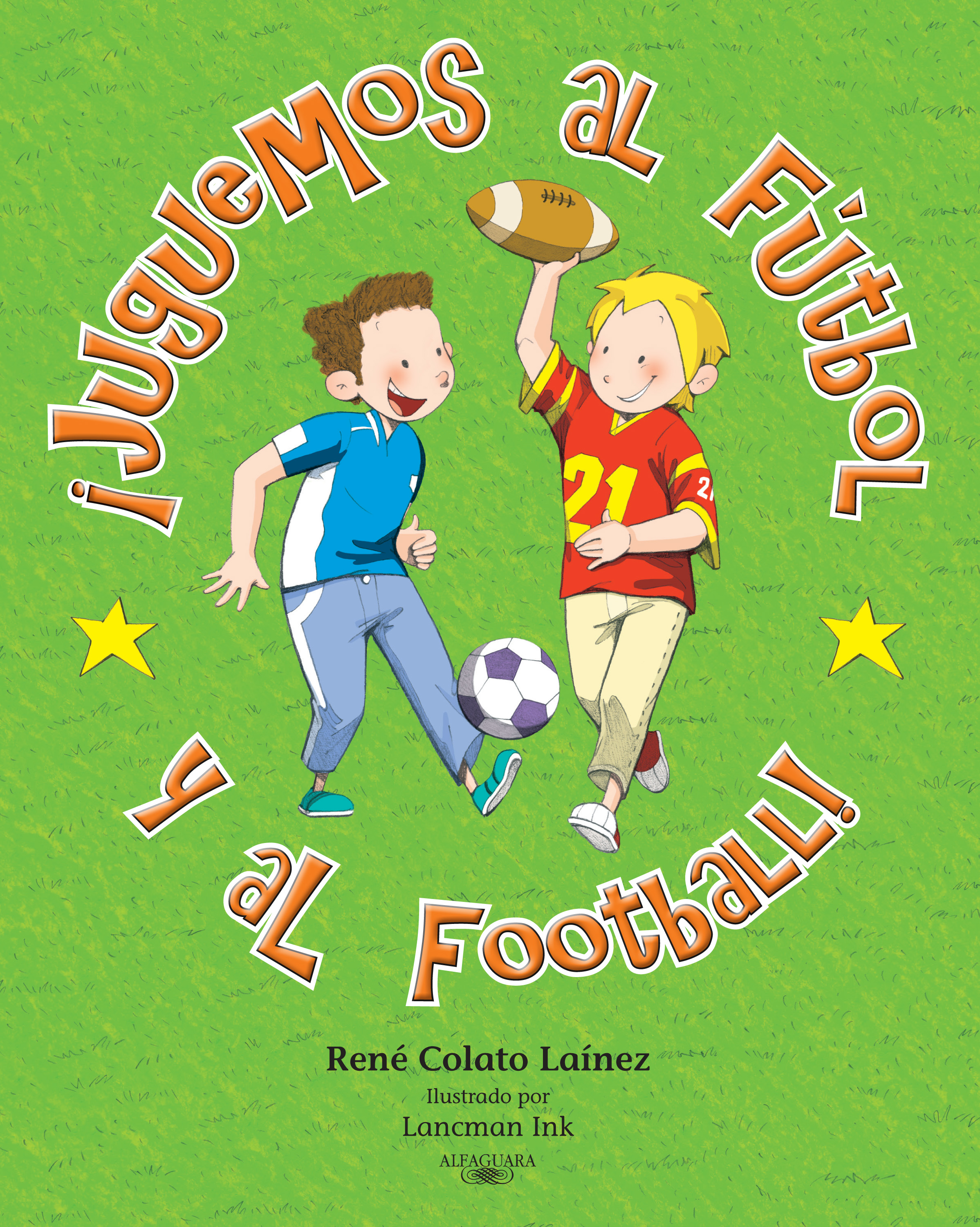
Lila: Your writings frequently celebrate the happy coexistence of Latino and non-Latino cultures. This occurs in The Tooth Fairy Meets El Ratón Pérez and in Juguemos al Fútbol/ Let’s Play Football (coming out this month in the bilingual hardcover edition), to name just two examples. What inspires your multicultural bent?

René: Latino children usually live in two worlds in the United States. They speak English and Spanish and celebrate holidays from the two cultures. Many times people fight to see which language or culture is most important. I love them both and in my books I want to tell children that instead of deciding which culture is better, we can celebrate both and have double the fun.

Lila: Writing a picture book looks easy only to those who have never tried it. What’s it like for you? Do you wait for inspiration to strike or do you have a disciplined routine?

René: Writing picture books is so much fun for me. It was not easy at first but I read tons of them until I was ready to write my own stories for publication. I usually start with the problem or idea for a story. Then I think it over, again and again, and begin to create the story in my mind. When I have something solid, I begin to write it. Many incidents in the classroom help me with ideas for new stories.

Lila: You graduated from the prestigious Vermont College of Writing for Children & Young Adults and have published at least nine books. That’s a lot of experience! Can you share some hints for aspiring writers?

René: Never give up, believe in yourself, and work hard for your dreams. Take creative writing classes and join critique groups. If you are writing children’s books, it is always a great idea to join SCBWI, Society of Children’s Book Writers and Illustrators. Submit your work and learn from rejection letters. Believe in your stories, because you are the only one who can tell and write them. 

renecolatolainezRené Colato Laínez is a native of El Salvador. He is the award-winning author of many picture books and the recipient of honors that include the Latino Book Award, the Paterson Prize for Books for Young People, the California Collection for Elementary Readers, the Tejas Star Book Award Selection, and the New Mexico Book Award. He is listed among “Top Ten New Latino Authors to Watch (and Read)” by the site Latinostories.com*. He received a degree from the Vermont College MFA program in Writing for Children and Young Adults. René’s full-time profession is teaching kindergarten in California. For more information, please visit his official author site

The Road to Publishing: Giving Good Feedback to Fellow Writers

By Stephanie Guerra

Last month, I began a two-post series addressing the most productive ways to work with beta readers and critique groups. The first installment focused on receiving feedback; in this post, I’ll focus on how to offer good feedback.

Beta readers and critique groups are critical to the writing process, and many successful authors find a long-term writing partner with whom they work productively for years. How can you nurture critique relationships—notoriously sensitive—so that they grow and flourish?

Here’s a quick and dirty list of strategies:

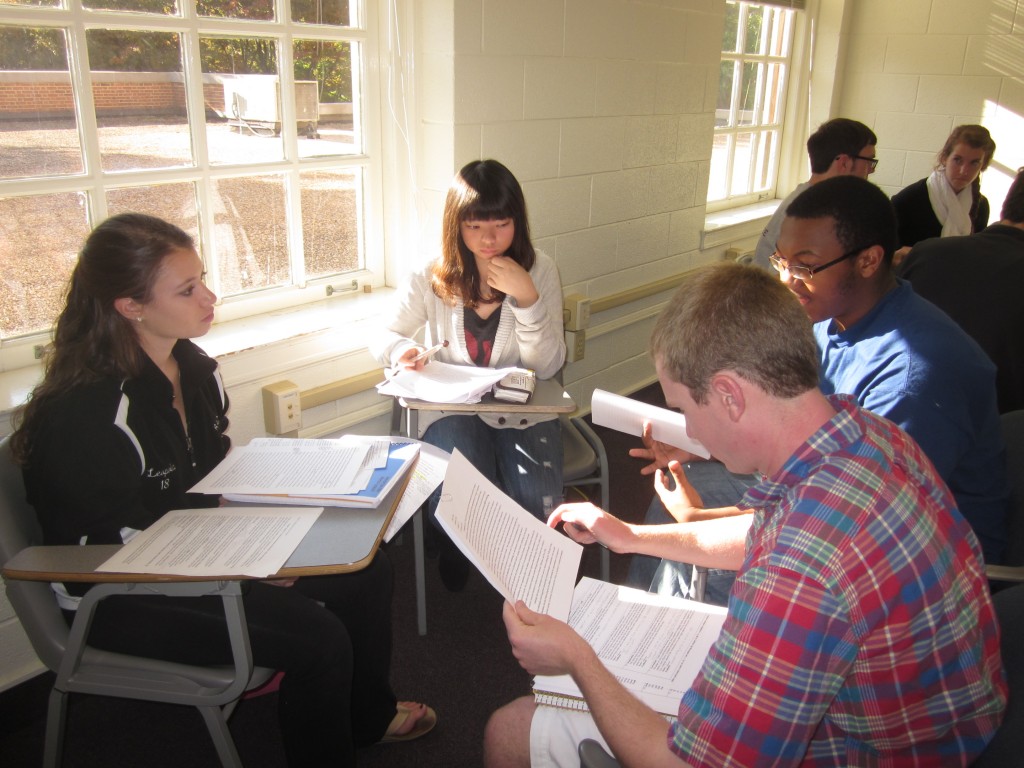
peer review1. Ask the type and level of feedback your partner is seeking. Type addresses the range of feedback your partner desires. Global? Character-focused? Plot-focused? Language-focused? Line-editing? Level addresses the thoroughness of your feedback. For a first draft, many writers want general, light feedback, including global impressions of plot and characters. If you pick apart the draft line by line, your partner may be overwhelmed. Be sure to clarify what he or she is looking for before diving in.

2. Offer an even trade. If someone has given you careful, in-depth feedback on one of your manuscripts, be sure to reciprocate in full. Do not read through his or her work quickly and toss off your thoughts as you hurry to get back to your own project. Your writing partner is relying on you and may make significant changes to their manuscript based on your advice. So give his or her work the time and respect it deserves.

3. Link up with writers who are roughly in your skill/professional range. Great disparities in talent can cause awkwardness, and trades may not be productive for the more advanced partner. That said, if you’re willing to consider a mentor relationship (no matter which end you’re on), go for it! Just don’t expect that trades will be “even”.

4. Find the positives. This seems obvious, but having been through an MFA, I know it needs to be said. Critique partners should be honest—but not brutally honest. Remember that no matter how elementary or flawed your partner’s work appears to you, it represents their effort and passion. Find at least three things to praise before you point out what’s not working.

5. Watch for cues. In the case of verbal feedback, watch and listen to the writer’s facial expressions, body language, and words as they receive feedback. If you sense distress, stop. Bring up the positives. Inspiration is a fragile thing and people have varying degrees of sensitivity about their work. You don’t want to be the Dream Crusher.

Editing16. Know when to back out. Sometimes (especially on first trades, but
occasionally with tried-and-true partners) you’ll run into a piece you simply can’t stomach. Maybe the writing is terrible. Maybe the message goes against everything you believe. Maybe the manuscript feels too commercial. Whatever the reason, if you can’t stand it, you won’t be able to offer a good or fair critique. Be diplomatic: “I’m having a hard time with this piece. I’m not experienced with this genre/topic/style. I’m afraid my political views are getting in the way of my ability to hear your story.” Whatever. Let the writer know you’re biased, and wiggle out gently.

7. Have boundaries. This is a good life rule, no? It definitely applies to writing. Critiques are so personal, and for many, so emotional, that they can unleash a storm of follow-up emails and phone calls. If you feel that someone is demanding more of your time and hand-holding than makes you comfortable, repeat (in as many different ways as you need to): “I really don’t have anything to add to what I’ve already said. But good luck.”

8. Don’t argue. Some writers can’t help themselves; they’re compelled to defend their work in the face of a critique. If you’re the partner giving feedback in this situation, don’t engage. Offer your counsel, and let the writer argue and justify if they need to. It’s all part of the process. Some people work things out verbally.

9. Don’t be the alpha critic. I borrowed this one from William Zinsser. Nobody likes the snide, superior critic who has scathing reviews of everything! ‘Nuf said.

10. Be open-minded. You’ll run into all kinds of manuscripts on the trade routes, not all of them your cup of tea. Remember, you’re not buying the book. Unless you have a visceral hatred of the work (see number 6), give it a fair shot. Try to separate your personal taste from your professional knowledge of character development, plot trajectory, etc. If personal taste is causing your review to slant negative or positive, rethink your approach.

To Be Accurate in Writing, Recognize Truth While Reading

By Cindy L. Rodriguez

As a reading teacher, I often tell my students that the best way to become a better reader is to…wait for it…read. Seems obvious, right? And, of course, the best way to become a better writer is to write. After all, the more you write, the more you produce, the more you learn about writing and about yourself as a writer, and the more you improve.

During our “Road to Publishing” series, we focused on the writing process because, let’s face it, if the writing doesn’t get done, you’re not going to finish your book and become a published author. But, today we want to stress that to become a better writer, you also need to read. A lot.

This may seem obvious to many of us, since most writers I know buy more books than they could ever possibly read in a lifetime, but I’m thinking of my students and other young people who may become future novelists. I often hear students separate reading and writing, as in,”I like to read, but I hate to write” or “I love to write, but I hate to read.”

In response, I offer this quote from a text I use with my college composition students: “Reading and writing function much like breathing in & breathing out. They are inextricably linked” (McQuade/Atwan).

To be a better writer, you must read. Obviously, you read to do the necessary research, and you read within your genre to know what’s been done and what’s popular. But at some point, you’ll also start to read as a writer.

I was always an avid reader, but once I started to write a novel, I read books differently. Of course, at times, I just want to relax and escape and enjoy a good book. Oftentimes, though, I now read as a writer. I notice the structure of the work, vivid descriptions, great dialogue, and chapter endings that keep me reading. I underline beautifully crafted phrases and catch when someone is telling instead of showing. I also wonder if telling is fine in that moment or if my editor would have marked it with a note.

Reading and writing are linked, no question. And, since this is a place where we celebrate and highlight Latin@s in kid lit, I’ll further suggest that if you plan to write Latin@, then you should read Latin@, too. Every conference session I’ve attended or blog post I’ve read about diversity in children’s literature has emphasized the importance of being accurate and respectful when writers venture into territory outside their personal experiences. To be accurate and respectful in your writing, you have to recognize truth and respect while you read.

Part of our site’s mission is to promote literacy and the love of books within the Latin@ community and to encourage interest in Latin@ children’s, MG, and YA literature among non-Latin@ readers. In other words, we want everyone to read and write more Latin@ Lit. To support this, we are adding to our book lists, hosting a year-long reading challenge, and highlighting certain titles in our new weekly feature called “Libros Latin@s.”

Whether you’re reading for research, pleasure, or to become a better writer, we encourage you to add some Latin@ titles to your TBR list this year.

Here are some of the books we’re reading:

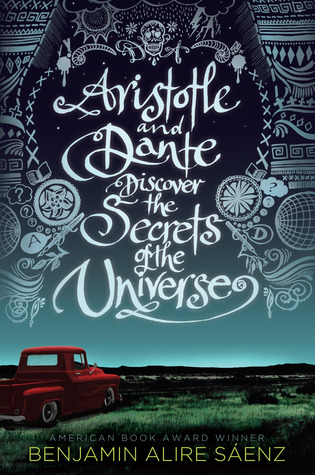
Mexican WhiteBoy     La Linea     Aristotle and Dante Discover the Secrets of the Universe

Secret Saturdays     Confetti Girl     Under the Mesquite

What are you reading?

The Road to Publishing: a Q & A with Andrew Karre of Carolrhoda Books

On Tuesday, Ashley Hope Pérez laid out what it’s like to work with rock star editor Andrew Karre , editorial director of Carolrhoda Books, Carolrhoda Lab & Darby Creek. Today, we have a bonus post, a Q&A between Ashley and Andrew, the last piece in our “Road to Publishing” series. We hope it’s been helpful! All of the posts can now be found if you click on the “The Road to Publishing Series” tab on the menu.

Ashley: What are the rookie mistakes you see first-time authors make during the editorial process?

Andrew: Rushing revisions. There are no points for speed. Although I hope I’ve learned enough to anticipate this and prevent it.

Ashley: What qualities make you look forward to working with an author again on a future project? Any deal-breakers?

OLYMPUS DIGITAL CAMERA

Andrew: A spirit of adventure. The authors I most enjoy working with are excited about the process. They like to use me as a sounding board, as a stress-test for their work. They want to hear my questions and suggestions, but they’re quite capable of going an entirely different direction. I’m not interested in authors who unquestioningly adopt my view of YA fiction. I’m interested in authors who will engage with it and articulate their own. In many cases, editing is a bit of a friendly struggle between the author and me wherein my goal is to lose in an interesting way that highlights the author’s strengths.

Ashley: In what way(s) does your approach to the editing process differ from other editors you know or have worked with?

Andrew: It’s hard to say. I only have second-hand information about how others edit. I tend not to write editorial letters. I prefer to write voluminous marginal notes and have lots of phone conversations (or lunches, whenever possible). Maybe that’s unusual? My goal in a markup is to highlight the places where an author is at the height of her powers and then challenge her to meet that standard throughout.

Ashley: Boundary-pushing is arguably your editorial signature. How does that priority influence the guidance you offer authors during the editing process?

Andrew: I don’t really think about that when we’re editing. Editing is about realizing and reconciling a manuscript’s potential and its author’s vision. It’s about pleasing the two of us, first and foremost. Insofar as we worry only about the limitations inherent in the manuscript, I guess the desire to be unbound is present.

Ashley: Beyond writing (and revising) a novel into its best possible form, what should authors be doing from the time they sign their contract to the time of the book’s release?

Social-media-for-public-relations1Andrew: There are a few practicalities every author should take care of–at least by that point if not sooner. Acquire all your digital real- estate. By that I mean, register a useful domain name, grab a good Twitter handle, etc.  Even if you can’t see how you’ll use them, at least you’ll have them. The only one of these that costs anything is the domain, and that’s cheap. Then, read your contemporaries. And if you can, interact with them as a colleague and fellow traveler. Join the conversations online in much the way you’d join a dinner party conversation: wait for your opening, and take it graciously when it comes. Be interesting, first and foremost. It’s not about selling.

Ashley: I distinctly remember a come-to-Jesus talk we had about social media some time between revisions for What Can’t Wait and the book’s launch day. I remember feeling very overwhelmed. Now, four years down the line, I can see lots of benefits from the relationships that I’ve established by existing online and at least intermittently being present in Twitter and other spaces.

At Latin@s in Kid Lit, we’re working to draw more attention to great books for younger kids as well as teens. What are some of your favorite books to read to or with your boys?  Do their preferences ever surprise you?

Andrew: Henry (5) loves nonfiction at the moment. He loves processes and technical details so we read a lot of things in that vein. I really loved Building Our House by Jonathan Bean. In the coverage of the death of Charlotte Zolotow, we discovered her Over and Over, and that’s been fun.  I still enjoy reading Goodnight Moon to Edmund (18 months).

Ashley: What’s one book that you hope to find in your stocking this holiday season?

Andrew: I still haven’t read NW by Zadie Smith and I generally enjoy her work.

Ashley: Any thoughts on the current state of publishing with regard to the percentages of works by/for/about Latin@s?

Andrew: It seems to me that the level of awareness of the need among publishers is high, as is the desire to find and break out new voices. High enough? I don’t know if it’s possible to say. I know I’m encouraged.

The Road to Publishing: One Take on Working with a (Rock Star) Editor

By Ashley Hope Pérez

In articles and blog posts about breaking into the world of publishing, the lion’s share of attention goes to the writing craft, getting an agent, and securing a book deal. But what happens after those hurdles have been jumped? What can writers expect from their editors once the deal is sealed? And what will editors expect from writers?

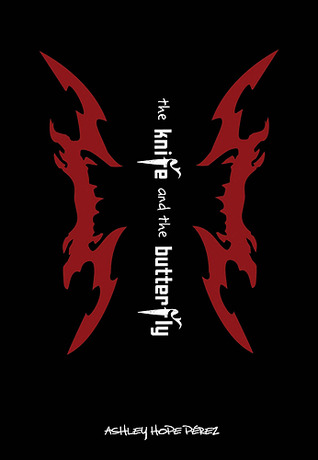
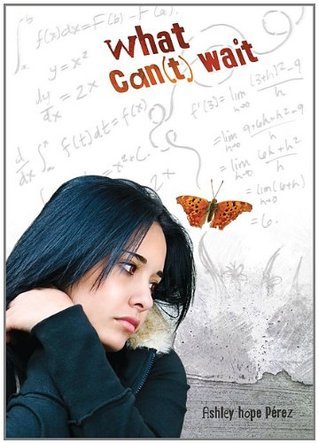
The Knife and the ButterflyBecause writer-editor relationships are endlessly varied, I don’t actually have the answers to these questions. In fact, as I started writing this post, I realized that the only thing I am really qualified to talk about are my experiences working with Andrew Karre, my editor at Carolrhoda Lab. Andrew bought my first two novels, What Can’t Wait and The Knife and the Butterfly, in a two-book deal back in 2009, and now I am in the beginning stages of working with Andrew on a third novel. I can’t say what it’s like for other writers, although you can find some descriptions of authors’ experiences with editors, my favorite being the five perspectives offered up hereWhat Can't Wait

For the editor’s perspective, check out this post from Scholastic imprint editor Cheryl Klein, who also has a book on editing YA. Andrew will stop by the blog on Thursday to toss in his two cents on editorial work; if you want to balance some of my gushing below with more objective reporting, you can read this feature on him in Publisher’s Weekly.

Enough preliminaries. Here’s the scoop I can offer on working with my editor.

What happens after you sign the contract with a publisher? Waiting. Waiting. Waiting. I remember expecting to hear from Andrew the day after the contract was signed, but often there’s a considerable lag (months, friends) between sealing the deal and getting the feedback that will guide the revision. Editors are working on dozens of projects—all in different stages—at any given point. The good ones are expert at juggling these demands and giving each project what it needs.

Isn’t it painful to be told how to revise? To start with, I have to say that Andrew is as close to my “ideal reader” as I expect ever to find. With all three novels, he has grasped the essential aspects of the projects as well as (or better than) I did myself. This fact secures my total confidence in his intuition and editorial recommendations; on top of that, I’ve benefitted from his ability to see subterranean connections that invited development as well as other missed opportunities. So even what might have been “pain” in the process invariably felt crucial to the mission of making the book what it was meant to be.

keep-calm-and-revise--718I should also say that the thought of revision is what gets me through the agony of drafting; revision is my happy zone, where things finally come together. I don’t mind cutting scenes or paragraphs or sentences that I love. I don’t mind writing new material. I don’t mind collapsing subplots, ditching characters, or even radically altering the point of view for 100,000 words of prose. I don’t mind because when Andrew tells me to do these things, I instantly see how much sense they make. For me, Andrew’s vision manages to expand the story’s possibilities while also clarifying what needs to be done to achieve those possibilities.

How, specifically, does the editing happen? I’ve often heard writer friends discuss the editorial letter, which I’m told is a fairly formal write-up of all the things that need to be done in revision for a manuscript to be acceptable to the editor. (More discussion of the editorial letter and an example here ) The editorial letter reflects the major first pass of editing and defines the focal areas for the main revision, after which (everyone hopes) it will be mostly scene- and sentence-level rewriting.

Unless I have suffered some serious memory loss—which is possible since I gave birth to my son during the early editorial process with What Can’t Wait—I don’t think I’ve ever gotten a formal editorial letter from Andrew. Instead, we tend to have several hour-longish phone calls where he tells me what his instincts are as far as what could or should change in the manuscript and why. Perhaps what is most important to me about how these things go is that the “why” is always intimately linked to the internal logic of the novel or its essential characteristics (as opposed, for example, to trends in the market or notions of what teens can “handle”). These conversations generally entail multiple epiphanies on my part and copious note-taking. The macro-level feedback from the phone calls comes along with scene-by-scene feedback via comments and edits in Word.

After responding to the major editorial feedback (over 2-5 months), I submit to Andrew my “final” manuscript. Once he reads and accepts it, I get the second half of the advance (the first half comes with signing the contract). There is still some back and forth and perhaps even some more substantive changes, but all the major pieces are in place. There will be at least one more full read-through with comments to address before the book goes to the next stage of copy-editing (line-by-line stuff and the standardization of things like “OK” for “okay” according to the publisher’s house style), which is done by wonderful people who work under Andrew.

2-14Book-MakingWhat’s next? Then the book goes into production, and a while later (3-6 months) I get an email with galleys that give an idea of what the manuscript will look like as a “real” book. There will also be drafts of jacket copy, which I’m glad I don’t have to write, and cover designs. With What Can’t Wait, I wasn’t in on anything until after the final cover was chosen; with The Knife and the Butterfly, I saw about a dozen preliminary designs and got to weigh in on their relative merits. From contract to the printing of advance reader copies, the process has taken between a year and two.

Any words of advice for those on the road to publishing? The truth is that—at least for your first book—you will have little say in who your editor is. Your agent will submit the book where she or he thinks it’s a good fit, and if an editor bites and makes a reasonable offer, your agent will advise you to accept. There is no room in this process for mailing editors personality tests to check for compatibility.

What you can do is embrace the editorial process as an opportunity to discover more about your novel and your work as a writer. I find that the writer-editor dynamic—inevitably centered on the book—creates an amazing triangle of insight inside of which all kinds of possibilities for the story come into focus. I hope that’s the case for many other writers, too.