Writers: You’re Invited to Our First Ever Pitch Fiesta!

We’re baaaaaaack from vacation and so excited to announce the details for our first ever Pitch Fiesta, an online pitch event that could lead to writer-agent-publisher matches and future books by/for/about Latin@s. This event is open to middle grade and young adult writers. We’re sorry, but no picture book manuscripts this time around. We might have a separate event in the future for picture book writers and illustrators.
Before we get to the application information, let’s introduce our participating agents and publisher:
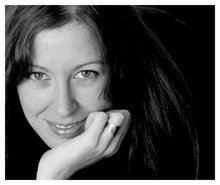
ADominguezSMALLAdriana Dominguez, an agent at Full Circle Literary since 2009, has 15 years of experience in publishing, most recently as Executive Editor at HarperCollins Children’s Books, where she managed the children’s division of the Rayo imprint. She is a member of the Brooklyn Literary Council, which organizes the Brooklyn Book Festival, and one of the founders of the Comadres and Compadres Writers Conference in NYC. She is interested in middle grade novels and literary young adult novels. Adriana has a long trajectory of publishing underrepresented authors and illustrators, and welcomes submissions that offer diverse points of view.
 

29380_10152263632420414_1819881365_n

Adrienne Rosado is an agent at the Nancy Yost Literary Agency as well as the Foreign Rights Director. She is interested in literary and commercial fiction, especially YA, urban fantasy, multicultural fiction, women’s fiction, and new adult, all with strong voices and an authentic tone.  She’s especially drawn to dark humor, innovative takes on classic literary themes, and Southern gothics. Adrienne is also on the lookout for quirky and smart narrative nonfiction, memoirs, pop science, and business books with a creative approach. Please no picture books, chapter books, poetry, or westerns.
 

headshotdeathofrats

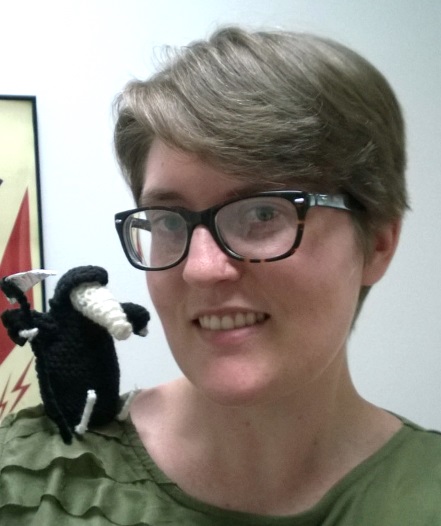
Amy Boggs is an agent at the Donald Maass Literary Agency. She is looking for all things fantasy and science fiction, especially high fantasy, urban fantasy, steampunk (and its variations), YA, MG, and alternate history. She is also looking for unique works of contemporary YA, historical fiction, Westerns, and works that challenge their genre are also welcome. She seeks and supports projects and authors diverse in any and all respects, such as (but not limited to) gender, race, ethnicity, disability, and sexuality. Please no: thrillers, women’s fiction, picture books, chapter books, poetry, screenplays, or any debut work under 30,000 words in length.


sara_sized_160x240Sara Megibow is an agent at the Nelson Literary Agency. Sara is looking for debut authors with a complete novel-length manuscript in any of these genres: middle grade, young adult, new adult, romance, erotica, science fiction or fantasy. Any sub-genre is accepted including paranormal, historical, contemporary, steampunk, fantasy, etc. In short – if you can write it, Sara will read it – as long as it’s 100% complete, novel-length, not previously published and in one of the above genres. Where does Diversity fit in? Sara is looking for manuscripts AND/OR authors representing diversity of religion, race, culture, socio-economic status, ability, age, gender and/or sexual orientation. Sara is on twitter @SaraMegibow and on Publishers Marketplace here:  http://www.publishersmarketplace.com/members/SaraMegibow/
 

_KO Agent Photo

Kathleen Ortiz is the director of subsidiary rights and a literary agent for New Leaf Literary & Media, Inc. She is an active member of AAR and SCBWI. She’s always on the hunt for outstanding stories with strong characters whose voice and journey stay with her long after she finishes reading the story. She loves YAs set within other cultures and experiences across all genres (though she’s a bit full up on sci-fi and dystopian at the moment).
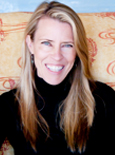


Laura Dial

Laura Dail of the Laura Dail Literary Agency received her Master’s degree in Spanish Literature from Middlebury College (but would prefer to consider works in English). She’s most interested in realistic YA, and funny middle grade and chapter books. She represents fiction and nonfiction, but no picture books, poetry, or screenplays. See more here: http://ldlainc.com/kids-teen-ya/


AP long logo color verticalArte Público Press, affiliated with the University of Houston, specializes in publishing contemporary novels, short stories, poetry, and drama based on U.S. Hispanic cultural issues and themes. Arte Público also is interested in reference works and non-fiction studies, especially of Hispanic civil rights, women’s issues and history. Manuscripts, queries, synopses, outlines, proposals, introductory chapters, etc. are accepted in either English or Spanish, although the majority of our publications are in English.

Piñata Books is Arte Público Press’ imprint for children’s and young adult literature. It seeks to authentically and realistically portray themes, characters, and customs unique to U.S. Hispanic culture. Submissions and manuscript formalities are the same as for Arte Público Press.

Now, here are the guidelines:

1. Writers who are Latin@ or writers of any ethnicity who have included Latin@ characters, settings, etc. in their manuscripts are eligible to apply.

2. You must have a complete manuscript at the time of the Pitch Fiesta. If an agent or editor is interested, you must have a complete manuscript ready to send. So, writers–get writing! Finish that manuscript!

3. Please read and consider what the agents are looking for. Please do not send us a query and first pages in a genre that does not mesh with their lists.

4. We will accept applications from September 2 through October 3. To apply, please send your query and the first 5-10 pages of your middle grade or young adult novel to our email: latinosinkidlit@gmail.com. In the subject line, please write: PITCH FIESTA ENTRY. Please post both the query and the first pages directly into the email. No attachments.

5. One of the Latin@s in Kid Lit members will read and respond to your email. During the month of October, we will help selected writers revise and polish queries and first pages to prepare for the Pitch Fiesta. Even though we will help you with your queries and first pages, please send us your best work. We have the right to reject any applications.

Queries and first pages will be posted on November 12 and 13. If an agent or an editor from Arte Público is interested, you will be contacted.

Exciting, right?

We hope writers will take advantage of this opportunity to present your work to publishing professionals who are actively seeking, and thereby supporting, diversity in kid lit!
Q&A with Pura Belpré Award Winning Author Guadalupe Garcia McCall

By Lila Quintero Weaver

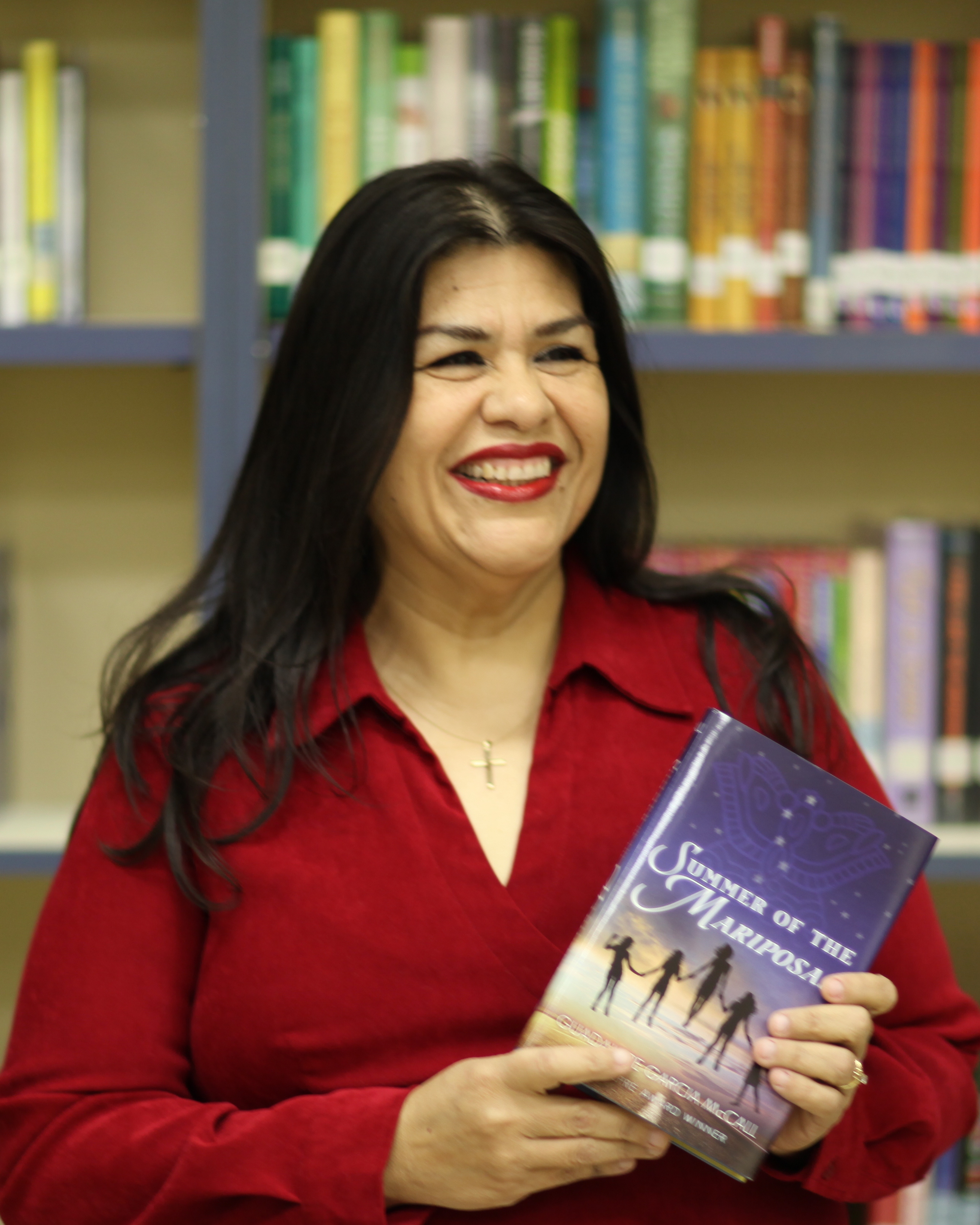
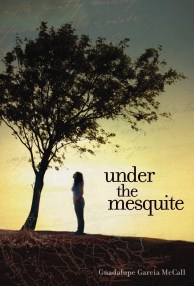
otherUNDERTHEMESQUITEtentativefrontcover3-18-10We’re excited to host a conversation with acclaimed author Guadalupe Garcia McCall. Her first book, Under the Mesquite, won the 2012 Pura Belpré Award and was a finalist for the William C. Morris Debut Award. Her newest work is Summer of the Mariposas, a rich work of fantasy fiction doubly inspired by Homer’s The Odyssey and the mythology of Mexico.

Lila: Guadalupe, congratulations on your wonderful writing career! Welcome to Latin@s in Kid Lit! Let’s get started with a question you’ve probably heard before:

Under the Mesquite is a powerfully intimate coming of age story told in verse. It’s a quiet book. On the other hand, Summer of the Mariposas is a high-energy road trip full of other-worldly characters and action scenes. Describe the paths that led to these diverse creative choices.

Guadalupe: Interestingly enough, both books were born out of my classroom experiences. Under the Mesquite came about because I was teaching my students how to write poetry. I wrote for them, as a way of modeling how easy and accessible poetry is if they focus on using their memories to write poems full of life’s experiences. After many years of teaching poetry (and collecting my little poems in my poetry unit folder), I realized that I had a good size collection of poems about my childhood which I could submit for publication. With the help of Emily Hazel, my editor at Lee & Low Books, that collection eventually evolved into Under the Mesquite.

After Under the Mesquite, I was bouncing around ideas for my next book, not really committed to anything, when one of my female students made the comment that all the books we read in class (we were studying Homer’s Odyssey) were about men—men having adventures, men defeating monsters, and men becoming heroes. This really upset my female students, and on her way out of my classroom, that same young lady told her friend, “It’s not fair. We need our own Odyssey!”

And that was it. That was my “light bulb” moment. Actually, it was more like a giant, blinding spotlight cast over a dark, neglected corner of our classroom that I couldn’t ignore as I drove home that afternoon. My girls were right. They needed to see themselves in literature. They needed their own stories to show the world that they are strong, and courageous, and smart. So I took out the sticky notes and started plotting out a Girl-Power adventure story using the Hero’s Journey just for them, for my “muchachas.” But as I worked on it, something else came to mind. Why use the same old Greek gods and monsters? Why not use our own mythology? We have just as many great characters to choose from in Mexican lore. And so it began, the frenzied scribbling and joyous giggling that comes when you first start plotting out a story—the discovery, the freedom, the breakthroughs—it’s all very intoxicating! I have to admit, I had a lot of fun writing Summer of the Mariposas because I knew my girls were hungry to read something like it.

Lila: Along with its supernatural elements, Summer of the Mariposas carries an understated but clear message of feminine strength and resilience. You force your characters to confront family challenges and heartbreaks. What do you hope to give young readers through this story?

FINALmariposas_cover_loGuadalupe: When I started writing Summer of the Mariposas, I wanted to tell a fun female story. However, I also knew I wanted to showcase the strength and resilience that it takes for a young lady to come of age and embrace womanhood in our society. I wanted young girls to believe in themselves and trust that a female is just as equipped to take care of herself and her loved ones as her male counterpart. That they are lacking nothing—that all young ladies have the courage to take life by force and the wisdom to attain their goals.

Lila: I’m sure you’ve been attuned to the recent conversation on diversity in literature, especially in children’s and YA publishing, which has stirred up a lot of media attention. One article quoted Matt de la Peña as saying, “Where’s the African American Harry Potter or the Mexican Katniss?” As a Latina writer, you must have well-formed opinions on this topic. What are your concerns? And what are your dreams for diversity in kid lit?

Guadalupe: Matt and I must be on the same wavelength because I asked a similar question about a year and a half ago, and I posted it on Facebook in a conversation with my publisher about gaps in children’s literature. We were talking about genre-specific gaps, and I asked a question along the lines of “Where is the Mexican-American Johnny Tremain?” I think it is very important that we start answering these questions. Not with words, but through action.

Listen, this fence is about to crumble. It’s got so many holes in it. The change in the face of our nation (diversity in our classrooms) is not forthcoming. The Change is here. The Change is upon us. We “have” diverse classrooms—and our students are missing the sound of their voice in the narratives available to them. It’s too late to “think” about it or “research” it or “plan” for it. No. It’s time to take action. Publishers need to be addressing the fact that there are not enough diverse children’s and YA books to fill the huge gaps in children’s literature. They need to be actively seeking out new and existing talent and publishing the books that will fill those gaps.

Lila: In addition to authoring books with strong Latino themes, you’ve also taught middle school (and now high school) in Texas. What are your thoughts about turning young Latinos into readers and writers?

Guadalupe: There is this great attitude in South Texas, especially along the Rio Grande Valley, border area, and that is that books are amazing and that their creators, namely authors, are ROCK STARS! The teachers, administrators, district personnel, and especially the community have made it their mission to make books and their creators accessible to children. They seek out grants and special programs and make every concerted effort to continue to feature books and their authors in their schools. They see reading and writing as the greatest assets, the most important tools in their children’s toolbox. I really admire that. I wish that was the case with every teacher, every administrator, every district, and every community in the world. Life would be sweet if we were all about education. I know that I’m being very naive here (with all the other problems to be solved in the world), but I do truly believe in building life-long learners through reading and writing! Reading and writing make up the foundation of learning, and a good book can draw a child in as well as any electronic gadget if presented in the right light, with the right attitude, and with the same attention corporations give to marketing video games, apps, and cell phones. It would mean flipping a Goliath of a paradigm on its ear, and the willingness to take on the fight, but it can and should be done, for our children’s sake!

Lila: Let’s get practical. You work a full-time job and yet somehow manage to write complex novels. What are the habits that help you produce? Is there a piece of writing advice that a mentor gave you which still rings true? What have you discovered on your own that guides you in attacking a new project?

Guadalupe: My habits? Well, I sit down every day to tap at those keys. Sometimes I take a cup of coffee to the porch and write as the sun rises on the weekends. Sometimes, I write the minute I get home from work. And sometimes, I pull over on the side of the road and write in my vehicle on the way to the grocery store because I don’t want to lose that terrific line. Most often, though, I get up in the middle of the night and write in my jammies because that’s when my brain wants to create.

Whatever the case may be, it’s important for me to write every day, to “touch the work every single day!” I heard that somewhere, or maybe I read it. I’m not sure which, but it’s very true. I find that the longer I stay away from writing, the harder it is to get back in the groove of it. It’s like being an athlete. If you don’t keep working out, you lose muscle, and you won’t win any races or bring any trophies home if you don’t work out every day. So this is the advice I pass on to my students,” Work out those writing muscles every day. Read. Write. Read. Write. Read. Write. Oh, and don’t be afraid to catch the latest movie or keep up with your favorite TV show. It’s good research! ”

Lila: Speaking of new projects, you must be working on something. What can you share about it?

Guadalupe: I am working on a YA historical set in Texas during the Mexican Revolution, after the discovery of the Plan de San Diego and all the strife and conflicts of that time period on this side of the border. It’s something that is very close to my heart because I think it’s an important time in “our history” that hasn’t been explored or talked about much in our classrooms. The maltreatment and persecution of Mexican Americans in South Texas during that time is either ignored or glossed over in our textbooks and there is literally little to nothing in YA fiction that touches on the struggles Hispanics experienced during that devastating time period in American history. I really can’t share too much of the plot except to say that it is my attempt at filling in a gap and answering the questions, “Where is the Mexican-American Johnny Tremain? Where is our historical perspective, our ancestral Mexican-American voice?”


IMG_2964 (2)Guadalupe Garcia McCall is the author of Under the Mesquite (Lee & Low Books), a novel in verse. Under the Mesquite received the prestigious Pura Belpre Author Award, was a William C. Morris Finalist and received the Ellen Hopkins Promising Poet Award, the Tomas Rivera Children’s Book Award, and was included in Kirkus Reviews’ Best Teen Books of 2011 among many other honors and accoladesHer second novel, Summer of the Mariposas (Tu Books, an imprint of Lee & Low Books), won a Westchester Young Adult Fiction Award, was an Andre Norton Award for Young Adult Science Fiction and Fantasy Finalist, and was included in the 2013 Amelia Bloomer Project List, the Texas Lone Star Reading List, and the 2012 School Library Journal’s Best Books of the Year.

Her poems for adults have appeared in more than twenty literary journals across the country and abroad, and her poems for children are included in The Poetry Friday AnthologyThe Poetry Friday Anthology for Middle School, and The Poetry Friday Anthology for Science. Ms. Garcia McCall was born in Piedras Negras, Coahuila, Mexico. She immigrated with her family to the United States when she was six years old and grew up in Eagle Pass, Texas (the setting of both her novels and most of her poems). She is currently a high school English teacher in the San Antonio area and lives in Somerset with her husband, Jim, 2 dogs (Baxter and Blanca), 1 cat (Luna), and her two (of three) college age sons, Steven and Jason.

Writers and Cantantes: How Music Inspires While Writing

By Zoraida Córdova

My least favorite feeling is the moment I dig in my purse and realize I left my headphones at home. ARGH! Not only is it a terrible thing because I hate the sound of the busker butchering Wonderwall on acoustic, but it’s because I love music. No Bella Swans up in here.

This is not to say that my taste in music is great. I will never understand Lana Del Rey and sometimes I like country songs (I hope you can still accept me as a friend.) But music, like all things we invest our love into, is a matter of personal taste.

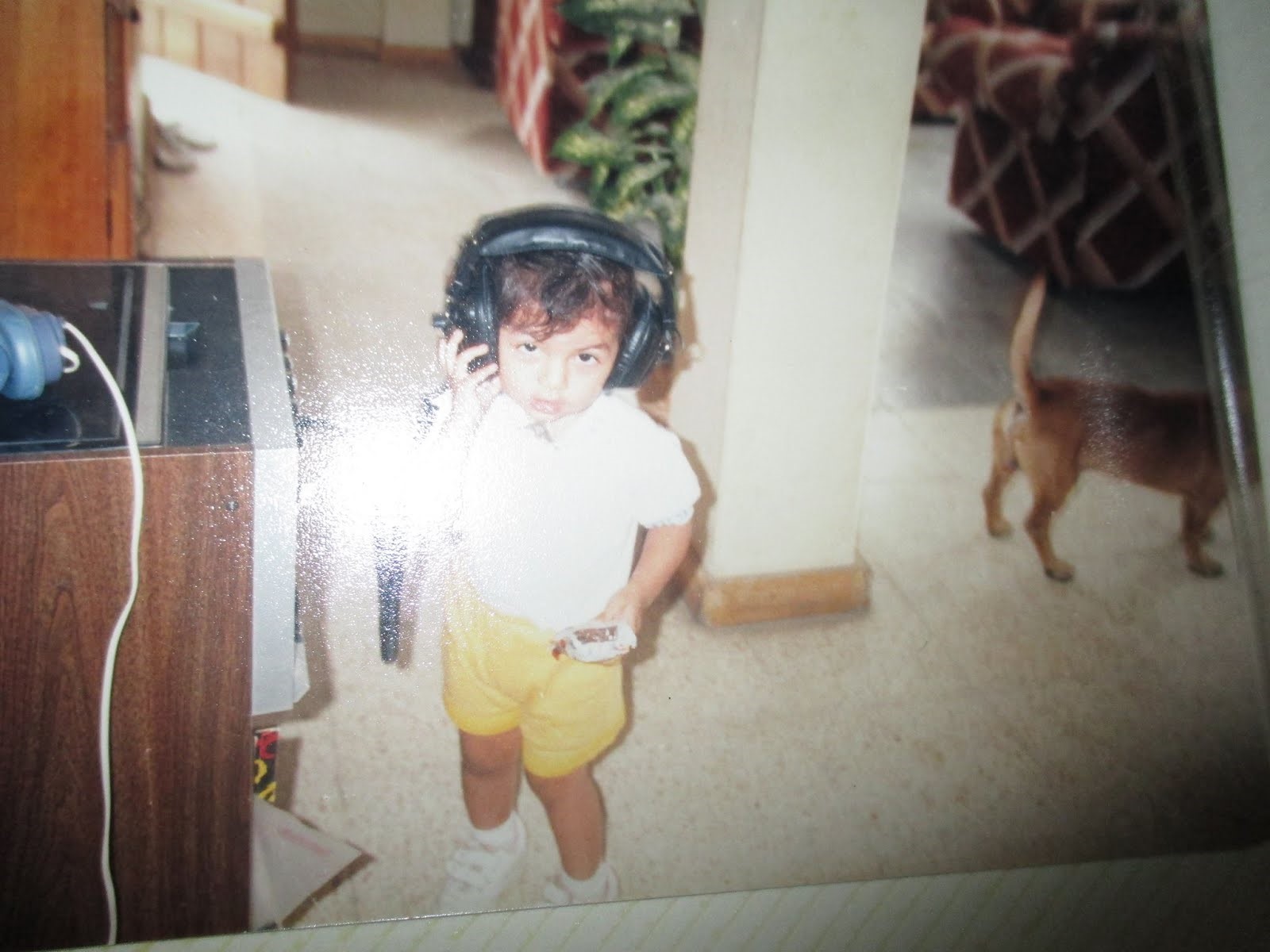
One of my favorite stories my grandmother tells me about my childhood is that when I was a baby, the only way to get me to shut up was to put a radio beside my hammock (crib? What you think I am, a Queen?). So for as long as I can remember, I’ve been listening to the smooth stylings of Lisandro Mesa, Oscar D’Leon, Ruben Blades, and because I’m Ecuadorian, Julio Jaramillo.

Zoraida pic1How many of you need playlists when you’re writing? I certainly do. Music has always gotten my creativity flowing, and I especially love Latin music because it always tells a STORY. (Sometimes it makes me sad that younger generations don’t get the Salsa greats and instead get “I LUH YA PAPI” by JLo, but that’s a different story.)

When I was 5 , I didn’t understand that “No Le Pegue La Negra” by Joe Arroyo told the story of how African slaves were brought to Colombia in the 1600s and started intermarrying with the Natives. The Spaniards would beat the African women and then people would rebel. While that’s kind of a morbid thing to be listening to when you’re little, these were the songs I grew up with.

Most Latin pop ballads by Christian Castro and Chayanne are about how they can’t be with the girl, but they’re in so much love, oh my god. Shakira’s original Rock Latino songs were a mix of Colombian vallenato instruments and electric guitars and all of her words used to be pure poetry. The other day I felt really moody on my train ride to work, so I put on Selena’s greatest hits and a bidi bidi bom bom later, I was in a perfectly good mood. See, my grandmother had a good idea all those years ago.

These are the sounds, I realize, I have had in all my writing playlists. My Maná is mixed in with my Red Hot Chili Peppers and my Celia Cruz is mixed in with my Goo Goo Dolls. Whether I’m writing about mermaids in Coney Island or I’m working on a contemporary romance set in Boston.

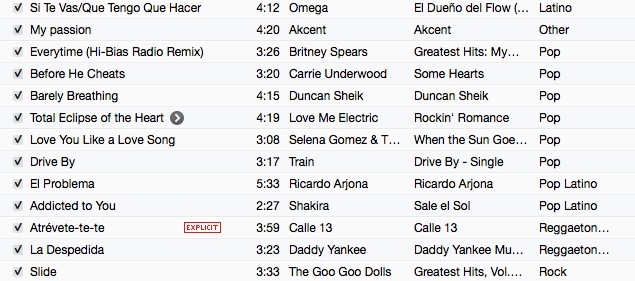
I leave you with a random sampling of the last songs I listened to on iTunes.

Zoraida Pic2

What do you listen to when you write? What was your favorite song growing up? Share with us in the comments!

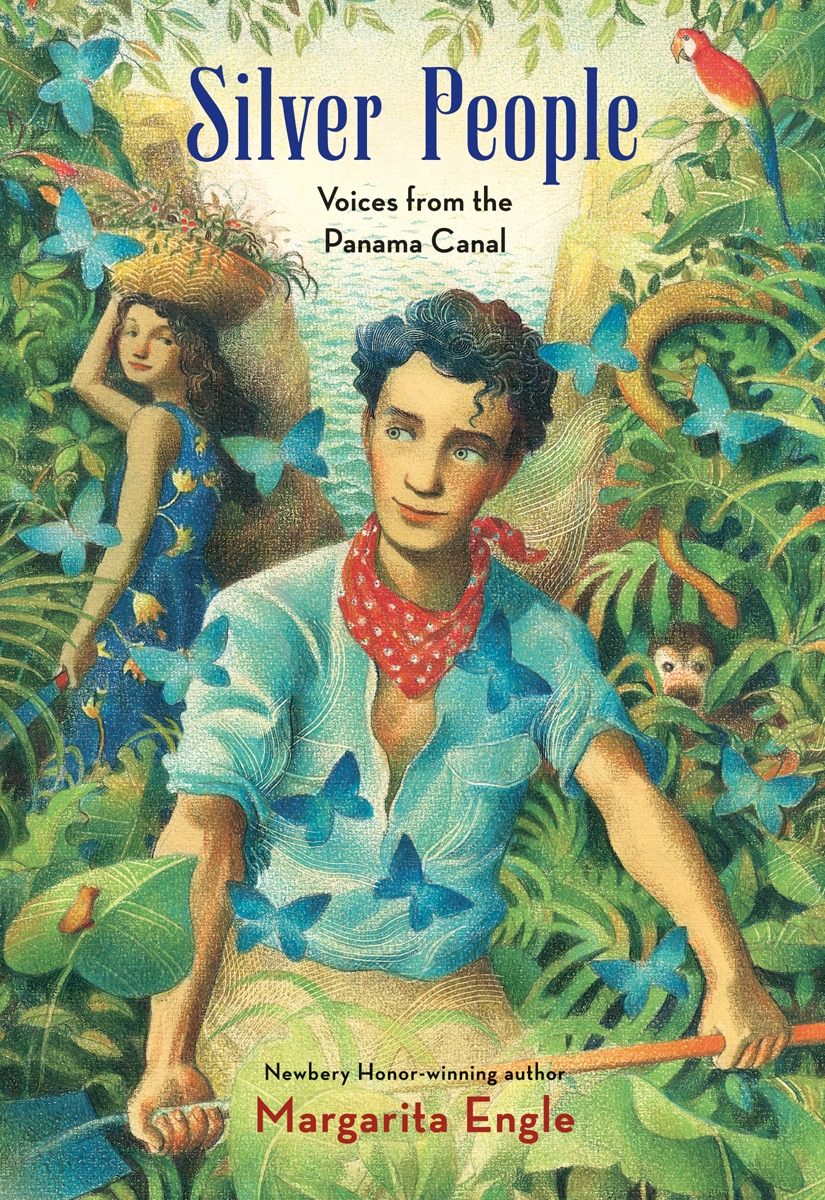
Guest Post: Margarita Engle’s Passion for Writing About Hope and Forgotten Heroes

.

By Margarita Engle

Recently, I was asked what “legacy” I hope to leave by writing. Legacy is an intimidating word, but at least one portion of the answer is fairly simple. I love writing about independent thinkers who have been forgotten by history. These lost heroes might have been celebrated in their own times, or they may have worked in such obscurity that their names are unknown. Many are famous in their countries of origin, but have never been introduced to readers in the U.S.

Just a few years ago, any library search for children’s books about Latinos would have revealed little more than a series of shamefully inaccurate works glorifying brutal conquistadores. During the interim, excellent biographies of César Chávez and Sonia Sotomayor have been added, along with a handful of beautiful picture books about artists, writers, and musicians.

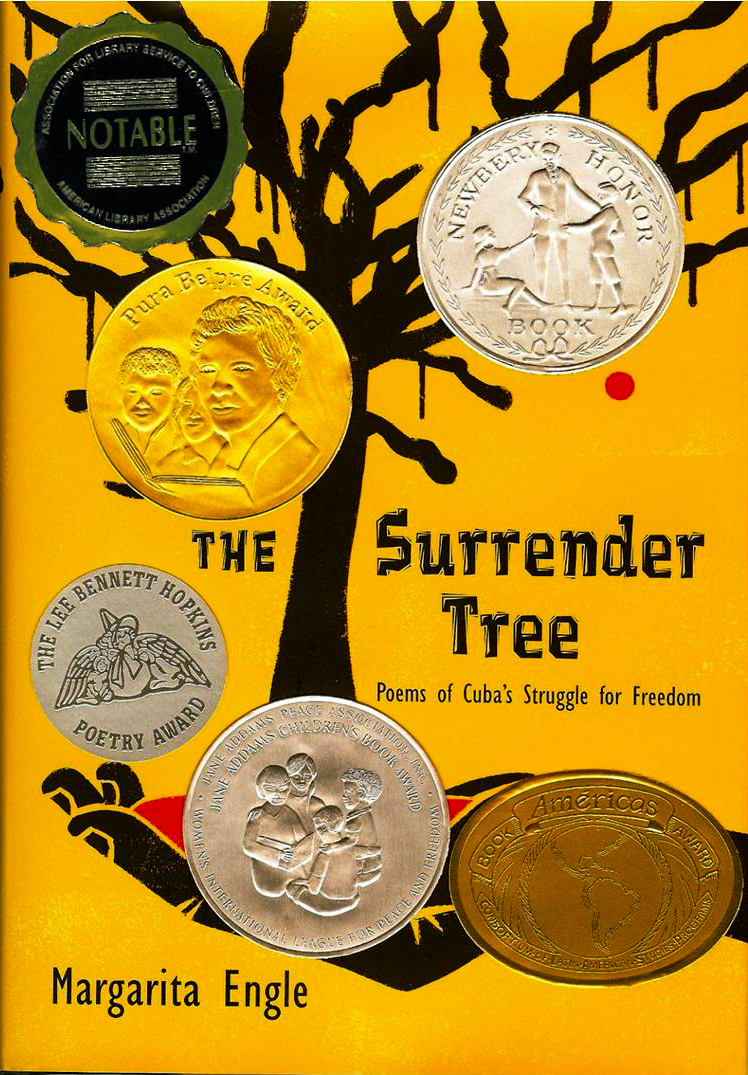
Surrende TreeThe work of reclaiming lost heroes has barely begun. My own approach is not strictly biographical because I love writing verse novels, and I also love writing first person interpretations of historical events. I often mix historical figures with fictional characters. In other words, I feel free to explore, experiment, and imagine. It’s a process that feels like time travel. Diaries, letters, and journals are my most important research materials, because they contain the emotional essence of history, along with the meticulous details of daily life. When I wrote The Poet Slave of Cuba, I was fortunate to have access to Juan Francisco Manzano’s autobiographical notes, which had been smuggled off the island by British abolitionists. For The Surrender Tree, I could not find anything written by Rosa la Bayamesa or any of Cuba’s other courageous wartime nurses, so I read the diaries of rebel soldiers, as well as interviews with reconcentration camp survivors. The Lightning Dreamer is based on the poetry and prose of Gertrudis Gómez de Avellaneda, who wrote a groundbreaking interracial romance novel that was published more than a decade before Uncle Tom’s Cabin. Not only was Sab far more daring, it was also more influential in Europe and Latin America. So why don’t North Americans know Avellaneda’s name? Does it make sense to learn only about our own little corners of the world?

Hope is at the heart of every topic I choose. I love to write about people I admire. In general, I admire them because they were independent thinkers, far ahead of their times, or because their courage took the form of kindness. I don’t see history as a series of wars, with dates of battles to memorize and names of generals who are automatically assumed to be heroic. My heroes are the ordinary people who made hopeful choices in times that must have seemed hopeless. Tropical Secrets and Silver People are examples of topics so huge—the Holocaust, and construction of the Panama Canal—that I chose to write primarily in the voices of fictional composite characters, rather than individual historical figures. For Hurricane Dancers, the absence of first person indigenous Cuban accounts of the Conquest forced me to rely on a combination of legends, imagination, and the diaries of priests. I read the journals of conquistadores with skepticism, because they were written with a specific agenda—trying to make themselves look heroic, so that they could apply for additional funds from the Spanish Crown.

final Silver People cover-1Lightning Dreamer notable-1

Not all of my books are verse novels, and not all are for young adults. One of my favorite challenges is writing picture books about people who are not considered “famous enough” for biographical works. This limitation has actually helped me present my historical picture book manuscripts simply as inspiring stories, instead of struggling to make the subjects seem more famous than they are. Some are not famous at all, simply because Latinos, other minorities, and women, have generally been omitted from earlier historical writings. Sadly, recent history books tend to copy the earlier ones. The result is an entire segment of classroom curricula and pleasure reading with no representation of forgotten groups.

At present, I have several biographical picture books already in the publishing pipeline, and several that are still searching for publishers. None of them are about easily recognized names, if you live in the U.S. Thankfully, with the help of wonderful editors and fantastic illustrators, I hope that these picture books will inspire young readers. Drum Dream Girl (Harcourt, 2015) is being illustrated by the amazing Rafael López, whose gorgeous art will help illuminate the life of a ten-year-old Chinese-African-Cuban girl who broke the island’s taboo against female drummers. The Sky Painter (Two Lions, 2015) will have beautiful, scientifically accurate illustrations by Aliona Bereghici, to show how a boy of Puerto Rican origin became the world’s greatest bird artist, by allowing birds to live, instead of following Audubon’s tradition of killing and posing them.

If children have heard Latin jazz or visited New York’s Natural History Museum, they’ve heard and seen the results of Millo Castro’s courage and Louis Agassiz Fuertes’ kindness, even though they are unlikely to have seen those names in a library or classroom. I firmly believe that it is time to make room for books about the lives of people who should be famous, rather than limiting young readers to books about people who are already famous.

No discussion of biographical writing is complete without the subject of autobiography. Writing a childhood memoir has been the greatest challenge of my life. It is strictly nonfiction—no imagining, only remembering. Certain memories are excruciatingly painful. I love recalling childhood trips to visit my extended family in Cuba, but I dread remembering the October 1962 Missile Crisis that ended those journeys. Enchanted Air, a Cold War Memoir (Atheneum, 2015) combines the two. Positive and negative. Joy and sorrow. Despair and hope. With a powerful cover illustration by one of the world’s greatest artists, Edel Rodríguez, this memoir already feels like my life’s work. It is a book that helps me reclaim the separated half of my family, and along with them, the half of my identity that was almost destroyed by politicians.

Writing about lives is a process of exploration, so even though the memoir feels like my life’s work, I’ve already found other people I hope to depict in verse novels and picture books. I’ve returned to the research stage, reading history, and deciding which parts of history have not yet been honestly portrayed.

****

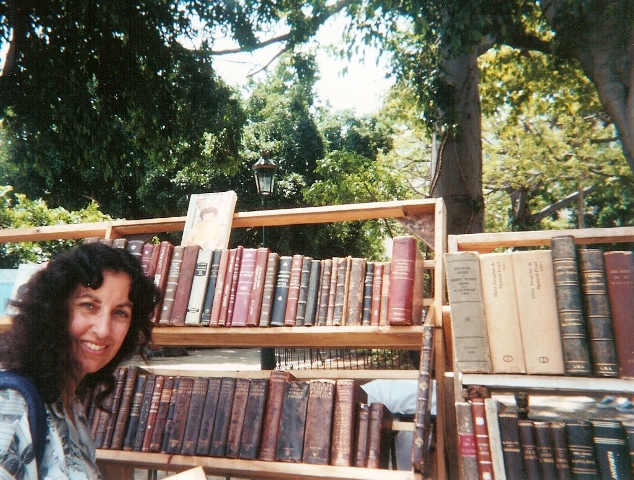
Margarita-HavanaMargarita Engle is the Cuban-American author of many young adult verse novels, including The Surrender Tree, which received the first Newbery Honor ever awarded to a Latino/a. Her books have also received multiple Pura Belpré Awards and Honors, as well as three Américas Awards and the Jane Addams Peace Award. Margarita’s newest verse novel is Silver People, Voices From the Panama Canal, and her newest picture book is Tiny Rabbit’s Big WishShe lives in central California, where she enjoys hiding in the forest to help train her husband’s wilderness search and rescue dogs. For more information, visit her author site and enjoy interviews by Caroline Starr Rose  and Robyn Hood Black.

Seven Things You Need to Know About After the Book Deal

By Maria E. Andreu

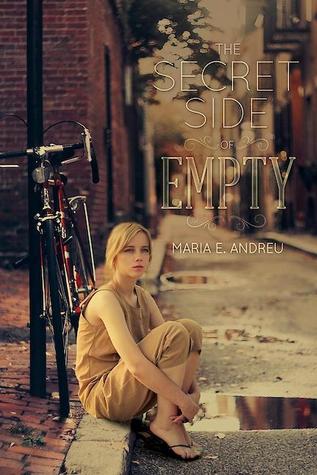
18079898Have you ever noticed that, in romantic comedies, the end is very often a wedding? What’s up with that? Love stories don’t end at a wedding. That’s when real life begins, the business of figuring out who does the laundry, where you’re going to live, and how in the world you figure out where you spend Thanksgiving and Christmas. It’s the same thing with publishing. The day you ink the book deal may be the happy ending in the movie version, but in real life it’s just the start of the story.
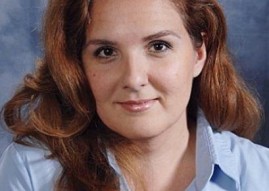
After many years of dreaming of being a writer, I got my movie-worthy happy ending. I got the first agent I pitched for The Secret Side of Empty, from a house so prestigious just reading their client list gives me goose bumps. We sold the book in the first round of submissions to a publisher who has done amazing things for the book, truly an ideal publisher for my first time at the rodeo. (And there was more than one offer to weigh). Anyone who hears my publishing story wants to stop me there and sort of bask in the moment, happy in the knowledge that it does happen that way sometimes. And it does.

But then you wake up the next day.

Just like no one tells you what to do once you get back from the honeymoon, here are 7 things no one will tell you about what it’s like AFTER the book deal.

  1. Editing is terrifying. Sure, you’ve edited before. You’ve joined critique groups. Maybe you’ve been brave and gone to pitch slams and other places where your words have been torn apart and criticized. Great. Now you’ll have a team of bona-fide professionals poring over your every word. I got an editorial letter so detailed that I shut the document immediately after seeing its page count (let’s just say this: it was in the double digits) and couldn’t make myself open it for 2 weeks. Be prepared. It’s not about you. It’s about making the work the best it can be.
  2. Book promotion is exhausting. Yes, you’ve waited your whole life for it. Yes, you’re going to love most of it. And you’re going to be exhausted anyway. You’ll be thrilled to learn that your publisher will schedule a blog tour for you (maybe, if you’re lucky). You’ll forget that it means you’ll have to actually write all those posts, answer all those interview questions, send head shots, book covers and photos of your frizzy hair in the 8th grade or the bicycle you learned to ride on. Then you’ll go to schools, libraries, festivals, and grocery stores and auto body shops too, if they’ll take you. Fun, yes. Mostly. Take naps now.
  3. Your launch date is not real. Just like a lot of brides stress the wedding and forget it’s actually a marriage they should be planning, so too a lot of authors obsessively plan the Twitter party and Tumblr extravaganza that will be their Launch Day, forgetting that it isn’t really even a Real Thing. My books shipped almost 3 weeks early. When I asked, a helpful professional told me, “Unless your name is J.K. Rowling, no one’s taking up warehouse space to perfectly orchestrate your big reveal.” It will help you to remember that book promotion, like a marriage, is something that you’re in for the long haul. So don’t stress the day so much and come up with a long-term strategy.
  4. It’s a crowded marketplace. You thought it was hard to get attention when you were in the throng of hopefuls? Wait until you see your book on a shelf full of all the others who broke out of the pack. You’ve got a couple of seconds to catch a potential reader’s attention, online and off. If the competition of trying to get published bothers you, you should know it doesn’t stop after your book is out in the world.
  5. Reviews hurt. Bad reviews can cut you to the quick. Even good ones can sometimes leave you scratching your head. Much ink has been spilled advising writers not to let critics get to them. That’s great advice. Also pretty hard to follow, particularly at first when you’re hungry for any sign of how your book is doing and what people think. My advice is to ignore reviews completely – good and bad. It is advice you will not follow. Hold on, I’ve got to go check my Goodreads page real quick.
  6. People will find things in your book you didn’t realize were there. I’ve had readers ask me about love triangles I didn’t intend to include and legislation I didn’t mean to reference. I’ve had readers write to tell me they love a character and a whole bunch of others reach out to tell me how much they loathe that very same character. All with supporting evidence. When you release your book out into the world, it is no longer yours alone.
  7. It will be hard to find time to write. Do you struggle with finding time now? Imagine having all the responsibilities you have now, except take away a lot of your free time on weekends and evenings (because you’re at book festivals and you’re writing blog posts). Now write. That’s what it’s like to try to write books # 2, 3 and beyond.

Lest I seem like too much of a downer, let me say that publishing my debut novel has been magical, the culmination of a lifelong dream. I’ve been honored to speak at schools and libraries and events all over the country and have received wonderful attention from the trade reviewers. I’ve gotten the tingles when I discovered that my book is in libraries as far away as Singapore, Australia, and Egypt, as well as across the United States. Just imagine… my words being read by someone right now somewhere halfway around the globe. Amazing! I share my “things no one will tell you” not to discourage you, but to invite you to look at the whole picture. Like anything worth striving for – a marriage, parenthood, career – publishing a book is a massive undertaking with highs and lows. Once you reach the peak of Published Author, there is another one, just as big, right in front of you. Then another, and another, all the way to the horizon. And that’s what makes it beautiful.

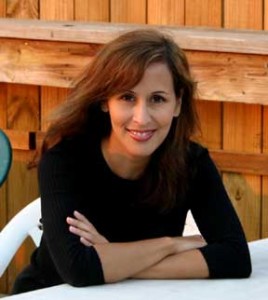
Maria AndreuMaria E. Andreu is the author of the novel The Secret Side of Empty, the story of a teen girl who is American in every way but one: on paper. She was brought to the U.S. as a baby and is now undocumented in the eyes of the law. The author draws on her own experiences as an undocumented teen to give a glimpse into the fear, frustration and, ultimately, the strength that comes from being “illegal” in your own home.

Now a citizen thanks to legislation in the 1980s, Maria resides in a New York City suburb with all her “two’s”: her two children, two dogs and two cats. She speaks on the subject of immigration and its effect on individuals, especially children. When not writing or speaking, you can find her babying her iris garden and reading post apocalyptic fiction. You can also find her on Facebook and Twitter.

The Secret Side of Empty has received positive reviews from Kirkus and Publisher’s Weekly, among others. The novel was also the National Indie Book Award Winner and a Junior Library Guild Selection.

Author Angela Cervantes On Publishing & Her Animal-Loving Latina Protagonist

By Cindy L. Rodriguez

Today, we are thrilled to have a Q&A with author Angela Cervantes, who talks about her debut novel, Gaby, Lost and Found (Scholastic), her advice for pre-published writers, and a little about how she crafted a wonderful middle grade novel that’s both funny and heartbreaking. Angela is also super generous and is offering a signed book, a poster, and a T-shirt to one lucky winner. Click on the Rafflecopter link here or at the end of the post to enter!

Gaby Lost and FoundCR: Since this is your debut novel, can you tell us about your publishing journey. Were there any things you did in particular that, in hindsight, you think were particularly helpful as you pursued an agent and book deal? What advice would you give to pre-published writers?

AC: My middle grade novel, Gaby, Lost and Found has been out almost 10 months now, and I’m still learning things about myself and the publishing journey. In the beginning, when I was a simple wanna-be-Kid Lit author with a manuscript, the idea of facing the publishing industry was scary.If you had met me then, I would have told you that I’d rather pick up a hitchhiker with face tattoos than have to face the world of slush piles and soul-less rejection letters.

Eventually, I realized that if I loved my book enough, I had to be willing to take on rejection. After all, the worst things they can do to you is ignore you completely or reject your work. Tough, but big deal. Every writer in the history of the written world has received a rejection or been passed up at some point, right? If they rejected my work, I was in good company.

I could go on and on with advice for pre-published writers. Never pick up hitchhikers with face tattoos! Really, I’ve learned so much. First, I would start with the very basic: If you’re going to go the traditional publishing route, like I did, then you must finish that manuscript. You have to show the agent something fast when they ask for a partial or full manuscript. My second advice is to take that completed manuscript to a writing critique group. Feedback is crucial. I belong to a critique group called the Firehouse Five (although we are six now) and we meet monthly to provide critique to each other’s work. It’s priceless. My final advice, take your writing-group-critiqued and completed manuscript to a local writers’ conference and sign up for a pitch or first pages sessions with an agent. I met my agent through a writer’s conference. She liked my pitch, but made it very clear there was plenty of work to be done on my manuscript before she’d offer representation. I did the work and I was signed. With her guidance, I made more revisions and it was sent off for submission. Soon, the first rejection arrived. It didn’t kill me. A week or so later, I received an offer for my first novel. Yay!

Angela C and brother

From her website: Angela, age 10, with her brother Enrique and their dogs, which were the inspiration for Spike in the novel.

CR: I love how you mixed Gaby’s story with the animals’ stories, how they were both in new situations and looking for new homes. How did you get the idea to address the subject of immigration for a MG audience, using homeless animals as a link to Gaby’s situation?

Thanks, I’m glad you enjoyed it. I really didn’t start with the idea to address the subject of immigration. I’m character-driven in my writing so I started with just Gaby, a funny, smart, and brave girl who is also a serious animal lover like her mom. I think if I had started out subject-driven with the intention to write a book on the issue of immigration, it would have been a much different novel. It would have come across as more lecturing and I don’t like to lecture or be on the receiving end of a lecture. No thank you. And kids don’t want to be lectured to either. At school visits, kids always ask me about deportation, but more in the context of why or how this happened to Gaby. They always tell me that they want Gaby and her mom to be together. They’re invested in Gaby’s happiness. It’s precious.

CR: Even though Gaby is dealing with the serious issue of her mother being away, she is also a “typical” MG girl, laughing and doing silly things with her male and female friends. Was this a conscious decision on your part, to show a range of emotions and not have it be an “issue” book or overly depressing?

AC: It’s funny that you ask that because my original drafts were even more depressing! I pulled a lot out during the revision process because the story was going in all sorts of directions. What got me back on track was again focusing on Gaby and who she was and not what she was going through. Gaby is an eleven year old girl. She loves animals. She loves glitter. She can climb trees and beat the boys at a water balloon fight. Would Gaby be defeated by bullying at school, the loss of her mom, the neglect of her father, and poverty? Or would this young girl rise up, even if she responds with some missteps, and show us what she’s made of? For me that was the only conscious decision on my part in writing this novel. I had to be true to Gaby and not define her by what she was going through, but show where she was going.

CR: Are you an animal lover? Did you have to do any particular research about animal shelters or spend time at one to capture what happens there?

AC: Besides my many years of experience as an animal lover and pet owner, I did visit several local animal shelters for information and inspiration. At the animal shelters, I asked tons of questions, held a lot of cats, wrote a lot of notes and pet a lot of dogs for this book. Why can’t all research be that much fun?

CR: What are you working on now? Can you share what’s next for you?

AC: Sure! I’ve completed my second middle-grade novel and I am now in the throes of revision. Fun stuff! Wish me luck.

Angela Cervantes

Angela Cervantes was born and raised in Kansas, with most of her childhood spent in Topeka in the Mexican-American community of Oakland. Angela has a degree in English and an MBA, and she is the co-founder of Las Poetas, a Chicana poetry group that has developed into the Latino Writers Collective. In 2005, her short story, “Pork Chop Sandwiches,” was published in Chicken Soup for the Latino Soul. In  2007, she won third place for Creative Nonfiction in the Missouri Review’s audio competition for her story “House of Women” and Kansas City Voices’ Best of Prose Award for her short story, “Ten Hail Marys.” In 2008, she was recognized as one of Kansas City’s Emerging Writers by the Kansas City Star Magazine.

Gaby, Lost and Found is her first novel.

Click HERE to enter the giveaway. One winner will receive a signed copy of Gaby, Lost and Found, a poster, and a T-shirt. You can enter for free once each day. A winner will be chosen on Saturday, 5/24/14. Good luck!!