
By Marianne Snow Campbell
Today we’re very pleased to host a dialogue with Diana López in honor of her newest middle grades novel, Nothing Up My Sleeve, which released on April 19. This book follows three friends – Dominic, Loop, and Z – as they discover the exciting world of stage magic one summer. It’s equal parts humor, character study, and magic lessons – a fun and fascinating read. After finishing Nothing Up My Sleeve (click here for our book review), I was definitely curious about Diana’s creative process, so I’m very grateful that she was able to answer these questions for me. Enjoy!
I love the backdrop of stage magic in Nothing Up My Sleeve. What inspired you to explore this topic?
 My husband, Gene, inspired me. I wouldn’t know the first thing about magic if it weren’t for him. He’s an aficionado with a great collection of magic books, props, and videos. Over the years, I’ve been a tagalong at magic lectures and conventions, including the TAOM convention that I write about. Magicians are so creative, and if you think about a magic performance, you’ll realize that it’s just another form of storytelling. How could I resist? I had to write this book! And I had so much fun finding magic tricks that resonated with the characters’ personal lives. This is what stories do—give us tools for coping and for celebrating life.
Another important source of inspiration comes from my nephews who turn absolutely everything into a competition. Think about it. Competitions are wonderful for writers because they have a built-in sense of conflict—you’re “fighting” against others but you’re also fighting against yourself as you work to problem-solve or overcome insecurities. In a sense, a competition is a form of story, too.
Also, could you describe your process in creating this book?
I carry a little notebook around and jot down bits of dialogue or names of interesting things. I sometimes take pictures, too. Anything that feels like a good detail for a story. The magic shop, Conjuring Cats, is completely inspired by JCR Magic in San Antonio, for example.
Eventually, I realized that I wanted to write about three boys at a magic competition. But who were they? What kind of magic did they do? What else were they dealing with? To find out, I had to do a lot of exploratory writing, stuff that never gets into the final novel. It’s my way of searching for voices. And with three boys, I needed three voices that were distinct.
Once I had the voice and general sense of where the book was going, I started drafting. I’m not an outliner. I prefer to write, rewrite, rewrite, and rewrite. Stuff gets moved around, deleted, added, and the story eventually works itself out. I know it’s not the most efficient way to write, but for me, it’s the most enjoyable.
What made you decide to use three narratives? How did you go about developing Dominic, Loop and Z?
My previous books follow one character, so using three narratives was a new experience for me. From the beginning, however, it felt like the best approach for this novel. I love competitions—sports, board games, reality shows like Survivor or Amazing Race. It’s fun to root for someone, but often, I find myself rooting for more than one person. Something similar happened when writing this book. I found myself rooting for all three boys, so I wanted to give each of them time on the stage.
Using three perspectives also gave me a chance to explore how different people learn a new skill and perform in front of audiences. I love the unique set of abilities and insecurities that accompany each character. One of my favorite experiences with this book was taking a classic sleight, like the French drop, and seeing how the boys used their personalities to create different versions of this one move.
As for developing the characters, Dominic, Loop, and Z are very loosely based on three of my nephews. I love to eavesdrop on their conversations, and I’ve had plenty of chances to witness how they fight and how they show affection. Writers harvest ideas and voices from their environment, and that’s exactly what I did. I even called my nephews when I was looking for creative insults like “Fungus Foot, Toilet Clogger, Slobber Boy, and Stink Bomb.” Yup, they get total credit for that.
What do you want readers to carry away from Nothing Up My Sleeve and your other middle-grades books, Confetti Girl, Ask My Mood Ring How I Feel, and Choke?
I want them to enjoy the books. Just have fun. It breaks my heart to hear young people (or anyone) complain that books are boring. If I can make people laugh or nod because they recognize a bit of themselves in the story, then I have done my job.
For readers who like to dig a little deeper, I’ve posted some discussion guides on my website. You can find them on the “classroom” page http://www.dianalopezbooks.com/classroom.php . Find a friend and have a book chat. Published books don’t belong to the authors anymore. They belong to the readers.


As an author and creative writing professor, you clearly know a thing or two about writing. What kind of advice would you like to give to aspiring young writers out there – especially writers who want to publish books that celebrate diverse experiences and perspectives?
Aspiring writers are probably tired of hearing this, but it bears repeating because it’s so true. The best way to improve your writing is to read, read, read. And if you’re interested in celebrating diverse perspectives, then buy those titles. Do a little research to discover writers from your community, and then support them. We need to let publishers know that there’s a real interest in these books.
The second bit of advice is to pay attention to the world around you. Just read the signs, watch the people at parks or malls, browse the aisles at grocery stores. Examine familiar places as if seeing them for the first time. The diversity is built-in, and these are the details you want to capture in your books.
Since you published your first book, have you seen a change in the quality/quantity of diverse books published?
Yes, there’s an enthusiastic call for diverse books right now. I’m thinking of the We Need Diverse Books Campaign, and I’m seeing more diversity in our award-winners. This makes me very happy.
But, we still have a long way to go. I grew up in a working class, Mexican American family, a group that is still underrepresented. Here is a population statistic from “A Demographic Portrait of Mexican-Origin Hispanics in the United States” by Ana Gonzalez-Barrera and Mark Hugo Lopez: “Mexicans are by far the largest Hispanic-origin population in the U.S., accounting for nearly two-thirds (64%) of the U.S. Hispanic population in 2012.” Two-thirds of the Hispanic population in this country! I haven’t done the research, but I’m curious. If you took all the books published by Latinos in this country, what percentage will be by Mexican Americans?
So, moving in the right direction? Yes. But are we there yet? No. That’s why it’s an exciting time to be a writer and an advocate for diverse books.
Do you have any new book projects in the works? Can you share anything about these projects?
Right now, I’m working hard to spread the news about NOTHING UP MY SLEEVE. I like to write short stories, too, so I’m using the time between book projects to finish and polish some shorter pieces I’ve been working on.
I was so excited to find out about CentroVictoria! Tell us about your work there.
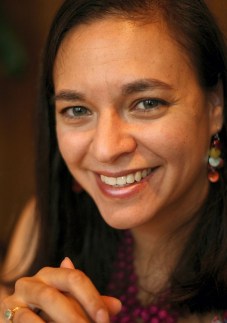
Photo credit: Todd Yates
CentroVictoria is supported by the University of Houston-Victoria, where I work. Its founding director is Dagoberto Gilb, author of BEFORE THE END, AFTER THE BEGINNING. Our goal is to promote Mexican American literature and art. Right now, we’re doing this in two ways. One is the publication of an annual magazine called HUIZACHE. It’s a beautiful magazine, and I highly recommend it for people interested in Latino literature. Please visit our website http://huizachemag.org/ to learn more. The second way we promote the literature is to help educators. Dagoberto and his son, Ricardo Gilb, edited a textbook that was just released by Bedford St. Martin’s. It’s called MEXICAN AMERICAN LITERATURE: A PORTABLE ANTHOLOGY, a great resource for those who want a taste of important works and a sense of how the literature has changed. Dagoberto and Ricardo did a phenomenal job. For my part, I wrote an instructor’s manual full of discussion questions. It’s available as a downloadable pdf file.
To learn more about me, my books, and my work with CentroVictoria, please visit my website at www.dianalopezbooks.com
 Marianne Snow Campbell is a doctoral student at The University of Georgia, where she researches nonfiction children’s books about Latin@ and Latin American topics and teaches an undergraduate course on children’s literature. Before graduate school, she taught pre-K and Kindergarten in Texas, her home state. She misses teaching, loves critters, and can also be found on Twitter and Facebook.


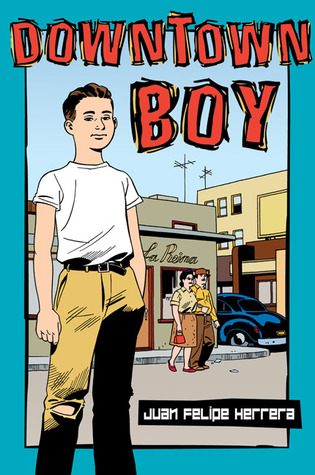 For older students I often refer to Juan Felipe Herrera’s novel in verse Downtown Boy. More often than not, we focus on the young main character Juanito to discuss issues such as discrimination in school, immigration, gender roles, masculinity and femininity, diabetes, family, and more. If I have an opportunity to teach the entire novel, then I often create poetry portfolios with my students where we pick a broader theme like identity, culture, and/or community that will thread throughout all their poems. If I don’t have enough time to cover the entire novel, then I usually pick the poems that will best represent the student population or the poem with which they can connect to the most.
 Dr. Sonia Alejandra Rodriguez’s research focuses on the various roles that healing plays in Latinx children’s and young adult literature. She currently teaches composition and literature at a community college in Chicago. She also teaches poetry to 6th graders and drama to 2nd graders as a teaching artist through a local arts organization. She is working on her middle grade book. Follow Sonia on Instagram @latinxkidlit
 “My name is Marisol McDonald, and I don’t match. At least, that’s what everyone tells me.”
 When Isobel is invited to Aunt Luisa’s for Hanukkah, she’s not sure what to expect. Aunt Luisa has recently arrived from Mexico. “At Aunt Luisa’s you’ll get to celebrate the Hanukkah Moon,” Isobel’s father promises. Isobel’s days at Aunt Luisa’s are filled with fun and surprises — a new camera, a dreidel pinata filled with sweets, and a mysterious late night visit to welcome the luna nueva, the new moon that appears on Hanukkah. An unusual Hanukkah story with a multi-cultural focus, this title celebrates a little-known custom of the Latin-Jewish community.
 Jalapeno bagels are the delicious coming together of two cultures as the son of a Jewish baker and his Mexican wife decides what to bring to school for International Day. This warm story, illustrated by rich watercolors, comes complete with recipes for all the items that Pablo helps his parents make. Full color.
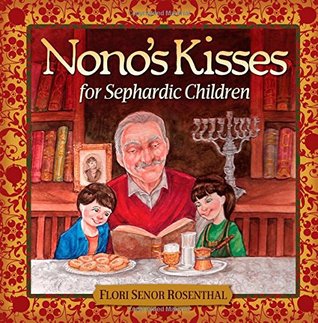 “Nono’s Kisses for Sephardic Children” is Flori Senor Rosenthal’s first of the Legacy and Literacy Scholastics Series. The book contains beautiful illustrations representing Ladino phrases. It was written to teach and encourage the usage of the Ladino language to children between the ages of 4 and 9. However, all ages will enjoy it and find it useful. Ladino or Judeo-Spanish is the language of Sephardic Jews. According to the United Nations, it is an endangered language. With each Ladino phrase found in the book, there is a question relating to its picture. This question, engages the parent and child into conversation. Ladino vocabulary words, pronunciations and English translations are provided to be used in these and other conversations and games between parents and their children. To make the learning experience even more fun, there is a hidden butterfly, in every illustration, to be found by the child. Ms. Senor Rosenthal’s father inspired her to write “Nono’s Kisses for Sephardic Children”. She wrote it to honor a tradition known specifically to Sephardic Jews. The book is an extraordinary teaching and learning tool for Ladino, and the Sephardic culture. However, those interested in the Spanish language and its history will also find this book interesting. Ms. Senor Rosenthal believes that her series will spark renewed interest in the Ladino language with the goal of having it removed from the endangered language list.
 Lola Levine likes writing in her diario, sipping her mom’s cafe con leche, eating her dad’s matzo ball soup, and playing soccer with her team, the Orange Smoothies. So what if she doesn’t always fit in?
 An eleven-year-old’s world is upended by political turmoil in this “lyrically ambitious tale of exile and reunification” (Kirkus Reviews) from an award-winning poet, based on true events in Chile.
 Emily is a Jewish girl from the suburbs of New York. Her mother has family in Puerto Rico, but Emily has never had contact with them- ever. Then Emily’s grandmother dies and Emily is forced to go to the Caribbean for her funeral. Buttoned-up Emily wants nothing to do with her big, noisy Puerto Rican family, until a special person shows her that one dance can change the beat of your heart.
 Shirin is an Iranian princess; Ingrid, a German-Canadian eccentric; and Vivien, a Cuban-Jewish New Yorker culinary phenom. The three are roommates at a Swiss boarding school, where they spend their summers learning more than French and European culture. As the girls’ paths cross and merge—summers together, school years separate—they navigate social and cultural differences and learn the confusing and conflicting legacies of their families’ pasts. In the spirit of The Sisterhood of the Traveling Pants, Shirin, Ingrid, and Vivien grow together even when they are apart, forming unbreakable bonds along the way.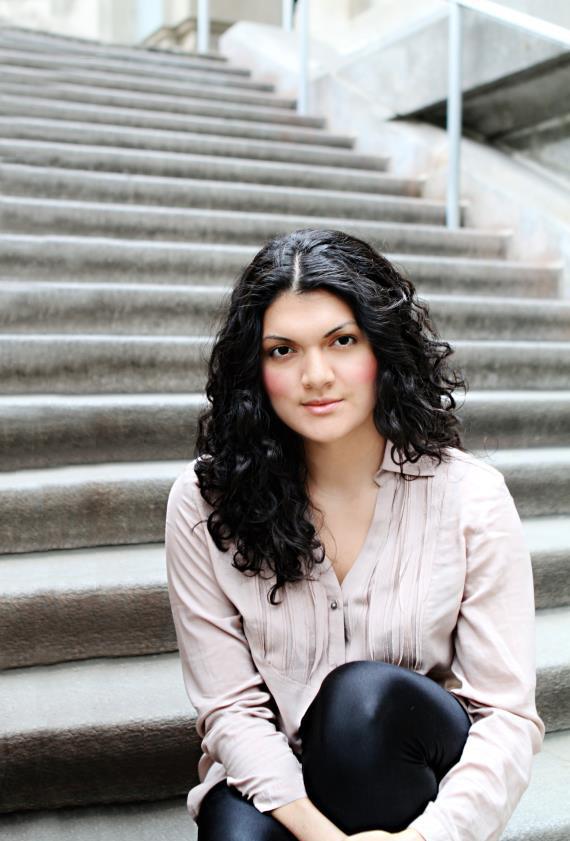


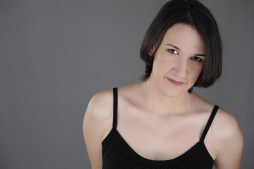 Cecilia Cackley is a performing artist and children’s bookseller based in Washington DC where she creates puppet theater for adults and teaches playwriting and creative drama to children. Her bilingual children’s plays have been produced by GALA Hispanic Theatre and her interests in bilingual education, literacy, and immigrant advocacy all tend to find their way into her theatrical work. You can find more of her work at

 Today is the official release day of
 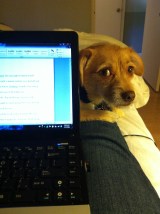 This first picture represents the writing, revising, and editing phase done alone and then with critique partners. It took me three years to write the draft that I used to query agents. Yes, that’s a long time, but I was working a full-time job and a part-time job, while single-parenting. My writing place is on my bed, and without fail, my dogs–first Rusty (RIP) and now Ozzie–have kept me company. This has been very sweet, except for the times they pawed the keyboard. Notice the guilty look in his eyes.
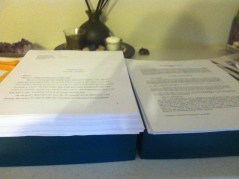 I landed an agent, Laura Langlie, after a few months of querying. I revised based on her feedback, and then the manuscript went out on submission. It stayed out there for a long, long time. We received some valuable feedback after the first round, so I revised again and went back out on submission. Finding the right agent and editor is kind of like literary Match.com. You might go on lots of dates that don’t work, but that’s okay, because the goal is finding the perfect person. So, it took a long time, but the book landed with the perfect person, Mary Kate Castellani at Bloomsbury. This is a picture of the manuscript next to my contract. Receiving the contract is one of those “oh-my-goodness-this-is-happening” moments. At this point, the deal had already been announced online, but seeing the contract in black-and-white makes it real.
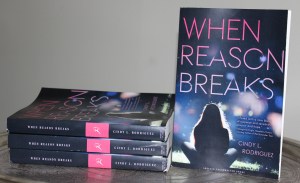 AHHHHH! ARCs. This was a big moment. I didn’t taken any pictures during revising and copy editing. They wouldn’t have been pretty. But, please know that a lot goes on between the previous picture and this one (major understatement). After revisions, the manuscript went to copy edits. That day was significant because it meant drafting, for the most part, was over. Changes could still be made, but the story moved from creation into production. I received a blurb from the amazing

 Now that ARCs were out in the world, I considered ways to help market the novel. One thing I learned from other authors was that I had to do my part when it came to marketing. I didn’t go overboard with swag. I decided to create a book trailer and print book marks and postcards with a QR code linked to the book trailer.
 nephew–a high school freshman–doing all of the real tech work. He’s a genius with computers, so he handled putting it all together. The opening voice belongs is my niece, and I narrate the rest of it, although my voice was altered to be lower and much cooler, in my opinion. Bookmarks have been distributed to teachers, librarians, and bloggers. Postcards went to high schools, public libraries, and independent bookstores in Connecticut, in addition to some libraries and bookstores in other parts of the country. Writers always question “what works,” and I think the answer is different for each of us. Bookmarks worked for me because I’m a teacher and I have lots of teacher friends who asked for 50-100 at a time. I knew they’d get into the hands of teen readers. Also, I have received some positive feedback from the postcards. A few librarians emailed me saying they received the post card, viewed the trailer, and planned to order the book; some even invited me to participate in events. So, in my mind, these three things were worth it.

 Latinxs in Kid Lit