
Review by Emily Aguiló-Pérez
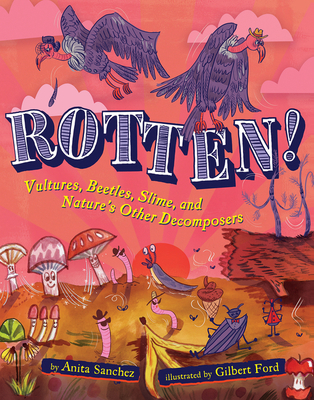 DESCRIPTION OF THE BOOK: What’s that terrible smell? Plug your nose! Run! Something smells…rotten! But rotten isn’t always bad. If nothing ever rotted, nothing could live. Decomposition seems like the last stop on the food chain, but it’s just the beginning. When dead things rot, they give life to a host of other creatures. So who are these decomposers? Sharks and vultures feast on animal carcasses. Worms, maggots, and dung beetles devour decaying plant and animal matter. Decomposition is happening everywhere: oceans, forests, in your backyard—even between your teeth! It’s nature’s way of creating energy for all living things. So unplug your nose! Open this book to uncover the dirty rotten truth about one of nature’s most fascinating processes.
MY TWO CENTS: Who knew learning about dung beetles, worms, vultures, mummies, and numerous other “rotten” things could be so much fun?! In this informative book, Anita Sanchez provides so many facts about decomposition. I learned, for instance, about the different kinds of dung beetles and how they create their homes out of dung. It’s fascinating! I also learned about the decomposition process of a tree log and why it doesn’t smell terrible (even though one would think anything rotten would smell badly). The book also touches on items that do not decompose and the dangers they pose for nature. Speaking about plastic, it explains that “landfills are overflowing with plastic that’s sitting there, not decomposing. But even worse is the plastic that doesn’t make it into a landfill” (65).
Eighty-three pages of information can seem like a lot for a young reader, but Sanchez’s writing paired with the engaging and colorful illustrations by Gilbert Ford truly provide a fun learning experience. The book is divided into eight chapters, each one focusing on a different decomposer. Each chapter has a variety of sections that provide focused information on the specific topic, using stories, humorous snapshots, and creative illustrations. Some of my favorite recurring sections were “Decomposer Selfie,” which provides short bits of information about an animal or organism, and “Rot It Yourself,” which offers brief experiment directions. There is much to enjoy in this book! It would make a great addition to any library.
TEACHING TIPS: The book naturally lends itself to a science classroom (especially upper elementary and middle grades). There are experiments students can perform and which do not require too many materials. In addition, students can use the bibliography that is included at the end of the book to perform further research on a specific topic, animal, organism, etc. presented in the book.
In addition, this book is a wonderful model for various approaches to informational or non-fiction writing. Because it uses narratives, short blurbs, longer texts, descriptions, comparisons, process analysis, and images, among others, students can learn about and develop their own skills for writing non-fiction.
 ABOUT THE AUTHOR: (from the dust jacket) Anita Sanchez loves to explore nature, even the stinky, slimy parts of it. She dug into the world of rot by creating a compost pile, viewing vultures, watching worms, and even swimming with (very small) sharks. Check out her blog about unloved plants and animals at anitasanchez.com.
 ABOUT THE ILLUSTRATOR: (from the dust jacket) Gilbert Ford feels spoiled rotten for getting to spend all his time drawing. He is the author and illustrator of The Marvelous Thing That Came from a Spring and How the Cookie Crumbled. He has also illustrated the award-winning Mr. Ferris and His Wheel, Soldier Song, Itch!, and many middle grade novels. He lives and works in Brooklyn, New York. Learn more about his work at gilbertford.com.
 ABOUT THE REVIEWER: Emily R. Aguiló-Pérez is an Assistant Professor of English (Children’s Literature) at West Chester University of Pennsylvania. Her teaching and research are in the areas of children’s literature (particularly Latinx literature), girlhood studies, and children’s cultures. Her published work has focused on girlhood as represented in literature and Puerto Rican girls’ identity formation with Barbie dolls. She has presented research on Latinx children’s books at various conferences and has served on children’s book award committees such as the 2017 Lee Bennett Hopkins Poetry Award and the 2018 Pura Belpré Award. Currently, she is part of the Pennsylvania Center for the Book’s “A Baker’s Dozen” committee.
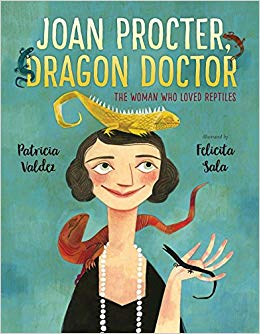 DESCRIPTION OF THE BOOK: Back in the days of long skirts and afternoon teas, young Joan Procter entertained the most unusual party guests: slithery and scaly ones, who turned over teacups and crawled past the crumpets….
 ABOUT THE AUTHOR: Patricia Valdez is a scientist who loves writing for children. She earned her PhD in molecular and cell biology from the University of California, Berkeley, and works at the National Institutes of Health. Originally from Texas, she now lives in the Washington, D.C., area. This is her first picture book. Visit her at
  ABOUT THE ILLUSTRATOR: Felicita Sala is a self-taught artist who studied philosophy at the University of Western Australia. She has worked on several animation projects, but her passion is making picture books. Felicita lives in Rome with her husband and their daughter. Visit her at
  ABOUT THE REVIEWER: Dora M. Guzmán is a bilingual reading specialist for grades K-5 and also teaches college courses in Children’s Literature and Teaching Beginning Literacy. She is currently a doctoral student with a major in Reading and Language. When she is not sharing her love of reading with her students, you can find her in the nearest library, bookstore, or online, finding more great reads to add to her never ending “to read” pile!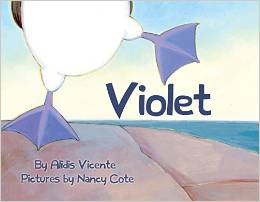


 Latinxs in Kid Lit