2014 Reading Challenge: March

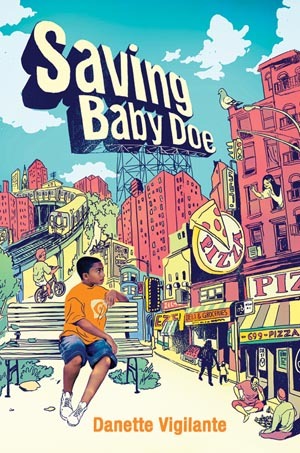
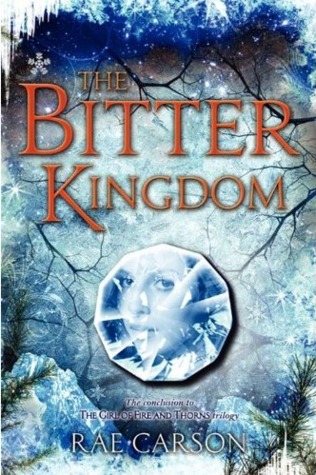
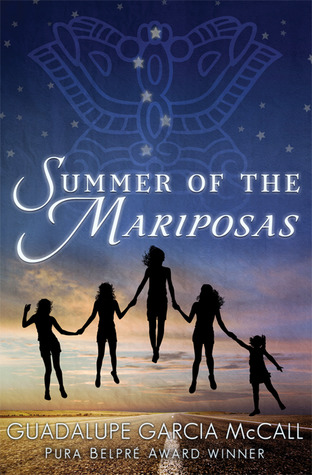
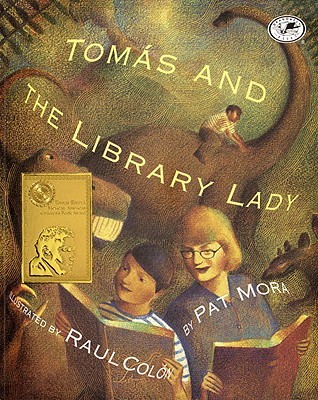
We continue to be blown away by the number of books being read each month by participants of our 2014 Latin@s in Kid Lit Challenge. Thank you to everyone for participating in the challenge and purposely selecting books by/about/for Latin@s. Remember, you can join the challenge any time during the year, and you’re not required to review–only read and enjoy! If you do post a review somewhere, we will link it to the book covers below. If you choose not to review, we will link the covers to Goodreads. This month, we’d like to stand up and applaud Elisabeth Ellison and Cecelia Cackley for their vigorous reading (13 books total!) And since April is National Poetry Month, we suggest you try some novels in verse this month!

A note to participants: As you complete books, please send us the information, so we can share what you’re reading each month.

13515320  6603032  15814459  5982454  10564957  18079822  15798660  11431896  1294347  14342632  13501282  1816693511438326  1016493  18938127 18318638  6098251  255189  9373385  1372657  1807231  18651917  15937128  6673243  1065256  1076237  18318005  8220585  652180  7095181  15818046  1028659  18249428

Writing Tips and Diversity Points at the SCBWI Winter Conference

By Cindy L. Rodriguez

The Winter Conference of the Society of Children’s Book Writers and Illustrators in New York is kind of like a massive family reunion, with all 1,000+ people having a love of children’s literature in their blood. It’s very cool for me to break away from my full-time day job as a middle school teacher and attend this annual gathering of creative people who all want to be published or work in some capacity with kid lit. While this love of children’s literature is the common denominator at the conference, the attendants are diverse people with myriad interests. Because of this, my ears naturally perk up when speakers address diversity in publishing.

The SCBWI did not have a specific panel or break-out session dedicated to diversity in children’s publishing, but speakers included Raul Colón, Shadra Strickland, Jack Gantos, and Nikki Grimes. Also, the topic of diversity popped up throughout the conference as writers, illustrators, and editors offered great advice about craft.

During her Saturday session, Anica Rissi, an executive editor at Katherine Tegen Books, outlined seven essential things to remember about writing contemporary fiction.

  1. Just do it: write regularly. Make time for this in your life. Be fierce in protecting your writing time.
  2. Give the reader something to wonder about.
  3. Start with the story, not the back story. Throw us into the action.
  4. You need both external and internal tensions, a plot arc and an emotional arc. You need that emotional growth.
  5. Details should matter. Ask what is this book really about? Is every scene a part of that? When in doubt, take it out.
  6. You need to bring out relatable truths through your characters. Create timeless and timely essential relationships and show how the relationships change the character. During this part of her talk, she said, “Please don’t just write about white people and please don’t just write about straight people.” She added that diverse characters should not always be the “token best friend.” A writer should make every person in the novel “a real person,” she said.
  7. World building exists in contemporary fiction, too. Setting needs to be a character.

Later, Nancy Siscoe, a senior executive editor with Knopf Books for Young Readers, discussed seven essential things about writing the classic middle grade novel. They are:

  1. Audience: middle grade fiction is for readers 8-12 years old. It’s an age of independence, of becoming a person separate from your family. It’s an age of enthusiasm, optimism, and openness.
  2. Plot: Put your kid character in charge. Let them solve their own problems, keep them moving, keep the stakes high.
  3. Hope: You don’t need a happy ending, but you do have to have hope.
  4. Likeable characters: You want a main character your readers would want to be friends with, someone they will care about.
  5. Voice: Make it distinctive. It’s the quality that sets the tone and sets your book apart from others.
  6. Read it aloud: The writing should be smooth, clean, and clear. Middle grade books are often read aloud, so try it while writing.
  7. Heart: The quality that makes your own heart feel bigger and wiser and stronger for having taken the journey.
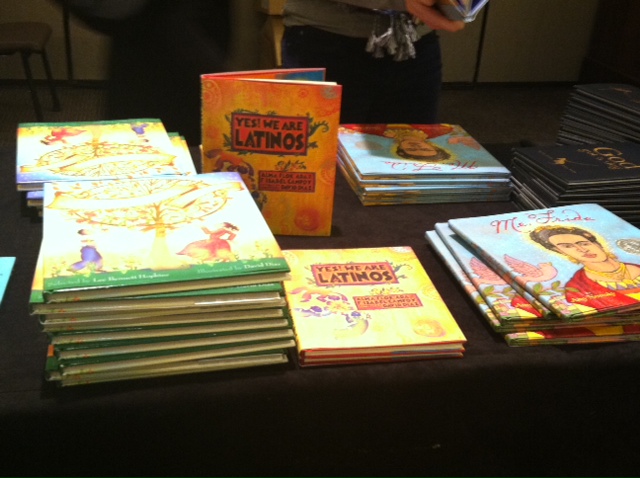
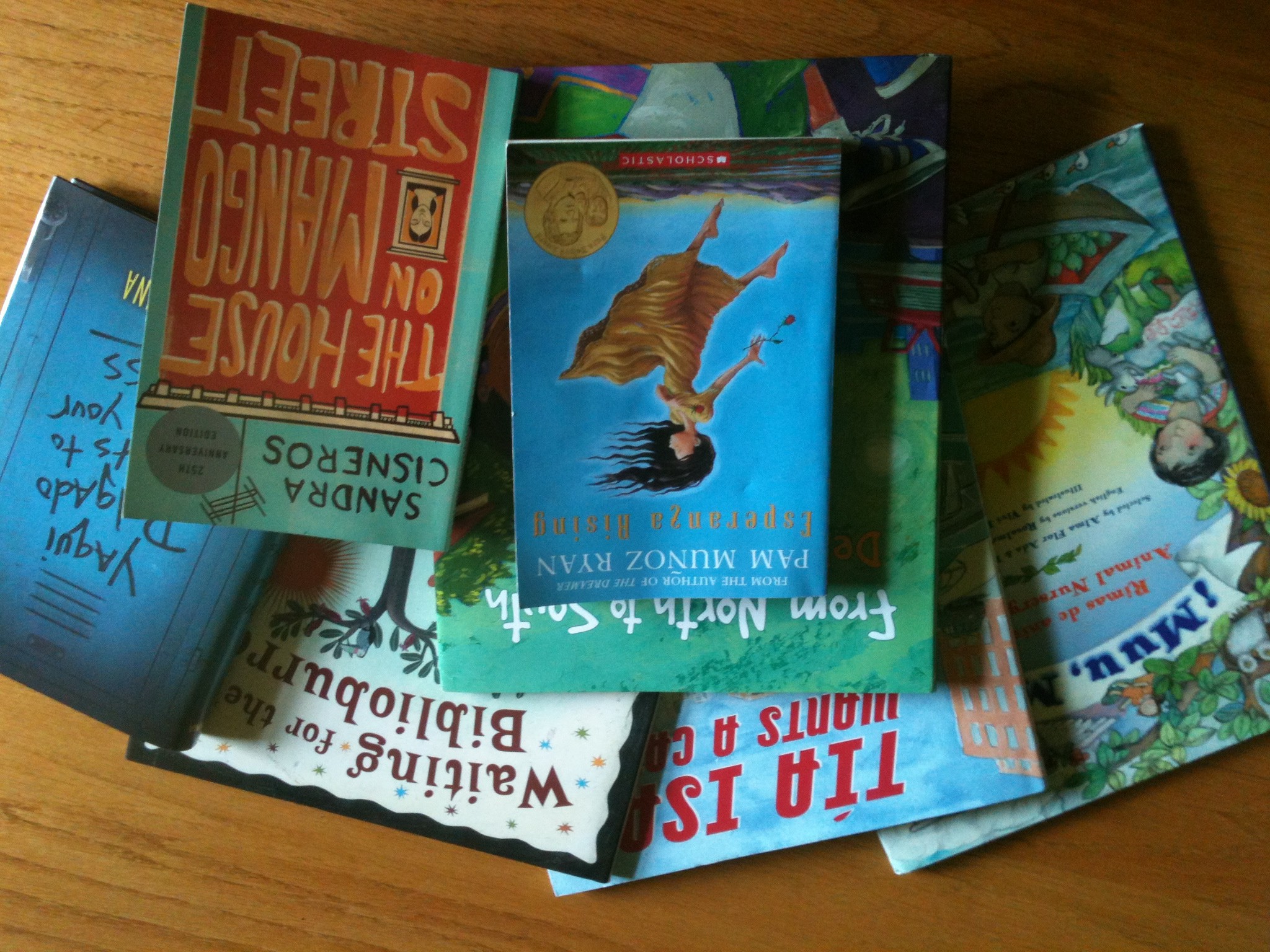
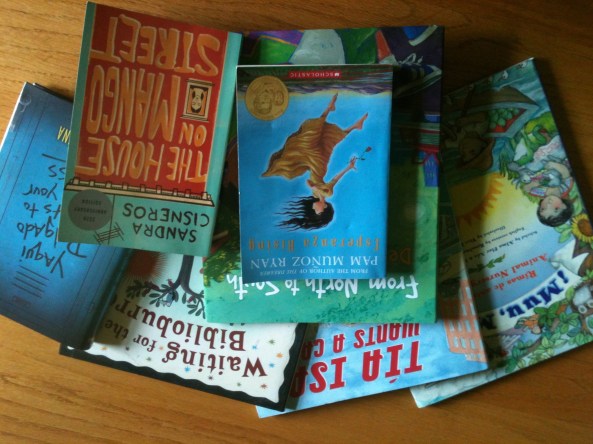
Some of the Latin@ titles at the book sale

Some of the Latin@ titles at the book sale

During her talk, Siscoe was asked about diversity. She responded by saying she is always on the lookout for diverse main characters. In fact, she said a “selling point” for the novel Unusual Chickens for the Exceptional Poultry Farmer, a middle grade debut by Kelly Jones set to release in 2015, was its Latina protagonist.

The final panel on Saturday was about book banning rather than craft. Susanna Reich, chair of the Children’s and Young Adult Book Committee for PEN American Center, floored me during this session. She said children’s and young adult books make up the vast majority of books on the ALA’s list of banned and challenged books. While I knew children’s books were often challenged, I didn’t realize that on the most recent list of the “Top 100 Banned/Challenged Books” from 2000-2009,” 72 of the top 100 are children’s and young adult books, with Harry Potter at the top of the list.

Reich also made the point that censorship isn’t only about removing books from shelves. Censorship also occurs when so few diverse titles make it onto the shelves. “It’s a form of censorship when the amount of multicultural kid lit published hasn’t increased in twenty years,” she said.

But what about those books that do make it onto the shelves? Well, it’s up to us to buy them. Reich quoted poet Alexis DeVeaux, who said, “Buying a book is a political act.” Reich challenged each of us to think about the books we choose to buy and read. Do we censor our book buying in any way? Do we make a conscious effort to read beyond our comfort zones? Do parents and teachers select books for their children and students that include diverse characters?

Multicultural books can speak to all kids, not only kids of color,” said Reich.

Hear, hear! More details from Reich’s talk can be found here on the SCBWI site.

At the end of an SCBWI conference, I am always exhausted in a good way, with a thousand things to consider as a reader, writer, parent, and teacher. This year, the speakers in the sessions I attended reinforced the idea that I can help to promote diversity in children’s literature in each of these roles. Not only can I broaden my own reading interests, but I can expand reading choices for my daughter and my students. By doing this, I will support diversity in kid lit and the members of my SCBWI familia who write, illustrate, edit, and publish books with diverse characters.

To Be Accurate in Writing, Recognize Truth While Reading

By Cindy L. Rodriguez

As a reading teacher, I often tell my students that the best way to become a better reader is to…wait for it…read. Seems obvious, right? And, of course, the best way to become a better writer is to write. After all, the more you write, the more you produce, the more you learn about writing and about yourself as a writer, and the more you improve.

During our “Road to Publishing” series, we focused on the writing process because, let’s face it, if the writing doesn’t get done, you’re not going to finish your book and become a published author. But, today we want to stress that to become a better writer, you also need to read. A lot.

This may seem obvious to many of us, since most writers I know buy more books than they could ever possibly read in a lifetime, but I’m thinking of my students and other young people who may become future novelists. I often hear students separate reading and writing, as in,”I like to read, but I hate to write” or “I love to write, but I hate to read.”

In response, I offer this quote from a text I use with my college composition students: “Reading and writing function much like breathing in & breathing out. They are inextricably linked” (McQuade/Atwan).

To be a better writer, you must read. Obviously, you read to do the necessary research, and you read within your genre to know what’s been done and what’s popular. But at some point, you’ll also start to read as a writer.

I was always an avid reader, but once I started to write a novel, I read books differently. Of course, at times, I just want to relax and escape and enjoy a good book. Oftentimes, though, I now read as a writer. I notice the structure of the work, vivid descriptions, great dialogue, and chapter endings that keep me reading. I underline beautifully crafted phrases and catch when someone is telling instead of showing. I also wonder if telling is fine in that moment or if my editor would have marked it with a note.

Reading and writing are linked, no question. And, since this is a place where we celebrate and highlight Latin@s in kid lit, I’ll further suggest that if you plan to write Latin@, then you should read Latin@, too. Every conference session I’ve attended or blog post I’ve read about diversity in children’s literature has emphasized the importance of being accurate and respectful when writers venture into territory outside their personal experiences. To be accurate and respectful in your writing, you have to recognize truth and respect while you read.

Part of our site’s mission is to promote literacy and the love of books within the Latin@ community and to encourage interest in Latin@ children’s, MG, and YA literature among non-Latin@ readers. In other words, we want everyone to read and write more Latin@ Lit. To support this, we are adding to our book lists, hosting a year-long reading challenge, and highlighting certain titles in our new weekly feature called “Libros Latin@s.”

Whether you’re reading for research, pleasure, or to become a better writer, we encourage you to add some Latin@ titles to your TBR list this year.

Here are some of the books we’re reading:

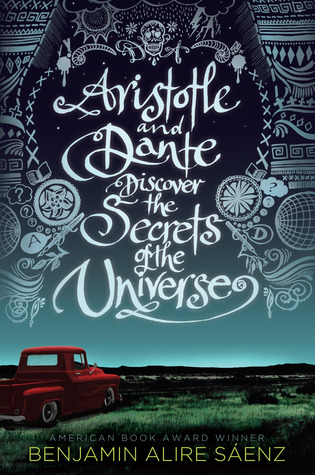
Mexican WhiteBoy     La Linea     Aristotle and Dante Discover the Secrets of the Universe

Secret Saturdays     Confetti Girl     Under the Mesquite

What are you reading?

On Privilege and (a Lack of) Diversity on My Bookshelves

This is an excellent post from Kayla Whaley who has joined our 2014 Reading Challenge. She makes a great point about supporting diversity by choosing to diversify her bookshelves. Saying you support diversity in kid lit is great. Doing something, like reading more books by and about POC, is even better! Thanks for joining us, Kayla!

The Road to Publishing: a Q & A with Andrew Karre of Carolrhoda Books

On Tuesday, Ashley Hope Pérez laid out what it’s like to work with rock star editor Andrew Karre , editorial director of Carolrhoda Books, Carolrhoda Lab & Darby Creek. Today, we have a bonus post, a Q&A between Ashley and Andrew, the last piece in our “Road to Publishing” series. We hope it’s been helpful! All of the posts can now be found if you click on the “The Road to Publishing Series” tab on the menu.

Ashley: What are the rookie mistakes you see first-time authors make during the editorial process?

Andrew: Rushing revisions. There are no points for speed. Although I hope I’ve learned enough to anticipate this and prevent it.

Ashley: What qualities make you look forward to working with an author again on a future project? Any deal-breakers?

OLYMPUS DIGITAL CAMERA

Andrew: A spirit of adventure. The authors I most enjoy working with are excited about the process. They like to use me as a sounding board, as a stress-test for their work. They want to hear my questions and suggestions, but they’re quite capable of going an entirely different direction. I’m not interested in authors who unquestioningly adopt my view of YA fiction. I’m interested in authors who will engage with it and articulate their own. In many cases, editing is a bit of a friendly struggle between the author and me wherein my goal is to lose in an interesting way that highlights the author’s strengths.

Ashley: In what way(s) does your approach to the editing process differ from other editors you know or have worked with?

Andrew: It’s hard to say. I only have second-hand information about how others edit. I tend not to write editorial letters. I prefer to write voluminous marginal notes and have lots of phone conversations (or lunches, whenever possible). Maybe that’s unusual? My goal in a markup is to highlight the places where an author is at the height of her powers and then challenge her to meet that standard throughout.

Ashley: Boundary-pushing is arguably your editorial signature. How does that priority influence the guidance you offer authors during the editing process?

Andrew: I don’t really think about that when we’re editing. Editing is about realizing and reconciling a manuscript’s potential and its author’s vision. It’s about pleasing the two of us, first and foremost. Insofar as we worry only about the limitations inherent in the manuscript, I guess the desire to be unbound is present.

Ashley: Beyond writing (and revising) a novel into its best possible form, what should authors be doing from the time they sign their contract to the time of the book’s release?

Social-media-for-public-relations1Andrew: There are a few practicalities every author should take care of–at least by that point if not sooner. Acquire all your digital real- estate. By that I mean, register a useful domain name, grab a good Twitter handle, etc.  Even if you can’t see how you’ll use them, at least you’ll have them. The only one of these that costs anything is the domain, and that’s cheap. Then, read your contemporaries. And if you can, interact with them as a colleague and fellow traveler. Join the conversations online in much the way you’d join a dinner party conversation: wait for your opening, and take it graciously when it comes. Be interesting, first and foremost. It’s not about selling.

Ashley: I distinctly remember a come-to-Jesus talk we had about social media some time between revisions for What Can’t Wait and the book’s launch day. I remember feeling very overwhelmed. Now, four years down the line, I can see lots of benefits from the relationships that I’ve established by existing online and at least intermittently being present in Twitter and other spaces.

At Latin@s in Kid Lit, we’re working to draw more attention to great books for younger kids as well as teens. What are some of your favorite books to read to or with your boys?  Do their preferences ever surprise you?

Andrew: Henry (5) loves nonfiction at the moment. He loves processes and technical details so we read a lot of things in that vein. I really loved Building Our House by Jonathan Bean. In the coverage of the death of Charlotte Zolotow, we discovered her Over and Over, and that’s been fun.  I still enjoy reading Goodnight Moon to Edmund (18 months).

Ashley: What’s one book that you hope to find in your stocking this holiday season?

Andrew: I still haven’t read NW by Zadie Smith and I generally enjoy her work.

Ashley: Any thoughts on the current state of publishing with regard to the percentages of works by/for/about Latin@s?

Andrew: It seems to me that the level of awareness of the need among publishers is high, as is the desire to find and break out new voices. High enough? I don’t know if it’s possible to say. I know I’m encouraged.

Welcome to Latinos/as in Kid Lit

We Were HereLuis was a high school freshman who hadn’t read a novel independently for so long he couldn’t remember the title or year it happened. During the first semester of high school Reading, Luis read We Were Here by Matt de la Peña in anticipation of an author visit. After the visit, Luis asked for “another book like this one,” which was his way of saying, “a book written recently that doesn’t bore me and has characters who look, talk, and act like me.”

With the help of enthusiastic teachers and librarians, Luis read more books “like that one.” It took just one story that spoke to his identity as a Hispanic male to begin his engagement with literature.

Luis’s story is borne out by research. When youths “see” themselves in terms of race, culture, and lived experiences in the literature they read, they benefit academically, personally, and socially (Bishop, 1992; Diamond & Moore, 1995; Mason & Au, 1991). More broadly, culturally responsive teaching or “using the cultural knowledge, prior experiences, frames of reference, and performance styles of ethnically diverse students to make learning encounters more relevant to them” (Gay, 2000, p. 29) results in increased student engagement and positive gains in achievement (Chapman, 1994; Foster, 1995; Hollins, 1996; Krater, Zeni, & Cason, 1994; Ladson-Billings, 1994, 1995a, 1995b; Sheets, 1995).

Luis, and others like him, stand to gain a great deal from reading books that speak to their cultural identities. Sometimes a love for reading is kick-started by a single book with a main character who faces the same issues the reader does or lives in a place like the reader’s own neighborhood. This is true for all of us. We connect with stories for varied reasons, including the simple one that something in the narrative is familiar.

The statistics in publishing, however, have been against teens and children like Luis, who specifically want to read books that feature ethnic or racial minorities. Recent news stories have highlighted the fact that minority children in the United States don’t often see themselves reflected in books. Also, a study by the Cooperative Children’s Book Center reported the number of children’s books with multicultural content has not increased in 18 years. (See also this post by Lee & Low Books about the study.)

So, why focus on Latin@ Lit? Because 53 million Hispanics live in the U.S. according to the 2012 census. Hispanics are the second largest race or ethnic group (behind non-Hispanic whites), representing about 17 percent of the total population. Everyone–not just Latin@s–should be able to read books with characters that represent our diverse population.

While several excellent resources for Latin@ Literature exist online, we had yet to find a site that was dedicated to Latin@ children’s literature and created by Kid Lit writers.

So, here we are!  Welcome to Latin@s in Kid Lit!

We’re launching our site at the start of National Hispanic Heritage Month to underscore our mission to provide a closer, more sustained sense of what’s happening in Latin@ children’s literature.

Our vision is to:

  • engage with works about, for, and/or by Latin@s;

  • offer a broad forum on Latin@ children’s, MG, and YA books;

  • promote literacy and the love of books within the Latin@ community;

  • examine the historical and contemporary state of Latin@ characters;

  • encourage interest in Latin@ children’s, MG, and YA literature among non-Latin@ readers;

  • share perspectives and resources that can be of use to writers, authors, illustrators, librarians, parents, teachers, scholars, and other stakeholders in literacy and publishing.

On this site, you’ll find:

  • posts about Latin@s in children’s literature;

  • book lists. This is a work in progress. Please send us titles that should be included. We are looking for books by Latin@ writers in any genre and books by non-Latin@ writers with Latin@ characters, settings, etc.;

  • book talks, where we’ll highlight books we’re reading and explain why you should be reading them, too;

  • interviews with writers and illustrators about their creative journeys;

  • interviews with agents and editors about the publishing process;

  • teaching ideas;

  • articles and news links aimed at writers and others involved in literacy and publishing;

  • guest posts. Please write to us if you have an idea for a post.

Like you, we’re passionate about serving a burgeoning community of young readers. That’s why we want to offer this as a welcoming space where you can share your ideas, too. We believe that Latin@ children’s literature is for everybody. We hope you’ll follow us and explore the ways it can enrich young people’s lives.

¡Bienvenidos!
Books1

We don’t want to overwhelm you with research, but if you’re interested in learning more about the ways multicultural literature benefits young readers, the following books and studies are a good place to start.

Brozo, W. (2002). To be a boy, to be a reader: Engaging teen and preteen boys in active literacy. Newark, DE: International Reading Association

Deci, E., Vallerand, R., Pelletier, L., & Ryan, R. (1991). Motivation and education: The self-determination perspective. Educational Psychologist, 26(34), 325-346.

Diamond, B.J., & Moore, M.A. (1995). Multicultural literacy: Mirroring the reality of the classroom. New York: Longman.

Gay, G. (2000). Culturally responsive teaching: Research, theory and practice. New York: Teachers College Press.

Guerra, S. (2012). Using Urban Fiction to Engage At-Risk and Incarcerated Youth in Literacy Instruction, Journal of Adolescent and Adult Literacy (55)5, p 385-394.

Hill, M.L., Pérez, B., & Irby, D.J. (2008). Street fiction: What is it and what does it mean for English teachers? English Journal, 97(3), 76–82.

Hughes-Hassel, S., & Pradnya, R. (2007). The leisure reading habits of urban adolescents. Journal of Adolescent & Adult Literacy, 51(1), 22

Ladson-Billings, G. (1995a). But that’s just good teaching! The case for culturally relevant pedagogy. Theory Into Practice, 34(3), 159-165.

Ladson-Billings, G. (1995b). Toward a theory of culturally relevant pedagogy. American Educational Research Journal, 32(3), 465-491.

Morris, V., Hughes-Hassell, S., Agosto, D., & Cottman, D. (2006). Street lit: Emptying teen fiction bookshelves in Philadelphia public libraries. YALS: Young Adult Library Services, 5(1), 16-23.