Book Review: Drum Dream Girl: How One Girl’s Courage Changed Music by Margarita Engle

By Sujei Lugo

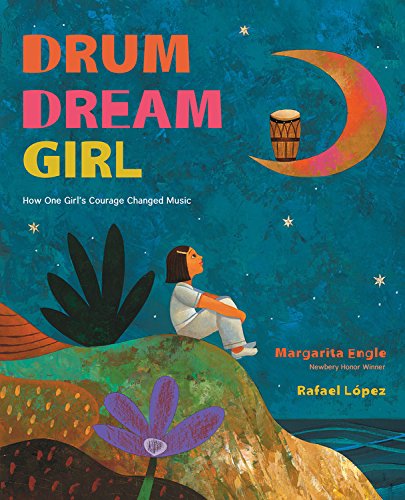
drum dream girl coverDESCRIPTION FROM THE BOOK JACKET: Girls cannot be drummers. Long ago on an island filled with music and rhythm, no one questioned that rule — until the drum dream girl. She longed to play tall congas and small bongós and silvery, moon-bright timbales. She had to practice in secret. But when at last her music was heard, everyone sang and danced and decided that boys and girls should be free to drum and dream.

Inspired by a Chinese-African-Cuban girl who broke Cuba’s traditional taboo against female drummers, Drum Dream Girl tells an inspiring true story for dreamers everywhere.

MY TWO CENTS: Inspired by the childhood of Chinese Afro Cuban drummer Millo Castro Zaldarriaga, Margarita Engle and Rafael López enchantingly encapsulate through poetic text and dreamy illustrations a girl’s dreams and her desires to play music. By focusing on our girl’s “dreaming” period and the stage when she finally achieves her dream as a child, the author and illustrator furnish a landscape where children should be free to dream, and one they can relate to and which allows them to see themselves as dreamers.

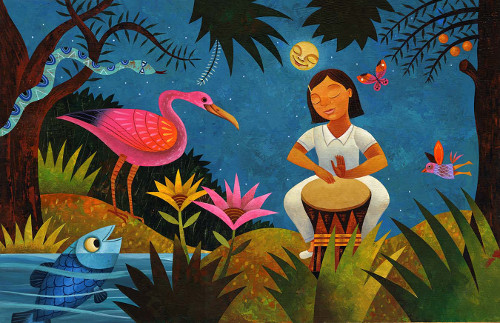
Through the first line of Engle’s poem, “On an island of music, in a city of drumbeats, the drum dream girl dreamed,” we meet our Caribbean dream girl, who dreams about congas, bongós, and moon-bright timbales on a island where everyone believes only boys should play drums. This excluding notion and the exposure to such blatant sexism at such a young age do not prevent our girl from dreaming. She plays her own imaginary music, walks around tapping her feet and plays contagious drum rhythms on tables and chairs. When her big sisters invite her to join their new all-girl dance band, the drum dream girl is excited, but her father reminds her that “only boys should play drums.” She keeps drumming and dreaming, until her father realizes that her talent deserves to be heard. With a compelling illustration of her father “pulling” her drumming and dreaming daughter from the sky to the ground, she perseveres and lands back on her island of music, making her dream a reality.

The text is really descriptive, filled with poetic repetition and acknowledgements of the natural landscape of the island. Rafael López’s trademark of colorful and vibrant illustrations enhances the musical and dreamy experience of our character, providing images where you feel you are listening to the music and the beats. Through two-page layout canvases rich with smiling moons, suns, and birds, huge instruments, and our drum dream girl with closed eyes, he captures the spirit, the breeze, and the rhythm of our little drummer. López also successfully portrays the essence of Cuban city life and its racial and ethnic demographics.

7

Drum Dream Girl is the story of Millo Castro Zaldarriaga, a mixed race Cuban girl, who defied gender roles in the 1930’s music scene. The girl and her story show the importance of family, teacher, and music-education support to expose and develop our children’s musical talents. The all-girl dance band she joined was Anacaona, an orchestra founded by Cuchito Castro and her sisters. This forgotten and overshadowed group challenged the male-dominated Cuban music scene and an environment where women were seen as incapable of playing music. For more information about this group, look for the book Anacaona: The Amazing Adventures of Cuba’s First All-Girl Dance Band, written by Alicia Castro, Ingrid Kummels and Manfred Schäfer, or watch this preview of the documentary Anacaona: The Amazing Story of Cuba’s Forgotten Girl Band.

TEACHING TIPS: The picture book will work great as a read-aloud and a rich addition to music-themed library programs, where children could also make their own drums. With older children, teachers can incorporate poetry writing, drawing, and visualizing music as poetry. The text, illustrations, and content make this book perfect to be adapted as a musical play.

Other classroom activities can include historical exploration of Millo Castro Zaldarriaga’s life, Cuban music, and other female musicians. Margarita Engle includes a publisher’s discussion guide on her website.

AUTHOR & ILLUSTRATOR:

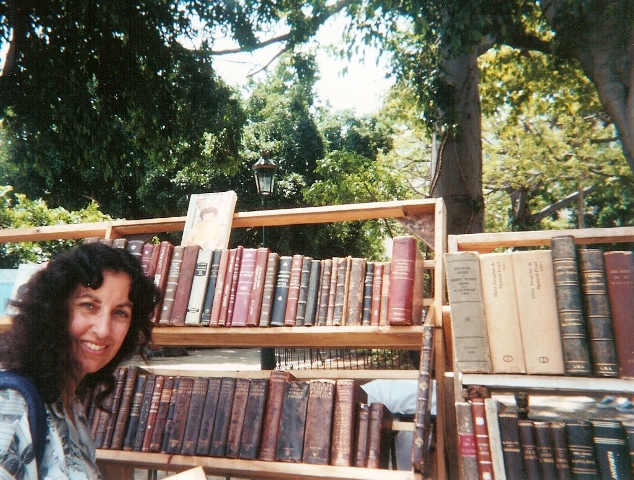
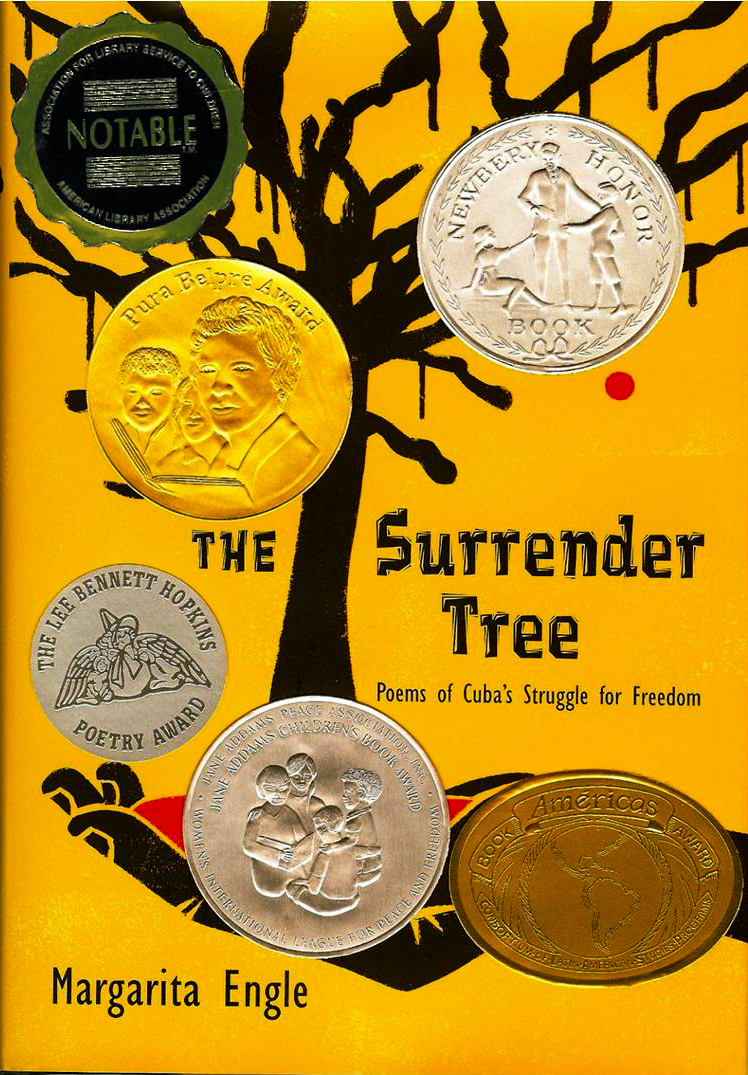
Margarita Engle is a Cuban-American author, botanist, and professor who enjoys collaborating with her husband in volunteer work for wilderness search and rescue dog training programs. Engle is the winner of numerous awards for her children’s and young adult books, including the Newbery Honor for The Surrender Tree: Poems of Cuba’s Struggle for Freedom (2008), becoming the first Latina to win that children’s literature award. In addition to her work as a writer, she also contributes to various periodicals such as Atlanta Review, Bilingual Review, California Quarterly, Caribbean Writer, Hawai’i Pacific Review, and Nimrod. Margarita Engle is a member of PEN USA West, Amnesty International, Freedom House of Human Rights and Freedom to Write Committee.

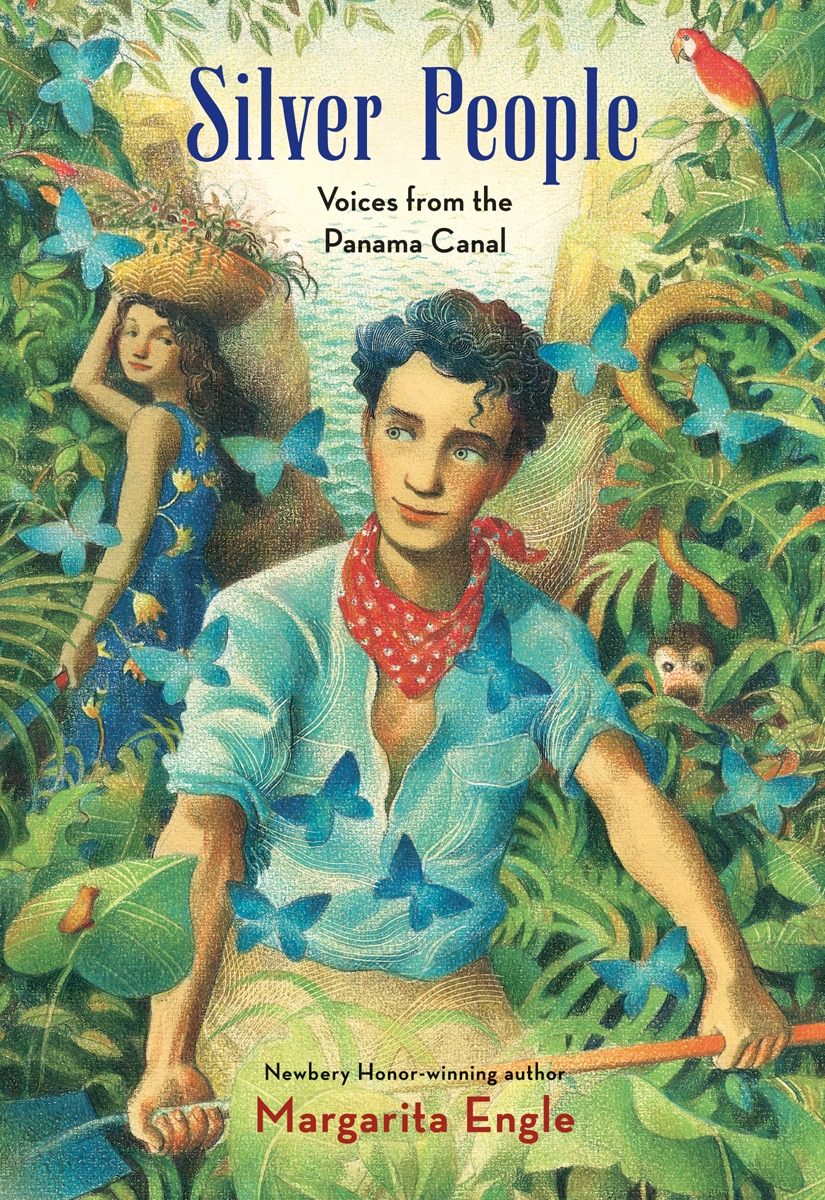
Some of her titles are: The Poet Slave of Cuba: A Biography of Juan Francisco Manzano (2006), Tropical Secrets: Holocaust Refugees in Cuba (2009), The Firefly Letters: A Suffragette’s Journey to Cuba (2010), Hurricane Dancers: The First Caribbean Pirate Shipwreck (2011), The Wild Book (2012), The Lightning Dreamer: Cuba’s Greatest Abolitionist (2013), Mountain Dog (2013), Silver People: Voices From the Panama Canal (2014), Orangutanka: A Story in Poems (2015), The Sky Painter: Louis Fuertes, Bird Artist (2015), and Enchanted Air: Two Cultures, Two Wings (2015).

Rafael López is a Mexican award-winning illustrator and artist, whose work is influenced by his cultural heritage, colors of Mexican street life, and Mexican surrealism. In addition to children’s books, López has illustrated posters, United States Postal Service stamps such as the Latin Music Legends series, and he has launched street art projects to revitalize urban neighborhoods, such as the Urban Art Trail Project.

He is the recipient of various Pura Belpré Honor for Illustration awards for books such as: My Name is Celia: The Life of Celia Cruz/Me Llamo Celia: La Vida de Celia Cruz (2006), Book Fiesta!: Celebrate Children’s Day/Book Day/ Celebremos El Día de los Niños/El Día de Los Libros (2010), The Cazuela That the Farm Maiden Stirred (2012) and Tito Puente: Mambo King/Rey del Mambo. He also received two Américas Awards for Children’s and Young Adult Literature for My Name is Celia (2006) and ¡Yum! ¡Mmmm! ¡Qué Rico! Americas’ Sproutings (2007).
DDG Pages 32-33 Final-revised-small

For more information about Drum Dream Girl: How One Girl’s Courage Changed Music (2015), visit your local library or bookstore. Also check out worldcat.orgindiebound.org, amazon.com, barnesandnoble.com, and goodreads.com. You can also watch the book trailer below.
Guest Post: Margarita Engle’s Passion for Writing About Hope and Forgotten Heroes

.

By Margarita Engle

Recently, I was asked what “legacy” I hope to leave by writing. Legacy is an intimidating word, but at least one portion of the answer is fairly simple. I love writing about independent thinkers who have been forgotten by history. These lost heroes might have been celebrated in their own times, or they may have worked in such obscurity that their names are unknown. Many are famous in their countries of origin, but have never been introduced to readers in the U.S.

Just a few years ago, any library search for children’s books about Latinos would have revealed little more than a series of shamefully inaccurate works glorifying brutal conquistadores. During the interim, excellent biographies of César Chávez and Sonia Sotomayor have been added, along with a handful of beautiful picture books about artists, writers, and musicians.

Surrende TreeThe work of reclaiming lost heroes has barely begun. My own approach is not strictly biographical because I love writing verse novels, and I also love writing first person interpretations of historical events. I often mix historical figures with fictional characters. In other words, I feel free to explore, experiment, and imagine. It’s a process that feels like time travel. Diaries, letters, and journals are my most important research materials, because they contain the emotional essence of history, along with the meticulous details of daily life. When I wrote The Poet Slave of Cuba, I was fortunate to have access to Juan Francisco Manzano’s autobiographical notes, which had been smuggled off the island by British abolitionists. For The Surrender Tree, I could not find anything written by Rosa la Bayamesa or any of Cuba’s other courageous wartime nurses, so I read the diaries of rebel soldiers, as well as interviews with reconcentration camp survivors. The Lightning Dreamer is based on the poetry and prose of Gertrudis Gómez de Avellaneda, who wrote a groundbreaking interracial romance novel that was published more than a decade before Uncle Tom’s Cabin. Not only was Sab far more daring, it was also more influential in Europe and Latin America. So why don’t North Americans know Avellaneda’s name? Does it make sense to learn only about our own little corners of the world?

Hope is at the heart of every topic I choose. I love to write about people I admire. In general, I admire them because they were independent thinkers, far ahead of their times, or because their courage took the form of kindness. I don’t see history as a series of wars, with dates of battles to memorize and names of generals who are automatically assumed to be heroic. My heroes are the ordinary people who made hopeful choices in times that must have seemed hopeless. Tropical Secrets and Silver People are examples of topics so huge—the Holocaust, and construction of the Panama Canal—that I chose to write primarily in the voices of fictional composite characters, rather than individual historical figures. For Hurricane Dancers, the absence of first person indigenous Cuban accounts of the Conquest forced me to rely on a combination of legends, imagination, and the diaries of priests. I read the journals of conquistadores with skepticism, because they were written with a specific agenda—trying to make themselves look heroic, so that they could apply for additional funds from the Spanish Crown.

final Silver People cover-1Lightning Dreamer notable-1

Not all of my books are verse novels, and not all are for young adults. One of my favorite challenges is writing picture books about people who are not considered “famous enough” for biographical works. This limitation has actually helped me present my historical picture book manuscripts simply as inspiring stories, instead of struggling to make the subjects seem more famous than they are. Some are not famous at all, simply because Latinos, other minorities, and women, have generally been omitted from earlier historical writings. Sadly, recent history books tend to copy the earlier ones. The result is an entire segment of classroom curricula and pleasure reading with no representation of forgotten groups.

At present, I have several biographical picture books already in the publishing pipeline, and several that are still searching for publishers. None of them are about easily recognized names, if you live in the U.S. Thankfully, with the help of wonderful editors and fantastic illustrators, I hope that these picture books will inspire young readers. Drum Dream Girl (Harcourt, 2015) is being illustrated by the amazing Rafael López, whose gorgeous art will help illuminate the life of a ten-year-old Chinese-African-Cuban girl who broke the island’s taboo against female drummers. The Sky Painter (Two Lions, 2015) will have beautiful, scientifically accurate illustrations by Aliona Bereghici, to show how a boy of Puerto Rican origin became the world’s greatest bird artist, by allowing birds to live, instead of following Audubon’s tradition of killing and posing them.

If children have heard Latin jazz or visited New York’s Natural History Museum, they’ve heard and seen the results of Millo Castro’s courage and Louis Agassiz Fuertes’ kindness, even though they are unlikely to have seen those names in a library or classroom. I firmly believe that it is time to make room for books about the lives of people who should be famous, rather than limiting young readers to books about people who are already famous.

No discussion of biographical writing is complete without the subject of autobiography. Writing a childhood memoir has been the greatest challenge of my life. It is strictly nonfiction—no imagining, only remembering. Certain memories are excruciatingly painful. I love recalling childhood trips to visit my extended family in Cuba, but I dread remembering the October 1962 Missile Crisis that ended those journeys. Enchanted Air, a Cold War Memoir (Atheneum, 2015) combines the two. Positive and negative. Joy and sorrow. Despair and hope. With a powerful cover illustration by one of the world’s greatest artists, Edel Rodríguez, this memoir already feels like my life’s work. It is a book that helps me reclaim the separated half of my family, and along with them, the half of my identity that was almost destroyed by politicians.

Writing about lives is a process of exploration, so even though the memoir feels like my life’s work, I’ve already found other people I hope to depict in verse novels and picture books. I’ve returned to the research stage, reading history, and deciding which parts of history have not yet been honestly portrayed.

****

Margarita-HavanaMargarita Engle is the Cuban-American author of many young adult verse novels, including The Surrender Tree, which received the first Newbery Honor ever awarded to a Latino/a. Her books have also received multiple Pura Belpré Awards and Honors, as well as three Américas Awards and the Jane Addams Peace Award. Margarita’s newest verse novel is Silver People, Voices From the Panama Canal, and her newest picture book is Tiny Rabbit’s Big WishShe lives in central California, where she enjoys hiding in the forest to help train her husband’s wilderness search and rescue dogs. For more information, visit her author site and enjoy interviews by Caroline Starr Rose  and Robyn Hood Black.

Book Review: Yum! ¡MmMm! ¡Qué Rico!: Americas’ Sproutings by Pat Mora

largeBy Sujei Lugo

DESCRIPTION FROM THE BOOK JACKET: Peanuts, blueberries, corn, potatoes, tomatoes, and more—here is a luscious collection of haiku celebrating foods native to the Americas. Brimming with imagination and fun, these poems capture the tasty essence of foods that have delighted, united, and enriched our lives for centuries. Exuberant illustrations bring to life the delicious spirit of the haiku, making Yum! ¡MmMm! ¡Qué Rico! an eye-popping, mouth-watering treat.

MY TWO CENTS: Beware: This book will make you feel hungry!

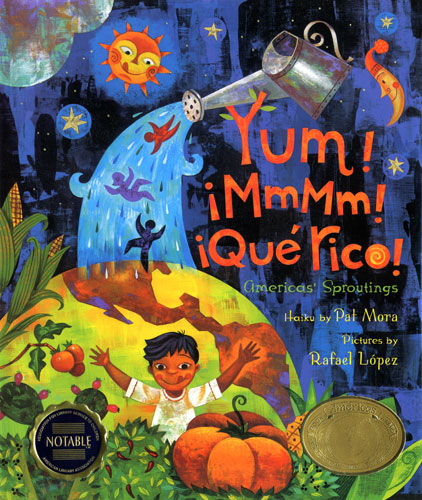
Through Pat Mora’s wonderful haikus (a traditional and very popular form of Japanese poetry) and Rafael López’s vivid illustrations, we are introduced to a wide variety of foods from the Americas. From blueberries and papaya, to pumpkin and vanilla, readers will have the opportunity to discover and learn about crops that have been growing in our lands for centuries.

Mora uses this opportunity to present us with 14 different types of foods accompanied by a haiku, an illustration, and an informational paragraph for each. This combination effectively makes this book a fun, poetic, and informational read. Mora’s short poems strive to capture the various feelings and sensory experiences we encounter when we eat and enjoy these foods. The informational paragraph provides us with the etymology, origin and uses for each food, and some of them even include national holidays across the region that celebrate them.

Even though food is the main character of the book, children and nature are presented throughout each page, as they interact with the food that is being discussed. Through cheerful and colorful illustrations, López supports Mora’s words with lively anthropomorphic foods, suns and moons, friendly animals, and picturesque landscapes. The book also embraces the real diversity of the Americas, giving us multiethnic and multiracial children and their families enjoying and being part of this magic realism journey of foods and words.

Among the food, colors, and haikus there is an important aspect that is constant throughout Yum! ¡Mmmm! ¡Qué rico!, although featured discreetly: a strong sense of how vital sharing is–sharing the land with nature, humans, and animals, as well as sharing the products of our land with others. It stresses the need to understand the importance of a non-exploitative relationship with nature and our role in taking care of our land. We can see this aspect clearly with López’s constant use of images of children and families, seen either eating or preparing food together, planting seeds, and picking crops, as well as images of nature watering our soil. There’s no doubt that this book will encourage children to eat fruit, vegetables, and other natural foods. At the same time, it will help them to recognize the work that needs to happen to enjoy those foods.

Yum! ¡Mmm! ¡Qué Rico! America’s Sproutings was the first collaboration between Pat Mora and Rafael López. Published in 2007, the book won several awards such as Bank Street Children’s Books of the Year (2008), Américas Award (2007) and American Library Association (ALA) Notable Books (2008). It was also included in the Texas Bluebonnet Award Master List (2008-2009), Great Lakes Great Books Award Master List (2008-2009) and ALA’s Top Ten Quick Picks for Reluctant Young Adult Readers. 

TEACHING TIPS: The book works well for children in grades K-6. At home, kids can read it with adults and learn about haikus and how to incorporate some of the foods into their diet. They can do fun cooking activities, such as making fruit faces or fruit kabobs, and even make ice cream, like in this activity shared by the book’s publisher Lee and Low Books.

The content of the book provides librarians, teachers and educators the opportunity to create cross-curricular activities in subjects such as language arts, social studies, art, and health. Students may even become inspired by Pat Mora’s haikus and write their own pieces about the foods they’ve just learned about, and how they feel by eating them or sharing them. The book incorporates a few words in Spanish, such as luna and dulces, teaching children new words as well as showing them they can incorporate words in other languages in their writing. For activities related to social students, art, and health, Lee and Low Books provides a great classroom guide.

LEXILE: AD970L

AUTHOR & ILLUSTRATOR: Pat Mora (author) is a writer, speaker, multicultural literacy advocate, and founder of Día de los Niños/Día de los Libros (Children’s Day/Book Day). A former teacher, university administrator and consultant, Mora has dedicated her life to spread her “bookjoy” to children and adults. She is the recipient of various awards and honors such as Honorary Doctorates from North Carolina State University and SUNY Buffalo, Kellogg National Leadership Fellowship, National Endowment of the Arts Poetry Fellowship, Civitella Ranieri Fellowship, Honorary Membership in the American Library Association, Lifetime Membership in the United States Board on Books for Young People and several Southwest Book Awards.

She was written books of poetry, fiction and nonfiction for children and adults. Some of her children’s books are: Listen to the Desert/Oye al Desierto (1994); Tomás and the Library Lady (1997), winner of the 1998 Tomás Rivera Mexican American Children’s Book Award; The Bakery Lady (2001); Doña Flor: A Tall Tale about a Giant Woman with a Great Big Heart (2005), winner of the Pura Belpré Author Honor and Illustrator Awards (2006) and Golden Kite Award from the Society of Children’s Book Writers and Illustrators; Book Fiesta!: Celebrate Children’s Day/Book Day/Celebremos El Día de los Niños/El Día de Los Libros (2009), a Junior Library Guild selection and Pura Belpré Illustrator Award (2010) winner; Gracias/Thanks (2009), recipient of the Pura Belpré Illustrator Honor (2010); A Piñata in a Pine Tree: A Latino Twelve Days of Christmas (2009), Dizzy in Your Eyes: Poems about Love (2010) and The Beautiful Lady: Our Lady of Guadalupe (2012).

Rafael López (illustrator): Rafael López is a Mexican award-winning illustrator and artist, whose work is influenced by his cultural heritage, colors of Mexican street life, and Mexican surrealism. In addition to children’s books, Rafael López has created illustrated posters and United States Postal Service stamps such as the Latin Music Legends series. He also launched street art projects to revitalize urban neighborhoods such as the Urban Art Trail Project.

He is the recipient of various Pura Belpré Honor for Illustration awards, for books such as: My Name is Celia: The Life of Celia Cruz/Me Llamo Celia: La Vida de Celia Cruz (2006), Book Fiesta!: Celebrate Children’s Day/Book Day/ Celebremos El Día de los Niños/El Día de Los Libros (2010), The Cazuela That the Farm Maiden Stirred (2012) and Tito Puente: Mambo King/Rey del Mambo (2013). He also received two Américas Awards for Children’s and Young Adult Literature for My Name is Celia (2006) and Yum! ¡Mmmm! ¡Qué Rico! Americas’ Sproutings (2007).

FOR MORE INFORMATION about Yum! ¡MmMm! ¡Qué Rico!: Americas’ Sproutings (2007) visit your local library or bookstore. Also, check out worldcat.orgindiebound.orggoodreads.comamazon.comleeandlow.com.

Congratulations to ALA Youth Media Award Winners and Honor Books

The annual award announcements from the American Library Association at its midwinter meeting is like the Golden Globes-Oscars-Grammys for the kid lit world. This year, we were especially thrilled to see the number of books by and/or for Latin@s on the lists.

Congratulations to all the winners! You can find the full list here. We’re sending out an extra abrazo to the following authors and illustrators:

Pura Belpré (Illustrator) Award honoring a Latino illustrator whose children’s books best portray, affirm and celebrate the Latino cultural experience: “Niño Wrestles the World,” written and illustrated by Yuyi Morales.

Three Belpré Illustrator Honor Books were selected: “Maria Had a Little Llama / María Tenía una Llamita,” illustrated and written by Angela Dominguez; “Pancho Rabbit and the Coyote: A Migrant’s Tale,” illustrated and written by Duncan Tonatiuh; and “Tito Puente: Mambo King / Rey del Mambo,” illustrated by Rafael López, written by Monica Brown.


Pura Belpré (Author) Award honoring a Latino writer whose children’s books best portray, affirm and celebrate the Latino cultural experience: “Yaqui Delgado Wants to Kick Your Ass,” written by Meg Medina.

Three Belpré Author Honor Books were named: “The Lightning Dreamer: Cuba’s Greatest Abolitionist,” written by Margarita Engle; “The Living,” written by Matt de la Peña; and “Pancho Rabbit and the Coyote: A Migrant’s Tale,” written and illustrated by Duncan Tonatiuh.


Robert F. Sibert Informational Book Award for most distinguished informational book for children: “Parrots over Puerto Rico,” written by Susan L. Roth and Cindy Trumbore, and illustrated by Susan L. Roth.

Stonewall Book Award – Mike Morgan & Larry Romans Children’s & Young Adult Literature Award given annually to English-language works of exceptional merit for children or teens relating to the gay, lesbian, bisexual and transgender experience: “Fat Angie,” written by e. E. Charlton-Trujillo.

William C. Morris Award for a debut book published by a first-time author writing for teens: “Charm & Strange,” written by Stephanie Kuehn.

Book Review: Tito Puente: Mambo King / Rey del Mambo by Monica Brown

Tito Puente, Mambo King/Tito Puente, Rey del MamboBy Sujei Lugo

DESCRIPTION FROM THE BOOK JACKET: Meet Tito Puente, the King of Mambo. Tum Tica! From musical prodigy on the streets of Harlem to five-time Grammy Award winner, Tito’s life was full of rhythm. Drums and claves, saxophones and tambourines were all part of the fun. Tac Tic! Monica Brown and Rafael López, the award-winning creators of the Pura Belpré Honor Book My Name is Celia/Me Llamo Celia, team up once again for another spectacular collaboration in this upbeat tribute to a musical legend.

MY TWO CENTS: Brown was presented with the challenge of summarizing Tito Puente’s life and music career in a picture book, and with the collaboration of Rafael López and his lovely illustrations, she succeeded wonderfully. What makes this picture book stand out is how beautifully words (English and Spanish) and images resonate with Tito’s sounds. The illustrations here are so vivid that you can almost see movements and listen to the sounds that are evoked. Brown and López effectively capture the beat and feeling of Tito Puente’s music throughout every page.

The book starts with an image of a boy and girl peeking through a curtain, as if we are about to start a show. This is where we are welcomed to Tito’s story from his childhood in El Barrio to his Grammy award-winning years. López’s colorful and vibrant images, along with Brown’s words and onomatopoeia, show us how music was constantly present in Tito’s life. These same images and words also construct a fond view of Latino life and music in NYC during Tito’s life.

Brown and López give us a very entertaining book that also manages to educate us about Tito’s life and the importance of music education. It is important to remember that Tito Puente was a product of music education and a supporter of music programs in schools. He even successfully worked toward the creation of the Tito Puente Educational Foundation that offers scholarships to children interested in learning music. This is an issue that is relevant when arts and music programs are constantly facing budget cuts. Being in tune with Puente’s life (and other great musicians and singers) helps to inspire us to support arts and music education, thus this picture book also serves as a great tool to familiarize with the power of music and arts as an important aspect of the learning process.

Tito Puente: Mambo King/Rey del Mambo is the second collaboration between Monica Brown and Rafael López. Published in March 2013, the book was selected by various Best of 2013 lists such as: Latinas for Latino Lit’s Remarkable Latino Children’s Literature of 2013, School Library Journal’s Top 10 Latino-themed Books of 2013, and Center for the Study Multicultural Children’s Literature Best Multicultural Books of 2013. Here is the wonderful bilingual trailer for this picture book:

TEACHING TIPS: This is a bilingual picture book (ages 4-7) that works well for early readers, but is a perfect one to read aloud. Parents, grandparents, family members, friends, or guardians can read in English, Spanish, or both, while teaching words and sounds to their young ones. School and public librarians can also use this book during storytime, and they can incorporate Tito’s songs and beats as the closing songs.

Going along with Tito Puente’s sense of collaboration with music, teachers (pre-school-2 grade) can also collaborate in school with this book. Language Arts, English, and Spanish teachers can read this book to their students, while teaching new words (in English and Spanish), onomatopoeia, and Tito’s life (the book includes a short biography). Art teachers can encourage and help students to create different musical instruments that are mentioned in the book. Music teachers can use the basic musical notation of a rumba for timbales, bongo, and congas that is available at the end of the book to teach some beats to the students.

LEXILE: AD740L

AUTHOR & ILLUSTRATOR: (information comes from HarperCollins Publishers, Monica Brown’s website, Rafael López Books’ website, and Rafael López’ website.

Monica Brown is the author of many award-winning children’s books and an English Professor at Northern Arizona University, specializing in U.S. Latino Literature and Multicultural Literature. She has a BA in English from University of California, Santa Barbara, an MA in English from Boston College and a PhD in English from The Ohio State University. In addition to children’s books, Monica Brown also writes and publishes scholarly work with a Latin@ focus. She is a recipient of the prestigious Rockefeller Fellowship on Chicano Cultural Literacies from the Center for Chicano Studies at the University of California.

Brown has stated that her Peruvian-American heritage and her desire to share Latin@ stories are the inspiration for her books. Her first book of the Marisol McDonald series, Marisol McDonald Doesn’t Match/Marisol McDonald No Combina is the winner of the Tejas Star Book Award (2012-13), the International Latino Book Award (2012) and a Pura Belpré Honor for Illustration (2012). Other of her numerous awards are: the Américas Award for Children’s and Young Adult Literature (2005) for her picture book My Name is Celia: The Life of Celia Cruz/Me Llamo Celia: La Vida de Celia Cruz; the Pura Belpré Award (2008) for My Name is Gabito: The Life of Gabriel Garcia Márquez/Me Llamo Gabito: The Life of Gabriel Garcia Márquez; and the International Latino Book Award (2006) for My Name is Gabriela: The Life of Gabriel Mistral/Me Llamo Gabriela: La Vida de Gabriela Mistral

Rafael López is a Mexican award-winning illustrator and artist, whose work is influenced by his cultural heritage, colors of Mexican street life, and Mexican surrealism. In addition to children’s books, López has illustrated posters, United States Postal Service stamps such as the Latin Music Legends series, and he has launched street art projects to revitalize urban neighborhoods, such as the Urban Art Trail Project.

He is the recipient of various Pura Belpré Honor for Illustration awards for books such as: My Name is Celia: The Life of Celia Cruz/Me Llamo Celia: La Vida de Celia Cruz (2006), Book Fiesta!: Celebrate Children’s Day/Book Day/ Celebremos El Día de los Niños/El Día de Los Libros (2010) and The Cazuela That the Farm Maiden Stirred (2012). He also received two Américas Awards for Children’s and Young Adult Literature for My Name is Celia (2006) and ¡Yum! ¡Mmmm! ¡Qué Rico! Americas’ Sproutings (2007).

For More Information about Tito Puente: Mambo King / Rey del Mambo (2013), visit your local library or bookstore. Also, check out worldcat.org, indiebound.org , goodreads.com, amazon.com, barnesandnoble.com  & harpercollins.com