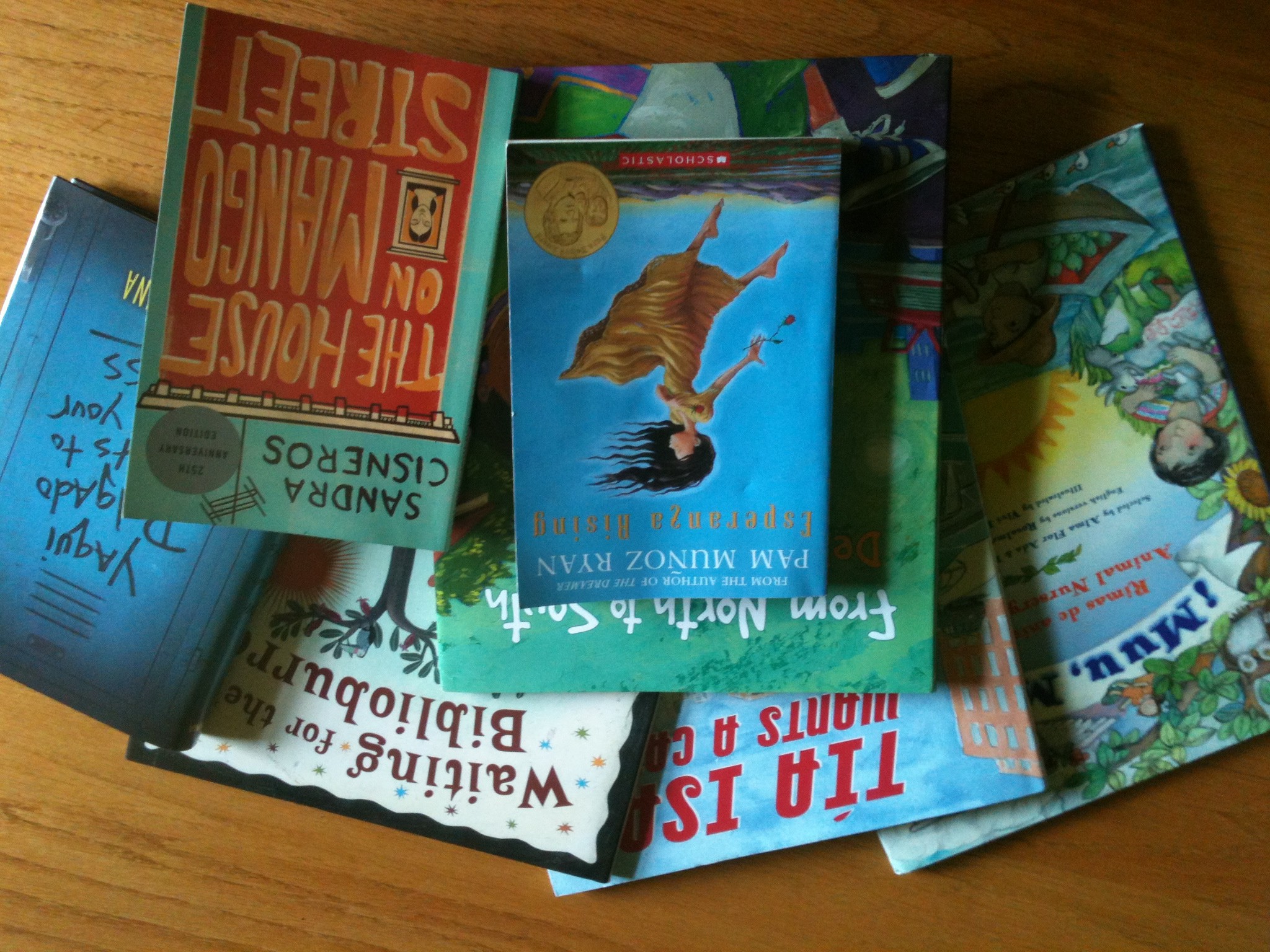
Diversity in Kid Lit was ‘On Fire’ at National Latino Children’s Literature Conference

My signed conference poster! The gorgeous artwork comes from Laura Lacamara's new book, Dalia's Wondrous Hair.

My signed conference poster! The gorgeous artwork comes from Laura Lacamara’s new book, Dalia’s Wondrous Hair.

By Lila Quintero Weaver

Let me float down to earth, grab a keyboard and pound out a report about the National Latino Children’s Literature Conference. That was my self-talk on March 15. The two-day conference, held at the University of Alabama and headed by mover-and-shaker Dr. Jamie Naidoo, had wrapped up at 4 pm the previous day.

Sixteen hours later, my whole being still felt tingly with the residual vibrations of what we’d experienced: great dialogue, stimulating talks, and warm connections with people passionate about the same thing, increasing diversity in children’s books. And it’s amazing how many presentations referenced last year’s incendiary New York Times article on minority characters in kid lit. The conference stirred my juices, but before I could touch my keyboard to write about it, Marianne Snow posted a great recap on her blog. There’s no way that I could improve on her account. 

That’s not the end of the story. Over the same weekend, The New York Times published a pair of essays from prize-winning YA author Walter Dean Myers and his son Christopher, an author-illustrator of note, on the scarcity of characters of color in children’s books. Spine tingling, timely, and powerful. Clearly, diversity in children’s books is a topic on fire!

And now, back to the conference. Since Marianne’s recap covers only the second day, here are select quotes and highlights from the first day:
NLCLC LogoLiterary agent Adriana Dominguez outlined some of the challenges facing Latin@ children’s literature: “Many editors think about Latino books as niche or institutional.” Neither of these spells the huge sales figures that the industry has become hungry for. She pointed to the Harry Potter phenomenon as a watershed moment in children’s publishing. Previously, marketing departments targeted libraries and schools, but the commercial success of Harry Potter and other blockbusters has shifted the dynamics.

Members of the audience asked how to best advocate for Latin@ children’s literature. Librarians can push these books, Dominguez said. She cited the late Rose Treviño as a personal mentor and a role model in the field of library services to children. Ms. Treviño was a beloved Houston public librarian who served the local Latin@ community and brought Latin@ books to the attention of a wider audience. Her passionate advocacy was captured in this extensive interview by Cynthia Leitich Smith.

Someone else asked, would more Latinos on the “inside” of publishing help to balance the equation? Yes, Dominguez said, because “you’re a stronger advocate for something you truly believe in.” She pointed out that graduate programs in publishing are recruiting zones for the “big five.”

In her keynote, recent Pura Belpré winner Meg Medina raised the topic of universal themes, those that address the experiences of all children, regardless of demographic labels. She reminded us that “Latino” is a uniquely American concept. Many Latin@ children grapple with the additional challenges of biculturalism. She shared that in her work, she strives to present a range of Latin@ characters, a “whole tapestry,” not merely those that the public has come to expect. (In her Monday post, Meg offered a terrific conference recap of her own.)

7789203Author-illustrator Laura Lacámara gave the day’s final keynote. Her journey into publishing has taken some interesting turns. She was first an illustrator of children’s books. Then came her debut as a writer, Floating on Mama’s Song, a story inspired by her mother’s devotion to opera. But Laura didn’t illustrate it; Yuyi Morales did. Now, hot off the presses is Laura’s newest book, her first to write and illustrate, the delightful Dalia’s Wondrous Hair (see the conference poster image, above). Count on a book talk in the near future!

The variety of breakout sessions boggled the mind. Thursday, I sat in on Lettycia Terrones’s illuminating talk on image-making in Latin@ children’s literature, followed by Araceli Esparza’s “Roots of Race in Chicano/Latino Picture Books,” another enriching experience. The next day, I heard an expert presentation by Catalina Lara on the Latin@ child and language.

Social media is an excellent tool, but let’s not forget the value of face-to-face meetings. They spark connections like nothing else. Next time you hear about a conference that addresses diversity or Latin@ children’s books, consider attending.
Writing Tips and Diversity Points at the SCBWI Winter Conference

By Cindy L. Rodriguez

The Winter Conference of the Society of Children’s Book Writers and Illustrators in New York is kind of like a massive family reunion, with all 1,000+ people having a love of children’s literature in their blood. It’s very cool for me to break away from my full-time day job as a middle school teacher and attend this annual gathering of creative people who all want to be published or work in some capacity with kid lit. While this love of children’s literature is the common denominator at the conference, the attendants are diverse people with myriad interests. Because of this, my ears naturally perk up when speakers address diversity in publishing.

The SCBWI did not have a specific panel or break-out session dedicated to diversity in children’s publishing, but speakers included Raul Colón, Shadra Strickland, Jack Gantos, and Nikki Grimes. Also, the topic of diversity popped up throughout the conference as writers, illustrators, and editors offered great advice about craft.

During her Saturday session, Anica Rissi, an executive editor at Katherine Tegen Books, outlined seven essential things to remember about writing contemporary fiction.

  1. Just do it: write regularly. Make time for this in your life. Be fierce in protecting your writing time.
  2. Give the reader something to wonder about.
  3. Start with the story, not the back story. Throw us into the action.
  4. You need both external and internal tensions, a plot arc and an emotional arc. You need that emotional growth.
  5. Details should matter. Ask what is this book really about? Is every scene a part of that? When in doubt, take it out.
  6. You need to bring out relatable truths through your characters. Create timeless and timely essential relationships and show how the relationships change the character. During this part of her talk, she said, “Please don’t just write about white people and please don’t just write about straight people.” She added that diverse characters should not always be the “token best friend.” A writer should make every person in the novel “a real person,” she said.
  7. World building exists in contemporary fiction, too. Setting needs to be a character.

Later, Nancy Siscoe, a senior executive editor with Knopf Books for Young Readers, discussed seven essential things about writing the classic middle grade novel. They are:

  1. Audience: middle grade fiction is for readers 8-12 years old. It’s an age of independence, of becoming a person separate from your family. It’s an age of enthusiasm, optimism, and openness.
  2. Plot: Put your kid character in charge. Let them solve their own problems, keep them moving, keep the stakes high.
  3. Hope: You don’t need a happy ending, but you do have to have hope.
  4. Likeable characters: You want a main character your readers would want to be friends with, someone they will care about.
  5. Voice: Make it distinctive. It’s the quality that sets the tone and sets your book apart from others.
  6. Read it aloud: The writing should be smooth, clean, and clear. Middle grade books are often read aloud, so try it while writing.
  7. Heart: The quality that makes your own heart feel bigger and wiser and stronger for having taken the journey.
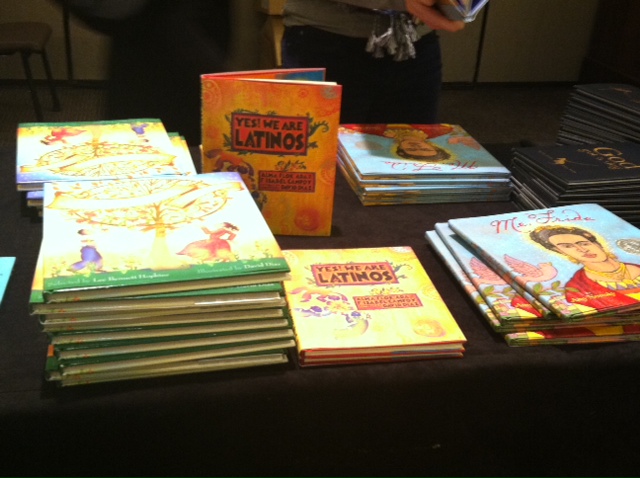
Some of the Latin@ titles at the book sale

Some of the Latin@ titles at the book sale

During her talk, Siscoe was asked about diversity. She responded by saying she is always on the lookout for diverse main characters. In fact, she said a “selling point” for the novel Unusual Chickens for the Exceptional Poultry Farmer, a middle grade debut by Kelly Jones set to release in 2015, was its Latina protagonist.

The final panel on Saturday was about book banning rather than craft. Susanna Reich, chair of the Children’s and Young Adult Book Committee for PEN American Center, floored me during this session. She said children’s and young adult books make up the vast majority of books on the ALA’s list of banned and challenged books. While I knew children’s books were often challenged, I didn’t realize that on the most recent list of the “Top 100 Banned/Challenged Books” from 2000-2009,” 72 of the top 100 are children’s and young adult books, with Harry Potter at the top of the list.

Reich also made the point that censorship isn’t only about removing books from shelves. Censorship also occurs when so few diverse titles make it onto the shelves. “It’s a form of censorship when the amount of multicultural kid lit published hasn’t increased in twenty years,” she said.

But what about those books that do make it onto the shelves? Well, it’s up to us to buy them. Reich quoted poet Alexis DeVeaux, who said, “Buying a book is a political act.” Reich challenged each of us to think about the books we choose to buy and read. Do we censor our book buying in any way? Do we make a conscious effort to read beyond our comfort zones? Do parents and teachers select books for their children and students that include diverse characters?

Multicultural books can speak to all kids, not only kids of color,” said Reich.

Hear, hear! More details from Reich’s talk can be found here on the SCBWI site.

At the end of an SCBWI conference, I am always exhausted in a good way, with a thousand things to consider as a reader, writer, parent, and teacher. This year, the speakers in the sessions I attended reinforced the idea that I can help to promote diversity in children’s literature in each of these roles. Not only can I broaden my own reading interests, but I can expand reading choices for my daughter and my students. By doing this, I will support diversity in kid lit and the members of my SCBWI familia who write, illustrate, edit, and publish books with diverse characters.

The Road to Publishing: Giving Good Feedback to Fellow Writers

By Stephanie Guerra

Last month, I began a two-post series addressing the most productive ways to work with beta readers and critique groups. The first installment focused on receiving feedback; in this post, I’ll focus on how to offer good feedback.

Beta readers and critique groups are critical to the writing process, and many successful authors find a long-term writing partner with whom they work productively for years. How can you nurture critique relationships—notoriously sensitive—so that they grow and flourish?

Here’s a quick and dirty list of strategies:

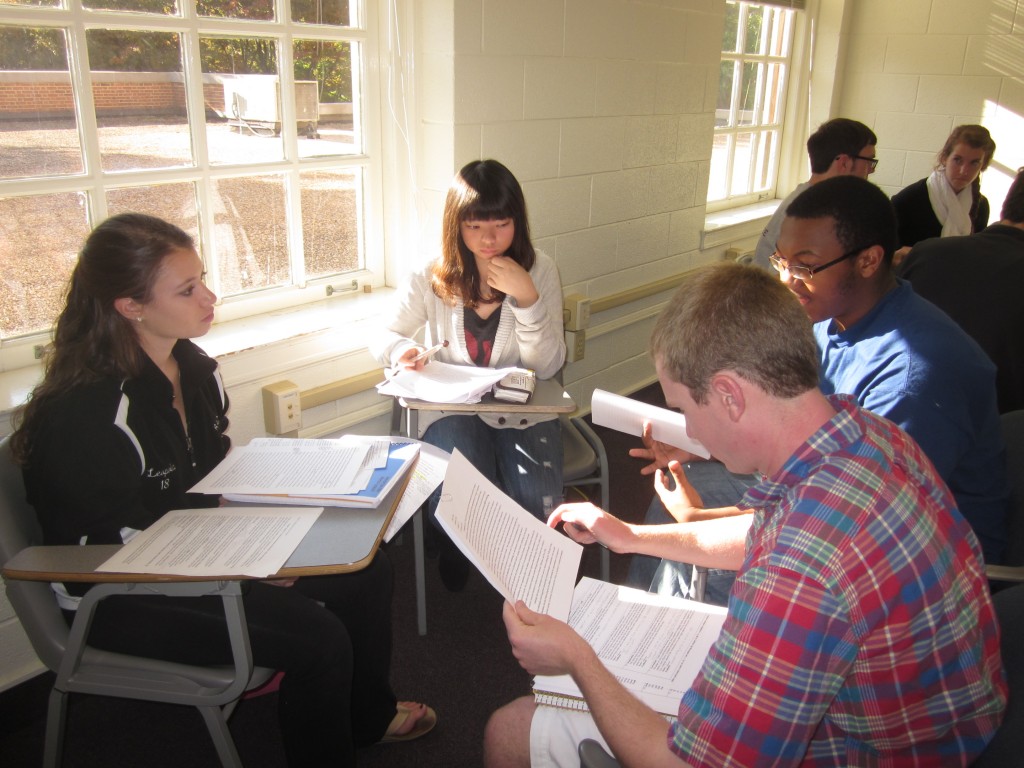
peer review1. Ask the type and level of feedback your partner is seeking. Type addresses the range of feedback your partner desires. Global? Character-focused? Plot-focused? Language-focused? Line-editing? Level addresses the thoroughness of your feedback. For a first draft, many writers want general, light feedback, including global impressions of plot and characters. If you pick apart the draft line by line, your partner may be overwhelmed. Be sure to clarify what he or she is looking for before diving in.

2. Offer an even trade. If someone has given you careful, in-depth feedback on one of your manuscripts, be sure to reciprocate in full. Do not read through his or her work quickly and toss off your thoughts as you hurry to get back to your own project. Your writing partner is relying on you and may make significant changes to their manuscript based on your advice. So give his or her work the time and respect it deserves.

3. Link up with writers who are roughly in your skill/professional range. Great disparities in talent can cause awkwardness, and trades may not be productive for the more advanced partner. That said, if you’re willing to consider a mentor relationship (no matter which end you’re on), go for it! Just don’t expect that trades will be “even”.

4. Find the positives. This seems obvious, but having been through an MFA, I know it needs to be said. Critique partners should be honest—but not brutally honest. Remember that no matter how elementary or flawed your partner’s work appears to you, it represents their effort and passion. Find at least three things to praise before you point out what’s not working.

5. Watch for cues. In the case of verbal feedback, watch and listen to the writer’s facial expressions, body language, and words as they receive feedback. If you sense distress, stop. Bring up the positives. Inspiration is a fragile thing and people have varying degrees of sensitivity about their work. You don’t want to be the Dream Crusher.

Editing16. Know when to back out. Sometimes (especially on first trades, but
occasionally with tried-and-true partners) you’ll run into a piece you simply can’t stomach. Maybe the writing is terrible. Maybe the message goes against everything you believe. Maybe the manuscript feels too commercial. Whatever the reason, if you can’t stand it, you won’t be able to offer a good or fair critique. Be diplomatic: “I’m having a hard time with this piece. I’m not experienced with this genre/topic/style. I’m afraid my political views are getting in the way of my ability to hear your story.” Whatever. Let the writer know you’re biased, and wiggle out gently.

7. Have boundaries. This is a good life rule, no? It definitely applies to writing. Critiques are so personal, and for many, so emotional, that they can unleash a storm of follow-up emails and phone calls. If you feel that someone is demanding more of your time and hand-holding than makes you comfortable, repeat (in as many different ways as you need to): “I really don’t have anything to add to what I’ve already said. But good luck.”

8. Don’t argue. Some writers can’t help themselves; they’re compelled to defend their work in the face of a critique. If you’re the partner giving feedback in this situation, don’t engage. Offer your counsel, and let the writer argue and justify if they need to. It’s all part of the process. Some people work things out verbally.

9. Don’t be the alpha critic. I borrowed this one from William Zinsser. Nobody likes the snide, superior critic who has scathing reviews of everything! ‘Nuf said.

10. Be open-minded. You’ll run into all kinds of manuscripts on the trade routes, not all of them your cup of tea. Remember, you’re not buying the book. Unless you have a visceral hatred of the work (see number 6), give it a fair shot. Try to separate your personal taste from your professional knowledge of character development, plot trajectory, etc. If personal taste is causing your review to slant negative or positive, rethink your approach.

The Road to Publishing: One Take on Working with a (Rock Star) Editor

By Ashley Hope Pérez

In articles and blog posts about breaking into the world of publishing, the lion’s share of attention goes to the writing craft, getting an agent, and securing a book deal. But what happens after those hurdles have been jumped? What can writers expect from their editors once the deal is sealed? And what will editors expect from writers?

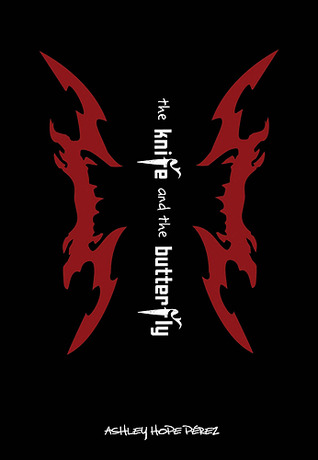
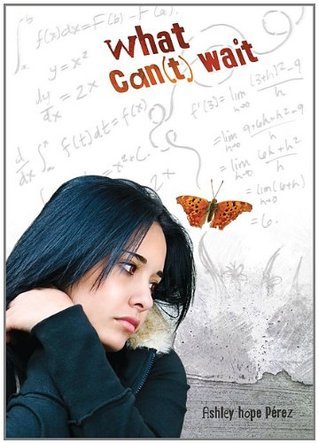
The Knife and the ButterflyBecause writer-editor relationships are endlessly varied, I don’t actually have the answers to these questions. In fact, as I started writing this post, I realized that the only thing I am really qualified to talk about are my experiences working with Andrew Karre, my editor at Carolrhoda Lab. Andrew bought my first two novels, What Can’t Wait and The Knife and the Butterfly, in a two-book deal back in 2009, and now I am in the beginning stages of working with Andrew on a third novel. I can’t say what it’s like for other writers, although you can find some descriptions of authors’ experiences with editors, my favorite being the five perspectives offered up hereWhat Can't Wait

For the editor’s perspective, check out this post from Scholastic imprint editor Cheryl Klein, who also has a book on editing YA. Andrew will stop by the blog on Thursday to toss in his two cents on editorial work; if you want to balance some of my gushing below with more objective reporting, you can read this feature on him in Publisher’s Weekly.

Enough preliminaries. Here’s the scoop I can offer on working with my editor.

What happens after you sign the contract with a publisher? Waiting. Waiting. Waiting. I remember expecting to hear from Andrew the day after the contract was signed, but often there’s a considerable lag (months, friends) between sealing the deal and getting the feedback that will guide the revision. Editors are working on dozens of projects—all in different stages—at any given point. The good ones are expert at juggling these demands and giving each project what it needs.

Isn’t it painful to be told how to revise? To start with, I have to say that Andrew is as close to my “ideal reader” as I expect ever to find. With all three novels, he has grasped the essential aspects of the projects as well as (or better than) I did myself. This fact secures my total confidence in his intuition and editorial recommendations; on top of that, I’ve benefitted from his ability to see subterranean connections that invited development as well as other missed opportunities. So even what might have been “pain” in the process invariably felt crucial to the mission of making the book what it was meant to be.

keep-calm-and-revise--718I should also say that the thought of revision is what gets me through the agony of drafting; revision is my happy zone, where things finally come together. I don’t mind cutting scenes or paragraphs or sentences that I love. I don’t mind writing new material. I don’t mind collapsing subplots, ditching characters, or even radically altering the point of view for 100,000 words of prose. I don’t mind because when Andrew tells me to do these things, I instantly see how much sense they make. For me, Andrew’s vision manages to expand the story’s possibilities while also clarifying what needs to be done to achieve those possibilities.

How, specifically, does the editing happen? I’ve often heard writer friends discuss the editorial letter, which I’m told is a fairly formal write-up of all the things that need to be done in revision for a manuscript to be acceptable to the editor. (More discussion of the editorial letter and an example here ) The editorial letter reflects the major first pass of editing and defines the focal areas for the main revision, after which (everyone hopes) it will be mostly scene- and sentence-level rewriting.

Unless I have suffered some serious memory loss—which is possible since I gave birth to my son during the early editorial process with What Can’t Wait—I don’t think I’ve ever gotten a formal editorial letter from Andrew. Instead, we tend to have several hour-longish phone calls where he tells me what his instincts are as far as what could or should change in the manuscript and why. Perhaps what is most important to me about how these things go is that the “why” is always intimately linked to the internal logic of the novel or its essential characteristics (as opposed, for example, to trends in the market or notions of what teens can “handle”). These conversations generally entail multiple epiphanies on my part and copious note-taking. The macro-level feedback from the phone calls comes along with scene-by-scene feedback via comments and edits in Word.

After responding to the major editorial feedback (over 2-5 months), I submit to Andrew my “final” manuscript. Once he reads and accepts it, I get the second half of the advance (the first half comes with signing the contract). There is still some back and forth and perhaps even some more substantive changes, but all the major pieces are in place. There will be at least one more full read-through with comments to address before the book goes to the next stage of copy-editing (line-by-line stuff and the standardization of things like “OK” for “okay” according to the publisher’s house style), which is done by wonderful people who work under Andrew.

2-14Book-MakingWhat’s next? Then the book goes into production, and a while later (3-6 months) I get an email with galleys that give an idea of what the manuscript will look like as a “real” book. There will also be drafts of jacket copy, which I’m glad I don’t have to write, and cover designs. With What Can’t Wait, I wasn’t in on anything until after the final cover was chosen; with The Knife and the Butterfly, I saw about a dozen preliminary designs and got to weigh in on their relative merits. From contract to the printing of advance reader copies, the process has taken between a year and two.

Any words of advice for those on the road to publishing? The truth is that—at least for your first book—you will have little say in who your editor is. Your agent will submit the book where she or he thinks it’s a good fit, and if an editor bites and makes a reasonable offer, your agent will advise you to accept. There is no room in this process for mailing editors personality tests to check for compatibility.

What you can do is embrace the editorial process as an opportunity to discover more about your novel and your work as a writer. I find that the writer-editor dynamic—inevitably centered on the book—creates an amazing triangle of insight inside of which all kinds of possibilities for the story come into focus. I hope that’s the case for many other writers, too.

Welcome to Latinos/as in Kid Lit

We Were HereLuis was a high school freshman who hadn’t read a novel independently for so long he couldn’t remember the title or year it happened. During the first semester of high school Reading, Luis read We Were Here by Matt de la Peña in anticipation of an author visit. After the visit, Luis asked for “another book like this one,” which was his way of saying, “a book written recently that doesn’t bore me and has characters who look, talk, and act like me.”

With the help of enthusiastic teachers and librarians, Luis read more books “like that one.” It took just one story that spoke to his identity as a Hispanic male to begin his engagement with literature.

Luis’s story is borne out by research. When youths “see” themselves in terms of race, culture, and lived experiences in the literature they read, they benefit academically, personally, and socially (Bishop, 1992; Diamond & Moore, 1995; Mason & Au, 1991). More broadly, culturally responsive teaching or “using the cultural knowledge, prior experiences, frames of reference, and performance styles of ethnically diverse students to make learning encounters more relevant to them” (Gay, 2000, p. 29) results in increased student engagement and positive gains in achievement (Chapman, 1994; Foster, 1995; Hollins, 1996; Krater, Zeni, & Cason, 1994; Ladson-Billings, 1994, 1995a, 1995b; Sheets, 1995).

Luis, and others like him, stand to gain a great deal from reading books that speak to their cultural identities. Sometimes a love for reading is kick-started by a single book with a main character who faces the same issues the reader does or lives in a place like the reader’s own neighborhood. This is true for all of us. We connect with stories for varied reasons, including the simple one that something in the narrative is familiar.

The statistics in publishing, however, have been against teens and children like Luis, who specifically want to read books that feature ethnic or racial minorities. Recent news stories have highlighted the fact that minority children in the United States don’t often see themselves reflected in books. Also, a study by the Cooperative Children’s Book Center reported the number of children’s books with multicultural content has not increased in 18 years. (See also this post by Lee & Low Books about the study.)

So, why focus on Latin@ Lit? Because 53 million Hispanics live in the U.S. according to the 2012 census. Hispanics are the second largest race or ethnic group (behind non-Hispanic whites), representing about 17 percent of the total population. Everyone–not just Latin@s–should be able to read books with characters that represent our diverse population.

While several excellent resources for Latin@ Literature exist online, we had yet to find a site that was dedicated to Latin@ children’s literature and created by Kid Lit writers.

So, here we are!  Welcome to Latin@s in Kid Lit!

We’re launching our site at the start of National Hispanic Heritage Month to underscore our mission to provide a closer, more sustained sense of what’s happening in Latin@ children’s literature.

Our vision is to:

  • engage with works about, for, and/or by Latin@s;

  • offer a broad forum on Latin@ children’s, MG, and YA books;

  • promote literacy and the love of books within the Latin@ community;

  • examine the historical and contemporary state of Latin@ characters;

  • encourage interest in Latin@ children’s, MG, and YA literature among non-Latin@ readers;

  • share perspectives and resources that can be of use to writers, authors, illustrators, librarians, parents, teachers, scholars, and other stakeholders in literacy and publishing.

On this site, you’ll find:

  • posts about Latin@s in children’s literature;

  • book lists. This is a work in progress. Please send us titles that should be included. We are looking for books by Latin@ writers in any genre and books by non-Latin@ writers with Latin@ characters, settings, etc.;

  • book talks, where we’ll highlight books we’re reading and explain why you should be reading them, too;

  • interviews with writers and illustrators about their creative journeys;

  • interviews with agents and editors about the publishing process;

  • teaching ideas;

  • articles and news links aimed at writers and others involved in literacy and publishing;

  • guest posts. Please write to us if you have an idea for a post.

Like you, we’re passionate about serving a burgeoning community of young readers. That’s why we want to offer this as a welcoming space where you can share your ideas, too. We believe that Latin@ children’s literature is for everybody. We hope you’ll follow us and explore the ways it can enrich young people’s lives.

¡Bienvenidos!

Books1

We don’t want to overwhelm you with research, but if you’re interested in learning more about the ways multicultural literature benefits young readers, the following books and studies are a good place to start.

Brozo, W. (2002). To be a boy, to be a reader: Engaging teen and preteen boys in active literacy. Newark, DE: International Reading Association

Deci, E., Vallerand, R., Pelletier, L., & Ryan, R. (1991). Motivation and education: The self-determination perspective. Educational Psychologist, 26(34), 325-346.

Diamond, B.J., & Moore, M.A. (1995). Multicultural literacy: Mirroring the reality of the classroom. New York: Longman.

Gay, G. (2000). Culturally responsive teaching: Research, theory and practice. New York: Teachers College Press.

Guerra, S. (2012). Using Urban Fiction to Engage At-Risk and Incarcerated Youth in Literacy Instruction, Journal of Adolescent and Adult Literacy (55)5, p 385-394.

Hill, M.L., Pérez, B., & Irby, D.J. (2008). Street fiction: What is it and what does it mean for English teachers? English Journal, 97(3), 76–82.

Hughes-Hassel, S., & Pradnya, R. (2007). The leisure reading habits of urban adolescents. Journal of Adolescent & Adult Literacy, 51(1), 22

Ladson-Billings, G. (1995a). But that’s just good teaching! The case for culturally relevant pedagogy. Theory Into Practice, 34(3), 159-165.

Ladson-Billings, G. (1995b). Toward a theory of culturally relevant pedagogy. American Educational Research Journal, 32(3), 465-491.

Morris, V., Hughes-Hassell, S., Agosto, D., & Cottman, D. (2006). Street lit: Emptying teen fiction bookshelves in Philadelphia public libraries. YALS: Young Adult Library Services, 5(1), 16-23.