Guest Post: Margarita Engle’s Passion for Writing About Hope and Forgotten Heroes

.

By Margarita Engle

Recently, I was asked what “legacy” I hope to leave by writing. Legacy is an intimidating word, but at least one portion of the answer is fairly simple. I love writing about independent thinkers who have been forgotten by history. These lost heroes might have been celebrated in their own times, or they may have worked in such obscurity that their names are unknown. Many are famous in their countries of origin, but have never been introduced to readers in the U.S.

Just a few years ago, any library search for children’s books about Latinos would have revealed little more than a series of shamefully inaccurate works glorifying brutal conquistadores. During the interim, excellent biographies of César Chávez and Sonia Sotomayor have been added, along with a handful of beautiful picture books about artists, writers, and musicians.
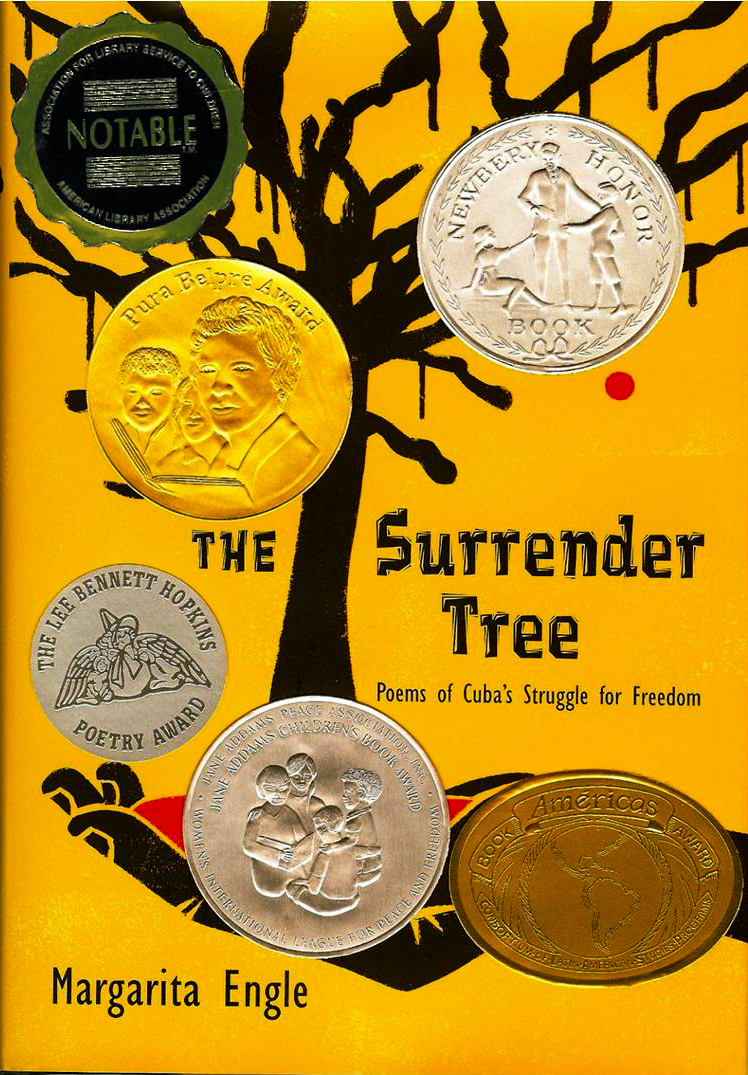
Surrende TreeThe work of reclaiming lost heroes has barely begun. My own approach is not strictly biographical because I love writing verse novels, and I also love writing first person interpretations of historical events. I often mix historical figures with fictional characters. In other words, I feel free to explore, experiment, and imagine. It’s a process that feels like time travel. Diaries, letters, and journals are my most important research materials, because they contain the emotional essence of history, along with the meticulous details of daily life. When I wrote The Poet Slave of Cuba, I was fortunate to have access to Juan Francisco Manzano’s autobiographical notes, which had been smuggled off the island by British abolitionists. For The Surrender Tree, I could not find anything written by Rosa la Bayamesa or any of Cuba’s other courageous wartime nurses, so I read the diaries of rebel soldiers, as well as interviews with reconcentration camp survivors. The Lightning Dreamer is based on the poetry and prose of Gertrudis Gómez de Avellaneda, who wrote a groundbreaking interracial romance novel that was published more than a decade before Uncle Tom’s Cabin. Not only was Sab far more daring, it was also more influential in Europe and Latin America. So why don’t North Americans know Avellaneda’s name? Does it make sense to learn only about our own little corners of the world?

Hope is at the heart of every topic I choose. I love to write about people I admire. In general, I admire them because they were independent thinkers, far ahead of their times, or because their courage took the form of kindness. I don’t see history as a series of wars, with dates of battles to memorize and names of generals who are automatically assumed to be heroic. My heroes are the ordinary people who made hopeful choices in times that must have seemed hopeless. Tropical Secrets and Silver People are examples of topics so huge—the Holocaust, and construction of the Panama Canal—that I chose to write primarily in the voices of fictional composite characters, rather than individual historical figures. For Hurricane Dancers, the absence of first person indigenous Cuban accounts of the Conquest forced me to rely on a combination of legends, imagination, and the diaries of priests. I read the journals of conquistadores with skepticism, because they were written with a specific agenda—trying to make themselves look heroic, so that they could apply for additional funds from the Spanish Crown.
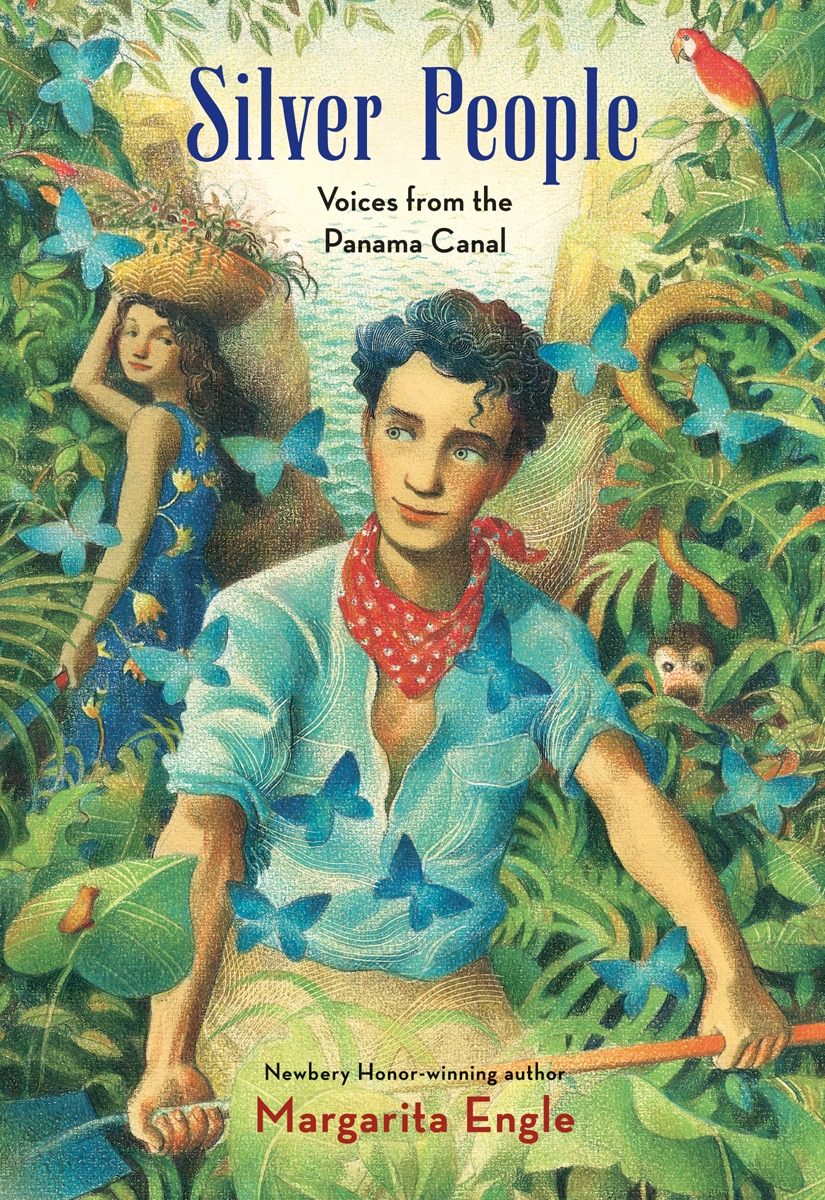
final Silver People cover-1Lightning Dreamer notable-1

Not all of my books are verse novels, and not all are for young adults. One of my favorite challenges is writing picture books about people who are not considered “famous enough” for biographical works. This limitation has actually helped me present my historical picture book manuscripts simply as inspiring stories, instead of struggling to make the subjects seem more famous than they are. Some are not famous at all, simply because Latinos, other minorities, and women, have generally been omitted from earlier historical writings. Sadly, recent history books tend to copy the earlier ones. The result is an entire segment of classroom curricula and pleasure reading with no representation of forgotten groups.

At present, I have several biographical picture books already in the publishing pipeline, and several that are still searching for publishers. None of them are about easily recognized names, if you live in the U.S. Thankfully, with the help of wonderful editors and fantastic illustrators, I hope that these picture books will inspire young readers. Drum Dream Girl (Harcourt, 2015) is being illustrated by the amazing Rafael López, whose gorgeous art will help illuminate the life of a ten-year-old Chinese-African-Cuban girl who broke the island’s taboo against female drummers. The Sky Painter (Two Lions, 2015) will have beautiful, scientifically accurate illustrations by Aliona Bereghici, to show how a boy of Puerto Rican origin became the world’s greatest bird artist, by allowing birds to live, instead of following Audubon’s tradition of killing and posing them.

If children have heard Latin jazz or visited New York’s Natural History Museum, they’ve heard and seen the results of Millo Castro’s courage and Louis Agassiz Fuertes’ kindness, even though they are unlikely to have seen those names in a library or classroom. I firmly believe that it is time to make room for books about the lives of people who should be famous, rather than limiting young readers to books about people who are already famous.

No discussion of biographical writing is complete without the subject of autobiography. Writing a childhood memoir has been the greatest challenge of my life. It is strictly nonfiction—no imagining, only remembering. Certain memories are excruciatingly painful. I love recalling childhood trips to visit my extended family in Cuba, but I dread remembering the October 1962 Missile Crisis that ended those journeys. Enchanted Air, a Cold War Memoir (Atheneum, 2015) combines the two. Positive and negative. Joy and sorrow. Despair and hope. With a powerful cover illustration by one of the world’s greatest artists, Edel Rodríguez, this memoir already feels like my life’s work. It is a book that helps me reclaim the separated half of my family, and along with them, the half of my identity that was almost destroyed by politicians.

Writing about lives is a process of exploration, so even though the memoir feels like my life’s work, I’ve already found other people I hope to depict in verse novels and picture books. I’ve returned to the research stage, reading history, and deciding which parts of history have not yet been honestly portrayed.

****
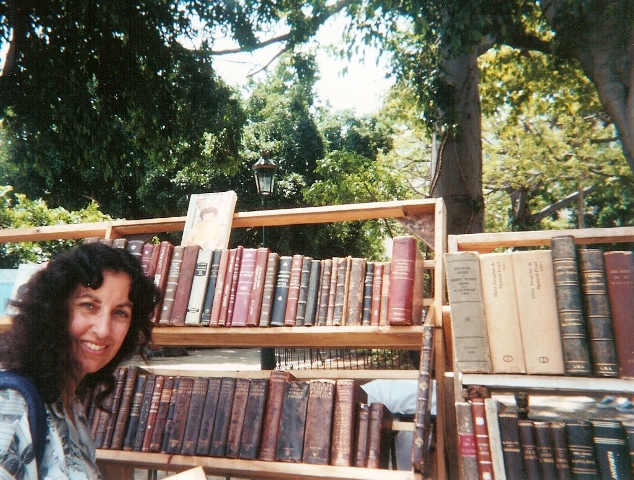
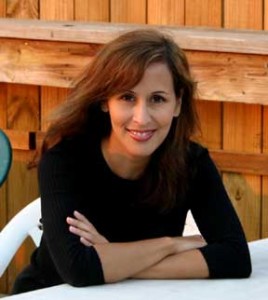
Margarita-HavanaMargarita Engle is the Cuban-American author of many young adult verse novels, including The Surrender Tree, which received the first Newbery Honor ever awarded to a Latino/a. Her books have also received multiple Pura Belpré Awards and Honors, as well as three Américas Awards and the Jane Addams Peace Award. Margarita’s newest verse novel is Silver People, Voices From the Panama Canal, and her newest picture book is Tiny Rabbit’s Big WishShe lives in central California, where she enjoys hiding in the forest to help train her husband’s wilderness search and rescue dogs. For more information, visit her author site and enjoy interviews by Caroline Starr Rose  and Robyn Hood Black.
Seven Things You Need to Know About After the Book Deal

By Maria E. Andreu

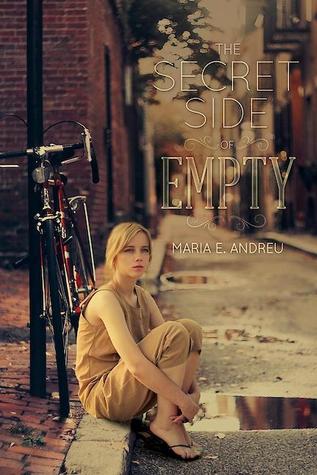
18079898Have you ever noticed that, in romantic comedies, the end is very often a wedding? What’s up with that? Love stories don’t end at a wedding. That’s when real life begins, the business of figuring out who does the laundry, where you’re going to live, and how in the world you figure out where you spend Thanksgiving and Christmas. It’s the same thing with publishing. The day you ink the book deal may be the happy ending in the movie version, but in real life it’s just the start of the story.
After many years of dreaming of being a writer, I got my movie-worthy happy ending. I got the first agent I pitched for The Secret Side of Empty, from a house so prestigious just reading their client list gives me goose bumps. We sold the book in the first round of submissions to a publisher who has done amazing things for the book, truly an ideal publisher for my first time at the rodeo. (And there was more than one offer to weigh). Anyone who hears my publishing story wants to stop me there and sort of bask in the moment, happy in the knowledge that it does happen that way sometimes. And it does.

But then you wake up the next day.

Just like no one tells you what to do once you get back from the honeymoon, here are 7 things no one will tell you about what it’s like AFTER the book deal.

  1. Editing is terrifying. Sure, you’ve edited before. You’ve joined critique groups. Maybe you’ve been brave and gone to pitch slams and other places where your words have been torn apart and criticized. Great. Now you’ll have a team of bona-fide professionals poring over your every word. I got an editorial letter so detailed that I shut the document immediately after seeing its page count (let’s just say this: it was in the double digits) and couldn’t make myself open it for 2 weeks. Be prepared. It’s not about you. It’s about making the work the best it can be.
  2. Book promotion is exhausting. Yes, you’ve waited your whole life for it. Yes, you’re going to love most of it. And you’re going to be exhausted anyway. You’ll be thrilled to learn that your publisher will schedule a blog tour for you (maybe, if you’re lucky). You’ll forget that it means you’ll have to actually write all those posts, answer all those interview questions, send head shots, book covers and photos of your frizzy hair in the 8th grade or the bicycle you learned to ride on. Then you’ll go to schools, libraries, festivals, and grocery stores and auto body shops too, if they’ll take you. Fun, yes. Mostly. Take naps now.
  3. Your launch date is not real. Just like a lot of brides stress the wedding and forget it’s actually a marriage they should be planning, so too a lot of authors obsessively plan the Twitter party and Tumblr extravaganza that will be their Launch Day, forgetting that it isn’t really even a Real Thing. My books shipped almost 3 weeks early. When I asked, a helpful professional told me, “Unless your name is J.K. Rowling, no one’s taking up warehouse space to perfectly orchestrate your big reveal.” It will help you to remember that book promotion, like a marriage, is something that you’re in for the long haul. So don’t stress the day so much and come up with a long-term strategy.
  4. It’s a crowded marketplace. You thought it was hard to get attention when you were in the throng of hopefuls? Wait until you see your book on a shelf full of all the others who broke out of the pack. You’ve got a couple of seconds to catch a potential reader’s attention, online and off. If the competition of trying to get published bothers you, you should know it doesn’t stop after your book is out in the world.
  5. Reviews hurt. Bad reviews can cut you to the quick. Even good ones can sometimes leave you scratching your head. Much ink has been spilled advising writers not to let critics get to them. That’s great advice. Also pretty hard to follow, particularly at first when you’re hungry for any sign of how your book is doing and what people think. My advice is to ignore reviews completely – good and bad. It is advice you will not follow. Hold on, I’ve got to go check my Goodreads page real quick.
  6. People will find things in your book you didn’t realize were there. I’ve had readers ask me about love triangles I didn’t intend to include and legislation I didn’t mean to reference. I’ve had readers write to tell me they love a character and a whole bunch of others reach out to tell me how much they loathe that very same character. All with supporting evidence. When you release your book out into the world, it is no longer yours alone.
  7. It will be hard to find time to write. Do you struggle with finding time now? Imagine having all the responsibilities you have now, except take away a lot of your free time on weekends and evenings (because you’re at book festivals and you’re writing blog posts). Now write. That’s what it’s like to try to write books # 2, 3 and beyond.

Lest I seem like too much of a downer, let me say that publishing my debut novel has been magical, the culmination of a lifelong dream. I’ve been honored to speak at schools and libraries and events all over the country and have received wonderful attention from the trade reviewers. I’ve gotten the tingles when I discovered that my book is in libraries as far away as Singapore, Australia, and Egypt, as well as across the United States. Just imagine… my words being read by someone right now somewhere halfway around the globe. Amazing! I share my “things no one will tell you” not to discourage you, but to invite you to look at the whole picture. Like anything worth striving for – a marriage, parenthood, career – publishing a book is a massive undertaking with highs and lows. Once you reach the peak of Published Author, there is another one, just as big, right in front of you. Then another, and another, all the way to the horizon. And that’s what makes it beautiful.

Maria AndreuMaria E. Andreu is the author of the novel The Secret Side of Empty, the story of a teen girl who is American in every way but one: on paper. She was brought to the U.S. as a baby and is now undocumented in the eyes of the law. The author draws on her own experiences as an undocumented teen to give a glimpse into the fear, frustration and, ultimately, the strength that comes from being “illegal” in your own home.

Now a citizen thanks to legislation in the 1980s, Maria resides in a New York City suburb with all her “two’s”: her two children, two dogs and two cats. She speaks on the subject of immigration and its effect on individuals, especially children. When not writing or speaking, you can find her babying her iris garden and reading post apocalyptic fiction. You can also find her on Facebook and Twitter.

The Secret Side of Empty has received positive reviews from Kirkus and Publisher’s Weekly, among others. The novel was also the National Indie Book Award Winner and a Junior Library Guild Selection.

Author Angela Cervantes On Publishing & Her Animal-Loving Latina Protagonist

By Cindy L. Rodriguez

Today, we are thrilled to have a Q&A with author Angela Cervantes, who talks about her debut novel, Gaby, Lost and Found (Scholastic), her advice for pre-published writers, and a little about how she crafted a wonderful middle grade novel that’s both funny and heartbreaking. Angela is also super generous and is offering a signed book, a poster, and a T-shirt to one lucky winner. Click on the Rafflecopter link here or at the end of the post to enter!

Gaby Lost and FoundCR: Since this is your debut novel, can you tell us about your publishing journey. Were there any things you did in particular that, in hindsight, you think were particularly helpful as you pursued an agent and book deal? What advice would you give to pre-published writers?

AC: My middle grade novel, Gaby, Lost and Found has been out almost 10 months now, and I’m still learning things about myself and the publishing journey. In the beginning, when I was a simple wanna-be-Kid Lit author with a manuscript, the idea of facing the publishing industry was scary.If you had met me then, I would have told you that I’d rather pick up a hitchhiker with face tattoos than have to face the world of slush piles and soul-less rejection letters.

Eventually, I realized that if I loved my book enough, I had to be willing to take on rejection. After all, the worst things they can do to you is ignore you completely or reject your work. Tough, but big deal. Every writer in the history of the written world has received a rejection or been passed up at some point, right? If they rejected my work, I was in good company.

I could go on and on with advice for pre-published writers. Never pick up hitchhikers with face tattoos! Really, I’ve learned so much. First, I would start with the very basic: If you’re going to go the traditional publishing route, like I did, then you must finish that manuscript. You have to show the agent something fast when they ask for a partial or full manuscript. My second advice is to take that completed manuscript to a writing critique group. Feedback is crucial. I belong to a critique group called the Firehouse Five (although we are six now) and we meet monthly to provide critique to each other’s work. It’s priceless. My final advice, take your writing-group-critiqued and completed manuscript to a local writers’ conference and sign up for a pitch or first pages sessions with an agent. I met my agent through a writer’s conference. She liked my pitch, but made it very clear there was plenty of work to be done on my manuscript before she’d offer representation. I did the work and I was signed. With her guidance, I made more revisions and it was sent off for submission. Soon, the first rejection arrived. It didn’t kill me. A week or so later, I received an offer for my first novel. Yay!

Angela C and brother

From her website: Angela, age 10, with her brother Enrique and their dogs, which were the inspiration for Spike in the novel.

CR: I love how you mixed Gaby’s story with the animals’ stories, how they were both in new situations and looking for new homes. How did you get the idea to address the subject of immigration for a MG audience, using homeless animals as a link to Gaby’s situation?

Thanks, I’m glad you enjoyed it. I really didn’t start with the idea to address the subject of immigration. I’m character-driven in my writing so I started with just Gaby, a funny, smart, and brave girl who is also a serious animal lover like her mom. I think if I had started out subject-driven with the intention to write a book on the issue of immigration, it would have been a much different novel. It would have come across as more lecturing and I don’t like to lecture or be on the receiving end of a lecture. No thank you. And kids don’t want to be lectured to either. At school visits, kids always ask me about deportation, but more in the context of why or how this happened to Gaby. They always tell me that they want Gaby and her mom to be together. They’re invested in Gaby’s happiness. It’s precious.

CR: Even though Gaby is dealing with the serious issue of her mother being away, she is also a “typical” MG girl, laughing and doing silly things with her male and female friends. Was this a conscious decision on your part, to show a range of emotions and not have it be an “issue” book or overly depressing?

AC: It’s funny that you ask that because my original drafts were even more depressing! I pulled a lot out during the revision process because the story was going in all sorts of directions. What got me back on track was again focusing on Gaby and who she was and not what she was going through. Gaby is an eleven year old girl. She loves animals. She loves glitter. She can climb trees and beat the boys at a water balloon fight. Would Gaby be defeated by bullying at school, the loss of her mom, the neglect of her father, and poverty? Or would this young girl rise up, even if she responds with some missteps, and show us what she’s made of? For me that was the only conscious decision on my part in writing this novel. I had to be true to Gaby and not define her by what she was going through, but show where she was going.

CR: Are you an animal lover? Did you have to do any particular research about animal shelters or spend time at one to capture what happens there?

AC: Besides my many years of experience as an animal lover and pet owner, I did visit several local animal shelters for information and inspiration. At the animal shelters, I asked tons of questions, held a lot of cats, wrote a lot of notes and pet a lot of dogs for this book. Why can’t all research be that much fun?

CR: What are you working on now? Can you share what’s next for you?

AC: Sure! I’ve completed my second middle-grade novel and I am now in the throes of revision. Fun stuff! Wish me luck.

Angela Cervantes

Angela Cervantes was born and raised in Kansas, with most of her childhood spent in Topeka in the Mexican-American community of Oakland. Angela has a degree in English and an MBA, and she is the co-founder of Las Poetas, a Chicana poetry group that has developed into the Latino Writers Collective. In 2005, her short story, “Pork Chop Sandwiches,” was published in Chicken Soup for the Latino Soul. In  2007, she won third place for Creative Nonfiction in the Missouri Review’s audio competition for her story “House of Women” and Kansas City Voices’ Best of Prose Award for her short story, “Ten Hail Marys.” In 2008, she was recognized as one of Kansas City’s Emerging Writers by the Kansas City Star Magazine.

Gaby, Lost and Found is her first novel.

Click HERE to enter the giveaway. One winner will receive a signed copy of Gaby, Lost and Found, a poster, and a T-shirt. You can enter for free once each day. A winner will be chosen on Saturday, 5/24/14. Good luck!!

Let’s All Make the #WeNeedDiverseBooks Campaign an Ongoing Movement

By Patrick Flores-Scott

#WeNeedDiverseBooks. The trending hashtag is a channel for conversation around the huge problem of a lack of diversity in children’s literature. The problem has been noted in many recent articles and so have the reasons we need more books by diverse authors and books with complex, real diverse characters.

For many years I was lucky to be a public school teacher in very diverse schools. At different points I was both a general education classroom teacher and a reading specialist. As a classroom teacher, I was able to seek and find the books I wanted my class to hear and read. More often than not, these books had main characters of color. I had the time, energy, resources, and relationships that helped me find great books that my students loved.

My students, however, especially my reluctant readers, were not going to work so hard to find a book that would reflect the cultural, racial, socio-economic realities of their community. They were going to pick the available book, the one closest to their hand when it was time to leave the library, or the trendy book that made them look like they were in the reading “know.”

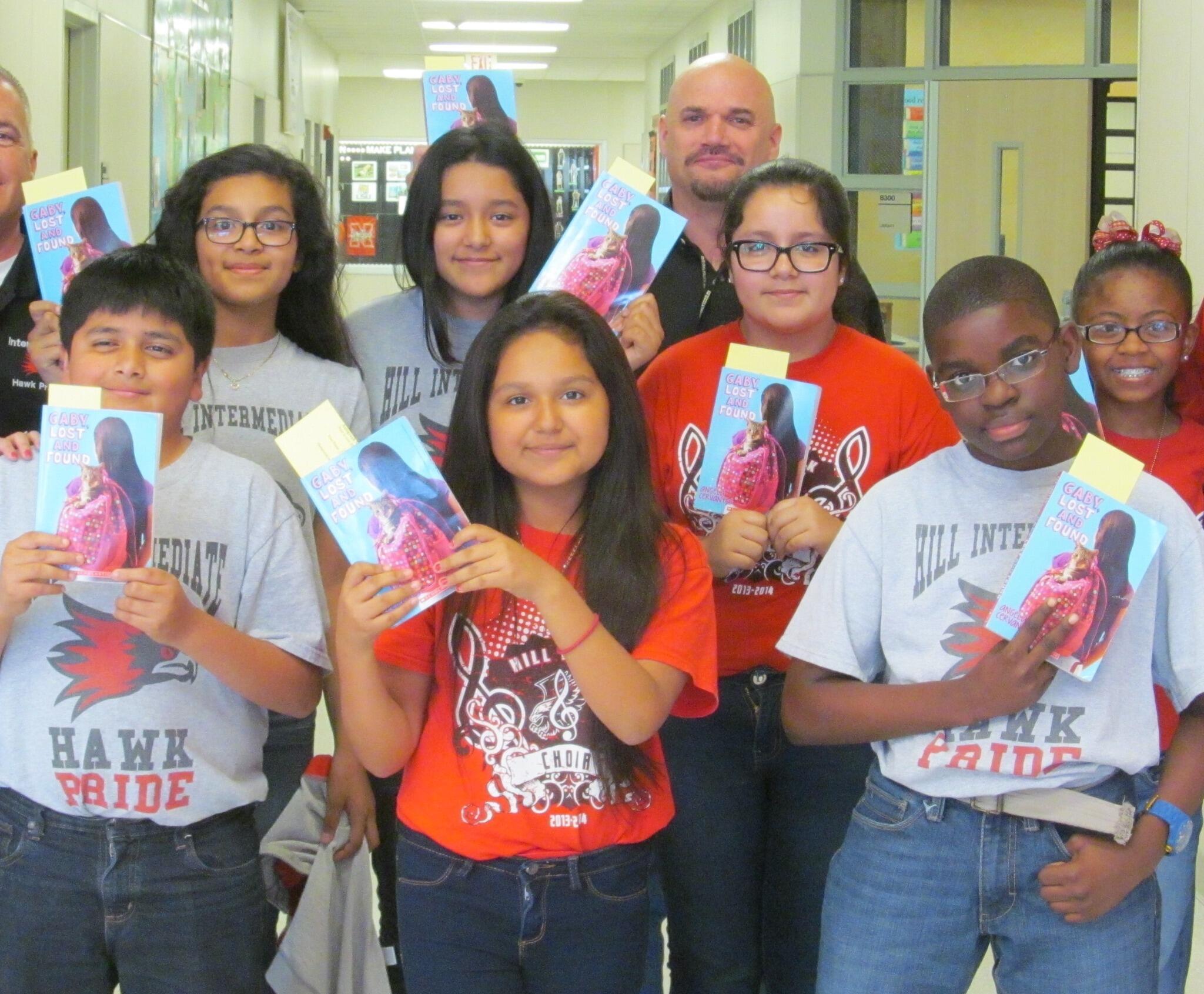
Embedded image permalink

Author Angela Cervantes posted this picture on Twitter during the #WeNeedDiverseBooks Campaign.

Students need to be able to accidentally stumble their way into a great book that reflects their own background or one that opens their eyes to new characters and communities. They shouldn’t have to work for it. They shouldn’t have to fight for it. Kids have enough on their plate. Yes, some students are going to research authors, seek out new books and reading experiences, challenge their school librarian and make demands. Most fifth graders, however, are just struggling to make it through the day. They end up with the default book… and given the math of the situation, they’re going to walk out with another book by a white author with a white main character. Is this a tragedy? In the moment, no. That default book might be a great one. But this scene takes place over and over each day in most schools in the country and that great book–if the student is lucky–may just be another in a long line of books that reinforces the notion that great books are written by white authors and that white kids are the ones worthy of books written about them.  This notion is a toxic one, regardless of a student’s background.

Children’s books are a piece of a larger pie. A lack of diversity in film and television reinforces the notion that white stories are more relevant than non-white stories. The make-up the Senate (97 out 0f 100 are white) reinforces the notion that non-whites do not have a role in the highest levels of politics. Yes, there is the President, but his cabinet is made up of 70% white males. Kids see this. They see thousands of African American college athletes and they know that, in the vast majority of cases, these athletes are led to battle by white coaches. They know that the percentages of Black and Latino men in prison are crazily out of proportion with the population of Black and Latino men. Kids see all this. They take it in. The perceptions become realities for them.

My wife and I are the proud, exhausted parents of two rambunctious little boys. Their grandparents are Mexican-American on their mom’s side. My parents are white. My dad is from the U.S., my mom a Spanish-speaking Latina from South America. We will raise our boys to be proud of all that they are and proud of all the Latino, Caucasian, African-American, Asian and mixes of the aforementioned that make up their diverse extended family. While we will do our best to teach that the content of one’s character, not the color of one’s skin (one’s gender, sexual orientation, physical ability) is what is important, television, our political and judicial systems, sports…. And even the make-up of CHILDREN’S BOOKS, will send messages that complicate, skew, and even deem our parental message well-meaning, but just wrong.

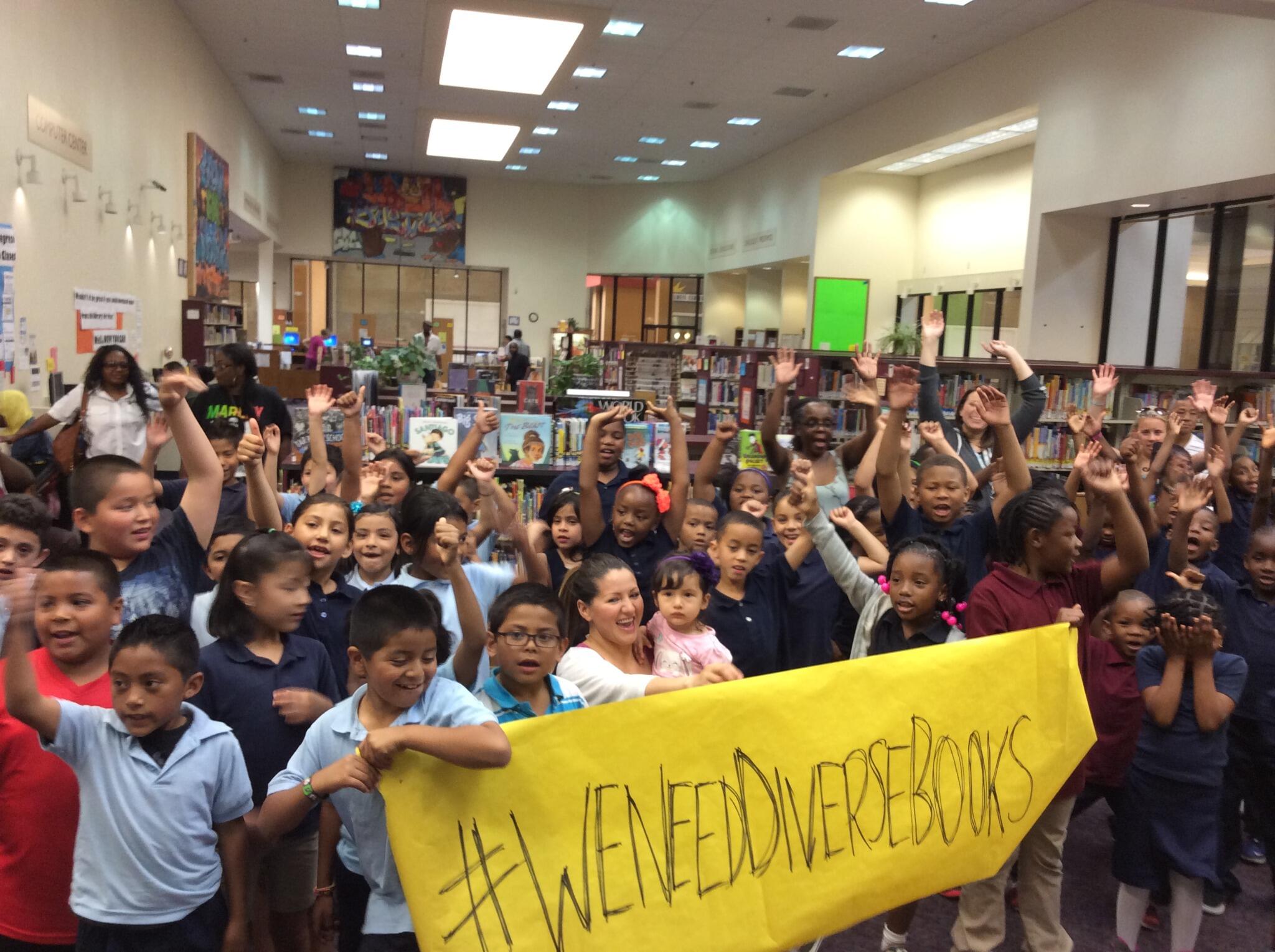
Embedded image permalink

The Oakland Public Library in California posted lots of great pictures like this one on Twitter during the #WeNeedDiverseBooks Campaign.

What do we do about it? The #WeNeedDiverseBooks Movement (Can it please be a movement? We need more movements around here.) is a potentially very important call for change in the children’s book world. Now, we need to push for intentionality. Gatekeepers need to have their feet held to the fire. The Movement (!) needs to push publishers to set goals that trend their books in a more realistically diverse direction. It needs to push the industry to hire editors from diverse backgrounds and to hire and support diverse interns and entry-level assistants who can have the power to move books off the pile and into editors’ hands. The Movement needs to hold publishers accountable.

Institutions which support writers and illustrators, like my beloved SCBWI, need to recruit underrepresented writers to their conferences. (And to check out the percentage of white male panelists and speakers compared to the percentage of white male attendees.) Groups like SCBWI need to be pushed to intentionally foster and mentor a more diverse writing community.

The movement needs to push us published authors of all colors and stripes, to mentor diverse up-and-comers, to include pro-bono school visits to underfunded schools, and to write real, complex, fallible diverse characters who live the entirety of the American experience.

Members of The Movement need to request diverse books at their bookstores and libraries. We need to post reviews on Amazon and Goodreads and library websites. Members of the Movement need to advise book bloggers and to follow and support blogs like this one. We need to give diverse books as birthday presents and to talk about our favorites on the bus, at work, in line at the bookstore…

Members of The Movement need to push our political leaders to support the health, education and welfare of our future readers and writers.

Publishers, agents, bookstore workers, librarians, teachers, authors… there are bunches these folks out there doing the positive stuff that will make change possible. The Movement needs to support them and it needs to push for intentionality in those who mean well, but have not yet made the move to change.

PatrickFS1Patrick Flores-Scott was, until recently, a long-time public school teacher in Seattle, Washington. He’s now a stay-at-home dad and early morning writer in Ann Arbor, Michigan. Patrick’s first novel, Jumped In, has been named to a YALSA 2014 Best Fiction for Young Adults book, an NCSS/CBC Notable Book for the Social Studies and a Bank Street College Best Book of 2014. He is currently working on his second book, American Road Trip.

Jumped In was featured in Libros Latin@s on Thursday. Click here to see the overview.


2014 Reading Challenge: March

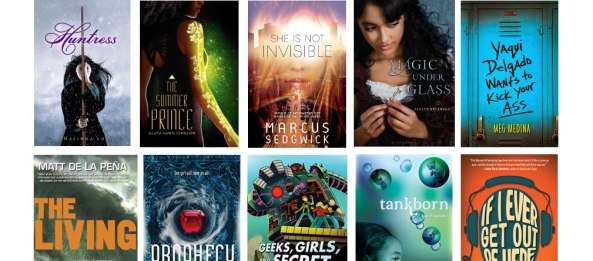
We continue to be blown away by the number of books being read each month by participants of our 2014 Latin@s in Kid Lit Challenge. Thank you to everyone for participating in the challenge and purposely selecting books by/about/for Latin@s. Remember, you can join the challenge any time during the year, and you’re not required to review–only read and enjoy! If you do post a review somewhere, we will link it to the book covers below. If you choose not to review, we will link the covers to Goodreads. This month, we’d like to stand up and applaud Elisabeth Ellison and Cecelia Cackley for their vigorous reading (13 books total!) And since April is National Poetry Month, we suggest you try some novels in verse this month!

A note to participants: As you complete books, please send us the information, so we can share what you’re reading each month.

13515320  6603032  15814459  5982454  10564957  18079822  15798660  11431896  1294347  14342632  13501282  1816693511438326  1016493  18938127 18318638  6098251  255189  9373385  1372657  1807231  18651917  15937128  6673243  1065256  1076237  18318005  8220585  652180  7095181  15818046  1028659  18249428

A Note For Authors on Jumping Genres

By Stephanie Guerra

Writing in a new genre after successfully publishing a book (or books) can be intimidating; why change what works? Some agents and publishers actively discourage genre-hopping, while others are interested in quality rather than consistency or brand-building.

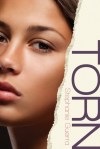
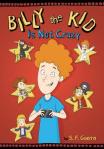
TORNI debuted in 2012 as a YA author of realistic fiction (Torn) and followed up in 2013 with a 90-degree turn to humorous, heavily-illustrated middle grade: Billy the Kid is Not Crazy. I have two more YA coming out next year and I’m finishing a picture book.

If you’re a writer drawn to similar genre shifts, I encourage you to follow your gut. The process can be both freeing and useful in developing range. You may have to rebuild your audience from scratch, which is intimidating. But you’ll end up with a broader audience, a reward in itself.

Billy the KidYou’ll also need to adjust your voice and mentality for your new audience. Transitioning from YA to MG, I had to get in touch with my booger-fart-joke side (it wasn’t that hard) and cut all edge out of my writing (a touch harder). Again, the work builds its own reward: increased range.

But I want to focus a spotlight on the positives, which I believe are the real essence of shifting genres. It’s a form of creative stretching, a way to access a different age or voice inside you, and a way to reengage with the “play” of writing. A YA author may discover a new sense of fun in MG or picture books. An MG author may find freedom in exploring the romance or more mature content possible in YA. A picture book author used to practicing economy with words may relish stretching out into a luxurious novel.

Consider one of the most beloved Latin@ authors of our times, Gary Soto. He’s produced excellent picture books, poetry, middle grade and YA novels, short stories, and adult works. Pam Muñoz Ryan, another Latin@ star, has ranged from picture books to award-winning YA. Jack Gantos, my personal hero, has created picture books, delightful middle-grade (Joey Pigza!), adult novels, and urban memoir.

Some other marvelous children’s authors who’ve changed genres: Madeleine L’Engle, Mark Twain, Roald Dahl, and Laurie Halse Anderson. Literary superheroes like E. B. White jumped from Charlotte’s Web to One Man’s Meat. Roald Dahl dabbled in memoir, adult short stories, suspense, erotica, and of course, children’s fiction. And C. S. Lewis wrote everything short of picture books. What better models could we have?

I like to view jumping genres, too, as an act of defiance to The Market. Conventional wisdom has it that it’s savvy to develop a brand and stick with it, to build an audience and churn out book-clones at the rate of one per year. Many authors do this very successfully, and there’s nothing wrong with it, if it’s fulfilling to the artist in question. But I’m unsettled by branding as a lens for the arts and as a concept imposed on authors by publishers. Branding seems to compete with the essence of what art is or should be. So I advocate stretching the brand. Or better yet, losing the term altogether.

I’d like to share a short (30 second) video of a really articulate 11-year-old reviewing my MG. Thank you, Garrison. Your review gives me confidence that jumping genres was the right choice.