Celebrating When Reason Breaks by Cindy L. Rodriguez

This post is a little different from our usual Libros Latinos features in that it focuses on the release of our very own Cindy L. Rodriguez’s debut YA novel, When Reason Breaks, which is available now. Cindy wasn’t sure she wanted us to blog about her book at all, but we persuaded her that readers would want to know more about the rock-star author whose initiative brought Latin@s in Kid Lit into the world. This post is more a celebration than a review, but we aim to celebrate in a way that’s useful to readers, teachers, librarians, and advocates of Latin@ literature. Read on to hear from Latin@s in Kid Lit bloggers Ashley, Lila, Zoraida, and Sujei!
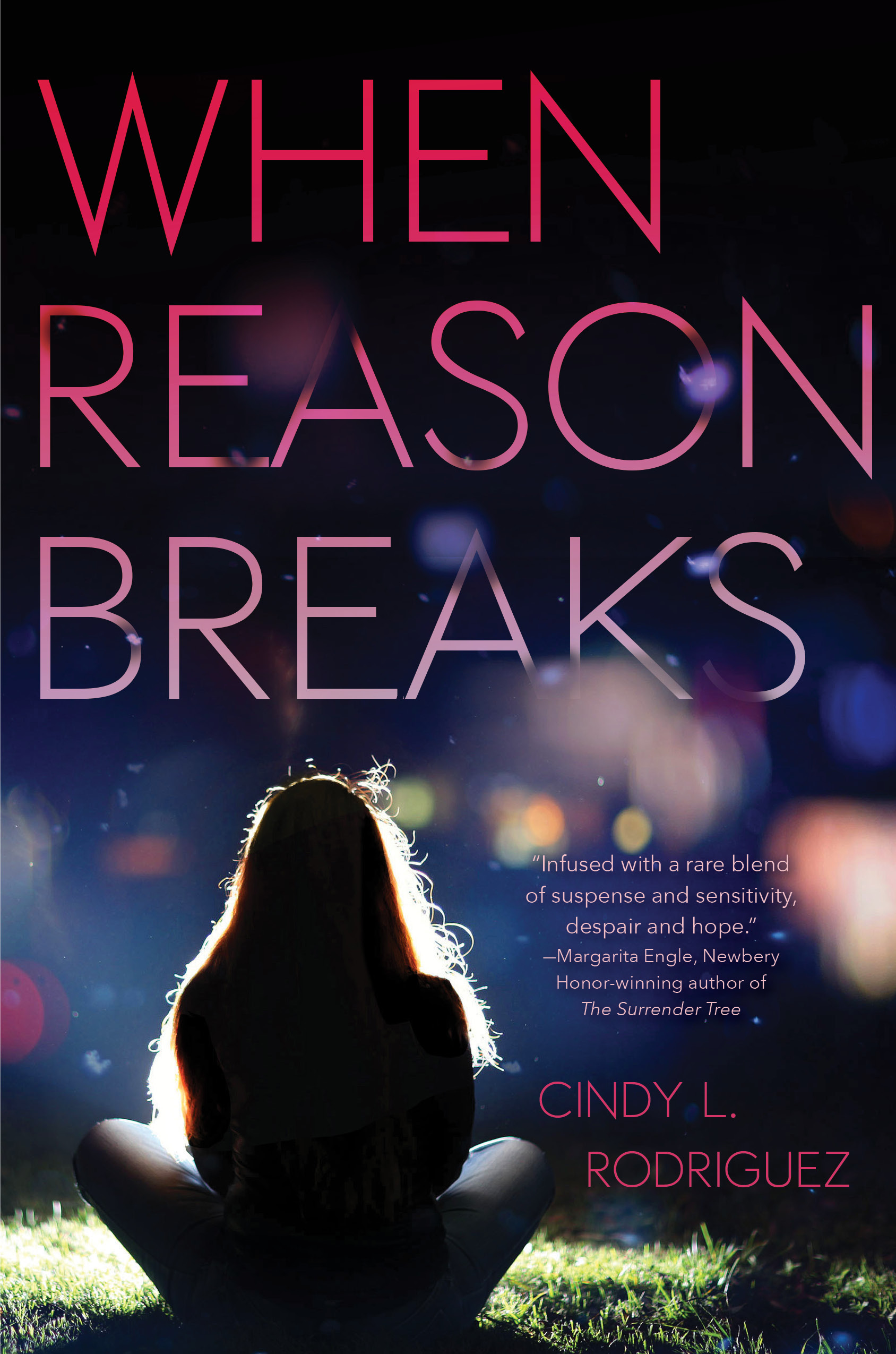
WhenReasonBreaks_Comp

Publisher’s Description: A Goth girl with an attitude problem, Elizabeth Davis must learn to control her anger before it destroys her. Emily Delgado appears to be a smart, sweet girl with a normal life, but as depression clutches at her, she struggles to feel normal. Both girls are in Ms. Diaz’s English class, where they connect to the words of Emily Dickinson. Both are hovering on the edge of an emotional precipice. One of them will attempt suicide. And with Dickinson’s poetry as their guide, both girls must conquer their personal demons to ever be happy. In an emotionally taut novel that is equal parts literary and commercial, with a richly diverse cast of characters, readers will relish in the poetry of Emily Dickinson and be completely swept up in the turmoil of two girls fighting for their lives.

What We Love

Ashley: Whatever the similarity of their names, there’s an immediate outward contrast between quiet, cautious Emily and bold, impulsive Elizabeth. Yet When Reason Breaks powerfully illustrates the animosity—and, ultimately, kinship—that develops between these two as they each become more aware of the inner demons the other faces. This emerges in a rare private encounter between the two girls:

 “I see you, Emily Delgado,” she whispered. “Your problem isn’t really about your friends of Kevin or your dad. You try to hide it, but I know.” Elizabeth patted Emily’s leg. “Trust me, I know.”

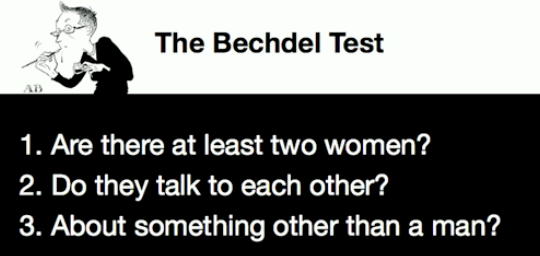
In the oblique understanding of inner struggle communicated in this relationship, When Reason Breaks passes the Bechdel Screen Shot 2015-02-08 at 4.12.00 PMtest with flying colors. Whereas no one can miss Elizabeth’s explosive temper and sometimes contentious behavior, Elizabeth “sees” Emily’s struggle with depression in a way teachers, counselors, parents, and friends do not. (Even Emily’s supportive and observant boyfriend Kevin doesn’t recognize what’s going on with her.) Still, for me a crucial point of drama in the novel was the question of whether Emily and Elizabeth would ultimately help each other or perhaps instead enable each other’s self-destructive tendencies.
Other highlights in the novel for me were the fabulously written group scenes–both between family members and the girls with their friends–and the graceful incorporation of Spanish.

Lila: I adore a novel that takes me somewhere I’ve never been. In When Reason Breaks, that new territory is the intricate relationship of two high school classmates whose personal styles and family backgrounds sharply contrast. They’re forced to cross the divide when their teacher pairs them in an assignment involving Emily Dickinson’s poetry. As the story moves forward, the girls’ opposite natures create conflict, but you sense that they’re somehow on intersecting paths. At one point, deep in the book, a bridge seems to form between them.

It’s a beautiful scene that takes place in the woods, framed by autumn trees. (I’m a craft geek, and one of the elements I admire in a strong work of fiction is setting.) But it gets better. In this scene, the characters exchange funny stories that somehow morph into poignant, self-revelations that reveal far more than either girl has allowed her closest friends to see. Cindy pulls off this delicate dance in such a natural, believable way, primarily through dialogue. And just when I thought the girls’ friendship was cemented, something else comes along and the tension between them ratchets up all over again.

Sujei: Cindy captures the emotional journey of the main characters through rich descriptions of what they do, think, experience, and feel. Above all, what came to my mind while reading the novel is its “New England” feeling and how it brings a new voice and view to Latin@ literature. The references to Thoreau’s Walden, Amherst College, Red Sox, the woods, Emily Dickinson contribute to that feeling as do other details. Here, Cindy brings us a YA novel that portrays a Latino family living in New England, a very real experience that is often marginal (if not invisible) in broader literary and media depictions of Latinos.

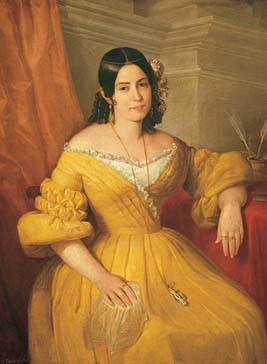
Emily D in WhiteZoraida: This is the first book I’ve read in a long time (or maybe ever) that made me choke up by the end of chapter 1. When I was in high school, I fell madly in love with Emily Dickinson and her poetry—and poetry in general. So for that, this book has a special place in my heart. I love the way each chapter starts with a short epigraph from one of Emily’s poems. I also love that both girls share the same initials, and despite coming from different backgrounds, also share the same internal struggle. Cindy deals with the strong emotions in this book so subtly that when you realize what’s happening, it hits you in the gut. Here are some of the many, many things I loved in this book:

#1 Two individual and smart girls.

#2 Girls that don’t let themselves get bossed around by boys.

#3 Complicated and complex relationships between girls/girls, student/teacher, boys/girls, children/parents.

#4 Dealing with depression and anger in a way that is very real

#5 Straight up beautiful and emotionally subtly powerful writing.

#6 An incredibly diverse cast that is genuine.

#7 All the feels.

While I was reading the book I kept seeing myself in both of these girls. As a teen. As an adult. And I think that was my takeaway from this. I’m a little bit of both, and maybe so is everyone else.

****

When Reason Breaks has received praise all over the blogosphere and on review sites. Check out these awesome write-ups: What Sarah Read, The Lifelong Bookworm, Disability in Kid Lit, Rich in Color, Kirkus and Publisher’s Weekly.

Teaching Tips from Ashley

How I wish this book had been around back in 2007 when I was teaching a thematic unit on mental illness. As Cindy discussed here, one of the crucial contributions of the novel is that it shows depression and mental illness apart from especially traumatic circumstances. It also provides ample opportunity for discussion of the subtlety of many of depression’s symptoms.

We see Emily’s gradual withdrawal from her personal relationships and the slow creep of fatigue taking over ordinary functioning. It also powerfully illustrates the challenges of managing anger. As Zoraida notes, “I remember feeling like Elizabeth all the time as teen. I had (and sometimes still do) have this anger that I feel is overwhelming and don’t want other people to see. Yet, her acting out is a sign that she WANTS to be seen, which is the opposite of Emily who shies away from that and internalizes her feelings.”

For additional recent works that deal with depression, suicide, and mental illness, see this School Library Journal post and this post on Stacked. These are great resources for finding companion pieces to read along with When Reason Breaks.

Teachers may also find this an easy sell to students intrigued by Emily Dickenson’s life or poetry, and Cindy’s subtle incorporation of biographical details in fiction—combined with an author’s note that unpacks many of these connections—offers a fine model of the use of fiction in multi-genre research projects. For an overview of the multi-genre approach, check out this general introduction to multi-genre writing from Colorado State, and for an online workshop module focused on teaching multi-genre writing in middle school, see this site. Once you’re sold on the idea, Tom Romano’s pioneering books on the approach will become indispensible. The key texts are Writing with Passion: Life Stories, Multiple Genres (1995) and Blending Genre, Altering Style: Writing Multigenre Papers (2000).

Book Review: Yes! We Are Latinos by Alma Flor Ada and F. Isabel Campoy

Reviewed by Lila Quintero Weaver

Yes We Are LatinosDESCRIPTION FROM THE PUBLISHER: Juanita lives in New York and is Mexican. Felipe lives in Chicago and is Panamanian, Venezuelan, and black. Michiko lives in Los Angeles and is Peruvian and Japanese. Each of them is also Latino.
Thirteen young Latinos and Latinas living in America are introduced in this book celebrating the rich diversity of the Latino and Latina experience in the United States. Free-verse fictional narratives from the perspective of each youth provide specific stories and circumstances for the reader to better understand the Latino people’s quest for identity. Each profile is followed by nonfiction prose that further clarifies the character’s background and history, touching upon important events in the history of the Latino American people, such as the Spanish Civil War, immigration to the US, and the internment of Latinos with Japanese ancestry during World War II.

Alma Flor Ada and F. Isabel Campoy’s informational yet heartwarming text provides a resource for young Latino readers to see themselves, while also encouraging non-Latino children to understand the breadth and depth of the contributions made by Latinos in the US.

Yes! We Are Latinos stands alone in its presentation of the broad spectrum of Latino culture and will appeal to readers of fiction and nonfiction.

MY TWO CENTS:  Yes! We are Latinos belongs on every essential reading list of Latino children’s literature, as is often true of books co-authored by the acclaimed duo of Alma Flor Ada and Isabel Campoy. No single work can cover every expression of Latino life in the United States, yet this book for middle-grade readers provides a generous glimpse of historical, cultural, ethnic, and linguistic aspects of the community. The authors’ approach pairs thirteen character vignettes, written as monologues in free verse, with matching expository sections of historical and cultural information. Collectively, the alternating sections deliver vivid, easily digestible insights into what is meant by Latino. There is no single Latino identity, the characters seem to say, and each of us is worthy of your attention.

The authors’ commitment to showing a wide representation of Latino life comes through in the vignettes. The featured characters reflect a generous range of ethnic and regional groups, some of which speak no Spanish, mirroring the fact that many Latinos come from bicultural and transnational families. In one vignette, we meet Susana, a Sephardic girl who lives in San Francisco. In another, we’re introduced to Dominican-born Santiago, who now calls Detroit home.

Sometimes young Latin@s would love nothing better than to break away from traditions they consider too confining. The story of Gladys, a Puerto Rican living in Philadelphia, is the best example of this. She watches the preparations for her sister’s quinceañera, expecting that before long her mother will want to start planning Gladys’s “quinces.” But Gladys’s dreams are pulling her in another direction, toward college.

Julio is from a farm migrant family originating in Teotitlán del Valle, a village in Oaxaca, Mexico. Like other members of his original indigenous community, Julio speaks Zapotec. When his family moves to Stockton, California, he must navigate two foreign languages, English and Spanish, in order to function in a primarily Spanish-speaking Chicano community, within a mainstream American setting. He’s adjusting to life in the new country, but still looks back on his homeland with longing and pride, recalling the beautiful and prized tapestries that Teotitlán’s weaving looms are known for.

In one pair of monologues, two Latinas with Asian backgrounds form a friendship. Lili is a Guatemalan of Chinese descent, whereas Mikito’s heritage is Japanese and Peruvian. The families of both girls passed through multiple immigration journeys. In the educational follow-up, we learn about waves of Asian immigrants that landed on the shores of South and Central American countries and the descendants of these immigrants who eventually drifted northward. The section on Japanese Latinos reveals a troubling detail of American history: Wartime internment camps built to contain Japanese Americans also held Japanese families who were deported at the urging of the United States by the Latin American countries where they resided. In these internment camps, Japanese Latinos often found themselves socially isolated, since they spoke only Spanish and few others in the camp could communicate with them.

The factual sections that follow the monologues highlight each character’s nation of origin. In Santiago’s case, it’s the Dominican Republic. A brief review of the island-nation’s history includes important facts about the Trujillo dictatorship, although the achievements of outstanding Dominicans receive greater attention. These include acclaimed novelists Julia Alvarez and Junot Díaz, haute-couture fashion designer Oscar de la Renta, and professional baseball players David Ortiz and Manny Ramirez.

Outmoded characterizations of Latino life give everyone the same background, the same history, the same traditions and tastes. This book’s emphasis counteracts generalizations and brings forward Latinos’ complexity. In each vignette, the authors touch on multiple elements, including the scattered geographic settings where the characters live, the varied occupations their parents work in, and the traditions their families celebrate. Yes! We Are Latinos offers an important and long overdue contribution to children’s literature.

TEACHING TIPSYes! We Are Latinos is the work of educators and seems custom-made for later elementary and middle school classrooms. The poetic narratives bring life to the informational sections, which in turn invite further exploration of the countries and histories they feature. Teachers may want to assign students paired sections to expand upon through written reports or artistic responses. For example, students could design posters depicting specific Latino cultures. Another idea is to have students compose poetic vignettes of imaginary characters reflecting geographic regions not covered in the book.

ESL instructors are likely to appreciate the book’s short, digestible sections, which contain not only interesting stories, but also broad vocabulary.

Older readers may want to dive into Cristina Henriquez’s recent novel, The Book of Unknown Americans, reviewed here by Ashley Hope Pérez.

For additional resources:


Alma Flor AdaALMA FLOR ADA

A native of Cuba, Alma Flor Ada is an award-winning author, poet, storyteller and scholar of literature. She has published more than 200 books for children, many of them in partnership with Isabel Campoy.

In this interview, Alma Flor Ada discusses the development of Yes! We Are Latinos and other topics, including poetry and bilingualism.


Isabel CampoyISABEL CAMPOY

Isabel Campoy is a Spanish storyteller, poet, playwright, songwriter and educator in literacy and language acquisition. She is fluent in multiple languages and her work in the field of publishing includes translation. She is an award-winning author and a frequent writing partner of Alma Flor Ada.


Video visits with the authors:

Alma Flor on literacy, stories, family connections, teaching, and writing books:

Isabel discusses stories and recites lines in Spanish:

Isabel talks about her life and work:


Book Review: The Color of My Words by Lynn Joseph

By Kimberly Mach

334442DESCRIPTION: Twelve-year old Ana Rosa is a blossoming writer growing up in the Dominican Republic, a country where words are feared. Yet there is so much inspiration all around her – watching her brother search for a future, learning to dance and to love, and finding out what it means to be part of a community – that Ana Rosa must write it all down. As she struggles to find her own voice and a way to make it heard, Ana Rosa realizes the power of her words to transform the world around her – and to transcend the most unthinkable of tragedies.
MY TWO CENTS: The message here is understanding free speech and the power of words. Even though this is the key to the whole story, I found myself loving the book for other reasons, too.

The Color of My Words, by Lynn Joseph, is told through poetry and prose. The start of each chapter is a poem written by Ana Rosa, with the final poem, The Color of My Words, lending itself to the title.

It was a surprising read for me because I got more than I expected. Reading the novel allowed me a window into Dominican culture in a way that films and textbooks have not. Perhaps it’s that the story is about the lives of one family and their neighbors in one village. Their traditions, their laughter, and their struggles were tangible to me because Lynn Joseph brought those characters to life. When I closed the book the colors and rhythm of the culture stayed with me as much as the message.

Joseph shows us that there is poverty in the DR, but the people here are not poor. These are, in fact, two different things. For the majority of Dominicans, economic struggle is part of life. It is real and ever-present. In the opening of the story, Ana Rosa says she can’t have a notebook of her own because the cost is equal to “two whole dinners” for her family. Despite this, it’s the richness of life with family and friends that abounds. At the end of every two weeks, on pay day, there is a celebration, a fiesta.  “On fiesta days, people forgot their roofs that leaked rain, and the jobs that were closing down, and the tourists that didn’t come this year, and how much they missed husbands and brothers who worked hard in Nueva York and sent money home by Western Union. On fiesta days, there were no problemas!”

One of the most memorable moments of the book for me is when Ana Rosa shares with us what it is like to dance the merengue on these fiesta days. She describes the music that flows through the limbs of her Papi, straight into the ground, and how one seems to pull the beat from the other. It is a unique point of view because Ana Rosa cannot dance. When others dance at fiesta Ana Rosa serves food and takes care of the babies. It is her father, her Papi, who finally teaches her how to feel the music, a music that is a constant rhythm in the lives of her family and neighbors. In a moving scene that takes the reader from the back porch to the beach near their home, Papi teaches Ana Rosa to feel the world around her, to listen to the sea and find the rhythms there.

This strength and new courage give Ana Rosa the confidence to use her words and write an article about the rights of the village being infringed on by the government. This action terrifies Mami because people who speak against the government in their country often pay a steep price. This is where the powerful message comes in. Lynn Joseph constructs this story in a way that will grab students and help them to understand both the power of words and the sacred freedom of speech. After reading The Color of My Words, they will be less likely to take that right for granted.

TEACHING TIPS: The social studies connections abound, but they go beyond culture and geography. The real connection when students finish this book will be made in civics and government. What citizens of the United States enjoy as the first amendment, the freedom of speech, religion, and assembly, is not consistent throughout the world. In some countries, citizens cannot speak their own mind. The penalties are stiff ranging from fines to imprisonment and even death. For students to read about characters who risk so much to speak their minds, in voice or print, will be humbling and allow them to gain a new understanding and appreciation for the right to free speech. Students will come away from this book understanding that no system is perfect, but those that protect and honor a citizen’s right to speak, allow debate and political discourse, are respectful of our human dignity.

In Language Arts, the novel may be used in several ways, including a study in poetry. Ana Rosa’s poetry uses several different rhyme schemes throughout the book and her topics are varied. She writes about wash day with Mami, her desire to record her thoughts on paper, and the colors in an election year. After students have read the book, they may reexamine these poems and read them in a new light. There are multiple passages in which a study of figurative language can be used. Among my top picks here would be the scenes where Papi teaches Ana Rosa to dance, where Ana Rosa shares with us the feelings of her first crush, and the scenes where she is writing and the freedom she feels in being able to put words to paper. Chapters may be used in isolation as well, but I would make sure to have a copy of the book nearby because students will want to read it once they get the experience of one chapter!

AUTHOR: Lynn Joseph has a wealth of experiences that she brings to her writing. Lynn was fortunate to spend time in both Trinidad and the United States when she was younger. According to her website, she loves to travel and meet people in new places. This is undoubtedly where her stories come from. When she goes to a new place she experiences it fully, and fortunately for her readers, she chooses to share it through the power of story. She is the author of several picture books and Flowers in the Sky, a young adult novel. The Color of My Words was a Notable Book for a Global Society, an ALA Notable Children’s Book, and won the Américas Award for Children’s and Young Adult Literature. For more information, please visit her website which contains a full interview and tips for student writers.

FOR MORE INFORMATION ABOUT The Color of My Words, visit your local library or bookstore. Also check out worldcat.orgindiebound.orggoodreads.comamazon.com, and barnesandnoble.com.

Kimberly Mach (2)Kimberly Mach has been teaching for sixteen years and holds two teaching certificates in elementary and secondary education. Her teaching experience ranges from grades five to twelve, but she currently teaches Language Arts to middle school students. It is a job she loves. The opportunity to share good books with students is one that every teacher should have. She feels privileged to be able to share them on a daily basis.

Q&A with Pura Belpré Award Winning Author Guadalupe Garcia McCall

By Lila Quintero Weaver

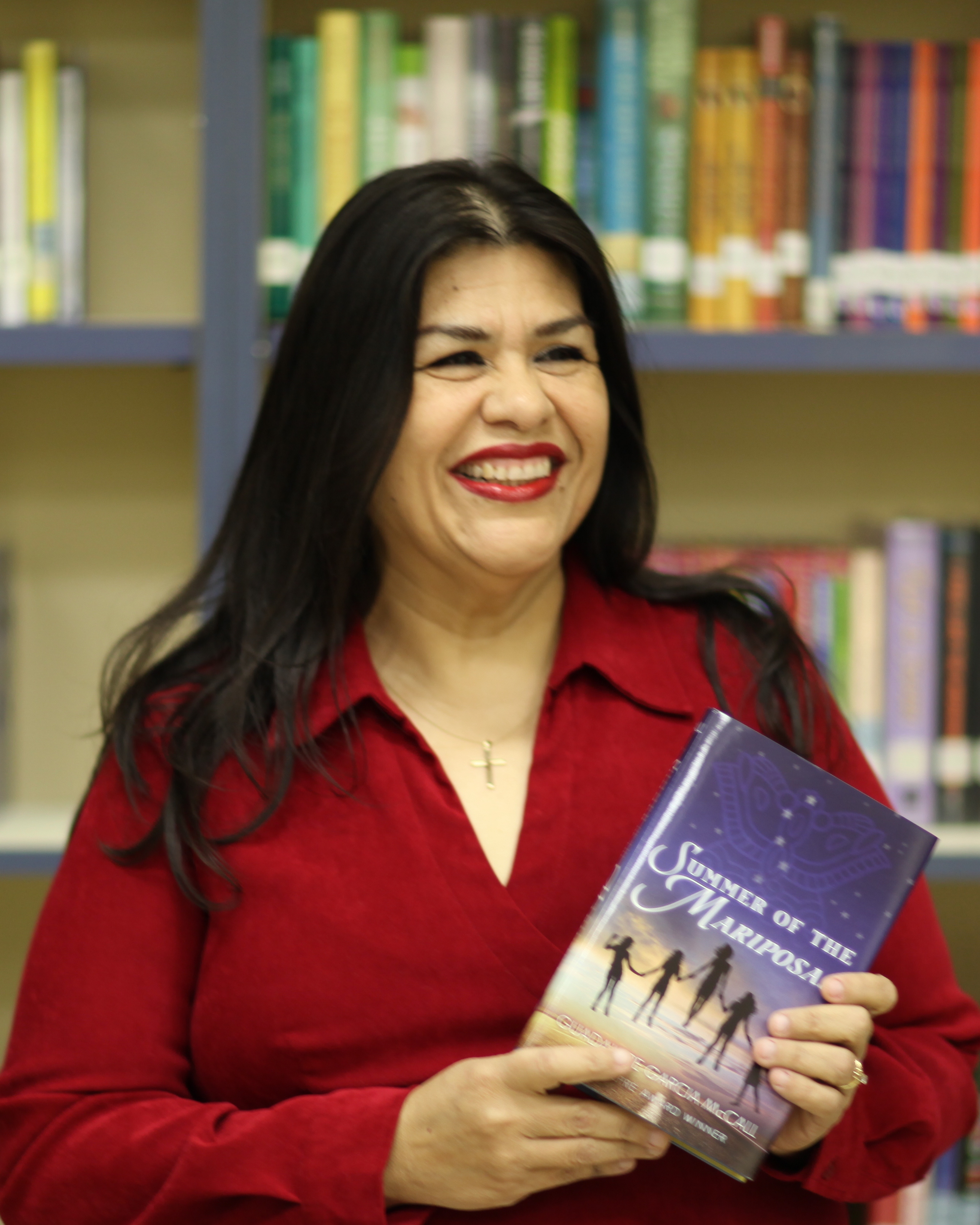
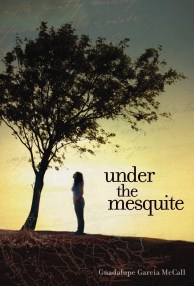
otherUNDERTHEMESQUITEtentativefrontcover3-18-10We’re excited to host a conversation with acclaimed author Guadalupe Garcia McCall. Her first book, Under the Mesquite, won the 2012 Pura Belpré Award and was a finalist for the William C. Morris Debut Award. Her newest work is Summer of the Mariposas, a rich work of fantasy fiction doubly inspired by Homer’s The Odyssey and the mythology of Mexico.

Lila: Guadalupe, congratulations on your wonderful writing career! Welcome to Latin@s in Kid Lit! Let’s get started with a question you’ve probably heard before:

Under the Mesquite is a powerfully intimate coming of age story told in verse. It’s a quiet book. On the other hand, Summer of the Mariposas is a high-energy road trip full of other-worldly characters and action scenes. Describe the paths that led to these diverse creative choices.

Guadalupe: Interestingly enough, both books were born out of my classroom experiences. Under the Mesquite came about because I was teaching my students how to write poetry. I wrote for them, as a way of modeling how easy and accessible poetry is if they focus on using their memories to write poems full of life’s experiences. After many years of teaching poetry (and collecting my little poems in my poetry unit folder), I realized that I had a good size collection of poems about my childhood which I could submit for publication. With the help of Emily Hazel, my editor at Lee & Low Books, that collection eventually evolved into Under the Mesquite.

After Under the Mesquite, I was bouncing around ideas for my next book, not really committed to anything, when one of my female students made the comment that all the books we read in class (we were studying Homer’s Odyssey) were about men—men having adventures, men defeating monsters, and men becoming heroes. This really upset my female students, and on her way out of my classroom, that same young lady told her friend, “It’s not fair. We need our own Odyssey!”

And that was it. That was my “light bulb” moment. Actually, it was more like a giant, blinding spotlight cast over a dark, neglected corner of our classroom that I couldn’t ignore as I drove home that afternoon. My girls were right. They needed to see themselves in literature. They needed their own stories to show the world that they are strong, and courageous, and smart. So I took out the sticky notes and started plotting out a Girl-Power adventure story using the Hero’s Journey just for them, for my “muchachas.” But as I worked on it, something else came to mind. Why use the same old Greek gods and monsters? Why not use our own mythology? We have just as many great characters to choose from in Mexican lore. And so it began, the frenzied scribbling and joyous giggling that comes when you first start plotting out a story—the discovery, the freedom, the breakthroughs—it’s all very intoxicating! I have to admit, I had a lot of fun writing Summer of the Mariposas because I knew my girls were hungry to read something like it.

Lila: Along with its supernatural elements, Summer of the Mariposas carries an understated but clear message of feminine strength and resilience. You force your characters to confront family challenges and heartbreaks. What do you hope to give young readers through this story?

FINALmariposas_cover_loGuadalupe: When I started writing Summer of the Mariposas, I wanted to tell a fun female story. However, I also knew I wanted to showcase the strength and resilience that it takes for a young lady to come of age and embrace womanhood in our society. I wanted young girls to believe in themselves and trust that a female is just as equipped to take care of herself and her loved ones as her male counterpart. That they are lacking nothing—that all young ladies have the courage to take life by force and the wisdom to attain their goals.

Lila: I’m sure you’ve been attuned to the recent conversation on diversity in literature, especially in children’s and YA publishing, which has stirred up a lot of media attention. One article quoted Matt de la Peña as saying, “Where’s the African American Harry Potter or the Mexican Katniss?” As a Latina writer, you must have well-formed opinions on this topic. What are your concerns? And what are your dreams for diversity in kid lit?

Guadalupe: Matt and I must be on the same wavelength because I asked a similar question about a year and a half ago, and I posted it on Facebook in a conversation with my publisher about gaps in children’s literature. We were talking about genre-specific gaps, and I asked a question along the lines of “Where is the Mexican-American Johnny Tremain?” I think it is very important that we start answering these questions. Not with words, but through action.

Listen, this fence is about to crumble. It’s got so many holes in it. The change in the face of our nation (diversity in our classrooms) is not forthcoming. The Change is here. The Change is upon us. We “have” diverse classrooms—and our students are missing the sound of their voice in the narratives available to them. It’s too late to “think” about it or “research” it or “plan” for it. No. It’s time to take action. Publishers need to be addressing the fact that there are not enough diverse children’s and YA books to fill the huge gaps in children’s literature. They need to be actively seeking out new and existing talent and publishing the books that will fill those gaps.

Lila: In addition to authoring books with strong Latino themes, you’ve also taught middle school (and now high school) in Texas. What are your thoughts about turning young Latinos into readers and writers?

Guadalupe: There is this great attitude in South Texas, especially along the Rio Grande Valley, border area, and that is that books are amazing and that their creators, namely authors, are ROCK STARS! The teachers, administrators, district personnel, and especially the community have made it their mission to make books and their creators accessible to children. They seek out grants and special programs and make every concerted effort to continue to feature books and their authors in their schools. They see reading and writing as the greatest assets, the most important tools in their children’s toolbox. I really admire that. I wish that was the case with every teacher, every administrator, every district, and every community in the world. Life would be sweet if we were all about education. I know that I’m being very naive here (with all the other problems to be solved in the world), but I do truly believe in building life-long learners through reading and writing! Reading and writing make up the foundation of learning, and a good book can draw a child in as well as any electronic gadget if presented in the right light, with the right attitude, and with the same attention corporations give to marketing video games, apps, and cell phones. It would mean flipping a Goliath of a paradigm on its ear, and the willingness to take on the fight, but it can and should be done, for our children’s sake!

Lila: Let’s get practical. You work a full-time job and yet somehow manage to write complex novels. What are the habits that help you produce? Is there a piece of writing advice that a mentor gave you which still rings true? What have you discovered on your own that guides you in attacking a new project?

Guadalupe: My habits? Well, I sit down every day to tap at those keys. Sometimes I take a cup of coffee to the porch and write as the sun rises on the weekends. Sometimes, I write the minute I get home from work. And sometimes, I pull over on the side of the road and write in my vehicle on the way to the grocery store because I don’t want to lose that terrific line. Most often, though, I get up in the middle of the night and write in my jammies because that’s when my brain wants to create.

Whatever the case may be, it’s important for me to write every day, to “touch the work every single day!” I heard that somewhere, or maybe I read it. I’m not sure which, but it’s very true. I find that the longer I stay away from writing, the harder it is to get back in the groove of it. It’s like being an athlete. If you don’t keep working out, you lose muscle, and you won’t win any races or bring any trophies home if you don’t work out every day. So this is the advice I pass on to my students,” Work out those writing muscles every day. Read. Write. Read. Write. Read. Write. Oh, and don’t be afraid to catch the latest movie or keep up with your favorite TV show. It’s good research! ”

Lila: Speaking of new projects, you must be working on something. What can you share about it?

Guadalupe: I am working on a YA historical set in Texas during the Mexican Revolution, after the discovery of the Plan de San Diego and all the strife and conflicts of that time period on this side of the border. It’s something that is very close to my heart because I think it’s an important time in “our history” that hasn’t been explored or talked about much in our classrooms. The maltreatment and persecution of Mexican Americans in South Texas during that time is either ignored or glossed over in our textbooks and there is literally little to nothing in YA fiction that touches on the struggles Hispanics experienced during that devastating time period in American history. I really can’t share too much of the plot except to say that it is my attempt at filling in a gap and answering the questions, “Where is the Mexican-American Johnny Tremain? Where is our historical perspective, our ancestral Mexican-American voice?”


IMG_2964 (2)Guadalupe Garcia McCall is the author of Under the Mesquite (Lee & Low Books), a novel in verse. Under the Mesquite received the prestigious Pura Belpre Author Award, was a William C. Morris Finalist and received the Ellen Hopkins Promising Poet Award, the Tomas Rivera Children’s Book Award, and was included in Kirkus Reviews’ Best Teen Books of 2011 among many other honors and accoladesHer second novel, Summer of the Mariposas (Tu Books, an imprint of Lee & Low Books), won a Westchester Young Adult Fiction Award, was an Andre Norton Award for Young Adult Science Fiction and Fantasy Finalist, and was included in the 2013 Amelia Bloomer Project List, the Texas Lone Star Reading List, and the 2012 School Library Journal’s Best Books of the Year.

Her poems for adults have appeared in more than twenty literary journals across the country and abroad, and her poems for children are included in The Poetry Friday AnthologyThe Poetry Friday Anthology for Middle School, and The Poetry Friday Anthology for Science. Ms. Garcia McCall was born in Piedras Negras, Coahuila, Mexico. She immigrated with her family to the United States when she was six years old and grew up in Eagle Pass, Texas (the setting of both her novels and most of her poems). She is currently a high school English teacher in the San Antonio area and lives in Somerset with her husband, Jim, 2 dogs (Baxter and Blanca), 1 cat (Luna), and her two (of three) college age sons, Steven and Jason.

Book Review: The Lightning Dreamer by Margarita Engle

By Lila Quintero WeaverLightning Dreamer notable

DESCRIPTION FROM THE BOOK JACKET: Tula is a girl who yearns for words, who falls in love with stories, but in Cuba, girls are not allowed an education. No, Tula is expected to marry well—even though she’s filled with guilt at the thought of the slaves Mamá will buy with the money gained by marrying Tula to the highest bidder.

Then one day, hidden in the dusty corner of a convent library, Tula discovers the banned books of a rebel poet. The poems speak to the deepest part of her soul, giving her a language with which to write of the injustice around her. In a country that isn’t free, the most daring abolitionists are poets who can veil their work with metaphors, and Tula becomes just that.

In powerful, haunting verses of her own, Margarita Engle evokes the voice of Gertrudis Gómez de Avellaneda, known as Tula, a young woman who was brave enough to speak up for those who could not.

MY TWO CENTS: The novel begins in 1827. Tula’s mother, who twice made the mistake of marrying for love, is desperate to prevent her thirteen-year-old daughter from taking a similar path. Mamá’s motivations are clear-cut. A wealthy connection through Tula is the family’s only hope for propping up their shaky economic status. In 19th-century colonial Cuba, arranged marriages are the social norm, but Tula’s mother worries that a girl who buries her nose in books will not attract the right kind of husband–a rich one.

Who is Tula? Margarita Engle is acclaimed for novels in verse that bring to life history’s outliers, young men and women from previous centuries who thought and acted in surprisingly modern ways, and Tula stands tall among them. She’s based on Gertrudis Gómez de Avellaneda, a Cuban poet who championed liberty for all humans and wrote Sab, an abolitionist novel, the first of its kind in Spanish. Sab predated Uncle Tom’s Cabin, the Harriet Beecher Stowe classic, by eleven years. Avellaneda’s importance as an abolitionist and feminist writer is not widely known in English-speaking America. The Lightning Dreamer corrects this oversight and imagines Avellaneda’s formative years, just as she began to discover the life-changing force of poetry.

Marriageability is not the only issue that arises from Tula’s penchant for reading. She happens upon the forbidden poetry of José María Heredia, whose sharp observations awaken Tula’s passion for justice. In colonial Cuba, injustice is everywhere. Her eyes take in the plight of African slaves, biracial babies abandoned to the convent, lovers kept apart by miscegenation taboos, and girls like herself, doomed to business arrangements thinly masquerading as marriages. Tula expresses her ardor for justice through poetry, which she burns to keep her mother from discovering.

When Tula refuses the marriage that her grandfather arranges, she must rise to meet a string of new challenges. The inheritance is lost and her family is condemned to relative poverty. For a while, Tula finds refuge in a storyteller’s community, where she becomes entangled in an unrequited love. She moves away from the countryside to Havana, where she supports herself through tutoring. In 1836, her brother, Manuel, warns her that their mother is cooking up another arranged match. Tula flees for Spain, expecting to find greater social and creative freedom there.

The Lightning Dreamer is written in free verse and is voiced through multiple characters. Tula is the most frequent speaker. Short segments provide other characters’ point of view. A partial list includes Tula’s mother; Manuel; Caridad, the freed slave who works for the family; the nuns who offer Tula space to read and write in peace; and Sab. Each character speaks in first person. I imagine them as a series of stage players delivering brief and sometimes prejudicial monologues reflecting on Tula’s choices. This approach perfectly suits the fictionalized treatment of a young poet. The language is spare and often stunning, capturing vivid images and profound interiority, as in this excerpt:

When we visit my grandfather

on his sugar plantation,

I see how luxurious

my mother’s childhood

must have been,

surrounded by beautiful

emerald green sugar fields

harvested

by row after row

of sweating slaves.

How can one place

be so lovely

and so sorrowful

all at the same time?

READING LEVEL: 12 and up

TEACHING TIPSThe Lightning Dreamer is an ideal jumping off point for exploring a wide array of subjects suggested in the novel. These range from colonialism, to New World slavery and racism, to patriarchal societies and the history of women’s political movements. At the back of the book, extensive notes provide comparisons between the historical Avellaneda and Tula, her fictionalized counterpart. This section also includes Spanish and translated excerpts of Avellaneda’s poetry and a bibliography of related sources.

Margarita contributed a guest post to Latin@s in Kid Lit that illuminates her love of biographical writing.

Henry Louis Gates’ PBS series, Black in Latin America, may be of interest for classroom use, in conjunction with the reading of The Lightning Dreamer. The episode “Cuba: The Next Revolution” focuses on the ongoing struggle by Afro Cubans to overcome centuries of racism. There’s no mention of Avellaneda in this one-hour documentary film; nevertheless, interviews and scenery enriched my reading. The film is particularly effective in its treatment of Cuba’s history of slavery and the role of freed slaves in the protracted battle for independence from Spain. The ruins of sugar plantations dating back to the book’s era starkly reminded me of Tula’s world.

RECOGNITION FOR THE LIGHTNING DREAMER: Awards and honors continue to flood in. They include:

2014 Pura Belpré Honor Book

School Library Journal’s Top Ten Latino-themed Books for 2013

YALSA 2014 Best Fiction for Young Adults

For a full list of awards and more information, please visit Margarita’s author website. I also recommend following her on Facebook, where she frequently posts updates on appearances, interviews and release dates for new books.

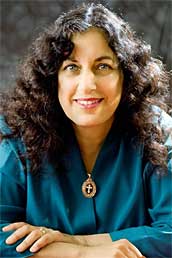
MargaritaTHE AUTHOR: Margarita Engle is a native of California and the author of many children’s and young adult books. She is the daughter of an American father and a Cuban mother. Childhood visits to her extended family in Cuba influenced her interest in tropical nature, leading to her formal study of agronomy and botany. She is the winner of the first Newbery Honor ever awarded to a Latino/a. Her award winning young adult novels in verse include The Surrender Tree, The Poet Slave of Cuba, Tropical Secrets, and The Firefly Letters.

FOR MORE INFORMATION ABOUT The Lightning Dreamer, visit your local library or bookstore. Also check out worldcat.org, indiebound.org, goodreads.com, amazon.com, barnesandnoble.com, and Houghton Mifflin/Harcourt.


Guest Post: Margarita Engle’s Passion for Writing About Hope and Forgotten Heroes

.

By Margarita Engle

Recently, I was asked what “legacy” I hope to leave by writing. Legacy is an intimidating word, but at least one portion of the answer is fairly simple. I love writing about independent thinkers who have been forgotten by history. These lost heroes might have been celebrated in their own times, or they may have worked in such obscurity that their names are unknown. Many are famous in their countries of origin, but have never been introduced to readers in the U.S.

Just a few years ago, any library search for children’s books about Latinos would have revealed little more than a series of shamefully inaccurate works glorifying brutal conquistadores. During the interim, excellent biographies of César Chávez and Sonia Sotomayor have been added, along with a handful of beautiful picture books about artists, writers, and musicians.

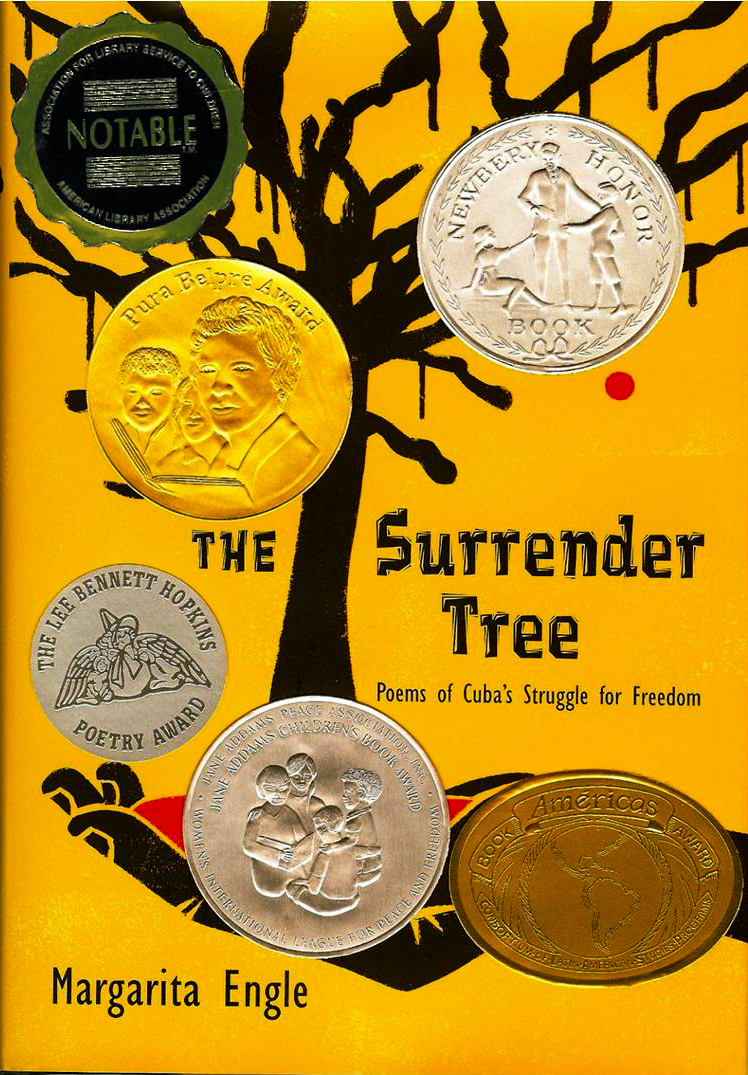
Surrende TreeThe work of reclaiming lost heroes has barely begun. My own approach is not strictly biographical because I love writing verse novels, and I also love writing first person interpretations of historical events. I often mix historical figures with fictional characters. In other words, I feel free to explore, experiment, and imagine. It’s a process that feels like time travel. Diaries, letters, and journals are my most important research materials, because they contain the emotional essence of history, along with the meticulous details of daily life. When I wrote The Poet Slave of Cuba, I was fortunate to have access to Juan Francisco Manzano’s autobiographical notes, which had been smuggled off the island by British abolitionists. For The Surrender Tree, I could not find anything written by Rosa la Bayamesa or any of Cuba’s other courageous wartime nurses, so I read the diaries of rebel soldiers, as well as interviews with reconcentration camp survivors. The Lightning Dreamer is based on the poetry and prose of Gertrudis Gómez de Avellaneda, who wrote a groundbreaking interracial romance novel that was published more than a decade before Uncle Tom’s Cabin. Not only was Sab far more daring, it was also more influential in Europe and Latin America. So why don’t North Americans know Avellaneda’s name? Does it make sense to learn only about our own little corners of the world?

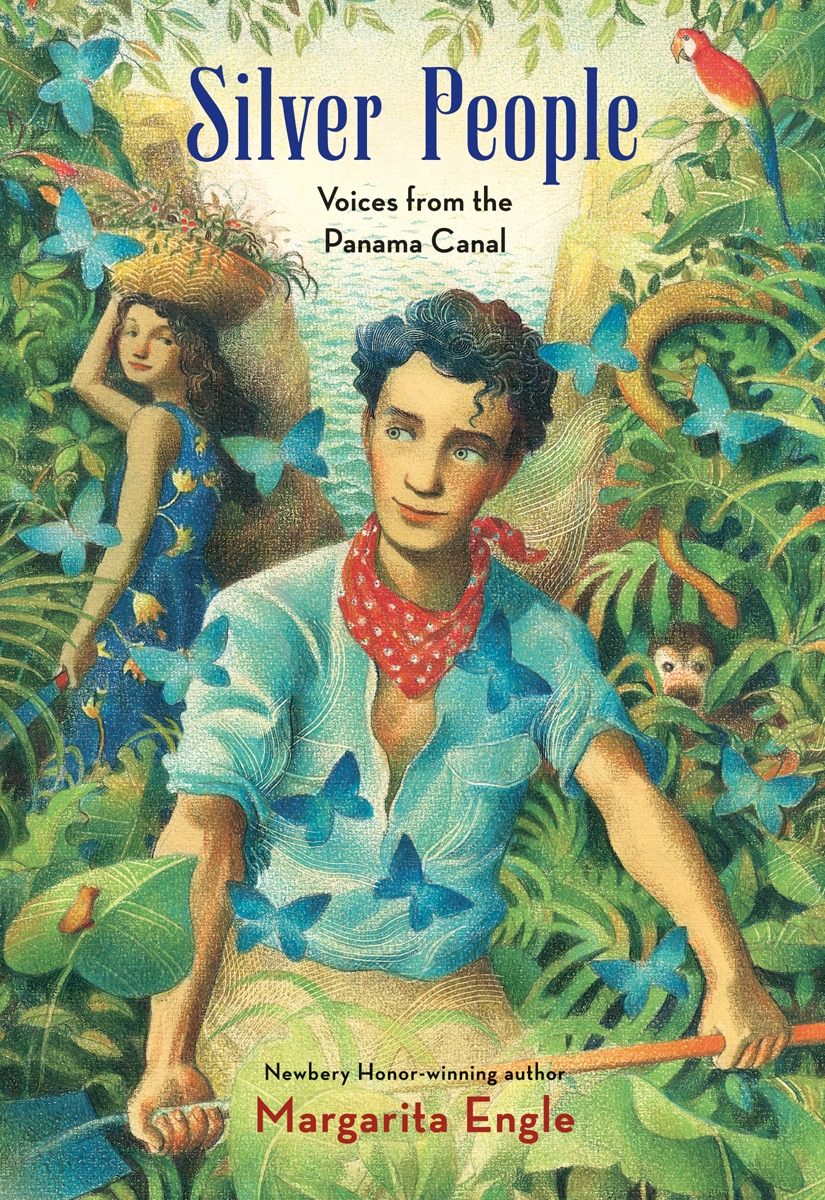
Hope is at the heart of every topic I choose. I love to write about people I admire. In general, I admire them because they were independent thinkers, far ahead of their times, or because their courage took the form of kindness. I don’t see history as a series of wars, with dates of battles to memorize and names of generals who are automatically assumed to be heroic. My heroes are the ordinary people who made hopeful choices in times that must have seemed hopeless. Tropical Secrets and Silver People are examples of topics so huge—the Holocaust, and construction of the Panama Canal—that I chose to write primarily in the voices of fictional composite characters, rather than individual historical figures. For Hurricane Dancers, the absence of first person indigenous Cuban accounts of the Conquest forced me to rely on a combination of legends, imagination, and the diaries of priests. I read the journals of conquistadores with skepticism, because they were written with a specific agenda—trying to make themselves look heroic, so that they could apply for additional funds from the Spanish Crown.

final Silver People cover-1Lightning Dreamer notable-1

Not all of my books are verse novels, and not all are for young adults. One of my favorite challenges is writing picture books about people who are not considered “famous enough” for biographical works. This limitation has actually helped me present my historical picture book manuscripts simply as inspiring stories, instead of struggling to make the subjects seem more famous than they are. Some are not famous at all, simply because Latinos, other minorities, and women, have generally been omitted from earlier historical writings. Sadly, recent history books tend to copy the earlier ones. The result is an entire segment of classroom curricula and pleasure reading with no representation of forgotten groups.

At present, I have several biographical picture books already in the publishing pipeline, and several that are still searching for publishers. None of them are about easily recognized names, if you live in the U.S. Thankfully, with the help of wonderful editors and fantastic illustrators, I hope that these picture books will inspire young readers. Drum Dream Girl (Harcourt, 2015) is being illustrated by the amazing Rafael López, whose gorgeous art will help illuminate the life of a ten-year-old Chinese-African-Cuban girl who broke the island’s taboo against female drummers. The Sky Painter (Two Lions, 2015) will have beautiful, scientifically accurate illustrations by Aliona Bereghici, to show how a boy of Puerto Rican origin became the world’s greatest bird artist, by allowing birds to live, instead of following Audubon’s tradition of killing and posing them.

If children have heard Latin jazz or visited New York’s Natural History Museum, they’ve heard and seen the results of Millo Castro’s courage and Louis Agassiz Fuertes’ kindness, even though they are unlikely to have seen those names in a library or classroom. I firmly believe that it is time to make room for books about the lives of people who should be famous, rather than limiting young readers to books about people who are already famous.

No discussion of biographical writing is complete without the subject of autobiography. Writing a childhood memoir has been the greatest challenge of my life. It is strictly nonfiction—no imagining, only remembering. Certain memories are excruciatingly painful. I love recalling childhood trips to visit my extended family in Cuba, but I dread remembering the October 1962 Missile Crisis that ended those journeys. Enchanted Air, a Cold War Memoir (Atheneum, 2015) combines the two. Positive and negative. Joy and sorrow. Despair and hope. With a powerful cover illustration by one of the world’s greatest artists, Edel Rodríguez, this memoir already feels like my life’s work. It is a book that helps me reclaim the separated half of my family, and along with them, the half of my identity that was almost destroyed by politicians.

Writing about lives is a process of exploration, so even though the memoir feels like my life’s work, I’ve already found other people I hope to depict in verse novels and picture books. I’ve returned to the research stage, reading history, and deciding which parts of history have not yet been honestly portrayed.

****

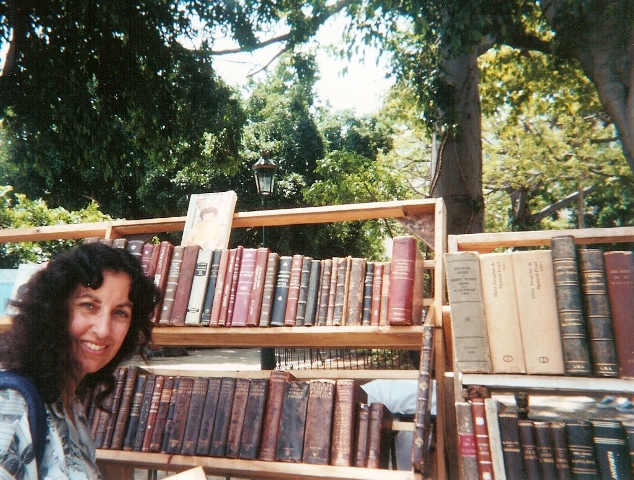
Margarita-HavanaMargarita Engle is the Cuban-American author of many young adult verse novels, including The Surrender Tree, which received the first Newbery Honor ever awarded to a Latino/a. Her books have also received multiple Pura Belpré Awards and Honors, as well as three Américas Awards and the Jane Addams Peace Award. Margarita’s newest verse novel is Silver People, Voices From the Panama Canal, and her newest picture book is Tiny Rabbit’s Big WishShe lives in central California, where she enjoys hiding in the forest to help train her husband’s wilderness search and rescue dogs. For more information, visit her author site and enjoy interviews by Caroline Starr Rose  and Robyn Hood Black.