Celebrating Pura Belpré Winners: Spotlight on Grandma’s Gift by Eric Velasquez

PuraBelpreAward

The Pura Belpré Awards turns 20 this year! The milestone will be marked on Sunday, June 26, from 1:00-3:00 p.m. during the 2016 ALA Annual Conference in Orlando, FL. According to the award’s site, the celebration will feature speeches by the 2016 Pura Belpré award-winning authors and illustrators, book signings, light snacks, and entertainment. The event will also feature a silent auction of original artwork by Belpré award-winning illustrators, sales of the new commemorative book The Pura Belpré Award: Twenty Years of Outstanding Latino Children’s Literature, and a presentation by keynote speaker Carmen Agra Deedy.

Leading up to the event, we will be highlighting the winners of the narrative and illustration awards. Today’s spotlight is on Eric Velasquez, the winner of the 2011 Pura Belpré Illustrator Award for Grandma’s Gift.


Review by Lila Quintero Weaver
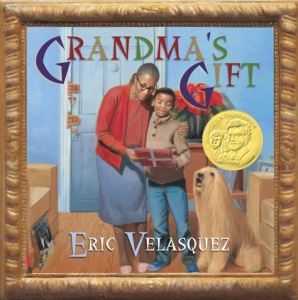
Grandma's GiftDESCRIPTION FROM THE BOOK JACKET: Every year, Eric spends his winter break with his grandmother in El Barrio while his parents are at work. There’s much to do to prepare for Christmas, including buying all the ingredients for Grandma’s famous pasteles, a special Puerto Rican holiday dish.

But Eric also has an assignment for school that requires a trip to the Metropolitan Museum of Art to see a new painting. Grandma and Eric are nervous about leaving El Barrio but are amazed by the museum and what they see in the painting—a familiar face in a work of art by the great painter Diego Velázquez. That day Eric’s world opens wider, and Grandma knows the perfect gift to start him on his new journey.

In this prequel to Grandma’s Records, Eric Velasquez brings readers back to a special day spent with his grandmother that would change his life forever.

MY TWO CENTS: Eric Velasquez is the award-winning illustrator of more than 25 children’s books, including three that he wrote. In Grandma’s Gift and Grandma’s Records, reviewed here, Eric brings to life childhood moments that illuminate the warm and meaningful relationship he enjoyed with his grandmother, a native of Puerto Rico and resident of El Barrio, a predominantly Puerto Rican neighborhood in East Harlem.

In a category where such books are woefully rare, both of Velasquez’s Grandma stories represent positive images of Afro-Latinx children and their families.

Although the story in Grandma’s Gift takes place inside a few square miles of contemporary New York City, it also casts a spotlight on a long-ago historical figure. Juan de Pareja was an enslaved man of African descent who worked in the studio of 17th-century Spanish master Diego Velázquez and who became a painter in his own right. When Eric was a boy, Velázquez’s luminous portrait of de Pareja was acquired by the Metropolitan Museum of Art for a price exceeding $5 million.

Grandma’s Gift contains two additional distinguishing aspects: elements of Puerto Rican culture preserved and passed down by the boy’s grandmother, and contrasting views between two physically proximate but culturally distant worlds, represented by El Barrio and the Metropolitan Museum of Art.
Used by permission from Bloomsbury Publishing, Inc.

Used by permission from Bloomsbury Publishing, Inc.

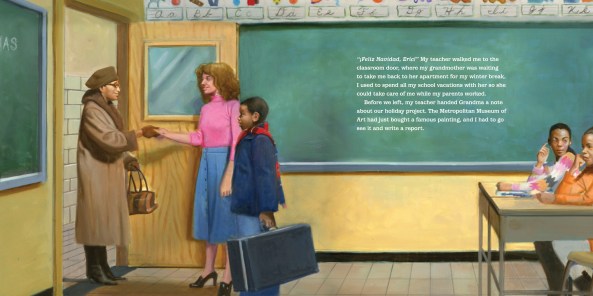
At the story’s beginning, Eric is leaving school for Christmas break, in the company of his grandmother. His school assignment, to be completed during the holidays, is a visit to the Velázquez exhibit. But first, grandmother and grandson go shopping at La Marqueta, once a central feature of El Barrio, composed of bustling shops tucked under a railroad trestle. At La Marqueta, it’s evident that Eric’s grandmother is a respected and beloved member of the community. Not only do butchers and greengrocers call her by title and name—Doña Carmen—they are also familiar with the high standards she expects from every cut of meat and vegetable she purchases. When the shopping is done, Eric and his grandmother return to her apartment, where she launches an elaborate preparation of traditional Puerto Rican holiday dishes. Here, she is clearly in her element, deftly handling each step of the cooking, filling, and rolling of the pasteles, much to the admiration of young Eric.
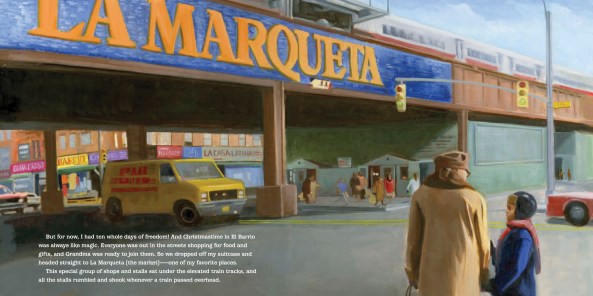
Used by permission from Bloomsbury Publishing, Inc.

Used by permission from Bloomsbury Publishing, Inc.

Nearly all of Doña Carmen’s dialogue is parenthetically translated into English, immediately behind her Spanish words. While this solution is not particularly elegant, it reflects the challenge that authors and publishers face in including authentic representations of a Spanish-speaking environment within an English text. The story translates greetings in Spanish by shopkeepers, words of wisdom spoken by the grandmother, and details relevant to the story, such as the names of the root vegetables used in making pasteles: calabaz, yautía, plátanos verdes, guineos verdes, papas.

El Barrio is a place that Eric’s grandmother comfortably navigates day after day. Here, her native tongue predominates, and everyone is a shade of brown. But when she and Eric head for the museum, a short bus ride away, they leave behind that familiar environment and land before the facade of the Metropolitan, cloaked in cultural status and imposing architecture. As Eric notes, there’s no one “from Puerto Rico on the streets and no one was speaking in Spanish.” At this point, Eric becomes her guide in this English-speaking world, translating the signs and captions that they encounter, stepping into a role that second- or third-generation immigrant children often play in their elders’ lives.
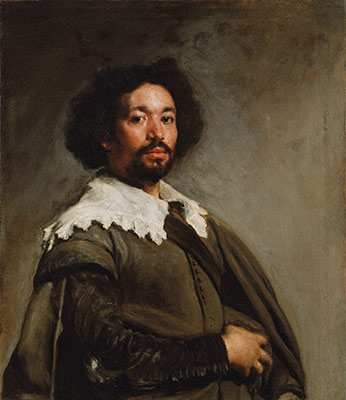
Juan de Pareja, by Diego Velázquez

Juan de Pareja, by Diego Velázquez

The highlight of the story arrives when Eric comes face to face with the portrait of Juan de Pareja, hanging in its gilded frame in one of the august exhibition halls of the museum. As a young person of color in the 1970s, he has never seen a member of his own people elevated to such a status: “He seemed so real—much like someone we might see walking around El Barrio. I couldn’t believe that this was a painting in a museum.” Eric is amazed and proud to learn that Juan de Pareja eventually achieved freedom and became a painter in his own right. For Eric, this discovery is a revelation that sparks artistic fire. On Christmas Eve, after everyone enjoys a traditional holiday dinner, Eric sits under the Christmas tree and opens his grandmother’s gift. It’s a sketchbook and a set of colored pencils. He immediately begins to draw a self-portrait. Through this gift, Eric’s grandmother expresses a clear vote of confidence in her grandson’s dreams, underscoring that he, too—a child of El Barrio, an Afro Latino—can follow in the footsteps of Juan de Pareja.
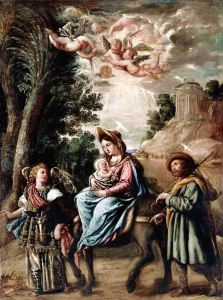
Flight into Egypt, by Juan de Pareja

Flight into Egypt, by Juan de Pareja

This touching, autobiographical story is richly illustrated in Velasquez’s photorealistic style, which authentically depicts settings and brings dimension to each character. Eric imbues his subjects with individually distinct physical characteristics, lending to each an air of nobility. He lovingly paints his grandmother as a lady of dignified bearing and warmth, usually dressed in subdued colors. But he often lavishes this humanizing treatment even on background characters, such as fellow passengers on the train and a nameless guard at the museum. In most of the illustrations, Eric employs a wide and vivid range of hues, but like Diego Velázquez, he sometimes falls back on a deliberately limited palette. When the boy and his grandmother stand before the portrait of Juan de Pareja, the rich browns of the ancient oil painting harmoniously come together with the rich browns of the grandmother’s clothing, as well as the skin tones of all three figures. He puts this deft touch with a monochromatic palette to great effect in the story’s electric moment of revelation, as the child Eric looks on the portrait of Juan de Pareja and grasps a new possibility for his future.
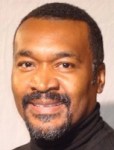
Eric VelasquezABOUT THE AUTHOR-ILLUSTRATOR: Eric Velasquez is an Afro-Puerto Rican illustrator born in Spanish Harlem. He attended the High School of Art and Design, the School of Visual Arts, and the famous Art Students League in New York City. As a children’s book illustrator, Velasquez has collaborated with many writers, receiving a nomination for the 1999 NAACP Image Award in Children’s Literature and the 1999 Coretta Scott King/John Steptoe Award for New Talent for The Piano Man. For more information, and to view a gallery of his beautiful book covers, visit his official website.


ADDITIONAL RESOURCES:

Learn more about El Barrio from the definitive museum that bears the same name.

After decades of decline, La Marqueta is attempting a comeback. (This article is in Spanish.)

Here, a resident of El Barrio relates her memories of La Marqueta during its heyday.

See the official page for the Juan de Pareja portrait on The Met’s website.


Lila Quintero Weaver is the author-illustrator of Darkroom: A Memoir in Black & White. She was born in Buenos Aires, Argentina. Darkroom recounts her family’s immigrant experience in small-town Alabama during the tumultuous 1960s. It is her first major publication. Lila is a graduate of the University of Alabama. She and her husband, Paul, are the parents of three grown children. She can also be found on her own websiteFacebookTwitter and Goodreads.


Celebrate Earth Day By Reading Kid Lit Books As An Ecocritic

By Marianne Snow Campbell

Earth Day is here again!  It’s a time to honor the natural world that surrounds us, consider how we can take better care of the environment, and take action keep our planet healthy and beautiful. In schools, many teachers and students will join together to read and discuss books with environmentalist lessons – The Lorax, The Great Kapok Tree, a variety of picture books about recycling and picking up litter. Last year, Lila Quintero Weaver shared a beautiful post about books celebrating “Latin@ Heroes of the Planet” and other “Earth Day-friendly books with Latin@ connections.” I love the strong messages that these texts carry and believe that they should play a prominent role in educating children about conservation and ecology.

However, reading literature with overt lessons about the earth isn’t the only method for learning about environmentalism. There’s another, somewhat subtler, approach – ecocriticism. Ecocriticism is a form of literary analysis that investigates how literature depicts nature and, ideally, inspires readers to take action to keep the natural environment healthy. But it’s not just for literature scholars – kids of all ages can be ecocritics, too!

To start an ecocritical analysis, choose a book that depicts nature but isn’t about ecological themes like conservation, recycling, and saving the earth.  For example, I like to use Maya Christina González’s Call Me Tree / Llámame árbol, a poetic, bilingual picture book that celebrates the strength and beauty of trees, as well as humans’ connections with these majestic plants.

Throughout the book, the narrator, a child, embodies nature by pretending to be a tree. They begin as a seed nestled in the earth. Slowly, they sprout from the earth and stretch toward the sky, just like a young sapling. As the child/tree grows, they are joined by other children, who also identify as diverse, strong, leafy forest residents:

“Trees!

More and more trees

Trees and trees

Just like me!


¡Árboles!

Más y más árboles

Árboles y árboles

¡Iguales a mí!”

To explore a book like Call Me Tree / Llámame árbol with an ecocritical lens, young readers can ponder questions (adapted from Dobie, 2011) that facilitate thinking about nature and readers’ relationship with the earth:

  • How do the author and illustrator depict nature in this text?
  • What is/are the relationship/s between humans and nature in this text?
  • What does this text tell you about nature?
  • Do you agree with this text’s representation of nature?  Why or why not?
  • Does this text make you want to do something to help the environment?  Why or why not? What do you want to do, and how can you accomplish these goals?

Let’s apply those questions to Call Me Tree / Llámame árbol. When I consider these questions in relation to this book, I’m filled with awe and gratitude for the trees that surround me. I love how González depicts trees and humans as equals. In both the text and the illustrations, she presents children and trees as one and the same; people are trees, and trees are people. Nature isn’t a commodity for us to consume. This representation makes me rethink my responsibility for the environment and how I should treat nature as I want to be treated. Trees care for me by cleaning the air, providing shade, and sharing their beauty, so shouldn’t I do more to care for trees? Even though Call Me Tree isn’t about conservation, it certainly makes me want to do my part to respect and sustain the natural world.

Doing ecocriticism can benefit kids in a variety of ways. By analyzing and evaluating representations of nature in texts, they’ll flex their critical thinking muscles. Moreover, ecocriticism’s blending of environmental science and literary studies can help science lovers get more into literature (and vice versa). Also, readers who enjoy expressing themselves creatively can take ecocritical analysis a step further by creating their own nature poetry, art, music, and drama.

 The best news? There are tons of literature by Latinx and Latin American authors that kids can explore with an ecocritical lens. Below are some great books for readers of all ages that feature various types of nature motifs. (Special thanks to Lila Quintero Weaver, Sonia Alejandra Rodriguez, Cindy L. Rodriguez, and Cecilia Cackley for their rich contributions to this list of suggested books!)

Picture Books

It’s Our Garden (George Ancona)

Kids get their hands dirty and grow food for their community in this nonfiction tale about a school garden.


Prietita and the Ghost Woman / PRIETITA Y LA LLORONA
(Gloria Anzaldúa, Maya Christina Gonzalez)

Prietita wanders the South Texas woods seeking a medicinal plant for her ailing mother.  What will happen when she meets la Llorona?

Domitila y el mar (Nina Basich, Teresa Martínez)

After receiving a postcard from her uncle, who’s vacationing at the beach, Domitila can’t get the sea out of her head. (Text in Spanish.)

Domitila

I Know the River Loves Me / Yo sé que el río me ama (Maya Christina Gonzalez)

Can a child and a river be best friends?  Of course!

Talking with Mother Earth / Hablando con Madre Tierra (Jorge Argueta, Lucía Angela Pérez)

In this sumptuous collection of poetry, Argueta explores his childhood connections with the earth.

Chavela and the Magic Bubble (Monica Brown, Magaly Morales)

Magical bubble gum takes Chavela back in time to visit a grove of sapodilla trees and the people who harvest their chicle in Playa del Carmen, Mexico.

Middle Grades Books

Silver People: VOICES OF THE PANAMA CANAL (Margarita Engle)

This collection of poems about the construction of the Panama Canal is narrated not only by humans, but also by animals and plants.

The Dreamer (Pam Muñoz Ryan)

As an adult, Chilean poet Pablo Neruda often incorporated nature into his work.  This account follows the young Neruda (born Ricardo Eliécer Neftalí Reyes Basoalto) and his encounters with the natural world.

Esperanza Rising (Pam Muñoz Ryan)

Forced off of their wealthy ranch in Mexico, Esperanza and her mother immigrate to California to work the land.

Where the Flame Trees Bloom (Alma Flor Ada)

Natural imagery permeates Alma Flor Ada’s stories of her childhood in Cuba.

My Ocean: A Novel of Cuba (Enrique Pérez Díaz)

Struggling to understand why friends and family are leaving Cuba for the United States, Enrique seeks solace and comfort in the ocean.

3364012

Young Adult Books

Under the Mesquite (Guadalupe García McCall)

Wrestling with her mother’s cancer diagnosis and the responsibility of caring for her siblings, Lupita seeks refuge and resilience in the shade of a tree.

The Vicious Deep (Zoraida Córdova)

Nature meets fantasy!  Tristan has always loved the water – a love that begins to make sense when he discovers that he’s heir to an underwater kingdom.

Out of Darkness (Ashley Hope Pérez)

The East Texas woods are a place of safety for Naomi and Wash as they cope with violence and racism.

.

.

MarianneMarianne Snow Campbell is a doctoral student at The University of Georgia, where she researches nonfiction children’s books about Latin@ and Latin American topics and teaches an undergraduate course on children’s literature. Before graduate school, she taught pre-K and Kindergarten in Texas, her home state. She misses teaching, loves critters, and can also be found on Twitter and Facebook.


Spotlight on Latina Illustrators Part 3: Sara Palacios, Claudia Rueda, and Tania de Regil


By Cecilia Cackley

This is the third in a series of posts spotlighting Latina illustrators of picture books. Some of these artists have been creating children’s books for many years, while others will have their first book out this year. Some of them live in the US, while others live overseas. They come from many different cultural backgrounds, but all are passionate about connecting with readers through art and story. Please look for their books at bookstores and libraries!

Interview answers from Claudia Rueda and Tania de Regil have been translated from Spanish.

Sara Palacios

Sara Palacios is an illustrator from Mexico. She studied Graphic Design at Universidad Autónoma Metropolitana, Mexico DF, School of Design, INBA  (National Institute of Fine Arts) Mexico DF, and Universidad del Claustro de Sor Juana, Mexico DF. She studied illustration at Academy of Art University, San Francisco CA, where she has been part-time faculty since 2014. She received the Pura Belpré Honor for illustration in 2012 and is the illustrator of the Marisol McDonald series by Monica Brown for Lee & Low, as well as numerous other books. Her newest picture book, One Big Family (written by Marc Harshman) will be published by Eerdmans Books for Young Readers later this year.

Q: What inspired you to become an artist?

A: I always liked to draw, but I didn’t know that illustrators even existed until I was pursuing my Graphic Design degree in Mexico. I was invited to an illustration exhibition. That was the first time I became aware of what illustration was. I was in awe! and I knew that’s what I wanted to do. The same friend who invited me to the exhibition told me that one of the illustrators was looking for somebody to help him. My friend encouraged me to go to the interview and show my drawings and I got the job! I started washing brushes and cutting paper until little by little I was taught to paint in watercolor. That job was my first school of illustration and I’ve been doing that ever since. After finishing my degree in Mexico I went on to study for my BFA and MFA in illustration in the US.

Q: Tell us about your favorite artistic medium.

A: I don’t really have a favorite medium. The first technique I ever learned was watercolor and for years that was the only medium I used until I started working toward my BFA at the Academy of Art in San Francisco. Through the classes, I began using gouache, acrylics , pastels, the computer etc. At first, I was afraid of mixing one technique with another, but I started experimenting on my own and I realized that what works best for me is mixed media. I also like collage, so all my illustrations are done with mixed media now. I use everything from colored pencils, watercolor, markers, gouache, digital. I don’t think I can just pick one technique.

Q: Please finish the sentence “Picture books are important because…”

A: They can bring some magic to children and adults alike.

12629258  17940785


Claudia Rueda

Image result for claudia rueda
Claudia Rueda
 is a Colombian picture book author, New York Times Best Seller illustrator and a 2016 Hans Christian Andersen award nominee. Her books have been published throughout North America, Europe and Asia and have been translated into more than ten different languages. In the United States, she is best known as the illustrator of the series Here Comes theCat by Deborah Underwood. Her concept books for young readers have been published in Spanish by the publisher Oceano Travesia.

Q: What inspired you to become an artist?

A: I have always liked to draw, like all kids. And I’ve always liked to imagine things and create stories, also like kids when they are playing. Basically, when it was time to put away the colored pencils and imagination to become ‘grown up’ I decided not to do it.

Q: Tell us about your favorite artistic medium.

A: Graphite pencil on white paper is my favorite medium. The capacity for expression in the strokes, it’s simplicity and versatility goes very well with my creative process.

Q: Please finish the sentence “Picture books are important because…”

A: The combination of visual narration with the verbal enriches the experience of reading and allows the story to happen in the mind of the reader that combines the two languages.

18349512  18701595  23281875  25361885


Tania de Regil

taniadrTania de Regil is an author and illustrator from Mexico City. When she was five, she moved to Stockholm, Sweden with her family, where she discovered her love of reading and decided that she wanted to be a professional author some day. Tania studied fashion design at Parsons School of Design in New York City and finished her studies in her home country of Mexico. Her work as a costume designer in film and television has helped to better grasp the art of storytelling through images. Tania’s illustration work is always filled with interesting details for children to discover. She uses a variety of media in her work, such as watercolor, gouache, color pencils, wax pastels and ink to create richly textured, engaging images. Tania’s debut picture book, Sebastián y la isla Tut, which she both wrote and illustrated, was published in November, 2015 by Macmillan Mexico.

Q: What inspired you to become an artist?

A: When I was a girl, my family and I went to live in Sweden. Since I didn’t know the language, what helped me the most was reading. My teacher gave me lots of books and among them were books by Roald Dahl, illustrated by Quentin Blake. In that moment, I fell in love completely with the stories and illustrations and I decided that one day I would be a great writer and illustrator like them. I was eight years old.

Q: Tell us about your favorite artistic medium.

A: I like watercolor a lot because I can never have complete control over it. It’s a medium full of surprises and makes it much more expressive and fun to use. I also like to mix it with other materials like colored pencil, oil pastels, gouache and ink. I liked to always continue experimenting with new materials but the basis of all my illustrations is watercolor.

Q: Please finish the sentence “Picture books are important because…”

A: They take you to worlds where the imagination never ends.


Books to Look For:

Brown, Monica. Marisol McDonald Doesnt Match

Brown, Monica. Marisol McDonald and the Clash Bash

Harshman, Marc. One Big Family

Rueda, Claudia Is it big or is it little?

Thong, Roseanne Greenfield. Twas Nochebuena

Underwood, Deborah. Here Comes the Easter Cat

Underwood, Deborah. Here Comes Santa Cat

Underwood, Deborah Here Comes Valentine Cat

Spotlight on Latina Illustrators Part 2: Juana Martinez-Neal, Maya Christina González & Laura Lacámara


By Cecilia Cackley

This is the second in a series of posts spotlighting Latina illustrators of picture books. Some of these artists have been creating children’s books for many years, while others will have their first book out this year. Some of them live in the US, while others live overseas. They come from many different cultural backgrounds, but all are passionate about connecting with readers through art and story. Please look for their books at bookstores and libraries!


Juana Martinez-Neal

Children's Illustrator Juana Martinez-NealJuana was born in Lima, the capital of Peru. She has been illustrating for children since she was 16. Juana attended the best art school ever, Pontificia Universidad Catolica del Peru – School of Fine Arts. After 3 years of a crazy 8-to-8 schedule and way too many all-nighters, she was in desperate need of a semester-break and decided to give L.A. a “test drive.” She has lived in the US ever since.

Q: What inspired you to become an artist?

A: My father and grandfather were artists. The walls of our house were full of their paintings, and we had art supplies all around the house. Drawing and painting were natural ways to use our time. Every Summer, my mom enrolled us in a different art classes. She always took us to visit Museums, and her special treat was taking us to see puppet shows. Art was part of our life. There is nothing else I could be but an artist.

Q: Tell us about your favorite artistic medium.

A: I love the process more than a specific media. I think that’s the reason why I’m a mixed media illustrator. When I add materials and change my the process, the work becomes even more interesting. The idea of solving the problem makes the process so very exciting.

Q: Please finish the sentence “Picture books are important because…”

A: They expand a child’s mind, fulfill their soul, and show new points of views.


Maya Christina González

Maya Gonzalez is an artist, author, educator, activist, peacemaker, publisher, equality lover, obsessive recycler, traveler, river lover, tree talker, sky kisser……

Her fine art graces the cover of Contemporary Chicano/a Art and is well documented as part of the Chicano Art Movement. She has illustrated over 20 award-winning children’s books, several of which she also wrote, Her book My Colors, My World won the prestigious Pura Belpré Award Honor from the American Library Association and her most recent picture book, Call Me Tree was listed in Kirkus’ Best Picture Books of 2014 that Celebrate Diversity. Since 1996, Maya has been providing presentations to children and educators about the importance of creativity as a tool for personal empowerment. Her work with children in public schools helped her develop several lines of curriculum that offer a holistic approach to learning and open doors to new ways of thinking and relating in the world. In 2009 she co-founded Reflection Press, an independent press that publishes radical and revolutionary children’s books, and works that expand spiritual and cultural awareness. And in 2013, Maya co-created an online learning environment called School of the Free Mind about expanding the mind and reclaiming the creative. The School offers e-courses for those who are ready to uncover and connect with their unique and most powerful way of living and creating.

Q: What inspired you to become an artist?

A: I remember as a child drawing my round Chicana face into the backs of books. I think on some level I knew I needed to see myself in my books. I didn’t. I know in many ways those early ‘self-portraits’ were my way of affirming my existence in a world that did not include me. We are born artists. Creativity is our greatest tool to express and transform our world. I think it was a natural act to be an artist. I think I’ve remained visually expressive because it is the most powerful and immediate way to communicate and create change.

Q: Tell us about your favorite artistic medium.

A: I am notorious for trying different mediums in my children’s books. Acrylics, watercolors, oil pastels, ink, charcoal, painted collage, photo collage, color pencils and combinations of all of those. What I love is the feeling of exploration and not completely knowing what I’m doing. I know that’s how kids feel all the time. Everything is new and curiosity rocks. So I follow that feeling. I’ve made so much art that I’m familiar with all the materials so now I’m exploring how to use them differently. More expression. More immediate and raw. This is how kids create because this is how kids feel. I’m always exploring the edges of my expression.

Q: Please finish the sentence “Picture books are important because…”

A: Picture books are important because they are powerful tools of expression, support and potential healing. I believe children’s books are one of the most radical things we can do for ourselves and our communities.


Laura Lacámara

Laura_photo_2015-300 dpiCuban-born Laura Lacámara is the award-winning author and illustrator of Dalias Wondrous Hair / El cabello maravilloso de Dalia (Piñata Books), a bilingual picture book about a clever girl who transforms her unruly hair into a vibrant garden. Laura also wrote Floating on Mamas Song / Flotando en la canción de mamá, a bilingual picture book inspired by her mother, who was an opera singer in Havana. Illustrated by Yuyi Morales and published by HarperCollins, Floating on Mamas Song was a Junior Library Guild Selection for Fall 2010 and was a Tejas Star Book Award Finalist for 2011-2012.

Laura earned her Bachelor of Fine Arts in Drawing and Painting at California State University, Long Beach. She studied printmaking at Self Help Graphics in East Los Angeles and began exhibiting and selling her work.

When a fellow artist suggested Laura’s images would be ideal for picture books, Laura signed up for a children’s book illustration class at Otis College of Art and Design. She instantly fell in love with both writing and illustrating for children. It was in that class that she wrote the first draft of Floating on Mamas Song.

Laura illustrated the 2012 Tejas Star Book Award winner, The Runaway Piggy / El cochinito fugitivo (Piñata Books), as well as Alicias Fruity Drinks / Las aguas frescas de Alicia (Piñata Books). Laura is a popular presenter at schools, book festivals, and conferences, and she is an active member of the Society of Children’s Book Writers and Illustrators (SCBWI).  Laura lives in Southern California with her husband, their daughter, and a lovable mutt.

Q:  What inspired you to become an artist?

A: Having an artist father, who made a living as a graphic designer and illustrator, inspired me and showed me that it was possible to be a working artist.  In high school and beyond, I had many artist friends – we found inspiration together in art classes and museum visits.  And, to be honest, as a young adult, doing art was the only job I didn’t get fired from!

Q: Tell us about your favorite artistic medium.

A: I like painting with acrylics on a variety of surfaces – my current favorite being wood. (I love the texture.)  I also enjoy adding collage elements to my paintings.  I’ve always loved bright patterned fabrics and papers – the more the colors and patterns clash, the better!

Q: Please finish this sentence: “Picture books are important because…”

A: Picture books are important because they teach us about ourselves, our world, our feelings, our realities.  Stories with pictures can give young kids a great deal of validation and comfort.  A picture book may be the first time a child realizes, “I’m not the only one who feels that way!”


Books to Check Out:

Lacámara Laura. Dalias Wondrous Hair

Luna, James. The Runaway Piggy

Ruiz-Flores, Lupa. Alicias Fruity Drinks

Elya, Susan Middleton. La Madre Goose (coming in July)

Gonzalez, Maya Christina. Call me Tree/Llamame Arbol

Gonzalez, Maya Christina. I Know the River Loves Me/Yo se que el rio me ama

Gonzalez, Maya Christina. My Colors, My World/Mis colores, mi mundo

Alarcon, Francisco X. Animal Poems of the Iguazu

Perez, Amada Irma. Nanas Big Surprise

Perez, Amada Irma. My Diary from Here to There

Alarcon, Francisco X. Iguanas in the Snow

A Conversation with Author-Illustrator Matt Tavares

GROWING UP PEDRO. Text and Illustrations copyright 2015 Matt Tavares. Reproduced by permission of the publisher, Candlewick Press, Inc., Somerville, MA.

GROWING UP PEDRO. Text and Illustrations copyright 2015 Matt Tavares. Reproduced by permission of the publisher, Candlewick Press, Inc., Somerville, MA.

By Lila Quintero Weaver

When author-illustrator Matt Tavares turns his focus on a children’s book topic, beautiful things happen. We love what he did with Growing Up Pedro: How the Martinez Brothers Made It  from the Dominican Republic All the Way to the Major Leagues, a stirring picture book biography of the Dominican baseball great Pedro Martinez and his highly influential brother Ramón. Now we’re turning our focus on Matt himself, a prolific producer of books for kids, who agreed to answer a few of our burning questions.

Latin@s in Kid Lit: Wow, your paintings are magnificent! They’re highly realistic yet deliver much more than faithful representation, in terms of their emotive power and aesthetics. Please tell us about your journey to professional illustration.

Matt: Wow, thank you! That’s certainly what I always try to do, so it’s very nice to hear my pictures described that way. Even if I’m painting a realistic scene, there is always something I can do to heighten it, to go beyond what a photograph might show.

Matt's been drawing since childhood.

Matt’s been drawing baseball figures since childhood.

I’ve always loved to draw. Even when I was 4 or 5 years old, I thought of myself as an artist. I drew all the time, and knew I wanted to be some kind of artist when I grew up. It wasn’t until I was a junior at Bates College that I decided I wanted to illustrate picture books. I wrote and illustrated a picture book as my senior thesis. I spent my whole senior year working on it. After that, things happened pretty quickly- I found an agent who liked it, and she shopped it around to publishers, and found Candlewick Press. They basically asked me to do the whole thing over again with the guidance of an editor and art director, which I happily did. Then in 2000, Zachary’s Ball was published, my first book.

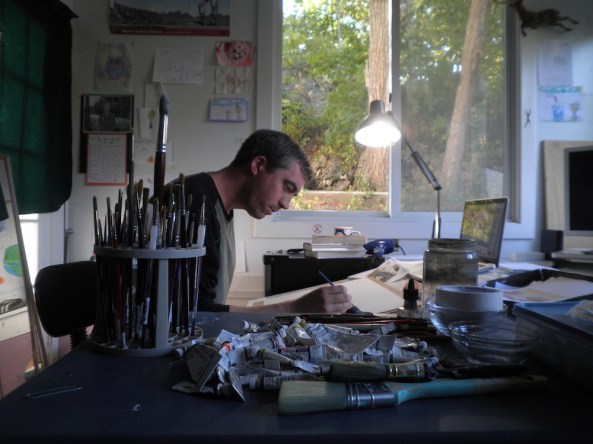
Matt hard at work in his studio

Matt hard at work in his studio

LiKL: You’re not only an illustrator—you also write. Can you walk us through the process of creating a picture book, starting from the idea phase and ending with publication?

Matt: Sure. The beginning part is pretty messy, where I just have all kinds of ideas floating around and I write everything down in my notebook. From there, most of the ideas just wither away, but every now and then one of them grows into something I think I might actually be able to work with.

I always write the words first, then once I figure out how to divide it up into pages, I do rough sketches. And there is always a lot of back and forth between the words and pictures. In a picture book, part of the story will be told with words and part of the story will be told with pictures. Once I start figuring out what the pictures are going to be, I realize I don’t need some of the words.

Once all my sketches are approved by my art director (after a couple rounds of revisions, usually), I start working on the final illustrations. That part usually takes 4 to 6 months. The whole process, from start to finish, can take 9 months to a year, depending on the book. Then once all the illustrations are done, it’s about a year until it comes out in stores.

LiKL: By my count, seven of your published children’s books center on baseball stories, including Growing Up Pedro, your picture-book bio of Dominican major league star Pedro Martinez, which we reviewed in November. What’s your connection to the sport?

Matt: Baseball is just something I’ve always loved. I grew up near Boston and have great memories of going to Fenway Park to watch the Red Sox play. When I was a kid, I was really into collecting baseball cards, watching baseball, playing baseball and wiffle ball. It’s one of the few things that has been a constant in my life from the very beginning. So when I started writing books for kids, baseball was a natural subject. Honestly, I wasn’t a big reader when I was a kid, but I would read anything if it was about baseball. I know there are still kids like that, and I hope they find my books!

LiKL: Speaking of Growing Up Pedro, you must have done a great deal of research on Pedro Martinez’s life and career, not to mention baseball in general and Dominican life. Fill us in.

Matt: This was my fourth baseball biography, but it was the first about a player I actually got to watch play. So this book was very personal for me. I read a lot of interviews and articles, but I also relied on my own memories of being at Fenway when Pedro was pitching. When he was on the mound, Fenway Park transformed into a different place. There was this electricity that surrounded him. I was excited to try to capture that in a book.

DR1

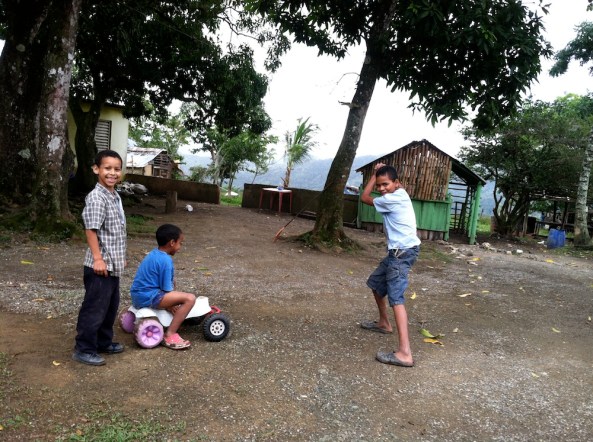
In the Dominican Republic, local children were happy to pose for photos Matt would use in illustrating Growing Up Pedro.

I also traveled to the Dominican Republic when I was working on Growing Up Pedro, which was amazing. Instead of just finding pictures online, I actually got to go to places that still look how they did when Pedro was a kid. I took tons of pictures. It was incredible to be able to go home after that trip and use all these experiences that were fresh in my mind and put them right into my book. It really helped me feel personally connected to the whole story.

LiKL: On this blog, we highlight excellent kid lit that focuses on Latino/a characters, something you pulled off beautifully in Growing Up Pedro. As far as you can tell, has this picture book expanded your reach into the Latino community?

tavares1

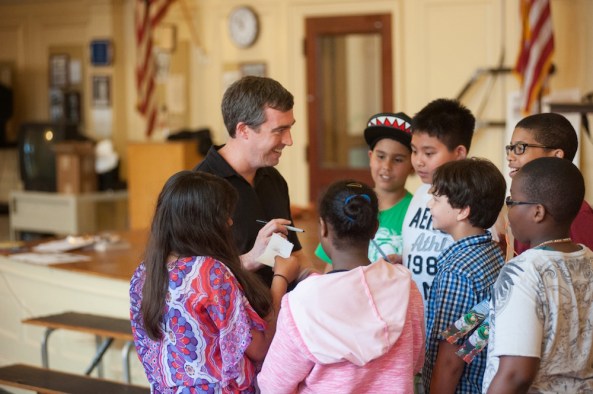
Meeting young fans at book events

Matt: Absolutely, and that’s been really great. I was thrilled when I found out Candlewick was going to do a Spanish edition of the book, because I know that Pedro is a hero to millions of Spanish-speaking people. I love knowing that kids can read Pedro’s story in English or Spanish.

It’s such a powerful thing when a kid can see a bit of themselves in a character, and I think a lot of people have made that connection with Pedro. For some kids it’s because he grew up poor, or even just that he was skinny and small. But I think the fact Pedro is Latino definitely helps a lot of Latino/a readers feel more connected to the story.

GROWING UP PEDRO. Text and Illustrations copyright 2015 Matt Tavares. Reproduced by permission of the publisher, Candlewick Press, Inc., Somerville, MA.

GROWING UP PEDRO. Text and Illustrations copyright 2015 Matt Tavares. Reproduced by permission of the publisher, Candlewick Press, Inc., Somerville, MA.

LiKL: Suppose you could hang around the studios of any three illustrators—living or dead—for the purpose of asking questions and observing technique. Who would those illustrators be and why?

Matt: Tough to pick three… I’ll say Chris Van Allsburg, because he’s one of my all-time favorite illustrators, and I would love to watch him work. I would probably just take pictures of all his art supplies then go to the art store and buy all the same stuff. Maurice Sendak, because he was a genius and was always so fascinating in interviews. I never got to meet him. And Jerry Pinkney. I did a book signing with him once, and he was so nice and humble and approachable. He’s been making books for so long, and has had so much success. I’d love to spend some time with him and maybe pick up some good habits.

LiKL: Naturally, we’re curious to know what’s next from Matt Tavares. If you’re free to share, tell us about books already in production, or a project still shiny with wet paint.

Matt: My next book is Crossing Niagara, which is a picture book about The Great Blondin, the first person to walk across Niagara Falls on a tightrope. That comes out in April. Then I have another picture book biography that I illustrated with Candlewick that comes out in Spring 2017, about the first woman pilot. And right now I’m just starting final art for a book I wrote that comes out in Fall 2017. This one is going to be a very new direction for me- it’s fiction, and the main characters are birds. I’m very excited to try something new.

DR2Writer, illustrator, baseball lover! Learn more about Matt Tavares and his books at his official website.
Spotlight on Latina Illustrators Part 1: Angela Dominguez, Juana Medina, and Ana Aranda

By Cecilia Cackley

This is the first in a series of posts spotlighting Latina illustrators of picture books. Some of these artists have been creating children’s books for many years, while others will have their first book out this year. Some of them live in the US, while others live overseas. They come from many different cultural backgrounds, but are all passionate about connecting with readers through art and story. Please look for their books at bookstores and libraries!

Angela Dominguez

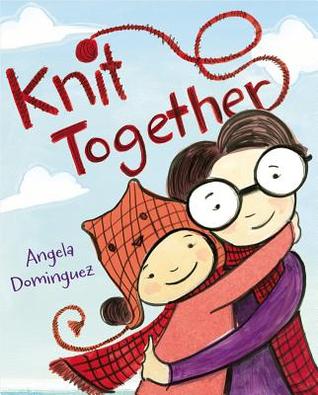
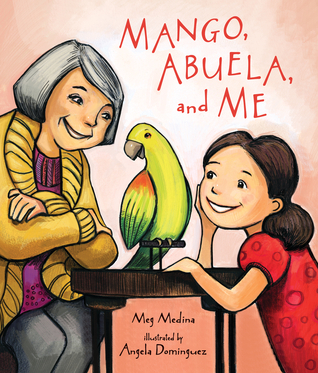
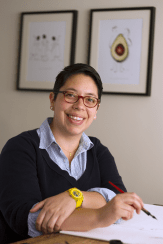
Angela DominguezAngela Dominguez was born in Mexico City, grew up in the great state of Texas, and lived in San Francisco. She’s the author and illustrator of picture books such as Let’s Go Hugo!, Santiago Stays, Knit Together, and Maria Had a Little Llama, which received the American Library Association Pura Belpré Illustration Honor. Recently, she received her second Pura Belpré Honor for her illustrations in Mango, Abuela, and Me written by Meg Medina. Her new books How do you Say?/Como se Dice?  and Marta, Big and Small (by Jen Arena), will both be published later this year. To see more of Angela’s work, visit her website, blog or twitter.

Q: What inspired you to become an artist?

A: Like many of my artist friends, I’ve always liked to draw. Growing up, I was obsessed with books and art in general. I’d spend evenings watching VHS tapes and drawing all night (if I wasn’t doing homework). Still, I didn’t really consider art something I could do professionally until high school. Fortunately, my high school really had a great art program and teachers who were supportive. Then I received a partial scholarship to Savannah College of Art and Design based on my skills and academics. That sort of sealed my fate as a professional artist.

Q: Tell us about your favorite artistic medium.

A: I still love drawing with pencil. It feels so good in my hand. I even love the way a freshly sharpened pencil smells. I also enjoy working with ink especially with a dip pen and brush. I just like how there is less control. It forces you to work boldly and confidently. My last favorite medium is tissue paper. I just really enjoy collage and the texture it produces. It’s really fun to work with all three at the same time. In graduate school when I saw that Evaline Ness worked that way, I was inspired to do it even more!

Q: Please finish the sentence “Picture books are important because…”

A: Picture books are important because they can speak universal truths to people of all ages. They can make you cry and laugh all in the same little book. (Also there are pictures!)

14933584  17245526  22504706  15937128  23153010  25066557  24727082  25688982


Juana Medina

Photo by Silvia Baptiste

Photo by Silvia Baptiste

Juana Medina was born in Bogotá, Colombia, where she grew up, getting in a lot of trouble for drawing cartoons of her teachers.

Eventually, all that drawing (and trouble) paid off. Juana studied at the Rhode Island School of Design – RISD (where she has also taught). She has done illustration & animation work for clients in the U.S., Latin America, & Europe.

She now lives in Washington, DC. where she teaches at George Washington University. Juana draws and writes stories from a big and old drafting table, in an even older -but not much bigger- apartment.  Juana is the illustrator of the picture book Smick! by Doreen Cronin. Her new books 1 Big Salad: A Delicious Counting Book and Juana and Lucas will be published later this year. You can find out more about Juana on her website and blog.

Q: What inspired you to become an artist?

A: I grew up in a family where pretty much everyone had some kind of artistic outlet; my grandfather was a great draftsman, my grandma was a fantastic carpenter, my aunt a potter… everyone found a way to use arts as a way to express themselves, so it took me a while to realize not everyone in the world did this! Moreover, I went to a school that valued arts very much. So for the longest time, I thought art was just one more fabulous aspect of being human. I didn’t think of art or my ability to draw as super powers; they were simply an added feature, almost as a bonus language. Now that I recognize not everyone draws, I have dedicated a lot of time to using this ability as best as possible, to tell stories.

Q: Tell us about your favorite artistic medium.

A:  Ink is one of my favorite mediums, because I find it very expressive. I enjoy the high contrast between the stark white paper and the very dark black ink; it makes it very exciting to see lines and traces -almost magically- appear on the page.

Q: Please finish the sentence “Picture books are important because…”

A:  Picture books are important because they don’t require more than visuals -and a handful of words- to understand a story. And understanding a story can lead to a shared experience with those who have also read the book. This not only serves for entertainment purposes, but allows us to learn about other people’s feelings, struggles, and dreams. Picture books also allow us to see the world through a different point of view and they tend to teach us things we perhaps didn’t know about, like how people live in villages we’ve never visited, or what dinosaurs used to eat, or how giant squids live in the darkest, deepest waters in the ocean, all valuable lessons to be learned.

22522295


Ana Aranda

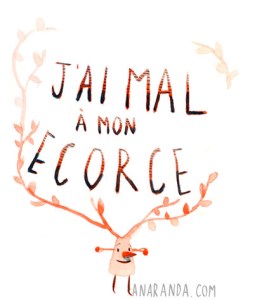
Ana ArandaAna Aranda was born and raised in Mexico City, where she studied design. From there, she moved to France, where she lived for three years while doing her undergraduate studies in illustration. Ana now lives in San Francisco thanks to a grant from the Mexican Fund for Culture and Arts (FONCA). Her biggest inspirations are her childhood memories, the vibrant colors of Mexico, and music. Her work focuses on transforming the every day into fantastical situations, and often includes images from nature and whimsical creatures. Ana’s work has been featured in different galleries and museums in the United States, France, Mexico and Italy. In San Francisco, she has painted murals in the Mission District, for the Consulate General of Mexico, and for the prestigious de Young Museum. Ana’s illustrations can be found in picture books published in France and Italy. Some of her forthcoming titles include “J’ai Mal à Mon Écorce” (Éditions du Jasmin, France, 2015). She also illustrated ¡Celebracion! by Susan Middleton Elya, coming in 2016 and The Chupacabra ate the Candleabra by Marc Tyler Nobleman, coming in 2017.

Q:  What inspired you to become an artist?

A: When I was a little girl, I lived in a colorful city in Mexico called Cuernavaca, also known as the “City of Eternal Springtime”. My childhood memories in this city full of flowers always inspire me to create colorful and joyful pieces for children of all ages.

I have also been very inspired by my family, teachers, Mexican muralists and printmakers, growing up learning about women artists such as Remedios Vario and Leonora Carrington.

Q: Tell us about your favorite artistic medium.

A: I first learned to use acrylics when I was around 14 years old and fell in love with it! Since then I’ve been playing with bright colors and mixing that technique with others such as pigments, scratchboards, etc. I’m in love with color and finding how every color can be part of an emotional experience.

Q: Please finish this sentence: “Picture books are important because…”

Ana Aranda Cover


A: Picture books are important because they help you travel to different worlds!


Books to Check Out:

Dominguez, Angela. Lets Go Hugo

Dominguez, Angela. Maria Had a Little Llama

Dominguez, Angela. Santiago Stays

Dominguez, Angela. Knit Together

Medina, Meg. Mango, Abuela and Me

Brown, Monica. Lola Levine is NOT Mean!

Elya, Susan Middleton. ¡Celebracion!  (coming Fall 2016)

Cronin, Doreen. Smick!

Medina, Juana. 1 Big Salad: A Delicious Counting Book (coming Summer 2016)