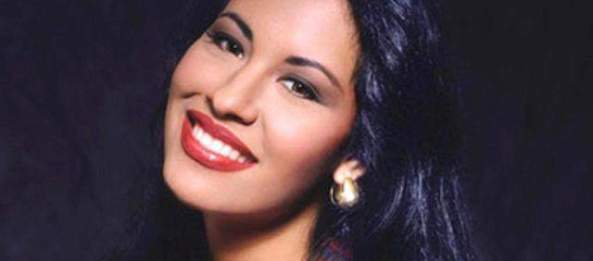
Cover reveal for Sing With Me: The Story of Selena Quintanilla/Canta conmigo: La historia de Selena Quintanilla by Diana López, illus by Teresa Martinez

.

We are delighted to host the cover reveal for Diana López’s picture book Sing With Me: The Story of Selena Quintanilla, which will be published simultaneously in Spanish: Canta conmigo: La historia de Selena Quintanilla. The Spanish version was translated by Carmen Tafolla. Both are illustrated by Teresa Martinez and will be published by Dial Books on April 6, 2021!

From a very early age, young Selena knew how to connect with people and bring them together with music. Sing with Me follows Selena’s rise to stardom, from front-lining her family’s band at rodeos and quinceañeras to performing in front of tens of thousands at the Houston Astrodome. Young readers will be empowered by Selena’s dedication–learning Spanish as a teenager, designing her own clothes, and traveling around the country with her family–sharing her pride in her Mexican-American roots and her love of music and fashion with the world.

.

First, here is some information about the creators:
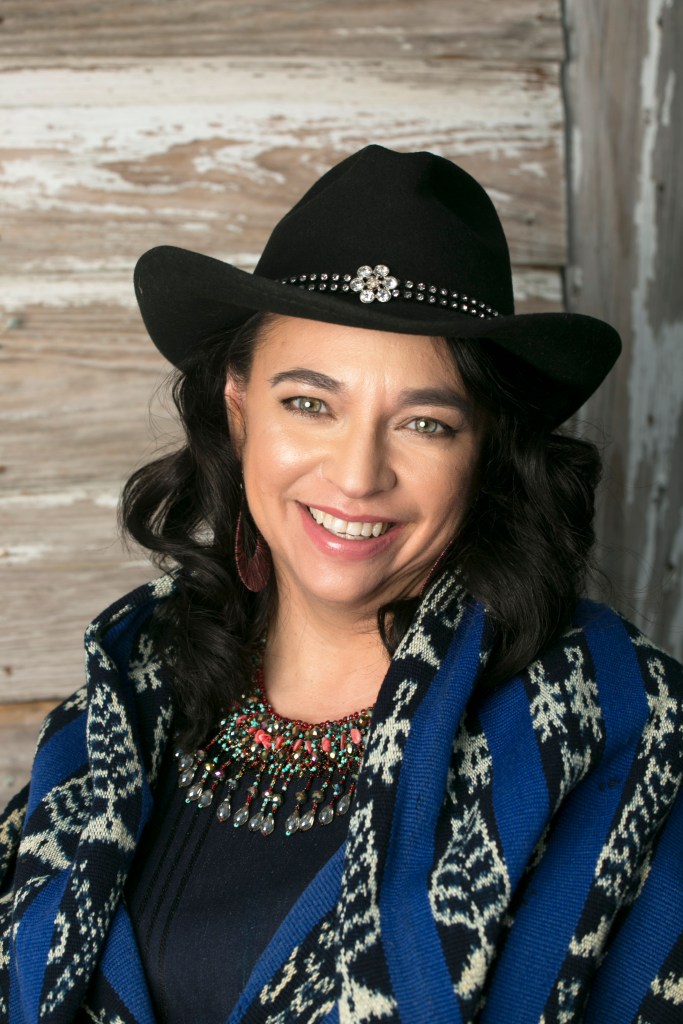
About the author: Diana López is the author of several middle grade novels including CONFETTI GIRL, ASK MY MOOD RING HOW I FEEL, and LUCKY LUNA. She was born and raised in Corpus Christi, Texas, Selena’s hometown. SING WITH ME, THE STORY OF SELENA QUINTANILLA is her debut picture book.

.

.

.

About the illustrator: Teresa Martínez is the illustrator of numerous books for children, including The Halloween Tree and It’s Not a Bed, It’s a Time Machine. She lives in Puerto Vallarta, Mexico, but was born and raised in Monterrey, where Selena frequently visited, becoming part of its culture and its heart. Martínez remains a huge fan of Selena’s music.

.

.

.

.

Now, some insight about the book from the creators:

From the author, Diana López: I’m so excited to share the cover of my upcoming picture book biography, SING WITH ME, THE STORY OF SELENA QUINTANILLA. I live in Corpus Christi, Selena’s hometown, so I often see illustrations or photographs of her at restaurants or on T-shirts. There’s a Selena mural in her old neighborhood and a memorial, the Mirador de la Flor, which features a statue of Selena gazing at the sea. It also has a giant, white rose, Selena’s favorite flower. I love that illustrator, Teresa Martínez, chose Selena’s most famous concert for the cover of our picture book, but a special treat are the roses lovingly tossed to Selena in gratitude for her music.

Here’s what Teresa Martínez said when asked about her inspiration for the cover: “When I think about Selena, I go back immediately to my Quinceañera party and see my friends singing out loud on the mic Selena’s songs. That passion and energy in her songs. Without a doubt, I had a lot of inspiration with her music, wardrobe, and the feeling of happiness that youth brings. For her book, I opted for a vibrant color palette that was so in use those days, and of course, I couldn’t leave behind the purple color associated with the fantastic outfit Selena wore at the Astrodome, so purple takes an important part in the cover. For this project overall, I wanted the reader to feel involved in her presence through the colors and little details throughout the book.”

As someone who primarily writes middle grade novels, I’m used to “painting” people and places with words. That’s why early drafts of this picture book were a bit wordy. I had to keep reminding myself that a picture book is a collaboration between a writer and an illustrator, and I couldn’t have asked for a better co-creator. When Nancy Mercado, our editor at Dial Books for Young Readers, first shared Teresa Martínez’s portfolio, I could not stop smiling. Her art has color, movement, and whimsy, and I’m so pleased to see these traits on every page in our book, but most especially on the cover, which does a wonderful job of capturing Selena’s beautiful spirit. I can’t wait to share SING WITH ME, THE STORY OF SELENA QUINTANILLA—its art, its story, its joy.

.

Finally, here is the cover of Sing with Me: The Story of Selena Quintanilla/ Canta conmigo: La historia de Selena Quintanilla:

Start scrolling…

*

*

*

*

*

*

Keep scrolling…

*

*

*

*

*

*

Almost there…

*

*

*

*

*

*

Ta-da!
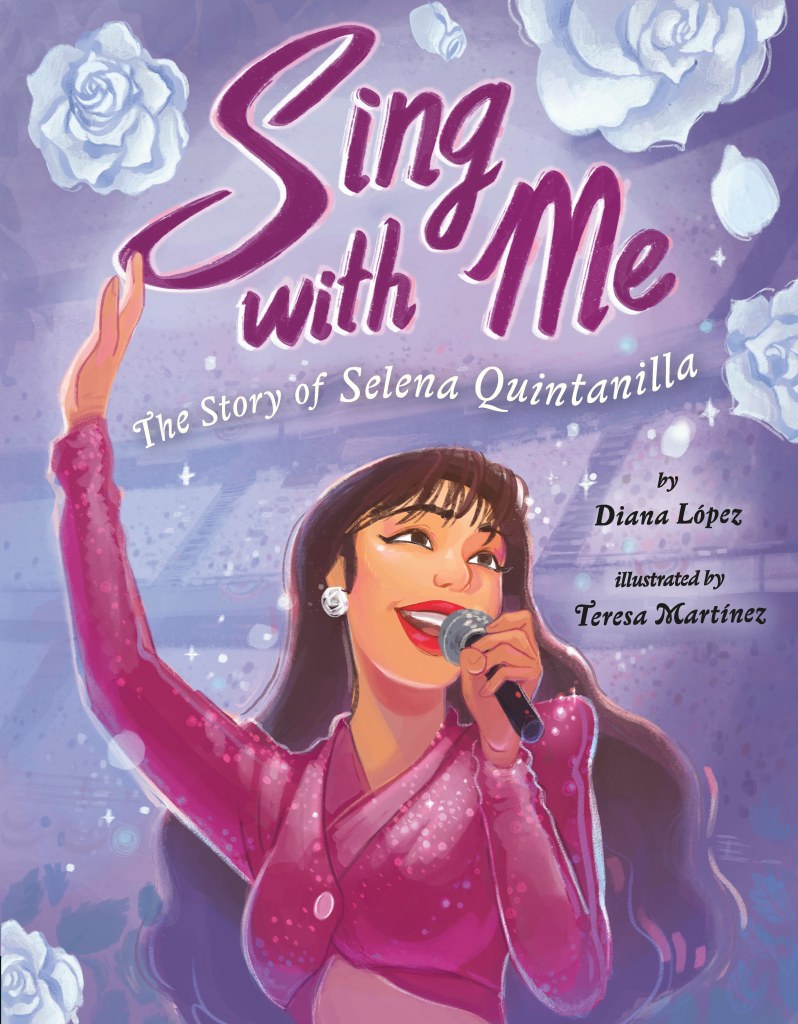
Sing with Me: The Story of Selena Quintanilla is available now for pre-order!

.

.

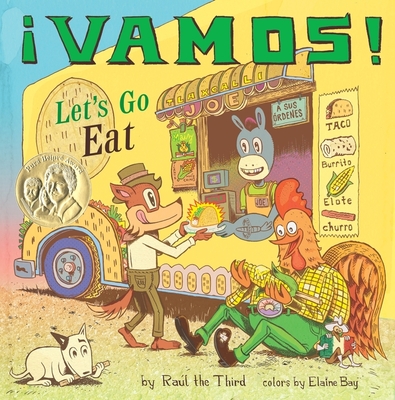
Book Review: ¡Vamos! Let’s Go Eat by Raúl the Third with color by Elaine Bay

Review by Sonia Alejandra Rodríguez, PhD and Ingrid Campos

DESCRIPTION OF THE BOOK: In this new Vamos! title, Let’s Go Eat, Little Lobo is excited to take in a show with wrestling star El Toro in his bustling border town. After getting lunch orders from The Bull and his friends to help prepare for the event, Little Lobo takes readers on a tour of food trucks that sell his favorite foods, like quesadillas with red peppers and Mexican-Korean tacos. Peppered with easy-to-remember Latin-American Spanish vocabulary, this glorious celebration of food is sure to leave every reader hungry for lunch!

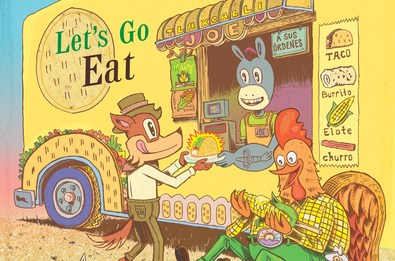
OUR TWO CENTS: ¡Vamos! Let’s Go Eat by Raúl the Third with color by Elaine Bay centers Little Lobo, his dog Bernabé, and his rooster friend, Kooky Dooky. Little Lobo takes his delivery services to El Coliseo to meet Luchador star, El Toro, who asks Little Lobo to get lunch orders for him and all of his famished wrestling friends before the big show that night. Little Lobo, Bernabé, and Kooky Dooky visit different food trucks and food stands in the area to find some of their favorite Mexican dishes such as tacos, tamales, churros, aguas frescas, and many more delicious treats. 

¡Vamos! Let’s Go Eat is crowded with fun, humorous characters from cover to cover: from a snake with a sombrero slithering up a utility pole, to a tortoise driving a “Tortas Tortuga” truck with “despacito” blazoned across the side, to “Armor Dillo,” a luchador armadillo covered in armor, and so much more. The illustrations are also action-packed, mimicking the high energy of any good lucha match. The cars speed by leaving zig-zag “vroom” behind. The floor retumba like waves at the rumble of the luchadors’ hungry tummies. Puffs of smoke or exhaust rise as Little Lobo dashes from one place to the next. Elaine’s color choices bring the book to life–resembling Little Lobo’s lively neighborhood. Additionally, readers will find many words for different types of foods, animals, and actions as part of the illustrations. On one spread, when Little Lobo first meets all the luchadores, their names are drawn to match their styles, like the “L” in “Lizarda” is as long as their tongue. On another page, when Little Lobo goes to pick up dessert, there are so many options that the words fill up half the page: “Flan,” “arroz con leche,” “churros,” and more. Raúl and Elaine give every inch of the pages something new for readers to find with every read.

¡Vamos! is also an extraordinary book for showcasing bilingualism in Spanish and English. Some of the speech bubbles offer immediate translation of the Spanish words and phrases: “Un poquito de esto. Un poquito de lo otro. A little of this. A little of that.” Other speech bubbles or words in the illustrations don’t offer direct translations; instead, the illustrations serve as context for translation. An example of this is when Little Lobo sits to watch the lucha, and the vendor shouts, “¡Cacahuates! ¡Palomitas! ¡Soda!” There’s no direct translation on the page but instead the reader can see the vendor toss a bag of peanuts at Little Lobo. On other pages, the English and Spanish serve as a call and response. When Little Lobo and Bernabé make it to El Coliseo for the first time, Little Lobo asks, “¡¿Qué es eso?!” and one of the luchadores responds with, “That’s our bellies. We are very hungry.” Additionally, there’s a food glossary at the end of the book, which readers can refer to if they are unfamiliar with the words. The author also encourages readers to use a Spanish-English dictionary to look up words not found in the glossary, which is a significant way to encourage proactiveness and agency in young readers. 

The heart of this story is not only Mexican food but also love and respect for street food vendors. Raúl does an excellent job at representing the diversity of street food, the types of kitchens where the food is made, and kinds of characters who make the food. After getting the long list of food orders from the luchadores, Little Lobo, Bernabé, and Kooky Dooky head outside to shop from the different food vendors. The narration reads, “A food truck is a kitchen on wheels. Food of all kinds can be prepared there. Some food sellers used modified bikes or wagons.” There are also food sellers selling out of a cooler and from a box around their neck. Additionally, in ¡Vamos!, Raúl shows that street food vendors are an important staple of any community and demonstrates how street food vendors support one another. For example, at one point in the story, Little Lobo notices: “At the elotero, the corn boils in the giant tub right on the cart. Macho gives all his husks to Tammy. She uses them to wrap her tamales.” Here, the vendors support one another by sharing supplies to create food that’ll feed a community, but the example also demonstrates how conservation is an innate part of many Latinx cultures; nothing goes to waste. 

By capturing the diversity and beauty of Mexican food and street food vendors, Raúl challenges negative stereotypes that currently may exist around both of these cultures. At a time when street vendors are under constant policing and harassment, a book like ¡Vamos! is essential reading to expand young peoples’ understanding of culinary practices and respect for those who make the food and for those who deliver it.

.

ABOUT THE AUTHOR-ILLUSTRATOR: (From his website) Raúl The Third is an award-winning illustrator, author, and artist living in Boston. His work centers around the contemporary Mexican-American experience and his memories of growing up in El Paso, Texas and Ciudad Juarez, Mexico.

Lowriders in Space was nominated for a Texas BlueBonnet award in 2016-2017 and Raúl was awarded the prestigious Pura Belpré Award for Illustration by the American Library Association for Lowriders to the Center of the Earth. He was also a contributor to the SpongeBob Comics series.

¡Vamos! Let’s Go to The Market! is Raúl’s first authorial project, which he wrote and illustrated, and is colored by Elaine Bay.

.

.

ABOUT THE REVIEWERSSonia Alejandra Rodriguez, PhD is an Associate Professor of English at LaGuardia Community College (CUNY) where she teaches composition, literature, and creative writing. Her academic research focuses on decolonial healing in Latinx children’s and young adult literature. Sonia is a Mellon Emerging Faculty Leader.

.

Ingrid Campos is a 19-year-old college student interested in Latinx Literature. After graduating from LaGuardia Community College (CUNY) this year with an associates in Writing and Literature, she will continue her studies at Queens College to earn her Bachelors in English Education 7-12 . Ingrid was born and raised in Queens, New York. As a Mexican-American living in Queens and graduating from the public school system, Ingrid is inspired to become a high school teacher. One of her main goals is to center academic curriculums around more diversity and inclusivity towards Black and Brown students.

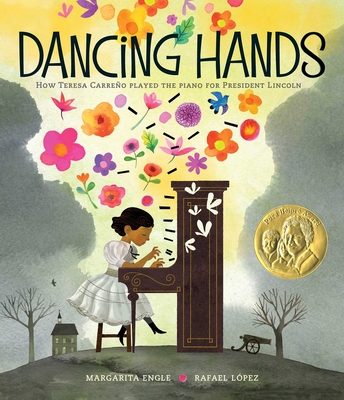
Book Review: Dancing Hands: How Teresa Carreño Played the Piano for President Lincoln by Margarita Engle, illus. by Rafeal López

.

Review by Dora M. Guzmán

DESCRIPTION OF THE BOOK: As a little girl, Teresa Carreño loved to let her hands dance across the beautiful keys of the piano. If she felt sad, music cheered her, and when she was happy, the piano helped her share that joy. Soon she was writing her own songs and performing in grand cathedrals.

Then a revolution in Venezuela drove her family to flee to the United States. Teresa felt lonely in this unfamiliar place, where few of the people she met spoke Spanish. Worst of all, there was fighting in her new home, too- a Civil War.

Still, Teresa kept playing, and soon she grew famous as the talented Piano Girl who could play anything from a folk song to a sonata. So famous, in fact, that President Abraham Lincoln wanted her to play at the White House! Yet with the country torn apart by war, could Teresa’s music bring comfort to those who needed it the most?

MY TWO CENTS: Dancing Hands is a biographical picture book about María Teresa Carreño Garcia de Sena that embraces creativity, family, and music during turmoil in Venezuela and the United States. Teresa, also known as Piano Girl, learns early on that music is an art for others to enjoy in the moment and in their hearts. Despite inevitable conflict in both her home country, Venezuela, and her new home, the United States, music becomes her refuge. Playing the piano calms the storms, brings together her family, and inspires other artists, and even the president in office, Abraham Lincoln.

While the text is in English only, the language used to describe Teresa’s talent is filled with poetic and descriptive language. It moves the reader through a narrative timeline of events and emotions. The illustrations are phenomenal and invoke more emotions as the reader learns about Teresa’s life changes. The use of acrylic paint and its textured shades contrast against the sharp lines and fierce colors that spread across each page. Each page has strategically placed colors and imagery placement to convey the story’s mood. Still, Teresa’s life experiences and talents remain front and center, with her connection to her music and cultures highlighted. My favorite moment in her story is when, as a young child, Teresa inspired other musicians to come and create music. It shows how far and wide her inspiration reached even at a young age!

TEACHING TIPS: Many of these teaching moments can be implemented in a K-5 setting, with a focus on the grades 3 and up.

  • Writing Mentor Text
    • Descriptive language: The author provides a plethora of metaphors and descriptive language that can serve as models for student writing when used to describe objects, moments, and feelings.
    • Mini lesson on adjectives and verbs
  • Addition to a biography unit or music unit
    • The historical note at the end of the book can serve as a catalyst for further research into the life of María Teresa Carreño Garcia de Sena. Student researchers can also find out more about her music and how it added to the arts during and after her time.
    • In music class, students can learn more about her compositions, as well as listen to her music compositions to add to their study.
  • Author and illustrator study
    • Pair this text with other picture books written by Margarita Engle and compare her writing style as well as the characters.
    • Pair this text with other picture books illustrated by Rafael López and compare his artistic style.

Listen to María Teresa Carreño Garcia de Sena’s composition called La Falsa Nota played by another pianist.

.

.

This image has an empty alt attribute; its file name is margarita.jpg

ABOUT THE AUTHOR: Margarita Engle is the Cuban-American author of many acclaimed books, including two other collaborations with Rafael López, Bravo! and Drum Dream Girl, as well as The Flying Girl; All the Way to Havana; Miguel’s Brave Knight; The Surrender Tree, a Newbery Honor book; Jazz Owls; The Poet Slave of Cuba; and her memoirs Enchanted Air and Soaring Earth. She lives in central California. Visit her at margaritaengle.com Follow her on Twitter: @margaritapoet

.

.

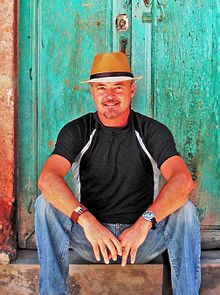
This image has an empty alt attribute; its file name is rafael_lopez_artist_and_illustrator.jpg

ABOUT THE ILLUSTRATOR: Rafael López was born and raised in Mexico, a place that has always influenced the vivid colors and shapes in his artwork. He now creates community-based mural projects around the world and illustrates acclaimed children’s books, including The Day You Begin, Bravo!, Drum Dream Girl, We’ve Got the Whole World in Our Hands, and Book Fiesta! Rafael divides his time between Mexico and California. Visit him at  https://rafaellopez.com/

.

.

.

.

ABOUT THE REVIEWER: Dora M. Guzmán is a bilingual reading specialist for grades K-5 and also teaches undergraduate and graduate courses in Children’s Literature and Teaching Beginning Literacy. She is also a current doctoral student in NLU’s  EdD Teaching and Learning Program with an emphasis on Reading, Language, and Literacy.  When she is not sharing her love of reading with her students, you can find her in the nearest library, bookstore, or online, finding more great reads to add to her never-ending “to read” pile!

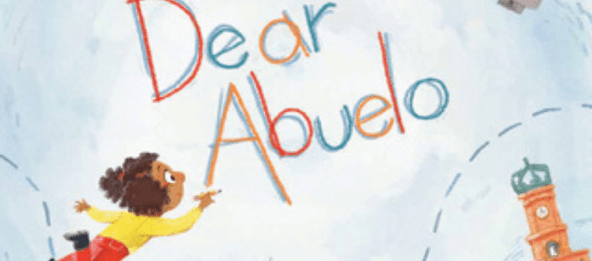
Book Review: Dear Abuelo by Grecia Huesca Dominguez, illus. by Teresa Martinez

.

Review by Sonia Alejandra Rodriguez, PhD & Ingrid Campos 

DESCRIPTION OF THE BOOK: There is much Juana is going to miss as she moves from Mexico to New York, but nothing more than her abuelo. Through letters to her grandfather, Juana details her flight, he new apartment, and her first days of school, where everyone speaks a language she barely understands. When Juana makes her first friend, though, things begin to change.

OUR TWO CENTS: In Grecia Huesca Dominguez’s Dear Abuelo (2019) Juana and her mother immigrate from Mexico to New York. Through letters written to Abuelo, who is back in Mexico, she details her feelings about  new and anxious experiences, like traveling on a plane for the first time, settling in her new apartment, and her first day of school. On the bus ride, Juana notices everyone speaking in English, she has trouble understanding and speaking despite having practiced. In school, Juana’s teacher does not pronounce her name correctly; this incident makes her feel discouraged. In the following letters, Juana tells Abuelo that she’s  met a new friend, Elizabeth, who is also from Mexico. Elizabeth speaks both English and Spanish and explains to the teacher how to say Juana’s name correctly. Juana finds the library and meets the librarian. The librarian shows Juana books written in Spanish, and this inspires Juana to write stories in English and Spanish. 

Teresa Martinez’s illustrations center a young, brown girl with bright rosy cheeks and short curly  hair. Martinez’s vibrant illustrations of  Juana’s experiences align brilliantly with her feelings, such as  depicting the feeling of anxiety or nervousness with her use of  grey and darker backgrounds and using splashes of bright greens, oranges, and yellows to capture Juana’s  feelings of zen and excitement. Mexico is represented with the use of bright flower garlands across the pages and those flowers are lost when Juana lands in New York in the middle of winter. At first, there aren’t any flowers at school because Juana has a difficult time fitting in. Once she meets Elizabeth, after the teacher pronounces her name correctly, and after finding books in Spanish, the flower garlands around the frame of the pages return. Not only are the flowers a connection to Mexico, but they also represent growth and opportunity. 

A significant aspect in Dear Abuelo is the use of the letter format to tell the story. The story ends with Juana maybe one day writing her own stories, but the entire book is an example of just that. The letters are a powerful device that allows Juana to process her emotions that come with leaving one’s homeland behind and needing to start anew. The letters are also a wonderful way to strengthen long distance family relationships, which helps Juana feel less lonely.  The letters also suggest that Juana is taking control of her own narrative; she is in control of the story she tells. 

Another significant aspect of Dear Abuelo is the importance of  embracing the uniqueness in names and the importance of connecting with family history through naming. The mispronunciation of (im)migrant student names in the American classroom is a far too common experience. Continual mispronunciation or mockery of a student’s name because they don’t sound or look “American” is an imperialist and white supremacist practice to try to other, marginalize, and erase people’s history, culture, and future. We appreciate that it was Elizabeth, also a child, who had the courage to disrupt assumed power relations and correct, and teach, the teacher how to say Juana’s names. It is also important that the teacher was open to learning something new. 

Dear Abuelo focuses on the Mexican immigrant experience that many children coming to the U.S at a young age might relate to. This picture book illustrates common hardships, including having a language barrier, the trouble of meeting new people, or finding interest in activities like the ones Juana participates in the book, such as playing in gym class or riding the bus. Other picture books that center a similar experience and conversation include Juan Felipe Herrera’s The Upside Down Boy  (2006) and Amada Irma Perez’s My Diary From Here to There (2009). 

Grecia Huesca Dominguez and Teresa Martinez do an excellent job at balancing the struggles young immigrants experience with the joys of still being a child. We wholeheartedly recommend this book to children and parents to read together and discuss the similarities and differences between Juana’s experiences and those of the readers. 

TEACHING TIPS:

  • Ask students to write letters to one another, to the teacher, to someone in their family.
  • Encourage students to also include an illustration or a flower garland border (or a different symbol that represents something about themselves).
  • Ask students to write about the origin and/or history of their names, about being the “new kid” at school, or about making friends.
  • More advanced students can probably write about the more difficult themes around immigration and belonging.

.

Photo: Tracy Lane/Benchmark Education Company

ABOUT THE AUTHOR: Grecia Huesca Dominguez moved from Veracruz, Mexico, to New York when she was ten years old. She started writing poetry while pursuing her BA in English and Creative Writing at CUNY Lehman College. She initially used poetry as a coping mechanism and soon began to use it as a way to chronicle her life as a single mother and undocumented immigrant, and her Latinx identity. Her first poem, “Marilín,” was published in 2015. Since then, she has published more poems and written three books.

.

.

.

.

ABOUT THE ILLUSTRATOR: Teresa Martinez grew up in Mexico loving to draw and decided to study graphic design. She spent many afternoons reading books on art in the university’s library. She also took many painting courses and even went to Italy for a short course at the Leonardo da Vinci School (Florence). Eventually she started working as a children’s book illustrator and has been doing that ever since. Now Teresa lives in Puerto Vallarta, Mexico.

.

.

.

.

.

ABOUT THE REVIEWERS: Sonia Alejandra Rodriguez, PhD is an Associate Professor of English at LaGuardia Community College (CUNY) where she teaches composition, literature, and creative writing. Her academic research focuses on decolonial healing in Latinx children’s and young adult literature. Sonia is a Mellon Emerging Faculty Leader.

.

Ingrid Campos is a 19-year-old college student interested in Latinx Literature. After graduating from LaGuardia Community College (CUNY) this year with an associates in Writing and Literature, she will continue her studies at Queens College to earn her Bachelors in English Education 7-12 . Ingrid was born and raised in Queens, New York. As a Mexican-American living in Queens and graduating from the public school system, Ingrid is inspired to become a high school teacher. One of her main goals is to center academic curriculums around more diversity and inclusivity towards Black and Brown students.

Cover Reveal for Your Mama by NoNieqa Ramos, illus. by Jacqueline Alcántara

.

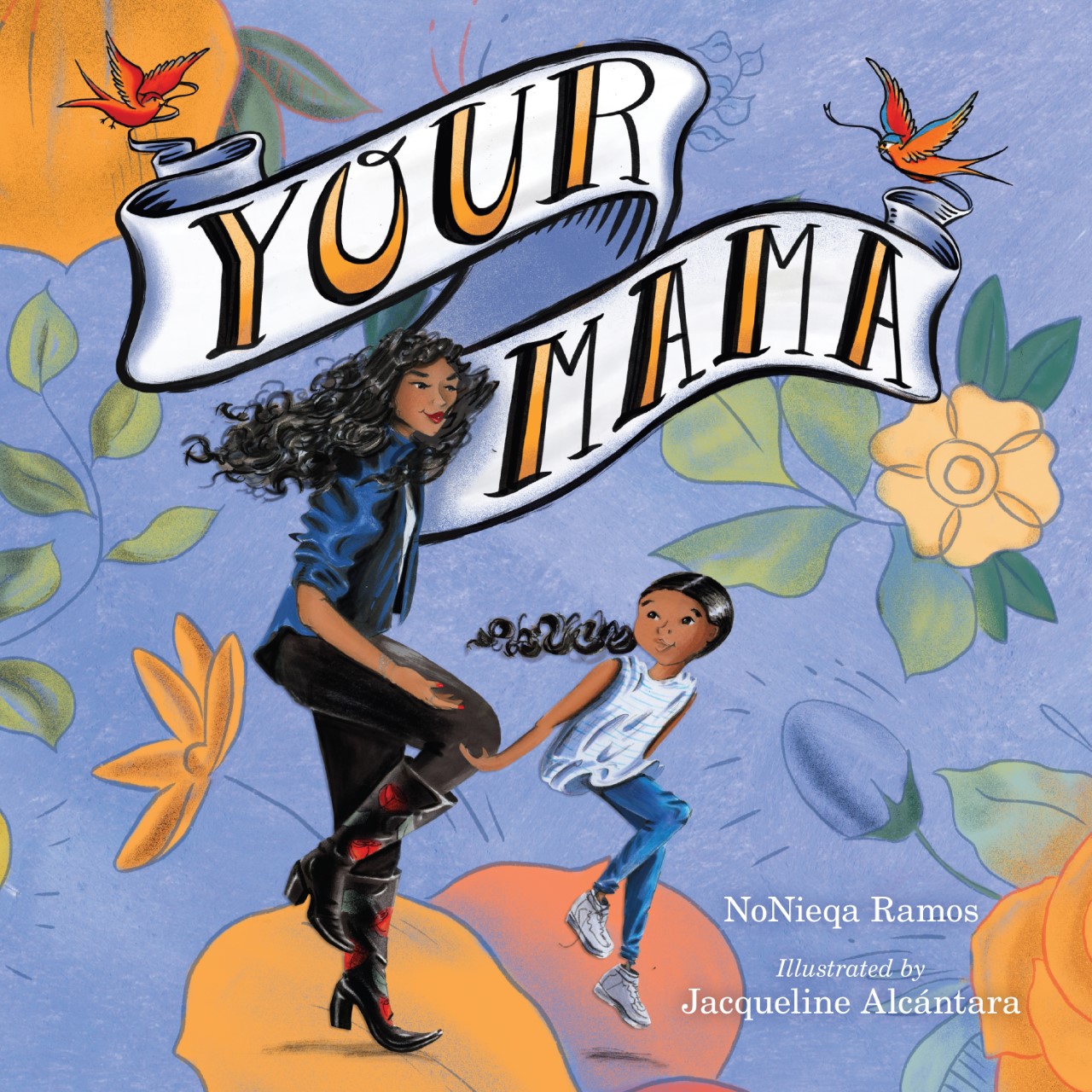
We are delighted to host the cover reveal for NoNieqa Ramos’s debut picture book, Your Mama, which will be published by Versify on April 6, 2021!

A sweet twist on the age-old “yo mama” joke, celebrating fierce moms everywhere with playful lyricism and gorgeous illustrations. Perfect for Mother’s Day.

Yo’ mama so sweet, she could be a bakery. She dresses so fine, that she could have her clothing line. And, even when you mess up, she’s so forgiving that she lets you keep on living. Heartwarming and richly imagined, YOUR MAMA twists an old joke into a point of pride that honors the love, hard work, and dedication of mamas everywhere.


First, here is some information about the creators:


richards-noni-0011-3_3NoNieqa Ramos wrote The Disturbed Girl’s Dictionary, a 2018 New York Public Library Best Book for Teens, a 2019 YALSA Best Fiction for Young Adults Selection, and a 2019 In the Margins Award Top Ten pick. Hip Latina named The Truth Is “10 of the Best Latinx Young Adult Books of 2019.”  Remezcla included The Truth Is in the “15 Best Books by Latino and Latin American Authors of 2019.”

Versify will publish her debut picture book Beauty Woke and Your Mama in 2021. Lerner will publish Hair Story in 2021. For more information about NoNieqa, check out Las Musas and the Soaring 20s. She is also on Twitter and Instagram.


JACQUELINE HEADSHOTJacqueline Alcántara is a freelance illustrator and artist who spends her days drawing, writing and globe-trotting with her dog Possum. She is particularly excited about promoting inclusiveness and diversity in children’s literature and the illustration field in general. Her debut picture book, The Field, written by Baptiste Paul,was named a Best Book of 2018 by School Library JournalHorn BookKirkus Reviews, and Shelf AwarenessFreedom Soup, written by Tami Charles, has been named a Kids IndieNext Pick, a Kirkus Best Book of 2019, and has received four starred reviews! Jacqueline lives in Chicago, Illinois.


Now, some insight about the book from NoNieqa and Jacqueline:

Picture books and poetry are my first literary loves. The publication of my debut book YOUR MAMA has been a montage of dreams-come-true. I have been able to work with poet, educator, New York Times Bestselling and Newbery Award winner Kwame Alexander on his new imprint Versify! I’ve witnessed the life-changing effect of his work with my middle grade students, so it’s an immense honor to be part of his artistic mission to “change the world one word at a time.” And with work like Kip Wilson’s WHITE ROSE and creations by Raúl the Third, they are doing it!

My new editor Erika Turner has written about books, race, romance, and sexuality for Bustle, BuzzFeed, Black Girl Dangerous, and other pubs. She has been absolutely integral to getting my manuscripts to the next level and honoring the Latinidad and queerness of my work. FYI: She’s also an editor-for-hire and a photographer. Check out her website https://www.magicmultiverses.com/faq!

I jumped up and down when I found out the illustrator for YOUR MAMA would be Jacqueline Alcántara! I still remember standing in awe in a children’s bookstore and gazing at her dynamic work in THE FIELD, written by Baptiste Paul. Her second book FREEDOM SOUP, written by goddess Tami Charles,  is displayed front and center in my Latinx kitchen library. Jackie’s illustrations for YOUR MAMA took my breath away.  Her work amplified the spirit, the verve, the essence, and the fire of my words. I am so proud of this cover and fully intend on blowing it up to gigantic proportions and framing it–and trying to find me a pair of rose-covered black boots!

And from Reina Jacqueline Alcántara herself: “I had only read through the first few stanzas of NoNieqa’s manuscript when I got pings of excitement and started to imagine the characters’ overall style, relationship, and adventures together! The words are filled with spirit, energy and love—there was so much I wanted to pour into this world. For the cover, I chose a moment when they are dancing, and this super cool, confident, beautiful mama and her child are filled with energy, reading each other’s next move. I chose to illustrate the moment juuuussttt before they touch hands (I often try to find great decisive moments to illustrate), because it is filled with so much anticipation and excitement, and it encourages readers to imagine what might happen next.  It feels like the perfect place for this story to begin!”

Shout out to designer Andrea Miller who is fusing both our work into a beautiful final product. We can’t wait to share YOUR MAMA with the world April 6, 2021!


Finally, here is the cover of Your Mama:

Start scrolling…

*

*

*

*

*

*

Keep scrolling…

*

*

*

*

*

*

Almost there…

*

*

*

*

*

*

Ta-da!
.

CorrectedcoverfilefromJackie

GORGEOUS! Can’t wait to read it!

Your Mama is available now for pre-order!


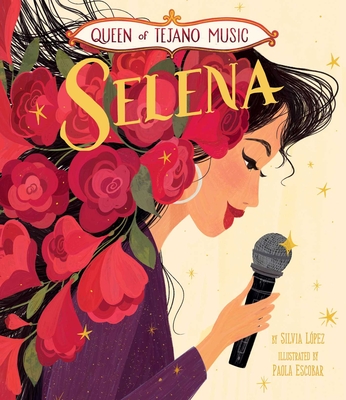
Book Review: Queen of Tejano Music: Selena by Silvia López, illus. by Paola Escobar


Review by Emily R. Aguiló-Pérez

DESCRIPTION OF THE BOOK: Selena Quintanilla’s music career began at the age of nine when she started singing in her family’s band. She went from using a hairbrush as a microphone to traveling from town to town to play gigs. But Selena faced a challenge: People said that she would never make it in Tejano music, which was dominated by male performers. Selena was determined to prove them wrong.

Born and raised in Texas, Selena didn’t know how to speak Spanish, but with the help of her dad, she learned to sing it. With songs written and composed by her older brother and the fun dance steps Selena created, her band, Selena Y Los Dinos, rose to stardom! A true trailblazer, her success in Tejano music and her crossover into mainstream American music opened the door for other Latinx entertainers, and she became an inspiration for Latina girls everywhere.

MY TWO CENTS: As a middle-grader, Selena was my idol! I wish I had found her music earlier, but it was perhaps a year or so before her death. When the news broke, I was devastated and found solace in listening to her music and learning about her as much as possible. To this day, her music is a big part of my life. I had her CDs and her doll, I learned her songs and movements, and sometimes I even made up my own choreography. I approached this book, then, not only as a reviewer of children’s books but also as a lifelong fan of Selena.

 How does one introduce to children the life of such an important icon of Latinx music whose life ended so tragically and so soon? Queen of Tejano Music: Selena tells the story of Selena Quintanilla, from her childhood in Lake Jackson, Texas to her successful career as a trailblazing singer and fashion designer. Presented in twenty short vignettes, López perfectly presents enough details on each page without overwhelming the reader with too much text.

Selena Quintanilla was born on an Easter Sunday, on April 16, 1971 to Marcella and Abraham Quintanilla, who, as a young man, had dreams of a music career. Selena “had been singing almost since she could talk” and soon after her parents realized she had perfect pitch. With her brother A.B. on guitars and her sister Suzette on the drums, music became a family affair. Through the years, the family band performed anywhere they could, and after a few years, Selena y Los Dinos was born. Through this history of Selena’s life and music career, López reminds readers of the challenges she faced: overcoming the language barrier, stepping into a male-dominated music landscape, and her father’s initial opposition to Selena’s romantic relationship with Chris Pérez.

This biographical account of Selena’s life and work is inspirational. Along with some of the obstacles that Selena encountered, the author highlights so many of the singer’s achievements that paved the way for women in music. At age fifteen, Selena won a Tejano Music Award for Female Vocalist of the Year, an accolade she continued receiving for years, along with other ones. She later received a Grammy Award for Best Mexican American Album. Yet, her success was not only measured in awards. López writes about Selena as a philanthropist, fashion designer, entrepreneur, and caring human who loved her family.

The narrative part of the book does not explicitly mention Selena’s death. Rather, this information is offered on the back pages of the book. I debated whether this part of Selena’s story should have been included in the main narrative or not. Yet, I thought it was handled gracefully. By writing the main text in past tense, López alludes to her passing and then offers more information about it after the last vignette. At this point, readers are presented with a timeline that begins with Selena’s birth in 1971 and ends in 1997, when the movie Selena starring Jennifer Lopez opened in theaters. Following the timeline, the book presents “A Little More About…,” a section with short pieces of information about Tex-Mex Music, Quinceañeras, and Corpus Christi, among others, as well as more details about Selena, including her tragic death. One observation to make here is the section titled “Hispanics or Latinos” seems to present the terms as synonyms: “Tejanos are part of a larger group of Americans, called Hispanics or Latinos, who have Spanish-speaking ancestors.” While many Latinxs are also Hispanic, there are some differences that could have been easily explained there. Nevertheless, the information is accessible, clear, and easy to understand.

The colorful illustrations are as vibrant as Selena’s smile and capture the singer’s bubbly personality. Paola Escobar creates a medley of double-page spreads and illustrated vignettes that depict in more detail specific moments in Selena’s life and specific aspects of her culture. One page depicts five moments as if they were Polaroid pictures, inviting the reader perhaps to think of her song “Fotos y Recuerdos” (pictures and memories). I noticed that on almost every page or spread, a flower is illustrated, whether it is a print fabric, picture, real flower, or even a pin. Details such as this one are just an example of how Escobar’s illustrations enhance and complement López’s writing to create an engaging work of art.

There have been several books and media about Selena’s life, in addition to musical tributes, fan-made merchandise, anniversary albums, and makeup lines, to name a few. In October 17, 2017, Google honored her with a doodle, as part of the launch of a virtual exhibit on Google Arts & Culture. Joining these tributes, Queen of Tejano Music: Selena is a celebration of the singer’s life—her music, her fashion, her memory, and her legacy, still alive and strong 25 years after her passing. A perfect addition to any picture book collection!

Queen of Tejano Music: Selena releases August 25, 2020 in both English and Spanish.


IMG_6548.JPGABOUT THE AUTHOR: (from the dust jacket) A Cuba native raised in Miami, Silvia López holds degrees in English, library science, and educational technology. Her career as a children’s librarian at schools and public libraries spans over three decades. She is a published author of books for children, including biographies and picture books such as Just Right Family: An Adoption Story, and a collaboration with Italian artist Guido Daniele, Handimals: Animals in Art and Nature. Also, her digital book, Zuzuncito: Un Cuento del Pájaro Abeja Cubano, was named Best Children’s Picture eBook of 2017 by the International Society of Latino Authors.


Paola Escobar Biography - pickledinkABOUT THE ILLUSTRATOR: Paola Escobar is a Colombian graphic designer and illustrator. She has illustrated books for a variety of publishers in Latin America, Europe, and the United States, as well as for digital and print magazines. Some of her work includes Planting Stories: The Life of Librarian and Storyteller Pura Belpré, written by Anika Aldamuy Denise, and Little Guides to Great Lives: Anne Frank, written by Isabel Thomas. She is currently drawing and living very happily in Bogotá with her husband and her dog, Flora.


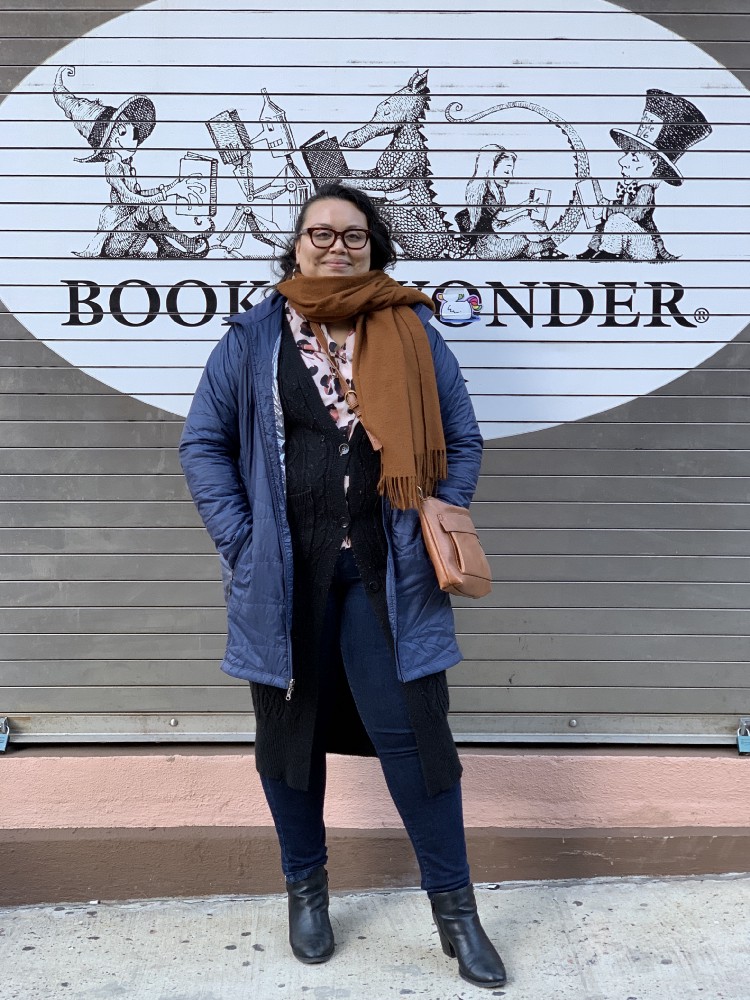
headshotABOUT THE REVIEWER: Emily R. Aguiló-Pérez is an Assistant Professor of English (Children’s Literature) at West Chester University of Pennsylvania.  Her teaching and research are in the areas of children’s literature (particularly Latinx literature), girlhood studies, and children’s cultures. Currently her research examines representation in transitional chapter books that feature Latinx characters. In addition, she is managing editor of Anansesem: The Caribbean Children’s Literature Magazine. She has presented on Latinx children’s books at various conferences and has served on children’s book award committees such as the 2018 Pura Belpré Award. At present, she is part of the Pennsylvania Center for the Book’s “A Baker’s Dozen” committee.