Book Review: Cece Rios and the Desert of Souls by Kaela Rivera

.

We are an affiliate with Indiebound and Bookshop. If If you make a purchase through these links, at no additional cost to you, we will earn a small commission.

Review by Leslie Adame

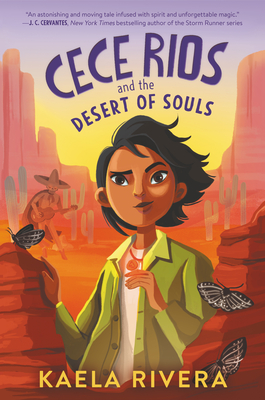
Cover for Cece Rios and the Desert of Souls

DESCRIPTION OF THE BOOK: Living in the remote town of Tierra del Sol is dangerous, especially in the criatura months, when powerful spirits roam the desert and threaten humankind. But Cecelia Rios has always believed there was more to the criaturas, much to her family’s disapproval. After all, only brujas—humans who capture and control criaturas—consort with the spirits, and brujeria is a terrible crime.

When her older sister, Juana, is kidnapped by El Sombrerón, a powerful dark criatura, Cece is determined to bring Juana back. To get into Devil’s Alley, though, she’ll have to become a bruja herself—while hiding her quest from her parents, her town, and the other brujas. Thankfully, the legendary criatura Coyote has a soft spot for humans and agrees to help her on her journey.

With him at her side, Cece sets out to reunite her family—and maybe even change what it means to be a bruja along the way.

MY TWO CENTS: Cece Rios has lived under the scrutiny of her small desert town ever since she was “cursed” by the criatura Tzitzimitl when she was seven. Compared to her perfect sister Juana, Cece considers herself a disappointment and a shame to her entire family. So it is no surprise she feels the need to prove herself when her sister is taken by the criatura El Sombrerón after an argument between the two sisters. But to get to her sister, Cece must become a bruja to obtain access to Devil’s Alley— the home for all criaturas. 

But becoming a bruja is no easy feat. The condition for becoming one requires Cece to gain control of a criatura of her own and win the Bruja Fights. Hearing this, Cece is convinced she’s lost the one opportunity to save her sister, until she rescues the criatura Coyote from Cantil Snake. Indebted to her, and seeing that she’s not malicious like other brujas, Coyote promises to help Cece win the Bruja Fights and save her sister. They form a bond of trust and loyalty, which is non-existent between brujas and criaturas, as the role of brujas is typically to enslave criaturas. Without realizing it, Cece is changing what it means to be a bruja, all while making new friends and obtaining the confidence she needs to save her sister. 

Cece Rios and the Desert of Souls is a beautiful story that combines some of our most favorite Latin American urban legends and places them all in a world set up very eloquently. Although the beginning may be a little slow for younger readers, it is necessary to understand the world Cece Rios comes from. As the story picks up, the reader will fall in love with Cece and root for her success as she ventures on this journey to find her sister as well as herself. The relationship between Cece and her family is a realistic one, and middle grade readers with siblings will come to relate to Cece’s troubles to be seen, as she is constantly compared to her older sister.

Readers will also come to love Coyote, a grumpy but loyal partner whose mysterious backstory will compel the reader to unravel it. The parallels between Cece and her long missing Tía were alluring as well, and it was a joy to unpack her backstory. Overall, Rivera did an amazing job creating a beautiful world with intriguing characters that pull you in from the start. Fans of stories born from urban legends and mythology such as the ones written by Rick Riordan, J.C. Cervantes, and Roshani Chokshi should pick up Cece Rios and the Desert of Souls at their local libraries or book stories. It is truly a treat to read.

.

ABOUT THE AUTHOR: Kaela Rivera was raised to believe in will-o’-the-wisps and el chupacabra, but even ghost stories couldn’t stop her from reading in the isolated treetops, caves, and creeks of Tennessee’s Appalachian forests. She still believes in the folktales of her Mexican and British parents, but now she writes about them from the adventure-filled mountains of the Wild West. When she’s not crafting stories, she’s using her English degree as an editor for a marketing company (or secretly doodling her characters in the margins of her notebook). Her biggest hope is to highlight and explore the beauty of cultural differences—and how sharing those differences can bring us all closer.

.

.

.

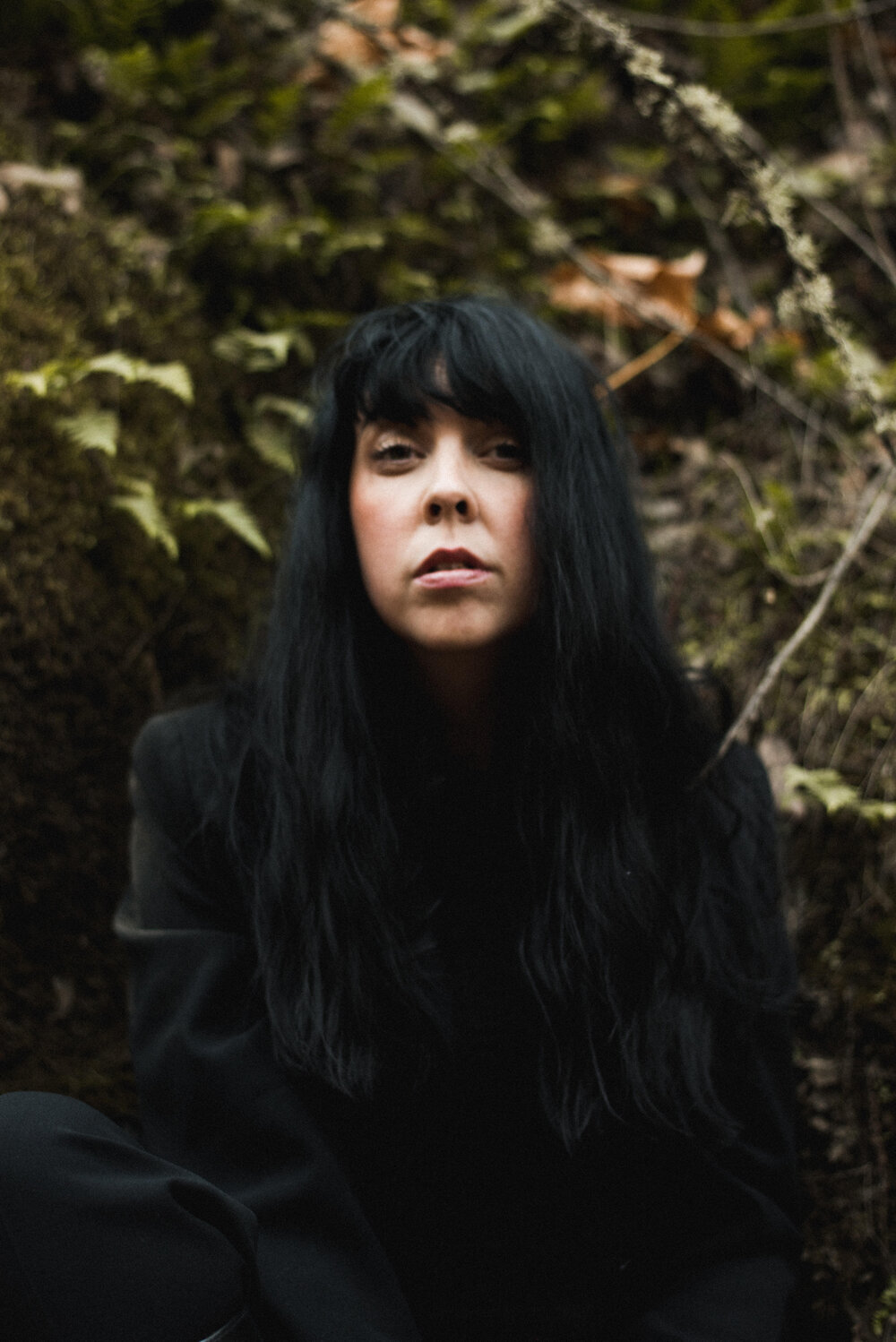
ABOUT THE REVIEWER: Leslie Adame is a graduate of the University of California, Los Angeles with a degree in Political Science and a minor in Film, Television, and Digital Media. Along with writing books herself, she invests most of her time mentoring historically marginalized students and preparing them for a higher education. She strongly believes in the importance of representation in books, and has volunteered in events like the Latinx Kidlit Book Festival to put a spotlight on Latinx/e authors. Leslie grew up in the Inland Empire, specifically Ontario, California. She hopes to one day publish a middle grade fantasy centered around a first-generation protagonist and her undocumented parents. 

Book Review: Paola Santiago and the River of Tears by Tehlor Kay Mejia

.

We are an affiliate with Indiebound and Bookshop. If If you make a purchase through these links, at no additional cost to you, we will earn a small commission.

Reviewed by Sonia Alejandra Rodríguez, PhD & Ingrid Campos

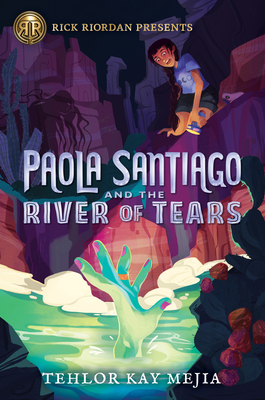
Cover for Paola Santiago and the River of Tears

DESCRIPTION OF THE BOOK: Space-obsessed 12-year-old Paola Santiago and her two best friends, Emma and Dante, know the rule: Stay away from the river. It’s all they’ve heard since a schoolmate of theirs drowned a year ago. Pao is embarrassed to admit that she has been told to stay away for even longer than that, because her mother is constantly warning her about La Llorona, the wailing ghost woman who wanders the banks of the Gila at night, looking for young people to drag into its murky depths.

Hating her mother’s humiliating superstitions and knowing that she and her friends would never venture into the water, Pao organizes a meet-up to test out her new telescope near the Gila, since it’s the best stargazing spot. But when Emma never arrives and Pao sees a shadowy figure in the reeds, it seems like maybe her mom was right.

OUR TWO CENTS: Tehlor Kay Mejia’s Paola Santiago and the River of Tears (2020) presents a world of chupacabras, nightmares, and myths. Twelve-year-old Paola Santiago lives in Silver Springs, Arizona, and she’s interested in all things science and space, making her a very rational person. Paola and her best friend, Dante, live in an apartment complex, while their other best friend, Emma, lives on the more affluent side of town. The three of them frequently go near the Gila River to play despite having been warned to avoid going there after the disappearance of Melissa Martínez. Paola’s mom warns her of La Llorona, the wailing woman who haunts the river and takes children away from their parents, but Paola doesn’t believe in myths and folktales because they’re not scientifically sound. Their apartment is filled with the smell of incense and people who get their tarot cards read, and this bothers Paola because she wants a more rational, more grounded in reality, type of mother. One day, the trio plans to bring Emma’s telescope to the Gila. Paola and Dante wait for Emma to come, but she never meets up with them that night. Emma is missing, and Paola and Dante go on a mission to find Emma. Paola will need to tap into her mother’s lessons if she plans to save herself and her friends. 

Paola has had to grow up fast due to her mother’s work schedule and her mother’s free-spirit. This coping mechanism has led to Paola leaning into science—where things make sense and answers are more definitive—and away from her mother—who’s associated with myths, folktales, spirits, and spirituality. At the beginning of this middle grade novel, it’s clear Paola is skeptical of her mother’s stories: “But ghost? There is no scientific basis for them. No evidence at all that their existence was even possible let alone likely. An old folktale was definitely not a valid reason to change one’s plans” (Mejia, 6).  The resistance here, and through most of the novel, is not necessarily to the stories her mother tells but to the complicated relationship Paola and her mother have, wherein Paola must sometimes take care of herself and her own mother. The ghosts are not just the ghosts in her mother’s stories but the ghosts in their relationship they each refuse to confront. 

Paola is forced to rethink her relationship with her mother and how she sees her after her best friend Emma is taken to another world. Paola faces the monsters that resemble those in her mother’s stories. And when rational thinking isn’t enough to save her friends, Paola taps into what her mother’s been telling her, her entire life, to save everyone. Such realization is significant for Paola’s growth because she’s making room for her culture’s stories and mythology alongside her belief in science as part of how she understands herself. Her journey and fight to save Emma gave Paola an opportunity to celebrate her culture rather than reject it. As adult readers, we found this to be a powerful message about what should be considered knowledge and which types of knowledges should be respected. We believe this message—all knowledges, even those coming from family, have value—will also be empowering to young readers.

Not only does Mejia do an extraordinary job at including Mexican mythology in this novel, she also includes contemporary issues affecting Latinx communities at large, such as immigration and racial profiling. Sal is a memorable character in the River of Tears. Sal is a lost niño who used to live in Paola and Dante’s apartment complex. Sal experiences an incident with ICE officers: “He always came to mind whenever she saw stories about tent cities on the news, showing women who like her mom cried over lost children who looked like Pao. Eventually, those stories went away as it became clear that viewers preferred to pretend that brown-skinned kids weren’t disappearing but put into cages” (Mejia, 130). In a very emotional moment in the novel, Paola will meet Sal and the tragic truth of what could happen to children taken by ICE or thrown into cages will come to light. It’s important that Mejia decided to let Sal tell his side of the story and that Sal finds agency in unexpected ways and in an unexpected world. 

An overarching theme throughout the novel is class, which intersects with racial profiling. When Emma is first missing, Dante and Paola seek help from the police station. They encounter a police officer who shrugs them off. The officer says: “We’ve seen your kind here before. Trouble, all of you. Now, if you don’t have business with us, you need to get out” (Mejia, 37). The officer talks down to Dante and Paola because he makes certain assumptions about them based on what they look like and where they live. This encounter leaves Paola feeling ashamed. It’s only when Emma’s white parents go into the police station and get involved that both she and Dante get taken seriously. The distrust for the police to find Emma, based on previous experiences, leads Paola’s determination to find her friend herself. 

Paola Santiago and the River of Tears is a novel about finding self-empowerment in one’s culture in the face of systematic marginalization. Paola’s mother and her neighbor give her the tools, all based in her Mexican American culture, to save her missing friend Emma. Although Paola may not necessarily understand, or even see these tools at first, they’re there for her when she needs them the most. Mejia creates a brilliant, empathetic, and strong character in Paola Santiago. We need more books like this one that center brown girls interested in STEM, that tell readers to be proud of their culture, and that include magical chanclas as secret weapons.

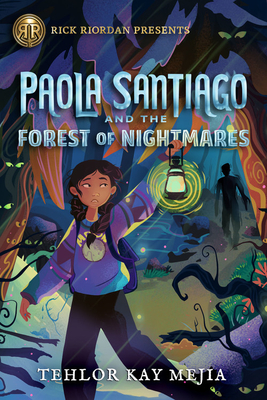
The sequel to Paola Santiago and the River of Tears is Paola Santiago and the Forest of Nightmares, which released August 3, 2021.

Cover for Paola Santiago and the Forest of Nightmares

.

Photo & Styling: Tia Reagan Creative | Editing: Adrian King

ABOUT THE AUTHOR: Tehlor Kay Mejia is the author of the critically acclaimed young adult fantasy duology WE SET THE DARK ON FIRE and WE UNLEASH THE MERCILESS STORM. Her middle grade debut, PAOLA SANTIAGO AND THE RIVER OF TEARS, released from Rick Riordan Presents in 2020 and its sequel PAOLA SANTIAGO AND THE FOREST OF NIGHTMARES released in 2021.

Her debut novel received six starred reviews, and was chosen as an Indie’s Next Pick and a Junior Library Guild selection, as well as being an Indiebound regional bestseller. It was runner up for the Neukom Institute Literary Arts Award for Speculative fiction, awarded through Dartmouth College, was featured in Seventeen, Cosmopolitan, and O by Oprah Magazine’s best books of 2019 lists, and was a book of the year selection by Kirkus and School Library Journal.

Tehlor lives in Oregon where she grows heirloom corn and continues her quest to perfect the vegan tamale.

.

.

.

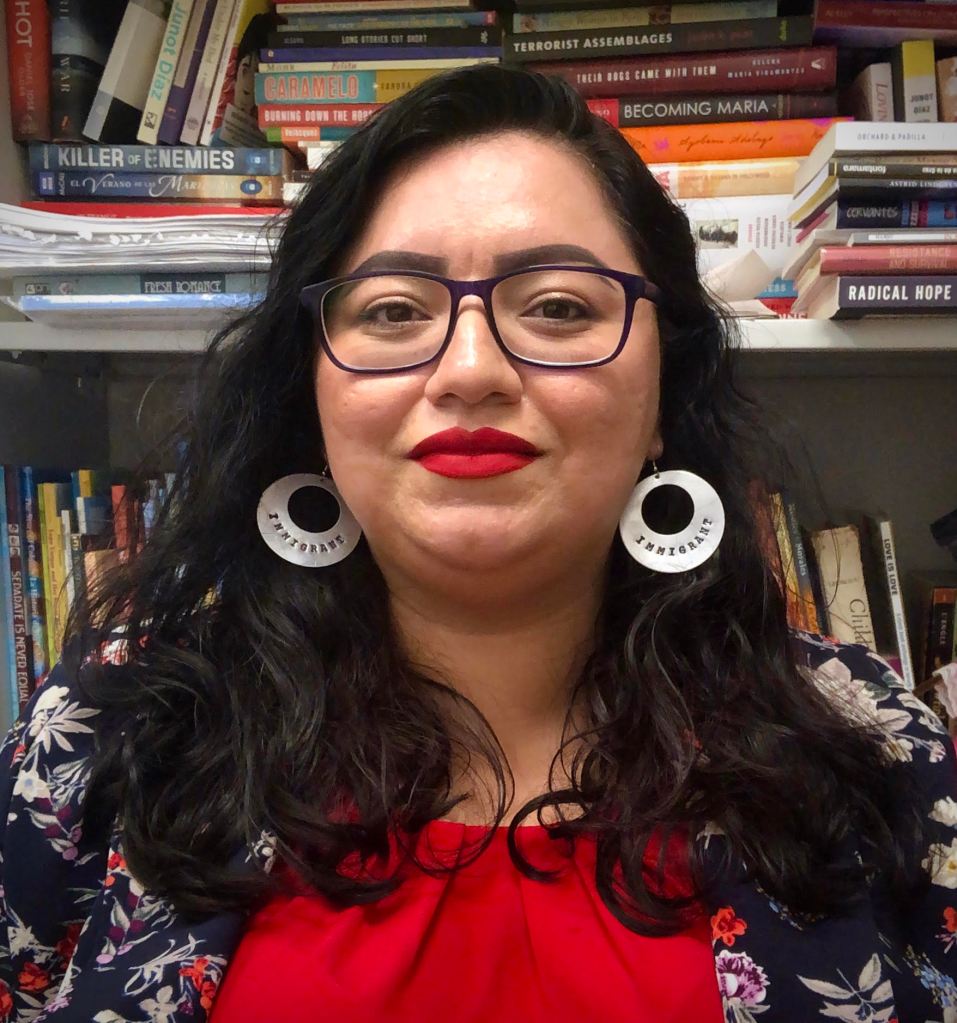
ABOUT THE REVIEWERSSonia Alejandra Rodriguez, PhD is an Associate Professor of English at LaGuardia Community College (CUNY) where she teaches composition, literature, and creative writing. Her academic research focuses on decolonial healing in Latinx children’s and young adult literature. Sonia is a Mellon Emerging Faculty Leader.

.

.

.

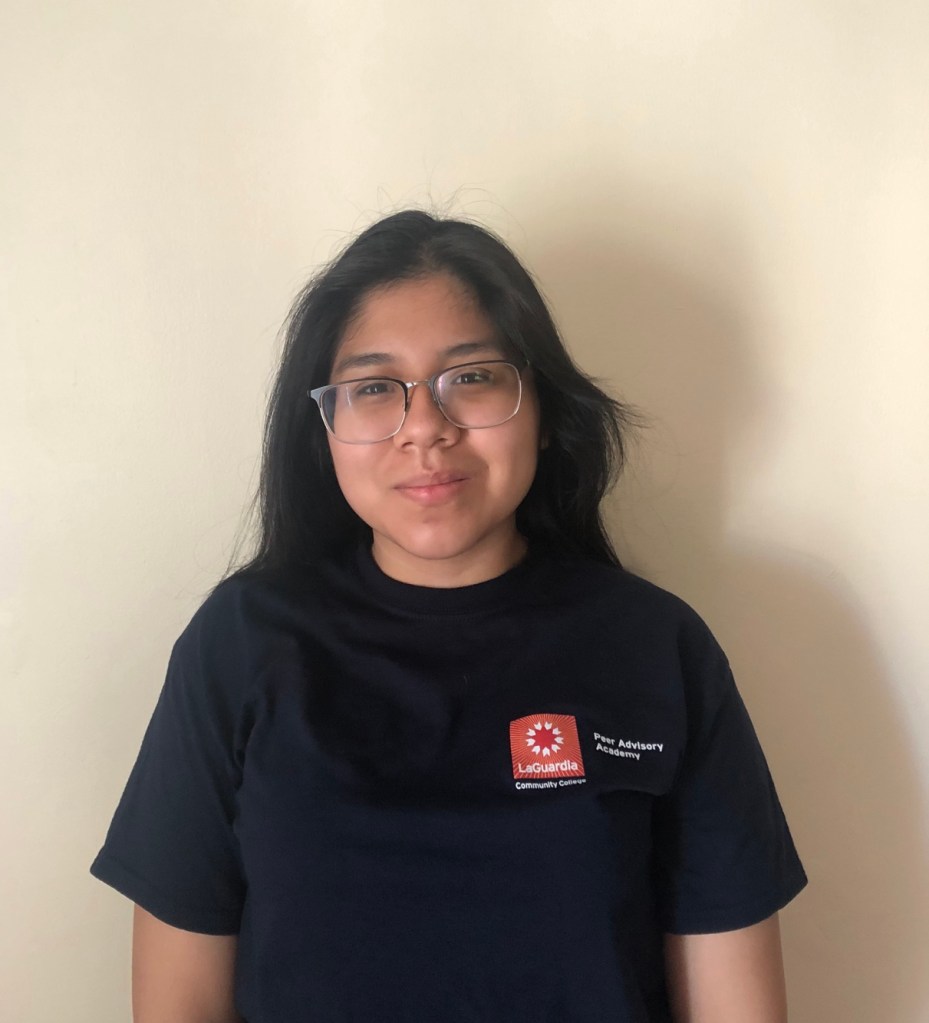
Ingrid Campos is a 19-year-old college student interested in Latinx Literature. After graduating from LaGuardia Community College (CUNY) this year with an associates in Writing and Literature, she will continue her studies at Queens College to earn her Bachelors in English Education 7-12 . Ingrid was born and raised in Queens, New York. As a Mexican-American living in Queens and graduating from the public school system, Ingrid is inspired to become a high school teacher. One of her main goals is to center academic curriculums around more diversity and inclusivity towards Black and Brown students.


Celebrating 25 Years of the Pura Belpré Award: A Conversation with Yuyi Morales and Donna Barba Higuera

.

We are an affiliate with Indiebound and Bookshop. If If you make a purchase through these links, at no additional cost to you, we will earn a small commission.

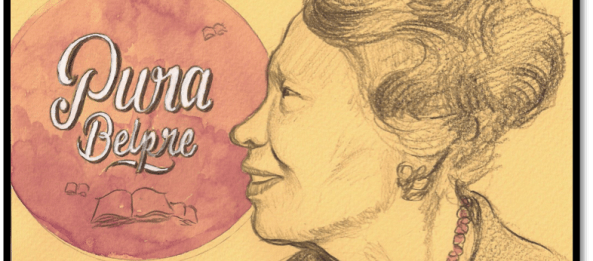
The Pura Belpré Award is named after Pura Belpré, the first Latina librarian at the New York Public Library. The Pura Belpré Award, established in 1996, is presented annually to a Latinx writer and illustrator whose work best portrays, affirms, and celebrates the Latino cultural experience in an outstanding work of literature for children and youth.

We have been marking the award’s 25th anniversary in different ways on the blog. Today, Dr. Sonia Rodriguez and Cecilia Cackley talk with Yuyi Morales and Donna Barba Higuera.

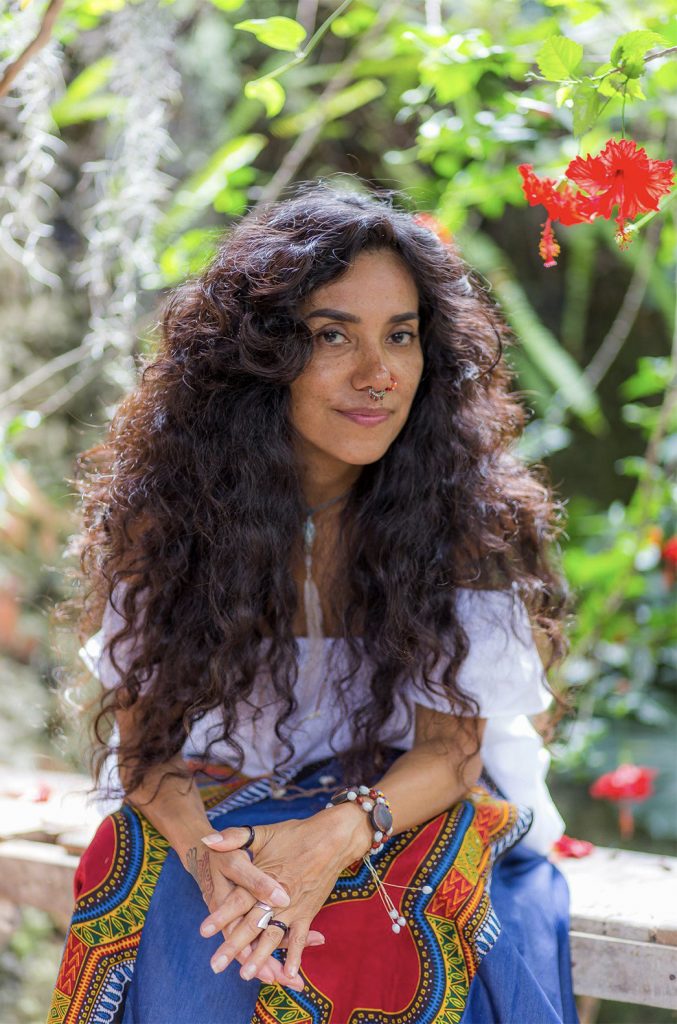
YUYI MORALES is a Mexican author, illustrator, artist, and puppet maker. She has a bachelor’s degree in Psychology and Physical Education from the University of Xalapa, México and used to host her own Spanish-language radio program for children in San Francisco, California. She has won numerous awards for her children’s books, including the Caldecott Honor for Viva Frida and the Tomás Rivera Mexican American Children’s Book Award for Just a Minute: A Trickster Tale and Counting Book (2004) and Los Gatos Black on Halloween (2008). Yuyi has also won multiple Pura Belpré Author and Illustrator awards and honors:

  • Just a Minute: A Trickster Tale and Counting Book (2004 illustrator award)
  • Harvesting Hope: The Story of Cesar Chavez (2004 illustrator honor)
  • Los Gatos Black on Halloween (2008 illustrator award)
  • Just in Case: A Trickster Tale and Spanish Alphabet Book (2009 author honor)
  • Just in Case: A Trickster Tale and Spanish Alphabet Book (2009 illustrator award)
  • My Abuelita (2010 illustrator honor)
  • Niño Wrestles the World (2014 illustrator award)
  • Viva Frida (2015 illustrator award)
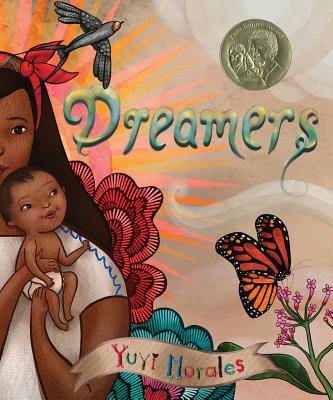
  • Dreamers (2019 illustrator award)

HiRes_Barba Higuera_3590.jpg

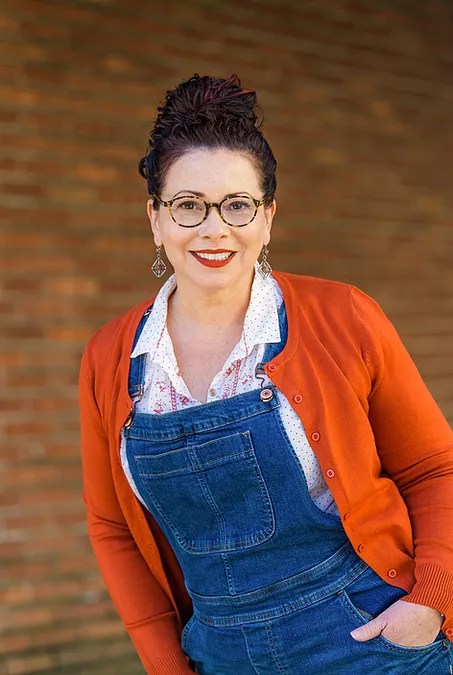
DONNA BARBA HIGUERA grew up in central California surrounded by agricultural and oil fields. As a child, rather than dealing with the regular dust devils, she preferred spending recess squirreled away in the janitor’s closet with a good book. Her favorite hobbies were calling dial-a-story over and over again, and sneaking into a restricted cemetery to weave her own spooky tales using the crumbling headstones as inspiration. ​

Donna’s Middle Grade and Picture Books are about kids who find themselves in odd or scary situations.​ From language to cultural differences in being biracial, life can become…complicated. So. like Donna, characters tackle more than just the bizarre things that happen to them in their lives.

Donna likes to write about all things funny, but also sad, and creepy, and magical. If you like those things, she hopes you will read her books!

Donna lives in Washington State with her family, three dogs, and two frogs.

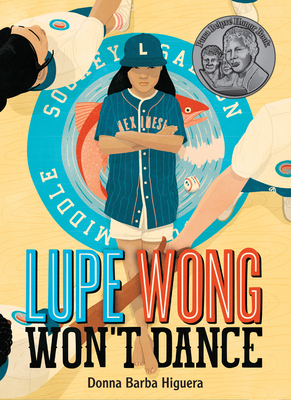
Donna’s novel, Lupe Wong Won’t Dance, won a 2021 Pura Belpré Honor Award.

.

.

.

.

Sonia Alejandra Rodriguez, PhD is an Associate Professor of English at LaGuardia Community College (CUNY) where she teaches composition, literature, and creative writing. Her academic research focuses on decolonial healing in Latinx children’s and young adult literature. Sonia is a Mellon Emerging Faculty Leader.

.

.

.

cecilia-02-original

Cecilia Cackley is a Mexican-American playwright and puppeteer based in Washington, DC. A longtime bookseller, she is currently the Children’s/YA buyer and event coordinator for East City Bookshop on Capitol Hill. Find out more about her art at www.ceciliacackley.com or follow her on Twitter @citymousedc

October 2021 Latinx Book Releases!

.

We are an affiliate with Indiebound and Bookshop. If If you make a purchase through these links, at no additional cost to you, we will earn a small commission.

In addition to listing 2021 titles by/for/about Latinx on our master list, we will remind readers of what’s releasing each month. CONGRATULATIONS to these Latinx creators. Let’s celebrate these October book babies! Please let us know in the comments if we are missing any.

.

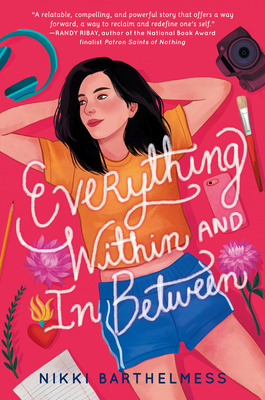
Cover for Everything Within and In Between

EVERYTHING WITHIN AND IN BETWEEN by Nikki Barthelmess (Harper, October 5, 2021). Young Adult.

For Ri Fernández’s entire life, she’s been told, “We live in America and we speak English.” Raised by her strict Mexican grandma, Ri has never been allowed to learn Spanish.

What’s more, her grandma has pulled Ri away from the community where they once belonged. In its place, Ri has grown up trying to fit in among her best friend’s world of mansions and country clubs in an attempt try to live out her grandmother’s version of the “American Dream.”

In her heart, Ri has always believed that her mother, who disappeared when Ri was young, would accept her exactly how she is and not try to turn her into someone she’s never wanted to be. So when Ri finds a long-hidden letter from her mom begging for a visit, she decides to reclaim what Grandma kept from her: her heritage and her mom.

But nothing goes as planned. Her mom isn’t who Ri imagined she would be and finding her doesn’t make Ri’s struggle to navigate the interweaving threads of her mixed heritage any less complicated. Nobody has any idea of who Ri really is—not even Ri herself.

.

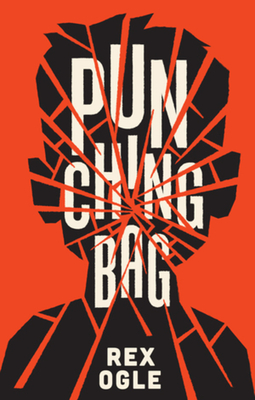
Cover for Punching Bag

PUNCHING BAG by Rex Ogle. (Norton Young Readers, October 5, 2021). Young Adult. Punching Bag is the compelling true story of a high school career defined by poverty and punctuated by outbreaks of domestic abuse. Rex Ogle, who brilliantly mapped his experience of hunger in Free Lunch, here describes his struggle to survive; reflects on his complex, often paradoxical relationship with his passionate, fierce mother; and charts the trajectory of his stepdad’s anger. Hovering over Rex’s story is the talismanic presence of his unborn baby sister.

Through it all, Rex threads moments of grace and humor that act as beacons of light in the darkness. Compulsively readable, beautifully crafted, and authentically told, Punching Bag is a remarkable memoir about one teenager’s cycle of violence, blame, and attempts to forgive his parents—and himself.

.

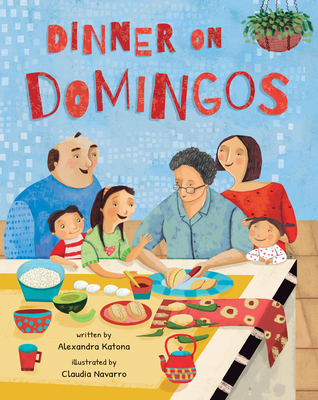
Cover for Dinner on Domingos

DINNER ON DOMINGOS by Alexandra Katona, illustrated by Claudia Navarro (Barefoot Books, October 11, 2021). Picture Book. “This magical home turns a normal Sunday into domingo: the best day of the week.” Warm memories wash over a first-generation Latinx American girl as she experiences a typical Sunday night dinner at her Abuelita’s house. Readers are immersed in the rich ways love is expressed within this home: the delicious smells of Ecuadorian home cooking, dancing, hugging and playing games with aunts, uncles and cousins. As Alejandra thinks about all the good times her family has had there, she decides that she wants to be brave and try speaking Spanish with Abuelita so that they can deepen their bond. Based on the author’s own life, this timely tale reflects the experience of many families.

.

.

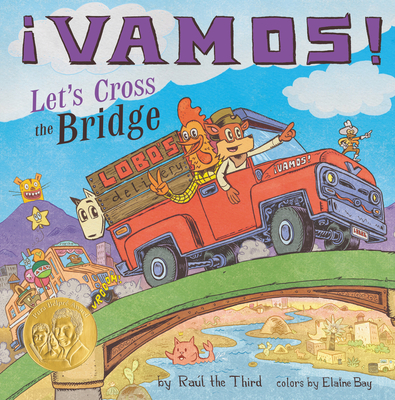
¡VAMOS! Let’s Cross The Bridge by Raúl The Third (Versify, October 12, 2021). Picture Book. Little Lobo and Bernabe are back in this joyful story about coming together and celebrating community. People are always crossing the bridge for work, to visit family, or for play. Some going this way; others going that way. Back and forth they go. With friends on foot and in bicycles, in cars and trucks, the bridge is an incredibly busy place with many different types of vehicles.
 
Little Lobo and his dog Bernabé have a new truck and they are using it to carry party supplies over the bridge with their pals El Toro and La Oink Oink. The line is long and everyone on the bridge is stuck. How will they pass the time?   Eventually everyone comes together for an epic party on the bridge between two different countries. Richard Scarry’s Cars and Trucks and Things That Go gets  Mexican American makeover in this joyful story about coming together.

.

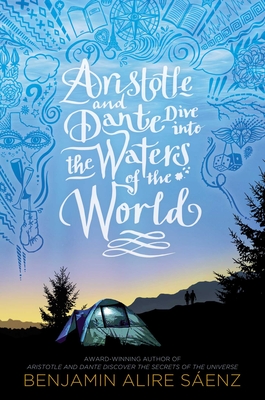
ARISTOTLE AND DANTE DIVE INTO THE WATERS OF THE WORLD by Benjamin Alire Sáenz (Simon & Schuster Books for Young Readers, October 12, 2021). Young Adult. In Aristotle and Dante Discover the Secrets of the Universe, two boys in a border town fell in love. Now, they must discover what it means to stay in love and build a relationship in a world that seems to challenge their very existence.

Ari has spent all of high school burying who he really is, staying silent and invisible. He expected his senior year to be the same. But something in him cracked open when he fell in love with Dante, and he can’t go back. Suddenly he finds himself reaching out to new friends, standing up to bullies of all kinds, and making his voice heard. And, always, there is Dante, dreamy, witty Dante, who can get on Ari’s nerves and fill him with desire all at once.

The boys are determined to forge a path for themselves in a world that doesn’t understand them. But when Ari is faced with a shocking loss, he’ll have to fight like never before to create a life that is truthfully, joyfully his own.

.

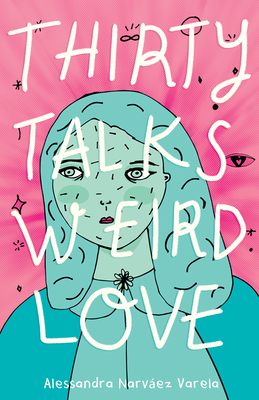
THIRTY TALKS WEIRD LOVE by Alessandra Narváez Varela (Cinco Puntos Press, October 12, 2021). Young Adult. Out of nowhere, a lady comes up to Anamaria and says she’s her, from the future. But Anamaria’s thirteen, she knows better than to talk to some weirdo stranger. Girls need to be careful, especially in Ciudad Juárez, Mexico–it’s the 90’s and fear is overtaking her beloved city as cases of kidnapped girls and women become alarmingly common. This thirty-year-old “future” lady doesn’t seem to be dangerous, but she won’t stop bothering her, switching between cheesy Hallmark advice about being kind to yourself, and some mysterious talk about saving a girl.

Anamaria definitely doesn’t need any saving, she’s doing just fine. She works hard at her strict, grade-obsessed middle school–so hard that she hardly gets any sleep; so hard that the stress makes her snap not just at mean girls but even her own (few) friends; so hard that when she does sleep she dreams about dying–but she just wants to do the best she can so she can grow up to be successful. Maybe Thirty’s right. Maybe she’s not supposed to be so exhausted with her life, but how can she ask for help when her city is mourning the much bigger tragedy of its stolen girls?

.

Cover for Concealed

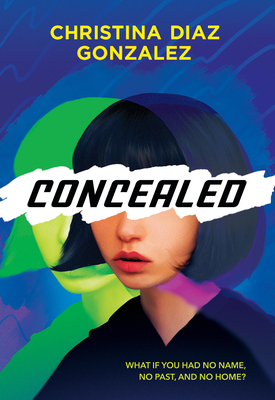
CONCEALED by Christina Diaz Gonzalez (Scholastic Press, October 19, 2021). Middle Grade. Katrina believes that she and her parents are part of the Witness Protection Program. That’s why they keep switching towns, and names, and identities… right?

But when her father disappears, Katrina learns that she’s the reason they’ve been hiding all these years. And it’s not just her identity that is called into question-but her very humanity.

.

.

.

.

.

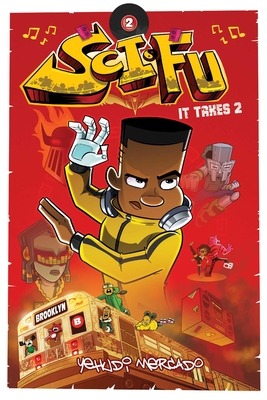
SCI-FU: IT TAKES 2 written and illustrated by Yehudi Mercado (Oni Press, October 19, 2021). Graphic Novel. Wax, aspiring DJ and sci-fu master-in-training, made it back safely from the alien robot planet of Discopia, where he defeated the Five Deadly Dangers and became the rightful king of Discopia. He doesn’t want the crown, though. He just wants things to go back to normal. Wax and his crew thought the robot trouble was behind them, but strange creatures have been showing up in Brooklyn, and Wax is determined to take care of them once and for all. Little does he know, there’s a new villain in Discopia, and she’ll do anything to take the crown from Wax. Wax starts to worry he doesn’t have what it takes to protect his family, friends, and all of Brooklyn from the new threats. Wax will need to kick his hip-hop and sci-fu training into high gear—and learn to rely on his family and friends for help—if he’s going to have a shot at saving his neighborhood.

.

Cover for The Witch Owl Parliament

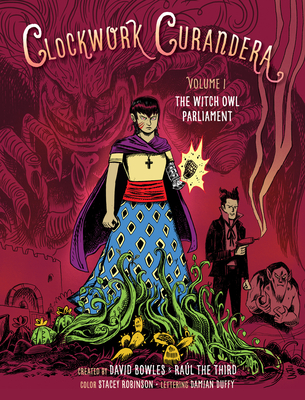
THE WITCH OWL PARLIAMENT by David Bowles and Raúl the Third. (Tu Books, October 19, 2021). Graphic Novel. Discover a graphic novel unlike any other–a brilliant steampunk reimagining of Frankenstein set in colonial Mexico.

In the Republic of Santander, non-Christian magic is frowned upon, if not outright prohibited. But when Cristina Franco, an apprentice shaman, is killed by witch owls, her brother Enrique cannot let her go. With forbidden alchemy and engineering, Enrique brings her back to life: part human, part machine. Though her very existence is an abomination to Santander’s citizens, Cristina vows to use her new abilities to protect her country from attack.

With help from a handsome skinwalker named Mateo, Cristina and Enrique track down the witch owl coven and uncover a sinister plot to bring Santander under the rule of the Witch Owl Parliament, whose legendary cruelty would dismantle the country’s hard-won freedoms. At the same time, Indigenous folks and immigrants are disappearing from Santander–including Enrique’s beloved, Gaspar. Could the attacks and the disappearances be related? As the witch owls attack more trains and more refugees go missing, the trio must uncover the witch owls’ origins to understand their weakness.

Energetic illustrations by Pura Belpr Award winner Ra l the Third bring to life the words of award-winning author and poet David Bowles. Don’t miss this amazing first volume of the Clockwork Curandera trilogy.

.

Cover for I'll Hold Your Hand

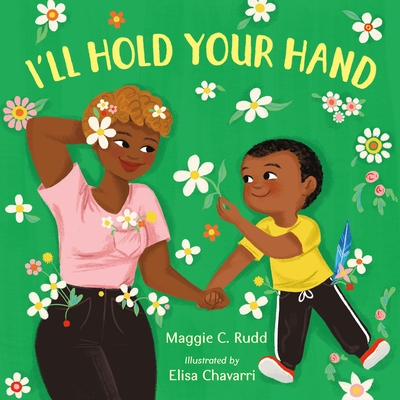
I’LL HOLD YOUR HAND by Maggie C. Rudd, illustrated by Elisa Chavarri (Farrar, Straus and Giroux BYR, October 26, 2021). Picture BookI’ll Hold Your Hand celebrates the unbreakable bond of family, and all the ways our actions can say “I love you” louder than words.

.

.

.

.

.

.

Cover for Miosotis Flores Never Forgets

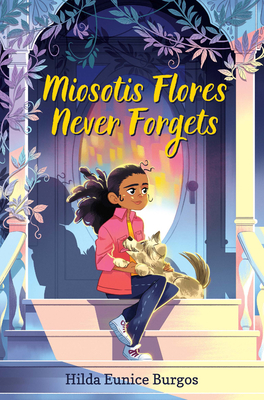
MIOSOTIS FLORES NEVER FORGETS by Hilda Eunice Burgos (Tu Books, October 26, 2021). Middle Grade. Miosotis Flores is excited about three things: fostering rescue dogs, goofy horror movies, and her sister Amarilis’s upcoming wedding. School? Not on that list. But her papi cares about school more than anything else, so they strike a deal: If Miosotis improves her grades in two classes, she can adopt a dog of her own in the summer.

Miosotis dives into her schoolwork, and into nurturing a fearful little pup called Freckles. Could he become her forever dog? At the same time, she notices Amarilis behaving strangely–wearing thick clothes in springtime, dropping her friends in favor of her fianc , even avoiding Miosotis and the rest of their family.

When she finally discovers her sister’s secret, Miosotis faces some difficult choices. What do you do if someone is in danger, but doesn’t want your help? When should you ask for support, and when should you try to handle things on your own? And what ultimately matters most–what Miosotis wants, or what’s right for the ones she loves?

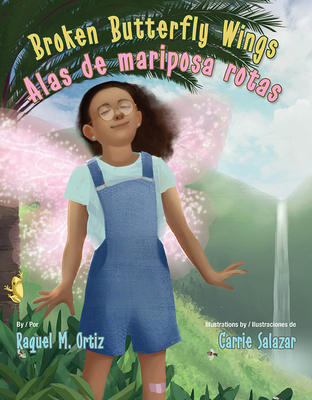
Cover for Broken Butterfly Wings / Alas de Mariposa Rotas

BROKEN BUTTERFLY WINGS / Alas De Mariposa Rotas by Raquel M. Ortiz, illustrated by Carrie Salazar (Piñata Books, October 31, 2021). Picture Book. Gabriela is super excited when her gift from Titi Sylvia finally arrives. She loves the colorful, glittery butterfly wings! She stands in the middle of her room and flaps and flaps her new wings, but nothing happens. She jumps off her bed, vigorously moving the wings up and down, but again, nada. She hops down the hallway and the stairs, but she still can’t fly!

Disappointed, Gabriela goes to the garage, digs into her father’s toolbox and sets about trying to fix the broken butterfly wings. Maybe she can add a battery or an engine. Her father has a better idea, though, and encourages her to close her eyes and think about where she would like to fly. Soon she is envisioning El Yunque, a rainforest on the island of Puerto Rico that is full of tall green trees, humming waterfalls and chattering birds. She can even hear the coquí, a tiny tree frog that lives only on the island, singing its special song: coquí-coquí.

Demonstrating the joy found in using one’s imagination, this bilingual picture book depicts a young girl drawing on her senses—smell, hearing, sight—to return to a beloved place. Kids will appreciate the beauty of the rainforest’s birds, frogs and other natural wonders while admiring a strong girl willing to create solutions to problems.

.

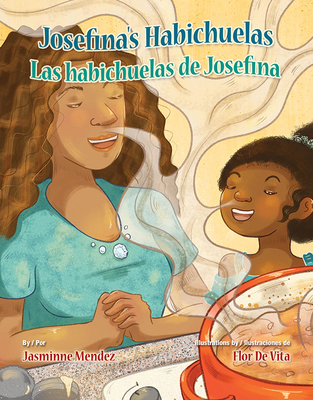
Cover for Josefina's Habichuelas / Las Habichuelas de Josefina

JOSEFINA’S HABICHUELAS / Las Habichuelas De Josefina by Jasminne Mendez, illustrated by Flor de Vita, translated by Adnaloy Espinosa (Piñata Books, October 31, 2021). Picture Book. Like all kids, Josefina loves to eat sweets. She loves warm chocolate chip cookies right out of the oven, cupcakes and candy! One night, while eating a piece of flan, Mami asks her to consider giving up sweets for Lent, the 40 days leading up to Easter. “That’s impossible!” Josefina says. When Mami promises to teach her how to make her favorite dessert, habichuelas con dulce, she agrees to give it a try.

Josefina can’t wait to end her fast and eat the delicious sweet cream beans, her family’s traditional Easter dessert. While she and her mom, tías and abuela prepare the dish, they dance to merengue music and tell stories about life back in the Dominican Republic. The kitchen fills with the aromatic smells of cinnamon and sugar, but it’s the feelings of love and happiness Josefina will never forget. On Easter Sunday, when the family eats the special dessert she prepared, the girl’s grandmother proclaims, “It’s the best pot of habichuelas con dulce I’ve tasted in my life!”

This heart-warming, bilingual picture book for children shares a universal story all kids can relate to—learning about one’s culture through food, music and family stories—while focusing on a cultural tradition specific to the Dominican Republic. As a bonus, the book includes the recipe for this special dessert—in both English and Spanish!

.

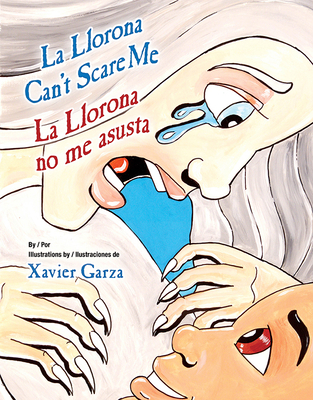
Cover for La Llorona Can't Scare Me / La Llorona No Me Asusta

LA LLORONA CAN’T SCARE ME / La Llorona no me asusta by Xavier Garza (Piñata Books, October 31, 2021). Picture Book. Little Damian is getting ready for bed, and the spooky monster called La Llorona is hollering up a storm outside his bedroom window. But he’s not afraid. “You can’t scare me, silly Llorona,” says Damian, “and neither can your monster friends!”

When evil-looking witch owls fly around his room and little green duendes, or goblins, make creepy noises under his bed, he’s still not frightened. Not even a little bit. The Donkey Lady, a chupacabras and even some little devils parade through his room, but Damian still isn’t afraid. A witch casting spells, a ghost rattling its chains, a cucuy with a burlap bag to catch him … nada. None of them can terrify brave little Damian. How can a little boy like him be so fearless?!?

No one knows it, but Damian has a secret weapon: a night light shaped like a mighty wrestler wearing a silver mask. When he plugs it in, its bright light terrifies all the monsters and sends them running for a place to hide! Touching on issues such as bedtime rituals and nighttime terrors, children ages 4-8 will enjoy this entertaining story that features creepy creatures familiar to many Hispanic kids.

.

VINCENT VENTURA AND THE CURSE OF THE WEEPING WOMAN / VINCENT VENTURA Y LA MALDICIÓN DE LA LLORONA by Xavier Garza ((Piñata Books, October 31, 2021). Middle Grade. Vincent Ventura, monster fighter extraordinaire, can’t believe the house at 666 Duende Street has attracted yet another creepy creature! In fact, this time there are several unusual beings, including two boys who disappear and reappear—are they ghosts?!? And the lady in white with fiery glowing eyes who calls out for them? Is she … La Llorona?!? And who is the other young woman?

The next day at school, Vincent and his cousins Bobby and Michelle meet a new substitute teacher, Ms. Malin Che, who just moved into the haunted house. What is her connection to La Llorona and the unusual children? At least this time, the kids have new friends to help solve the mystery: Sayer, who they helped in a previous battle with trolls, or duendes, and Zulema, a witch owl who was the target of evil witches.

As the relationship between Vincent and Zulema evolves, becoming more complex and exciting, so too does the current case! Two new beings turn up: a hideous figure dressed as a Mexican cowboy whose face is devoid of flesh and a second spooky woman! Ms. Che, a Latin American folklore expert, tells them about el Charro Negro and the weeping women collectively called Cihuateteos. This bilingual book for intermediate readers, the fourth installment in Garza’s Monster Fighter Mystery series, follows the nail-biting battle for the souls of two boys! Will Vincent and his friends be able to save them from the monsters’ clutches?!?

.

CHRONICLES OF A LUCHADOR by Ray Villareal (Piñata Books, October 31, 2021). Young Adult. Jesse Baron, the son of the American Championship Wrestling star known as the Angel of Death, is about to graduate from high school. His parents expect him to attend the University of Texas and study mechanical engineering, something he’s not interested in.

The young man knows he would be a natural at professional wrestling, and with his father’s help he might even reach the same level of fame and success. But the Angel of Death, retired from the ACW and running a wrestling promotion and school, refuses to train his son for fear he will choose sports entertainment over a college degree. Jesse decides that once he gets settled at UT, he’s going to look for another place to wrestle. To keep his father from finding out, he’ll promote himself as a masked luchador from Oaxaca, Mexico, named Máscara de la Muerte. When no one will hire him, Jesse reluctantly considers joining a lucha libre organization, even though he doesn’t speak Spanish. Will the fans and his fellow wrestlers see him as a luchador—or just a gringo with a mask?

In this stand-alone sequel to his acclaimed novels, My Father, the Angel of Death and Body Slammed!, Ray Villareal continues his exploration of a teenager growing into manhood against the backdrop of the wrestling world.

.

CHANCES IN DISGUISE by Diana J. Noble (Piñata Books, October 31, 2021). Young Adult. In this sequel to Evangelina Takes Flight, the young girl who left her home during the Mexican Revolution to start over in a small Texas border town is now seventeen. She has had several years of medical training with her mentor, Doc Taylor, but when a doctor from a neighboring town finds her helping an Anglo woman in labor, he is enraged. He calls her a dirty Mexican and kicks her out. The next day, Evangelina is arrested for murder.

The racist sheriff and many of the townspeople believe Mexicans are inferior and that Evangelina must be guilty of using witchcraft to kill the pregnant woman. But she isn’t all alone. Doc Taylor believes in her innocence, as does Cora Cavanaugh, the spirited daughter of a wealthy businessman. And there’s Selim Njaim, a young Muslim with whom she has a forbidden relationship. Soon La Liga Protectora Mexicana assigns someone to represent her, but will Joaquín Castañeda be able to convince the jury that Evangelina is not a murderer?

Set in Texas in 1915, this eye-opening historical novel for young adults reveals the racial inequity in the justice system, the discrimination experienced by Mexicans and other non-whites and the limitations placed on women. Teens will relate to the theme of finding confidence and bravery in times of uncertainty, while learning about the harassment, torture and killing of innocent Mexicans and Tejanos in the early part of the twentieth century.

Celebrating 25 Years of the Pura Belpré Award: A Conversation with Rebecca Balcárcel and Adrianna Cuevas

.

We are an affiliate with Indiebound and Bookshop. If If you make a purchase through these links, at no additional cost to you, we will earn a small commission.

The Pura Belpré Award is named after Pura Belpré, the first Latina librarian at the New York Public Library. The Pura Belpré Award, established in 1996, is presented annually to a Latinx writer and illustrator whose work best portrays, affirms, and celebrates the Latino cultural experience in an outstanding work of literature for children and youth.

We have been marking the award’s 25th anniversary in different ways on the blog. Today, Dr. Sonia Rodriguez and Cecilia Cackley talk with Rebecca Balcárcel and Adrianna Cuevas.

Rebecca Balcárcel’s novel, THE OTHER HALF OF HAPPY (2019), is a 2020 Pura Belpré Honor Book, an ALSC Notable Book, and was called “a must-have for all library collections” by School Library Journal. She serves the students of Tarrant County College as Associate Professor of English. Look for her next novel, SHINE ON, LUZ VÉLIZ!, about a girl who codes, May 3, 2022.

.

.

.

.

ACuevasAuthorPhoto

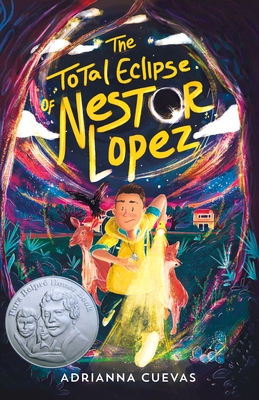
Adrianna Cuevas is a first-generation Cuban-American originally from Miami, Florida. A former Spanish and ESOL teacher, Adrianna currently resides in Austin, Texas with her husband and son. When not working with TOEFL students, wrangling multiple pets including an axolotl, and practicing fencing with her son, she is writing her next middle grade novel. Her novel, The Total Eclipse of Nestor Lopez won a 2021 Pura Belpré Honor.

.

.

.

.

.

.

Sonia Alejandra Rodriguez, PhD is an Associate Professor of English at LaGuardia Community College (CUNY) where she teaches composition, literature, and creative writing. Her academic research focuses on decolonial healing in Latinx children’s and young adult literature. Sonia is a Mellon Emerging Faculty Leader.

.

.

.

cecilia-02-original

Cecilia Cackley is a Mexican-American playwright and puppeteer based in Washington, DC. A longtime bookseller, she is currently the Children’s/YA buyer and event coordinator for East City Bookshop on Capitol Hill. Find out more about her art at www.ceciliacackley.com or follow her on Twitter @citymousedc

Spotlight on Middle Grade Authors: Karla Arenas Valenti

.

We are an affiliate with Indiebound and Bookshop. If If you make a purchase through these links, at no additional cost to you, we will earn a small commission.

By Cindy L. Rodriguez

This is an occasional series about middle grade Latinx authors. We decided to shine a spotlight on middle grade writers and their novels because, often, they are “stuck in the middle”–sandwiched between and overlooked for picture books and young adult novels. The middle grades are a crucial time in child development socially, emotionally, and academically. The books that speak to these young readers tend to have lots of heart and great voices that capture all that is awkward and brilliant about that time.
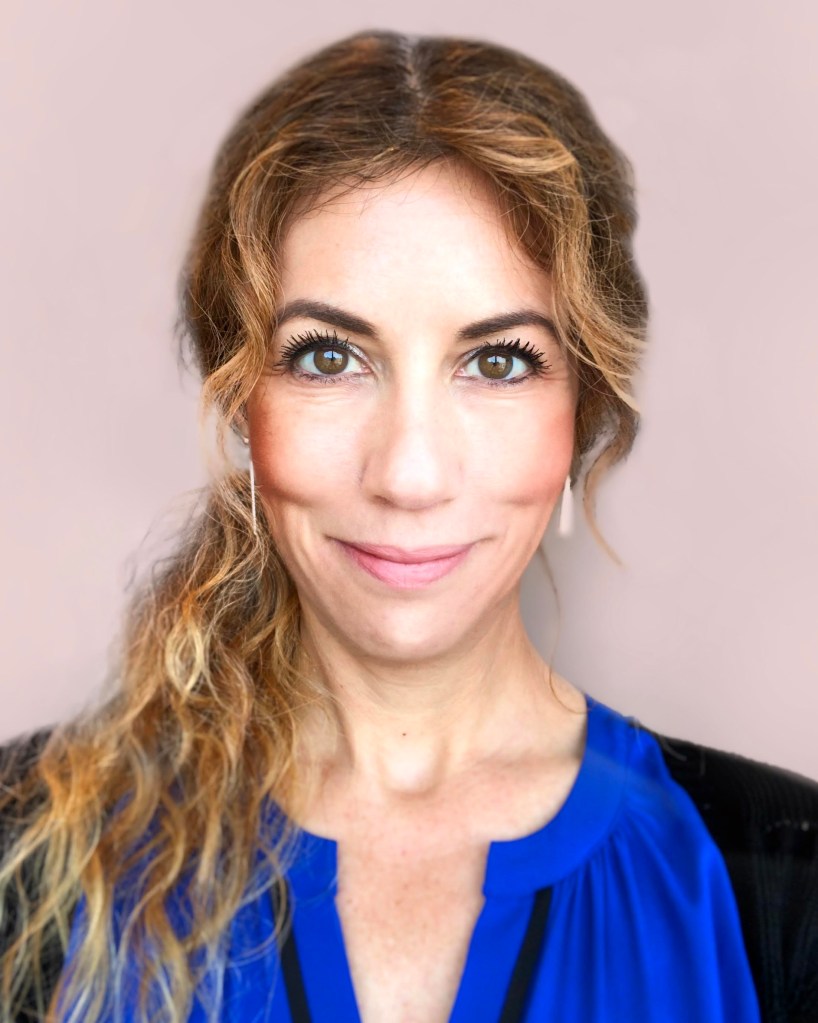
Today, we highlight Karla Arenas Valenti.

Karla Arenas Valenti is an author of picture books and middle grade novels. She loves writing stories that take readers into unexpected places (emotionally and intellectually), pushing them to explore the boundaries of what they know about themselves and the world around them.  She also loves playing with magical realism, bending the worlds of her stories to create intriguing spaces for readers to explore.

Karla is the creator of the “My Super Science Heroes” series (Sourcebooks), an exploration of key historical figures depicting science as it truly is: an epic adventure with super heroes, super evil, and super science powers! Her picture book, Maria Mariposa (Chronicle) is a bilingual story about a girl who receives a gift from her home in Mexico on her first day of school in the U.S.—and how she finds a way to share the magic of that gift with everyone around her.

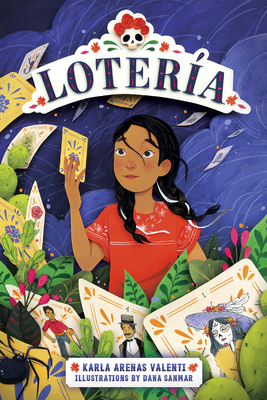
Karla’s debut middle grade novel, Loteria (Knopf) takes readers deep into the heart of Mexican culture, mythology, and lore in a story about free will and a simple game of chance with and life-and-death stakes. Karla lives in the Chicagoland area with her husband and three kids, two cats, and hundreds of books.

Here is the publisher’s description of Lotería, Karla’s middle grade debut, which just released on Tuesday!

HAPPY BOOK BIRTHDAY!!

Cover for Lotería

The turn of a card could change your destiny in this captivating middle grade adventure based on the Lotería card game and perfect for fans of Coco. While searching for her missing cousin, a young girl is transported to a mythical kingdom, becoming entangled in a perilous game of chance.

In the hottest hour of the hottest day of the year, a fateful wind blows into Oaxaca City. It whistles down cobbled streets and rustles the jacaranda trees before slipping into the window of an eleven-year-old girl named Clara. Unbeknownst to her, Clara has been marked for la Lotería.

Life and Death deal the Lotería cards but once a year, and the stakes could not be higher. Every card reveals a new twist in Clara’s fate—a scorpion, an arrow, a blood-red rose. If Life wins, Clara will live to a ripe old age. If Death prevails, she’ll flicker out like a candle. 

But Clara knows none of this. All she knows is that her young cousin Esteban has vanished, and she’ll do whatever it takes to save him, traveling to the mythical Kingdom of Las Pozas, where every action has a price, and every choice has consequences. And though it seems her fate is sealed, Clara just might have what it takes to shatter the game and choose a new path.

Karla Arenas Valenti weaves an adventure steeped in magic and mythology—gorgeously illustrated by Dana Sanmar—exploring the notion of free will in a world where fate holds all the cards.

.

Karen Arenas Valenti

1. Who or what inspired you to become a writer?

I have always been a writer. In fact, I have been writing stories since I was in kindergarten. That said, I wasn’t able to truly focus on becoming an Author until about ten years ago. I loved writing, and I knew I had “some” talent. However, I still had a lot to learn about the craft of storytelling and kidlit publishing in general. SCBWI was invaluable in this regard, as was connecting with a community of writers (in my case through Julie Hedlund’s 12×12 Picture Book Challenge).

2. Why do you choose to write middle grade novels?

I love writing for middle graders because they are in a wonderful phase of transformation where they are growing into a new self, conscious of how big the world is and how much more meaningful their role can be. This can be at once empowering, but also so terribly intimidating. To put a book in a reader’s hand at this point is to give them a tool of self-discovery that can have a great impact on their lives. I am honored to be a part of that process. I also love writing about middle graders, for they see a world that is at once real but also teeming with magic (magical realism!). This is my tribe.

3. What are some of your favorite middle grade novels?

This is a tough question to answer, so perhaps I can answer a slightly different one – favorite 2020 and 2021 MG novels? In no particular order, I loved WHEN YOU TRAP A TIGER (Tae Keller), ECHO MOUNTAIN (Lauren Wolk, and also BEYOND THE BRIGHT SEA which I am now reading), WOLF FOR A SPELL (Karah Sutton), MAÑANALAND (Pam Muñoz Ryan), RED, WHITE AND WHOLE (Rajani LaRocca), and THE NIGHT DIARY (Veera Hiranandani).

4. If you could give your middle-grade self some advice, what would it be?

You’re right to feel confused and unmoored. This is a time of transition and growth. It will pass, and you will find a new version of yourself. Which is not to say this isn’t the most important thing happening to you right now! It is. You are in the middle of a momentous event: you are becoming.  

5. Please finish this sentence: Middle grade novels are important because…

Middle grade novels are important because they allow readers to journey through experiences that challenge them to grow and evolve in important ways within the confines of a safe space. That safe space is crucial, because it gives readers the confidence to lose themselves and experiment with the new ideas, feelings, and selves that will shape them.

.

.

.

photo of Cindy L. Rodriguez by Saryna A. Jones

Cindy L. Rodriguez is a former journalist turned teacher and children’s author. She is a middle school reading specialist in Connecticut, where she lives with her family. Cindy is a U.S.-born Latina of Puerto Rican and Brazilian descent. Her debut contemporary YA novel is When Reason Breaks (Bloomsbury 2015). She also has an essay in Life Inside My Mind (Simon Pulse 2018) and wrote the text for three Jake Maddox books: Volleyball Ace (2020), Drill Team Determination (2021), and Gymnastics Payback (2021). Upcoming books are The Doomed Search for the Lost City of Z (Capstone, 2022), and Three Pockets Full: A story of love, family, and tradition (Cardinal Rule Press, 2022). She can be found on FacebookTwitter, and Goodreads.