2014 Reading Challenge: May Update

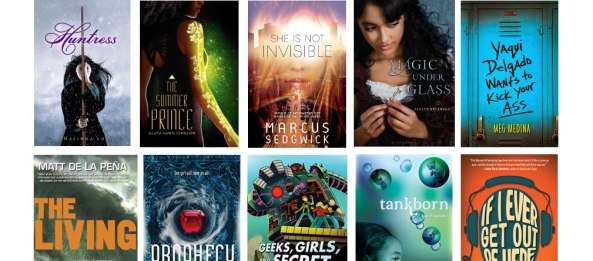
Students are counting down the days to the end of the school year, but teachers and librarians are making sure they don’t leave the building without summer reading lists. Although educators offer suggestions, be sure to review the lists of titles with an eye out for diversity. If the lists lack a wide range of topics and diverse characters, then seek out those books. Below are some suggestions from readers participating in our 2014 Latin@ in Kid Lit Reading Challenge. Thank you to everyone for participating in the challenge and purposely selecting books by/about/for Latin@s. Remember, you can join the challenge any time during the year, and you’re not required to review–only read and enjoy! If you do post a review somewhere, we will link it to the book covers below. If you choose not to review, we will link the covers to Goodreads.

Also, keep in mind that June is National Caribbean-American Heritage Month! Here are a few suggestions of authors known to write about people from the Caribbean: Julia Alvarez (Dominican Republic), Margarita Engle (Cuba), Eric Velazquez (Puerto Rico), Christina Diaz Gonzalez (Cuba), Lynn Joseph (Dominican Republic, Trinidad), Judith Ortiz Cofer (Puerto Rico), and Nancy Osa (Cuba). Happy reading!

A note to participants: As you complete books, please send us the information, so we can share what you’re reading each month.

18405521  13591731  18106361  13231279  2871746  13436375  16670129  437996  18603687  6603032  17290403  7972118  16667896  1011825  1370646  1016493  15893258  6098251  349744  1260346  8101398  15791044  18296043    1660305  1630309  16073069  

Book Review: Gaby, Lost and Found by Angela Cervantes

By Cindy L. Rodriguez

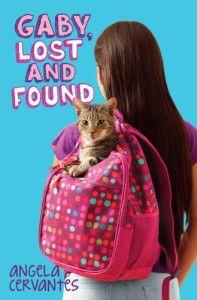
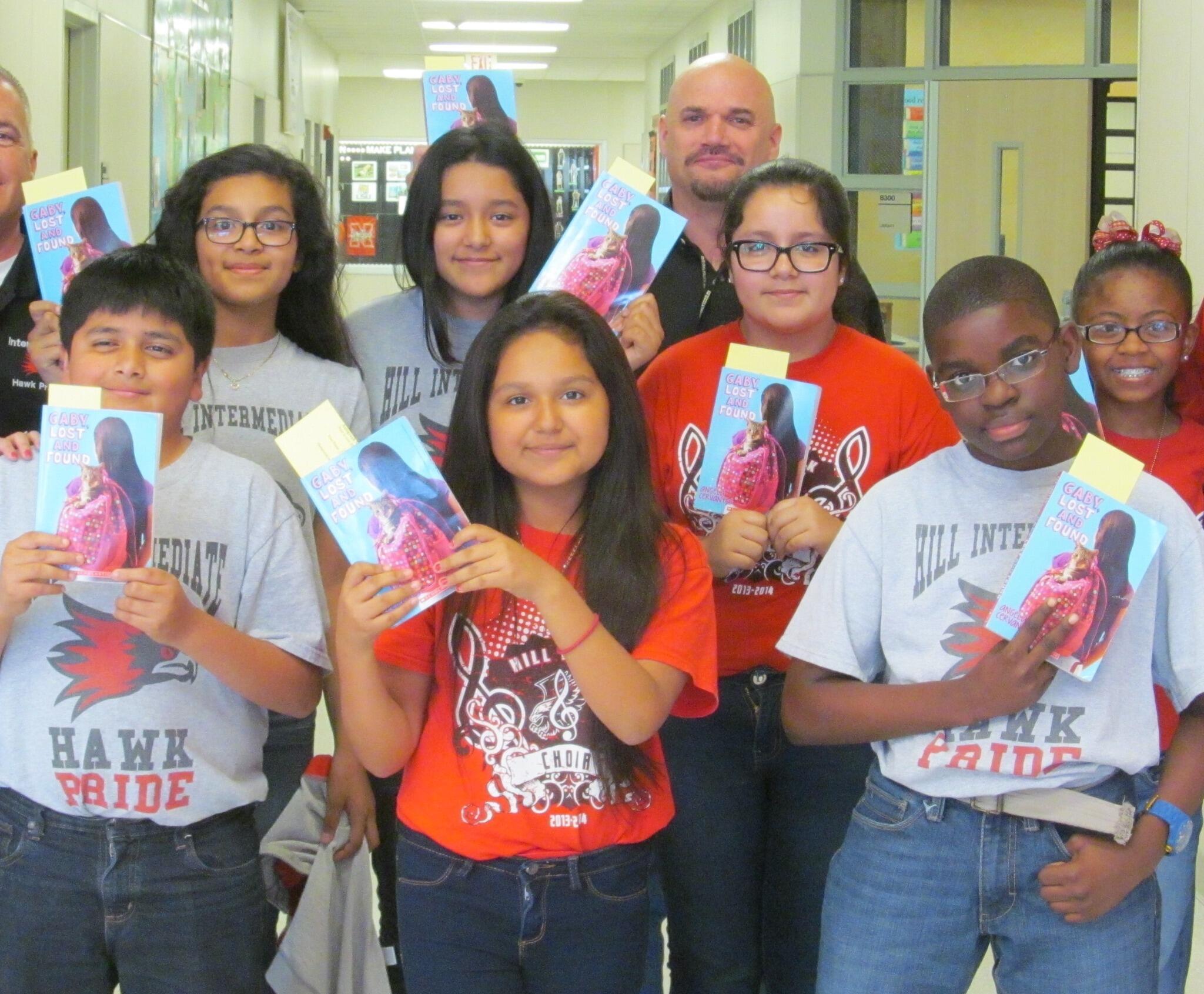
Gaby Lost and FoundDESCRIPTION FROM THE BOOK JACKET: When Gaby Ramirez Howard starts volunteering at the local animal shelter, she takes special pride in writing adoption advertisements. Her flyers help the dogs and cats there find their forever homes: places where they’ll be loved and cared for, no matter what.

Gaby is in need of a forever home herself. Her mother has recently been deported to Honduras and Gaby doesn’t know where to turn. Meanwhile, Gaby’s favorite shelter cat, Feather, needs a new place to live. Gaby would love to adopt her–but if Gaby doesn’t have a place that feels like home to her, how can she help Feather?

MY TWO CENTS: I’m a sucker for stray animals and have more than once scooped up a roaming dog and delivered him to a non-kill animal shelter. So, Angela Cervantes had me from Chapter 1, which places the protagonist Gaby up a tree trying to rescue a cat. From this point on, Cervantes presents Gaby’s story with a great mix of heart-wrenching moments and humor. Some parts of the book are light and soooo middle school–I know; I teach in one–while other parts deal with the more serious issue of deportation and the effects on children when a parent is gone.

Since her mother has been deported to Honduras, Gaby must live with her father, who is ill-equipped to raise a sixth-grade girl. Gaby would much rather live with her best friend Alma and her family. Better yet would be if her mom were able to come back home, but this trip is expensive and dangerous.

Cervantes parallels Gaby’s situation with the sixth-grade class community project at the Furry Friends Animal Shelter. Both the animals and Gaby have less than ideal living arrangements are in need of new permanent homes. During the community service project, Gaby has the special job of writing descriptions of the animals on fliers that will be displayed around town and on the shelter’s website.

Eventually, Gaby writes a flier for herself. In part it reads:

Gaby Ramirez Howard: …Three months ago, my mom was deported, and now I live with my father, who looks at me like I’m just another job he wants to quit. I’m seeking a home where I can invite my best friend over and have a warm breakfast a couple times a week. Waffles and scrambled eggs are my favorite!

GAH! My heart, Angela Cervantes!!

In between the chapters that caused me to clutch my heart and give my daughter random hugs, I literally laughed out loud. Scenes with the four friends–Gaby, Alma, Enrique, and Marcos–are hysterical. In one, Alma, who is trying to train a spirited shelter dog named Spike, tests the commands on the boys. “Back! Down! Sit and stay!” In another scene, three firefighters arrive at the shelter to adopt a dog for the firehouse. Alma says to the other girls, “Let’s go see what’s smoking,” and then the girls nickname each of the cute firefighters: Hottie, Smokey, and Sizzler. Very funny.

If you are a middle school teacher, librarian, or parent, you should have a copy of this book on your shelf. To make it easy for you, Angela Cervantes is giving away a signed copy of Gaby, Lost and Found, along with a poster and T-shirt. Click on the Rafflecopter link here to enter.

TEACHING TIPS: Gaby, Lost and Found could be used in a Language Arts or social studies classroom. In Language Arts, students could track the plot and make predictions along the way about how Gaby’s situation will be resolved. Students could also be creative and write “fliers” for any number of people or things: their siblings, pets, themselves. A social studies could easily use the novel in a unit about the history of immigration in the United States. Ideally, after reading non-fiction texts, students could read a novel-length book–either fiction or narrative nonfiction–that centers on immigration. In addition to Gaby, Lost and Found, teachers could offer books about people from other countries so that students could compare/contrast immigrant experiences.


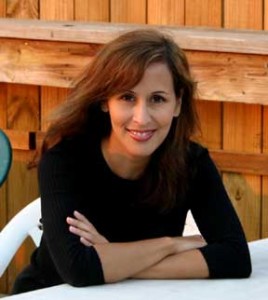
Angela Cervantes

AUTHORAngela Cervantes was born and raised in Kansas, with most of her childhood spent in Topeka in the Mexican-American community of Oakland. Angela has a degree in English and an MBA, and she is the co-founder of Las Poetas, a Chicana poetry group that has developed into the Latino Writers Collective. In 2005, her short story, “Pork Chop Sandwiches,” was published in Chicken Soup for the Latino Soul. In  2007, she won third place for Creative Nonfiction in the Missouri Review’s audio competition for her story “House of Women” and Kansas City Voices’ Best of Prose Award for her short story, “Ten Hail Marys.” In 2008, she was recognized as one of Kansas City’s Emerging Writers by the Kansas City Star Magazine.

Gaby, Lost and Found is her first novel.

FOR MORE INFORMATION ABOUT Gaby, Lost and Found visit your local library or bookstore. Also check out worldcat.org, indiebound.org, goodreads.com, amazon.com, barnesandnoble.com, and Scholastic.

Author Angela Cervantes On Publishing & Her Animal-Loving Latina Protagonist

By Cindy L. Rodriguez

Today, we are thrilled to have a Q&A with author Angela Cervantes, who talks about her debut novel, Gaby, Lost and Found (Scholastic), her advice for pre-published writers, and a little about how she crafted a wonderful middle grade novel that’s both funny and heartbreaking. Angela is also super generous and is offering a signed book, a poster, and a T-shirt to one lucky winner. Click on the Rafflecopter link here or at the end of the post to enter!

Gaby Lost and FoundCR: Since this is your debut novel, can you tell us about your publishing journey. Were there any things you did in particular that, in hindsight, you think were particularly helpful as you pursued an agent and book deal? What advice would you give to pre-published writers?

AC: My middle grade novel, Gaby, Lost and Found has been out almost 10 months now, and I’m still learning things about myself and the publishing journey. In the beginning, when I was a simple wanna-be-Kid Lit author with a manuscript, the idea of facing the publishing industry was scary.If you had met me then, I would have told you that I’d rather pick up a hitchhiker with face tattoos than have to face the world of slush piles and soul-less rejection letters.

Eventually, I realized that if I loved my book enough, I had to be willing to take on rejection. After all, the worst things they can do to you is ignore you completely or reject your work. Tough, but big deal. Every writer in the history of the written world has received a rejection or been passed up at some point, right? If they rejected my work, I was in good company.

I could go on and on with advice for pre-published writers. Never pick up hitchhikers with face tattoos! Really, I’ve learned so much. First, I would start with the very basic: If you’re going to go the traditional publishing route, like I did, then you must finish that manuscript. You have to show the agent something fast when they ask for a partial or full manuscript. My second advice is to take that completed manuscript to a writing critique group. Feedback is crucial. I belong to a critique group called the Firehouse Five (although we are six now) and we meet monthly to provide critique to each other’s work. It’s priceless. My final advice, take your writing-group-critiqued and completed manuscript to a local writers’ conference and sign up for a pitch or first pages sessions with an agent. I met my agent through a writer’s conference. She liked my pitch, but made it very clear there was plenty of work to be done on my manuscript before she’d offer representation. I did the work and I was signed. With her guidance, I made more revisions and it was sent off for submission. Soon, the first rejection arrived. It didn’t kill me. A week or so later, I received an offer for my first novel. Yay!
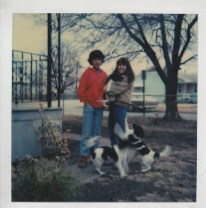
Angela C and brother

From her website: Angela, age 10, with her brother Enrique and their dogs, which were the inspiration for Spike in the novel.

CR: I love how you mixed Gaby’s story with the animals’ stories, how they were both in new situations and looking for new homes. How did you get the idea to address the subject of immigration for a MG audience, using homeless animals as a link to Gaby’s situation?

Thanks, I’m glad you enjoyed it. I really didn’t start with the idea to address the subject of immigration. I’m character-driven in my writing so I started with just Gaby, a funny, smart, and brave girl who is also a serious animal lover like her mom. I think if I had started out subject-driven with the intention to write a book on the issue of immigration, it would have been a much different novel. It would have come across as more lecturing and I don’t like to lecture or be on the receiving end of a lecture. No thank you. And kids don’t want to be lectured to either. At school visits, kids always ask me about deportation, but more in the context of why or how this happened to Gaby. They always tell me that they want Gaby and her mom to be together. They’re invested in Gaby’s happiness. It’s precious.

CR: Even though Gaby is dealing with the serious issue of her mother being away, she is also a “typical” MG girl, laughing and doing silly things with her male and female friends. Was this a conscious decision on your part, to show a range of emotions and not have it be an “issue” book or overly depressing?

AC: It’s funny that you ask that because my original drafts were even more depressing! I pulled a lot out during the revision process because the story was going in all sorts of directions. What got me back on track was again focusing on Gaby and who she was and not what she was going through. Gaby is an eleven year old girl. She loves animals. She loves glitter. She can climb trees and beat the boys at a water balloon fight. Would Gaby be defeated by bullying at school, the loss of her mom, the neglect of her father, and poverty? Or would this young girl rise up, even if she responds with some missteps, and show us what she’s made of? For me that was the only conscious decision on my part in writing this novel. I had to be true to Gaby and not define her by what she was going through, but show where she was going.

CR: Are you an animal lover? Did you have to do any particular research about animal shelters or spend time at one to capture what happens there?

AC: Besides my many years of experience as an animal lover and pet owner, I did visit several local animal shelters for information and inspiration. At the animal shelters, I asked tons of questions, held a lot of cats, wrote a lot of notes and pet a lot of dogs for this book. Why can’t all research be that much fun?

CR: What are you working on now? Can you share what’s next for you?

AC: Sure! I’ve completed my second middle-grade novel and I am now in the throes of revision. Fun stuff! Wish me luck.

Angela Cervantes

Angela Cervantes was born and raised in Kansas, with most of her childhood spent in Topeka in the Mexican-American community of Oakland. Angela has a degree in English and an MBA, and she is the co-founder of Las Poetas, a Chicana poetry group that has developed into the Latino Writers Collective. In 2005, her short story, “Pork Chop Sandwiches,” was published in Chicken Soup for the Latino Soul. In  2007, she won third place for Creative Nonfiction in the Missouri Review’s audio competition for her story “House of Women” and Kansas City Voices’ Best of Prose Award for her short story, “Ten Hail Marys.” In 2008, she was recognized as one of Kansas City’s Emerging Writers by the Kansas City Star Magazine.

Gaby, Lost and Found is her first novel.

Click HERE to enter the giveaway. One winner will receive a signed copy of Gaby, Lost and Found, a poster, and a T-shirt. You can enter for free once each day. A winner will be chosen on Saturday, 5/24/14. Good luck!!

Let’s All Make the #WeNeedDiverseBooks Campaign an Ongoing Movement

By Patrick Flores-Scott

#WeNeedDiverseBooks. The trending hashtag is a channel for conversation around the huge problem of a lack of diversity in children’s literature. The problem has been noted in many recent articles and so have the reasons we need more books by diverse authors and books with complex, real diverse characters.

For many years I was lucky to be a public school teacher in very diverse schools. At different points I was both a general education classroom teacher and a reading specialist. As a classroom teacher, I was able to seek and find the books I wanted my class to hear and read. More often than not, these books had main characters of color. I had the time, energy, resources, and relationships that helped me find great books that my students loved.

My students, however, especially my reluctant readers, were not going to work so hard to find a book that would reflect the cultural, racial, socio-economic realities of their community. They were going to pick the available book, the one closest to their hand when it was time to leave the library, or the trendy book that made them look like they were in the reading “know.”

Embedded image permalink

Author Angela Cervantes posted this picture on Twitter during the #WeNeedDiverseBooks Campaign.

Students need to be able to accidentally stumble their way into a great book that reflects their own background or one that opens their eyes to new characters and communities. They shouldn’t have to work for it. They shouldn’t have to fight for it. Kids have enough on their plate. Yes, some students are going to research authors, seek out new books and reading experiences, challenge their school librarian and make demands. Most fifth graders, however, are just struggling to make it through the day. They end up with the default book… and given the math of the situation, they’re going to walk out with another book by a white author with a white main character. Is this a tragedy? In the moment, no. That default book might be a great one. But this scene takes place over and over each day in most schools in the country and that great book–if the student is lucky–may just be another in a long line of books that reinforces the notion that great books are written by white authors and that white kids are the ones worthy of books written about them.  This notion is a toxic one, regardless of a student’s background.

Children’s books are a piece of a larger pie. A lack of diversity in film and television reinforces the notion that white stories are more relevant than non-white stories. The make-up the Senate (97 out 0f 100 are white) reinforces the notion that non-whites do not have a role in the highest levels of politics. Yes, there is the President, but his cabinet is made up of 70% white males. Kids see this. They see thousands of African American college athletes and they know that, in the vast majority of cases, these athletes are led to battle by white coaches. They know that the percentages of Black and Latino men in prison are crazily out of proportion with the population of Black and Latino men. Kids see all this. They take it in. The perceptions become realities for them.

My wife and I are the proud, exhausted parents of two rambunctious little boys. Their grandparents are Mexican-American on their mom’s side. My parents are white. My dad is from the U.S., my mom a Spanish-speaking Latina from South America. We will raise our boys to be proud of all that they are and proud of all the Latino, Caucasian, African-American, Asian and mixes of the aforementioned that make up their diverse extended family. While we will do our best to teach that the content of one’s character, not the color of one’s skin (one’s gender, sexual orientation, physical ability) is what is important, television, our political and judicial systems, sports…. And even the make-up of CHILDREN’S BOOKS, will send messages that complicate, skew, and even deem our parental message well-meaning, but just wrong.

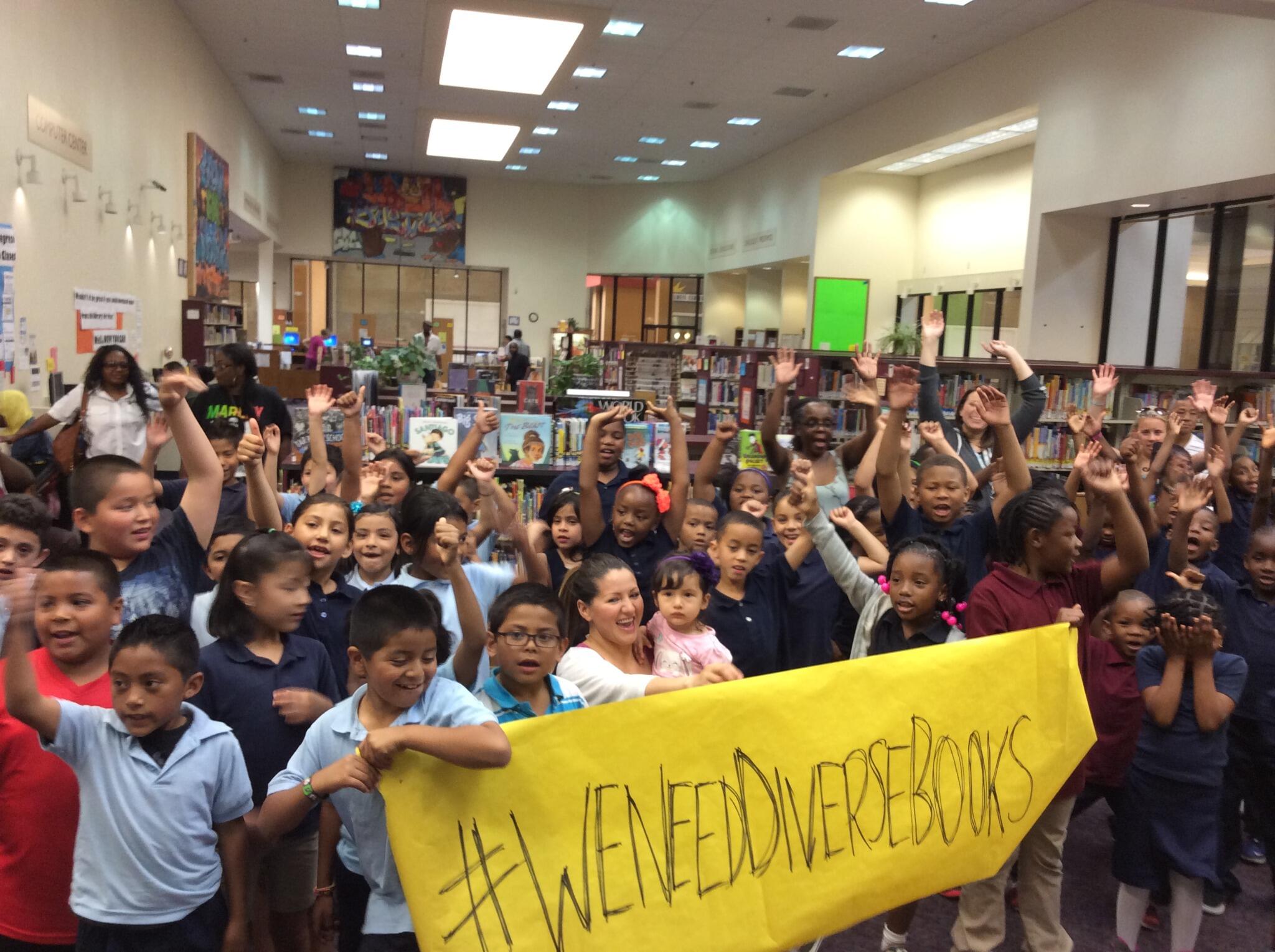
Embedded image permalink

The Oakland Public Library in California posted lots of great pictures like this one on Twitter during the #WeNeedDiverseBooks Campaign.

What do we do about it? The #WeNeedDiverseBooks Movement (Can it please be a movement? We need more movements around here.) is a potentially very important call for change in the children’s book world. Now, we need to push for intentionality. Gatekeepers need to have their feet held to the fire. The Movement (!) needs to push publishers to set goals that trend their books in a more realistically diverse direction. It needs to push the industry to hire editors from diverse backgrounds and to hire and support diverse interns and entry-level assistants who can have the power to move books off the pile and into editors’ hands. The Movement needs to hold publishers accountable.

Institutions which support writers and illustrators, like my beloved SCBWI, need to recruit underrepresented writers to their conferences. (And to check out the percentage of white male panelists and speakers compared to the percentage of white male attendees.) Groups like SCBWI need to be pushed to intentionally foster and mentor a more diverse writing community.

The movement needs to push us published authors of all colors and stripes, to mentor diverse up-and-comers, to include pro-bono school visits to underfunded schools, and to write real, complex, fallible diverse characters who live the entirety of the American experience.

Members of The Movement need to request diverse books at their bookstores and libraries. We need to post reviews on Amazon and Goodreads and library websites. Members of the Movement need to advise book bloggers and to follow and support blogs like this one. We need to give diverse books as birthday presents and to talk about our favorites on the bus, at work, in line at the bookstore…

Members of The Movement need to push our political leaders to support the health, education and welfare of our future readers and writers.

Publishers, agents, bookstore workers, librarians, teachers, authors… there are bunches these folks out there doing the positive stuff that will make change possible. The Movement needs to support them and it needs to push for intentionality in those who mean well, but have not yet made the move to change.

PatrickFS1Patrick Flores-Scott was, until recently, a long-time public school teacher in Seattle, Washington. He’s now a stay-at-home dad and early morning writer in Ann Arbor, Michigan. Patrick’s first novel, Jumped In, has been named to a YALSA 2014 Best Fiction for Young Adults book, an NCSS/CBC Notable Book for the Social Studies and a Bank Street College Best Book of 2014. He is currently working on his second book, American Road Trip.

Jumped In was featured in Libros Latin@s on Thursday. Click here to see the overview.


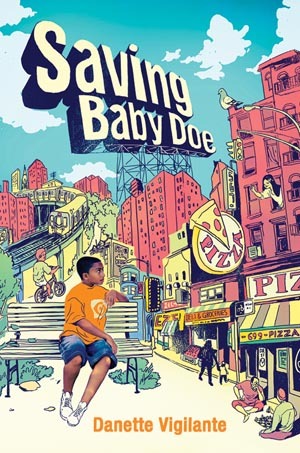
Book Review: Saving Baby Doe by Danette Vigilante

Saving Baby DoeBy Cindy L. Rodriguez

On Monday, author Danette Vigilante wrote about dream seeds and how she turned a teacher’s comment into a challgenge to become a better reader. Today, we celebrate her latest novel Saving Baby Doe.

DESCRIPTION FROM THE BOOK JACKET: Lionel and Anisa are the best of friends and have seen each other through some pretty tough times–Anisa’s dad died and Lionel’s dad left, which is like a death for Lionel. They stick together no matter what. So when Lionel suggests a detour through a local construction site on their way home one day, Anisa doesn’t say no. And that’s where Lionel and Anisa make a startling discovery–a baby abandoned in a Porta-Potti. Anisa and Lionel spring into action. And in Saving Baby Doe, they end up saving so much more.

MY TWO CENTS: Danette Vigilante pulls the reader right into this novel from the opening scene of a scared young woman is giving birth to her child in a Porta-Potti on a construction site. Soon after, Lionel and Anisa discover the baby, after playing in the closed-off site, and they decide to save “Baby Doe.” This is a middle grade novel that addresses some tough issues. In addition to the abandoned baby, the author explores the effects on children of absentee fathers and drug dealing. At the heart of it all is Lionel, who tries to do the right thing in the worst of situations.

While the issues are serious, Lionel responds to them as only a middle-schooler would. The real possibility of severe consequences doesn’t prevent him from launching into an ill-conceived plan to retrieve the baby from the hospital so that she doesn’t end up in foster care. While reading, I caught myself thinking, “Lionel, what are you doing? This is a bad idea!” Of course, he knows this, too, but he goes ahead anyway. In this way, Vigilante perfectly captures the middle school mind and creates tension through the narrative.

Then, there’s the end of Chapter 10, which I totally did not see coming. I probably should have, but I was wrapped up in Lionel’s plan to steal the baby and sell drugs to support her and then…chapter 10! Whoa! Well played! I’m not going to spoil it, but the story takes an important turn. That’s all I’ll say about that.

One of the many things I loved about this novel was the diversity within Lionel’s community. They all struggle financially, but they’re all individually-drawn people. Some work hard at “regular” jobs, while others choose quick money. Some are ultra-religious, while others are not. Some of the kids go to public school, while others go to the “genius” private school. Characters vary in terms of age, race, ethnicity, and experience, all of which creates a rich, real setting for Lionel and Anisa story to unfold.

TEACHING TIPS: In addition to all of the expected language arts lessons, this novel would work well in a health class since it deals with sex education (a lecture given by Lionel’s mom), child birth, the possible results of not seeking medical care, and the Safe Haven laws. Fiction is often reserved for language arts classes, but this type of realistic novel is ideal for blending fiction and nonfiction in health, where teachers and students tackle these serious issues.

LEXILE: N/A

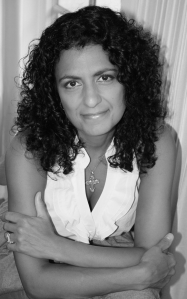
Danette_Vigilante_head_shot_high_resAUTHORDanette Vigilante grew up in the Red Hook Houses in Brooklyn, New York. She now resides in Staten Island with her husband, two daughters, two puppies and a cat with a bad attitude. Danette is the author of THE TROUBLE WITH HALF A MOON, a 2012-2013 Sunshine State Young Readers award nominee, and SAVING BABY DOE.

FOR MORE INFORMATION about Saving Baby Doevisit your local library or book store. Also, check out IndieBound.org,  GoodreadsAmazon.com, and Barnes and Noble.com.


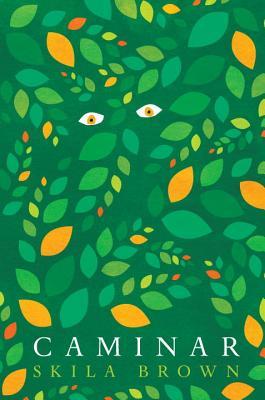
Book Review: Caminar by Skila Brown

Caminar

By Cindy L. Rodriguez

On Monday, we interviewed first-time author Skila Brown about her novel in verse, Caminar. Check out the Q&A for information about her research and writing and her decision to tackle a subject outside her own racial/ethnic experience. Today, we celebrate her debut.

DESCRIPTION FROM THE BOOK JACKET: Carlos knows that when the soldiers arrive with warnings about the Communist rebels, it is time to be a man and defend the village, keep everyone safe. But Mama tells him not yet–he’s still her quiet moonfaced boy. The soldiers laugh at the villagers, and before they move on, a neighbor is found dangling from a tree, a sign on his neck: Communist.

Mama tells Carlos to run and hide, then try to find her…Numb and alone, he must join a band of guerillas as they trek to the top of the mountain where Carlos’s abuela lives. Will he be in time, and brave enough, to warn them about the soldiers? What will he do then? A novel in verse inspired by actual events during Guatemala’s civil war, Caminar is the moving story of a boy who loses nearly everything before discovering who he really is.

MY TWO CENTS: Skila Brown’s debut novel in verse tells the heartbreaking story of Carlos, who is forced from his devastated village and treks up a mountainside to save his grandmother and her neighbors from a similar fate.

One thing that struck me most was Brown’s ability to create a touching coming-of-age narrative set in such tragic events. The novel is not graphic, although the topic is brutal. And while it is a civil war, fueled by politics, Brown does not support or condemn any side. Instead, more than anything, it’s about the ability of the human spirit to survive and persevere even after an unexpected, horrific loss.

A moment that grabbed me by the heart was when Mama tells Carlos to go into the woods and then find her later. He does so, obediently, but we just know there won’t be a later, that this is her last protective act as his mother. Another was when the children wave at the passing helicopter, as children will do when they see something interesting, but they don’t grasp the imminent danger signaled by this flying machine’s presence. From the novel:

They flew

over our village many times, searching the mountains for

something. We didn’t care,

just reached our arms as high as we could, stretched

toward the sky, wanting

to be seen.

We did not know to be

afraid, did not know they were a storm

of death, searching

for a place to rain.

Brown brilliantly combines history, fiction, and poetry in this novel, which she dedicates to the “memory of the more than 200,000 people who were killed or disappeared in Guatemala between 1960 and 1996.” These numbers are staggering, and I often questioned while reading Caminar why I didn’t know more about this 36-year civil war. This is definitely a book I will have on my classroom shelf and recommend to my middle school social studies and language arts teacher-friends.

TEACHING TIPS: Caminar would fit perfectly into a middle school social studies or language arts curriculum. Students could read this in addition to nonfiction articles or essays about the war and its effects on Guatemalan villages. Students could then compare the nonfiction pieces to Caminar to determine what’s history in the novel and what’s fiction.

In a social studies class, this book could be used in a unit about the causes of war and its effects on a country. Students could read other, similar novels or essays and compare the experiences.

Any of the individual poems could be read closely multiple times to discuss word choice and the use of figurative language in poetry.

Students could write a short story in poems to learn first hand the difficulty involved with writing individual poems that also tell a story when read together.

LEXILE: N/A

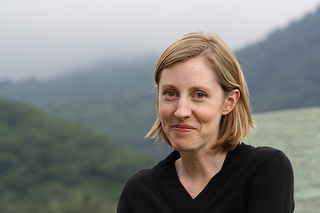
skilaAUTHOR: Skila Brown has an MFA in writing for children and young adults from Vermont College of Fine Arts. Caminar is her debut novel. She lives in Indiana with her husband and their three children.

FOR MORE INFORMATION about Caminar, visit your local library or book store. Also, check out Candlewick PressIndieBound.org,  GoodreadsAmazon.com, and Barnes and Noble.com.


We are giving away two copies of Caminar!! Go to a Rafflecopter giveaway to enter for free. You can enter once per day through this week. Two winners will be selected Saturday morning.