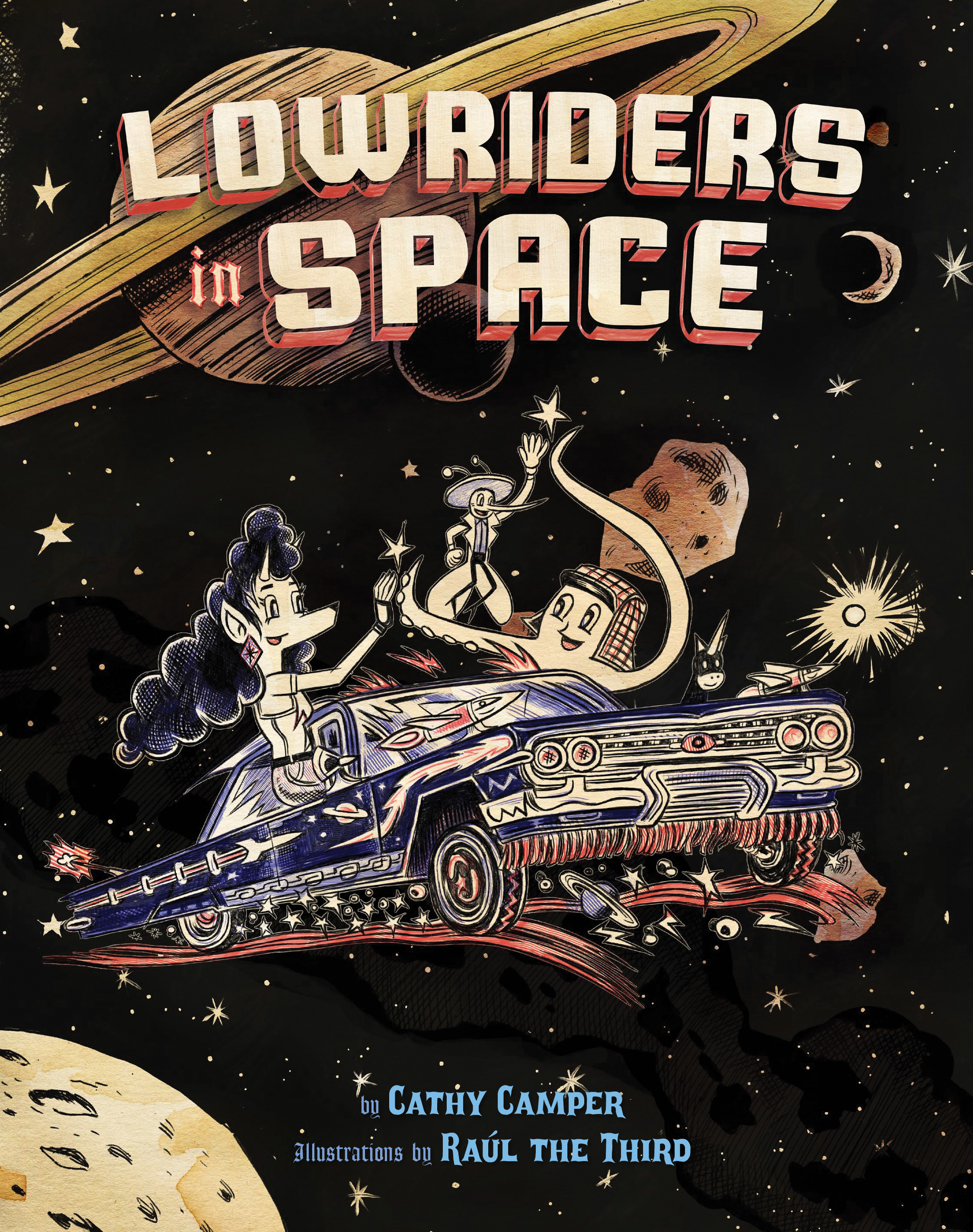
Book Review: Lowriders in Space by Cathy Camper, illustrated by Raúl the Third

Lowriders in Space_FC_HiResBy Lila Quintero Weaver

This book talk is based on an advance review copy. Quotes and details may vary in the final version.

DESCRIPTION FROM THE BOOK JACKET: Lupe Impala, El Chavo Flapjack and Elirio Malaria love working with cars. You name it, they can fix it. But the team’s favorite cars of all are lowriders—cars that hip and hop, dip and drop, go low and slow, bajito y suavecito. The stars align when a contest for the best car around offers a prize of a trunkful of cash for the best car around—just what the team needs to open their own shop! ¡Ay chihuahua! What will it take to transform a junker into the best car in the universe? Striking, unparalleled art from debut illustrator Raúl the Third recalls ballpoint-pen-and-Sharpie desk-drawn doodles, while the story is sketched with Spanish, inked with science facts, and colored with true friendship. With a glossary at the back to provides definitions for Spanish and science terms, this delightful book will educate and entertain in equal measure.

MY TWO CENTS: Look in the children’s section for graphic novels from the Latino perspective and you’ll find precious few choices. Look there for books about lowriders and your choices will be still slimmer. Here is Lowriders in Space, ready to fill both spots with a joyous, celebratory tale. You don’t need deep knowledge of the lowrider culture to appreciate this middle-grade graphic novel, brought to you by the author-illustrator team of Cathy Camper and Raúl the Third.

Lowriders In Space_Int_3In the opening pages, we meet three animal characters with Spanish names, all of whom work for a car-repair shop. The shop is called Cartinflas, and this is just one of many playful allusions and verbal jokes in this book. (Cartinflas plays on the name of the famous Mexican comic actor, Cantinflas.) Lupe Impala, (a wolf) busts gender stereotypes as a female lead who knows her way around car engines. Her sidekicks, the octopus El Chavo Flapjack and the mosquito Elirio Malaria, each specialize in key aspects of automobile revamping in the lowrider style. Elirio’s fine-tip proboscis doubles as a paintbrush that turns out the sweetest racing stripes and airbrushed scenes you could imagine. El Chavo’s eight tentacles go to work washing, polishing and buffing cars to a high sheen.

The trio dream of going into business for themselves, but where will they find start-up money? A car competition with a hefty cash prize gives them hope, but there are tough challenges to meet. First, they must find a car to work their magic on. They settle for a rusty heap sitting on cinder blocks. Now for car parts. At an abandoned airplane factory, they pick up mini air compressors and a box of rocket equipment. After attaching the parts, they’re in for a surprise when Lupe cranks the engine and it launches the car into the stratosphere. High above the earth, the car gears down into bajito-y-suavecito mode, low and slow: this is the cruising speed that lets low riders see and be seen. While the transformed auto travels outer space, it takes on loads of flash and bling borrowed from stars, asteroids and others elements of the galactic realm.

There’s much to love in this kid-friendly graphic novel. The story arc follows a familiar trajectory: the protagonists meet every challenge successfully and win the sought-after prize. Kid readers will be cheering. But my hat’s off to Cathy Camper for elevating the storyline above the predictable. She does this through original settings and characters, including the lowrider car itself, and with the inventive twists of space travel and comical astronomy. Her text engages the ear with musical language that includes alliteration, onomatopoeia, and bursts of G-rated street slang in English, Spanish, and Spanglish.

Kids will eat up the comics-style art. Every page offers levels of visual puns and charming details that invite readers to study panels closely. The color scheme and the drawings give off a retro historieta vibe, fitting for a story about lowrider culture, which was born in the 1950s and is rooted in the Mexican American community. I’m not familiar with the ballpoint-pen doodle style that Raúl the Third credits as his inspiration, but I dig it!

TEACHING TIPS: The back of the book contains a glossary of Spanish phrases, factual information on the tongue-in-cheek astronomy that appears in the story, and a thumbnail summary of lowrider history.

One bonus of graphic novels is their appeal to devoted bookworms and reluctant readers. Kids seem to instinctively grasp the multiple levels of interaction offered through their blend of text and images. Teachers may want to approach Lowriders in Space—and any graphic novel—in two steps. Read through it once purely for the story. Revisit it at a slower pace to more fully absorb the images. Raúl the Third’s art is rich with details, charming secondary characters, and visual puns that sharp-eyed kids will relish hunting down. These may not be central to the story, but they sure contribute to the fun. For example, it’s one thing to read that there’s a fast-food joint called Sapo Bell in the background of one scene—it’s another to spy the goofy sapo sitting out front. Middle-grade readers are sure to love such hidden gems.

Lowriders in Space encourages kids to celebrate a fun aspect of Mexican American culture that should be respected, not ridiculed or stigmatized. Too often when lowriders appear in popular culture, they’re thrown in for kitsch points. This usually results in stereotyping and negative connotations. Teachers can use this text to combat the lazy disregard involved in stereotypical usage and replace it with the dignity that comes with cross-cultural appreciation.

If you’d like to learn more about lowrider history culture, here are some suggested resources:

“Lowriding: This Culture is About More Than Cars.”

“Low and Slow: The History of Lowriders.” 

Be sure to read Cathy’s guest post on Latin@s in Kid Lit!

Cathy Camper_headshot_photo (c) Jayson Colomby_smCathy Camper is a librarian focusing on outreach to schools and children in grades K-12. She lives in Portland, Oregon. Raúl the Third teaches classes on  drawing and comics for kids at the Museum of Fine Arts and the Institute of Contemporary Art. He lives in Boston, Massachusetts.          
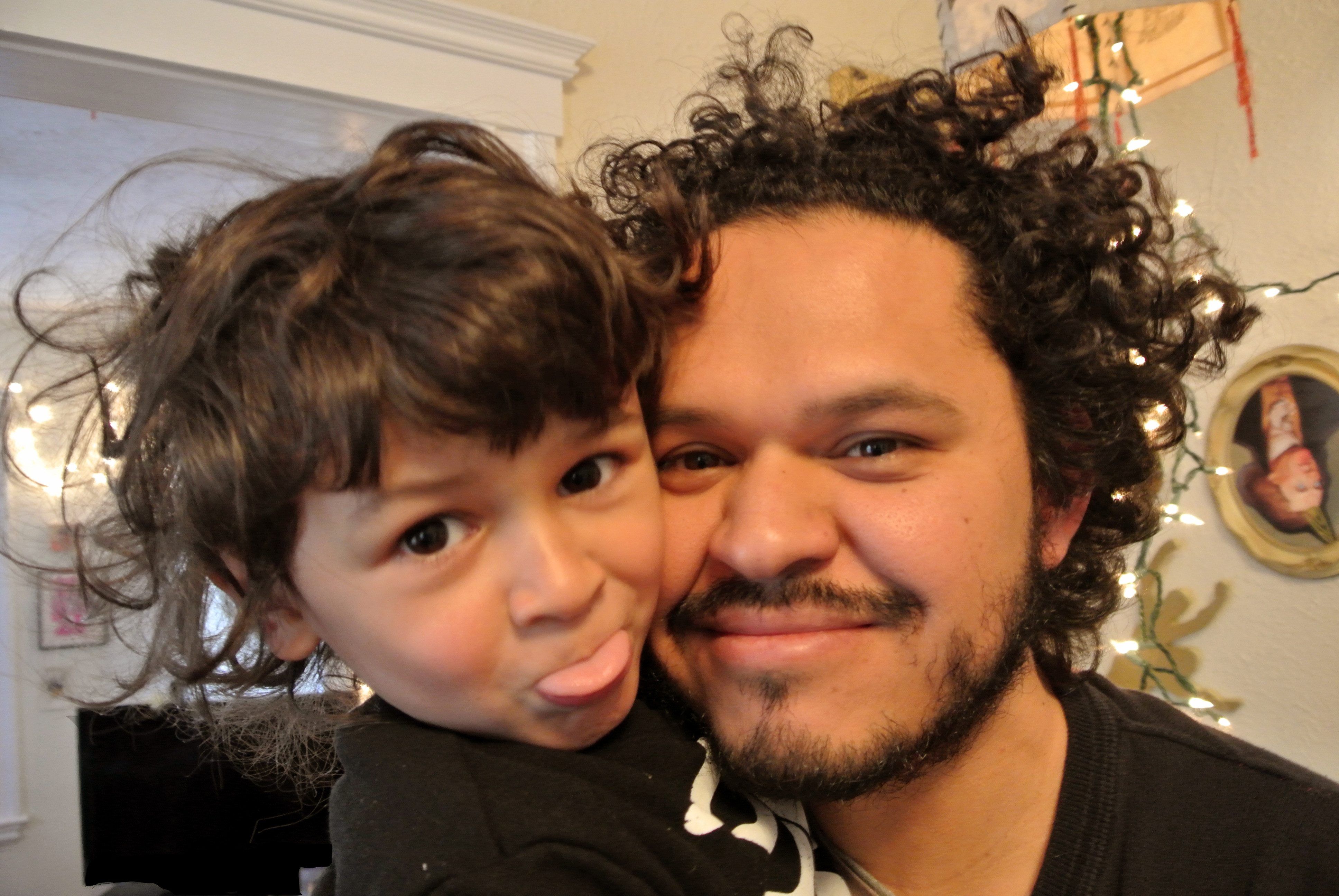
   Raul the Third (credit Elaine Bay)


And now for a big treat, the official book trailer for Lowriders in Space!


Book Review: Tortilla Sun by Jennifer Cervantes

By Kimberly Mach

7175992DESCRIPTION FROM THE BOOK JACKET: When twelve-year-old Izzy discovers a beat-up baseball marked with the partially obscured phrase “Because… magic,” she is determined to figure out the missing words. Could her father have written them? What secrets does this old ball have to tell? Her mom certainly isn’t sharing any – especially when it comes to Izzy’s father, who died before she was born.
But when Izzy spends the summer in her Nana’s remote New Mexico village, she discovers long-buried secrets that come alive in an enchanted landscape of majestic mountains , whispering winds, and tortilla suns. Izzy finds herself on an adventure to connect the hidden pieces of her past. And just maybe she will discover the missing words that could change her life forever…but only is she can learn to create a few words of her own.

MY TWO CENTS: Tortilla Sun by Jennifer Cervantes is a perfect middle grade novel. It is well-constructed, has all the required pieces, and that little extra something that keeps you thinking about the story long after you’ve read it.  It is a book I am looking forward to sharing with my grade six students in a book talk.

What I loved most were the surprising elements, the pieces I didn’t expect. I didn’t expect to meet a master storyteller as a character. Socorro, almost mythic in description, appears and guides both Izzy and the members of the village with her wisdom and tales of the people. In fact, she helps Izzy, an aspiring writer, find her way to write and finish the stories she’s been struggling with. With Socorro’s guidance and the help of Nana and her new friends, Izzy is able to find her own cuento, or story. The characters are as rich and varied as village life, like the members of a large family. In fact, one of my favorite scenes is when six of the characters, ranging in age from Nana to young Maggie, play baseball together. Mrs. Castillo with her shiny nails surprises them all and hits a homerun.

I didn’t expect to find the essence of baseball in here either–the magic and lore, the homerun, and those bits that capture our imagination. The story starts with Izzy finding an old baseball.  She is certain it belonged to her father. Every stitch in that baseball is a thread of her story, of her cuento. In that story, there is healing and forgiveness, and it is one of the pieces that stayed with me long after the first read.

Finally, I didn’t expect to come away craving empanadas. When Izzy took her first bite my mouth started watering. Cervantes is expert at describing the smells of cooking and giving us the taste for many Mexican-American dishes through Izzy’s first experience with them. She even includes at the end a recipe for her own Nana’s tortillas, a recipe pulled from her own family history.

Jennifer Cervantes creates characters in Tortilla Sun that move into your heart and stay there. I want to go to Nana’s. I want to run my fingers over the Saltillo mosaic tiled floors and smell the snap and sizzle of the tortillas cooking. I want to run down the same path that Izzy and Mateo took, and then I want to come back and sleep in that hammock. It is hard to believe this is a debut novel. Nana, Izzy’s grandmother, tells her at one point, “Sometimes you can’t see the magic; you just know it’s there because you can feel it.” That is the way I feel about this MG novel. Each time I see it on my shelf, I remember the characters, the sounds, and the smells. You can feel the magic in this story, that certain something that brings it all to life. I look forward to reading Jennifer Cervantes’ next novel, and I hope there will be many more.

TEACHING TIPS: Jennifer Cervantes provides discussion questions for Tortilla Sun on her website. Also, I see mostly social studies connections here and opportunities for interdisciplinary learning.

Geography: Any teacher who is not from the southwest may use portions of the text to teach about that area. Why are hot air balloons popular in New Mexico? Where is the Rio Grande River? What is the terrain like? What does it mean to live in a desert? Simply learning that a desert does not only consist of drifting sand dunes would be a good use here.

Study of culture and the family unit: There are two grandmothers in the story who play vital roles in the lives of young people. A study of the nuclear family and extended family would be a good fit. The role of grandmothers and grandparents in societies today would also be a good fit. In Tortilla Sun there are both multigenerational households and nuclear families: Izzy, her grandmother and mother, Mateo and his parents, and then Maggie and her grandmother, Gip. Unlike some novels, the family unit, although broken at the beginning (Izzy and her mother live alone), becomes the mainstay of the whole story.

Study of Mexican-American culture: Izzy rediscovers her roots and forms her identity in this story. She does not come to New Mexico with a strong sense of who she is. It’s her grandmother, Nana, who teaches her about the religion, the Saltillo tiles, the food, and even a bit of the history. A historian at heart, I was fascinated about why the doorways in her house were so low and narrow in Nana’s house. Izzy even discovers there is more to her name than she first thought.

In Language Arts there are a variety of lessons that could be drawn from the novel from close reading particular passages. Foreshadowing , figurative language, and story structure can be a focus of these reads. In addition, advice on how to start and finish writing a story using practical strategies can be found. Izzy begins her own stories by using index cards. Soon the index cards can be laid out together and she has a full story with a beginning, middle, and end.

AUTHOR: Jennifer Cervantes currently resides in New Mexico with her family, which she calls The Land of Enchantment. Tortilla Sun  is her first novel. For more information about Jennifer and her upcoming works please visit her website: http://www.jennifercervantes.com/index.html

FOR MORE INFORMATION ABOUT Tortilla Sun, visit your local library or bookstore. Also check out worldcat.orgindiebound.orggoodreads.comamazon.com, and barnesandnoble.com.


Kimberly Mach (2)Kimberly Mach has been teaching for sixteen years and holds two teaching certificates in elementary and secondary education. Her teaching experience ranges from grades five to twelve, but she currently teaches Language Arts to middle school students. It is a job she loves. The opportunity to share good books with students is one that every teacher should have. She feels privileged to be able to share them on a daily basis.


2014 Reading Challenge: June

Participants in our 2014 Latin@s in Kid Lit Reading Challenge are out of control in the best possible way! Take a look at the variety of books that were read in June, which happens to be the half-way point of the challenge. Now would be a great time to join us or renew your commitment to the challenge, which is to read one book a month that is written by a Latin@ author (any subject) or a book written by anyone that has Latin@ characters, themes, settings, etc. You’re not required to review–only read and enjoy and let us know what you have read! If you do post a review somewhere, we will link it to the book covers below. If you choose not to review, we will link the covers to Goodreads. For July, you may want to consider some of the new winners of the International Latino Book Awards.

6413788 16043528 13436375 9757257 18166935 13482750 8585924  17286899 18048909 15814459 11387515 862908 8811369 6789056  14740980 240298 465967  13610203  2282907  6084038  4080320  15953630  17171578  8455432  16057383  18654377  10351733  18654384  1861037  52390 1139921  18148193  321133  3308853  15791044  11129790  12921673313233169587  688161  1807231  424182  640476  15893258  2429455

The 2014 International Latino Book Awards Winners!!

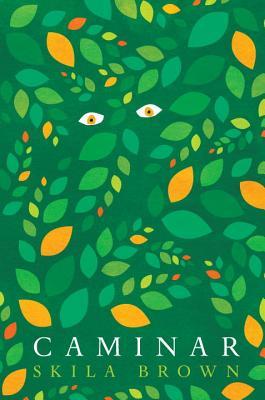
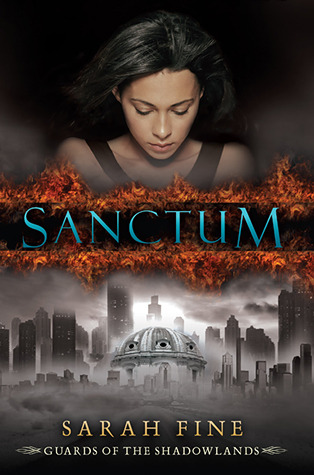
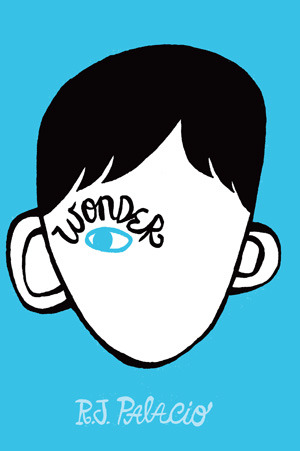
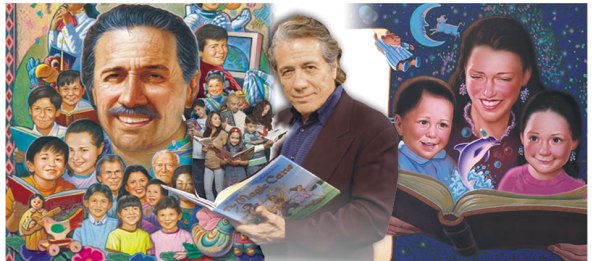
Below are the first place winners of the 16th Annual International Latino Book Awards in the children’s, youth, and young adult categories. If you click on the images, you will be taken to Goodreads, Barnes and Noble, or Amazon for more information. The Awards are produced by Latino Literacy Now, an organization co-founded by Edward James Olmos and Kirk Whisler, and co-presented by Las Comadres para las Americas and Reforma, the National Association to Promote Library and Information Services to Latinos. The Awards were announced this past weekend, on June 28, in Las Vegas as part of the ALA Conference. For the complete list, which includes adult fiction, nonfiction, and second place and honorable mention winners, click hereCONGRATULATIONS TO ALL OF THE WINNERS!!

Best Latino Focused Children’s Picture Book: English

18296043

Best Latino Focused Children’s Book: Spanish or Bilingual

17265250  19483940

Best Children’s Fiction Book: English

Best Children’s Fiction Picture Book: Bilingual

17940785

Best Children’s Fiction Picture Book: Spanish

17802285

Best Children’s Nonfiction Picture Book

13610203

Best Educational Children’s Picture Book: English

15791044

Best Educational Children’s Picture Book: Spanish or Bilingual

Hola! Gracias! Adios!

Most Inspirational Children’s Picture Book: English

18371476

Most Inspirational Children’s Picture Book: Spanish or Bilingual

Pink Firetrucks

Best Youth Latino Focused Chapter Book

10436183  16670129

Best Youth Chapter Fiction Book: English

17166339

Best Youth Chapter Fiction Book: Spanish or Bilingual

Best Youth Chapter Nonfiction Book

Most Inspirational Chapter Book

The Adventures of Chubby Cheeks: The Pro Quest

Best Young Adult Latino Focused Book: English

15769992

Best Young Adult Latino Focused Book: Spanish or Bilingual

Los Pájaros No Tienen Fronteras by Edna Iturralde

Best Young Adult Fiction Book: English

15798660

Best Young Adult Fiction Book: Spanish or Bilingual

La Guarida de las Lechuzas by Antonio Ramos Revillas

Best Young Adult Nonfiction Book

Best Educational Young Adult Book

Most Inspirational Young Adult Book

15769992

Best Book Written by a Youth: English

15020431

Best Book Written by a Youth: Spanish or Bilingual

  Serendipity, Poems About Love in High School

Best Children’s Picture Book Translation: Spanish to English

17465058

Best Children’s Picture Book Translation: English to Spanish

Best Chapter/Young Adult Book Translation: English to Spanish

El Gusano de Tequila

Best First Book: Children’s and Youth


Book Review: I Lived on Butterfly Hill by Marjorie Agosin

By Sarah Hannah Gómez

18048909DESCRIPTION FROM THE BOOK JACKET: Celeste Marconi is a dreamer. She lives peacefully among friends and neighbors and family in the idyllic town of Valparaiso, Chile–until the time comes when even Celeste, with her head in the clouds, can’t deny the political unrest that is sweeping through the country. Warships are spotted in the harbor and schoolmates disappear from class without a word. Celeste doesn’t quite know what is happening, but one thing is clear: no one is safe, not anymore.

The country has been taken over by a government that declares artists, protestors, and anyone who helps the needy to be considered “subversive” and dangerous to Chile’s future. So Celeste’s parents–her educated, generous, kind parents–must go into hiding before they, too, “disappear.” To protect their daughter, they send her to America.

As Celeste adapts to her new life in Maine, she never stops dreaming of Chile. But even after democracy is restored to her home country, questions remain: Will her parents reemerge from hiding? Will she ever be truly safe again?

Accented with interior artwork, steeped in the history of Pinochet’s catastrophic takeover of Chile, and based on many true events, this multicultural ode to the power of revolution, words, and love is both indelibly brave and heartwrenchingly graceful.

MY TWO CENTS: This reads like a pretty classic middle grade novel in the tradition of Sharon Creech or Patricia Reilly Giff. Celeste has a very sweet and thoughtful way about her, and she narrates the day-to-day of her life with the eye of a girl who is young but observant. There is some beautiful scene setting in her house, where her grandmother, nanny, mother, and father dote on her; and at school, where she has a great teacher and the usual smattering of fun, doofy, and snobbish classmates. She has an idyllic life and loves it—until the president is assassinated and the dictator takes over.

Agosín does a good job of showing how this type of takeover happens gradually and all at once, and Celeste observes different things happening – like some classmates not showing up for school or the adults in her life all of a sudden being worried about her safety – and only slowly begins to put them together as being related to the same thing. When she moves to Maine, Celeste remains very observant and thoughtful about everything. Her descriptions are just beautiful.

But that’s also a weakness in the book – Celeste is so thoughtful that it doesn’t always feel like she has any emotion. Her parents have to go into hiding and she says she’s sad, but you don’t necessarily see it – the quality and style of her narration and her observations don’t change much depending on her mood. And it doesn’t help that the last quarter of the book goes from lyrical and fairly realistic to a totally Disney TV movie ending.

That said, there is plenty of good in this book. Latin@s? Check. And, unlike any books I remember reading from my childhood or much during my adulthood, Celeste’s family is also Jewish – her grandmother speaks to her in German and reminisces about escaping the Holocaust by coming to Chile. That parallel is what really gives the book its emotional impact. Celeste is very attached to her grandmother, and knowing that the grandmother is watching a country unravel for the second time is poignant. Acknowledging that part of Latin American history and giving Jewish-Latinas a heroine to root for is a great strength of this book, especially since it manages to use Spanish, Chilean cultural traditions, and Jewish traditions in a way that neither over explains to those of us who know it already nor under explains to those who are unfamiliar.

I would hand this book to any little girl who is already a fan of classic middle grade characters who love to write, like Betsy Ray or Harriet M. Welsch, or to fans of books by Julia Alvarez or Jeanne Birdsall.

AUTHOR: Marjorie Agosín was born in Maryland and raised in Chile. She and her parents, Moises and Frida Agosín, moved to the United States due to the overthrow of the Chilean government by General Pinochet’s military coup. Coming from a South American country and being Jewish, Agosín’s writings demonstrate a unique blending of these cultures. Agosín is well known as a poet, critic, and human activist. She is also a well-known spokesperson for the plight and priorities of women in Third World countries. Her deep social concerns and accomplishments have earned her many awards and recognitions, and she has gained an international reputation among contemporary women of color.

FOR MORE INFORMATION ABOUT I Lived on Butterfly Hill, visit your local library or bookstore. Also check out worldcat.org, indiebound.org, goodreads.com, amazon.com, and barnesandnoble.com.


HannahSarah Hannah Gómez is a school librarian in Northern California with a passion for promoting diverse literature to tweens and teens of all colors. She has an MA from the Center for the Study of Children’s Literature and an MS in library and information science from Simmons College. She blogs at her own website and at YALSA’s The Hub. She is working on a novel and a screenplay.

Book Review: The Lightning Dreamer by Margarita Engle

By Lila Quintero WeaverLightning Dreamer notable

DESCRIPTION FROM THE BOOK JACKET: Tula is a girl who yearns for words, who falls in love with stories, but in Cuba, girls are not allowed an education. No, Tula is expected to marry well—even though she’s filled with guilt at the thought of the slaves Mamá will buy with the money gained by marrying Tula to the highest bidder.

Then one day, hidden in the dusty corner of a convent library, Tula discovers the banned books of a rebel poet. The poems speak to the deepest part of her soul, giving her a language with which to write of the injustice around her. In a country that isn’t free, the most daring abolitionists are poets who can veil their work with metaphors, and Tula becomes just that.

In powerful, haunting verses of her own, Margarita Engle evokes the voice of Gertrudis Gómez de Avellaneda, known as Tula, a young woman who was brave enough to speak up for those who could not.

MY TWO CENTS: The novel begins in 1827. Tula’s mother, who twice made the mistake of marrying for love, is desperate to prevent her thirteen-year-old daughter from taking a similar path. Mamá’s motivations are clear-cut. A wealthy connection through Tula is the family’s only hope for propping up their shaky economic status. In 19th-century colonial Cuba, arranged marriages are the social norm, but Tula’s mother worries that a girl who buries her nose in books will not attract the right kind of husband–a rich one.

Who is Tula? Margarita Engle is acclaimed for novels in verse that bring to life history’s outliers, young men and women from previous centuries who thought and acted in surprisingly modern ways, and Tula stands tall among them. She’s based on Gertrudis Gómez de Avellaneda, a Cuban poet who championed liberty for all humans and wrote Sab, an abolitionist novel, the first of its kind in Spanish. Sab predated Uncle Tom’s Cabin, the Harriet Beecher Stowe classic, by eleven years. Avellaneda’s importance as an abolitionist and feminist writer is not widely known in English-speaking America. The Lightning Dreamer corrects this oversight and imagines Avellaneda’s formative years, just as she began to discover the life-changing force of poetry.

Marriageability is not the only issue that arises from Tula’s penchant for reading. She happens upon the forbidden poetry of José María Heredia, whose sharp observations awaken Tula’s passion for justice. In colonial Cuba, injustice is everywhere. Her eyes take in the plight of African slaves, biracial babies abandoned to the convent, lovers kept apart by miscegenation taboos, and girls like herself, doomed to business arrangements thinly masquerading as marriages. Tula expresses her ardor for justice through poetry, which she burns to keep her mother from discovering.

When Tula refuses the marriage that her grandfather arranges, she must rise to meet a string of new challenges. The inheritance is lost and her family is condemned to relative poverty. For a while, Tula finds refuge in a storyteller’s community, where she becomes entangled in an unrequited love. She moves away from the countryside to Havana, where she supports herself through tutoring. In 1836, her brother, Manuel, warns her that their mother is cooking up another arranged match. Tula flees for Spain, expecting to find greater social and creative freedom there.

The Lightning Dreamer is written in free verse and is voiced through multiple characters. Tula is the most frequent speaker. Short segments provide other characters’ point of view. A partial list includes Tula’s mother; Manuel; Caridad, the freed slave who works for the family; the nuns who offer Tula space to read and write in peace; and Sab. Each character speaks in first person. I imagine them as a series of stage players delivering brief and sometimes prejudicial monologues reflecting on Tula’s choices. This approach perfectly suits the fictionalized treatment of a young poet. The language is spare and often stunning, capturing vivid images and profound interiority, as in this excerpt:

When we visit my grandfather

on his sugar plantation,

I see how luxurious

my mother’s childhood

must have been,

surrounded by beautiful

emerald green sugar fields

harvested

by row after row

of sweating slaves.

How can one place

be so lovely

and so sorrowful

all at the same time?

READING LEVEL: 12 and up

TEACHING TIPSThe Lightning Dreamer is an ideal jumping off point for exploring a wide array of subjects suggested in the novel. These range from colonialism, to New World slavery and racism, to patriarchal societies and the history of women’s political movements. At the back of the book, extensive notes provide comparisons between the historical Avellaneda and Tula, her fictionalized counterpart. This section also includes Spanish and translated excerpts of Avellaneda’s poetry and a bibliography of related sources.

Margarita contributed a guest post to Latin@s in Kid Lit that illuminates her love of biographical writing.

Henry Louis Gates’ PBS series, Black in Latin America, may be of interest for classroom use, in conjunction with the reading of The Lightning Dreamer. The episode “Cuba: The Next Revolution” focuses on the ongoing struggle by Afro Cubans to overcome centuries of racism. There’s no mention of Avellaneda in this one-hour documentary film; nevertheless, interviews and scenery enriched my reading. The film is particularly effective in its treatment of Cuba’s history of slavery and the role of freed slaves in the protracted battle for independence from Spain. The ruins of sugar plantations dating back to the book’s era starkly reminded me of Tula’s world.

RECOGNITION FOR THE LIGHTNING DREAMER: Awards and honors continue to flood in. They include:

2014 Pura Belpré Honor Book

School Library Journal’s Top Ten Latino-themed Books for 2013

YALSA 2014 Best Fiction for Young Adults

For a full list of awards and more information, please visit Margarita’s author website. I also recommend following her on Facebook, where she frequently posts updates on appearances, interviews and release dates for new books.

MargaritaTHE AUTHOR: Margarita Engle is a native of California and the author of many children’s and young adult books. She is the daughter of an American father and a Cuban mother. Childhood visits to her extended family in Cuba influenced her interest in tropical nature, leading to her formal study of agronomy and botany. She is the winner of the first Newbery Honor ever awarded to a Latino/a. Her award winning young adult novels in verse include The Surrender Tree, The Poet Slave of Cuba, Tropical Secrets, and The Firefly Letters.

FOR MORE INFORMATION ABOUT The Lightning Dreamer, visit your local library or bookstore. Also check out worldcat.org, indiebound.org, goodreads.com, amazon.com, barnesandnoble.com, and Houghton Mifflin/Harcourt.