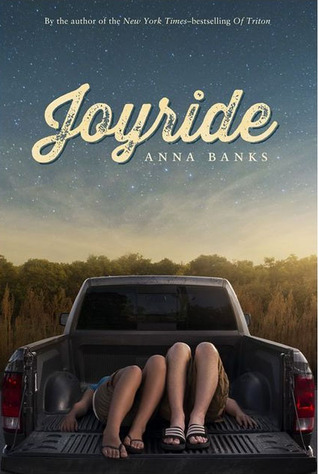
Book Review: Joyride by Anna Banks


22718685By Cindy L. Rodriguez

PUBLISHER’S DESCRIPTIONA popular guy and a shy girl with a secret become unlikely accomplices for midnight pranking, and are soon in over their heads—with the law and with each other—in this sparkling standalone from NYT-bestselling author Anna Banks.

It’s been years since Carly Vega’s parents were deported. She lives with her brother, studies hard, and works at a convenience store to contribute to getting her parents back from Mexico.

Arden Moss used to be the star quarterback at school. He dated popular blondes and had fun with his older sister, Amber. But now Amber’s dead, and Arden blames his father, the town sheriff who wouldn’t acknowledge Amber’s mental illness. Arden refuses to fulfill whatever his conservative father expects.

All Carly wants is to stay under the radar and do what her family expects. All Arden wants is to NOT do what his family expects. When their paths cross, they each realize they’ve been living according to others. Carly and Arden’s journey toward their true hearts—and one another—is funny, romantic, and sometimes harsh.

MY TWO CENTS: In Joyride, Anna Banks creates two easily likable, sympathetic characters who are struggling between wanting to have normal, fun teenage lives and dealing with serious family issues.

Carly Vega is a smart, hard working Mexican-American teen who juggles going to school and working, sometimes until the early morning hours at a convenient store, to help raise enough money to bring her deported, undocumented parents back to the U.S.

Arden is a popular former football star who battles with his violent father in the wake of his sister’s suicide, which has left his mother heavily medicated and despondent.

In the opening scene, Arden pretends to hold up his uncle, Mr. Shackelford, outside the convenient store in an attempt to get him to stop driving drunk. Carly, who is working when this happens, responds by pulling out the store owner’s shotgun and chasing the masked bandit (Arden) off. Arden knows then that Carly is the perfect candidate to be his pranking buddy, a position once held by his sister. Love blossoms as the two spend more time together doing funny, gross things around town that are risky because Arden’s father is the racist local sheriff responsible for deporting Carly’s parents.

Throughout the novel, Carly struggles with competing desires. She wants her family to be intact again and wants to do all she can to help raise the thousands of dollars needed to help them cross the border again. She also wants, however, to do what normal teen girls do, like hang out with her boyfriend and use her money to buy things like new clothes and a laptop computer.

Without giving too much away, I’ll say that this YA contemporary, which tackles serious issues and has heavy doses of romance and humor, also has a plot twist that adds a whole new exciting vibe to the story. Carly and Arden’s relationship is threatened and they end up in a dangerous situation involving law enforcement and the illegal smuggling operation that promises to bring her parents home.

Told in alternating points of view–Carly’s is first person and Arden’s is third–Anna Banks’s Joyride is a page-turner filled with interesting, complex characters who fall in love and find common ground despite economic, racial, and cultural differences.

TEACHING TIPS: Joyride could be an option when teaching about immigration. I’m sure students would have lots of questions about the issues brought up with this book around Carly’s family’s situation. Do people really pay someone to escort loved ones across the border? What are the risks? Is it really that expensive? What happens if they get caught again? How often are American born teens separated from parents who are deported? Reading this novel as a companion to non-fiction research on these issues could offer multiple perspectives and make Carly Vega seem even more “real,” in that her situation is a common one.

ABOUT THE AUTHOR (from her website): NYT Bestselling YA author of The Syrena Legacy series: OF POSEIDON (2012) OF TRITON (2013) OF NEPTUNE (2014). Repped by rockstar Lucy Carson of the Friedrich Agency. I live with my husband and daughter in the Florida Panhandle. I have a southern accent compared to New Yorkers, and I enjoy food cooked with real fat. I can’t walk in high heels, but I’m very good at holding still in them. If you put chocolate in front of me, you must not have wanted it in the first place.


FOR MORE INFORMATION ABOUT Joyride visit your local library or bookstore. Also, check out WorldCat.orgIndieBound.orgGoodreadsAmazon, and Barnes & Noble.

Also, check out the Q&A we did with Anna Banks earlier this week.


Q&A with NYTimes Bestselling Author Anna Banks About JOYRIDE


22718685By Cindy L. Rodriguez

The latest novel by Anna Banks, the New York Times Bestselling Author of the The Syrena Legacy series: OF POSEIDON (2012) OF TRITON (2013) OF NEPTUNE (2014), releases today. JOYRIDE, a contemporary with a Mexican-American main character, is a change for Banks, but you’ll see that she was ready to cleanse her fantasy palette and that the seeds for this particular story were planted years ago.

First, here is a description of the book:

A popular guy and a shy girl with a secret become unlikely accomplices for midnight pranking, and are soon in over their heads—with the law and with each other—in this sparkling standalone from NYT-bestselling author Anna Banks.

It’s been years since Carly Vega’s parents were deported. She lives with her brother, studies hard, and works at a convenience store to contribute to getting her parents back from Mexico.

Arden Moss used to be the star quarterback at school. He dated popular blondes and had fun with his older sister, Amber. But now Amber’s dead, and Arden blames his father, the town sheriff who wouldn’t acknowledge Amber’s mental illness. Arden refuses to fulfill whatever his conservative father expects.

All Carly wants is to stay under the radar and do what her family expects. All Arden wants is to NOT do what his family expects. When their paths cross, they each realize they’ve been living according to others. Carly and Arden’s journey toward their true hearts—and one another—is funny, romantic, and sometimes harsh.

CINDY: This is a genre shift for you after the very successful Syrena Legacy Trilogy. What sparked you to shift gears and write contemporary fiction?

ANNA: Before we begin, I just want to say it is my pleasure and an honor to be here today. Thank you so much for thinking of me. I enjoy your website and am very supportive of its goals and focuses.

JOYRIDE was sort of a palette cleanser between fantasy worlds. I was ready to write a standalone for once, and Carly’s story kept haunting me at night. To be honest, writing something in the real world was more of a challenge because I had stricter boundaries to abide by, and my characters had only their natural abilities to use to get them out of situations. But it was also a pleasure to have those boundaries, because writing characters who had to use their natural resources, to me, made them stronger and more realistic.

CINDY: And while we’re talking genre, JOYRIDE really is a mix of realistic, romance, and thriller. Was this intentional while you were plotting? Did you want to have some twists that are not always typical with a straight contemporary, or is that just where the story went as you were planning?

ANNA: While I was writing JOYRIDE, I didn’t realize I was writing so many twists in it. To me, it seemed like the natural way things would have to go. Of course, I’ve never written contemporary before (and if I’m being honest I don’t read much of it either), so I wasn’t aware there were sort of “rules” to writing a straight contemporary. Now I realize I’ve written this steroidal hybrid, and I hope contemporary readers can move past that and embrace it. Pretty please? :.)

CINDY: Let’s talk about craft for a bit next. You have a dual narrative, but you use a first-person point of view for Carly and a close third-person for Arden. As both a reader and writer, I’m always curious about these kinds of decisions. Why did you decide on this format instead of a dual first-person?

ANNA: This is me recognizing a weakness I have in writing. I can write a strong female heroine in first person, but for the hero, I need to take a step back and put some distance between myself and him, to distinguish my voice from his voice. I don’t want readers as familiar with my hero and his most inner feelings and thoughts in the way writing in first person would give them access to. In fact, I considered writing JOYRIDE from only Carly’s perspective, but Arden was just too funny to put behind stage.

CINDY: The topic of immigration and deportation are complex, often contentious, social and political issues. What made you want to write about the life of a Mexican-American girl whose parents were deported? What kind of research did you have to do? Was it difficult to write outside of your cultural experience?

ANNA: Living in the Florida panhandle, I live and work and play among many Mexican immigrants—both documented and undocumented. When I was a teenager in particular, I worked at a restaurant where there were some undocumented immigrants, and as we became friends, they told me their stories. They told me their anxiety about being deported, about missing their family, about the fear of being separated from the family they’ve established in the United States. It really left an impression on me. As a teen, I wondered what I would do if my parents were deported, if I was here all alone. I guess Carly was planted in my head all those years ago and I didn’t even know it.

I didn’t have much research to do, because I learned it first hand from my friends and coworkers. That you didn’t want to get pulled over because instead of a speeding ticket, you’d get deported. That you didn’t want to attract attention to yourself. That you sent money home as often as you could. That there were people they called coyotes who helped them cross the border and desert, who demanded large sums of money to help them get set up in the United States. That when you cross the border, you cross with what you can carry, and that’s it.

I’m white, and so writing outside my own cultural experience was terrifying. I wanted to do it respectfully and realistically, because I deeply respect the work ethic and the family values of immigrants, and I wanted to share their plight with the world. But sometimes in writing it, I did wonder if it was my place to do so. But I had a story to tell, and I felt it was an important one, so I kept going.

CINDY: Do you plan to write more contemporary YA? Any projects in the works that you can tell us about?

ANNA: Right now I’m working on an Egyptian based fantasy called NEMESIS and its sequel, ALLY. It’s about a princess who possesses the power to create energy who escapes her father, who wishes to weaponzie it, only to be captured by an enemy kingdom where she discovers her powers could be used to fight a terrible plague.

I write when I have a story to tell, and usually my muse takes me across a lot of different genres. As for writing contemporary again—sure, why not? But I have to have a story to tell. If I find myself wanting to add time travel or wormholes in the contemporary, I’d better just set it aside. :.)

How an Adult White Guy Came to Write About a Latino Teen

By William Hazelgrove

17239293The first question I get is usually: “How could you write in the voice of a thirteen year old Latino boy?” I am about as far as you can get culturally from a young adult Latino just barely hanging on with his mother. But of course, if you are a writer, you are so many people that biographers will never get it straight. It is the same way I wrote in the voice of an old African American man in Tobacco Sticks and in Mica Highways.
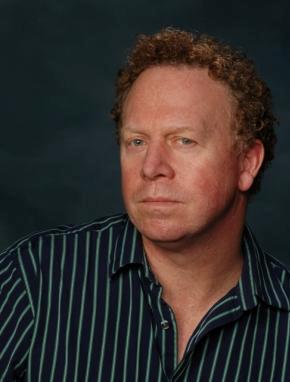
Voice is everything. Once you have the voice you have the novel. When I started The Pitcher, I wrote it in third person but quickly realized it would not work that way. It was boring and distant. So I started over and I knew it had to be first person, but who would tell the story? The old pitcher? The mother? No. The boy, Ricky would tell the story. And so I started to play around with his voice. Then I wrote one paragraph:

I never knew I had an arm until this guy calls out, “Hey, you want to try and get a ball in the hole, sonny?” I am only nine, but Mom says, “Come on, let’s play.” This carnival guy with no teeth and a fuming cigarette hands me five blue rubber balls and says I throw three in the hole, then we win a prize. He’s grinning, because he’s taken Mom’s five bucks and figures a sucker is born every minute. This really gets me , because we didn’t have any money after Fernando took off, and he only comes back to beat up Mom and steal our money. So I really wanted to get Mom back something, you know, for her five bucks.

And I had Ricky then. I had the novel. And where that voice came from is anyone’s guess. Maybe it is that kid who messed around in Baltimore City where I grew up. Maybe it was some of the Mexican guys I worked with in security. And the hard times Ricky and his mother go through are my own hard times. And the baseball is my son’s baseball and the coaches and parents are from nine years of being an assistant coach with my son. The immigration issues are from our time.

When I was thinking about writing The Pitcher, I was reading what was going on in Arizona at the time with immigration and the whole stop and ask people for their papers to deport them back to Mexico. When I wrote the mother character Maria I wanted her to have the same outrage that I felt reading about this practice of stopping people and demanding to see their papers. I wanted her to draw the conclusions that this was fundamentally un-American and I wanted her son Ricky to pick up on that especially since he was facing off with a Tea Party mom and her son.

I read a lot of accounts about Dream Kids in this country and how they had made their lives and then were in danger of being deported. That was really how I got the idea of making Ricky a Dream Kid. His mother did come over and make a life and now she was in danger of being deported.

Culturally, I knew Ricky because I know how it feels to be an outsider and to have all the odds stacked against you. Ricky’s dream of becoming an MLB pitcher is my own of becoming a novelist against immense odds.

Then again, maybe it was just Ricky flying around out there waiting to be born. But when The Latina Book Club made it their Monthly Selection or LatinoLA did a story on the immigration issues in the book or I stand up on a stage at the Latino Book Festival in Chicago and read my book that has to be translated to Spanish so the audience can understand what I am saying is…even I wonder how a I came to write a Latino novel.

 I guess I just did.


DSC_0020William Hazelgrove is the author of five novels, Ripples, Tobacco Sticks, which hit the National Bestseller List, Mica Highways, Rocket Man and The Pitcher. He was the Ernest Hemingway Writer in Residence where he wrote in the attic of Ernest Hemingway’s birthplace. He has written articles and reviews for USA Today and other publications. He has been the subject of interviews in NPR’s All Things Considered along with features in The New York Times, LA Times, Chicago Tribune, and the Chicago Sun Times, among others. His most recent novel, The Pitcher is a Junior Library Guild Selection. He runs a political cultural blog, The View From Hemingway’s Attic.


Book Review: América is Her Name by Luis J. Rodríguez

By Sonia Alejandra Rodríguez

696056DESCRIPTION FROM THE BOOK JACKET: Set in the Pilsen barrio of Chicago, this children’s picture book gives a heartwarming message of hope. The heroine, América, is a primary school student who is unhappy in school until a poet visits the class and inspires the students to express themselves creatively–in Spanish or English. América Is Her Name emphasizes the power of individual creativity in overcoming a difficult environment and establishing self-worth and identity through the young girl América’s desire and determination to be a writer. This story deals realistically with the problems in urban neighborhoods and has an upbeat theme: you can succeed in spite of the odds against you. Carlos Vázquez’s inspired four-color illustrations give a vivid sense of the barrio, as well as the beauty and strength of the young girl América.
MY TWO CENTS: Luis Rodríguez’s América is Her Name (1998) tells the story of América Soliz, an undocumented immigrant from Oaxaca, Mexico to Pilsen, Illinois—Chicago’s predominantly Mexican community—and her struggles to find her voice and an identity that captures the complexity of who she is. Throughout the text, América faces discrimination in the classroom, witnesses the violence in her community, and feels patriarchal oppression in her home. Through poetry, however, she gains a language and agency to challenge and transform her reality.

At the beginning of the story, the narrator makes clear that América is having a difficult time feeling like she belongs in her new home in the United States. Pilsen is not like her hometown in Oaxaca. She witnesses gun violence—a shooting between two youth groups—as she walks to school. Her white teachers marginalize her for not speaking English and she also overhears them calling her an “illegal.” While América is not sure what that means or how a person can be illegal,she understands they do not want her to belong. At home, América becomes aware of the discrimination her parents face as manual labor workers when her father loses his job and her mother comes home expressing her frustration at being called a “wetback.” The narrator also alludes to the fact that the uncle that lives with them is an alcoholic.

Despite the barrage of oppressions that América confronts on a daily basis, she is able to find a sense of self and a voice through poetry. Her classroom gets a visit from a Puerto Rican poet, Mr. Aponte, who encourages América to write her story in any form and any language that best represents her. América writes about her Mixteca indigenous culture in Oaxaca and encourages her mother and younger brother to do the same. The most beautiful scene in the book is a representation of América and her mother sitting at the kitchen table as they practice their writing.

Illustrator Carlos Vazquez depicts mother and daughter in vibrant colors as their words come alive. It is an empowering moment for América and for the reader. Poetry, and writing in general, is not reserved only for América, who has access to education and the possibility of belonging in the United States, but América also makes is available to her mother. By sharing this practice with her mother, América challenges understandings of who gets to belong, which is an extremely important theme in the book. Furthermore, by making poetry available to her family, América attempts to bridge the divide between (im)migrants and their children. América is Her Name is a heartfelt and empowering story that explores issues of what it means to belong in the United States.

AUTHORLuis J. Rodriguez is one of the leading Chicano writers in the country with fifteen published books in memoir, fiction, nonfiction, children’s literature, and poetry. Luis’ poetry has won a Poetry Center Book Award, a PEN Josephine Miles Literary Award, and a Paterson Poetry Book Prize, among others. His children’s books—America is Her Name and It Doesn’t Have to be This Way: A Barrio Story—have won a Patterson Young Adult Book Award, two Skipping Stones Honor Awards, and a Parent’s Choice Book Award. Luis Rodriguez is best known for the 1993 memoir of gang life, Always Running: La Vida Loca, Gang Days in L.A.

FOR MORE INFORMATION about América Is Her Name visit your local library or bookstore. Also check out worldcat.org, indiebound.org, goodreads.com, amazon.com, barnesandnoble.com, and Curbstone Press.

headshotSonia Alejandra Rodríguez has been an avid reader since childhood. Her literary world was first transformed when she read Rudolfo Anaya’s Bless me, Última as a high school student and then again as a college freshman when she was given a copy of Sandra Cisneros’s The House on Mango Street. Sonia’s academic life and activism are committed to making diverse literature available to children and youth of color. Sonia received her B.A. in English from the University of Illinois at Urbana-Champaign. She is currently a PhD candidate at the University of California, Riverside, where she focuses her dissertation on healing processes in Latina/o Children’s and Young Adult Literature.

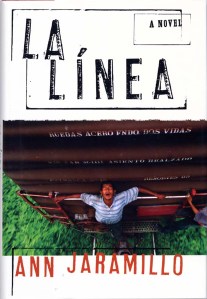
Book Review: La Línea by Ann Jaramillo

La Linea imageBy Lila Quintero Weaver

DESCRIPTION FROM THE BOOK JACKET: When fifteen-year-old Miguel leaves his rancho deep in Mexico to migrate to California across la línea, the border, his life is about to begin. Or so he thinks.

MY TWO CENTS“It’s been six years, eleven months and twelve days since I left to go north across la línea. It’s time for you to come.” So reads the note that Miguel receives from his father on his fifteenth birthday. During the long separation (his mother has also emigrated), Miguel, his grandmother, and sister, Elena, 13, eke out a meager existence in drought-stricken San Jacinto, Mexico. Surely life holds more than this! In the note, Papá instructs Miguel to pay a visit to Don Clemente, the wealthy patrón of the area. Years back, Papá rescued Don Clemente from a house fire. Now the old man repays that debt by funding Miguel’s flight to El Norte.

The arduous journey across la línea involves several modes of travel: by bus, riding the roof of a freight train, and crossing the desert on foot. Miguel encounters a wide array of obstacles en route, including the unwelcome surprise that Elena is along for the journey, too. Despite a series of setbacks, the siblings and a helpful new acquaintance named Javier press on toward their dream. At one point, bandits decimate their resources. At another, Mexican officials send them packing south— all the way to the Guatemalan border, in fact. Next, the trio sneaks a ride north by clambering on the roof of a freight train. The risks involved can’t be overstated. Nicknamed mata gente (people killer), such trains are responsible for dismemberments and deaths, not to mention exposure to cold, heat, and roving bands of ruthless gangs. I won’t even begin to list the perils they encounter in the next leg of the journey, the desert.

I respect the authoritative voice behind this novel. Ann Jaramillo is an ESL instructor with many years’ exposure to the true, and often harrowing, stories of border crossings by Mexicans and Central Americans. Her depiction of the mechanics involved is well informed. She describes life before and during the flight to the United States effectively, and highlights the poverty and bleak opportunities on the Mexican side with convincing detail, within age-appropriate limits.

Readers will encounter frequent terms and phrases in Spanish, not always translated, but whose meanings are usually discernible through context.

TEACHING TIPSTeaching Books offers a detailed curriculum guide for La Línea.

Miguel and Elena’s immigrant journey reflects recent and ongoing sociopolitical conditions. More importantly, they add faces and human emotions to related current events. Students can use this novel as a jumping-off point for the investigation of true immigration stories. They can achieve better understanding of what motivates people to emigrate/immigrate by researching their own family histories, or by comparing the characters’ experiences with that of other Latino and non-Latino settlers of the Americas.

This is a good text for enhancing Spanish vocabulary. It can also be used to increase awareness of rural Mexican customs.

LEXILE: 650

AUTHOR: Ann Jaramillo lives in Salinas, California. La Línea is her first novel. Ms. Jaramillo’s intimate knowledge of the Mexican-American immigrant journey comes through her work as an instructor of English as a Second Language, and her marriage of many years to Luis Jaramillo, a lawyer of Mexican-American heritage who has served migrant farmworkers for decades. In the author’s note, she explains that the inspiration for writing La Línea came from accounts of perilous crossings that her middle-grade students shared with her.

For more information about La Línea visit your local library or bookstore. Also check out WorldCat.orgIndiebound.orgGoodreadsAmazon and Barnes and Noble.