Celebrating Pura Belpré Award Winners: Spotlight on Julia Alvarez


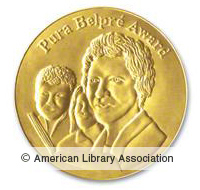
PuraBelpreAwardThe Pura Belpré Awards turns 20 this year! The milestone will be marked on Sunday, June 26, from 1:00-3:00 p.m. during the 2016 ALA Annual Conference in Orlando, FL. According to the award’s site, the celebration will feature speeches by the 2016 Pura Belpré award-winning authors and illustrators, book signings, light snacks, and entertainment. The event will also feature a silent auction of original artwork by Belpré award-winning illustrators, sales of the new commemorative book The Pura Belpré Award: Twenty Years of Outstanding Latino Children’s Literature, and a presentation by keynote speaker Carmen Agra Deedy

Leading up to the event, we will be highlighting the winners of the narrative and illustration awards. Today’s spotlight is on Julia Alvarez, the winner of the 2004 Pura Belpré Narrative Award for Before We Were Free and the 2010 Narrative Award for Return to Sender.

Reviews by Cindy L. Rodriguez

BEFORE WE WERE FREE

DESCRIPTION FROM THE PUBLISHER: Anita de la Torre never questioned her freedom living in the Dominican Republic. But by her 12th birthday in 1960, most of her relatives have emigrated to the United States, her Tío Toni has disappeared without a trace, and the government’s secret police terrorize her remaining family because of their suspected opposition of el Trujillo’s dictatorship.

Using the strength and courage of her family, Anita must overcome her fears and fly to freedom, leaving all that she once knew behind.

From renowned author Julia Alvarez comes an unforgettable story about adolescence, perseverance, and one girl’s struggle to be free.

MY TWO CENTS: Anyone who has read Julia Alvarez’s adult novels will enjoy the connections made in Before We Were Free to How the Garcia Girls Lost Their Accents and In the Time of the Butterflies. In Before We Were Free, Alvarez explores the Trujillo dictatorship in the Dominican Republic through the eyes of Anita de la Torre, a 12-year-old girl in 1960 whose family slowly reduces in number during the novel. Some, like her cousins, the Garcias, flee the country, while others go missing or are arrested. In the beginning, Anita has little knowledge of politics and the underground movement to assassinate Trujillo. In fact, at the start of the novel, Anita looks to El Jefe’s picture at times when she needs strength. She slowly becomes more aware that life under Trujillo has become increasingly dangerous for many, including her own family members who are a part of the movement to kill the dictator.

One moment of shocking clarity comes when Trujillo attends a party and becomes attracted to her fifteen-year-old sister. The family goes into emergency mode and manages to get her sister out of the country before Trujillo can take her in every sense of the word. Anita’s increased understanding leaves her confused and literally shocked into silence. The once-talkative girl slips into silence, at times even forgetting words that were once simple and familiar. When Anita and her mother go into hiding after Trujillo’s assassination, she writes in her diary, but then erases the pages in case the secret police raid the home. She literally cannot say or write anything because of fear. At some point, Anita decides to write and not erase–or be erased. She wants someone to know she existed if she were ever taken away by the police.

Throughout the novel, Alvarez often refers to wings, birds, and flying in connection with the Mirabal sisters, the “Butterflies” who were murdered, and the fight for freedom that continued through Anita’s family and others. Anita not only takes flight from her home, but has to learn how to free herself internally, to spread her wings and fly despite her grief of losing family and everything she considered home.

A masterful storyteller, Alvarez makes a complex political situation accessible to younger readers through Anita, who faces political drama alongside normal 12-year-old milestones, like getting her period and having a first crush. Alvarez also sprinkles the narrative with other issues that she does not delve into deeper, but could be discussion starters for book clubs and students. For example, Anita’s family employs a black, superstitious Haitian maid. While she is loved like family, this dynamic should spark conversation about race and class issues within Latin American countries. Another example is when Anita begins school in New York City. She is placed in the second grade, despite her age, and her teacher calls her “Annie Torres.” This scene is like a one-two punch to the gut and should be examined further. Mental health is another issue touched upon that warrants further discussion. Anita talks about feeling empty and numb, and her mother takes tranquilizers to calm her nerves. The reader gets the idea that living under such conditions and surviving when family members did not will require years of emotional and psychological recovery.

TEACHING TIPS: Before We Were Free is a great option to include in a historical fiction unit in Language Arts or as a fictional option in a Social Studies class learning about different types of governments, Latin America, or under a theme such as “the fight for freedom.” Students often learn about the colonists’ fight against the British, but rarely learn about more recent struggles for democracy in other countries. The relationship between Haiti and the Dominican Republic could be explored, as well as the ideas mentioned above. Anita’s character development should be traced and analyzed, paying close attention to what triggers each of her changes and what finally prompts her to have the courage to embrace her new life.

RESOURCES:

Review from Vamos a Leer

Educator Guide from Vamos a Leer

Reader’s Guide from Penguin Random House


RETURN TO SENDER:

DESCRIPTION FROM THE PUBLISHER: After Tyler’s father is injured in a tractor accident, his family is forced to hire migrant Mexican workers to help save their Vermont farm from foreclosure. Tyler isn’t sure what to make of these workers. Are they undocumented? And what about the three daughters, particularly Mari, the oldest, who is proud of her Mexican heritage but also increasingly connected to her American life. Her family lives in constant fear of being discovered by the authorities and sent back to the poverty they left behind in Mexico. Can Tyler and Mari find a way to be friends despite their differences?

In a novel full of hope, but with no easy answers, Julia Alvarez weaves a beautiful and timely story that will stay with readers long after they finish it.

MY TWO CENTS: Although Before We Were Free and Return to Sender are set in different countries, they have similarities. In Return to Sender, Mari and her family are migrant workers on a Vermont dairy farm. She encounters a mix of acceptance and scorn from her classmates, the townspeople, and even Tyler, at first. The chapters are shared between Mari (first person, often written in letters) and Tyler (third person), who reveals that he is confused about being a proud, patriotic American and knowing that his father is breaking the law by hiring undocumented workers. In addition to dealing with the varied reactions of the locals, Mari’s family worries about the whereabouts of her mother, who returned to Mexico but is supposed to be on her way back via a coyote. She has been unreachable, however, for several months. The family is also under constant threat of deportation. Complicating matters, Mari was born in Mexico, while her two younger sisters were born in the United States, which splits their feelings about where is home and how they would feel if they needed to return to Mexico.

Like Anita in Before We Were Free, Mari ends up in hiding and writing in a diary, after a raid by the U.S. Immigration and Customs Enforcement ends with her parents being arrested. Also like Anita, Mari needs to find her voice and, in her case, she has to find the courage to speak on behalf of her family to government officials. Read together, students could explore the different reasons for immigration, as the families in the two novels come to the United States for different reasons–political asylum versus employment–yet the underlying reason is always the same–more opportunities for their children.

Things that struck me as odd were Mari’s heavy accent (I listened to the audio book), her lack of understanding of English “sayings,” and her fond memories of Mexico, considering she moved to the U.S. when she was 4 and has attended American schools. Based on my experience with ELL students, these details would have made more sense if Mari had been in the U.S. for only a few years, not the majority of her life.

Still, Return to Sender does a great job of offering various viewpoints on immigration and migrant workers on struggling American farms, and I like that Alvarez places her migrant workers in Vermont, where the author lives, as we most often read and hear about migrant workers in border states.

TEACHING TIPS: As mentioned above, students could read both novels and compare/contrast the characters and their experiences, as both face personal, familial, and political challenges. Return to Sender also allows students to learn more about immigration and migrant workers, particularly in New England. The title was taken from a real government operation to find and deport migrant workers, so students can research that particular policy while reading this fictional account. Both books also lend themselves to deep questions about freedom, rights, and who has access to these.

RESOURCES:

Educators guide from Random House

TeachingBooks.net has interviews and several links with more information about Alvarez and her work.


Jilia Avaraz receiving a medal from Barack ObamaABOUT THE AUTHOR: Julia Alvarez is an award-winning writer of poetry, essays, and novels and short stories for children and adults. Alvarez was born in New York City, but her family returned to the Dominican Republic when she was three months old. Her family became involved with the underground movement against dictator Rafael Trujillo. They left the country and returned to New York City in 1960. She graduated with a bachelor’s degree from Middlebury College and earned her master’s in creative writing from Syracuse University. She is currently the writer in residence at Middle College and runs a sustainable coffee farm/literacy center in the Dominican Republic.

Her novels for adults include How the Garcia Girls Lost Their Accent, In the Time of Butterflies, iYo!In the Name of Salomé, and Saving the World. Her books for children include How Tía Lola Came to Visit/Stay, Before We Were Free, Finding Miracles, and Return to Sender. Alvarez has won numerous awards for her work, including the Pura Belpré and Américas Awards for her books for young readers, the Hispanic Heritage Award in Literature, and the F. Scott Fitzgerald Award for Outstanding Achievement in American Literature. In this picture, she is receiving the National Medal of the Arts from the National Endowment of the Arts, presented by President Barack Obama.

Spotlight on Latina Illustrators Part 3: Sara Palacios, Claudia Rueda, and Tania de Regil


By Cecilia Cackley

This is the third in a series of posts spotlighting Latina illustrators of picture books. Some of these artists have been creating children’s books for many years, while others will have their first book out this year. Some of them live in the US, while others live overseas. They come from many different cultural backgrounds, but all are passionate about connecting with readers through art and story. Please look for their books at bookstores and libraries!

Interview answers from Claudia Rueda and Tania de Regil have been translated from Spanish.

Sara Palacios

Sara Palacios is an illustrator from Mexico. She studied Graphic Design at Universidad Autónoma Metropolitana, Mexico DF, School of Design, INBA  (National Institute of Fine Arts) Mexico DF, and Universidad del Claustro de Sor Juana, Mexico DF. She studied illustration at Academy of Art University, San Francisco CA, where she has been part-time faculty since 2014. She received the Pura Belpré Honor for illustration in 2012 and is the illustrator of the Marisol McDonald series by Monica Brown for Lee & Low, as well as numerous other books. Her newest picture book, One Big Family (written by Marc Harshman) will be published by Eerdmans Books for Young Readers later this year.

Q: What inspired you to become an artist?

A: I always liked to draw, but I didn’t know that illustrators even existed until I was pursuing my Graphic Design degree in Mexico. I was invited to an illustration exhibition. That was the first time I became aware of what illustration was. I was in awe! and I knew that’s what I wanted to do. The same friend who invited me to the exhibition told me that one of the illustrators was looking for somebody to help him. My friend encouraged me to go to the interview and show my drawings and I got the job! I started washing brushes and cutting paper until little by little I was taught to paint in watercolor. That job was my first school of illustration and I’ve been doing that ever since. After finishing my degree in Mexico I went on to study for my BFA and MFA in illustration in the US.

Q: Tell us about your favorite artistic medium.

A: I don’t really have a favorite medium. The first technique I ever learned was watercolor and for years that was the only medium I used until I started working toward my BFA at the Academy of Art in San Francisco. Through the classes, I began using gouache, acrylics , pastels, the computer etc. At first, I was afraid of mixing one technique with another, but I started experimenting on my own and I realized that what works best for me is mixed media. I also like collage, so all my illustrations are done with mixed media now. I use everything from colored pencils, watercolor, markers, gouache, digital. I don’t think I can just pick one technique.

Q: Please finish the sentence “Picture books are important because…”

A: They can bring some magic to children and adults alike.

12629258  17940785


Claudia Rueda

Image result for claudia rueda
Claudia Rueda
 is a Colombian picture book author, New York Times Best Seller illustrator and a 2016 Hans Christian Andersen award nominee. Her books have been published throughout North America, Europe and Asia and have been translated into more than ten different languages. In the United States, she is best known as the illustrator of the series Here Comes theCat by Deborah Underwood. Her concept books for young readers have been published in Spanish by the publisher Oceano Travesia.

Q: What inspired you to become an artist?

A: I have always liked to draw, like all kids. And I’ve always liked to imagine things and create stories, also like kids when they are playing. Basically, when it was time to put away the colored pencils and imagination to become ‘grown up’ I decided not to do it.

Q: Tell us about your favorite artistic medium.

A: Graphite pencil on white paper is my favorite medium. The capacity for expression in the strokes, it’s simplicity and versatility goes very well with my creative process.

Q: Please finish the sentence “Picture books are important because…”

A: The combination of visual narration with the verbal enriches the experience of reading and allows the story to happen in the mind of the reader that combines the two languages.

18349512  18701595  23281875  25361885


Tania de Regil

taniadrTania de Regil is an author and illustrator from Mexico City. When she was five, she moved to Stockholm, Sweden with her family, where she discovered her love of reading and decided that she wanted to be a professional author some day. Tania studied fashion design at Parsons School of Design in New York City and finished her studies in her home country of Mexico. Her work as a costume designer in film and television has helped to better grasp the art of storytelling through images. Tania’s illustration work is always filled with interesting details for children to discover. She uses a variety of media in her work, such as watercolor, gouache, color pencils, wax pastels and ink to create richly textured, engaging images. Tania’s debut picture book, Sebastián y la isla Tut, which she both wrote and illustrated, was published in November, 2015 by Macmillan Mexico.

Q: What inspired you to become an artist?

A: When I was a girl, my family and I went to live in Sweden. Since I didn’t know the language, what helped me the most was reading. My teacher gave me lots of books and among them were books by Roald Dahl, illustrated by Quentin Blake. In that moment, I fell in love completely with the stories and illustrations and I decided that one day I would be a great writer and illustrator like them. I was eight years old.

Q: Tell us about your favorite artistic medium.

A: I like watercolor a lot because I can never have complete control over it. It’s a medium full of surprises and makes it much more expressive and fun to use. I also like to mix it with other materials like colored pencil, oil pastels, gouache and ink. I liked to always continue experimenting with new materials but the basis of all my illustrations is watercolor.

Q: Please finish the sentence “Picture books are important because…”

A: They take you to worlds where the imagination never ends.


Books to Look For:

Brown, Monica. Marisol McDonald Doesnt Match

Brown, Monica. Marisol McDonald and the Clash Bash

Harshman, Marc. One Big Family

Rueda, Claudia Is it big or is it little?

Thong, Roseanne Greenfield. Twas Nochebuena

Underwood, Deborah. Here Comes the Easter Cat

Underwood, Deborah. Here Comes Santa Cat

Underwood, Deborah Here Comes Valentine Cat

Author Ava Jae on Not Writing Latinx Characters


By Ava Jae

With both of my maternal grandparents born in Cuba, and both of my paternal grandparents born in Mexico, I am, indisputably, a third generation Latina. I learned Spanish before I learned English, celebrated Three Kings Day for the first decade of my life, and looked forward to my Cuban grandma’s incredible Christmas dinners—carne asada, frijoles negros con arroz, platanos maduros, y flan. I listened to my grandma’s stories in Spanish about growing up as the eldest of thirteen in Cuba, saw pictures of relatives I would probably never meet because they lived in a country Americans weren’t permitted to go to, and relished the warm, aromatic smell of café con leche in the morning.

And yet, by the time I’d finished my tenth manuscript—the one that would become my debut, Beyond the RedI still hadn’t written about a single Latinx character.

Looking back, there were a lot of reasons why that happened.

Firstly, I don’t fit the mold the media insists Latinx people fit into. I’m short—painfully so—and have dark eyes, sure, but that’s where the similarities end. Though I tan well when I spend time in the sun, I’m pale 99.9% of the time. My hair is brown, not black. I’m thin, not curvy. Though my pronunciation is native and I can understand it well enough, I’ve forgotten most of my Spanish. I’m not a flirty, exotic beauty who moves her hips like she was born dancing; I’m a tomboy, and awkward, and an introvert. My legal last name isn’t one of the common Mexican last names that’s easily recognizable as Latinx. When people look at me, they don’t see a Latinx person; they see a white kid.

And for a long time while I was writing, I started to see myself as a white kid, too.

I guess, in a sense, it was inevitable—no one in my immediate family looks like a stereotypical Latinx person; we are light-skinned (yes, even the Mexican side of the family), and my grandma is the one of the few of her many siblings who doesn’t have green or blue eyes (hers are hazel). My biological father doesn’t fit any of the Mexican stereotypes I’d learned; he burns instead of tans, he doesn’t like spicy food, and while he’s not super tall, he’s not exactly noticeably short, either.

I looked at my family, I looked at myself, and I internalized the shocked expressions I got every time I revealed I was, in fact, of the Latinx community. I learned it wasn’t in my favor to reveal my ethnicity when applying for a job, I was reminded time and time again with Mexican jokes, with talk about those illegals, with the stereotype of the working class Latinx person stuck doing the dishes, or cleaning homes, or taking the jobs that no one else wanted, that there were really no advantages to saying, “Yes, I’m Latina.”

So I stopped saying it. I justified it a day at a time, with “I can’t even speak Spanish,” with “I don’t even look Latina,” with “I wasn’t raised in a vibrant, Latinx community.” I hesitated on surveys that asked me to check “Caucasian” or “Hispanic.” I started believing I didn’t count.

So maybe it’s not a surprise that I wrote ten manuscripts without once considering writing a Latinx character. Maybe it’s inevitable that I didn’t feel it was my place to write a Latinx character. Maybe the fact that I never saw a character like me—Latinx, but light-skinned and unable to speak fluent Spanish—only reinforced this belief that I didn’t count. That I didn’t belong.

But slowly, things are starting to change. Adam Silvera wrote More Happy Than Not, and, for the first time, I read about a Latino boy who couldn’t speak Spanish. My friends online have spoken about being white-passing, about why this privilege so often hurts, about how people like me who feel stuck between two cultures without fitting completely into either exist. Slowly, I’ve begun reclaiming my identity. I’ve given myself permission to write characters like me.

And after I finished Beyond the Red and realized some of my experience had seeped through—in my male protagonist caught between two cultures, and in some of the pronunciation of the language my female protagonist speaks—I couldn’t help but smile.

Because even when I didn’t see it, being Latinx is, and has always been, a part of me. And I’m not going to hide it anymore.


Ava Author Photo_smallJPGAva Jae is a writer, an Assistant Editor at Entangled Publishing, and is represented by Louise Fury of The Bent Agency. Her YA Sci-Fi debut, BEYOND THE RED, released March 1, 2016 from Sky Pony Press. When she’s not writing about kissing, superpowers, explosions, and aliens, you can find her with her nose buried in a book, nerding out over the latest X-Men news, or hanging out on her blogTwitterFacebooktumblr, Goodreads, Instagram, or YouTube channel.

Book Review: Funny Bones: Posada and His Day of the Dead Calaveras by Duncan Tonatiuh

Reviewed by Cecilia Cackley

DESCRIPTION OF THE BOOK (from Goodreads): Funny Bones tells the story of how the amusing calaveras—skeletons performing various everyday or festive activities—came to be. They are the creation of Mexican artist José Guadalupe (Lupe) Posada (1852–1913). In a country that was not known for freedom of speech, he first drew political cartoons, much to the amusement of the local population but not the politicians. He continued to draw cartoons throughout much of his life, but he is best known today for his calavera drawings. They have become synonymous with Mexico’s Día de los Muertos (Day of the Dead) festival. Juxtaposing his own art with that of Lupe’s, author Duncan Tonatiuh brings to light the remarkable life and work of a man whose art is beloved by many but whose name has remained in obscurity.

MY TWO CENTS: I can’t say enough good things about this book! Tonatiuh tells Posada’s life story simply, while still giving background information on events such as the Mexican Revolution for context. The pages showing a breakdown of the three distinct artistic processes that Posada used (lithography, engraving and etching) are especially helpful in visualizing exactly how he created his drawings. Tonatiuh’s signature profile figures, inspired by Mixtec codex imagery, fit nicely alongside Posada’s black and white skeletons. The full page reproductions of famous skeleton art alongside a question about what message Posada was communicating with his art push readers to consider the goals of the artist. A detailed author’s note, glossary, and bibliography are essential for those looking for further information. This is a great read aloud for younger kids that still has enough detail and big ideas for older readers.

TEACHING TIPS: This is going to be a marvelous read aloud for both art teachers and classroom teachers. While many people will likely choose to highlight it during National Hispanic Heritage Month or around Dia de Muertos, it should also be a good fit for classes studying political cartoons or art history. Tonatiuh’s fantastic spread at the end of the book showing skeletons doing present day activities is a wonderful prompt for students to create their own calaveras artwork. As our world becomes more global and art and culture make their way across borders, this book provides an opportunity to discuss the importance of crediting artists and researching the history of particular art and cultural traditions.

ABOUT THE AUTHOR: Duncan was born in Mexico City and grew up in San Miguel de Allende. He graduated from Parsons The New School for Design and from Eugene Lang College in New York City in 2008. His work is inspired by Ancient Mexican art, particularly that of the Mixtec codex. His aim is to create images that honor the past, but that address contemporary issues that affect people of Mexican origin on both sides of the border. His book Pancho Rabbit and the Coyote: A Migrant’s Tale is the winner of the 2014 Tomás Rivera Mexican American children’s book award. It is also the first book to receive two honorable mentions, one for the illustrations and one for the text, from the Pura Belpré Award for a work that best portrays, affirms, and celebrates the Latino cultural experience in children’s books. The book was featured in USA Today, The Chicago Sun, The Houston Chronicle among other major publications because it deals with the controversial topic of immigration. His book Diego Rivera: His World and Ours won the 2012 Pura Belpré illustration award. It also won the 2012 Tomás Rivera. His first book Dear Primo: A Letter to My Cousin received an honorable mention from the Pura Belpré Award in 2011. It was named an Americas Award Commended Title and a Notable Book for a Global Society list.

LINKS:

SLJ Review

Kirkus Review

Publishers Weekly Review

Kirkus Prize Finalist Announcement

Google Hangout Video


Cackley_headshotCecilia Cackley is a performing artist and children’s bookseller based in Washington DC where she creates puppet theater for adults and teaches playwriting and creative drama to children. Her bilingual children’s plays have been produced by GALA Hispanic Theatre and her interests in bilingual education, literacy, and immigrant advocacy all tend to find their way into her theatrical work. You can find more of her work at www.witsendpuppets.com.
It’s Not So Scary! The Day of the Dead and Children’s Media


By Cris Rhodes

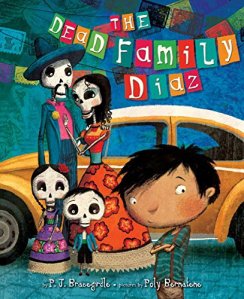
deadfamilydiazWith the Day of the Dead this weekend, I am reminded of recent children’s media, like P.J. Bracegirdle’s The Dead Family Diaz and Jorge Gutierrez’s film The Book of Life, that juxtapose the fraught topic of death against the colorful backdrop of the Day of the Dead. Through their fanciful visuals, full of lush, opulent colors and whimsical and endearing skeleton figures, books and films for children about the Day of the Dead repurpose traditionally scary imagery and repackage it as a beautiful celebration of both death and Mexican culture. While skeletons and death are often regarded as nightmare fuel in children’s literature and media, Day of the Dead narratives embrace the terrifying and show their readers and watchers that these spooky things aren’t so scary after all.

In recent years, for many Mexicans living in Mexico and abroad, Day of the Dead celebrations have come to symbolize something integral to the Mexican cultural identity. The Day of the Dead epitomizes Mexico’s complicated relationship with death and the afterlife, a tradition that finds its roots in the pre-Colombian celebrations of the days of the dead that allowed for the agrarian Mesoamericans to appeal to their bygone ancestors for a fruitful crop. The celebration as it manifests itself today comes from a blending of cultures; while many of the more traditional elements still pay homage to their Mesoamerican foundations, it’s becoming increasingly more common to find hybridized Day of the Dead celebrations throughout the U.S.

cocoFurthermore, mainstream American media have even started a push to officially recognize the Day of the Dead and its unique qualities, as evidenced by the forthcoming Disney/Pixar film Coco, directed by Toy Story 3’s Lee Unkrich with Mexican-American cartoonist Lalo Alcaraz acting as a cultural advisor. Despite Disney’s ill-fated bid to trademark the Day of the Dead in 2013, the company has persisted in making a Day of the Dead-themed film, which stands to be Disney/Pixar’s first film to feature a Latino protagonist. While very few details about Coco have been released, I choose to be optimistic and hope that it, like so many other Day of the Dead narratives, use the potentially terrifying images of skeletons and the similarly scary as reclaimed images that celebrate Mexican culture and its myriad qualities.

While many people tend to conflate the Day of the Dead and Halloween (as evidenced by the released dates of both Day of the Dead-centered films, Coco and The Book of Life, in either October and November), the two are entirely separate celebrations. But the Day of the Dead’s proximity to Halloween, and Halloween’s typically more frightening imagery, often makes the Day of the Dead guilty by association. However, Day of the Dead picture books and films erase fear of the dead through their bookoflifeheart-warming and endearing depictions of living children and their interactions with their deceased loved ones. In these books and the film, The Book of Life, skeletons act as a bridge between the living and the dead. While they epitomize death, skeletons (or calaveras) also connect to the living—take for example Erich Haeger’s Rosita y Conchita—in this bilingual picture book, the Day of the Dead allows the living Conchita to interact with her deceased, and skeletal, twin sister, Rosita. Skeletons also
hint to the inherent festive nature of the Day of the Dead, like the dancing skeletons in Richard Keep’s Clatter Bash! Or the festival-attending skeleton family in Bracegirdle’s The Dead Family DiazMost importantly, in these Day of the Dead narratives, none of the characters are ever truly afraid of the dead or of death. Skeletons become a common occurrence in Day of the Dead narratives, and they act as a motif throughout these texts and in The Book of Life.

By introducing the child viewer to books and to films like The Book of Life, any negative emotions connected to death are suspended. In the film’s afterworld, called the Land of the Remembered, a new world for death is created in the colorful landscapes and festive atmosphere. The Land of the Remembered is a place where memory acts as a source of life. By invoking the positivity of memory even in the absence of death, The Book of Life emphasizes that death is nothing to be feared. In this world, death is not scary nor is it a definitive ending. In the Land of the Remembered, Manolo, the film’s protagonist, is reunited with his immediate family and his ancestors. He sees his death as a necessary event that will allow him to exist with his true love, Maria. It is only after he learns that Maria has not really died and is not in the Land of the Remembered that the festivity of this place is temporarily lost, but it is regained once La Muerte, a goddess of death, and the other gods restore Manolo’s life at the end of the film.

9607766   865485

Ultimately, what these narratives illuminate for their young audiences is that death and all of its tenants are nothing to fear. Though other children’s books and films that explore themes related to death are often viewed as controversial (like the often-banned Bridge to Terabithia, or books that are purposefully frightening like the Goosebumps series), the celebratory nature of Day of the Dead stories provides a positive counter-narrative to the scary and off-putting norm. Teachers and librarians could and should encourage their readers to pick up Day of the Dead books like these, because they explore death and Mexican culture in a positive way. As we gear up to celebrate our own loved ones passed on this Day of the Dead, it would behoove us to take a look at Day of the Dead picture books and The Book of Life, or to eagerly anticipate Coco, as an apt way to celebrate this unique holiday.


CrisRhodesCris Rhodes is a graduate student at Texas A&M University – Corpus Christi where she divides her time between working on her thesis project about Chicana young adult literature, teaching first year composition to her beloved students, and working at her university’s Writing Center. She received her B.A. from Longwood University in her home state of Virginia, where she discovered her love of children’s literature and began her journey studying Latino children’s and young adult literature through an independent study of the stereotypical depictions of Latinos in young adult literature.

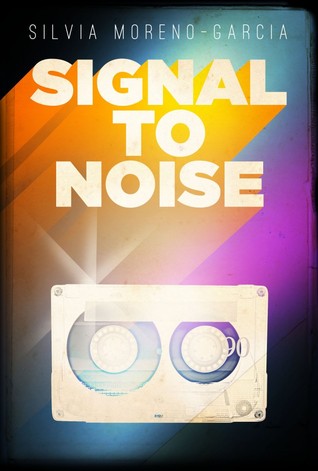
Book Review: Signal to Noise by Sylvia Moreno-Garcia


22609306By Eileen Fontenot

DESCRIPTION FROM THE PUBLISHER A literary fantasy about love, music and sorcery, set against the background of Mexico City.

Mexico City, 1988: Long before iTunes or MP3s, you said “I love you” with a mixtape. Meche, awkward and fifteen, has two equally unhip friends — Sebastian and Daniela — and a whole lot of vinyl records to keep her company. When she discovers how to cast spells using music, the future looks brighter for the trio. With help from this newfound magic, the three friends will piece together their broken families, change their status as non-entities, and maybe even find love…

Mexico City, 2009: Two decades after abandoning the metropolis, Meche returns for her estranged father’s funeral. It’s hard enough to cope with her family, but then she runs into Sebastian, and it revives memories from her childhood she thought she buried a long time ago. What really happened back then? What precipitated the bitter falling out with her father? And, is there any magic left?

MY TWO CENTS: This is an intimate tale that, while telling us both the story of teenage Meche and how she has grown up – and not – in the intervening 20 years, has its foundations in a pure coming-of-age romance.

Teens today should be able to relate to 15-year-old Meche, who is equal parts charismatic and surly. Growing up in Mexico City in the 1980s with an alcoholic father and an overbearing mother, she protects herself from the indignities of teenagehood in the earphones of her Walkman. (For those born after the 1980s, Walkmans are the precursors to our wonderful digital devices that can sync up with iTunes.) One day, she discovers that the power of her records can make magic–literal magic, just like her grandma, Mama Dolores says exists.

She convinces her best pals, Sebastian, a literature-loving pseudo-punk, and Daniela, who dresses all in pink and still has a soft spot for her Barbie collection, to help her use magic to meddle in romantic matters and take revenge on those who wrong her and her friends. Classic rock beloved by her father and artists like Miguel Bose and Duncan Dhu spur on her magic, which becomes dangerous as she gets deeper and deeper. Until the bonds between her and those closest to her are stretched to the utmost limit.

We hop back and forth in time from the ‘80s to 2009, when Meche, a successful professional living abroad, returns to Mexico City for her father’s funeral. We find out that they’ve been estranged, which is a surprise, since we know how much Meche’s father (through passages in his book in his point of view) adored her. Much as she did as a teen, adult Meche feels out of place in her old neighborhood. Will she find a place for her in her old neighborhood or is the magic gone forever? Sebastian may have something to say about that.

TEACHING TIPS: Much like the books that have won Alex Awards, Signal to Noise has appeal for both teens and adults. The universal themes of alienation and parental discord are emotions that anyone of any age can relate to. Modern teens may find themselves fascinated by the description of life in Mexico City nearly 30 years ago and discover it’s not so different from their lives today. Teens in local book clubs could compare and contrast how they think teens in the ‘80s would have communicated with their friends (with no fancy technology, horror!) or completed homework assignments (studying honest-to-God paper books at the library, anyone?). A fun craft that librarians could work into a book club discussion is decorating T-shirts with neon puffy paint or stylishly shredding an old pair of jeans. I know of several people who still have records (and one public library as well), so perhaps an old-fashioned listening party is in order?

Book club facilitators could also prompt teens to imagine what their lives will be like in 20+ years. What sort of technology may we see in 2035? What sort of social progress may we have made, if you’d like a deeper discussion? What sort of things have their parents seen happen in the past few decades that seems like no-brainers to youth of today. (Gay marriage and women’s rights come to mind. However, groups may want to explore how much advancement we’ve made regarding racial equality in light of the recent Charleston shooting and the events of Baltimore and Ferguson.)

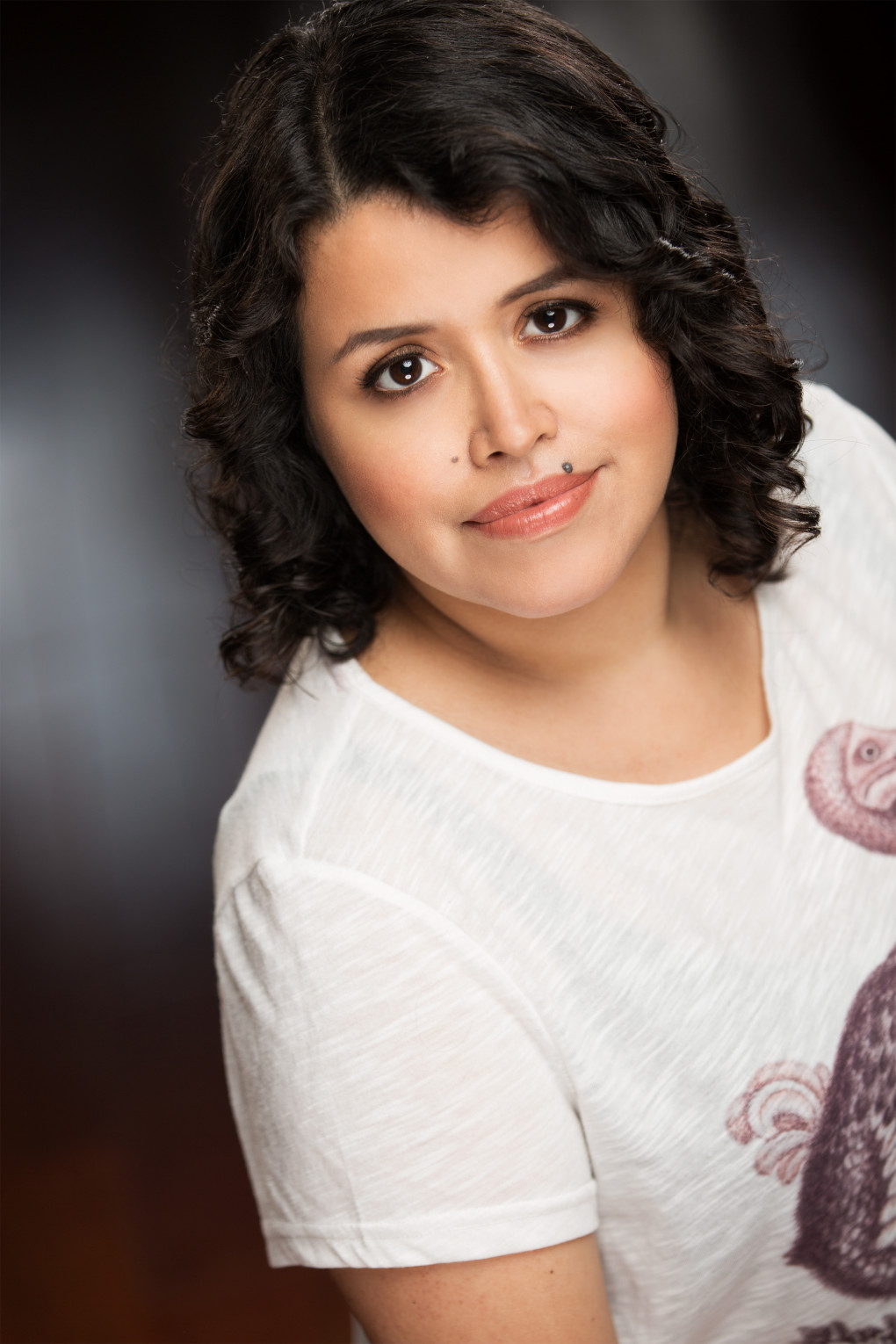
S_Moreno_20150516_0492_print-1020x1530AUTHOR (DESCRIPTION FROM HER WEBSITE): Mexican by birth, Canadian by inclination. Silvia Moreno-Garcia‘s debut novel, Signal to Noise, about music, magic and Mexico City, was released in 2015 by Solaris. Silvia’s first collection, This Strange Way of Dying, was released in 2013 and was a finalist for The Sunburst Award for Excellence in Canadian Literature of the Fantastic. Her stories have also been collected in Love & Other Poisons. She has co-edited the anthologies Sword & Mythos, Historical Lovecraft, Future Lovecraft, Candle in the Attic Window and Fungi. Dead North and Fractured are her solo anthologies. Silvia is the publisher of Innsmouth Free Press, a Canadian micro-publishing venture specializing in horror and dark speculative fiction.


FOR MORE INFORMATION ABOUT Signal to Noise visit your local public library, your local bookstore or IndieBound. Also, check out GoodreadsAmazon, and Barnes & Noble.


Eileenfontenot headshot Fontenot is a recent graduate of Simmons College Graduate School of Library and Information Science in Boston. She works at a public library and is interested in community service and working toward social justice. A sci-fi/fantasy fan, Eileen was formerly a newspaper writer and editor.