A Holiday Sampler of Treasured Memories

By Lila Quintero Weaver

Come in from the cold! Childhood memories bring warmth to almost everything we do during the holidays, no matter how we choose to celebrate. As adults, we’re often in charge of enlivening the season for the children we love, as well as the child still within us. For extra inspiration, we’ve called on some favorite people with connections to Latin@ kid lit.  Here’s the question we posed to Jacqueline Jules, Margarita Engle, Danette Vigilante, Angela Cervantes, and Tracy López:

The holiday season often reflects the wide diversity within the Latin@ community. Would you share a childhood memory of your Hanukkah or Christmas past, or simply a special winter memory?

And here’s how they answered:

JACQUELINE JULES 
Menorah collage

Hanukkah, like all Jewish holidays, follows a lunar calendar. It generally occurs at least a week (if not two or three) before Christmas. As a child, not having to wait till December 25th  was a great bonus for me. I loved getting presents before everyone else at school. The year I remember most is when I received a mezuzah necklace. A mezuzah contains a parchment with the Sh’ma prayer, the central tenant of the Jewish faith. My parents gave me a small cylindrical pendant on a sterling silver chain. It was a requested gift and my first real piece of jewelry.

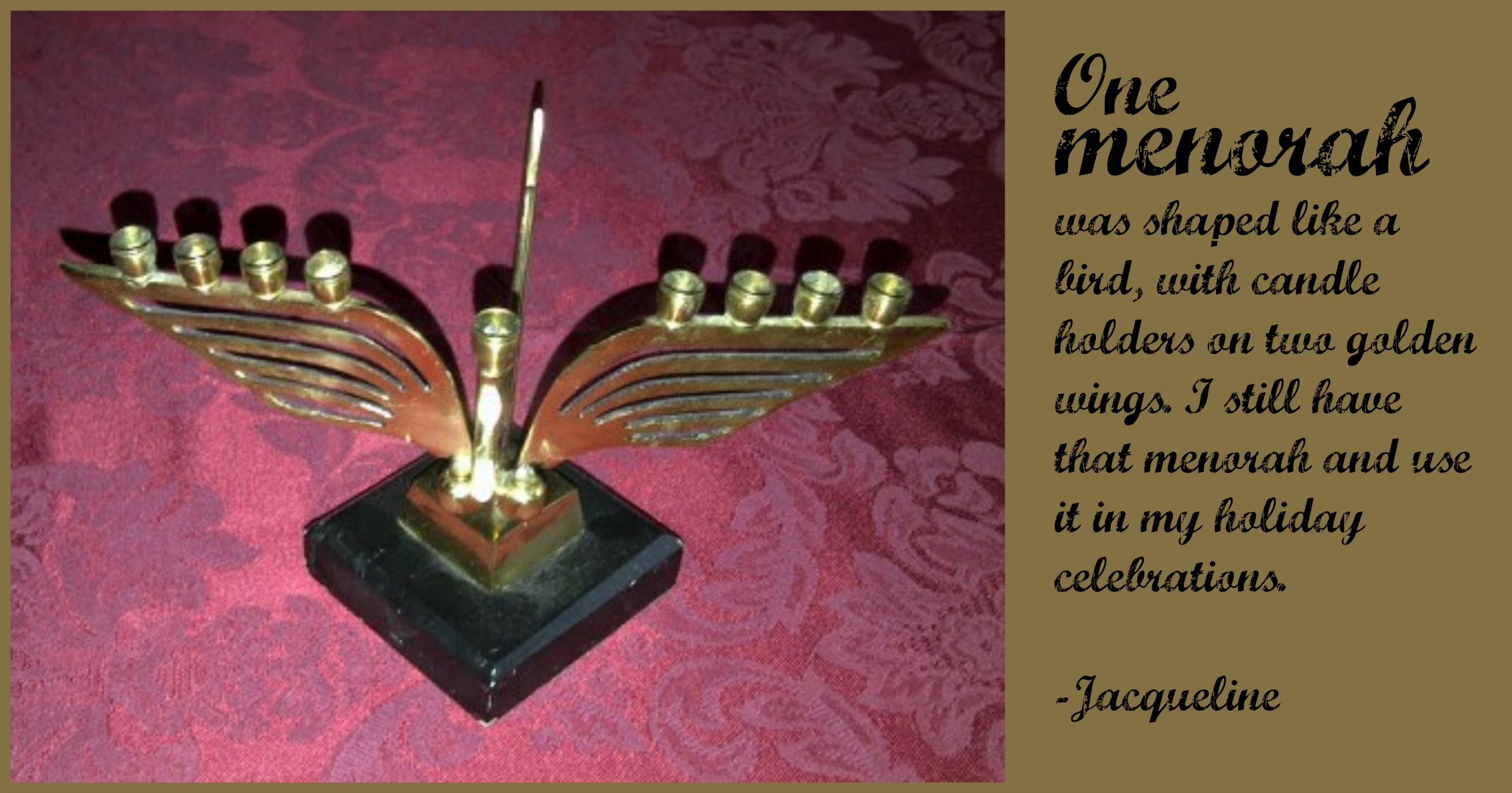
Growing up in a small southern town, my religion made me an outsider. But wearing a symbol of my faith was still important to me. It is an integral part of who I am. My parents raised me to treasure my own celebrations. Hanukkah is a minor holiday of far less importance than the Jewish high holidays in the fall or Passover in the spring. We gave gifts in our nuclear family, but we never tried to make it a Jewish equivalent of Christmas. After a first night with a special present, the other nights were less about gifts and more about the candle-lighting ceremony. My parents owned several Hanukkah menorahs and we would light them all, creating a beautiful row of glowing candles on our dining room table. One menorah was shaped like a bird with candle holders on two golden wings. I still have that menorah and use it in my holiday celebrations.
JJulesWebPic

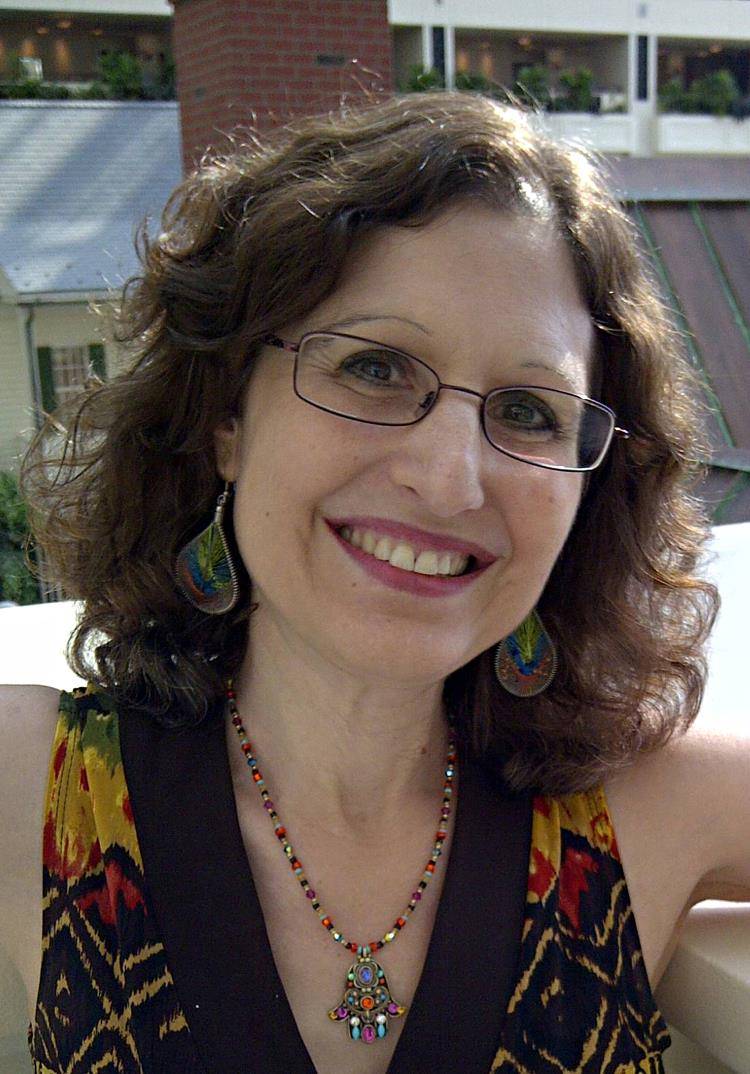
Jacqueline Jules is the award-winning author of more than twenty children’s books, includes the fabulous Zapato Power series. Great news: she’s busy creating even more fun books for kids! At the bottom of this post, check out her Hanukkah-inspired titles.


MARGARITA ENGLE

Pretending w Text

Hermanas

Family time is the greatest gift offered by any holiday, no matter which religion or season is being celebrated. One of my fondest December memories is the way my sister and I always surprised each other with identical gifts, even though our mother took us shopping separately. Adventure stories, animal tales, and nonfiction natural history books were our inevitable choices. One year, we gave each other the same dinosaur identification chart. We saw ourselves as explorers-in-training, our shared interests a preview of lifelong curiosity about the world. Those shared interests became an even more lasting memory than baking cookies, or admiring the colorful cheer of holiday lights.
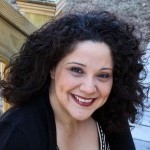
MargaritaMargarita Engle is the author of many acclaimed young adult and children’s novels, including The Surrender Tree, which received a Newbery Honor. Her newest picture book is Tiny Rabbit’s Big Wish, and more publications are in the works, including a memoir we can’t wait to read! Here’s her latest guest post for this blog.


DANETTE VIGILANTE
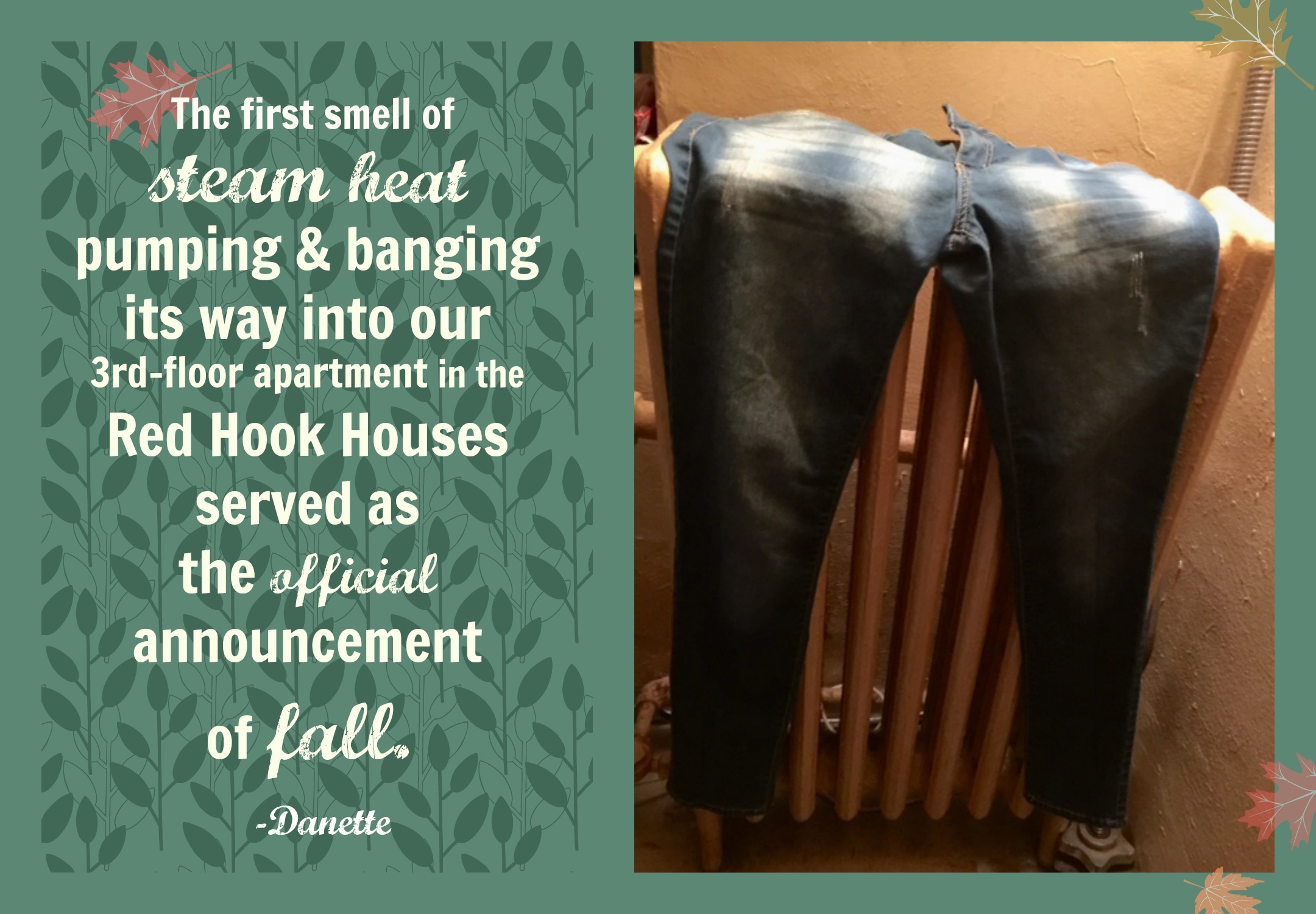
Danette CollageThe first smell of steam heat pumping and banging its way into our third-floor apartment in the Red Hook Houses served as the official announcement of fall.

The radiators in our apartment were used for more than just keeping us warm, though. Mom placed orange skins on top of their steel bones, giving the air a sweet citrus scent. When we needed to dry our winter gear after playing in the snow, to the radiator it all went. When I absolutely had to wear a certain pair of jeans soon after they had been washed, the radiator served as a quick dry cycle. They came off a bit stiff and practically able to stand on their own, but that was a small price to pay. Besides, after a few deep knee bends, all was well. My little sister had her own important use for the radiators— heating up squares of Now and Later candies until they were soft and gooey.

Every year, after the Thanksgiving dishes had been washed and dried, my best friend’s mom did something that excited the kids living in nearby buildings; she’d officially welcome Christmas by decorating her second floor windows in twinkling multicolored lights–a Christmas tree dressed in its best, standing proudly in the center of it all.

A door had been swung open, and one by one, every window from the first through sixth floors, had followed suit. Our drab brick buildings had finally come alive! The magic of the winter season, with its good cheer and best wishes, had entered our hearts, filling us with hope, gratitude and joy.
Danette_Vigilante_head_shot_high_resDanette Vigilante is the award-winning author of two children’s books, The Trouble with Half a Moon and Saving Baby Doe. She lives in New York with her husband, two daughters, two puppies and a cat with an attitude! Don’t miss her inspiring guest post, “Danette Vigilante on the Importance of Dream Seeds.


ANGELA CERVANTES

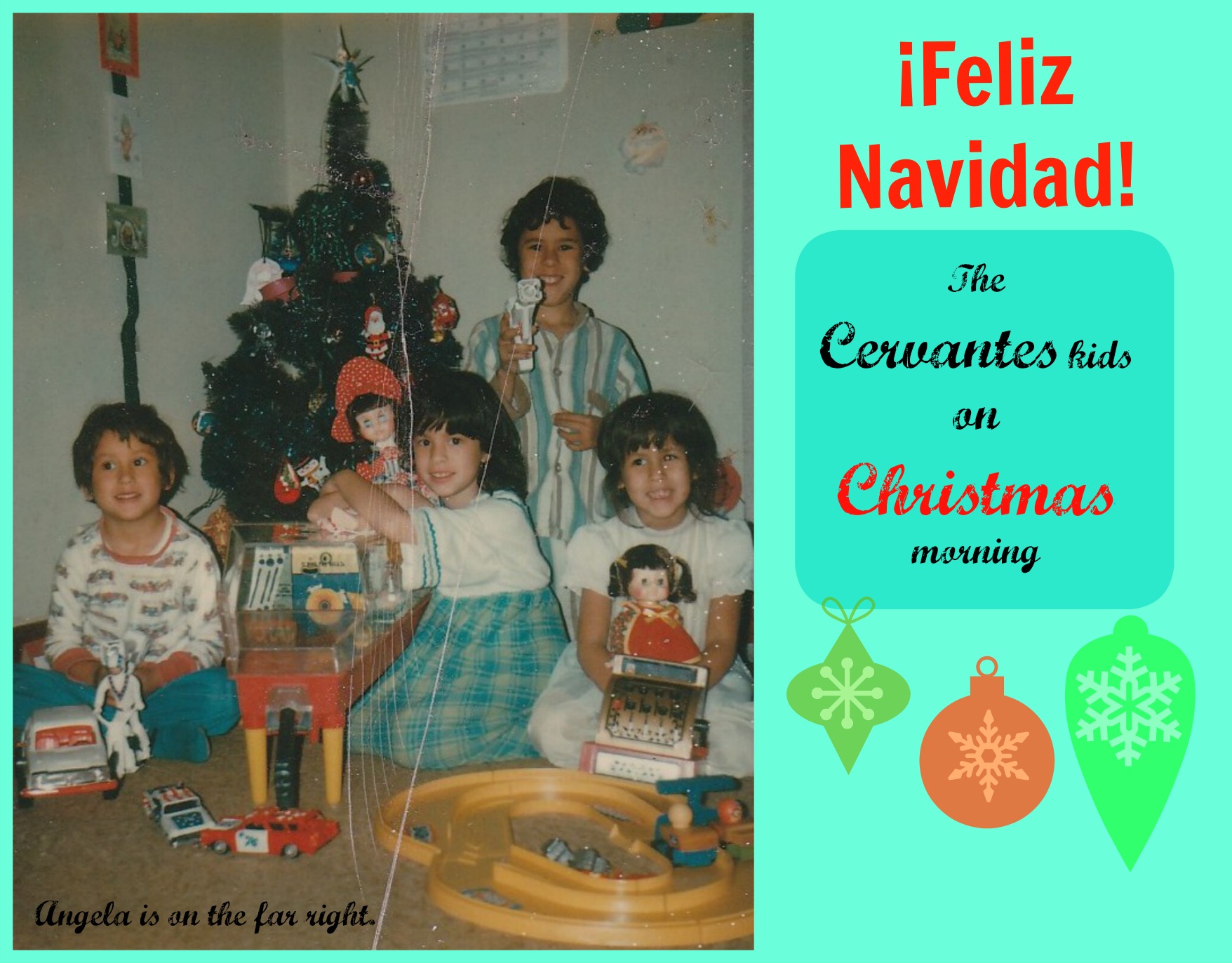
Feliz NavidadOne Christmas, my family was visiting my brother at the army base in Fort Sill. On Christmas Eve, some soldiers were making their way through the neighborhood, house-by-house, Christmas caroling. They came to our doorstep and sang a lively version of Jingle bells and then went on their merry way to the next house. A few minutes later, my sister, Rio, asked me to go out to the car with her to help bring in the rest of the gifts. As we headed to her car, parked curbside, the soldiers were standing in the middle of the street seeming unsure of where to go next. My sister and I grabbed the gifts out of the trunk and when we turned around, the soldiers were standing in front of us. They started singing “Joy to the World.” We couldn’t believe it.

 It was a real serenata!

When they finished, Rio gave me this look and I knew what we had to do. We put our gifts down. At Rio’s count of three we belted out, “Feliz Navidad” with as much glorious Jose Feliciano-ness we could muster. Rio snapped her fingers and shook her hips. I pretended that I had maracas and shimmied around. The soldiers sang along and bopped their heads. “I want to wish you a Merry Christmas from the bottom of my heart.” When we finished, one of the soldiers said, “That was cool. No one has sung back to us the entire night.”

What can I say? Leave it to the Cervantes girls to keep it real on Christmas Eve!
Angela CervantesAngela Cervantes is an award-winning author whose debut novel, Gaby, Lost and Found, has been named Best Youth Chapter book by the International Latino Book Awards and a Bank Street College of Education’s Best Books of 2014. Angela’s second novel, a spin-off of Gaby, Lost and Found, will be released by Scholastic Press in 2016.  Read about what inspired Angela to write Gaby in this Latin@s in Kid Lit interview.  


TRACY LÓPEZ
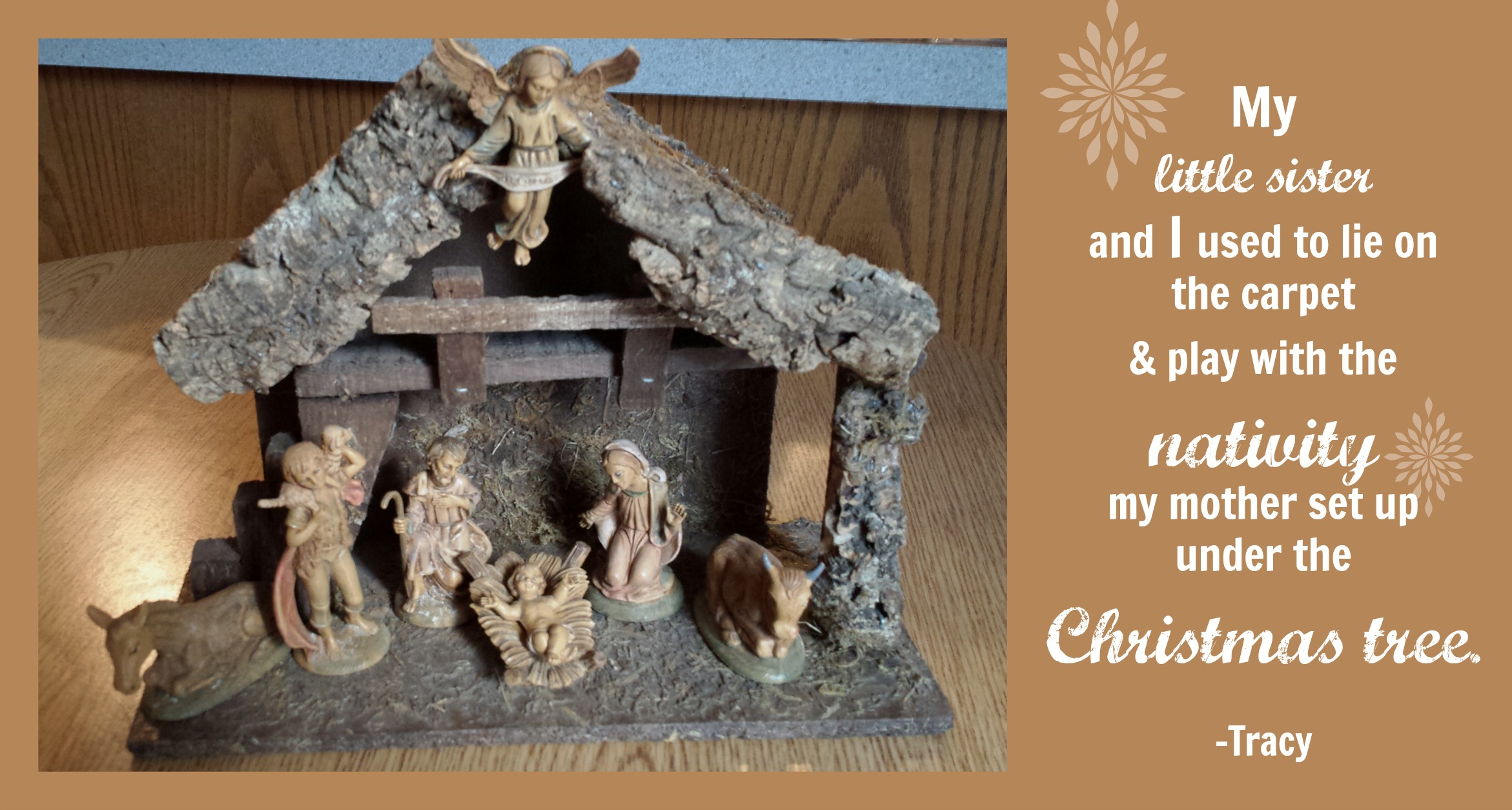
Tracy's NativityOne of my favorite childhood memories is when my little sister and I used to lie on the carpet and play with the nativity my mother set up under the Christmas tree. It was a typical, simple nativity with a moss-covered manger made of wood and plastic figures representing Joseph, Mary, baby Jesus, the angel, a shepherd with a lamb hefted onto his shoulders, and a few barnyard animals. The nativity scene was actually a gift to my mother from my father, who grew up in a Jewish home; my parents say he won it on a radio show when I was really little. That same nativity is still put on display each Christmas at my parents’ house. Although I’m an adult with two teenage sons, I’m always tempted to play with the little figures when I see it set up, which horrifies my husband, Carlos. He’s Salvadoran and in El Salvador the nativity (or “nacimiento”) is much more spectacular than my mother’s humble display. A Salvadoran nativity can take up an entire room and features entire villages of people, but kids are definitely not allowed to play with it!

Tracy LopezTracy López is a freelance writer, blogger and novelist. Her work has appeared in Fox News Latino, Mamiverse, SpanglishBaby and many other print and online publications. She is Owner/Editor-in-Chief of the influential blog Latinaish.com, and is a member of the team of We Need Diverse Books.


HOLIDAY BOOKSHELVES

We wouldn’t be doing our cheerful duty if we didn’t top off this glorious stroll down memory lane with book recommendations related to the season. Here’s a round-up of titles we think you and your young readers will relish this winter holiday.

Happy Hanukkah Lights    Christmas Makes me Think

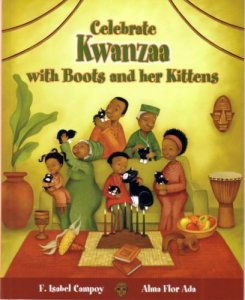
HanukkahZiz    Kwanzaa with Boots

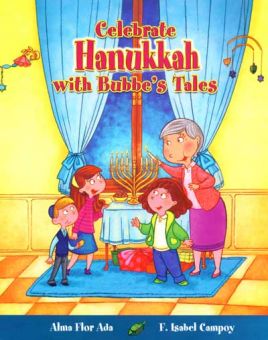
Celebrate Hanukkah    Twas Nochebuena

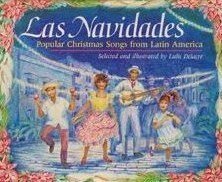
Piñata in a Pine tree    Las Navidades

Seven Candles for Kwanzaa    Green Christmas

And for older readers:

Las Christmas


HAPPY HOLIDAYS TO ALL! WE’LL SEE YOU IN 2015!


From STEM to STEAM, Latino-Style

By Margarita Engle

Children are natural scientists. They ask, “Why?” They poke, peer, dissect, observe, and marvel. Sometimes they reach conclusions. Since children are also natural storytellers, the conclusions might be imaginative, rather than verifiable. That’s okay. For both children and adults, curiosity and a spirit of wonder are just the starting places for learning about STEM (Science, Technology, Engineering, and Medicine). Skills, information, and experience must follow. Without a suitable educational background, Latinos will be left behind in the twenty-first century rush toward jobs that require specialization.

I am not a specialist. Despite my training as an agronomist and botanist, I still love simple nature walks, with plenty of aha moments of amazement. That’s why I’m so thrilled that poetry and other creative approaches are being introduced into the teaching of science, especially at the elementary level, creating STEAM (Science, Technology, Engineering, Arts, and Medicine).

Poetry, after all, springs from the same sense of wonder as science, and is rooted in the same combination of observation and wonder. The arts allow us to learn with all five senses. Doesn’t it make sense to let children read, write, paint, sing, and have fun, while studying facts?

Fortunately, educators are already introducing the arts into STEM teaching. The Poetry Friday Anthology for Science (Pomelo Books) includes many bilingual poems about a wide variety of concepts. Taking the lead among Latinos, Pat Mora made sure that Día de los Niños offered mini-grants to libraries planning STEAM events in April, 2015. Other grassroots programs have sprung up in recent years, including the Americas Latino Eco-Festival, which promotes environmental activism for Latinos, and AZUL, which invites Latinos to become coastal and ocean stewards.

For someone like me, with a deep love of nature, and my own odd combination of scientific and creative training, STEAM education offers a chance to write new kinds of books for children and young adults.

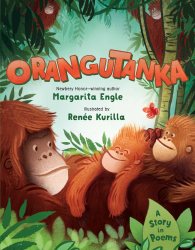
  final Silver People cover-1  MountainDog.highrescvr  OrangutankaFrontCvr

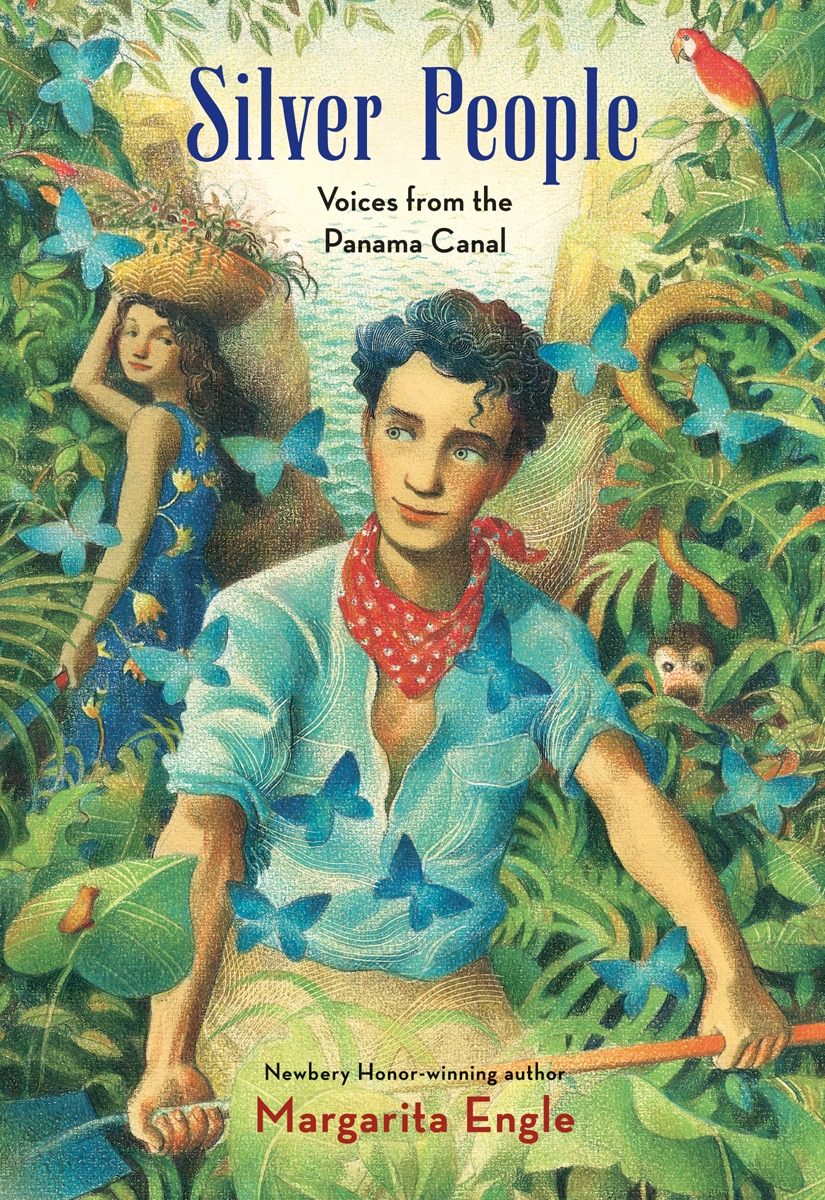
In my verse novel, Silver People, Voices From the Panama Canal (Harcourt, 2014), I blended history with rain forest biology. In two forthcoming picture books, Orangutanka, a Story in Poems (Holt, 2015), and The Sky Painter, Louis Fuertes, Bird Artist (Two Lions, fall, 2015), I’ve been thrilled by the opportunity to show animal and human interactions. In Mountain Dog, winner of the first ALBA (Americas Latino Book Award), I incorporated hiking safety and outdoor skills into a middle grade adventure story.

As STEAM efforts grow, I hope that educators, librarians, parents, scientists, environmentalists, writers, and illustrators can all join together to make sure that teaching methods honor the natural curiosity of children.


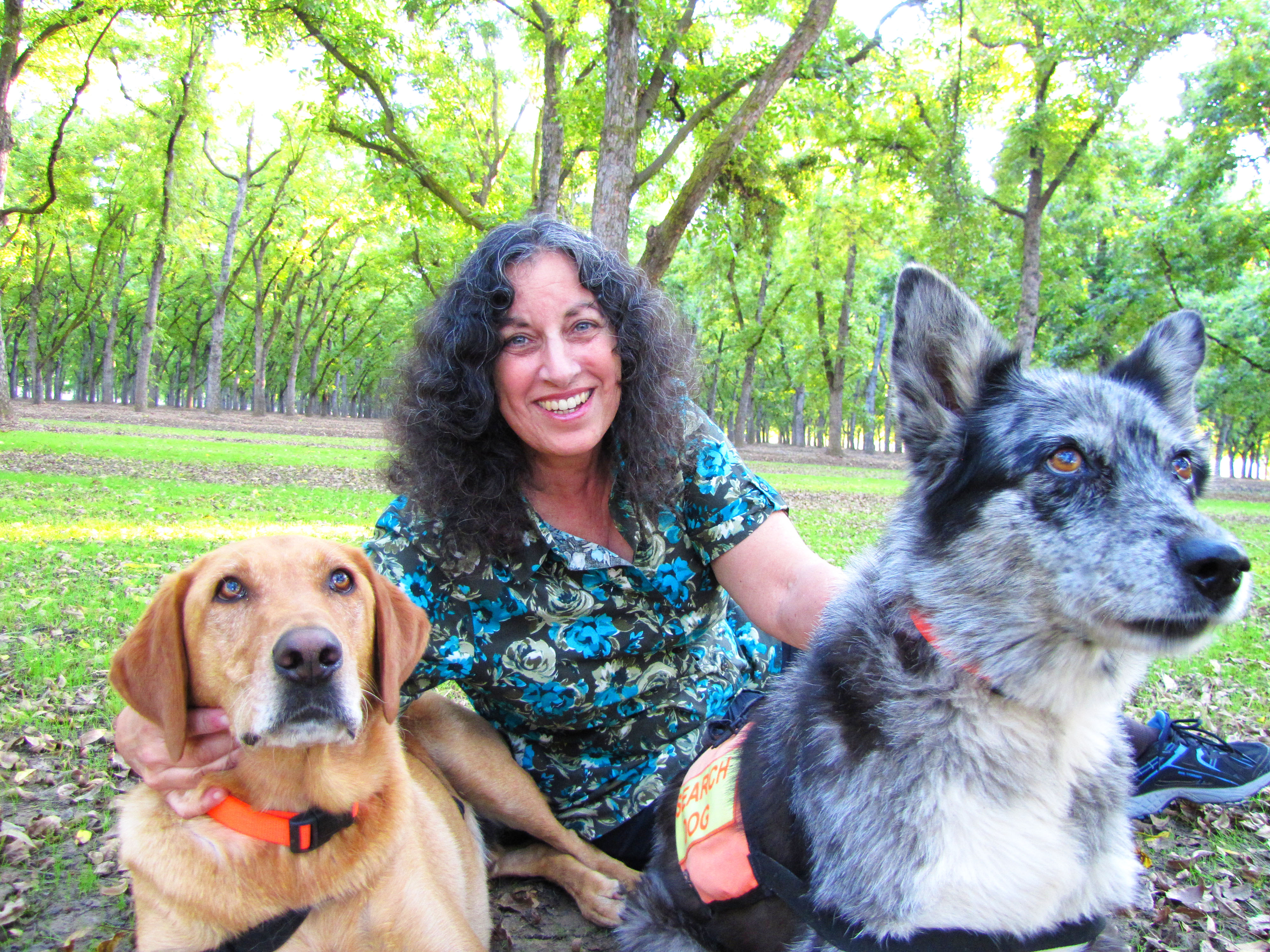
Margarita Engle, hiding so search and rescue dogs can practice finding a lost hikerMargarita Engle is the Cuban-American author of many young adult verse novels about the island, including The Surrender Tree, which received the first Newbery Honor ever awarded to a Latino, and The Lighting Dreamer, recipient of the 2014 PEN USA Award. Other honors include multiple Pura Belpré and Américas Awards, the Jane Addams, International Reading Association, Claudia Lewis, and MANA Las Primeras Awards.

Margarita grew up in Los Angeles, but developed a deep attachment to her mother’s homeland during summers with her extended family in Cuba. Enchanted Air: Two Cultures, Two Wings, a Memoir (Atheneum, August, 2015) tells the story of those childhood visits, leading up to the loss of travel rights after the Missile Crisis. Margarita was trained as a botanist and agronomist, before studying creative writing with Tomás Rivera. She lives in central California, where she enjoys hiding in the wilderness to help train her husband’s search and rescue dogs.

Cover Reveal for When Reason Breaks, a 2015 Young Adult Debut

.

By Cindy L. Rodriguez

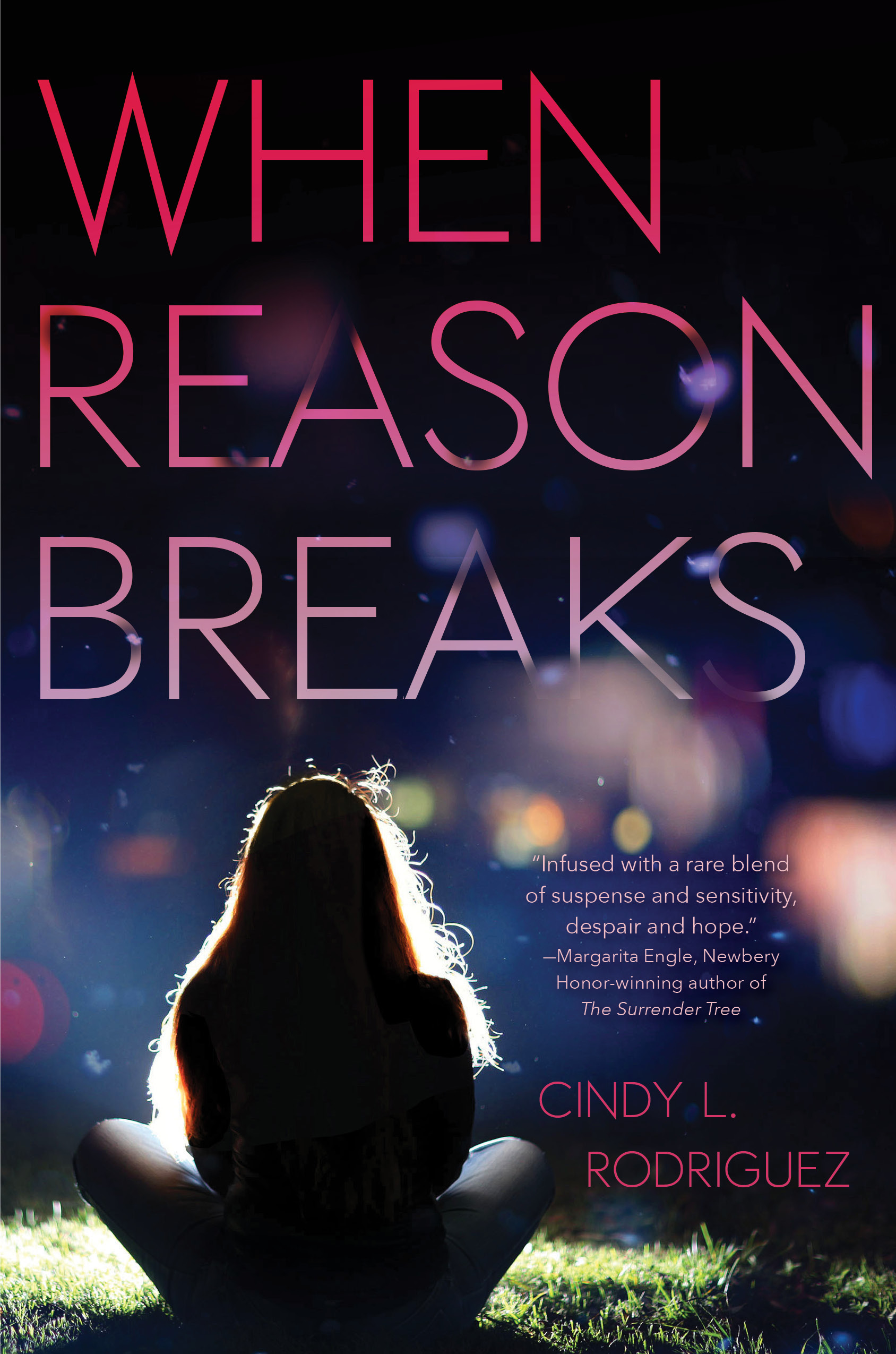
I’m really excited to reveal the cover for my debut novel, When Reason Breaks, which will be published 2/10/2015 by Bloomsbury USA Children’s Books. I’m equally thrilled to share it here because one of the main characters is Latina and the first blurb the novel received is from the wonderful, generous, super-talented Margarita Engle.

Before you scroll down to see the cover, here’s a description of the novel:

A Goth girl with an attitude problem, Elizabeth Davis must learn to control her anger before it destroys her. Emily Delgado appears to be a smart, sweet girl, with a normal life, but as depression clutches at her, she struggles to feel normal. Both girls are in Ms. Diaz’s English class, where they connect to the words of Emily Dickinson. Both are hovering on the edge of an emotional precipice. One of them will attempt suicide. And with Dickinson’s poetry as their guide, both girls must conquer their personal demons to ever be happy.

In an emotionally taut novel with a richly diverse cast of characters, readers will relish in the poetry of Emily Dickinson and be completely swept up in the turmoil of two girls grappling with demons beyond their control.

An extra tidbit for any big-time Emily Dickinson fans: Almost all of the characters represent a real person from ED’s life. Emily and Elizabeth represent Dickinson herself, sharing personal traits and experiences. Tomás Bowles represents Thomas Wentworth Higginson and Samuel Bowles, two important men in ED’s life, etc. You’ll have to read more in the author’s note!

So, now for the cover……………

*

*

*

*

Keep scrolling…(I was told to build suspense. Isn’t this suspenseful?)

*

*

*

*

TA-DA!!!!

*

*

*

*

WhenReasonBreaks_Comp

I love it for lots of reasons! The dark and light, focused and unfocused elements symbolize what the characters experience with their emotional and mental health issues. Same with how the letters start out solidly colored and then fade. Not seeing the girl’s face is also perfect since it’s a mystery as to which of the two girls attempts suicide. And here is the full quote from Margarita Engle, which will be included in its entirety on the back cover:

When Reason Breaks is infused with a rare blend of suspense and sensitivity, despair and hope. The poetic spirit of Emily Dickinson shines through the gloom of daily struggles faced by modern teens, as they discover the possibilities where they dwell.”

I’m so excited to share my debut novel with the world–starting now with a giveaway! One winner will receive a signed ARC of When Reason Breaks. Click on the Rafflecopter link below to enter. I’ll choose a winner in a week!

a Rafflecopter giveaway

CindyRodriguez150For more information about me and/or my debut novel, check out my website. You can also find me here on the About Us page and on Facebook, Twitter, and Goodreads.

When Reason Breaks is available for pre-order here:

Indiebound Barnes and Noble | Amazon Powell’s Book Depository | Books-A-Million

Book Review: The Lightning Dreamer by Margarita Engle

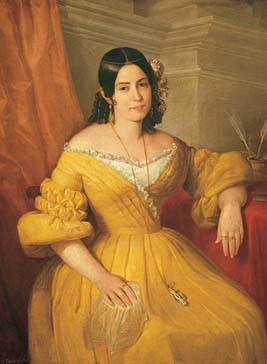
By Lila Quintero WeaverLightning Dreamer notable

DESCRIPTION FROM THE BOOK JACKET: Tula is a girl who yearns for words, who falls in love with stories, but in Cuba, girls are not allowed an education. No, Tula is expected to marry well—even though she’s filled with guilt at the thought of the slaves Mamá will buy with the money gained by marrying Tula to the highest bidder.

Then one day, hidden in the dusty corner of a convent library, Tula discovers the banned books of a rebel poet. The poems speak to the deepest part of her soul, giving her a language with which to write of the injustice around her. In a country that isn’t free, the most daring abolitionists are poets who can veil their work with metaphors, and Tula becomes just that.

In powerful, haunting verses of her own, Margarita Engle evokes the voice of Gertrudis Gómez de Avellaneda, known as Tula, a young woman who was brave enough to speak up for those who could not.

MY TWO CENTS: The novel begins in 1827. Tula’s mother, who twice made the mistake of marrying for love, is desperate to prevent her thirteen-year-old daughter from taking a similar path. Mamá’s motivations are clear-cut. A wealthy connection through Tula is the family’s only hope for propping up their shaky economic status. In 19th-century colonial Cuba, arranged marriages are the social norm, but Tula’s mother worries that a girl who buries her nose in books will not attract the right kind of husband–a rich one.

Who is Tula? Margarita Engle is acclaimed for novels in verse that bring to life history’s outliers, young men and women from previous centuries who thought and acted in surprisingly modern ways, and Tula stands tall among them. She’s based on Gertrudis Gómez de Avellaneda, a Cuban poet who championed liberty for all humans and wrote Sab, an abolitionist novel, the first of its kind in Spanish. Sab predated Uncle Tom’s Cabin, the Harriet Beecher Stowe classic, by eleven years. Avellaneda’s importance as an abolitionist and feminist writer is not widely known in English-speaking America. The Lightning Dreamer corrects this oversight and imagines Avellaneda’s formative years, just as she began to discover the life-changing force of poetry.

Marriageability is not the only issue that arises from Tula’s penchant for reading. She happens upon the forbidden poetry of José María Heredia, whose sharp observations awaken Tula’s passion for justice. In colonial Cuba, injustice is everywhere. Her eyes take in the plight of African slaves, biracial babies abandoned to the convent, lovers kept apart by miscegenation taboos, and girls like herself, doomed to business arrangements thinly masquerading as marriages. Tula expresses her ardor for justice through poetry, which she burns to keep her mother from discovering.

When Tula refuses the marriage that her grandfather arranges, she must rise to meet a string of new challenges. The inheritance is lost and her family is condemned to relative poverty. For a while, Tula finds refuge in a storyteller’s community, where she becomes entangled in an unrequited love. She moves away from the countryside to Havana, where she supports herself through tutoring. In 1836, her brother, Manuel, warns her that their mother is cooking up another arranged match. Tula flees for Spain, expecting to find greater social and creative freedom there.

The Lightning Dreamer is written in free verse and is voiced through multiple characters. Tula is the most frequent speaker. Short segments provide other characters’ point of view. A partial list includes Tula’s mother; Manuel; Caridad, the freed slave who works for the family; the nuns who offer Tula space to read and write in peace; and Sab. Each character speaks in first person. I imagine them as a series of stage players delivering brief and sometimes prejudicial monologues reflecting on Tula’s choices. This approach perfectly suits the fictionalized treatment of a young poet. The language is spare and often stunning, capturing vivid images and profound interiority, as in this excerpt:

When we visit my grandfather

on his sugar plantation,

I see how luxurious

my mother’s childhood

must have been,

surrounded by beautiful

emerald green sugar fields

harvested

by row after row

of sweating slaves.

How can one place

be so lovely

and so sorrowful

all at the same time?

READING LEVEL: 12 and up

TEACHING TIPSThe Lightning Dreamer is an ideal jumping off point for exploring a wide array of subjects suggested in the novel. These range from colonialism, to New World slavery and racism, to patriarchal societies and the history of women’s political movements. At the back of the book, extensive notes provide comparisons between the historical Avellaneda and Tula, her fictionalized counterpart. This section also includes Spanish and translated excerpts of Avellaneda’s poetry and a bibliography of related sources.

Margarita contributed a guest post to Latin@s in Kid Lit that illuminates her love of biographical writing.

Henry Louis Gates’ PBS series, Black in Latin America, may be of interest for classroom use, in conjunction with the reading of The Lightning Dreamer. The episode “Cuba: The Next Revolution” focuses on the ongoing struggle by Afro Cubans to overcome centuries of racism. There’s no mention of Avellaneda in this one-hour documentary film; nevertheless, interviews and scenery enriched my reading. The film is particularly effective in its treatment of Cuba’s history of slavery and the role of freed slaves in the protracted battle for independence from Spain. The ruins of sugar plantations dating back to the book’s era starkly reminded me of Tula’s world.

RECOGNITION FOR THE LIGHTNING DREAMER: Awards and honors continue to flood in. They include:

2014 Pura Belpré Honor Book

School Library Journal’s Top Ten Latino-themed Books for 2013

YALSA 2014 Best Fiction for Young Adults

For a full list of awards and more information, please visit Margarita’s author website. I also recommend following her on Facebook, where she frequently posts updates on appearances, interviews and release dates for new books.

MargaritaTHE AUTHOR: Margarita Engle is a native of California and the author of many children’s and young adult books. She is the daughter of an American father and a Cuban mother. Childhood visits to her extended family in Cuba influenced her interest in tropical nature, leading to her formal study of agronomy and botany. She is the winner of the first Newbery Honor ever awarded to a Latino/a. Her award winning young adult novels in verse include The Surrender Tree, The Poet Slave of Cuba, Tropical Secrets, and The Firefly Letters.

FOR MORE INFORMATION ABOUT The Lightning Dreamer, visit your local library or bookstore. Also check out worldcat.org, indiebound.org, goodreads.com, amazon.com, barnesandnoble.com, and Houghton Mifflin/Harcourt.


Guest Post: Margarita Engle’s Passion for Writing About Hope and Forgotten Heroes

.

By Margarita Engle

Recently, I was asked what “legacy” I hope to leave by writing. Legacy is an intimidating word, but at least one portion of the answer is fairly simple. I love writing about independent thinkers who have been forgotten by history. These lost heroes might have been celebrated in their own times, or they may have worked in such obscurity that their names are unknown. Many are famous in their countries of origin, but have never been introduced to readers in the U.S.

Just a few years ago, any library search for children’s books about Latinos would have revealed little more than a series of shamefully inaccurate works glorifying brutal conquistadores. During the interim, excellent biographies of César Chávez and Sonia Sotomayor have been added, along with a handful of beautiful picture books about artists, writers, and musicians.

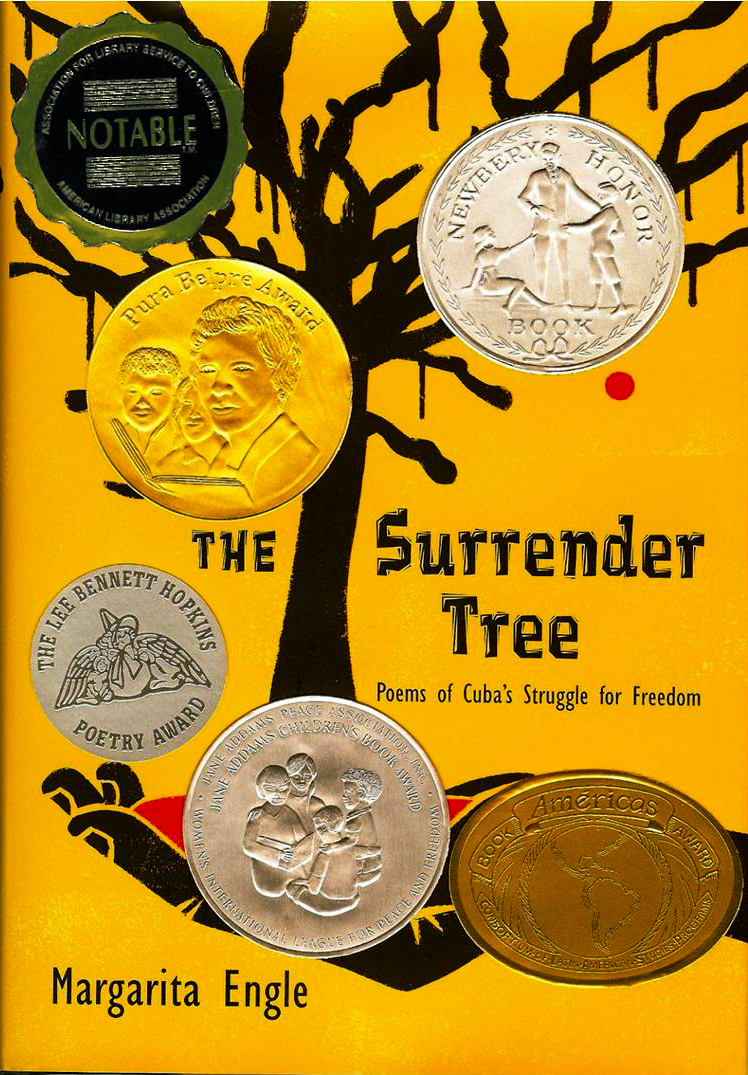
Surrende TreeThe work of reclaiming lost heroes has barely begun. My own approach is not strictly biographical because I love writing verse novels, and I also love writing first person interpretations of historical events. I often mix historical figures with fictional characters. In other words, I feel free to explore, experiment, and imagine. It’s a process that feels like time travel. Diaries, letters, and journals are my most important research materials, because they contain the emotional essence of history, along with the meticulous details of daily life. When I wrote The Poet Slave of Cuba, I was fortunate to have access to Juan Francisco Manzano’s autobiographical notes, which had been smuggled off the island by British abolitionists. For The Surrender Tree, I could not find anything written by Rosa la Bayamesa or any of Cuba’s other courageous wartime nurses, so I read the diaries of rebel soldiers, as well as interviews with reconcentration camp survivors. The Lightning Dreamer is based on the poetry and prose of Gertrudis Gómez de Avellaneda, who wrote a groundbreaking interracial romance novel that was published more than a decade before Uncle Tom’s Cabin. Not only was Sab far more daring, it was also more influential in Europe and Latin America. So why don’t North Americans know Avellaneda’s name? Does it make sense to learn only about our own little corners of the world?

Hope is at the heart of every topic I choose. I love to write about people I admire. In general, I admire them because they were independent thinkers, far ahead of their times, or because their courage took the form of kindness. I don’t see history as a series of wars, with dates of battles to memorize and names of generals who are automatically assumed to be heroic. My heroes are the ordinary people who made hopeful choices in times that must have seemed hopeless. Tropical Secrets and Silver People are examples of topics so huge—the Holocaust, and construction of the Panama Canal—that I chose to write primarily in the voices of fictional composite characters, rather than individual historical figures. For Hurricane Dancers, the absence of first person indigenous Cuban accounts of the Conquest forced me to rely on a combination of legends, imagination, and the diaries of priests. I read the journals of conquistadores with skepticism, because they were written with a specific agenda—trying to make themselves look heroic, so that they could apply for additional funds from the Spanish Crown.

final Silver People cover-1Lightning Dreamer notable-1

Not all of my books are verse novels, and not all are for young adults. One of my favorite challenges is writing picture books about people who are not considered “famous enough” for biographical works. This limitation has actually helped me present my historical picture book manuscripts simply as inspiring stories, instead of struggling to make the subjects seem more famous than they are. Some are not famous at all, simply because Latinos, other minorities, and women, have generally been omitted from earlier historical writings. Sadly, recent history books tend to copy the earlier ones. The result is an entire segment of classroom curricula and pleasure reading with no representation of forgotten groups.

At present, I have several biographical picture books already in the publishing pipeline, and several that are still searching for publishers. None of them are about easily recognized names, if you live in the U.S. Thankfully, with the help of wonderful editors and fantastic illustrators, I hope that these picture books will inspire young readers. Drum Dream Girl (Harcourt, 2015) is being illustrated by the amazing Rafael López, whose gorgeous art will help illuminate the life of a ten-year-old Chinese-African-Cuban girl who broke the island’s taboo against female drummers. The Sky Painter (Two Lions, 2015) will have beautiful, scientifically accurate illustrations by Aliona Bereghici, to show how a boy of Puerto Rican origin became the world’s greatest bird artist, by allowing birds to live, instead of following Audubon’s tradition of killing and posing them.

If children have heard Latin jazz or visited New York’s Natural History Museum, they’ve heard and seen the results of Millo Castro’s courage and Louis Agassiz Fuertes’ kindness, even though they are unlikely to have seen those names in a library or classroom. I firmly believe that it is time to make room for books about the lives of people who should be famous, rather than limiting young readers to books about people who are already famous.

No discussion of biographical writing is complete without the subject of autobiography. Writing a childhood memoir has been the greatest challenge of my life. It is strictly nonfiction—no imagining, only remembering. Certain memories are excruciatingly painful. I love recalling childhood trips to visit my extended family in Cuba, but I dread remembering the October 1962 Missile Crisis that ended those journeys. Enchanted Air, a Cold War Memoir (Atheneum, 2015) combines the two. Positive and negative. Joy and sorrow. Despair and hope. With a powerful cover illustration by one of the world’s greatest artists, Edel Rodríguez, this memoir already feels like my life’s work. It is a book that helps me reclaim the separated half of my family, and along with them, the half of my identity that was almost destroyed by politicians.

Writing about lives is a process of exploration, so even though the memoir feels like my life’s work, I’ve already found other people I hope to depict in verse novels and picture books. I’ve returned to the research stage, reading history, and deciding which parts of history have not yet been honestly portrayed.

****

Margarita-HavanaMargarita Engle is the Cuban-American author of many young adult verse novels, including The Surrender Tree, which received the first Newbery Honor ever awarded to a Latino/a. Her books have also received multiple Pura Belpré Awards and Honors, as well as three Américas Awards and the Jane Addams Peace Award. Margarita’s newest verse novel is Silver People, Voices From the Panama Canal, and her newest picture book is Tiny Rabbit’s Big WishShe lives in central California, where she enjoys hiding in the forest to help train her husband’s wilderness search and rescue dogs. For more information, visit her author site and enjoy interviews by Caroline Starr Rose  and Robyn Hood Black.

Book Review: Silver People: Voices From the Panama Canal by Margarita Engle

By Zoraida Córdova

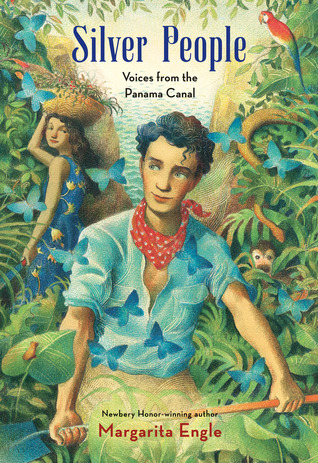
Silver People

DESCRIPTION FROM THE BOOK JACKET: One hundred years ago, the world celebrated the opening of the Panama Canal, which connected the world’s two largest oceans and signaled America’s emergence as a global superpower. It was a miracle, this path of water where a mountain had stood—and creating a miracle is no easy thing. Thousands lost their lives, and those who survived worked under the harshest conditions for only a few silver coins a day.

From the young “silver people” whose back-breaking labor built the Canal to the denizens of the endangered rain forest itself, this is the story of one of the largest and most difficult engineering projects ever undertaken, as only Newbery Honor-winning author Margarita Engle could tell it.

MY TWO CENTS: Silver People is a historical novel written in verse. Told in alternating perspectives over eight years, each poem is vibrant, unique, and many times heartbreaking. The story starts with Mateo, a fourteen year old boy from Cuba who lies about his ethnicity in order to get passage to and work in Panama. He’s mixed, and even though this takes place over 100 years ago, the feeling of not fully belonging to one part of yourself or culture is still relevant. His dark skin and green eyes allow him to “pass.” Like many of the men who flocked to Panama during this time, Mateo wants to work. But with a new world and new people come many challenges. First, there’s the hunger for food. Second, there’s a hunger for home. Third, there’s a fear of survival.

Through his careful observations, we are given a scope of surviving the working life on the canal. A structure of segregation is placed: “Americans, Frenchmen, and Dutch./ Spaniards, Greeks, Italians./ Jamaicans, Barbadians, Haitians” leaving Mateo wondering how any of them will be able to work together. Although all of the men are doing backbreaking and soul crushing work each day, the white men get paid in gold, the dark Europeans in silver, and the islanders in half the silver as other men. During the night, the monkeys howl and insects bite; Mateo ends up wondering “How can I miss the place/ I was so desperate to leave?” When I read that I thought to myself that even now, that’s the immigrant struggle. You long for a place that might give you a better life, a place that could be better, but also a place to belong to. At the end of the day, no matter where the working men came from, whether they wanted home, refuge, gold, silver, they were still joined in one thing: surviving the rain forest.

Although physical survival isn’t the only thing that bonds them. Henry, a Jamaican worker who watches as the medium-dark Spaniards get to sit for their meals while he has to stand, finds an unlikely friend in Mateo. They find commonality in sickness, mudslides, bitterness, pain, fighting, and a longing for home.

Other narratives include that of Anita “La Yerbera” who becomes a close ally of Mateo’s. Also an orphan, Anita was abandoned in the forest and taken in by an old Cuban woman. Her voice is unique and offers a different perspective to life in Panama. Unlike Mateo and other newcomers who are there to blow up the trees and remove entire landmasses, Anita feels she belongs to the forest itself. It’s her home, and we watch with her home is destroyed right before her eyes.

I love that in this story of the struggle of humans versus nature, Margarita Engle gives nature a voice. “The Forest” gets its own sections, detailing the point of views of the animals as they watch and howl at the intruders.

Okay, so I know this book is told in poems. Don’t let this shy you away. After all, it’s Poetry Month! What I love about this book is that each poem pulls you to the next. You can’t read just one poem; you have to read just one more. This blog post could be 10 pages long because each poem packs such a punch and makes you stop and think about what Mateo, Anita, and Henry are going through. It makes you wonder just how much is different today. I laughed out loud at one of Anita’s poems during Teddy Roosevelt’s visit to the canal, and the sludge of tourists that “…all they want/is hats–white hats like the American president’s,/ hats woven in Ecuador, hats that tourists/ insist on calling Panama hats. Don’t they/understand that Latin America/ has many countries?” It’s not a “laugh out loud” thing, but 100 years later, still relevant.

I wish Silver People had been around when I was in school. From our text books, all we learned about the Panama Canal was that “America built it.” I wish I’d known about the Silver People. But when you’re little, how do you go about describing the injustices of the world in a way that a child will understand? This is just the book for that. Margarita Engle weaves questions about identity, struggle, and discrimination, all through beautiful poetry.

The truth about most of these men is that they didn’t go home. Some didn’t make it out of the forest alive. But the white Americans, the Italians, the Jamaicans, the Cubans who “passed,” some of them stayed in Panama and became locals. Some spread out across the continent. This books reminded me that the history of the world should always be told through many perspectives, and that when pushed together we keep creating new cultures.

TEACHING TIPS: This book is a great read on it’s own, but would also be fun when learning about Panama, the Panama Canal, Teddy Roosevelt’s presidency, rain forest depletion, Latin@ studies, or because it’s National Poetry Month.

Margarita Engle has a section for teachers on her website! –> click.

AUTHOR: Margarita Engle is the Cuban-American winner of the first Newbery Honor ever awarded to a Latino. Her award winning young adult novels in verse include The Surrender TreeThe Poet Slave of CubaTropical Secrets, and The Firefly Letters.

Engle’s most recent books are The Lightning Dreamer and When You Wander.

Her new middle grade chapter book, Mountain Dog, was published in August 2013. Margarita’s latest book, Silver People, Voices From the Panama Canal is out now.

She lives in central California, where she enjoys helping her husband with his volunteer work for wilderness search and rescue dog training programs.