Book Review: The Tooth Fairy Meets El Ratón Pérez by René Colato Laínez

By Lila Quintero Weaver  the tooth fairy meets el raton perez
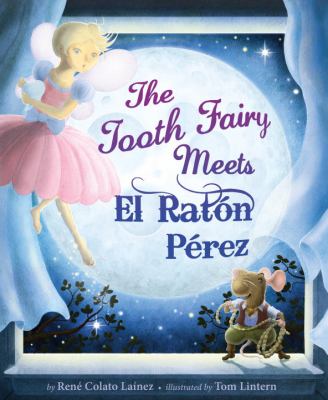
DESCRIPTION FROM RANDOM HOUSEThe Tooth Fairy has some competition. Meet El Ratón Pérez, the charming and adventurous mouse who collects children’s teeth in Spain and Latin America.

When both the Tooth Fairy and El Ratón Pérez arrive to claim Miguelito’s tooth, sparks fly under the Mexican-American boy’s pillow. Who will rightfully claim his tooth?
This magical tale introduces a legendary Latino character to a new audience and provides a fresh take on the familiar childhood experience of losing one’s tooth.

MY TWO CENTSWhat happens when beloved cultural traditions clash? Rene Colato Lainez’s flair for bilingual storytelling and Tom Lintern’s eye-popping illustrations combine in a winning picture book that addresses this question. Children will rejoice over the conclusion: there is no need to choose between the two!

The story revolves around double claims on Miguelito’s lost tooth.  Now that he lives in the United States, he’s inside the Tooth Fairy’s jurisdiction. But her Hispanic counterpart, El Ratón Pérez, is not ready to relinquish his duty to Latino children, even when they move across the border. One night in Miguelito’s bedroom, there’s a showdown between the rivals. Never fear—the tussle is well spiced with humor. Still, things get out of hand and Miguelito’s tooth lands on a high shelf, out of reach. It takes cooperation between the fairy and the ratón to retrieve the tooth, and this convinces them that future conflict is not necessary. From now on, Miguelito and other children can enjoy the toothy traditions of both cultures.

Like all picture books, the fun of this story is in repeated readings. Children will enjoy comparing the working methods and backdrops of these tiny tooth warriors. The rich color illustrations reinforce such observations. The Tooth Fairy lives in a castle. El Ratón Pérez makes his home in a cave. She searches the skies for a twinkling star that signals when a tooth is ready for retrieval. The signal he looks for is a moonbeam. Each has his or her tool of the trade; hers is a wand, his is a rope.

This is a wonderful text for children in transition between two cultures. It emphasizes the value of preserving old traditions and the joy of adding new ones.  The same lesson can be applied to other customs across nationalities, such as how birthdays and holidays are celebrated.

Spanish words and phrases are sprinkled throughout the book, always paired with the English translation. The publisher has provided a glossary.

TEACHING TIPSWe can do no better than the website dedicated to The Tooth Fairy Meets El Ratón Pérez that the author, a kindergarten teacher, has already put together! It includes a curriculum guide, creator interviews and other helpful features.

Here are a few additional resources.

The Centro Virtual Cervantes published a gallery of 79 illustrations featuring El Ratón Pérez.

Here are some craft ideas related to the Tooth Fairy.

An adorable tooth fairy pillow from MmmCrafts. And here’s another from the always reliable Martha Stewart.

Plus, how about a cute box for the tooth?

If you know where to find craft instructions for high quality El Ratón Pérez projects, please let us know!

AUTHOR: René Colato Laínez is a native of El Salvador who has written many books for young children. He teaches kindergarten in California. Want to learn more about him? Check out his interview on this blog!  

ILLUSTRATORTom Lintern is a storyboard artist, commercial illustrator and occasional illustrator of children’s books. View his impressive portfolio and more on his official site

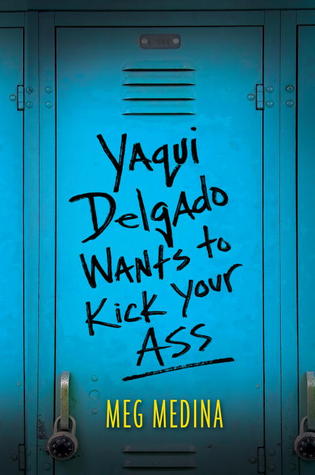
Book Review: Yaqui Delgado Wants to Kick Your Ass by Meg Medina

By Edith Campbell

YaquiMeg Medina is an accomplished author who has won awards for Tia Isa Wants a Car and The Girl Who Could Silence the Wind. Her latest book, Yaqui Dalgado Wants to Kick Your Ass is acquiring a growing list of recognition, including the Pura Belpré (a complete list of awards is at the bottom of this post). By the title, you might think that Yaqui is the main character in this realistic YA novel, but she’s not. This is Piadad “Piddy” Sanchez’s story. Just like with any bully, Yaqui seems to have taken things over.

When the novel begins, Piddy has just moved, leaving behind the school and neighborhood where she’s always felt at home. Medina quickly paints the picture of the new territory this young Latina must navigate, one where skin tone, country of origin, accent and ability to speak Spanish define where you sit as well as your place in the pecking order. Piddy shakes her hips in ways that unintentionally get too much attention and it’s on: Yaqui Delgado wants to kick her ass. Piddy’s mom can just look at Yaqui and know she’s up to no good. While Piddy’s mom may have no use for tough girls like Yaqui, Piddy cannot avoid them in her new school.

Piddy’s at that awkward age where she’s no longer a child, but not quite grown, either. She still cherishes the elephant necklace she got a few birthdays ago, but now even though she likes the idea, she knows she’s too old to celebrate her birthday like she did that time at the zoo. If she were still a little girl she could take her problems to her mom and could probably still do so if she were just a bit more mature. But Piddy doesn’t fully trust herself, and she’s also got this bully frightening her so much that—before long—she doesn’t even recognize herself.

When Piddy begins to have problems at school, she reaches out to her mother’s friend, Lila. Lila is like an aunt to Piddy. She’s the fun one who taught Piddy to dance and how to wear makeup, and she’s the one Piddy turns to when she wants to find out what really happened to her father.

Lila is part of the community in which Piddy’s story is grounded. Lila, her boyfriend Raul, the women at the beauty shop, and even the Ortegas provide spaces of comfort and familiarity for Piddy, and they nurture her as she struggles to find out who she is becoming. Piddy has two problems: she wants to know about her dad, and she can’t get Yaqui out of her head. For solutions, Piddy turns first to Lila and then to her old friend, Mitzi Ortega, who has recently moved to another area. These women are her touchstones as she moves from girl to woman. She wants to face Yaqui, but not even the support of Lila, Mitzi, and the others is enough to make that happen. We know that no one can give you this kind of strength; it comes from inside.

In her coming of age, Piddy finds Joey, a neighborhood boy who has had a very tough life. Medina writes their relationship as one that gives Piddy room to explore. While his character is not thoroughly developed, it is complete enough for the story, and their relationship helps us see a special tenderness in Piddy. Medina captures Piddy’s feelings and emotions in ways that will be immediately recognizable to anyone who has been the new kid or the kid who has been picked on. Piddy becomes a victim, losing any idea of who she is or for what she stands. Readers become part of the community that supports Piddy and wants her to stand up to Yaqui.

I’ve heard many shy away from this book, afraid of how rough it may be or turned off by the title. This is not a rough story! Despite the “ass” in the title, there’s no profanity, no drugs or alcohol, and only one scene of adolescent petting that is quite effective and touching. Piddy is a good student who wants to be a scientist and she comes from a thriving community. The novel illustrates that bullying can (and does) happen in any community, and in this book, the victim happens to be Piddy. Being a victim is rough, but Piddy is not a rough girl.

So, put the tape of the cover if you must, but put the book in your library. There are reasons for all the awards and recognition!

LEXILE: HL670

Edith Campbell

Edith Campbell is a mother, librarian, educator and quilter. She received her B.A. in Economics from the University of Cincinnati and MLS from Indiana University.  Her passion is promoting literacy in all its many forms to teens and she does this through her blog, CrazyQuiltEdi and in her work as an Education  Librarian at Indiana State University in Terre Haute, Indiana. Edith currently serves as the IN State Ambassador for the United States Board on Books for Young People and is a past member of YALSA’s Best Fiction for Young Adults selection committee.

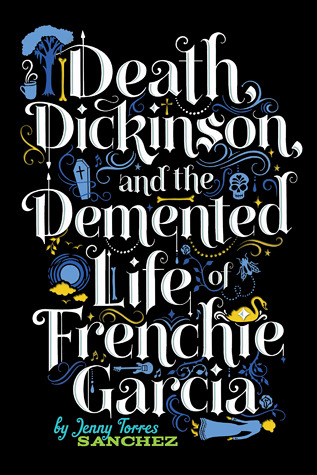
Book Review: Death, Dickinson, and the Demented Life of Frenchie Garcia by Jenny Torres Sanchez

Death, Dickinson, and the Demented Life of Frenchie GarciaBy Cindy L. Rodriguez

DESCRIPTION FROM THE BOOK JACKET: How do you know someone after they’re gone? Frenchie Garcia didn’t know she would be the last person to see Andy Cooper alive. She barely knew him. So why did he choose to be with he before he committed suicide? Her imaginary pal Em (a.k.a Emily Dickinson), who Frenchie visits regularly at her favorite place–the cemetery–is the only one who knows about her last hours with Andy. With guilt and confusion mounting, can Frenchie pull off the one thing that could give her closure?

MY TWO CENTS: Frenchie goes on a road trip with a super-cute new “friend” Colin to make sense of what happened the one and only night she hung out with Andy Cooper, the boy she loved from afar through high school. Frenchie is haunted by the usual questions when grieving: Why? Why him? What could I have done to help him? Could I have stopped him? The last two questions are most painful because she was the last person to see Andy before he died, and, therefore, feels responsible. Sanchez easily blends heart-wrenching grief with regular teen angst, serious moments of conversation with quips like, “Get up, Loser!”from Robyn, Frenchie’s friend who knows something is wrong, but isn’t sure what. Also, Frenchie Garcia is a Latina protagonist in a book that isn’t about being Latina. Frenchie is an artist who likes punk rock and Emily Dickinson; she’s a young Latina who doesn’t speak a single word of Spanish in the novel. Some readers/writers/bloggers have asked for more books with diverse characters who are not dealing with issues of ethnicity, culture, race, etc. This is a good example.

TEACHING TIPS: What student wouldn’t fill an entire notebook about a day they’d like to do-over? This is a perfect before-reading activity that could be revisited and added to as the novel continues. As Frenchie leads Colin through her last night with Andy, students could write about their chosen “do-over” night, what they’d do differently, and what they’d discover. By the end, students have read a cool book and written a personal narrative!

Emily Dickinson’s poetry is made for close reading, which is all the rage with the new Common Core State Standards. Students could read and re-read any of Dickinson’s poems featured in the novel. Close, multiple readings allow students to analyze work down to the word level to gain deeper meaning. In this case, students would gain a deeper understanding of Dickinson and Sanchez’s novel, as they could discuss how the poems fit with the novel.

LEXILE: N/A

AUTHOR: Jenny Torres Sanchez lives in Orlando, Florida with her husband and children. Before writing her debut novel, The Downside of Being Charlie, she taught high school for several years. She credits her eclectic students for inspiring her to write young adult novels.

Her other YA novel is:

The Downside of Being Charlie

FOR MORE INFORMATION about Death, Dickinson, and the Demented Life of Frenchie Garcia, visit your local library or book store. Also, check out Running Press BooksIndieBound.org,  GoodreadsAmazon.com, and Barnes and Noble.com.

Book Review: Tito Puente: Mambo King / Rey del Mambo by Monica Brown

Tito Puente, Mambo King/Tito Puente, Rey del MamboBy Sujei Lugo

DESCRIPTION FROM THE BOOK JACKET: Meet Tito Puente, the King of Mambo. Tum Tica! From musical prodigy on the streets of Harlem to five-time Grammy Award winner, Tito’s life was full of rhythm. Drums and claves, saxophones and tambourines were all part of the fun. Tac Tic! Monica Brown and Rafael López, the award-winning creators of the Pura Belpré Honor Book My Name is Celia/Me Llamo Celia, team up once again for another spectacular collaboration in this upbeat tribute to a musical legend.

MY TWO CENTS: Brown was presented with the challenge of summarizing Tito Puente’s life and music career in a picture book, and with the collaboration of Rafael López and his lovely illustrations, she succeeded wonderfully. What makes this picture book stand out is how beautifully words (English and Spanish) and images resonate with Tito’s sounds. The illustrations here are so vivid that you can almost see movements and listen to the sounds that are evoked. Brown and López effectively capture the beat and feeling of Tito Puente’s music throughout every page.

The book starts with an image of a boy and girl peeking through a curtain, as if we are about to start a show. This is where we are welcomed to Tito’s story from his childhood in El Barrio to his Grammy award-winning years. López’s colorful and vibrant images, along with Brown’s words and onomatopoeia, show us how music was constantly present in Tito’s life. These same images and words also construct a fond view of Latino life and music in NYC during Tito’s life.

Brown and López give us a very entertaining book that also manages to educate us about Tito’s life and the importance of music education. It is important to remember that Tito Puente was a product of music education and a supporter of music programs in schools. He even successfully worked toward the creation of the Tito Puente Educational Foundation that offers scholarships to children interested in learning music. This is an issue that is relevant when arts and music programs are constantly facing budget cuts. Being in tune with Puente’s life (and other great musicians and singers) helps to inspire us to support arts and music education, thus this picture book also serves as a great tool to familiarize with the power of music and arts as an important aspect of the learning process.

Tito Puente: Mambo King/Rey del Mambo is the second collaboration between Monica Brown and Rafael López. Published in March 2013, the book was selected by various Best of 2013 lists such as: Latinas for Latino Lit’s Remarkable Latino Children’s Literature of 2013, School Library Journal’s Top 10 Latino-themed Books of 2013, and Center for the Study Multicultural Children’s Literature Best Multicultural Books of 2013. Here is the wonderful bilingual trailer for this picture book:

TEACHING TIPS: This is a bilingual picture book (ages 4-7) that works well for early readers, but is a perfect one to read aloud. Parents, grandparents, family members, friends, or guardians can read in English, Spanish, or both, while teaching words and sounds to their young ones. School and public librarians can also use this book during storytime, and they can incorporate Tito’s songs and beats as the closing songs.

Going along with Tito Puente’s sense of collaboration with music, teachers (pre-school-2 grade) can also collaborate in school with this book. Language Arts, English, and Spanish teachers can read this book to their students, while teaching new words (in English and Spanish), onomatopoeia, and Tito’s life (the book includes a short biography). Art teachers can encourage and help students to create different musical instruments that are mentioned in the book. Music teachers can use the basic musical notation of a rumba for timbales, bongo, and congas that is available at the end of the book to teach some beats to the students.

LEXILE: AD740L

AUTHOR & ILLUSTRATOR: (information comes from HarperCollins Publishers, Monica Brown’s website, Rafael López Books’ website, and Rafael López’ website.

Monica Brown is the author of many award-winning children’s books and an English Professor at Northern Arizona University, specializing in U.S. Latino Literature and Multicultural Literature. She has a BA in English from University of California, Santa Barbara, an MA in English from Boston College and a PhD in English from The Ohio State University. In addition to children’s books, Monica Brown also writes and publishes scholarly work with a Latin@ focus. She is a recipient of the prestigious Rockefeller Fellowship on Chicano Cultural Literacies from the Center for Chicano Studies at the University of California.

Brown has stated that her Peruvian-American heritage and her desire to share Latin@ stories are the inspiration for her books. Her first book of the Marisol McDonald series, Marisol McDonald Doesn’t Match/Marisol McDonald No Combina is the winner of the Tejas Star Book Award (2012-13), the International Latino Book Award (2012) and a Pura Belpré Honor for Illustration (2012). Other of her numerous awards are: the Américas Award for Children’s and Young Adult Literature (2005) for her picture book My Name is Celia: The Life of Celia Cruz/Me Llamo Celia: La Vida de Celia Cruz; the Pura Belpré Award (2008) for My Name is Gabito: The Life of Gabriel Garcia Márquez/Me Llamo Gabito: The Life of Gabriel Garcia Márquez; and the International Latino Book Award (2006) for My Name is Gabriela: The Life of Gabriel Mistral/Me Llamo Gabriela: La Vida de Gabriela Mistral

Rafael López is a Mexican award-winning illustrator and artist, whose work is influenced by his cultural heritage, colors of Mexican street life, and Mexican surrealism. In addition to children’s books, López has illustrated posters, United States Postal Service stamps such as the Latin Music Legends series, and he has launched street art projects to revitalize urban neighborhoods, such as the Urban Art Trail Project.

He is the recipient of various Pura Belpré Honor for Illustration awards for books such as: My Name is Celia: The Life of Celia Cruz/Me Llamo Celia: La Vida de Celia Cruz (2006), Book Fiesta!: Celebrate Children’s Day/Book Day/ Celebremos El Día de los Niños/El Día de Los Libros (2010) and The Cazuela That the Farm Maiden Stirred (2012). He also received two Américas Awards for Children’s and Young Adult Literature for My Name is Celia (2006) and ¡Yum! ¡Mmmm! ¡Qué Rico! Americas’ Sproutings (2007).

For More Information about Tito Puente: Mambo King / Rey del Mambo (2013), visit your local library or bookstore. Also, check out worldcat.org, indiebound.org , goodreads.com, amazon.com, barnesandnoble.com  & harpercollins.com

To Be Accurate in Writing, Recognize Truth While Reading

By Cindy L. Rodriguez

As a reading teacher, I often tell my students that the best way to become a better reader is to…wait for it…read. Seems obvious, right? And, of course, the best way to become a better writer is to write. After all, the more you write, the more you produce, the more you learn about writing and about yourself as a writer, and the more you improve.

During our “Road to Publishing” series, we focused on the writing process because, let’s face it, if the writing doesn’t get done, you’re not going to finish your book and become a published author. But, today we want to stress that to become a better writer, you also need to read. A lot.

This may seem obvious to many of us, since most writers I know buy more books than they could ever possibly read in a lifetime, but I’m thinking of my students and other young people who may become future novelists. I often hear students separate reading and writing, as in,”I like to read, but I hate to write” or “I love to write, but I hate to read.”

In response, I offer this quote from a text I use with my college composition students: “Reading and writing function much like breathing in & breathing out. They are inextricably linked” (McQuade/Atwan).

To be a better writer, you must read. Obviously, you read to do the necessary research, and you read within your genre to know what’s been done and what’s popular. But at some point, you’ll also start to read as a writer.

I was always an avid reader, but once I started to write a novel, I read books differently. Of course, at times, I just want to relax and escape and enjoy a good book. Oftentimes, though, I now read as a writer. I notice the structure of the work, vivid descriptions, great dialogue, and chapter endings that keep me reading. I underline beautifully crafted phrases and catch when someone is telling instead of showing. I also wonder if telling is fine in that moment or if my editor would have marked it with a note.

Reading and writing are linked, no question. And, since this is a place where we celebrate and highlight Latin@s in kid lit, I’ll further suggest that if you plan to write Latin@, then you should read Latin@, too. Every conference session I’ve attended or blog post I’ve read about diversity in children’s literature has emphasized the importance of being accurate and respectful when writers venture into territory outside their personal experiences. To be accurate and respectful in your writing, you have to recognize truth and respect while you read.

Part of our site’s mission is to promote literacy and the love of books within the Latin@ community and to encourage interest in Latin@ children’s, MG, and YA literature among non-Latin@ readers. In other words, we want everyone to read and write more Latin@ Lit. To support this, we are adding to our book lists, hosting a year-long reading challenge, and highlighting certain titles in our new weekly feature called “Libros Latin@s.”

Whether you’re reading for research, pleasure, or to become a better writer, we encourage you to add some Latin@ titles to your TBR list this year.

Here are some of the books we’re reading:

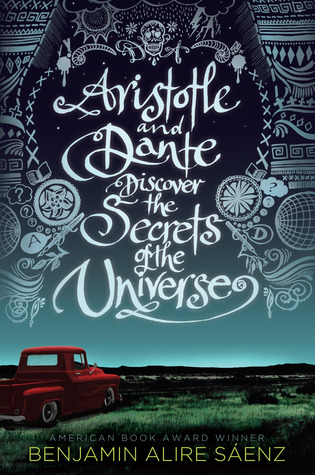
Mexican WhiteBoy     La Linea     Aristotle and Dante Discover the Secrets of the Universe

Secret Saturdays     Confetti Girl     Under the Mesquite

What are you reading?

A New Year = New Goals and Features

Happy New Year, Feliz Año Nuevo, Feliz Ano Novo from Latin@s in Kid Lit!

We’re excited to begin our first full year online. With this new year, we have added features and ambitious personal goals. First, though, let’s recap our last few months.

We launched on Sept. 16,2013,  to coincide with National Hispanic Heritage Month. Since then, we have published 20 posts, which included our “Road to Publishing” series, guest posts, and Q&As.

We gave away 12 awesome books during our 12 Days of Christmas Giveaway, and we’ve had more than 4,000 hits from visitors all over the world. Our top 10 countries are: U.S., Canada, Philippines,UK, Netherlands, Puerto Rico, Mexico, Uruguay, Spain, and Ireland. Our single best day was when we posted a Q&A with illustrator Juana Martinez-Neal, and our most popular post overall was about our 2014 Reading Challenge.

The Reading Challenge will be a year-long project. We’ll check-in on our participants and post links to reviews of books by/for/about Latin@s. So far, we have 22 official participants, although many others have spread the word and given us positive feedback. We’d love for more people to join us, which you can do any time during the year.

We were planning to craft a post about why it’s so important to support diversity in kid lit not only in general, but specifically through our purchasing and reading choices. But, then Kayla Whaley did it so well, we reblogged her post. If you haven’t read it, you should. She makes the point so well. We can SAY we support diversity in kid lit, but we should also DO something about it. What we all can do is be more conscious of what we buy, borrow from the library, read, and review/share.

To further celebrate Latin@ kid lit, we are adding a new feature on Thursdays called “Libros Latin@s.” These will be “book talks” of children’s, middle grade, and young adult books that are written by or feature Latin@s. The book talks will include: information about the book and author, teaching tips, Lexile level (if available), other books by the author, and links for more information.

Sujei Lugo, our newest member and a children’s book specialist, will handle the picture book “book talks.” She is also beefing up our Children’s Book Lists with English, Spanish, and bilingual titles. Because of her additions, we have split the category into two sections! We encourage authors, editors, and publishers to alert us about titles we should add to any of the lists.

In addition to working on the site, we each also have personal and professional goals. Here they are:

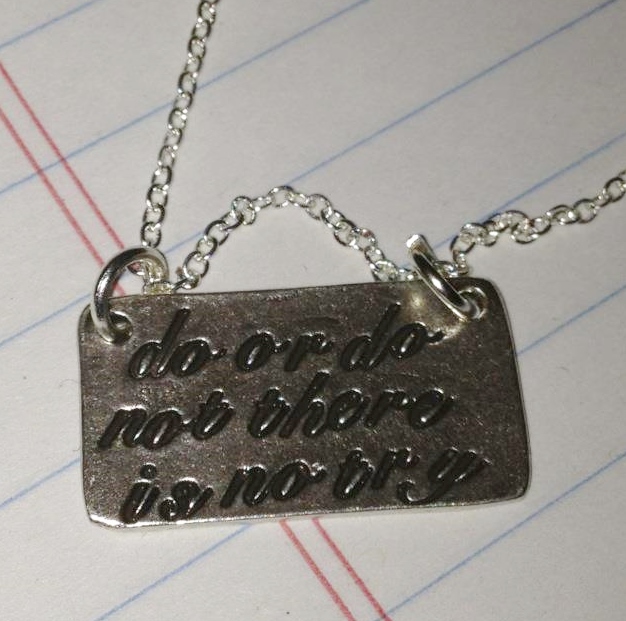
Yoda WisdomZoraida: In 2014 my motto is “Do or do not, there is no try.” It’s a reminder to myself to do my very best. Plus, wisdom from Yoda never hurt anyone. I’m going out with an adult contemporary romance proposal, as well as a YA urban fantasy that centers around a family of Brujas. If there is time (*has a Jesse Spano moment*) I want to revisit the first YA I ever wrote, about a rebellious Ecuadorian girl who turns her quinceañera upside down.

Then there’s the non-writing stuff: have a six pack (the ab kind, not the beer kind), go to the beach, visit Disney for my birthday, learn to play the ukulele (I already bought one), make more art (the painting kind), and you know, fall in love.

Also, Zoraida’s The Vast and Brutal Sea (The Vicious Deep 3) comes out July 1, 2014!

Stephanie: My resolution is to write a picture book for my daughter.

Ashley: Writing goal: take 15 minutes a day to plant and water seeds for novel #4. Personal goal: cook a wider variety of foods (using menus from “The Fresh 20”). Academic goal:  finish and defend my dissertation.

Cindy: Writing: I will do whatever’s needed to support my debut novel, which will be in production this year! I’ll also revise my second book and get it ready for submission. Reading: I’ll read 12 or more Latin@ kid lit books and as many debuts from the OneFour KidLit crew and ARCs from the Fearless Fifteeners. Personal: I’d like to lose 10-20 pounds, and as Zoraida said, you know, fall in love.

Lila: My resolutions are to finish the middle-grade novel I’m working on, to read 12 or more Latin@ kid lit books, and to lose ten pounds. Guess which will be toughest?

Quote for 2014

Best wishes to everyone this new year! May you reach all your goals and may all your dreams come true!