Book Review: Surviving Santiago by Lyn Miller-Lachman


23013839By Cindy L. Rodriguez

DESCRIPTION OF THE BOOK: Returning to her homeland of Santiago, Chile, is the last thing that Tina Aguilar wants to do during the summer of her sixteenth birthday. It has taken eight years for her to feel comfort and security in America with her mother and her new husband. And it has been eight years since she has last seen her father.

Despite insisting on the visit, Tina’s father spends all his time focused on politics and alcohol rather than connecting with Tina, making his betrayal from the past continue into the present. Tina attracts the attention of a mysterious stranger, but the hairpin turns he takes her on may push her over the edge of truth and discovery.

The tense, final months of the Pinochet regime in 1989 provide the backdrop for author Lyn Miller-Lachmann’s suspenseful tale of the survival and redemption of the Aguilar family, first introduced in the critically acclaimed Gringolandia.

MY TWO CENTS: As part of her parents’ divorce agreement, Tina Aguilar must travel from Madison, Wisconsin to Santiago, Chile, to spend the summer with her father, Marcelo, a leader of the democracy movement who was previously imprisoned and tortured by the government. The experience left him with permanent physical disabilities. He is also suicidal and an alcoholic.

At first, Tina’s summer is uneventful. She stays mostly in the house with her aunt and father, who barely pays attention to her. She decides she wants to go home early, but then she meets Frankie, a motorcycle delivery boy who gives her plenty of swoony reasons to stay in Chile. Tina and Frankie fall in love, but later–without giving too much away–she discovers he can’t be trusted and that she and her father’s lives are in danger.

Lyn Miller-Lachman does a beautiful job with creating a multi-layered narrative. The romance, family drama, and political intrigue are woven together seamlessly and each of the characters are fully developed. Because of Miller-Lachman’s extensive research and personal travel experiences, the descriptions of Chile are vivid. She captures both the physical landscape and the tense emotional atmosphere during the last months of the Pinochet regime.

One thing I especially appreciated was that Miller-Lachman allows the story to unfold. In other words, I have read so many young adult novels that literally start with a bang, following the “drop the reader right into the action” formula, that reading a narrative that didn’t start this way was a relief. I got to know Tina at home in Wisconsin before she started her journey, which allowed me to connect and sympathize with her before her struggles began.

TEACHING TIPS: This novel would obviously work well in an English classroom if the focus is historical fiction, stories from Latin America, and/or themes about survival or relationships in times of political strife. Surviving Santiago would also work well in cross-curricular way, with students analyzing it as literature in English class and then discussing the historical and political aspects in history class. Teachers could also use it as an option during literature circles with a focus on multi-generational or bicultural experiences. Surviving Santiago could be one of several books offered to students in which the protagonist has to return to her homeland or a parent’s homeland, which allows the main character the opportunity to reconnect with their culture or experience it for the first time.
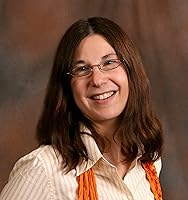
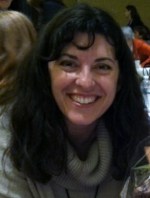
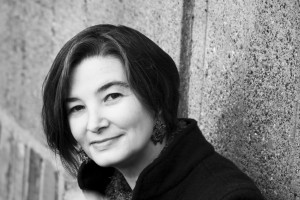
An image posted by the author.ABOUT THE AUTHOR (from her website): I grew up in Houston, Texas but left at age 18 to attend Princeton University, where I met my husband, Richard Lachmann. After living in Connecticut, Wisconsin, upstate New York, and Lisbon, Portugal, we recently settled in New York City. We have two children, Derrick and Maddy Lachmann.

I received my Masters in Library and Information Science from the University of Wisconsin, Madison and edited the journal MultiCultural Review for 16 years. In 2012, I received my Masters in Fine Arts in Writing for Children and Young Adults from Vermont College of Fine Arts.

I love teaching as much as writing and have taught both middle and high school English, social studies, and Jewish studies. Before moving to New York City, I taught American Jewish History to seventh graders at Congregation Gates of Heaven in Schenectady, New York and ran a playwriting elective for fourth to seventh graders.

I have lots of different hobbies because I love trying new things. In 2007, I became the assistant host of “Los Vientos del Pueblo” a bilingual program of Latin American and Spanish music, poetry, and history that currently airs on WRPI-FM, the radio station of Rensselaer Polytechnic Institute, on Sundays from 2-6 pm ET. I have also built a LEGO town, Little Brick Township, and create stories with my minifigures that I photograph and post on Instagram and my blog.

My husband and I enjoying traveling around the world. If I put a pin on a map for every place I’ve been, the map would have lots of pins. I’ve always wondered what it would be like to live in another place and time, and that’s one of the reasons I write historical fiction.

Lyn Miller-Lachman is also the author of Gringolandia and Rogue and the editor of Once Upon a Cuento, an anthology of short stories by contemporary Latin@ writers. She is also a team member for We Need Diverse Books.

FOR MORE INFORMATION about Surviving Santiago, check your local public library, your local bookstore or IndieBound. Also, check out GoodreadsAmazon, and Barnes & Noble.

Book Review: Pickle: The (Formerly) Anonymous Prank Club of Fountain Point Middle School by Kim Baker


13170031By Kimberly Mach

DESCRIPTION FROM THE BACK OF THE BOOK:

Dear Parents and Teachers:

This is a work of fiction. There is no Prank and Trick Association at Fountain Point Middle School. And you absolutely will not find instructions on how to log in to a top-secret prank instruction website anywhere on these pages. All we do is make pickles. OK?

Sincerely,

Ben Diaz

President, The League of Pickle Makers

MY TWO CENTS: Now, if the description above won’t get a child to pick up a book, I’m not sure what will.

Kim Baker had me laughing from the first page. The book opens with this line: Can I trust you? She had me hooked right there, with all that the question implies.

There are so many ways to talk about Pickle because it really is a perfect middle-grade novel. Kids will laugh out loud, and they may even go scrambling to create their own prank clubs. Beyond the laughter, they will identify with the ever-changing landscape of middle school friendships. Ben Diaz, the main character, creates a Prank Club, under the guise of a Pickle Makers Club. Due to an earlier incident, Ben does not invite his best friend Oliver into the club. (Oliver’s grandmother is the school principal and Oliver, well, Ben thinks Oliver just can’t be trusted to keep the secret.) Reading it, I found myself wondering what the halls of my school would look like if there were bubbles in the fountains or impromptu parties in the classrooms. Throughout the mayhem, lessons are woven in. Ben learns about himself, his new friends, and just how ‘off’ we can be when we try to label each other, but most of all he learns what kind of friendship he and Oliver really have. Spoiler alert: It’s made of the strong stuff. There are lessons here in action and reaction, consequences and the impact of our decisions, and they are all told masterfully through the eyes and comedy of young Ben Diaz.

As an adult reader, what resonated with me was the very real problem of what isn’t in our history books. For Pioneer Day, Ben and his friends have to present something pickled for the Pioneer Fair. If they don’t, they will lose their funding from the PTA and that will be the end of the Pickle Club and the secret Prank Club.

What to do? Ben turns to his family. They frequently serve escabeche, or pickled vegetables, at their Mexican restaurant. Ben sees that escabeche can be their entry for the fair. Then Ben hesitates. He asks the kind of question that many of our children who do not see themselves reflected on the pages of history books wonder about: Were there Mexican pioneers?

Ben goes on to say: “I’ve never seen any in the pictures. It’s always just a bunch of white guys.” And then later, the realization that, “It doesn’t mean they weren’t there.” Ben begins searching.

The time period for our children is different from that of my youth. In my youth, we may have asked the question, but because of available resources, we probably could not have answered it, at least not in a timely fashion. The internet has allowed people and organizations to post information and share resources in a much more efficient manner. When Ben wonders about pioneers from Mexico, he does not have to go far to find that reliable source. Instead of spending an afternoon at the town hall archives, he can answer it with the click of a button. As an adult, I could not escape the implications of Ben’s memory when he recalls being criticized in kindergarten for using the brown paper to make his Pilgrims for Thanksgiving. There are so many who were skimmed over in the history books, but the information is there if we ask the questions. Step one is teaching our children to ask. Where are the women in this picture? Who worked in the factories? Why does this city have a Spanish name? What happened when native peoples went to reservations? Ben chooses to share an authentic pickling recipe from Mexico. It may not be the pickle recipe people were expecting at the fair, but it is delicious and the scene, of course, is memorable. Trust me, you’ll be cheering for him when he has a conversation with Principal Lebonsky about traditional recipes.

TEACHING TIPS: This book would be an excellent read-aloud in the classroom, appropriate for grades 3-6. It can be enjoyed for the humor and story, or a teacher can choose to take the lessons further.

Language Arts: Life-size character sketches are one extension idea. Brief descriptions of each character are on the front jacket of the book. Many children will see themselves reflected in the personalities and the ethnicities of Ben and his friends. Traits can be filled in as readers follow the story, with life-size versions being presented at the end.

Social Studies: Many upper elementary and early middle school grades study pioneer days as part of their curriculum. Reading Pickle may encourage students to ask the important questions and to look more deeply at the pictures of people in their own state and communities.

The escabeche could be the beginning to a small unit on preserving food both in the past and now. Compare and contrast, how did Native Americans preserve food? When were other methods introduced?  What are traditional foods of the region? How are they preserved today?  The possibilities are endless here.

Enjoy the book. Readers of all ages will love it. When you are done, visit Kim Baker’s website at http://kimbakerbooks.com/ and enjoy her voice and humor there.

Pickle is Kim Baker’s debut novel and has already received five awards including the Louisiana Young Reader’s Choice 2015 nominee, 2014-2015 Texas Blue Bonnet Award Nominee, and the 2013 SCBWI West Crystal Kite award.

FOR MORE INFORMATION ABOUT Pickle visit your local library or bookstore. Also, check out WorldCat.orgIndieBound.orgGoodreadsAmazon, and Barnes & Noble.


Kimberly Mach has been teaching for sixteen years and holds two teaching certificates in elementary and secondary education. Her teaching experience ranges from grades five to twelve, but she currently teaches Language Arts to middle school students. It is a job she loves. The opportunity to share good books with students is one that every teacher should have. She feels privileged to be able to share them on a daily basis.
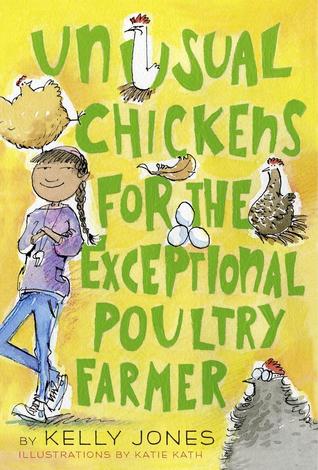
Book Review: Unusual Chickens for the Exceptional Poultry Farmer by Kelly Jones

22639675By Cindy L. Rodriguez

DESCRIPTION OF THE BOOK: Twelve-year-old Sophie Brown feels like a fish out of water when she and her parents move from Los Angeles to the farm they’ve inherited from a great-uncle. But farm life gets more interesting when a cranky chicken appears and Sophie discovers the hen can move objects with the power of her little chicken brain: jam jars, the latch to her henhouse, the entire henhouse….

And then more of her great-uncle’s unusual chickens come home to roost. Determined, resourceful Sophie learns to care for her flock, earning money for chicken feed, collecting eggs. But when a respected local farmer tries to steal them, Sophie must find a way to keep them (and their superpowers) safe.

Unusual Chickens for the Exceptional Poultry Farmer releases May 12 with Knopf Books for Young Readers.

MY TWO CENTS: It’s easy to love Sophie, the half-Latina main character in this middle grade novel that upgrades the “new girl in town” idea by adding cool, magical chickens and letters from the beyond. Sophie and her parents move from Los Angeles to a farm, left to them by her late Great-Uncle Jim. The farm, though, is “more like a big, boring garden. Dead-looking grapevines and blackbirds and junk piles and bugs, that’s it.” Sophie’s family is trying to start over after her dad lost his job.

In the novel, author Kelly Jones addresses issues such as unemployment, racism, and classism, but never in a heavy-handed way. Through her letters to her abuela, Uncle Jim, and Agnes from Redwood Farm Supply, Sophie talks about her family’s financial problems and the small town’s lack of diversity. “There aren’t any people around here–especially no brown people.” In another chapter, Sophie writes, “even though Mom was born here and speaks perfect English, she says you have to be twice as honest and neighborly when everyone assumes you’re an undocumented immigrant.” These moments, though, are not preachy. Instead, they are presented as things Sophie observes or wonders about as she navigates her bicultural reality and being the new girl–a city girl transplanted to a weed-choked farm with magical chickens.

And, for the record, the chickens are awesome. My favorite is the angry, telekinetic chicken. He’s so cute somehow even though he’s got the “if looks could kill” face all the time. Being responsible for the chickens helps Sophie to settle in and connect with her new surroundings. Caring for the chickens, and working hard to keep them safe from a thief, allows Sophie to develop her confidence.

What I really love about Sophie is that she’s a strong girl, but she’s also a quiet girl who isn’t afraid to admit when she’s sad or lonely. Being strong doesn’t always mean wielding weapons; sometimes it means going after a chicken thief or speaking in front of a crowd, even though it scares you. I think lots of middle grade readers will love this novel, which also has great illustrations, information about chickens throughout, and even a recipe for migas!

TEACHING TIPS: Language arts teachers could easily include this novel in a thematic literature circles unit with other stories about moving to new places, whether it’s to a new town or a new country.

Since Sophie writes letters throughout the novel, students could write and send personal letters to friends or family and formal business letters to local companies. In this electronic age, writing, sending, and receiving letters could be a fun activity for this generation of students, who may have seldom done this, if at all.

Asking a local farmer to visit the classroom, or taking students on a field trip, would be a wonderful experiential activity, especially for city students (like Sophie) who may have never visited a farm.

A classroom fiesta, complete with lots of eggs-based dishes and migas, using the recipe in the book, would be a wonderful and tasty way to end a unit.

Kelly JonesABOUT THE AUTHOR: Kelly Jones is a curious person, interested in chickens, magic, farm life, spies, sewing, the odd everyday bits of history, how to make sauerkraut, how to walk goats, superheroes and what makes them so super, recipes to make with a lot of eggs, anything with ghosts (particularly friendly ghosts), how to draw chickens that actually look like chickens, and any story she’s never heard before.

She’s also a writer: Her debut novel Unusual Chickens for the Exceptional Poultry Farmer, about twelve-year-old Sophie and her magical chickens, is forthcoming from Knopf Books For Young Readers in May of 2015.

Her second book, Glamour, is set in 1818, England, about sixteen-year-old Annis, who would like to become a spy like her father and who does not see why the War Office should put up such a fuss (with bonus magical dressmaking!) is forthcoming from Knopf Books for Young Readers in Spring of 2017.

FOR MORE INFORMATION ABOUT Unusual Chickens for the Exceptional Poultry Farmer visit your local library or bookstore. Also, check out WorldCat.orgIndieBound.orgGoodreadsAmazon, and Barnes & Noble.

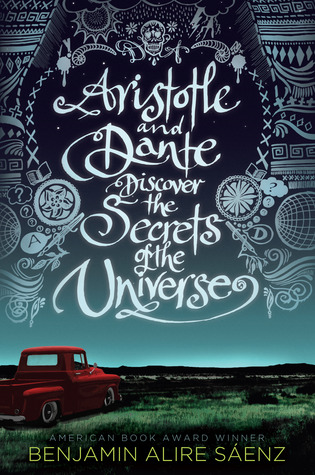
Book Review: Aristotle and Dante Discover the Secrets of the Universe by Benjamin Alire Sáenz

12000020By Eileen Fontenot

DESCRIPTION FROM THE PUBLISHER: Aristotle is an angry teen with a brother in prison. Dante is a know-it-all who has an unusual way of looking at the world. When the two meet at the swimming pool, they seem to have nothing in common. But as the loners start spending time together, they discover that they share a special friendship—the kind that changes lives and lasts a lifetime. And it is through this friendship that Ari and Dante will learn the most important truths about themselves and the kind of people they want to be.

MY TWO CENTS: This book is a four-time award winner–and well deserved! What a moving book. Even days after I finished it, I would still think of Ari and Dante and their friendship, which grows into deeper feelings–how much they influenced each other’s lives over the course of a year, with events tenderly captured by Sáenz. The romantic type of love is not the only one Sáenz touches upon; familial love is also an important topic in the book. Both Dante’s and Ari’s relationships with their families are as complicated as their relationship with each other.

The story is set in 1987 and told from the point of view of Ari–despite this, the reader gains a full picture of Dante. We learn of Dante’s sweet quirks (like his distaste of wearing shoes) and his passion for literature and art. When Dante and Ari meet, Ari is cut off from others. His parents won’t talk about the details of his older brother’s incarceration, and his father is still fighting his demons stemming from his time fighting in Vietnam. He has no real friends. Dante’s openness and delight in the simple pleasures in life helps Ari break out of his self-enforced wall, ostensibly to hide his confusing emotions.

Sáenz packs in so much emotion in such simple and spare dialogue that conveys so much. There are no superfluous words; Sáenz’s writing is lean and packs a powerful emotional punch.

TEACHING TIPS: I would recommend this book to anyone – whether teenager or adult – who ever felt different. And that it’s OK to be that way. This is a universal tale. But besides being just a beautiful love story, the book’s themes include dealing with the feelings that come with an incarcerated sibling, a parent with emotional scars from war, and the challenges that come with being gay, male, and Mexican American. This book is for anyone who feels as if there’s not enough compassion in the world.

If librarians and teachers want to try a writing exercise inspired by this book, I would ask teens who have read the book if they can attempt to reproduce Sáenz’s succinct writing style. You can tell them it’s kind of like writing dialogue on Twitter or that it’s very close to poetry. Ask them to communicate as much as they can with as few words as possible.

AUTHOR (DESCRIPTION FROM INDIEBOUND): Benjamin Alire Sáenz is an American Book Award–winning author of poetry and prose for adults and teens. Aristotle and Dante Discover the Secrets of the Universe was a Printz Honor Book, the Stonewall Award winner, the Pura Belpré Award winner, and won the Lambda Literary Award for Children’s/Young Adult Fiction. Everything Begins and Ends at the Kentucky Club won the PEN/Faulkner Award for Fiction. His first novel for teens, Sammy and Juliana in Hollywood, was an ALA Top Ten Book for Young Adults and a finalist for the Los Angeles Times Book Prize. His second book for teens, He Forgot to Say Goodbye, won the Tomás Rivera Mexican American Children’s Book Award, the Southwest Book Award, and was named a New York Public Library Book for the Teen Age. He teaches creative writing at the University of Texas, El Paso.

FOR MORE INFORMATION ABOUT Aristotle and Dante Discover the Secrets of the Universe visit your local library or bookstore. Also, check out WorldCat.orgIndieBound.orgGoodreadsAmazon, and Barnes & Noble.


Eileenfontenot headshot Fontenot is a recent graduate of Simmons College Graduate School of Library and Information Science in Boston. She works at a public library and is interested in community service and working toward social justice. A sci-fi/fantasy fan, Eileen was formerly a newspaper writer and editor.

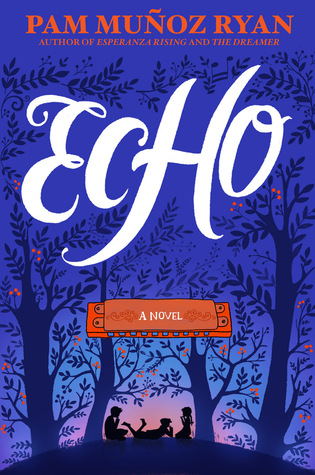
Book Review: Echo by Pam Muñoz Ryan


22749539By Cecilia Cackley

DESCRIPTION (from Goodreads): Music, magic, and a real-life miracle meld in this genre-defying masterpiece from storytelling maestro Pam Muñoz Ryan.

Lost and alone in a forbidden forest, Otto meets three mysterious sisters and suddenly finds himself entwined in a puzzling quest involving a prophecy, a promise, and a harmonica.

Decades later, Friedrich in Germany, Mike in Pennsylvania, and Ivy in California each, in turn, become interwoven when the very same harmonica lands in their lives. All the children face daunting challenges: rescuing a father, protecting a brother, holding a family together. And ultimately, pulled by the invisible thread of destiny, their suspenseful solo stories converge in an orchestral crescendo.

Richly imagined and masterfully crafted, Echo pushes the boundaries of genre and form, and shows us what is possible in how we tell stories. The result is an impassioned, uplifting, and virtuosic tour de force that will resound in your heart long after the last note has been struck.

MY TWO CENTS: Muñoz Ryan hits a sweet spot of historical fiction combined with a tiny bit of fantasy and a whole lot of heart in this new title. While the three separate narratives might seem overwhelming at first, they are never long-winded and large text and good formatting make things easy on the eyes. Muñoz Ryan introduces the reader to less familiar aspects of well-known historical events: laws regarding children with birth ‘defects’ in 1930’s Germany, conditions for orphans during the Depression in the US, and the segregation of schools in California for children of Mexican descent during World War II. All three main characters are easy to root for and their strength and determination makes happy coincidences and the final destination feel earned rather than magical. That harmonica though…what can I say? The power of music is mighty, a point Muñoz Ryan makes very clear. This is a great choice for middle grade readers, especially fans of historical fiction or stories involving music.

TEACHING TIPS: The historical settings make this a great title to connect to social studies units. It would also be a wonderful classroom read aloud. Teachers could assign groups to compile additional background research on the historical events mentioned in the text or on the harmonica and other musical instruments. Audio recordings would also be a great addition to the experience of the story.

ABOUT THE AUTHOR: Pam Muñoz Ryan has written over thirty books for young people, from picture books for the very young to young adult novels, including the award winning Esperanza Rising, Becoming Naomi Leon, Riding Freedom, Paint the Wind, and The Dreamer. She is the National Education Association’s Author recipient of the Civil and Human Rights Award, the Virginia Hamilton award for Multicultural Literature, and is twice the recipient of the Willa Cather Literary Award for writing. She was born and raised in Bakersfield, California (formerly Pam Bell), received her bachelor’s and master’s degrees at San Diego State University and now lives in North San Diego County with her family.

LINKS/OTHER INFO:

SLJ interview

Publisher’s Weekly interview

FOR MORE INFORMATION about Echo, visit your local library or bookstore. Also check out WorldCat.orgIndieBound.orgGoodreadsAmazon, and Barnes & Noble.


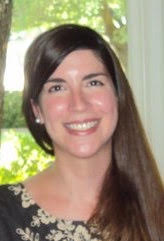
Cackley_headshotCecilia Cackley is a performing artist and children’s bookseller based in Washington DC where she creates puppet theater for adults and teaches playwriting and creative drama to children. Her bilingual children’s plays have been produced by GALA Hispanic Theatre and her interests in bilingual education, literacy, and immigrant advocacy all tend to find their way into her theatrical work. You can find more of her work at www.witsendpuppets.com.

Book Review: Talking with Mother Earth / Hablando con Madre Tierra by Jorge Argueta

By Marianne Snow

349744DESCRIPTION OF THE BOOK (from Goodreads): Tetl’s skin is brown, his eyes are black, and his hair is long. He’s different from the other children, whose taunts wound him deeply, leaving him confused and afraid. But Tetl’s grandmother knows the ancient teachings of their Aztec ancestors, and how they viewed the earth as alive with sacred meaning. With her help, he learns to listen to the mountains, wind, corn, and stones. Tetl’s journey from self-doubt to proud acceptance of his Nahuatl heritage is told in a series of powerful poems, beautifully expressed in both English and Spanish. Vivid illustrations celebrate nature’s redemptive powers, offering a perfect complement to the poignant story.

MY TWO CENTS: History books and other nonfiction texts often speak of the Americas’ original inhabitants in the past tense, as if they completely disappeared after Europeans swept across the land. For example, I remember learning that the Spanish defeated and killed (or married) all indigenous people when they invaded Mexico and Central America in the sixteenth century. Wrong. Despite facing frequent marginalization and discrimination by “mainstream” society, Nahua people, the diverse descendants of the Aztecs, still live in El Salvador, Mexico, and the United States today.

Talking with Mother Earth / Hablando con Madre Tierra – a stunning bilingual collection of autobiographical poems and winner of the illustrious International Latino and Américas Book Awards for outstanding works of Latin@ children’s literature – affirms and celebrates the complexity of a contemporary Nahua individual. In these simple yet profound poems, Jorge Tetl Argueta, who identifies as Pipil Nahua, provides us with a window into his childhood and sensitively explores issues of cultural identity from several different angles, including his spiritual beliefs, his connection to Mother Earth, ethnic pride, racial bullying, and history of the Nahua people. As they read his beautiful words, children with Nahua heritage might see reflections of themselves, while readers from other backgrounds can learn about cultural practices and perspectives that are different from their own.

Mirroring Argueta’s poems are Lucía Angela Pérez’s vibrant pastel drawings, simultaneously striking and soft, bold and soothing as they permeate each page. Prepare to be swallowed up in color as soon as you open the cover! Also, the illustrations sustain the theme of links between the present and past as they portray young Tetl standing side by side with his grandmother, his ancestors, and Aztec gods.

Another enticing feature of this book is its relatively unusual dual language format. Although we’re seeing more and more English-Spanish dual language books on the market these days, most of these books place the English text first on the page, above or before the Spanish text. While this positioning might not seem like a big deal, it can send a message to readers that English should be the first language in their lives – that it’s better than Spanish. Books that place Spanish first do pop up every once in awhile, however, and Talking with Mother Earth / Hablando con Madre Tierra is one of them, emphasizing to Spanish-speaking readers the importance of their linguistic skills.

So if you’re searching for a book that promotes empathy, beauty, linguistic diversity, cultural awareness, and positive self-image, look no further! If you enjoy it, be sure to check out Jorge Argueta’s other works for children – they’ll leave you smiling (and probably a little bit hungry).

TEACHING TIPS: Due to multifaceted subject matter in Talking with Mother Earth / Hablando con Madre Tierra, educators can choose to use the entire text or individual poems to start fruitful, critical discussions and lessons with their students. For example, teachers might draw upon “Indio” / “Indian” – an examination of racial bullying – when facilitating analyses of racism and discrimination in schools. Additionally, they might focus on Argueta’s poems on nature and Nahua spirituality to help students understand the diversity of religious beliefs and ethnicities in contemporary Latin America. Or they might highlight this book as a mentor text when encouraging students to write their own nature poetry.

The dual language format of Talking with Mother Earth / Hablando con Madre Tierra also makes it a valuable resource for Spanish and English learners – the abundance of words related to nature can help readers describe the earth bilingually. An added bonus is the inclusion of several Nahuatl words and phrases that illustrate Latin@ / Latin American linguistic diversity even further.

ABOUT THE AUTHOR (from his website): Jorge Tetl Argueta is a celebrated Salvadoran poet and writer whose bilingual children’s books have received numerous awards. His poetry has appeared in anthologies and textbooks. He won the Américas Book Award, among other awards, for his first collection of poems for children, A Movie in my Pillow. He was the Gold Medal Award winner in the 2005 National Parenting Publications Awards (NAPPA) for Moony Luna / Luna, Lunita, Lunera. His other works for children include Xochitl and the Flowers (2003 Américas Award Commended Title), Trees are Hanging from the Sky, Talking with Mother Earth, The Little Hen in the City, and The Fiesta of the Tortillas.

RELATED LINKS:


MarianneMarianne Snow is a doctoral student at the University of Georgia, where she researches Latin@ picture books, representations of Latin@ people in nonfiction children’s texts, and library services for Spanish-speaking children and families. Before moving to Georgia, she taught Pre-K and Kindergarten in her home state of Texas and got her master’s degree in Teaching English to Speakers of Other Languages (TESOL) at Texas A&M University. In her spare time, she enjoys obnoxiously pining for Texas, exploring Georgia, re-learning Spanish, and blogging at Critical Children’s Lit.