To Be Accurate in Writing, Recognize Truth While Reading

By Cindy L. Rodriguez

As a reading teacher, I often tell my students that the best way to become a better reader is to…wait for it…read. Seems obvious, right? And, of course, the best way to become a better writer is to write. After all, the more you write, the more you produce, the more you learn about writing and about yourself as a writer, and the more you improve.

During our “Road to Publishing” series, we focused on the writing process because, let’s face it, if the writing doesn’t get done, you’re not going to finish your book and become a published author. But, today we want to stress that to become a better writer, you also need to read. A lot.

This may seem obvious to many of us, since most writers I know buy more books than they could ever possibly read in a lifetime, but I’m thinking of my students and other young people who may become future novelists. I often hear students separate reading and writing, as in,”I like to read, but I hate to write” or “I love to write, but I hate to read.”

In response, I offer this quote from a text I use with my college composition students: “Reading and writing function much like breathing in & breathing out. They are inextricably linked” (McQuade/Atwan).

To be a better writer, you must read. Obviously, you read to do the necessary research, and you read within your genre to know what’s been done and what’s popular. But at some point, you’ll also start to read as a writer.

I was always an avid reader, but once I started to write a novel, I read books differently. Of course, at times, I just want to relax and escape and enjoy a good book. Oftentimes, though, I now read as a writer. I notice the structure of the work, vivid descriptions, great dialogue, and chapter endings that keep me reading. I underline beautifully crafted phrases and catch when someone is telling instead of showing. I also wonder if telling is fine in that moment or if my editor would have marked it with a note.

Reading and writing are linked, no question. And, since this is a place where we celebrate and highlight Latin@s in kid lit, I’ll further suggest that if you plan to write Latin@, then you should read Latin@, too. Every conference session I’ve attended or blog post I’ve read about diversity in children’s literature has emphasized the importance of being accurate and respectful when writers venture into territory outside their personal experiences. To be accurate and respectful in your writing, you have to recognize truth and respect while you read.

Part of our site’s mission is to promote literacy and the love of books within the Latin@ community and to encourage interest in Latin@ children’s, MG, and YA literature among non-Latin@ readers. In other words, we want everyone to read and write more Latin@ Lit. To support this, we are adding to our book lists, hosting a year-long reading challenge, and highlighting certain titles in our new weekly feature called “Libros Latin@s.”

Whether you’re reading for research, pleasure, or to become a better writer, we encourage you to add some Latin@ titles to your TBR list this year.

Here are some of the books we’re reading:

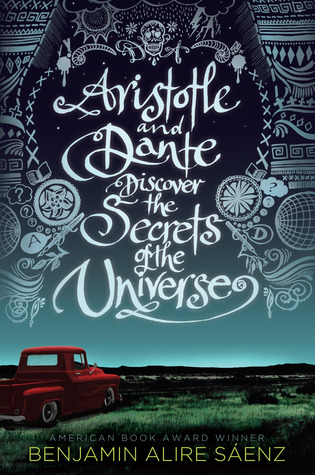
Mexican WhiteBoy     La Linea     Aristotle and Dante Discover the Secrets of the Universe

Secret Saturdays     Confetti Girl     Under the Mesquite

What are you reading?
The Road to Publishing: One Take on Working with a (Rock Star) Editor

By Ashley Hope Pérez

In articles and blog posts about breaking into the world of publishing, the lion’s share of attention goes to the writing craft, getting an agent, and securing a book deal. But what happens after those hurdles have been jumped? What can writers expect from their editors once the deal is sealed? And what will editors expect from writers?

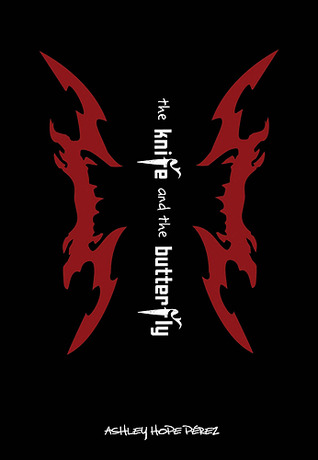
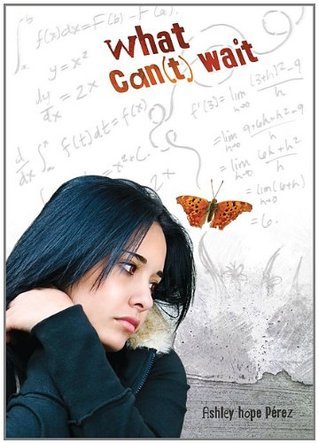
The Knife and the ButterflyBecause writer-editor relationships are endlessly varied, I don’t actually have the answers to these questions. In fact, as I started writing this post, I realized that the only thing I am really qualified to talk about are my experiences working with Andrew Karre, my editor at Carolrhoda Lab. Andrew bought my first two novels, What Can’t Wait and The Knife and the Butterfly, in a two-book deal back in 2009, and now I am in the beginning stages of working with Andrew on a third novel. I can’t say what it’s like for other writers, although you can find some descriptions of authors’ experiences with editors, my favorite being the five perspectives offered up here. What Can't Wait

For the editor’s perspective, check out this post from Scholastic imprint editor Cheryl Klein, who also has a book on editing YA. Andrew will stop by the blog on Thursday to toss in his two cents on editorial work; if you want to balance some of my gushing below with more objective reporting, you can read this feature on him in Publisher’s Weekly.

Enough preliminaries. Here’s the scoop I can offer on working with my editor.

What happens after you sign the contract with a publisher? Waiting. Waiting. Waiting. I remember expecting to hear from Andrew the day after the contract was signed, but often there’s a considerable lag (months, friends) between sealing the deal and getting the feedback that will guide the revision. Editors are working on dozens of projects—all in different stages—at any given point. The good ones are expert at juggling these demands and giving each project what it needs.

Isn’t it painful to be told how to revise? To start with, I have to say that Andrew is as close to my “ideal reader” as I expect ever to find. With all three novels, he has grasped the essential aspects of the projects as well as (or better than) I did myself. This fact secures my total confidence in his intuition and editorial recommendations; on top of that, I’ve benefitted from his ability to see subterranean connections that invited development as well as other missed opportunities. So even what might have been “pain” in the process invariably felt crucial to the mission of making the book what it was meant to be.

keep-calm-and-revise--718I should also say that the thought of revision is what gets me through the agony of drafting; revision is my happy zone, where things finally come together. I don’t mind cutting scenes or paragraphs or sentences that I love. I don’t mind writing new material. I don’t mind collapsing subplots, ditching characters, or even radically altering the point of view for 100,000 words of prose. I don’t mind because when Andrew tells me to do these things, I instantly see how much sense they make. For me, Andrew’s vision manages to expand the story’s possibilities while also clarifying what needs to be done to achieve those possibilities.

How, specifically, does the editing happen? I’ve often heard writer friends discuss the editorial letter, which I’m told is a fairly formal write-up of all the things that need to be done in revision for a manuscript to be acceptable to the editor. (More discussion of the editorial letter and an example here ) The editorial letter reflects the major first pass of editing and defines the focal areas for the main revision, after which (everyone hopes) it will be mostly scene- and sentence-level rewriting.

Unless I have suffered some serious memory loss—which is possible since I gave birth to my son during the early editorial process with What Can’t Wait—I don’t think I’ve ever gotten a formal editorial letter from Andrew. Instead, we tend to have several hour-longish phone calls where he tells me what his instincts are as far as what could or should change in the manuscript and why. Perhaps what is most important to me about how these things go is that the “why” is always intimately linked to the internal logic of the novel or its essential characteristics (as opposed, for example, to trends in the market or notions of what teens can “handle”). These conversations generally entail multiple epiphanies on my part and copious note-taking. The macro-level feedback from the phone calls comes along with scene-by-scene feedback via comments and edits in Word.

After responding to the major editorial feedback (over 2-5 months), I submit to Andrew my “final” manuscript. Once he reads and accepts it, I get the second half of the advance (the first half comes with signing the contract). There is still some back and forth and perhaps even some more substantive changes, but all the major pieces are in place. There will be at least one more full read-through with comments to address before the book goes to the next stage of copy-editing (line-by-line stuff and the standardization of things like “OK” for “okay” according to the publisher’s house style), which is done by wonderful people who work under Andrew.

2-14Book-MakingWhat’s next? Then the book goes into production, and a while later (3-6 months) I get an email with galleys that give an idea of what the manuscript will look like as a “real” book. There will also be drafts of jacket copy, which I’m glad I don’t have to write, and cover designs. With What Can’t Wait, I wasn’t in on anything until after the final cover was chosen; with The Knife and the Butterfly, I saw about a dozen preliminary designs and got to weigh in on their relative merits. From contract to the printing of advance reader copies, the process has taken between a year and two.

Any words of advice for those on the road to publishing? The truth is that—at least for your first book—you will have little say in who your editor is. Your agent will submit the book where she or he thinks it’s a good fit, and if an editor bites and makes a reasonable offer, your agent will advise you to accept. There is no room in this process for mailing editors personality tests to check for compatibility.

What you can do is embrace the editorial process as an opportunity to discover more about your novel and your work as a writer. I find that the writer-editor dynamic—inevitably centered on the book—creates an amazing triangle of insight inside of which all kinds of possibilities for the story come into focus. I hope that’s the case for many other writers, too.

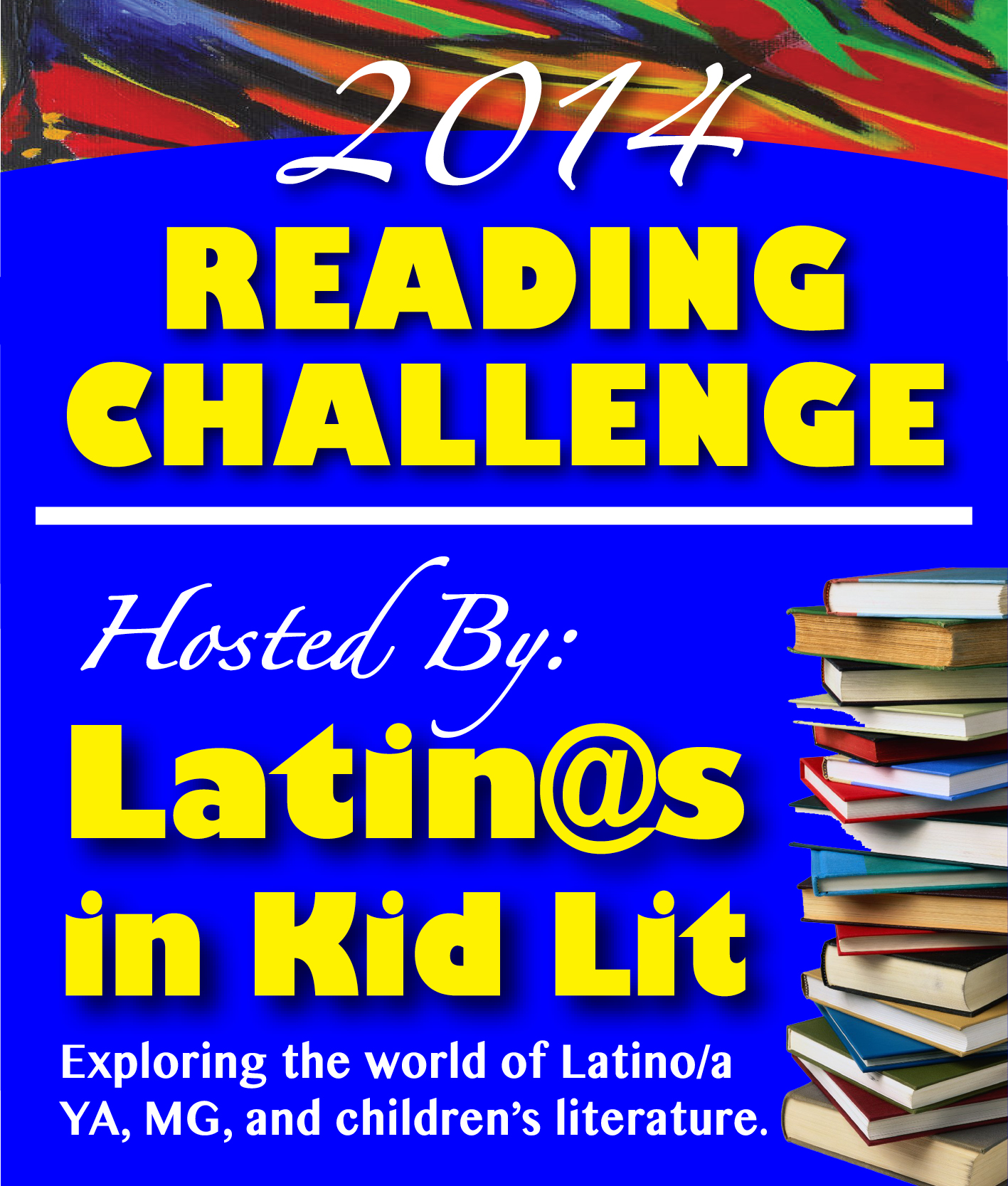
JOIN OUR 2014 READING CHALLENGE!

2014 Reading Challenge

A year ago, The New York Times wrote about the lack of Latin@ literature in classrooms, which leaves the youngest members of the largest ethnic or racial minority in the U.S. with little chance to “see themselves in books.” The School Library Journal countered that the literature is there but needs to be promoted.

We believe both statements and would like to see more all around, meaning: more Latin@ children’s literature on bookshelves and in libraries and classrooms, more titles by and for Latin@s on year-end “Best of” lists and best-seller lists, more people buying, reading, and writing about Latin@ children’s literature.

We cannot control publishing and marketing, but we can read and write about Latin@s in children’s literature. So, as the new year approaches, we invite you to participate in our 2014 Reading Challenge. This would be a great way to diversify your reading lists and support already established and emerging writers who include Latin@s in their books. One of the best ways to express that diversity in kid lit is important is to buy, read, and write about these titles.

Here are the Guidelines:

  • This challenge will run from January 1, 2014-December 31, 2014.
  • Anyone can join! You don’t have to be a book blogger. WordPress doesn’t accept anything that uses JavaScript, so we can’t use a linky list. If you want to participate: post somewhere that you are joining the 2014 Latin@s in Kid Lit Reading Challenge, sign up in the comments, and include a direct link to your announcement. Copy and paste our reading challenge logo onto your site. If you don’t have a site, you can spread the word on Facebook, Twitter, or any other way.
  • The goal is one book per month. You may post reviews on GoodReads (use a shelf dedicated to 2014 Latin@s in Kid Lit Reading Challenge), Amazon, Barnes and Noble, Facebook, or wherever else you post your reviews. Again, link back to the challenge. Each month, we will check up on participants, but you can also send a direct link to our email at: latinosinkidlit@gmail.com whenever you read and review a book. We will have a monthly round-up post that lists all reviews available online.
  • Re-reads and crossovers from other challenges are fine.
  • You may select books as you go.
  • You can join at anytime during the year.  Any books you have read in 2014 can be added.
  • Prizes will be given to those who stick with it through the year!
  • Any format, level (children’s, MG, or YA), or  genre is welcome. The book, however, must be written by a Latin@ author and/or include Latin@ characters, settings, themes, etc.

“How will I find such books?” you ask.

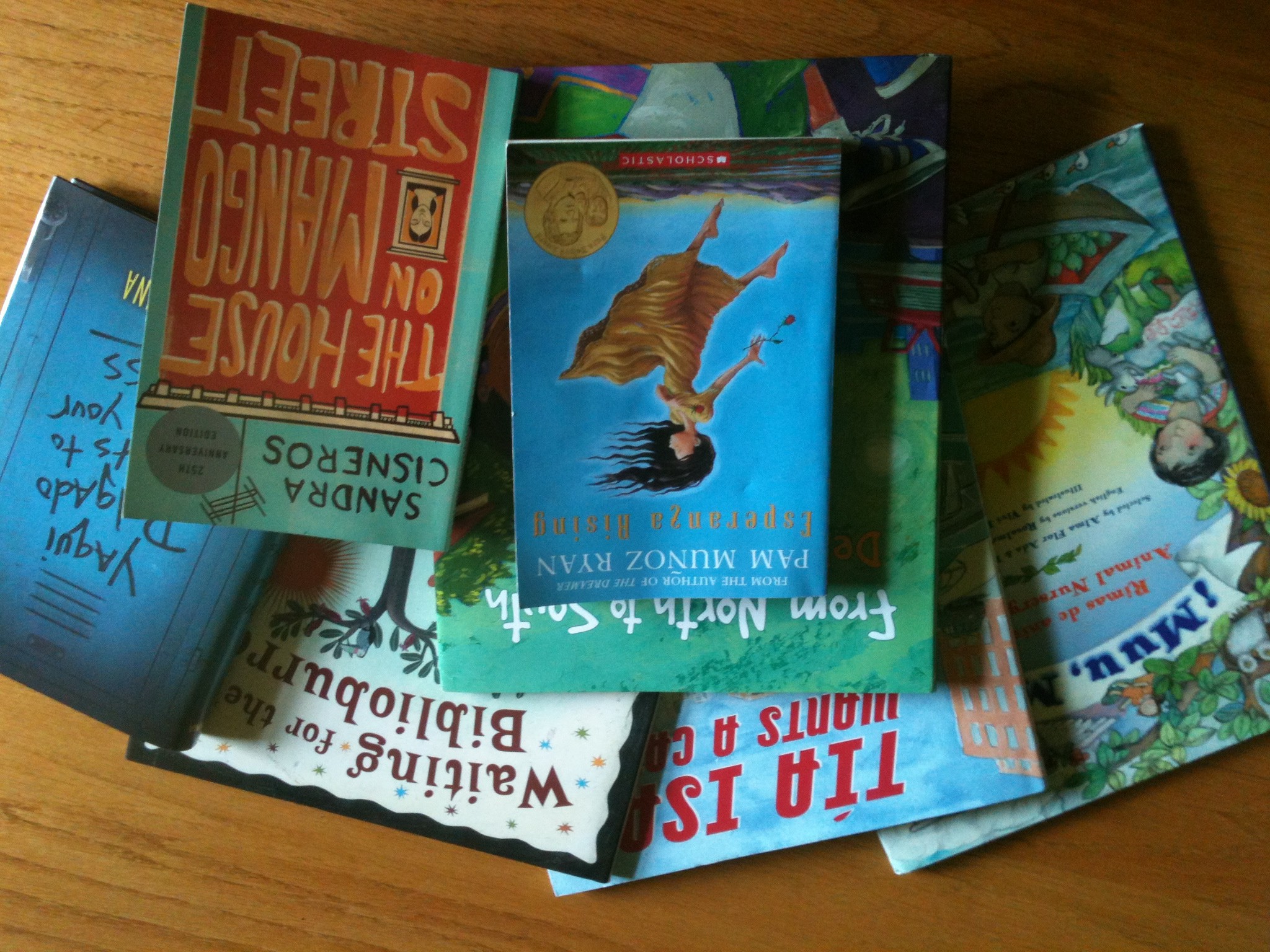
“No problemo,” we say. Here are some suggestions:

Also, these titles were on “Best of” 2013 lists:

Yaqui Delgado Wants to Kick Your Ass by Meg Medina; SLJ, Kirkus

From Norvelt to Nowhere by Jack Gantos: PW

Enrique’s Journey by Sonia Nazario, Kirkus

Death, Dickinson, and the Demented Life of Frenchie Garcia by Jenny Torres Sanchez, Kirkus

Niño Wrestles the World written and illustrated by Yuyi Morales, Horn

The Summer Prince by Alaya Dawn Johnson, Kirkus

If you’re like us, then you will be reading anyway because you’re a person who loves books and children’s literature, in particular. Why not challenge yourself to add some Latin@ literature to your TBR pile? We hope you join us!

Give Kid Lit Readers a Broad Range with Real Characters


For our first set of posts, each of us will respond to the question: “Why Latin@ Kid Lit?” to address why we created a site dedicated to celebrating books by, for, or about Latin@s.

By Ashley Hope Pérez

Like Stephanie, my personal commitment to Latin@ lit comes from my work with teens. Much of my energy as a high school English teacher in Houston went to finding ways to make reading and writing an authentic, meaningful, and empowering part of my students’ lives.

I spent a lot of time scouring our school library and talking to my reluctant readers about what they wanted in a book. No big surprise: a lot of them wanted a book that reflected their experiences in a way that would ring true. We had plenty of successes, but there were a number of students for whom it seemed that the gateway book—that critical read that would persuade them of all that words can do—was missing.

“I want a book that shows how my life really is,” I heard over and over. “Not just somebody brown, but somebody real,” one student insisted. And, “please, I can’t stand it when they make it seem like if you just get into college, you’ve got it made.” That last bit came from one of my top-performing seniors, an impressive scholar by all accounts but also a young woman who had few illusions about the conflicting demands she would be facing in the coming years.

My students—aware of my aspirations to “one day” write a novel—began to recommend (okay, insist, pester, badger) that I write the book that they were looking for, and they were both my inspiration and the first readers of What Can’t Wait. Similarly, The Knife and the Butterfly began with writing exercises I was using to give a group of freshmen in a summer school English class a way of responding to the news coverage of a deadly gang fight a few miles away. In my third novel (watch for it in 2015 from Carolrhoda Lab), I take my concern with Latin@ experiences in a new direction by bringing them to the history of my native East Texas. I explore Hispanic experiences in the primarily black-and-white world of 1930s East Texas through the story of a school explosion, family secrets, an interracial romance between a Mexican American girl and a black boy, and the pressures created by Texas’s three-fold segregation system (black, white, and “Mexican” schools existed in many places). The third novel is going to be something different from my contemporary fiction, for sure, but it’s still written with my students in mind. I like to think that it’s the kind of book that would persuade my students to think about how past experiences scar the present—and what we do to mark loss and begin healing.

It matters quite a lot to me that Latin@ lit avoid the trap of making an “issue” of ethnicity, as Zoraida pointed out. Ethnicity was a non-issue for my students, not because they lived in such a multicultural world (Zoraida’s experience) but in fact because their world was relatively homogeneous; most of the kids in the Southeast Houston neighborhood where I taught were from working class families with roots in Mexico. Even my students who weren’t bilingual regularly heard Spanish and had strategies for managing the interconnections of Spanish and English in their community.

I don’t include glossaries in my novels, as I discuss here, because my books are first and foremost for my kids—and because I believe in the resourcefulness of other readers who come along. All of that to say: writing for my kids felt urgent back when I started What Can’t Wait, and it still does today. But Latin@s in Kid Lit has a broader mission than featuring Latin@ YA: we’re about highlighting awesomeness by, for, and about Latin@s for kids of all ages, including younger readers.

When I have the chance to talk with librarians or teachers about book selection, I often beg them first to make sure their collection goes well beyond the default “diversity” titles. Book selections for younger children should go beyond portrayals of special holidays, for example. I often caution teachers about resorting too quickly to the “minority celebrity” of the hour when attempting to diversify their reading lists.

By the time my (mostly Latin@) students reached my senior English class, most of them had read The House on Mango Street—in part or in whole—a half dozen times. That was because Cisneros’ (wonderful!) and widely discussed book had become synonymous with “Latino experience” in the minds of well-meaning teachers who had little additional knowledge of Latin@ lit, and they didn’t look beyond it when making choices for their classrooms.

The absence of a broad selection of diverse titles can reinforce students’ feelings of exclusion and general disengagement from the world of books. By contrast, offering students (whatever their background) a broad range of literature can generate a lot of excitement.

I, for one, am all for excitement! In future posts, I hope to contribute to the conversation by offering my two cents on what’s happening in the world of Latin@ YA and also by highlighting some of my Latin@ kidlit reading adventures with my son, Liam Miguel.

More from me soon!

Ashley

P.S. Since I talk a lot about how I came to focus on Latin@ experiences in my fiction, I’ve cribbed some of this post from a past feature I did at STACKED , another blog that YA fans and librarians should have on their radar.

Future of Latino/a Lit Is Being Written Now

For our first set of posts, each of us will respond to the question: “Why Latin@ Kid Lit?” to address why we created a site dedicated to celebrating books by, for, or about Latin@s.

By Zoraida Córdova

Why Latin@ Kid Lit?

Well, why not?

Growing up in Hollis, Queens, I never thought of myself as a minority. Personally, I think that word is crap. Are we minor things? Less-than things? Not at all, but this is what they (the proverbial they) call it.

I had my friends, some fourth-generation Irish, some Filipino immigrants, some Guyanese, Jamaican, Mexican, Mexican-Haitian, and the list goes on and on. But this is NYC and diversity is not foreign to us.

This same diversity was not reflected in the television I watched or books I read. My favorite shows were Charmed, Buffy the Vampire Slayer, and Dawson’s Creek. My favorite books were by Sarah Dessen. I was a freshman in high school and I had encountered zero characters who look like me, as I recently noted over at Diversity in YA.

The House on Mango StreetI’d like to think that Latino Lit has come in waves. First, THE HOUSE ON MANGO STREET by Sandra Cisneros and HOW THE GARCIA GIRLS LOST THEIR ACCENTS by Julia Alvarez, and while those stories are still relevant, they might not pertain to the kids who have already assimilated. I moved to New York when I was six; this Fall I will be celebrating 20 years here. While I most definitely know where I come from, my identity very much belongs to New York.

I want to see myself in the books I read.

Junot Diaz says, “Every single immigrant we have, undocumented or documented, is a future American. That’s just the truth of it.” And he’s 100% right. The future of Latin@ Lit is being written right now. I believe that not every book with a Hispanic or Latin@ character has to be an “issue” book. Not all of us have issues with our heritage. We just are.

Some good examples of this are GOING BOVINE by Libbra Bray,  SEAN GRISWOLD’S HEAD by Lindsay Leavitt,  and YAQUI DELGADO WANTS TO KICK YOUR ASS by Meg Medina. Each of these novels has Latin@ characters, but the story is not centered on being Latin@.

Going BovineSean Griswold's HeadYaqui Delgado Wants to Kick Your Ass

In GOING BOVINE, Paul Ignacio “Gonzo” Gonzales is a video-game-playing hypochondriac who has an overbearing Mexican mother. He’s dealing with lots of issues, but being Latino doesn’t seem to be one of them. The MC in SEAN GRISWOLD’S HEAD, Payton Gritas, is half-Colombian. Hers is a story of family and first love. Along the way, her ethnicity is mentioned, but it’s not the center of the narrative. In Medina’s novel, the MC is a Cuban-American–the new girl in school who is bullied by another Latina. Of course, the story includes plenty of background and action that touches upon Latin@ culture, but the central issue is not about racial or ethnic discovery.

We need stories that are as diverse as the Latin@ community, stories about Latin@s like me who are as American as they are Latin@. This is one of the things I want to explore in this blog with wonderful writers and readers like yourself.

Happy reading,

Zoraida

(Zor-eye-duh)

Welcome to Latinos/as in Kid Lit

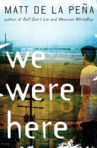
We Were HereLuis was a high school freshman who hadn’t read a novel independently for so long he couldn’t remember the title or year it happened. During the first semester of high school Reading, Luis read We Were Here by Matt de la Peña in anticipation of an author visit. After the visit, Luis asked for “another book like this one,” which was his way of saying, “a book written recently that doesn’t bore me and has characters who look, talk, and act like me.”

With the help of enthusiastic teachers and librarians, Luis read more books “like that one.” It took just one story that spoke to his identity as a Hispanic male to begin his engagement with literature.

Luis’s story is borne out by research. When youths “see” themselves in terms of race, culture, and lived experiences in the literature they read, they benefit academically, personally, and socially (Bishop, 1992; Diamond & Moore, 1995; Mason & Au, 1991). More broadly, culturally responsive teaching or “using the cultural knowledge, prior experiences, frames of reference, and performance styles of ethnically diverse students to make learning encounters more relevant to them” (Gay, 2000, p. 29) results in increased student engagement and positive gains in achievement (Chapman, 1994; Foster, 1995; Hollins, 1996; Krater, Zeni, & Cason, 1994; Ladson-Billings, 1994, 1995a, 1995b; Sheets, 1995).

Luis, and others like him, stand to gain a great deal from reading books that speak to their cultural identities. Sometimes a love for reading is kick-started by a single book with a main character who faces the same issues the reader does or lives in a place like the reader’s own neighborhood. This is true for all of us. We connect with stories for varied reasons, including the simple one that something in the narrative is familiar.

The statistics in publishing, however, have been against teens and children like Luis, who specifically want to read books that feature ethnic or racial minorities. Recent news stories have highlighted the fact that minority children in the United States don’t often see themselves reflected in books. Also, a study by the Cooperative Children’s Book Center reported the number of children’s books with multicultural content has not increased in 18 years. (See also this post by Lee & Low Books about the study.)

So, why focus on Latin@ Lit? Because 53 million Hispanics live in the U.S. according to the 2012 census. Hispanics are the second largest race or ethnic group (behind non-Hispanic whites), representing about 17 percent of the total population. Everyone–not just Latin@s–should be able to read books with characters that represent our diverse population.

While several excellent resources for Latin@ Literature exist online, we had yet to find a site that was dedicated to Latin@ children’s literature and created by Kid Lit writers.

So, here we are!  Welcome to Latin@s in Kid Lit!

We’re launching our site at the start of National Hispanic Heritage Month to underscore our mission to provide a closer, more sustained sense of what’s happening in Latin@ children’s literature.

Our vision is to:

  • engage with works about, for, and/or by Latin@s;

  • offer a broad forum on Latin@ children’s, MG, and YA books;

  • promote literacy and the love of books within the Latin@ community;

  • examine the historical and contemporary state of Latin@ characters;

  • encourage interest in Latin@ children’s, MG, and YA literature among non-Latin@ readers;

  • share perspectives and resources that can be of use to writers, authors, illustrators, librarians, parents, teachers, scholars, and other stakeholders in literacy and publishing.

On this site, you’ll find:

  • posts about Latin@s in children’s literature;

  • book lists. This is a work in progress. Please send us titles that should be included. We are looking for books by Latin@ writers in any genre and books by non-Latin@ writers with Latin@ characters, settings, etc.;

  • book talks, where we’ll highlight books we’re reading and explain why you should be reading them, too;

  • interviews with writers and illustrators about their creative journeys;

  • interviews with agents and editors about the publishing process;

  • teaching ideas;

  • articles and news links aimed at writers and others involved in literacy and publishing;

  • guest posts. Please write to us if you have an idea for a post.

Like you, we’re passionate about serving a burgeoning community of young readers. That’s why we want to offer this as a welcoming space where you can share your ideas, too. We believe that Latin@ children’s literature is for everybody. We hope you’ll follow us and explore the ways it can enrich young people’s lives.

¡Bienvenidos!

Books1

We don’t want to overwhelm you with research, but if you’re interested in learning more about the ways multicultural literature benefits young readers, the following books and studies are a good place to start.

Brozo, W. (2002). To be a boy, to be a reader: Engaging teen and preteen boys in active literacy. Newark, DE: International Reading Association

Deci, E., Vallerand, R., Pelletier, L., & Ryan, R. (1991). Motivation and education: The self-determination perspective. Educational Psychologist, 26(34), 325-346.

Diamond, B.J., & Moore, M.A. (1995). Multicultural literacy: Mirroring the reality of the classroom. New York: Longman.

Gay, G. (2000). Culturally responsive teaching: Research, theory and practice. New York: Teachers College Press.

Guerra, S. (2012). Using Urban Fiction to Engage At-Risk and Incarcerated Youth in Literacy Instruction, Journal of Adolescent and Adult Literacy (55)5, p 385-394.

Hill, M.L., Pérez, B., & Irby, D.J. (2008). Street fiction: What is it and what does it mean for English teachers? English Journal, 97(3), 76–82.

Hughes-Hassel, S., & Pradnya, R. (2007). The leisure reading habits of urban adolescents. Journal of Adolescent & Adult Literacy, 51(1), 22

Ladson-Billings, G. (1995a). But that’s just good teaching! The case for culturally relevant pedagogy. Theory Into Practice, 34(3), 159-165.

Ladson-Billings, G. (1995b). Toward a theory of culturally relevant pedagogy. American Educational Research Journal, 32(3), 465-491.

Morris, V., Hughes-Hassell, S., Agosto, D., & Cottman, D. (2006). Street lit: Emptying teen fiction bookshelves in Philadelphia public libraries. YALS: Young Adult Library Services, 5(1), 16-23.