“A poet, América knows, belongs everywhere”: Healing & Latin@ Children’s Literature

By Sonia Alejandra Rodriguez

As a child what I desired most was to be rescued from the violence I experienced at home. I was undocumented and domestic violence was far too common. While I now know that these are real experiences for many Latino homes, these were secrets that I walked around with for fear that my family would be separated if I said anything. Retrospectively, what I probably needed, aside from the violence to stop, was to understand why the violence was happening in the first place. There was nothing or no one around to explain my feelings of anxiety, fear, and/or self-hate around the violence I witnessed and then internalized. At the time, shows like “Boy Meets World,” “Saved by the Bell,” and “Full House” only reaffirmed for me that my family was different, did not belong, or that there was something wrong us. I was reading a lot, too, but I only got more and more frustrated that the books I read did not speak to my reality. I was obsessed with Beverly Cleary’s Ramona because she was everything I wanted to be—free, adventurous, and happy. And while characters like Ramona fueled my imagination they explained nothing about the violence I endured.

My investment in Latina/o children’s and young adult literature stems from my desire to explain why violence is more prevalent in certain communities than it is in others. But it is also driven by what I have seen is the genre’s potential to provide paths toward healing for Latina/o children and young adults. Recent conversations about the need for diversity in children’s literature have discussed at length the impact that being or not being represented in books can have on a child’s self-esteem and where they see themselves positioned in society. These conversations have made visible the discrimination within publishing industries and the ways that children of color stand to lose the most. Diversity is important to my project simply because stories about children of color can save their lives.

696056I was first introduced to Luis J. Rodriguez’s América is Her Name as a graduate student and it was the first children’s book I read with a Latina protagonist. I was a taken aback that a kid’s book actually talked about immigration and included scenes of violence. Mainstream children’s literature is no stranger to violence, gruesomeness, monsters, and the like; however, it is out of the ordinary to see a story about immigration, gang violence, and abuse at home that does not depend on stereotypes or is read as ethnography. América Soliz, the protagonist, is a recent immigrant from Oaxaca, Mexico to Pilsen, Illinois— one of Chicago’s predominantly Mexican communities— who struggles to find a voice in a place that seeks to silence her. Throughout the text, the reader is privy to the discrimination she faces in the classroom, the violence in her community, and the patriarchal oppression in her home. What I found most powerful about the book was that América is given a tool to challenge the oppressions around her. Poetry becomes her outlet, and it allows her to process the violence she witnesses and experiences. In this way, the violence does not overwhelm her, but instead, she is able to find strength despite it. Rodriguez’s book opened a new world of children’s books for me, and it allowed me to see this genre as having the potential to create social change.

One of the biggest personal challenges that América faces is feeling like she does not belong. As an undocumented student in an ESL classroom, her fear is reaffirmed by her teachers:

Yesterday as [América] passed Miss Gable and Miss Williams in the hallway, she heard Miss Gable whisper, “She’s an illegal.” How can that be—how can anyone be illegal! She is Mixteco, an ancient tribe that was here before the Spanish, before the blue-eyed, even before this government that now calls her “illegal.” How can a girl called América not belong in America? (n.p)

América’s genuine question signals a history of systemic oppression demarcating who gets to belong and who is excluded from the American imaginary. By tracing her indigenous roots, América seeks to challenge who can lay claim to the land her teachers wish to erase her from. Upon first reading Rodríguez’s book, I found América’s question rather painful. Even though América is a child, her teachers have no qualms about criminalizing and excluding her. At nine years old, there is very little that América can do to challenge her teachers’ ignorance and discrimination; however, the tension in the classroom shifts when Mr. Aponte, a Puerto Rican poet, visits America’s class. Mr. Aponte encourages the class to write poetry about what they know and in whatever language they feel comfortable. América writes about Oaxaca and shares her poetry with her family. Eventually, her mother and younger siblings take part in writing. At the end of the book, Ms. Gable gives América a high mark on one of her poems, which brings great joy to América and her family.

While América remains undocumented at the end of the story, she finds that her poetry gives her a sense of belonging that she did not feel at the beginning. She says: “A real poet. That sounds good to the Mixteca girl, who some people say doesn’t belong here. A poet, América knows, belongs everywhere” (n.p.). Writing has given America a way to challenge and transform the oppressions around her. Her poetry serves as a voice and power that she lacked and has since shared with her family. When I teach this book, I am very careful about talking about the conclusion as the “happy ending.” Instead, I encourage my students to read this moment as part of América’s healing process. Leaving the book with the assumption that everything works out for América is a disservice to the book and those like it. The fears and perils of immigration do not go away because América learned to write poetry. Instead, what she has learned is a set of skills that will help her express how immigration impacts her identity and will help her challenge a system that seeks to exclude her. Reading the ending as a moment in a much larger healing process instead of a resolution further allows me to demonstrate how Latina/o kids lit can transform the lives of Latina/o children and young adults.

If a book like América is Her Name had been available to me as a child, I can imagine it having made a real difference. Feeling excluded or not belonging is a very common theme within traditional coming-of-age stories. However, those feelings become rationalized as “growing pains” or generalized as “everyone feels left out,” or they become a lesson on “not everyone is going to like you.” These motifs often learned in mainstream coming of age stories and in common (mis)understandings of American childhood do not capture América’s experience. América is excluded for specific political and historical reasons. If she were a real child, she will probably be excluded her entire life because she is an (im)migrant. Even if she were to gain legal citizenship, someone will someday ask her “where are you from?” and assume that she does not belong. When I talk about Latina/o children’s books as having the potential to heal, I mean it in reference to these specific moments of exclusion and violence that unfortunately are a reality for Latina/o children. How do we teach our children to answer questions like “where are you from?” or to respond to comments like “you don’t look American”? How do we make them feel like they belong when the world around them may be telling them otherwise? Latina/o children’s literature does not have all of the answers but it is creating conversations on the topics that still require much attention.

Other Latina/o children’s books with immigration as a theme:

52390  1006426  2235722  465967  8101398  1266138  580207  2195327

headshotSonia Alejandra Rodríguez has been an avid reader since childhood. Her literary world was first transformed when she read Rudolfo Anaya’s Bless me, Última as a high school student and then again as a college freshman when she was given a copy of Sandra Cisneros’s The House on Mango Street. Sonia’s academic life and activism are committed to making diverse literature available to children and youth of color. Sonia received her B.A. in English from the University of Illinois at Urbana-Champaign. She is currently a PhD candidate at the University of California, Riverside, where she focuses her dissertation on healing processes in Latina/o Children’s and Young Adult Literature.

Book Review: Yes! We Are Latinos by Alma Flor Ada and F. Isabel Campoy

Reviewed by Lila Quintero Weaver

Yes We Are LatinosDESCRIPTION FROM THE PUBLISHER: Juanita lives in New York and is Mexican. Felipe lives in Chicago and is Panamanian, Venezuelan, and black. Michiko lives in Los Angeles and is Peruvian and Japanese. Each of them is also Latino.
Thirteen young Latinos and Latinas living in America are introduced in this book celebrating the rich diversity of the Latino and Latina experience in the United States. Free-verse fictional narratives from the perspective of each youth provide specific stories and circumstances for the reader to better understand the Latino people’s quest for identity. Each profile is followed by nonfiction prose that further clarifies the character’s background and history, touching upon important events in the history of the Latino American people, such as the Spanish Civil War, immigration to the US, and the internment of Latinos with Japanese ancestry during World War II.

Alma Flor Ada and F. Isabel Campoy’s informational yet heartwarming text provides a resource for young Latino readers to see themselves, while also encouraging non-Latino children to understand the breadth and depth of the contributions made by Latinos in the US.

Yes! We Are Latinos stands alone in its presentation of the broad spectrum of Latino culture and will appeal to readers of fiction and nonfiction.

MY TWO CENTS:  Yes! We are Latinos belongs on every essential reading list of Latino children’s literature, as is often true of books co-authored by the acclaimed duo of Alma Flor Ada and Isabel Campoy. No single work can cover every expression of Latino life in the United States, yet this book for middle-grade readers provides a generous glimpse of historical, cultural, ethnic, and linguistic aspects of the community. The authors’ approach pairs thirteen character vignettes, written as monologues in free verse, with matching expository sections of historical and cultural information. Collectively, the alternating sections deliver vivid, easily digestible insights into what is meant by Latino. There is no single Latino identity, the characters seem to say, and each of us is worthy of your attention.

The authors’ commitment to showing a wide representation of Latino life comes through in the vignettes. The featured characters reflect a generous range of ethnic and regional groups, some of which speak no Spanish, mirroring the fact that many Latinos come from bicultural and transnational families. In one vignette, we meet Susana, a Sephardic girl who lives in San Francisco. In another, we’re introduced to Dominican-born Santiago, who now calls Detroit home.

Sometimes young Latin@s would love nothing better than to break away from traditions they consider too confining. The story of Gladys, a Puerto Rican living in Philadelphia, is the best example of this. She watches the preparations for her sister’s quinceañera, expecting that before long her mother will want to start planning Gladys’s “quinces.” But Gladys’s dreams are pulling her in another direction, toward college.

Julio is from a farm migrant family originating in Teotitlán del Valle, a village in Oaxaca, Mexico. Like other members of his original indigenous community, Julio speaks Zapotec. When his family moves to Stockton, California, he must navigate two foreign languages, English and Spanish, in order to function in a primarily Spanish-speaking Chicano community, within a mainstream American setting. He’s adjusting to life in the new country, but still looks back on his homeland with longing and pride, recalling the beautiful and prized tapestries that Teotitlán’s weaving looms are known for.

In one pair of monologues, two Latinas with Asian backgrounds form a friendship. Lili is a Guatemalan of Chinese descent, whereas Mikito’s heritage is Japanese and Peruvian. The families of both girls passed through multiple immigration journeys. In the educational follow-up, we learn about waves of Asian immigrants that landed on the shores of South and Central American countries and the descendants of these immigrants who eventually drifted northward. The section on Japanese Latinos reveals a troubling detail of American history: Wartime internment camps built to contain Japanese Americans also held Japanese families who were deported at the urging of the United States by the Latin American countries where they resided. In these internment camps, Japanese Latinos often found themselves socially isolated, since they spoke only Spanish and few others in the camp could communicate with them.

The factual sections that follow the monologues highlight each character’s nation of origin. In Santiago’s case, it’s the Dominican Republic. A brief review of the island-nation’s history includes important facts about the Trujillo dictatorship, although the achievements of outstanding Dominicans receive greater attention. These include acclaimed novelists Julia Alvarez and Junot Díaz, haute-couture fashion designer Oscar de la Renta, and professional baseball players David Ortiz and Manny Ramirez.

Outmoded characterizations of Latino life give everyone the same background, the same history, the same traditions and tastes. This book’s emphasis counteracts generalizations and brings forward Latinos’ complexity. In each vignette, the authors touch on multiple elements, including the scattered geographic settings where the characters live, the varied occupations their parents work in, and the traditions their families celebrate. Yes! We Are Latinos offers an important and long overdue contribution to children’s literature.

TEACHING TIPSYes! We Are Latinos is the work of educators and seems custom-made for later elementary and middle school classrooms. The poetic narratives bring life to the informational sections, which in turn invite further exploration of the countries and histories they feature. Teachers may want to assign students paired sections to expand upon through written reports or artistic responses. For example, students could design posters depicting specific Latino cultures. Another idea is to have students compose poetic vignettes of imaginary characters reflecting geographic regions not covered in the book.

ESL instructors are likely to appreciate the book’s short, digestible sections, which contain not only interesting stories, but also broad vocabulary.

Older readers may want to dive into Cristina Henriquez’s recent novel, The Book of Unknown Americans, reviewed here by Ashley Hope Pérez.

For additional resources:


Alma Flor AdaALMA FLOR ADA

A native of Cuba, Alma Flor Ada is an award-winning author, poet, storyteller and scholar of literature. She has published more than 200 books for children, many of them in partnership with Isabel Campoy.

In this interview, Alma Flor Ada discusses the development of Yes! We Are Latinos and other topics, including poetry and bilingualism.


Isabel CampoyISABEL CAMPOY

Isabel Campoy is a Spanish storyteller, poet, playwright, songwriter and educator in literacy and language acquisition. She is fluent in multiple languages and her work in the field of publishing includes translation. She is an award-winning author and a frequent writing partner of Alma Flor Ada.


Video visits with the authors:

Alma Flor on literacy, stories, family connections, teaching, and writing books:

Isabel discusses stories and recites lines in Spanish:

Isabel talks about her life and work:


Guest Post: Five Things I’ve Learned After Marketing My Young Adult Debut

By Heather Marie

2014-03-07_1394157700After you sign a publishing agreement, whether it’s your first book or tenth, you immediately start to consider your marketing strategy. What people don’t tell you upfront is that you are about to embark on a crazy adventure of ups and downs, sometimes more downs than ups, and you’ll find yourself overwhelmed, exhausted, and maybe even depressed.
Don’t get me wrong, getting published is a flippin’ amazing experience! But the work doesn’t stop there. You wrote the book. You got it published. Now you have to sell it. And, yes, I mean you.

Your publisher and/or marketing team/publicist will be there to help you, but you have to be ready to put in some leg work. There are some things that work better for others, and some things you do that’ll completely flop, or some things that’ll blow everything else out of the water. The most important thing to remember is that you actually don’t have to do everything at once, if at all. You only have to do what works for you, period.

I learned this the hard way. After driving myself into the ground with marketing, I finally had time to reflect on what I won’t be doing next time around to spare my sanity.

1. Purchasing swag without draining your bank account in the process.

The minute you get the okay to tell the world about your book deal, you instantly want every promotional piece of swag you can get. First of all, swag is an excellent way to get your book out there. People love it and they’ll gladly take it off your hands, but let’s remember what happens to that swag once people get it. *eyes bookmarks scattered throughout my apartment* I can honestly say that my bookmarks have in no way helped with promotion. They’re just pretty to look at and that’s perfectly okay. However, I think next time I’ll save them for events or send them in bulk to libraries.

The pins and posters were fun as well, and I think the pins were a bigger hit than anything else. But I broke my back trying to get all of this stuff even after everyone told me not to. My advice would be to stick with what you can afford, but don’t feel obligated to go big. Of course, do what works for you, but also consider saving your funds to attend conventions where you can meet new readers in real life. If I’d known ahead of time the amount of money I’d end up spending, I would have held back and saved up for all the events I’ve missed out on.

2. When promoting on social media, timing is everything.

As exciting as it is to share that new piece of big news, try holding off on posting until you know people will see it. The best way to do this is to test a few things on your media accounts and see when you get the most hits. I’ve seen several people post brand new happenings in the super late hours when absolutely no one is around to see it, or in the way earlier hours when no one is even awake. What I’ve found is that my Facebook page gets the most hits on Monday’s in the late morning. I know that sounds crazy, but it’s true. Twitter on the other hand gets the most hits in the early afternoon on Fridays.

Obviously, I don’t only post big news on these days, but you can see what I mean about timing. I’ve gotten myself familiar with the certain times throughout the week that really make a difference. It’s easy for your posts to get lost in the craziness of social media, and if you want people to share or celebrate along with you, you have to familiarize yourself. Trust me. You’ll notice a huge difference in your posts when you do this. It’s hard for me to hold back, but if I find something out on a Saturday, I’ll wait until Monday to share it. Learning how to market yourself is so important. And when you do it is even more so.

10610660_686008184802779_3280785664737610346_n

3. Breaking up your marketing so you’re not hitting your readers over the head.

Now that we’ve gone over the timing, let’s go over how much marketing you do at once. For instance, I had one week during release where I had a few major interviews/posts going up at once. I was honestly so sick of talking about myself at that point that I knew everyone else was sick of me, too.

Sometimes you don’t have control over what gets posted or when. At one point I had this amazing interview all scheduled with another major thing, and the interview was moved to another date which left my marketing team and I stuck. We had to run with it anyway, but ultimately the major thing wasn’t as successful as it could have been. Also, I had things get switched around so much that I was stuck promoting a billion things at once that flooded each other out.

The thing I learned here is that it’s okay to space things out. If that means waiting a few days or a few weeks, by all means do it. Sometimes it’s better to let people forget you have a new shiny book coming out and just be your normal human self for a while. That way, when that big thing gets promoted, people will actually stop and listen, as opposed to being like ‘meh.’

4. Telling people to buy your book is not going to make them buy your book.

It’s one thing to promote your book with fun posts and interviews or even a giveaway, but spamming them into buying your book isn’t going to work.

That is one thing I have never done, nor will I ever. Though that doesn’t necessarily mean I haven’t seen it done. An easy way to lose followers aka new readers is by spamming them with constant tweets and posts about buying your book. You know what I mean. The tweets that are very clearly generated through a website that posts your Amazon link every thirty minutes. What I am guilty of (going back to the fact #3) is promoting too many things at once, which can repel people from ever wanting to check your book out.–not because they don’t want to necessarily, but because it doesn’t seem new anymore.

People want to buy something they’re excited about. If something has been shoved into their face (newsfeed) enough, they’ll lose interest quick. Be yourself. Be real. That’ll sell your book more than any promotional link.

5. After all of this is said and done, please take time out for yourself.

You’ve published a book. Be proud of yourself right now. Allow it to sink in and really enjoy it. I’m serious. Being a published author is one of the greatest feelings of accomplishment. I’ve never been happier, but damn, do I wish I would have allowed myself time to appreciate the small things.

I worked myself so hard those last few months prior to release, that afterwards I hit rock bottom. I was exhausted emotionally, mentally, physically, and whatever else. Being a writer means your job is never done and that is absolutely true. There will always be something you have to do, whether that’s your next manuscript, an interview, an event, etc. I’m excited for these things. I love it! But I always, always forget to take care of myself first.

I ignored all the signs that told me to slow down. When my personal life was getting too complicated, I dived even further into my writing. I pushed myself so hard that I didn’t realize how burnt out I was until I emotionally fell apart.

Your book and readers will always be important, but remember that your health is priority. Take a day off. Go out with your friends. Read a book or two over the weekend. Do anything!

Just don’t forget to take care of you.

Heather-AuthorPhotos-3-WEBSIZEHeather Marie lives in Northern California with her husband and spends the majority of her time at home reading. Before she followed her dreams of becoming a writer, Heather worked as a hairstylist and makeup artist for several years. Although she enjoyed the artistic aspect of it all, nothing quite quenched her creative side like the telling of a good story. When the day had come for her to make a choice, she left behind her promising career to start another and never looked back.

Heather was included in a Cosmopolitan Magazine article as a “Latina YA Author You Need on Your Radar.” Her debut novel, The Gateway Through Which They Came released in August from Curiosity Quills Press.

Overflowing with Thanks, Bookwise

WNDB_ButtonThis is the week when we as bloggers pause to give thanks, starting with the fact that we have so many amazing readers–readers who care about Latin@ kid lit as much as we do! We appreciate each one of your clicks, comments, social-media shares, and other forms of participation. If you’ve been silent up to now, let us hear from you soon. We value your partnership.

Another thing we’re super grateful for this Thanksgiving is the emergence and explosive growth of the We Need Diverse Books campaign. Ceilings are cracking under the pressure of this push and all of us stand to benefit, so thank you to the bright minds that dreamed it up.

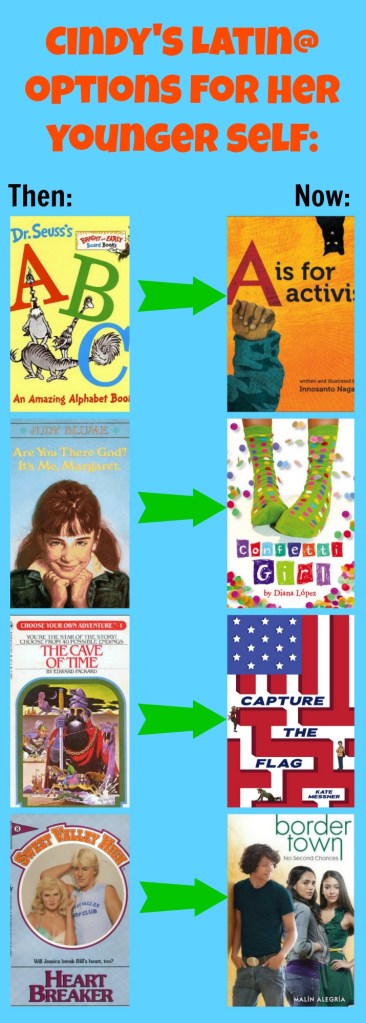
Another reason to feel grateful in 2014 is that Latin@ kid lit is in much better shape than it was in years past. As we reflect back on our own or our children’s bookshelves, we’re delighted that kids today have a growing number of Latino options.

To demonstrate this point, check out a few of Cindy‘s beloved titles from her childhood, matched by current Latino options.

Cindy's Latino Option Collage

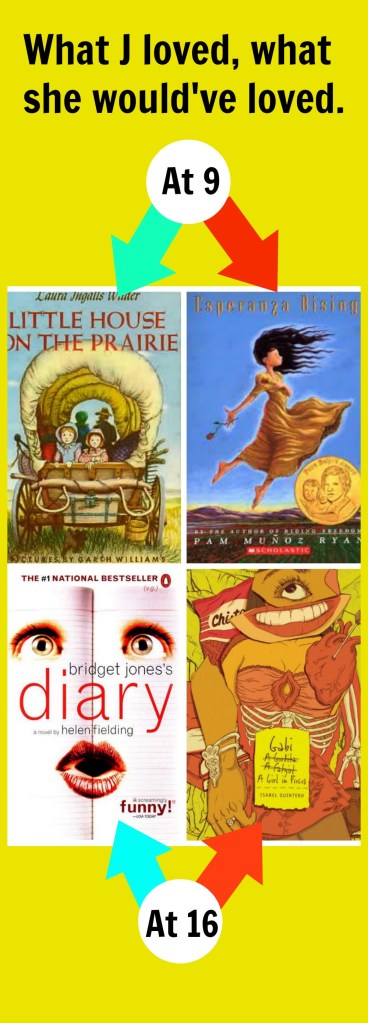
I, Lila, decided to frame this comparison through my oldest daughter’s experience. “J” was a 1980s baby who read late into the night by the light of her digital alarm clock, so you know she was crazy about books. Here are a couple of J’s favorites, matched with contemporary Latino options she would’ve loved.

What She Loved Collage

Now for expressions of thanks from two other members of the team.

Zoraida

2014 has been crazy for me. I work full time, launched the last book in my trilogy, wrote, sold and launched a New Adult romance. And I’m still not done yet. Despite a crazy work schedule, I am thankful that I do have a support system that allows me to find time to write. I have a wonderful network of friends and a boyfriend who knows me extremely well. I’m thankful that I get to be part of a wonderful group of writers here at Latin@s in Kid Lit, but most importantly that we’re getting the conversation rolling about issues dear to our hearts. I hope the next year brings even better things for us all.

LOTL.v3

Sujei

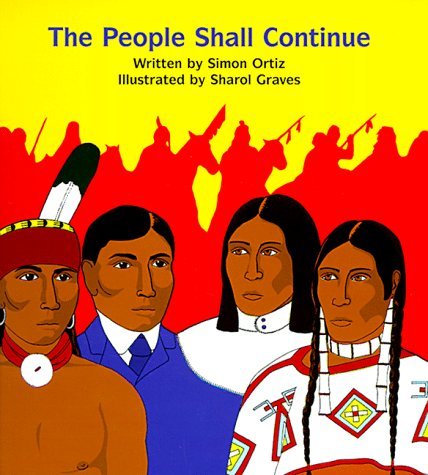
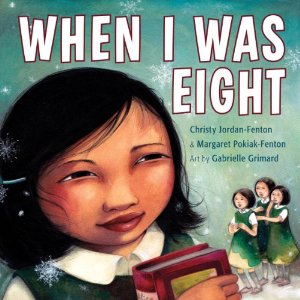
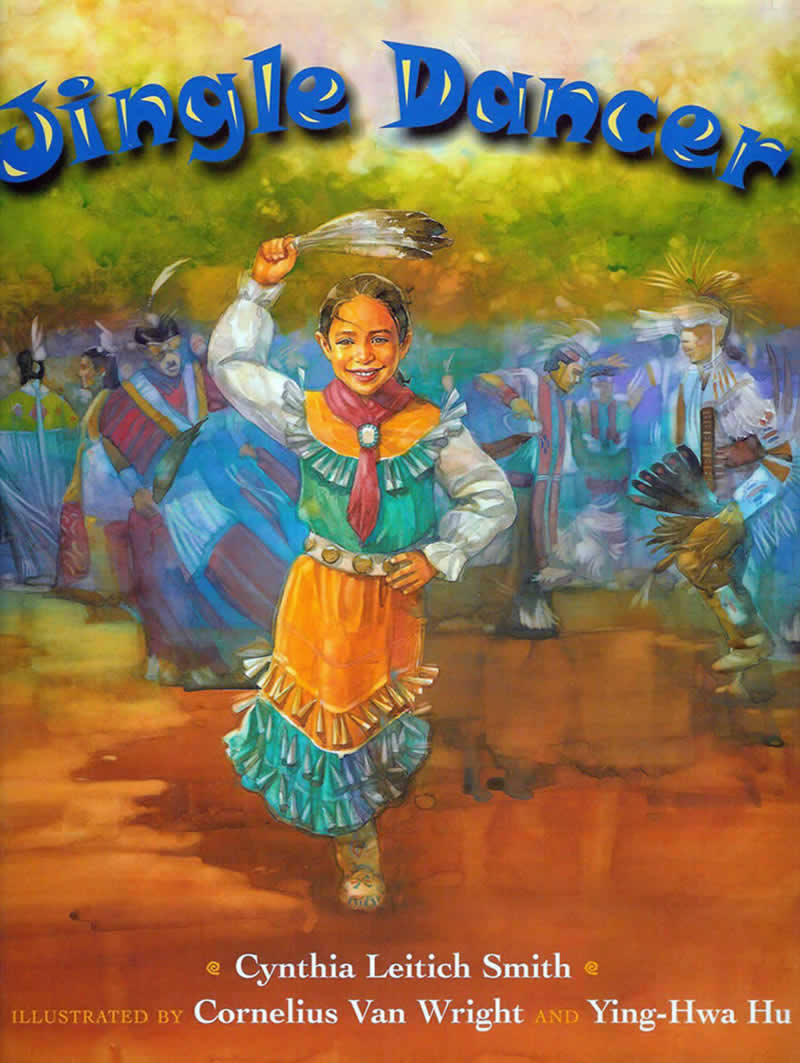
Growing up in Puerto Rico, Thanksgiving in my family seemed like “Eating Turkey with Fried Plantains Day.” Considering that November is Native American Heritage Month, I find deeper reasons to feel thankful. In my late teens, I started questioning the impact of this “first meal,” and saw it more as the beginning of genocide, colonialism, and the suffering of our indigenous people and ancestors. I’m thankful for books that teach us the real story and those that talk about Native people in the present tense and show us that they live everyday lives. Books that highlight these realities disrupt the narrative of old-school texts, which often historicize and stereotype indigenous people.

Here are three of Sujei’s recommendations for children’s books that honor the experiences and history of Native Americans.

People Shall Continue When I was 8 JingleCover_hi-res

Our mission is to promote diversity in children’s books, specifically Latin@ books and creators. So when you’re thinking about ways to diversify your kid lit bookshelves, explore our archives for reviews and posts. We’re so thankful that you care about Latino representation in children’s and teen’s books, and we want to continue serving those interests.

Happy Thanksgiving!

Rachel Manija Brown & Sherwood Smith on Collaborating & Bucking the ‘Received Wisdom’ of Publishing Diversity

By Eileen Fontenot

16034526This post-apocalyptic, western-tinged adventure is more character-driven than you may expect. A diverse group of teenagers in Las Anclas narrate the story in third-person point of view–Ross, the stranger in town, who has a valuable item coveted by several factions and experiences PTSD episodes after escaping death from a bounty hunter; Mia, the town engineer who helps Ross in his new life; Jennie, a Ranger that is “Changed,” that is, has some sort of superhuman powers; Yuki, a former prince that struggles with settling down in LA and with his boyfriend, Paco; and Felicite, a scheming climber, lusting after power but also hiding a secret of her own.

This narration style does not detract from the action scenes, which find the characters battling deadly–and extremely crafty–desert animals and a neighboring army, which has a bloody history with the city of Las Anclas. Co-authors Rachel Manija Brown and Sherwood Smith, however, portray most of the characters as well intentioned; even the least sympathetic main character did merit some empathy by the end of the novel. Nearly all of LA’s citizens are trying to make their town a better place to live in the way they feel is best – even if they can’t agree on what course that will take. But one thing they are not prejudiced against is non-traditional relationships. Same-sex and polyamorous relationships are accepted; Change powers have become the new issue that divides the community. The book’s dearth of white main characters is noteworthy as well.

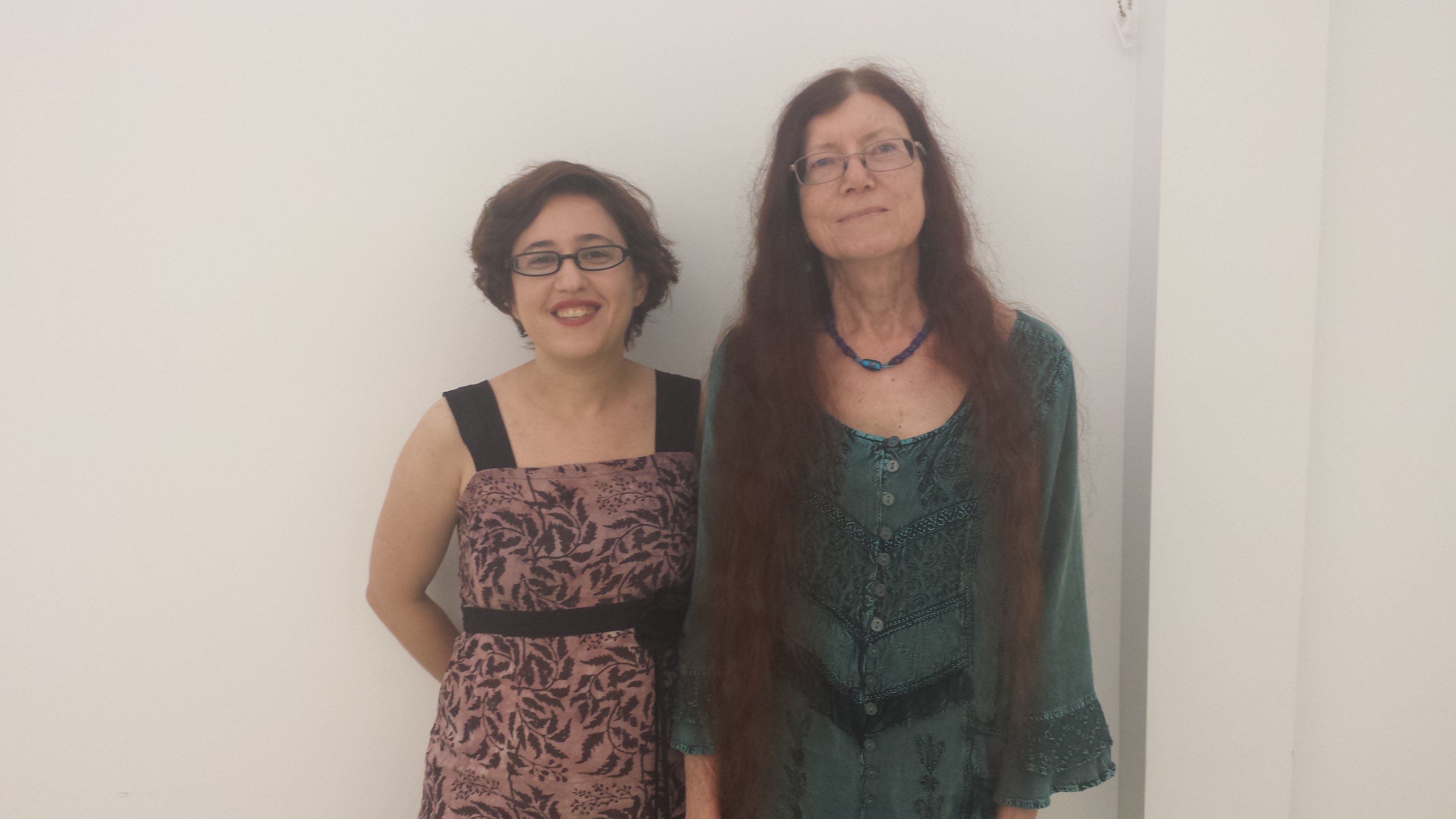
Smith, who has authored more than forty books and been nominated for several awards, including the Nebula and the Mythopoeic Fantasy Award, and Manija Brown, TV, comic strip, urban fantasy and video game writer and PTSD/trauma therapist, were kind enough to answer a few questions about this and future writing they’ll share and getting diverse works published.

Eileen: I’ve really enjoyed reading Stranger, especially the five POV characters. Any particular reason why you decided to write the novel in this way? How do you feel this structure lends itself to this genre/setting, etc.?

Rachel: It has multiple points of view (POVs) because it’s about a community, not a lone individual. The post-apocalyptic town of Las Anclas is very community-oriented—for better and for worse—so we wanted the structure to reflect that.

We also thought it was fun, for both us and our readers. Different people notice different things, and speak in different voices. For instance, Yuki Nakamura, who loves animals, was born on a ship, and is very introverted, always notices the wildlife, thinks in nautical metaphors, and only focuses on the people he actually cares about. Felicite Wolfe is the mayor’s ambitious daughter, so she pays close attention to everyone around her in order to make a good impression on them, manipulate them, or gain some knowledge she might be able use later.

Sherwood: While Mia, the youngest town engineer in Las Anclas’s history, keeps getting locked inside her head, sometimes spinning around so much in questions that she doesn’t know how to act when it comes to socializing. Poor Mia! She was the most fun to write about.

Rachel: The POV characters rotate throughout the series. Ross, Mia, and Jennie have POVs in all four books, but the other POVs switch off, with old POV characters dropping out and new ones taking their place.

Eileen: You have a co-author, Sherwood Smith–how did you come to work with her? Did you experience any challenges/benefits working with a co-author? What was the process the two of you used to write the novel? Did you each take character(s) and only write their chapters?

20140830_154107

Rachel Manija Brown (l) and Sherwood Smith (r)

Rachel: We both used to write TV, and we met to collaborate on a TV series. It didn’t sell, but we enjoyed working together so much that we kept on writing together.

Both of us write all the characters. We outline the story in advance, then literally sit next to each other at the computer, one typing (usually Sherwood; she’s much faster than me) while we alternately dictate the story. Any given sentence may have been written by both of us.

Sherwood: I have done several collaborations, and enjoyed them all, though each is very different. The fun part of writing with Rachel is that we never get writer’s block, because as soon as one of us runs out of ideas, whether on a single sentence or in a scene, the other either picks up with it and zooms ahead, or we can talk it out. Sometimes act it out!

Eileen: I see that you are a PTSD/trauma therapist, and one of the characters appears to be experiencing PTSD. What are your thoughts on including a character struggling with a mental condition? For you, is it similar and as important as including many characters of diversity?

Rachel: I definitely think that mental conditions are an aspect of diversity. But that’s not all there is to it. Ross’s experiences with PTSD are largely autobiographical. I don’t mean that they’re based on my clients, I mean that they’re based on what I went through as a teenager. I wanted to show that you can go through a lot of trauma and have it affect you–even affect you a lot– and not have it ruin your life, or mean that you can never be happy or never find love.

Sherwood: I agree with Rachel. There are aspects of Ross that also come out of my own childhood experiences. Rachel and I discovered that though our lives were very different, we shared certain emotional responses to situations that can cause symptoms of PTSD. This, in turn, made me very aware of similar emotional responses in students during the years that I taught, and though I am not trained as Rachel is, experience caused me to read up on the subject, and to seek ways to help kids feel a sense of safety, and agency.

Eileen: Stranger is incredibly multi-racial and diverse in many ways. What are your thoughts on getting your book published? I know from reading you and Sherwood’s PW blog post that you had at least one agent request that this diversity be toned down somewhat. Can you tell our readers a bit how you overcame this? Any advice for other authors who are marketing their diverse book or trying to get it seen by agents/publishers?

Rachel: Yes, an agent had trouble with Yuki being gay. In general, we had difficulty with the fact that gay and lesbian romances are just as important as straight romances. It’s also extremely unusual for a YA dystopia to have all the POV characters be people of color. We really had to persist to make the book available to readers.

Sherwood: I think it’s important to note that we do not believe that any of the agents or editors who asked, or hinted, or expressed doubts, about the diversity of our characters are bigots or anti-gay. It’s just that there has been such a strong “received wisdom” in marketing that protagonists must be straight and white or the book won’t sell. And publishers are primarily in the business of selling books. This received wisdom was probably true in 1950, but we don’t believe it is true today.

Rachel: Persistence is the key. If you want to go the traditional publishing route, be incredibly persistent. If you choose to self-publish, hire someone skilled to do the cover, and research how keywords and other important self-publishing techniques work. And know that there are readers out there who will really, really want to read your book. Luckily, nowadays it’s much easier to get it to them.

Eileen: I have read that Stranger is Book One in a series. What’s the status of the series and can you give us any juicy tidbits about what’s to come? Are you working on anything other than this series?

Rachel: Stranger stands on its own, but it’s also the first of a four-book series.

Book two is Hostage, in which we spend time in Gold Point, the city ruled with an iron fist by King Voske, the villain of Stranger, and meet a surprising new point of view character. Book three is Rebel, in which Ross’s past comes back to haunt him. The new point of view character in this book is someone we met back in book one, but maybe not someone expected to get a point of view. Book four is Traitor, in which all the plot threads and characters from the first three books come together in a battle for the future of Las Anclas. The new point of view character is someone whose perspective you may have been waiting for.

I’m currently working on the third Werewolf Marines book, Partner. That’s urban fantasy for adults under the pen name Lia Silver. It’s also diverse and also involves PTSD, but contains too much sex to be suitable for younger readers.

Sherwood: I’m working on the sequel to Lhind the Thief, which is YA fantasy with a character not quite human. It’s called Lhind the Spy, and it explores questions like belonging, what love is, the consequences of power—but these are also meant to be fun, so there will be chases, and magical razzle-dazzle, and an elaborate dinner party for powerful people that goes very, very wrong. That will be published through Book View Café, a consortium of writers who have been publishing work that is difficult for New York publishing to categorize. For DAW, I have been writing A Sword Named Truth, which is the first of a series about teenage allies, many of them in positions of power, who have to try to overcome personal and cultural conditioning to work together against a very, very powerful enemy.

Rachel and I also have other projects planned, which we will write together.

Latin@s in Kid Lit at the Library: Interview with Patricia Toney

By Sujei Lugo

Long overdue is the need of a myriad of children’s books that embody the diversity of our communities and society. Children and adults of all backgrounds should have the opportunity to be exposed to historically untold and misrepresented stories in children’s literature. For years, educators, authors, librarians, illustrators, scholars, parents, and other community members have challenged and critiqued the gaps and invisibility of diverse populations, as well as stereotypes and inaccuracies present in children’s books. Although there have been several efforts to expand the availability of diverse children’s literature (The We Need Diverse Books campaign comes to mind as a recent example), the percentage of diverse titles still doesn’t reflect the world around us in terms of numbers and cultural experiences. But despite these problems, flourishing from this serious gap (and misrepresentation) inside the children’s literature world, we have encountered great titles that portray the Latino experience and Latinos/as in the United States.

Organizations like REFORMA (The National Association to Promote Library & Information Services to Latinos and the Spanish Speaking) and initiatives like Día de los Niños/Día de los Libros and the National Latino Children’s Literature Conference are constantly advocating and promoting the incorporation of Latino children’s literature in library collections and programming. Several awards such as the Pura Belpré Award, Tomás Rivera Mexican American Children’s Book Award, International Latino Book Awards, and Américas Awards, also play a role in acknowledging Latino children’s literature. All these initiatives help in raising a much-needed awareness of the existence of Latino children’s books, but, in addition to celebrating and promoting them, an urgent need exists to incorporate and use  these books in our classrooms and libraries.

We need to keep in mind that two pivotal places where children constantly interact with books and stories are schools and libraries. How are librarians bringing Latino children’s books to children? How are they incorporating them into their collections, school curriculum, and programming? In a bid to try to answer these questions I decided to develop a series of interviews with children’s librarians, youth services librarians, and school librarians, where they can  share their experiences, knowledge, and challenges dealing with Latino children’s literature. Although there are great resources and literature that can serve as guides to Latino children’s librarianship (Celebrating cuentos: promoting Latino children’s literature and literacy in classrooms and libraries, 25 Latino craft projects, Programming with Latino children’s materials: a how-to-do-it manual for librarians, and Serving Latino communities: a how-to-do-it manual for librarians), the communities that libraries serve are different and constantly evolving. Librarians are met with the ongoing challenge to stay up-to-date and relevant to their needs.

In this first post of our Latin@s in Kid Lit at the Library series, I’m honored to interview Patricia Toney, a fellow librarian and REFORMA member and great advocate of diversity in children’s librarianship.

Pat Toney Librarian

Patricia Toney, Bilingual Children’s Services Librarian
San Francisco Public Library

Tell us a little bit about yourself, your identity, and your library.
As the offspring of parents who immigrated from Guyana and Costa Rica, I identify as Afribbean. I’m a native of Southern California who grew up in a working class Spanish speaking community, and who later moved to the San Francisco Bay Area to attend University of California, Berkeley. I have a master’s in Counseling Psychology and a second master’s in Library Science. I started my professional career in International Student Services, then I worked in Student Counseling, and now I’m in my third career as a librarian.

I’ve been working at San Francisco Public Library (SFPL) for three years; moving up from temporary, to part-time, and finally, to full-time a year ago. SFPL serves a linguistically diverse community. I work at the Main Library and I’m in charge of providing Spanish language children’s services to families in Tenderloin, San Francisco, an economically challenged and densely populated part of the city.

What process does your library take to select and acquire Latino children’s books for the collection? Do you have any input in this process?
We have a dedicated Spanish language collection development committee and individual selectors for specific genres. My position as a Bilingual Children’s Services Librarian holds a provisional seat on the Spanish language selection committee, so my input on children’s material selection is welcomed.  Committee members regularly attend book fairs such as FIL (Guadalajara International Book Fair) and I annually attend the Bibliotecas Para La Gente Book Fair.

What type of children and youth programming does your library offer using Latino children’s literature?
I conduct a weekly bilingual family storytime and system wide we host five Spanish and Bilingual (English-Spanish) storytimes a week. We also have a ¡Viva! Latino Heritage Month Celebration, which includes music, dance, crafts, food, and films. This year, I hosted a Zumba program at my location and a Día de los Muertos altar. Also, at the end of our summer reading program, I hosted an afternoon of Lotería.

In terms of promoting events and community outreach, what does your library do?
In addition to word of mouth, social media, and printed announcements, we have four bookmobiles which traverse the city. The library recently took part in Sunday Streets-San Francisco (open street event), the Friday Night Market and Litquake (San Francisco Literary Festival). The San Francisco Public Library, Mission Branch (located in a historically Spanish speaking neighborhood) hosted a memorial reading in honor of Gabriel García Márquez during Litquake.

What is the reaction of kids, teens and families regarding Latino children’s books and programming? And the reaction of the library staff?
Children spark up when they hear or see something that is familiar to them. Parents appreciate the opportunity to share their home language with others in the community.  Colleagues and library staff are generally supportive of diversity in action. One of the library’s strategic priorities is to have “collections, services and programs that reflect diversity and inclusion.

What would you like to do in terms of programming that you haven’t been able to?
I would ideally like to hold monthly evening programs for Spanish speaking families. Tenderloin, San Francisco is a socially-oriented rich community, so there’s a lot of competition for evening programming. So not a lot of families come to the San Francisco urban civic center area for evening programs.

Do you address issues of prejudice and oppression in your library through and in Latino children’s books?
As a member of the Association of Children’s Librarians of Northern California, these issues are always addressed. SFPL has a commitment to diversity and the book selection committee takes racism and oppression into consideration before buying a book. With the population I serve, I tend to address sexism and ableism more than racism. I am always open to discussing these issues when children ask and point out opposing viewpoints and when I hear biased language. I like to give patrons the option to think for themselves.

Any advice for other librarians who would like to use and incorporate Latino children’s literature into their programming?
Latino children’s literature isn’t just for Latinos. One can incorporate Latino children’s books into book displays, class visits, and recommended reading lists.

Which are the most popular Latino children’s books at your library?
I have to say that most of our popular titles are the Spanish language translations.

And finally, which Latino children’s books do you recommend?
Anything written by Monica Brown, Yuyi Morales, or Gary Soto; Anything illustrated by Rafael López or Jose Ramírez; Esperanza Rising by Pam Muñoz Ryan; The Revolution of Evelyn Serrano by Sonia Manzano and I’m currently reading Aristotle and Dante Discover the Secrets of the Universe by Benjamin Alire Sáenz.