In the Studio with Illustrator John Parra

by Lila Quintero Weaver

Parra in the studio

John Parra in his studio in Queens, NY. All photos by Caitlin C. Weaver
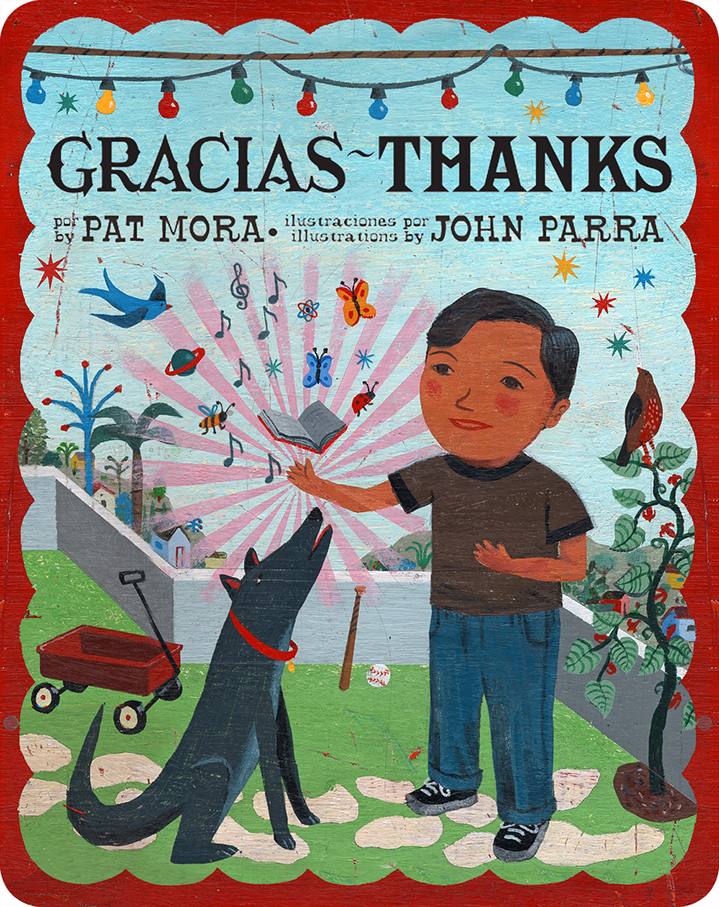
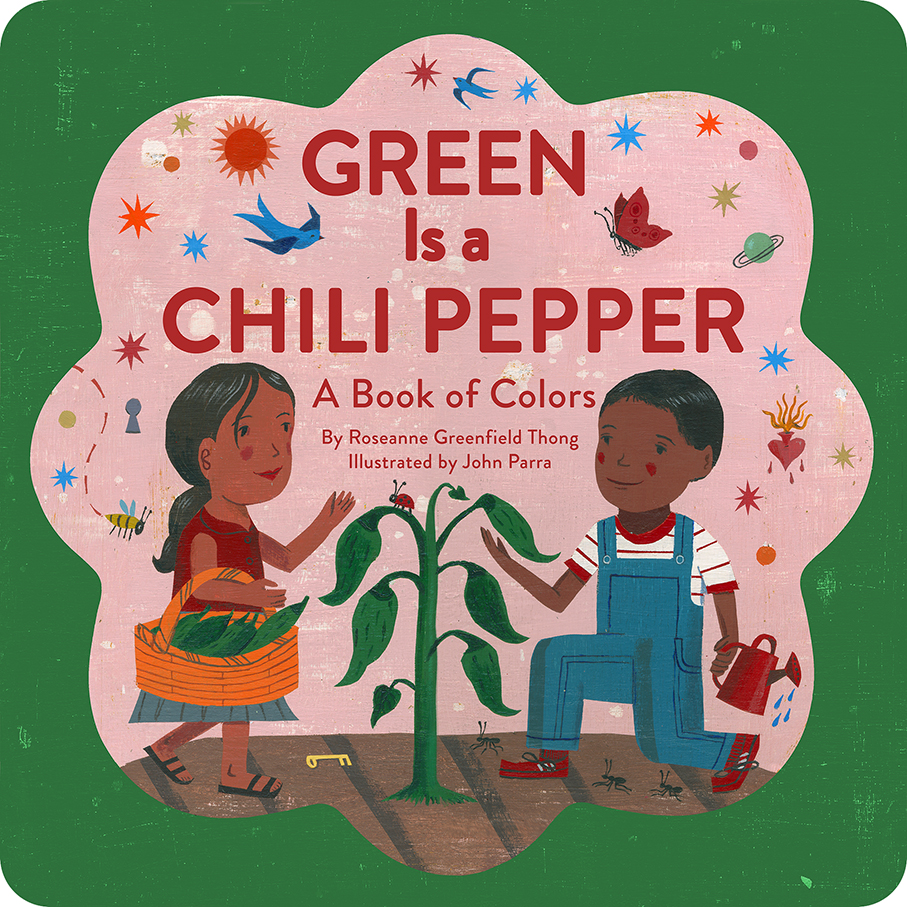
8-1/2"x11" jacket mech.  Green is a Chile Pepper.Cover

Magic flows from the paintbrushes of John Parra, the award-winning illustrator of a growing number of Latino-themed picture books and other illustration work. Here at Latin@s in Kid Lit, we’re ardent fans of John’s art, drenched as it is in color and rich detail, and affirming in its depiction of positive community and family life within Latino settings. Plus, it’s gorgeous—plain and simple—and we can’t resist wondering what’s behind the magic. John invited us into his studio and we had questions.

Waiting for the Biblioburro.Cover

Lila: Every children’s book you’ve illustrated bears your unmistakable stamp. Developing a personal style doesn’t happen overnight. What’s the story behind yours? 

John: My art style really came together in my final year of attending art school. I was fortunate early in my art training to have some amazing teachers and mentors who taught me the traditional fine art techniques of realism, perspective, color theory, and composition. During my mid-college years, I began experimenting more with techniques, such as mixed media, collage, and printmaking. These techniques enabled me to open up and develop a more unique and distinctive visual palette and approach in my work. I also began studying different styles of art genres. I fell in love with folk and outsider art. However, I still felt something was missing as far as an emotional connection to the work I was creating. That changed after a conversation I had with a visiting artist to our school named Salomón Huerta. He was a graduate of our school whose work reflected his Hispanic background and culture. Immediately I felt a connection and a light bulb went off in my head that I, too, could infuse my background, culture, and personality into my work. The first project I did was a series of paintings based on El Dia de los Muertos. I was so excited about the project that I just never stopped. As years have gone by, my work has gradually been updated but still holds on to those inspirational roots from that earlier period.
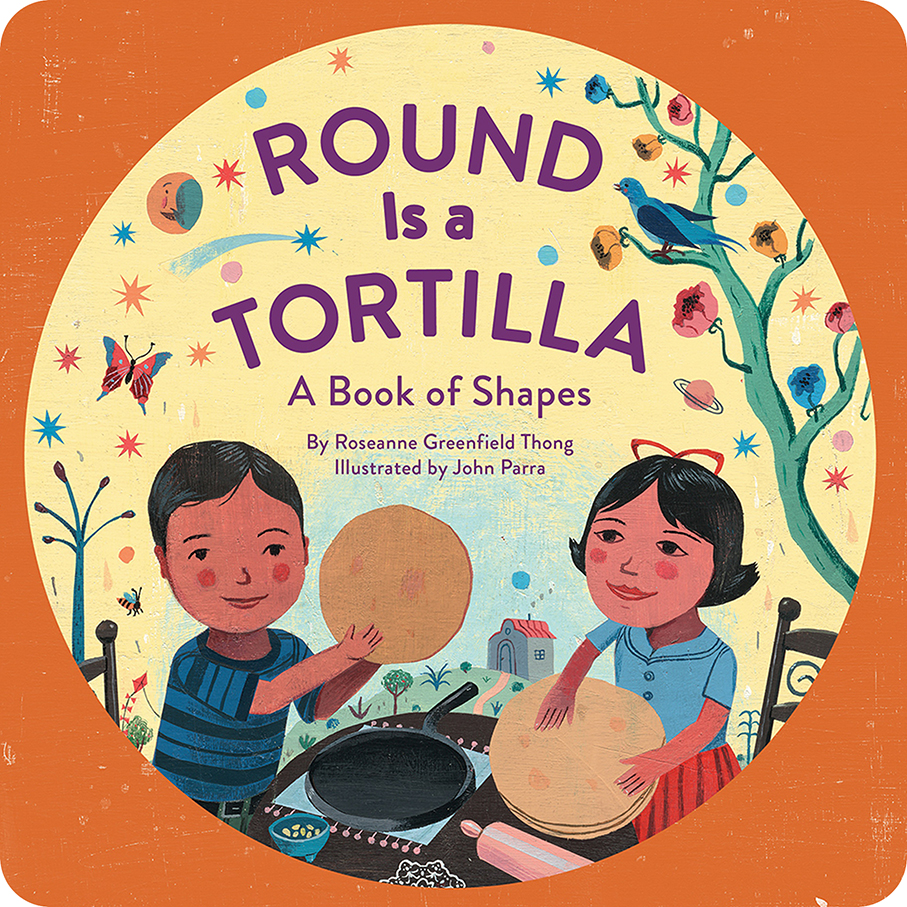
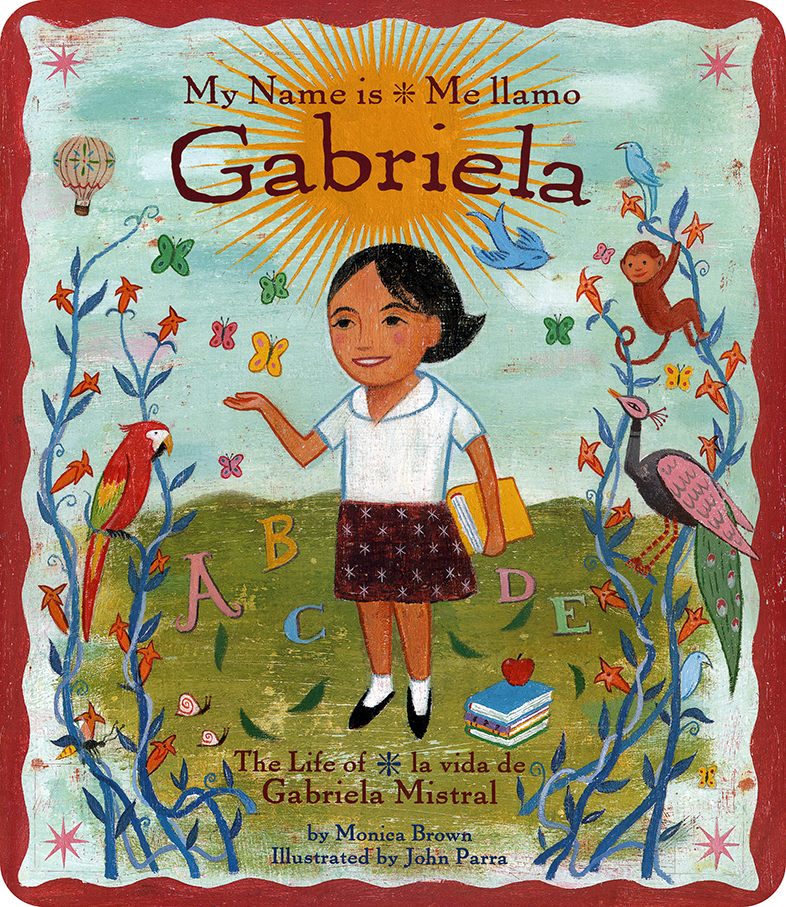
Round is a Tortilla.Cover    My Name is Gabriela.Cover

Lila: It must take scads of research to achieve the “rings true” effect of your illustrations. For example, in P is for Piñata, the illustrations cover a wide range of subject matter, from Aztec deities to cacao pods to folkloric dance. What is your research process like? 
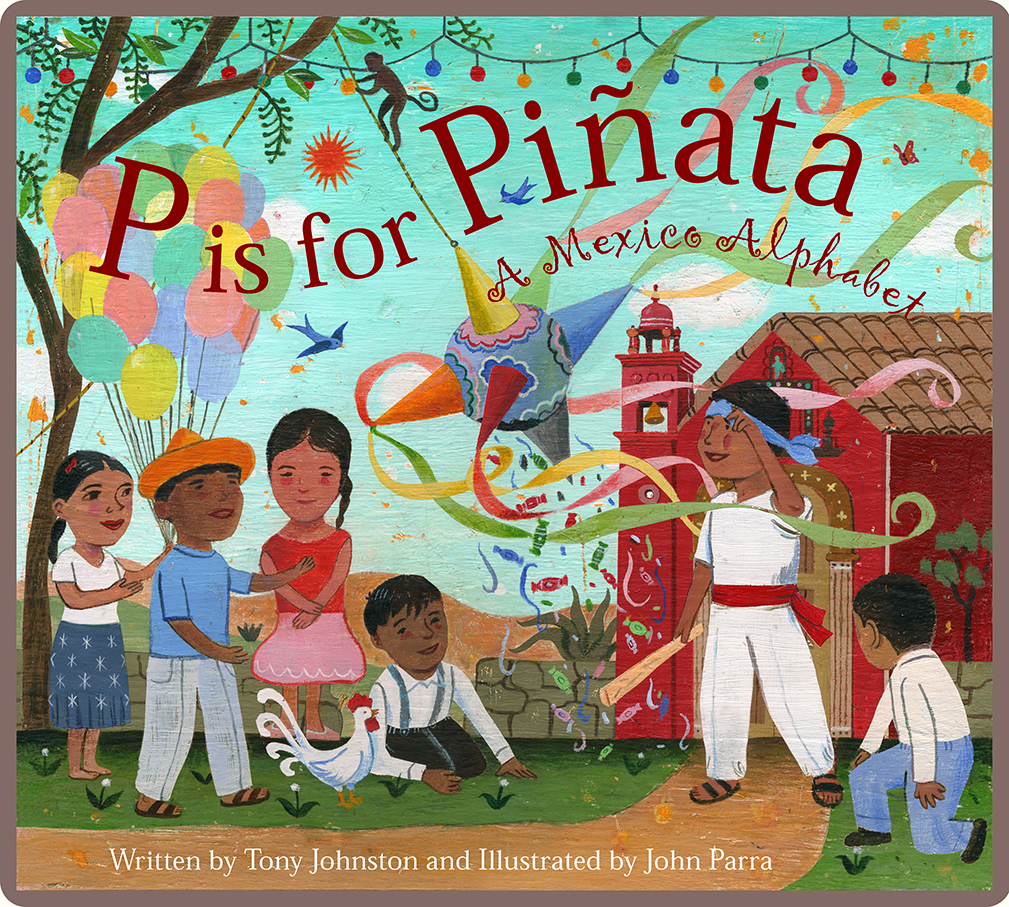
P is for Pinata.CoverJohn: The first step I do when beginning a project is researching for visual photo references, first through the web, then in books in my library. I tend to look for images not just about the main subject but also in its regional geography, architecture, plants, animals, and anything else that could be related and connected to the issue. I then may delve in and read historical and background info through articles and books. Sometimes there is a good documentary on the topic to gain some insight as well. If possible, speaking to someone with firsthand knowledge of the subject can also bring a wealth of ideas. To me it is very important to be true to the source material when working on a project. I feel blessed to be creating this art, but it is a responsibility to accurately portray the content, otherwise you might fall into stereotypes or misleading subject matters.
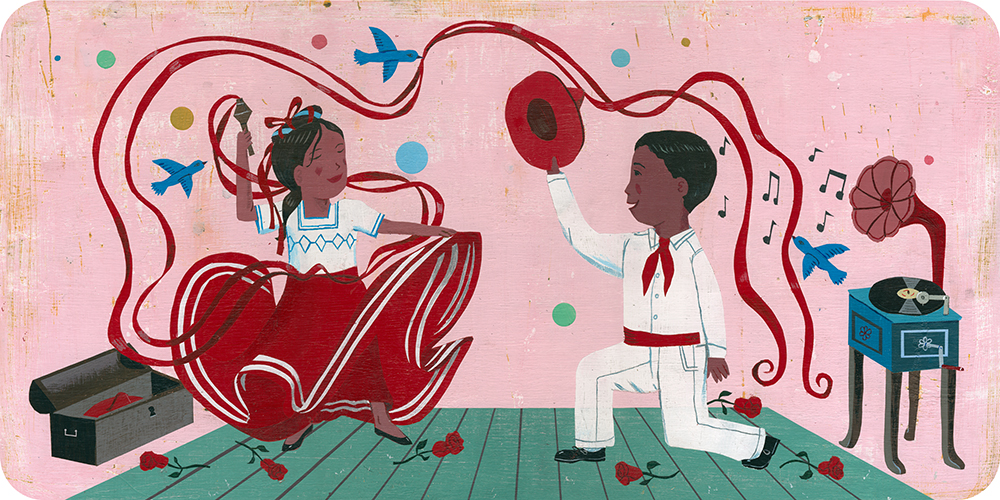
Folklorico Dance

Lila: The characters in your scenes include a wide range of skin tones, an important acknowledgment of ethnic diversity within Latino populations–kudos to you for that!  

John:. Growing up, I always had a diverse group of family and friends. To me, it seems pretty normal to extend that into my work. I also just enjoy seeing diversity. I think it’s important that all people are represented and as we say, invited to the party.
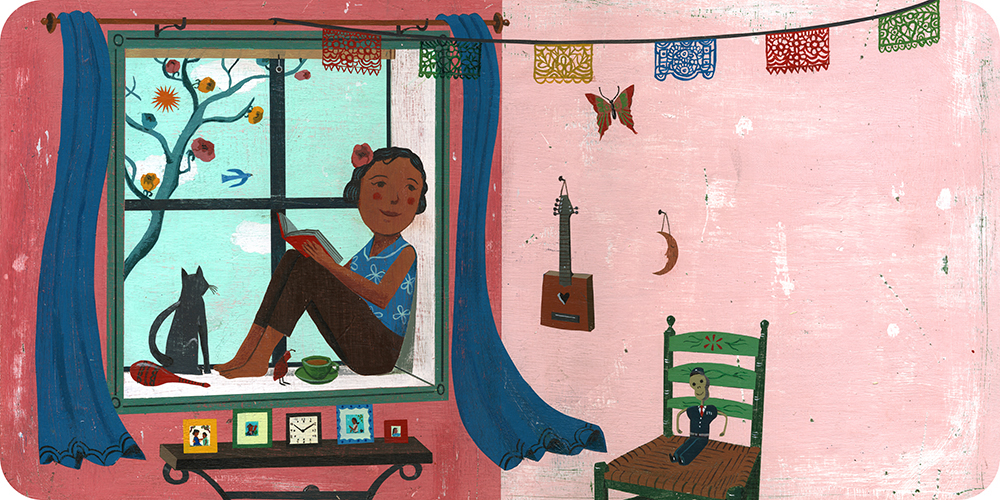
pg5.Ventanas

Lila: One fascinating component to your book illustration is the practice of hiding  “Easter eggs.” Please elaborate! 

John: I often add funny or inside references in my work for my family and friends to find. One example of this is that I always include a self-portrait character, representing myself as a child, in all my books. I will not give away which character it is, it will be up to the viewer now to find and guess.

Skeleton Dance

Lila: The world of publishing needs more highly skilled Latin@ creators. Based on your experience, what advice would you give to a young person considering illustration as a career? 

John: You could probably devote a series of articles to just this one question. Starting out as a new artist can be challenging, with many artistic directions and choices to make. Based on my experience working in the field of freelance illustration, I recommend developing the following four areas.

1. Focus on your artwork and make it as exceptional as possible. It should be a reflection of what you like and have interest in. Create your own voice and style that connects the work to you.

2. Use print promotion and social media to display your work. It is very important to get your art out there in the public. Your artwork should be easily accessible to view online. Blogs, Facebook, and illustration annual competitions can be very helpful for ideas, as well as for showcasing your work. Be consistent, announce successes, and bring awareness to your projects.

3. Include a group of artist friends and colleagues to meet with regularly.  This way, you can discuss ideas and potential projects to work on, perhaps even collaborative ones.

4. The business side: Learn as much as possible about contracts and billing. Whether or not you have someone to represent you, it is always important to read as best you can about what you are getting into.
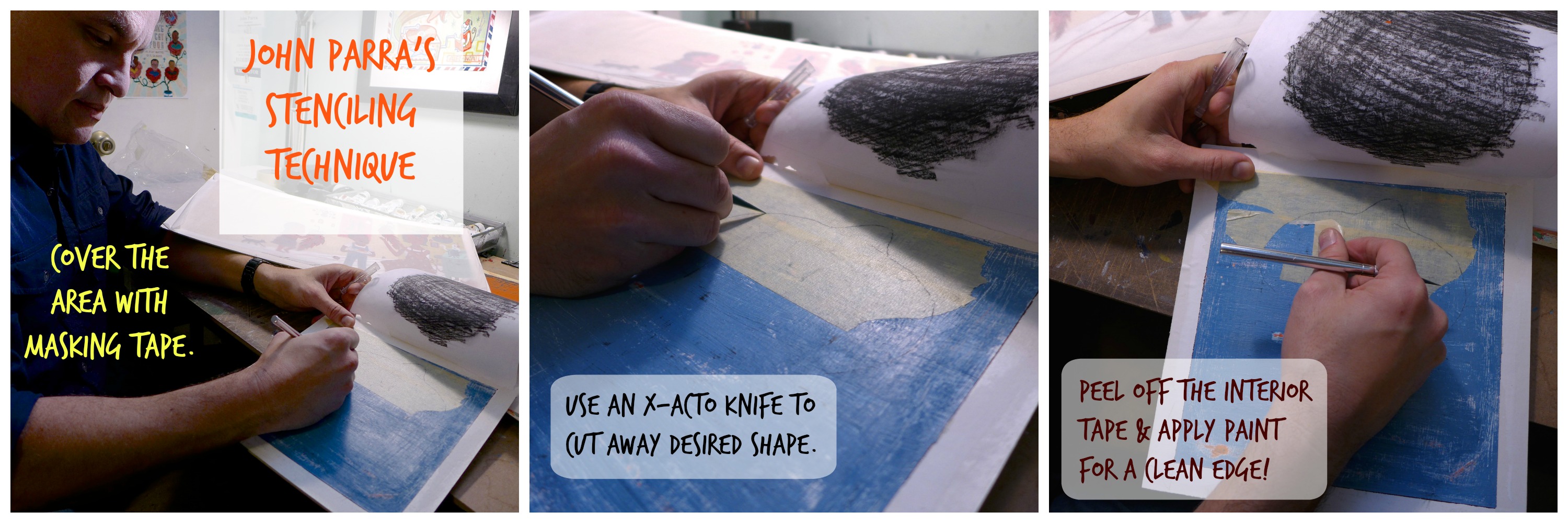
Parra Stenciling Technique


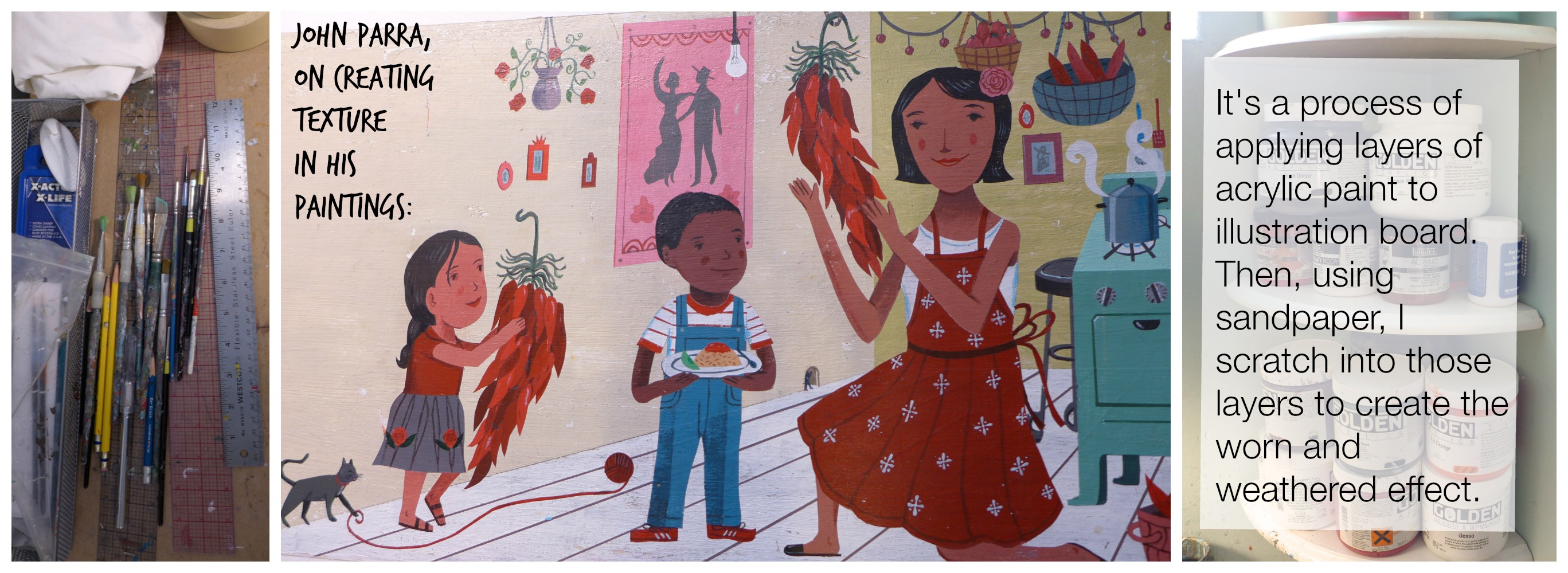
Weathered effect CollageLila: If you could sit down for a long session of shoptalk with one or more illustrators, living or dead, who would they be, and what would you ask?

John: I am a fan of other illustrators as well as anyone else who loves the genre. One of the perks of my job is that I have been able to meet so many other artists whose work I have admired for many years. There are, however, two artists who have passed on whom I would have loved to have sat down and talked shop with. They are Virginia Lee Burton and Maurice Sendak. Both had such an impact on me at an early age, since their books were part of the first illustrations introduced to me. I would love to ask their ideas and intentions when they were working on their most famous stories, plus to see their studio space and how they worked would be wonderfully inspirational.
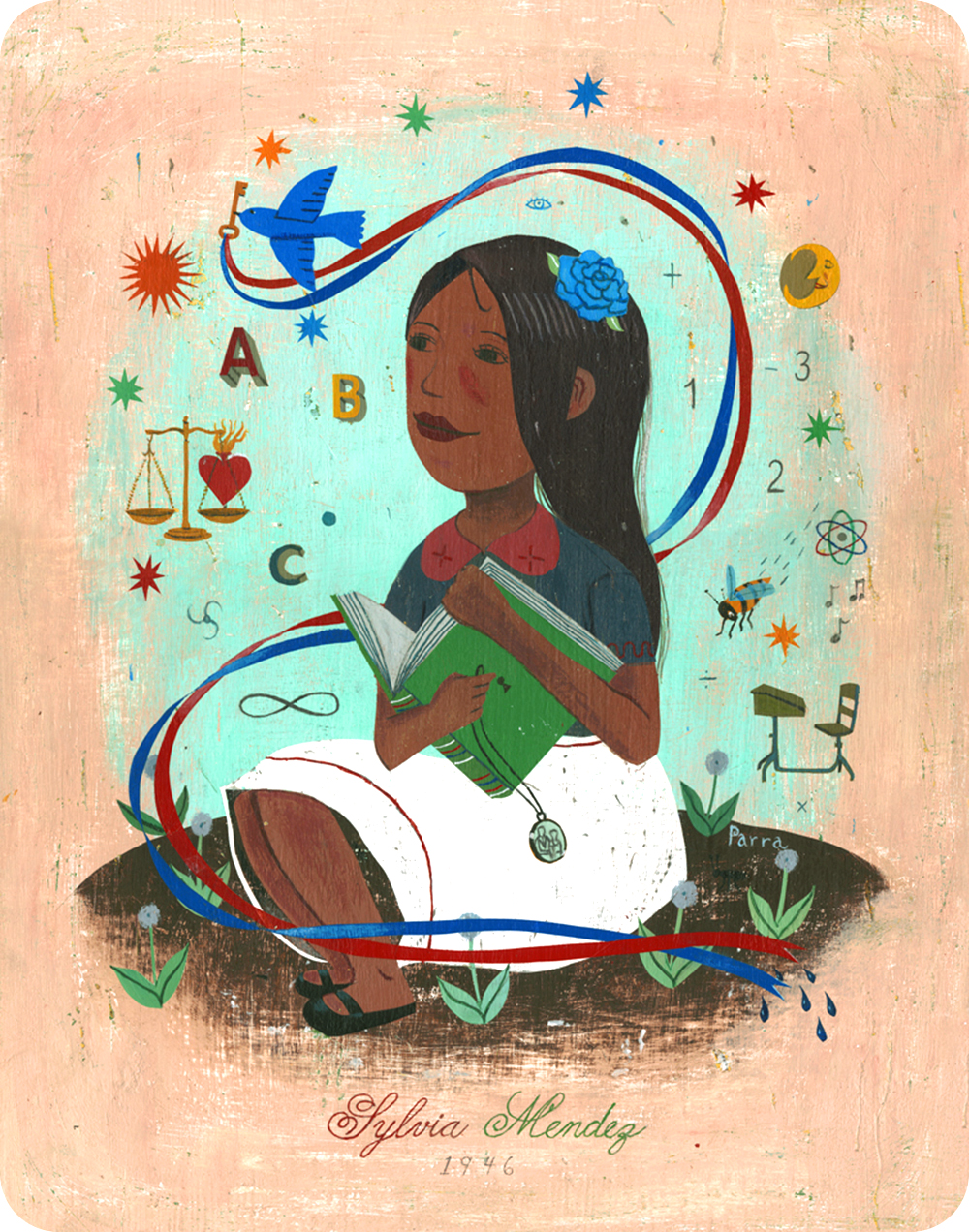
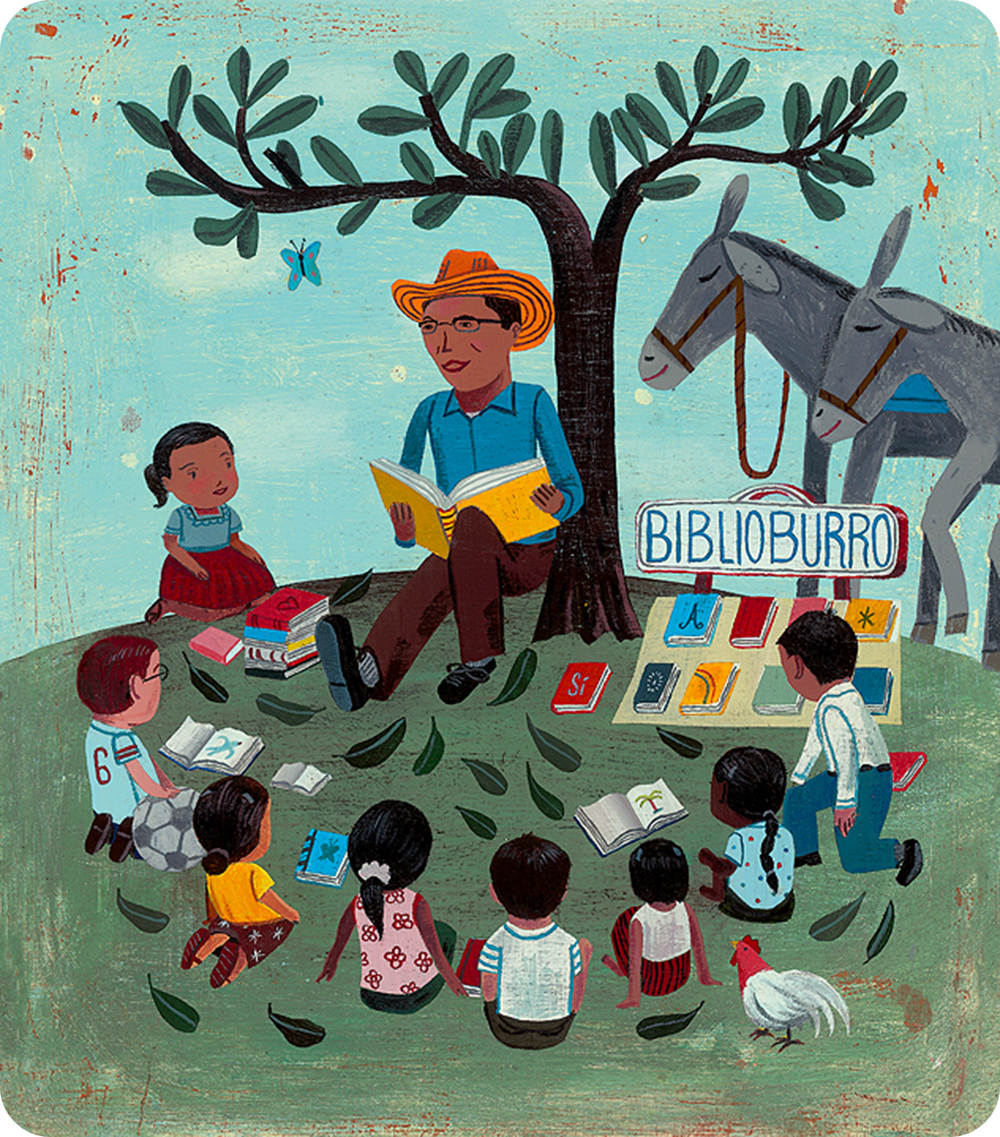
SylviaMendezVer.2  BiblioBurro.Reading2Kids

Lila: As you know, the diversity movement in children’s publishing picked up significant steam in 2014. What were opportunities like for Latin@ illustrators when you started your career? Have you seen changes? 

John: I believe the We Need Diverse Books initiative and Walter Dean Myers’ essay in the The New York Times came at a turning point in bringing awareness to examining and appreciating the beauty and diversity in multicultural books. When I began as an illustrator eighteen years ago, there did not seem to be as many projects geared to a diverse population. Over the last few years I have seen progress and greater opportunities for artists with varied voices and backgrounds to shine. I look forward to seeing even more done as we continue to expand and celebrate these wonderful talents.
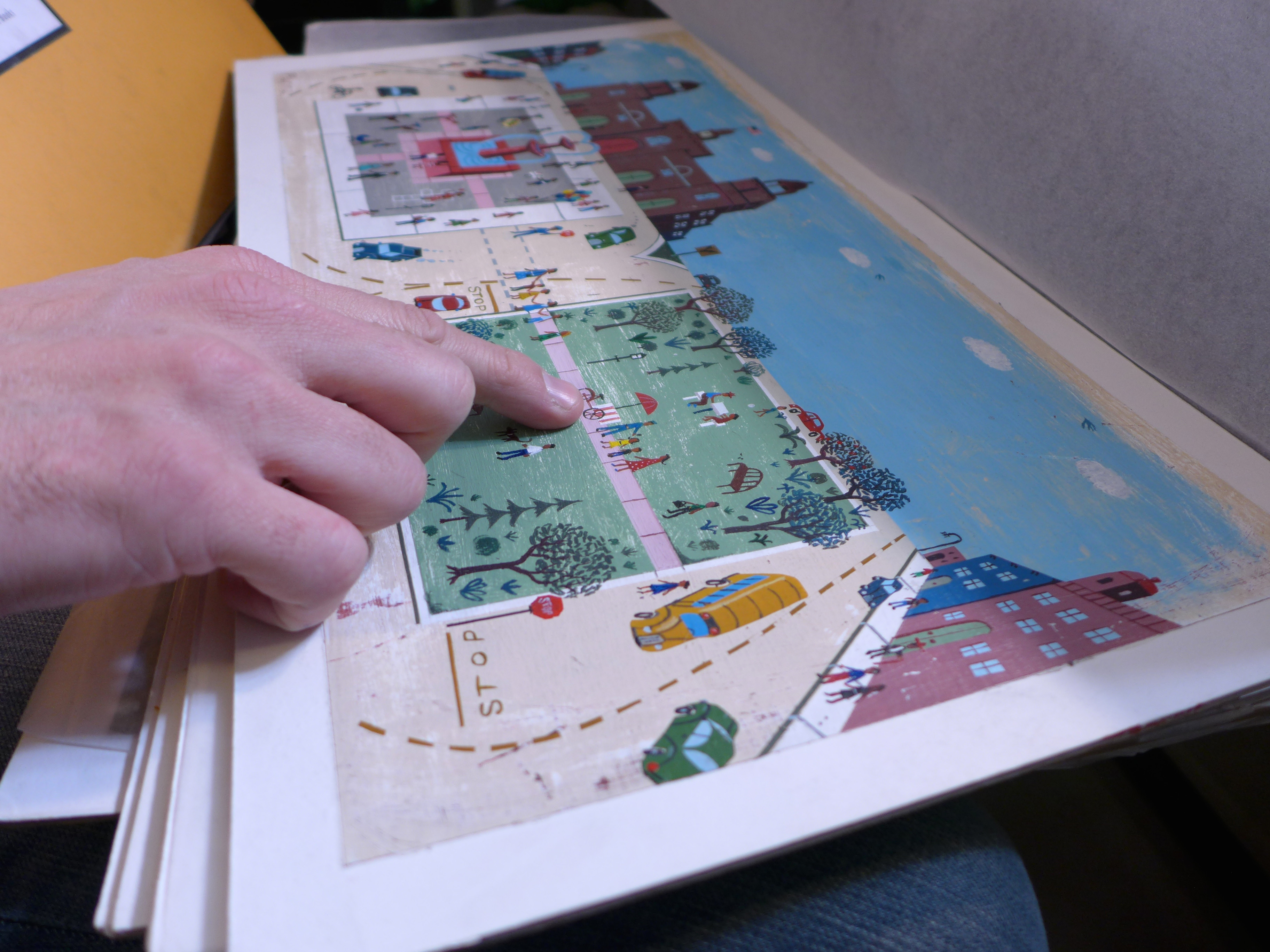
Parra page layout

Printer markings indicate page borders. John often uses a limited palette of hues, individually selected for each book.

Lila: Not long ago, I came upon a museum exhibit of Mexican retablos and ex-votos. Is it my imagination, or does your art contain echoes of this beautiful sub-genre of naive art? 

Yes! I am a big fan of retablos and ex-votos art. These paintings have that wonderful folk-art tradition of weaving in harrowing stories and miraculous tales.  Many of them actually weave text right into the works themselves. A favorite of mine is Mexican retablo artist Alfredo Vilchis. You can find many of his pieces in a great little book entitled: Infinitas Gracias: Contemporary Mexican Votive Painting.

Lila: We’re looking forward to the next John Parra book! What’s in the pipeline? 
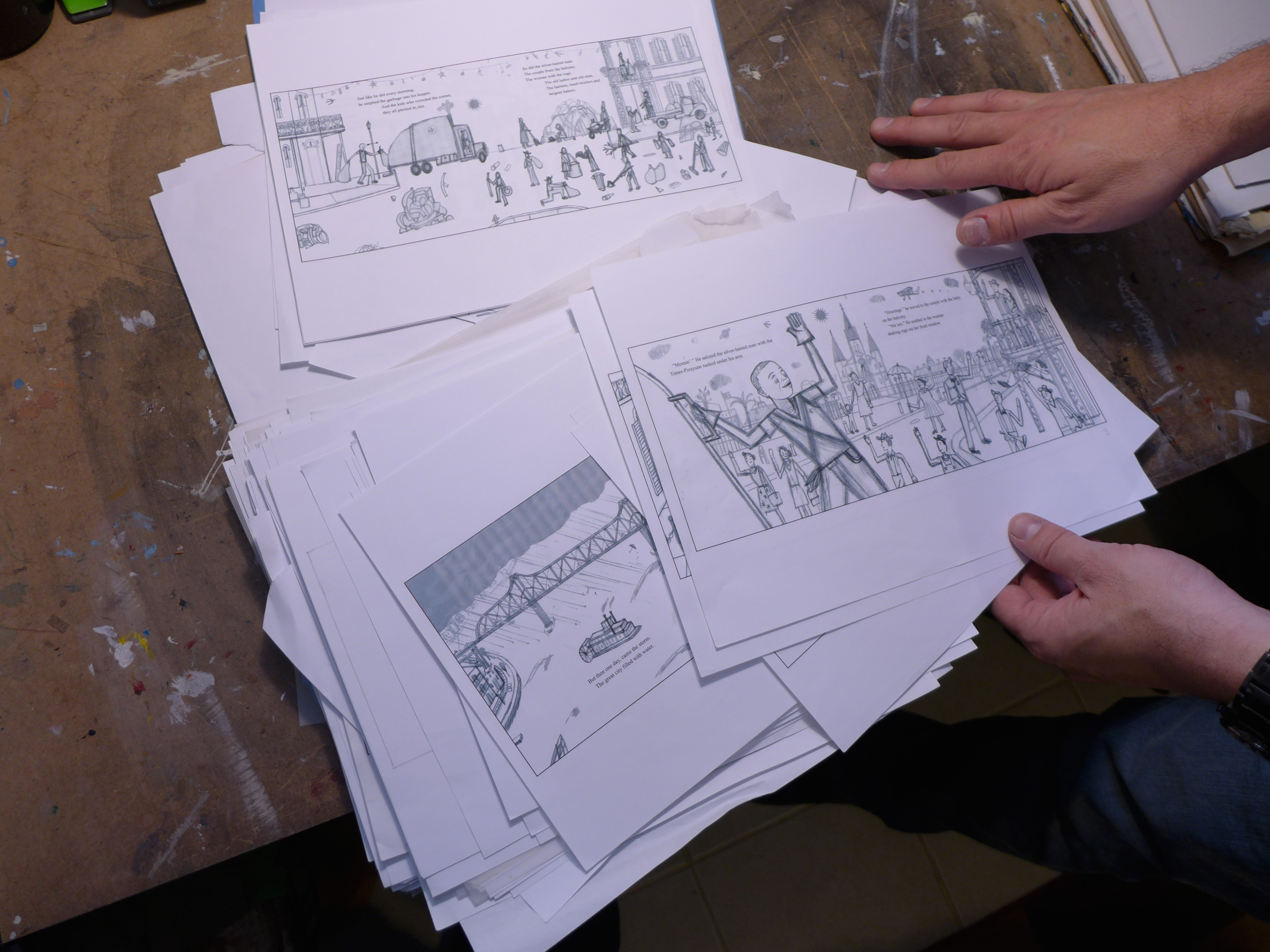
Parra sketches

Sketches from John’s newest project., Marvelous Cornelius.

John: I do have a new children’s book that I finished recently coming out this summer (2015) with Chronicle Books. It is titled: Marvelous Cornelius: Hurricane Katrina and the Spirit of New Orleans, written by Phil Bildner. The story is about a real-life gentleman named Cornelius Washington, a sanitation worker in New Orleans. He was considered a local folk hero and known in the neighborhood and the French Quarter by his positive and charismatic personality. As the book develops, the story goes into the events of Hurricane Katrina. We then see the effects on Cornelius and his neighborhood, as he reacts and resolves what to do after the storm.
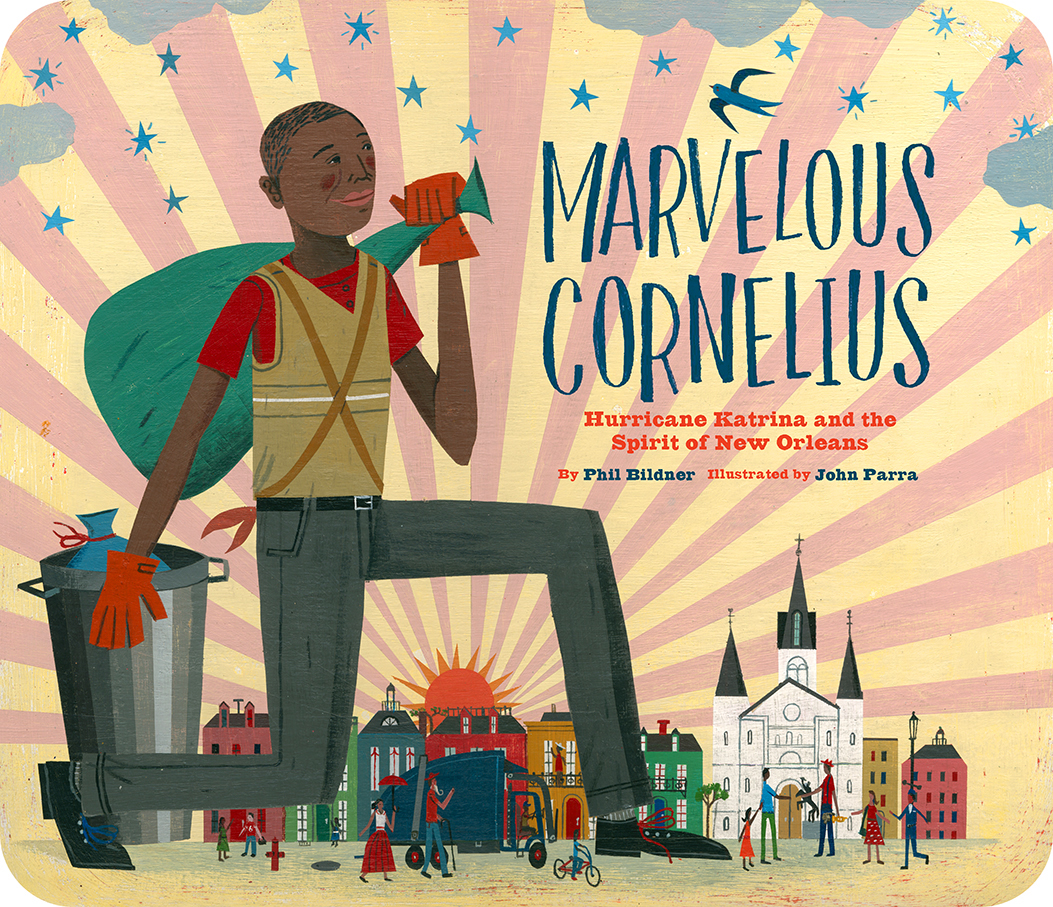
Marvelous Cornelius 1.Cover[Note: Catch more views from Marvelous Cornelius on the Latin@s in Kid Lit Pinterest boards!]

John: Another exciting event will be an artist presentation scheduled this coming year in June. It will be an artist lecture, workshop, and book signing at The Metropolitan Museum of Art here in New York City. I am really looking forward to it. It is a dream to be a part of such an amazing and historic institution.

As for new work, I am also starting a big new illustration project with details that I hope to share soon.
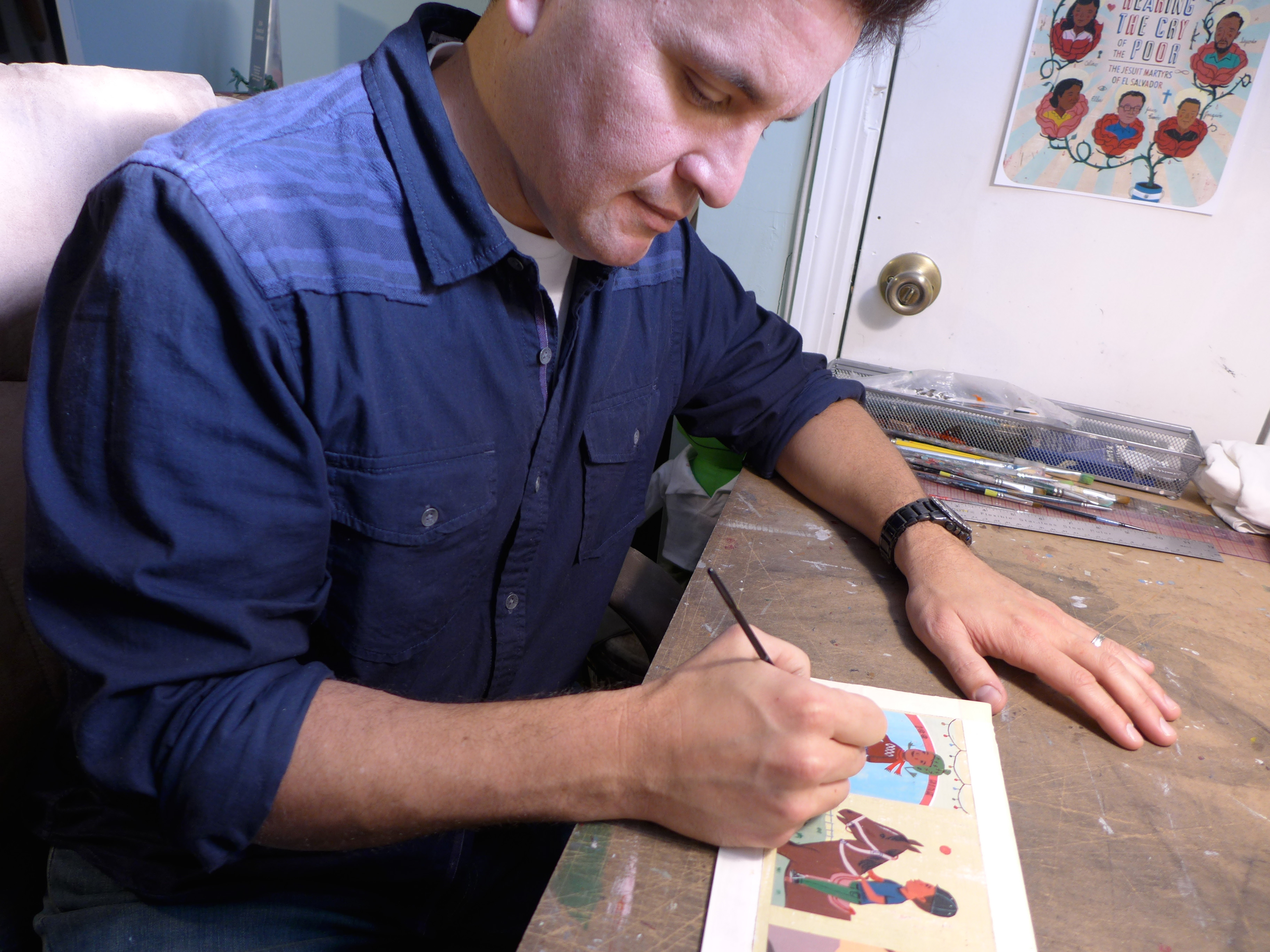
Parra paintbrushJohn Parra is an acclaimed illustrator, fine artist, designer and educator. His children’s book illustrations have  received many awards, among them, The Golden Kite Award from The Society of Children’s Book Writers and Illustrators; The Pura Belpré Honor Award; The Américas Book Award; Commended Title from CLASP, The International Latino Book Award; The Christopher Award. John grew up in Santa Barbara, California, where his artistic life began. He now resides in Queens, NY, with his wife, Maria. Keep up with John’s work through his website.

Studio views

Views of the studio reveal original pieces, as well as John’s guitars from a band he played with in California. Although he holds on to a few illustrations that he feels especially attached to, many are sold in galleries or through his website. A recent exhibit of originals in Brazil sold out!


Guest Post: Why I’m Not Interested in a Mexican Katniss

By Guinevere Zoyana Thomas

Earlier this year, Matt de la Peña asked the publishing industry one of the most thought-provoking questions ever: “Where is the African American Harry Potter or the Mexican Katniss?

His question was part of a conversation about why there aren’t that many POC equivalents to such iconic characters in YA and MG.

There doesn’t seem to be a good enough excuse for there not to be more Latino characters in kid lit especially with the Latino population rapidly growing, so to say there isn’t a market for it is just undetermined fabrication. I, for one, identify as an Afro-Cubana who would gladly buy a book from a Latina author that featured a Latina protagonist in a heartbeat!

But the truth is, I’m not sure I want a Mexican Katniss or a black Harry Potter or even an Asian Percy Jackson. A small part of me feels that if I say I do, I’d be telling the world that in order for a POC character to be great, we’d  have to follow thedefault” archetype. Everybody knows it: white, skinny, Christian, hetero, and because girls are so popular in YA, born female.

Comparisons are wonderful, because, I mean, who doesn’t want to be compared to what’s considered a great character, but I think it’s more than fair to say that boys and girls of color have earned the chance to be the models of their own standards, and, unfortunately, the only ones who don’t think about how representation in kid lit is important are the ones who are swimming in characters dedicated to their own images.

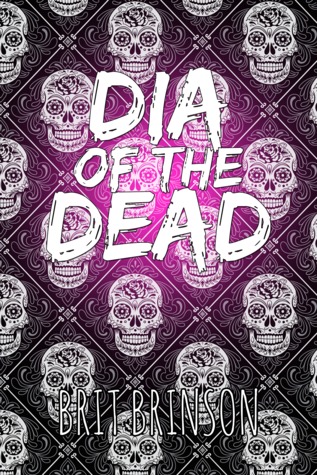
23117815One YA book that stood out to me this year was Dia of the Dead by Brit Brinson. It had zombies, it had action, and it definitely had drama. But most importantly to me, it had something that’s always left out of the conversation about Latinos in fiction–an Afro-Latina protagonist named Dia.

Her character was so amazingly memorable and struggled with the many things most Afro-Latinas go through in terms of identity that it was too hard to draw a comparison to another character in a similar situation who just happens to be a non-white Latina. All I could really give her credit for was being Dia, and isn’t that what we’re all really looking for in a character?

I don’t think we need a Mexican Katniss, but instead a chance to be on a bookshelf next to Katniss in our own stories with our own myths and legends. And it wouldn’t hurt if she had an amazing name like Citlalli, or even Amaryllis.

What I hope for her is to be a character that is a hero all on her own, clearing her own path and setting her own standard.

About the Blogger/Aspiring writer:

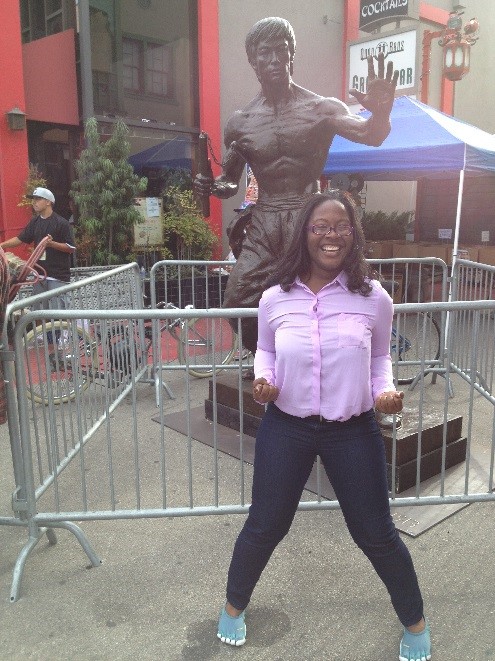
GuinevereGuinevere Zoyana Thomas is one half of the ever so silent and deadly “Twinjas” @Twinja Book Reviews. When she isn’t perfecting back handsprings or working on her red belt in Tang Soo Do, she’s going H.A.M. editing her diverse time-travel YA novel under the pseudonym “GL Tomas.”

Facebook for Twinja Book Reviews 

Facebook for GL Thomas

Tumblr for Twinja Book Reviews

Twitter 

Author Blog 

Book Blog

SLJ’s Shelley Diaz Predicts the 2015 Pura Belpré Medal Contenders

By Shelley M. Diaz

As we approach the Youth Media Awards announcements on February 2—deemed by many as the “Oscars of the Kid Lit World”—Mock Newbery, Caldecott, Printz, and even Geisel lists abound. A longtime tradition, the creation of these compilations of possible contenders are often debated in libraries and schools and among children’s literature fans.

But what about the Pura Belpré Medal? I haven’t seen any mention of possible winners for the award that honors children’s books written/illustrated by Latino(a)s that celebrate the Latino cultural experience. In a year that brought the need for diverse titles to the forefront of the publishing world, this conversation has been sorely absent.

Established in 1996, the award has been presented annually since 2008 by the Association for Library Service to Children (ALSC), a division of the American Library Association (ALA), and REFORMA, the National Association to Promote Library and Information Services to Latinos and the Spanish-Speaking, an ALA affiliate. It is named after Pura Belpré, the first Latina librarian at the New York Public Library.

So with less than one month to go until the shiny medals are placed on stellar books for kids and teens, I’d love to open up that conversation now.

First, here’s a short overview of the criteria that librarians on the committee (members of REFORMA and ALSC) will consider when naming the recipients of the 2015 awards (found in the Pura Belpré Award Manual).

  1. Two medals shall be awarded annually at the Annual Conference of the American Library Association, one to a Latino author of an outstanding children’s book and one to a Latino illustrator for creating an outstanding children’s picture book. Each of these must be an original work that portrays, affirms, and celebrates the Latino cultural experience.
  2. The award-winning books must be published in the United States or Puerto Rico during the preceding year.
  3. Recipients of the Pura Belpré medal must be residents or citizens of the United States or Puerto Rico.
  4. Fiction and nonfiction books for children published in Spanish, English, or bilingual formats are eligible.

More specifics:

  1. A “children’s book” shall be a book for which children are a potential audience. The book must display respect for children’s understandings, abilities, and appreciations. Children are defined as persons of ages up to and including fourteen, and books for this entire age range are to be considered.
  2. Particular attention will be paid to cultural authenticity.
  3. “Resident” specifies that author has established and maintained residence in the United States, or Puerto Rico, as distinct from being a casual or occasional visitor.

After perusing the Latinas 4 Latino Lit blog’s selections of Best Latino Children’s books and taking part in School Library Journal’s Top Latino Books of 2014 curation, here are some of the titles I think have huge Pura Belpré potential this year. Please feel free to disagree with me and add some of your own possible contenders.

Award for Narrative:

20702546Winner: Gabi: A Girl in Pieces by Isabel Quintero; published by Cinco Puntos Press.

Reasons why I think it will win: Never mind the starred reviews in SLJ, Kirkus, Publishers Weekly, Booklist, and VOYA. Or the fact that it’s an SLJ and Kirkus Best Book of 2014. It’s also an SLJ Top Latino Book of 2014. And it has garnered the honor of being a finalist for the YALSA Morris Award, an award that recognizes outstanding debut YA novels.

Quintero’s book celebrates the multidimensionality of being a Latina. Never quite fitting in the mold of “American” or “Latina,” Gabi speaks to the generation of young women who have grown up speaking Spanglish, mostly poor, and inhabiting the in-between spaces of two cultures. The writing is stellar, honest, and lyrical.

It’s certainly at the brink of the age limit (14), but I’m hoping that the committee continues the trend of recognizing contemporary titles, such as Meg Medina’s Yaqui Delgado Wants to Kick Your Ass. This work has obviously struck a chord with librarians, and I think all readers carry a piece of Gabi with them.  (I am unapologetically gushing.)

SLJ Interview with Isabel Quintero
My SLJ review of Gabi.
TLT Toolbox review of Gabi.

Honors:

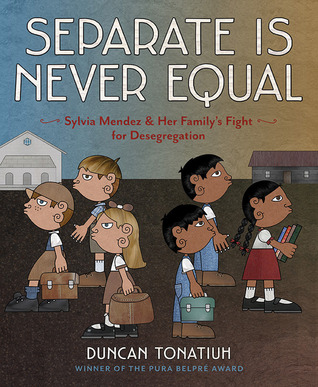
18405521Separate Is Never Equal by Duncan Tonatiuh; published by Abrams.

Reasons why I think it will be honored: Tonatiuh is a past honoree for his Pancho Rabbit and the Coyote: A Migrant’s Tale, and his work continues to bring light to important issues in Latino culture in a kid-friendly, accessible way.  It’s an SLJ and Kirkus Best Book of 2014, an SLJ Top Latino Book of the year, and a JLG selection. Plus, Sylvia Mendez’s fight against desegregation is just as relevant to the current social justice issues occurring in our country as it was 50 years ago.

Fuse 8 Blog review of Separate Is Never Equal.

18667844Portraits of Hispanic American Heroes by Juan Felipe Herrera; published by Dial.

Reasons why I think it will be honored: It’s on the SLJ Top Latino of 2014 list and received an SLJ star. This collection of essays by the California Poet Laureate is lyrical, revelatory, and truly underrated. While it hasn’t garnered that much attention from the other trade journals, I do believe that these vignettes wonderfully shed light on many Hispanic historical figures that are not often celebrated. He’s also received an Honor in the past (for Laughing out Loud, I Fly in 2000), so he’s definitely not a stranger to the Pura Belpré.

Los Angeles Review of Books: Daniel Olivas interviews Juan Felipe Herrera
My review for SLJ

22107707Water Rolls, Water Rises: El agua rueda, el agua sube by Pat Mora; Children’s Book Press.
Reasons Why I think it might be honored: Mora isn’t a stranger to the Pura Belpré either. An influential Mexican American author, she’s also the founder of Día de los Niños, Día de los libros. She’s been honored in the past (for Doña Flor, in 2006), and I think she’s due for another this year. Her Water Rolls, Water Rises is a poetry text that truly rises to the top with its structure, message, and imagery-filled narrative. It’s a Kirkus Best Book and a 2014 Cybils Finalist. The work also received positive reviews in SLJ and PW.

Other Possible Contenders: These two books have flown a bit under the radar, but they both tell often overlooked sides of the immigration narrative. Who knows? Perhaps these underdogs might run off with a shiny sticker come Midwinter?

I Lived on Butterfly Hill by Marjorie Agosín; published by S. & S./Atheneum.
Booklist star; positive reviews in SLJ, PW, Kirkus.

The Secret Side of Empty by Maria E. Andreu; published by Running Press.
JLG selection, SLJ Top Latino of 2014; positive reviews from SLJ, Kirkus, VOYA, Booklist, BCCB, PW.

Award for Illustration:

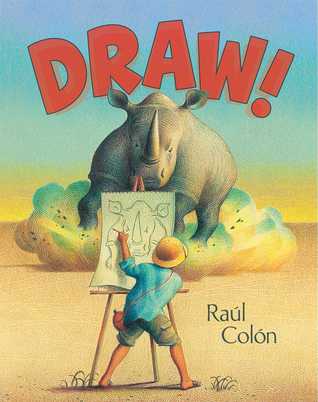
20759593Winner: Draw! By Raúl Colón; published by S. & S/Paula Wiseman Bks.

Reasons why I think it will win: Probably one of the most celebrated—but equally underrated—titles of the year. How is it that not enough people are talking about this book? It’s my belief that Colón should win every year (or at least that he and Yuyi Morales should take turns).

The practically wordless picture book follows a boy who escapes the confines of his room (where he’s been resting because of a sickness) through the power of his imagination and a sketchbook. This beautifully illustrated autobiographical artist’s journey celebrates fancy and adventure, and Colón’s choice of two palettes to depict the before and after is ingenious.

New York Times Best Illustrated Book of 2014
SLJ Best Book
SLJ Top Latino
Starred review from Booklist, SLJ, PW, Kirkus, Horn Book
SLJ Interview with Raul Colón

Honors:

18405521Separate Is Never Equal by Duncan Tonatiuh

Reasons Why I think it might be honored: Tonatiuh has won a Pura Belpré recognition multiple times, in the narrative and illustration categories, and even both at once (just last year, actually). His unique art draws inspiration from the pre-Columbian codices, giving his work added significance to Latino culture. While questions of his eligibility have often been raised, he is a resident of Mexico AND the United States, so his books fair game. Especially relevant in Separate Is Never Equal, is his depiction of different “colored” Mexican American characters. Though Sylvia Mendez and her cousins were part of the same family, her lighter-skinned cousins were able to “pass” as white. This nuanced portrayal of history shines in Tonatiuh’s groundbreaking work. Robin Smith has an interesting discussion on his art on the Horn Book website that is worth reading.

20518948Viva Frida by Yuyi Morales, photos by Tim O’Meara; published by Roaring Brook Press/Neal Porter Bks.

Reasons why I think it might be honored: Stunning. Gorgeous. Ingenious. I’m marveled at how Morales’s work continues to grow and evolve. Last year’s Pura Belpré Medalist, her Niño Wrestles the World, was a winning, kid-friendly romp through Mexican American culture. Viva Frida is more contemplative and evocative, but no less charming and illuminating. The writing is spare in English and Spanish, and gives an almost dreamlike quality to this exploration of the iconic artist. There are countless works on Frida Kahlo and Diego Rivera, but this title introduces not only the artist, but her work and joie de vivre. The detailed puppets and backdrops created by Morales showcase her overwhelming talent.  And if you’re not wowed yet, check out this video of the illustrator’s art process. Fascinating!

One quibble, though: Would O’Meara be considered a co-illustrator of this work? Would that then make it ineligible because he isn’t Latino?

“Illustrator may include co-illustrators. In the case where the co-illustrator is not of Latino heritage, the book is ineligible for consideration.”

That’s for the Committee to ultimately decide.

SLJ Best Book; SLJ Top Latino
Starred in SLJ, PW, Horn Book
Lolly Robinson points out what makes this title a Caldecott Contender

18654384Dalia’s Wondrous Hair/El cabello maravilloso de Dalia by Laura Lacámara; published by Arte Publico/Piñata Bks.

Reasons why I think it might be honored: This bilingual picture book might be a dark horse, but it has received several recognitions (SLJ Top Latino of 2014, starred Kirkus, positive review in PW) and boasts an all-female cast that is refreshing and culturally relevant. Hair plays a big role in Latino society and race issues, and it’s celebrated in this family-centered, whimsical tale. Lacámara’s illustrations take a life of their own and wondrously depict Cuban island life with authenticity and effervescence.

Possible Contender:

20980944Lowriders in Space illustrated by Raúl the Third, written by Cathy Camper; published by Chronicle.

Reasons why I think it might be honored: This fun, graphic novel pushes the boundaries of what is considered a “picture book,” but the Committee might be feeling adventurous.

“A ‘children’s picture book,’ as distinguished from other books with illustrations, is one that essentially provides the child with a visual experience. A picture book has a collective unity of story line, theme, or concept, developed through the series of pictures of which the book is comprised.”

A few have noted some irregularity in the text and the Spanish translation, but since the honor is for a book’s art, I’ll focus on Raúl Gonzalez’s comic book-style street art-type illustrations.  Gonzalez used black, blue, and red BIC pens to create the images, and he’s captured a facet of Latino life that is not often showcased in children’s books. His innovative take on visual storytelling is brave, honest, and much-needed.

Interview with Raúl the Third on “Good Comics 4 Kids”
New York Times review
Starred in Kirkus, PW

If only it were eligible:

18405509Migrant Illustrated by Javier Martínez Pedro, written by José Manuel Mateo; published by Abrams.
Kirkus-Best Picture Book that Celebrates Diversity
Starred review in PW, Kirkus

This breathtaking work about a Mexican boy’s journey to the United States with his family is complemented by one long, black-and-white illustration reminiscent of pre-Columbian codices, packaged as an accordion-style foldout frieze. The timely tale was originally published in Mexico, and so isn’t eligible for the Pura Belpré. If only!

“Children’s books ‘published in the United States or Puerto Rico,’ means that books originally published in other countries are not eligible.

The “Seven Impossible Things” blog has a peek at the full image, so please feel free to lament along with me.

So what do you think? Am I on target? Were there any of your favorites I missed?


A Holiday Sampler of Treasured Memories

By Lila Quintero Weaver

Come in from the cold! Childhood memories bring warmth to almost everything we do during the holidays, no matter how we choose to celebrate. As adults, we’re often in charge of enlivening the season for the children we love, as well as the child still within us. For extra inspiration, we’ve called on some favorite people with connections to Latin@ kid lit.  Here’s the question we posed to Jacqueline Jules, Margarita Engle, Danette Vigilante, Angela Cervantes, and Tracy López:

The holiday season often reflects the wide diversity within the Latin@ community. Would you share a childhood memory of your Hanukkah or Christmas past, or simply a special winter memory?

And here’s how they answered:

JACQUELINE JULES 

Menorah collage

Hanukkah, like all Jewish holidays, follows a lunar calendar. It generally occurs at least a week (if not two or three) before Christmas. As a child, not having to wait till December 25th  was a great bonus for me. I loved getting presents before everyone else at school. The year I remember most is when I received a mezuzah necklace. A mezuzah contains a parchment with the Sh’ma prayer, the central tenant of the Jewish faith. My parents gave me a small cylindrical pendant on a sterling silver chain. It was a requested gift and my first real piece of jewelry.

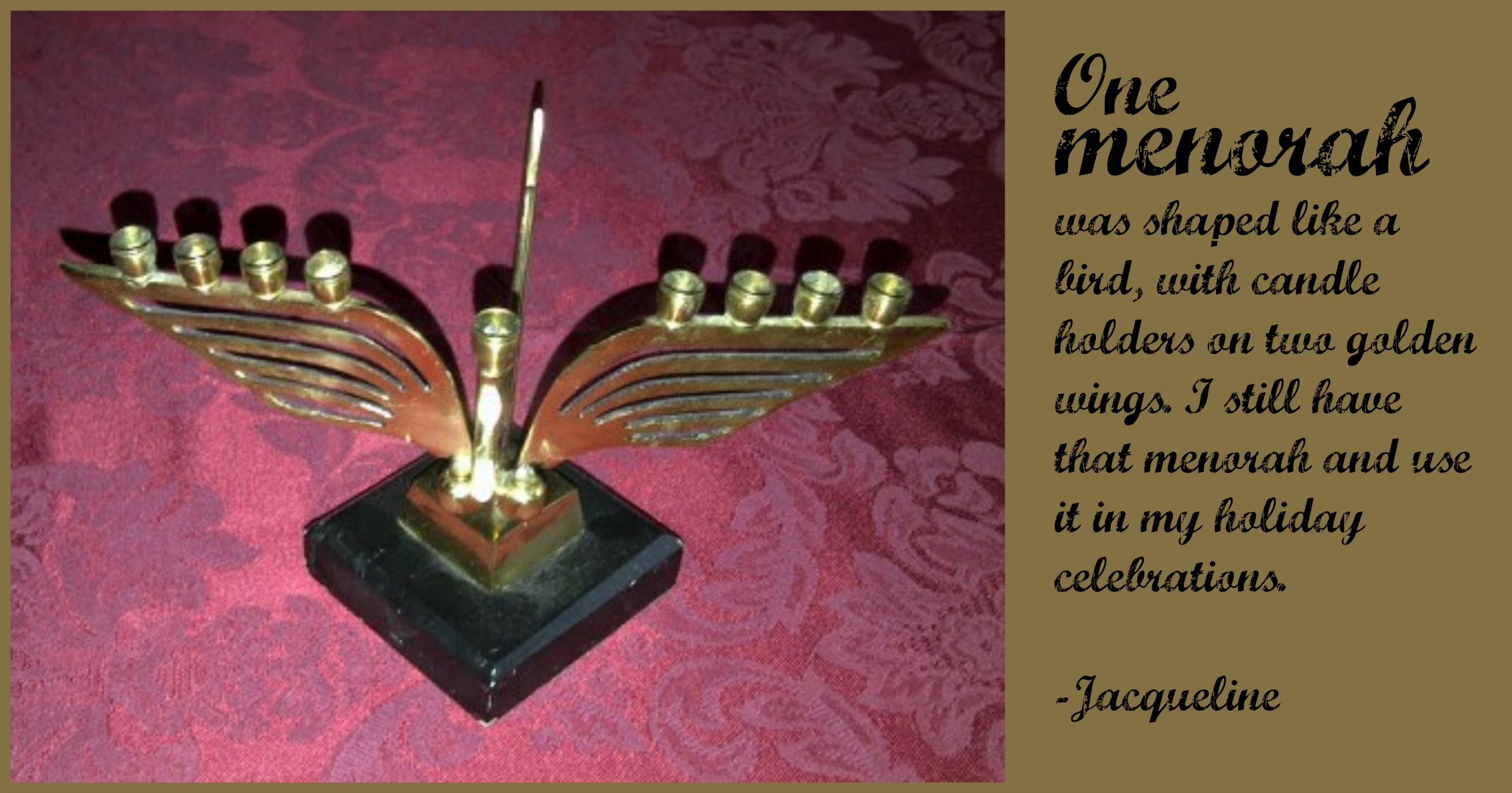
Growing up in a small southern town, my religion made me an outsider. But wearing a symbol of my faith was still important to me. It is an integral part of who I am. My parents raised me to treasure my own celebrations. Hanukkah is a minor holiday of far less importance than the Jewish high holidays in the fall or Passover in the spring. We gave gifts in our nuclear family, but we never tried to make it a Jewish equivalent of Christmas. After a first night with a special present, the other nights were less about gifts and more about the candle-lighting ceremony. My parents owned several Hanukkah menorahs and we would light them all, creating a beautiful row of glowing candles on our dining room table. One menorah was shaped like a bird with candle holders on two golden wings. I still have that menorah and use it in my holiday celebrations.

JJulesWebPic

Jacqueline Jules is the award-winning author of more than twenty children’s books, includes the fabulous Zapato Power series. Great news: she’s busy creating even more fun books for kids! At the bottom of this post, check out her Hanukkah-inspired titles.


MARGARITA ENGLE

Pretending w Text

Hermanas

Family time is the greatest gift offered by any holiday, no matter which religion or season is being celebrated. One of my fondest December memories is the way my sister and I always surprised each other with identical gifts, even though our mother took us shopping separately. Adventure stories, animal tales, and nonfiction natural history books were our inevitable choices. One year, we gave each other the same dinosaur identification chart. We saw ourselves as explorers-in-training, our shared interests a preview of lifelong curiosity about the world. Those shared interests became an even more lasting memory than baking cookies, or admiring the colorful cheer of holiday lights.

MargaritaMargarita Engle is the author of many acclaimed young adult and children’s novels, including The Surrender Tree, which received a Newbery Honor. Her newest picture book is Tiny Rabbit’s Big Wish, and more publications are in the works, including a memoir we can’t wait to read! Here’s her latest guest post for this blog.


DANETTE VIGILANTE

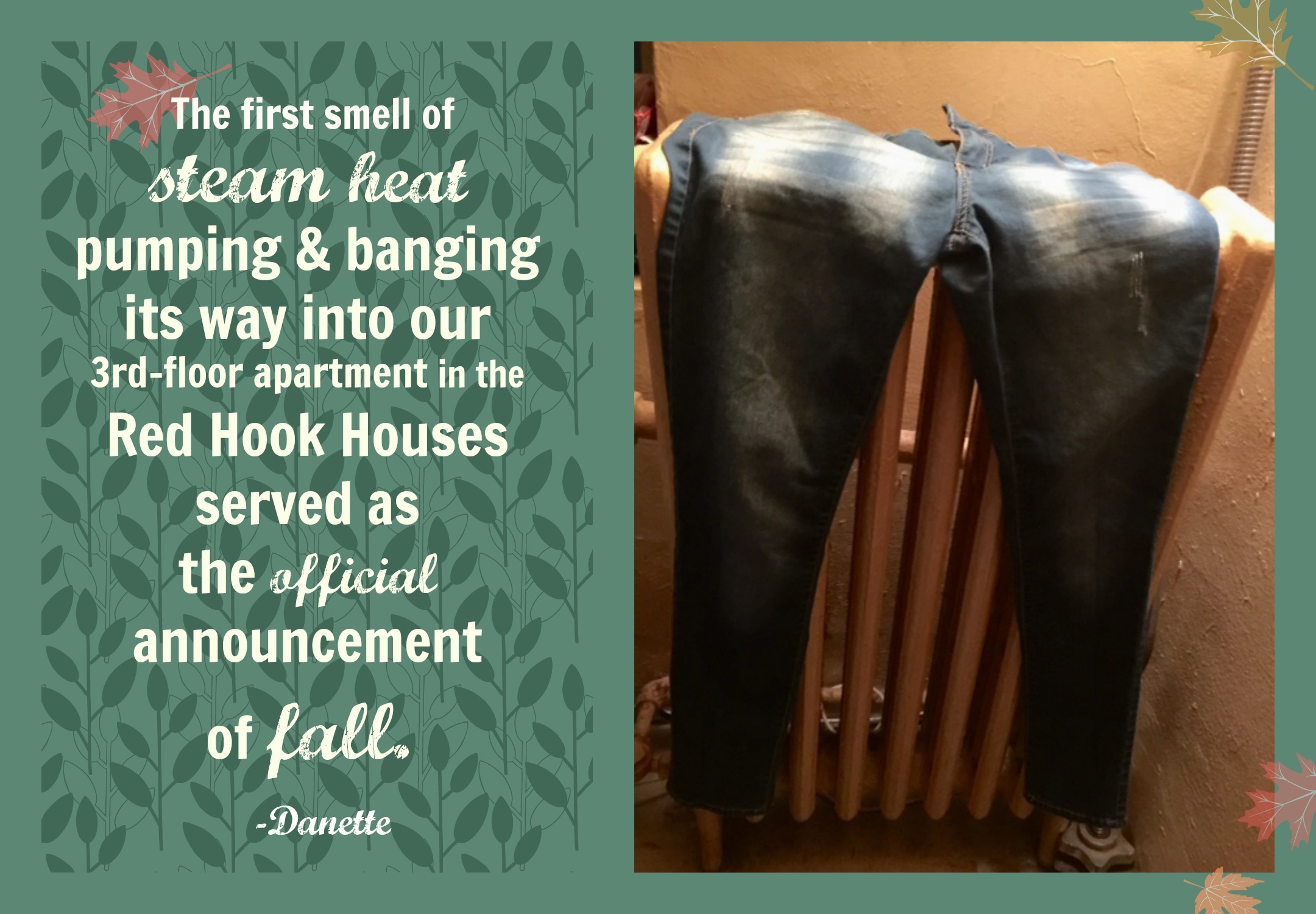
Danette CollageThe first smell of steam heat pumping and banging its way into our third-floor apartment in the Red Hook Houses served as the official announcement of fall.

The radiators in our apartment were used for more than just keeping us warm, though. Mom placed orange skins on top of their steel bones, giving the air a sweet citrus scent. When we needed to dry our winter gear after playing in the snow, to the radiator it all went. When I absolutely had to wear a certain pair of jeans soon after they had been washed, the radiator served as a quick dry cycle. They came off a bit stiff and practically able to stand on their own, but that was a small price to pay. Besides, after a few deep knee bends, all was well. My little sister had her own important use for the radiators— heating up squares of Now and Later candies until they were soft and gooey.

Every year, after the Thanksgiving dishes had been washed and dried, my best friend’s mom did something that excited the kids living in nearby buildings; she’d officially welcome Christmas by decorating her second floor windows in twinkling multicolored lights–a Christmas tree dressed in its best, standing proudly in the center of it all.

A door had been swung open, and one by one, every window from the first through sixth floors, had followed suit. Our drab brick buildings had finally come alive! The magic of the winter season, with its good cheer and best wishes, had entered our hearts, filling us with hope, gratitude and joy.

Danette_Vigilante_head_shot_high_resDanette Vigilante is the award-winning author of two children’s books, The Trouble with Half a Moon and Saving Baby Doe. She lives in New York with her husband, two daughters, two puppies and a cat with an attitude! Don’t miss her inspiring guest post, “Danette Vigilante on the Importance of Dream Seeds.


ANGELA CERVANTES

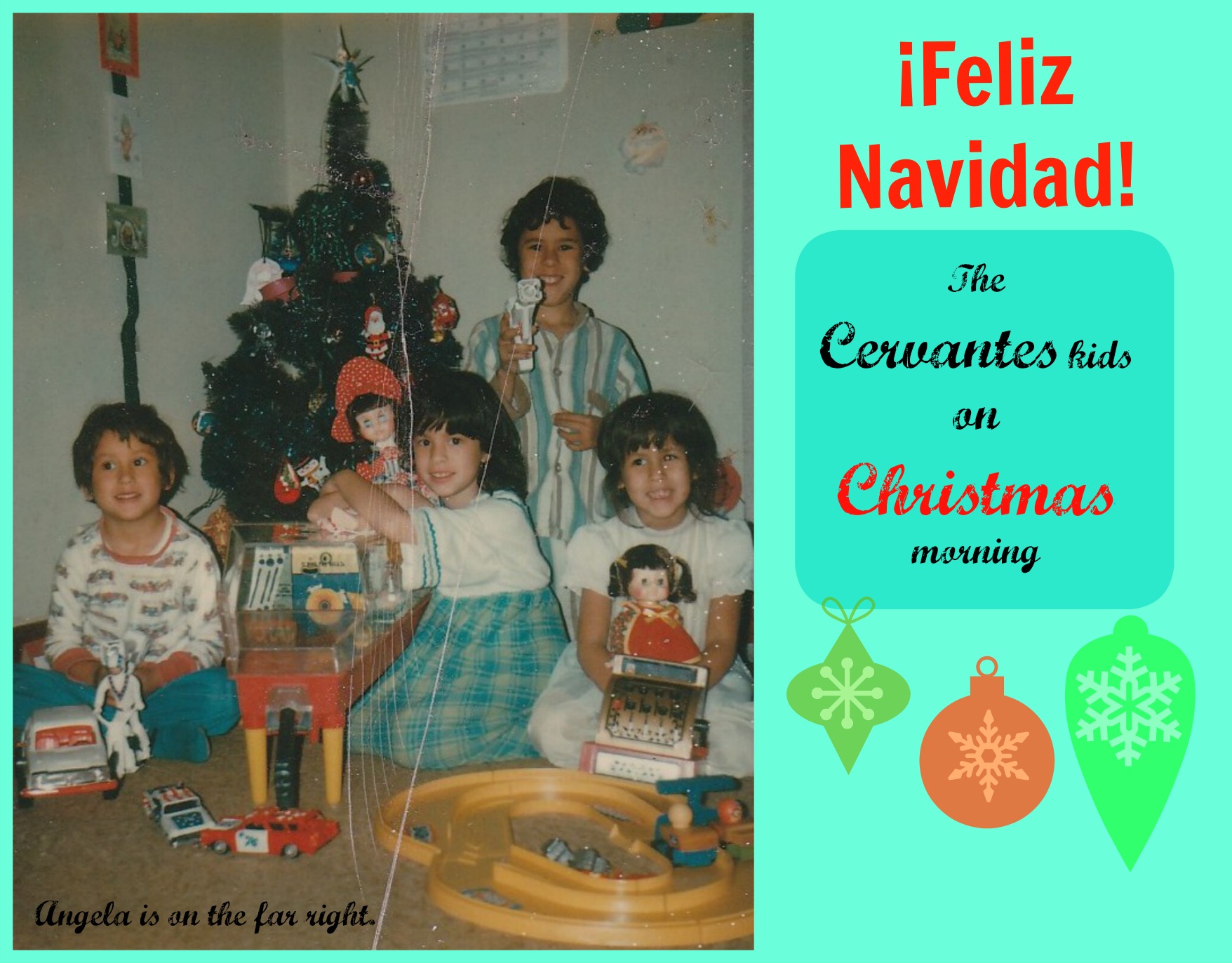
Feliz NavidadOne Christmas, my family was visiting my brother at the army base in Fort Sill. On Christmas Eve, some soldiers were making their way through the neighborhood, house-by-house, Christmas caroling. They came to our doorstep and sang a lively version of Jingle bells and then went on their merry way to the next house. A few minutes later, my sister, Rio, asked me to go out to the car with her to help bring in the rest of the gifts. As we headed to her car, parked curbside, the soldiers were standing in the middle of the street seeming unsure of where to go next. My sister and I grabbed the gifts out of the trunk and when we turned around, the soldiers were standing in front of us. They started singing “Joy to the World.” We couldn’t believe it.

 It was a real serenata!

When they finished, Rio gave me this look and I knew what we had to do. We put our gifts down. At Rio’s count of three we belted out, “Feliz Navidad” with as much glorious Jose Feliciano-ness we could muster. Rio snapped her fingers and shook her hips. I pretended that I had maracas and shimmied around. The soldiers sang along and bopped their heads. “I want to wish you a Merry Christmas from the bottom of my heart.” When we finished, one of the soldiers said, “That was cool. No one has sung back to us the entire night.”

What can I say? Leave it to the Cervantes girls to keep it real on Christmas Eve!

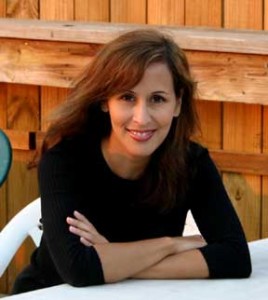
Angela CervantesAngela Cervantes is an award-winning author whose debut novel, Gaby, Lost and Found, has been named Best Youth Chapter book by the International Latino Book Awards and a Bank Street College of Education’s Best Books of 2014. Angela’s second novel, a spin-off of Gaby, Lost and Found, will be released by Scholastic Press in 2016.  Read about what inspired Angela to write Gaby in this Latin@s in Kid Lit interview.  


TRACY LÓPEZ

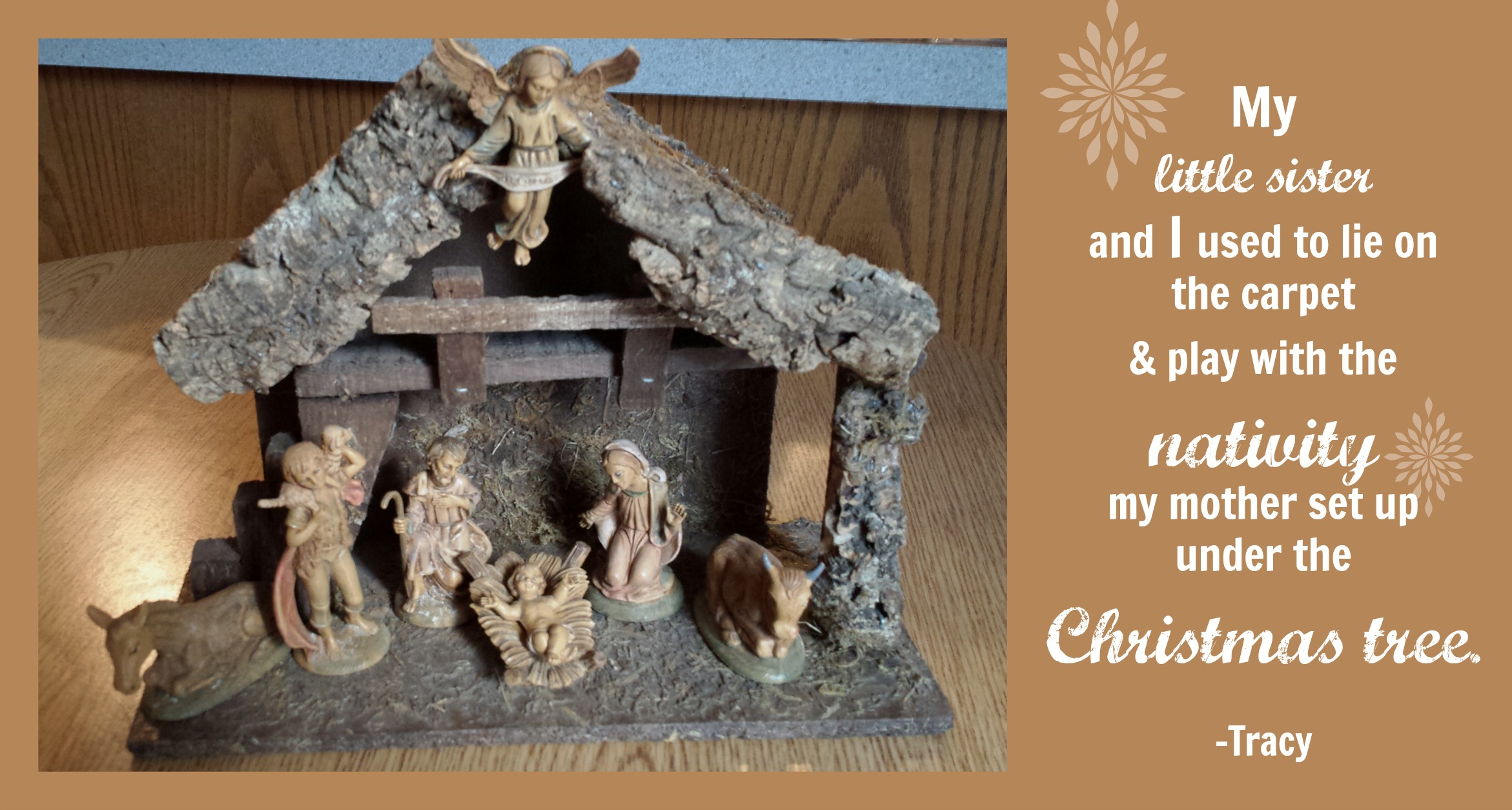
Tracy's NativityOne of my favorite childhood memories is when my little sister and I used to lie on the carpet and play with the nativity my mother set up under the Christmas tree. It was a typical, simple nativity with a moss-covered manger made of wood and plastic figures representing Joseph, Mary, baby Jesus, the angel, a shepherd with a lamb hefted onto his shoulders, and a few barnyard animals. The nativity scene was actually a gift to my mother from my father, who grew up in a Jewish home; my parents say he won it on a radio show when I was really little. That same nativity is still put on display each Christmas at my parents’ house. Although I’m an adult with two teenage sons, I’m always tempted to play with the little figures when I see it set up, which horrifies my husband, Carlos. He’s Salvadoran and in El Salvador the nativity (or “nacimiento”) is much more spectacular than my mother’s humble display. A Salvadoran nativity can take up an entire room and features entire villages of people, but kids are definitely not allowed to play with it!

Tracy LopezTracy López is a freelance writer, blogger and novelist. Her work has appeared in Fox News Latino, Mamiverse, SpanglishBaby and many other print and online publications. She is Owner/Editor-in-Chief of the influential blog Latinaish.com, and is a member of the team of We Need Diverse Books.


HOLIDAY BOOKSHELVES

We wouldn’t be doing our cheerful duty if we didn’t top off this glorious stroll down memory lane with book recommendations related to the season. Here’s a round-up of titles we think you and your young readers will relish this winter holiday.

Happy Hanukkah Lights    Christmas Makes me Think

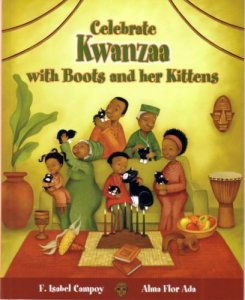
HanukkahZiz    Kwanzaa with Boots

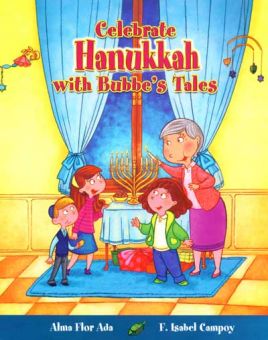
Celebrate Hanukkah    Twas Nochebuena

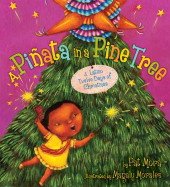
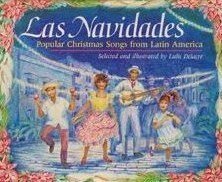
Piñata in a Pine tree    Las Navidades

Seven Candles for Kwanzaa    Green Christmas

And for older readers:

Las Christmas


HAPPY HOLIDAYS TO ALL! WE’LL SEE YOU IN 2015!


Black Girl with a Spanish Name


By Libertad Araceli Thomas

“Do you know what your name means?”

This was a question that made me hate name tags since the second grade. “Libertad? You know it means ‘Freedom’ in Spanish, right?” Of course, I knew what my name meant. I knew what it meant when I was old enough to talk, I knew what it meant before I ever entered school, and I knew what it meant at 18 years old when I took my first job as a barista at a local coffee shop and was again subjected to wearing the name tags I so dreaded as a kid. At home, I was Libertad, but to the world I was a Black girl with a Spanish name.

From first glance, loads of people tell me I don’t “look” Latina. And what’s devastating is that for a while, I believed them. You see, a darker skinned girl with kinky hair like me never made it to my TV screen when “La Familia” parked our butts down to watch Spanish language programs.

Afro-Latinas like me rarely, if ever, showed up in any history lessons. In fact, I hadn’t even known that any Black Latinas made contributions to Latin American societies until I was well out of college and half way into my 20’s. But the thing that hurt the most for a kid who liked to lose herself in books was that a girl like me, Black and Cuban with an unusual name that almost no one can say, was never in any works of fiction.

I tell people all the time being a Black Latina has to be the equivalent to seeing a unicorn in real life. No matter how real you appear to be, standing there in front of them, they have to question your existence and blink a million times at the mere sight of you. I’ve always felt too black to be Latina and too foreign to feel completely African-American. Worst of all, I felt invisible. I can’t help thinking maybe it would have been different if more Afro-Latin@s were in books.

The thing that’s missing here is a little thing called representation. We don’t only need Latin@ characters; we need intersectionality.

In a bright future, I want to pick up a book that goes above and beyond to highlight just how diverse and multifaceted Latino culture can be. I want to read about Latin@s of Asian ancestry like the ones I knew growing up in Miami. Queer Latin@s who are brown, black, mixed, and indigenous. Latin@s who speak Portuguese instead of Spanish, because far too often Brazilians get left out of the conversation, and most of all I’d love to see more Black Latin@s as lead protagonists.

It took me 20+ years to stop feeling like just a Black girl with a Spanish name. Girls after me deserve different. Most of all, they deserve better.

About the Blogger/Aspiring writer:

Libertad ThomasLibertad Araceli Thomas is part one of the Twinjas of Diversity @ Twinja Book Reviews. When she’s not reading stories featuring multicultural lead protagonists, she’s busy improving her no hand aerials and working on getting her Blue Belt in Tang Soo Do and Purple in Shaolin Kempo. She writes under the pen name “GL Tomas.”

During my blog’s Black Speculative Fiction Month I dedicated a Top Ten list of Afro Latinos in Speculative Fiction because I just looove Spec Fic, Please check it out and comment with any additions I could add to the list!


Book Blog

Twitter 

Writing Blog

Tumblr 

Facebook

Facebook

Latin@s in Kid Lit at the Library: Interview with Crystal Brunelle

By Sujei Lugo

The Latin@s in Kid Lit at the Library series focuses on interviews with children’s librarians, youth services librarians, and school librarians, where they share their experiences, knowledge, and challenges using Latino children’s literature in their libraries. In this second entry of this series, I interview Crystal Brunelle.

Crystal is a library media specialist from Wisconsin. In times when schools and their libraries are impacted by budget cuts, closings, and lack of institutional and government support, there are still school librarians and media specialists striving to support their students, teachers and community.

crystalinterview
Crystal Brunelle
Library Media Specialist, Northern Hills Elementary School, Onalaska, Wisconsin
Blogger for richincolor.com (co-founder) and readingtl.blogspot.com (personal blog)

Tell us a little bit about yourself, your identity, and your library.
I am a white mid-westerner with German ancestors. My family moved many times, so my childhood years were spent in various cities in both Texas and California. I was an elementary school teacher and a certified ESL teacher for eleven years before coming to live in the Midwest.

I started working in libraries when we moved to Wisconsin and have loved making that transition. When we came here, it was clear that some of my students had a rather limited view of the world and though our library had some diverse titles, there weren’t nearly enough. I want our students to have plenty of books available so they can see other ways of living, and I want to make sure that all of our students have books that are mirrors reflecting their lives. 12-15% of our student population is Hmong, so the first author visit was with a woman who had written a book featuring a Hmong family and was written in English but also had Hmong text alongside. As I prepared the classes for her visit, what surprised me was that the word bilingual was virtually unknown for most of my students. That’s when I also started acquiring more bilingual materials in a variety of languages. I shared about that experience in more detail at the Nerdybookclub blog.

What process does your library take to select and acquire Latino children’s books for the collection? Do you have any input in this process?
As the Library Media Specialist, I have the responsibility of choosing all of the materials in the collection. Before Latin@s in Kid Lit came on the scene, I relied on the Pura Belpré Award, The Tomás Rivera Award, and The Américas Award for titles. More recently, I’ve been participating in the Latin@s in Kid Lit Reading Challenge which has provided me with a lot of more book titles. I’ve also had the opportunity to review several books published by Piñata Books for Children, a division of Arte Público Press.

What type of children and youth programming does your library offer using Latino children’s literature? How frequently?
I focus on Latino children’s literature during Hispanic American Heritage Month and in the past two years, I have also added El Día de los Niños to our activities. Beyond these two major events, I have many lessons that center around Latino works. A few examples are our first grade author study of Yuyi Morales, our second grade biography lesson using the book Tito Puente, Mambo King/Rey Del Mambo by Monica Brown and Rafael López, and a poetry lesson in fifth grade that includes poetry from Francisco X. Alarcón. I generally try to infuse Latino lit throughout many lessons and activities, though, so we see it all year long. An example of this is when we have a lesson about giving thanks and I share Pat Mora’s Gracias/Thanks along with Giving Thanks: A Native American Good Morning Message and Thanking the Moon: Celebrating the Mid-Autumn Moon Festival.

In terms of promoting events and community outreach, what does your library do?
This is an area that I am working on and have begun to make some progress. I oversee the fifth grade students as they create video announcements for the school. They’re posted on our school YouTube channel for parents and the community to view. This past summer was exciting because I asked for and received funding to have the library open during the summer. I only had two hours every other week, but it meant that students in walking distance (we are a neighborhood school) could come get library materials all summer. It wasn’t as well attended as I had hoped, but it was a start and something that I will publicize more in the future.

What is the reaction of kids, teens, and families regarding Latino children’s books and programming? And the reaction of your co-workers and library staff?
I have had very positive reactions to the inclusion of more Latino children’s materials. One of the families that came in during the summer library times (they speak Spanish at home) checked out a pile of books and were happy to even find a wonderful bilingual board book, Global Babies. The mother said she was happy to have that one (Global Babies) because that way the father could read to the baby in Spanish.

I know our English Language teacher has also been very happy to have the materials available. We don’t have many students with Spanish as their first language, but it helps so much with the few that are here and especially when we have a newcomer in the district. I love seeing the eyes of my Latino students light up when they hear or see Latino materials being featured in class. In addition, students who only know English enjoy experiencing other languages. They also seem to like seeing me working a little harder when I read aloud a book that includes Spanish text.

Any challenges regarding the acquisition of Latino children’s books or your programming? What would you like to do in terms of programming that you haven’t been able to?
There is nothing preventing me from buying more except budget limitations. I would like to expand our El Día de los Niños celebration beyond the school day with a family event. We’re going through a major building renovation so that isn’t a reasonable task for this coming spring due to space constraints, but it is something I will strive for in the future.

Do you address issues of prejudice and oppression in your library through and in children’s books?
Yes, this is something I address specifically in the fourth and fifth grade classes, but at a more subtle level in the younger grades. In line with the common core standards, I’m working to help students learn to read critically and to ask questions such as: who is telling the story, what is their perspective, is there a voice or perspective that is missing, and do we see evidence of bias or stereotypes? I could just tell them which books have issues, but I won’t always be with them and I want them to be able to spot problems on their own.

Any advice for other librarians/educators who would like to use and incorporate Latino children’s literature into their programming?
There is a lot of fantastic Latino children’s literature out there (see this SLJ post about that) and it isn’t just for Latino children. Even if your demographic doesn’t include many Latino patrons/students, these books can be a wonderful addition to your library. We have to move away from the idea that Latino literature is only created for Latinos. Latino literature can and should be present in book displays throughout the year and featured in story times or lessons across all kinds of topics. We have a small number of Latino students at our school, but I don’t just purchase Latino children’s materials for them – they’re beneficial to all staff and students.

Which are the most popular Latino children’s books at your library?
The most popular Latino books in my library are Niño Wrestles the World, Just a Minute, Gracias, Mi Familia Calaca, Dalia’s Wondrous Hair, Dora the Explorer books, Maximillian & the Mystery of the Guardian Angel, and in non-fiction, the series Superstars of Soccer: Mexico.

15953630  1660305  7123496

16057383  18654384  11538645

And finally, which Latino children’s books do you recommend?
To increase the amount of books I can recommend, I’m listing authors. If I only listed my recommendations from Yuyi Morales, the list would already be lengthy.

Picture Books by: Francisco X. Alarcón (poetry), George Ancona (non-fiction), Monica Brown, Laura Lacámara, Yuyi Morales, Pat Mora, Gary Soto, and Duncan Tonatiuh

Middle Grade by: Alma Flor Ada, Julia Álvarez, Margarita Engle, Jack Gantos, Xavier Garza, Meg Medina

Young Adult by: Patrick Flores-Scott, Sonia Manzano, Guadalupe Garcia McCall, Meg Medina, Benjamin Alire Sáenz, Alex Sánchez, and Francisco X. Stork.