Juventud Press, a New Indie Publisher, Will Focus on Latin@ MG & YA

cropped-fcoverAs a reader of this blog, you know what we’re up against. Nearly 5,000 children’s and YA books were published in 2012, but only 1.5% of those titles featured Latin@s. Given the historical inequities our community has faced—which have resulted in our kids’ educational struggles, low average reading level, and high drop-out rate—it is more important than ever that children of diverse cultural backgrounds have access to books in which they see themselves reflected.

Since 2011, the 501(c)(3) non-profit Valley Artist Outreach has worked to promote the artistic expression of disaffected youth in the colonias of South Texas and of artists whose work touches on issues of import to the community. As part of that work, VAO’s publishing wing has released several anthologies, notably ¡Juventud! Growing up  on the Border, a collection of YA stories and poems edited by René Saldaña, Jr. and Erika Garza-Johnson that features the work of David Rice, Xavier Garza, Jan Seale, Guadalupe García McCall, Diana Gonzales Bertrand and many others.

Stemming from the success of that book, VAO is proud to announce Juventud Press, an exciting new imprint seeking to bring diverse books to young readers often marginalized by traditional publishing. Juventud Press will release three to four middle-grade and young-adult titles a year, with an eye toward expanding into children’s literature in the near future. Written by and/or featuring Latin@ characters and settings, these books will help contribute to the recent surge in diversity in kid lit.

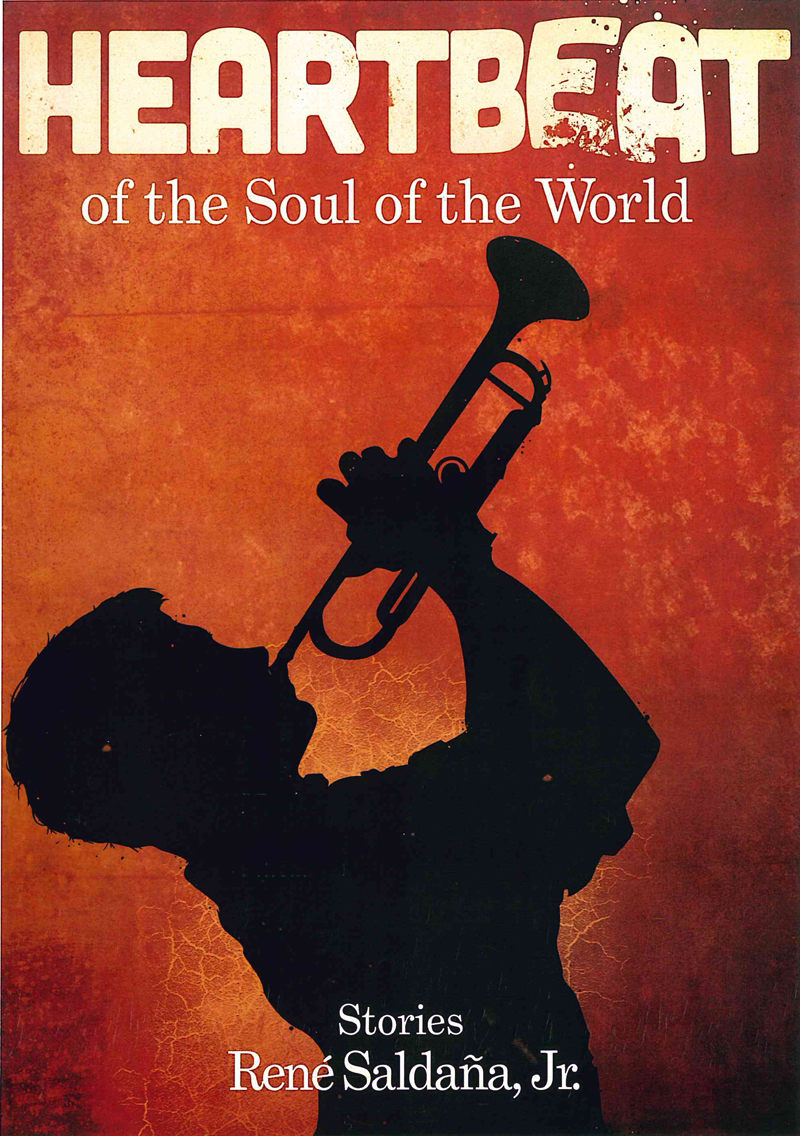
Heartbeat coverOur first title will be Heartbeat of the Soul of the World, a new short-story collection by René Saldaña, Jr., author of books such as The Jumping Tree and The Whole Sky Full of Stars. A vital book that explores the ins and outs of Latin@ adolescence along the border, Heartbeat is a flagship publication that encapsulates the values and mission of Juventud Press.

In addition, we seek to promote the voices of up-and-coming writers of diverse YA literature by establishing the Nueva Voz Award, which will select a winner each summer from among manuscripts submitted by unsigned, un-agented writers. The winner of the award will receive a $500 advance and standard publishing contract, and her/his book will be published in the fall of that same year.

To be competitive even in the field of independent small presses, we need the initial capital to produce high quality, visually engaging books.

We are asking for pledges through Kickstarter. Each one comes with a fantastic reward, so please take a look: https://www.kickstarter.com/projects/1780116159/juventud-press-launch

These start-up funds will secure the visual artists needed for covers, underwrite website design, cover the deployment of the Nueva Voz Award, and purchase initial publicity for the imprint.

Please consider backing this worthwhile project that will add to the flowering of diversity in publishing for our youth.

Thanks!

The Editorial Board of Juventud Press

José Mélendez, René Saldaña, Jr., and David Bowles

Happiness as a Social Justice Issue in Latin@ Kid Lit

By Sonia Alejandra Rodriguez

In the years that I’ve been researching and writing about Latina/o kid’s literature, I’ve gone back and forth about the impact that “happy endings” have on the stories and young readers. Because I focus specifically on realistic fiction, narratives that capture lived experiences, I found the happy endings to be a bit misleading. Real stories on deportation and family separation, for example, do not always get a happy ending and especially not as immediately as books make it seem. In general, happy endings are an essential component of children’s illustrated texts. That is, picture books for children tend to have happy endings because a book that tells children, for example, that “life sucks” and encourages them to give up would probably not fare well in the industry. Within this genre, happy endings also function as a way to preserve a child’s innocence. There is something both beautiful and problematic about the genre’s desire to protect children from “growing up too fast,” from the “dangers of the real world,” and whatnot. In this way, the happy ending allows children to explore the world through books with the guarantee that they will be safe, that everything will work out, and that they will be protected. However, not all children are seen as inherently innocent and therefore their access to protection and safety is limited and certainly not guaranteed.

Because Latina/o kid’s lit as a genre has done an exceptional job at pointing out the marginality, discrimination, and uncertainty that Latina/o children face in this country I had often found the happy endings in some of these texts disconcerting. The reconciliation between the oppressions experienced by a Latino child protagonist and the happy ending was too simple. I was afraid that those endings would mislead or further discourage real children who were undergoing similar situations as those portrayed in the books but who were not experiencing the happy endings. My concern was also that the happy endings minimized the urgency of the topics being discussed.

I have found that the most beneficial way to understand happiness in Latina/o kid’s books is to read it as part of the story rather than the ending. In other words, happiness is a piece of a much larger story and not just the end. This understanding is particularly important when teaching Latina/o kid’s books dealing with social justice issues. It is significant to note that the happy endings do not suggest that the oppressions the characters experience have also ended. Furthermore, characters’ happiness does not suggest that they are not being oppressed. These caveats on happy endings may seem unnecessary and a bit of a downer; however, happy endings in kid’s picture books assume that children access happiness equally when, in fact, this is not the case. Because of this, happy endings in children’s picture books with social justice themes further present an opportunity to discuss happiness as a social justice issue.

1016493As important as it is to contest happy endings, it is also important to protect Latino children’s right to happiness. I became more aware of this significance upon giving a presentation on Juan Felipe Herrera’s Super Cilantro Girl where I was asked if the story’s ending undermined Esmeralda’s agency. Super Cilantro Girl tells the story of Esmeralda Sinfronteras and her transformation into a giant green superhero set to rescue her mother from an ICE detention center. Upon learning that her mother has been detained at the border, Esmeralda taps into the power of cilantro and gradually changes into Super Cilantro Girl. Bigger than a bus, taller than a house, and with the power of cilantro and flight, Esmeralda breaks her mother out of the detention center and brings her home. Super Cilantro Girl disrupts the anti-immigration policies that seek to separate her family by becoming bigger, stronger, and more heroic than the system. At the end of the story, however, it turns out that Esmeralda was dreaming and did not change into Super Cilantro Girl nor did she rescue her mother. Despite that, though, Esmeralda’s mother returns. In my presentation, I claimed that Esmeralda’s transformation exemplified how the body can be a site of healing. What does the ending then suggest about Esmeralda’s healing process and agency if her transformation into a superhero was just a dream? It was then suggested that I’d have a more productive reading of Super Cilantro Girl if I talked about it as magical realism and/or science fiction.

While an argument can be made to read Super Cilantro Girl as magical realism and/or science fiction, I choose not to because there is something difficult about reading Esmeralda’s dream of rescuing her mother from ICE as fantastical. Despite having been a dream, there is agency and power in Esmeralda’s ability to see herself as a superhero with the strength to fight ICE and reunite her family. Regardless of ICE’s threat, Esmeralda can imagine herself as powerful and, ultimately, happy. Esmeralda’s happiness upon rescuing her mother is an important part of her healing process. Again, happiness needs to be understood as part of the narrative and not the end point. Super Cilantro Girl demonstrates how happiness and imagination function to promote hope and resilience despite the systemic oppressions that hinder Esmeralda’s life. Challenging happy endings and reading happiness as a social justice issue present opportunities to further understand how childhood in the United States is racialized and how Latina/o kid’s lit creates alternative narratives.


headshotSonia Alejandra Rodríguez has been an avid reader since childhood. Her literary world was first transformed when she read Rudolfo Anaya’s Bless Me, Última as a high school student and then again as a college freshman when she was given a copy of Sandra Cisneros’s The House on Mango Street. Sonia’s academic life and activism are committed to making diverse literature available to children and youth of color. Sonia received her B.A. in English from the University of Illinois at Urbana-Champaign. She is currently a PhD candidate at the University of California, Riverside, where she focuses her dissertation on healing processes in Latina/o Children’s and Young Adult Literature.

Book Review: Talking with Mother Earth / Hablando con Madre Tierra by Jorge Argueta

By Marianne Snow

349744DESCRIPTION OF THE BOOK (from Goodreads): Tetl’s skin is brown, his eyes are black, and his hair is long. He’s different from the other children, whose taunts wound him deeply, leaving him confused and afraid. But Tetl’s grandmother knows the ancient teachings of their Aztec ancestors, and how they viewed the earth as alive with sacred meaning. With her help, he learns to listen to the mountains, wind, corn, and stones. Tetl’s journey from self-doubt to proud acceptance of his Nahuatl heritage is told in a series of powerful poems, beautifully expressed in both English and Spanish. Vivid illustrations celebrate nature’s redemptive powers, offering a perfect complement to the poignant story.

MY TWO CENTS: History books and other nonfiction texts often speak of the Americas’ original inhabitants in the past tense, as if they completely disappeared after Europeans swept across the land. For example, I remember learning that the Spanish defeated and killed (or married) all indigenous people when they invaded Mexico and Central America in the sixteenth century. Wrong. Despite facing frequent marginalization and discrimination by “mainstream” society, Nahua people, the diverse descendants of the Aztecs, still live in El Salvador, Mexico, and the United States today.

Talking with Mother Earth / Hablando con Madre Tierra – a stunning bilingual collection of autobiographical poems and winner of the illustrious International Latino and Américas Book Awards for outstanding works of Latin@ children’s literature – affirms and celebrates the complexity of a contemporary Nahua individual. In these simple yet profound poems, Jorge Tetl Argueta, who identifies as Pipil Nahua, provides us with a window into his childhood and sensitively explores issues of cultural identity from several different angles, including his spiritual beliefs, his connection to Mother Earth, ethnic pride, racial bullying, and history of the Nahua people. As they read his beautiful words, children with Nahua heritage might see reflections of themselves, while readers from other backgrounds can learn about cultural practices and perspectives that are different from their own.

Mirroring Argueta’s poems are Lucía Angela Pérez’s vibrant pastel drawings, simultaneously striking and soft, bold and soothing as they permeate each page. Prepare to be swallowed up in color as soon as you open the cover! Also, the illustrations sustain the theme of links between the present and past as they portray young Tetl standing side by side with his grandmother, his ancestors, and Aztec gods.

Another enticing feature of this book is its relatively unusual dual language format. Although we’re seeing more and more English-Spanish dual language books on the market these days, most of these books place the English text first on the page, above or before the Spanish text. While this positioning might not seem like a big deal, it can send a message to readers that English should be the first language in their lives – that it’s better than Spanish. Books that place Spanish first do pop up every once in awhile, however, and Talking with Mother Earth / Hablando con Madre Tierra is one of them, emphasizing to Spanish-speaking readers the importance of their linguistic skills.

So if you’re searching for a book that promotes empathy, beauty, linguistic diversity, cultural awareness, and positive self-image, look no further! If you enjoy it, be sure to check out Jorge Argueta’s other works for children – they’ll leave you smiling (and probably a little bit hungry).

TEACHING TIPS: Due to multifaceted subject matter in Talking with Mother Earth / Hablando con Madre Tierra, educators can choose to use the entire text or individual poems to start fruitful, critical discussions and lessons with their students. For example, teachers might draw upon “Indio” / “Indian” – an examination of racial bullying – when facilitating analyses of racism and discrimination in schools. Additionally, they might focus on Argueta’s poems on nature and Nahua spirituality to help students understand the diversity of religious beliefs and ethnicities in contemporary Latin America. Or they might highlight this book as a mentor text when encouraging students to write their own nature poetry.

The dual language format of Talking with Mother Earth / Hablando con Madre Tierra also makes it a valuable resource for Spanish and English learners – the abundance of words related to nature can help readers describe the earth bilingually. An added bonus is the inclusion of several Nahuatl words and phrases that illustrate Latin@ / Latin American linguistic diversity even further.

ABOUT THE AUTHOR (from his website): Jorge Tetl Argueta is a celebrated Salvadoran poet and writer whose bilingual children’s books have received numerous awards. His poetry has appeared in anthologies and textbooks. He won the Américas Book Award, among other awards, for his first collection of poems for children, A Movie in my Pillow. He was the Gold Medal Award winner in the 2005 National Parenting Publications Awards (NAPPA) for Moony Luna / Luna, Lunita, Lunera. His other works for children include Xochitl and the Flowers (2003 Américas Award Commended Title), Trees are Hanging from the Sky, Talking with Mother Earth, The Little Hen in the City, and The Fiesta of the Tortillas.

RELATED LINKS:


MarianneMarianne Snow is a doctoral student at the University of Georgia, where she researches Latin@ picture books, representations of Latin@ people in nonfiction children’s texts, and library services for Spanish-speaking children and families. Before moving to Georgia, she taught Pre-K and Kindergarten in her home state of Texas and got her master’s degree in Teaching English to Speakers of Other Languages (TESOL) at Texas A&M University. In her spare time, she enjoys obnoxiously pining for Texas, exploring Georgia, re-learning Spanish, and blogging at Critical Children’s Lit.

Book Review: Hostage (The Change #2) by Rachel Manija Brown and Sherwood Smith


23899848By Eileen Fontenot

DESCRIPTION FROM GOODREADS: Welcome back to Las Anclas, a frontier town in the post-apocalyptic Wild West. In Las Anclas, the skull-faced sheriff possesses superhuman strength, the doctor can speed up time, and the squirrels can teleport sandwiches out of your hands.

In book one, Stranger, teenage prospector Ross Juarez stumbled into town half-dead, bringing with him a precious artifact, a power no one has ever had before, and a whole lot of trouble — including an invasion by Voske, the king of Gold Point. The town defeated Voske’s army, with the deciding blow struck by Ross, but at a great cost.

In Hostage, a team sent by King Voske captures Ross and takes him to Gold Point. There he meets Kerry, Voske’s teenage daughter, who has been trained to be as ruthless as her father. While his friends in Las Anclas desperately try to rescue him, Ross is forced to engage in a battle of wills with the king himself.

MY TWO CENTS: Even more gripping than the first of this series, Hostage takes us right back to the aftermath of Voske’s attack on our intrepid band of superhuman teens, which caused the death of a much-respected adult leader. We are introduced to a new player in this book, the daughter of Voske, the series’ main antagonist. The authors do a tremendous job of telling us about Kerry, who is smart, capable and raised to assess challengers and exploit their weaknesses.

Just as I began to dislike this new character, the authors begin chapters from her point of view. We see her life under her parents’ restrictive rule, and her love for her boyfriend, Santiago, softens her image. I came to root for Kerry, for her to find her own way in life and to make positive choices in her life, rather than negative ones. We also get to see how things are run in Gold Point, part of Voske’s kingdom. And it’s not pretty.

One of the main themes of this book was trust. Characters were thrust into various life-or-death situations, with only another to depend upon. And sometimes this other person wasn’t exactly the most trustworthy individual. Tracing the elaborate, yet tenuous, agreements made between unlikely partners became a bit of a challenge. I also liked the message that it’s OK to follow your own path, especially when you disagree with the way your family is behaving.

And because there are still several mysteries to be solved in the last couple of books, and a character I hope makes a big resurgence, I look forward to future volumes. The authors plan to release two more books in this series, and I can’t wait to see how these characters grow and change with each other. I read this on my Kindle, but Manija Brown says a paper copy of Hostage will be released in March, according to GoodReads.

RECOMMENDATIONS: As a young adult librarian, I would suggest this series to teens who love post-apocalyptic fantasy worlds who also want to see themselves reflected in the characters. The series is incredibly diverse; the main characters are all people of color and LGBT characters are also well represented. The authors are wonderful showing readers the depth of their familial connections through details dropped in throughout the action, which is plentiful.

For a book club pick, I would ask participants to discuss the role trust played in these characters’ choices. Teens could also talk about who they trust in their own lives and why. What would they share with their closest friends and family? What would make them lose trust in their loved ones?

AUTHORS:

Paraphrased From Goodreads: Rachel Manija Brown is the author of all sorts of stories in all sorts of genres. She has produced a memoir, All the Fishes Come Home to Roost: An American Misfit in India, and she has also written television, plays, video games, and a comic strip meant to be silk-screened on to a scarf. In her other identity, she is a trauma/PTSD therapist. She writes urban fantasy for adults under the name of Lia Silver.

From cahreviews.blogspot.com: Sherwood Smith began her publishing career in 1986, writing mostly for young adults and children. Smith studied in Austria for a year, earning a master’s in history. She worked many jobs, from bartender to the film industry, then turned to teaching for twenty years, working with children from second grade to high school. To date she’s published over forty books, nominated for several awards, including the Nebula, the Mythopoeic Fantasy Award, and an Anne Lindbergh Honor Book.

FOR MORE INFORMATION ABOUT Hostage (The Change #2) visit your local public library, your local bookstore, barnesandnoble.com, amazon.com or goodreads.com.

Eileenfontenot headshot Fontenot is a recent graduate of Simmons College Graduate School of Library and Information Science in Boston. She works at a public library and is interested in community service and working toward social justice. A sci-fi/fantasy fan, Eileen was formerly a newspaper writer and editor.

Guest Post: The Universality of Being an Outsider


by Jacqueline Jules

1956Family

Jacqueline Jules’ family in 1956

In my small Virginia town, like many places in the 1960s south, the first question people asked upon meeting was “What church do you go to?”

As a child, I remember fielding that question from parents of new friends and hearing my mother answer it in grocery stores.

“We’re Jewish,” I would explain politely. “We go to a synagogue.”

The response was generally a startled one. People would stare like I was a new species at the zoo.

“Oh my! I don’t think I’ve ever met a Jewish person before!”

From there, I’d often have to answer a series of questions about my “Jewish Church.”

I had been taught from a young age that I represented my religion. If I was impolite, all Jews would be considered rude. I had to be on my best behavior at all times so that others would not have a reason to dislike Jewish people. On many occasions, I also had to explain why Jews didn’t believe in Jesus and why I wasn’t terrified of going to hell. And the questions were just as likely to come from adults as other children.

Growing up, Christmas and Easter were never seasons of joy for me. They were times when the questions intensified. Why didn’t I celebrate Christmas? Didn’t the Jews kill Jesus? I learned early on that the Christmas spirit did not extend to Jewish children.

To add to my stranger status, my parents were not Southern born. Mom was a Northerner from Rochester, New York. Dad was from Switzerland and spoke with a thick German accent. He came to the US after World War II and was not a citizen when I was born. His name was Otto. In small-town Southern culture, having foreign roots set my family apart even in our tiny Jewish community.

So feelings of being “different” are quite familiar to me. I know what it is like to be the child of an immigrant. To be embarrassed in public when people ask your father to repeat something three times because they can’t understand what he is saying. To hear a parent talk of a homeland missed deeply. To long for relatives abroad who were only a part of our lives through letters and very occasional visits. To feel alone, apart from others who are comfortable in their skin and their surroundings.

Years later, when I took a position as a librarian in an elementary school with a large immigrant population, I identified with my students immediately. I had watched my own father struggle with the English language, which he learned in adulthood, at age 32. To his credit, he became quite fluent, but he still made some mistakes with grammar and pronunciation. Misunderstandings occurred in family conversations when my father did not understand a nuance or a cultural reference. Or we didn’t understand the perspective he was coming from. He didn’t approve of everything American. I recall what fun he made of sliced white bread which he compared to eating a sponge, and how excited he was when we found bakeries that sold French bread. And I remember how much my father hated turkey. He thought it tasted dry and he insisted my mother serve lamb or duck on Thanksgiving. I also remember that he didn’t care for pumpkin pie. In his mind, pies should be filled with fruit, gooseberries in particular.

The first Thanksgiving I taught at Timber Lane Elementary, a Title I school in Fairfax County, Virginia, I noticed right away that my immigrant students were not interested in my Thanksgiving lessons. Up until then, my story times had been received warmly. Seeing that my English-language learners enjoyed repetitive songs and choruses, I had quickly adopted them into my curriculum. My students had enjoyed songs about animals, the seasons, the five senses, etc. Why did they hate my turkey songs?
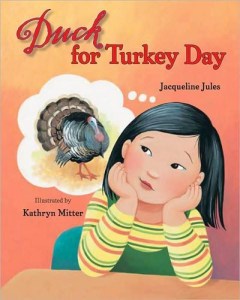
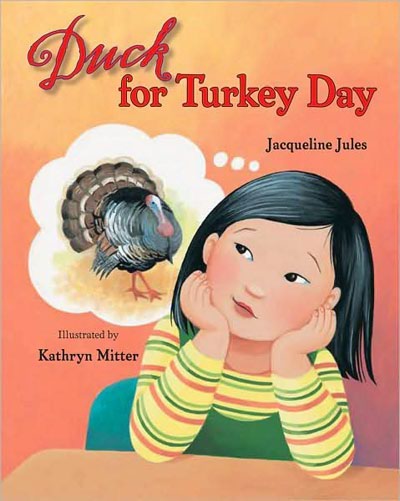
DuckforTurkeyDaybyJJulesA student gently explained: “We don’t have that kind of Thanksgiving dinner in my house.” Suddenly, I stopped being a teacher and returned to my own childhood, where I had been informed that turkey and pumpkin pie were the correct meal choices. These memories led to my first book with Albert Whitman Publishers, Duck for Turkey Day, about young Tuyet, who is worried that her Vietnamese-American family is breaking the rules for Thanksgiving. While the emotions of this book belong to my own childhood, they were deeply shared by the kids I taught. Making my characters Vietnamese-American gave me the opportunity to show how much I identified with my students, along with the universality of the problem. It also made my story current. My experiences as a Jewish child of a German-Swiss in the 1960s south are historical now. While I have shared my Jewish heritage in many of my books, I don’t want everything I write to be limited to my own particular, and not necessarily, universal experiences. Growing up as an outsider myself has naturally made me empathetic to other minorities in America. And it has made me downright indignant that so few children’s books reflect the lives of children who are not white, Christian, and middle-class.

All too often, books with non-majority characters portray their lives as a situation requiring great explanation. As a young Jewish mother in the 1980s, I was annoyed that most Jewish holiday books described traditions in such detail, they read like nonfiction. Not every Christmas story describes the Nativity. Most Easter stories are about bunnies, not the Resurrection. Why can’t Jewish children have light-hearted picture books that celebrate the joy of their culture, too?
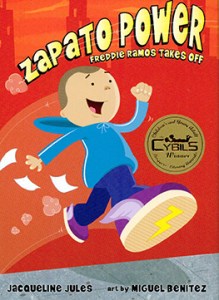
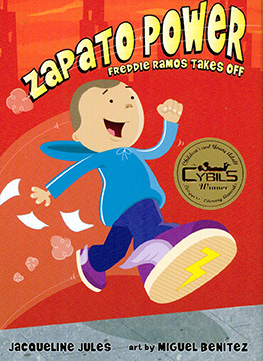
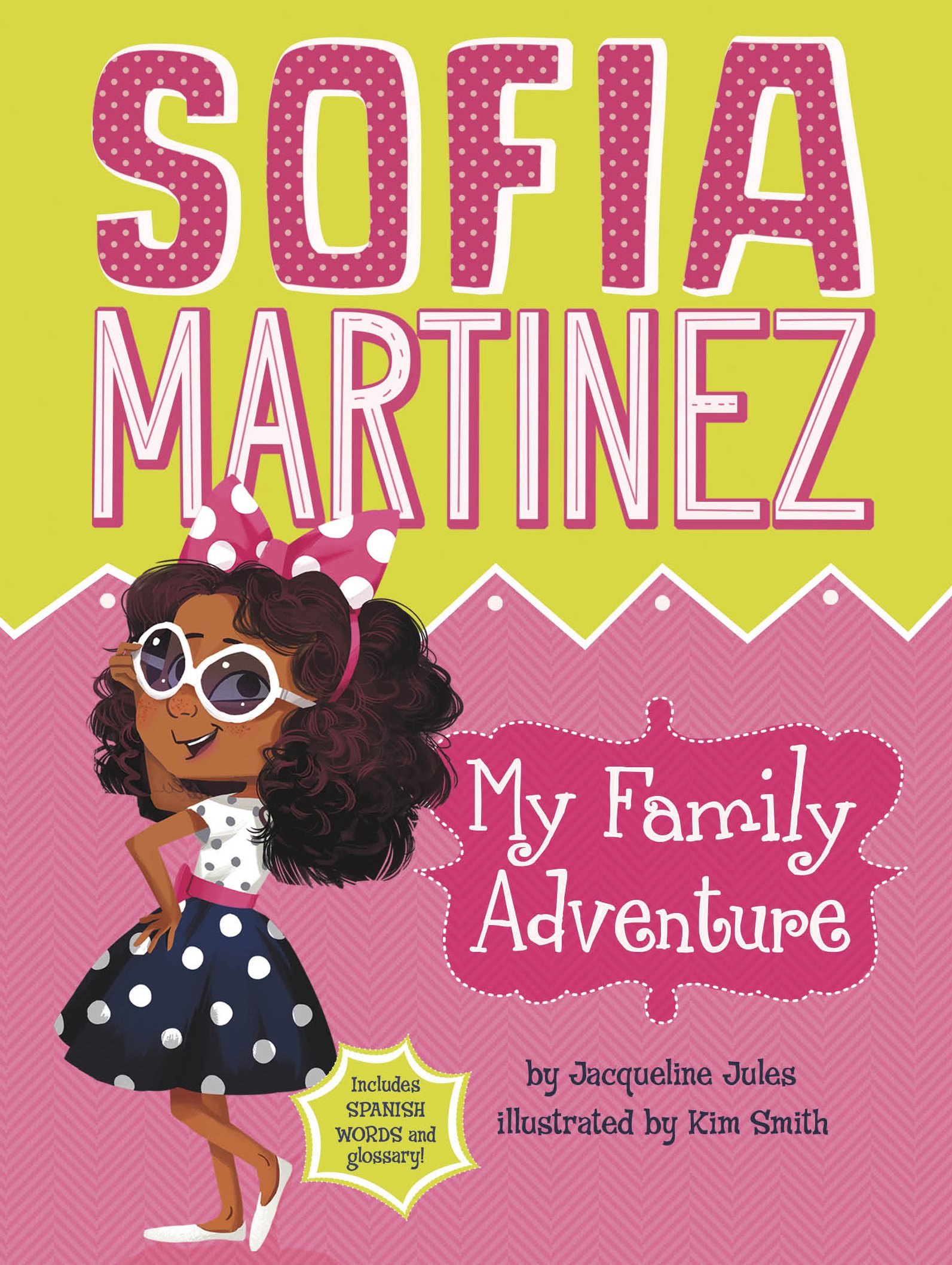
ZapatowithStickerAnd why can’t children of color have books, particularly easy readers, where they see themselves enjoying life? Why is minority status always the problem in a story rather than just one facet of a particular person’s existence? In my Zapato Power books, a chapter book series about a boy with super-powered purple sneakers, the main character, Freddie Ramos, is Latino. He lives an urban apartment life in a close-knit immigrant community, just like most of the students I taught. But that is not the plot of his stories. Freddie is mostly concerned with how he will solve mysteries and be a hero with his super speed. And in my new series, Sofia Martinez, my main character is a spirited Latina who wants more attention from her large, loving family. I taught many Sofias. Her family eats tamales at Christmas. She uses Spanish phrases in her conversations. And she deserves to learn to read with books that show her family life as fun and normal, not a particular ethnic challenge to be overcome.SofiaMartinezFamilyAdventure
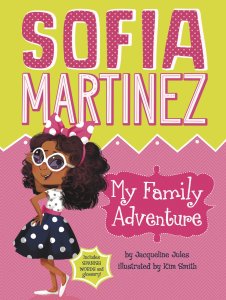
Many authors say they write the books they would have liked to see as a child. I do that. But I also write stories I wish I had been able to give my students when I taught—books that show it is okay to be who you are.


JJulesWebPic

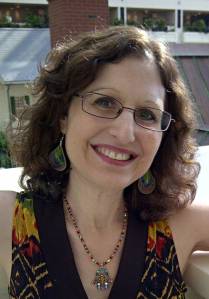
Jacqueline Jules is the award-winning author of 30 books, including No English, Duck for Turkey Day, Zapato Power, Never Say a Mean Word Again, and the recently released Sofia Martinez series. After  many years as a librarian and teacher, she now works full-time as an author and poet at her home in Northern Virginia. Find her on Facebook and at her official author site.


Q & A with Illustrator Raúl the Third

selfie

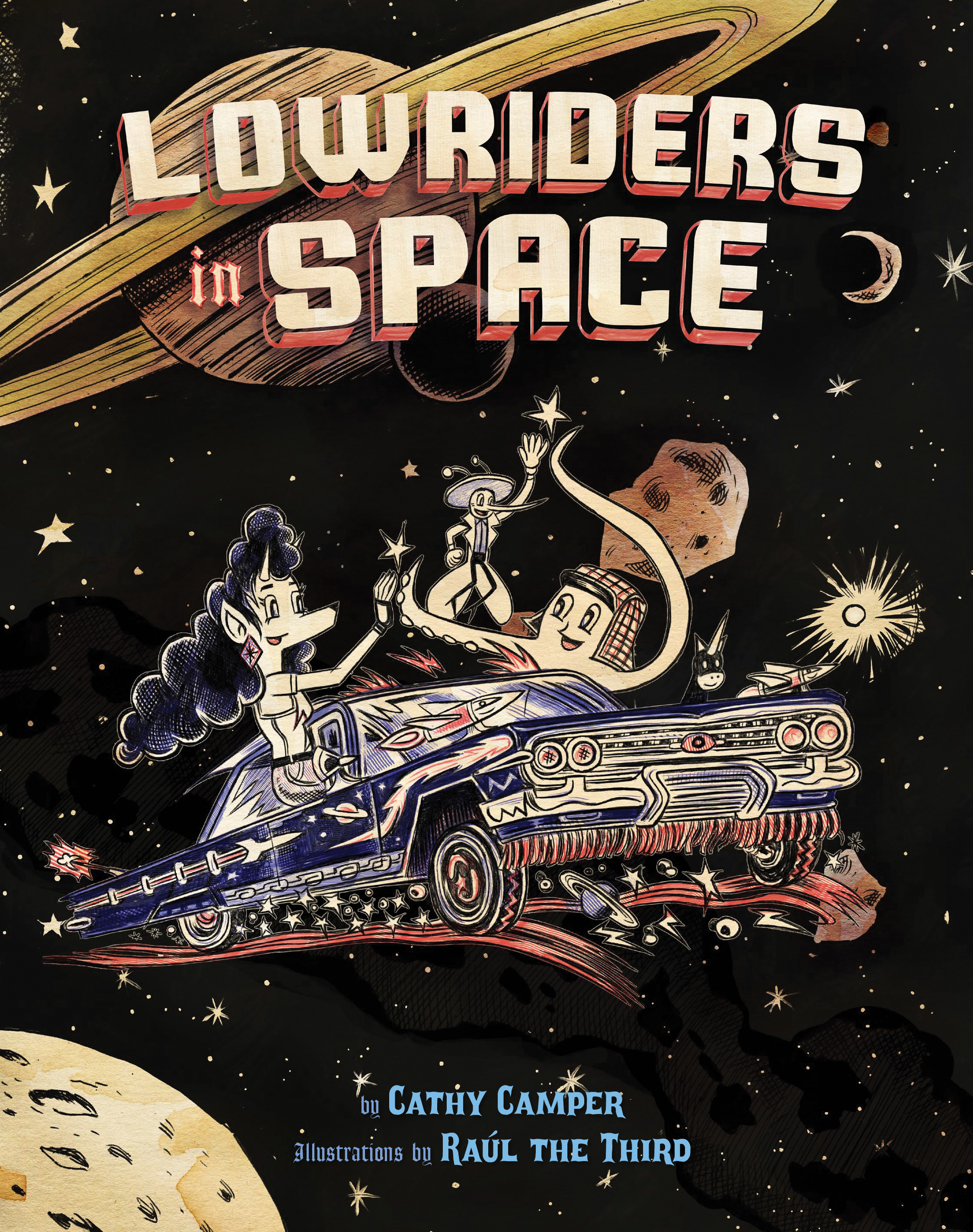
Now here’s something different. Pour yourself a cup of Nescafé Suave and welcome to an ear-catching hang-out with two cool artists from the world of Latin@ kid lit. Chances are, you already know and love acclaimed illustrator Raúl Gonzalez, aka Raúl the Third, lauded in review after review for his work in Lowriders in Space, a dynamic graphic novel for kids written by Cathy Camper, released in 2014. (For a partial list of articles about Raúl, Cathy and LRIS, see the bottom of this post.)

Lowriders in Space_FC_HiRes

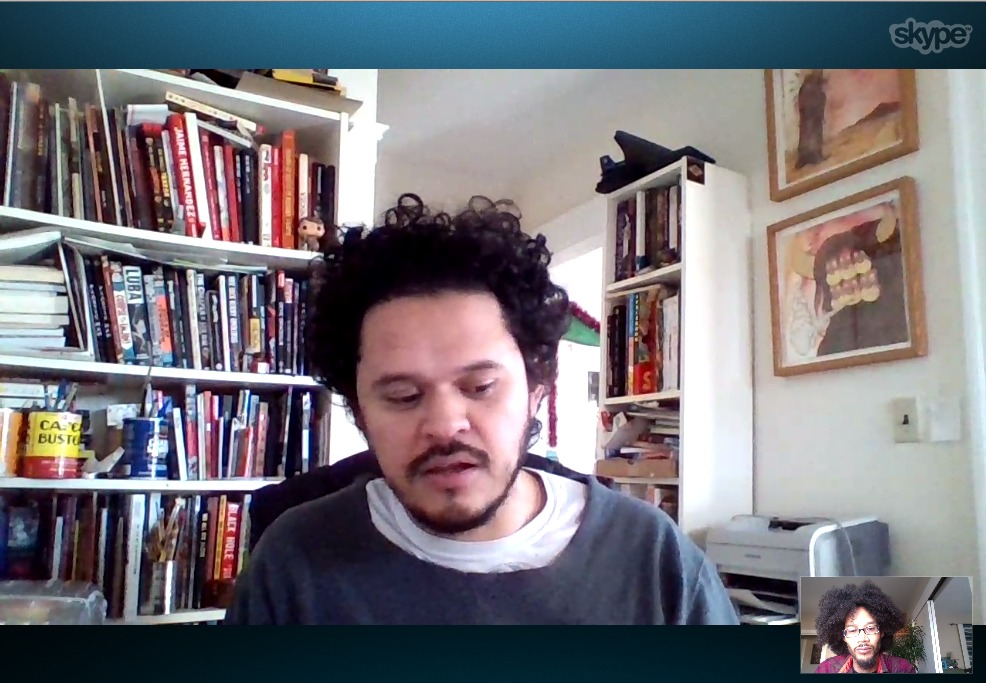
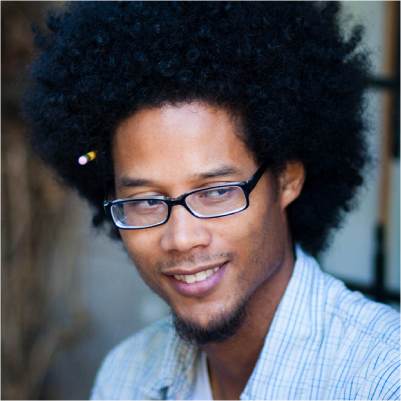
Raúl’s interviewer is Robert Trujillo, an up-and-coming illustrator based in California, who guest posted for Latin@s in Kid Lit in 2014. Instinct told us that Robert and Raúl would hit it off. How right we were! Today we’re offering Raúl and Robert’s Skyped conversation in audio format. It’s 32 minutes of lively repartee on becoming an artist, breaking into illustration, diversity in kid lit and much more– all laced with a zesty dose of Mexican American culture and comic-book geekiness. We’re betting you’ll find the chat engaging, revealing and funny.

(Teachers and parents, a small caution about some adult language.)

Some readers may not have access to audio playback, so we’re also posting a transcript of the conversation. Click here: Raúl Gonzalez Interview

Whether you listen or read, be sure to scroll down the length of this post for a FEAST of images related to the Q & A.


blackhole

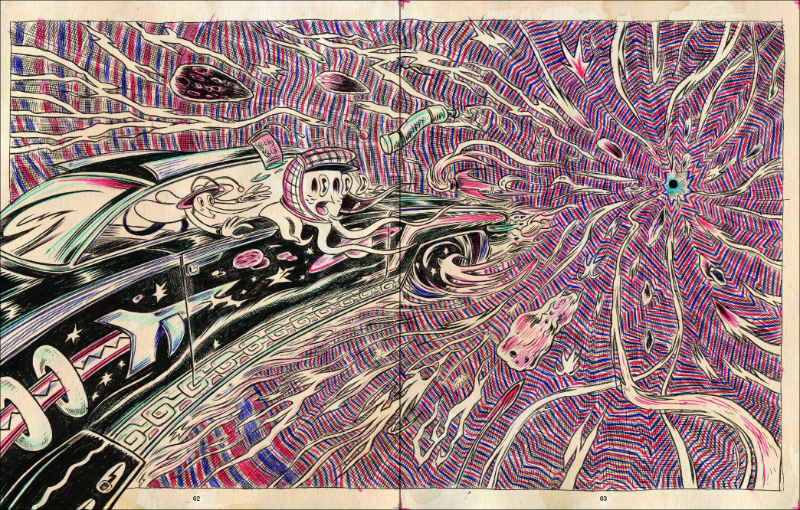
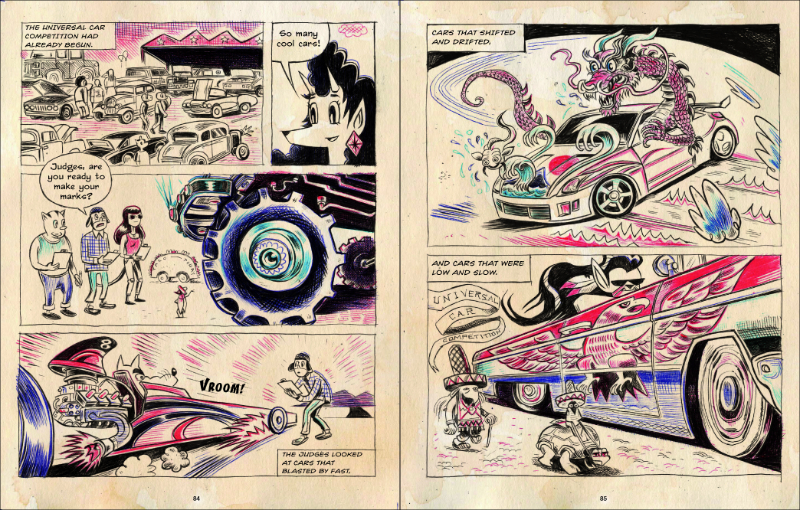
A spread in Lowriders in Space, penned in Bic ballpoints by Raúl Gonzalez


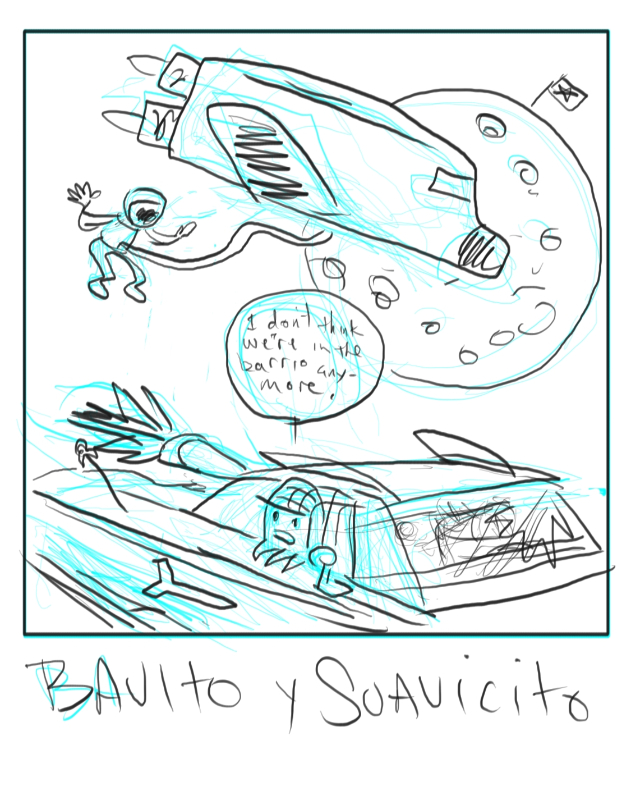
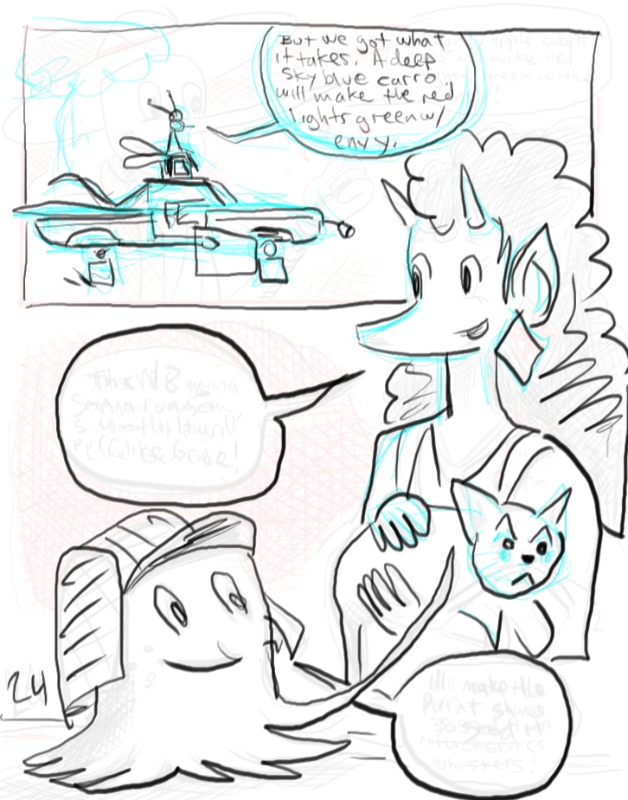
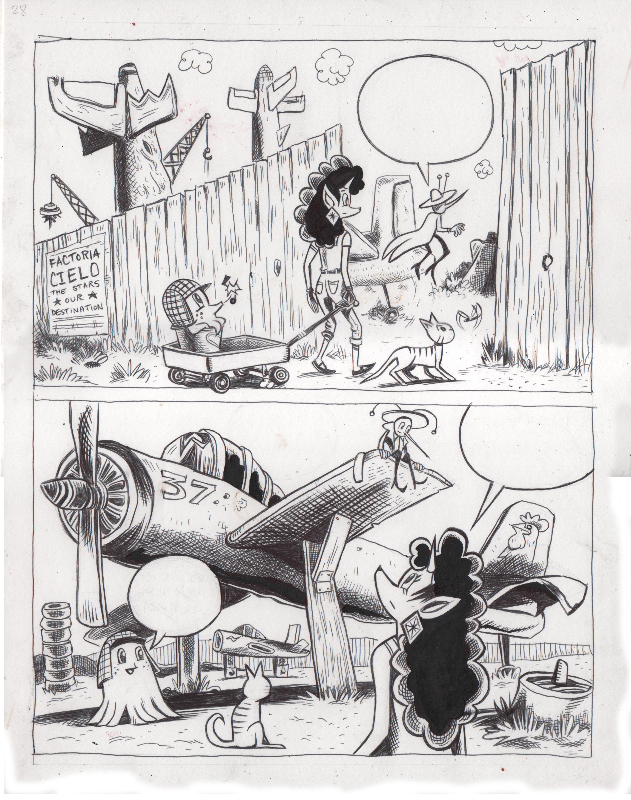
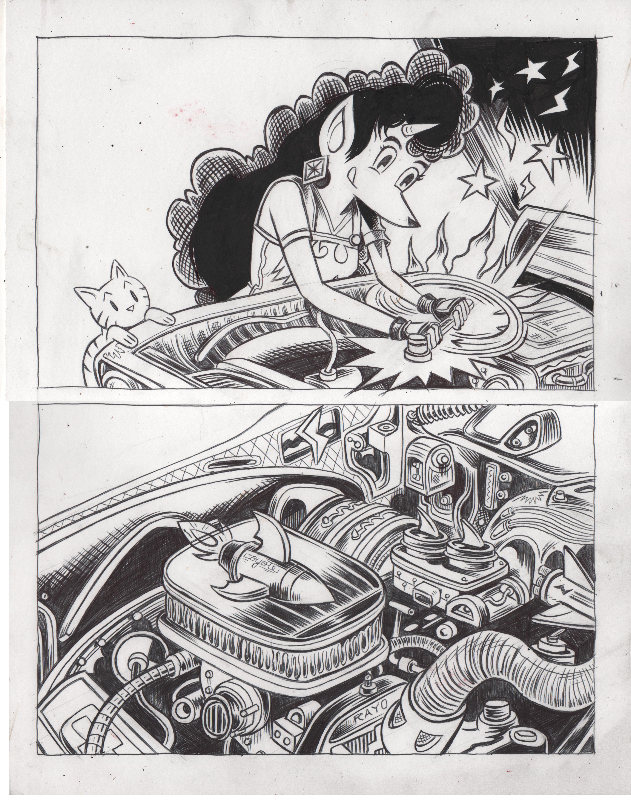
Throughout the interview, Raúl refers to sketches, thumbnails, and overlays that he created for Lowriders in Space. To enlarge the view, click on individual images.


page39 revisions     page24

page28      page32

low and slow

DSC01306

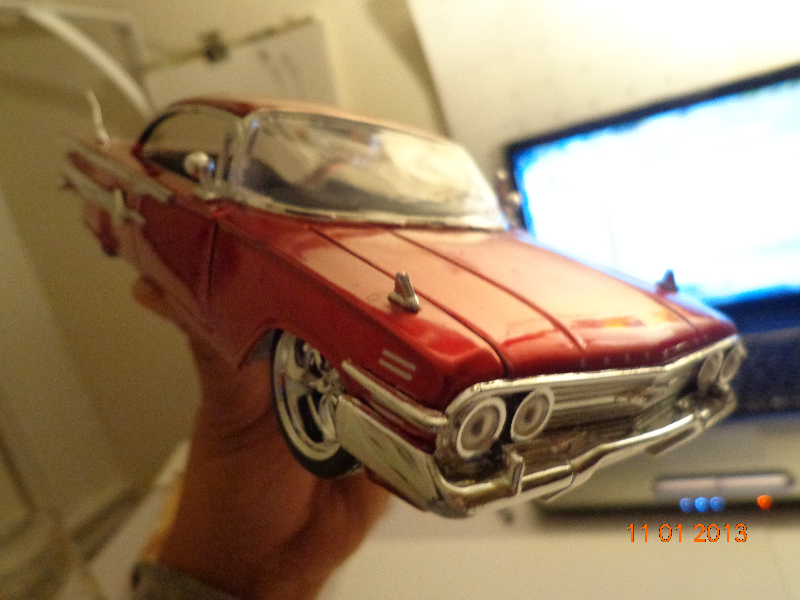
The die-cast Impala


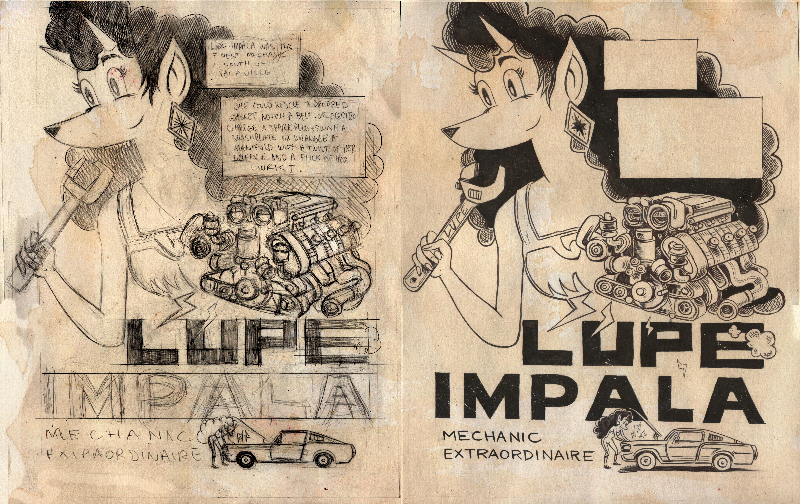
penicltoinks-lupe

Inking stage


More art by Raúl, the fine artist and muralist

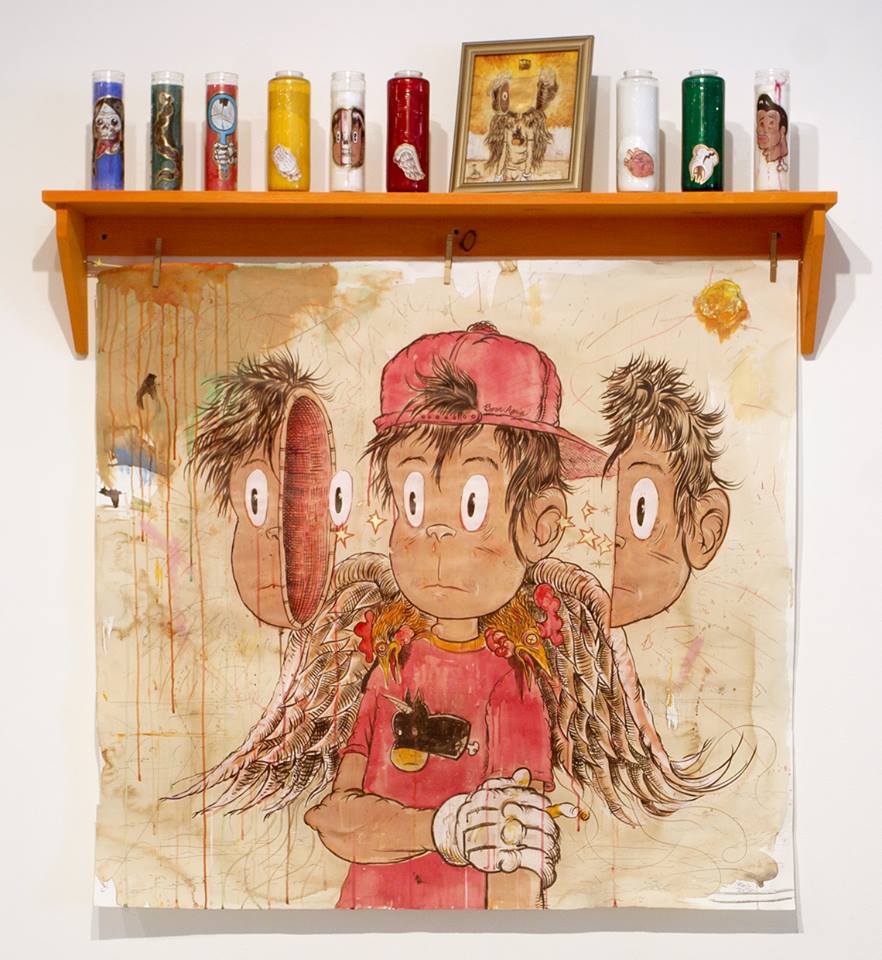
born again

Born Again, by Raúl


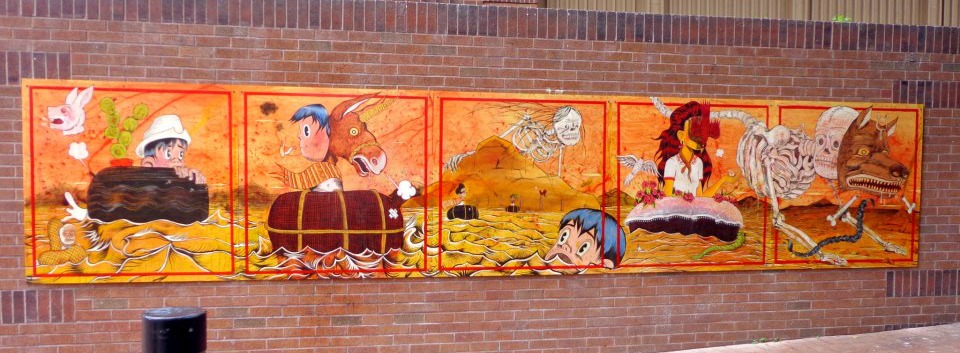
Tufts University

A mural by Raúl at Tufts University


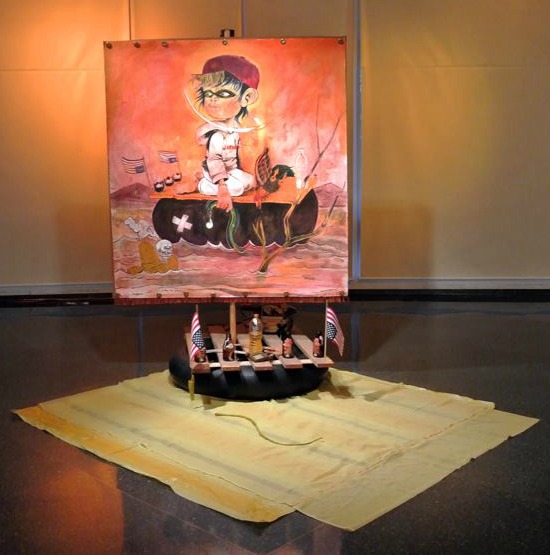
The Shape of Your Path crop

“The Shape of Your Path,” by Raúl


Photos of Raúl on book tour and at home

library crop

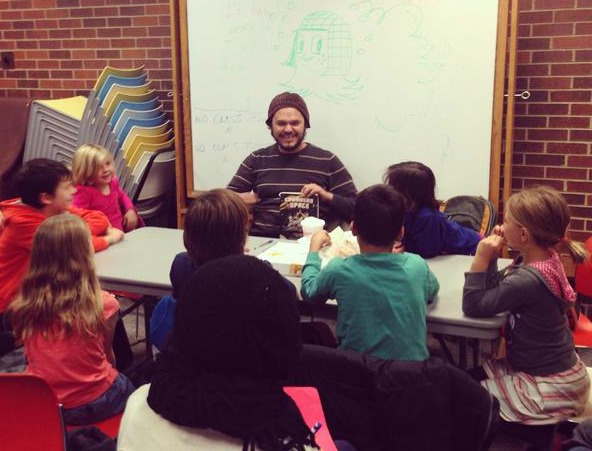
Raul at a library visit

family1

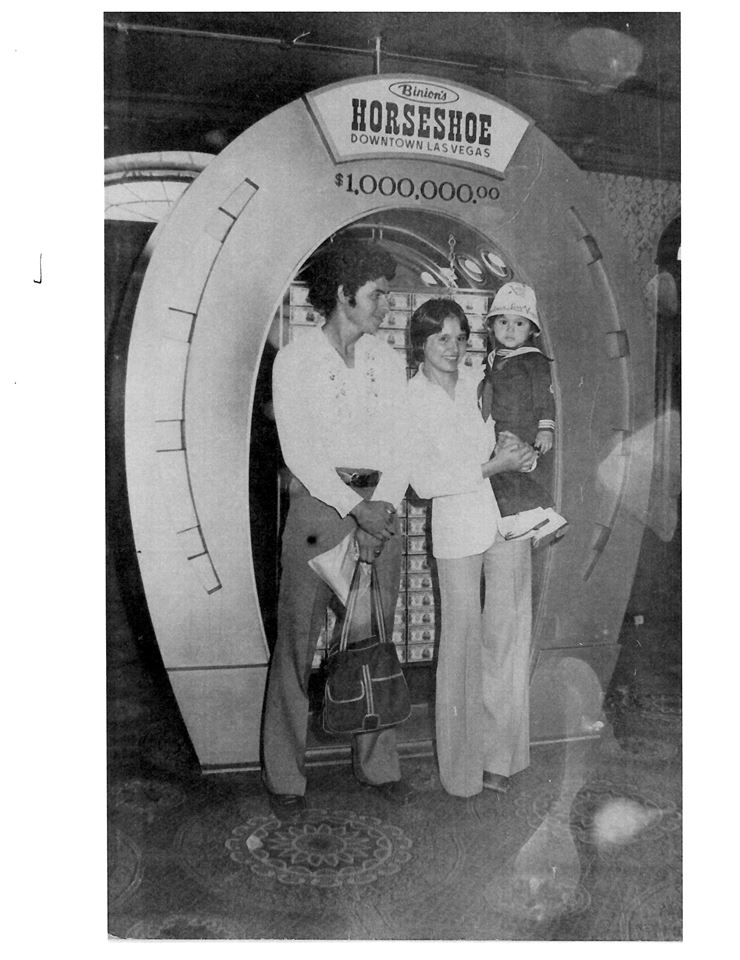
Raúl with his parents


family

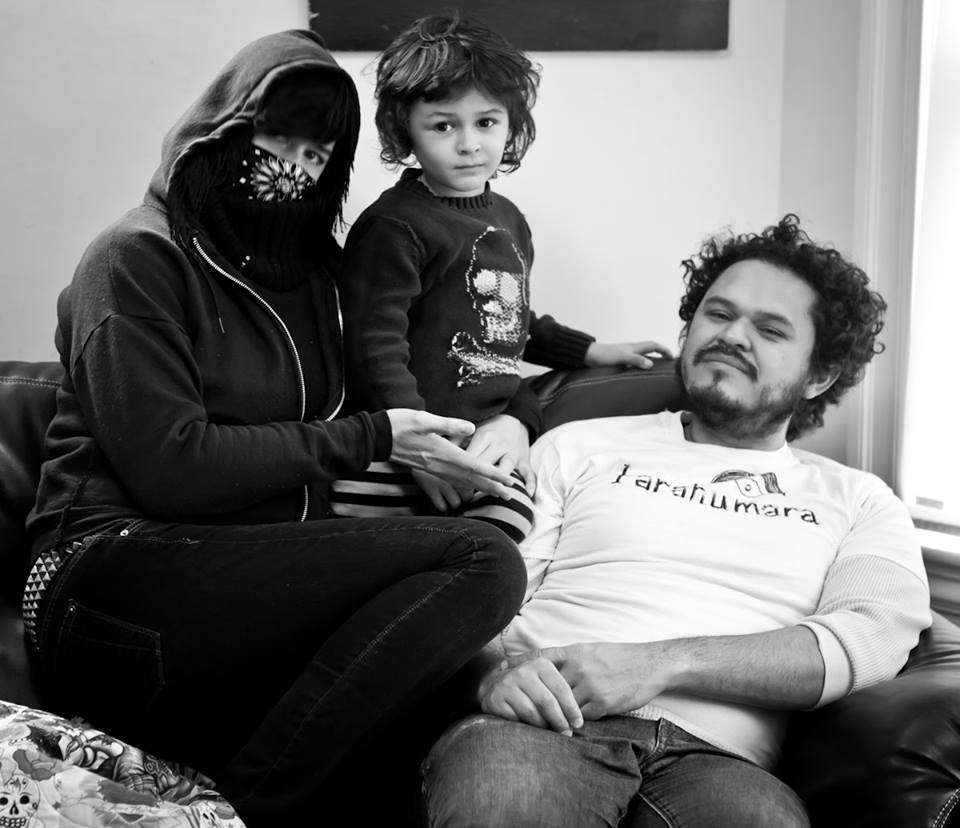
The artist and his family


The Thing cropped

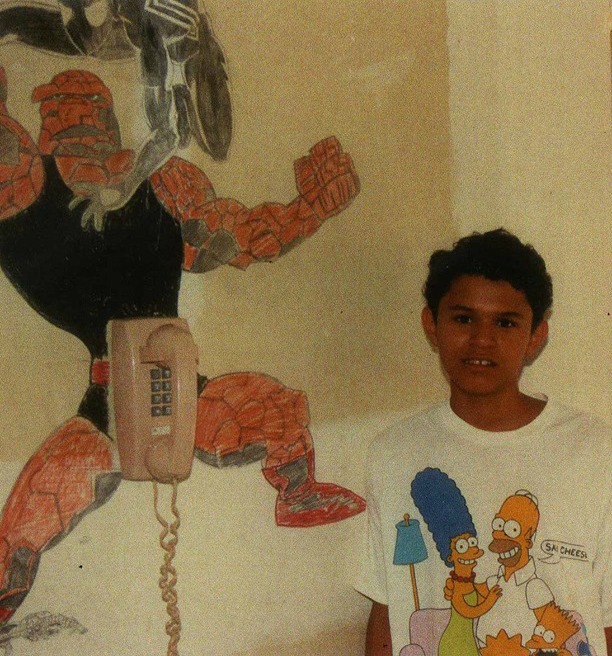
“The Thing,” an early comic creation by Raúl

Raúl and LRIS have been written up EVERYWHERE! Here’s a minuscule sampling of the coverage.

Kirkus–a starred review of Lowriders in Space

School Library Journal, a print interview with Raúl

The Nerdy Book Club, featuring the 2014 Nerdy Awards for Graphic Novels

The Boston Globe, an exhibit by Latino artists at the Fitchburg Art Museum


Visit Raúl’s website here. He’s also on Facebook and Twitter. And don’t miss the official trailer for Lowriders in Space!  It’s a co-creation by Raúl, his artist wife, Elaine Bay, and their young son.

Screen Shot Raul and Rob

Raúl, center; Robert, bottom right


A huge thanks to our interviewer, Robert Trujillo! We look forward to seeing his art in future publications, including his upcoming book with Arte Público.

photo1 Born and raised in the Bay Area, Robert Trujillo is a visual artist and father who employs illustration, storytelling, and public art to tell tales. These tales manifest in a variety of forms and they reflect the artist’s cultural background, dreams, and political / personal beliefs. He can be found online and on Twitter at @RobertTres.


Finally, a special thanks to our audio editor, Caitlin C. Weaver.