Book Review: Funny Bones: Posada and His Day of the Dead Calaveras by Duncan Tonatiuh

Reviewed by Cecilia Cackley

DESCRIPTION OF THE BOOK (from Goodreads): Funny Bones tells the story of how the amusing calaveras—skeletons performing various everyday or festive activities—came to be. They are the creation of Mexican artist José Guadalupe (Lupe) Posada (1852–1913). In a country that was not known for freedom of speech, he first drew political cartoons, much to the amusement of the local population but not the politicians. He continued to draw cartoons throughout much of his life, but he is best known today for his calavera drawings. They have become synonymous with Mexico’s Día de los Muertos (Day of the Dead) festival. Juxtaposing his own art with that of Lupe’s, author Duncan Tonatiuh brings to light the remarkable life and work of a man whose art is beloved by many but whose name has remained in obscurity.

MY TWO CENTS: I can’t say enough good things about this book! Tonatiuh tells Posada’s life story simply, while still giving background information on events such as the Mexican Revolution for context. The pages showing a breakdown of the three distinct artistic processes that Posada used (lithography, engraving and etching) are especially helpful in visualizing exactly how he created his drawings. Tonatiuh’s signature profile figures, inspired by Mixtec codex imagery, fit nicely alongside Posada’s black and white skeletons. The full page reproductions of famous skeleton art alongside a question about what message Posada was communicating with his art push readers to consider the goals of the artist. A detailed author’s note, glossary, and bibliography are essential for those looking for further information. This is a great read aloud for younger kids that still has enough detail and big ideas for older readers.

TEACHING TIPS: This is going to be a marvelous read aloud for both art teachers and classroom teachers. While many people will likely choose to highlight it during National Hispanic Heritage Month or around Dia de Muertos, it should also be a good fit for classes studying political cartoons or art history. Tonatiuh’s fantastic spread at the end of the book showing skeletons doing present day activities is a wonderful prompt for students to create their own calaveras artwork. As our world becomes more global and art and culture make their way across borders, this book provides an opportunity to discuss the importance of crediting artists and researching the history of particular art and cultural traditions.

ABOUT THE AUTHOR: Duncan was born in Mexico City and grew up in San Miguel de Allende. He graduated from Parsons The New School for Design and from Eugene Lang College in New York City in 2008. His work is inspired by Ancient Mexican art, particularly that of the Mixtec codex. His aim is to create images that honor the past, but that address contemporary issues that affect people of Mexican origin on both sides of the border. His book Pancho Rabbit and the Coyote: A Migrant’s Tale is the winner of the 2014 Tomás Rivera Mexican American children’s book award. It is also the first book to receive two honorable mentions, one for the illustrations and one for the text, from the Pura Belpré Award for a work that best portrays, affirms, and celebrates the Latino cultural experience in children’s books. The book was featured in USA Today, The Chicago Sun, The Houston Chronicle among other major publications because it deals with the controversial topic of immigration. His book Diego Rivera: His World and Ours won the 2012 Pura Belpré illustration award. It also won the 2012 Tomás Rivera. His first book Dear Primo: A Letter to My Cousin received an honorable mention from the Pura Belpré Award in 2011. It was named an Americas Award Commended Title and a Notable Book for a Global Society list.

LINKS:

SLJ Review

Kirkus Review

Publishers Weekly Review

Kirkus Prize Finalist Announcement

Google Hangout Video


Cackley_headshotCecilia Cackley is a performing artist and children’s bookseller based in Washington DC where she creates puppet theater for adults and teaches playwriting and creative drama to children. Her bilingual children’s plays have been produced by GALA Hispanic Theatre and her interests in bilingual education, literacy, and immigrant advocacy all tend to find their way into her theatrical work. You can find more of her work at www.witsendpuppets.com.

On Acting and Writing: a Q&A with Sonia Manzano


Becoming MariaBy Cecilia Cackley

Sonia Manzano’s new memoir Becoming Maria: Love and Chaos in the South Bronx was released in August. In it, Manzano tells the story of her childhood in the Bronx, high school at the LaGuardia School of the Performing Arts, her college years at Carnegie Mellon, and breakthrough performance in the Broadway musical Godspell. The book ends with Manzano’s successful audition for a new children’s television show called Sesame Street. I was able to interview Manzano during the 2015 National Book Festival in Washington, D.C.

Cecilia Cackley: Was there a library near your house growing up? What kinds of books did you read as a kid?

Sonia Manzano: There was no library close by my house. We had a library at my school, but we were not allowed to take the books home. Every week we would have a 40 minute ‘library period’ when we would read silently to ourselves. So each week I would mark my place with a scrap of paper and try to find it again the next time so I could finish the book. The book I remember most clearly was Fifteen by Beverly Cleary. I left the school before I could finish it, and although I kept looking for it, I didn’t find it again until I was 35, in a rural library in Pennsylvania!

CC: You’ve written both picture books and a YA novel. What do you think about the state of Latinxs in children’s literature right now?

SM: We have a lot of books with Latino-based stories…I don’t know why more people don’t know about them. I actually asked Pam Muñoz Ryan that recently and she said that while there are wonderful titles, such as El Bronx by Nicholasa Mohr, there aren’t a lot of long lasting titles that have become classics. Also, some elements of traditional Latino stories, like the Juan Bobo stories, play into stereotypes that publishers don’t like. Our culture is always in flux, and publishing houses can’t pin us down.

CC: Are there any recent Latinx books that you’ve read that you would recommend?

SM: I recently read Shadowshaper by Daniel José Older, which was wonderful and relates to the urban experience. I also read I Lived on Butterfly Hill, which was excellent.

CC: Part of Becoming Maria is about your experience as a student at Carnegie Mellon. What advice would you give to today’s students who are the first in their families to attend college?

SM: I would say that if at all possible, visit the college first. I wasn’t able to do that. It is a mind-expanding experience. Visiting will help it seem less strange when you get there.

CC: You’ve worked in theater, television, and now writing. Is there a connection for you between performing and writing?

SM: I think all art forms are connected in some way. I approach acting and writing very differently, though. The best acting is spontaneous, but when you write it is very examined.

CC: Now that you’re leaving Sesame Street, do you think you would do a theater show again?

SM: I would do it in a minute. But I hate auditioning. I would need a group to work with, someone with a vision. It’s hard as an actor because you need to be a vessel of someone else’s dream. But for me, for so long, I have been the character. I don’t know that I’d want to be someone else on stage.

CC: What if you were asked to do a one-woman show about your life?

SM: Yes, absolutely I’d do that.


Books for young readers by Sonia Manzano:

Becoming-Maria  Miracle-on-133rd-Street    no-dogs-allowed  


Cackley_headshotCecilia Cackley is a performing artist and children’s bookseller based in Washington DC where she creates puppet theater for adults and teaches playwriting and creative drama to children. Her bilingual children’s plays have been produced by GALA Hispanic Theatre and her interests in bilingual education, literacy, and immigrant advocacy all tend to find their way into her theatrical work. You can find more of her work at www.witsendpuppets.com.

Book Review: Francisco’s Kites by Alicia Z. Klepeis

25673458

Reviewed by Marianne Snow

DESCRIPTION OF THE BOOK (from Arte Público Press): Francisco looks out his bedroom window and thinks about his home back in El Salvador. He misses his friends and playing in the village’s park. He wants to fly a kite near his new home in the U.S., but his mother can’t afford one.

“If Mamá can’t buy me a kite, maybe I can make one,” he thinks. Picking up a bag, Francisco leaves the apartment in search of treasures that he can use for his project. He finds purple cellophane, a pile of string and a broken model airplane. In his apartment building’s recycling area, Francisco discovers other useful items that people have thrown away. He can’t wait to spread out all the goodies and start building his very own cometa!

Soon Francisco is testing his creation in Sunnydale Park. He makes it fly up and down, spin in the air, even make loops! The colorful toy catches the attention of a man who runs a recycled goods store. He wants to sell Francisco’s kites in his shop! But can Francisco really find enough material to make them? And will he be able to deliver them in time?

MY TWO CENTS: I love how Alicia Klepeis so deftly and unassumingly weaves together a variety of topics in this dual language book. With themes like homesickness, immigration, recycling, ingenuity, and family, Francisco’s Kites might easily become cluttered or scattered, but it’s not. Instead, it’s a simple story about a boy who creatively channels his past experiences – flying kites in his former home in El Salvador – to establish himself in windy Chicago, spend quality time with his mom, meet new people, and work on saving the earth. Readers will enjoy following the inventive Francisco, learning about kites, and maybe even picking up some information about Salvadoran food (pupusas – yum!). Meanwhile, Gary Undercuffler’s charmingly retro – but still fresh, clean, and colorful – illustrations add to the airy, buoyant tone of the book.

Another perk of this book is its message about recycling, which is delivered clearly without being heavy-handed. As they observe Francisco resourcefully collecting trash and other used objects to make kites, readers will learn about repurposing, a recycling strategy that anyone can try. These days, we know about the benefits of recycling, and no doubt children constantly hear about it at school. But many neighborhoods, towns, and even larger cities don’t have accessible, user-friendly services and resources like curbside pickup or community recycling bins. If kids don’t have access to these services at home, it’s important for them to learn about other options – like repurposing, which can provide them with fun, easy ways to help the earth and feel like they’re making a difference. When young readers pick up a book like Francisco’s Kites, who knows how they’ll be inspired?

TEACHING TIPS: Teachers who want to foster their students’ interests in recycling can use Francisco’s Kites as a platform for a hands-on, interdisciplinary learning unit. In addition to this book, teachers can share other texts about recycling of various genres and formats (non-fiction, poetry, news articles, videos), and students can discuss how repurposing used materials can not only prevent waste from piling up in landfills, but also help people save money as they reuse instead of buying new. Next comes collecting used materials – either at home or at school – and turning them into some kind of magnificent art project.

ABOUT THE AUTHOR (from her website): I arrived on this planet on a fall day in 1971. My mom delivered me at a big hospital in Boston, Massachusetts. She stayed home with me until I went to school. My dad was a 5th and 6th grade teacher. I spent my entire childhood in Woburn, Massachusetts on a quiet dead-end road. An only child, I was somewhat of a bookworm. I was always a bit nervous about school and spent a lot of my time doing homework until I graduated from college.

Right after I finished college, I got an internship at the National Geographic Society in Washington, D.C. I loved that job for many reasons. The work was interesting, I got to go to great films and concerts nearly every week and… I met my husband (a fellow intern) there. We’ve been married nearly 20 years now. When my internship ended, I started graduate school to become a teacher. I taught middle school geography for several years in Massachusetts. Then I moved to upstate New York and stayed home with my three children for about ten years before becoming a writer. I now write almost full-time for kids and plan to do that for as long as possible. I love this job!

FOR MORE INFORMATION about Francisco’s Kites, check your local public library, your local bookstore or IndieBound. Also, check out GoodreadsAmazon, and Barnes & Noble.


MarianneMarianne Snow is a doctoral student at the University of Georgia, where she researches Latin@ picture books, representations of Latin@ people in nonfiction children’s texts, and library services for Spanish-speaking children and families. Before moving to Georgia, she taught Pre-K and Kindergarten in her home state of Texas and got her master’s degree in Teaching English to Speakers of Other Languages (TESOL) at Texas A&M University. In her spare time, she enjoys obnoxiously pining for Texas, exploring Georgia, re-learning Spanish, and blogging at Critical Children’s Lit.

“I’m okay”: Resilience & Depression in Cindy L. Rodriguez’s When Reason Breaks

By Sonia Alejandra Rodriguez

I’m guilty of always saying “I’m okay,” even when I know I am not. Often times, it seems easier to lie than to explain the depths of what hurts. It also seems more appropriate to suck it up than to admit I’m not as strong as I appear. Saying “I’m okay” when I am not is also a way to mask the shame I feel for feeling depressed when I know others have it worse. As Cindy L. Rodriguez explains in her blog post, “Depression in YA and the Latin@ Community,” depression is often associated with trauma and feeling depressed because you’re simply depressed rarely seems like a good enough reason. While causes and effects of depression vary tremendously, I have found that the stereotypes about depression are consistent. The stigma alone associated with depression has made it difficult for folks to speak openly about the issue. Because of this I wasn’t surprised that depression, including suicide attempts and suicide, isn’t a topic that is directly addressed in Latina/o children’s literature.

Tommy Stands AloneThe first book I encountered where a Latino character attempted suicide was Gloria Velasquez’s Tommy Stands Alone (1995). Tommy struggles with coming out as gay because his family and friends are not supportive, and in a moment of desperation, he overdoses on pills and alcohol. At the same time that I came across Velasquez’s book, I was also reading media articles about Dr. Luis H. Zayas’s research on Latina teen suicide attempts which connected suicide attempts to difficulties assimilating to dominant American society. In their March 2010 issue, Latina Magazine published an article that presented Zayas’s findings and discussed the ways in which Latina teens have a more difficult time assimilating because of their immigrant parents’ traditional values. While at the time I found the article to be important and informative, I was very hesitant about placing the blame for suicide attempts on the parents. Zayas has made it clear that there are various reasons why Latina teens attempt suicide and that his specific research has shown that one of the reasons is the tension between the two cultures.

What I feel is missing from an understanding of Latina/o teen suicide attempts and suicide rates is a discussion of how racism and other histories of oppression have made it difficult for these young teens to stay alive. In other words, while parents and families can certainly be a factor in one’s depression, I am weary of saying that Latino youth are depressed and/or attempting suicide because of their families. In this light, depression becomes racialized and parents become a source of otherness. In reading Velasquez’s young adult novel and Zayas’s research, I became interested in the ways that depression is understood as an individual problem rather than addressed as a community issue. Understanding depression as a personal problem also questions one’s resilience; furthermore, one’s ability to overcome depression becomes a signifier for their value.

I was definitely excited to learn that Cindy L. Rodriguez’s debut young adult novel, When Reason Breaks, addresses issues of depression and suicide attempts. Rodriguez’s novel adds to a much needed discussion on depression and Latina/o children’s literature. There are certainly various aspects of the novel to love, but I found the ambiguity of which character attempts suicide to be the most intriguing. When Reason Breaks (2015) tells the story of the uncanny connection between two seemingly different teenage girls. Elizabeth Davis develops a gothic like edge after her parent’s separation. Her new attitude often puts her at odds with her mother, teachers, and peers. Emily Delgado hangs out with the popular crowd, her teachers like her, and her family is well off. Her anxiety, however, gets the best of her and she begins to retreat from those around her. Elizabeth and Emily are forced to engage one another when Ms. Diaz pairs them up for an English project on Emily Dickinson. As the novel develops, Ms. Diaz begins to receive letters from a student describing feelings of depression and uncertainty until she finally receives a suicide note.

Elizabeth’s and Emily’s characters are an opportunity to discuss stereotypes associated with depression. The assumption is that Elizabeth is the one that attempts suicide because she has something to be depressed about—her parent’s divorce. At first, this traumatic event makes those around her sympathetic to her situation. Over time, though, people begin to lose patience with her, which is apparent by how often her mother scolds her and how frequently she’s sent to visit the school counselor. Elizabeth is an excellent example of what I mean by a person’s ability to overcome depression can determine their value. Because it appears that Elizabeth is not getting any better with time, those around her begin to read her as “troubled” and more likely to be trouble. Her behavior is policed and what could be read as typical teenage behavior, such as challenging authority and talking back, are sources for dismissal and punishment. While it’s obvious that Ms. Diaz is a concerned teacher, she, nonetheless, polices Elizabeth’s behavior based on the assumptions that the school counselor has made about Elizabeth and her depression. These assumptions made it difficult to see that it was another student that was really the one in danger. In contrast, Emily gets overlooked because she does not publicly exhibit signs of depression nor does she have a valid enough reason to be depressed. No one questions Emily’s mental health when she begins to pull away from those around her or when she misses homework assignments. Instead, her friends make light of the pressure she feels from her father to perform a certain level of Latino conservatism to protect his political career. That pressure is not recognized as a valid enough reason to feel depressed, much less a reason to attempt suicide. It is Emily’s resilience, however, that allows her to hide her depression and go unnoticed.

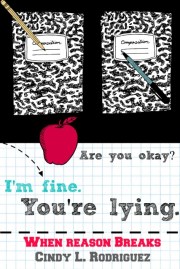
You're Lying graphicI read Emily’s resilience as being motivated not necessarily by her desire to overcome depression but her desire to hide it. Her father’s political position is certainly a main reason why she needs to keep it together, but it is also her mother’s silence that makes it difficult for Emily to express her own feelings. Emily’s performance of resilience is a strategy that I believe many people dealing with depression employ—especially if what makes one depressed is not recognized as a worthy reason for being depressed in the first place. Resilience serves as a way for Emily to protect herself from being ostracized the way that Elizabeth is because of depression. Emily expresses concern that if she were to divulge that she struggles with depression that too many people will get involved and ask too many questions. Because of this it is easier to simply say “I’m okay.” This resilience, however, almost costs Emily her life.

When Reason Breaks further presents the opportunity to discuss the impact depression has on families and communities. Ms. Diaz reveals that she, too, struggled with a traumatic situation. At the end of the novel, even Elizabeth’s mom opens up about her feelings and is able to reconcile with her daughter. Furthermore, the novel reveals that it takes a community to support someone with depression on their journey toward healing. Addressing depression as a community breaks the silence on this issue and expands notions of what depression is, what it looks like, who gets it, and what can be done about it. Elizabeth and Emily’s struggle with depression also demonstrates that it is likely that there are others close to them that may also be dealing with depression. Even though Emily’s mother is not a major character in the novel, there are specific moments where her behavior and silences suggest that she also struggles with her emotions. Novels like When Reason Breaks demonstrate the importance of generating dialogues in our communities about depression and the various ways that depression affects us all.


headshotSonia Alejandra Rodríguez has been an avid reader since childhood. Her literary world was first transformed when she read Rudolfo Anaya’s Bless Me, Última as a high school student and then again as a college freshman when she was given a copy of Sandra Cisneros’s The House on Mango Street. Sonia’s academic life and activism are committed to making diverse literature available to children and youth of color. Sonia received her B.A. in English from the University of Illinois at Urbana-Champaign. She is currently a PhD candidate at the University of California, Riverside, where she focuses her dissertation on healing processes in Latina/o Children’s and Young Adult Literature.

Cincos Puntos Press: Publishing Diverse Titles for 30 Years

By Patrick Flores-Scott

Cinco Puntos Press - WikipediaThe El Paso, Texas publisher, Cinco Puntos Press, has been on my radar ever since my mother-in-law—who lives in Las Cruces, New Mexico, an hour away from the Cinco Puntos Press offices—handed me a copy of Benjamin Alire Saenz’s YA novel, Sammy and Juliana in Hollywood. I fell in love with that book and went on to read Saenz’s follow-up, Last Night I Sang to the Monster. Now my wife and I regularly read Cynthia Weill’s Opuestos and AbeCedario to our toddler and Saenz’s A Gift from Papá Diego is our older son’s current go-to bedtime picture book. (Full disclosure: I cry real tears every time Papá Diego shows up to the party.)

Isabel Quintero’s Gabi, a Girl in Pieces was one of 2014’s most lauded books, winning the Morris Award, and showing up on book of the year lists put out by Kirkus, Booklist and The School Library Journal.

All these great Cinco Puntos titles beg the question: What is going on in El Paso?

Bobby and Lee Byrd, both writers, founded Cinco Puntos Press in El Paso, Texas thirty years ago. In a phone conversation, CEO John Byrd explained that, “When my parents moved here they sought out folks who were making art. In El Paso, that means Latino artists and folks writing about the Latino experience. We publish the kind of books we publish because we’re in El Paso. Our mission to do this kind of work was a natural outgrowth of where we were.”

Byrd lists El Paso as a strength for Cinco Puntos because it gives the publisher a unique perspective on life and art. He noted that New York publishers are all bound by the confines of Manhattan. “That’s why so much of what they do seems so similar. Being in El Paso, we don’t hear all that industry noise. We can develop our own unique perspective on publishing.”

A critical factor in Cinco Puntos’ growth has been their relationship with indie distributor Consortium, Book Sales and Distribution. “When we first started with Consortium, the industry had made it clear that books by Hispanic authors couldn’t sell through mainstream channels. Consortium helped change that. They successfully place a lot of stuff that really pushes the boundaries and we’re proud to have our books sold alongside others that are distributed by Consortium.”

I asked Byrd about the relationship between independent publishers and the We Need Diverse Books campaign. He noted that about half of the books (according to the most recent Multicultural Literature Statistics from the Cooperative Children’s Book Center) listed as “multicultural” were published by independent presses.

“It’s hard to find anyone who disagrees with the aims of We Need Diverse Bookseven traditional publishers all agree. Still, New York houses just aren’t publishing those books. We Need Diverse Books is crucial, but energy focused on changing New York is misplaced.” Real change, Byrd insists, will come when we support and grow the diverse publishers, small publishers, independent publishers who are already doing the work of producing great “diverse books” by and about traditionally underrepresented voices.

Check out just of few of the notable Cinco Puntos Press titles below, and while you’re at it, grab some coffee and “Pan Dulce” with founder, Lee Byrd, as she interviews Cinco Puntos authors at the publisher’s YouTube channel .

Picture Books:


Little Chanclas by José Lozano

Walking Home to Rosie Lee by A. LaFaye, illustrated by Keith D. Shepherd

Don’t Say a Word, Mamá by Joe Hays, illustrated by Esau Andrade Valencia

Middle Grade:


Maximilian and The Mystery of the Guardian Angel by Xavier Garza

Maximilian and the Bingo Rematch by Xavier Garza

Remember Dippy by Shirley Reva Vernick

Teen:


This Thing Called the Future by J. L. Powers

The Blood Lie by Shirley Reva Vernick

The Smell of Old Lady Perfune by Claudia Guadalupe Martinez

Last Night I Sang to the Monster by Benjamin Alire Saenz

Gabi, a Girl in Pieces by Isabel Quintero

Graphic Novel/Poetry-Photography:

Mr. Mendoza’s Paintbrush by Luis Alberto Urrea, illustrated by Christopher Cardinale

Vatos by Luis Alberto Urrea, Photographs by Jose Galvez

.

.

PatrickFS1Patrick Flores-Scott was, until recently, a long-time public school teacher in Seattle, Washington. He’s now a stay-at-home dad and early morning writer in Ann Arbor, Michigan. Patrick’s first novel, Jumped In, has been named to a YALSA 2014 Best Fiction for Young Adults book, an NCSS/CBC Notable Book for the Social Studies and a Bank Street College Best Book of 2014. He is currently working on his second book, American Road Trip

Latin@s in Kid Lit at the Library: Interview with Angie Manfredi

By Sujei Lugo 

The Latin@s in Kid Lit at the Library series focuses on interviews with children’s librarians, youth services librarians, and school librarians, where they share their experiences, knowledge, and challenges using Latino children’s literature in their libraries. In this third installment of this series, I interview a great supporter of diverse books and an awesome booktalker, Angie Manfredi.

Angie ManfrediAngie Manfredi blogs at www.fatgirlreading.com and tweets constantly as @misskubelik. She is currently serving on the Stonewall Awards Committee. She has presented nationally on library issues from diversity to building teen services. She still can’t believe they pay her to be a librarian.

Talk a little bit about yourself and your library.
I am a born and raised New Mexican and proud of it. I am ethnically Italian, but my maternal great-mother was Latina and my maternal grandmother never let me forget it, “You’re not ALL Italian, after all.”

I’m Head of Youth Services at the Los Alamos County Library System in New Mexico. My library serves a large international population but, like most of New Mexico, also serves a Hispanic community. I work with ages 0-18 and can’t ever pick a favorite demographic.

What are your library’s selection and acquisition processes regarding Latino children’s books? Do you have any input in these processes?
Yes, as the Head of Youth Services, I am the final selector. I make sure to read widely from a variety of sources, both online and in print (For example, I love and use this blog). I ask my professional learning network on Twitter, publishers and small and regional publishers as well. University of New Mexico Press has some great regional titles like The Eyes of the Weaver/Los Ojos del Tejedor by Cristina Ortega, about the weaving tradition in the local Chimayó Valley and Amadito and the Hero Children/Amadito y los Niños Héroes by Enrique R. Lamadrid, about a flu epidemic and a pioneering New Mexican physician. These are local and bilingual titles a major publisher might never carry but are relevant to our region and our community. (I really recommend UNM Press. Check them out!)

What types of children and youth programming does your library offer using Latino children’s literature?
Nothing regularly, but we make an effort to include Latino children’s books in our storytimes, displays, and recommended book lists, so that they are a fully integrated part of our library services. We also create displays and booklists for National Hispanic Heritage Month.

Can you talk about community outreach and promoting library events?
I’ve been in this position almost eight years, so I’m lucky I’ve met lots of people! That’s a big part of what we do, I try to get my face out there. We have booths at community events, I contact school librarians with info about programs, and I’ve connected with our community educators group. If people know you’re willing to collaborate or help, even on a low level (making a booklist for an event even if you can’t attend), they are more likely to think of you or ask you.

What is the reaction of kids, teens, and families regarding Latino children’s books?
I’m lucky, everyone is receptive. That’s one of the best parts of living in New Mexico, though the Latino/a experience and the New Mexican experience are often so closely intertwined.

I love when parents and grandparents ask for books in Spanish or I get to show them our Spanish-language collection and they marvel at how many we have. Besides the books in English with Latino/a characters, we have everything from pictures to The Hunger Games in Spanish. They all circulate, which the entire staff takes pride in. We are always looking for more materials!

Any challenges regarding the acquisition of Latino children’s books or programming? What programs would you like to offer?
We’ve worked hard to refresh the Spanish-language collection with new materials. I found some motivated parent volunteers (that’s why we get out and mingle with patrons!) and they helped with the selection.

I’d love to have a Spanish-language storytime at least once a month. We had one when I first started, but our volunteer that was doing it got a full-time job. I’m definitely still interested in that. After our success participating in the African American Read-In, I also plan to expand our National Hispanic Heritage Month programming this year to have a read-in and a week full of themed storytimes. I’m excited about that.

Do you address issues of prejudice, oppression and inaccuracy in your library and in children’s books?
I hope I have weeded most of the books with inaccurate and outdated information. But I try, instead, to guide patrons to the books with positive and accurate portrayals. I say: “I really love this one!” or “This one really gets it right!” or “This one won an award, let me tell you about it!” That’s the kind of situation when patrons can really benefit from our guidance and enthusiasm, so it’s on us to be informed and proactive about the promotion.

Any advice for other librarians and educators who would like to use and incorporate Latino children’s literature into their programming?
Do it! If you feel unsure about where to start, dig into the Pura Belpré Award, the Tomás Rivera Award, and the Américas Award winners to give you a good start. Find one or two books you feel confident booktalking or reading in storytime and build from there, integrating those titles into your repertoire. There are families and kids in your community who will see themselves in these stories, and their cousins, and grandmothers, and friends.

Which are the most popular Latino children’s books in your library?
Our patrons love text where the Spanish is integrated through the text, so some favorite picture books are anything by Pat Mora and Yuyi Morales. Pam Muñoz Ryan is one of our most popular middle grade authors, Esperanza Rising is often assigned in schools and kids genuinely love it. The Tía Lola stories by Julia Alvarez are popular here too. Yaqui Delgado Wants to Kick Your Ass by Meg Medina was a very popular book here. And, of course, I can’t keep Gabi: A Girl in Pieces by Isabel Quintero on the shelf.

And finally, which Latino children’s books do you recommend?

    
I love everything by Duncan Tonatiuh. I can’t wait to see what Guadalupe García McCall writes next. I think every middle schooler should be required to read The Revolution of Evelyn Serrano by Sonia Manzano. It’s an amazing book about finding who YOU are and what YOU will stand for. Similarly, Grandma’s Gift by Eric Velásquez made me cry the first time I read it and I think elementary school kids should all be taught it. It does a great job discussing how having someone support your dreams can change you and so can seeing someone who looks like you in art and media.

Oh, and Bless Me Última by Rudolfo Anaya. A required high school read for me and for thousands of other New Mexican students over the years. It helped me see that everyone has a story and it’s OUR job to listen.