
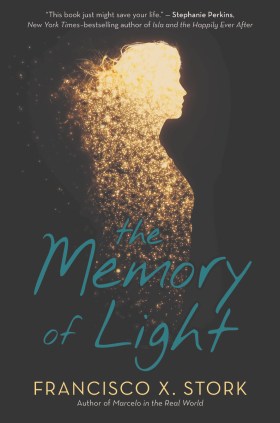
Reviewed by Lila Quintero Weaver
This book talk is based on an uncorrected advance copy.
FROM THE PUBLISHER: School: failure. Romance: failure. Family: failure. Suicide: failure. There’s only one thing left to try: living.
When Vicky Cruz wakes up in the Lakeview Hospital psychiatric ward, she knows one thing: She can’t even commit suicide right. But there she meets Mona, the live wire; Gabriel, the saint; E.M., always angry; and Dr. Desai, a quiet force. With stories and honesty, kindness and hard work, they push her to reconsider her life before Lakeview, and offer her acceptance she’s never had.
Yet Vicky’s newfound peace is as fragile as the roses that grow around the hospital. And when a crisis forces the group to split up—sending her back to the life that drove her to suicide—Vicky must find her own courage and strength. She may not have any. She doesn’t know.
Inspired in part by the author’s own experiences with depression, The Memory of Light is the rare young adult novel that focuses not on the events leading up to a suicide attempt, but the recovery from one—about living when life doesn’t seem worth it, and how we go on anyway.
MY TWO CENTS: Another fifteen minutes and the pills would’ve done their work, extinguishing all the bright, unrealized promise of 16-year-old Vicky Cruz’s life. Luckily, someone finds her in time. When she wakes up in the psychiatric unit of Lakeview Hospital, in Austin, Texas, her stomach has been pumped, and the first voice she hears belongs to Dr. Desai, a therapist whose guidance and fierce advocacy serve to pull Vicky away from the brink.
At Lakeview, Dr. Desai oversees the treatment of teens hospitalized with serious mental-health issues. Vicky becomes intimately acquainted with three fellow patients, who play integral roles in her healing journey and offer compelling stories of their own:
E.M. came to Lakeview after one of his violent outbursts resulted in court-mandated treatment.
Mona wrestles with bipolar disorder, which was recently compounded by trauma at home. Child Protective Services removed her little sister from the custody of their mom and stepdad.
Gabriel is a young mystic who initially withholds the exact nature of his mental illness from the others in the group. In Vicky’s eyes, he’s a tender soul who moves in and out of functionality.
Lakeview is the primary setting for much of the novel, but some scenes unfold during off-site excursions, including a stay at Dr. Desai’s working ranch, where the patients perform minor farm chores, and go on a wild-river adventure that nearly leads to tragedy but ultimately opens new avenues for transformation. And there are more wild rides as two of the characters plunge into distressing setbacks. Despite her own shaky condition, Vicky responds to others with empathy, leading her to find greater definition in her own life’s purpose.
Vicky’s road to recovery is far from smooth. Shortly after surviving “the deed,” as she calls her suicide attempt, she’s hard pressed to pinpoint what’s so unbearable about her life. But she’s certain she’ll try to escape it again. Strong clues lie in the hollowness of her family relationships. Her mother died of cancer six years before, and less than one year later, her father remarried. Throughout her mother’s illness and even after her passing, Vicky’s father and her older sister, Becca, detached themselves from the trauma. By contrast, Vicky was the sensitive and attentive child who felt her mother’s absence keenly. Afterwards, it was Juanita, the family housekeeper, who served as Vicky’s truest human connection. Unfortunately, Juanita’s arthritis is too disabling for her to continue working and she plans to return to her native Mexico.
Once Vicky leaves the chilly environment of home and enters the warmer climate of the treatment unit, she begins to entertain the idea that life may be worth living. After consulting with an outside therapist, Vicky’s father and stepmother try to convince her to return home and resume normal activities, including school—the general idea being to jump back on the horse after a fall. Vicky’s instinct tells her this won’t work. For one thing, “our house is not a good place to figure things out,” she realizes. Bit by bit, through flashbacks and in conversations in Dr. Desai’s office and with her new friends, we see that Vicky’s family may be well off, but it isn’t well. For example, whether born obtuse or blinded by unresolved grief, Mr. Cruz uses words as bludgeons, and for Vicky, these words and the attitudes behind them strip her of the sense that she is lovable.
Francisco Stork brilliantly depicts the intangibles of interior life, an ability that he ably demonstrated in his 2009 YA novel, Marcelo in the Real World. In The Memory of Light, Stork summons these powers to communicate the nature of depression. Here’s how Vicky tries to explain its mysterious operations to herself: “I imagine a whole bunch of little minerlike elves who live and work inside the dark tunnels of my brain. They wear flashlight hats of different colors and push clanging carts full of words on steel rails from one corner of my mind to another.”
Vicky experiences small, but important epiphanies during her hospital stay. In a particularly shining scene, Dr. Desai shares approaches to unlocking the vicious circle of obsessive thoughts. One of the nuggets from this conversation is a fable from Dr. Desai’s native India that illuminates the self-defeating nature of holding on to such thoughts.
All of the teen characters and many of the adults in this novel are Latin@s, representing a full range of personalities, social and economic classes, and occupations. The Cruz family belongs to the wealthy sector of Austin. Vicky, who attends an exclusive private school, is markedly aware of her privileged status—and of the fact that it doesn’t shield her from mental illness. Her exposure to the less-privileged lives of her new friends alerts her to her father’s snobbish attitude toward working-class Latin@s. She sees the hypocrisy, too. His own grandfather arrived in the United States from Mexico without a penny.
The Memory of Light is a compelling view of teens in crisis. It points the way toward life beyond depression, yet steers clear of romanticizing serious mental illness. Although it’s primarily Vicky Cruz’s story of dealing with suicidal depression and the agony of living in a family broken by loss and dysfunction, the intertwining narratives of the other young characters charge the novel with extra vitality and shed light on the many faces of mental illness.
TEACHING RESOURCES: Don’t miss Cindy L. Rodriguez’s timely reflections on how depression is viewed in the Latino community. Her article includes a list of YA novels featuring Latin@ characters wrestling with mental illness.
On his website, Francisco Stork features two blog posts related to the topic of depression and the writing of The Memory of Light. See them here and here.
In this article, a school psychologist offers tips for teachers on classroom strategies to help depressed students.
 ABOUT THE AUTHOR: Francisco X. Stork is a Mexican-born author of six novels for young people. Among these is the multiple award-winner Marcelo in the Real World. A graduate of Harvard University and Columbia Law School, he spent much of his law career working in the field of affordable housing. Learn more about Francisco and his books at his official author site.
 Lila Quintero Weaver is the author-illustrator of Darkroom: A Memoir in Black & White. She was born in Buenos Aires, Argentina. Darkroom recounts her family’s immigrant experience in small-town Alabama during the tumultuous 1960s. It is her first major publication. Lila is a graduate of the University of Alabama. She and her husband, Paul, are the parents of three grown children. She can also be found on her own website, Facebook, Twitter and Goodreads.











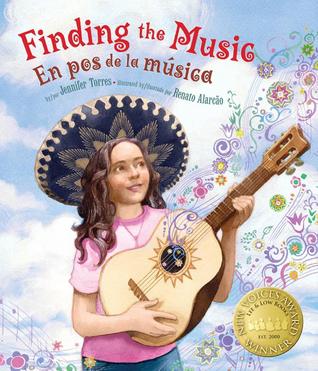 Finding the Music/En Pos de la Música by Jennifer Torres & Renato Alarcão. Before Reyna was born, her abuelito played in a mariachi band. His specialty was the vihuela, a small guitar-like instrument that has since fallen into disrepair. Reyna takes up the quest to get the repairs made. The vihuela becomes a powerful artifact that jump-starts the memory of the past, the important history of the community that tends to be invisible but is so essential to understanding the present. Here’s
  Growing Up Pedro: How the Martinez Brothers Made It From the Dominican Republic All the Way to the Major Leagues by Matt Tavares. Dominican baseball star Pedro Martinez, who helped lead the Boston Red Sox to a World Series win, got his start with plenty of help from his big brother Ramón. This is a story of brotherhood and of dreaming big and achieving bigger, powerfully illustrated by the author. Here’s
 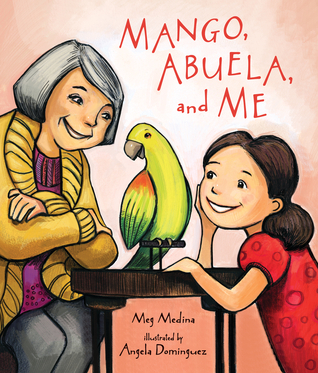 Mango, Abuela, and Me by Meg Medina & Angela Dominguez. Can a grandmother and granddaughter develop a close relationship when one speaks Spanish and the other speaks English? Of course! In Meg Medina’s warm tale of love, patience, and language, Mia and her abuela – along with a parrot named Mango – teach each other more than just words. Angela Dominguez’s rich, clean illustrations amplify this beautiful book. Check out
  Salsa: Un Poema Para Cocinar/A Cooking Poem by Jorge Argueta, Duncan Tonatiuh & Elisa Amado. Argueta has created several bilingual poetry books that celebrate traditional Latin American dishes–including Guacamole, Sopa de frijoles / Bean Soup, and Arroz con leche / Rice Pudding – and Salsa is just as mouth-watering. This story poem creates playful connections between salsa’s vegetable ingredients and the musical instruments that they resemble. Tonatiuh’s signature illustrations bring extra flavor to the mix. Don’t miss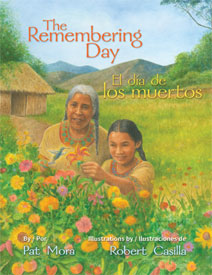
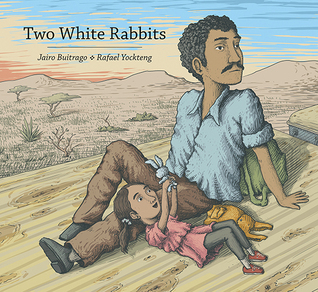 Two White Rabbits by Jairo Buitrago & Rafael Yockteng. A timely and moving picture book, originally published in Spanish, about a father and daughter traveling north towards the U.S. border. From counting what’s around her to meeting people and a “coyote”, this story, told from the child’s point of view, portrays migrant refugees journeys with deep empathy. Check out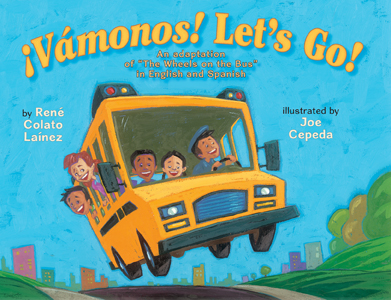

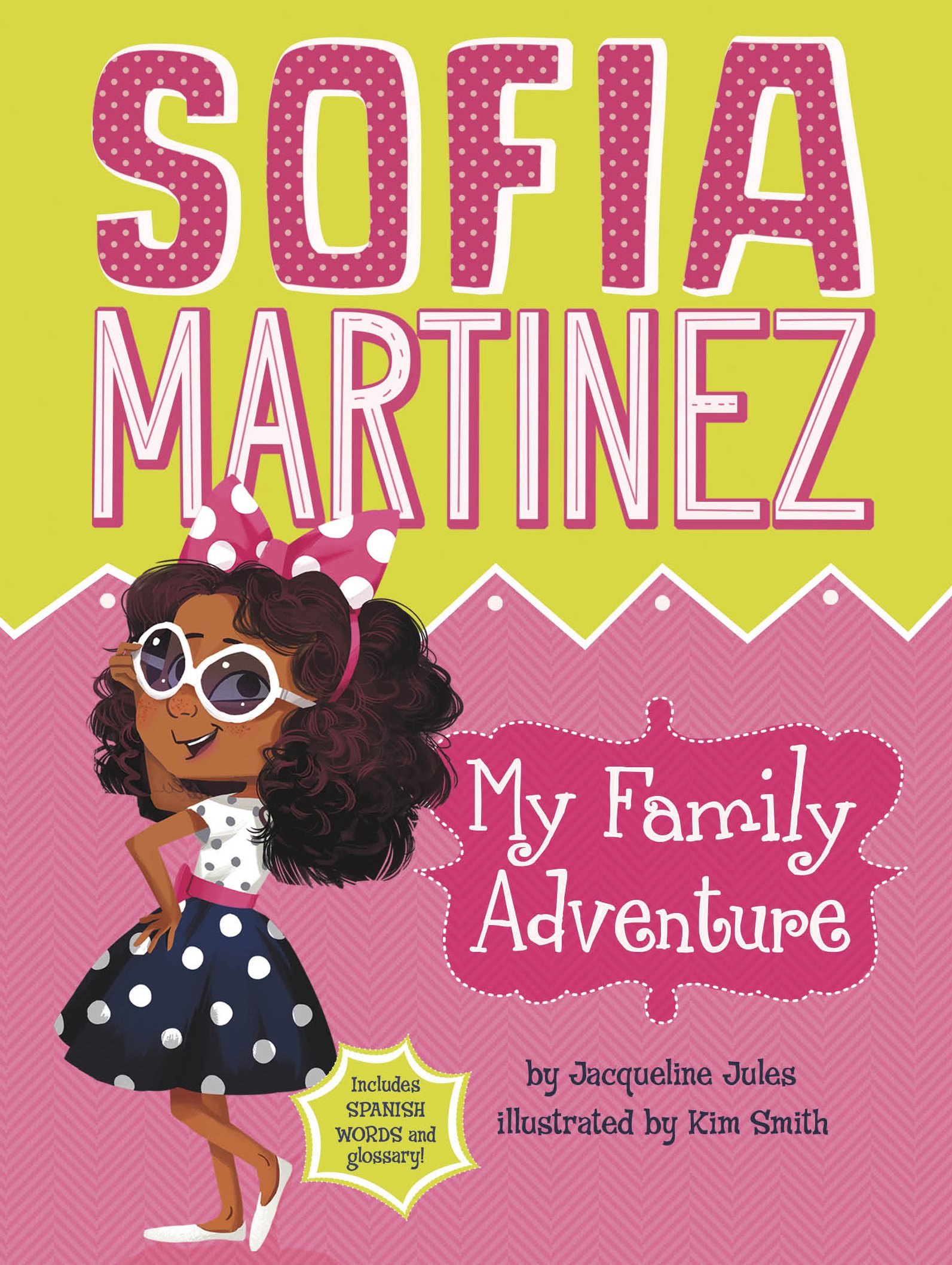
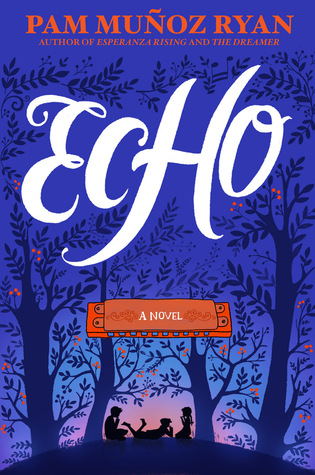 Echo by Pam Muñoz Ryan. Breaking from traditional narrative, this novel traces the connected stories behind a magical harmonica. Using diverse characters that live in far-flung geographical locations, the story introduces less familiar aspects of well-known historical events: laws regarding children with birth ‘defects’ in 1930’s Germany, conditions for orphans during the Depression in the US, and the segregation of schools in California for children of Mexican descent during World War II. Here’s
  Moving Target by Christina Diaz Gonzalez is a middle-grade fantasy thriller starring Cassie Arroyo, a Cuban-American expatriate living in Italy. After Cassie’s father is struck by a hail of bullets, whisked off to surgery, and then vanishes, she discovers that she, not her father, is the main target of the assassins. She then teams up with Asher and Simone to recapture the Spear of Destiny, a medieval artifact mysteriously linked to Cassie’s family line and the reason that her formerly blasé life at a private school is shattered overnight. Here’s
  Roller Girl by Victoria Jamieson. In this highly engaging graphic novel, 12-year-old Astrid Vasquez finds her calling on a roller-derby track. Never mind that she brings no skating abilities to her first day of practice, or that her best friend would rather be at ballet camp. With the help of a savvy coach and teammates, and inspiration from a star jammer on the Rose City Rollers pro team, Astrid locates her derby groove. Check out
 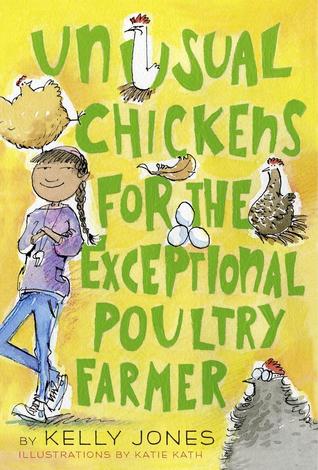 Unusual Chickens for the Exceptional Poultry Farmer by Kelly Jones. Moving from Los Angeles to a farm, Sophie gets quite a surprise when she encounters a cranky chicken with supernatural abilities. It’s easy to love Sophie, the half-Latina main character in this middle grade novel that upgrades the “new girl in town” idea by adding cool, magical chickens and letters from the beyond. Yes, we
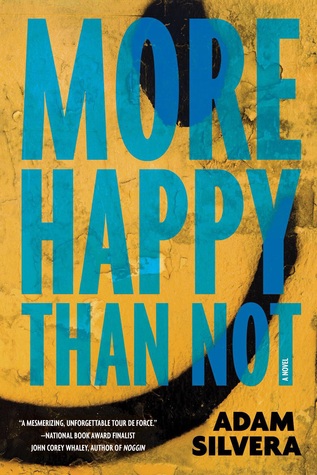 More Happy Than Not by Adam Silvera. Growing up in the Bronx with rough memories of his father’s suicide, Aaron Soto gets by with the help of a supportive girlfriend and a hardworking mom. But the promise of relief from the memories lures him into considering a radical procedure, and there are other self-discoveries to come. This debut novel offers a unique confrontation of race, class and sexuality. The main character is easy to root for in this ever-so-slightly sci-fi story. Read our full review
  Out of Darkness by Ashley Hope Pérez. The 1937 New London, Texas, school explosion—the worst school disaster in American history—serves as the backdrop for this riveting novel about segregation, love, family, and destructive forces beyond the control of its teen characters. The novel opens with the explosion, and then flashes back to show how the characters’ lives intersect before the event. Check out our
 Show and Prove by Sofia Quintero. The year is 1983. Blend together teenagers, hip-hop, urban plight, and racial tension; mix in summer camp trips and hanging out with friends, and you arrive at Show and Prove. This is a book about negotiating feelings and mistakes and tragedy. It’s a political book, examining identity and racism and bias in a way that never feels forced. For our full review, go
 Surviving Santiago by Lyn Miller-Lachman is the continuing story of the Aguilar family from Miller-Lachman’s novel Gringolandia. In this novel, Tina returns to Chile, which continues to be ruled by the Pinochet dictatorship in 1989. Tina falls in love with a local boy named Frankie, who has dangerous political connections and is a threat to her and her father, Marcelo, an important, targeted voice in the democracy movement. Here’s
 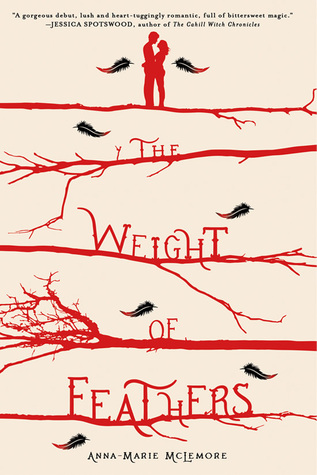 The Weight of Feathers by Anna-Marie McLemore is a 2016 William C. Morris Award finalist for good reason. McLemore’s lyrical prose centers on two traveling performance families, the Corbeaus and Palomas, hated rivals for generations who violently clash whenever they perform in the same town. A dangerous, forbidden romance develops between Lace Paloma and Cluck Corbeau that leads to family secrets revealed and a stunning climax filled with gorgeous magical realism. We will be reviewing the book in February and Anna-Marie will be writing a guest post for us. Check back then! In the meantime, check out
  When Reason Breaks by Cindy L. Rodriguez. On the surface, Emily and Elizabeth share little in common besides 10th-grade lit class and the study of Emily Dickinson’s poetry. But they’re both hovering on the edge of an emotional precipice and one of them will attempt suicide. Set in New England, this captivating novel delivers a strong portrayal of Latin@s and a cast of satisfyingly complex characters from diverse backgrounds. Check out our full review
 “My name is Marisol McDonald, and I don’t match. At least, that’s what everyone tells me.”
 When Isobel is invited to Aunt Luisa’s for Hanukkah, she’s not sure what to expect. Aunt Luisa has recently arrived from Mexico. “At Aunt Luisa’s you’ll get to celebrate the Hanukkah Moon,” Isobel’s father promises. Isobel’s days at Aunt Luisa’s are filled with fun and surprises — a new camera, a dreidel pinata filled with sweets, and a mysterious late night visit to welcome the luna nueva, the new moon that appears on Hanukkah. An unusual Hanukkah story with a multi-cultural focus, this title celebrates a little-known custom of the Latin-Jewish community.
 Jalapeno bagels are the delicious coming together of two cultures as the son of a Jewish baker and his Mexican wife decides what to bring to school for International Day. This warm story, illustrated by rich watercolors, comes complete with recipes for all the items that Pablo helps his parents make. Full color.
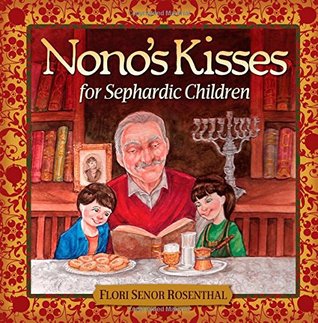 “Nono’s Kisses for Sephardic Children” is Flori Senor Rosenthal’s first of the Legacy and Literacy Scholastics Series. The book contains beautiful illustrations representing Ladino phrases. It was written to teach and encourage the usage of the Ladino language to children between the ages of 4 and 9. However, all ages will enjoy it and find it useful. Ladino or Judeo-Spanish is the language of Sephardic Jews. According to the United Nations, it is an endangered language. With each Ladino phrase found in the book, there is a question relating to its picture. This question, engages the parent and child into conversation. Ladino vocabulary words, pronunciations and English translations are provided to be used in these and other conversations and games between parents and their children. To make the learning experience even more fun, there is a hidden butterfly, in every illustration, to be found by the child. Ms. Senor Rosenthal’s father inspired her to write “Nono’s Kisses for Sephardic Children”. She wrote it to honor a tradition known specifically to Sephardic Jews. The book is an extraordinary teaching and learning tool for Ladino, and the Sephardic culture. However, those interested in the Spanish language and its history will also find this book interesting. Ms. Senor Rosenthal believes that her series will spark renewed interest in the Ladino language with the goal of having it removed from the endangered language list.
 Lola Levine likes writing in her diario, sipping her mom’s cafe con leche, eating her dad’s matzo ball soup, and playing soccer with her team, the Orange Smoothies. So what if she doesn’t always fit in?
 An eleven-year-old’s world is upended by political turmoil in this “lyrically ambitious tale of exile and reunification” (Kirkus Reviews) from an award-winning poet, based on true events in Chile.
 Emily is a Jewish girl from the suburbs of New York. Her mother has family in Puerto Rico, but Emily has never had contact with them- ever. Then Emily’s grandmother dies and Emily is forced to go to the Caribbean for her funeral. Buttoned-up Emily wants nothing to do with her big, noisy Puerto Rican family, until a special person shows her that one dance can change the beat of your heart.
 Shirin is an Iranian princess; Ingrid, a German-Canadian eccentric; and Vivien, a Cuban-Jewish New Yorker culinary phenom. The three are roommates at a Swiss boarding school, where they spend their summers learning more than French and European culture. As the girls’ paths cross and merge—summers together, school years separate—they navigate social and cultural differences and learn the confusing and conflicting legacies of their families’ pasts. In the spirit of The Sisterhood of the Traveling Pants, Shirin, Ingrid, and Vivien grow together even when they are apart, forming unbreakable bonds along the way.
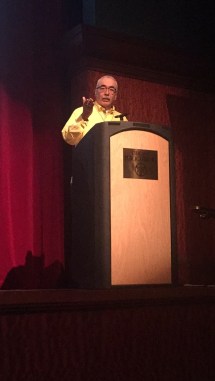
 After his reading, Herrera answered a few questions about his inspirations for becoming a writer and about his desire to make poetry available to everyone. During the brief Q & A, he mentioned the teachers that pushed him to speak up. He spoke about Mrs. Sampson, whom he also wrote about in his children’s illustrated text
  In general, the “life-changing teacher” is a common character in Latina/o children’s and young adult literature. Herrera’s own The Upside Down presents Mrs. Sampson as a character that helps little Juanito settle into his new school and encourages him to sing in front of the class. Ms. Diaz, in Cindy L. Rodriguez’s
 Latinxs in Kid Lit