Book Review: América is Her Name by Luis J. Rodríguez

By Sonia Alejandra Rodríguez

696056DESCRIPTION FROM THE BOOK JACKET: Set in the Pilsen barrio of Chicago, this children’s picture book gives a heartwarming message of hope. The heroine, América, is a primary school student who is unhappy in school until a poet visits the class and inspires the students to express themselves creatively–in Spanish or English. América Is Her Name emphasizes the power of individual creativity in overcoming a difficult environment and establishing self-worth and identity through the young girl América’s desire and determination to be a writer. This story deals realistically with the problems in urban neighborhoods and has an upbeat theme: you can succeed in spite of the odds against you. Carlos Vázquez’s inspired four-color illustrations give a vivid sense of the barrio, as well as the beauty and strength of the young girl América.

MY TWO CENTS: Luis Rodríguez’s América is Her Name (1998) tells the story of América Soliz, an undocumented immigrant from Oaxaca, Mexico to Pilsen, Illinois—Chicago’s predominantly Mexican community—and her struggles to find her voice and an identity that captures the complexity of who she is. Throughout the text, América faces discrimination in the classroom, witnesses the violence in her community, and feels patriarchal oppression in her home. Through poetry, however, she gains a language and agency to challenge and transform her reality.

At the beginning of the story, the narrator makes clear that América is having a difficult time feeling like she belongs in her new home in the United States. Pilsen is not like her hometown in Oaxaca. She witnesses gun violence—a shooting between two youth groups—as she walks to school. Her white teachers marginalize her for not speaking English and she also overhears them calling her an “illegal.” While América is not sure what that means or how a person can be illegal,she understands they do not want her to belong. At home, América becomes aware of the discrimination her parents face as manual labor workers when her father loses his job and her mother comes home expressing her frustration at being called a “wetback.” The narrator also alludes to the fact that the uncle that lives with them is an alcoholic.

Despite the barrage of oppressions that América confronts on a daily basis, she is able to find a sense of self and a voice through poetry. Her classroom gets a visit from a Puerto Rican poet, Mr. Aponte, who encourages América to write her story in any form and any language that best represents her. América writes about her Mixteca indigenous culture in Oaxaca and encourages her mother and younger brother to do the same. The most beautiful scene in the book is a representation of América and her mother sitting at the kitchen table as they practice their writing.

Illustrator Carlos Vazquez depicts mother and daughter in vibrant colors as their words come alive. It is an empowering moment for América and for the reader. Poetry, and writing in general, is not reserved only for América, who has access to education and the possibility of belonging in the United States, but América also makes is available to her mother. By sharing this practice with her mother, América challenges understandings of who gets to belong, which is an extremely important theme in the book. Furthermore, by making poetry available to her family, América attempts to bridge the divide between (im)migrants and their children. América is Her Name is a heartfelt and empowering story that explores issues of what it means to belong in the United States.

AUTHORLuis J. Rodriguez is one of the leading Chicano writers in the country with fifteen published books in memoir, fiction, nonfiction, children’s literature, and poetry. Luis’ poetry has won a Poetry Center Book Award, a PEN Josephine Miles Literary Award, and a Paterson Poetry Book Prize, among others. His children’s books—America is Her Name and It Doesn’t Have to be This Way: A Barrio Story—have won a Patterson Young Adult Book Award, two Skipping Stones Honor Awards, and a Parent’s Choice Book Award. Luis Rodriguez is best known for the 1993 memoir of gang life, Always Running: La Vida Loca, Gang Days in L.A.

FOR MORE INFORMATION about América Is Her Name visit your local library or bookstore. Also check out worldcat.org, indiebound.org, goodreads.com, amazon.com, barnesandnoble.com, and Curbstone Press.

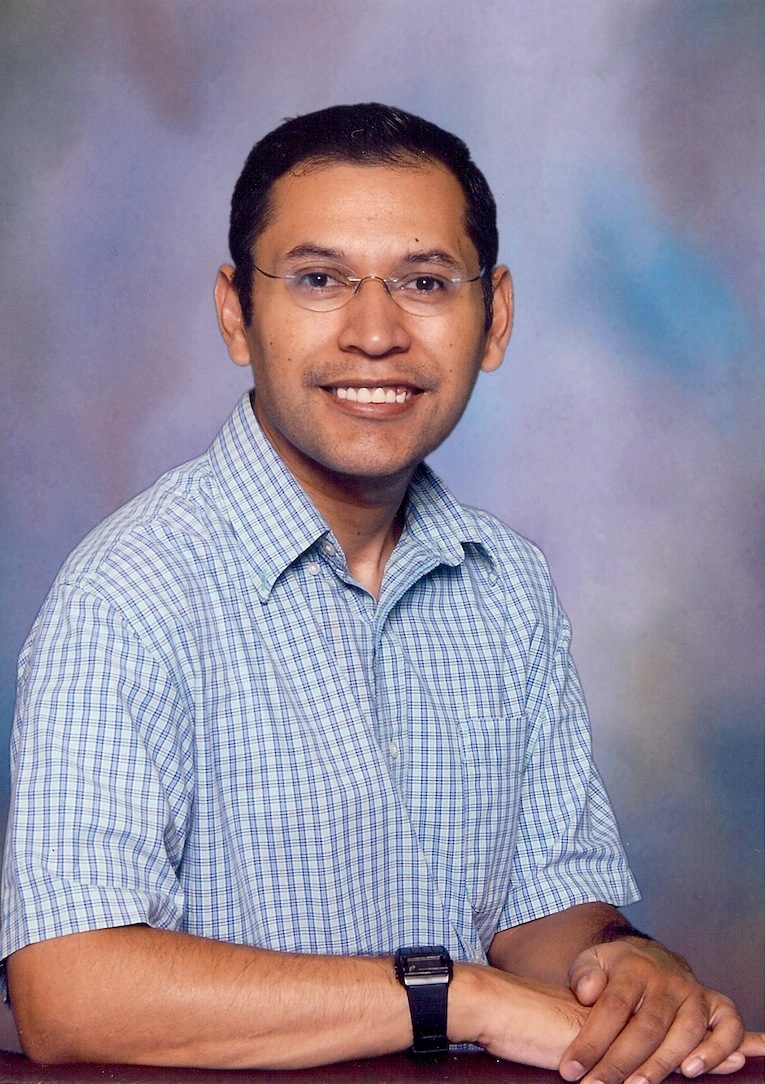
headshotSonia Alejandra Rodríguez has been an avid reader since childhood. Her literary world was first transformed when she read Rudolfo Anaya’s Bless me, Última as a high school student and then again as a college freshman when she was given a copy of Sandra Cisneros’s The House on Mango Street. Sonia’s academic life and activism are committed to making diverse literature available to children and youth of color. Sonia received her B.A. in English from the University of Illinois at Urbana-Champaign. She is currently a PhD candidate at the University of California, Riverside, where she focuses her dissertation on healing processes in Latina/o Children’s and Young Adult Literature.
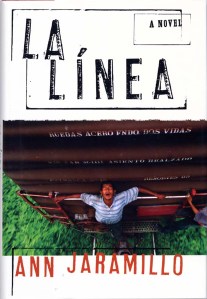
Book Review: La Línea by Ann Jaramillo

La Linea imageBy Lila Quintero Weaver

DESCRIPTION FROM THE BOOK JACKET: When fifteen-year-old Miguel leaves his rancho deep in Mexico to migrate to California across la línea, the border, his life is about to begin. Or so he thinks.

MY TWO CENTS“It’s been six years, eleven months and twelve days since I left to go north across la línea. It’s time for you to come.” So reads the note that Miguel receives from his father on his fifteenth birthday. During the long separation (his mother has also emigrated), Miguel, his grandmother, and sister, Elena, 13, eke out a meager existence in drought-stricken San Jacinto, Mexico. Surely life holds more than this! In the note, Papá instructs Miguel to pay a visit to Don Clemente, the wealthy patrón of the area. Years back, Papá rescued Don Clemente from a house fire. Now the old man repays that debt by funding Miguel’s flight to El Norte.

The arduous journey across la línea involves several modes of travel: by bus, riding the roof of a freight train, and crossing the desert on foot. Miguel encounters a wide array of obstacles en route, including the unwelcome surprise that Elena is along for the journey, too. Despite a series of setbacks, the siblings and a helpful new acquaintance named Javier press on toward their dream. At one point, bandits decimate their resources. At another, Mexican officials send them packing south— all the way to the Guatemalan border, in fact. Next, the trio sneaks a ride north by clambering on the roof of a freight train. The risks involved can’t be overstated. Nicknamed mata gente (people killer), such trains are responsible for dismemberments and deaths, not to mention exposure to cold, heat, and roving bands of ruthless gangs. I won’t even begin to list the perils they encounter in the next leg of the journey, the desert.

I respect the authoritative voice behind this novel. Ann Jaramillo is an ESL instructor with many years’ exposure to the true, and often harrowing, stories of border crossings by Mexicans and Central Americans. Her depiction of the mechanics involved is well informed. She describes life before and during the flight to the United States effectively, and highlights the poverty and bleak opportunities on the Mexican side with convincing detail, within age-appropriate limits.

Readers will encounter frequent terms and phrases in Spanish, not always translated, but whose meanings are usually discernible through context.

TEACHING TIPSTeaching Books offers a detailed curriculum guide for La Línea.

Miguel and Elena’s immigrant journey reflects recent and ongoing sociopolitical conditions. More importantly, they add faces and human emotions to related current events. Students can use this novel as a jumping-off point for the investigation of true immigration stories. They can achieve better understanding of what motivates people to emigrate/immigrate by researching their own family histories, or by comparing the characters’ experiences with that of other Latino and non-Latino settlers of the Americas.

This is a good text for enhancing Spanish vocabulary. It can also be used to increase awareness of rural Mexican customs.

LEXILE: 650

AUTHOR: Ann Jaramillo lives in Salinas, California. La Línea is her first novel. Ms. Jaramillo’s intimate knowledge of the Mexican-American immigrant journey comes through her work as an instructor of English as a Second Language, and her marriage of many years to Luis Jaramillo, a lawyer of Mexican-American heritage who has served migrant farmworkers for decades. In the author’s note, she explains that the inspiration for writing La Línea came from accounts of perilous crossings that her middle-grade students shared with her.

For more information about La Línea visit your local library or bookstore. Also check out WorldCat.orgIndiebound.orgGoodreadsAmazon and Barnes and Noble.

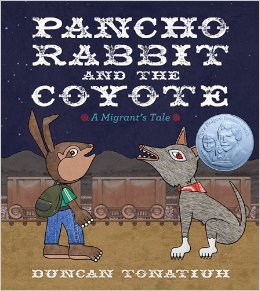
Book Review: Pancho Rabbit and the Coyote: A Migrant’s Tale by Duncan Tonatiuh

Pancho Rabbit coverBy Lila Quintero Weaver

DESCRIPTION FROM THE BOOK JACKET: A young rabbit named Pancho eagerly awaits his papa’s return. Papa Rabbit left two years ago to travel far away north to find work in the great lettuce and carrot fields to earn money for his family. When Papa does not return home on the designated day, Pancho sets out to find him. He packs Papa’s favorite meal—mole, rice and beans, a heap of still-warm tortillas and a jug full of fresh aguamiel—and heads north. He soon meets a coyote, who offers to help Pancho in exchange for some of Papa’s favorite foods. They travel together until the food is gone and the coyote decides he is still hungry…for Pancho!

Award-winning author and illustrator Duncan Tonatiuh brings to light the hardship and struggles facing families who seek to make better lives for themselves by illegally crossing the borders.

MY TWO CENTSWho does not love a fable, beautifully told? Pancho Rabbit and the Coyote is an allegory of migration, simplified for young children and illustrated with highly original art adapted from the style of Mixtec codices.

The adventure begins when Papa and his migrant companions, Señors Ram and Rooster, fail to return at the appointed time. Pancho sneaks off at night to find him. Perils along the journey provide appropriate levels of tension for early readers, but each danger that Pancho faces has a factual counterpart in the experiences of many undocumented Latino immigrants. First, there is—pardon the expression—a wily coyote who promises to guide Pancho to his father.  Children will instinctively realize that this coyote isn’t a true friend. Plus, physical dangers lurk at every turn—snakes, hunger, thirst, a river crossing, a dark tunnel, and a ride on the roof of a train. Most young children will accept these scary moments as tropes of fable and nothing more, helped by the fact that Tonatiuh softens each danger appropriately. For example, when Pancho nearly loses his balance on the roof of the train, the range of dire consequences implied by a fall will escape a child’s notice.

Pancho is a sturdy soul, driven to press through by his burning desire to reunite with Papa. As time goes by, the coyote demands more food from Pancho—food intended for Papa. This mirrors the exploitative nature of many human coyotes, infamous for charging exorbitant sums for their services and not always delivering on their promises. At last, Pancho and the coyote cross the border and spend the night in a hut. When the coyote discovers that Pancho’s food stores are depleted, things go from bad to very bad. “‘In that case,’ said the coyote, ‘I will roast you in the fire and eat you!’” As Pancho cowers in a corner, the huge shadow of a long-fanged coyote looms over him. Shades of Little Red Riding Hood! Just in time, Papa, Señor Rooster and Señor Ram burst into the hut, and the treacherous coyote runs off into the night.

Why were the returning farm workers delayed? “‘A gang of crows attacked us,’ said Señor Rooster. ‘They took the money and gifts we were bringing back to our families and left us stranded in the desert.’” This introduces yet another parallel to reality, the bandits that prey on defenseless immigrants. Back at the rancho, the welcome fiesta goes off without a hitch. The rabbit children beg their father to never leave them again, but he cannot guarantee it. “‘If it doesn’t rain again next year and if there is no food or work on the rancho, what else can I do?’” The children insist they will go with him, but Mamá has a more practical wish. “‘Let’s hope it rains.’”

No discussion of this book can be complete without delving into the art. In a video linked below, Duncan Tonatiuh explains the origins of his style and how meeting immigrants of Mixtec heritage prompted him to adapt the art for contemporary illustration.

Let’s review a few characteristics of Mixtec art:

  • Strong outlines of external and internal shapes
  • Flat colors within those shapes
  • Faces of humans and animals represented in profile
  • Stylized perspective—rugs, tables, other flat surfaces do not recede in space, but appear vertically placed

All of these characteristics are present in Tonatiuh’s art, along with notable adaptations:

  • Modern settings
  • Elements of collage
  • Textured surfaces, sometimes with photographic fidelity
  • Facial expressions that raise emotional content

To elaborate on facial expressions, take note of how variations in characters’ eyes, ears, lips and posture are used to denote sadness, fear, determination, and joy.

To learn more about ancient Mixtec people and their elaborately illustrated manuscripts, see this site

TEACHING TIPSAn author’s note addresses the human issues allegorized in the story of Pancho Rabbit and the rest of the animal characters. There is also a glossary of Spanish terms.

Pancho Rabbit and the Coyote is a fable that can be read on two levels. The average young child will relate to it exactly as it appears on the surface—an enchanting story with animal characters that embark on an adventure. Parents and teachers will have to decide how much to reveal to unsuspecting children about the characters’ human counterparts. Children who have firsthand experience or family stories that parallel the perilous journeys of Pancho Rabbit are much more likely to catch the story’s underlying meaning. A wise teacher will take this into account.

Many young children will be fascinated by the art, which is unique among picture books. Since Tonatiuh has incorporated rich textures into the illustrations, kids may enjoy a treasure hunt based on specific textures. Here is a list of those represented: ram’s wool, coyote and rabbit fur, denim and other textiles, dried chiles, wood grain, brick, corrugated metal roofing, prickly cacti, straw matting, gravel, rubber tire, snakeskin, topsoil, and feathers.

Just because it’s a picture book, there’s no reason that Pancho can’t be enjoyed by older kids, especially artistic teens. If they seem reluctant, show them Duncan Tonatiuh’s TED Talk video, “Life on the Other Side,” embedded in his website. Many teens will conclude that he’s a pretty cool dude, one worth emulating. You’ll also find a touching multi-voice poem recorded by fourth-graders in Texas. It models an excellent approach to getting young migrants or second-generation immigrants talking about their experiences and feelings.

THE AUTHORDuncan Tonatiuh was born in San Miguel de Allende, Mexico. His deep interest in the plight of undocumented immigrants originates in childhood friendships in Mexico and associations he has formed in New York, where he studied art and lives. He is the author-illustrator of other award-winning books, including Diego Rivera: His World and Ours, Dear Primo: A Letter to My Cousin, and a forthcoming book on Sylvia Mendez.

Duncan has earned a chest full of medals and awards for Pancho Rabbit and the Coyote, including:

  • Pura Belpré Author and Illustrator Honor book 2014
  • New York Public Library’s annual Children’s Books list: 100 Titles for Reading and Sharing 2013
  • Kirkus Best Books of 2013
  • Best Multicultural Children’s Books 2013 (Center for the Study of Multicultural Children’s Literature)
  • Notable Children’s Books from ALSC 2014
  • Notable Books for a Global Society Book Award 2014

Immigrant Stories and My Long Night in the ER

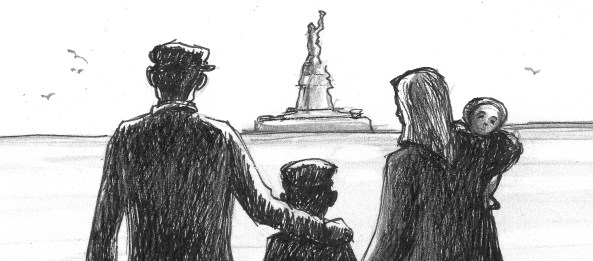
Sketch by Lila Quintero Weaver

Image by Lila Quintero Weaver, ©The University of Alabama Press

By Lila Quintero Weaver

I have long been riveted by immigration stories.  These days, my focus has turned to immigration’s impact on Latino children. I was an immigrant child. With my family, I bade farewell to our relatives, native culture and language, and set off into the unknown. Nearly all immigration stories hold these elements in common, but I have a growing preference for reading about journeys that only faintly resemble mine. They expand my understanding of current immigration issues and make me feel more connected to the wider Latino community.

My family emigrated from Argentina in 1961. We landed in Alabama. Latinos were rare in the American South back then, and in our new home the prejudice we encountered was subtle—especially taking into account the intense racial bigotry that vented its full force on African Americans, and which I, for one, was horrified to witness.

Things have changed in the South lately—indeed, across America, as the immigration picture grows ever more complicated. New stories are bound to emerge from these troubled times. My eyes are peeled for them, mostly because of what I’ve seen in my backyard.

The shift in Alabama’s tolerance for outsiders came home to me one summer night in 2005, during a five-hour stretch in the emergency room. Earlier that evening, floaters sprang up in my field of vision. These are sometimes an early warning of retinal separation. The ER physician couldn’t tell me much. He instructed me to see a specialist the next day. Good news: no retinal tear.

Now for the bad news. During those long hours in the waiting room, I caught wind of  heightened anti-Latino sentiment. Out of approximately 60 people seated in the waiting room, fifteen or so were Mexicans or Central Americans. Some spoke no English, and the ER was not prepared. When I overheard halting communication between one Spanish speaker and a flustered triage coordinator, I volunteered to interpret. Soon after that, other Latinos sought my help, including a young couple with a feverish baby. They had returned to the ER a second day in a row and after a long wait, still had not been attended. They feared they were being discriminated against. I checked with the receptionist and managed to resolve their concerns. So it went. My long wait turned into a flash education on the lives of recent immigrants.

As the evening wore on, I overheard white people sitting nearby making snide comments about the Latinos. Some even put on faces of disgust. My heart sank. Alabama had reached a tipping point, I realized. It was no longer the Alabama that my family encountered in 1961, curious about foreigners, but not threatened by us. And by us, I don’t mean that I perceive myself to be a target of revived bigotry. My complexion is too light to draw notice. And my English, correct and unaccented, slips past the radar of most bigots.

But never mind all that. Injustice against anyone offends me, and racial injustice boils my blood.

Alabama’s overall tolerance of brown-skinned people began to crumble in the years that followed my visit to the ER. A recent influx of Hispanic immigrants to the state—the Latino population almost doubled between 2000 and 2010—has stirred the ancient fires of bigotry. I started hearing misinformed grumblings about “illegals” milking public assistance. In the local newspaper, letters to the editor railed against Spanish signage. Recently, a candidate for governor ran on the promise to revert driver’s-license tests to English-only. Meanwhile, farmers, foresters, landscapers, roofers, and other business owners countered that Latino employees demonstrated superior work ethic. We want them here, they said.

Somehow bigotry won out, culminating in the 2011 passage of HB 56, the harshest anti-immigration law in the United States, modeled after legislation in Arizona. Immigrant communities, civil rights activists, and religious and economic sectors around the state raised an outcry before the bill was voted into law, but the legislative body had its mind made up. As a result, thousands of recent immigrants fled the state. Ultimately, federal courts diluted the law and Latinos with strong community ties and business connections returned.  

My alarm over the plight of new immigrants took me on a circuitous route to Latino children’s literature, where I’ve discovered a strong body of immigration stories. As an immigrant, I’m finding familiar ground and fresh exposures. I’m most riveted by the contrasts, and few stories present sharper contrast to my family’s safe passage than the books I’ve been reading lately.

Pancho Rabbit cover

This January, I read La Línea, by Ann Jaramillo, and Pancho Rabbit and the Coyote, an allegorical picture book by Duncan Tonatiuh. Both deal with the fictional experiences of undocumented immigrants. (Check back soon for corresponding book talks.) The power of these narratives has led me to Enrique’s Journey, a highly acclaimed 2006 nonfiction work by Sonia Nazario that follows the arduous journey of a Honduran teenager through similar territory. In 2013, an adaptation for young readers was released, and that’s the version I’ll discuss in an upcoming book talk.

Recently, The New York Times reported on the scientific connection between reading literary fiction and the development of “empathy, social perception and emotional intelligence.” How does this transformative effect take place? Good literature narrows the gaps that exist between us and the “other.” When a character is well crafted, we don’t have to share everything in common with her to enter her point of view.

Empathy, or at least clearer understanding of the human issues involved, could make a night-to-day difference in our society’s attitude toward new immigrants. Last year, I was pleased to spot a bestselling immigration story, Esperanza Rising, on the official school-designated summer reading shelf of my local Barnes & Noble. I would love to see more immigration titles added to reading lists and classroom settings, especially those that humanize current-day migrants. In fact, if I had one additional wish regarding these books, it’s that parents would read them alongside their children. Call me a dreamer, but I believe a steady consumption of strong immigration stories could help us stem the tide of xenophobia and fortify America’s claim on the proud distinction, “a nation of immigrants.”

——————–

And now for some related immigrant stories, told through the power of music. A music video directed by Alex Rivera for Aloe Blacc’s hit song “Wake Me Up,” features actual Latino immigrants reenacting the heartbreak of separation and the joy of reunion. The singer is of Panamanian descent.

Read more in Colorlines, where you’ll find a link to a second Alex Rivera music video on immigrant life, “El Hielo,” sung by La Santa Cecilia.

A Conversation with René Colato Laínez

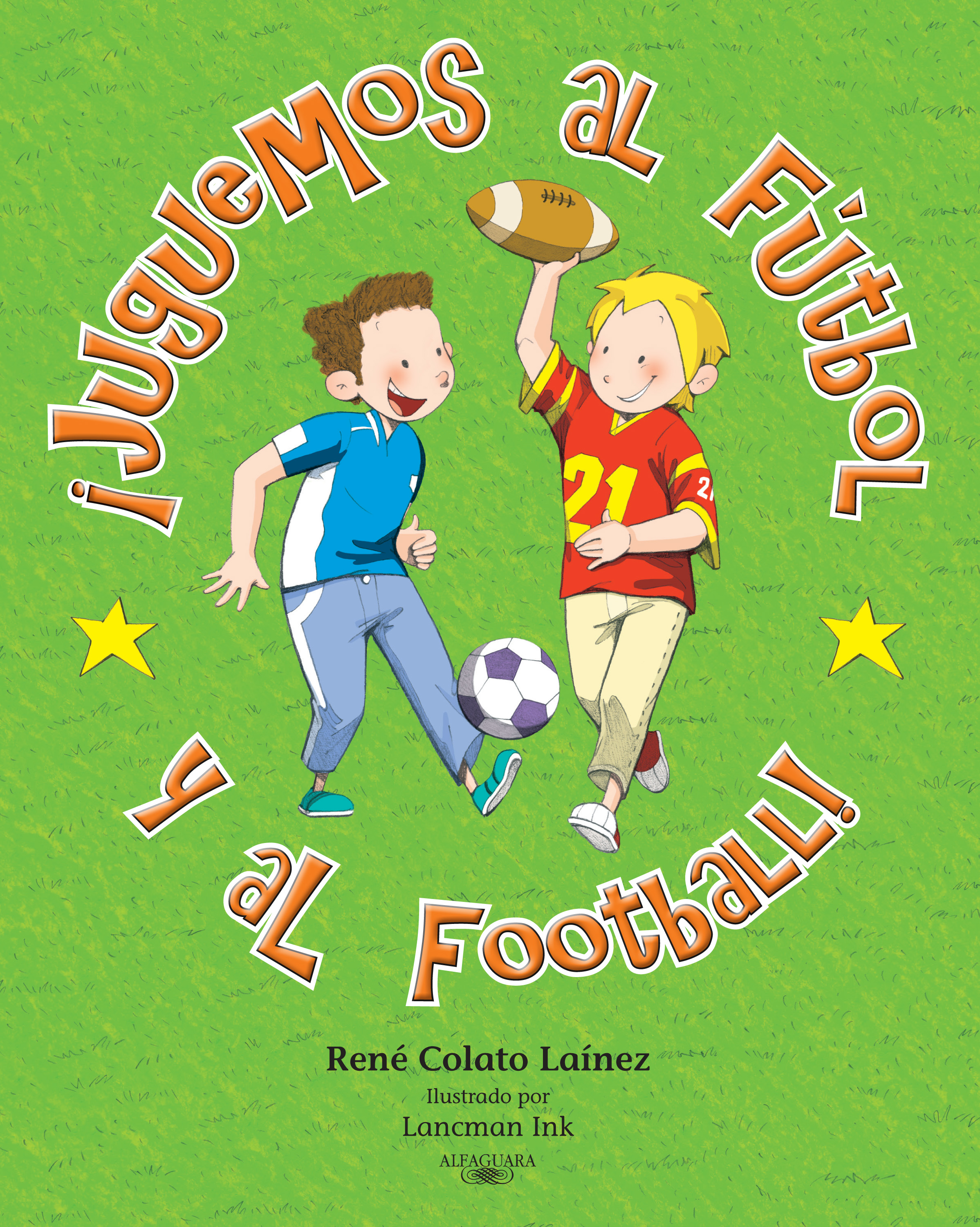
By Lila Quintero Weaver  portada-juguemos-futbol-football

If you are not acquainted with the picture books of René Colato Laínez, get thee to a bookstore right away! A Salvadoran transplant who teaches kindergarten in California, René writes joyful, bilingual picture books that children everywhere adore. I am delighted to share a one-on-one conversation with René about his life and work.

Lila: René, on your website, you express that the goal of your writing is “to produce good multicultural children’s literature; stories where minority children are portrayed in a positive way, where they can see themselves as heroes, and where they can dream and have hopes for the future. I want to write authentic stories of Latin American children living in the United States.”

As a collaborator on Latin@s in Kid Lit, a blog that exists to promote those very goals, I say BRAVO! Now for a question: What led you to adopt these goals?

René: I came to the United States when I was 14 years old. In my country, I was a smart student. I had good grades and many dreams to accomplish. In the United States, I did not know the new language. I felt lost and many times I thought that I would never be able to accomplish my goals. The inspiration to write books with a positive message to minority children came from my own life experience. I worked hard and never gave up. Yes! I accomplished my dreams. I am a teacher and an author. I want to tell minority children that they can accomplish anything they want. With “ganas” you can conquer the highest mountain.

Senor Pancho

Lila: Let me brag on your latest book. Señor Pancho Had a Rancho has received glowing reviews. It was named a top picture book by Chicago Public Library and was included in the Cuatrogatos Foundation anthology, De Raices y Sueños. I could keep going, but let me pause to ask: What inspired you to create what’s essentially a Spanish version of “Old McDonald Had a Farm”?

René: One day my ESL (English as a Second Language) teacher told us that we could learn English through music. She played the song of a man named McDonald and he had many farm animals. When I listened to the song, I was confused when the dog barked woof woof instead of gua gua. My teacher told me that in English farm animals made English sounds. I said to myself, “If I bring my perro from El Salvador, he has to learn English too!” Later on, when I became a teacher, I played the song with my kindergarteners, but I always added the Spanish sounds. After having so much fun with my students, I decided to write a book about both English and Spanish farm animals, where they could have a great time speaking two languages.

Lila: Please share a bit about your childhood experiences of immigration from El Salvador.

René: I left the country with my father, due the civil war. Along with thousands of Salvadorans, my family was looking for a better place where we could be safe from the war. But I had a happy life as a child. I loved to go to school and read all the comics books from Mexico and Argentina, like El Chapulín Colorado and Mafalda. Since first grade, I wanted to become a teacher. My favorite books were Don Quijote and Las Telerañas de Carlota. I was so surprised to find my favorite book in English, here in the United States—Charlotte’s Web.

Lila: You teach kindergarten in a California school full of Latino children. How has this influenced your writing? Is teaching what led you to write picture books in the first place?

René: In high school and college, I wrote many drafts of novels. But when I came to the classroom, I discovered picture books and soon fell in love with them. I started to write my own books for my students and they called me “El Maestro lleno de Cuentos” (“The Teacher Full of Stories”). Later on, after receiving advice from many teachers and talented authors such us Alma Flor Ada, Isabel Campoy and Amada Irma Pérez, I decided to submit my work for publication.

Lila: Your books consistently offer bilingual texts. Why is this important to you?

René: I love bilingual books because you can share them with families who speak Spanish, English or both. They can also be great tools to speak and learn to read a second language. When I started to submit my manuscripts, I always envisioned them as bilingual books—books that I could share with my students, their parents, my family here in the United States, and all my relatives and friends in El Salvador.

Lila: Your writings frequently celebrate the happy coexistence of Latino and non-Latino cultures. This occurs in The Tooth Fairy Meets El Ratón Pérez and in Juguemos al Fútbol/ Let’s Play Football (coming out this month in the bilingual hardcover edition), to name just two examples. What inspires your multicultural bent?

René: Latino children usually live in two worlds in the United States. They speak English and Spanish and celebrate holidays from the two cultures. Many times people fight to see which language or culture is most important. I love them both and in my books I want to tell children that instead of deciding which culture is better, we can celebrate both and have double the fun.

Lila: Writing a picture book looks easy only to those who have never tried it. What’s it like for you? Do you wait for inspiration to strike or do you have a disciplined routine?

René: Writing picture books is so much fun for me. It was not easy at first but I read tons of them until I was ready to write my own stories for publication. I usually start with the problem or idea for a story. Then I think it over, again and again, and begin to create the story in my mind. When I have something solid, I begin to write it. Many incidents in the classroom help me with ideas for new stories.

Lila: You graduated from the prestigious Vermont College of Writing for Children & Young Adults and have published at least nine books. That’s a lot of experience! Can you share some hints for aspiring writers?

René: Never give up, believe in yourself, and work hard for your dreams. Take creative writing classes and join critique groups. If you are writing children’s books, it is always a great idea to join SCBWI, Society of Children’s Book Writers and Illustrators. Submit your work and learn from rejection letters. Believe in your stories, because you are the only one who can tell and write them. 

renecolatolainezRené Colato Laínez is a native of El Salvador. He is the award-winning author of many picture books and the recipient of honors that include the Latino Book Award, the Paterson Prize for Books for Young People, the California Collection for Elementary Readers, the Tejas Star Book Award Selection, and the New Mexico Book Award. He is listed among “Top Ten New Latino Authors to Watch (and Read)” by the site Latinostories.com*. He received a degree from the Vermont College MFA program in Writing for Children and Young Adults. René’s full-time profession is teaching kindergarten in California. For more information, please visit his official author site