Guest Post: Self-Publishing Often the Only Recourse for Writers of Color

By Zetta Elliott 

“I am an immigrant.” When I visit schools, I always start my presentation with these words. Next, I ask the students to guess my country of origin. Their answers are often predictable and sometimes surprising: the Dominican Republic, Puerto Rico, Mexico—Italy! When I tell them that I don’t speak Spanish but I do speak a little French, they call out a different list of countries until someone gets it right: Canada.

I open with my immigrant status in part because I once had a Latina approach me at the end of a presentation in Brooklyn and say, “I hate that word.” I didn’t ask about her status, but it was clear that she felt there was something shameful about being an immigrant. So I announce my own status with pride and use my presentation to demonstrate how my early years in Canada helped to shape the writer I became after I migrated to the US twenty years ago.

Immigration is a charged issue here, and though Canadians aren’t generally mentioned in the national debate, there’s still a pretty good chance I could run into trouble in Arizona. As a mixed-race woman of African descent, I often get read as Latina. Here, in New York City, I walk with my driver’s license, my passport, and my green card at all times because my Afro-Caribbean father taught me that some protections are reserved for citizens only (and only those citizens who aren’t brown like me). My father also urged me not to get involved in social justice movements, but I chose to disregard that advice.

I’m a black feminist—or what my father would call “a troublemaker.” I began to write for children over a decade ago because I couldn’t find culturally relevant material to use with my black students. I came to the US to attend graduate school, and there I developed a deeper understanding of intersectionality and invisibility. The title of one black feminist anthology encapsulates this perfectly: All the Women are White, All the Blacks are Men, But Some of Us Are Brave. Black women too often find themselves erased from discussions of racism and sexism, and when it comes to children’s literature, it can be just as easy for Afro-Latin@ kids to fall through the cracks.

Published by Skyscape, 2010

In 2000, I started a book club for the girls in my building. They were all black and we had been meeting for weeks before I realized that half the girls in the group were Panamanian. When they were with me, they spoke the black vernacular of their African American peers, but at home they spoke Spanish. When I wrote my YA time-travel novel A Wish After Midnight, I decided to give my protagonist a hybrid identity—Genna Colon’s mother is African American but her father is an Afro-Panamanian immigrant. When her father leaves the family to return to Panama, Genna yearns for a connection to her Latino heritage, but her jaded mother insists that race trumps ethnicity: “in America, it doesn’t matter where you’re from or what language you speak. Black is black and you might as well get used to it.”

Such a simplistic understanding of race is not uncommon, but many scholars, activists, and artists advocate for an appreciation of multiplicity—recognizing and respecting the specificity of blackness instead of reducing it to a single generic identity. As a black feminist writer, one of my goals is to counter the marginalization of black children in literature by writing stories about kids who are silenced and/or rendered invisible. I try to avoid the all too familiar “types” that seem to show up over and over again. Hakeem Diallo is a gifted basketball player but he’s also Muslim, biracial (black and South Asian), and he dreams of becoming a chef one day. Dmitri is a bird-watching math whiz who loses his mother to cancer and so lives with his elderly white foster mother. Judah is a Rastafarian teen from Jamaica who dreams of moving to Africa.
munecas_front_covercorrected

Self-published through CreateSpace under Rosetta Press

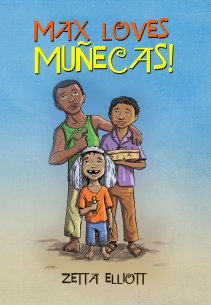
In 2009, I went to see the film adaptation of Neil Gaiman’s novella Coraline. I had some issues with the representation of women in the film, and went home thinking of a way to write a story about black boys and dolls. The end result was Max Loves Muñecas!—one of four chapter books that I self-published in May. The story follows three homeless boys in 1950s Honduras who are taken in by a kind woman who makes dolls. I was inspired by my father’s childhood in the Caribbean. He was raised by his grandmother on the island of Nevis, and with no money to spare, my father learned to make his own toys out of recycled materials. They were poor but my great-grandmother made sure my father was always presentable and well behaved. Respectability meant a lot since the family had so little.

I knew I wanted my story to take place within the Caribbean basin, but I had limited knowledge of Latin America. I chose Honduras for the setting of Max Loves Muñecas! because the best doll maker I know is Afro-Honduran designer Cozbi Cabrera. Also my community college student Saira, a Garífuna woman, gave a presentation in class about the murder rate in Honduras—the highest in the world. This is due, in part, to street violence fueled by gang members who have been deported from the US. My story isn’t set in contemporary Honduras, but the book does challenge gender norms and exposes the tender, creative side so many boys are forced to conceal.

I often write about boys because I have seen firsthand how expressive, sensitive boys shut down as they mature and assume the hard, unfeeling posture of a young “thug.” Boys around the world are socialized in a way that leaves them unable to reveal their authentic selves and the consequences can be devastating—especially for girls, but for boys and men as well. As a feminist I realize that if I want to end violence against women and girls, I have to start paying more attention to boys.

These issues mean a lot to me, but social justice is not generally a priority for the children’s publishing industry. For the past five years I have written essays and given talks about the glaring inequality within publishing, and the issue has garnered more attention recently thanks to the social media campaign #WeNeedDiverseBooks. Several editors rejected Max Loves Muñecas! (the last one wrote, “Zetta is such a lovely writer and I did enjoy this story – but I just don’t think we can find a big enough market for it”) and so the story sat on my hard drive for five years until I finally decided to self-publish it. I found a Honduran illustrator, Mauricio J. Flores, on Elance; he completed ten black and white illustrations and I used the print-on-demand site CreateSpace to publish the book.

The biggest challenge with self-publishing is finding a way to connect your books with readers. The Brown Bookshelf recently ran a series called “Making Our Own Market,” and I contributed a guest post in which I shared my core objectives:

  1. To generate culturally relevant stories that center children who have been marginalized, misrepresented, and/or rendered invisible in children’s literature.
  2. To produce affordable, high-quality books so that families—regardless of income—can build home libraries that will enhance their children’s academic success.
  3. To produce a steady supply of compelling, diverse stories that will nourish the imagination and excite even reluctant readers.

If these objectives resonate with you, I hope you’ll give my books a chance. The bias against self-published books is hard to overcome; major outlets refuse to review them, and only a few book bloggers are willing to give self-published books a chance (thank you, Latin@s in Kid Lit). Many are poorly written and shoddily produced, but when publishing gatekeepers exclude so many talented writers of color, self-publishing is often our only recourse. If we wait for the industry to change, another generation of children will grow up as I did—without the “books-as-mirrors” they need and deserve.
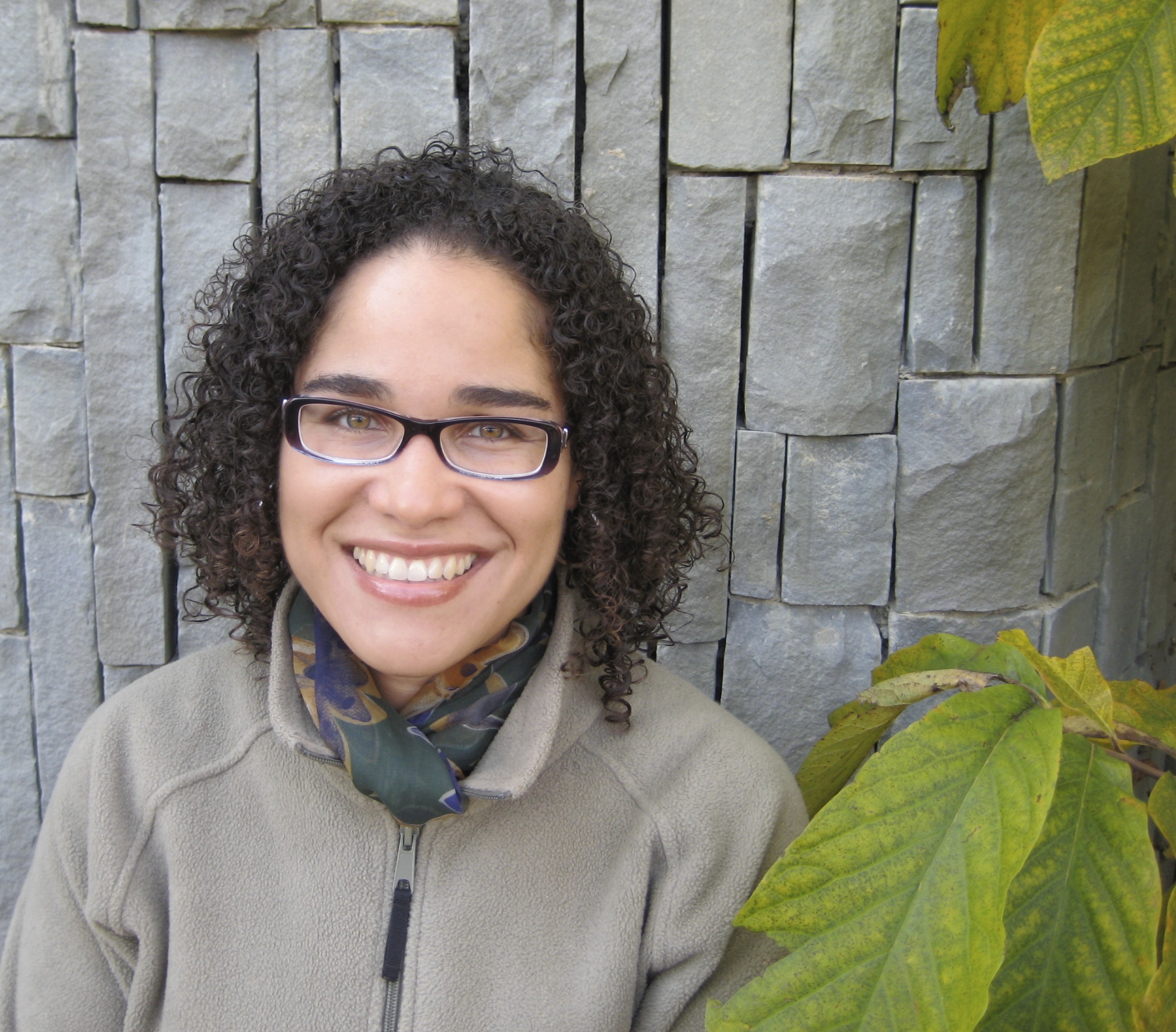
 

IMG_1198Born in Canada, Zetta Elliott earned her PhD in American Studies at NYU. Her poetry has been published in several anthologies, and her plays have been staged in New York and Chicago. Her essays have appeared in Horn Book MagazineSchool Library Journal, and The Huffington Post. Her picture book, Bird, won the Honor Award in Lee & Low Books’ New Voices Contest and the Paterson Prize for Books for Young Readers. Elliott’s young adult novel, A Wish After Midnight, has been called “a revelation…vivid, violent and impressive history.” Ship of Souls, published in February 2012, was included in Booklist’s Top Ten Sci-fi/Fantasy Titles for Youth and was a finalist for the Phillis Wheatley Book Award. Her third novel, The Deep, was published in November 2013. She currently lives in Brooklyn.

Other books by Zetta Elliot. For a full list, visit her blog.

Published by Lee and Low, 2008

Published by Skyscape, 2012
The Phoenix on Barkley Street

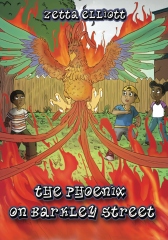
One of four kids books self-published, 2014
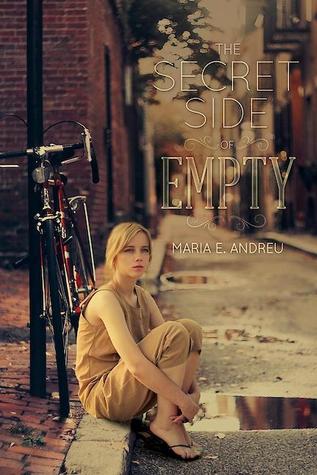


Book Review: The Secret Side of Empty by Maria E. Andreu

By Stephanie Guerra

18079898DESCRIPTION FROM THE BOOK JACKET: M.T. is undocumented. But she keeps that a secret. As a straight-A student with a budding romance and loyal best friend, M.T.’s life seems as apple-pie American as her blondish hair and pale skin. But she hides two facts to the contrary: her full name of Monserrat Thalia and her status as an undocumented immigrant.
But it’s getting harder to hide now that M.T.’s a senior. Her school’s National Honor Society wants her to plan their trip abroad, her best friend won’t stop bugging her to get her driver’s license, and all everyone talks about is where they want to go to college. M.T. is pretty sure she can’t go to college, and with high school ending and her family life unraveling, she’s staring down a future that just seems

In the end, M.T. will need to trust herself and others to stake a claim in the life that she wants

Told in M.T.’s darkly funny voice and full of nuanced characters, The Secret Side of Empty is a poignant but unsentimental look at what it’s like to live as an “illegal” immigrant, how we’re shaped by the secrets we keep, and how the human spirit ultimately always triumphs.

MY TWO CENTS: This is an ambitious book, taking on a range of powerful topics including immigration, domestic abuse, and suicide. Maria Andreu approaches her themes head on and unflinchingly. Her writing is raw and honest, and as a result, the book engages at a deeper level than the average YA.

Monserrat Thalia, or M. T., is a conflicted, loveable character and a convincing portrait of a teen struggling with the challenges of “illegal” immigrant status. M. T. is from Argentina, but her desire for rootedness, her grief, and her uneasy relationship with America and Americans all speak to common threads experienced by immigrants from many cultures. As M. T. approaches high school graduation, the differences between her situation and that of her friends emerge in stark contrast: because of her undocumented status, she has no possibility of a degree, and no chance for a job and the trappings of a “successful” life. Meanwhile, her friends are college and career bound.

As M. T. grows increasingly bleak about her dead-end future, even contemplating suicide, her father enters his own spiral of immigration-related frustration, inadequacy, and violence. The book raises provocative questions: When does disciplinary hitting cross a line into abuse? How frequently or severely must violent episodes occur to justify a call for help? What are the products of intersecting adult insecurity, fear of deportation, cultural background, and violence?

I applaud Maria Andreu for taking a courageous look at all these questions through a snapshot of M. T.’s senior year. Andreu’s writing is clean and accessible with sharp-edged wit and darkly ironic undertones sure to appeal to teen readers. Characterizations are strong, with a special flair for finely drawn secondary characters. Best of all, no easy answers are offered. This book calls for thoughtful discussion, and is ideal for illuminating and humanizing an experience that many readers understand only through media coverage and political debate.

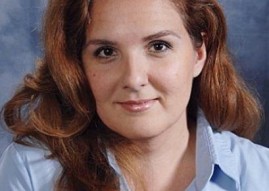
Maria AndreuAUTHORMaria E. Andreu is the author of the novel The Secret Side of Empty, the story of a teen girl who is American in every way but one: on paper. She was brought to the U.S. as a baby and is now undocumented in the eyes of the law. The author draws on her own experiences as an undocumented teen to give a glimpse into the fear, frustration and, ultimately, the strength that comes from being “illegal” in your own home.

Now a citizen thanks to legislation in the 1980s, Maria resides in a New York City suburb with all her “two’s”: her two children, two dogs and two cats. She speaks on the subject of immigration and its effect on individuals, especially children. When not writing or speaking, you can find her babying her iris garden and reading post apocalyptic fiction. You can also find her on Facebook and Twitter.

FOR MORE INFORMATION ABOUT The Secret Side of Empty, visit your local library or bookstore. Also, check out worldcat.org, indiebound.org, goodreads.com, amazon.com, and barnesandnoble.com.

Seven Things You Need to Know About After the Book Deal

By Maria E. Andreu

18079898Have you ever noticed that, in romantic comedies, the end is very often a wedding? What’s up with that? Love stories don’t end at a wedding. That’s when real life begins, the business of figuring out who does the laundry, where you’re going to live, and how in the world you figure out where you spend Thanksgiving and Christmas. It’s the same thing with publishing. The day you ink the book deal may be the happy ending in the movie version, but in real life it’s just the start of the story.

After many years of dreaming of being a writer, I got my movie-worthy happy ending. I got the first agent I pitched for The Secret Side of Empty, from a house so prestigious just reading their client list gives me goose bumps. We sold the book in the first round of submissions to a publisher who has done amazing things for the book, truly an ideal publisher for my first time at the rodeo. (And there was more than one offer to weigh). Anyone who hears my publishing story wants to stop me there and sort of bask in the moment, happy in the knowledge that it does happen that way sometimes. And it does.

But then you wake up the next day.

Just like no one tells you what to do once you get back from the honeymoon, here are 7 things no one will tell you about what it’s like AFTER the book deal.

  1. Editing is terrifying. Sure, you’ve edited before. You’ve joined critique groups. Maybe you’ve been brave and gone to pitch slams and other places where your words have been torn apart and criticized. Great. Now you’ll have a team of bona-fide professionals poring over your every word. I got an editorial letter so detailed that I shut the document immediately after seeing its page count (let’s just say this: it was in the double digits) and couldn’t make myself open it for 2 weeks. Be prepared. It’s not about you. It’s about making the work the best it can be.
  2. Book promotion is exhausting. Yes, you’ve waited your whole life for it. Yes, you’re going to love most of it. And you’re going to be exhausted anyway. You’ll be thrilled to learn that your publisher will schedule a blog tour for you (maybe, if you’re lucky). You’ll forget that it means you’ll have to actually write all those posts, answer all those interview questions, send head shots, book covers and photos of your frizzy hair in the 8th grade or the bicycle you learned to ride on. Then you’ll go to schools, libraries, festivals, and grocery stores and auto body shops too, if they’ll take you. Fun, yes. Mostly. Take naps now.
  3. Your launch date is not real. Just like a lot of brides stress the wedding and forget it’s actually a marriage they should be planning, so too a lot of authors obsessively plan the Twitter party and Tumblr extravaganza that will be their Launch Day, forgetting that it isn’t really even a Real Thing. My books shipped almost 3 weeks early. When I asked, a helpful professional told me, “Unless your name is J.K. Rowling, no one’s taking up warehouse space to perfectly orchestrate your big reveal.” It will help you to remember that book promotion, like a marriage, is something that you’re in for the long haul. So don’t stress the day so much and come up with a long-term strategy.
  4. It’s a crowded marketplace. You thought it was hard to get attention when you were in the throng of hopefuls? Wait until you see your book on a shelf full of all the others who broke out of the pack. You’ve got a couple of seconds to catch a potential reader’s attention, online and off. If the competition of trying to get published bothers you, you should know it doesn’t stop after your book is out in the world.
  5. Reviews hurt. Bad reviews can cut you to the quick. Even good ones can sometimes leave you scratching your head. Much ink has been spilled advising writers not to let critics get to them. That’s great advice. Also pretty hard to follow, particularly at first when you’re hungry for any sign of how your book is doing and what people think. My advice is to ignore reviews completely – good and bad. It is advice you will not follow. Hold on, I’ve got to go check my Goodreads page real quick.
  6. People will find things in your book you didn’t realize were there. I’ve had readers ask me about love triangles I didn’t intend to include and legislation I didn’t mean to reference. I’ve had readers write to tell me they love a character and a whole bunch of others reach out to tell me how much they loathe that very same character. All with supporting evidence. When you release your book out into the world, it is no longer yours alone.
  7. It will be hard to find time to write. Do you struggle with finding time now? Imagine having all the responsibilities you have now, except take away a lot of your free time on weekends and evenings (because you’re at book festivals and you’re writing blog posts). Now write. That’s what it’s like to try to write books # 2, 3 and beyond.

Lest I seem like too much of a downer, let me say that publishing my debut novel has been magical, the culmination of a lifelong dream. I’ve been honored to speak at schools and libraries and events all over the country and have received wonderful attention from the trade reviewers. I’ve gotten the tingles when I discovered that my book is in libraries as far away as Singapore, Australia, and Egypt, as well as across the United States. Just imagine… my words being read by someone right now somewhere halfway around the globe. Amazing! I share my “things no one will tell you” not to discourage you, but to invite you to look at the whole picture. Like anything worth striving for – a marriage, parenthood, career – publishing a book is a massive undertaking with highs and lows. Once you reach the peak of Published Author, there is another one, just as big, right in front of you. Then another, and another, all the way to the horizon. And that’s what makes it beautiful.

Maria AndreuMaria E. Andreu is the author of the novel The Secret Side of Empty, the story of a teen girl who is American in every way but one: on paper. She was brought to the U.S. as a baby and is now undocumented in the eyes of the law. The author draws on her own experiences as an undocumented teen to give a glimpse into the fear, frustration and, ultimately, the strength that comes from being “illegal” in your own home.

Now a citizen thanks to legislation in the 1980s, Maria resides in a New York City suburb with all her “two’s”: her two children, two dogs and two cats. She speaks on the subject of immigration and its effect on individuals, especially children. When not writing or speaking, you can find her babying her iris garden and reading post apocalyptic fiction. You can also find her on Facebook and Twitter.

The Secret Side of Empty has received positive reviews from Kirkus and Publisher’s Weekly, among others. The novel was also the National Indie Book Award Winner and a Junior Library Guild Selection.

Book Review: Gaby, Lost and Found by Angela Cervantes

By Cindy L. Rodriguez

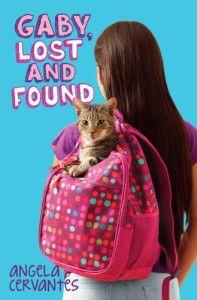
Gaby Lost and FoundDESCRIPTION FROM THE BOOK JACKET: When Gaby Ramirez Howard starts volunteering at the local animal shelter, she takes special pride in writing adoption advertisements. Her flyers help the dogs and cats there find their forever homes: places where they’ll be loved and cared for, no matter what.

Gaby is in need of a forever home herself. Her mother has recently been deported to Honduras and Gaby doesn’t know where to turn. Meanwhile, Gaby’s favorite shelter cat, Feather, needs a new place to live. Gaby would love to adopt her–but if Gaby doesn’t have a place that feels like home to her, how can she help Feather?

MY TWO CENTS: I’m a sucker for stray animals and have more than once scooped up a roaming dog and delivered him to a non-kill animal shelter. So, Angela Cervantes had me from Chapter 1, which places the protagonist Gaby up a tree trying to rescue a cat. From this point on, Cervantes presents Gaby’s story with a great mix of heart-wrenching moments and humor. Some parts of the book are light and soooo middle school–I know; I teach in one–while other parts deal with the more serious issue of deportation and the effects on children when a parent is gone.

Since her mother has been deported to Honduras, Gaby must live with her father, who is ill-equipped to raise a sixth-grade girl. Gaby would much rather live with her best friend Alma and her family. Better yet would be if her mom were able to come back home, but this trip is expensive and dangerous.

Cervantes parallels Gaby’s situation with the sixth-grade class community project at the Furry Friends Animal Shelter. Both the animals and Gaby have less than ideal living arrangements are in need of new permanent homes. During the community service project, Gaby has the special job of writing descriptions of the animals on fliers that will be displayed around town and on the shelter’s website.

Eventually, Gaby writes a flier for herself. In part it reads:

Gaby Ramirez Howard: …Three months ago, my mom was deported, and now I live with my father, who looks at me like I’m just another job he wants to quit. I’m seeking a home where I can invite my best friend over and have a warm breakfast a couple times a week. Waffles and scrambled eggs are my favorite!

GAH! My heart, Angela Cervantes!!

In between the chapters that caused me to clutch my heart and give my daughter random hugs, I literally laughed out loud. Scenes with the four friends–Gaby, Alma, Enrique, and Marcos–are hysterical. In one, Alma, who is trying to train a spirited shelter dog named Spike, tests the commands on the boys. “Back! Down! Sit and stay!” In another scene, three firefighters arrive at the shelter to adopt a dog for the firehouse. Alma says to the other girls, “Let’s go see what’s smoking,” and then the girls nickname each of the cute firefighters: Hottie, Smokey, and Sizzler. Very funny.

If you are a middle school teacher, librarian, or parent, you should have a copy of this book on your shelf. To make it easy for you, Angela Cervantes is giving away a signed copy of Gaby, Lost and Found, along with a poster and T-shirt. Click on the Rafflecopter link here to enter.

TEACHING TIPS: Gaby, Lost and Found could be used in a Language Arts or social studies classroom. In Language Arts, students could track the plot and make predictions along the way about how Gaby’s situation will be resolved. Students could also be creative and write “fliers” for any number of people or things: their siblings, pets, themselves. A social studies could easily use the novel in a unit about the history of immigration in the United States. Ideally, after reading non-fiction texts, students could read a novel-length book–either fiction or narrative nonfiction–that centers on immigration. In addition to Gaby, Lost and Found, teachers could offer books about people from other countries so that students could compare/contrast immigrant experiences.


Angela Cervantes

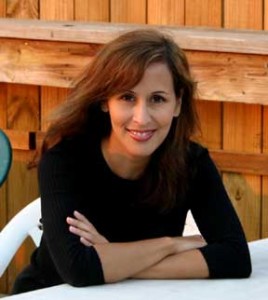
AUTHORAngela Cervantes was born and raised in Kansas, with most of her childhood spent in Topeka in the Mexican-American community of Oakland. Angela has a degree in English and an MBA, and she is the co-founder of Las Poetas, a Chicana poetry group that has developed into the Latino Writers Collective. In 2005, her short story, “Pork Chop Sandwiches,” was published in Chicken Soup for the Latino Soul. In  2007, she won third place for Creative Nonfiction in the Missouri Review’s audio competition for her story “House of Women” and Kansas City Voices’ Best of Prose Award for her short story, “Ten Hail Marys.” In 2008, she was recognized as one of Kansas City’s Emerging Writers by the Kansas City Star Magazine.

Gaby, Lost and Found is her first novel.

FOR MORE INFORMATION ABOUT Gaby, Lost and Found visit your local library or bookstore. Also check out worldcat.org, indiebound.org, goodreads.com, amazon.com, barnesandnoble.com, and Scholastic.

Author Angela Cervantes On Publishing & Her Animal-Loving Latina Protagonist

By Cindy L. Rodriguez

Today, we are thrilled to have a Q&A with author Angela Cervantes, who talks about her debut novel, Gaby, Lost and Found (Scholastic), her advice for pre-published writers, and a little about how she crafted a wonderful middle grade novel that’s both funny and heartbreaking. Angela is also super generous and is offering a signed book, a poster, and a T-shirt to one lucky winner. Click on the Rafflecopter link here or at the end of the post to enter!

Gaby Lost and FoundCR: Since this is your debut novel, can you tell us about your publishing journey. Were there any things you did in particular that, in hindsight, you think were particularly helpful as you pursued an agent and book deal? What advice would you give to pre-published writers?

AC: My middle grade novel, Gaby, Lost and Found has been out almost 10 months now, and I’m still learning things about myself and the publishing journey. In the beginning, when I was a simple wanna-be-Kid Lit author with a manuscript, the idea of facing the publishing industry was scary.If you had met me then, I would have told you that I’d rather pick up a hitchhiker with face tattoos than have to face the world of slush piles and soul-less rejection letters.

Eventually, I realized that if I loved my book enough, I had to be willing to take on rejection. After all, the worst things they can do to you is ignore you completely or reject your work. Tough, but big deal. Every writer in the history of the written world has received a rejection or been passed up at some point, right? If they rejected my work, I was in good company.

I could go on and on with advice for pre-published writers. Never pick up hitchhikers with face tattoos! Really, I’ve learned so much. First, I would start with the very basic: If you’re going to go the traditional publishing route, like I did, then you must finish that manuscript. You have to show the agent something fast when they ask for a partial or full manuscript. My second advice is to take that completed manuscript to a writing critique group. Feedback is crucial. I belong to a critique group called the Firehouse Five (although we are six now) and we meet monthly to provide critique to each other’s work. It’s priceless. My final advice, take your writing-group-critiqued and completed manuscript to a local writers’ conference and sign up for a pitch or first pages sessions with an agent. I met my agent through a writer’s conference. She liked my pitch, but made it very clear there was plenty of work to be done on my manuscript before she’d offer representation. I did the work and I was signed. With her guidance, I made more revisions and it was sent off for submission. Soon, the first rejection arrived. It didn’t kill me. A week or so later, I received an offer for my first novel. Yay!

Angela C and brother

From her website: Angela, age 10, with her brother Enrique and their dogs, which were the inspiration for Spike in the novel.

CR: I love how you mixed Gaby’s story with the animals’ stories, how they were both in new situations and looking for new homes. How did you get the idea to address the subject of immigration for a MG audience, using homeless animals as a link to Gaby’s situation?

Thanks, I’m glad you enjoyed it. I really didn’t start with the idea to address the subject of immigration. I’m character-driven in my writing so I started with just Gaby, a funny, smart, and brave girl who is also a serious animal lover like her mom. I think if I had started out subject-driven with the intention to write a book on the issue of immigration, it would have been a much different novel. It would have come across as more lecturing and I don’t like to lecture or be on the receiving end of a lecture. No thank you. And kids don’t want to be lectured to either. At school visits, kids always ask me about deportation, but more in the context of why or how this happened to Gaby. They always tell me that they want Gaby and her mom to be together. They’re invested in Gaby’s happiness. It’s precious.

CR: Even though Gaby is dealing with the serious issue of her mother being away, she is also a “typical” MG girl, laughing and doing silly things with her male and female friends. Was this a conscious decision on your part, to show a range of emotions and not have it be an “issue” book or overly depressing?

AC: It’s funny that you ask that because my original drafts were even more depressing! I pulled a lot out during the revision process because the story was going in all sorts of directions. What got me back on track was again focusing on Gaby and who she was and not what she was going through. Gaby is an eleven year old girl. She loves animals. She loves glitter. She can climb trees and beat the boys at a water balloon fight. Would Gaby be defeated by bullying at school, the loss of her mom, the neglect of her father, and poverty? Or would this young girl rise up, even if she responds with some missteps, and show us what she’s made of? For me that was the only conscious decision on my part in writing this novel. I had to be true to Gaby and not define her by what she was going through, but show where she was going.

CR: Are you an animal lover? Did you have to do any particular research about animal shelters or spend time at one to capture what happens there?

AC: Besides my many years of experience as an animal lover and pet owner, I did visit several local animal shelters for information and inspiration. At the animal shelters, I asked tons of questions, held a lot of cats, wrote a lot of notes and pet a lot of dogs for this book. Why can’t all research be that much fun?

CR: What are you working on now? Can you share what’s next for you?

AC: Sure! I’ve completed my second middle-grade novel and I am now in the throes of revision. Fun stuff! Wish me luck.

Angela Cervantes

Angela Cervantes was born and raised in Kansas, with most of her childhood spent in Topeka in the Mexican-American community of Oakland. Angela has a degree in English and an MBA, and she is the co-founder of Las Poetas, a Chicana poetry group that has developed into the Latino Writers Collective. In 2005, her short story, “Pork Chop Sandwiches,” was published in Chicken Soup for the Latino Soul. In  2007, she won third place for Creative Nonfiction in the Missouri Review’s audio competition for her story “House of Women” and Kansas City Voices’ Best of Prose Award for her short story, “Ten Hail Marys.” In 2008, she was recognized as one of Kansas City’s Emerging Writers by the Kansas City Star Magazine.

Gaby, Lost and Found is her first novel.

Click HERE to enter the giveaway. One winner will receive a signed copy of Gaby, Lost and Found, a poster, and a T-shirt. You can enter for free once each day. A winner will be chosen on Saturday, 5/24/14. Good luck!!

How an Adult White Guy Came to Write About a Latino Teen

By William Hazelgrove

17239293The first question I get is usually: “How could you write in the voice of a thirteen year old Latino boy?” I am about as far as you can get culturally from a young adult Latino just barely hanging on with his mother. But of course, if you are a writer, you are so many people that biographers will never get it straight. It is the same way I wrote in the voice of an old African American man in Tobacco Sticks and in Mica Highways.
Voice is everything. Once you have the voice you have the novel. When I started The Pitcher, I wrote it in third person but quickly realized it would not work that way. It was boring and distant. So I started over and I knew it had to be first person, but who would tell the story? The old pitcher? The mother? No. The boy, Ricky would tell the story. And so I started to play around with his voice. Then I wrote one paragraph:

I never knew I had an arm until this guy calls out, “Hey, you want to try and get a ball in the hole, sonny?” I am only nine, but Mom says, “Come on, let’s play.” This carnival guy with no teeth and a fuming cigarette hands me five blue rubber balls and says I throw three in the hole, then we win a prize. He’s grinning, because he’s taken Mom’s five bucks and figures a sucker is born every minute. This really gets me , because we didn’t have any money after Fernando took off, and he only comes back to beat up Mom and steal our money. So I really wanted to get Mom back something, you know, for her five bucks.

And I had Ricky then. I had the novel. And where that voice came from is anyone’s guess. Maybe it is that kid who messed around in Baltimore City where I grew up. Maybe it was some of the Mexican guys I worked with in security. And the hard times Ricky and his mother go through are my own hard times. And the baseball is my son’s baseball and the coaches and parents are from nine years of being an assistant coach with my son. The immigration issues are from our time.

When I was thinking about writing The Pitcher, I was reading what was going on in Arizona at the time with immigration and the whole stop and ask people for their papers to deport them back to Mexico. When I wrote the mother character Maria I wanted her to have the same outrage that I felt reading about this practice of stopping people and demanding to see their papers. I wanted her to draw the conclusions that this was fundamentally un-American and I wanted her son Ricky to pick up on that especially since he was facing off with a Tea Party mom and her son.

I read a lot of accounts about Dream Kids in this country and how they had made their lives and then were in danger of being deported. That was really how I got the idea of making Ricky a Dream Kid. His mother did come over and make a life and now she was in danger of being deported.

Culturally, I knew Ricky because I know how it feels to be an outsider and to have all the odds stacked against you. Ricky’s dream of becoming an MLB pitcher is my own of becoming a novelist against immense odds.

Then again, maybe it was just Ricky flying around out there waiting to be born. But when The Latina Book Club made it their Monthly Selection or LatinoLA did a story on the immigration issues in the book or I stand up on a stage at the Latino Book Festival in Chicago and read my book that has to be translated to Spanish so the audience can understand what I am saying is…even I wonder how a I came to write a Latino novel.

 I guess I just did.


DSC_0020William Hazelgrove is the author of five novels, Ripples, Tobacco Sticks, which hit the National Bestseller List, Mica Highways, Rocket Man and The Pitcher. He was the Ernest Hemingway Writer in Residence where he wrote in the attic of Ernest Hemingway’s birthplace. He has written articles and reviews for USA Today and other publications. He has been the subject of interviews in NPR’s All Things Considered along with features in The New York Times, LA Times, Chicago Tribune, and the Chicago Sun Times, among others. His most recent novel, The Pitcher is a Junior Library Guild Selection. He runs a political cultural blog, The View From Hemingway’s Attic.