Guest Post: ¡Qué Vivan los Niños Luchadores!

Todos

All images from Niño Wrestles the World come courtesy of Macmillan Children’s Publishing Group.

By Lettycia Terrones

On a bright, 108º F. Las Vegas afternoon, inside the cavernous decadence of Caesars Palace, audience members attending the 2014 Pura Belpré Award Celebración were treated to a gem of a speech by this year’s Pura Belpré Illustrator Award winner, Yuyi Morales. Recognized for her outstanding book, Niño Wrestles the World, Yuyi’s acceptance speech affirmed the resilient strength of children and their power of imagination. Her words served as a reminder to all educators of the important charge we have to provide our children with stories that accurately portray their worlds and strengths.

Since 1996, the Pura Belpré Award has annually recognized Latin@ writers and illustrators for excellence in children’s literature that “best portrays, affirms, and celebrates the Latino cultural experience.” This year’s winner for illustration, Niño Wrestles the World, does just this by capturing –through story, rhythm, and images— the intangible ingredients that come together to form a uniquely Chicano-Latino flavor that any child growing up in East Los Angeles or El Paso will immediately recognize.
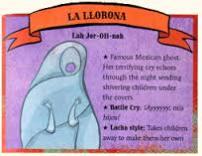
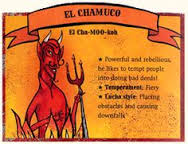
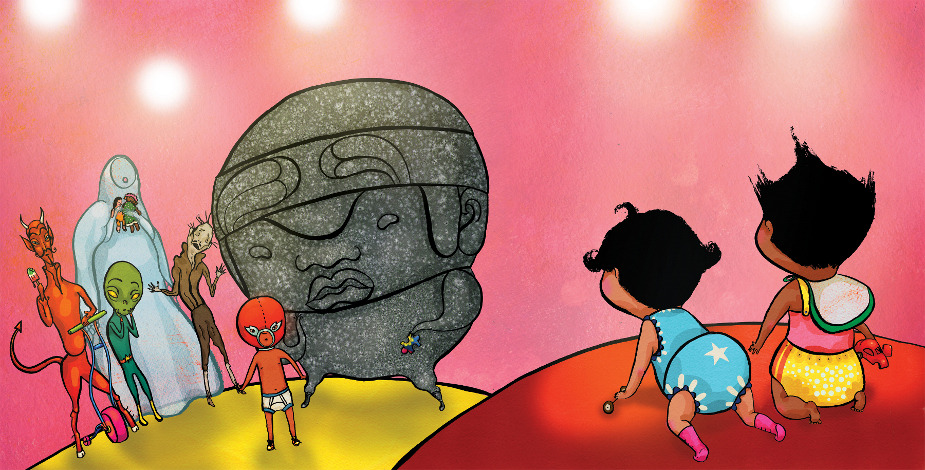
LloronaCardChamucoCardWhat are these ingredients? La Llorna. El Chamuco. El Extraterrestre. La Cabeza Olmeca. Las Momias. These are the protagonists that star in countless cuentos told and re-told in Mexican and Chicano families. Yuyi presents a dynamic cuento of a boy-hero in a wrestling mask, un niño luchador, who through wit, humor, ganas, and family teamwork, outsmarts these terrifying figures of Mexican and Chicano cultural mythology. As Yuyi reminded us in her acceptance speech, children’s imaginative capacity is an empowering tool that enables them to confront life situations with positive resilience. In addition to her prepared remarks, Yuyi described her own imaginative process as a child, where she was able to transform the often scary and mysterious cultural myths of La Llorona and El Chamuco into figures she could contend with and, perhaps most importantly, learn to play with.

This transformative power demonstrates the enormous agency children have to make meaning in the world. It depicts what Dr. Tara Yosso points to in her seminal work on cultural wealth and social capital, which she calls Community Cultural Wealth. Community Cultural Wealth lists specific assets practiced and nurtured in communities of color, which serve as forms of resistance to the myriad social oppressions marginalized people contended with daily. Emerging from the cultural knowledge passed down in families and communities, these assets include “aspirational, navigational, social, linguistic, familial and resistant capital.”

NinoVChamuco
Yuyi’s book exemplifies Community Cultural Wealth at work. Its text and illustration display the wealth of linguistic storytelling traditions of cuentos handed down in our families. It also serves as a meta-narrative of resistance through its prominent use of Mexican and Chicano cultural images. Yuyi’s narrative and illustration authentically capture how, for instance, the myth of La Llorona is in continuous transformation as she is imagined by our children today. Instead of becoming clichéd tropes of Mexican and Chicano culture, El Chamuco, El Extraterrestre, La Cabeza Olmeca, and Las Momias, are represented authentically as living and changing stories. This truly is a marker of Yuyi’s outstanding mastery of the picture book. She brings to the world of children’s literature works that defy cultural stereotypes, and that champion children as creative, imaginative meaning-makers.
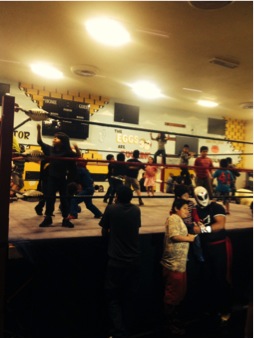
Photo by Lettycia Terrones, 2014

Photo by Lettycia Terrones, 2014

I thought a lot about the impact of Yuyi’s Niño Wrestles the World when I attended a Lucha Libre Night at the East Los Angeles Community Youth Center last spring. The family-run event brought in masked luchadores from Tijuana and Los Angeles to battle it out in the recreation center’s well-worn boxing ring. At the halftime marker, the ring became open for the many kids in attendance to frolic with abandon and take photos with the night’s Lucha Libre heroes. I thought about how for many children living in underserved communities, Yuyi’s story of the boy-hero, the niño luchador, is an actual and accurate depiction of their lives. I wondered how many of the kids in attendance that night had been exposed to Niño Wrestles the World in their classroom or public library. I wondered how this exposure would strengthen their sense of belonging and reflect back to them their self-efficacy.

Educators should remember the characters brought to life in Yuyi’s picture book are still very much alive today in the imaginations of Latino children. They are stories that form an essential cultural fabric of what it means to be Mexican and/or Chicano. Whether we call our people first-generation, second-generation, or if we are from generations that preceded the Treaty of Guadalupe, or are present-day refugee generations embarking on perilous journeys, climbing atop trains and traversing deserts, to seek our families and a promise of a better future in the United States. These stories are ours. They form an American story.

References

Pura Belpré Award

http://www.ala.org/alsc/awardsgrants/bookmedia/belpremedal

Yosso*, T. J. (2005). Whose culture has capital? A critical race theory discussion of community cultural wealth. Race Ethnicity and Education, 8(1), 69-91.

Yuyi Morales, Illustrator Award Acceptance Speech, page 4 http://www.ala.org/alsc/sites/ala.org.alsc/files/content/awardsgrants/bookmedia/belpre-14.pdf
let2

Lettycia Terrones, M.L.I.S., serves as the Education Librarian at the Pollak Library at California State University, Fullerton. Her research interests are in Chicana/o children’s literature and critical literacy. Lettycia is an American Library Association Spectrum Scholar and a member of REFORMA: The National Association to Promote Library & Information Services to Latinos and the Spanish Speaking.

Book Review: Dalia’s Wondrous Hair/El Cabello Maravilloso de Dalia by Laura Lacámara

By Sujei Lugo

18654384DESCRIPTION FROM THE BOOK: A Cuban girl transforms her long and unruly hair into a garden.

MY TWO CENTS: In this bilingual picture book, with a Spanish translation by Gabriela Baeza Ventura, Laura Lacámara brings us a whimsical Caribbean tale of a young Cuban girl and her luxuriant hair. Lacámara’s colorful illustrations express the joyful spirit of the main character and transport us to the sunny, tropical Caribbean.

The story introduces us to Dalia, a young girl who one day wakes up and finds out that her hair has grown straight up and as tall as a Cuban royal palm tree. Many children would panic with such news, but Dalia can’t hold the excitement of her new wondrous hair. She then embarks on a journey to add to her hair different natural elements of a Caribbean tropical island, such as wild tamarind, coontie plant, and violet leaves. Her purpose is to show her mother the different types of “trees” she can recreate using her hair, ending with a beautiful and unique one.

What stands out in this picture book is Lacámara’s ability to portray through her paintings the endearing relationship between Dalia and her mother and their lives in harmony with nature. The expressions on their faces capture the happiness and warmth of a loving mother and daughter bond. Other characters in the book, Señora Dominguez, Señora Soledad and Soledad’s daughters, all play supporting roles to Dalia’s “hairy” journey and to their connection to the natural world. Through this all-women set of characters, we see a growing sense of community and a sympathetic portrayal of peculiar characters we can encounter in a rural neighborhood.

By situating their home in rural Cuba, the author incorporates the Caribbean’s particular flora and fauna into the story. Through beautiful landscapes that fill the book with a graphical sense of the fresh air and natural environment of this tropical island, the book introduces young readers to different components of the natural world: royal palms, sugar cane fields, wild tamarinds, moonflowers, coontie plants, wild violets, caterpillars, birds, fireflies, ponds, and the ocean. Even the characters’ clothing are filled with flowers and leaf patterns, giving us powerful images that convey a reverence to the natural world.

According to a statement on the first page, the publication of Dalia’s Wondrous Hair/El Cabello Maravilloso de Dalia was funded by a grant from the city of Houston through the Houston Arts Alliance and published by Piñata Books, the children’s literature imprint of Arte Público Press. We should acknowledge their efforts, along with other great publishers,  to continuously provide a space for the publication of Latino/a authors and illustrators.

TEACHING TIPS: This bilingual picture book is recommended for children ages 4-7. It works well as a read aloud and for early readers. At home or at the library, librarians, parents, grandparents, family members or guardians can read with their young ones in English, Spanish or both, while teaching new words and identifying different colors, animals, and plants. The author provides a guide to create your own butterfly garden at home, a fun activity for everyone to enjoy.

Language Arts, Science, and Art teachers can create different activities where students can learn new words, identify adjectives mentioned throughout the story, and learn about different types of plants, trees, and animals. The book includes notes of Cuban natural world references (in English and Spanish) that are part of their stories, with a description. Art teachers can use this book to incorporate science to their classrooms. Students can draw, paint, or use different materials to create their own version of Dalia’s hair, using as reference words learned and natural elements of the story. 

AUTHOR: Laura Lacámara is a Cuban-born children’s books author and illustrator. Lacámara holds a Bachelor of Fine Arts in Drawing and Painting from California State University, Long Beach and studied printmaking at Self Help Graphics in East Los Angeles. Her love for writing and illustrating children’s books grew when she signed up for a children’s book illustration class at Otis College of Art and Design in Los Angeles, California.

She is the author of Floating on Mama’s Song/Flotando en la Canción de Mamá (Junior Library Guild Selection, Fall 2010 & Tejas Star Book Award finalist 2011-12) and illustrator of The Runaway Piggy/El Cochinito Fugitivo (winner of 2012 Tejas Star Book Award) and Alicia’s Fruity Drinks/Las Aguas Frescas de Alicia.

Laura Lacámara is an active member of the Society of Children’s Book Writers and Illustrators (SCBWI) and frequently serves as a presenter at conferences, book festivals, and schools. She currently lives in Southern California.

FOR MORE INFORMATION ABOUT Dalia’s Wondrous Hair/El Cabello Maravilloso de Dalia, visit your local library or bookstore. Also check out worldcat.org, indiebound.orggoodreads.comamazon.com, and barnesandnoble.com.

Illustrator Joe Cepeda Talks to Latin@s in Kid Lit, Part 1

By Lila Quintero Weaver

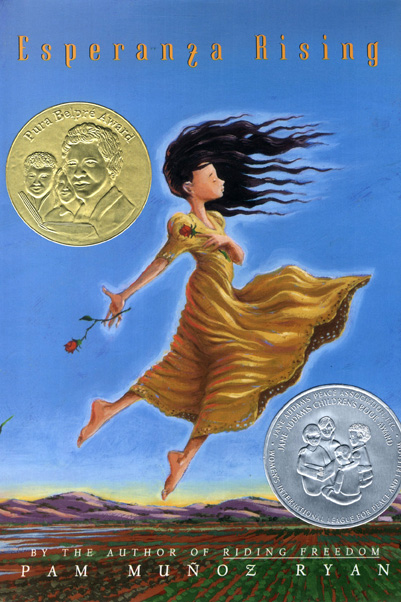
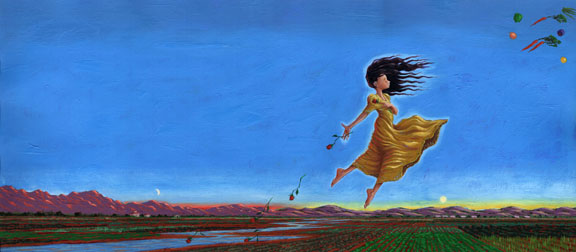
Long before I met Joe Cepeda at the National Latino Children’s Literature Conference in 2012, a post card of the cover illustration of Pam Muñoz Ryan’s Esperanza Rising was tacked to my then-11-year-old daughter’s bedroom wall. Every time I glanced at that soaring figure, my spirits lifted. Surely part of the book’s enormous success can be traced back to Joe’s luminous cover painting of Esperanza floating above the California earth, but that’s hardly the end of his contribution to children’s literature.

Lila: Welcome to Latin@s in Kid Lit, Joe! Thank you for taking time out of your busy schedule to talk art and books. Let’s start our conversation with Esperanza Rising. How did you come up with the concept?

Joe: After seeing the title, it wasn’t too difficult to imagine young Esperanza in the air. My first sketch depicted Esperanza with her hair and dress floating behind her as if she were flying. Almost immediately, however, I changed it and flipped her dress and pretty dark tresses to sweep in front of her. What I realized is that I didn’t want to show Esperanza as if she were navigating in the air on her own. I wanted her to be swept away by the wind. Everyone who has read the book knows that Esperanza’s life changes from one day to the next and I wanted the image to reflect that life-altering event, as well as the hopefulness her story and name literally implies.

EsperanzaJacket72 copy 2Lila: What does it mean to you to have your work as the cover of such a powerful story?

Joe: A great deal. It’s never a bad thing to have your work associated with a story that has such resonance. In contrast to doing an illustration for a magazine, which has a very short life, a book hangs around longer. A book that continues to reach so many readers, year after year, is wonderful for the life of the image as well. Beyond that, one is always striving to create work that might emotively uplift the reader. It’s a beautiful story and if the cover helps to do just that, it’s very gratifying.

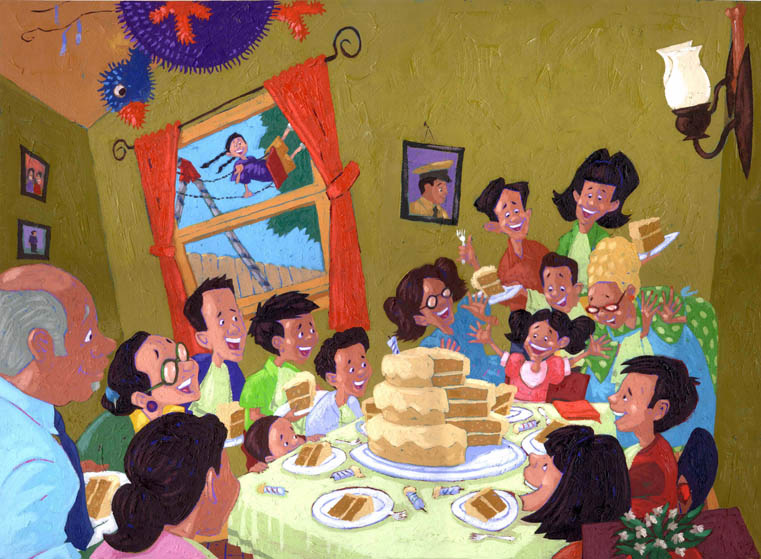
Lila: Your list of children’s books includes quite a few with Latino or African American characters. Does being Latino influence your development of minority characters and the worlds they inhabit? SideBySide_04_72

Joe: This is always a bit of a difficult question to answer, perhaps because I think very little about it when I’m illustrating books about people of color. I’d say the books that I see that seem to miss the mark ethnically/culturally seem to overthink it. There are a lot of things I may consider in developing a character before I get to their ethnic depiction. Does she wear glasses? Is she thin? Short? Should he be neat or a bit of a slob? Is he forgetful? Would he wear a hat? Many of the of the character’s inclinations and look are not included in the manuscript. By the time I get to the character’s cultural look, it kind of takes care of itself.

I wrote a story, The Swing, that took place in a neighborhood just like the street I grew up on. I’m Chicano, and I could write and illustrate that story about Chicano neighbors from a very immediate and intimate place. East Los Angeles isn’t Spanish Harlem, though, nor is it Little Havana. It seems to me illustrating stories about those Latino communities wouldn’t be all that different than illustrating a story about Inuits in the Arctic, Mongolians living in Yurts, or a story set in the Deep South. I’m respectful of the content and information that presents itself in illustrating stories of people of color, but I don’t live there that long. My preference is not to develop minority characters as much as illuminate the story that’s being told. For me, every step toward “development” is one toward information, accuracy and specificity, which is all fine and good, but it might also be one more step away from grandness and magic… and the informal joy of uncertainty and open-endedness.

MiceAndBeans4_75 copy

Lila: What’s on your drawing board right now?

Joe: Starting a new bilingual book based on a kid’s song. Writing a story for a picture book. Lunch.

 ——————-

And that’s not the end of Joe’s fascinating interview. Please stay tuned for tomorrow’s  follow-up post!

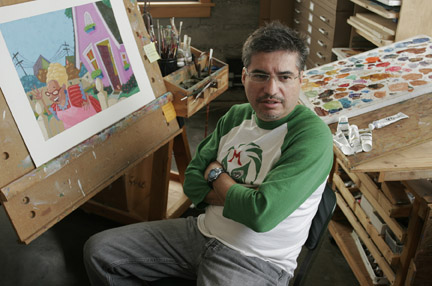
 second_pic_4x6_72Joe Cepeda is an award-winning illustrator of children’s books who also works in magazine illustration. He lives in California and serves as president of the Society of Illustrators of Los Angeles. For more information, visit his website.