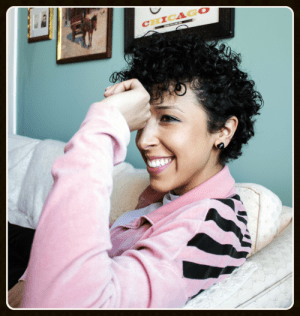
A Studio Visit with Illustrator Zara González Hoang


By Cecilia Cackley

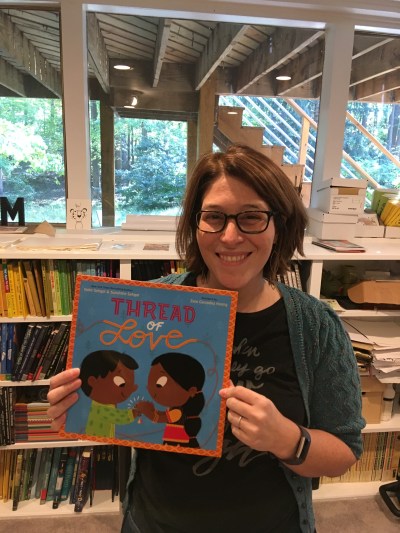
Zara González Hoang is an illustrator who is just beginning her career in children’s literature. She created the art for the picture book Thread of Love by Kabir Sehgal and Surishtha Sehgal and recently sold her book A New Kind of Wild which is inspired by her father’s experience moving from Puerto Rico to the United States as a child. We met at her studio in Falls Church, VA to talk about her journey to becoming an illustrator.
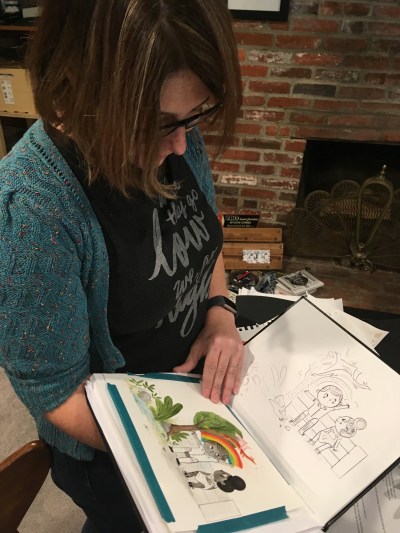
IMG_8475


Cecilia Cackley: Tell me a little about your path to becoming an artist

Zara González Hoang: When I was little my dad was really artistic and he used to draw with us. Some of my favorite memories are of me and my dad just laying on the floor in the porch or something and just drawing horses. My mom was a teacher so we always had paper and pens and I just always drew as a kid. And I think, too, everybody has things in their growing up that are probably not all that fantastically awesome and for me drawing was my escape. I would go hide in my room and draw and make up all these different worlds. I really liked to combine animals into new animals. My favorite was the “horseger”—it was a horse and a tiger which were my two favorite animals.

I’ve always been doing art, but I never considered doing it seriously. I went to college and took art classes but I also studied computer science and that was the practical side of me. There’s always been these two parts of me, the very logical side and the creative side. I’ve always been drawn to computers, and I’ve always been drawn to art. I majored in art, but then I worked doing network administration and web design—merging art and computers in a way. I didn’t start seriously drawing until the iPhone came out and I started a company with some friends making apps for kids and I illustrated them.

I never wanted to do kids books, it’s so weird! And it’s because I was afraid. I was afraid that I wouldn’t be able to be consistent, that it was too much work, that I just wasn’t good enough. After I had my son, and I was reading all these picture books, I came back to this place I really loved that I thought I couldn’t have anymore. I always looked at picture books and wanted to buy them, but I always thought, I don’t have any kids, I can’t buy them, which is such a silly thing. There’s no reason why you can’t have these things you want just because you’re not a child. It doesn’t mean they’re any less beautiful or valid. I’ve always been someone who hid that part of me. I always hid my sketchbooks. It was such a personal part of myself that I felt I couldn’t flaunt it.

It wasn’t until I had my son that I felt like I really had permission to do this. I was looking for something to do with more meaning, and I realized–or my sister realized for me–that I have this gift for art and for writing. So I started putting together my portfolio for children’s books, and then I started going to SCBWI conferences, and I realized that everyone there was just like me: super nerdy about books and picture books! My friends talked me into submitting my work to agents, and I got a super awesome agent who I love. When I queried agents, I queried them as an illustrator who wanted to write, and I sent my portfolio but not any writing. The reason I knew she was the right agent for me was that she read my story A New Kind of Wild, and she told me how to make it better, and we spent the next year working on it to get it to a place where we could send it out. I feel like I finally came back to where I was supposed to be.
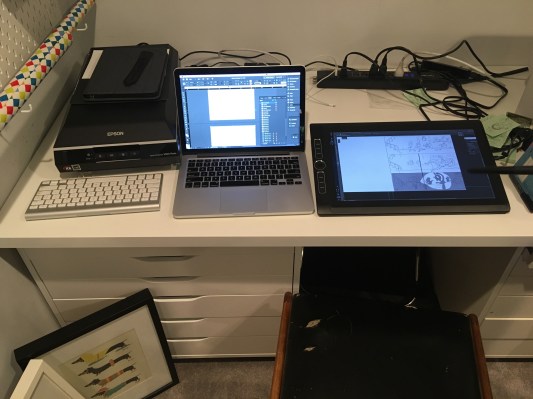
IMG_8468


CC: You started out working digitally, but in your studio, you showed me more traditional media like pen, ink, and watercolor. How has that process gone?
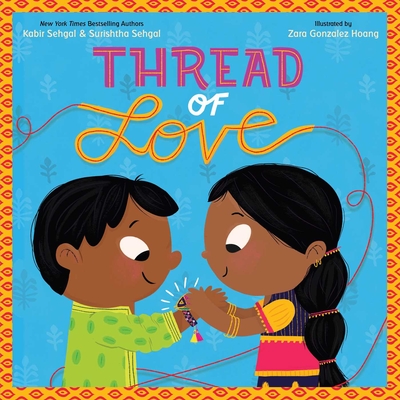
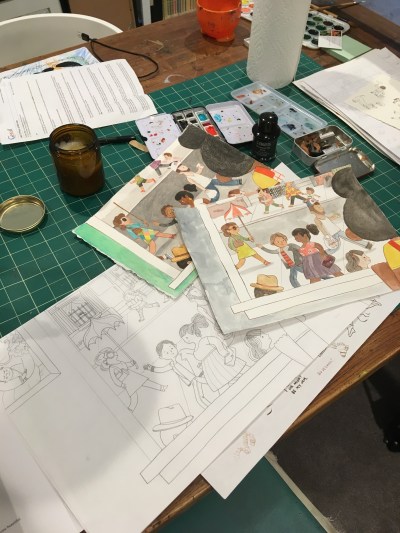
ZGH: When I did Thread of Love, I didn’t think I’d want to do anything the traditional way. I didn’t think I was any good at it. I liked digital, I liked the control of it. So when I got the manuscript of Thread of Love, that was how I was going to do it. I could see the color palette as soon as I read the manuscript. I don’t know if it’s my background in graphic design or what, but I saw the color palette first. It wasn’t until after that project that I started moving into more traditional media. Two things happened. One, I started thinking about the things that I liked and the illustrators and artists who I love the most work traditionally. There seemed to be a disconnect for me between what I did and what I liked, and I wanted to bring that closer.

When I started writing A New Kind of Wild, it had originally been digital to me, and that’s how I submitted my dummy, but I wanted to do it traditionally because in my mind that’s how it was. So I was doing all these studies of my characters traditionally and posting them on Instagram. My editor was creeping on me, and she saw them and she asked me if I would consider doing it traditionally. It was like she was seeing into my mind or my heart because that’s what I wanted, but I didn’t feel comfortable enough to say what I wanted. I’m not at the point of making the art yet, so it may end up being digital, but it may end up being a hybrid mix. And that’s fine because I have a lot of comfort with the ability to erase mistakes digitally.

I’m a perfectionist in some ways. I don’t like the mistakes and even when I’m working traditionally because I’m using watercolor and colored pencil and ink, the things I love about watercolor I also hate. If you have a big swatch of color, you’re going to see the way the water moves in that swatch of color and those imperfections are the things that make it interesting.  I’m constantly fighting with myself to be okay with the imperfect, but I want to try and embrace it because the reality is, life isn’t perfect. I think there’s more emotion and interest in things that are loose rather than tight.
IMG_8470.JPG


CC: Thread of Love is about a very specific Indian holiday, Rashka Bandhan. What was the research process like for that?

ZGH: I am not Indian, so I had to do a lot of research to make sure I got things right. It’s something that was constantly on my mind while I was working on the book. Since I’m not of that culture, I worked really had to get it right. I checked out all the books I could from the library about the holiday, and I relied a lot on the authors telling me that I was portraying things correctly.  I also talked to friends who are Indian and who celebrate Rashka Bandhan. I wanted to make sure my illustrations depicted Raksha Bandhan accurately, especially since it is a holiday that is not one that I celebrate.
IMG_8472


CC: A New Kind of Wild is inspired by your own family history, so what has the research process been like for that?

ZGH: I wrote this book without thinking that it was about my dad’s story—it wasn’t until I was reworking the book that I realized that was the story I was telling. My dad passed away, and he’s not here for me to ask him, so a lot of the stuff I’m relying on is memories of the stories he told me about him growing up. My dad grew up in Puerto Rico with his grandmother until he was ten or twelve, when his mom was in New York. So, in the book, there’s a page where he’s leaving his grandmother. Pieces of my dad’s story are woven through like that. When we went back to Puerto Rico, we went to my dad’s house that he grew up in, so there will probably be some of that place in the book.

CC: What are some goals you have for where you want your career to go as a writer and illustrator?

ZGH: I think where I want to go does involve being a writer, so it means telling my own stories, and that’s both on the Latinx side and also on my other side because I’m half Puerto Rican and half Russian/Polish/Belaruski because my mom’s family came from a place where the borders kept shifting. I want to tell stories about people who are mixed. I have all these ideas for stories about things that are interesting about being from two cultures. I’m also Jewish and I think I’m the only Jewish person I know who had a big pork roast on Hanukkah sometimes because Hanukkah and Christmas fell on the same day and we always had a big pernil and arroz con gandules. I want to write more about that experience. There aren’t really a lot of stories that talk about what it’s like to be part of a family where you eat pho and also matzo balls. It can be confusing to be in the middle of everything. I want to start telling stories about my reality and the reality of kids that are mixed growing up. I don’t really feel that there are books out there that are telling those stories in a way that shows all the fantastic things about having multiple cultures.

CC: What advice do you have for other Latinx artists who are just starting out?

ZGH: The only real advice I have is to find other people that are doing it and try to make friends. One of the best things I ever did was meet someone who created a critique group that let me in. Having people to talk to who understand what you’re going through is priceless; even if nobody’s published, just having somebody to say keep going. It’s hard to talk to people who aren’t trying to be in publishing because they don’t understand how weird this industry is. There’s no rhyme or reason, it’s just persistence and luck. The advice is keep going and find people to share the experience with.



cecilia-02-originalCecilia Cackley is a Mexican-American playwright and puppeteer based in Washington, DC. A longtime bookseller, she is currently the Children’s/YA buyer and event coordinator for East City Bookshop on Capitol Hill. Find out more about her art at www.ceciliacackley.com or follow her on Twitter @citymousedc


Spotlight on Latina Illustrators: Andrea Galecio, Saskia Bueno, and Jeannette Arroyo


By Cecilia Cackley

This is the seventh in a series of posts spotlighting Latina illustrators and this time we are shifting focus slightly. Instead of interviewing illustrators of picture books, I had the honor of speaking to two artists who work on book covers and an artist who is publishing her first graphic novel soon.


Andrea Galecio

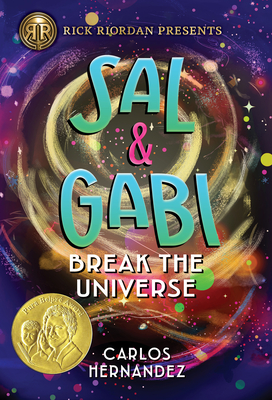
Andrea Galecio is a designer and illustrator from Lima, Peru. Her art can be seen on the cover of Sal and Gabi Break the Universe by Carlos Hernandez, released in March 2019 from the Rick Riordan Presents imprint at Disney/Hyperion.

Q: What or who inspired you to become an artist?

A: I always liked cartoons and then I began to draw little by little. But in adolescence I learned to draw better because I found a page that was called Deviantart and I saw many great illustrations of many good artists, that inspired me a lot.

Q: Tell us something about your favorite artistic medium—why you like it, when you first learned it, etc.

Related imageA:  I work in all art media, traditional and digital, but I like more the digital art. The illustrations I make in Photoshop, there are a lot of great brushes. I learned to draw in the digital medium when I was 15 years old and at the beginning I was watching tutorials, exploring different techniques, then I studied at the university and improved my skills as an illustrator.

When I learned to draw in traditional and digital, I created a channel on YouTube where I talk about being an illustrator, I give advice and I love it.

Q: Please finish this sentence: Books with pictures are important because…

A: … they help us improve our imagination a lot more and give us a guideline about the literary world.


Saskia Bueno

Image result for saskia buenoSaskia Bueno is a graphic designer and lettering artist from Barranquilla, Colombia. Her work can be seen on the cover of Sal and Gabi Break the Universe by Carlos Hernandez.

Q: What or who inspired you to become an artist? 

A: Well I believe art runs in my family. My grandpa was a painter. I remember he used to sit at his table, which was full of papers, colors and art stuff, and he would paint for hours. Sometimes he would let my brother and I paint with him. He would give us some sheets and colors and he always loved what we did with them. Years later, my brother began to study Graphic Design, and I liked so much what he did. I even used to help him with his homework, and that’s when I realized I wanted to study Design, too. So yeah, if I am an artist today its thanks to my family.

Q: Tell us something about your favorite artistic medium–why you like it, when you first learned it, etc. 

A: My favorite tools are, without a doubt, my iPad Pro and Procreate. I fell in love with the iPad a few years ago, when I saw an artist on Instagram and her beautiful work. So the following week I went to an Apple Store and got myself one. What I love about the iPad is that is extremely practical and working with Procreate means having a world of possibilities. You can create sketch, draw, paint landscapes, portraits, watercolors and of course, letters, and that is just amazing.

Q: Please finish this sentence: “Books with pictures are important because…”

A:…in every single one there’s world full of wonder that a kid can discover and be inspired.


Jeannette Arroyo

Jeannette Arroyo is the artist for the YA graphic novel Blackwater with Ren Graham, which will be published in 2020 by Henry Holt.

Q:  What or who inspired you to become an artist? 

A: I’ve always loved drawing since I was little. I was mostly inspired by animated movies and a love for cartoons. Tom and Jerry is an old favorite.

Q: Tell us something about your favorite artistic medium–why you like it, when you first learned it, etc. 

A: Right now, I predominantly work in digital media. It is less frustrating for me and less messy. I got my first tablet around fifteen and I have just stuck with it since.

Q: Please finish this sentence: “Books with pictures are important because…”

A: Books with pictures are important because it’s another avenue of expression and communication. I myself have always found it difficult to convey what I feel just through text, and the ability to incorporate images, color, texture into a book is important to me, and something I am having a lot of fun doing with our graphic novel.


cecilia-02-originalCecilia Cackley is a Mexican-American playwright and puppeteer based in Washington, DC. A longtime bookseller, she is currently the Children’s/YA buyer and event coordinator for East City Bookshop on Capitol Hill. Find out more about her art at www.ceciliacackley.com or follow her on Twitter @citymousedc
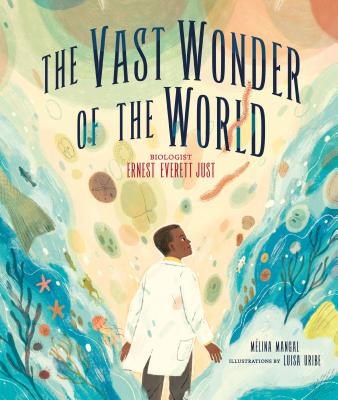
Illustrator Luisa Uribe Takes Us Inside the Making of The Vast Wonder of the World: Biologist Ernest Everett Just


By Luisa Uribe

DESCRIPTION OF THE BOOK: Ernest Everett Just was not like other scientists of his time. He saw the whole, where others saw only parts. He noticed details others failed to see. He persisted in his research despite the discrimination and limitations imposed on him as an African American. His keen observations of sea creatures revealed new insights about egg cells and the origins of life.

Through stunning illustrations and lyrical prose, this picture book presents the life and accomplishments of this long overlooked scientific pioneer.


This book has truly been a journey for me. It was the first picture book I’ve ever worked on that told the story of a real person and, even though I’m a bit messy in real life, I’m methodical in the way I approach every project, so I had to know as much as I could before starting. Carol Hinz, editor at Lerner, recommended I start by reading Ernest E. Just’s biography (Black Apollo of science: the life of Ernest Everett Just, by Kenneth R. Manning) and it grabbed me! From there I started collecting every bit of info on all the places, people, ecosystems, etc. related to him and his work, so I could build the pictures from all this knowledge, and make them as true to history as possible.

I saved every and all relevant scraps I could find on the web, and even from Bogotá it was relatively easy to dig out lots of information and photographs from the time and places mentioned in the book. Also, I was incredibly lucky in that my only sister lives in Charleston, Just’s birthplace and —as it was about to become the birth place of my niece as well— I took the opportunity to investigate some more and see in person some of the places from his early life. Sadly, the house he was born in no longer exists but a couple others nearby still do, and I found the plaque that marks where it used to stand. I had never been able to do this level of research for any project before, and it made this book very special to me.

eejplaque[1]

After all this, it was time to come back to the studio and start drawing. I already had a lot of ideas in my head, which sometimes makes sketching harder, as I’m set on something before putting pencil to paper, but I also had all this collected information ready to come out. After a few thumbnails and when I had a better idea of each spread, I started working on the computer, drawing first a simple and fast sketch to figure out the final composition and then a cleaner and more detailed one.

vwofwthumb[1]

Something I always try to do for all my books is keep a file where I put every spread in thumbnail size in order, so I can see how the whole book is working out in terms of composition and rhythm, and if the color is consistent with the narrative. This keeps me in check, as I tend to stray and pick weird colors from time to time. For this book the water and the ocean were my anchors in terms of color and shapes, and I build everything from there.

vwotwspread12-13_rough1[1]vwotwspread12-13_rough2[1]vwotwspread12-13color_flat[1]vwotwspread14-15color_flat_copy[1]vwotwspread30-31color_flat_copy[1]

I loved working on this book, and it makes me think that there are a lot of less well known Latinx and Colombian figures who would make perfect subjects for picture books. It would be a wonderful way to introduce them to the world!

lu_studio[1]

luisa3peq[1]ABOUT THE ILLUSTRATOR: Luisa Uribe is an illustrator and designer of children’s media. She loves books most of all but has also worked in animation and TV. Her art has been selected for Iberoamerica Ilustra, a catalog that showcases the best work by Spanish-speaking illustrators, and she is the winner of the SOI 2018 Dilys Evans Founder’s Award for The Vast Wonder of the World. She is represented by The Bright Agency. Website: www.luisauribe.com Instagram and Twitter: @lupencita


Spotlight on Latina Illustrators: Lulu Delacre, Cecilia Ruíz, & Yesenia Moises


By Cecilia Cackley

This is the sixth in a series of posts spotlighting Latina illustrators of picture books. Some of these artists have been creating children’s books for many years, while others will have their first book out soon. They come from many different cultural backgrounds, but all are passionate about connecting with readers through art and story. Please look for their books at bookstores and libraries!

Lulu Delacre

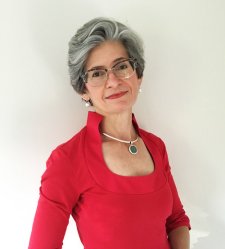
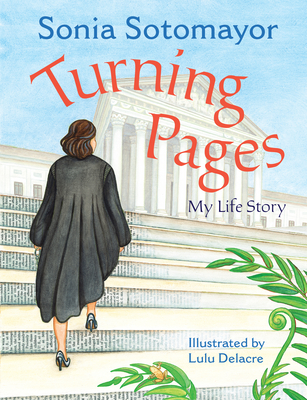
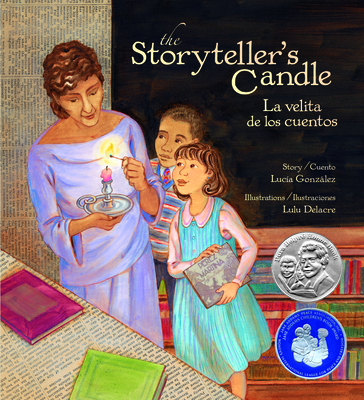
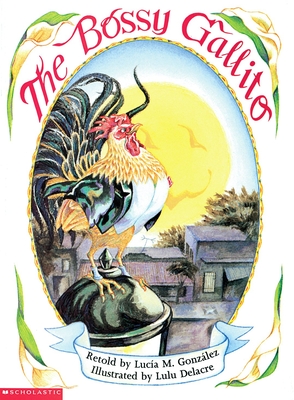
1136d-luludelacremediaphoto1Lulu Delacre is the author and illustrator of many books for young readers, including the Pura Belpré Honor books The Bossy Gallito, Arroró, mi niño, and The Storyteller’s Candle. Originally from Puerto Rico, she now lives and works in Silver Spring, Maryland. Her most recent book is Turning Pages, My Life Storythe picture book autobiography of Supreme Court Justice Sonia Sotomayor.

Q: What or who inspired you to become an artist? 

A: Creating art has always brought me to a place of inner stillness, comfort, and peace. That feeling and the encouragement of my family and teachers have inspired me. One of my earliest memories is of drawing on white sheets of paper to the classical music my abuela Elena played in the second floor apartment of that old pink house in Rio Piedras, Puerto Rico. Abuela Elena saved every drawing I made inside her closet until one day the pile grew taller than my four-year-old self! Later, I clearly remember Sister Antonia, my kindergarten teacher, telling my parents in a very serious tone, “Lulu is going to be an artist.” Witnessing this faith in my talent definitely fostered its growth.

Q:  Tell us something about your favorite artistic medium–why you like it, when you first learned it, etc. 

A: Hmm…this is a difficult question. I say that because I don’t think I truly have a favorite artistic medium. Many illustrators master a medium and stick with it throughout their careers. I thrive in challenging myself to figure out what medium and style each manuscript calls for, which is often a new technique for me. The 39 titles I’ve illustrated include oil paintings, watercolors, color pencil art, collages, oil washes, linocuts, dry soft pastels, graphite drawings, acrylics and mixed media images. It’s thrilling to stretch myself and forge new ground with my artistic endeavors.

Q: Please finish this sentence: “Picture books are important because…”

A:…they are an art form like no other in which the images and words have equal weight in creating a unique experience for the reader. An experience that has the power to delight, move and/or change us.


*

Cecilia Ruíz

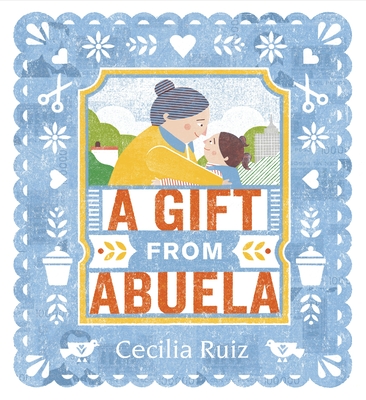
Cecilia Ruíz is an author, illustrator, and designer originally from Mexico City, now living and working in Brooklyn, New York. Her first picture book A Gift From Abuela, was published by Candlewick Press in August 2018.

Q: What or who inspired you to become an artist?

A: I think my biggest influence in becoming a visual artist was my aunt. She is a graphic designer, and when I was little and saw the kind of work she did, I knew right away that I wanted to do the same. I think I went to graphic design school because of her, and that’s how my career path in visual storytelling started.

Q: Tell us something about your favorite artistic medium—why you like it, when you first learned it, etc.

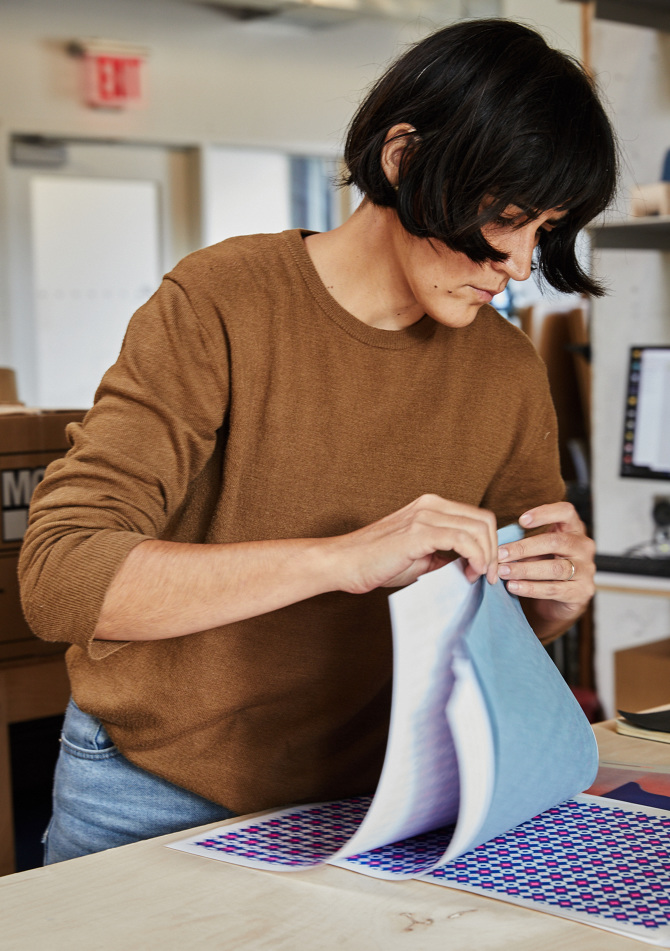
I love printmaking techniques. My first encounter with printmaking was in college in Mexico City. We had a class where we learned screen printing, etching, and linocut carving. I was enamored with the process, the crafty texture, and the charming accidents. It was years later that I discovered that I didn’t need access to a printmaking lab to do it. I started carving erasers and rubber instead of linoleum and printing at home with just a stamp ink-pad. I now do a mix of traditional and digital— technique that I learned and developed while going to grad school at SVA in NY. I carve and print multiple pieces by hand. I then scan all those separate pieces and put them together in Photoshop. I also do the final coloring in Photoshop. This allows me to have the best of the two worlds—the crafty look of printmaking, and the control of the computer.

Q: Please finish this sentence: “Picture books are important because…”

A: They are a door, a window, and a mirror.


*

Yesenia Moises

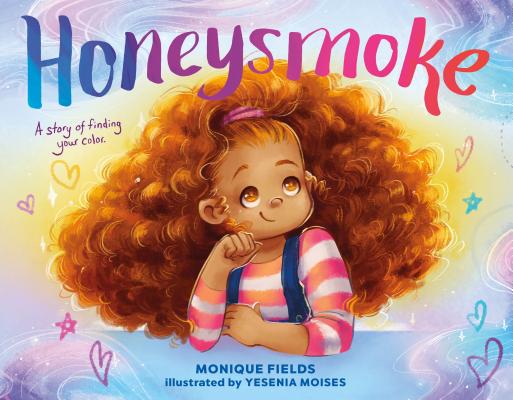
Yesenia_HeadShotYesenia Moises is an Afro-Latina illustrator and freelance toy designer from the Bronx. When she’s not off filling the world with bright and colorful art, her pastimes include playing really silly dating sims and kicking back with her wildly photogenic dog Divo. Her first picture book is Honeysmoke: Finding Your Color by Monique Fields, which will be published by Macmillan in January 2019.

Q: What or who inspired you to become an artist? 

A: Growing up I watched a lot of cartoons and I started off drawing because I wanted to draw my favorite characters. I do think a big turning point that got me really wanting to get better at drawing was when I started watching Sailor Moon. I really loved how it was unlike the other shows I was watching in both its plot and the way the characters are portrayed. The show was also what started my interest in anime and continues to inspire my work to this day. Unlike the episodic nature of American cartoons, there was an overarching plot and characters that were developed over the course of a show’s season and not just quick shorts that wouldn’t leave too much room to get invested in them. Sailor Moon was the first time I felt like I could relate to characters in a show and as I found myself wanting to draw better because I wanted to be able to capture all the details in my fan renditions of the character but also to be able to create stories of my own that others could find to be relatable and could invoke the kinds of warm feelings I get when I remember those days. I’m still working on it but for now, I think it’s safe to say that the show really inspired me to want to draw more!

Q: Tell us something about your favorite artistic medium–why you like it, when you first learned it, etc. 

A: My favorite medium would have to be watercolor. I don’t often get to use it because a lot of the work I do now involves frequent revisions that would be tough to accomplish as quickly as I can digitally. The medium was something that I picked up on my own back in my high school days. I was really into doing everything traditionally since I couldn’t afford a Wacom tablet and I was addicted to looking up as many tutorials as I could on Deviantart to try and teach myself anything and everything just for the sake of being able to create. Watercolor ended up being the medium that I had the most fun using out of the many things I was trying at the time. I loved how soft and delicate things could look with them and how you could really feel have a physical connection between you, the paper, the paint, and the water (provided you got over the initial learning curve of course.) Last year I took part in Blick Art Materials’ 31 Days of Watercolor Challenge and I really enjoyed applying some of the techniques and color palettes that I’d built up from years of working digitally to a medium where prior to that I’d only ever aimed to have a delicate touch. These days I spent a lot more time working on projects for clients in Photoshop but there’s a special place in my heart for the tactile feeling you get when putting paint to paper that digital art just can’t replicate.

Q: Please finish this sentence: “Picture books are important because…”

A: Picture books are important because they offer a viewpoint that children don’t get to directly see in the world around them. They offer a space of imagination and creativity that helps create a gateway to an early interest in reading and learning which I think is a really important lifelong skill.


Cackley_headshotCecilia Cackley is a Mexican-American playwright and puppeteer based in Washington, DC. A longtime bookseller, she is currently the Children’s/YA buyer and event coordinator for East City Bookshop on Capitol Hill. Find out more about her art at www.ceciliacackley.com or follow her on Twitter @citymousedc


Artist Jose Pimienta Gives Advice and Talks About Tools & Techniques


By Cecilia Cackley

Joe Pi’s almost full name is Jose Pimienta. He was born in the Imperial Valley and raised as a Cachanilla in Mexicali, BC. During his upbringing, he was heavily influenced by animation, music and short stories. He’s been drawing as long as he can remember and loved analyzing everything on the TV screen.

After high school, he left his garage band and ventured toward Savannah, Georgia, where he studied Sequential Art and discovered the wonders of Storyboarding. He also discovered a wider variety of music, traveled more and made friends. By the age of 24, he ran into a good suggestion, which was to move to SoCal and pursue a career in storyboarding. In 2009, he packed his belonging and drove to Los Angeles, with a friend. Nowadays, he resides in Tujunga where he takes walks every morning along with a big cup of coffee. He draws comics, storyboards, and sketches for visual development.

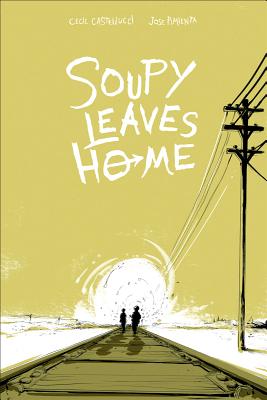
Joe’s latest book is the YA graphic novel Soupy Leaves Home, a historical fiction story by Cecil Castellucci set during the Great Depression. He was kind enough to talk to us about his background and work as an artist.
Did you read comics as a kid? What were your inspirations for becoming an artist? 

Unfortunately, I didn’t read many comics as a kid. I tried getting into superheroes several times, but they never really hit a chord with me. It wasn’t until my teens that I discovered other graphic novels, manga, and slice-of-life stories in comics that rocked my world. I did, however, read a lot of newspaper strips, but I also felt that wasn’t my fit for the type of stories I wanted to tell.

As a kid, my inspirations tended to come from animated movies, books with illustrations and music videos. As long as I can remember, I’ve always liked all those “making of-” featurettes and interviews with film makers and artists. They tended to reveal parts of the process and how a piece of art (whether it was a cartoon, a movie, or a song) was made. So, I guess I was inspired to be an artist by learning more about the arts I liked. The thought seemed logical: I like this Art and this is how they’ve done it and I want to do that because when I try it, I love it. Conclusion: learn more how to do it and keep going.

Please tell us a little bit about the tools you used to draw Soupy Leaves Home.

For Soupy Leaves Home, I drew it the way I prefer to draw comics, which is:

On regular type paper, 8.5 by 11 and a mechanical pencil (0.5, to be precise). I draw 1″ by 1.5″ rectangles and that is the thumbnail for a comic page. I draw my thumbnails small while reading the script, so it helps me to plan out the pace and what the beats of the story are. That way I know if I want to build up to a big scene or if I want to keep a steady pace for a few pages.

After that, I draw on 9×12 2-ply bristol board. Personally, I like the Smooth surface better than the Vellum, but sometimes, Vellum is all the store has, so… ANYWAYS, I draw the page with a blue-lead 0.5 mechanical pencil. I keep my pencils a bit loose, but knowing that I can tighten up later with the inks.

Once the pages are approved, I ink on top of the original pencils with micron pit pens, brush pens, India ink and brush, liquid paper white-out, and sometimes a few fountain pens. After that, I scan the pages and color them digitally with Photoshop. In this stage, I also do some more specific edits, such as deleting certain pencil marks that I couldn’t erase, or making sure the white out looks cohesive on the page. If the blacks look a bit too strokey, or if I just want a solid black instead of having visible brush marks, this is the stage to fix that. After that, my editor takes my files and has a letterer do that which I cannot: letter the book. Those are all my tools: papers, 0.5 mechanical pencils, brush pens, India ink and brush pens, AND Photoshop.

Soupy Leaves Home joins a growing field of comics of all genres, aimed at a teen audience. Are there other titles you recommend to people looking to read more YA comics?

Oh, absolutely:

Boxers and Saints by Gene Luen Yang

This One Summer by Mariko Tamaki and Jillian Tamaki

Surfside Girls by Kim Dwinell

Chiggers by Hope Larson

Nameless City by Faith Erin Hicks

Year of the Beasts by Cecil Castelucci

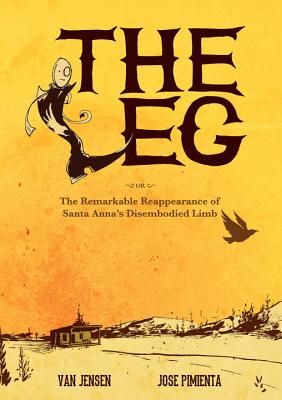
The Leg by Van Jensen and… me, hehe.

.                                                  

While comics for kids and young adults has been exploding as a publishing field, there have been comparatively few Latinx authors and artists getting attention, with the exception of the Giants Beware and Lowriders series. What advice do you have for young Latinx artists looking to break into comics? 

Dear Latinx who want to break into comics: Be bold, fearless, humble, and optimistic. Bold, because it reflects confidence and strength. Fearless, not just because of the current atmosphere, but also because that’s how we fight fear mongering, which is used to keep us quiet and divided. Humble, because, it reminds us that there is a bigger picture in our society, and that which benefits our community, automatically helps us grow to be better individuals living together. And optimistic, because as artists, our spirit is essential, so it’s important to keep it bright.

About breaking into comics? We can post and share. Ask everyone for support, launch Kickstarters, look at companies that you’re interested in, and see their submission guidelines and follow directions, while showing why your stories matter and why they’d be a great fit for their company. Go to conventions near you, small or big (of course they can be expensive, but plan for that. See how many you can make it to), make minis to hand out to show what you’re interested in doing. Go to conventions of what you like (for example, if you like baking, wrestling, cars or music; go to those conventions) get a small vendor table and sell your comic (about baking, wrestling, cars or music.) Starting a Patreon account, I hear, is a popular avenue these days. Most importantly: KEEP GOING. Do not stop making art and telling others about it. I’ve heard several quotes, and the one that still fits best is: It’s a marathon, not a sprint. Do not give up sharing your stories.

On a last note, see if I can end well here: When I first became interested in comics, I wished I had known more Latinx cartoonists (which there were, but I didn’t know about that many). To those who see my work, I hope I can make a positive impression, but furthermore, I hope that they go on to make art that inspires even more people.


Cecilia Cackley is a performing artist and children’s bookseller based in Washington, DC, where she creates puppet theater for adults and teaches playwriting and creative drama to children. Her bilingual children’s plays have been produced by GALA Hispanic Theatre and her interests in bilingual education, literacy, and immigrant advocacy all tend to find their way into her theatrical work. You can find more of her work at www.witsendpuppets.com.

Q&A With Illustrator Jacqueline Alcántara about her debut picture book, The Field


By Cecilia Cackley

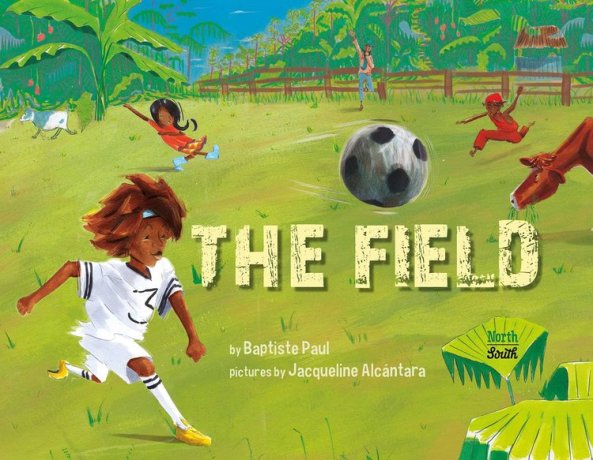
Jacqueline Alcántara was featured in a previous round-up of Latina illustrators here on Latinxs in Kid Lit, and we got more information about her when we found out she was also the inaugural recipient of a mentorship from the We Need Diverse Books organization. Now, we’re catching up wit Alcántara since her first picture book, The Field, written by Baptiste Paul, was released last week by NorthSouth Books. Here is the official description of the book, which received a starred review from Kirkus, and the cover:

A soccer story–for boy and girls alike–just in time for the World Cup.

Vini Come The field calls, ” cries a girl as she and her younger brother rouse their community–family, friends, and the local fruit vendor–for a pickup soccer (fútbol) game. Boys and girls, young and old, players and spectators come running–bearing balls, shoes, goals, and a love of the sport.

“Friends versus friends” teams are formed, the field is cleared of cows, and the game begins. But will a tropical rainstorm threaten their plans?

The world’s most popular and inclusive sport has found its spirited, poetic, and authentic voice in Baptiste Paul’s debut picture book–highlighting the joys of the game along with its universal themes: teamwork, leadership, diversity, and acceptance. Creole words (as spoken in St. Lucia, the author’s birthplace island in the Caribbean) add to the story and are a strong reminder of the sport’s world fame. Bright and brilliant illustrations by debut children’s book illustrator Jacqueline Alcántara –winner of the We Need Diverse Books Illustration Mentorship Award–capture the grit and glory of the game and the beauty of the island setting where this particular field was inspired.

Soccer fan or not, the call of The Field is irresistible.

TheField_Cover_JacquelineAlcantara.jpg

Congratulations on your first picture book! Can you tell us a little bit about the media you used to create the illustrations? Is it one technique or were you mixing several different ones? 

Thank you so much! It’s quite exciting to finally be able to celebrate this book and years of hard work! And thank you very much for supporting me and The Field!

These illustrations are a combination of pencil, marker, gouache and Photoshop. Every day ,I understand more and more what it is I love about each medium – so instead of trying to make one “say it all,” I work mixed-media so I get the beautiful line-work of pencil, the speed and consistency of markers, the flat opaque color and beautiful texture of gouache, and the limitless possibilities of working in Photoshop! I also scan my work at multiple points along the way which allows me to push the illustration without fear of taking it too far into ruin.

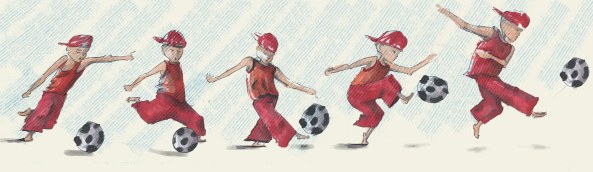
There is so much amazing movement in this book. How did you decide when to use panels and when to use full page spreads? What was your research process like for the figures and movements of the players? 

I really love illustrating people and movement. I think that was a big reason I was so attracted to the project in the first place! To begin, I watched movies, fútbol games, documentaries, looked through photographs etc – and drew hundreds of figure sketches of kids and adults playing soccer, really trying to find the most dynamic and natural poses. It was so interesting to see how people’s styles, circumstances, settings, and techniques all changed country to country. The thing that didn’t change, was the look on people’s faces after the game – the looks of joy, friendship, exhaustion.

After I created my cast of characters, I went back through all my figure sketching and decided which movements or styles of kicking, running, and playing felt right for each character. Who was the confident player? Who was the more shy and awkward player, etc?

11_MomDribbling_WEB

Carlitos_Kicking

I felt the beginning of the book was a series of static moments. Connected, but individual moments that focused on the players. I felt this would be best portrayed in panels so we could focus on each moment. As the story progresses, we see ‘The Field’ itself becoming the main character. The Field unites the players, creates friendships, teaches lessons, makes memories! So it felt right to fall back and show the field in its entirety – making the place, the people, and the action more united.

The men’s World Cup is coming up soon. Are you a fútbol fan? If you are, which team will you be cheering for? 

I am! While I don’t love watching sports on TV, I LOVE  watching world events like the Olympics and the World Cup. My favorite team is Barça, so for the World Cup I’ll be rooting for Spain!


photo credit @eyeshotchaABOUT THE ILLUSTRATOR (from her website): Jacqueline Alcántara is a freelance illustrator and spends her days drawing, painting, writing and walking her dog. She is fueled by electronic and jazz music, carbs and coffee. Jacqueline studied Art Education and taught high school art and photography before transitioning to illustration.

In combination with freelance illustration, Jacqueline has a wide range of work experience in other art and design related positions. She managed an art gallery and framing studio in Chicago, worked in the set decoration department on NBC’s “Chicago Fire”, and was the Member Relations Manager at Soho House Chicago where she cultivated a community of Chicago creatives in fashion, advertising, fine art and more. She has a never ending interest in learning new skills and taking on new challenges.

Her experience working with children has led her to focusing on children’s literature and specifically in pursuit of projects featuring a diverse main character. She won the 2016 “We Need Diverse Books Campaign” Mentorship Award and is excited to be working to promote inclusiveness and diversity in children’s literature and the illustration field.