Guest Post: ¡Qué Vivan los Niños Luchadores!

Todos

All images from Niño Wrestles the World come courtesy of Macmillan Children’s Publishing Group.

By Lettycia Terrones

On a bright, 108º F. Las Vegas afternoon, inside the cavernous decadence of Caesars Palace, audience members attending the 2014 Pura Belpré Award Celebración were treated to a gem of a speech by this year’s Pura Belpré Illustrator Award winner, Yuyi Morales. Recognized for her outstanding book, Niño Wrestles the World, Yuyi’s acceptance speech affirmed the resilient strength of children and their power of imagination. Her words served as a reminder to all educators of the important charge we have to provide our children with stories that accurately portray their worlds and strengths.

Since 1996, the Pura Belpré Award has annually recognized Latin@ writers and illustrators for excellence in children’s literature that “best portrays, affirms, and celebrates the Latino cultural experience.” This year’s winner for illustration, Niño Wrestles the World, does just this by capturing –through story, rhythm, and images— the intangible ingredients that come together to form a uniquely Chicano-Latino flavor that any child growing up in East Los Angeles or El Paso will immediately recognize.
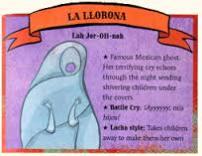
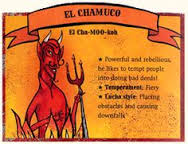
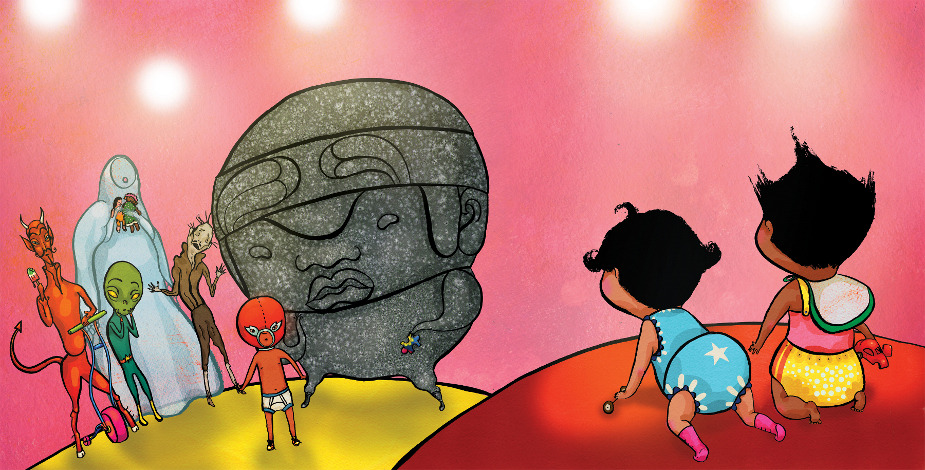
LloronaCardChamucoCardWhat are these ingredients? La Llorna. El Chamuco. El Extraterrestre. La Cabeza Olmeca. Las Momias. These are the protagonists that star in countless cuentos told and re-told in Mexican and Chicano families. Yuyi presents a dynamic cuento of a boy-hero in a wrestling mask, un niño luchador, who through wit, humor, ganas, and family teamwork, outsmarts these terrifying figures of Mexican and Chicano cultural mythology. As Yuyi reminded us in her acceptance speech, children’s imaginative capacity is an empowering tool that enables them to confront life situations with positive resilience. In addition to her prepared remarks, Yuyi described her own imaginative process as a child, where she was able to transform the often scary and mysterious cultural myths of La Llorona and El Chamuco into figures she could contend with and, perhaps most importantly, learn to play with.

This transformative power demonstrates the enormous agency children have to make meaning in the world. It depicts what Dr. Tara Yosso points to in her seminal work on cultural wealth and social capital, which she calls Community Cultural Wealth. Community Cultural Wealth lists specific assets practiced and nurtured in communities of color, which serve as forms of resistance to the myriad social oppressions marginalized people contended with daily. Emerging from the cultural knowledge passed down in families and communities, these assets include “aspirational, navigational, social, linguistic, familial and resistant capital.”

NinoVChamuco
Yuyi’s book exemplifies Community Cultural Wealth at work. Its text and illustration display the wealth of linguistic storytelling traditions of cuentos handed down in our families. It also serves as a meta-narrative of resistance through its prominent use of Mexican and Chicano cultural images. Yuyi’s narrative and illustration authentically capture how, for instance, the myth of La Llorona is in continuous transformation as she is imagined by our children today. Instead of becoming clichéd tropes of Mexican and Chicano culture, El Chamuco, El Extraterrestre, La Cabeza Olmeca, and Las Momias, are represented authentically as living and changing stories. This truly is a marker of Yuyi’s outstanding mastery of the picture book. She brings to the world of children’s literature works that defy cultural stereotypes, and that champion children as creative, imaginative meaning-makers.
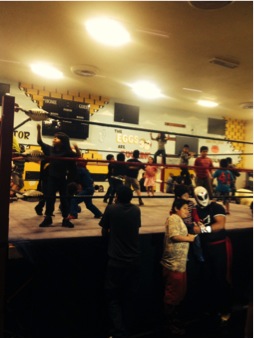
Photo by Lettycia Terrones, 2014

Photo by Lettycia Terrones, 2014

I thought a lot about the impact of Yuyi’s Niño Wrestles the World when I attended a Lucha Libre Night at the East Los Angeles Community Youth Center last spring. The family-run event brought in masked luchadores from Tijuana and Los Angeles to battle it out in the recreation center’s well-worn boxing ring. At the halftime marker, the ring became open for the many kids in attendance to frolic with abandon and take photos with the night’s Lucha Libre heroes. I thought about how for many children living in underserved communities, Yuyi’s story of the boy-hero, the niño luchador, is an actual and accurate depiction of their lives. I wondered how many of the kids in attendance that night had been exposed to Niño Wrestles the World in their classroom or public library. I wondered how this exposure would strengthen their sense of belonging and reflect back to them their self-efficacy.

Educators should remember the characters brought to life in Yuyi’s picture book are still very much alive today in the imaginations of Latino children. They are stories that form an essential cultural fabric of what it means to be Mexican and/or Chicano. Whether we call our people first-generation, second-generation, or if we are from generations that preceded the Treaty of Guadalupe, or are present-day refugee generations embarking on perilous journeys, climbing atop trains and traversing deserts, to seek our families and a promise of a better future in the United States. These stories are ours. They form an American story.

References

Pura Belpré Award

http://www.ala.org/alsc/awardsgrants/bookmedia/belpremedal

Yosso*, T. J. (2005). Whose culture has capital? A critical race theory discussion of community cultural wealth. Race Ethnicity and Education, 8(1), 69-91.

Yuyi Morales, Illustrator Award Acceptance Speech, page 4 http://www.ala.org/alsc/sites/ala.org.alsc/files/content/awardsgrants/bookmedia/belpre-14.pdf
let2

Lettycia Terrones, M.L.I.S., serves as the Education Librarian at the Pollak Library at California State University, Fullerton. Her research interests are in Chicana/o children’s literature and critical literacy. Lettycia is an American Library Association Spectrum Scholar and a member of REFORMA: The National Association to Promote Library & Information Services to Latinos and the Spanish Speaking.
Robert Trujillo’s Successful Kickstarter Campaign for Furqan’s First Flat Top

By Robert Trujillo

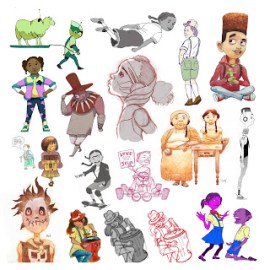
Spot paintingPeace Latin@s in Kid Lit readers! My name is Robert Trujillo and I’m an illustrator/author from Oakland, California. I am a part of a growing movement of independent children’s book creators here in the Bay Area, and it is an honor to be a contributor to this blog (I am a reader as well!). In this post, I am going to talk about my experience crowd funding my first children’s book and why creating the story is so important to me.
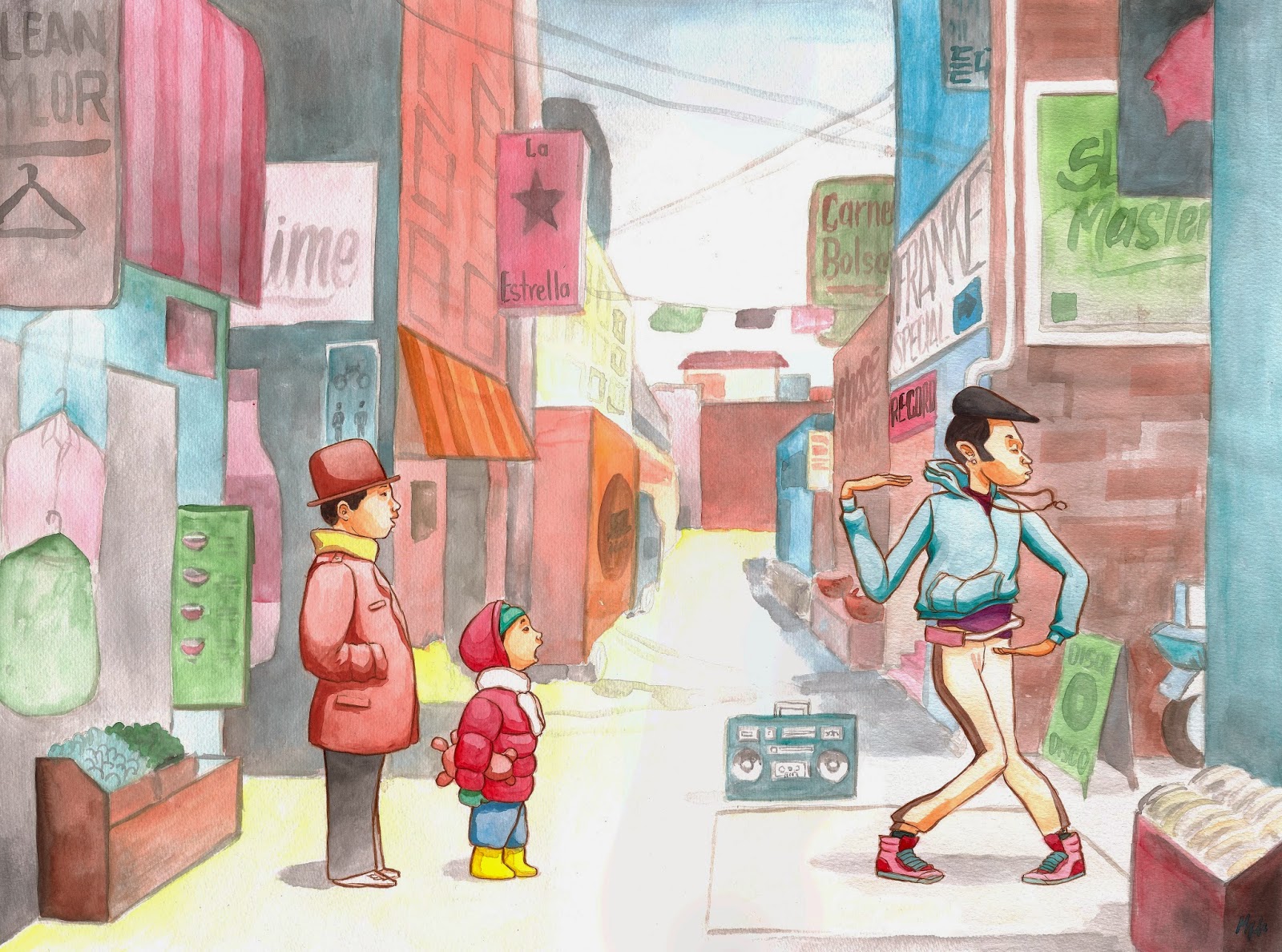
I’m a dad. My kid is 10 years old this year! When my son was first born, I decided that I wanted to read to him a lot and that I would look for cool books for and about him. As I got reacquainted with children’s literature, I found a few great stories that I enjoyed. I’ve always wanted to use my art to communicate a positive or progressive message, and while reading, I became inspired to tell my own stories–about children who are mixed racially, teen parents, kids who are raised bilingual or trilingual, alternative parenting, hip hop culture, social justice, freedom fighters, and more. But to be honest with you, when I sought out books in big stores like this, there weren’t any that reflected my son or these thoughts. In fact, I felt like these stories were almost invisible. So I decided I would make them. I did not know how to do it, so I decided to study. I’m still learning and will be a lifelong student of the craft.

After a three-year break, I decided to go back to college, finish my degree, and study storytelling in various ways. I immersed myself in comics, graphic novels, young adult novels, anime, film, and children’s books. I met a lot of very talented people who were also interested in telling their stories. I started to go to bookstores, blogs, events, etc. to learn. I sent out tons of art samples and contacted tons of editors, art directors, and publishers. I knew that it would be hard work and that it was normal to get a small response when you are just starting out, but I didn’t know until much later just how unrepresented stories that I want to tell were in the mainstream industry.

I reached out to other artists and writers in the field, who were gracious and generous–mostly. I understood that no one–NO ONE–was going to tell my story. Not only that, I could not wait any longer for people in power through the typical “submission” process to see it, understand it, or give me permission to tell it. I would have to do it on my own and take no shit from anyone. So I practiced, failed, tried out many styles, cultivated relationships, asked dumb questions, failed some more, shared my work all the time with family and friends, and slowly began to feel and be seen as a storyteller! I began to develop stories that spoke to me, without worrying if they were sellable to companies or gatekeepers in the industry. And one of those stories was Furqan’s First Flat Top.

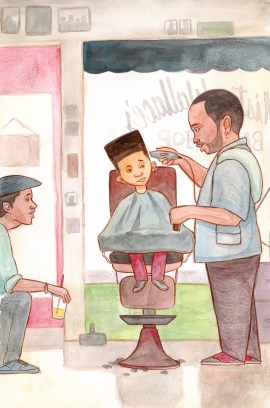
It is partly based on my experience as I got my first flat top around the age of Furqan Moreno, the main character in the book. And it is partly a mixture of various influences, all thrown in the pot to make something that tastes right when I tell people about it, or draw. And that is why it is so important to me. But, how did I go from having an idea to getting it successfully funded? Well, here are some pointers.

Short story 21

Campaign Strategy

So for me doing a Kickstarter about my story was about figuring out the best way to approach it and building a team of trusted riders (friends) to roll with me. I could not have done this book without my family, friends, colleagues, and fellow book creators. When I started, I knew that I wanted to hit the people I know with an image that they could relate to and share easily. I knew that I wanted to connect the many circles I subscribe to or participate in. And I knew that I should do it when it felt right.

Authentic connections

What this means basically is to do what you love and seek out others who have very similar feelings at heart. People of all races, religions, political views, and beliefs can spot a phony a mile away. I am learning to take the time to not only create my story, but to invest in the children’s book community in some shape or form. For me, it means doing my homework, studying the art, etc. And when I do this, I often meet like-minded folks doing the same thing. After seven plus years, I’ve built some small connections with people. I’m still studying it, and I have a long way to go to be able to tell stories that touch people.

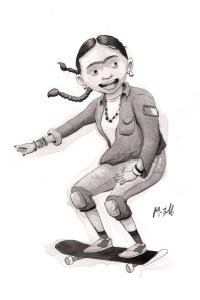
RTrujillo_FridaSkate copyAn art to it/outlet

Art has so many different connotations. I love to do many different types of art. I have a hard time sticking to one particular message or style because I like to explore. Exploring to me, means learning and growing. If I just paint a picture the same way over and over again because it works, it will be a style that is recognizable. But I want to transcend style. I want to just keep trying new things. So when I began working on a series of short stories using illustration and creative writing, it was a creative outlet. It was uninhibited and fun, and I think different folks connected with the stories for that reason. So, I would say “have fun” with your chosen medium first.

Social Media

This is a tough one for some folks. On the one hand, I try to detach sometimes. Not so much when I first started to explore with sites like Myspace, but now, I have more than 10 different platforms where I not only engage with people who have similar interests, but I share content. The majority of the time I’m sharing things that I have created, but very often I share things that others have written, drawn, or said because it inspires me. Social media to me isn’t so much about talking and having everyone listen to you. It is about having an ongoing conversation about what drives you. When you do that, you naturally connect with people from Ireland to Idaho and everywhere in between. And of course you want to check in with your friends and family, because they are the folks that will give you your first shot. Then they share it with other people, who in turn may also listen.

Characters collageCommunication

While the campaign was going, before, and even now as I type this, I try to be open to receive and give. Open communication is key. Of course, I have my privacy, but I do like to see what my favorite musician, journalist, or sculptor is doing lately. And so I share my work and talk about it. Sometimes it feels like no one is listening, and then there are these amazing bursts of conversation where I connect with people one on one about storytelling; and I had no idea they were even into it. It helps to be accessible. You can turn it on or off when necessary but get out there and talk to folks, online or in person.

Planning

Right now I’m looking at my storyboards, sketches, and manuscript for the book. It is very challenging to create a picture book, but this one is fun because it’s a chance to just do my thing. No art directors, no editors (even though they are definitely helpful at times), nada. It’s just me and a team of folks I rely on to say “yeah” or “nope” when the time is right and I can’t decide. Before the campaign, I planned to create a short story, develop it, test it, get feedback, and expand it. I planned to talk to blogs, and various activists in the field of diversity, and I came across a bunch of obstacles that I was not expecting.

Follow through and Community

As I mentioned, I get help from people. Seek out people, build a phone tree, an email group, a regular group. Whatever, just build a community of people who can support you and whom you can support. And set small goals and knock them out. Start small so you can follow through and finish them. This way, you build momentum and feel like you are achieving something, moving forward, or progressing.

Good luck to all of you creators out there!

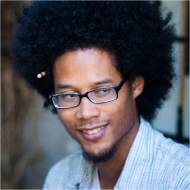
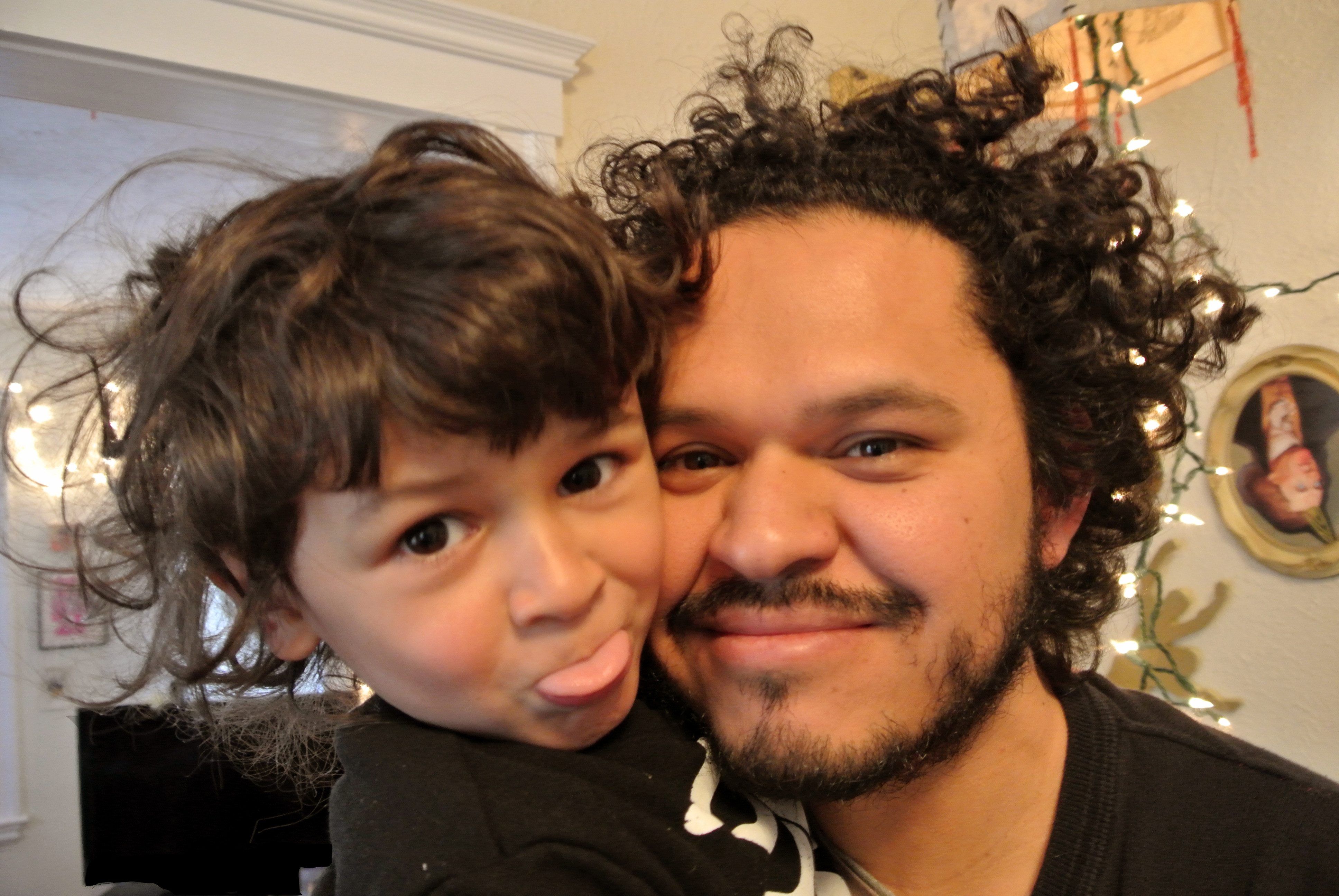
photo1Born and raised in the Bay Area, Robert Trujillo is a visual artist and father who employs the use of illustration, storytelling, and public art to tell tales. These tales manifest in a variety of forms and they reflect the artist’s cultural background, dreams, and political / personal beliefs. He can be found online http://work.robdontstop.com/ and on Twitter at @RobertTres.


Scholastic Asks Three Questions to Three Latina Illustrators

By Concetta Gleason
Editorial Manager of Club Leo en Español

To mark the end of Hispanic Heritage Month this week, Club Leo en Español is proud to share exclusive art and interviews with three fantastic and dynamic Latina illustrators: Yuyi Morales (author/illustrator of Niño Wrestles the World), Angela Dominguez (author/illustrator of Maria Had a Little Llama /María tenía una llamita), and Alejandra Oviedo (illustrator of Animaletras).

We asked each artist to answer three questions in words and art:

1. What inspires your work?
2. If you could have a superpower, what would it be?
3. What are your words to live by?

Each woman provided wildly imaginative, unique, and different examples of her artistic persona and motivations. Let’s explore!

Yuyi Morales won the 2014 Pura Belpré Illustration Award for Niño Wrestles the World. Not to brag but Yuyi briefly made us Internet-famous (by association) when she shared a sneak peek of her exclusive art on her resplendent Instagram account.

Yuyi answered the questions in a comic-book style and as a new person: she awoke one morning—transformed and “more beautiful than ever”—as “Tzitzimitl,” an ancient Aztec deity who shares a deep connection with the stars and astrology. Ha! Eat dust, Kafka.

For the record, Tzitzimitl > cockroach. Any day of the week. Thanks, Yuyi!


Alejandra Oviedo, the illustrator of Animaletras, sent us sweet and imaginative illustrations that capture the beauty and freedom of childhood. Her illustrations are made from intricate and delicate paper cuts, and she is inspired by looking at the world through the eyes of a child.

1. What inspired your work for Animaletras?

My inspiration for the illustrations came from kids’ drawings. I find them beautiful, and they portray the most important elements of each animal. I also paid attention to animal pictures, and I visited the zoo many times to capture not only the animals’ shapes but also their attitudes and personalities.

2. If you had a superpower, what would it be?

I would love to fly like a bird.

3. Words to live by?

Always put love in what you do; believe in your dreams and do not leave them behind.

What inspiring answers! Thanks, Alejandra!


Angela Dominguez, author and illustrator of the Pura Belpré Illustration Honor book Maria Had a Little Llama /Maria tenía una llamita, sent us fun and playful photographs of Peruvian children and llamas that she used to as models and inspiration for her book.

1. What inspired your work for Maria Had a Little Llama/María tenía una llamita?

The inspiration for the project came from an illustrator’s assignment at a Society of Children’s Book Writers and Illustrators conference. I was given the task of doing my own version of “Mary Had a Little Lamb.” I was excited about the assignment, but I found it really difficult at first to find inspiration to reinterpret the classic story. My first doodles felt a little quiet, soft, and too familiar. I wanted my Mary to have personality with rich colors!

Whenever I’m stuck, I go to the library. There, I began researching sheep and farm life. It was in a book that I discovered a picture of a little girl with a llama. The idea of including llamas with the sheep led me to set the story in Peru. Finally I knew how I could personalize Mary, and that’s when Mary turned into Maria. The more I looked at books, the more I was inspired by the beautiful faces of the Peruvian children, the rich textiles, and the lush landscapes. I’ve never been to Peru, and I think my desire to visit the country pushed me to create landscapes of this idealized world I have in my head.

2. If you could have a superpower, what would it be?

I would teleport. I love traveling, but I don’t particularly enjoy flying or how long it takes to get somewhere. Plus I would love to be able to give a family member or a friend a hug really quickly and then get back to work.

3. Do you have a life motto or favorite phrase? 

I have a few. First, I’m not sure where I read it, but “persistence plus passion equals success” is my favorite motto. I also love so many quotes from Winston Churchill and Henry Ford. This one quote, in particular, from Henry Ford is just so motivating. He said, “Enthusiasm is the yeast that makes your hopes shine to the stars. Enthusiasm is the sparkle in your eyes, the swing in your gait. The grip of your hand, the irresistible surge of will and energy to execute your ideas.” It’s just so beautiful.

Thanks, Angela! We’d be happy to travel to Peru with you!

It’s wonderful to see Latina illustrators have prominence in children’s literature, and that as visual storytellers they have broken new ground—from Mexican myths to remaking classic fairy tales.

We thank and celebrate Yuyi Morales, Alejandra Oviedo, and Angela Dominguez for opening the worldview of children everywhere.

Club Leo en Español supports your classroom with fun and affordable books that connect children’s home language and learning. Our books include amazing series, original titles, and winners of the Pura Belpré Award, which celebrates the remarkable contributions of artists who give voice to the Latino community through children’s literature.

Club Leo en Español apoya tu salón de clases con libros divertidos y asequibles que conectan la lengua materna y el aprendizaje de los niños. Nuestra colección incluye increíbles series, títulos originales y ganadores del Premio Pura Belpré, que celebra los extraordinarios aportes de artistas que dan voz a la comunidad latina a través de la literatura infantil.

Book Review: Lowriders in Space by Cathy Camper, illustrated by Raúl the Third

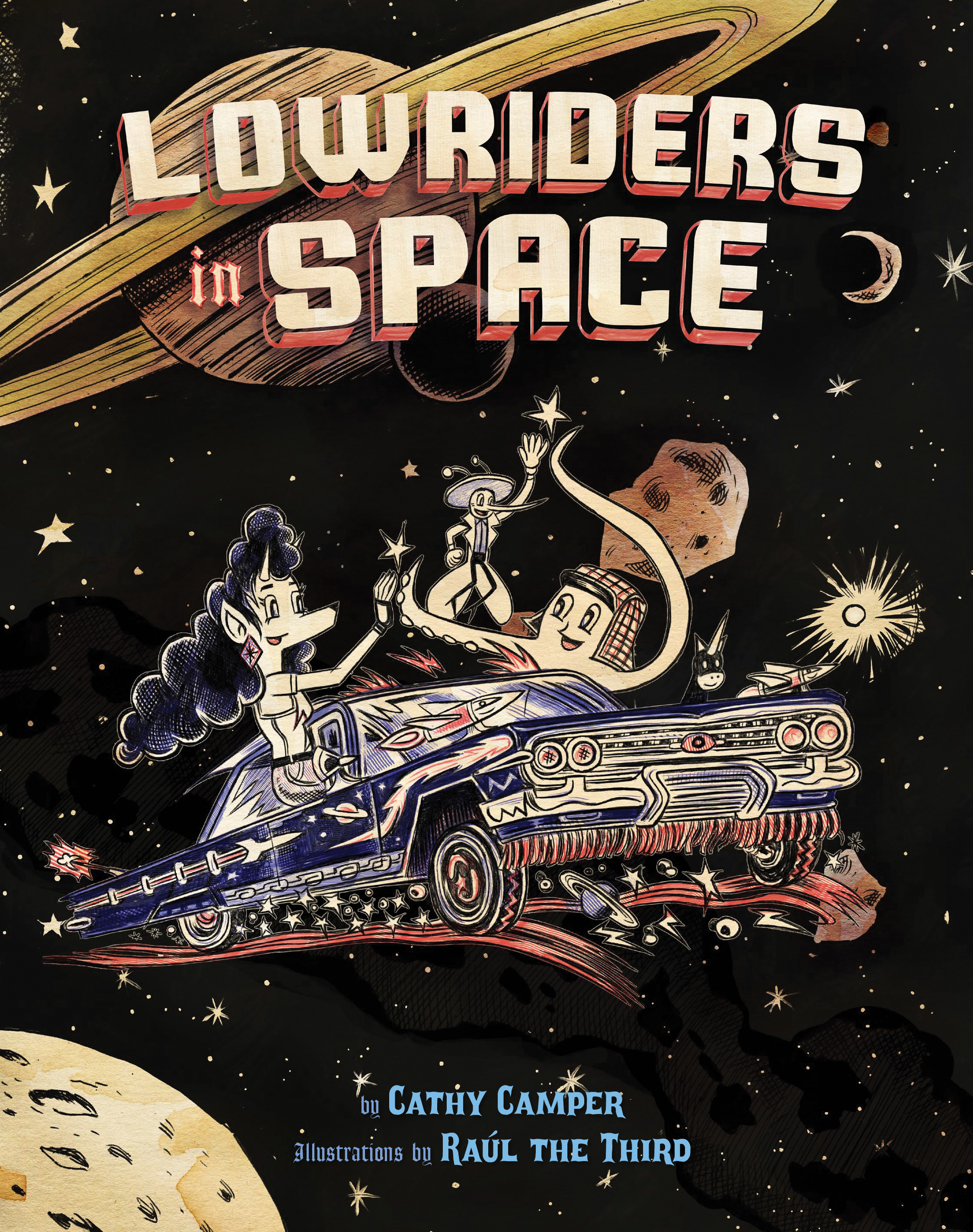
Lowriders in Space_FC_HiResBy Lila Quintero Weaver

This book talk is based on an advance review copy. Quotes and details may vary in the final version.

DESCRIPTION FROM THE BOOK JACKET: Lupe Impala, El Chavo Flapjack and Elirio Malaria love working with cars. You name it, they can fix it. But the team’s favorite cars of all are lowriders—cars that hip and hop, dip and drop, go low and slow, bajito y suavecito. The stars align when a contest for the best car around offers a prize of a trunkful of cash for the best car around—just what the team needs to open their own shop! ¡Ay chihuahua! What will it take to transform a junker into the best car in the universe? Striking, unparalleled art from debut illustrator Raúl the Third recalls ballpoint-pen-and-Sharpie desk-drawn doodles, while the story is sketched with Spanish, inked with science facts, and colored with true friendship. With a glossary at the back to provides definitions for Spanish and science terms, this delightful book will educate and entertain in equal measure.

MY TWO CENTS: Look in the children’s section for graphic novels from the Latino perspective and you’ll find precious few choices. Look there for books about lowriders and your choices will be still slimmer. Here is Lowriders in Space, ready to fill both spots with a joyous, celebratory tale. You don’t need deep knowledge of the lowrider culture to appreciate this middle-grade graphic novel, brought to you by the author-illustrator team of Cathy Camper and Raúl the Third.

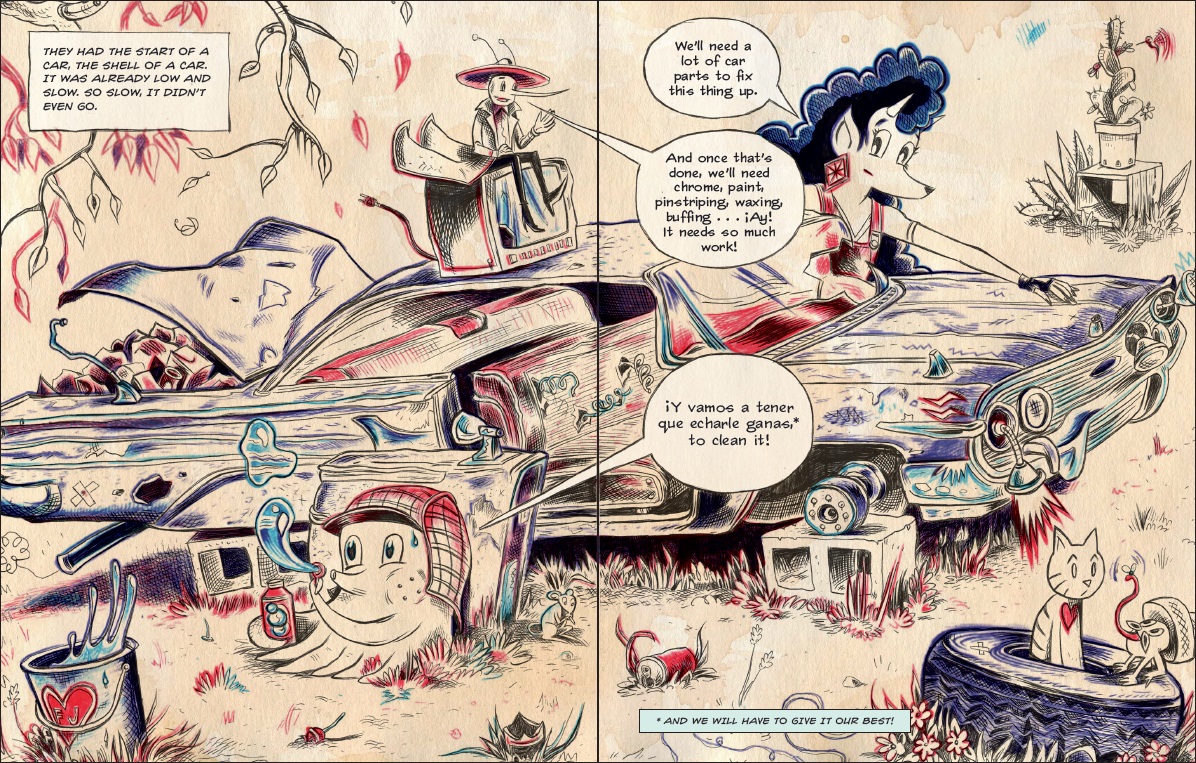
Lowriders In Space_Int_3In the opening pages, we meet three animal characters with Spanish names, all of whom work for a car-repair shop. The shop is called Cartinflas, and this is just one of many playful allusions and verbal jokes in this book. (Cartinflas plays on the name of the famous Mexican comic actor, Cantinflas.) Lupe Impala, (a wolf) busts gender stereotypes as a female lead who knows her way around car engines. Her sidekicks, the octopus El Chavo Flapjack and the mosquito Elirio Malaria, each specialize in key aspects of automobile revamping in the lowrider style. Elirio’s fine-tip proboscis doubles as a paintbrush that turns out the sweetest racing stripes and airbrushed scenes you could imagine. El Chavo’s eight tentacles go to work washing, polishing and buffing cars to a high sheen.

The trio dream of going into business for themselves, but where will they find start-up money? A car competition with a hefty cash prize gives them hope, but there are tough challenges to meet. First, they must find a car to work their magic on. They settle for a rusty heap sitting on cinder blocks. Now for car parts. At an abandoned airplane factory, they pick up mini air compressors and a box of rocket equipment. After attaching the parts, they’re in for a surprise when Lupe cranks the engine and it launches the car into the stratosphere. High above the earth, the car gears down into bajito-y-suavecito mode, low and slow: this is the cruising speed that lets low riders see and be seen. While the transformed auto travels outer space, it takes on loads of flash and bling borrowed from stars, asteroids and others elements of the galactic realm.

There’s much to love in this kid-friendly graphic novel. The story arc follows a familiar trajectory: the protagonists meet every challenge successfully and win the sought-after prize. Kid readers will be cheering. But my hat’s off to Cathy Camper for elevating the storyline above the predictable. She does this through original settings and characters, including the lowrider car itself, and with the inventive twists of space travel and comical astronomy. Her text engages the ear with musical language that includes alliteration, onomatopoeia, and bursts of G-rated street slang in English, Spanish, and Spanglish.

Kids will eat up the comics-style art. Every page offers levels of visual puns and charming details that invite readers to study panels closely. The color scheme and the drawings give off a retro historieta vibe, fitting for a story about lowrider culture, which was born in the 1950s and is rooted in the Mexican American community. I’m not familiar with the ballpoint-pen doodle style that Raúl the Third credits as his inspiration, but I dig it!

TEACHING TIPS: The back of the book contains a glossary of Spanish phrases, factual information on the tongue-in-cheek astronomy that appears in the story, and a thumbnail summary of lowrider history.

One bonus of graphic novels is their appeal to devoted bookworms and reluctant readers. Kids seem to instinctively grasp the multiple levels of interaction offered through their blend of text and images. Teachers may want to approach Lowriders in Space—and any graphic novel—in two steps. Read through it once purely for the story. Revisit it at a slower pace to more fully absorb the images. Raúl the Third’s art is rich with details, charming secondary characters, and visual puns that sharp-eyed kids will relish hunting down. These may not be central to the story, but they sure contribute to the fun. For example, it’s one thing to read that there’s a fast-food joint called Sapo Bell in the background of one scene—it’s another to spy the goofy sapo sitting out front. Middle-grade readers are sure to love such hidden gems.

Lowriders in Space encourages kids to celebrate a fun aspect of Mexican American culture that should be respected, not ridiculed or stigmatized. Too often when lowriders appear in popular culture, they’re thrown in for kitsch points. This usually results in stereotyping and negative connotations. Teachers can use this text to combat the lazy disregard involved in stereotypical usage and replace it with the dignity that comes with cross-cultural appreciation.

If you’d like to learn more about lowrider history culture, here are some suggested resources:

“Lowriding: This Culture is About More Than Cars.”

“Low and Slow: The History of Lowriders.” 

Be sure to read Cathy’s guest post on Latin@s in Kid Lit!

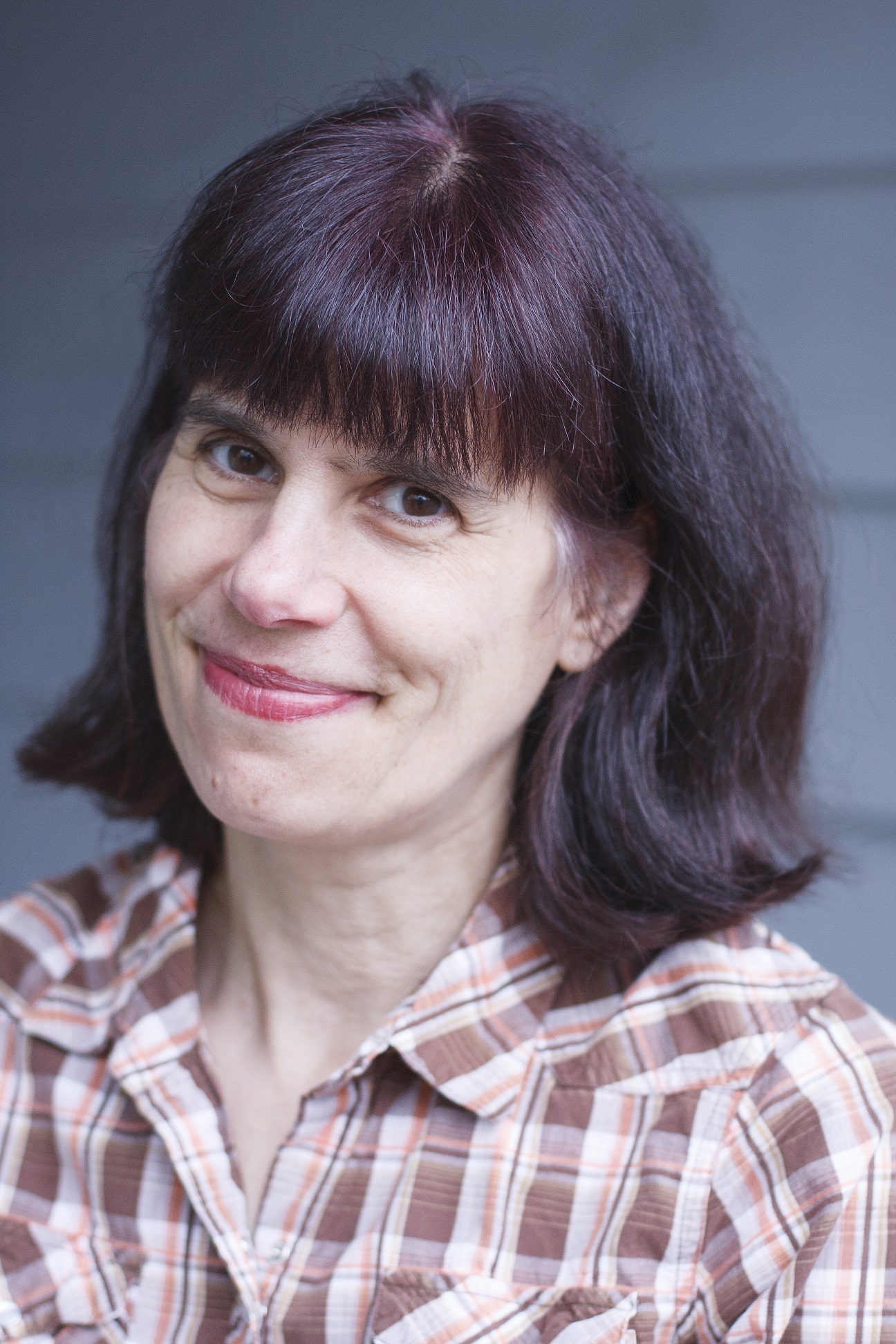
Cathy Camper_headshot_photo (c) Jayson Colomby_smCathy Camper is a librarian focusing on outreach to schools and children in grades K-12. She lives in Portland, Oregon. Raúl the Third teaches classes on  drawing and comics for kids at the Museum of Fine Arts and the Institute of Contemporary Art. He lives in Boston, Massachusetts.          

   Raul the Third (credit Elaine Bay)


And now for a big treat, the official book trailer for Lowriders in Space!


Guest Post by Author Cathy Camper: Lowriders in Space Blast Off!

Cathy Camper_headshot_photo (c) Jayson Colomby_smBy Cathy Camper

Elirio Malaria (a mosquito), Flapjack Octopus and Lupe Impala work at a car dealership six days a week. Lupe’s the mechanic, Flapjack washes and buffs the cars, and Elirio details the cars with his beak. Their dream is to have a garage and a lowrider of their own:

            They’d seen some cars blast by fast,

             And others that could shift and drift,

            But they wanted a car that would go low and slow.

            Bajito y suavecito.

            A universal car contest gives them that opportunity. But not until their car gets customized by outer space! Pinstripes from Saturn, pompom asteroids, and star-capped hubcaps make their car an interstellar phenomena!

That’s how I pitched my graphic novel Lowriders in Space at Pitchapalooza in Portland, Oregon. Back when the book was just a manuscript and a vision in my head, I’d exhausted the list of graphic novel agents, and so winning this contest was like a dream come true. The prize was the advice of The Book Doctors, a husband-wife team who connected my project with an agent and eventually, an editor and publisher.

I’m a writer, artist and a youth services outreach librarian. I wrote Lowriders in Space because as an Arab American, I was fed up with the inability of mainstream comics and books to represent the diversity of kids I see everyday, kids who like me, don’t see themselves in books. When I first sent the script to the book’s artist, Raúl III, who is Latino, he told me, “This is the book I wanted to read as a child,” and he was as excited as I was to create it, and for the same reasons. Our editor at Chronicle Books, Ginee Seo, is Korean American, and she gets it too—like us she wants to give kids a book that meets them where they are.

I’d been working on the book since 2006, and was thrilled when the #WeNeedDiverseBooks campaign launched in May 2014. We’re hoping that when Lowriders comes out this fall, it kicks a big hole in the wall of racism of kids’ books, welcoming kids of all backgrounds to read it. We hope it encourages publishers to create more books by new authors and illustrators of color, and to inspire kids via reading our book, to become creators, too.

By 2050, one third of the US will live in English-Spanish speaking households—that’s our audience! The book’s also aimed at boys, because the literacy rate of boys is dropping, and like Jon Scieszka (who sponsors the Guys Read website), we want boys to read. We also envision that kids struggling to read, for whatever reasons, might find our book inviting. And it looks like adults are loving it, too, from all the reviews that have been popping up online.

Since I’m not Latina, it was crucial to me that our book was culturally correct. I did tons of research, read books, watched films, went to the Lowrider Magazine’s car show, and interviewed people. I’m also fortunate and forever grateful to have the help of many Latino friends and library co-workers, who read the manuscript, offered suggestions, and helped fine-tune the Spanish. One of the cartoonists I admire most is cartoon journalist Joe Sacco. His ability to go into places of high conflict, like Palestine and the Bosnian war and create detailed drawn and written records out of chaos humbles me. When I heard him speak, he mentioned that one of the things he tries to do is set his ego aside, and put the stories of those he’s writing about, up front. When I wrote Lowriders, I tried my best to emulate this goal, and to fight for, as best I could, what would make the story culturally relevant.

This goal included having the right illustrations. Traditionally in children’s books, the writer doesn’t choose an illustrator for the manuscript (though this is different in comics creation). I was warned along the way, “Choosing your own illustrator may work against you.” However, I felt it was crucial that Raúl illustrate this book, not only because he’s a brilliant artist (and if we’re saying we need more diverse kids books, we also need more diverse creators), but because his art added just the right touch of both cultural relevancy and the retro-nuevo feel the text demanded. Raúl told me that much of the setting and landscape is based on his childhood in El Paso, Texas. When he started sketching Flapjack Octopus, he said he couldn’t help but think of him in his pail as El Chavo del Ocho, sitting in his barrel—and so we changed Flappy’s name and look to reflect that.

Lowriders In Space_Int_2

Just as Raúl was able to make contributions to the text, I sometimes added context to the drawings. For example, it was important to me that our lowriders’ car had the Big Dipper on it. For the lowrider diaspora of Latinos and African Americans whom the book celebrates, the Big Dipper represents the path north, and more broadly, the path to freedom. What better symbol to have on a flying car’s license plate? Our book celebrates the influence of older comics, art, pop culture and car references that Raúl and I both love and wanted to share, including George Herriman’s Krazy Kat, the Hernandez BrothersLove and Rockets, Mad Magazine and Big Daddy Roth’s cars.

And then there’s the science – I love science! My first book Bugs Before Time was about giant prehistoric insects – including a sea scorpion as big as your mom. Why wouldn’t our graphic novel include science, when there really are things as wondrous as flapjack octopuses and braided rings of Saturn? The technology of cars is part of science, too, whether it’s learning how cars are buffed and painted, how air compressors make lowriders hop, or what vulcanizing does to make rubber tires strong.

We think Lowriders is going to read like something brand new, because of the unique, aligned intent of author, illustrator, and publisher and because of the crazy mix of culture, comics, and science our combined imaginations dreamed up. We hope you love it and it makes you laugh, and that you share your excitement with all the kids out there that might love it, too. When Lowriders in Space blasts off this fall, our real destination isn’t the outer galaxies, it’s to land in the hands of kids who deserve to see themselves in what they read, and to be read by everyone else so they experience how rich a culture of color can be.

Cathy Camper is a librarian focusing on outreach to schools and children in grades K-12. She lives in Portland, Oregon. Follow the book’s Facebook page for more news.

Coming soon on Latin@s in Kid Lit: A book talk on Lowriders in Space with more story details and more peeks at interior pages!

Book Review: Dalia’s Wondrous Hair/El Cabello Maravilloso de Dalia by Laura Lacámara

By Sujei Lugo

18654384DESCRIPTION FROM THE BOOK: A Cuban girl transforms her long and unruly hair into a garden.

MY TWO CENTS: In this bilingual picture book, with a Spanish translation by Gabriela Baeza Ventura, Laura Lacámara brings us a whimsical Caribbean tale of a young Cuban girl and her luxuriant hair. Lacámara’s colorful illustrations express the joyful spirit of the main character and transport us to the sunny, tropical Caribbean.

The story introduces us to Dalia, a young girl who one day wakes up and finds out that her hair has grown straight up and as tall as a Cuban royal palm tree. Many children would panic with such news, but Dalia can’t hold the excitement of her new wondrous hair. She then embarks on a journey to add to her hair different natural elements of a Caribbean tropical island, such as wild tamarind, coontie plant, and violet leaves. Her purpose is to show her mother the different types of “trees” she can recreate using her hair, ending with a beautiful and unique one.

What stands out in this picture book is Lacámara’s ability to portray through her paintings the endearing relationship between Dalia and her mother and their lives in harmony with nature. The expressions on their faces capture the happiness and warmth of a loving mother and daughter bond. Other characters in the book, Señora Dominguez, Señora Soledad and Soledad’s daughters, all play supporting roles to Dalia’s “hairy” journey and to their connection to the natural world. Through this all-women set of characters, we see a growing sense of community and a sympathetic portrayal of peculiar characters we can encounter in a rural neighborhood.

By situating their home in rural Cuba, the author incorporates the Caribbean’s particular flora and fauna into the story. Through beautiful landscapes that fill the book with a graphical sense of the fresh air and natural environment of this tropical island, the book introduces young readers to different components of the natural world: royal palms, sugar cane fields, wild tamarinds, moonflowers, coontie plants, wild violets, caterpillars, birds, fireflies, ponds, and the ocean. Even the characters’ clothing are filled with flowers and leaf patterns, giving us powerful images that convey a reverence to the natural world.

According to a statement on the first page, the publication of Dalia’s Wondrous Hair/El Cabello Maravilloso de Dalia was funded by a grant from the city of Houston through the Houston Arts Alliance and published by Piñata Books, the children’s literature imprint of Arte Público Press. We should acknowledge their efforts, along with other great publishers,  to continuously provide a space for the publication of Latino/a authors and illustrators.

TEACHING TIPS: This bilingual picture book is recommended for children ages 4-7. It works well as a read aloud and for early readers. At home or at the library, librarians, parents, grandparents, family members or guardians can read with their young ones in English, Spanish or both, while teaching new words and identifying different colors, animals, and plants. The author provides a guide to create your own butterfly garden at home, a fun activity for everyone to enjoy.

Language Arts, Science, and Art teachers can create different activities where students can learn new words, identify adjectives mentioned throughout the story, and learn about different types of plants, trees, and animals. The book includes notes of Cuban natural world references (in English and Spanish) that are part of their stories, with a description. Art teachers can use this book to incorporate science to their classrooms. Students can draw, paint, or use different materials to create their own version of Dalia’s hair, using as reference words learned and natural elements of the story. 

AUTHOR: Laura Lacámara is a Cuban-born children’s books author and illustrator. Lacámara holds a Bachelor of Fine Arts in Drawing and Painting from California State University, Long Beach and studied printmaking at Self Help Graphics in East Los Angeles. Her love for writing and illustrating children’s books grew when she signed up for a children’s book illustration class at Otis College of Art and Design in Los Angeles, California.

She is the author of Floating on Mama’s Song/Flotando en la Canción de Mamá (Junior Library Guild Selection, Fall 2010 & Tejas Star Book Award finalist 2011-12) and illustrator of The Runaway Piggy/El Cochinito Fugitivo (winner of 2012 Tejas Star Book Award) and Alicia’s Fruity Drinks/Las Aguas Frescas de Alicia.

Laura Lacámara is an active member of the Society of Children’s Book Writers and Illustrators (SCBWI) and frequently serves as a presenter at conferences, book festivals, and schools. She currently lives in Southern California.

FOR MORE INFORMATION ABOUT Dalia’s Wondrous Hair/El Cabello Maravilloso de Dalia, visit your local library or bookstore. Also check out worldcat.org, indiebound.orggoodreads.comamazon.com, and barnesandnoble.com.