Book Review: Shadowshaper by Daniel José Older

22295304By Cecilia Cackley

DESCRIPTION: (from Goodreads): Sierra Santiago was looking forward to a fun summer of making art, hanging out with her friends, and skating around Brooklyn. But then a weird zombie guy crashes the first party of the season. Sierra’s near-comatose abuelo begins to say “No importa” over and over. And when the graffiti murals in Bed-Stuy start to weep…. Well, something stranger than the usual New York mayhem is going on.

Sierra soon discovers a supernatural order called the Shadowshapers, who connect with spirits via paintings, music, and stories. Her grandfather once shared the order’s secrets with an anthropologist, Dr. Jonathan Wick, who turned the Caribbean magic to his own foul ends. Now Wick wants to become the ultimate Shadowshaper by killing all the others, one by one. With the help of her friends and the hot graffiti artist Robbie, Sierra must dodge Wick’s supernatural creations, harness her own Shadowshaping abilities, and save her family’s past, present, and future. Shadowshaper releases June 30, 2015.

MY TWO CENTS: Sierra Santiago is one of my new favorite heroines. She makes plans and follows through, is clear-eyed about the shortcomings of people she loves and takes charge with attitude. As Sierra follows her grandfather’s direction to find Robbie and fix the murals in her neighborhood, more and more secrets keep coming to light and she discovers an entire spirit world that has been hidden to her, but to which she is strongly connected. Older weaves in many great discussion points among the action and supernatural fighting, including colorism, gender expectations, ethics (or lack thereof) in anthropology and handling difficult family members. The Brooklyn setting and Sierra’s group of friends add realism and humor to the story, making this fresh, exciting adventure a must read for YA fans.

TEACHING TIPS: There are many different ways this title could fit into the classroom. The themes of appropriation and anthropology would fit nicely into a history or sociology classroom. Librarians will want to recommend this to teens who love fantasy or adventure stories with urban settings. Art teachers could also add this title to a list of books involving murals and large scale public art projects, as well as discuss the tradition of honoring the dead in art or have students design their own murals.

ABOUT THE AUTHOR: Daniel José Older is the author of the Bone Street Rumba urban fantasy series, which began in January 2015 with Half-Resurrection Blues from Penguin’s Roc imprint. Publishers Weekly hailed him as a “rising star of the genre” after the publication of his debut ghost noir collection, Salsa Nocturna. He co-edited the anthology Long Hidden: Speculative Fiction from the Margins of History and guest edited the music issue of Crossed Genres. His short stories and essays have appeared in Tor.com, Salon, BuzzFeed, the New Haven Review, PANK, Apex and Strange Horizons and the anthologies Subversion and Mothership: Tales Of Afrofuturism And Beyond. Daniel’s band Ghost Star gigs regularly around New York and he facilitates workshops on storytelling from an anti-oppressive power analysis. You can find his thoughts on writing, read dispatches from his decade-long career as a NYC paramedic and hear his music at ghoststar.net/ and @djolder on twitter.

RESOURCES:

Interview from Source Latino: http://thesource.com/2015/06/08/source-latino-interview-with-shadowshaper-author-daniel-jose-older/

Review from Debbie Reese about overlap with Indigenous history: http://americanindiansinchildrensliterature.blogspot.com/2015/04/daniel-jose-olders-shadowshaper.html

Interview from School Library Journal: http://www.slj.com/2015/06/interviews/qa-urban-fantasy-counter-narrative-daniel-jose-older-on-shadowshaper/#_

Interview from The Rumpus: http://therumpus.net/2015/05/the-rumpus-interview-with-daniel-jose-older/

FOR MORE INFORMATION ABOUT Shadowshaper, visit your local library or bookstore. Also, check out WorldCat.orgIndieBound.orgGoodreadsAmazon, and Barnes & Noble.

Cackley_headshotCecilia Cackley is a performing artist and children’s bookseller based in Washington DC where she creates puppet theater for adults and teaches playwriting and creative drama to children. Her bilingual children’s plays have been produced by GALA Hispanic Theatre and her interests in bilingual education, literacy, and immigrant advocacy all tend to find their way into her theatrical work. You can find more of her work at www.witsendpuppets.com.
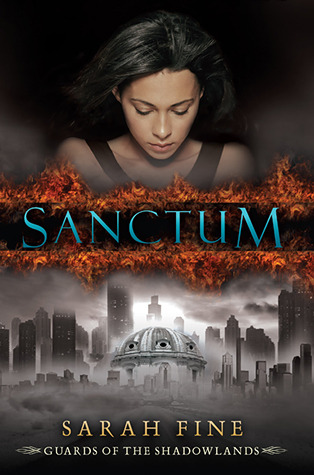
Book Review: Sanctum: Guards of the Shadowlands, Book One by Sarah Fine

13482750By Cindy L. Rodriguez

This month we are taking a look at Latin@s in science fiction and fantasy. On Monday, we had a Q&A with Sarah Fine, author of the Guards of the Shadowlands series. Today, we take a closer look at her debut novel, first of the series, Sanctum, which features a 17-year-old Latina protagonist.

DESCRIPTION OF THE BOOK“My plan: Get into the city. Get Nadia. Find a way out. Simple.”

A week ago, seventeen-year-old Lela Santos’s best friend, Nadia, killed herself. Today, thanks to a farewell ritual gone awry, Lela is standing in paradise, looking upon a vast gated city in the distance—hell. No one willingly walks through the Suicide Gates, into a place smothered in darkness and infested with depraved creatures. But Lela isn’t just anyone—she’s determined to save her best friend’s soul, even if it means sacrificing her eternal afterlife.

As Lela struggles to find Nadia, she’s captured by the Guards, enormous, not-quite-human creatures that patrol the dark city’s endless streets. Their all-too-human leader, Malachi, is unlike them in every way except one: his deadly efficiency. When he meets Lela, Malachi forms his own plan: get her out of the city, even if it means she must leave Nadia behind. Malachi knows something Lela doesn’t—the dark city isn’t the worst place Lela could end up, and he will stop at nothing to keep her from that fate.

MY TWO CENTS: Sanctum by Sarah Fine offers an engaging blend of fantasy, action, romance, and contemporary social issues, sure to appeal to a variety of readers. Protagonist Lela Santos has spent most of her life in foster homes and the sexual abuse she suffers at one causes her to attempt suicide. Her abuser interrupts the suicide, but Lela was gone long enough to glimpse hell. When her best friend Nadia kills herself and Lela dies accidentally soon after, she is determined to save her friend from the city that preys on souls’ worst fears, insecurities, and vices.

Problem is: Lela doesn’t belong there. The city won’t sustain her, which puts her at risk of dying–again.

Another problem: Creepy creatures called Mazikin claim broken souls and are preparing to bust out of the city. The fights are fierce between the Mazikin and the Guards, and Lela proves to be a badass even before any formal fight training.

Yet another problem: Lela is falling in love with Malachi, the leader of the Guards. And while the romantic tension between them is hotter than Hades itself, a love affair in this setting isn’t likely to last. Plus, Lela is still healing from traumas experienced in her mortal life, which means she doesn’t easily trust people even in the afterlife.

One of the things I liked most about Sanctum was the development of the characters’ emotional journeys through pain and into healing. They all suffered so severely in life they decided to commit suicide, and that decision landed them in a place that continues their torment. Still, as difficult as it is, in life and this afterlife, some are able to overcome the worst experiences and find purpose in life and even love. I won’t give away what happens when Lela finds Nadia, but I will say I wasn’t entirely surprised at Nadia’s response to the rescue effort. The point that we all heal at our own pace is an important one to remember (in real life) when trying to help people with mental health issues.

TEACHING TIPS: One thing the Common Core State Standards asks is for students to compare different treatments of the same subject or analyze how one work of literature has influenced another. One way Sanctum could be used in the classroom, even if only parts are used, is to compare Fine’s version of hell with other versions of hell and purgatory in literature. Discussions about the afterlife and the particular fate of those who commit suicide would be appropriate in higher level English classes that consider the Bible’s influence on literature and history/social studies courses that include a comparative study of religions.

AUTHOR: Sarah Fine is the author of the Guards of the Shadowlands, a YA urban fantasy series (Skyscape/Amazon Children’s Publishing), including Sanctum (October 2012) and Fractured (October 2013). The third and final book in this series comes out in October 2014. In May 2014, Putnam/Penguin published Scan, the first of two thrillers she co-authored with Walter Jury. Her gothic young adult novel Of Metal and Wishes will be published by McElderry/Simon & Schuster in August 2014. When she’s not writing, she’s psychologizing. Sometimes she does both at the same time. The results are unpredictable.

Author Sarah Fine Talks About Hell, Trauma, and Creating Diverse Characters

13482750By Cindy L. Rodriguez

This month, we are taking a look at Latin@s in science fiction and fantasy. Today, we have a Q&A with Sarah Fine, author of Sanctum and Fracture. (Book three is in the works.) Here is a partial description of Sanctum, which features Lela Santos, a Latina main character, a foster child from Rhode Island who has experienced abandonment, neglect, and sexual abuse:

A week ago, seventeen-year-old Lela Santos’s best friend, Nadia, killed herself. Today, thanks to a farewell ritual gone awry, Lela is standing in paradise, looking upon a vast gated city in the distance—hell. No one willingly walks through the Suicide Gates, into a place smothered in darkness and infested with depraved creatures. But Lela isn’t just anyone—she’s determined to save her best friend’s soul, even if it means sacrificing her eternal afterlife.

Cindy: First, let me say that I loved Sanctum. The only part that frustrated me was how long it took for Lela and Malachi to kiss :.)

Sarah: I’m so glad you enjoyed it, and I hope the kiss was worth the wait!

Cindy: The premise of Lela going into hell to retrieve Nadia is similar to the Greek myth Orpheus and Eurydice, but obviously this is not a retelling. How influenced were you by that myth or mythology in general?

Sarah: I actually didn’t think about that particular myth at all as I was generating the idea for this book. When I read that comparison in a review, I was like … you know, that’s actually quite apt! I was a little more influenced by Jewish and Mesopotamian mythology. The Mazikin are mentioned in the Talmud as evil spirits or demons, and the inhuman Guards are very loosely based off protective deities called the lamassu in Mesopotamian myths, where they’re described as half-man, half-bull.

Cindy: Your setting is an interesting kind of hell, with the buildings being alive and able to feed off its inhabitants. How did you create and develop this idea? What kind of research do you do for fantasy world creation?

Sarah: This idea was inspired by the way C.S. Lewis wrote about his version of hell/purgatory in The Great Divorce. The “grey town” is this massive, depressing city where it’s always raining, always twilight—and here’s the part that really got me: people could have whatever they wanted, but it was of low quality. That Grey Town at the very beginning of that book completely inspired the dark city in Sanctum. Obviously, I changed it a lot, including the idea that the city is really one living, breathing entity that grows off the depression of the people residing within, but I give Lewis the credit for the basic idea (and he was clearly influenced by Dante in that work, so he deserves credit as well.)

17667916Cindy: Do you continue to work as a child psychologist? Did your work experiences help you to portray the emotional recovery Lela and the others have to go through in order to heal from trauma?
Sarah: I do, but in a different capacity than I have in the past, when I did a lot of home-based evaluations and therapy. Now I direct programs and supervise clinicians who provide those services to children and adolescents who are at risk for out-of-home placement in psychiatric hospitals or residential treatment facilities. Our goal is to work with families to keep these kids at home and in their communities, where research clearly shows they do best.

My work definitely influences how I see the complexity of trauma and what it takes to heal. A huge percentage of our clients have experienced some type of trauma, and usually not what we think of as single event, “simple” trauma. Though that can be devastating, it’s actually easier to treat than the complex developmental trauma we often see, where the trauma is more chronic and ongoing. This is actually the type of trauma Lela’s experienced—multiple disruptions in attachments, several instances of abuse or neglect. As I show her fragile but growing relationship with Diane, her foster mom, that’s always on my mind. I definitely explore more of that in book three.

Cindy: In addition to the great action scenes, this story focused on the characters’ battles with their personal demons. Thinking about author choices here…because of the issues the characters face, this story could have been developed as a YA contemporary. What led you to decide to develop the story as fantasy instead?

Sarah: I guess it’s a preference thing. There are some brilliant, brilliant authors who have explored these issues with contemporary YA (Nina LaCour, for example), but I wanted to place these characters in an environment where the depression was a tangible, living thing. This fantasy world gave me the chance to explore a lot of philosophical issues, like what is heaven, really, and how could it possibly be the same for everyone? What if you’re not emotionally ready to be there and accept what it offers? To me, that’s not a religious question, but a more concrete way of exploring something very emotional–Can you have some version of that goodness in your life, no matter where you are? What would you have to understand and embrace to receive that?

Cindy: Again with author choices….Obviously you could have created characters of any race, ethnicity, etc. What made you decide to create a Latina MC?

Sarah Fine

Sarah Fine

Sarah: Lela Santos really just materialized to me in that form. However, I will tell you that the majority of the school children in the urban core of Rhode Island, where Lela’s from, are Latino/a. Also, in general, children of color are overrepresented in terms of involvement in the juvenile justice system in this country (with harsher sentences as well—we’ve had court workers outright say that they’re harder on these kids because of the racism they face within society, which is a totally twisted logic that over-penalizes those children and in my opinion perpetuates that racism). Once I considered those facts, it seemed wrong to consider making her anything other than what she was from the beginning.

Cindy: Your secondary characters have interesting back stories as well, which suggests to me that including diversity in your writing is important to you. Some authors shy away from including diverse characters for fear of “getting it wrong.” Did you have any concerns about creating diverse characters? What advice, if any, would you give to fantasy writers about diversity in the genre?

Sarah: This story takes place in the afterlife, and the idea that the only people residing there would be Anglo-American, or any kind of American, is pretty laughable. The world is a BIG place—and the afterlife would be the same, minus the country divisions. Everyone would be there together, right? The dark city where most of Sanctum takes place is where everyone in the world who committed suicide has gone (with some exceptions, I think, but that’s a different interview!). I felt very strongly that having Lela coincidentally meet up with people who were American would just be false and icky.

I did have concerns, of course, because I really wanted these characters to have an impact, and to feel like real people. I did quite a bit of research. I also focused on writing from the inside out, trying to focus on each of those characters as human beings who loved and hoped and despaired in their own ways. I don’t think I’m some kind of expert on this. I’m certain I’ve made mistakes. But I’m curious and always wanting to learn about people who are different from me. And I started from the premise that all those diverse characters—Lela, Malachi, Ana, Takeshi—were on their own profoundly personal journeys, armed only with their intelligence, resilience, perseverance, and the capacity to risk their lives and hearts for a chance at peace. The rest flowed from that.

Check out these other works by Sarah Fine:

17733363  13451410  17303139

Book Review: Otherbound by Corinne Duyvis

By Zoraida Córdova

This month, we are taking a look at Latin@s in science fiction and fantasy. Today, we’re highlighting OTHERBOUND, a debut novel by Corinne Duyvis, which has received excellent reviews, including starred reviews from Kirkus, Publisher’s Weekly, School Library Journal, and The Bulletin of The Center for Children’s Books.

DESCRIPTION FROM THE BOOK JACKETAmara is never alone. Not when she’s protecting the cursed princess she unwillingly serves. Not when they’re fleeing across dunes and islands and seas to stay alive. Not when she’s punished, ordered around, or neglected.

She can’t be alone, because a boy from another world experiences all that alongside her, looking through her eyes.

Nolan longs for a life uninterrupted. Every time he blinks, he’s yanked from his Arizona town into Amara’s mind, a world away, which makes even simple things like hobbies and homework impossible. He’s spent years as a powerless observer of Amara’s life. Amara has no idea . . . until he learns to control her, and they communicate for the first time. Amara is terrified. Then, she’s furious.

All Amara and Nolan want is to be free of each other. But Nolan’s breakthrough has dangerous consequences. Now, they’ll have to work together to survive–and discover the truth about their connection.

MY TWO CENTS: Otherbound by Corinne Duyvis is an ambitious novel that breaks the norm of YA fantasy.

Nolan is a seventeen-year-old boy with a prosthetic leg who has seizures, at least, what the grownups think are seizures. In actuality, he has a vivid connection with a girl named Amara who lives in the Dunelands—definitely not Arizona where Nolan and his family live.

The dual perspective—even the dual reality of it all–is interesting. I thought it might get distracting to have breaks where Amara’s world cuts into Nolan’s perspective in bold. But if Nolan can handle the after effects that come with what is pretty much a psychic invasion and still try to have a life, then I can handle it as a reader.

From the very beginning, we’re set up to understand the following things: Nolan leads a pretty average life. As average as it gets for a low income Latino family in Arizona. He has parents who work three jobs to pay for his meds. He has a younger sister who is 15 and has an attitude. Their Latin-ness isn’t brought up except for mentions of Grandmother Perez’s food and how Nolan’s parents go back and forth between speaking Spanish. The Spanish is always typed out in English, but since I speak Spanish I translated it in my head as I read along. And even though this is a fantasy novel, Duyvis makes a note of Nolan’s father writing angry letters to his school about banned books. It’s Arizona, you have to! So props.

After experiencing Nolan’s day-to-day, we’re then thrown into a completely different world with its own rules to understand. Amara is a servant. By nature of her birth she can’t read, write, or speak (literally, servants have their tongues cut off and are branded by palace). I love how the author didn’t shy away from the brutal life that this young girl has to endure. At the end of the day, Amara is a girl who is kidnapped and held against her will. She’s a slave, whose sole purpose in life is to protect a cursed princess through Amara’s ability to heal herself. Should princess Cilla’s blood spill, the curse will be unleashed. The Dunelands come with their own royalty system, magic, political intrigue, and adventure, which keeps the pace moving.

Nolan and Amara live in separate dimensions/planets but are both faced with disabilities that impede them from an autonomy that others take for granted. Amara’s ability to speak has been stolen from her. Never the less, she tries to over come this by learning how to read, despite the terrible punishment that awaits her if caught. While she does fear and question the people around her, she isn’t exactly a wallflower. She’s brave, loving, and loyal, traits that a physical disability can’t change.

As for Nolan, he lost a leg at a young age from a freak accident (brought on by the vision-seizures). While he can still be active, swim, go to school, and move around on his own, when you add painful “seizures” to that, the results are not good. It’s not a mental disability in the way that we treat depression or being bipolar, but it is in his head. On his part, he tries not to feel like a burden in his household. He’s constantly trying to give people the “right” kind of smile, and often lies about how he feels to get the grown-ups off his back about whether or not he’s “okay.” I think there’s a big pressure put on kids to “be okay” and it’s more for the adults than for the kids. Still, as he realizes the sacrifices his parents make for him, he takes to even the smallest chores–dishes, laundry, helping his sister rehearse for a play–to show that he can be present in his world, that he can be helpful.

Then the unexpected happens—through some circumstance of their connection (and the new meds), Nolan’s role goes from simply watching to doing. He can make Amara move. He can run through her, and it’s great to watch Nolan find the ability to move through Amara’s magical world. The levels of magic are complicated, and when Nolan and Amara discover each other, they become reliant on one another for survival. I mean, I’d be pissed off if some guy who was watching me for years and years, suddenly shows up and can control my body. Amara’s first reaction is to be mad, but Nola isn’t a creeper. He’s been part of her life for years and he truly cares about what happens to her. True, Amara would like to kiss the person she likes without Nolan snooping, but without Nolan, Amara’s ability to heal would not manifest. She needs him there for her to pass as a “healing mage.”

As he gets more and more involved in the political schemes of Amara’s world, Nolan is determined to make sure Amara survives, even if it means he feels pain. The way I read it is that he would much rather feel that physical pain than deal with the pressures of his reality. With everything that goes on in his real life–the meds, school, pressure, parents who constantly hover–Nolan gets a taste of being a hero without the Earthly limitations. As for Amara, her payoff is that Nolan gave her the ability to heal. There were so many times when she was tortured because her captor knew she would heal soon enough. Without Nolan, she would have probably died sooner. I can’t spoil the end, but Nolan’s connection came super in handy at the end. Even though their connection had to end sometime, it was great to see a relationship between a boy and a girl that wasn’t sexual, but bonded through adversity.

When I say that I’ve never read anything like this, I mean it. While I do feel like I know more about the characters than the actual fantasy world, I think I’m okay with that. There’s a young Mexican-American boy with a prosthetic leg who can see into another dimension and inhabit the body of an alien servant girl. This servant girl is bisexual and used as a ploy to a political regime way beyond her control. Definitely not your average YA.

AUTHOR: Corinne Duyvis is a lifelong Amsterdammer and former portrait artist now in the business of writing about superpowered teenagers. In her free time, she finds creative ways of hurting people via brutal martial arts, gets her geek on whenever possible, and sleeps an inordinate amount. Visit her at www.corinneduyvis.com or say HI on Twitter!
FOR MORE INFORMATION ABOUT Otherbound, visit your local library or bookstore. Also check out worldcat.orgindiebound.orggoodreads.comamazon.com, and barnesandnoble.com.

The Little Ecuadorian Mermaid

web_mermaid

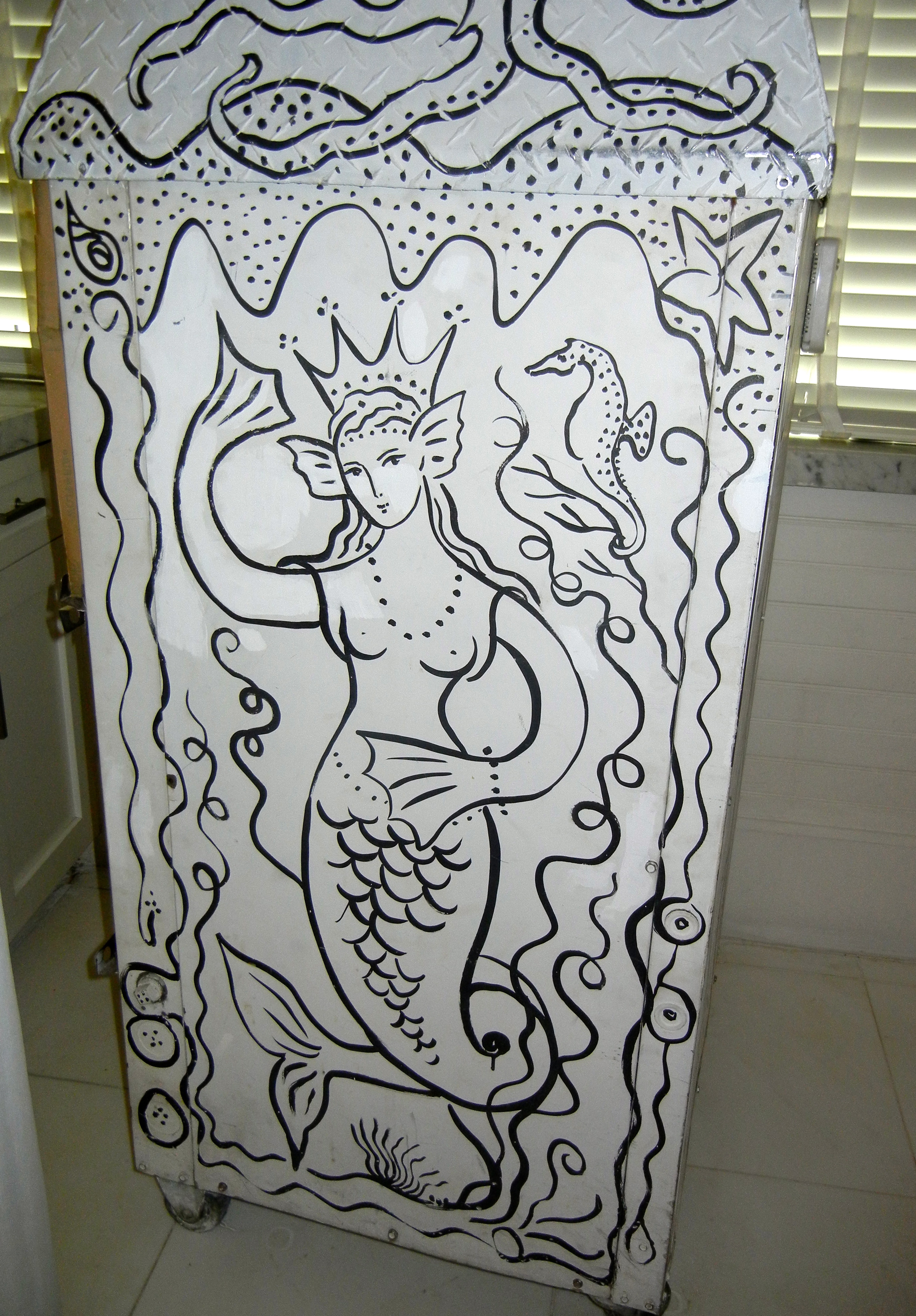
Graffiti mermaid at the Lola Starr store in Coney Island

By Zoraida Córdova

Welcome as we kick off our LATIN@S IN SCI-FI & FANTASY MONTH!

After the release of my first book someone told me that mermaids were cool and all, but I should write about my own “experience.” I remember the words more than the guy who said them to me. Now, I believe that fantasy stories are a great metaphor for coming of age. I have a 16 year old dude who turns into a merman and the first thing he worries about is how his body changes (typical boys). In Blood and Chocolate, the very sexy werewolf is a metaphor for the changes girls go through when they menstruate. Hell, watch the first three seasons of Buffy the Vampire Slayer for stories that are magic, but still mirror “normal” teenage coming of age.

mermaid laptop

My laptop

But when this guy told me all these years ago to write about my “experience,” he wasn’t talking about coming of age, he was talking about my immigrant experience. Some time ago, I put out a question to Twitter for links to Latin@s writing YA fantasy, and I got back “Have you read Isabelle Allende’s YA series?” (She is a BAMF in her own right, but still). While I love contemporary stories, and I think it’s important to read all kinds of narratives that show how different each Latino experience is in the U.S., the stories I want to write are about magic.

Mermaid_blog

from @Pocoquattro

I grew up listening to my grandmother sing to me. I grew up reading fables and getting scared of el Cuco and la Llorona. When I started writing The Vicious Deep trilogyI knew I was writing a book that had been brewing in my head for years. For a long time when people remarked “You speak English so well,” I would respond with “All I did as a kid was watch The Little Mermaid,” so that’s how I learned to speak English. It’s true, I watched it every day, rewinding the VHS as soon as Ariel got her happy ending. Whether or not it was my vehicle for the English language is debatable, but it’s become part of the story I tell.

I’ve always been drawn to magic and magical things. I want to believe in magic, and the way that I can show that is through creating magical worlds. When I was in high school my favorite books were about vampires and witches and dragons. It was book browsing at a B&N with a friend that pushed me to really write about mermaids. The conversation went something like this:

Me: I can’t find a mermaid story that I really love.

Him: So write one.

Me: Yeah…

THAT’S IT. I listened. I took a notebook with me to the beach (Coney Island, obvs) and this story LITERALLY poured out of my head. (Two points from Ravenclaw for improper use of “literally.”)

Mermaid on the ground in South Beach.

Mermaid on the ground in South Beach.

If you don’t see the story you want to read on the shelves, write it. Mermaids have always been magical to me, but it wasn’t until someone else pointed it out that I realized I could add my own mythology to my favorite magical creatures. Lately, we’ve been talking about diversity a lot, and I think the same thing applies to that. You don’t see yourself represented? Write your own story. If you want to write about magical ponies that travel through time, do it. If you want to write about the story of a girl who is looking for summer romance, do that, too.

I wonder if the reason there aren’t more Latin@s writing as much SF/F is because people (like that dude mentioned earlier) assume that the only story we have to tell is one of immigration or assimilation. And that’s just not so. If you check out this list from Cosmopolitan of 5 Latina YA authors to look out for, all of these stories fall in SF/F category. And if you go to Diversity in YA, they have an awesome list of just some Latin@s (authors and/or characters) in SF/F.

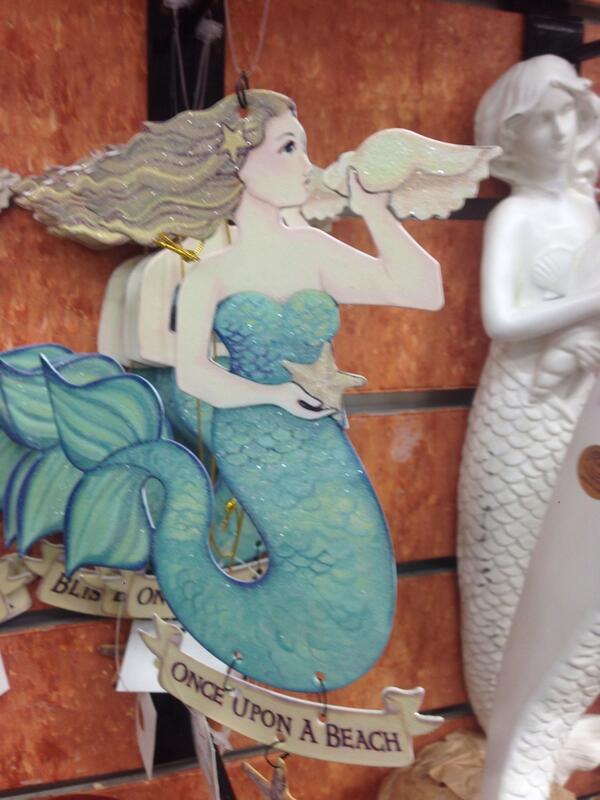
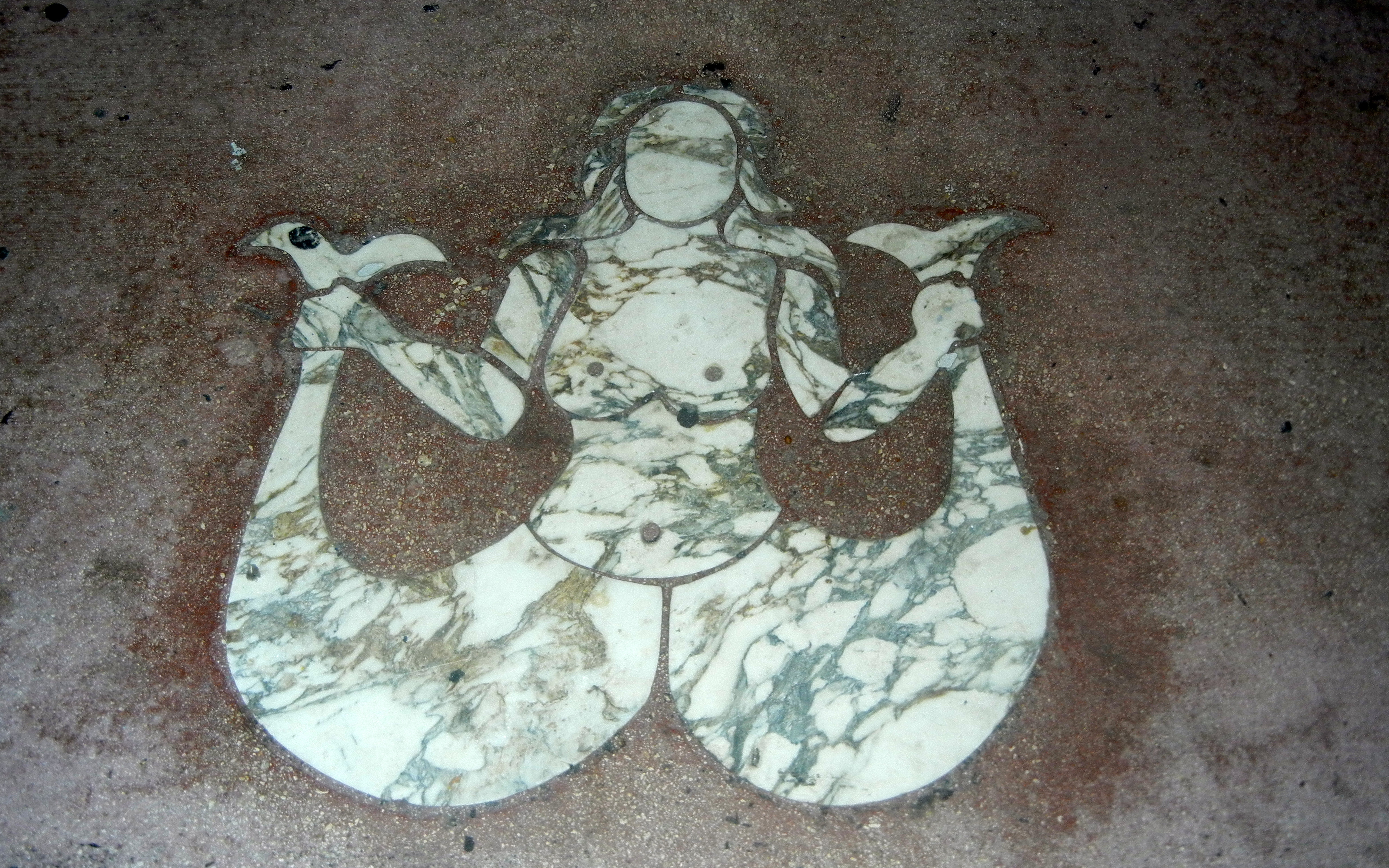
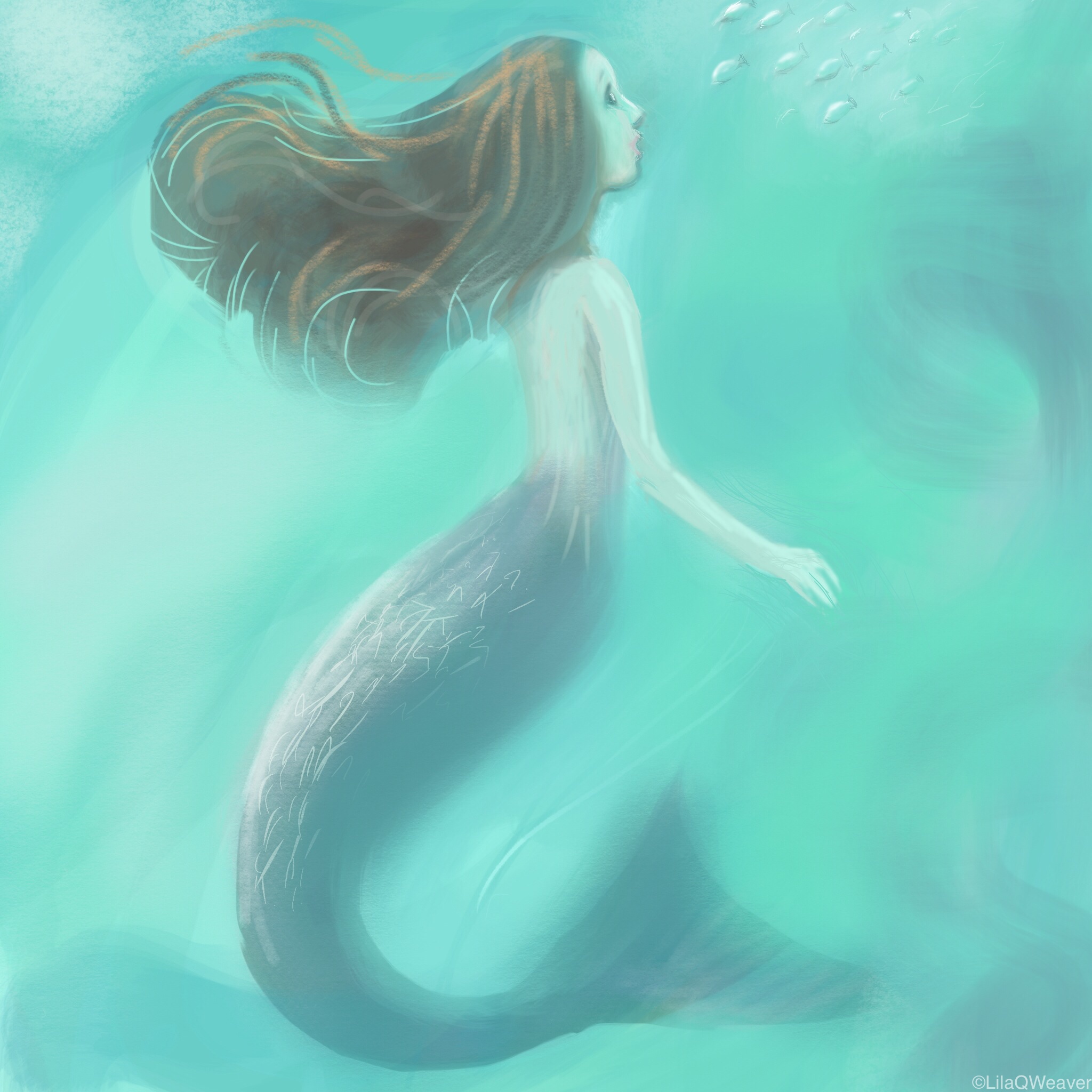
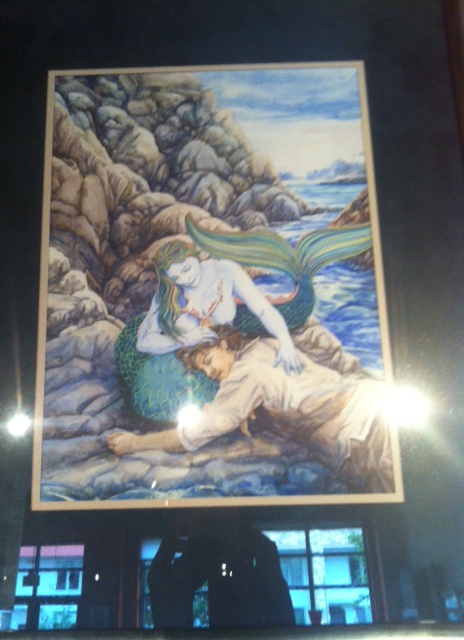
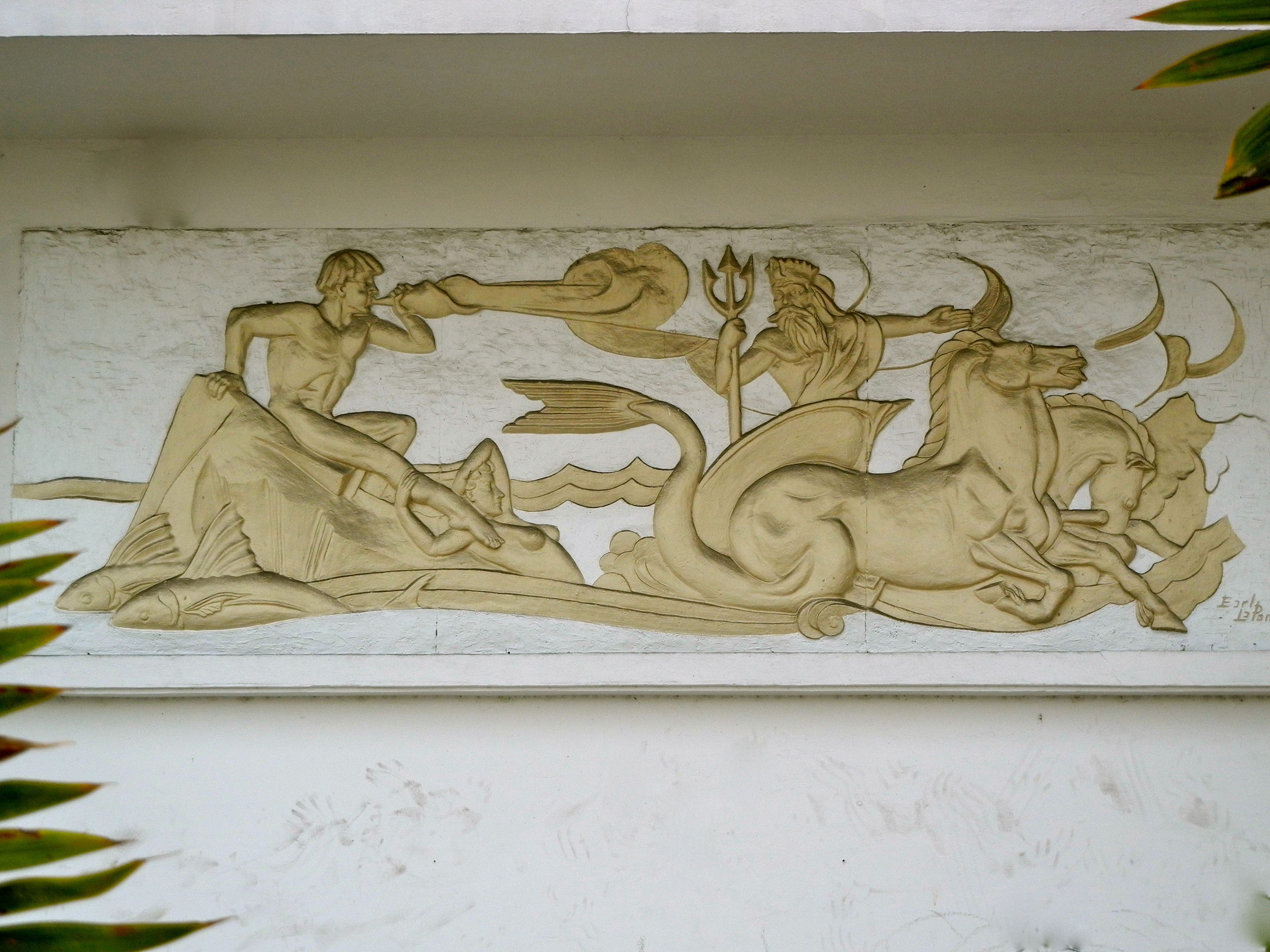
Tomorrow is the launch of the third book, The Vast & Brutal Sea.  I want to share some images of mermaids around town. I asked the lovely ladies of Latin@s in Kid Lit (and some from Twitter friends) to snap photos of mermaids if they happen upon them:

photo (11)

Original art by the super talented Lila Weaver

photo (9)

From Stephanie Guerra. Cafe Torino, downtown Seattle

Triton! South Beach

Triton! South Beach

The Sagamore Hotel in South Beach

The Sagamore Hotel in South Beach

mermaid_3

From @PoccoQuattro.

A friend sent this to me. Art by Paul Webb from St. Louis.

A friend sent this to me. Art by Paul Webb from St. Louis.


And now from my apartment, the Chateau Mer-mont: 

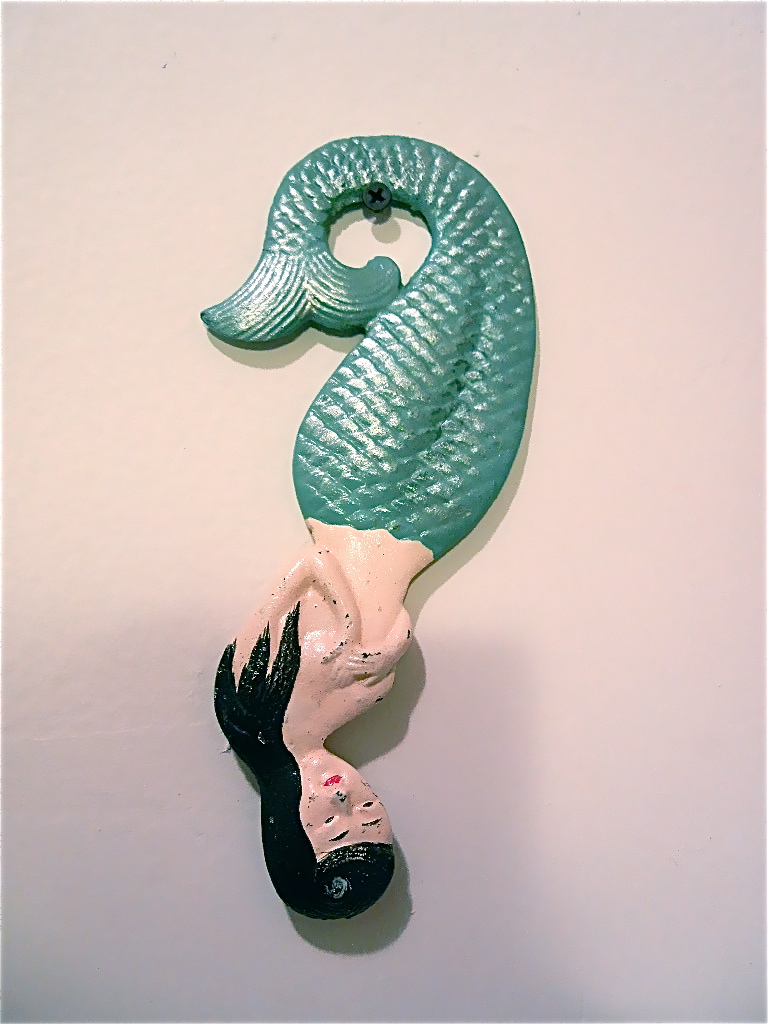
mermaid bottle opener

Her tail opens bottles. That’s talent.

mermaid and coney

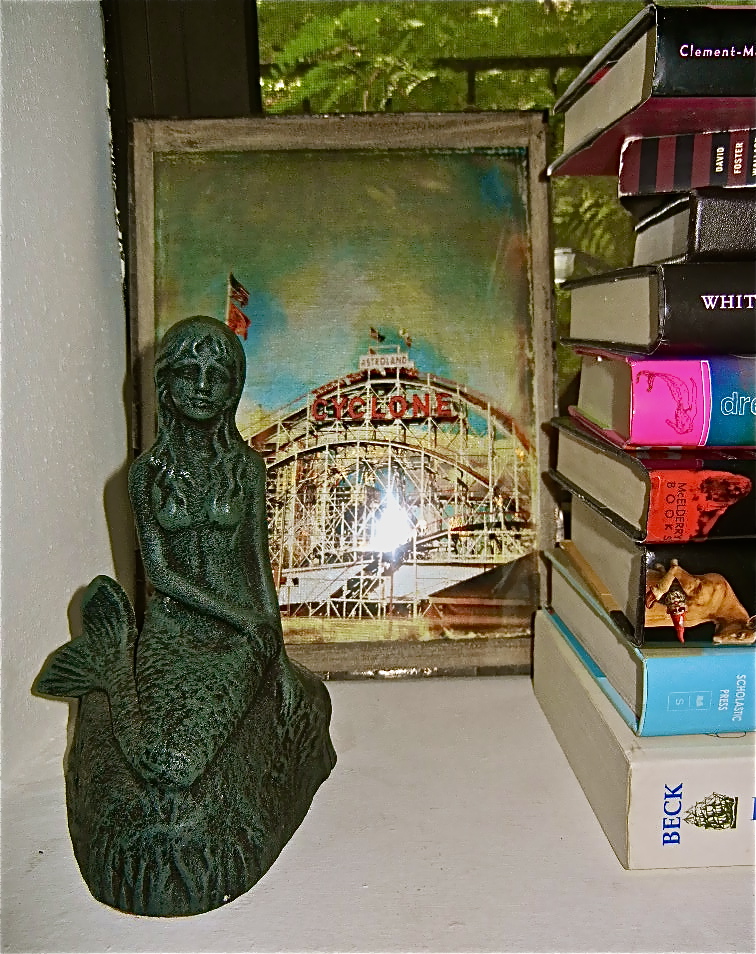
My bookend…not holding up any books.

mermaid fancy

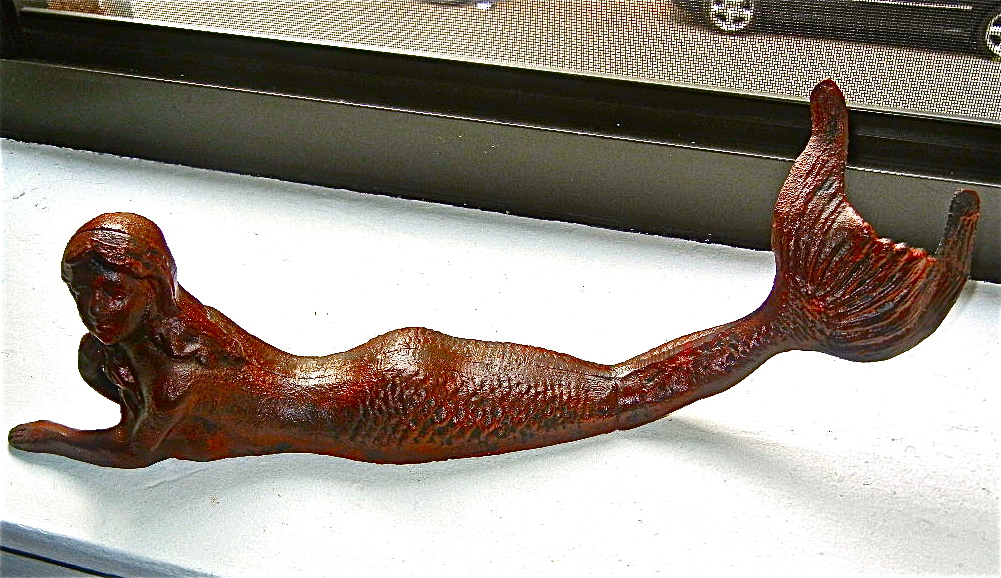
My fancy mermaid being fancy


I hope from now on you’ll start seeing mermaids everywhere. For now, follow my blog tour over at www.zoraidacordova.com I hope you enjoy the rest of our SF/F month!


Swim with the fishies like,

Zoraida