Book Review: Allie, First At Last by Angela Cervantes


Allie, First At Last (1)Reviewed by Marianne Snow Campbell

FROM ANGELA CERVANTES’S WEBSITE: Allie Velasco wants to be a trailblazer. A trendsetter. A winner. No better feeling exists in the world than stepping to the top of a winner’s podium and hoisting a trophy high in the air. At least, that’s what Allie thinks…. she’s never actually won anything before. Everyone in her family is special in some way—her younger sister is a rising TV star; her brother is a soccer prodigy; her great-grandfather is a Congressional Medal of Honor winner. With a family like this, Allie knows she has to make her mark or risk being left behind.  She’s determined to add a shiny medal, blue ribbon, or beautiful trophy to her family’s award shelf. When a prestigious school contest is announced, Allie has the perfect opportunity to take first —at last. There’s just one small snag… her biggest competition is also her ex–best friend, Sara. Can Allie take top prize and win back a friend — or is she destined to lose it all?

MY TWO CENTS: Fifth grade can be a tough year – it certainly was for me.  As kids approach and enter adolescence, many begin to grapple with who they are and who they want to be. Meanwhile, they may fall out with longtime friends who are going through the same transitions. While experiencing these growing pains and periods of uncertainty, kids can find comfort in books. Reading about characters who are undergoing the same journeys and struggles can help young readers see that they’re not alone – it’s normal to feel out of place and unsure of oneself.

Allie Velasco is a fifth-grader trying her best to discover her identity and make her mark on the world around her. For Allie, that means being the best at something – not that she’s sure what that something is. While her siblings excel at acting, soccer, and community service, her mother has been voted Best News Anchor of the Year, and her great-grandfather is a war hero, Allie is keenly seeking out her niche and putting a lot of pressure on herself to “succeed.”

Frankly, I wish Allie, First at Last had existed when I was in fifth grade. Although it’s been a couple of decades since I experienced my own tween tribulations, it was almost therapeutic to revisit that stage of my life through Allie. And I’m certain there are plenty of young readers out there today who will relate to her as well. This book is sure to appeal to kids who are “finding themselves,” having friend problems, or feeling eclipsed by siblings.

But don’t go thinking that this book is all sadness and doubt! Angela Cervantes fills the pages with humor that’s sharp with hints of snark and sarcasm, but never mean. For example, Allie and her best friend write a song about her cat called “It’s Not Easy Being Fluffy.” I approve. Also, although Allie faces challenges and insecurities, she still demonstrates strength and self confidence by assertively confronting rude kids in her class, nurturing a loving relationship with her sister and bisabuelo, and demonstrating a deep, natural appreciation for her Mexican-American roots. A great role model indeed.

TEACHING TIPS AND RESOURCES:  Allie, First at Last would be a perfect choice for a middle-grade classroom book club. Teachers can provide students with a list of books (including this one), and students can then choose which book they’d like to read, form small groups with classmates who chose the same book, enjoy, and discuss. With its highly relevant themes and humor, Allie is certain to be a hit, and kids can make it their own as they connect it to their lives and respond collaboratively. Educators should be sure to stock this volume in their classroom libraries and media centers for self-selected reading time. There’s nothing like a fun, engrossing book for motivating kids to read!

Also, be sure to check out Angela Cervantes’s teacher resources, available on her website. She’s created printer-friendly activity sheets with writing prompts for both Allie, First at Last and her previous novel, Gaby, Lost and Found.  The prompts present great ideas for journaling, in-class discussions, and even research projects.  Enjoy!
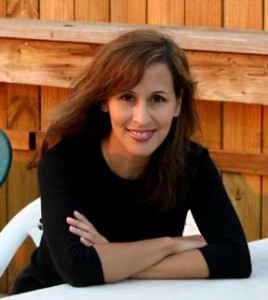
Angela CervantesABOUT THE AUTHOR: Angela was born and raised in Kansas. Most of her childhood was spent in Topeka, Kansas living in the Mexican-American community of Oakland. Her family also spent a lot of time in El Dorado and Wichita visiting a slew of aunts, uncles and cousins on weekends.

Angela graduated from the University of Kansas (Go Jayhawks!) with a degree in English. After KU, she moved to Brownsville, Texas. In Brownsville, Angela was introduced to the music of Selena, ceviche, and learned to two-step. After Brownsville, Angela moved to Guadalajara, Mexico, where for two years she taught High School English and literature. In 2003, Angela returned to Kansas City, completed an MBA, co-founded Las Poetas, an all-female poetry group, and began working at an international children’s organization.

In 2005, Angela’s short story, “Pork Chop Sandwiches” was published in Chicken Soup for the Latino Soul. In 2007, she won third place for Creative Nonfiction in the Missouri Review’s audio competition for her story “House of Women” and Kansas City Voices’ Best of Prose Award (Whispering Prairie Press) for her short story, “Ten Hail Marys”. In 2008, she was recognized as one of Kansas City’s Emerging Writers by the Kansas City Star Magazine. In 2014, she was named one of the Top Ten New Latino Authors to Watch by LatinoStories.Com.

Angela’s first novel, Gaby, Lost and Found [Scholastic Press; 2013], won Best Youth Chapter Fiction Book in the International Latino Book Awards. Angela’s second middle-grade novel, Allie, First At Last, will be released Spring 2016. See FAQs about the author.

WE ARE GIVING AWAY A HARDCOVER OF ALLIE, FIRST AT LAST BY ANGELA CERVANTES, WHICH OFFICIALLY RELEASES 3/29/16.

CLICK HERE TO LINK TO THE RAFFLECOPTER GIVEAWAY!


MarianneMarianne Snow Campbell is a doctoral student at The University of Georgia, where she researches nonfiction children’s books about Latin@ and Latin American topics and teaches an undergraduate course on children’s literature. Before graduate school, she taught pre-K and Kindergarten in Texas, her home state. She misses teaching, loves critters, and can also be found on Twitter and Facebook.
 

Author Robin Herrera Sees Her Grandma in Herself & Her Storytelling

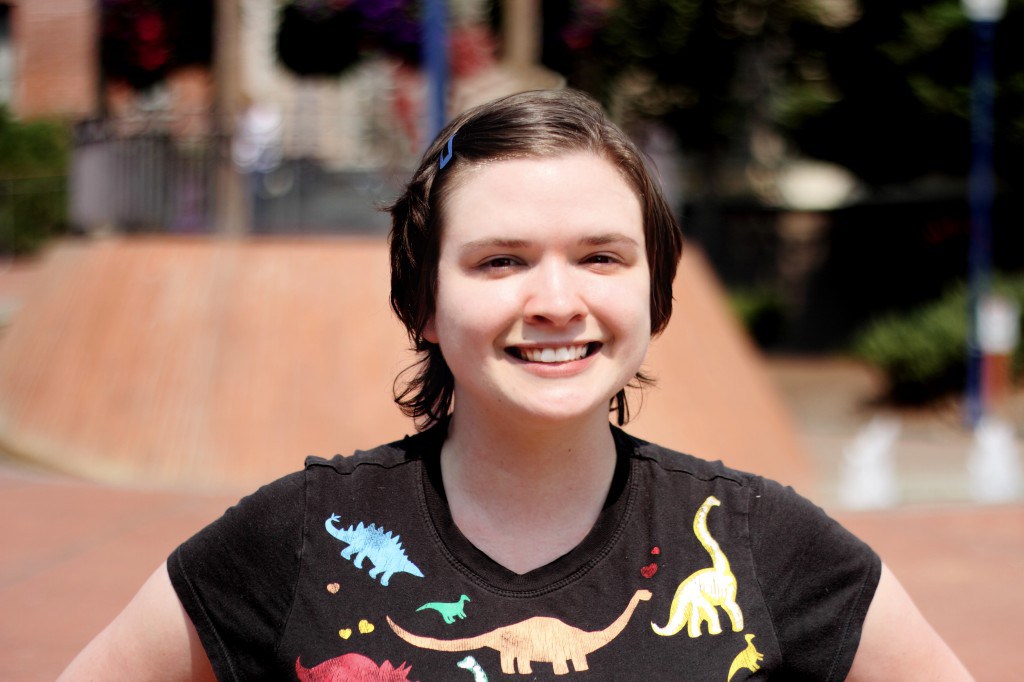
By Robin Herrera

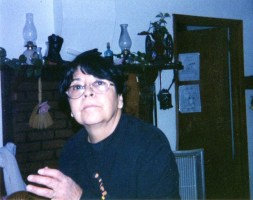
Sometimes when I look in the mirror, I see my grandma. Especially now that I have shorter hair, because as long as I knew her, she wore her hair short. Strangely, it wasn’t until a few years after she died that I noticed the resemblance between us.

She was short, too, like me—I’m the shortest in my family at (barely) 5’3”. We both have round faces and eyes that crinkle into small slits when we smile.

Now, years after her death, years after I’ve forgiven her for not telling me how bad her cancer really was, I wish I’d talked to her more. I know only snippets of my grandma’s life growing up in Colorado during the Great Depression. She was the youngest girl of 16 children, the second youngest altogether. Her parents were Joseph and Josephine Herrera. (On a baptismal document I found in my grandma’s things, their name was misspelled as Herreda.) And though she told me she’d left home at a young age, family was clearly very important to her, if the dozens of photo albums she left behind were any indication.

Robin Herrera  img001

When my siblings and I were younger, Grandma told us a story of our uncle Chris (Christobel). One night, near midnight, he was driving across a long bridge. Halfway across, he glanced over at the passenger’s seat to see a woman, dressed all in white, sitting there. She had her face turned toward the window, and Uncle Chris could see her shoulders shaking as she sobbed softly. He reached out a hand to comfort her, but before he could touch her, he looked down at her hands, in her lap. They were skeleton hands.

Though Chris was terrified, he kept driving. Somehow he knew that if he could make it to the other side of the bridge, the ghostly woman would disappear. He drove faster and faster, but out of the corner of his eye he saw the woman slowly turning her head to face him. Chris knew what her face would look like. It would be a skull, and if he looked, he would die. So he kept his eyes forward and kept driving until he crossed the bridge. Only then did he dare look at the passenger’s seat and see that the woman had vanished.

Grandma called the woman La Llorona. I didn’t know until later that La Llorona was a common Mexican folktale, and that Grandma’s tale was just a version of it. But for a long time, I was terrified of La Llorona, and impressed that my uncle Chris had been smart enough not to fall victim to her.

This is one of the few ties to my Mexican heritage that I have. I remember other things, too, like making tortillas on Grandma’s tortilla press, then heating them up and smothering them in butter. When my aunt Lupe visited, she and Grandma would occasionally lapse into Spanish, spoken so quickly that I’d sometimes stand in the kitchen with them, listening in awe. (I’m terrible at learning other languages.) Aunt Lupe, more than Grandma, always called me mija. I didn’t know what it truly meant until I looked it up in college, but I knew it was a term of endearment, because she used it on all the grandkids (mijo for the boys).

When my Grandma died, I felt like I’d lost that last connection with my Mexican heritage. My dad had already died by that point, but he was biracial and, I think due to circumstances in his childhood I can’t ask him about, wasn’t fluent in Spanish. Aunt Lupe is gone now, too, or I would talk to her about my grandma and their childhood together. (Though I’m not sure she’d tell me the truth. Grandma probably wouldn’t have either, to be fair.)

Now, as a writer, I miss my grandma terribly. I like to think she’d be proud of me, and that she’d see a bit of herself in my book, though to my knowledge, she never lived in a trailer park. What I hope she’d see is a portrait of a poor family, flawed but, for the most part, happy. Because that is what I remember most about my grandma. She showed me how to be poor.

Like the characters in my book, we shopped at thrift stores for most of our clothing (and dishes, and various housewares). Every week Grandma went grocery shopping at the local Grocery Outlet, which we called the Canned Food Store, and picked up what was on sale. When she died, her cupboards were still stocked with about a hundred different cans of food. She made sure we never went hungry.

But more than anything, she taught me that being poor wasn’t a terrible thing. I didn’t even begin to realize that I was poor until late in high school, after a conversation with my sister. This will sound cheesy, but Grandma made me feel rich in other ways.

I wonder, sometimes, where I get my love of writing and making up stories. My mother went to school for art, so for a long time, I thought that might be it. But I think it came from my grandmother, who told me stories (though often embellished) of her childhood (and ghost women) from an early age. I’ll leave you with one of my favorites, which she would often tell as a joke if I asked for a story. Of course, you have to imagine it’s being told by a short, round-faced Mexican woman who is being as over dramatic as possible:

It was a dark and stormy night. The soldiers were gathered around the campfire. Suddenly the captain stood up and said, “Diego! Tell us one of your famous stories!” Slowly, Diego stood up and said, “It was a dark and stormy night. The soldiers were gathered around the campfire…” (Repeat forever.)


18405519Robin Herrera was born in Eureka, California. She has degrees from Mills College and Vermont College of Fine Arts. She now lives in Oregon. Her debut novel, Hope Is A Ferris Wheel, was published in 2014 by Amulet Books.

Book Review: I Lived on Butterfly Hill by Marjorie Agosin

By Sarah Hannah Gómez

18048909DESCRIPTION FROM THE BOOK JACKET: Celeste Marconi is a dreamer. She lives peacefully among friends and neighbors and family in the idyllic town of Valparaiso, Chile–until the time comes when even Celeste, with her head in the clouds, can’t deny the political unrest that is sweeping through the country. Warships are spotted in the harbor and schoolmates disappear from class without a word. Celeste doesn’t quite know what is happening, but one thing is clear: no one is safe, not anymore.

The country has been taken over by a government that declares artists, protestors, and anyone who helps the needy to be considered “subversive” and dangerous to Chile’s future. So Celeste’s parents–her educated, generous, kind parents–must go into hiding before they, too, “disappear.” To protect their daughter, they send her to America.

As Celeste adapts to her new life in Maine, she never stops dreaming of Chile. But even after democracy is restored to her home country, questions remain: Will her parents reemerge from hiding? Will she ever be truly safe again?

Accented with interior artwork, steeped in the history of Pinochet’s catastrophic takeover of Chile, and based on many true events, this multicultural ode to the power of revolution, words, and love is both indelibly brave and heartwrenchingly graceful.

MY TWO CENTS: This reads like a pretty classic middle grade novel in the tradition of Sharon Creech or Patricia Reilly Giff. Celeste has a very sweet and thoughtful way about her, and she narrates the day-to-day of her life with the eye of a girl who is young but observant. There is some beautiful scene setting in her house, where her grandmother, nanny, mother, and father dote on her; and at school, where she has a great teacher and the usual smattering of fun, doofy, and snobbish classmates. She has an idyllic life and loves it—until the president is assassinated and the dictator takes over.

Agosín does a good job of showing how this type of takeover happens gradually and all at once, and Celeste observes different things happening – like some classmates not showing up for school or the adults in her life all of a sudden being worried about her safety – and only slowly begins to put them together as being related to the same thing. When she moves to Maine, Celeste remains very observant and thoughtful about everything. Her descriptions are just beautiful.

But that’s also a weakness in the book – Celeste is so thoughtful that it doesn’t always feel like she has any emotion. Her parents have to go into hiding and she says she’s sad, but you don’t necessarily see it – the quality and style of her narration and her observations don’t change much depending on her mood. And it doesn’t help that the last quarter of the book goes from lyrical and fairly realistic to a totally Disney TV movie ending.

That said, there is plenty of good in this book. Latin@s? Check. And, unlike any books I remember reading from my childhood or much during my adulthood, Celeste’s family is also Jewish – her grandmother speaks to her in German and reminisces about escaping the Holocaust by coming to Chile. That parallel is what really gives the book its emotional impact. Celeste is very attached to her grandmother, and knowing that the grandmother is watching a country unravel for the second time is poignant. Acknowledging that part of Latin American history and giving Jewish-Latinas a heroine to root for is a great strength of this book, especially since it manages to use Spanish, Chilean cultural traditions, and Jewish traditions in a way that neither over explains to those of us who know it already nor under explains to those who are unfamiliar.

I would hand this book to any little girl who is already a fan of classic middle grade characters who love to write, like Betsy Ray or Harriet M. Welsch, or to fans of books by Julia Alvarez or Jeanne Birdsall.

AUTHOR: Marjorie Agosín was born in Maryland and raised in Chile. She and her parents, Moises and Frida Agosín, moved to the United States due to the overthrow of the Chilean government by General Pinochet’s military coup. Coming from a South American country and being Jewish, Agosín’s writings demonstrate a unique blending of these cultures. Agosín is well known as a poet, critic, and human activist. She is also a well-known spokesperson for the plight and priorities of women in Third World countries. Her deep social concerns and accomplishments have earned her many awards and recognitions, and she has gained an international reputation among contemporary women of color.

FOR MORE INFORMATION ABOUT I Lived on Butterfly Hill, visit your local library or bookstore. Also check out worldcat.org, indiebound.org, goodreads.com, amazon.com, and barnesandnoble.com.


HannahSarah Hannah Gómez is a school librarian in Northern California with a passion for promoting diverse literature to tweens and teens of all colors. She has an MA from the Center for the Study of Children’s Literature and an MS in library and information science from Simmons College. She blogs at her own website and at YALSA’s The Hub. She is working on a novel and a screenplay.