
Welcome to our first Pitch Fiesta, an online event for manuscripts by or about Latin@s! We received 21 entries and narrowed those down to 15. Two writers have dropped out for the best reasons: one found an agent and the other had a novel acquired. Congratulations! The writers were matched with authors to polish their queries and first 10 pages. The four middle grade and nine young adult entries are below. We’ve included the query and an excerpt.
This is how it will work: the queries and excerpts will be posted today and tomorrow to give the agents and publisher enough time to check in and read them. Participating are: Adriana Dominguez, Sara Megibow, Adrienne Rosado, Laura Dail, Amy Boggs, Kathleen Ortiz, Ammi-Joan Paquette, and Arte Público Press. The first ten pages will be sent to interested agents/editors, along with longer partials or full manuscripts. We will follow up Friday with news about requests and later, if there is any big news, like a new, beautiful agent-writer relationship!
GOOD LUCK to everyone! And thank you to everyone involved–the writers, mentors, agents/editors–for producing and supporting diverse children’s literature!!
MIDDLE GRADE:
THE WIND CALLED MY NAME by Mary Louise Sanchez
I’m excited that you are actively seeking Latino and Latina authors and our stories through the Latin@s in Kid Lit’s Pitch Fiesta. I am seeking representation for my 35,000 word middle grade historical fiction novel, THE WIND CALLED MY NAME. With your help, some readers will be able to see themselves through my novel and others will experience one Hispanic culture.
It’s 1936 and the strong dust storm winds of the Great Depression blow Margaríta and her family to join Papá and her older brother, who now have good railroad jobs, to a small Wyoming town. Ten-year-old Margaríta Sandoval has mixed feelings about leaving her ancestral New Mexico home because people in Wyoming might not accept Hispanics. But, the move will give her the opportunity to make a new friend who isn’t related to her.
The winds blow many problems Margaríta’s way, like her so-called new friend, Evangeline, who snubs her nose at Hispanic foods and steals Margaríta’s rights to an autographed Shirley Temple picture; a teacher who doesn’t know New Mexicans fought in the Civil War; and washing machines which are “For Greasers Only.”
When Margaríta learns Papá and her brother risk losing their jobs, she invokes the familiar saints and uses her English skills to ask a new Wyoming saint to intercede. She still wants Evangeline’s support and friendship, but now on Margaríta’s new terms.
I was an elementary school teacher/librarian and still read the best of children’s literature, so I can learn to be a better writer and work toward my goal of winning the Pura Belpré Award someday. The Society of Children’s Book Writers and Illustrators recognized THE WIND CALLED MY NAME by awarding me one of three grants for their inaugural 2012 On-the-Verge Emerging Voices Awards, which was given to encourage writers of diverse cultures. I participate in an online children’s writing critique group and am a member of the SCBWI. I attend many conferences and workshops, which have included a national Hispanic Writer’s Conference in New Mexico; and the Highlights Foundation Writers’ Workshop as a scholarship recipient.
Excerpt:
The church bells rang from Santa Gertrude’s in the village. I counted the peals. Uno, dos, tres. It reminded me that Beto was the third thing we lost this week. My older cousin and her husband signed the papers to buy our house this morning. And yesterday Alberto told us there was no parish church in Fort Steele, Wyoming. For many generations our family has always been connected to the church like beads on a rosary. In Wyoming, would we be connected to anyone else besides each other?
HAUTE MESS by Heather Harris-Brady
When thirteen-year-old NYC designer Valentina Villar unravels a small-town secret left by a Victorian suffragette, she finds a cult bent on turning back the clock. In HAUTE MESS (49K), a contemporary middle-grade mystery, she’s got to solve her first case or her next little black dress may be her last.
The daughter of a famous cover girl, Valentina is poised to take center stage at Fashion Week with her own line. But when her parents buy the rickety Fits mansion upstate, she drops from catwalk darling to suspected “illegal alien” in one weekend. Tiny White Birch Cove is postcard-pretty, yet behind the lace curtains the town is coming apart at the seams. Valentina will do anything to get her old life back, and a letter hinting at a hidden fortune becomes her hottest accessory.
Centuries collide as she stitches together a trail of Vuitton trunks, Worth gowns, and Tiffany silver left by the mansion’s last resident, May Fits. The small-minded society that May rejected 150 years ago hasn’t changed much—they’re still after the jewel of the lost Fits treasure: the Talisman du Lac, a rumored Arthurian source of power. Valentina now needs to get fearless off the runway or everything she wants—including her big break and her adorkable new partner/maybe-first-boyfriend—will vanish quicker than white shoes after Labor Day.
Freshly polished with Coleen Paratore through SCBWI’s Digital Mentor Program, this adventure unfolds through the alternating time periods/viewpoints of two fashionistas. A standalone book with diverse characters and series potential, HAUTE MESS will appeal to fans of The Mixed-Up Files of Mrs. Basil E. Frankweiler, The Westing Game, and historically themed books like Capture the Flag. The first draft won the Pacific Northwest Literary Contest children’s category.
Courtesy of my career in journalism and marketing, I have a sample marketing plan for this book available upon request. It includes social media tie-ins with reader “shelfies,” augmented reality treasure hunts, red carpet book signings, and more.
Excerpt:
You don’t know me.
Yet.
But one day you’ll slide out of a limo, jewels sparkling and silk skirt swirling. The red carpet, first reserved only for gods and goddesses, is waiting. Plush and glam, it stretches away in front of you. Cameras start to flash even before you’re out of the car.
I’ll be there when you hit your turn-back or foot-pop, throwing the paparazzi into a frenzy. Over it all comes one question.
“Who are you wearing?”
“Valentina Villar,” you’ll say. If you’re feeling sassy, maybe you’ll only flash the double V sign: V for Valentina, V for victory as we land together on tomorrow’s best-dressed list.
It’s only a matter of time. There’s just a few XXL issues standing in our way: 1) I need to crush this fashion show and 2) I’ve got to find a way to stay in New York City. We both know being a nobody is not an option.
DROPPED by Chris Day
When thirteen-year-old Carson’s estranged father invites him on a road trip in search of the best waves in Mexico, he thinks he’s signing up for the most epic surf adventure ever. The eighth grader has always been too young, too scared, too whatever for his dad’s annual surf expedition down the Baja. But even if it means dropping into gnarlier waves than he’s ever imagined, there’s no way Carson is missing this trip.
On the thousand-mile trek to El Secreto, the skater from California gets the sneaking suspicion that his dad might be kidnapping him. And when his mom tries to convince him they might never be coming back from the country she grew up in, Carson gives his dad the benefit of the doubt because they’re connecting for the first time in forever.
While they’re shredding the secret surf break, the storm of the century slams straight into the beach. When his dad gets caught out in the double-overhead waves, Carson has to face his biggest fear and paddle out through a killer riptide.
DROPPED is complete at 51,000 words.
Excerpt:
“Just promise we won’t get arrested or killed.” Carson looked down at the half-filled backpack by his feet. “Then I’ll decide.”
“That’s not really a promise I can make,” Link said. “But I can totally guarantee you’ve never been on a trip like this one.”
“I don’t know about this, Dad.” Carson glanced back toward his house. His mom would be home from her night shift at the hospital any minute. “I’m supposed to be at school in half an hour.”
“Come on. It’ll be a blast.” Link tossed a nylon strap across the stack of surfboards on the roof of his Jeep Cherokee and stretched it tight. “Live a little.”
The jeep didn’t look like it could make it the hundred miles to San Diego, never mind the thousand miles to his dad’s favorite surf break in Mexico, but Link always bragged about how everything still worked besides the odometer, which had been stuck on 199,999 since 1999.
“You barely packed any stuff for me,” Carson said.
“Don’t worry about it. You won’t need anything else.” Link jumped down from the fender and wiped his hands on his jeans. “Besides, when was the last time you got out of this town?”
DON’T WALK BAREFOOT ON THE SIDEWALK by Venessa Ann Schwarz
Abby loves living on the prairie in her family’s country home surrounded by a vegetable garden and Texas bluebonnets. She wants to ride horseback through the tall grasses. But a voice inside her head, her mother’s voice, warns, “Life’s a basket of rotten apples. Be careful,” and that always stops her in her tracks.
When her Puerto Rican dad, who grew up in New York City, suddenly decides to trade their country home in Texas for a cold flat in Brooklyn, eleven-year-old Abby doesn’t understand why.
On the way to New York City, she faces a string of disasters, including a terrible car crash. Abby wonders if her mother is right. Maybe life is a basket of rotten apples. Feeling unsettled, she trudges cross country in a dilapidated Whistling Teakettle on Wheels. But when the barrage of rotten apples continues, Abby tries to control everyone around her. And when she loses everything, including the respect of her favorite cousin Louis, she slowly finds her way back to the girl with the pioneer spirit.
Don’t Walk Barefoot on the Sidewalk is a 30,000 word, realistic middle grade story about letting go and allowing life to happen, whatever it may choose to bring.
My published credits include articles in The Writer’s Journal, Hopscotch for Girls and Fun for Kidz children’s magazines. I attended Boise State University on a teaching scholarship. I am also an SCBWI member and have been participating in workshops and conferences for many years.
Excerpt:
Abby’s favorite book Little Town on the Prairie sat on her lap waiting to be read again. She turned to the first page and saw her name, Abigail Rose Calantro, sprawled across the title page in purple ink. Owen, a boy from her class, teased Abby that her last name, Calantro, sounded a whole lot like cilantro. But she didn’t care because she liked cilantro. It was her favorite herb.
She liked her middle name too. Mom said after Abby was born, she was so tired that she took a nap. She woke and saw a red rose. Abby was thankful that when her mom opened her eyes she saw the rose, and not a bedpan, or a barf bag, or something even worse.
YOUNG ADULT
JEWEL’S WISH by Tiffany Soriano
Seventeen-year-old Jewel Sevante doesn’t plan on going to college because partying has become the most important thing in her life. Her only wish is to graduate high school since her father never did. She wants to make him proud and keeps him alive with childhood memories. Jewel’s father is more than a memory, though. His ghost watches over her.
Each time Jewel drinks and gets high, he tries to guide her toward a better future with his words. When Jewel lands in the hospital after a near fatal overdose, she realizes the ghost is her father warning her not to die the way he did. Jewel must decide whether to fight for recovery and graduate high school or become the next in her family to be destroyed by addiction.
JEWEL’S WISH, a young adult novel complete at 55,000 words, would appeal to readers of Jay Asher and Ellen Hopkins.
I am an accountant for one of the oldest financial firms on Wall Street. I have been sober for ten years and help other young people in New York City to stay sober. In 2014, I was one of six writers chosen by Rebecca Stead to join her YA Master Class Workshop. Excerpts from JEWEL’S WISH won the 2012 Literary Fiction Award of Bronx Recognizes Its Own. The annual grant is awarded to Bronx artists based solely on artistic excellence, selected by a panel of arts professionals. In 2011, I was one of six writers chosen for Sapphire’s Master Class Workshop.
Excerpt:
My head is throbbing as I look over at Julio lying on a recliner across the room. It takes me a minute to put two and two together. I’m on someone else’s couch. Both of the vodka bottles from yesterday are empty. It looks like three packs of cigarette butts are smashed in the ash tray, mixed in with the guts of the blunt paper we used to smoke weed.
What the hell happened last night?
The last thing I remember was kissing Julio. How did we end up on opposite sides of the room? My skirt’s all twisted, but at least my clothes are on. That’s good. My panties are on the right way. Another good sign. We’re in the clear. Cross my fingers.
“Oh no!” I scream when I see the time on the cable box.
Julio jumps up out of his sleep. “What’s the matter?”
“I have to go.”
I look around to make sure I’m not forgetting anything. I reach for the little Puerto Rican flag clipped to my bracelet. Daddy gave it to me when I was eight years old, right before he died. The bracelet it came with broke, but I never lost the charm. It’s probably not worth a lot of money, but it’s still the most valuable thing I have. The only thing, really.
DAYS WITHOUT RAIN by Richard Almaraz
Three months have passed since seventeen year old child soldier Drigo Martinez returned from the war that consumed a decade of his life. Unable to stomach living with a monster, his cousin Ofelia finally saves up enough money to escape her father’s stifling home.
Ofelia wants to go to space, but her father conspires to keep her cloistered. She hates the idea of staying home, and turns to theft to get the money she needs. When her father discovers her savings, he browbeats her into paying him instead.
In desperation, Ofelia turns to the Manifest Corporation for financial aid, but Drigo knows Manifest’s dark secret: they abduct and experiment on child soldiers like him. No matter how adamant he is, Ofelia refuses to heed the warnings of a murderer. Drigo must risk his life to find proof that she will believe: proof from Manifest’s records themselves.
DAYS WITHOUT RAIN is a YA near-future sci-fi novel at 77,000 words.
Excerpt:
“One hundred and three days without rain,” Drigo murmured under his breath as he hopped barefoot from tie to tie on the abandoned railbed. One hundred and three days since he broke his vow and renounced John Amend-all for a life of comfort and safety.
Amend-all had raised him, had ensured he survived every day on the battlefield, and didn’t even try to convince him to stay. He had encouraged Drigo to go into the city to find a better life, and Drigo knew he was wrong to betray him. He could have done them both a far greater service by remaining, and it would still rain from time to time as well.
“God doesn’t smile on those who break vows,” Rafa said as he balanced on the rail to Drigo’s left. “He’s holding the rain as ransom.”
“He wants me to repent. To give Him blood to quench His eternal thirst,” Drigo said as he shook the water jug. Only a few sips remained. He offered Rafa the jug, but Rafa shook his head and turned it down. Drigo turned around to offer water to Neto and Albert behind him, but they had their own bottles.
Drigo popped the top off of the plastic jug and drank deep, draining the last of the water. He coughed as he slipped the cap back on. “Fuck ‘im. Let him scorch everything in his childish vengeance.”
TWICE AFFECTED by Clarissa Hadge
Rebellious, sixteen–year old Lottie would rather be listening to Sonic Youth and the Desechables than putting her telepathy and ability to see sound as color to good use. A mysterious group from a world called Karnock gave Lottie these powers. Frustrated from ten years of hiding her abilities but with few answers as to why she was granted these powers, Lottie wonders if she’ll ever discover anyone else like her.
That is, until she meets Charlie.
Lottie catches Charlie, a quirky bookseller, manipulating light into tangible matter. Then, she coerces him to admit that he, too, is aware of Karnock’s existence. For the first time, Lottie doesn’t feel so alone, and maybe Charlie is the key to helping her understand more about this other world.
With help from the inhabitants of Karnock, Lottie and Charlie journey there via the Lightway, an intergalactic path, to determine the reason behind their powers. There they discover a world ravaged by Earth’s climate change. The two worlds are bound together through ecological destruction, and what happens on Earth is paralleled on Karnock.
A megalomaniac Karnockian enchantress named Theodora wants to reverse the ecological destruction on her planet, and sever Karnock’s ties to obliterate Earth. Lottie and Charlie must flee from a determined Theodora who wants Lottie dead so she can’t use her abilities to interfere with the plans.
Lottie knows that with her abilities, a good dose of stubbornness, and maybe some help from Charlie, she might be able to defeat Theodora on Karnock before Earth is destroyed.
TWICE AFFECTED is an 80,000 word YA light science fiction novel with an environmental twist. The manuscript has elements of A WRINKLE IN TIME and ULTRAVIOLET, with a dash of AN INCONVENIENT TRUTH.
I have a Master of Fine Arts degree in Writing for Children from Simmons College and I’m currently working as a bookseller at an independent bookstore in Boston.
Excerpt:
It was the fight at school with Jennifer Wilcox that landed me here, though it probably would have been something eventually to trigger Evelyn’s decision to send me away. Evelyn was always full of idle threats, but I never thought my mother would actually follow through and dump me off at my great aunt Gertrude’s in Dorset.
Why Jennifer decided to call me a bitch, I don’t know. All I know is that when I slammed my fist into her jaw, the noise resulted not in me seeing red, as the saying goes, but a dancing pattern of teal and lavender.
The Homecoming Queen doesn’t look very pretty any more.
SLINGS AND ARROWS by Alex Yuschik
You can’t gun for the Ivy League when revenge is your biggest extra-curricular.
On the first day of senior year, seventeen-year-old Dominic Guerrera’s locked out of his house—again—until a girl with a strange accent breaks him back in. Shelley Summers is from Boston, and her fast car and bad manners are nothing compared to her penchant for urban exploration. Leader of the Ghosts, her band of misfit friends, Shelley explores abandoned buildings for kicks and teaches Dominic how to pick locks. Soon, Dominic’s life splits into halves: by day he’s the frontrunner for valedictorian and yearbook’s editor-in-chief, by night he tools around Baton Rouge with the Ghosts. And he may just be falling for the most fearless girl he’s ever met.
But when Shelley’s pushed off a bridge and the person responsible for her “accidental” death takes over the Ghosts, Dominic’s got to make a choice: run away again like he did when Shelley died, or turn the Ghosts in and risk destroying his future.
SLINGS AND ARROWS is a YA Southern Gothic retelling of Hamlet with a twist: the murdered King is a girl and she’s dating Hamlet. The manuscript is complete at 90k words and is told in two alternating timelines, one before and one after Shelley’s death.
Excerpt:
He could spread his whole life out over this city like a second map, seventeen years of streets and landmarks that memory’s cut into him. He’s read when sailors get scurvy their old wounds re-open, that the human body catalogues its scars but never fully heals them.
His hand travels over his stomach and he lets it drop.
During the day, he fakes it, pretends that the local news reports—teen found dead, spine snapped, investigation ongoing—are all talking to someone else, some other version of himself. In that life, Dominic Guerrera is just another second-semester senior, remarkable only in that he’ll make honor roll, valedictorian, a star college if he dots all his i’s.
Shelley Summers was a city map he’d cut into himself, and if he ventures too far from shore the old lines slice open again.
Out here, there is no pretending. There’s just him and the space where Shelley used to be.
And it’s so cold.
ONE EMPTY GIRL by Alexandra Townsend
No one can know young, withdrawn Meredith without thinking of her as an eerie, empty child. She’s too quiet, too distant, and barely shows emotion thanks to the oppressive control her mother has over her life. Meredith tries to fit in, but she’s grown used to being the strangest person she knows. That perspective changes when a mysterious family moves to her simple town.
The Teufels are a family full of secrets. They can have visions of the future, manipulate minds, and curse their worst enemies. The children of the family are Enola and Feo, half-Mexican twins who have grown to dislike the world as much as it dislikes them. Enola scares others with her dark and deliberately mysterious nature. Feo revels in chaos and enjoys playing pranks, sometimes dangerous ones.
Circumstances push the three children together when they and other children of the town receive painful, even deadly curses. Meredith is completely cut off from her emotions. Feo can’t avoid blame for anything, whether he did it or not. Enola is doomed to be feared by everyone she meets. But the real danger comes from the kids who decide to use their curses for evil. Suddenly Enola, Meredith, and Feo find themselves with truly dangerous enemies. They must work together if they want to survive long enough to break the curse.
In One Empty Girl, a 115,000 word young adult fantasy, Feo, Enola, and Meredith wrestle with their own problems as well as the magical ones that bring them together. Feo feels frustrated about the suspicion everyone always has for him, even when he isn’t pulling pranks. Enola is caught between hating her boring classmates and feeling incredibly lonely. Meredith is desperate to please her overbearing mother, but has become so emotionally stunted that she can barely understand how friendship works. It’s an unusual friendship when the three come together, but they soon find that they all need one another to begin to heal and to grow.
I am a graduate of the University of Vermont and a life-long lover of young adult fantasy. I have published several book reviews for Edge magazine and short stories for the online magazines Plunge and Spellbound. My novel is a dark fantasy and will be enjoyed by fans of Coraline and Miss Peregrine’s Home for Peculiar Children. The full manuscript is available upon request. It can be a stand-alone book or the first of a series.
Excerpt:
She ran the brush through the doll’s perfect hair for ten more strokes, stopping at a round one hundred. Hair was supposed to look much nicer after one hundred strokes, but the doll didn’t look any better to Meredith. It never did.
The truth was that this particular doll had been custom-made just for her. It had long, straight blond hair that stopped in a perfect line just below its shoulders. There were equally straight bangs that formed a line across its forehead just above a pair of tiny, round glasses. It was wearing a schoolgirl uniform, complete with a plaid skirt and a striped green and grey tie. The entire doll was very detailed, but it was still just a doll. It never smiled, whether it stood or sat it was always stiff, and its eyes always had an eerie lifelessness to them.
It looked exactly like Meredith in every way.
THE BOND: GUARDIANS AWAKE by Marisol La Costa
As one of the fourteen writers chosen from the Fiesta Pitch hosted by LatinosinKidLit.com, I want to take part in the shared investment of increasing diversity in the world of young adult literature. My aspiration is that this magical realism novel, THE BOND: GUARDIANS AWAKE will be a good fit for your list. The limited number of magical realism books have made it challenging to parallel my novel to others in this category. THE BOND brings diverse characters to this YA category.
Jessy Vazquez is an average girl growing up in her grandparent’s full house in the suburbs of East Los Angeles during a time of economic hardship and drought. On her quinceañera, she receives an heirloom medallion from her grandparents. Once the medallion touches Jessy’s skin, the medallion knows that it has found its guardian. The medallion takes a life of its own as it reawakens an unseen battle between good and evil during Jessy’s high school field trip to the temple ruins at Teotihuacan, Mexico City. To overcome evil, the medallion reveals to Jessy the unanimous language used at the beginning of time. Embedded in the language are a series of recipes for optimum health. Jessy and her family take advantage of the recipes using ingredients found in nature, to promote their intelligence, strength, and agility. In the midst of the metaphysical struggle, the medallion gives Jessy the power to control the weather and end the drought. Will Jessy be able to face her fears? Will she and her family be able to equip themselves to escape the assassin hunting the medallion’s power to control the Earth? With help from her family, Jessy learns that power and knowledge, come from a bonded family that battles for the good of the world.
I wrote this book to tell the story of how much I love my grandparents and my family and to provide a story that attracts Hispanic readers. There were many late nights invested in the writing of this book in order to tell this story. During the last 18 months, I have received support from local university professors and their writing group. They guided me to strengthen the story line for the process of revision. THE BOND: GUARDIANS AWAKE is complete at 70,000 words. It is the first book of a five book series.
Excerpt:
With great anticipation, Jessy took the lid off, and saw it. The medallion. It was perfectly brilliant. The minerals in the stone looked like the ocean and earth whirled around inside of it. The very tiny glimmering speckled lines and dots twinkled as though they were saying hello. Gustav’s dormant skills enabled the stone and metal to reunite once again.
“I love it, Grandma!” said Jessy with the biggest grin. “Can you help me put it on?”
“Before I put it on, you need to read what it says on the back,” said Carmen as she flipped the medallion over. She adjusted her glasses and pointed, “Read it.”
It was inscribed, Our granddaughter, Jessica Maria Vazquez Rodriguez.
“Grandma, Grandpa, I really love it,” said Jessy with watery eyes. “It’s perfect.”
As soon as the medallion touched Jessy’s skin, it set off an invisible and metaphysical reaction. With all the excitement in the kitchen, no one noticed that the stone lit slightly or that an unusual gentle wind deliberately swirled outside of the kitchen window. Recycling bottles on the backyard porch tumbled over and rolled around. It blew by and frightened Mrs. Abbot’s annoying cat that always ended up in the Rodriguez’s yard. Yellow curtains that hung over the kitchen window swayed as it went through to touch Jessy’s skin, giving her a chill.
FINVARRA’S CIRCUS by Monica Sanz
Finvarra’s Circus is coming to town, and seventeen-year-old Leanna is determined to see it. Everyone knows once the circus leaves, the fairest girl in town is found dead, deformed, and heartless. Rumors say it’s the handsome ringmaster, Finvarra, who steals their beauty and their hearts, but this means little to Leanna. Her heart is damaged and failing her. Surely he won’t want it. She sneaks into the circus, but caught by Finvarra, he gives her a choice: become their tightrope walker or die.
Leanna accepts, and now a part of their strange family, she learns that Finvarra never meant to harm her. He needs her to stay. An ancient curse binds the troupe to their circus. They must perform forever or perish. To break the curse, Finvarra must die, and only the famed muse, the Leanan Sidhe, can kill him.
Finvarra believes he’s found his muse in Leanna, and Leanna can’t deny the growing attraction between them. But not everyone wants freedom from the circus and they’ll kill any girl suspected of being Finvarra’s inspiration.
With her life and the circus’s on the line, will Leanna’s heart fail her when she needs it the most?
Complete at 99,000 words, FINVARRA’S CIRCUS is inspired by the Irish folktales of King Finvarra, Ethna the Bride, and the Leanan Sidhe. Fans of The Night Circus and Howl’s Moving Castle will enjoy this magical tale of one girl’s fight to decide her own fate when it feels as if it has already been written.
I am an active writer on Wattpad.com where my works reached over 4 million reads, alongside a growing fan base of over 19K. I am also a part of the Wattpad4, a group of authors that hosts weekly Twitter chats and vlogs.
Excerpt:
That night, when only the low howls of the wind hushed through the trees, Leanna pushed away her blankets and climbed from her bed. Padding lightly to her wardrobe, she dressed quickly. Edith never bothered to check on her in the middle of the night, and so Leanna was confident, as she slipped on her black cloak, that her indiscretion would never be discovered.
Opening her door with a frightful ease, she peered out into the hall. Her father’s thunderous snoring resounded, but all else was quiet. She slipped out from her room, crept downstairs and into the kitchen. Lamp in hand, she pulled the door open. A frigid gust pushed her back as if to keep her from going, but clutching at her pendant, Leanna pulled the door closed behind her.
Darkness swallowed the forest, cut by streams of moonlight breaking through skeletal branches. Leanna looked to the blackness, gazed up to her window, and paused.
Fear, now a small voice in her mind, whispered that she should not go. What if she were to fall ill, alone, in the middle of the woods? What on earth would she do? It was foolish. Yet, steeling her spine, she hauled in a deep breath, adjusted her hood, and darted into the black. There was no way she would miss the circus, even if she lost her heart in the process— to the cold, or to Finvarra.
SOME KIND OF TROUBLE by Elizabeth Arroyo
Seventeen-year-old Ariana Lopez has been planning her future since her mother was diagnosed with cancer. Getting into college is a huge part of that future. Knowing little about her extended family, or the identity of her biological father, Ariana believes getting into college means having a future after her mom dies.
But her college plans are threatened by her inability to comprehend numbers. At the request of her mother, she accepts tutoring from Marcus Trent, who’s an A student, popular, and has “most likely to succeed” written all over his arrogant, brilliant smile. Marcus gets on her nerves and not in an entirely bad way.
When he invites her to hang out with his friends, she decides to ignore common sense and agrees. The night ends with a car chase, leaving one of Marcus’s friends in the hospital with a gunshot wound and Ariana with a knot on her head. To make matters worse, she’s forced to call her ex-stepfather to pick her up since her mother is in the hospital again.
After her near death experience, her life plans get put on stasis due to her growing feelings for Marcus. But Ariana soon realizes that Marcus is carrying his own emotional baggage and is set on a path to self-destruction: he and his friends decide to find the shooter, no matter the consequences.
Set on stopping Marcus from making a dangerous mistake, Ariana decides to live somewhere between hope and fear, risking more than just her heart for a future she didn’t plan. And it may cost her everything.
SOME KIND OF TROUBLE is a YA Contemporary Romance novel, complete at 60,000 words. I am a hybrid author looking for an agent for my contemporary work.
Excerpt:
Offering up my soul to whatever god could turn on my seventeen-year-old jalopy without me freezing my ass off was a fair trade.
I turned the ignition for the fifth time, and the engine caught with a grudging screech just as my cell phone rang. I pried it out of my bag with shivering, numb fingers. At least I’d keep my soul.
“Don’t leave me!” Miranda yelled into the phone even before I set it up against my ear.
I watched her through the side mirror, my lips curled into a smile. Miranda never seemed bothered by anything, not even running in a cold Chicago morning, wearing stilettos and dragging her backpack on the ground beside her. Her hair swirled in the wind, her hips moved side to side as if she were dancing merengue to the beat of her stilettos.
“Hurry up, can’t be late,” I quipped.
Miranda and I have been friends since the third grade, although we pissed each other off enough times to have perfected the eye roll. Despite her failed attempts at trying to save me from me, whatever that meant, she added a different kind of chaos in my life. The type of chaos I didn’t plan, and it allowed me to forget who I was. I lived for those moments.
Pathetic.
I BURN BANNED BOOKS by Monica Zepeda
High school senior Keely McNeill never planned on being a book burner.
Keely’s only goal is to wait out the graduation clock and get the hell out her sucktastic Arizona town. But her journalism teacher, Mr. Stokes, calls her out on being chronically lazy. He challenges her to find something she cares about.
Then Mr. Stokes dies.
The death of Mr. Stokes prompts the school board to shutter the newspaper to save money. Keely hijacks the paper and writes an unauthorized editorial against the closure, but the principal destroys all the issues before it gets distributed. Keely’s attempt at organizing a grassroots protest ends in an epic fail, and even her boyfriend thinks she should give up the cause.
But when she gets unexpected support from the high school’s resident mean girl, Keely decides to protest the censorship of her article. She wants to do something headline worthy, and if burning one thousand books is the only way Keely can be heard, then burn, baby, burn.
I Burn Banned Books is a YA contemporary debut complete at 61,000 words.
In addition to being a member of SCBWI, I received a MFA in playwriting from Arizona State University. I am a former recipient of the Disney/ABC Writing Fellowship and an independent feature I wrote is in post-production. Currently, I am the Teen Services librarian at Beverly Hills Public Library.
Excerpt:
As I watch the books burn, a spray of wayward ashes blows into my face. My eyes start to water. I am not crying. I have residue from The Chocolate War in my eye.
I wipe away a not-tear, hoping no one will see. But Carole Reese-Kennedy does. Even though she is way on the other side of the fire pit. She nudges her camera guy.
Ariel spots them, too. She’s been waiting all night to be interviewed. She even got highlights for the occasion.
“Don’t forget to mention me,” she whispers.
Carole and her camera guy push their way through the crowd as the light attached to the top of the camera flashes into my eyes. I feel like a stupid deer that doesn’t realize that its fate is an oncoming Chevy Suburban.
 The idea is stolen from Hollywood. It’s called the Black List. I’m not referring to the mid-last-century process of blacklisting supposed Hollywood communists and those who refused to name names, in an effort to keep them from ever working in this town again. And I’m not referring to NBC’s TV show, The Blacklist. I’m referring to the
 The manuscripts could be sent from agents or from individuals who do not yet have representation. I picture manuscripts coming from unpublished writers, but I think it’d also be appropriate for a published author to submit a manuscript that has gone through the traditional editorial submission process without garnering a deal.


 Nevertheless, Mexican identity is something I thought very much about as I wrote. Two-thirds of the Latino population in the U.S. was of Mexican descent in the last Census, and I can’t help asking myself what it means to be Mexican these days. I didn’t grow up purposefully Mexi-centric. I was a product of my environment. I’d never had the opportunity to truly interact with non-Mexicans, non-Mexican Latinos, or Mexicans with experiences significantly different from mine until I moved to California for college.
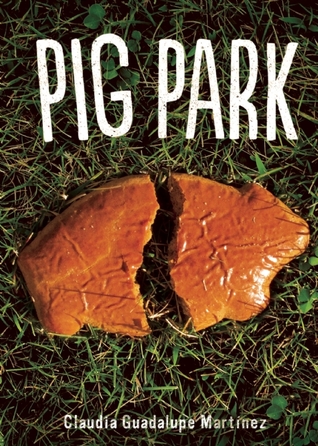 Mexicans have formed communities in Chicago since the 1850’s. And, while a 2012 Census study from the Manhattan Institute for Policy Research named Chicago the most segregated city in America, Chicagoland’s Mexican population is massive enough at 1.4 million that some neighborhood overflow is to be expected. This is how diversity develops naturally. Scholar José Vasconcelos talked about Mexicans as “the cosmic race;” behind it was the idea that we actually have a little bit of everything in us, that we like to mix it up, eventually transcending racial and ethnic categories.


 Latinxs in Kid Lit